
Shop Loewe — $749
 Proxima Studio/Shutterstock
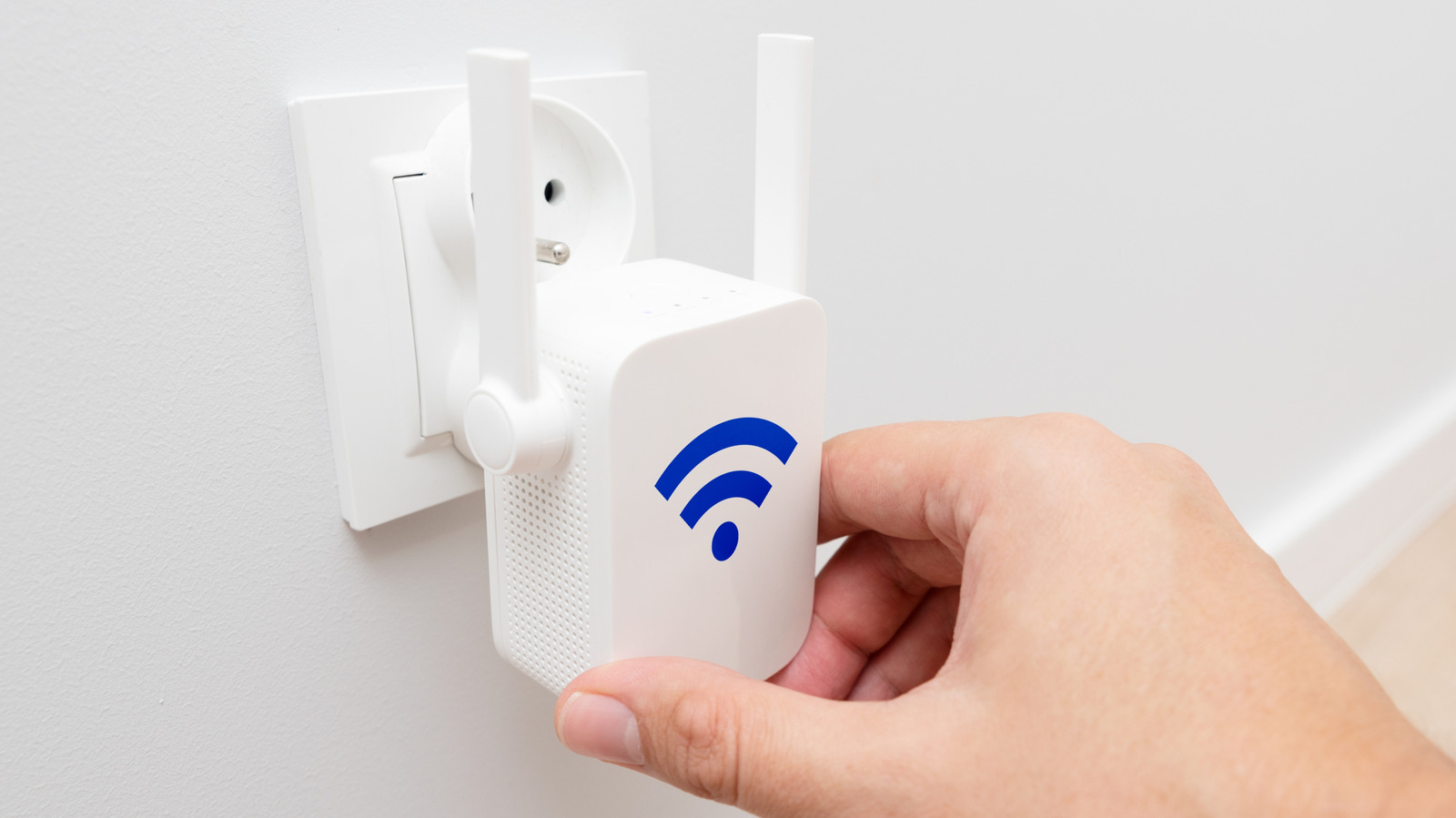
Is your Wi-Fi router not delivering the strong connection you need throughout your home? There are various potential solutions to consider if your router still leaves dead zones where the connection is weak. One is to invest in a Wi-Fi range extender. Although a Wi-Fi mesh network may offer more thorough coverage and a faster overall connection, it’s a more expensive option than a range extender, which is often sufficient when only one or two rooms lack a reliable Wi-Fi connection. Of course, first you need to identify the signs that you actually need a Wi-Fi range extender.
As the name implies, a Wi-Fi extender works by picking up the signal from your router and extending it into a dead zone. Technically, rather than extending the actual home network, the extender leverages the connection from the router to create its own network that reaches spots the router can’t reach. Most extenders are small devices that can be plugged into electrical outlets somewhere between a router and a room where coverage is spotty. This simple and affordable solution may serve your needs if you notice any of the following warning signs.
Your Wi-Fi connection is inconsistent throughout the home
 ParinPix/Shutterstock
A weak or inconsistent Wi-Fi connection throughout your whole property indicates the need for a solution that ensures more thorough coverage. Again, depending on factors like the size of your property, a Wi-Fi mesh network may be ideal in these circumstances. However, a Wi-Fi range extender could be more appropriate if the connection problems only seem to affect specific rooms.
Be aware that the results an extender delivers can depend heavily on its placement. The strength of the wireless signal an extender receives from the router will determine the strength of the signal it provides. By conducting Wi-Fi speed tests throughout your home, you can identify the room or space closest to the dead zone where the signal is nevertheless still strong. This is usually the right spot in which to install a Wi-Fi range extender.
Luckily, these devices tend to be relatively easy to install and even to move around. If you find that an extender isn’t delivering the results you need, you could install it in a new spot. You might have to experiment with a few different locations before finding the perfect one.
Your home is large or contains certain building materials
 New Africa/Shutterstock
Even a strong Wi-Fi router may struggle to provide full coverage when a home is fairly large. If you live in a big space, and you don’t want to spend money on a full Wi-Fi mesh network, installing a strategically-placed extender or two could help close the gaps your Wi-Fi router can’t close on its own. Similarly, you might benefit from a Wi-Fi extender if you want to have consistent coverage even in outdoor sections of your property, like a shed or the backyard.
You might also account for the materials your home was built with when determining if a Wi-Fi range extender is a necessary purchase. For example, a Wi-Fi router can have trouble pushing its signal through concrete surfaces. If you have these types of surfaces throughout your home, a Wi-Fi range extender could help. Even if you technically get a signal in every room, a large home combined with the presence of building materials like concrete or bricks could limit the strength of the signal in particular areas. For instance, in some rooms, you might notice that buffering is more of a problem than in other spaces. An extender may fix this.
Moving your router doesn’t yield better results
 SOLDATOOFF/Shutterstock
Even though a range extender is an affordable alternative to a Wi-Fi mesh network, in some cases, you might not have to spend any money at all to address your connectivity issues. You could first experiment with placing the router in a different spot or fiddling with the antennas to find out if that delivers the results you’re looking for. If you’re still not getting reliable coverage throughout the home, you can add an extender to your setup to see if that fixes the problem. It might be worth buying a full Wi-Fi mesh network if you’re still experiencing issues even after adding extenders to the mix.
That said, not all Wi-Fi extenders are created equal. Make sure you do your research to confirm you’re spending money on a unit that will deliver results. Most importantly, if you’re noticing inconsistent Wi-Fi connections in certain spots in your home, just know this isn’t necessarily something you have to live with. Whether you need an extender or a mesh network, odds are there’s a solution that will keep you connected regardless of where you are on your property.






