Shop Loewe — $749
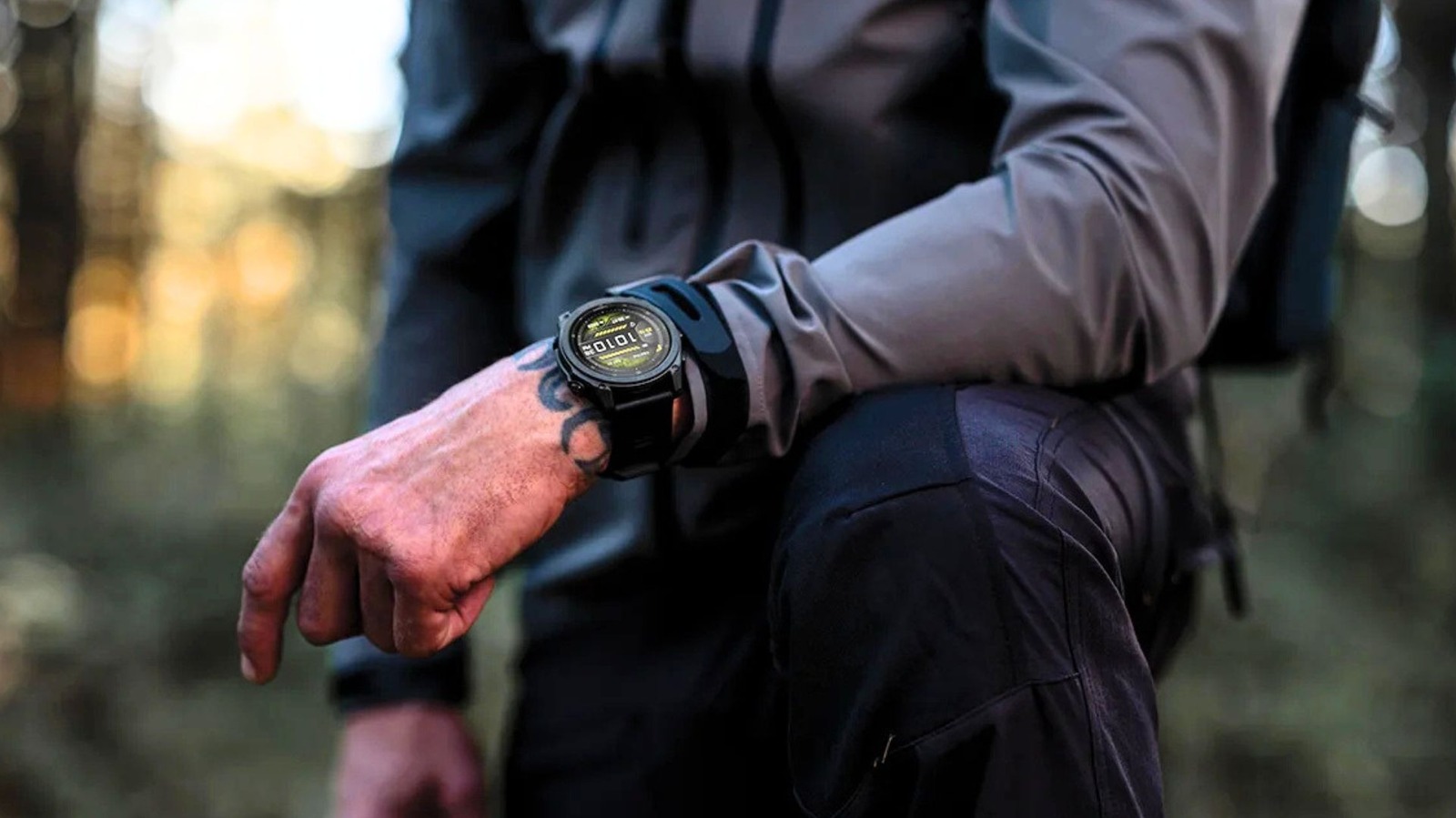
The Apple Watch is the most popular smartwatch around, as reported by Counterpoint. It perfectly integrates with the iPhone and AirPods and has three different lineups that serve different audiences. Still, runners, hikers, and swimmers sometimes prefer to have a Garmin watch. Part of the reason is the things a Garmin watch can do that an Apple Watch can’t, such as offering solar charging, a full button navigation, and even measuring more specific health metrics.
Truth be told, the Garmin experience has been available for more than two decades, while the Apple Watch recently hit its first 10-year anniversary, so the former is more established in the market. The first Garmin smartwatch, the Forerunner 201 was released in 2003. Since then, the company released more than 40 versions of the watch, with some of the latest versions including an OLED display, light titanium bezels, and a battery as durable as the product as a whole.
A Garmin watch can offer athletes much more than an Apple Watch, and it might be one of the reasons why these smartwatches are still so popular among sports enthusiasts. These features are what make some users ignore that Apple has been responsible for making smartwatches a lot more mainstream thanks to the Apple Watch design, different band customizations, and Watch Faces.
Solar charging
Garmin offers 10 watch models with solar charging capabilities, like the Fenix, Forerunner, Instinct, Edge, and Enduro. While the battery in Garmin watches is already known for lasting a long time, you can extend its duration by months with solar charging — or even never have to use its USB charging cable.
These smartwatches have a semitransparent layer of solar cells on the display that converts direct sunlight into electricity to power your watch. With that, you can take more out of outdoor activities like running and cycling while seeing your watch gain charge instead of losing it.
Select Garmin watches feature a solar intensity widget, which shows the amount of sunlight it received. They’re made with panels that are easy to read in direct sunlight without a backlight. The company even claims that leaving a watch with a dead battery in the sun can make it turn back on. Models like the Garmin Edge 840 Solar also show new metrics for cycling called “ride gained,” which show you can get 20 extra minutes of battery life for every hour of riding with solar charging.
Measure specific health metrics
 kovop/Shutterstock
Data nerds have gotten a lot of new health metrics with the Apple Watch in the past few years, especially with the latest watchOS 26 software update. However, Apple Watch users need apps like Gentler Streak to get a balanced, visual understanding of their health data, or use The Outsiders to learn more about their readiness for the day.
Garmin, on the other hand, is an all-in-one solution for athletes with features like Training Readiness, Body Battery, HRV Status, Load Reports, and Structured Workout Modes. For example, Training Readiness brings a single score calculated every morning that synthesizes sleep, recovery time, training load, HRV, and stress to tell if you should go for a Personal Best or just rest and recovery. Body Battery, on the other hand, is a real-time fuel gauge for your body, and it shows the hidden costs of stressful meetings, an evening glass of wine, or a tough workout.
HRV Status compares your overnight Heart Rate Variability against your two-week baseline. For the Apple Watch, users need once again to rely on third-party apps to analyze that information. In contrast, the Load Reports feature measures your last seven days of effort, categorizing activities between base, tempo, and sprints. Apple’s Training Load is more focused on helping you prevent injury, ignoring the type of physiological stress.
Impressive battery life
 Nguyenducquang/Getty Images
Apple promises an all-day battery life for Apple Watches. The latest models have improved a lot, with the battery on the Series 11 lasting up to 24 hours and on the Apple Watch Ultra 3 lasting a maximum of 42 hours. In Low Power Mode, that time is extended to 38 hours and 72 hours, respectively. Garmin watches, however, last for several days, with some models lasting weeks or more thanks to solar charging.
For example, lifestyle Garmin models like the Venu 5 or Epix 3 feature AMOLED displays. Garmin says these watches can last from 10 to 16 days, while Always-On Display can make them last for up to a week. With GPS Tracking, however, this time window is limited between 15 and 30 hours. The standard models like the Fenix 8 and Forerunner 975 have more generous batteries thanks to the microLED display; they can last from 14 to 28 days, while solar models can push to over 40 days if you spend a few hours outside every day.
The ultra tier, which includes the Enduro 2 or Instinct 2X Solar, is perfect for ultramarathons or expeditions, as they can last up to 46 days or longer if you get enough sun daily. Some features drain more battery and can decrease that duration significantly, like multi-band GPS, music streaming, or nonstop blood oxygen tracking rather than limiting it to bedtime.
Full button navigation
 KaterynaSypailova/Shutterstock
How Garmin prioritizes physical button navigation compared to Apple’s touch-control focus is another big difference between brands. While some of the latest Garmin watches, like the Fenix 8 or Forerunner 975, feature touchscreen capabilities, they’re made with physical buttons in mind, especially if you practice a sport that might leave your hands wet or covered in chalk, affecting touchscreen responsiveness.
All Garmins feature a five-button layout that allows users to go for a zero-look navigation through muscle memory. Most of them perform one action if you press them and another when you hold the button. For example, the top left button is the backlight or flashlight, while the secondary action, when held, is Controls Menu. The center button on the left is used to scroll up, while holding that button opens Main Settings and Watch Face options.
With that, during a high-intensity run or cycling course, these physical buttons can provide a click confirmation a touchscreen can’t match. For example, if you stop at a red light while cycling, you just have to press a button to pause, while Apple Watch users will have to swipe right and then tap the pause button — don’t ask me how many times I accidentally ended up a workout by doing that.
Built-in LED flashlight
Some Garmin watches come with a flashlight. While its competitor Apple Watch models can light up their display to be used as a flashlight, it’s not as fancy (or dedicated) as Garmin’s LED flashlight, which you can find on models like Descent, Enduro, and Fenix.
Garmin says the built-in flashlight is ideal for outdoor night activities or just lighting up low-light environments at home. Since the flashlight features actual LED lights on the front of the watch, it’s a more straightforward experience than having your Apple Watch lighting up on the side of your wrist.
Some other watches offer red or green light as well to be less disruptive to your eyes at night. The flashlight can also be used in different brightness levels. That said, this is yet another useful feature you never knew you needed until going for a really early run, stumbling on a dark room, or, god forbid, hiking a mountain after sunset.