
Shop Loewe — $749
 Paramount Pictures
Alex Garland’s 2018 follow-up to his masterful directorial debut “Ex Machina” wasn’t exactly a clear winner. “Annihilation” — starring Natalie Portman, Jennifer Jason Leigh, and Oscar Isaac — was the kind of cerebral cosmic horror that leaves you with a head full of thoughts and wild theories, especially after its divisive finale. It’s the sort of provocative, nuanced, and atmospheric filmmaking that instantly lifted Garland up as one of the most promising new voices in contemporary cinema.
A promise that’s still in debate with no clear verdict as the writer-director seemed to have moved away from brainy and speculative science fiction with his later films like the underperforming folk horror, “Men,” the politically turbulent “Civil War,” and his latest docudrama, “Warfare.” Nevertheless, “Annihilation” remains his second-best film to date.
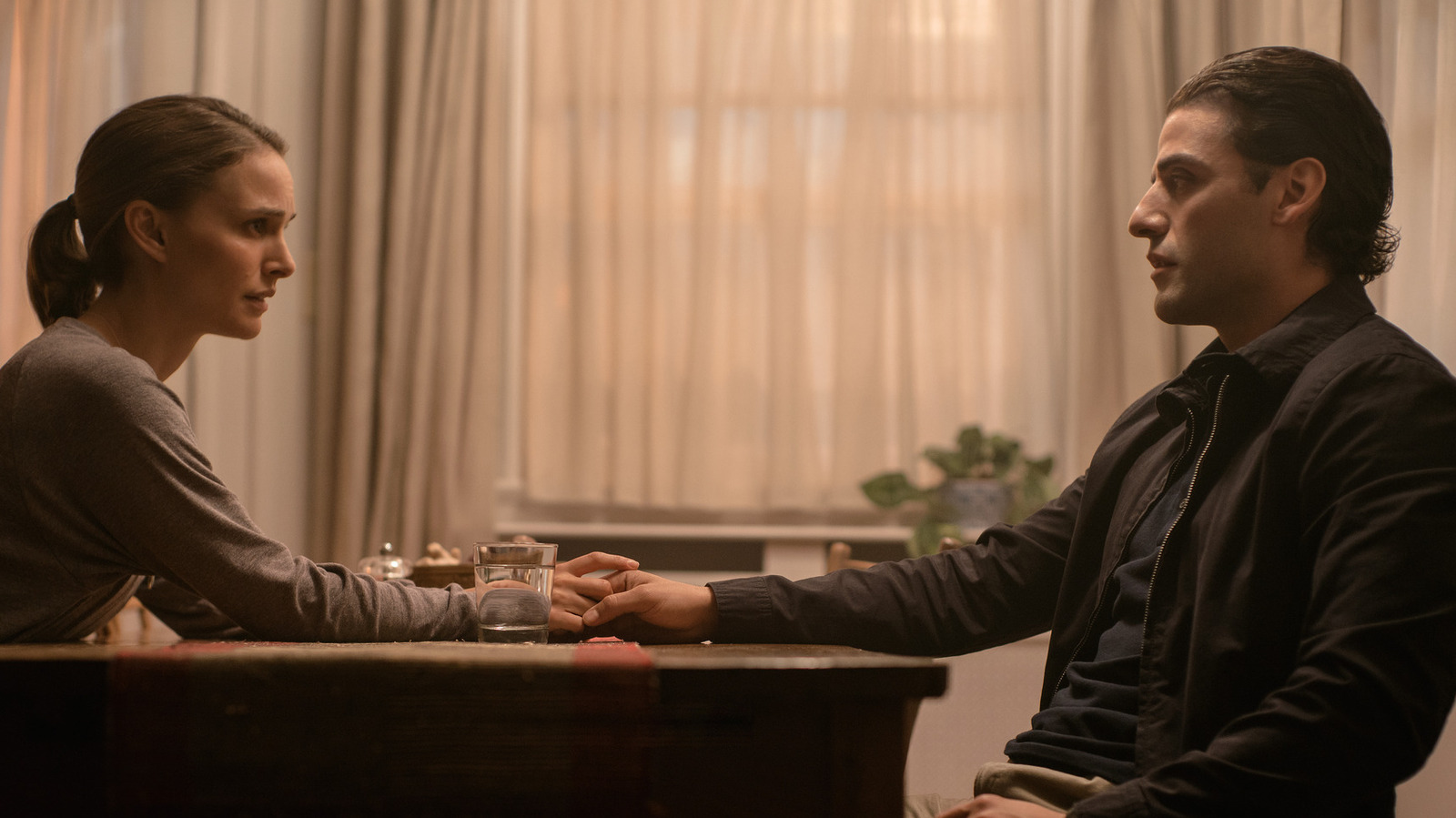
Based on Jeff VanderMeer’s 2014 novel of the same name, the plot follows Lena (Portman), a cellular biology professor, as she joins an expedition into a quarantined zone dubbed the Shimmer in Florida. You learn about this through flashbacks as she’s interrogated in the present as the only survivor of her group. She went into the zone after her sergeant husband, Kane (Isaac), disappeared in it with a different team for a year, then reappeared out of nowhere as a shell of himself in a critical condition. Apparently, the Shimmer was created by a meteor (presumably containing an alien presence) that began mutating plants and animals in the area while rapidly expanding. Lena’s crew is sent in to gather data from its center (the lighthouse) and return, but she’s really there in the hope of finding a cure to save her dying husband.
The visceral horrors of change and evolution
 Paramount Pictures
Besides its constantly evolving themes like identity and self-destruction, “Annihilation” revels in delivering eerie and disturbing environmental horror (very much in the vein of HBO Max’s “Scavengers Reign”). Garland steers away from traditional jump scares because he knows that silent terror and the fear of the unknown can be potent enough to sneak under your skin and into your minds to agitate your inner peace. But that’s not to say he doesn’t deliver some delicious macabre moments to chew on.
The albino alligator with concentric teeth, the mural-like abominations made of flora and human bones, and the mutated bear imitating the cry of a woman are the most thrilling and visually arresting moments in the film. But what they collectively indicate — a mutation that rips everything off its identity and DNA, including humans — is the true white-knuckle horror of “Annihilation.” The Shimmer makes everyone who enters forget things. It alters and essentially kills short-term memory, and the longer you’re in it, the more it eviscerates your identity both physically and mentally.
The Kane from Lena’s memories and his post-Shimmer iteration isn’t the same person. Anya (Gina Rodriguez), the rational and conscious medic of the team, gradually grows more aggressive and paranoid the deeper the crew ventures. Her theory that the Shimmer either has something that kills everyone who enters, or makes humans go crazy so they kill each other is only partially true. As Lena concludes late in the film, whatever it is that causes the rapid mutations within the Shimmer doesn’t necessarily destroy the beings there but rather uses them to create something new. But at the same time, that inevitably means eradicating their original form.
Annihilation was a cinematic delicacy, and it showed
 Paramount Pictures
Although the final act of “Annihilation” is mesmerizing, movingly evocative, and intriguingly off-putting at the same time, it’s also densely ambiguous. Beyond a few vague explanations, there are no clear answers about what happened to Lena and Kane, or how they managed to survive the Shimmer — you’re only given nebulous indications. I believe that’s a fitting ending in line with the cryptic nature of the movie, but I’m hardly surprised it divided the average moviegoer crowd back then (and still does so today).
The majority of critics loved it (myself included), but commercially, Garland’s second feature was a hard sell; therefore, its box office performance was muted. It grossed $43 million worldwide against its estimated $40 million budget, but part of the truth is that Netflix acquired and added it to its streaming roster after only 17 days into its theatrical run, nixing the movie’s chance to generate a bigger profit in cinemas. Whether that was a wise and beneficial decision, I leave to the box office experts, but I will say that the streaming giant likely played a pivotal part in the feature reaching a significantly wider audience than it would’ve done theatrically.
For such an eccentric and eclectic piece of work that “Annihilation” is, that might not be such a bad thing. All I can say with certainty is that if you’re drawn to complex and thought-provoking genre blends, you should definitely give it a watch. If for nothing else, it’s for the food for thought it provides long after the credits roll.






