
Shop Loewe — $749
 Hendrik Sejati/Shutterstock
We may receive a commission on purchases made from links.
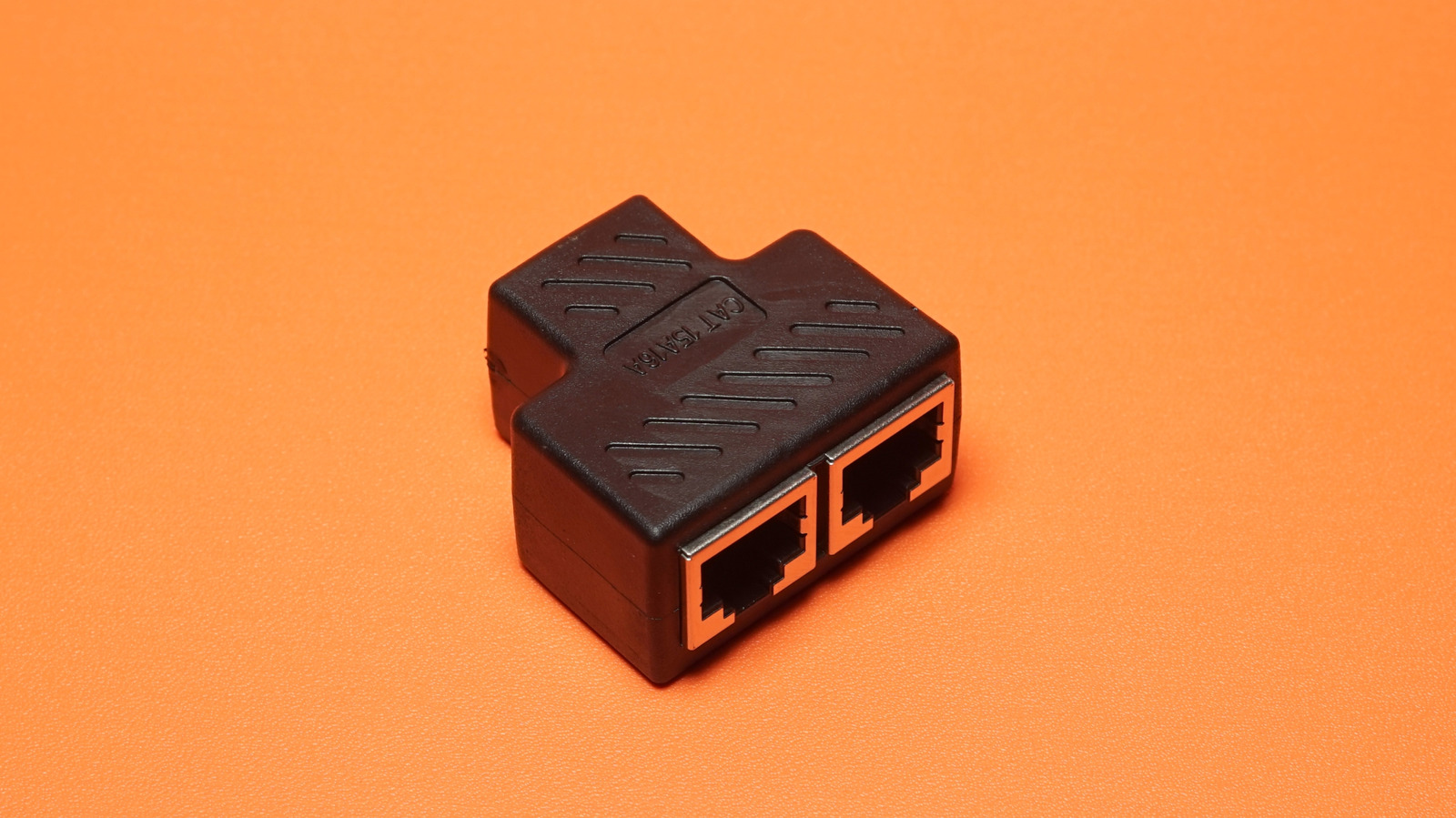
If you’ve ever gone through Amazon looking for Ethernet cables or other networking hardware, you’ve absolutely come across Ethernet splitters at some point. However, while Ethernet cables can do more than you think, products like splitters aren’t at all what they say on the tin. In fact, you’re probably really looking for a network switch. Ethernet splitters, for the most part, actually slow your connections down because of how they’re built.
Splitters turn one Ethernet connection into two by splitting the signal, but they halve the current signal instead of doubling it. Older splitters will almost certainly slow speeds down as they rely on 10 Mbps and 100 Mbps connections, forcing your speeds down to those levels. More recent devices, like those from UGreen, appear to get around this by serving as a pint-sized Ethernet switch rather than a splitter.
When faster connections became the norm, the issue with Ethernet splitters became more prominent. As speeds increased, Ethernet splitters couldn’t physically keep up, as the hardware has a maximum speed of 100 Mbps. As such, it’s better to consider a network switch, which can support a much faster, more modern connection without losing speed.
Ethernet switch vs. splitter
 Panumas Nikomkai/Getty Images
Not only are internet splitters limited to two ports, but some brands also don’t support two connections simultaneously. This is, again, due to a physical issue: they’re soldered together with all the pins going to both sources rather than separate connections, treating it as one device. A network switch, meanwhile, is built so that each connection it provides is its own individual one on the network. That includes assigning IP addresses, as the splitter won’t be able to tell the router that each connected device requires its own IP address to avoid conflicts on the network.
Aside from this, a gigabit Ethernet switch will manage modern home connections far better than a splitter. Since most home connections now run at 100 Mbps or more, the splitter can’t handle the bandwidth. Switches provide the full speed of the connection with negligible speed loss, since most day-to-day traffic won’t flood the connection. Where this comes in handy is if you’ve turned an old computer into a server or home media center, since transferring files between your PC and your media center will be as fast as the connection allows.






