
Shop Loewe — $749
 RSplaneta/Shutterstock
We may receive a commission on purchases made from links.
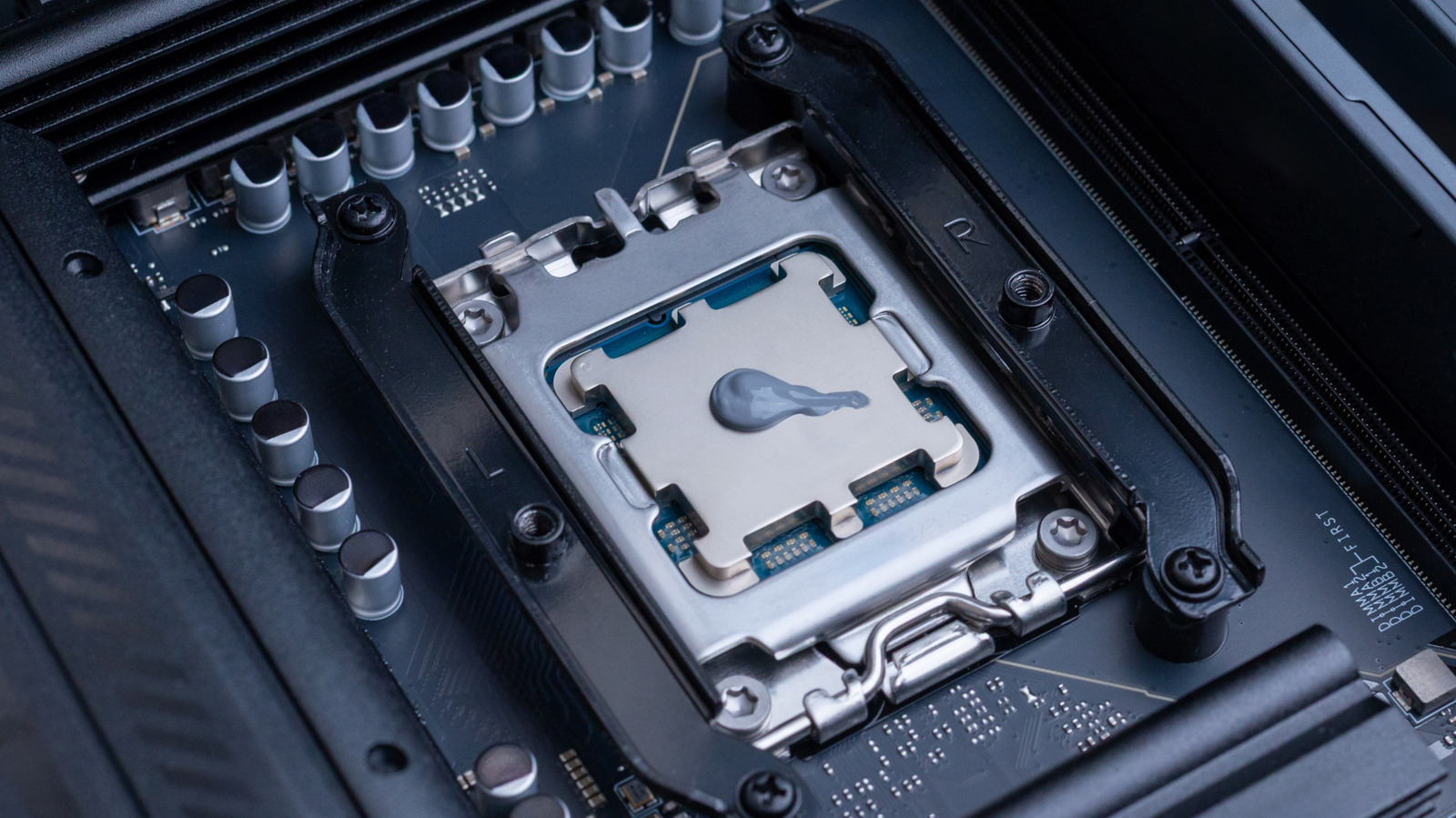
Thermal paste, the unsung hero of every PC on the planet. Without it, CPUs would burn up. Since its introduction into the PC market, there have been advances in thermal paste tech to ensure that components stay cool, whether that’s conductivity or even more recent experiments, like adding in ceramic powder to boost the cooling abilities of the grey sludge. Relatively new on the scene are thermal pads, but tests by experts have found that thermal paste still cools more effectively than pads, thanks to its ability to spread into areas the pad can’t.
However, these tests still found that pads were only a few degrees hotter than paste, making the margin of difference thinner than ever. In the last few years, as arguments over how much thermal paste needs to be used raged across the web, thermal pads have entered the scene. In the desktop scene, manufacturer Honeywell’s option, PTM7950, has become a recommendation for prospective upgraders and builders.
So much so, major PC YouTube channel, Linus Tech Tips, now sells its own variation on it. Pitched by Honeywell (link will download PDF to your device) as best for “high performance IT/Enterprise computing”, PC gaming enthusiasts have started to recommend it as well. Some have found that thermal pads offer an easier method of application on complex hardware like graphics cards.
What are thermal paste and thermal pads?
 Damian Pawlos/Shutterstock
As PC parts, especially powerful desktop CPUs, get hotter, it has become more necessary for thermal paste to take center stage in PC discussions when deciding on a build. Adding paste has been a thing since the 90s, with some forum goers claiming they began using it on Intel’s 386 processor. In some cases, like embedded or industrial PCs, thermal paste will be used to dissipate the heat via the case itself, like a giant heat sink. You can even replace the thermal paste on your laptop.
A thermal pad is a slightly thick material made up of silicone or paraffin wax, used in the same way that paste is, to dissipate heat. While thermal paste has to be added by the user, pads are often already included on some shipping products. For instance, AMD and Intel have now begun to include pads on their products, as it’s far easier for beginner PC builders to apply, as well as cleaner.
Thermal pads can be cut and shaped, as well as reused. Pads might become misshapen over time, but the entire thing doesn’t need to be scrubbed away to be reused. Since their introduction, companies providing parts and components for single-board computers or embedded systems have offered thermal pads for the much smaller hardware.
Thermal pads vs paste? It’s up to you
 9Robot/Shutterstock
Ultimately, the thermal paste versus pads is a long conversation that thankfully others have already waded through. Even as advances to the tech are made, thermal paste has the upper hand of being just that, a mushy paste, reaching into spots a thermal pad could never reach — like microscopic gaps. This isn’t to say that thermal pads should be outright ignored.
In real-world testing across the web on gaming PCs, temperatures have been kept solidly below the threshold, despite the drawbacks. In 2024, CyberCPU Tech found that three different brands managed to keep temperatures on the CPU below 65 degrees Celsius (149 Fahrenheit). However, Gamers Nexus, in a 2020 test, found that Thermal Grizzly Hydronaut paste managed to beat out the IC Diamond Graphite Pad by a few degrees across benchmarks. At the 270 Watt range, the thermal paste hit 28.03 degrees Celsius (82.45 degrees Fahrenheit), and the thermal pad reached 32.84 degrees Celsius (91.11 degrees Fahrenheit).
Further tests done over the years have all found similar results, with temperatures not rising out of control, but a definitive gap between the performance of the two materials. In most cases, it becomes an affordability decision. Arctic MX-4 thermal paste will cost at most $8.99, whereas the PTM7950 thermal pad can run you between $10 and $25.






