Posted on

Microsoft’s Copilot Shows Signs Of Reducing Its Reliance On OpenAI’s

PhotoGranary02/Shutterstock

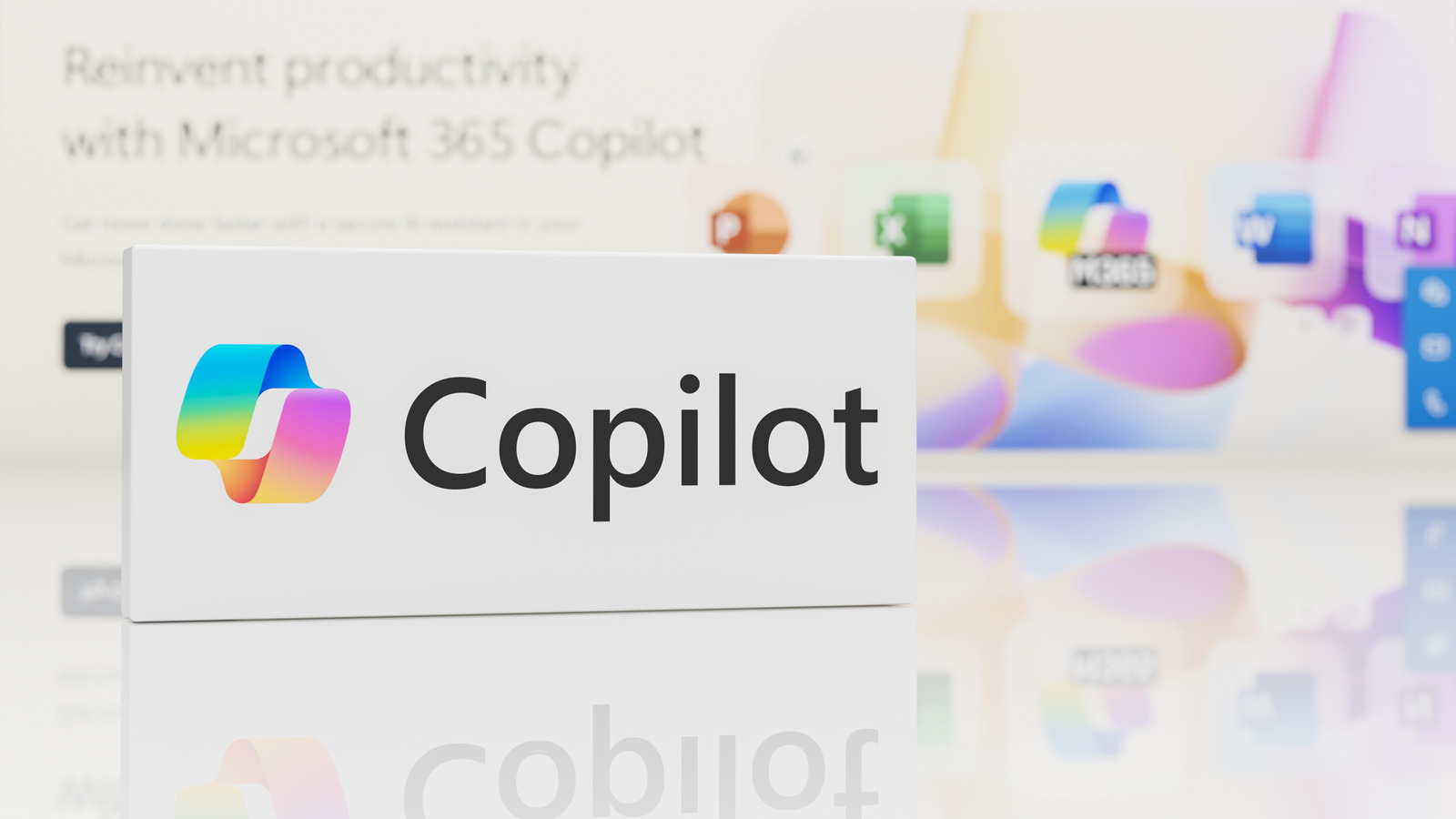
Microsoft launched its first two homegrown AI models this week. The models are now available in various Copilot programs and could signal a move to start incorporating the company’s own models into the Windows-centric assistant instead of relying so heavily on OpenAI’s GPT models.

The new models, called MAI-Voice-1 and MAI-1-preview, debuted on Thursday, August 28. Microsoft shared details about the models in a blog post, where the company highlighted their capabilities. MAI-Voice-1 is now available in Copilot and Copilot Labs, and Microsoft says that it can be used to generate up to 60 seconds of audio in under one second, all while relying on a single GPU. Microsoft claims that this “lightning-fast” efficiency makes it “one of the most efficient speech systems available today.”

MAI-1-preview, on the other hand, is designed to provide consumer-level benefits by following instructions and “providing helpful responses to everyday queries.” It’s currently only being made available in LMArena, though Microsoft says it plans to eventually roll it out for specific text-based cases in Copilot as the weeks progress. For now, though, the company wants to look into improving it with user feedback.

A long way from replacing OpenAI

Nwz/Shutterstock

While Microsoft’s launch of its own in-house AI has major implications on the future of Copilot, we don’t expect Microsoft to ditch its partnership with OpenAI any time soon. There’s little doubt that having access to GPT’s latest models has helped Microsoft expand what Copilot can do exponentially without having to rely on building its own models from the ground up. It’s been a good tactic, as it has given the company tons of usage data with which to build its own models. Meanwhile, Microsoft has even added features to Copilot that ChatGPT doesn’t have yet.

This approach has given Microsoft’s AI division time to focus on specific models and improvements, and Microsoft even says that its in-house options aren’t designed for enterprise-level queries, something that it usually focuses heavily on for advertising Copilot’s productivity features. So, it would make sense for Microsoft to continue relying on GPT for that side of things, at least for now.

We’ll be curious to track these models in the months to come, as Microsoft has plenty of data to feed them already, and future input will only help the new models become even more capable. Since these models are focused on consumers, though, it’s possible we could eventually see these models make the leap to Copilot in Edge, too, as Microsoft tries to morph its Internet Explorer replacement into a proper AI browser.

Source

Posted on

Apple iOS update fixes new iPhone zero-day flaw

Apple has pushed another update to its mobile operating systems, iOS and iPadOS, to address a newly discovered zero-day that is already being exploited by threat actors in the wild to enable so-called zero-click attacks.

Tracked as CVE-2025-43300, the flaw is an out-of-bounds write issue in the ImageIO framework – which is used to enable applications to read and write the majority of image file formats. If successfully exploited, processing a maliciously crafted-image file results in memory corruption on the target device.

“Apple is aware of a report that this issue may have been exploited in an extremely sophisticated attack against specific targeted individuals,” Apple said in its customarily sparse advisory.

The update, which takes iOS and iPadOS to version 18.6.2, addresses this problem with improved bounds checking.

Adam Boynton, senior security strategy manager for EMEIA at Jamf, an Apple device management specialist, explained that the flaw could potentially be used by threat actors to compromise the device and enable the execution of malicious code.

In these zero-click attacks, malicious payloads are generally delivered via channels such as text message, email or messaging apps. These payloads contain data packets that are designed to trigger the vulnerability automatically, without any user interaction taking place – hence the term zero-click.

This stealthy methodology means zero-clicks are tricky for enterprise defenders to get to grips with, not least because they are hard to detect and can bypass end-user training, but also because they often leave very little in terms of forensic evidence and can operate without setting off any security alerts.

Zero-click attacks have also been proven to be highly effective against high-value targets within businesses, and additionally for certain categories of organisations and individuals at risk of targeted cyber-espionage, such as non-governmental organisations (NGOs), journalists and media, and activists and politicians.

“Apple has indicated that this vulnerability has been exploited in sophisticated, targeted attacks, which typically focus on individuals with highly valued access or contacts, such as journalists, lawyers, activists, and government officials,” said Boynton. “While Apple has not confirmed whether this specific flaw was linked to spyware, similar vulnerabilities in ImageIO and WebKit have previously been used in Pegasus campaigns.”

Mitigating zero-click attacks

Sylvain Cortes, vice president of strategy at Hackuity, a vulnerability management platform, said: “With the vulnerability being actively exploited, everyone should check their iPhones immediately. Organisations handling Apple devices need to be able to identify and update all affected devices immediately, especially if they operate in at-risk fields like the legal, media and public sectors.” 

When responding to zero-click vulnerabilities, security professionals can help turn the odds in their favour by aggressively patching against them; by keeping up-to-date on threat intelligence, deploying defence-in-depth strategies with layered security protections; and by introducing technologies such as micro-segmentation, endpoint detection and response (EDR) tools, as well as mobile device management (MDM) services.

Meanwhile, individual Apple users can check if their iPhones or iPads are running the updated version 18.6.2 by navigating to Settings, General, and Software Update on their devices.

The update to version 18.6.2 will likely be among the final releases to take place ahead of the anticipated unveiling of iOS 26, which still looks to be on track for mid-September. This will accompany the launch of the iPhone 17.

Source

Posted on

Google’s Pixel 10 Locks Away RAM For AI, But There

Christian de Looper for BGR

The hits just keep coming for Google’s new Pixel 10. This time, it looks like the listed 12GB of RAM on the phone doesn’t tell the whole story. Instead, at least 3GB of that memory is permanently locked up by the phone’s AI systems, even if you never plan to use them. It was never in doubt that AI would be a selling point for the Pixel 10. Google has been pushing out more Gemini-powered features to its phones for a couple of years now. Some of these features are intriguing, like Magic Eraser. But that doesn’t mean everyone wants to use them, and certainly not every day.

However, that doesn’t seem to be stopping Google from tying some of the phone’s included memory to ensure the AI apps and features are always at the ready. According to a detailed breakdown of the Pixel 10’s hardware performance by Android Authority, it looks like Google may have more than 3GB of RAM tied up specifically to handle AI tasks on the new flagship.

This isn’t especially surprising, as the company has used the same methods on previous Pixel devices to help make AI systems feel more responsive and snappier. But it could become an issue for power users who regularly use demanding apps on their phones.

How to free up RAM on the Pixel 10

Ahyan Stock Studios/Shutterstock

While it isn’t necessarily an unexpected move, the fact that Google is leaning so heavily on locking up the phone’s memory to ensure AI systems can run might be disappointing to some, especially if you aren’t all that psyched about the AI that Google is pushing. When combined with the other news surrounding the Pixel 10 — like the mandatory battery health feature that essentially throttles the Pixel 10’s battery after just 200 charges — this might feel like a slap in the face to some.

The good news is that there appears to be an easy way to free that RAM back up for any process on the Pixel 10. One user on Reddit (who made the same point when last year’s Pixel 9 arrived) claims that freeing up the 3GB of RAM reserved for AI is as simple as going to Settings > Apps > All apps, tapping the three-dot menu in the top-right corner, and tapping Show system. Near the top of the list, you should now see an entry labeled AI Core, which you can tap on and then disable. This might slow down those AI processes, but if you need every last gigabyte of RAM, it’s worth experimenting to see if it makes a difference.

Source

Posted on

Scale of MoD Afghan data breaches widens dramatically

The Ministry of Defence (MoD) has admitted there have been more than 12 times as many data breaches linked to its Afghan Relocations and Assistance Policy (Arap) programme than previously thought.

Until now, a total of four breaches were known to have hit Arap, a scheme established back in April 2021 to bring Afghan citizens at risk of Taliban persecution to safety in the UK. However, according to Freedom of Information (FoI) figures released to the BBC, the true number is actually 49.

According to the BBC, the MoD declined to comment on the precise nature of any of the other breaches.

Two of the known breaches relate to failings around email security hygiene and collectively affected around 300 individuals. The more significant of the two resulted in the imposition of a £350,000 fine on the MoD by the Information Commissioner’s Office (ICO) – a move considered out-of-step with the regulator’s usual policy of not fining government bodies involved in incidents.

Then, in July 2025, far more serious data protection failings at the MoD emerged when it was revealed that the data of almost 19,000 asylum seekers had been released in error by a staffer. This only came out after the lifting of a superinjunction preventing the media from reporting on the data breach.

Earlier in August, it was also revealed that a third-party services provider working with the MoD at Stansted Airport suffered a cyber attack that compromised the data of 3,700 people including some associated with Arap.

Speaking to the BBC, Barings Law head of data protection Adnan Malik – whose firm is already representing more than 1,000 Afghan claimants who had their data leaked in prior breaches – described how an apparently isolated incident was now growing into a series of “catastrophic failings”. Malik called for the MoD to be fully transparent going forward, saying victims should not be finding out the truth from lawyers or journalists.

ESET global cyber security advisor Jake Moore said that, in general, human error is still a weak point in data protection, with a great many breaches caused by wrongly sent emails or missed security checks.

“But when the data includes highly sensitive information, the threat level dramatically increases,” said Moore. “Sensitive data should always require stricter protection through encryption and extra human checks, especially when lives are at risk. 

“Repeated incidents not only rub salt into the wound but show systemic weaknesses meaning security needs to be improved in organisational culture. Confidence in security can easily be lost and in this case the leaks threatened not only privacy but people’s safety,” he added.

The MoD told the BBC it took data security “extremely seriously” and that the department was committed to making sure incidents were dealt with in accordance with the law, including referral to the ICO if an incident meets the relevant thresholds.

MoD beefing up data protection with AI-backed tech

Earlier in August, the MoD appointed Australian cyber security scaleup Castlepoint Systems to deploy an AI platform to manage its data protection practice.

Castlepoint’s proprietary, explainable AI model manages structured and unstructured data, enables automated records management, discovery, privacy and security, and helps ensure regulatory compliance.

Castlepoint said its technology can sift through vast datasets, the scale of which would rapidly overwhelm a human, identify their contents, and apply the correct security measures to them.

Source

Posted on

5 Fun Ways To Repurpose An Old Raspberry Pi

Pengpeng/Getty Images

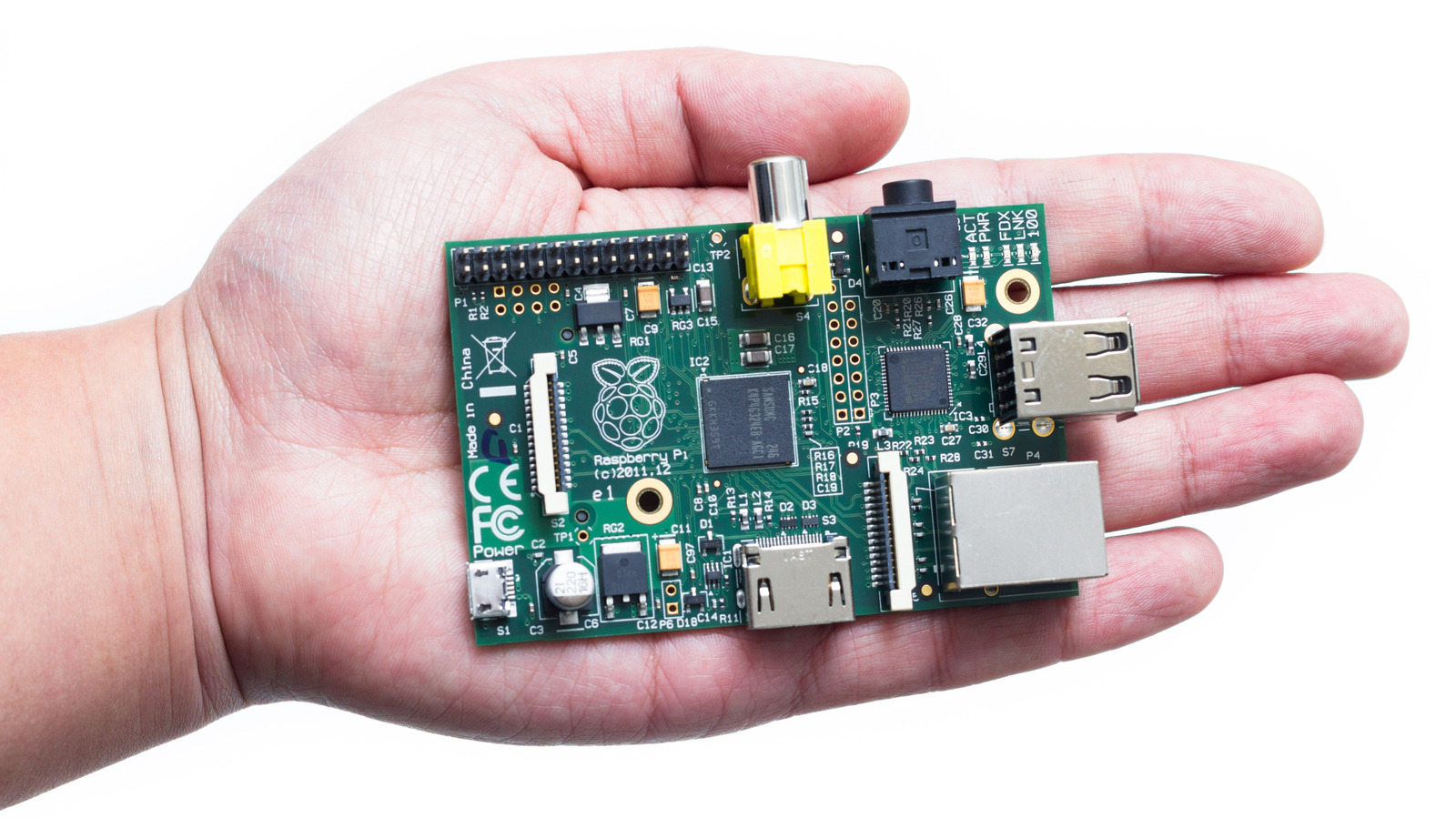
The Raspberry Pi is one of the most versatile and accessible pieces of hardware available today. Originally designed to promote computer science education, it has since evolved into a go-to tool for hobbyists, engineers, and educators. The Pi’s low cost, compact form factor, and open-source flexibility make it ideal for countless DIY applications. Even older models, like the Raspberry Pi 3, remain useful for dedicated single-purpose projects.

If you’ve got a Raspberry Pi sitting idle in a drawer, there’s no reason to let it go unused. With just a few additional components — ones you might even have laying around — you can turn it into something genuinely useful, fun, or even educational. The Raspberry Pi lineup includes both wireless and non-wireless models, each with practical uses. Wireless boards like the Pi 3, Pi 4, and Zero W are ideal for connected projects like streaming devices. On the other hand, older or non-wireless models like the Raspberry Pi 2 or the original Zero still work well for offline or wired-only setups, such as retro gaming consoles. Whatever model you have, here are five fun ways to put it to good use.

Set up a network-wide ad blocker

Primakov/Shutterstock

You can clean up your browsing and eliminate ad tracking by using your old Raspberry Pi 4 or even the older Pi 3. Instead of installing ad-blockers on each device, your Raspberry Pi can act like a filter between your router and the rest of the internet. It blocks known ad-serving domains at the DNS level, meaning any device connected to your Wi-Fi will automatically skip the spammy stuff.

Setup is surprisingly simple. Install Raspberry Pi OS onto a microSD card, install Pi-hole, and change your router’s DNS settings to point to the Pi. You’ll immediately notice websites loading faster and cleaner. No pop-ups, no auto-playing videos, and no shady tracking scripts. Pi-hole comes with a slick user interface that shows you real-time stats on how many requests are being blocked and where they’re coming from. It’s oddly satisfying, but also terrifying to see how many background trackers you’re dodging.

Build a smart home hub

Halfpoint/Shutterstock

If you already have smart bulbs, smart plugs, and other smart home gadgets, you might want to set up a control hub instead of relying on a dozen or so apps from different manufacturers. You can transform your old Raspberry Pi into a powerful smart home hub using Home Assistant, giving you full control of your connected devices in one place. Just keep in mind you need at least a Pi 4 with 2GB of RAM. An older Pi 3 might work as well, but you’re more likely to run into performance issues due to the lower memory.

Home Assistant is an open-source platform that runs well on a Raspberry Pi. Once installed, it automatically scans your network and detects compatible devices like Philips Hue lights, Nest thermostats, and other smart devices. You get a clean dashboard that runs in most browsers, with complete control over automations and schedules. Installation is straightforward. Flash the Home Assistant OS to a microSD card or an SSD connected via USB, boot your Raspberry Pi, and follow the setup wizard.

Broadcast your own Pi radio station

Stock-Asso/Shutterstock

It’s time to become your own DJ. With an old Raspberry Pi, a streaming microphone, and a bit of open-source software, you can build a fully functional internet radio station. Whether you want to stream music, host podcasts, or broadcast your voice to friends or coworkers across the network, your Pi is ready to go live.

The heart of the setup is Icecast, a free streaming server you can run on your Pi. It sends audio data over your local network or the internet, and anyone with a browser or streaming app can tune in. Pair it with DarkIce, and you’ve got a complete pipeline from audio input to stream output. Setup involves configuring Icecast to handle incoming streams, creating playlists or live capture scripts, and adjusting bitrate and format to match your network speed. Listeners can tune in using VLC, their browser, or any streaming app by entering your Pi’s IP and port.

Turn it into a coding station for kids

Morrowind/Shutterstock

An old Raspberry Pi is the perfect entry point for teaching kids how to code. You don’t need anything fancy. Just connect a keyboard, mouse, and monitor, install Raspberry Pi OS, and you’ve got a ready-made environment for learning the fundamentals of programming. There’s no risk of breaking your work computer, and no ads or distractions — just a safe, low-cost sandbox where creativity meets logic. You can even set up user profiles with limited permissions so younger kids don’t wander into the terminal or change system settings.

Right out of the box, Raspberry Pi OS comes with Scratch, a visual coding platform designed for kids to build games, animations, and interactive stories using drag-and-drop blocks. It’s fun, colorful, and beginner-friendly. For slightly older kids, there’s Thonny, a lightweight Python editor that makes real code feel approachable without removing the power of the language. It even includes a debugger for helping them trace what’s going wrong when something doesn’t work.

Build a retro gaming console

Grenar/Shutterstock

There’s something magical about playing classic games on vintage hardware, and with an old Raspberry Pi, you can build your very own retro gaming console. All you need to get started is your Pi computer, a power supply, a microSD card, a compatible monitor or TV, and a USB or Bluetooth controller. To tie everything together, you’ll also need a game emulator like RetroPie.

RetroPie is an open-source platform that integrates multiple emulators for dozens of consoles and arcade systems, including NES, SNES, Sega Genesis, and PlayStation 1. You can add ROMs via a USB drive, and RetroPie will organize them by platform. For extra nostalgia points, consider housing your Raspberry Pi in a classic console, a 3D-printed case, or a custom arcade-style cabinet. It’s a rewarding DIY project that turns an underused board into a dedicated machine built for retro gaming.

Source

Posted on

Moscow exploiting seven-year-old Cisco flaw, says FBI

Threat actors linked to the Russian government are falling back on a seven-year-old vulnerability in Cisco equipment that was first uncovered in 2018, according to a warning from the FBI.

The flaw in question, tracked as CVE-2018-0171, exists in the Smart Install (SMI) feature of Cisco’s Internetwork Operating System (IOS) and IOS XE. It arises through the improper validation of packet data and is exploited by sending a specially crafted Smart Install message to a vulnerable device on TCP port 4786. If left unpatched, it enables an unauthenticated, remote attacker to achieve a denial of service (DoS) condition, or to conduct remote code execution (RCE).

In the past year, the FBI said it had detected threat actors collecting configuration files for thousands of end-of-life network devices vulnerable to CVE-2018-0171, which it said are still in use at multiple critical national infrastructure (CNI) operators in the US.

“On some vulnerable devices, the actors modified configuration files to enable unauthorised access to those devices,” said the FBI in a statement. “The actors used the unauthorised access to conduct reconnaissance in the victim networks, which revealed their interest in protocols and applications commonly associated with industrial control systems.”

Beserk Bear

The US authorities said the unit conducting the current spate of intrusions was likely Beserk Bear, aka Dragonfly, a cyber unit of Russia’s Federal Security Service, the FSB, which is known to have targeted networking devices – particularly those that accept legacy protocols, and had previously worked on custom malwares that specifically targeted Cisco products, notably a strain referred to as SYNful Knock.

Cisco Talos researchers Sara McBroom and Brandon White said that Cisco had observed Beserk Bear – Static Tundra in its parlance – acting against Cisco products since at least 2015, and urged users to patch against CVE-2018-0171 as a matter of urgency.

“Customers are strongly urged to apply the patch immediately given active and ongoing exploitation of the vulnerability…Devices that are beyond end of life and cannot support the patch require additional security precautions as detailed in the 2018 security advisory. Unpatched devices with Smart Install enabled will continue to be vulnerable to these and other attacks unless and until customers take action,” they said.

McBroom and White also pointed out that the threat actor’s targeting extends beyond the US and North America, with primary targets including organisations in the higher education, manufacturing and telecoms sectors in Asia, Africa and Europe. Beserk Bear’s victims appear to be selected based on their strategic value to the Russian government’s geopolitical and intelligence goals, they added.

“We assess that Static Tundra’s two primary operational objectives are: one, compromising network devices to gather sensitive device configuration information that can be leveraged to support future operations; and two, establishing persistent access to network environments to support long-term espionage in alignment with Russian strategic interests.

“Because of the large global presence of Cisco network infrastructure and the potential access it affords, the group focuses heavily on the exploitation of these devices and possibly also the development of tools to interact with and persist on these devices,” warned McBroom and White.

Source

Posted on

When The iPhone 17 Will Be Available To Buy

Apple has scheduled the iPhone 17 event for September 9. The “Awe Dropping” keynote is expected to introduce four new iPhone 17 models, three new Apple Watches, and the third-generation of the AirPods Pro.

While we wait for the company to confirm or surprise us with its announcements, customers are getting ready to hit that pre-order button as soon as they can to be among the first to get the new devices. Unlike other years, it seems Apple hasn’t faced any issues with production, so getting any of the four iPhone 17 models feels like it might be a summer breeze.

On the other hand, customers had difficulties buying iPhone Pro and iPhone Pro Max models in other years due to disruptions, exclusive components (such as the 5x telescope lens on the iPhone 15 Pro Max), or a specific color being too popular.

That said, here’s when you should expect to pre-order and buy the new iPhone 17 models.

Here’s when Apple offered pre-orders and general sales for its iPhones

José Adorno/BGR

If Apple follows the trend, the iPhone 17 models will enter the pre-order stage on September 12, followed by the official release on September 19. At least, this is how the company has been tackling pre-sales and sales over the past few years.

While the new price of the iPhone 17 models is still unclear, the company shouldn’t change the ordering process. Expect the first batch of new iPhones being available for the American, European, and Asian markets.

Here’s when the company started pre-orders and general sales for the past iPhone models.

iPhone 16: Announced on September 9 (Monday), pre-orders started on September 13 (Friday) and it was released on the following Friday, September 20.

iPhone 15: Announced on September 12 (Tuesday), pre-orders started on September 15 (Friday) and it was released on the following Friday, September 22.

iPhone 14: Announced on September 7 (Wednesday), pre-orders started on September 9 (Friday) and it was released on the following Friday, September 16.

iPhone 13: Announced on September 14 (Tuesday), pre-orders started on September 17 (Friday) and it was released on the following Friday, September 24.

That said, the September 12 date for pre-orders and September 19 for the official release makes a lot of sense. BGR will let you know once Apple officially announces these products, the dates, prices, and more.

Source

Posted on

What Is A QNED TV And Is It Different Than

Wongsakorn 2468/Shutterstock

Shopping for a new TV can be quite the daunting task, especially when you consider all the odd-sounding acronyms you’ll be exposed to. If you’ve done any kind of research, we’re willing to bet you’ve seen terminology like UHD, 60Hz, and HDMI 2.1 featured everywhere from websites to product boxes. You may have also come across two TV descriptors: QNED and OLED.

QNED is actually a marketing term that LG uses for its mid-tier to premium range LED-LCD TVs, which feature Mini-LED lighting and quantum dot-enhanced colors. We’re willing to bet you’ve heard of QLED TVs, and QNED is simply what LG calls a majority of its own QLED sets.

While a few different TV companies produce OLED TVs, LG has developed an industry-leading reputation for this particular type of panel technology, ditching LED backlighting altogether in favor of a self-emissive display. When it comes to AV knowledge, your friends at BGR know a thing or two about how QLED and OLED TV displays work, and we want to share the facts about these two modern picture technologies.

What exactly is a QLED or QNED TV?

ZaenMa/Shutterstock

Want to track down a QNED TV? Walk into your local Best Buy, find the home theater department, and look at the brightest LG TV on display. Chances are, you’re looking at a QNED, or quantum dot nano-emissive diode, a bewildering phrase, for sure.

As mentioned, LG’s QNED lineup is just the company’s stab at QLED (quantum dot light-emitting diode) technology, but with an extra shot of LG. Available in several model types and sizes, LG QNED TVs use LED-LCD backlighting and LG’s proprietary NanoCell wavelength filtering to deliver a vibrant picture with excellent color accuracy. That’s on top of a layer of quantum dots — nano-sized particles built into QLED TVs that have a strong chemical reaction to LED backlighting, resulting in another big boost in color volume and accuracy. Some QNED models (such as the LG QNED90) swap traditional LED backlighting for more detail-oriented Mini-LED lighting, too.

If you enjoy watching TV at all hours of the day, and your main set is in your brightly lit living room, an LG QNED TV is tailor-made for your viewing circumstances. Because these TVs can get so bright, the glare and washed-out look that ambient lighting (e.g., sunlight, lighting fixtures, nearby device screens) can cause is often overpowered.

What exactly is an OLED TV?

WFDJ_Stock/Shutterstock

OLED stands for organic light-emitting diode. Unlike its QLED cousin, OLED TVs feature zero LED backlighting whatsoever. In lieu of traditional lighting, an OLED panel is fully self-emissive. The screen itself is made up of millions of pixels, and each one of these cells is individually controllable. So, when a pixel isn’t being used, it’s turned off, resulting in a pure black color. This is a big part of the reason OLED TVs are able to deliver rich and accurate colors, as well as inky black levels.

For a long time, LG was the premier manufacturer of OLED TVs, and it still has a strong foothold in the OLED marketplace. In fact, LG has produced OLED panels so prolifically that the brand started selling its displays to other OLED TV manufacturers, including Samsung and Sony.

Over the years, OLED TVs have gotten a lot better at dealing with ambient lighting, but they’re generally no match for the LED lights you’ll find in a QLED. An OLED does its best work in a darker viewing space, or at least a room with very controllable lighting. Occasionally, OLED TVs can also fall victim to picture burn-in. This is what happens when an image stays on the screen for too long without any pixel movement. News and sports networks are somewhat infamous for burn-in scars on OLED TVs, primarily due to the ticker (the ribbon at the bottom of the screen that shows breaking news, scores, or storm alerts) and bug (a network’s logo that can usually be found bottom-right).

Source

Posted on

What’s The Biggest SSD You Can Buy In 2025?

Mapo/Getty Images

If you’re like most PC gamers, you know the struggle of never having enough storage for all your games. It’s especially true these days, with games like “Baldur’s Gate 3” requiring 150GB of available storage. As the gaming industry continues to push the limits of graphics and detail, there is no end in sight. The only solution is a bigger storage drive. But not just any old HDD will do. They’re too slow, that’s why the PS5’s high-speed SSD has made loading screens a thing of the past. What you need is a large-capacity SSD that can deliver both on storage and speed. 

Technically, you could go out and buy the biggest SSD on the market. There’s nothing stopping you, except for the eyewatering price, of course. The Solidigm is a 122.88TB PCIe 4.0 SSD that retails for $15,500, though it can be found on sale for as little as $14,500. While this is catered to the data center market, anyone with enough zeroes in their bank account can buy one. The only hiccup is that, because of its size and PCIe connector, it’s not compatible with anything else besides a PC — it won’t work on a laptop, PS5, or Steam Deck. But, hey, if you’ve got the money and a PC, why not? You can download every game of the year nominee for the past five years and still have space leftover.

The largest M.2 SSD for your PC, laptop, and gaming console

Eshma/Getty Images

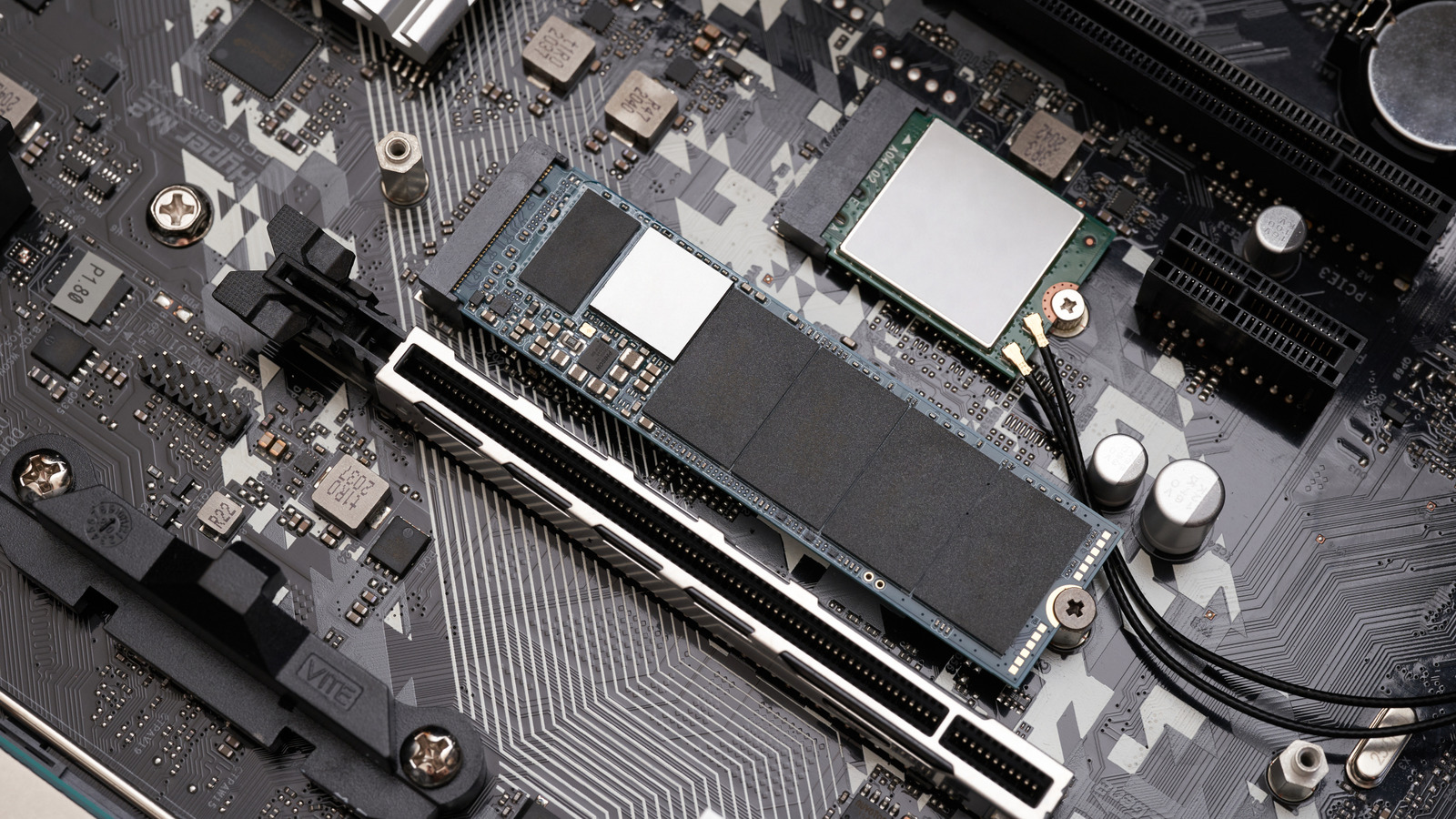
An M.2 NVMe SSD is a thin, rectangular-shaped drive that is very common among current electronic devices with expandable storage. NVMe SSDs are fast, small, and widely available, but they don’t come in very large sizes. While you may find HDDs with storage capacities of up to 30TB, the largest M.2 NVMe SSD available tops out at 8TB. It’s not 122.88TB, but 8TB is still plenty for most PC users, and buying isn’t considered a risky financial decision. Western Digital’s WD_Black 8TB NVMe SSD retails for $599. While it’s not as fast as the first PCIe 5.0 SSD, it reaches speeds of up to 7,200MB/s, making it ideal for downloading storage-hungry games and other large files. The best part is you can buy it straight from Amazon. 

Samsung just announced the 8TB 9100 Pro, which isn’t yet available for purchase. This drive uses PCIe 5.0, resulting in sequential read speeds of up to 14,800MB/s and write speeds of up to 13,400MB/s. That puts the WD_Black 8TB SSD to shame, and that’s because the Samsung 8TB 9100 Pro is designed for the most demanding users. This SSD was made with PS5 in mind, so it can fit in the console, even with the heatsink installed. For all that performance and storage, Samsung is selling the 8TB 9100 Pro for $1,019.99. With Microsoft’s latest Windows 11 update reportedly “killing” some SSDs, first ensure you’re on the right update before buying and installing this drive. 

The largest external SSD for on-the-go creatives

If you’re the type to offload camera files to an external drive and edit at a coffee shop or on the plane, then a portable, high-capacity SSD is what you need. The Glyph Blackbox Plus U.2 comes in several storage sizes, ranging from a modest 7.6TB to a gargantuan 30.72TB, which is enough for hours of Apple ProRes RAW footage. While this external SSD is not as fast as the one in your PC, it has a respectable speed of 1,050MB/s. It’s made out of an aluminum shell that dissipates heat. The rubber exterior helps the drive withstand drops, though it’s not rated for dust or water. 

One downside of this drive is that it requires a power supply. You can’t power it via USB like most other drives. Additionally, it’s formatted for macOS, but it can be made to work with Windows by reformatting the drive. Finally, it’s incredibly expensive. The 30.72TB version costs $4,995. Flaws aside, if you’re looking for a drive that can hold everything you need while traveling or away from the office, the Glyph Blackbox Plus U.2 Enterprise Class NVMe SSD is worth looking into.

Source

Posted on

Why digital transformation has a physical address

For the better part of a decade, digital transformation has been discussed in terms of apps, data and cloud platforms. These are worthy topics, but they tend to float above the actual places where work happens. Offices, campuses, shared spaces: the physical backdrop has been an afterthought. 

That’s changing. The next phase of digital transformation won’t just live in server rooms or dashboards. It’ll be embedded in walls, ceilings and floor plans — spaces that can adapt as quickly as the business they house. 

This is where “intelligent-ready buildings” come in. A smart building typically automates the basics such as lighting, HVAC (heating, ventilation and air-conditioning) and room booking, for efficiency and comfort. An intelligent-ready building, on the other hand, goes further, by being built as an upgradeable platform that is network infrastructure-aware, data-rich and able to learn, predict and adapt as strategy evolves. Crucially, it treats the network as the unifying foundation for systems, security and data, making “smart” one component, not the end goal. 

For Cisco, intelligent-ready buildings underpin the firm’s focus on secure, resilient networks, integrated security models and the practical application of AI. The same architectures that connect critical infrastructure in hospitals and utilities are now modernising commercial building estates, linking connectivity, automation and sustainability insights in a single operational layer.

From showcase to salable 

A good example of this strategy is 150 Holborn in London, the European headquarters of Sidara, a collective of architects, engineers, designers and project management and digital consulting firms. 

The company aimed to bring its London-based businesses together under one roof, making the building not only a showcase of professional expertise but also a space to foster collaboration and synergy across its core brands. These include architecture firm Perkins&Will, project management company Currie & Brown, engineering consultant Introba and, for digital consulting and digital twins, Para. 

The building itself was designed to unite these businesses, enabling them to become greater than the sum of their parts and deliver more value to their customers. 

Most building projects still follow a familiar, and flawed, sequence: the landlord commissions the shell, someone else fits it out and IT gets bolted on at the end. Sidara has flipped this order. Network architects, sustainability specialists and real estate planners worked together from day one. The result is a single converged network linking landlord systems, tenant environments and a dense layer of sensors. Climate control, usage of space and energy consumption are managed in real time, and landlord and tenant systems talk to each other rather than operating as sealed islands. 

The pay-off isn’t just technical neatness. Early feedback indicates higher comfort scores, fewer service calls and sustainability credentials that sway leasing decisions. AI helps here, tuning climate systems, predicting maintenance and analysing space usage, but only because the digital plumbing is already in place. 

Without robust foundations like internet of things integration, edge processing and standardised interfaces, AI would be little more than a party trick. The accreditation results that Sidara has received speak for themselves, receiving a “platinum” rating from the WiredScore, SmartScore global benchmark for smart building excellence and LEED (Leadership in Energy and Environmental Design), and “outstanding” from BREEAM (Building Research Establishment Environmental Assessment Method). 

The economics and the ecosystem 

Sidara’s 150 Holborn project is a flagship, but the retrofit story might be even more persuasive. At Cisco’s Finsbury Circus site in London, 75% of floor space is now dedicated to small-group collaboration. Fixed desks have been cut from 95 to 50, and “elastic” zones shift between solo work, team sessions and events. The approach is archetype-based: define standard space mixes, technology baselines and design rules, then replicate them at speed without reinventing the wheel each time. 

The economics sharpen the argument. Cisco spends about $1bn per year running its real estate portfolio. Real-time occupancy data stops overprovisioning and energy systems respond to actual demand, reducing costs and carbon emissions. CCS Insight’s Survey: Senior Leadership IT Investment, 2025 shows that more than half of decision-makers now rank energy efficiency and sustainability as top workplace investment priorities. This is precisely what that intelligent-ready buildings are designed to address. 

It’s also about how projects are delivered. 150 Holborn relied on a consortium — Sidara, Cisco, Schneider Electric, Ideal and Para — blending their expertise into a single offer. Working alone, each partner might win 40% to 50% of bids; together, they estimate win rates closer to 80%. Security is designed in, not patched on later, with identity-based access, network segmentation and continuous monitoring forming the baseline. 

The model travels well. For example, Cisco’s Paris office leans toward denser meeting rooms and strong acoustic treatments, the New York office emphasises executive briefings and client-facing spaces, and London’s Finsbury Circus office opts for agile collaboration zones. Regulations and cultures differ, but the integration patterns and data model remain consistent. 

A more grounded route to better workplaces 

The ambition is simple: make intelligent-ready buildings as typical as high-speed internet. That means having a playbook of proven designs and integration patterns that landlords, developers and occupiers can adapt rather than build from scratch. 

For all the hype about the AI-first future, I believe intelligent-ready buildings are a grounded way to deliver results today. They also help create a platform of digital infrastructure that agentic AI can learn to orchestrate and optimise. Intelligent-ready buildings bring the physical and digital together from the outset, creating workplaces that work harder for people, budgets and the environment. 

Digital transformation isn’t just happening in the cloud. It’s happening in the walls around us. We explore these case studies, economics and design principles in-depth in CCS Insight’s upcoming Insight Series report. 

Bola Rotibi is chief of enterprise research at CCS Insight

Source