Posted on

This video is our best look yet at Apple’s iOS

Conflicting rumors about the overhauled design of Apple’s iOS 19 update have been circulating for months, but on Monday, a new leak might have provided some clarity.

A few weeks ago, Front Page Tech shared an “exclusive first look” at iOS 19, supposedly giving us an early look at Apple’s 2025 software refresh for the iPhone. Shortly after the video went up, Bloomberg’s Mark Gurman took to social media to note that the leaked images were “based on either very old builds or vague descriptions.”

Front Page Tech didn’t immediately respond to the accusation, but today, the channel uploaded another video, firing back at Gurman and sharing even more details about the software:

Front Page Tech host Jon Prosser claims that Gurman’s post actually prompted him to go back and take a closer look at the leaked iOS 19 build. When he did, he noticed that tapping on icons changed their shape. The icons suddenly became more rounded, similar to the look of the apps on visionOS, but not quite a perfect circle.

Tech. Entertainment. Science. Your inbox.

Sign up for the most interesting tech & entertainment news out there.

By signing up, I agree to the Terms of Use and have reviewed the Privacy Notice.

Other changes in iOS 19 uncovered this time around included on-screen elements shimmering when the phone moves, rounder brightness and volume sliders in Control Center, new animated tabs at the bottom of Apple’s first-party apps, the search field at the bottom of the Messages app, and subtle visual changes to the Settings app.

Finally, Front Page Tech revealed a new feature for the Camera app. According to Prosser, the iPhone 17 Pro and 17 Pro Max models will allow users to record videos with the rear-facing and front-facing cameras simultaneously. This very feature has been available on Samsung phones for over a decade, but better late than never, I guess.

Gurman has yet to say anything about this video, but we’ll be keeping our eyes peeled.

Source

Posted on

Open Broadcast Systems intros 5G Assist to enhance remote production

Aeound a year ago, Open Broadcast Systems introduced its OBE 5G Flyaway mobile bonding solution system to allow sports broadcasters to reach fibre and satellite picture quality over cellular networks and deliver them as standard Constant Bitrate MPEG Transport Streams. To further its mobile video portfolio and enhance remote production over the public internet, it has now introduced 5G Assist.

London-based Open Broadcast Systems said that it is revolutionising the provision of advanced broadcast technology, moving the industry towards a flexible, cost efficient and software-driven future. Its solutions are designed to deliver services to mass audiences on a frequent basis including major sporting and breaking news events.

The company said that its products are designed to adapt to the pressures and challenges of the modern broadcast environment, and that in being intrinsically agile its solutions can be developed and installed in extremely short timeframes, without compromising on quality.

As it made the launch of the new 5G Assist product, the low-latency encoding and decoding firm said using the using the public internet for remote production has obvious benefits in terms of flexibility and cost-efficiency. The new technology is available immediately in Open Broadcast Systems software-based encoders and decoders, which see use in delivering premium video content over any network.

However, the company conceded that as a shared resource the public internet can lead to severe challenges when it comes to packet loss and picture quality.

In operation, 5G Assist uses a supplementary network, such as a telecoms operator’s mobile network or a satellite infrastructure, alongside the main internet connection to perform packet recoveries, in addition to recovery attempts performed over the main connection. Using 5G Assist, Open Broadcast Systems assured that broadcasters can reduce packet loss and lower overall latency in their remote productions when using the public internet.

“5G Assist is a game changer, enabling broadcasters to get the best of both worlds with the flexibility and cost-savings of public internet and the low-latency that remote production needs,” said Kieran Kunhya, founder and CEO of Open Broadcast Systems.

The launch of 5G Assist comes just weeks after the latest development in the UK government-backed Mobile O-RAN for Highly Dense Environments (5G MoDE) project, which saw its team successfully deliver a temporary Open Radio Access Network (O-RAN) 5G Cell on Wheels outside the Twickenham rugby stadium at the recent England vs Italy Six Nations rugby fixture.

5G MoDE believes that its work is “not just about winning a competition”, but about redefining the future of mobile connectivity. The project aims to have a significant impact on the high-density mobile traffic landscape, driving the adoption of open mobile networks and creating a more connected and empowered world.

Open Broadcast Systems believes it can enhance spectrum efficiency, reduce energy consumption, optimise network capacity, minimise environmental impact and provide superior service, even in densely populated areas such as stadiums hosting sporting occasions where large amounts of video are streamed.

The 5G assist launch also comes just after leading UK BT announced the first successful trial of multicast-assisted unicast delivery (MAUD) live streaming platform.Developed in collaboration with Broadpeak, MAUD is designed to enhance live video streaming quality and reliability for viewers and increase content delivery efficiency for broadcasters and content delivery networks (CDNs) by flattening peaks of network traffic by switching to multicast delivery, which is a more efficient way of delivering content over the internet.

Source

Posted on

Should you rush to buy an iPhone before Trump’s tariffs

If you’re considering buying a new iPhone 16, it’s better to do so sooner rather than later. Even though Trump’s tariffs can change before taking action and during the next few months, it’s almost certain that iPhone 17 models will, at least initially, be more expensive than previous models.

However, the rush to get an iPhone these past few days may be unnecessary. As Bloomberg‘s Mark Gurman and Rthvika Suvarna reported, US customers are rushing to get new iPhones as though Apple might announce price hikes in a matter of days.

The report reveals that over the weekend, Apple Stores felt like they typically do during the holiday season. One employee told the publication: “Almost every customer asked me if prices were going to go up soon.” Another said: “People are just rushing in worried and asking questions.”

This frenzy is making people buy iPhones, as Bloomberg reports US retail stores “saw higher sales over this past weekend than in prior years in at least some major markets.”

Tech. Entertainment. Science. Your inbox.

Sign up for the most interesting tech & entertainment news out there.

By signing up, I agree to the Terms of Use and have reviewed the Privacy Notice.

As we all know, most iPhone models are manufactured in China, which will be slapped with tariffs of at least 54%. While BGR reported that the most expensive next-gen iPhone model could cost up to $2,300, it’s unclear at this moment how much of the impact Apple is willing to absorb itself.

Still, the company is no stranger to Trump’s administration, and it’s been already moving US production to countries where tariffs will be lighter, such as India. In addition, Apple has enough iPhone models in stock to avoid raising prices initially.

India might be the key to avoiding iPhone price hikes

In a separate report, The Wall Street Journal writes that Apple still doesn’t plan to shift production as the tariff situation is “too uncertain.” The publication says Tim Cook might be able to persuade Trump to exempt Apple devices from the tariffs.

After all, Apple is one of the largest and most important public companies in America, and it continues to invest back in the country with a $500 billion plan for the next few years.

In the meantime, Apple continues to ramp up manufacturing in India. The country is expected to produce 25 million iPhones this year, and it could meet approximately 50% of US iPhone demand in 2025.

Wrap up

At the end of the day, the situation is still under development, and things could change in a matter of hours. Right now, China could get even more tariffs. We’ll see how Apple and other companies navigate these uncertain times, and we’ll let you know if Cupertino makes a proper announcement.

Source

Posted on

How to remove yourself from Google results and any other

This is a sponsored article. All content and opinions expressed within belong to the author.

What sort of results do you find when you search Google for your name? I’m not just talking about the first page, with your social media profiles and your LinkedIn account. I’m talking about the deeper pages. Have you ever really taken the time to dig? Well, you should, because potential colleges, universities, employers, and business partners aren’t going to stop on the first page. Plus, you’ll likely notice that plenty of data brokers and people search services are out there trying to sell your private data, including your email, phone number, mailing address, and even social security number.

Incogni is a service that I’ve covered before here at BGR. It’s an awesome site that makes it so easy to remove your personal info from data brokers and people search websites. Now, in addition to all the great features I’ve already covered, Incogni is launching a new unlimited plan that takes things even further. With Incogni’s big upgrade, you can have your personal info removed from Google search results and any other web pages you want, not just common data broker sites.

I already covered why it’s so important to have your private information removed from people search sites and data broker websites. In a nutshell, that’s where malicious actors get your info so they can target you.

Why you need to remove your info from data brokers

When it comes to scams, spam, robocalls, marketing mailers, phishing, and other unwanted contact, marketers or malicious individuals generally get your info in one of two ways. First, they might hack a website you’re registered on, or they might purchase hacked info on the dark web. But the second and far more common way is to purchase personal data in bulk from a data broker or people search site.

Tech. Entertainment. Science. Your inbox.

Sign up for the most interesting tech & entertainment news out there.

By signing up, I agree to the Terms of Use and have reviewed the Privacy Notice.

These annoying websites exist for one single purpose. They scrape public records and other sources to find personal information on as many people as possible. Then, they sell that information to anyone and everyone willing to pay. They’re a huge nuisance, but there’s nothing we can do to eliminate them. What we can do, however, is use a service like Incogni to have our private info removed from these sites.

As I explained before, Incogni is so easy to use. Once you’re signed up, simply add your phone numbers, email, and mailing addresses to your profile. Then, Incogni monitors more than 250 different people search sites and data brokers for your info. When it finds something, the service automatically submits a removal request on your behalf and monitors the site until your information has been removed. There’s also a dashboard in Incogni that lets you monitor the whole process if you want.

Data brokers and people search sites aren’t the only problem

Incogni is so great at removing your personal info from popular data brokers. It also does wonders with pesky people search sites. But what about all the other websites out there that might be holding your info hostage? And what about all the Google search results you find with your name and details that you wish weren’t out there?

That’s where Incogni’s new unlimited plan comes in.

When you find your personal information on sites that aren’t common data brokers or people search sites, getting it removed can be a huge pain. Sometimes, it’s actually impossible because you can’t find anywhere to submit your removal request.

Instead of spending all that time and effort, there’s now an easy way to remove yourself from Google search results and other websites. If you have one of Incogni’s new unlimited plans, you can simply submit the URL of the site that has your personal info. Incogni will handle the rest, and you can monitor progress on the same dashboard that you already used with your old Incogni plan.

It literally couldn’t be any easier.

First and foremost, this new URL submission feature works with any data broker or people search site. This is great in the event that you find your info on a smaller site that isn’t included in the 250+ sites Incogni already monitors. On top of that, you can also submit URLs from just about any other type of site you find your info on. Restrictions prevent it from working with social media, government records, blogs, and forums, but everything else is fair game. Just upload the URL, and Incogni will take care of it.

How much does it cost?

If you ask me, Incogni is worth its weight in gold. I would’ve paid any price to eliminate spam, scam texts, and all the other annoying things that Incogni eliminated for me. Thankfully, however, the company’s prices are very reasonable — especially with the deals that are available right now.

Here are the current prices with Incogni’s discounts of up to 50% off annual plans:

  • Individual plan (annual): $99.48 ($8.29/mo)
  • Family & Friends plan (annual): $197.88 ($16.49/mo)
  • Individual Unlimited plan (annual): $179.88 ($14.99/mo)
  • Family Unlimited plan (annual): $359.88 ($29.99/mo)

All plans support up to 3 US-based phone numbers, 3 email addresses, and 3 mailing addresses for the primary account holder. With the Family & Friends plan and the new Family Unlimited plan, you can also add up to 4 loved ones along with all of their info.

Follow Incogni

Source

Posted on

This iPhone 17 Air dummy shows off Apple’s impossibly thin

Following Bloomberg‘s Mark Gurman’s report that the two-toned back color leaks for the iPhone 17 Pro were wrong, new iPhone 17 Air dummies show off the mono-color design we’re now expecting. With that, we now have a clearer picture of what the iPhone 17 lineup might look like based on the long-rumored Air version.

Over the weekend, Gurman wrote: “The iPhone 17 Pro won’t have a two-toned back, I’m told. The camera area will be the same color as the rest of the device. That speaks to the more gradual design changes that Apple is making: The iPhone 17 Pro isn’t a major departure from current models.”

Now, X user Majin Bu has shared some iPhone 17 Air dummies that align with Gurman’s report. As you can see in the images, the iPhone 17 Air has an all-black design that keeps the same color across the back of the phone and the camera bar module. We also get a good look at the ultra-thin design, which is rumored to be between 5.5 mm and 6.0 mm thick.

It looks pretty incredible, all things considered.

Tech. Entertainment. Science. Your inbox.

Sign up for the most interesting tech & entertainment news out there.

By signing up, I agree to the Terms of Use and have reviewed the Privacy Notice.

Still, rumors expect this camera module to be the thickest part of the iPhone 17 Air, up to 9.5mm thick. In addition to the Action and volume buttons, the side button can also be seen. While reports expect the iPhone 17 Air to feature Camera Control, the dummy unit doesn’t have it.

It’s also worth noting that some of the tech that will debut on the iPhone 17 Air is expected to pave the way for a foldable iPhone.

Finally, we expect this device to have Apple’s A19 chip, Apple’s own Wi-Fi, and 5G modems. It’s unclear if the iPhone 17 Air will get a revamped version of the C1 chip introduced with the iPhone 16e or if the company will use the same version without mmWave support and other minor features.

In addition to this device, Apple is expected to introduce an iPhone 17 model with the same look as the iPhone 16 and redesigned iPhone 17 Pro and iPhone 17 Pro Max options.

Source

Posted on

Spoofing vuln threatens security of WhatsApp Windows users

Facebook parent Meta has warned of a significant vulnerability in the Microsoft Windows version of its popular WhatsApp messaging platform that could leave users at risk or falling victim to a variety of cyber attacks, up to and including ransomware incidents.

In an online advisory, Meta said that the spoofing issue – which exists in versions prior to 2.2450.6 and is being tracked as CVE-2025-30401 – causes WhatsApp to display attachments sent via the messaging platform according to their Multipurpose Internet Mail Extension (MIME) type but to select the file opening handler based on the true filename extension of said attachment.

In this instance, should a malicious actor deliberately alter the MIME type, they could cause the recipient to inadvertently execute arbitrary code rather than view the attachment when they manually open it inside WhatsApp.

In practice, this means that a victim might see an attachment appearing to be an innocent .jpeg file and be convinced to open it, only to have it turn out to be a .exe file – that is to say, malware.

Meta highly favoured by cyber criminals

The disclosure of CVE-2025-30401 comes hot on the heels of new data, released by online bank Revolut, revealing that during 2024, WhatsApp was the main vector for one in five scams in the UK, and their volume grew by 67% between June and December.

More widely, Meta platforms, including Facebook and Instagram, are highly favoured by cyber criminals thanks to their large consumer user bases who often lack a clear understanding of basic personal security measures.

“Most people will be part of a WhatsApp group where it is common for images to be shared and this is where this vulnerability becomes dangerous,” said Adam Pilton, senior cyber security consultant at CyberSmart.

“If a cyber criminal was able to share this image either in your group or with someone you trust who then goes on to share it in your group, anybody in that group could unknowingly execute the malicious code associated with the shared image.”

Martin Kraemer, a security awareness advocate at KnowBe4, said that the near-universal use of WhatsApp made such vulnerabilities potentially extremely impactful, not just to consumers but to organisations as well.

“WhatsApp has become such an integral part of life from organising hairdresser appointments to sharing CVs with recruiters. As the preferred platform of communication, the Windows client has become an essential little helper for many running in the background while we go about our professional and private duties,” he said.

Because WhatsApp is so entrenched with our communication and working habits, we have developed automatisms, a high level of trust, and a dependency that attackers love to exploit as is happening with this vulnerability in the windows client. The vulnerability must not be taken lightly and users should update their software to the newest version now.”

Kraemer warned that in the interim, WhatsApp users should always exercise extreme caution when opening attachments or files sent to them via the service. Ideally, he said, best practice is to treat it as one would treat one’s email account, and never open unexpected files, particularly not one from new contacts.

“It is good to see however that the solution is at hand and simple to achieve and that is to apply an update to WhatsApp,” added Pilton.

“Cyber criminals will continue to exploit vulnerabilities within the software we use and the software providers will continue to provide updates or patches that protect us against the attacks that cyber criminals use. This is why vulnerability management, also known as applying the updates that software providers issue, is so important.”

Source

Posted on

iOS 19: Rumors, features, release date, supported devices, more

iOS 19 is Apple’s upcoming operating system for iPhone models. It’s expected to be announced during the WWDC 2025 keynote ahead of a public release in September 2025. Apple is expected to expand its Apple Intelligence features, as it still needs to catch up with Google, OpenAI, and other big AI rivals. Here’s everything you need to know about the upcoming iOS 19 operating system update.

When will Apple announce iOS 19?

Image source: Apple Inc.

If Apple follows the trend, it should announce iOS 19 during the WWDC 2025 keynote. The Worldwide Developers Conference will take place from June 9 to June 13. While it was previously held at the San Jose McEnery Convention Center in California, Apple changed how it promoted WWDC to a pre-recorded keynote when the pandemic started. Still, the company invites the media and developers to watch it from the Apple Park campus in Cupertino.

As of now, Apple has already begun work on iOS 19, which is codenamed Luck.

Release date

iOS 19 is expected to be released in September 2025. Apple usually says the new system update will be available “in the fall.” However, the company has released it later in September for the past few years.

Tech. Entertainment. Science. Your inbox.

Sign up for the most interesting tech & entertainment news out there.

By signing up, I agree to the Terms of Use and have reviewed the Privacy Notice.

Still, some rumors say Apple won’t make all major iOS 19 features available all at once. As a matter of fact, the most impressive functions might arrive in the first half of 2026.

Rumored iOS 19 features

So far, the main rumored features are related to the expansion of Apple Intelligence. Here’s what we know:

A major redesign is coming

Bloomberg‘s Mark Gurman reports iOS 19 “will fundamentally change the look of the operating systems and make Apple’s various software platforms more consistent.” According to the journalist, Apple will unify the look of iOS, iPadOS, and macOS to deliver a more straightforward experience through the platform.

With that, Apple will adjust the look of icons, menus, apps, windows, and system buttons. This is said to be the most significant redesign for the iPhone since iOS 7 and for the Mac since Big Sur. The primary goal behind these design overhauls is to bring more cohesion to Apple’s disparate operating systems.

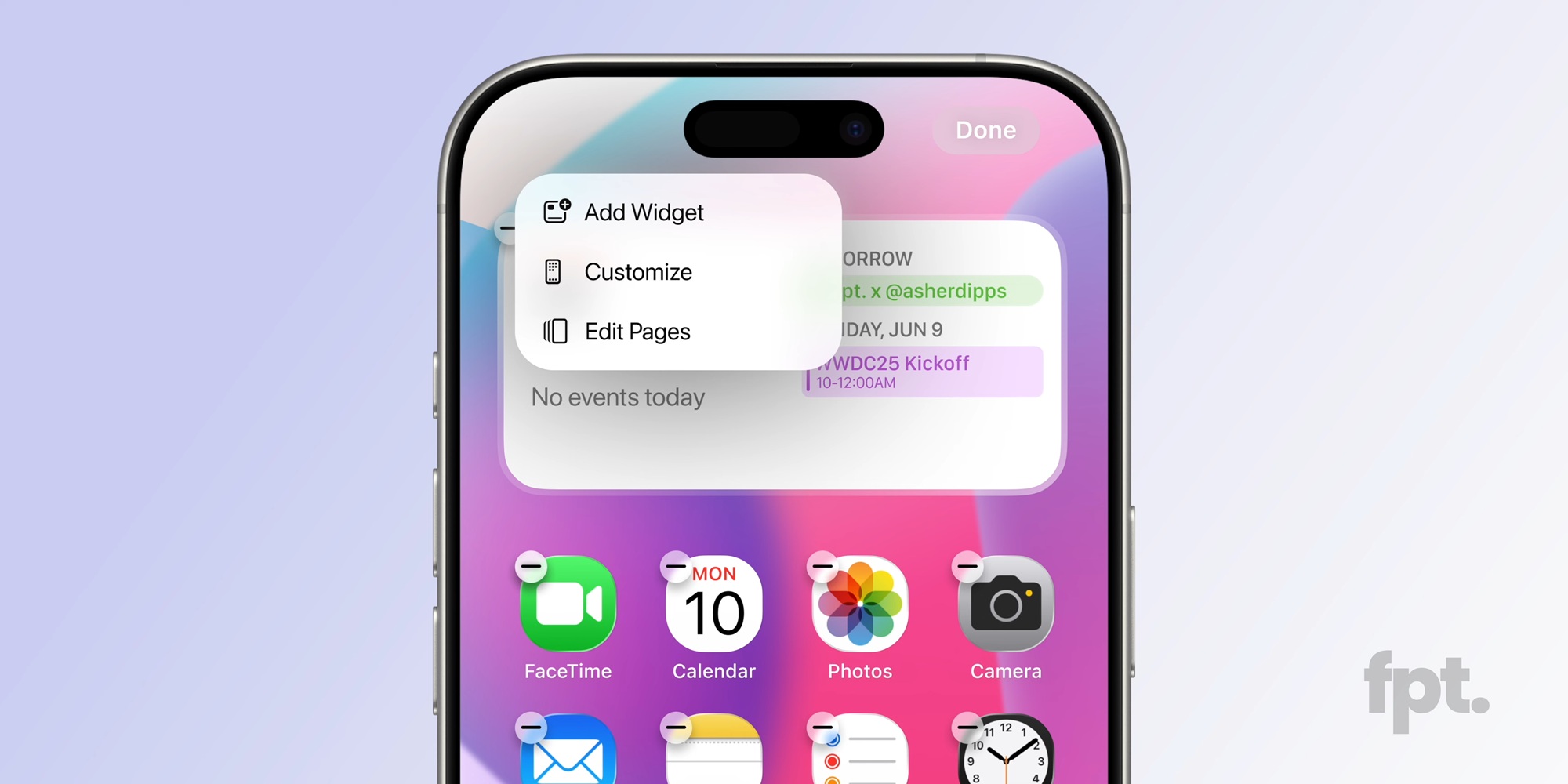
Besides that, in January, Front Page Tech suggested iOS 19 might get a redesign inspired by visionOS, especially the Camera app, which several users find more confusing than ever. With several layers of interaction, some have suggested Apple might need to make the Camera app simple again, and redesigning it with the visionOS UI might be a possibility.

Then, in April, John Prosser offered yet look at what he thinks will be Apple’s iOS 19 redesign, after Bloomberg‘s Mark Gurman said the leaked images were “based on either very old builds or vague descriptions.”

Front Page Tech host Jon Prosser claims that Gurman’s post actually prompted him to go back and take a closer look at the leaked iOS 19 build. When he did, he noticed that tapping on icons changed their shape. The icons suddenly became more rounded, similar to the look of the apps on visionOS, but not quite a perfect circle.

Potential leak of iOS 19 redesign. Image source: Front Page Tech

Other changes in iOS 19 uncovered this time around included on-screen elements shimmering when the phone moves, rounder brightness, and volume sliders in Control Center, new animated tabs at the bottom of Apple’s first-party apps, the search field at the bottom of the Messages app, and subtle visual changes to the Settings app.

Still, Gurman only reshared his old post on X, saying the images don’t represent what Apple is actually working on.

Finally, some iPhone users think the new Apple Invites and Apple Sports app could hint at a redesign of iOS coming in June.

Apple Intelligence will grow, but it might take a lot longer

Image source: Apple Inc.

Apple doesn’t have new Apple Intelligence features to introduce during the iOS 18 cycle. That said, the more advanced features will come in later 2025 or 2026 with iOS 19. According to Bloomberg‘s Mark Gurman, the first version of Apple Intelligence only offers “domestic” changes. However, a ChatGPT-like model is coming at a later date:

These upcoming upgrades will make Siri easier to use on a day-to-day basis, but it’s not the brain transplant that the service really needs. Siri is still based on an outdated infrastructure — AI models that have been overtaken by the technology used by ChatGPT and Google’s Gemini. Siri hasn’t yet been rebuilt for the generative AI age, even if Apple is trying to create the impression that it has.

It’s not just the LLM Siri chatbot that won’t be released in 2026. Gurman says that a “larger-than-usual number of features scheduled for iOS 19 (beyond the new Siri) are already postponed until spring 2026 (when iOS 19.4 debuts).”

In March, Apple announced that the long-awaited personalized Siri experience in Apple Intelligence will be available in the “coming year” as the company delays the most important AI feature to date.

Siri GPT

According to Bloomberg’s Mark Gurman, Apple’s new version of Siri will employ more advanced large language models (LLMs) to allow users to have long back-and-forth conversations with the virtual assistant. Sources also claim that “LLM Siri,” as Apple employees have dubbed it, will be capable of handling more sophisticated requests even faster.

Apple is currently testing the upgraded Siri on iPhones, iPads, and Macs as a standalone app, but the goal is to eventually replace Siri with the new version. Apple plans to introduce LLM Siri next year as part of iOS 19 and macOS 16 (codenamed Luck and Cheer).

As was the case with Apple Intelligence this fall, the new Siri reportedly won’t launch alongside the new hardware in 2025. Rather, Apple will announce it next year and start rolling out the upgraded Siri as early as spring 2026.

“The revamped Siri will rely on new Apple AI models to interact more like a human and handle tasks in a way that’s closer to ChatGPT and Google’s Gemini,” Gurman explains in his report. “It also will make expanded use of App Intents, which allow for more precise control of third-party apps. And the software will be able to tap into features from Apple Intelligence, such as the ability to write and summarize text.”

Revamped Health app

In January 2025, Bloomberg‘s Mark Gurman said Apple plans to revamp the Health app with the new Apple Watch lineup. While it’s unclear what could be changed, Cupertino has focused a lot more on the Health app due to its focus on the well-being of Apple hardware and software.

New emoji

New emoji coming to iOS 18. Image source: Unicode/José Adorno for BGR

Apple always adds new emojis during every iOS cycle. Even though they don’t come with the first major update, the company unveils them during the life cycle of the newest operating system.

Official iOS 19 download

iOS 19 hasn’t been officially announced. Therefore, you cannot test it or download its official version.

iOS 19 beta download

iOS 19 hasn’t been announced yet. That said, you can’t download its beta version. Once it’s available, make sure you have your developer account enrolled on your device, or you’re part of the Apple Beta Software Program. After that, follow the steps below:

  • On your iPhone, open the Settings app
  • Tap on General and Software Update
  • Tap on Beta Updates and enable iOS 19 Beta

Supported devices

iPhone 16 features two cameras on the back. Image source: José Adorno for BGR

With iOS 18, Apple maintained the same supported devices as iOS 17. However, more models may lose support as the company focuses on devices with 5G connectivity and Apple Intelligence support. These are all iPhone models that run iOS 18:

  • iPhone XR, XS, and XS Max
  • iPhone 11
  • iPhone 11 Pro and 11 Pro Max
  • iPhone SE (2nd gen)
  • iPhone 12 mini and iPhone 12
  • iPhone 12 Pro and iPhone 12 Pro Max
  • iPhone 13 mini and iPhone 13
  • iPhone 13 Pro and iPhone 13 Pro Max
  • iPhone SE (3rd gen)
  • iPhone 14 and iPhone 14 Plus
  • iPhone 14 Pro and iPhone 14 Pro Max
  • iPhone 15 and iPhone 15 Plus
  • iPhone 15 Pro and iPhone 15 Pro Max
  • iPhone 16 and iPhone 16 Plus
  • iPhone 16 Pro and iPhone 16 Pro Max

A rumor says iOS 19 will continue to support all iPhone models iOS 18 supports. Still, it might not be the case for iPadOS 19.

Wrap up

BGR will keep updating the iOS 19 guide as we learn more about rumored features, its release date, and more. Below is a guide highlighting all the possible new features coming to iPhone 17.

Source

Posted on

Apple Vision Pro 2 reportedly set to launch later this

After a packed visionOS 2.4 update and rumors that visionOS 3.0 is going to be the most significant update to Apple Vision Pro so far, a new report indicates that Vision Pro 2 might be released this year. According to IT Home, Apple has increased production of its next headset and plans to release it “within the year.”

The publication says “multiple independent sources” confirmed that the panel, shell, and other key components of Vision Pro 2 are already in production, so IT Home believes Apple might soon release this device.

This report can be considered a follow-up to a story by Bloomberg’s Mark Gurman, who said later last year that Vision Pro 2 with the M5 chip could be released in 2025 or early 2026.

At the time, the journalist wrote: “Apple is working on several ideas for its Vision headset line, but at least one version of the second-generation Vision Pro — assuming it’s released — will look almost entirely like the current design. The big changes are internal, including a processor upgrade.”

Tech. Entertainment. Science. Your inbox.

Sign up for the most interesting tech & entertainment news out there.

By signing up, I agree to the Terms of Use and have reviewed the Privacy Notice.

IT Home also believes Apple won’t make fundamental changes to Vision Pro, as many of the parts used in the first generation will likely be reused for this new model.

Also, last year and again in 2025, The Information reported that Apple wanted (and eventually did) cancel Apple Vision Pro production due to lower-than-anticipated sales. Given that, it’s only natural that the company still has many Vision Pro parts in stock.

That said, customers shouldn’t expect a revolution with the new model. Still, Apple will likely boost it with better specs, hopefully making it lighter and less expensive.

It’s also unclear if the company will introduce a new iteration of the R1 chip or if it will improve battery life. A brand-new product is still a few years away, but if Apple releases Vision Pro 2 in the near future, it means the company still believes in its spatial computer vision.

Source

Posted on

Fibrus to deploy Deepfield network analytics, monitoring

Fibrus, a provider of broadband services across Northern Ireland and Cumbria, has signed a five-year agreement to deploy the Nokia Deepfield offering across its growing network, following a successful trial.

Claimed to be one of the fastest-growing broadband companies in Northern Ireland and Great Britain, connecting its first customer in 2019, the stated mission of Fibrus is to bring full-fibre broadband to homes and businesses across the nation. It brings fibre optic cables all the way to the premises, linking to Wi-Fi 6 technology and the Amazon Eero routers.

The operator and technology company have been working together for over five years, and in 2020, Fibrus selected Nokia to support the delivery of high-speed broadband services to underserved rural and regional homes and businesses in some of the hardest to reach areas of Northern Ireland.

The firm has been a key provider of access technology and resources to deliver future-proofed and industry-leading connectivity, which underpins Fibrus’s service.

As Fibrus expands its network, which has already connected over 100,000 customers and delivered connectivity to almost 400,000 premises, the Nokia Deepfield offering is regarded as providing critical network analytics capabilities, giving the operator greater insight into the nature of the traffic flowing through its infrastructure.

Deepfield is designed to correlate large data sets and infer “hidden” knowledge about a network, services and its subscribers, making this knowledge available for users to investigate through customised queries and on-the-fly visualisations. This is said to give an “un-siloed”, holistic view of a network, peering and transit, and all content delivery network (CDN) flows.

The Deepfield Cloud Genome will give insight into how a network delivers services (from CDN servers in a network) or internet-based application and content services to end systems, users and subscribers. All of such capability, said Nokia, would allow Fibrus to optimise network resources, ensuring that customers continue to receive reliable, high-performance broadband.

The deployment will also see Fibrus proactively manage the rapid growth of its network, driven by what is said to be a 50% take-up rate of fibre to the home services, including 2 Gbps products. Additionally, Nokia said the scalability of the Deepfield offering will enable Fibrus to cost-effectively manage future service expansions, such as 25/50/100G passive optical network technologies.

“Our commitment to guarantee exceptional service for our customers means we’re always looking for ways to innovate and improve our network,” said Shane Haslem, chief operating officer at Fibrus.

“The Deepfield solution from Nokia gives us the tools to understand our traffic better, protect against potential threats and reduce operational costs,” he added. “This partnership allows us to future-proof the digital infrastructure in the areas we serve, maintaining the highest level of service and security for our 100,000-strong customer base.”

Paul Alexander, vice-president and country general manager for the UK and Ireland at Nokia, said: “The Nokia Deepfield solution brings advanced network analytics, ensuring that Fibrus can maintain a secure and reliable network. This successful roll-out with Fibrus demonstrates the reliability and robustness of Nokia’s technology in supporting the company’s goal of delivering an enhanced customer experience.”

Source

Posted on

OpenAI’s Sam Altman just announced release timing for GPT-5

It feels like ages, but just a few months ago, the DeepSeek R1 model shook off the artificial intelligence world and made the big American techs reassess their schedules and release dates for their latest LLM updates.

This is why, in February, OpenAI highlighted its roadmap for its future releases, including the long-anticipated GPT-5 launch. Since then, much has happened, and the company has unveiled new features almost weekly, including the breakthrough success of the latest GPT-4o Image Generation, which made the ChatGPT servers fail due to so many people generating hundreds of thousands of AI images.

While OpenAI’s plans were to stop unveiling several ramifications for its GPT advancements, the company’s CEO Sam Altman gave an update on that, saying it’s been “than we thought it was going to be to smoothly integrate everything.”

In a post on X, Altman wrote: “Change of plans: We are going to release GPT-o3 and o4-mini after all, probably in a couple of weeks, and then do GPT-5 in a few months. There are a bunch of good reasons for this. But the most exciting one is that we are going to be able to make GPT-5 much better than we originally thought,” he writes.

Tech. Entertainment. Science. Your inbox.

Sign up for the most interesting tech & entertainment news out there.

By signing up, I agree to the Terms of Use and have reviewed the Privacy Notice.

Raising concerns about the demand OpenAI might get, Altman says his team “wants to make sure we have enough capacity to support what we expected to be unprecedented demand.”

Finally, he says OpenAI was able to “really improve on what we previewed for GPT-o3 in many ways.” That said, the Deep Research model will likely be faster, as it can take anywhere from 5 to 30 minutes to offer responses while also being smarter to reason.

Fortunately, we won’t have to wait long to learn more about the GPT-3o official release, as Altman already teased it will be in a couple of weeks. More importantly, it will only take a few more months before OpenAI’s GPT-5 lands.

Source