Posted on

Microsoft restates commitment to OpenAI amid analyst note about datacentre expansion rollbacks

Microsoft has pushed back against claims its decision to cancel and defer at least 2GW of datacentre projects in the US and Europe is indicative of its “fraying relationship” with OpenAI.

US analyst TD Cowen published a research note on 26 March 2025 that suggested the public cloud giant had cancelled and deferred datacentre lease agreements in the US and Europe that would have increased its compute capacity by at least 2GW.

The reason for the rollback on its plans was, according to TD Cowen, due to Microsoft’s decision not to support OpenAI’s incremental training workloads.

TD Cowen had previously said the two companies were involved in a “fraying relationship”, after Microsoft confirmed in January 2025 that the exclusivity cloud hosting deal between the two firms had been rejigged.

A Microsoft blog post, dated 21 January 2025, confirmed OpenAI had made a “large Azure commitment” that included “changes to the exclusivity on new capacity, moving to a model where Microsoft has a right of first refusal”.

This means Microsoft gets first refusal on whether or not it wants to host OpenAI workloads, but OpenAI also reserves the right to build its own capacity with other partners if Microsoft cannot meet its needs.

Microsoft has now issued a statement to Computer Weekly, pushing back on TD Cowen’s take on the situation, while also restating the strength of the working relationship between the company and OpenAI.

In reference to its decision to scale back its datacentre expansion plans, Microsoft said it’s “well-positioned” to meet the current and increasing customer demand it’s seeing for its services thanks to the “significant investments” it’s made in its infrastructure to this point.

“Last year alone, we added more capacity than any prior year in history,” said a Microsoft spokesperson. “While we may strategically pace or adjust our infrastructure in some areas, we will continue to grow strongly in all regions.

“This allows us to invest and allocate resources to growth areas for our future. Our plans to spend over $80bn on infrastructure this financial year remain on track as we continue to grow at a record pace to meet customer demand.”

Microsoft has been a partner in OpenAI since 2019, with the two firms previously stating that they were working towards a shared goal to “responsibly advance artificial intelligence research” while democratising the technology and making it accessible to all.

Around the same time that Microsoft released details of its reworked cloud hosting arrangement with OpenAI, the latter released details of its $500bn effort to expand the infrastructure underpinning its services through the launch of the Stargate Project.

Softbank, Oracle, MGX and OpenAI are the equity funders for the initiative, while Microsoft is listed as a technology partner.

In reference to its ongoing partnership with OpenAI, the Microsoft spokesperson said: “OpenAI continues to be a great partner. We remain committed to pushing the frontier of AI forward, driving innovation, and making cutting-edge models accessible to our customers and partners.”
Source

Posted on

OpenAI’s Sam Altman just announced release timing for GPT-5

It feels like ages, but just a few months ago, the DeepSeek R1 model shook off the artificial intelligence world and made the big American techs reassess their schedules and release dates for their latest LLM updates.

This is why, in February, OpenAI highlighted its roadmap for its future releases, including the long-anticipated GPT-5 launch. Since then, much has happened, and the company has unveiled new features almost weekly, including the breakthrough success of the latest GPT-4o Image Generation, which made the ChatGPT servers fail due to so many people generating hundreds of thousands of AI images.

While OpenAI’s plans were to stop unveiling several ramifications for its GPT advancements, the company’s CEO Sam Altman gave an update on that, saying it’s been “than we thought it was going to be to smoothly integrate everything.”

In a post on X, Altman wrote: “Change of plans: We are going to release GPT-o3 and o4-mini after all, probably in a couple of weeks, and then do GPT-5 in a few months. There are a bunch of good reasons for this. But the most exciting one is that we are going to be able to make GPT-5 much better than we originally thought,” he writes.

Tech. Entertainment. Science. Your inbox.

Sign up for the most interesting tech & entertainment news out there.

By signing up, I agree to the Terms of Use and have reviewed the Privacy Notice.

Raising concerns about the demand OpenAI might get, Altman says his team “wants to make sure we have enough capacity to support what we expected to be unprecedented demand.”

Finally, he says OpenAI was able to “really improve on what we previewed for GPT-o3 in many ways.” That said, the Deep Research model will likely be faster, as it can take anywhere from 5 to 30 minutes to offer responses while also being smarter to reason.

Fortunately, we won’t have to wait long to learn more about the GPT-3o official release, as Altman already teased it will be in a couple of weeks. More importantly, it will only take a few more months before OpenAI’s GPT-5 lands.

Source

Posted on

Understanding of ‘black box’ IT systems will reduce Post Office scandal-like risk

Another Post Office scandal could be avoided if leaders in public bodies understand the “black box” IT systems that run their organisations and encourage a “speak up” culture, according to a Parliamentary report.

In its latest report, Recognising and responding to early warning signs in public sector bodies, the Committee on Standards in Public Life cited the Post Office scandal, among others, to highlight failures in public bodies.

In his foreword, committee chair Doug Chalmers, a former British Army officer, said the Post Office Horizon, Grenfell, Windrush and infected blood scandals are “very different in nature” but all had “a catastrophic impact on human lives”.

“It isn’t hard to find common themes among these scandals – a failure to listen to and act on concerns raised, a failure to learn lessons from similar incidents, and a failure to identify and share emerging risks,” he wrote.

The Post Office scandal was fuelled by all of these failures and more. The Post Office management ignored subpostmaster pleas that the Horizon IT system was causing unexplained account shortfalls and failed to investigate them, choosing to blame the subpostmasters for discrepancies that didn’t exist outside the IT system.

The failures went way beyond the Post Office itself, with its government owner neglectful of the so-called “arms-length” body. Meanwhile, Fujitsu, the supplier of the controversial IT system, made the Post Office aware of problems with Horizon but did not make them public. The supplier’s staff even gave evidence during the trials of subpostmasters, who were charged with crimes of dishonesty, where they wrongly stated that Horizon could not have been responsible for the unexplained shortfalls in branch accounts.

The Committee on Standards in Public Life report said “black box” systems like Horizon, which not only ran the accounts of thousands of Post Office branches but also provided data to prosecute people, must be understood by leadership teams.

Systems like Horizon are described as black box because it is clear what is input and output, but not the workings in between.

“Leaders of organisations that use ‘black box’ systems should be asking themselves whether they are confident that they have sufficient understanding and oversight of how these systems operate or whether they need greater assurance about their use,” said the report.

Beyond the system itself, the report said people need to be empowered to “speak up” when they see failures. During the Horizon scandal, which began when the system was introduced in 1999/2000, dissenting voices were silenced and the Post Office managed to keep a lid on talk about Horizon problems until 2009, when Computer Weekly helped campaigning former subpostmasters make the Horizon problems public. In that time, huge suffering had been inflicted on subpostmasters, who were blamed and punished for unexplained accounting errors, including hundreds being wrongfully imprisoned.

Beyond the human suffering, the scandal, which could have been prevented following warnings in the late 1990s, is set to cost UK taxpayers billions of pounds.

The report foreword advised on what organisations can do to increase the “likelihood of risks and issues being uncovered”.

“Culture and leadership, at all levels, are central to ensuring that these processes are effective. And that building an organisation where it is second nature for people to speak up about concerns is an art and not a science,” it stated.

“It is not always easy to speak up – it requires moral courage to be the person who says, ‘I’m not sure this is going to plan’ or, ‘Is there a risk that if we do X, it will have these negative consequences?’”

According to Neil Gordon, a professor in computer science at Hull University and chair of the British Computer Societies Ethics group, the report also makes interesting reading for computing professionals beyond the public sector. “As professionals, we should be acutely aware of the impact of systems, whether safety-critical or apparently more mundane, such as accounting software.”

He added: “There is a need for those providing and supporting such systems to make sure our customers and users appreciate their limitations and deficiencies. Furthermore, this illustrates the need for all organisations – public or not – to consider their mechanisms for identifying risk and harm, and encouraging open dialogue with employees and others to address them.”

Gordon said IT experts can play a pivotal role in preventing organisational failure by analysing data to identify risks as early as possible and help in decision-making.

“Artificial intelligence [AI] may be an effective way to do that, provided the systems are themselves developed appropriately. Emerging technologies – from AI to quantum – will create new opportunities to promote human welfare, but equally, they can do harm,” he told Computer Weekly.

“Whilst the report presents a strong way forward, the need for different mechanisms – whistleblowing and scrutiny by the press – remains and we welcome progress of support for those who do raise valid concerns,” added Gordon. “This also highlights the importance of codes of conduct and that we all have a duty to take on responsibility so we can reduce the likelihood of the sorts of historical failures described in the report, and to minimise the damage where they occur by identifying the problems early and raising the alert.”

A Post Office spokesperson said: “We will examine the report and any learnings in detail. The Post Office has made a number of cultural changes in recent years, including the appointment of serving postmasters to the board, and we operate a ‘speak up’ whistleblowing service enabling our employees and postmasters to raise concerns in confidence and anonymously if preferred.”

Computer Weekly first exposed the scandal in 2009, revealing the stories of seven subpostmasters and the problems they suffered due to Horizon accounting software, which led to the most widespread miscarriage of justice in British history (see below timeline of Computer Weekly articles about the scandal since 2009).

Source

Posted on

Top 1,000 IT service providers in scope of UK cyber bill

The government has set out a series of ambitions and goals for the soon-to-be-introduced Cyber Security and Resilience Bill, including measures to better protect supply chain and operators of critical national services, which besides public services and utilities will now also includes IT service providers and suppliers – up to 1,000 of which are likely to fall into the scope of the planned measures – and potentially datacentre operators.

First trailed in 2024 shortly after Labour’s General Election victory, the overall aims of the Cyber Security and Resilience Bill are to improve the UK’s online defences, protect the public and safeguard growth in line with its wider Plan for Change Policy.

The government said its plans would help ensure organisations that provide essential services – IT and otherwise – across both the public and private sectors are a less tempting target for cyber criminals. It also wants to give the country greater confidence in digital services, which it is relying upon to support its overall economic growth mission.

Noting that cyber threats cost the UK over £22bn during the second half of the 2010s, it cited last summer’s attack on Synnovis that cost the NHS over £32m and suggested that a hypothetical cyber attack focused on energy services in southeast England could wipe over £49bn off the economy.

“Economic growth is the cornerstone of our Plan for Change, and ensuring the security of the vital services which will deliver that growth is non-negotiable,” said Peter Kyle, secretary of state for science, innovation and technology.

“Attempts to disrupt our way of life and attack our digital economy are only gathering pace, and we will not stand by as these incidents hold our future prosperity hostage. The Cyber Security and Resilience Bill, will help make the UK’s digital economy one of the most secure in the world – giving us the power to protect our services, our supply chains, and our citizens – the first and most important job of any government.”

Richard Horne, CEO of the National Cyber Security Centre (NCSC), added: “The Cyber Security and Resilience Bill is a landmark moment that will ensure we can improve the cyber defences of the critical services on which we rely every day, such as water, power and healthcare. It is a pivotal step toward stronger, more dynamic regulation, one that not only keeps up with emerging threats but also makes it as challenging as possible for our adversaries.

“By bolstering their cyber defences and engaging with the NCSC’s guidance and tools, such as Cyber Assessment Framework, Cyber Essentials and Active Cyber Defence, organisations of all sizes will be better prepared to meet the increasingly sophisticated challenges,” he said.

Effective response

As part of the bill’s progress, the government said it is now exploring measures to take to improve its ability to respond to emerging cyber threats and, critically, to take rapid action to protect national security. This could see the technology secretary granted powers to order regulated organisations to shore up their cyber defences.

Also on the table is the possibility of introducing a set of new protections for the UK’s 200 largest datacentres. Quite what these measures will entail is yet to be decided, but the government noted that it may look to artificial intelligence (AI) to help bolster the defences of the country’s datacentre estate.

Should the proposed bill make it to the statute books, its overall provisions will be largely similar to those already been set out in previous announcements.

Besides proposals to mandate ransomware incident reporting that have already been widely discussed and are currently the subject of an ongoing consultation, and widening the variety of organisations subject to cyber regulation, it will also give regulators more tools to improve cyber security and resilience in their specialist areas, and give the government more flexibility to update regulatory frameworks as and when the threat and technology environments evolve.

Source

Posted on

Amazon’s new shopping agent is a glimpse of the future of AI

I don’t know about you, but I’m tired of the ChatGPT images that have taken over the web for the better part of a week. OpenAI revealed that 130 million ChatGPT users created around 700 million AI images with its new tool.

I get it. The service is cool, and the technology is amazing. I used it, too, so I’m one of those millions of ChatGPT users who have used AI to generate images. But that’s not what I’m using AI for on a day-to-day basis.

Instead, I’d be more interested in AI tools that can do things for me and speed up my computing time. I want AI agents like ChatGPT Operator and Deep Research. The former is still unavailable to ChatGPT Plus users, but the latter is. Operator would let me give the AI browsing tasks, and Deep Research can create detailed reports about anything you’d throw at it.

I’m not limited to ChatGPT. I’ll consider any AI agent that can do things for me on the web, and the list includes Amzon’s brilliant Buy for Me AI agent that will let you buy products from other websites from within Amazon if they’re not available from Amazon. That’s a mind-blowing feature to have and something I’d want to use right away.

Tech. Entertainment. Science. Your inbox.

Sign up for the most interesting tech & entertainment news out there.

By signing up, I agree to the Terms of Use and have reviewed the Privacy Notice.

Amazon is one of the first places I visit when looking for a specific product. Any product. The chances are that Amazon stocks the exact product you want or has something similar. It’s a good place to start your shopping, especially during Amazon’s various sale events. But Amazon can’t stock everything, and that’s where Buy for Me comes in handy.

Amazon launched a new Buy for Me AI agent that lets you purchase goods from other websites from within Amazon, and that’s brilliant. If the thing you need isn’t part of the hundreds of millions of products Amazon stocks, the AI agent will browse other websites on your behalf. How cool is that?

It gets better, as Buy for Me will surface product offers for the item you want from third-party stores in a new section on the mobile app called “Shop brand sites directly.”

If you find your product from that third-party store, you’ll be able to tap the listing and open it within the Amazon Shopping app. You’ll get a familiar page for the product, which is similar to product pages that Amazon makes for the products it stocks.

The best part of the feature is in the AI agent’s name. Buy for Me will let you the item directly from Amazon.

Example of Amazon's Buy for Me AI agent in use to buy items on your behalf.Example of Amazon’s Buy for Me AI agent in use to buy items on your behalf. Image source: Amazon

Tap the Buy for Me button, and Amazon will buy the item for you. The purchase will happen on Amazon’s familiar checkout page, where you can choose from saved delivery addresses and payment methods. That means you won’t have to deal with that website’s checkout system or have your details saved with a different shop.

That’s a great feature to have, as I already trust Amazon to protect that sort of sensitive data.

It continues to get better; Amazon will encrypt your personal details and make that purchase on your behalf on that other website. You’ll then be able to track your order from Amazon’s website, though you’ll also receive order confirmation and shipping information from that third-party website via email.

Importantly, Amazon won’t get access to your shopping history from that site or others, which is also an important privacy feature. I don’t want AI agents like Buy for Me to remember my purchase history and preferences.

The only thing you can’t do via Amazon is handle returns and exchanges for a product purchased from a different site. You’ll have to go to that store for additional customer service.

It should go without saying, but I’ll say it anyway, Amazon Prime perks will not work with those third-party items. It’s up to that store to handle deliveries to you, not Amazon.

Animation showing the Amazon Buy for Me AI agent in action.Animation showing the Amazon Buy for Me AI agent in action. Image source: Amazon
Sadly, Buy for Me is only available in beta to a select few customers in the US. It’ll work on iPhone and Android, with Amazon Nova and Antrhopic Claude AI supporting the AI agent capabilities. It’s unclear when the AI agent will roll out of beta and when it’ll be available in Europe, where I do my Amazon shopping.

Also, the third-party websites the AI agent will visit and shop for items for you will presumably have to support Amazon’s new shopping experience. What I’m getting at is that it may take a while for Buy for Me to be useful.

You’ll find more details about Amazon’s Buy for Me AI agent at this link.

Source

Posted on

Inside Amazon’s robot-powered warehouse

Thank you for joining!

Access your Pro+ Content below.

1 April 2025

Inside Amazon’s robot-powered warehouse

  • Share this item with your network:

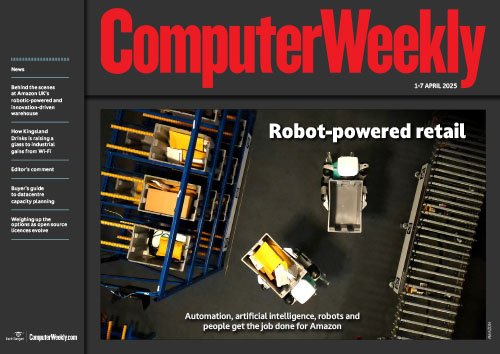
In this week’s Computer Weekly, we go behind the scenes at Amazon’s robot-powered Swindon warehouse to see how AI and humans are working together. We examine the state of open source licensing and find out how it’s affecting datacentre operators. And we visit a 130-year-old wine and drinks company to find out how technology has brought operations into the modern age. Read the issue now.

Source

Posted on

ChatGPT’s Studio Ghibli-style images spark fierce debate: ‘F*** these people.’

OpenAI has once again ignited a firestorm of controversy — this time, over ChatGPT’s new image-generation capability, which allows users to request Studio Ghibli-style artwork that looks, to the casual observer, indistinguishable from actual work created by the legendary Japanese animation studio.

Some users have embraced the feature, marveling at how easily they can generate stunning Ghibli-esque images. The backlash, however, has been quite severe, with artists and fans accusing OpenAI of profiting from stolen creativity.

The Internet reacts: ‘plagiarism program’

Social media has been flooded with outrage over what many see as blatant artistic theft. One viral tweet summed up the fury:

“OpenAI has stolen Studio Ghibli’s artwork & these morons are cheering and clapping for it as if this crap has actually achieved anything. They’re literally advertising a plagiarism program that hasn’t compensated nor sought permission from Studio Ghibli. F*** these people.”

Another critic on Twitter called out OpenAI’s leadership:

Tech. Entertainment. Science. Your inbox.

Sign up for the most interesting tech & entertainment news out there.

By signing up, I agree to the Terms of Use and have reviewed the Privacy Notice.

“The CEO of OpenAI openly brags about the Studio Ghibli AI slop that’s rendered this website basically unusable over the past few days. Just a complete disregard for intellectual property/copyright – he’s proud of how much theft they’ve accomplished!”

Users on Threads echoed the frustration, with one lamenting AI’s growing role in creative fields:

“I’m so tired of hearing about AI. It’s being pushed down our throats, and the latest ChatGPT image generator is just another example. AI has a use case to replace boring manual tasks like data entry or building slide decks. It will revolutionize medicine. It can do things faster than humans ever will. But why are we using it to replace creative work? Use AI to replace the boring, repetitive work, and let humans do what we do best – creating unique pieces of art.”

Can Studio Ghibli sue?

Unfortunately, for everyone demanding that Studio Ghibli take legal action, Japan has taken a notably lenient approach to AI and copyright. According to a report from DeepLearning.AI, Japan appears to be the only major country that has explicitly made it legal for AI models to train on copyrighted works. That means, even if OpenAI had trained its models on Ghibli images, they would have done nothing illegal under Japanese law.

When I asked it directly about the issue, ChatGPT itself provided a carefully worded response, stating that OpenAI has not explicitly confirmed whether it trained its AI models on Studio Ghibli images or other copyrighted works from Japan. However, it continued, given Japan’s relaxed stance on AI and copyright, it’s legally possible that OpenAI could have used such materials for training.

Hayao Miyazaki saw this coming

Long before AI could generate Studio Ghibli-style art in seconds, legendary filmmaker and Ghibli co-founder Hayao Miyazaki made his feelings about AI-generated art clear. In a documentary, when told that computers would eventually be able to paint like humans, he responded:

“If they do that, we won’t need humans.”

Miyazaki didn’t mince words about his distaste for AI-generated creativity, adding:

“I fear the world’s end is near. Humans have lost confidence. Hand drawing’s the only answer.”

As OpenAI continues to push the boundaries of what AI-generated content can do, the debate over intellectual property, artistic integrity, and the role of AI in creative industries is only going to intensify. The question now is: If Studio Ghibli can’t stop this, who can?

Source

Posted on

ChatGPT image generation is running into yet another big problem

OpenAI unveiled its latest image generation model earlier this week. But rather than creating a separate product, it built the GPT-4o image generation abilities right into ChatGPT. That made it even easier to come up with mind-blowing ChatGPT-generated images. Just type your detailed prompt, and ChatGPT will deliver the images you want. That includes pics that contain legible text, images that offer creative edits to real photos, deepfakes of celebrities, and more.

ChatGPT went viral overnight for its amazing image generation capabilities, as users with access to one of the paid tiers flooded the web with AI images. This sparked a new controversy due to the massive wave of Ghibli-inspired photos that flooded the web. As we explained before, OpenAI doesn’t seem to care that it’s creating deepfakes and ripping off copyrighted content.

Rather than taking steps to prevent the obvious abuse, Sam Altman & Co. are doubling down on the “freedom” they’ve embraced for this model.

While they don’t care very much about improving ChatGPT safety for the new 4o image generation model, they do care about resources. That’s why Altman announced that limits are coming to ChatGPT AI image generation, as OpenAI’s “GPUs are melting” due to the massive number of requests. So far, the OpenAI CEO only mentioned limits for the ChatGPT Free tier. That’s not much of an issue for the time being, however, since free users don’t even have access to the new image generation model.

Tech. Entertainment. Science. Your inbox.

Sign up for the most interesting tech & entertainment news out there.

By signing up, I agree to the Terms of Use and have reviewed the Privacy Notice.

Altman announced the limits on X, saying it’s “super fun seeing people love images in ChatGPT, but our GPUs are melting.”

it’s super fun seeing people love images in chatgpt.

but our GPUs are melting.

we are going to temporarily introduce some rate limits while we work on making it more efficient. hopefully won’t be long!

chatgpt free tier will get 3 generations per day soon.

That’s where he also noted that the ChatGPT Free users will be allowed to generate three images per day “soon.” 

When OpenAI unveiled the new image generation model, the company included the ChatGPT Free tier in the initial rollout plans. In practice, only ChatGPT Plus, Pro, and Team users have access to the feature.

I’m on a ChatGPT Plus plan and have already tried the service. I already generated more than three images with the AI, and I can see why it’s so appealing to do it, considering the new features ChatGPT built into it.

What I’m getting at is that paid ChatGPT users are more likely to use the feature and make those GPUs melt. But Altman announced no image generation limits for the Plus, Pro, and Team tiers.

I wouldn’t be surprised if such limits were implemented in the near future, at least as long as the service continues to receive heavy traffic. Those GPUs aren’t melting, but they’re working round the clock to generate images and satisfy other ChatGPT needs. That leads to increased energy consumption and associated costs.

Also, as a ChatGPT user myself, I don’t want to see other ChatGPT services get bogged down because OpenAI’s infrastructure is bogged down in generating images, especially if they’re deepfakes or copyright-infringing pictures.

Speaking of safety, Altman replied to the tweet above to say OpenAI is further improving the freedom ChatGPT has to generate images. Altman noted that OpenAI is “refusing some generations that should be allowed,” fixing them as fast as possible.

Source

Posted on

Pure aims at AI beyond the enterprise with FlashBlade//Exa

Pure Storage has announced FlashBlade//Exa, which aims at artificial intelligence (AI) and high-performance computing (HPC) workloads that demand extremely high throughput to graphics processing units (GPUs). That will serve customers between large enterprise users of AI and the hyperscalers.

At the same time, FlashBlade//Exa has also introduced a new architecture to a Pure product line, one in which metadata and bulk storage are disaggregated with different hardware and protocols in use.

All of which is in line with Pure’s orientation towards architectures used by the hyperscalers, and comes hot on the heels of last week’s revelation that Meta is the mystery hyperscaler that decided to buy Pure’s Direct Flash Modules (DFMs) for its own systems (see below).

According to Patrick Smith, field chief technology officer at Pure Storage, Exa addresses challenges in storage for AI that include GPU utilisation, inconsistent performance generally, all specifically with metadata, scalability and management complexity.

Exa aims at a performance level somewhat higher than current FlashBlade products, targeting AI factories and GPU-as-a-service providers such as Coreweave, Tenstorrent, DataCrunch and Foundry, as well as research labs, HPC users and sovereign cloud projects. All of which, Pure said, have performance needs in the 1TBps (terabytes per second) to 50TBps throughput range, with 100PB (petabytes) to multiple exabytes of capacity and support for thousands to tens of thousands of GPUs.

FlashBlade is Pure’s fast file and object family, although Exa appears to be file access-only for now.

“It’s next level in comparison to the FlashBlade S500,” said Smith, citing FlashBlade//Exa performance figures of greater than 10TBps read performance in a single namespace, 3.4TBps throughput per rack, and an increase of 20 times in the number of files handled under single namespace.

The novel architecture – for Pure – that lays the ground for the new product, is disaggregation between the metadata and bulk storage data nodes. Metadata is stored on FlashBlade nodes – ie with controller hardware – and connects to customers’ compute cluster via NFS v4.1 parallel file access and TCP. Meanwhile, data nodes connect via Network File System (NFS) v3 (not parallelised) and Remote Direct Memory Access (RDMA).

For the first time, Pure will offer this with Pure-recommended network interface cards (NICs) in customer-specified commodity non-volatile memory express (NVMe) storage servers, but later this year, Pure DFMs will be available for use with FlashBlade//Exa.

As mentioned, this is the first time Pure has released a product without its own DFM capacity, but according to Smith, a decision was forced by “acceleration in the AI [artificial intelligence] landscape, increased demand and especially increased scale”.

“And so, coming out with a platform that allows customers to meet those scale demands in terms of performance and capacity is something we felt we shouldn’t wait on,” he added.

This disaggregation of metadata storage and bulk storage, as well as the independent supply of its flash modules, is in keeping with recent developments that saw it unveil Meta as a hyperscaler customer for Pure’s DFMs.

Around the turn of the year, Pure announced Kioxia and Micron as quad-level cell (QLC) flash chip providers for DFM modules for supply to “a hyperscaler” customer. That customer has now been revealed as Meta, which has gone public with a blog post detailing a shift from hard disk drives to QLC flash.

That is for workloads that suit QLC’s performance profile of highly sequential data and infrequent/low-intensity writes due to its low write endurance, and because QLC is “not yet price competitive enough for a broader deployment”.

General availability of FlashBlade//Exa will be in summer 2025. Also planned for later this year are S3 object storage access via RDMA, Nvidia certification and Pure Storage Fusion integration.

Source

Posted on

ChatGPT celebrity deepfakes are going viral, and there’s only one way to stop them

The new ChatGPT 4o image generation model is the talk of the town, and not just for good reasons. Everyone is marveling at the AI’s amazing new abilities, which include generating legible text in images, creating fake photos out of real ones, creating deepfakes of celebrities, and replicating copyrighted content like Studio Ghibli characters. It all happens incredibly fast, with the AI able to respond to your needs.

But some people have been quick to point out the bad things about the new AI image model. First, the most obvious problem that we’re not really talking about is that ChatGPT has dealt a swift blow to all sorts of content creators, including graphic designers and photographers. Of course, we already have other AI image-generation programs that endanger those professions. This isn’t a ChatGPT safety issue, either.

The fact that ChatGPT-created images have no visible watermark to inform unsuspecting people they’re not real images is a big safety concern. More visible is the Studio Ghibli controversy, which shows that OpenAI is willing to let 4o image generation easily rip off copyrighted content.

The even more annoying thing about ChatGPT’s new image generation abilities is how easy it is to make deepfakes of celebrities. This one is especially troubling to me, an internet user, because malicious actors have unfettered access to the tool.

Tech. Entertainment. Science. Your inbox.

Sign up for the most interesting tech & entertainment news out there.

By signing up, I agree to the Terms of Use and have reviewed the Privacy Notice.

OpenAI has started paying attention to the criticism it received since the launch of 4o image generation, but it’s not taking any action, especially on the deepfake problem. It turns out the only way to stop someone from using your face with ChatGPT is to opt out of it with OpenAI.

As I pointed out before, OpenAI never addressed these ChatGPT security matters in its original announcement. But the company retweeted a blog post from OpenAI engineer Joanne Jang explaining the lax security features in ChatGPT 4o image generation. Sam Altman also retweeted the same blog post. Why not publish it on the OpenAI blog if this is the company’s official stance?

Jang, who leads model behavior at OpenAI, took to Substack to explain the lax safety features in ChatGPT 4o image generation. The engineer makes the case for OpenAI giving ChatGPT more freedom so users can unleash their creativity rather than be stopped by the AI’s refusal to generate images based on more drastic safety features.

“Images are visceral,” Jang says, and I definitely agree. “There’s something uniquely powerful and visceral about images; they can deliver unmatched delight and shock. Unlike text, images transcend language barriers and evoke varied emotional responses. They can clarify complex ideas instantly.”

Also, it’s great to see that OpenAI is more malleable when it comes to certain censorship features. Jang gives an example of how ChatGPT offensive content:

When it comes to “offensive” content, we pushed ourselves to reflect on whether any discomfort was stemming from our personal opinions or preferences vs. potential for real-world harm. Without clear guidelines, the model previously refused requests like “make this person’s eyes look more Asian” or “make this person heavier,” unintentionally implying these attributes were inherently offensive.

The blog also covers the use of hate symbols in images and the “stronger protections and tighter guardrails” for people under 18.

What’s more problematic is OpenAI’s openness to allowing ChatGPT to create deepfakes with such ease.

Here’s Jang’s explanation of how ChatGPT 40 image generation handles public figures:

We know it can be tricky with public figures—especially when the lines blur between news, satire, and the interests of the person being depicted. We want our policies to apply fairly and equally to everyone, regardless of their “status.” But rather than be the arbiters of who is “important enough,” we decided to create an opt-out list to allow anyone who can be depicted by our models to decide for themselves.

Remember when Scarlett Johansson called out that deepfake anti-Kanye video that used her face without her permission and asked the government to take action against the use of deepfakes?

Well, ChatGPT makes it easier than ever for anyone to come up with deepfakes showing celebrities in fake photos. I’m not talking about Ghibli-style images showing President Trump announcing the Stargate AI initiative. We all know how to interpret that. I’m talking about AI images that are indiscernible from real photos and can manipulate public opinion. 

Satire has nothing to do with it, either. Those capable of drawing cartoons featuring political figures to mock their actions never needed ChatGPT to do it. Also, people seeing those images would recognize it’s satire and not real. Now, ChatGPT makes it incredibly easy to generate fake news.

What’s more annoying is that Jang says people who feel “important enough” can opt out. Where? How? Where is the list? Why didn’t OpenAI announce this list before making ChatGPT 4o image generation available to the masses? After all, ChatGPT has already started using celebrities in their ChatGPT creations, and those celebrities might not like it.

It sure looks like OpenAI is using the new image generation product to introduce much more laxer AI safety features than before. I hope that’s not the case, but that’s what it feels like right now. Jang’s blog further confirms that OpenAI won’t necessarily take a stronger safety approach for the 4o image generation tool right away.

Then again, so many AI safety engineers left OpenAI in the past years that it makes sense to see the company lower safety protections. By the way, it’s not just OpenAI that’s going for a very lax safety policy for AI image models. Others have been doing it, too. It’s just that ChatGPT has just gone viral for its incredible image-generation powers, so we can’t ignore the safety protocols governing it.

Source