Posted on

OpenAI’s Sam Altman just announced release timing for GPT-5

It feels like ages, but just a few months ago, the DeepSeek R1 model shook off the artificial intelligence world and made the big American techs reassess their schedules and release dates for their latest LLM updates.

This is why, in February, OpenAI highlighted its roadmap for its future releases, including the long-anticipated GPT-5 launch. Since then, much has happened, and the company has unveiled new features almost weekly, including the breakthrough success of the latest GPT-4o Image Generation, which made the ChatGPT servers fail due to so many people generating hundreds of thousands of AI images.

While OpenAI’s plans were to stop unveiling several ramifications for its GPT advancements, the company’s CEO Sam Altman gave an update on that, saying it’s been “than we thought it was going to be to smoothly integrate everything.”

In a post on X, Altman wrote: “Change of plans: We are going to release GPT-o3 and o4-mini after all, probably in a couple of weeks, and then do GPT-5 in a few months. There are a bunch of good reasons for this. But the most exciting one is that we are going to be able to make GPT-5 much better than we originally thought,” he writes.

Tech. Entertainment. Science. Your inbox.

Sign up for the most interesting tech & entertainment news out there.

By signing up, I agree to the Terms of Use and have reviewed the Privacy Notice.

Raising concerns about the demand OpenAI might get, Altman says his team “wants to make sure we have enough capacity to support what we expected to be unprecedented demand.”

Finally, he says OpenAI was able to “really improve on what we previewed for GPT-o3 in many ways.” That said, the Deep Research model will likely be faster, as it can take anywhere from 5 to 30 minutes to offer responses while also being smarter to reason.

Fortunately, we won’t have to wait long to learn more about the GPT-3o official release, as Altman already teased it will be in a couple of weeks. More importantly, it will only take a few more months before OpenAI’s GPT-5 lands.

Source

Posted on

Amazon’s new shopping agent is a glimpse of the future of AI

I don’t know about you, but I’m tired of the ChatGPT images that have taken over the web for the better part of a week. OpenAI revealed that 130 million ChatGPT users created around 700 million AI images with its new tool.

I get it. The service is cool, and the technology is amazing. I used it, too, so I’m one of those millions of ChatGPT users who have used AI to generate images. But that’s not what I’m using AI for on a day-to-day basis.

Instead, I’d be more interested in AI tools that can do things for me and speed up my computing time. I want AI agents like ChatGPT Operator and Deep Research. The former is still unavailable to ChatGPT Plus users, but the latter is. Operator would let me give the AI browsing tasks, and Deep Research can create detailed reports about anything you’d throw at it.

I’m not limited to ChatGPT. I’ll consider any AI agent that can do things for me on the web, and the list includes Amzon’s brilliant Buy for Me AI agent that will let you buy products from other websites from within Amazon if they’re not available from Amazon. That’s a mind-blowing feature to have and something I’d want to use right away.

Tech. Entertainment. Science. Your inbox.

Sign up for the most interesting tech & entertainment news out there.

By signing up, I agree to the Terms of Use and have reviewed the Privacy Notice.

Amazon is one of the first places I visit when looking for a specific product. Any product. The chances are that Amazon stocks the exact product you want or has something similar. It’s a good place to start your shopping, especially during Amazon’s various sale events. But Amazon can’t stock everything, and that’s where Buy for Me comes in handy.

Amazon launched a new Buy for Me AI agent that lets you purchase goods from other websites from within Amazon, and that’s brilliant. If the thing you need isn’t part of the hundreds of millions of products Amazon stocks, the AI agent will browse other websites on your behalf. How cool is that?

It gets better, as Buy for Me will surface product offers for the item you want from third-party stores in a new section on the mobile app called “Shop brand sites directly.”

If you find your product from that third-party store, you’ll be able to tap the listing and open it within the Amazon Shopping app. You’ll get a familiar page for the product, which is similar to product pages that Amazon makes for the products it stocks.

The best part of the feature is in the AI agent’s name. Buy for Me will let you the item directly from Amazon.

Example of Amazon's Buy for Me AI agent in use to buy items on your behalf.Example of Amazon’s Buy for Me AI agent in use to buy items on your behalf. Image source: Amazon

Tap the Buy for Me button, and Amazon will buy the item for you. The purchase will happen on Amazon’s familiar checkout page, where you can choose from saved delivery addresses and payment methods. That means you won’t have to deal with that website’s checkout system or have your details saved with a different shop.

That’s a great feature to have, as I already trust Amazon to protect that sort of sensitive data.

It continues to get better; Amazon will encrypt your personal details and make that purchase on your behalf on that other website. You’ll then be able to track your order from Amazon’s website, though you’ll also receive order confirmation and shipping information from that third-party website via email.

Importantly, Amazon won’t get access to your shopping history from that site or others, which is also an important privacy feature. I don’t want AI agents like Buy for Me to remember my purchase history and preferences.

The only thing you can’t do via Amazon is handle returns and exchanges for a product purchased from a different site. You’ll have to go to that store for additional customer service.

It should go without saying, but I’ll say it anyway, Amazon Prime perks will not work with those third-party items. It’s up to that store to handle deliveries to you, not Amazon.

Animation showing the Amazon Buy for Me AI agent in action.Animation showing the Amazon Buy for Me AI agent in action. Image source: Amazon

Sadly, Buy for Me is only available in beta to a select few customers in the US. It’ll work on iPhone and Android, with Amazon Nova and Antrhopic Claude AI supporting the AI agent capabilities. It’s unclear when the AI agent will roll out of beta and when it’ll be available in Europe, where I do my Amazon shopping.

Also, the third-party websites the AI agent will visit and shop for items for you will presumably have to support Amazon’s new shopping experience. What I’m getting at is that it may take a while for Buy for Me to be useful.

You’ll find more details about Amazon’s Buy for Me AI agent at this link.

Source

Posted on

ChatGPT’s Studio Ghibli-style images spark fierce debate: ‘F*** these people.’

OpenAI has once again ignited a firestorm of controversy — this time, over ChatGPT’s new image-generation capability, which allows users to request Studio Ghibli-style artwork that looks, to the casual observer, indistinguishable from actual work created by the legendary Japanese animation studio.

Some users have embraced the feature, marveling at how easily they can generate stunning Ghibli-esque images. The backlash, however, has been quite severe, with artists and fans accusing OpenAI of profiting from stolen creativity.

The Internet reacts: ‘plagiarism program’

Social media has been flooded with outrage over what many see as blatant artistic theft. One viral tweet summed up the fury:

“OpenAI has stolen Studio Ghibli’s artwork & these morons are cheering and clapping for it as if this crap has actually achieved anything. They’re literally advertising a plagiarism program that hasn’t compensated nor sought permission from Studio Ghibli. F*** these people.”

Another critic on Twitter called out OpenAI’s leadership:

Tech. Entertainment. Science. Your inbox.

Sign up for the most interesting tech & entertainment news out there.

By signing up, I agree to the Terms of Use and have reviewed the Privacy Notice.

“The CEO of OpenAI openly brags about the Studio Ghibli AI slop that’s rendered this website basically unusable over the past few days. Just a complete disregard for intellectual property/copyright – he’s proud of how much theft they’ve accomplished!”

Users on Threads echoed the frustration, with one lamenting AI’s growing role in creative fields:

“I’m so tired of hearing about AI. It’s being pushed down our throats, and the latest ChatGPT image generator is just another example. AI has a use case to replace boring manual tasks like data entry or building slide decks. It will revolutionize medicine. It can do things faster than humans ever will. But why are we using it to replace creative work? Use AI to replace the boring, repetitive work, and let humans do what we do best – creating unique pieces of art.”

Can Studio Ghibli sue?

Unfortunately, for everyone demanding that Studio Ghibli take legal action, Japan has taken a notably lenient approach to AI and copyright. According to a report from DeepLearning.AI, Japan appears to be the only major country that has explicitly made it legal for AI models to train on copyrighted works. That means, even if OpenAI had trained its models on Ghibli images, they would have done nothing illegal under Japanese law.

When I asked it directly about the issue, ChatGPT itself provided a carefully worded response, stating that OpenAI has not explicitly confirmed whether it trained its AI models on Studio Ghibli images or other copyrighted works from Japan. However, it continued, given Japan’s relaxed stance on AI and copyright, it’s legally possible that OpenAI could have used such materials for training.

Hayao Miyazaki saw this coming

Long before AI could generate Studio Ghibli-style art in seconds, legendary filmmaker and Ghibli co-founder Hayao Miyazaki made his feelings about AI-generated art clear. In a documentary, when told that computers would eventually be able to paint like humans, he responded:

“If they do that, we won’t need humans.”

Miyazaki didn’t mince words about his distaste for AI-generated creativity, adding:

“I fear the world’s end is near. Humans have lost confidence. Hand drawing’s the only answer.”

As OpenAI continues to push the boundaries of what AI-generated content can do, the debate over intellectual property, artistic integrity, and the role of AI in creative industries is only going to intensify. The question now is: If Studio Ghibli can’t stop this, who can?

Source

Posted on

ChatGPT image generation is running into yet another big problem

OpenAI unveiled its latest image generation model earlier this week. But rather than creating a separate product, it built the GPT-4o image generation abilities right into ChatGPT. That made it even easier to come up with mind-blowing ChatGPT-generated images. Just type your detailed prompt, and ChatGPT will deliver the images you want. That includes pics that contain legible text, images that offer creative edits to real photos, deepfakes of celebrities, and more.

ChatGPT went viral overnight for its amazing image generation capabilities, as users with access to one of the paid tiers flooded the web with AI images. This sparked a new controversy due to the massive wave of Ghibli-inspired photos that flooded the web. As we explained before, OpenAI doesn’t seem to care that it’s creating deepfakes and ripping off copyrighted content.

Rather than taking steps to prevent the obvious abuse, Sam Altman & Co. are doubling down on the “freedom” they’ve embraced for this model.

While they don’t care very much about improving ChatGPT safety for the new 4o image generation model, they do care about resources. That’s why Altman announced that limits are coming to ChatGPT AI image generation, as OpenAI’s “GPUs are melting” due to the massive number of requests. So far, the OpenAI CEO only mentioned limits for the ChatGPT Free tier. That’s not much of an issue for the time being, however, since free users don’t even have access to the new image generation model.

Tech. Entertainment. Science. Your inbox.

Sign up for the most interesting tech & entertainment news out there.

By signing up, I agree to the Terms of Use and have reviewed the Privacy Notice.

Altman announced the limits on X, saying it’s “super fun seeing people love images in ChatGPT, but our GPUs are melting.”

it’s super fun seeing people love images in chatgpt.

but our GPUs are melting.

we are going to temporarily introduce some rate limits while we work on making it more efficient. hopefully won’t be long!

chatgpt free tier will get 3 generations per day soon.

That’s where he also noted that the ChatGPT Free users will be allowed to generate three images per day “soon.” 

When OpenAI unveiled the new image generation model, the company included the ChatGPT Free tier in the initial rollout plans. In practice, only ChatGPT Plus, Pro, and Team users have access to the feature.

I’m on a ChatGPT Plus plan and have already tried the service. I already generated more than three images with the AI, and I can see why it’s so appealing to do it, considering the new features ChatGPT built into it.

What I’m getting at is that paid ChatGPT users are more likely to use the feature and make those GPUs melt. But Altman announced no image generation limits for the Plus, Pro, and Team tiers.

I wouldn’t be surprised if such limits were implemented in the near future, at least as long as the service continues to receive heavy traffic. Those GPUs aren’t melting, but they’re working round the clock to generate images and satisfy other ChatGPT needs. That leads to increased energy consumption and associated costs.

Also, as a ChatGPT user myself, I don’t want to see other ChatGPT services get bogged down because OpenAI’s infrastructure is bogged down in generating images, especially if they’re deepfakes or copyright-infringing pictures.

Speaking of safety, Altman replied to the tweet above to say OpenAI is further improving the freedom ChatGPT has to generate images. Altman noted that OpenAI is “refusing some generations that should be allowed,” fixing them as fast as possible.

Source

Posted on

ChatGPT celebrity deepfakes are going viral, and there’s only one way to stop them

The new ChatGPT 4o image generation model is the talk of the town, and not just for good reasons. Everyone is marveling at the AI’s amazing new abilities, which include generating legible text in images, creating fake photos out of real ones, creating deepfakes of celebrities, and replicating copyrighted content like Studio Ghibli characters. It all happens incredibly fast, with the AI able to respond to your needs.

But some people have been quick to point out the bad things about the new AI image model. First, the most obvious problem that we’re not really talking about is that ChatGPT has dealt a swift blow to all sorts of content creators, including graphic designers and photographers. Of course, we already have other AI image-generation programs that endanger those professions. This isn’t a ChatGPT safety issue, either.

The fact that ChatGPT-created images have no visible watermark to inform unsuspecting people they’re not real images is a big safety concern. More visible is the Studio Ghibli controversy, which shows that OpenAI is willing to let 4o image generation easily rip off copyrighted content.

The even more annoying thing about ChatGPT’s new image generation abilities is how easy it is to make deepfakes of celebrities. This one is especially troubling to me, an internet user, because malicious actors have unfettered access to the tool.

Tech. Entertainment. Science. Your inbox.

Sign up for the most interesting tech & entertainment news out there.

By signing up, I agree to the Terms of Use and have reviewed the Privacy Notice.

OpenAI has started paying attention to the criticism it received since the launch of 4o image generation, but it’s not taking any action, especially on the deepfake problem. It turns out the only way to stop someone from using your face with ChatGPT is to opt out of it with OpenAI.

As I pointed out before, OpenAI never addressed these ChatGPT security matters in its original announcement. But the company retweeted a blog post from OpenAI engineer Joanne Jang explaining the lax security features in ChatGPT 4o image generation. Sam Altman also retweeted the same blog post. Why not publish it on the OpenAI blog if this is the company’s official stance?

Jang, who leads model behavior at OpenAI, took to Substack to explain the lax safety features in ChatGPT 4o image generation. The engineer makes the case for OpenAI giving ChatGPT more freedom so users can unleash their creativity rather than be stopped by the AI’s refusal to generate images based on more drastic safety features.

“Images are visceral,” Jang says, and I definitely agree. “There’s something uniquely powerful and visceral about images; they can deliver unmatched delight and shock. Unlike text, images transcend language barriers and evoke varied emotional responses. They can clarify complex ideas instantly.”

Also, it’s great to see that OpenAI is more malleable when it comes to certain censorship features. Jang gives an example of how ChatGPT offensive content:

When it comes to “offensive” content, we pushed ourselves to reflect on whether any discomfort was stemming from our personal opinions or preferences vs. potential for real-world harm. Without clear guidelines, the model previously refused requests like “make this person’s eyes look more Asian” or “make this person heavier,” unintentionally implying these attributes were inherently offensive.

The blog also covers the use of hate symbols in images and the “stronger protections and tighter guardrails” for people under 18.

What’s more problematic is OpenAI’s openness to allowing ChatGPT to create deepfakes with such ease.

Here’s Jang’s explanation of how ChatGPT 40 image generation handles public figures:

We know it can be tricky with public figures—especially when the lines blur between news, satire, and the interests of the person being depicted. We want our policies to apply fairly and equally to everyone, regardless of their “status.” But rather than be the arbiters of who is “important enough,” we decided to create an opt-out list to allow anyone who can be depicted by our models to decide for themselves.

Remember when Scarlett Johansson called out that deepfake anti-Kanye video that used her face without her permission and asked the government to take action against the use of deepfakes?

Well, ChatGPT makes it easier than ever for anyone to come up with deepfakes showing celebrities in fake photos. I’m not talking about Ghibli-style images showing President Trump announcing the Stargate AI initiative. We all know how to interpret that. I’m talking about AI images that are indiscernible from real photos and can manipulate public opinion. 

Satire has nothing to do with it, either. Those capable of drawing cartoons featuring political figures to mock their actions never needed ChatGPT to do it. Also, people seeing those images would recognize it’s satire and not real. Now, ChatGPT makes it incredibly easy to generate fake news.

What’s more annoying is that Jang says people who feel “important enough” can opt out. Where? How? Where is the list? Why didn’t OpenAI announce this list before making ChatGPT 4o image generation available to the masses? After all, ChatGPT has already started using celebrities in their ChatGPT creations, and those celebrities might not like it.

It sure looks like OpenAI is using the new image generation product to introduce much more laxer AI safety features than before. I hope that’s not the case, but that’s what it feels like right now. Jang’s blog further confirms that OpenAI won’t necessarily take a stronger safety approach for the 4o image generation tool right away.

Then again, so many AI safety engineers left OpenAI in the past years that it makes sense to see the company lower safety protections. By the way, it’s not just OpenAI that’s going for a very lax safety policy for AI image models. Others have been doing it, too. It’s just that ChatGPT has just gone viral for its incredible image-generation powers, so we can’t ignore the safety protocols governing it.

Source

Posted on

ByteDance’s InfiniteYou AI lets you create infinite fake photos of yourself

ChatGPT’s 4o image generation model is the talk of the town right now, but it’s not the only AI software that can offer mind-blowing image generation. TikTok parent company ByteDance has a new AI model called InfiniteYou, whose sole purpose is to let users generate photos of themselves starting from a single uploaded photo.

It’s not that ChatGPT’s new image generation powers can’t edit photos you upload to the chatbot while preserving the identity of those characters. Other AI tools exist to let you edit your images in ways that fit your needs, even if that essentially means creating fakes; photos showing events that never happened and people who weren’t in that picture when it was taken.

However, the purpose of ByteDance’s new model is to generate fake pictures of a real subject while preserving their identity. That’s the whole point of InfiniteYou: To let you create any sort of image, starting from a simple photo upload that contains the main subject and a text prompt that describes what you want the AI to generate.

I’ll say from the get-go that the whole premise here is disturbing, not because I’m already worried about how incredibly easy it is to create lifelike fakes that can manipulate public opinion, but that the whole InfiniteYou research project comes from a company behind a product that’s often been accused of influencing public opinion via content algorithms. That’s social network TikTok, which still faces a major ban in the US.

Tech. Entertainment. Science. Your inbox.

Sign up for the most interesting tech & entertainment news out there.

By signing up, I agree to the Terms of Use and have reviewed the Privacy Notice.

The InfiniteYou service isn’t available as a standalone mobile app or web app, but you can test it at this link. Also, the AI research project is listed on HuggingFace, with the full study being available at this link.

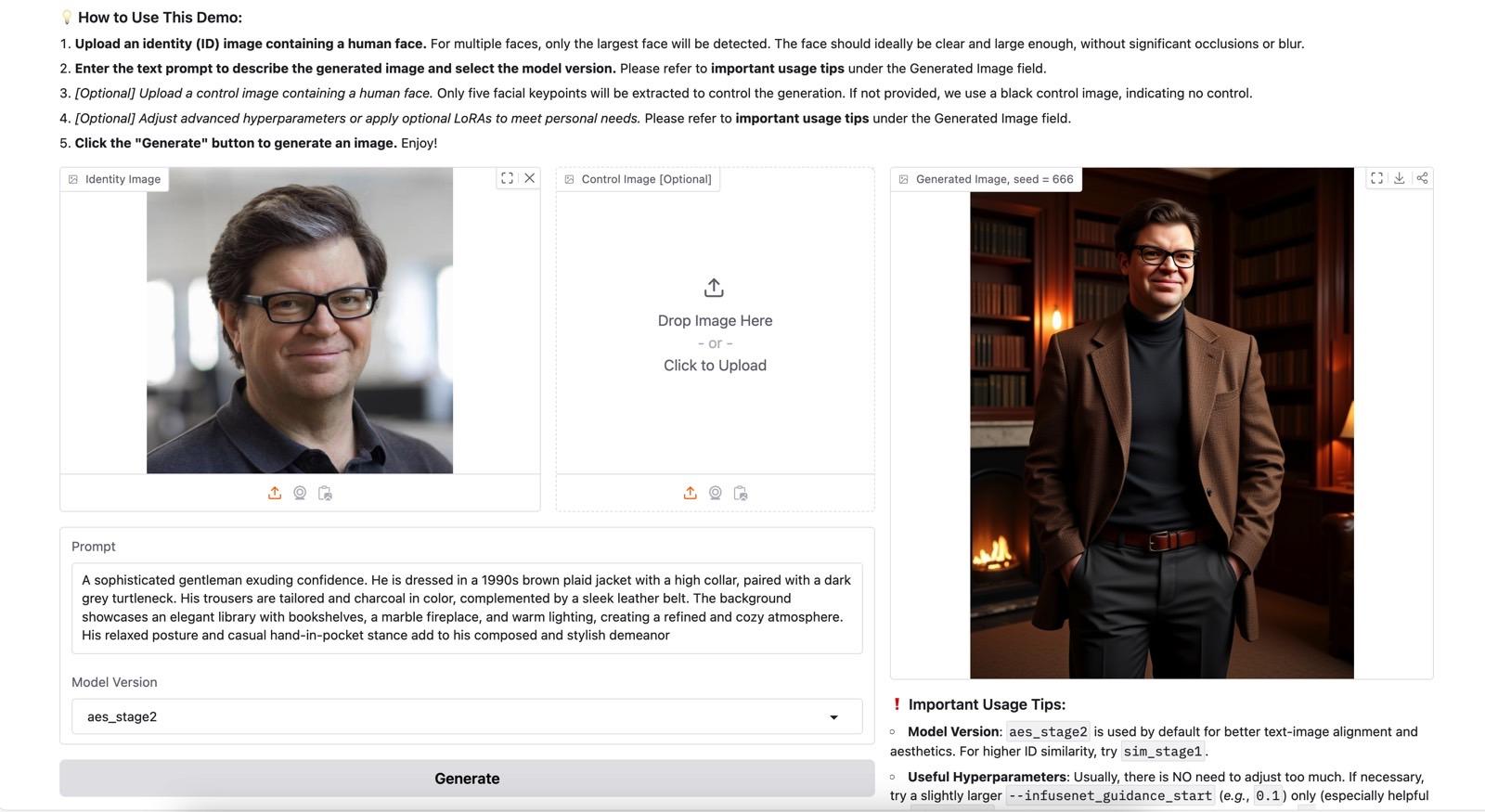
As you’ll see in the following screenshot, you don’t even have to upload your own image to see what the AI can do. Just pick one of the available images, as I did, and then text a prompt. The photo I picked already came with the following prompt, so I didn’t even change it, as I was curious to see what the result would be:

A sophisticated gentleman exuding confidence. He is dressed in a 1990s brown plaid jacket with a high collar, paired with a dark grey turtleneck. His trousers are tailored and charcoal in color, complemented by a sleek leather belt. The background showcases an elegant library with bookshelves, a marble fireplace, and warm lighting, creating a refined and cozy atmosphere. His relaxed posture and casual hand-in-pocket stance add to his composed and stylish demeanor

The AI took a while to process the uploaded photo and the requirements in the text, and then it generated the image on the right side here:

ByteDance's InfiniteYou: Example of creating fake photos.ByteDance’s InfiniteYou test: Example of creating fake photos. Image source: HuggingFace

As you can see, the AI image preserved the subject’s likeness and recreated the entire background and the subject’s body to adhere to the prompt’s requirements.

The resemblance between the subject in the photo and the AI version is clear, though you can tell the image on the right is AI-generated. There’s no watermark to indicate it’s an AI photo (which itself is a red flag), but you can tell this isn’t a real photo.

Perhaps that’s a good thing. Otherwise, InfiniteYou could be easily used to create deepfakes of celebrities in lifelike photos, a problem the new ChatGPT image generation model already has.

Then again, I only briefly tested this new AI on HuggingFace. A commercial product will likely offer even higher-quality images that are harder to identify as AI-generated images.

InfiniteYou examples from the ByteDance study.InfiniteYou examples from the ByteDance study. Image source: HuggingFace

After all, the images the researchers offered in the study suggest that the AI model can create high-quality, albeit fake, images of a subject with the help of a real photo and a text prompt.

Take the examples above, each containing the original photo, the text prompt InfiniteYou was given, and the result. We are looking at high-end, frontier AI tech here.

The ByteDance engineers also provided the following comparison between InfiniteYou and other AI models that can generate images.

Comparison between ByteDance and other AI image generation services.Comparison between ByteDance and other AI image generation services. Image source: HuggingFace

It’s unclear where ByteDance might use this AI tech next, but it’s clear where it might want to deploy it. TikTok comes to mind again, as AI tech like InfiniteYou would certainly come in handy to creators.

That would not be a problem as long as AI content is clearly labeled as such and is not used for malicious purposes.

The AI researchers addressed safety concerns in the study, but only briefly. Rather than offering solutions to prevent fakes, they suggest InfiniteYou can be further improved. As for creating fake images, the researchers say they “developing robust media forensics approaches can serve as effective safeguards:”

Limitations and societal impact. Despite promising results, the identity similarity and overall quality of InfU could be further improved. Potential solutions include additional model scaling and an enhanced InfuseNet design. On another note, InfU may raise concerns about its potential to facilitate high-quality fake media synthesis. However, we believe that developing robust media forensics approaches can serve as effective safeguards.

Who will develop those safeguards? Who knows?

Meanwhile, you can explore ByteDance’s sophisticated InfiniteYou AI model at this link.

Source

Posted on

ChatGPT now tells you its limits with Deep Research and GPT-4.5 chats

While ChatGPT is available for free and without an account, premium access gets you better features, fewer limitations, and the ability to try some of the company’s newest AI features before they roll out more widely. People can choose between the ChatGPT Plus ($20/month) and Pro ($200/month) models, with the latter offering the best perks. For example, ChatGPT Pro was the first tier to get ChatGPT Operator and Deep Research, OpenAI’s first AI agents. Since then, OpenAI has brought Deep Research to the cheaper subscription option, but with more limitations.

OpenAI also launched its newest model, GPT-4.5, which is fully available to premium users. However, again, ChatGPT Plus users have limits in place. Thankfully, now there’s an easy way to see some of these limits when using your ChatGPT Plus subscription to get Deep Research reports or chat with GPT-4.5.

I’ve been a ChatGPT Plus subscriber for over a year now, and I’ve generally been happy with the experience. I am willing to pay a subscription for better AI features rather than get an ad-based subscription. But I’m hardly ready to make the jump to the ChatGPT Pro tier. I’m yet to see a feature that would warrant spending $200/month to access all the AI tools OpenAI has to offer and increase limits significantly.

That said, I’m also aware of the limits on my Plus tier. I recently got Deep Research access in the EU, and I’ve already started using it. For example, I went to ChatGPT for a Deep Research report on visiting Tokyo, and it was an amazing decision.

Tech. Entertainment. Science. Your inbox.

Sign up for the most interesting tech & entertainment news out there.

By signing up, I agree to the Terms of Use and have reviewed the Privacy Notice.

Similarly, GPT-4.5 is available to ChatGPT Plus users, the model OpenAI is currently testing before a wider rollout and before the launch of GPT-5. But it also comes with limitations.

OpenAI gives ChatGPT Plus users 10 Deep Research reports a month, 12 times fewer than the Pro option. The GPT-4.5 limits for Plus aren’t clear, but Pro users have full access to all OpenAI models.

ChatGPT Plus now shows you Deep Research and GPT-4.5 limits.ChatGPT Plus now shows you Deep Research and GPT-4.5 limits. Image source: Chris Smith, BGR

When using these two features, I’ve noticed pop-ups appear above the ChatGPT composer. They informed me how many Deep Research reports I have left this month and how many GPT-4.5 chats I have.

The pop-ups have an upgrade option for ChatGPT Pro, not that I’m considering it. But they’re still great to see, allowing me to keep track of my current usage.

Even without the pop-ups, OpenAI developed a handy feature to let you quickly see the number of Deep Research reports left this month. Just hover the mouse over the Deep Research button, and you’ll see the number of reports left and the date the limits reset for your account. The screenshot above shows it in action. Pro users would also see how many Deep Research queries they have left this way.

I’ve also caught the GPT-4.5 limit warning in the screenshot above. As you can see, I have 5 responses from GPT-4.5 remaining until the limits reset later this week. I don’t care as much about this particular limit. I’ll just switch back to GPT-4o, which is good enough for most of my needs. 

However, there’s no other way to see your GPT-4.5 limits, at least not as easily as the Deep Research count. I’ll also say that the number of responses likely refers to distinct chats with the AI rather than independent responses across the AI experience. Or that seems to be the case right now.

Then again, this is the first month I’ve seen these limit counts in the ChatGPT user interface. I’ll have a better chance to explore them in April.

Source

Posted on

Siri needs its iCloud moment: A complete rebrand

Even without the current Apple Intelligence fiasco, we already realized that Apple needs to ditch Siri or rebrand it in favor of a new personal assistant. Long before Apple Intelligence or LLMs started taking over the internet, we already felt like Siri was lost in time.

In the past few years, reports suggested the issue with Cupertino’s personal assistant is bigger than it seems. In 2023, the New York Times reported about the rise and fall of the assistants, including why Siri struggles with what sounds like regular tasks. John Burkey, a former Apple engineer who worked on the virtual assistant, said it had a “cumbersome design that made it time-consuming to add new features.”

In 2014, he was given the job of improving Siri. But since its database contains a gigantic list of words in nearly two dozen languages, its vast knowledge bade it “one big snowball,” as if someone wants to add a word to Siri’s database, “it goes in one big pile.”

With that in mind, Burkey explained that what seemed like small updates, such as new phrases, would require rebuilding the entire database, which could take up to six weeks. More complex features like new search tools could take nearly a year, meaning Siri could never become a creative assistant like ChatGPT unless it’s completely rebuilt.

Tech. Entertainment. Science. Your inbox.

Sign up for the most interesting tech & entertainment news out there.

By signing up, I agree to the Terms of Use and have reviewed the Privacy Notice.

When looking back at this report, it makes sense why Apple decided to indefinitely delay Siri’s on-screen awareness capabilities, as it still doesn’t know which month we are. This is why I think Apple should rebrand Siri and do something similar to what the MobileMe-iCloud transition was.

Siri feels like MobileMe, but Apple was fast enough to address it

Before iCloud was a thing, Apple had MobileMe. The service was available from July 2008 until October 2011, when iCloud was introduced. However, this subscription-based service was very unstable and had several syncing issues.

This is why when Steve Jobs introduced iCloud and said the service “just worked,” he rhetorically asked: “Why should I believe them? They’re the ones that brought me MobileMe!” Still, iCloud was better than MobileMe, and even though it had a few issues over the years, it’s Apple’s main service.

With that in mind, I think Siri needed a similar approach. At this moment, Apple is focusing on reshaping the personal assistant’s command structure. However, I don’t think promoting executives is enough. If Apple wants to be serious about AI, it must catch up with major players and offer a different experience. Should it call the new assistant Newton, Siri 2.0, or Apple Assistant? It doesn’t matter.

Siri’s revamp is urgent, and Cupertino needs to offer a faster response and service to users.

Source

Posted on

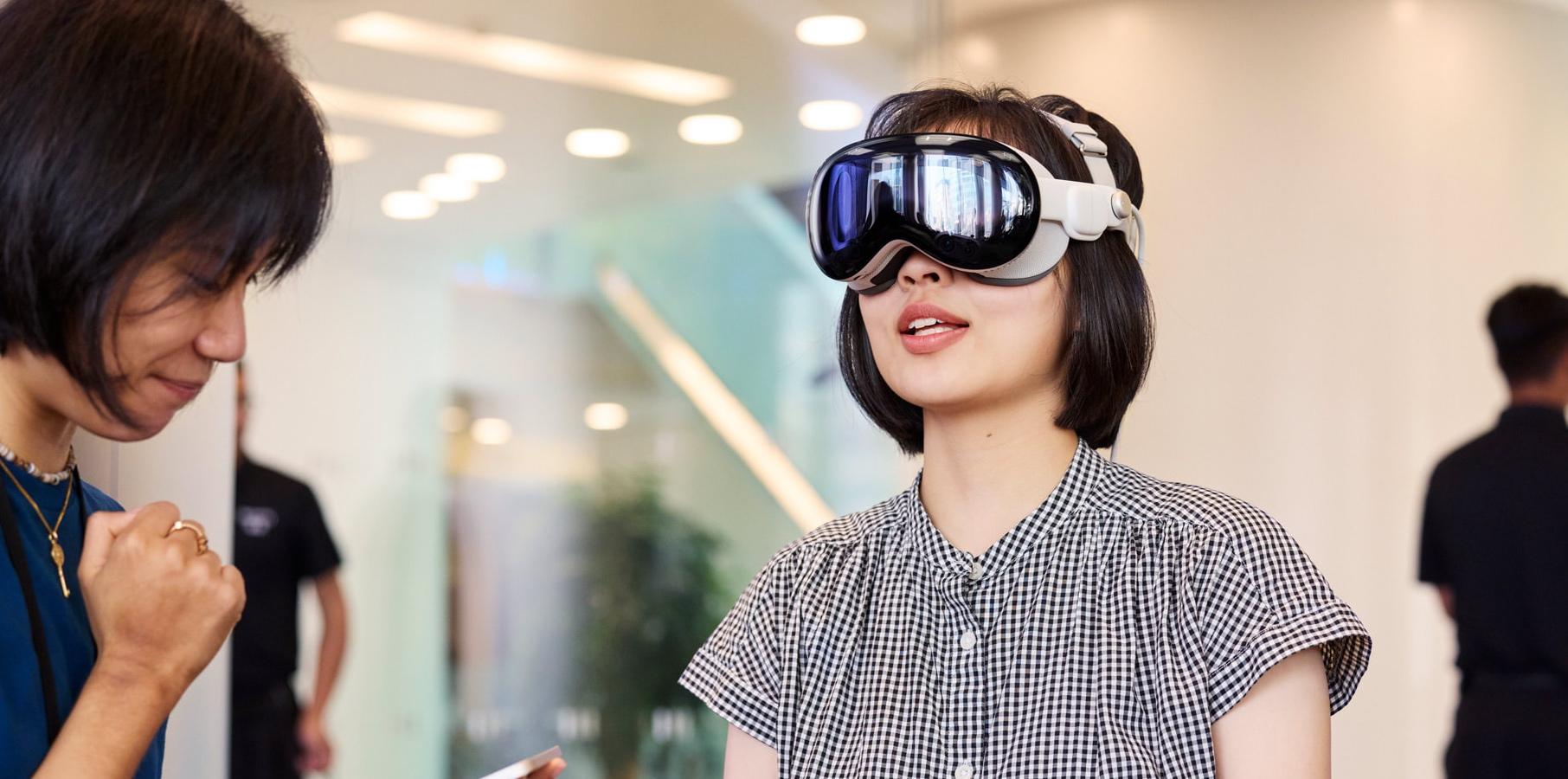
visionOS 2.4 RC brings these Apple Intelligence features and more

After a mild visionOS 2.3 update, Apple is nearing the end of visionOS 2.4 beta testing with its RC. This upcoming software update, among other new features, readies support for Apple Intelligence.

Apple Intelligence has been available on iPhone, iPad, and Mac devices with A17 Pro or M chipsets for a few months. Now, it’s making its way to Apple Vision Pro, which is more than capable of running Apple Intelligence capabilities with the M2 chip and 16GB of RAM.

These are some of the features available with visionOS 2.4 RC:

  • Writing Tools: Users can rewrite, proofread, and summarize text nearly everywhere they write, including Mail, Notes, Pages, and third-party apps;
  • Image Playground: Users can create playful images in seconds, choosing from Animation, Illustration, or Sketch. This app is built right into apps like Messages and is also available in a dedicated app;
  • Memories in Photos: Users can create stories they want to see just by typing a description. Apple Intelligence will pick out the best photos and videos based on the description, craft a storyline with chapters based on themes identified from the photos, and arrange them into a movie with its own narrative arc;
  • Clean Up tool: This Photos app feature can identify and remove distracting objects in the background of a photo without accidentally altering the subject;
  • Siri: Users type to Siri and switch between text and voice to communicate with Siri in whatever way feels right for the moment.
  • ChatGPT integration: When you feel Apple Intelligence isn’t enough, you can allow ChatGPT to access Writing Tools and other features for a better response.

Even though better Apple Intelligence capabilities have been delayed, including the long-awaited personalized Siri, it’s nice to have the platform finally available on Apple Vision Pro, ahead of its rumored packed visionOS 3 update.

Tech. Entertainment. Science. Your inbox.

Sign up for the most interesting tech & entertainment news out there.

By signing up, I agree to the Terms of Use and have reviewed the Privacy Notice.

In addition to Apple Intelligence, visionOS 2.4 RC introduces Spatial Gallery, an app that features spatial photos, videos, and panoramas curated by Apple for Vision Pro. There’s also a new Apple Vision Pro for iPhone that users can take advantage of to queue apps and games to download, discover new content, and more. Guest User has also been revamped so Apple Vision Pro owners can customize everything from their iPhone or iPad.

Alongside visionOS 2.4 RC, Apple is also releasing the release candidate versions of iOS 18.4, iPadOS 18.4, macOS 15.4, watchOS 11.4, and tvOS 18.4. We’ll let you know if we find anything new with them.

Source

Posted on

How the foldable iPhone’s unusual design could support Face ID

A report from Ming-Chi Kuo said a few weeks ago that Apple’s first foldable iPhone will be an iPhone Fold-type device that resembles Samsung’s. The handset will be ultra-thin, which is one reason why Apple will have to abandon Face ID and bring back Touch ID.

The fingerprint sensor would be embedded in a side button similar to the iPad and other foldable phones from competitors, including Fold and Flip models.

I said at the time that the lack of Face ID might be a dealbreaker for me, as the 3D face recognition system plays a huge role in my iPhone experience. Face ID does more for me than just unlocking the phone. I use Face ID in every app that supports it, and thanks to iOS, I can also add Face ID support to any app.

Of course, all of that can happen with Touch ID. I just happen to prefer Face ID over Touch ID and would always choose face recognition over fingerprints.

Tech. Entertainment. Science. Your inbox.

Sign up for the most interesting tech & entertainment news out there.

By signing up, I agree to the Terms of Use and have reviewed the Privacy Notice.

But what if Apple’s unusual design for the foldable iPhone will actually help it bring Face ID to the handset? I’ve had this idea thanks to an unexpected foldable that launched last week, a device with a quirky design that I think heralds the iPhone Fold design.

What’s unusual about the foldable iPhone’s design?

Leaks that predate Kuo’s claims about the foldable iPhone’s revival of Touch ID say the phone will have an unexpected aspect ratio for a Fold-type foldable. The phone will not be as tall as Samsung’s Fold. Also, it should be wider when folded. The result is an unfolded device that looks more like an iPad mini 7.

I already used ChatGPT to determine the dimensions of a foldable iPhone based on screen size leaks, and it all makes sense.

But considering the thickness factor in Kuo’s report, Face ID might not happen. I explained recently why the iPhone 17 Air’s horizontal camera bar needs to happen. It might be related to Face ID components, which could be thicker than the phone.

If the foldable iPhone is even thinner than the iPhone 17 Air, it won’t have room for Face ID. 

Also, there’s another problem. Where do you put the Face ID sensor? On the cover screen or on the inside? The cover screen lets you unlock the device and the apps you use on that display. But you’re likelier to use apps that benefit from Face ID protection on the larger foldable screen.

Meet the Huawei Pura X

Huawei Pura X folded and unfolded.Huawei Pura X folded and unfolded. Image source: Huawei

Last week, Huawei unveiled the Pura X, a device unlike any other foldable. If anything, the Pura X (seen above) teases the iPhone Fold design.

The Pura X folds into a phone about as big as a clamshell foldable. Think Samsung’s Galaxy Z Flip 6. But when it unfolds, you get a tablet experience similar to the Galaxy Z Fold. That’s because this Flip-type device is wider than others. Put differently, You can look at the Pura X as a Fold-type device much shorter than the Galaxy Z Fold.

How does this design help Apple put Face ID on the foldable iPhone? Check out the horizontal camera bar of the Pura X. That’s the phone’s main camera system, which sits on top of the cover screen when the phone is folded, acting as a more advanced selfie camera system than your usual selfie cam.

Unfold the Pura X, and that camera system can be used both vertically and horizontally, depending on how you hold the foldable.

What interests me here is the Pura X’s main camera system always pointing at your face when you take the phone out to use it. If the iPhone Fold has a similar design, it could have an identical main camera placement.

There’s precedent in other foldables

I’m speculating here, but I think Apple could integrate Face ID components into the camera modules that are usually reserved for the back of the iPhone. With an iPhone Fold similar to the Pura X, that camera module would actually sit on the front. As ugly as that protrusion might be on the Pura X, a similar main camera placement would give the foldable iPhone Face ID support.

All of this is speculation at this point, yes. Also, I’d still have a Face ID problem that needs fixing. Unfold the Pura X, and you get a foldable phone with a hole-punch camera at the top. If that’s how the foldable iPhone looks, you can’t also place Face ID at the top of the foldable iPhone.

Therefore, unlocking apps with the screen unfolded remains a problem. 

Back to Samsung’s Galaxy Z Flip 6, I’ll tell you that the phone does support face recognition. The system works both with the hole-punch camera and the main camera lens placed atop the cover screen. I’ve used Samsung’s face unlock tech, and it works, even if it’s not as sophisticated as Apple’s.

Galaxy Z Fiip 6's camera supports face recognition scans.Galaxy Z Fiip 6’s camera supports face recognition scans. Image source: Chris Smith, BGR

What I’m getting at is that Apple could get Face ID working on the cover screen by turning the main camera module into a Face ID sensor. When the iPhone is unfolded, Apple could use 2D face unlock for non-sensitive apps or switch to Touch ID.

It all sounds complicated, yes. Using only Touch ID to unlock everything on your phone would be less trouble for users. But I still hope that Face ID will be available on foldable iPhones. Eventually, Face ID components will shrink, and foldable iPhones will support Face ID. But I’d want the tech in a first-gen device as well.

That said, the Pura X doesn’t support 3D face unlock. The Huawei foldable has a side-mounted fingerprint sensor instead.

Rumors say the iPhone Fold will not feature Face ID, but the foldable’s unusual design might make it possible.

Source