Posted on

Will there be a technology policy epiphany in 2026?

Though the New Year has barely begun, it is worth considering what we know from a government legislative, regulatory and policy perspective, what’s coming and, indeed, what it appears is not.

Let’s take artificial intelligence (AI) first. The UK government still seems implacably opposed to bringing forward any cross-sector, comprehensive AI legislation. Its one-liner in the 2024 King’s Speech said the government “will seek to establish the appropriate legislation to place requirements on those working to develop the most powerful artificial intelligence models.” That seemed sparing at the time, and now seems extraordinarily overblown.

AI growth

Ironically though, while eschewing anything cross-sector or comprehensive, the government does keep lining up AI matters which will require primary legislation – copyright and AI growth labs to highlight just a couple.

And, while we’re on AI growth labs, the government consultation on them oddly chose 2 January to close. Given this is a central plank of policy in this area, it will be more than interesting to see the published response to the consultation and, indeed, the necessary legislative approach the government is intending.

Similarly, when it comes to AI and copyright, what will be the legislative approach and when? And is the “opt out” option dead – or sleeping? Our House of Lords Communications and Digital Select Committee inquiry on this subject continues with ministers showing up to next week’s session on Tuesday 13 January.

Markets of the future

Turning to crypto-asset regulation, 2026 will continue the journey from draft legislation being published on 15 December last year through to 25 October 2027- yes, that’s meant to say 2027 – for the current “go live” date. Already we have seen some definitional clarification and the arrival of new provisions related to market abuse, public offers and disclosures. It will be interesting to hear about continuing suboptimal elements and how the process is progressing – apparently set to “unlock growth and protect customers”?

Meanwhile, in transatlantic affairs, the US and UK have launched the “Taskforce for Markets of the Future,” essentially, a new bridge-building squad meant to turn crypto progress into real, usable policy.

Co-led by the US Treasury and HM Treasury, with regulators in the mix, the goal is to smooth friction that hits firms operating on both sides of the Atlantic. They are aiming for smoother cross-border capital flows, clearer supervision for digital-asset players, and safer market infrastructure, all without waiting years for every law to land.

The taskforce has 180 days to show it can deliver – impact may well come from nailing three things fast: clear token rules for real-world asset tokenisation; clear lines between “infrastructure” and “intermediary” so builders, like validators, don’t get treated like brokers; and stablecoin reciprocity so US and UK frameworks grow together instead of apart. If we get this right, it could be the start of genuinely interoperable digital-asset markets.

Cyber security

A critical thread to all of this is cyber. The Cyber Security Bill receives its second reading in the Commons today, 6 January. I’m very much looking forward to the bill arriving in the Lords later in the Spring and would welcome your thoughts on what’s in and what currently is not.

If that wasn’t enough for week one of 2026, we have the committee stage of the Crime and Policing Bill in the Lords tomorrow, Wednesday 7 January. Colleagues and I have amendments down to continue to push the government on Computer Misuse Act reform. 

I hardly need to lay out the land for readers here, we have been on this one for a while. Though we heard some potentially positive comments from the minister very late last year, any change is far from settled and certainly unannounced, which makes the minister’s response on Wednesday so much more material.

As I’ve already mentioned Labour’s first King’s Speech in July 2024, it’s worth mentioning the next. Though this parliamentary session was long slated to end in March, it seems we are heads down until May. Even when the King’s Speech arrives, it appears highly unlikely to include anything substantial or cross-sector on AI.

Digital ID

By contrast, there is much chat on digital ID. A consultation is said to be coming this month with a draft bill in May’s speech. This has hardly been helped by the government last year hanging its digital ID coat all around illegal immigration – a more than unfortunate decision.

An Elections Bill may well appear, highlighting the impact that various technologies are already potentially having on so many aspects of the electoral process and our very democracy. I plan to take the opportunity to reintroduce amendments I put forward to the 2022 bill, not least in considering technology’s role to increase the inclusivity and accessibility of elections and the integrity of the electoral roll itself.

Whatever comes to pass in 2026, it should, as ever, be that a human-led, principles-based, outcomes-focused, inputs-understood approach remains prime.

Source

Posted on

Privacy will be under unprecedented attack in 2026

The privacy of electronic communications will face new risks in 2026, as the UK and other governments push for greater capabilities to harvest and analyse more data on private citizens, and to make it harder to protect communications with end-to-end encryption.

Over the next 12 months, we can expect more pressure from the UK and Europe to restrict the unencumbered use of end-to-end encrypted email and messaging services such as Signal, WhatsApp and many others.

In the 1990s, the US government tried and ultimately failed to persuade telecommunications companies to install a device known as the Clipper chip to provide the US National Security Agency (NSA) with “backdoor” access to voice and data communications.

The Crypto wars of 2026 are more subtle, with controls and restrictions on encryption pushed by governments, law enforcement agencies and intelligence services as a means of detecting child sexual abuse and terrorist material being promulgated through encrypted email and messaging systems.

The answer governments are settling on is to encourage the use of scanning technology in a voluntary or compulsory way, to identify problematic content before it is encrypted.

Cryptographers and computer scientists have repeatedly warned that such plans will create security vulnerabilities that will leave the public less safe than before.

Chat Control and client-side scanning

The European Parliament and Council are expected to adopt the controversial Child Sexual Abuse Regulation (CSAR) in spring 2026. In its current form, it proposes that messaging platforms voluntarily scan private communications for offending content, combined with proposals for age verification to check the age of users.

Known by the nickname Chat Control, its critics – such as former MEP Patrick Breyer, a jurist and digital rights activist – claim the regulation will open the doors to “warrantless and error-prone” mass surveillance of European Union (EU) citizens by US technology companies. The algorithms, say critics, are notoriously unreliable, potentially exposing tens of thousands of legal private chats to police scrutiny.

Chat Control will also put pressure on technology companies to introduce age checks to help them “reliably identify minors”, a move that would likely require every citizen to upload an ID or take a face scan to open an account on an email or messaging service. According to Breyer, this creates a de facto ban on anonymous communication, putting whistleblowers, journalists and political activists who rely on anonymity at risk.

Online Safety Act

In the UK, there remain concerns about provisions in the Online Safety Act that, if implemented by regulator Ofcom, would require technology companies to scan encrypted messages and emails.

These powers attracted widespread criticism from technology companies as the bill passed into law, with Signal warning it would pull its encrypted messaging service from the UK if it was forced to introduce what it called a “backdoor”.

Commentators think there is little current appetite for Ofcom to mandate client-side scanning for private communications, given the level of opposition.

But it may require providers of public and semi-public services, such as cloud storage, to introduce scanning services to detect illegal content.

“I think they may be waiting to see what happens in Europe with the Chat Control proposal, because it’s quite hard for the UK to go alone,” James Baker, campaigner at the Open Rights Group, told Computer Weekly.

Perceptual hash matching

One of the items on Ofcom’s agenda is a form of scanning, known as perceptual hash matching, which uses an algorithm to decide whether images or videos are similar to known child abuse or terrorism images.

A consultation document from Ofcom proposes requiring tech platforms that allow users to upload or share photographs, images and videos – including file storage and sharing services, and social media companies – to introduce the technology for detecting terrorism and abuse-related material.

“We also think some services should go further – assessing the role that automated tools can play in detecting a wider range of content, including child abuse material, fraudulent content, and content promoting suicide and self-harm, and implementing new technology where it is available and effective,” it says in its consultation document.

But there are questions about the accuracy of perceptual hash matching, and the risk that its use may lead to people wrongly being barred from online services for alleged crimes they have not committed.

Critics point out that perceptual hash matching used to be called “fuzzy matching” – and for good reason. Although its new name, “perceptual hash matching”, gives the impression of precision and predictability, in reality, it produces false positives and negatives.

Hundreds of people have been blocked from Instagram, owned by Meta, after being wrongly accused of breaching Meta’s policies on child sexual exploitation and abuse. The company’s actions took a huge emotional toll on the people affected, and in some cases led to people losing their online businesses, the BBC reported in October 2025.

Alec Muffett, security expert and former Facebook engineer, told Computer Weekly that Ofcom’s proposals display “a horrifying lack of safety by design” and said its proposal to force companies to adopt the technology without mitigating the potential risks is “derelict”.

“Perceptual hashing is just a fancy name for what we used to call ‘fuzzy matching’ with ‘digital fingerprints’, and even if we ignore the problem of false positives, we are left with the risk of creating an enormous cloud surveillance engine by logging all queries for even benign digital fingerprints,” he said.

Encryption apps viewed as national security risk

There are signs of increasing government discomfort with encrypted communications. In December 2025, the Independent Reviewer of State Threats Legislation delivered a stark warning that developers of encryption technology could be subject to police stops, detention and questioning, and the seizure of their electronic devices under national security laws.

According to Jonathan Hall KC, the developer of an app whose selling point is that it offers end-to-end encryption, could be considered to be unwittingly engaged in “hostile activity” under Section 3 of the Counterterrorism and Border Security Act 2019.

“It is a reasonable assumption that [the development of the app] would be in the interests of a foreign state even if the foreign state has never contemplated this potential advantage,” he wrote.

Digital ID all over again

The UK’s proposals for a mandatory digital ID scheme look set to be another battleground for privacy in 2026. The government says the scheme will help to crack down on illegal immigration by introducing mandatory “right to work” checks by the end of the Parliamentary term.

MPs were scathing when the bill was introduced in Parliament. “The real fear here is that we will be building an infrastructure that can follow us, link our most sensitive information and expand state control over all our lives,” said Rebecca Long-Bailey during the debate. Others raised concerns about the cyber security risks of storing details of the population on a central government database.

Gus Hosein, executive director of campaign group Privacy International, notes that the Home Office is repeating the same arguments originally put forward in 2023 when Tony Blair attempted to introduce a national identity card. The scheme was scrapped by the Conservative and Liberal Democrat coalition in 2010. “It’s just the same boring rhetoric: ‘It’s going to stop ID fraud, it’s going to stop terrorism, it’s going to stop migration problems,’” he said. “Do we really have to go through the whole process of debunking this again?”

Hosein said the prospects of the Home Office coming up with a workable system before the next election are low. The political climate is different this time. Nearly three million people have signed a Parliamentary petition calling for the idea to be scrapped. “If they try and do the classic thing, which is to try and build something grand and momentous, it will take forever,” he said. “I would not mind an ID system that actually worked, I just don’t want the Home Office within 10,000 miles of it.”

When combined with facial recognition, digital ID raises further privacy issues. Campaign groups are expected to bring a legal challenge in 2026 after Freedom of Information Act requests revealed that the government covertly allowed police forces to search 150 million UK passport and immigration database photos for matches of images captured by facial recognition technology.

Big Brother Watch and Privacy International have issued legal letters before action to the Home Office and the Metropolitan Police. They argue that there is no clear legal basis for the practice and that the Home Office has kept the public and Parliament in the dark.

“There is a risk when you roll out digital facial recognition cameras that the images used for digital ID will be used to track you around town centres,” said the Open Rights Group’s Baker.

Apple backdoors and technical capability notices

This year will see further legal challenges at the Investigatory Powers Tribunal against the Home Office’s secret order issued against Apple, requiring it to facilitate access for law enforcement and intelligence agencies to encrypted data stored by Apple’s customers on iCloud.

Scheduled for the spring, the case brought by Privacy International and Liberty will challenge the lawfulness of the Home Office using a technical capability notice (TCN) to require Apple to disclose the encrypted data of users of its Advanced Data Protection (ADP) service worldwide.

Apple is expected to issue a new legal challenge after the UK government abandoned its original wide-ranging TCN and replaced it with an order focused on providing access only to ADP users in the UK, ending Apple’s legal challenge, at least for now.

The case has the potential to turn into a mammoth battle, reaching the Supreme Court and the European Court of Human Rights.

Surveillance of journalists

This year will also see further legal challenges that will test the boundaries between state intrusion and the professional privileges accorded to lawyers and journalists to protect the confidentiality of their clients or journalistic information.

The Investigatory Powers Tribunal is due to decide on a case brought by the BBC and former BBC journalist Vincent Kearney against the Police Service of Northern Ireland and the Security Service, MI5.

The Security Service broke with the conventions of Neither Disclose Nor Deny (NCND) to acknowledge to the tribunal that it had unlawfully obtained phone communications data from Kearney in 2006 and 2009, while he was working at the BBC, in an attempt to identify his confidential sources.

Although MI5 followed the Communications Data code of practice at the time, the code did not meet the strict legal tests for accessing journalistic material, which is protected under the European Convention of Human Rights.

In a judgment just before Christmas, the IPT rejected arguments that MI5 should disclose further details of surveillance operations against Kearney and other BBC journalists, including operations that had proper legal approval. The IPT will decide what remedy is due in 2026, and whether Kearney and the BBC should receive compensation.

Another legal case will test the boundaries between police surveillance and the legal protection given to lawyers to protect the confidentiality of discussions with their clients when subject to police stops.

Fahad Ansari, a lawyer who acted for Hamas in an attempt to overturn its proscription as a terrorist organisation in the UK, had his mobile phone seized by police after he was detained under Schedule 7 of the Terrorism Act 2000 at a ferry port, after returning from a family holiday.

The case is believed to be the first targeted use of Schedule 7 powers – which allow police to stop and question people and seize their electronic devices without the need for suspicion – against a practising solicitor.

Ansari is seeking a judicial review to challenge the right of police to examine the contents of his phone, which contains confidential and legally privileged material from his clients, accumulated over 15 years.

The legal fallout from EncroChat and SkyECC

The legal fallout from an international police operation to hack encrypted phone network Sky ECC and EncroChat more than five years ago will continue.

French police led operations to harvest tens of millions of encrypted messages used as evidence of criminality to bring prosecutions against drug gangs across Europe and the UK.

Defence lawyers and forensic experts have raised questions about the reliability of the evidence supplied by the French to the UK and EU states through Europol.

France has declared the hacking operation against EncroChat and Sky ECC a state secret and refused to allow members of the French Gendarmerie to give evidence on how the intercepted data was obtained.

This has meant individuals facing charges outside France based on evidence from EncroChat or SkyECC have no legal recourse to challenge the legality of the French hacking operation.

Courts in the EU are obliged to accept the evidence provided by France under the “mutual recognition” principal that applies when one EU state supplies evidence to another under a European Investigation Order.

At the same time, people have been denied the right to challenge the evidence against them in the French courts, leaving people charged with offences based on the hacked phone data without legal recourse to appeal in any jurisdiction.

Decisions by the European Court of Justice and the European Court of Human Rights, expected this year, could end that anomaly.

In one case, the French Supreme Court – La Cour de cassation – has asked the Court of Justice to decide whether France’s refusal to allow non-French citizens to challenge the lawfulness of the French hacking operations in France contravenes EU law. According to La Cour de cassation, the decision is likely to have “significant consequences” for legal proceedings based on intercepted evidence in the EU.

In the second case, the European Court of Human Rights is expected to decide on a complaint from a German citizen, Murat Silgar, who was jailed for drug offences on the basis of EncroChat evidence.

Silgar argues that the German courts had used illegally obtained communications data and that technical details of the French retrieval of EncroChat data were not shared with him, in breach of the European Convention of Human Rights, which protects the right to a fair trial, and the right to private correspondence.

Justus Reisginer, a member of a coalition of defence lawyers known as the Joint Defence Team, told Computer Weekly the cases would address “a fundamental principle” in cross-border and digital investigations. “The law of the European Union requires that people have an effective remedy,” he said.

These are just a few of the battle lines between technology and privacy that will play out in 2026. For governments, the promise of a “technical fix” to deal with wider societal problems, such as child abuse and terrorism offences, is attractive. But history has shown that “technical fixes” rarely work, and often have unforeseen consequences.

Source

Posted on

Accenture acquires UK AI firm linked to Vote Leave campaign

Accenture has acquired UK artificial intelligence (AI) firm Faculty, bolstering its AI pool with 400 experts as it expands its services to help businesses deliver value from AI initiatives.

Through the acquisition, Faculty’s enterprise decision intelligence product, Frontier, will join Accenture’s suite of products that help organisations make better, faster decisions by connecting data, AI models and business processes into a unified decision system.

Accenture said it has been working with Faculty since 2023, supporting its clients in life sciences companies, such as Novartis, to use Frontier to transform the economics of clinical trial planning and execution.

Julie Sweet, chair and CEO of Accenture, said: “With Faculty, we will further accelerate our strategy to bring trusted, advanced AI to the heart of our clients’ businesses.”

Faculty was dubbed “the Vote Leave AI firm” by The Guardian for its work with former UK prime minister Boris Johnson’s chief adviser, Dominic Cummings, and the Vote Leave campaign to sway public opinion on the UK 2016 referendum to leave the European Union.

During the Covid-19 pandemic, Faculty built the NHS’s Early Warning System, which was used daily by NHS Gold Command to predict patient demand across the country.

Under the previous Tory government, Faculty worked with the AI Safety Institute to investigate techniques that could be used to overcome safeguards in large language models (LLMs).

In a Computer Weekly article published in 2022, Faculty’s CEO, Marc Warner, who will now become chief technology officer at Accenture, wrote about the drawbacks of data-driven decision-making. He stated that if data-driven decision-making worked, the immense growth in data storage experience in the IT industry should have led to vastly improved organisational performance. At the time, he predicted the future of AI would be in decision intelligence.

The combination of Accenture and Faculty creates a formidable team to accelerate the delivery of advanced AI and data solutions that drive sustainable growth Matt Prebble, Accenture

Commenting on the Accenture acquisition, Warner said: “Our vision has always been a world in which safe AI delivers widespread benefits to humanity. We have spent the last 10 years supporting our clients to bring this world about, step by step. As AI advances rapidly, the ambition of our clients is now, rightly, no less than the reinvention of their business. I am delighted that by teaming up with Accenture, we have everything in place to support AI transformation from start to finish.”

Accenture said it would also be taking on board Faculty’s Fellowship Program, which provides a structured early career training and placement programme to help PhD and master’s graduates, as well as post-doctoral researchers, transition from academia to industry. Building on its success in the UK, Accenture said it plans to extend the programme globally to its people as well as to clients.

Matt Prebble, head of Accenture in the UK and Ireland, said: “Businesses are under increasing pressure to deliver productivity gains from AI investments and strengthen competitiveness. The combination of Accenture and Faculty creates a formidable team to accelerate the delivery of advanced AI and data solutions that drive sustainable growth. Faculty’s unique position in the AI sector reinforces our commitment to supporting clients as they navigate change and seize opportunities in today’s economy.”

Source

Posted on

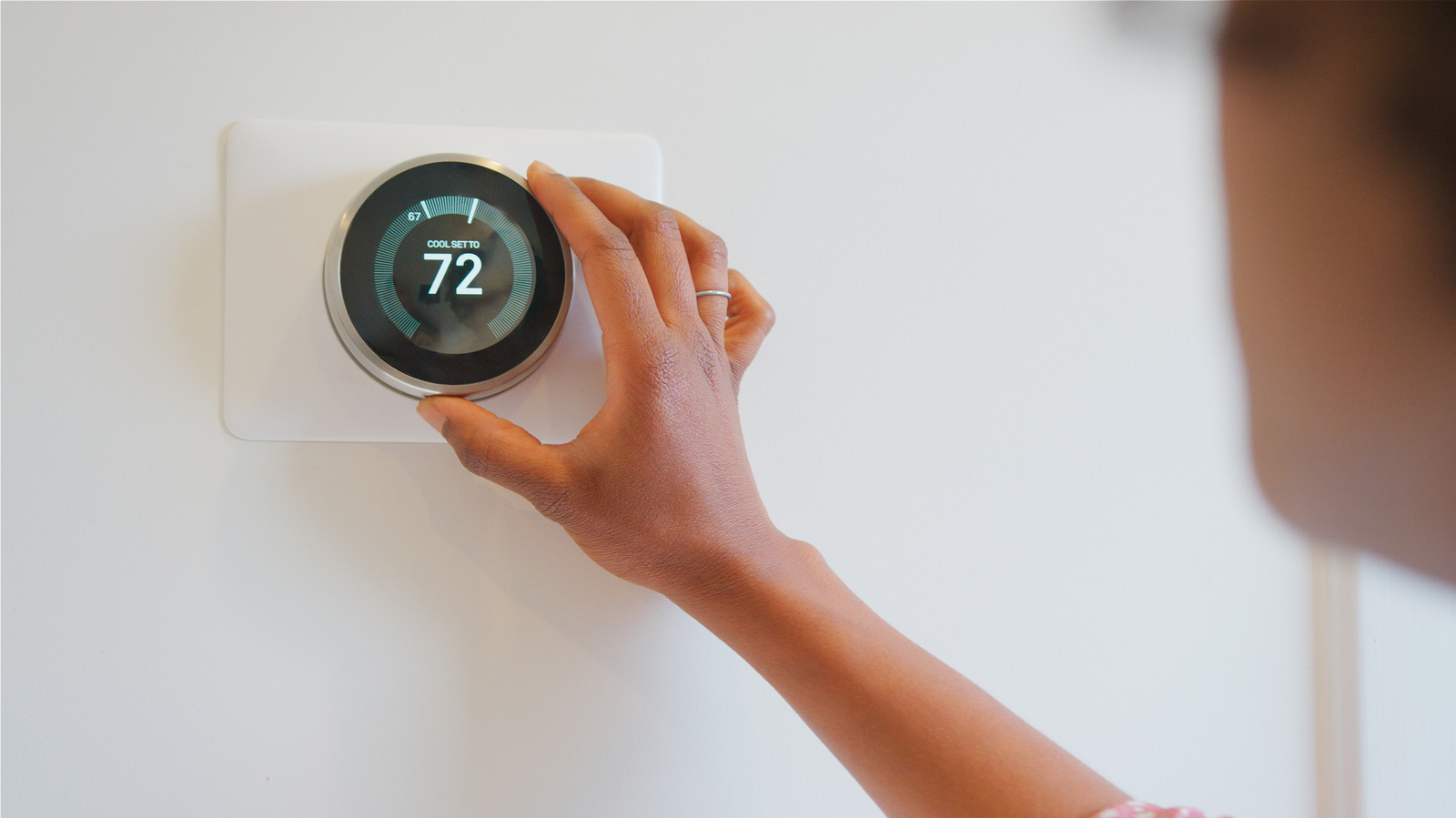
10 Major Smart Thermostats Ranked From Worst To Best Based

Monkey Business Images/Shutterstock

We may receive a commission on purchases made from links.

There are several smart thermostats available for you to choose from multiple companies. Many companies make the same promise that having a smart thermostat makes it easier to monitor your home’s internal temperature, allowing you to make quick, immediate adjustments. By making these changes and monitoring your home’s temperature, you’ll be able to save money on energy bills during the summer or winter. For anyone considering purchasing one of these products, it can be tricky to know which one will work best with your system and how many features you’re going to get with these products. You may even want to test the thermostat out as a smart device that you can add to your garage or workshop before bringing it into your home.

We’ve gone through all the major smart thermostat brands on Amazon and found 10 options that you may want to consider, based on what consumers have shared regarding their experiences. These devices all operate on your home’s Wi-Fi and connect to smartphone applications where you can manage everything. Some are better than others, and we’ve ranked them appropriately. We’ll share how our ranking works in our methodology section at the end.

10. Amazon Smart Thermostat

The Amazon Smart Thermostat is a device that many customers have purchased over the years. It’s a simple gadget that you can swap out for your existing thermostat, capable of connecting to various Echo devices or the Amazon Smart Air Quality Monitor, if you have one. None of those are required, but you can connect the Amazon Smart Thermostat to any device that also uses Alexa and make adjustments there. The device is easy-to-use and straightforward to install, but it’s pretty basic compared to several other smart thermostats on the market. Some customers have also encountered some problems with the Amazon Smart Thermostat, such as controlling temperature settings, working with Alexa, and experiencing connectivity issues.

Several customers have shared in their reviews that it is difficult to manage the Amazon Smart Thermostat through the Alexa application on their phone, and the voice controls are not the best. Users didn’t enjoy that the thermostat only has three scheduled settings. You can also set the device to Automatic, which requires it to remain connected to your smartphone and monitor your movement around the house. There’s a Hunch function that the Smart Thermostat uses to guess the best temperature for a room, but many customers believe the device gets it wrong and believe adjusting it manually is much easier and more reliable.

9. Google Nest Thermostat

If you’re looking for a smart device in your house, the Google Nest Thermostat is a decent item to try out. This Wi-Fi connected thermostat has a simple interface that you can manually use inside your home to make adjustments, or you can do everything with the Google Home application. The Google Nest Thermostat is also under $100 and works with Alexa. The thermostat’s application allows you to set a dedicated schedule for cooling or heating, and you’ll receive alerts and notifications about potential issues with your HVAC system. If the Google Nest device notices that everyone connected to the application has left the home, the thermostat turns off until they return. While these functionalities are nice, customers have had several problems with them and the overall quality of this smart device.

Reviews detail that the schedule system is nice and easy to use with Google Nest. However, when installing a new Wi-Fi router, customers say you’ll have to perform a factory reset on the thermostat to reconnect the two. Some buyers had to reset the system or change the default settings manually. Others have had problems with the quality of this thermostat and either needed to install it repeatedly or request a new one. When the Google Nest Thermostat does work, many enjoy it, even if it doesn’t come with too many advanced settings. Customers appreciate the straightforward phone app, and being able to adjust the temperature anywhere within their home from their smartphone.

8. Honeywell Wi-Fi Smart Thermostat

For more customization options and scheduling capabilities with a thermostat, the Honeywell Home Wi-Fi Color Thermostat is a decent choice. You can sync it with Alexa or Google Home if you already have those devices. For anyone who doesn’t, there’s a free application available that lets you operate everything. You can configure the thermostat’s schedule, receive notifications about extreme temperatures indoors, read a five-day weather forecast, and place the thermostat in vacation mode while you’re away. There are several smart features woven into this device, but customers have had issues with the device’s temperature control quality, leading many to believe that the Honeywell Home Wi-Fi Color Thermostat is overpriced for what it does.

Many buyers recommend this device if you have a single-zone house. However, according to reviews, the Honeywell thermostat touchscreen doesn’t have the most responsive interface, and the device doesn’t adapt over time or learn from your patterns. Other reviews share that customers have had issues programming the device, as it loses track of settings. Additional comments include problems with the Honeywell displaying inaccurate temperatures and internet connection problems.

7. Sensi Lite Smart Thermostat

Another decent option for those who are trying out a smart thermostat for the first time is the Sensi Lite Thermostat. This product has simple programmable features, and you can connect to it using your smartphone. The Sensi thermostat does have ‘Lite’ in the name for a reason, as it doesn’t include many of the more noticeable features that other smart products come with. You can program eight unique daily temperature events with the Sensi Lite, providing a wide range of control over your home’s heating and cooling system. Beyond these key features, it’s not as advanced as other products on the market. The Sensi Lite Thermostat has a lower price of $65, but it seems like there are a handful of bumps in the road, based on user reviews, such as the connectivity issues several owners have experienced.

What customers do appreciate is how easy it is to install the Sensi Lite Thermostat and begin working. The Smart functions are available even if you’re not inside the house thanks to the smartphone app, and the device can use geofencing to know when to turn anything off when you’ve left the house. However, the geofencing doesn’t work correctly if you have a schedule in place while you’re gone, and users have expressed that they’ve had trouble with Wi-Fi connections. Their connections have tripped up multiple times a day, forcing them to wait to reconnect. Others didn’t enjoy using the free application for the Sensi Lite, especially with the internet connection problems.

6. Mysa Smart Thermostat

Another easy-to-use model is the Mysa Smart Thermostat. You can use it with your Google Home or Alexa system, or with a separate, dedicated application. The Mysa thermostat comes with an “Eco” mode that works in the background to adjust your home’s temperature to a reasonable setting, but it doesn’t impact your home’s comfort or increase the electric bill. For those who want more control over Mysa, you can set up a scheduling program. There’s also a geofencing feature: If you leave your home when this feature is on, the system turns off to save you money and turns back on when you return. Although these features are good, several users have a handful of notable issues and problems with the product’s connectivity.

Several customers have had problems with the product’s touchscreen and found it wasn’t always responsive. To them, it was easier to use the application for the device. That said, other customers found the Mysa application cumbersome, especially if they wanted to try changing the temperature while they’re not home. Others who synced it with their Alexa or Google Home products found that the thermostat might drop its connection. Overall, many enjoyed the Mysa Smart Thermostat’s wide range of advanced systems and features, but the application and physical device need more work.

5. Ecobee Thermostat Premium

If you’ve already had a smart thermostat in your home before, the Ecobee Smart Thermostat Premium could be the next one you get. It’s compatible with Alexa, Google, and many iOS and Android devices. The Ecobee also comes with a built-in air monitoring system that sends you alerts if the air quality is poor, providing suggestions on how to improve it inside your house. Furthermore, the thermostat can detect if a window or door has been open for more than five minutes and send you an alert, pausing the heating or cooling you currently have on. It’s an involved process, but customers like it. We recommend the Ecobee Smart thermostat Premium as an essential smart home gadgets to use in 2025. However, this smart thermostat does have a hefty price tag set at $239.99.

Customer reviews for the Ecobee Smart Thermostat Premium share that it’s easy to set up, and the product’s quality is excellent. Many enjoyed the application’s interface, as it’s easy to use, and comes with built-in speakers. You can treat it like other smart home devices, as it can play music and podcasts. Others loved setting the device so it wouldn’t run as diligently while they were away or asleep, saving them money. Users have noted several issues with the devices, including that the humidity sensor is not always accurate and some of the application functions are buggy. Some buyers didn’t quite enjoy it as much as they thought they would, given its high price.

4. Google Nest Learning Thermostat (4th Gen)

It’s challenging to beat the 4th-generation model of the Google Nest Learning Thermostat. The product is costly, set at $239.99, but well worth it with what Google has put into it. You can control everything from your phone, or you can use your voice through any of your connected products, such as Siri, Google, or Alexa. The more you use this thermostat, the more it learns about your routine and temperature preferences at certain times. Additionally, it takes a home’s outside temperature to modify how it feels indoors, adjusting to increased comfort while also managing any hot or cold spots it finds. Customers find it a great product and aesthetically pleasing, with a costly price tag. Some reviewers have also noted Wi-Fi connection issues. We also have a full review of this Google Nest Learning Thermostat model, praising Google’s return to a top-tier thermostat, but one that could use a brighter display.

The Google Nest Learning Thermostat has a sleek, modern design that fits on the wall of nearly any home, which is a huge plus for users. The device’s display is easy to read from afar without having to get up or rely on the smartphone application. However, some reviewers say they’ve had problems with Wi-Fi connections, while others say it works well. The Google Nest Learning Thermostat doesn’t use the Nest application, which several reviewers miss.

3. Emerson Sensi Touch Wi-Fi Smart Thermostat

Another great, simple model that comes with a robust series of Smart features is the Emerson Sensi Touch Wi-Fi Thermostat. You can operate it from the display, through Alexa, Apple HomeKit, Google Assistant, or through a free application for your smartphone. This thermostat has an elegant display that lights up, but you can monitor your house’s temperature directly through the application. Features include humidity readings for your home, seven-day scheduling with eight events, and geofencing to adjust the system when you leave and approach your home. You can also receive performance and efficiency reports regarding your HVAC system, and maintenance reminders. Although some customers have had Wi-Fi connection issues with it, this smart thermostat is a beloved product, priced at $118, which many customers believe is a great value for a robust product. It is one of the best Smart thermostats to track your usage, if this is a critical factor for you.

Reviews for this product from users highlight how easy it is to install and keep it working once everything is in place. The smartphone application is easy to navigate, and for those who use smart home ecosystems like Alexa, Google Assistant, or Apple HomeKit, integration is simple. Owners claim the Emerson Sensi Touch functions exceptionally well, and being able to use it far from home makes it easier for customers to save money while they’re away.

2. Ecobee Smart Thermostat Essential

When you want a cost-effective smart thermostat, one of the top choices is the Ecobee Smart Thermostat Essential. It’s compatible with Google, Alexa, and Apple Home. There’s also an Ecobee application you can download, where you can manage everything. You can set a schedule for your heating and cooling system, or modify your current settings while you’re away to save money. The application also shows how much energy is currently being used, allowing you to make cost-effective choices when you’re not there. You can also track your home’s humidity, preheats, and precools during peak hours, all with the help of the schedule assistant. There are a lot of features in this budget-friendly product, priced at $139.99.

Reviews for the Ecobee Thermostat Essential detail how easy it is to install and get started using it. The device syncs with the smartphone application quickly and makes managing it in any room of the house, or while you’re away, exceptionally easy. Many customers enjoy how elegant and simple it is to use, as the thermostat doesn’t have too many advanced options, such as learning your habits or geofencing. You have to manually set when you’re away if you want this device to optimize your home and save you money while on vacation. Still, it’s a greatly appreciated thermostat that excels at what it’s good at, keeping a home hot or cool throughout the year.

1. Sensi Smart Thermostat

When it comes to major smart thermostats, one of the most robust and budget-friendly options you can go with is the Sensi Smart Thermostat. You’ll be able to use it with Alexa, Google Assistant, or the SmartThings application. The thermostat hooks up to your system, and you can do everything through the smartphone application. You’ll receive alerts about the current temperature, and have remote access while you’re away to adjust the temperature on the go. The thermostat learns your schedule, adjusting it to ensure it’s giving you the best performance while you’re there, and to not waste energy when you’re gone. There’s also the option to customize a schedule. You’ll also receive usage reports and maintenance reminders for your HVAC system, ensuring you stay on top of everything.

Multiple customers have shared in their reviews how much they enjoy this product, detailing how satisfied they are with it. They’re thrilled with how easy it was to set up the Sensi Smart Thermostat and how user-friendly the application is to use. Other users highlight how much they enjoy the system, creating a set schedule based on their habits, and how easy it was to implement their own changes for further customization. There are those who use Alexa alongside it and appreciate being able to use voice commands to change anything, wherever they are within the home.

Methodology

When it came to selecting items to appear on this list, we searched through Amazon to track down the most popular smart thermostat companies and brands. We narrowed down to a handful of choices, focusing on only a handful of brands with the largest known products available to consumers. After we narrowed down the brand choices, we found the most popular options of the bunch and picked those out for our list.

With the products selected, we browsed through the many user experiences and reviews that consumers had submitted. We were looking for what they enjoyed about a product, what they appreciated about it, if it was easy to install, if it had a user-friendly smartphone application, and what made these thermostats unique compared to similar products. We also read through user reviews to see how effective these products were as thermostats, and how many smart features they included. These were significant deciding factors when it comes to their rankings, and price also played a role in the more costly options.

Source

Posted on

Can An HDMI Cable Go Bad?

Smith Collection/gado/Getty Images

You’re settling in for Netflix movie night when suddenly your screen goes black, starts flickering, or weird sparkles start dancing across the screen. Before you panic about your expensive TV, your HDMI cable could be the problem. Yes, HDMI cables can and do go bad over time, and recognizing the signs early can save you hours of frustration and unnecessary troubleshooting.

High-quality HDMI cables can last a long time with proper care. However, cheaper cables or those subjected to rough handling tend to fail much sooner. Physical damage from bending or twisting the cable, and environmental factors like heat and moisture, all contribute to a cable going bad. Cables can also fail due to internal wiring issues or damage in the connectors.

Unlike many electronics that either work perfectly or don’t work at all, HDMI cables can partially fail, causing confusing intermittent problems that make diagnosis tricky. You might get a picture one moment and lose it the next, or notice audio cutting in and out randomly. Understanding what causes HDMI cables to fail and how to spot the warning signs can help you fix HDMI connection issues faster.

How to tell if your HDMI cable is faulty

Nextshine/Shutterstock

The most common sign of a failing HDMI cable is “sparkles” or flickering white dots scattered across your screen. These look like shooting stars or white noise and appear randomly, especially during fast-moving scenes. You might also experience intermittent blackouts where the screen goes completely blank for a few seconds before the picture returns.

Audio problems are another telltale sign. Since HDMI carries both video and audio signals, a damaged cable affects both. You might hear crackling, popping sounds, or lose audio entirely, even though the picture remains stable. Other visual symptoms include fuzzy or grainy picture quality, discoloration that makes colors look washed out, and poor resolution even when your TV supports higher quality. These issues can appear suddenly or develop gradually over weeks.

If your cable is flat-out bad, the device connected might show “no signal” or fail to display anything, which would be the most obvious sign.

A loose HDMI port can mimic a bad cable

Mustafa Enes Erdogan/Getty Images

Sometimes the cable is perfectly fine, but the HDMI port on your TV or monitor has gone bad. HDMI ports are soldered directly to the device’s mainboard, and frequent plugging and unplugging can crack these solder joints over time. If the port is loose, the connection becomes unstable, mimicking the symptoms of a broken cable. A bad port generally won’t ruin a cable, but if the port is physically mangled with some of the metal inside bent, forcing a HDMI cable into it can damage the cable’s connector pins.

To troubleshoot this, perform a gentle wiggle test. If moving the cable head slightly at the connection point causes the image to flicker or cut out, the port is likely the issue. To confirm, try swapping the HDMI cable to a different port on the TV or a port on another device. If the picture clears up, the first port is likely defective. If the issue persists across multiple ports and devices, the cable is dead.

Source

Posted on

CES 2026: Rubber hits the road for Qualcomm automotive

Qualcomm has unveiled a slew of products and partnerships for the connected automotive market that are seeing real-life application.

Specifically, at the CES 2026 trade show, the firm announced it has teamed with Chinese startup Leapmotor for what it calls the world’s first cross-domain integrated service powered by its Snapdragon Cockpit Elite and Snapdragon Ride Elite automotive platforms; expanded its technology relationship with Google to provide what the firms call a leading foundation for transforming the automotive industry; and a collaboration with manufacturing group ZF to provide “cutting-edge” and scalable advanced driver assistance systems (ADAS) that combine advanced artificial intelligence (AI) compute and perception capabilities.

In the former partnership, Leapmotor’s flagship model, D19, will become the first mass-production vehicle powered by a dual SnapdragonElite (SA8797P) automotive platform in a collaboration that will support the car manufacturer’s advancement towards a more centralised vehicle architecture, and make cars easier and more efficient to build, delivering more responsive features for drivers and passengers.

Qualcomm sees the collaboration as highlighting the growing value of deep chipmaker-automaker integration at the vehicle‑architecture level, and offering a scalable blueprint as the industry accelerates towards centralised computing and fully software‑defined vehicles.

The in-vehicle technology has been designed to unify cockpit, driver assistance, body control and connectivity – including Wi-Fi 6 and 5G mobile comms – on one system. Making its debut at CES 2026, the dual‑chipset architecture is claimed to deliver “exceptional” compute performance to streamline vehicle electronics, reduce system complexity and enable more advanced AI capabilities across the entire vehicle.

The central domain controller has the ability to unify into high‑performance system key vehicle domains, such as intelligent cockpit; driver assistance; body controls including lighting, climate, doors and windows; and the vehicle gateway. The dual‑chipset setup also provides the compute headroom needed for real‑time coordination and advanced AI, including emerging agentic AI workloads.

With the Qualcomm Oryon central processing unit, QualcommAdreno graphics processing unit and Qualcomm Hexagon neural processing unit working in parallel, the platform can run both a full‑modality large AI model for the cockpit and a vision-language-action multimodal model for driver assistance. The result is said to be more intelligent, responsive and future‑ready driving experiences.

Among other key system capabilities is the ability to support up to eight displays, including multiple 3K and 4K screens, and up to 18‑channel audio for immersive in‑car entertainment. The system also enables over-the-air updates, remote diagnostics and remote vehicle control, with its service‑oriented architecture offering more than 200 modular capabilities for flexible, user‑defined experiences.

Driver assistance is designed to support up to 13 cameras and multiple sensors, including LiDAR, vehicle-millimetre‑wave radar, ultrasonic sensors and a high‑precision IMU, to deliver reliable L2 driver‑assistance. Other features include parking‑to‑parking, with the controller engineered to help vehicles handle complex daily and urban scenarios. 

In-vehicle connectivity allows reliable communication between all of the vehicle’s systems, while also supporting voice calling, emergency services, Bluetooth, Wi‑Fi and precise location services such as global navigation satellite system.

Beginning with Snapdragon-powered embedded Android infotainment systems, Qualcomm’s relationship with Google has lasted over a decade, and the latest chapter of this partnership will see the firms aim to establish end-to-end automotive technology that integrates Snapdragon Digital Chassis with Google’s automotive software.

Overall, Qualcomm and Google are setting out to establish a unified reference platform aimed at establishing accelerating development cycles, strengthening quality assurance and streamlining production for vehicle manufacturers. This, say the companies, will empower automakers to create next-generation vehicles that better anticipate, react and adapt to driver needs with agentic AI. 

Specifically, they will be working on simplifying the deployment of advanced, next-generation AI agents with Gemini Enterprise for automotive – an evolution of the Automotive AI Agent announced at the IAA Mobility show in Munich in 2025. By aligning Snapdragon Cockpit Platforms with Google’s AAOS roadmaps, starting with Android 17, the companies say they are creating a foundation for next-generation SDVs and in-vehicle infotainment systems.

Intelligent mobility

The intelligent mobility technology is said to have been redefined for the generative AI era, connecting vehicles to the cloud using a flexible architecture that blends on-device and cloud models. This approach is designed to enable real-time personalisation for drivers and help speed up the roll-out of new features such as advanced voice-driven and pro-active assistants.

For drivers, the intended benefits include smarter, safer and more adaptive vehicles – with dynamic personalisation, and multimodal interfaces with always-on AI-driven features that can help enhance convenience and safety.

ZF and Qualcomm Technologies are collaborating to provide an ADAS service that combines advanced AI compute and perception capabilities powered by Qualcomm Technologies’ Snapdragon Ride system-on-chips.

ZF’s ProAI supercomputer will integrate Snapdragon Ride Pilot and Vision stack for faster time-to-market and deliver turn-key systems to automotive manufacturers, bringing together automotive computing and real-time perception, enabling automakers to deploy scalable ADAS services across a wide range of vehicle types and automation levels. This ranges from regulatory functions up to Level 3, whereby a vehicle handles all driving tasks in specific scenarios, letting the driver divert attention from the road.

With Snapdragon Ride, the ZF ProAI supercomputer is capable of serving as a domain, zone or central controller, while supporting enhanced computer vision, sensor fusion and decision-making control logic, or all of these functions in a single end-to-end AI model.

The companies want to extend their cooperation to the development of a multi-domain mixed criticality solution for ADAS and in-vehicle infotainment systems.

Source

Posted on

CES 2026: Sony Honda Mobility drives out Afeela SDV prototype

Sony Honda Mobility (SHM) presented a pre-production model of its Afeela 1 vehicle (pictured above) and debuted a new prototype, the Afeela Prototype 2026, at the CES 2026 technology show.

Established by Sony Group Corporation and Honda Motor Co in 2022, joint venture mobility tech company SHM combines Sony’s technological consumer electronics legacy and Honda’s automotive expertise. Its mission is to lead innovation in the industry through joint development and sales of high-value-added mobility and to provide mobility services.

SHM said Afeela represents “the fusion of intelligence and emotion in motion”, with mobility that senses the driver and that the driver can feel. It added that at its core, Afeela “brings to life a next-generation driving experience built on advanced sensing, interactive technology and human-centred design”.

At CES 2026, in addition to presenting the new vehicle, SHM confirmed the adoption of solutions from Qualcomm Technologies’ Snapdragon Digital Chassis within SHM’s next-generation electrical/electronic architecture and the implementation of the Afeela Co-Creation Programme to provide creators with access to development documentation for Afeela in-vehicle entertainment content. It also announced the development of a new open, on-chain mobility service platform using a token-based incentive model.

SHM said it has been continuously enhancing its advanced driver assistance system (ADAS), Afeela Intelligent Drive, while evolving it into an end-to-end AI model that integrates Vision-Language Model (VLM). Starting with Level 2+ driver assistance that supports travel from the departure point to the destination, the company aims to achieve Level 4-equivalent capabilities in the future, transforming the in-vehicle space into a “drive-less” environment.

The Afeela Personal Agent, an interactive conversational artificial intelligence (AI) agent, uses Microsoft Azure OpenAI Service to deliver highly personalised, natural dialogue experiences tailored to individual users, making the relationship between people and mobility more personal.

The Afeela Co-Creation Program will see SHM collaborate with creators and developers to expand the possibilities of mobility by providing access to information necessary for developing in-vehicle entertainment, including in-car themes and apps. The company is also building cloud application programming interfaces (APIs) and the development environment for Android applications on in-vehicle infotainment (IVI) to enable developers to create entirely new mobility applications that will further transform the in-cabin experience.

Kicking off the CES launch, Izumi Kawanishi, representative director, president and chief operating officer of SHM, presented the new car under the theme “mobility as a creative entertainment space”, affirming the company’s long-term technology vision of how partnerships across technology, entertainment and creation are shaping its roadmap.

We are bringing innovation to how people move. Being in a car will no longer be about driving – it will be about making the most of your time and space Izumi Kawanishi, Sony Honda Mobility

“In the three years since we established Sony Honda Mobility, the automotive industry has seen diverse evolution and growth, and at SHM, we are evolving mobility into an interactive experience. Our brand, Afeela, is built on the vision to redefine the relationship between people and mobility,” he said.

“We are bringing innovation to how people move. Being in a car will no longer be about driving – it will be about making the most of your time and space while your car understands the passenger preferences and feelings. The relationship will become an interactive dialogue,” he added.

Kawanishi stressed that the key to realising mobility as a creative entertainment space would be in harnessing the power of AI, specifically advanced vehicle AI, which will deliver user experiences and two-way communication that goes beyond the traditional mode of interfacing while in the autonomous driving domain. This, he argued, would allow SHM to create experiences that “truly foster a more symbiotic relationship with the driver”.

“We are advancing the development of our intelligent drive [model] … constantly reviewing setting devices in the [software] layer, further improving computing power and making our end-to-end driving AI stronger. As a result, the cabin will evolve into a driverless environment, reducing the task of manual driving and providing more freedom to relax and enjoy the entertainment,” he said.

“Our conversational agent enhances mobility interaction through personalised natural language dialogue. This elevates the relationship between people and mobility into something more awesome and long-lasting. In other words, mobility will [create] experiences that understand every user.”

Kawanishi expressed confidence that by maximising the cabin space, Afeela could challenge the traditional concepts of in-car entertainment, creating and supporting content through panoramic screens, dynamic wallpaper, a rich instrument cluster and entertainment systems to transform the very experience of mobility into a “richer, more enjoyable time”.

Notably, SHM is drawing on Sony’s PlayStation division to support gaming within Afeela, with the ability to use Sony Remote Play to stream games from a PlayStation console within a car for the first time through the Afeela entertainment system.

“Afeela becomes another way you can pick up and play the games you love, just like every other remote play experience,” said Sony Interactive Entertainment’s business and product senior vice-president, Eric Lempel.

“This is the console … for those moments when you have some downtime in your car, like when you’re waiting to pick someone up, or if you want to keep passengers entertained on a very long road trip. For us, this is a meaningful example of how the PlayStation experience can extend beyond the living room in ways that feel natural and useful for gaming fans.”

Commenting on what he believes his company could contribute to the Afeela environment, Nakul Duggal, automotive and industrial and embedded internet of things executive vice-president and group general manager at Qualcomm Technologies, remarked that, in his opinion, Afeela represented “a bold step forward in redefining mobility”, and that going forward, Qualcomm had the simple expectation that Afeela would set a new benchmark for what an intelligent car could be “where technology elevates every moment of the drive”.

He added: “Our collaboration with Sony Honda Mobility reflects a shared vision. Together, we are building not just technology, we are creating smarter, safer and more engaging journeys … The car becomes a dynamic digital space with tailored content, natural interactions and seamless integration across devices, advanced travel assistance systems designed for safety and automation, combining high performance, efficiency and AI-driven intelligence to enable smooth, confident driving and a comprehensive, cloud-connected architecture that ensures vehicles stay updated, secure and always connected. AI has become a foundational element, from adaptive in-cabin systems that learn driver preferences to safety and automation through ADAS.”

The first production model, Afeela 1, is scheduled for deliveries in California by late 2026, with expansion to Arizona planned in 2027. CES also saw the world premiere of the Afeela Prototype 2026 vehicle, for which the US market launch of a production model is expected by 2028. This latter car builds on the core concept of Afeela 1 while offering greater spatial flexibility and accessibility.

Source

Posted on

Tesla Might Add Another iPhone Feature Users Will Love With

DiPres/Shutterstock

It seems Apple CarPlay may not be the only feature Tesla is working to bring to iPhone users in the near future. According to Not a Tesla App’s report, Tesla app v.4.52.0 references a potential upcoming feature called Harmony Wallet Key Cards. With that, it seems, Tesla is readying a Car Key-like feature to Huawei’s HarmonyOS users. According to the publication, Tesla usually releases new features in the Chinese market first, which could point to the company readying support for iPhone and Android users in the near future.

The Not A Tesla App report says that code found in the Tesla app’s latest version explicitly references a Harmony Wallet Key Card. Whenever Tesla enables this functionality, Huawei users will be able to use their smartphones as their Tesla’s car key with NFC, Bluetooth, or UWB technologies, without the Tesla app running in the background. More interestingly, Tesla is also working on Tap-To-Unlock and deeper system-level integration, which means users can unlock the car even if the smartphone battery is dead.

Tesla and Rivian continue to improve Apple features

emirhankaramuk/Shutterstock

What’s interesting about this discovery is that a Rivian executive recently revealed that the company is working to bring iPhone Car Key to its vehicles. While Rivian’s CEO said once again that his company will never support Apple CarPlay, a Bloomberg report suggests Tesla is working on a screen-on-a-screen windowed approach to supporting Apple CarPlay.

With that, Tesla would continue to offer its native experience, but those willing to have an extra layer of Apple in their vehicle will be able to use a customizable version of CarPlay with everything it offers. That would presumably include built-in iMessage functionality, FaceTime audio, Apple Music, Apple Podcasts, Apple Maps, Apple Books, widget support, and more.

While a timeline for these EV companies to adopt these technologies is still unclear, it seems drivers won’t have to wait much longer until support is added for Apple’s Car Key, as well as Tesla offering an interesting CarPlay solution for its vehicles. Even though it makes sense these manufacturers are not offering CarPlay due to proprietary software, CarPlay is very popular in America due to the convenient integration between the vehicle and the iPhone. BGR will let you know once these features are confirmed and become available.

Source

Posted on

You Can Control A Computer With Your Android Phone –

Nortonrsx/Getty Images

Cell phones have come a long way since they first made their public debut. From calling functionality to SMS to smartphone apps, your phone can now do almost everything a larger PC might. You can use it to unlock your garage, order your groceries, hail a taxi, and even watch over your pets while you’re away. But there’s one other function your phone can do that you might find surprisingly handy: control your computer.

Yes, you can actually operate your computer from your mobile device — and the reverse is true as well: You can also control your Android phone via your PC — including most Android phones. This is possible either via remote control or local control. With remote control, the connection relies on the internet, so you’ll be able to access your PC or Mac from anywhere. On the other hand, local control means your devices are required to be on the same Wi-Fi network to stay connected.

Both types of control are supported on devices still playing host to earlier versions ofAndroid, making it one of the best ways to repurpose an old Android device. Here’s a step-by-step guide to get you started on using your Android phone to control your computer, with the help of Chrome Remote Desktop (for remote control) and Unified Remote (for local control).

Share your computer screen remotely via Chrome Remote Desktop

Marinel Sigue/BGR

Chrome Remote Desktop is one of the most essential Android apps to install if you want to control your PC or Mac from your mobile. It works by mirroring your computer screen on your Android phone, so you can leverage your PC or Mac’s power when you’re in another room — or even out of the house. As long as your computer is powered on and connected to the internet, you can access it remotely. Here’s how to set up Chrome Remote Desktop on your Windows or macOS computer:

  1. Go to Google Chrome.
  2. Visit remotedesktop.google.com/access.
  3. Log in to your Google account if you haven’t already.
  4. Hit the download button for Set up remote access.
  5. Install the Chrome Remote Desktop Chrome extension from the new window.
  6. Navigate back to the Chrome Remote Desktop browser tab, click Accept & Install.
  7. Run the Chrome Remote Desktop Host installer to install it.
  8. Type a name for your computer.
  9. Click Next.
  10. Create a PIN with six or more digits.
  11. Press Start to finish setup.
  12. When prompted, enable the permissions required by Chrome Remote Desktop Host.

From here, your computer should now be ready for remote access. To control it from your Android phone, here’s what you need to do:

  1. Download Chrome Remote Desktop from the Play Store.
  2. Open the app.
  3. Use the same Google account to sign in.
  4. On the home screen, select your computer to access it.
  5. Type the PIN you created during the computer setup.
  6. Tap the arrow to start the connection.

After a short while, your computer screen will appear on your phone, and you can now interact with it. You can zoom in as you normally do, open your desktop apps and files, and use the keyboard, which conveniently comes complete with a Windows key and/or function keys.

Turn your Android phone into a local controller with Unified Remote

Marinel Sigue/BGR

So, you want to control your computer from your Android phone while in the same room, but don’t necessarily need screen sharing. In that case, Unified Remote might be a better solution. This app integrates several computer functionalities into one — mouse, keyboard, power button, file manager, media controller, and even command prompt. It works only within your local network, meaning your Android phone and computer must always be on the same Wi-Fi, or connected via Bluetooth, for this to work. Otherwise, the app won’t function at all.

Besides being multi-purpose, Unified Remote is also a cross-platform app. It’s available on Windows, macOS, and Android, among other platforms, so it should be pretty easy to set up. Follow these steps to get started:

  1. Connect your phone and computer to the same Wi-Fi network.
  2. Install Unified Remote on your Android phone, and Unified Remote Server on your computer.
  3. On your Android app, press “I’ve installed the server” to continue.
  4. (Optional) Enable Bluetooth if you also want to pair your devices via Bluetooth.
  5. Hit “Let’s get started” to proceed to the home page.
  6. To use your Android phone for mouse control:
    1. Choose Basic Input from the menu.
    2. Give the app the necessary permissions.
    3. Do the gestures shown on screen. For instance, tap with two fingers to right-click on the computer, or press and hold to highlight items/text.
  7. To use your Android phone to type on your computer:
    1. Select Keyboard from the Remotes section.
    2. Produce type on your computer with the on-screen keys provided.
    3. Use keyboard shortcuts as you usually do (e.g., Ctrl + C to copy, Ctrl + A to select all).
    4. Open the Start menu with the Win key (on Windows).

It’s important to note, though, that since Unified Remote works wirelessly, there might be some delay between actions made on your smartphone and the result on your computer.

Source

Posted on

Home Office digital-only eVisa system could be ruled unlawful

The Home Office’s refusal to issue alternative proof of immigration status outside of its electronic visa (eVisa) system could be deemed unlawful in 2026 if a judicial review against the policy is successful.

On 31 December 2024, the immigration documents of millions of people living in the UK expired after being replaced by the Home Office with a real-time, online-only immigration status.

While the department has been issuing eVisas for several years – including to European Union (EU) citizens who applied to the European Union Settlement Scheme (EUSS) after Brexit, those applying for Skilled Worker visas, and people from Hong Kong applying for the British National (Overseas) visa – paper documents have now been completely phased out.

Instead, people are now expected to use a UK Visas and Immigration (UKVI) digital account to generate “share codes”, which they must use to prove their immigration status when dealing with a range of third parties, including employers and letting agencies.

Despite persistent data quality and integrity issues plaguing the system since its inception, current Home Office policy means the eVisa system is the only way people can prove their lawful residence in the UK, as well as evidence their associated rights and entitlements. 

As a result, a number of individuals experiencing issues with their eVisas have instructed law firm Deighton Pierce Glynn (DPG) to challenge the Home Office over the system.

“Two of our clients, BSC and JS … have now been appointed as Lead Claimants in the policy challenge which continues,” wrote the law firm in a blog post about the action.

This [court case] is a significant development … which will mean that individuals … are no longer left at the mercy of the eVisa system to prove their lawful immigration status in the UK Deighton Pierce Glynn

“In the case of BSC, a recognised refugee and survivor of trafficking, the eVisa displayed her trafficking name and date of birth. The consequences of this were wide-ranging, but most significantly, they were retraumatising, and put her at risk of losing public funds she relied on to survive.

“Whilst for JS, a vulnerable adult, the eVisa incorrectly stated that she had no recourse to public funds. As a consequence, she was denied access to public funds and had to rely on limited asylum support payments for months longer than she should have. In both cases, the eVisas were fixed months later after we issued the claims.”

DPG added that its clients were granted permission to proceed with the challenge in October 2025 by the Cardiff Administrative Court, on the basis that the grounds are arguable and that it is in the public interest for the legality of the Home Office’s policy to be determined.

The case will be heard in the Cardiff High Court on 3 and 4 March 2026.

“This is a significant development which has taken our clients a step closer to establishing a much-needed safeguard in the eVisa system, which will mean that individuals such as our clients are no longer left at the mercy of the eVisa system to prove their lawful immigration status in the UK,” it wrote.

No alternatives

Highlighting the Home Office’s refusal to issue alternative proof of immigration status despite the well-documented issues individuals are having with the system, DPG said the challenge will focus on the fact that the statutory framework does, in fact, give the home secretary the discretion to allow alternatives where appropriate.

“Her refusal to do so is therefore arguably unlawful as it is a fetter of her discretion and irrational,” it wrote, adding that while the Home Office has implemented several “workarounds” for those experiencing issues – including ways for landlords, employers and others to verify immigration status using the system, as well as means to report eVisa issues via an online form and helpline – such avenues are often “inadequate”.

DPG said this was largely due to delays on the Home Office’s end, “which leaves individuals without proof of their lawful status and exposed to the full force of the hostile/compliant environment”.

Speaking with Computer Weekly, DPG solicitor Unkha Banda said although the firm had been receiving a high volume of referrals related to the eVisa system before the phasing out of paper documents on 1 January 2025, there was a notable uptick in referrals after that date as people started facing real consequences of not having a working eVisa.

Banda added that a successful case could “open the doors for everyone to be able to benefit from it”, particularly if the Home Office is legally forced to start issuing and accepting alternative proof of status.

“That means if there are problems with an eVisa that the Home Office are taking a long time to fix, for whatever reason, then people will have something else to rely on, so there isn’t that gap in terms of access to rights and entitlements,” she said, highlighting that the case could also reduce similar gaps that may spring up with the government’s roll-out of mandatory digital ID.

“Digital IDs are going to be implemented for everyone, and I imagine the system will probably be similar to this, so if we can find ways of fixing this system before it’s rolled out to 70 million people, it would be fantastic.”

Over 10 million eVisas have now been issued, and the vast majority of people with an eVisa continue to use them without any problems Home Office spokesperson

In early December 2025, a research report also raised concerns about the eVisa system being a precursor of what’s to come with digital ID, arguing that efforts to digitise the immigration system represent an opportunity to test such systems on a precarious section of the population before extending them out more broadly.  

“The Home Office can take immediate steps to reduce the anxiety that migrants are experiencing by giving them the safety of a physical or digital backup that will allow them to prove their status in any circumstances,” said Sara Alsherif, migrants digital justice programme manager at Open Rights Group (ORG), at the time, which collaborated with the authors on creating the report.

“However, root and branch reform of this system is also needed, and lessons must be learnt, especially as the government intends to roll digital ID out to everyone in the UK.”

Responding to the issues raised by the judicial review, a Home Office spokesperson said: “Over 10 million eVisas have now been issued, and the vast majority of people with an eVisa continue to use them without any problems.

“They cannot be lost, stolen, or tampered with, and provide a secure digital way to prove someone’s right to work or enter this country lawfully. We stand ready to support any users who encounter difficulties creating or using their eVisa accounts.”

Long-standing eVisa issues

Computer Weekly previously reported, in January 2025, that despite repeated warnings from civil society and migrant support groups, which started as early as October 2021, people were already having trouble proving their immigration status while travelling back to the country, just two weeks after the UK’s formal transition to the eVisa system.

While groups like ORG and the3million have directly proposed alternatives to the Home Office, such as the use of QR code or “stable token” systems, the department’s eVisa policy team insisted as far back as December 2023 that it would not “compromise on the real-time aspect” of the eVisa checks, as “any check of an individual’s immigration status must be done in real time to reflect the current immigration status held” on its systems.

“As we warned, people are having problems using eVisas to travel back to the UK,” said the ORG at the time. “We asked the Home Office to make the simple change of allowing people to have a QR code. This could be saved or printed without having to rely on a flawed online-only system.

“Many refugees are still waiting for their eVisas,” it said. “Without them, they cannot work, set up a bank account, rent somewhere to live or claim benefits. The Home Office needs to sort out this mess urgently.”

The Home Office also states in the eVisa terms and conditions that it will take no liability for any problems or disruptions, and direct or indirect losses, when using a UKVI account – including for “any information that is lost or corrupted while data is being transmitted, processed or downloaded from the UKVI account” – which ORG said implies the department “is already aware of the many technical issues with the eVisa scheme and is pre-emptively protecting itself against legitimate legal claims”.

ORG and others have said the use of eVisas should be seen in the context of the UK’s “hostile environment” approach, which is intended to make life in the UK as difficult as possible for people choosing to live there.

For Banda, the fact that the Home Office has known about all of these issues with digital-only visas for so long, without taking meaningful action to resolve them, is “quite concerning”.

She also said that despite DPG and many other organisations trying to get a sense of how widespread the problem is, the department is refusing to provide figures on the number of people reporting issues or how long it takes on average to get problems solved.

Given that millions of people are now required to prove their immigration status via the system, even a 1% error rate would mean tens of thousands of people are affected at the very least.

Computer Weekly contacted the Home Office about error rates with the eVisa system, but received no on-the-record response.

‘A hostile and unresponsive bureaucracy’

In June 2025, people experiencing technical errors with the Home Office’s eVisa system told Computer Weekly about the psychological toll of not being able to reliably prove their immigration status in the face of a hostile and unresponsive bureaucracy.

Speaking on condition of anonymity, those affected variously told Computer Weekly that the entire experience had been “anxiety-inducing,” and described how their lives had been thrust into “uncertainty” by the transition.

Each also described how the “inordinate amount of stress” associated with not being able to reliably prove their immigration status had been made worse by a lack of responsiveness and help from the Home Office, which they accused of essentially leaving them in the lurch.

In one case that was reported to the Information Commissioner’s Office (ICO), the technical errors with data held by the Home Office were so severe that the ICO found there had been a breach of UK data protection law.

According to Banda, while clients are instructed to report their issues to the Home Office first before DPG takes them on, unless the case is particularly urgent, the vast majority are given vague responses without time frames.

“Most of the time, by the time the case gets to us, nothing has changed, but we found that once we get involved and start sending pre-action letters, then they start fixing the eVisas,” she said, adding that sometimes clients’ eVisa issues are being resolved after a case has already been issued.

On the legal recourse available to people once their problems have been fixed, Banda noted that while a judicial review can only be taken forward if the issues are still active, those affected can still make civil claims for compensation if they were negatively impacted in the interim by, for example, losing out on employment or being denied benefits.

“In cases where we send pre-letters and then the Home Office fixes it, you can’t then go to court,” she said. “Or, for example, if you go to court and they fix it before the judge looks at it, then the government would start arguing that the whole case is academic because the eVisa has been fixed.”

It should  be noted that even if people’s eVisa issues are resolved once, Computer Weekly has heard concerns that, because of how the system is set up to trawl dozens of disparate government databases in real time, every time a status is needed, the same people could once again find themselves without access to a working eVisa.

In a follow-up Freedom of Information request to the ICO about the volume of eVisa-related data protection complaints made in the past year, the regulator said that searching through the approximately 425 cases linked to the Home Office in that time would exceed the cost limit.

The ICO added that it does not record the requested information in a way that is easily reportable, meaning it would be required to manually search hundreds of records to identify the information requested.

Source