Posted on

OpenInfra Summit Europe: Migrating off VMware

During the weekend of the OpenInfra Summit Europe in Paris, a whole day was dedicated to VMware migration. Open source developers lined up throughout the day to showcase how their products could be used to migrate VMware virtual machines to open source alternatives.

As Jimmy McArthur, director of business development at OpenInfra, noted, the Broadcom acquisition of VMware has led to software licence price changes, which have resulted in many existing VMware customers seeing a significantly increased annual VMware operating cost. He warned that when a provider of key IT infrastructure software has this kind of leverage, this could easily happen again.

While it is entirely possible for IT departments with an alternative to VMware, such as the AHV from Nutanix or the open source Proxmox Virtual Environment, in the opening keynote of the VMware Migration Day, McArthur discussed the OpenStack approach, which relies on multiple open source products: “The OpenInfra way has an ecosystem of partners providing a healthy open source alternative.”

Naveen Chhabra, principal analyst at Forrester, said: “At the time of acquisition, customers were very concerned and anxious, then they were angry and felt intimidated. The most important element that comes out in my conversation with VMware clients is that there is a breach of trust.” 

Chhabra is the lead author of Forrester’s recent Capitalize the VMware disruption report. In the report, the Forrester analysts point out that, for years, VMware has been the de facto on-premise virtualisation provider. Forrester recommended that IT departments with significant investment in VMware on-premise infrastructure should consider using another hypervisor provider.

Before VMware users start looking for alternative virtualisation platforms, Chhabra recommended that they first identify the key business workloads which require VMware licences. “Without getting into the specifics of technology, I’m sure you will find there are several that don’t need to use VMware,” he said.

The changes made to VMware licensing are being used by the OpenInfra Foundation and the wider open source community to illustrate why it is important for IT departments to avoid standardising on a single technology platform.

Johan Christenson, founder and head of innovation at Cleura, said: “We’ve centralised data like crazy lately and have forgotten about some of the basics. It’s a matter of making sure that not all eggs are in one basket.” 

Cleura provides open source-based public infrastructure as a service (IaaS) and is a member of EuroStack, a group of 300 European businesses which is working on what it describes as “a strategic blueprint for a comprehensive, sovereign and interoperable European digital infrastructure”. 

Among the goals of the group is to reduce Europe’s reliance on non-European technology providers. Given VMware’s dominance in European datacentres, Christenson acknowledged that as IT departments look at replacing it with open source alternatives, there may be gaps in functionality.

“[However,] it depends on how you view this – if you engage in open source, you can cover those gaps,” he said, adding that he recognised that there likely to be more significant gaps. “We need to continue to push forward with open source to provide those capabilities.”

While the companies supporting OpenStack, have joined forces to offer server virtualisation to heads of IT who no longer see VMware and Broadcom as long-term technology providers in their organisation, the OpenInfra Foundation recognises the challenges it faces.

For instance, OpenStack’s flexibility and modularity come with increased upfront complexity. Its migration guide recognises that managing and maintaining an OpenStack environment can be more challenging than a VMware setup, which is often more streamlined and user-friendly. OpenInfra Foundation noted that this complexity can lead to longer initial deployment times and a learning curve for administrators.


Source

Posted on

Here’s How NASA Plans To Deorbit The ISS

Rawpixel.com/Shutterstock

After more than two decades in orbit, the NASA is planning to end the International Space Station’s journey. NASA has confirmed that the ISS will be decommissioned and deliberately brought down to Earth in 2030. The orbital laboratory, which has circled Earth more than 100,000 times, cannot simply remain aloft forever. Its structure is aging, maintenance costs are rising, and its orbit will eventually decay. Instead of letting it drift uncontrollably back through the atmosphere, NASA plans a controlled deorbit to ensure a safe and precise final descent of the station.

The ISS has been a symbol of scientific progress and international collaboration since its first module was launched in 1998. Some of today’s adults hadn’t even been born when the first scientists and astronauts boarded the station in November 2000. The ISS has become humanity’s permanent home in space and a laboratory where astronauts from around the world conduct groundbreaking research on a wide range of topics, including medicine, physics, climate science, and spacecraft technology. But, as NASA looks towards the moon, Mars, and beyond, the time has come to say goodbye to this remarkable outpost and make way for a new generation of orbiting destinations.

How NASA plans to deorbit the ISS

Alones/Shutterstock

When the International Space Station reaches the end of its mission life around 2030, NASA won’t simply let it fall to Earth. That brings a potential risk of debris from the ISS hitting populated areas. Instead, the agency devised a multistep plan to guide the massive structure safely back into Earth’s atmosphere. The ISS will gradually descend as natural atmospheric drag slowly lowers its orbit. Engineers on the ground will monitor and control this process, performing reboosts and orbital adjustments to ensure the station maintains stability and the correct orientation for the final maneuver.

Once the last crew has returned to Earth, a specifically designed spacecraft known as the U.S. Deorbit Vehicle (USDV) will approach the ISS. This vehicle, being developed by SpaceX under NASA’s direction, will act as a space tug, likely aiming the ISS toward a remote region of the South Pacific Ocean known as Point Nemo, or the “spacecraft cemetery”. It’s where satellites and space debris have been safely deposited over the years.

As the USDV executes its deorbit burn, the station will begin to plunge into the denser layers of Earth’s atmosphere, and heating will cause most of the structure to break apart and burn up, with any surviving fragments expected to fall harmlessly into the ocean. This controlled descent is vastly different from the uncontrolled reentries of smaller spacecraft such as Skylab, whose pieces ended up falling in Australia. Given the ISS’s enormous size and weight of over 400 tons, an uncontrolled descent would pose an unacceptable risk.

The ISS’s decommissioning will be the most complex reentry ever attempted, requiring meticulous coordination between international partners, NASA, Russian Roscosmos, European Space Agency, Japan Aerospace Exploration Agency, and the Canadian Space Agency. NASA’s controlled approach ensures not only safety but also a dignified end for one of humanity’s most ambitious symbols of science and cooperation.

Why is NASA decommissioning the ISS, and what’s next?

Paopano/Shutterstock

There are several overlapping reasons behind the decommission of the ISS. Most importantly, the station is aging. Its modules, radiators, trusses, and other structural elements have endured decades of harsh conditions in orbit: cyclical heating and cooling, docking loads, orbital reboosts, continual wear, and even a meteor impact that pressed Russia into rescuing a stranded ISS crew. Continuing to maintain and operate the station becomes increasingly costly and risky. But then comes the question: How will NASA replace the ISS after it deorbits?

Well, a new era in low Earth orbit is already beginning to take shape. NASA’s future role won’t be to own or operate the next orbital outpost, but to partner with private companies that will. Several U.S. companies are racing to develop new commercial space stations: Axiom Space, Blue Origin’s Orbital Reef, and Voyager Space’s Starlab, to name a few. These platforms will serve as research hubs, manufacturing sites, and even destinations for private astronauts. Rather than maintaining an aging government-run laboratory, NASA plans to purchase time aboard these commercial stations.

In short, the ISS’s retirement opens the door to innovation. The shift means potentially lower costs and new opportunities for research, industry, and space tourism. But beyond low Earth orbit, NASA’s ambition stretches much further. The agency’s Artemis program aims to return humans to the moon and establish a sustainable presence there. This moon base will ideally serve as a testing ground for technologies and operations needed for the first crewed mission to Mars. Still, the lessons learned on the ISS, such as life support, long-duration missions, and international collaboration, will be crucial in achieving these deep-space goals. In that sense, the ISS’s legacy won’t end with its descent into the Pacific. It will live on in every future spacecraft that carries humanity further into the cosmos.

Source

Posted on

US healthcare providers tap Verizon for neutral host, private 5G

US healthcare providers AdventHealth and Tampa General Hospital (TGH) have signed deals with Verizon Business for neutral host or combination neutral host and private 5G networks.

AdventHealth is a non-profit medical organisation headquartered in Altamonte Springs, Florida, that operates facilities in 10 states across the US, offering a range of services, including primary care, specialty care, urgent care, imaging, rehabilitation and home health. It employs more than 100,000 caregivers in physician practices, hospitals, outpatient clinics, skilled nursing facilities, home health agencies and hospice centres.

Tampa General Hospital is a 1,040-bed non-profit hospital, tertiary, research and academic medical centre located on Davis Island in Tampa, Florida, servicing western Florida and the greater Tampa Bay region. TGH is said to be one of the region’s only university-level academic medical centres, and is licensed for 982 beds, with approximately 15,000 team members and providers.

Verizon Business says healthcare CIOs and business decision-makers are currently facing a surge in operational complexity at their facilities. It added that the growth of electronic patient records, specialised connected equipment and telehealth has led to an explosion of healthcare data, which can create bottlenecks that slow down clinicians and administrators if not met with appropriate networking capability.

Simultaneously, it observed that healthcare campuses are evolving to accommodate multiple network user groups with varied needs – for example, patients and visitors requiring reliable connectivity while on site, staff conducting increasingly digitised operational work, and care providers and technical experts using specialised equipment with heightened security and bandwidth requirements.

In short, the operator regards healthcare environments as ideal settings for flexible, onsite data networks. They must accommodate hundreds, if not thousands, of devices at a time, serve users of varying data requirements, and accommodate technologies that serve public, private and highly specialised application sets, both for day-to-day operations and future-facing initiatives.

To meet these challenges, the company believes the combination of neutral host and private 5G networks helps manage increasingly complex data needs for varied user groups at its facilities – for example, neutral host for patients, visitors and other public-network users, and private 5G for mission critical operations.

Moreover, the operator sees the network combination as helping to cover evolving connectivity needs for diverse device sets, user groups and data capabilities. These include connected hospital equipment for care provision; administrative and office equipment for operation and personal devices for general use; and the creation of user groups such as doctors, nurses and care providers, as well as executives, administrators, research experts, patients, visitors, and onsite staff.

Verizon Business said neutral host and private 5G networks combined can support a growing density of connected devices with varying security, bandwidth and capability requirements for diverse user groups, as well as offer flexible connectivity for business continuity and future-proofing for facility expansions and transformations.

The Neutral Host Network component is said to be able to allow the general public to automatically achieve a strengthened mobile signal on a specific premises via dedicated network infrastructure onsite. Receiving a strengthened signal requires no special action on the part of the visitor; the campus becomes just like any public setting with ideal cellular reception.

In parallel, to support critical care-delivery services and sensitive data workflows for the hospital, facilities can deploy secure, high-bandwidth and low-latency private 5G networks side-by-side with neutral host networks. In addition to enabling data-intensive, mission critical hospital operations, the private networks also serve as a platform for future-tech readiness and innovation, allowing the hospital administration to pilot applications and incorporate new connected devices and technology.

Ericsson is the platform provider to Verizon for the on-premise network buildouts.

Source

Posted on

Forget Apple AirTags: There’s A Better (And Easier) Way To

Yasin Hasan/Shutterstock

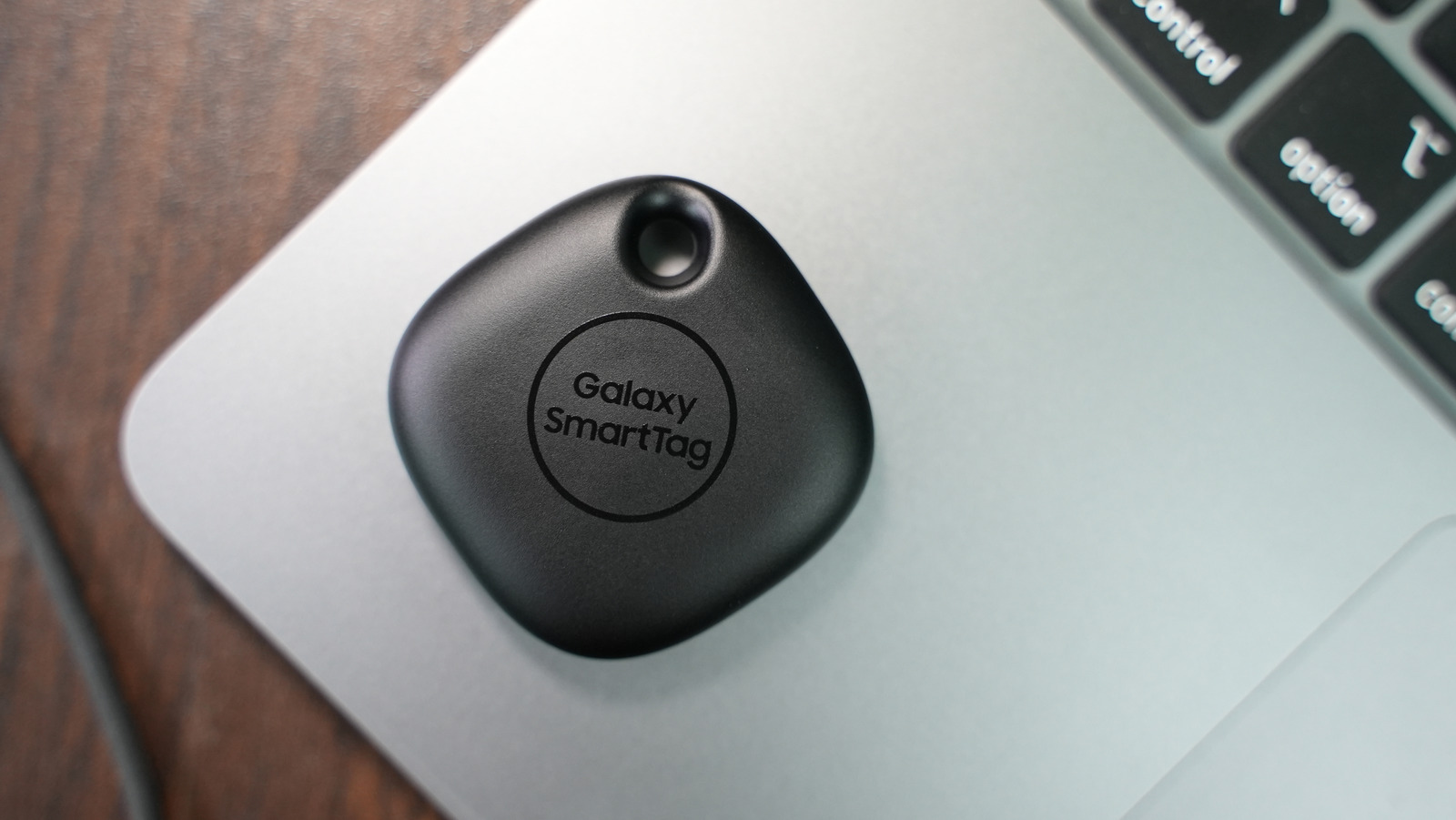
The Apple AirTag is an excellent way to track luggage or small items like a keychain, but it’s also designed to work best with Apple’s ecosystem. If you’re on Android, you need something that works with Google’s Find My Device platform (aka Google Find Hub) which significantly narrows down the playing field. Samsung Galaxy SmartTags are the closest option. 

Sure, there are other trackers like Tile or Chipolo, along with several other AirTag alternatives that work for Android; but for those who wanted a SmartTag and didn’t have a Samsung device, the option was off the table. At least, until recently: A new third-party app, called uTag, introduces the option to use Samsung SmartTags on a non-Samsung Android as long as they are running Android 11 or above. uTag unlocks access to “almost” all SmartTag features for non-Samsung devices, like setting up tags, tracking, ringing, checking location history, and more. Better yet, uTag adds some new functions Samsung doesn’t have, like setting up widgets, designating safe zones based on Wi-Fi, and the option to export location history. 

The goal was to introduce support for alternative Android devices and people that want to use Samsung’s “behemoth” SmartThings app. With uTag, you can effectively toss a SmartTag inside your luggage, or clip it to a zipper, and manage tracking from any non-Samsung Android device. You can even use ultra wideband for location tracking through uTag with SmartTag devices that support it. Airtags utilize UWB for tracking, too.

Why choose Samsung SmartTags over other tracking options?

HU Art and Photography/Shutterstock

If you want to track something like luggage, network availability is going to be a huge concern, since wireless signal is imperative for tracking a tag’s location. That’s why (in terms of design), the Samsung SmartTags are the most similar to Apple’s AirTags, both in their size and how they function. Samsung’s trackers are some of the most accurate tools available for Android devices, and they’re remarkably accessible when it comes to price. That’s why it was a bummer for non-Samsung users that they’re not more widely compatible. The uTag app makes this now possible any Android 11 (or higher) device.

Another reason to use SmartTags from Samsung over any alternatives is that Samsung’s private tracking network, Find My Everything (an alternative to Google’s Find My platform) has existed longer and tends to be more reliable. In Samsung’s case, the location tracking network is not restricted by a privacy focus, meaning location info updates more openly than Google’s. 

The latter works best in “high-traffic areas” because a default setting for Android devices is to not contribute to the location tracking network. You could argue Google’s privacy-conscious lean is good, as privacy is always a touchy issue, but the fact of the matter is that Samsung’s network is more reliable for tracking and finding devices. That’s exactly why it more closely resembles Apple’s Find My ecosystem. If you’re tracking luggage, more accurate and reliable tracking is the go-to.

Source

Posted on

iPhone Air May Not Be The Flop People Think It

Michael M. Santiago/Getty Images

Over the past few weeks, we’ve seen a steady stream of reports suggesting that Apple’s ultra-thin iPhone Air hasn’t exactly been flying off the shelves. Just last week, for example, a report emerged claiming that Apple was planning to scale back iPhone Air production by as much as 1 million units due to lower than anticipated demand. Consequently, a narrative was starting to build that Apple’s iPhone Air, despite the hype we saw preceding its release, might go down as a disappointment, similar to Apple’s beloved yet commercially unsuccessful iPhone mini.

A more recent report, however, claims that the iPhone Air may not be a flop at all. A new investor note from TD Cowen, brought to light by AppleInsider, relays that Apple never made a change to its iPhone Air production schedule. TD Cowen adds that iPhone Air production for the 2025 holiday quarter remains unchanged at 7 million units.

It’s worth noting that analyzing the vibrancy of iPhone sales by looking at production numbers can often be misleading. For example, Apple will sometimes scale back production because initial sales estimates were overly optimistic, even when total sales remain quite strong. In other instances, Apple might boost production when initial sales estimates were too low. In both scenarios, Apple’s actions often say more about the accuracy of its initial estimates than about the actual strength of overall sales. So, while production boosts or cutbacks can be informative, they typically don’t paint a complete picture.

We may be in the midst of an iPhone supercycle

Cheng Xin/Getty Images

The popularity of the iPhone Air aside, one thing that is becoming increasingly clear is that Apple’s iPhone 17 lineup is spearheading a significant uptick in iPhone sales. For years, analysts have anticipated an iPhone supercycle, and it appears that we’re finally in the midst of it.

Demand for the iPhone 17 was immense right from the start. Not only were pre-orders higher than in years past, but demand has stayed strong in the weeks following its worldwide launch. One factor which is helping boost demand is the fact that some analysts believe there are more than 315 million iPhone users who haven’t upgraded their device in at least four years. This, coupled with the fact that the iPhone 17 lineup arguably represents the strongest iPhone update we’ve seen in years, has seemingly created a perfect storm for Apple.

To this point, new data from Counterpoint Research reveals that the iPhone 17, in its first few weeks of availability, outpaced early iPhone 16 sales by a whopping 14%. That’s a dramatic increase given that iPhone sales haven’t fluctuated wildly in the last few years. Amid the apparent surge in iPhone sales, Apple’s share price has recently skyrocketed to new highs. Shares of Apple on Monday reached $267, marking a new intraday high. Since August 5, Apple shares have shot up by 31%. We’ll be able to get a better sense of how strong iPhone sales are when the company releases its earnings report for the recent quarter later this week.

Source

Posted on

What Does USB-PD Stand For?

Bgblue/Getty Images

If you’ve bought a new USB-C cable or charger and seen “USB-PD” on the charger’s or cable’s box, you may have wondered what exactly these letters stood for. The answer is USB Power Delivery, a fast-charging standard that lets compatible devices negotiate and draw much higher power levels than traditional USB connections. Instead of the fixed 5-volt output found in older USB-A chargers, USB-PD can dynamically adjust voltage and current, delivering anywhere from 5V to 48V and up to 240 watts on the most recent version of USB-PD. 

The flexibility that USB-PD brings enables modern laptops, tablets, and smartphones to charge quickly using the same USB-C port that handles data and video output. A MacBook Pro, for example, can pull up to 100W via USB-PD, while a Nintendo Switch or Google Pixel smartphone scales down to 18W and 27W, respectively, automatically. The technology also makes it possible to power larger accessories like monitors or docking stations from a single USB-C cable.USB-PD is what makes today’s all-in-one USB-C ecosystem possible. By standardizing higher-wattage power transfer, USB Power Delivery reduces the need for proprietary adapters and cables. 

What is USB-PD?

Your Hand Please/Shutterstock

USB Power Delivery (USB-PD) is an advanced fast-charging standard designed to safely deliver higher power levels over a USB connection. Unlike the older USB-A and USB-B standards, which were limited to a fixed 5 volts and relatively low wattage, USB-PD is able to dynamically negotiate both voltage and current between the connected device and charger. This allows compatible hardware such as laptops, tablets, smartphones, and monitors to draw anywhere from 5 watts up to 240 watts under the latest USB-PD 3.1 version. 

The key feature of USB-PD is its smart power negotiation. Instead of forcing every device to charge at the same rate, the charger and device communicate to determine the optimal power level. This ensures efficient charging without overheating or the risk of damage to components. For example, a MacBook Air might pull 67 watts for rapid charging, while a pair of AirPods connected to the same charger might only draw a few watts. 

Source

Posted on

Do government services need a rethink for AI and automation?

Operational Delivery Profession (ODP), the public face of the civil service, must keep pace with advances in technology and artificial intelligence (AI), which has implications on skills, a Public Accounts Committee (PAC) report has concluded.

In the Smarter delivery of public services report, the PAC noted that while the ODP has created a skills framework, which sets out the skills that staff need at different stages of their careers, the capabilities and expertise that its members need are changing and will require skills associated with other professions, particularly digital.

“Automating straightforward types of demand means that staff can spend their time dealing with customers with more complex needs, or who cannot access digital services,” the report’s authors said.

The evidence submitted to the PAC shows that the civil service needs understand how technology can reshape interactions with citizens. In response to a question from the committee on the need for operational delivery capabilities in government services, Peter Schofield, permanent secretary for the Department for Work and Pensions (DWP), said: “At its heart, this is about delivering the services. That is partly about making sure that we have people who are able to think about how to deliver customer service at its best, and partly about how we innovate and how we use technology in different ways.”

Schofield used the online portal for child maintenance as an example of where technology helps to improve service. “People can do the most straightforward accessing of information about their claim or their case online. It frees up our people to deal with the more complex situations,” he said.

When asked about creating an operating environment to improve operational delivery, Schofield said: “During the really difficult time we had during the pandemic in 2020, there was a huge amount of innovation and creativity … at every level in DWP to find ways of changing and improving processes, and bringing in automation … to have that objective was quite phenomenal. It did not require me or the leadership of DWP coming up with the ideas – these ideas were happening across the organisation.”

Another witness statement in the PAC report shows that there may be a need to overhaul services to make better use of the new technology that is now available.

In his written statement to the PAC, Mark Thompson, professor of digital economy at University of Exeter Business School, said: “The prevailing culture of ‘digital skills’ which, in its focus on building and/or procuring technology, glosses or actively disregards the growing need to overhaul the business and operating models of public services – to ask questions about what it is we think we are building for the future.”

Thompson warned that there is currently little-to-no business education about technology-enabled business, or operating models and their implications for UK public services, and very few with the capability to provide such education.

He also noted that modern, digitally and AI-enabled organisations are modular in structure, and are able to point to clearly defined operating models that show where it is appropriate to innovate and spend money, versus where such innovation/spend is inappropriate and undesirable. Where innovation is inappropriate, he said: “Capabilities are routinely standardised, shared and consumed as services over the internet.”

A tech slowdown post lockdown

The challenge the government faces is that it appears to have lost momentum for making significant, transformational changes that can be empowered through the smart use of technological innovation.

Prior to the publication of the PAC report, David Barber, director of the UCL centre for AI and distinguished scientist at UiPath, spoke to Computer Weekly about the ability of UK businesses and government departments to make the most of new technology innovation such as AI, adding: “There are some fairly straightforward processes in government that probably are ready for automation, and the UK [government] should think more about that.” 

He believes that AI has advanced to a stage where the majority of queries from citizens could probably be handled by automated systems. 

UiPath was involved in a robotic process automation (RPA) initiative at DWP Digital, the service delivery arm of the Department for Work and Pensions, which began in 2017 and saw the creation of the Intelligent Automation Garage to scale-out automation projects. Among them was the DWP’s response to the Covid-19 pandemic, focused on new Universal Credit claims. The automation made it easier to apply for a Budgeting Advance to give financial support prior to the first Universal Credit payment being made.

The momentum to rework government processes during the pandemic seems to have subsided, and while the Labour government appears to have pinned its hopes on AI boosting government efficiency, it also has to deal with an AI legacy left by the previous Tory government.

Barber said that during Covid, “there was an urgency to fight the pandemic”, but he felt that the former Tory government failed to capitalise on the automation momentum afterwards, adding: “I feel the previous administration wasn’t particularly convinced about AI.”

As an example, he noted that the Bletchley Park AI Summit, held in November 2023, focused on “the apocalyptic scenarios of AI” rather than the real opportunities it offers business and government services.

Source

Posted on

Samsung’s First Trifold Phone Might Not Launch In The US

Wongsakorn 2468/Shutterstock

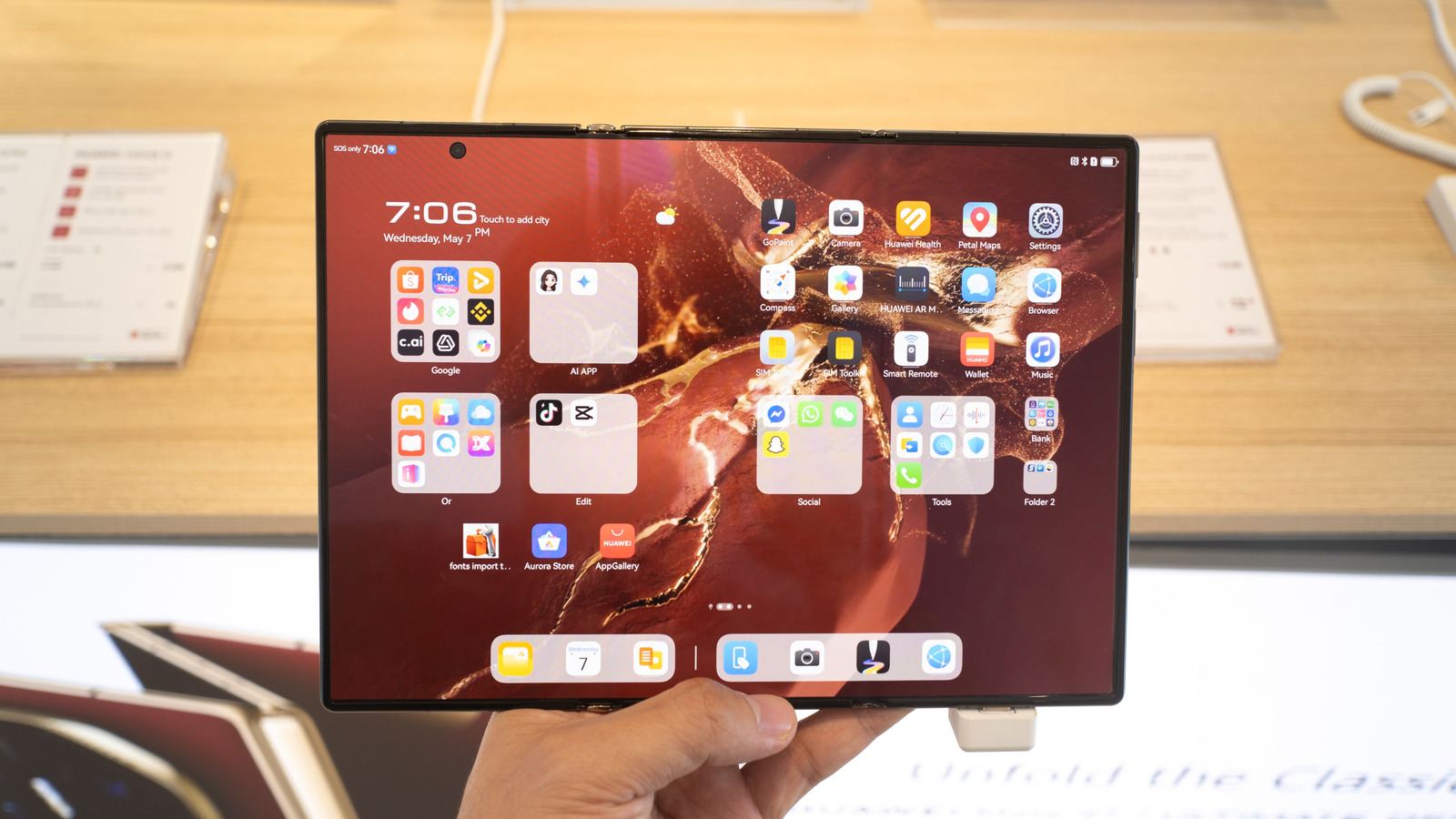
After launching the Galaxy XR headset a few days ago, Samsung plans to launch one more high‑end mobile product this year: its first trifold foldable phone. The device appeared in rumors and leaks earlier this year, with some reports calling it the Galaxy G Fold or Galaxy G Fold 7. The latest report on the Samsung trifold comes from reliable leaker Evan Blass (via Android Police), who says the first Samsung trifold might not launch in the U.S. Instead, Samsung might only sell the phone in select Asian countries, including South Korea, China, Singapore, and the U.A.E.

Blass routinely provides accurate information about unreleased devices, including Samsung products. It’s unclear what information he’s basing his prediction on, as he doesn’t offer any supporting evidence. Blass only says it’s unlikely for the first trifold foldable to launch in the U.S. and notes that he’d love to be wrong about this launch detail. There is precedent for a limited launch. Samsung unveiled the Galaxy Z Fold Special Edition late last year. Its first ultra-slim foldable phone launched only in Korea and China. However, Samsung used that design to create the Galaxy Z Fold 7 model that saw a worldwide release this summer. It wouldn’t be surprising for the Galaxy G Fold to follow the same recipe.

Why is Samsung making a trifold phone?

Robert Way/Shutterstock

Trifold phones, or foldable phones featuring two hinges and three display sections, aren’t new. Chinese vendors Tecno and Huawei have already produced such devices. Tecno showcased two concept trifold models, including a G Fold-type device, without turning them into commercial products. Huawei also unveiled the Mate XT last year — an expensive trifold available only in China.

The advantage of trifold phones over regular foldables is that they can be turned into larger tablets, or better said, devices that look more like traditional tablets, with a wider screen. Phones like the Pixel 10 Pro Fold and the Galaxy Z Fold 7 offer a square display when unfolded, which might not be ideal when using a single app on the screen. The disadvantage of a trifold phone is that it contains more moving parts. Also, these components might be more expensive to manufacture. Like the Huawei Mate XT, the first Samsung trifold phone will probably be prohibitively expensive.

It’s likely that Samsung needs to show it can compete against Chinese vendors, especially considering that Samsung pioneered the foldable phone concept. After the Galaxy Z Fold 7 launch in mid-July, TM Roh, Samsung’s acting head of the Device Experience division, confirmed the company is working on trifold handsets: “We are working hard on a tri-fold smartphone with the goal of launching it at the end of this year.” Making the Samsung trifold available only in Asia before the U.S. and other international markets is a good strategy for Samsung to compete against Huawei. After that, Samsung can always release a second-generation Galaxy G Fold handset in Western markets, including North America.

Source

Posted on

iPhone Users Will Soon Be Able Add A Passport To

Ivan Marc/Shutterstock

Following Apple’s Worldwide Developers Conference this past June, the company indicated that iOS 26 would allow users to add a U.S. passport to their Apple Wallet. In doing so, users would be able to use their iPhone or Apple Watch as a Digital ID when traveling domestically. The underlying benefit is that the Digital ID is compliant with REAL ID. This is particularly important because state-issued driver’s licenses that aren’t compliant with REAL ID are no longer sufficient for travel. If you show up to the airport without a form of REAL ID, you may not be allowed through security. At best, you’ll be subjected to additional security screening and potential delays.

Apple’s new passport feature would help users avoid this frustration. Apple included the feature on its iOS 26 features page in June, albeit with a footnote that it would arrive “later this year.” Now comes word from Apple executive Jennifer Bailey, via MacRumors, that the feature will be… “coming later this year.” Bailey did not share a specific timeline, but don’t be surprised if Apple delays the feature until December. It would, however, be nice to have the feature go live before the busy Thanksgiving travel season.

Apple’s Digital ID can’t replace your passport

Kieferpix/Getty Images

It’s important to mention that Apple’s Digital ID is by no means a replacement for a regular passport. First and foremost, Apple’s passport feature only works for domestic travel. It cannot be used for international trips. If you’re traveling abroad, a regular passport is still necessary. Second, the feature only works in the U.S. If you’re an iPhone or Apple Watch user outside of the United States, you’re unfortunately out of luck. The feature might come to users in other countries at some point in the future, but there’s no timetable for that at the moment.

Third, the feature may not be available at every U.S. airport, though most major airports will likely take it without a problem. The U.S. currently boasts about 487 commercial service airports, of which the TSA notes that more than 250 accept Digital ID. You’re likely fine if you’re traveling between two major U.S. cities, but you might want to double-check with each airport if your digital passport is going to be your only form of ID. Lastly, using a passport as a Digital ID is not uniquely an Apple feature. Similar functionality is already available on Google Wallet and Samsung Wallet.

Source

Posted on

Inspired by the EU: Sweden eyes open standard for encrypted

Government departments in Sweden are considering deploying “open network” encrypted messaging services as an alternative to proprietary collaboration tools.

Some 40 of Sweden’s government agencies are collaborating on a project that could see them rolling out a secure messaging service across government departments.

The initiative comes as European governments are accelerating the deployment of “sovereign” technologies that allow them to be less reliant on “siloed” software from technology suppliers.

The trend has been given new impetus by the war in Ukraine and growing political upheaval in the US.

A membership organisation for government agencies interested in digital technology, eSam has proposed developing a government messaging service based on Matrix, an open network offering secure decentralised messaging.

Replacing emails and phone calls

Kenneth Edwall, a government employee and member of the eSam group working on the project, told Computer Weekly that one of the aims of the proposal is to make it possible for government departments to communicate more efficiently.

“We as agencies need to collaborate with each other,” he said. “Having email is not the best tool, and having phone calls is not a good method either.”

When eSam first began evaluating collaboration technology in 2021, government departments in Sweden had standardised on Skype for Business as a collaboration tool across government.

The tool was easy to use, and it was possible for government employees to collaborate with colleagues by searching on their email and initiating a chat.

They deployed Skype in a decentralised way, giving agencies the freedom to buy the service from suppliers or deploy it on their own datacentres.

This created a robust, decentralised network, said Edwall. “If you have 100 different deployments of Skype, it’s hard to target them all in a cyber attack,” he added.

Multiple messaging services

Since then, partly as a result of Microsoft phasing out Skype in favour of its Teams software, government departments have taken up a range of incompatible messaging apps. They include Rocket.chat, Teams, Zoom, open source platform Mattermost, video platform Jitsi Meet, and Element.

“We are now seeing at least five or six messaging tools being chosen by authorities today, and if it continues, we are going to have a big mess of fragmented systems,” said Edwall. “There is no open protocol that allows them to interoperate with each other.”

Imagine taking email and splitting it among five or six different email suppliers, each of which was incompatible with the other. “That is what we have today with messaging,” he added.

This means government employees in Sweden are having to learn several collaboration tools so that they communicate with people in other parts of government.

The security risks 

The apps pose security risks as collaboration tools fall outside security safeguards, and when people leave their jobs, they may still be connected to government-focused chat groups.

In January this year, eSam began a review to look at how to solve these problems. One option was to do nothing and leave it to technology providers to develop interoperable messaging services, but it ruled that out.

“We don’t believe that the entire market wants to be interoperable,” said Edwall. “We believe that some of the larger vendors have an incentive not to be interoperable with other vendors.”

Another idea was for Swedish government departments to standardise on a propriety platform, such as Zoom or Microsoft teams. However, under Swedish law, government departments can not legally chose to buy technology from a favoured supplier. Each contract has to go out to tender.

Federated open source messaging

Eventually, eSam settled on an open-source federated messaging standard that allows government departments to build interoperable collaboration platforms, either in-house, or bought in from a provider.

“The key is we are not taking sides in regards to public cloud, private cloud or on premise,” said Edwall. “We are not taking sides on proprietary or open source solutions, but we want them all to have the same open protocol that allows them to interact with each other.”

The eSam members looked at a variety of options, including the Matrix protocol, Signal, XMPP and others, before deciding on Matrix.

“We had meetings with other public sector authorities in the EU [European Union] and we realised that most of the authorities we talked to were looking at the Matrix protocol,” he said. “Some of them were already in it and others were evaluating it.”

For eSam, Matrix offers a number of advantages. First, it is federated, which means the Matrix network relies on decentralised nodes. If one fails, or is hit by a cyber attack, messages can still re-route to the right destination.

Second, different government agencies can chose to deploy the technology in different ways. “You can also decide who you want to deploy our setup,” said Edwall. “You could use public cloud services or private on-premise services.”

European governments are using Matrix

Matrix is widely used by the public sector in France, Switzerland – where it has been championed by Swiss Post – and Germany. The European Commission and the Netherlands also have plans to roll out the technology.

The team has prepared a report that it will present to the eSam board in November.

Its recommendations are to build on open standards and protocols to ensure government agencies can avoid being locked into one supplier, and to give organisations the ability to choose how they want to deliver technology, either through public cloud, private cloud, on-premise systems or third-party suppliers.

If the plan is approved, the move to Matrix-based messaging is likely to take years – or even decades.

“We don’t want authorities to just throw out their current communication, because they might have a five or 10-year contract,” said Edwall.

“We want the market to shift so the vendors understand what they gain from using an open standard, similar to the open standards we use in email,” he added. “We want the market to understand that they should start adapting their products.”

Source