Posted on

AMD blames Ryzen 9800X3D stock shortage on Intel’s ‘horrible’ Arrow Lake launch, rubbing salt in Team Blue’s CPU wounds

  • AMD’s Frank Azor has fired shots at Intel’s Arrow Lake desktop CPUs
  • He called the Core Ultra 200S CPUs ‘horrible’ and said this increased demand for the Ryzen 9800X3D
  • That higher demand has led to stock woes, Azor claims, and inventory issues won’t likely ease anytime soon

An AMD executive fired flak at Intel, calling Team Blue’s latest Arrow Lake desktop chips ‘horrible’ no less.

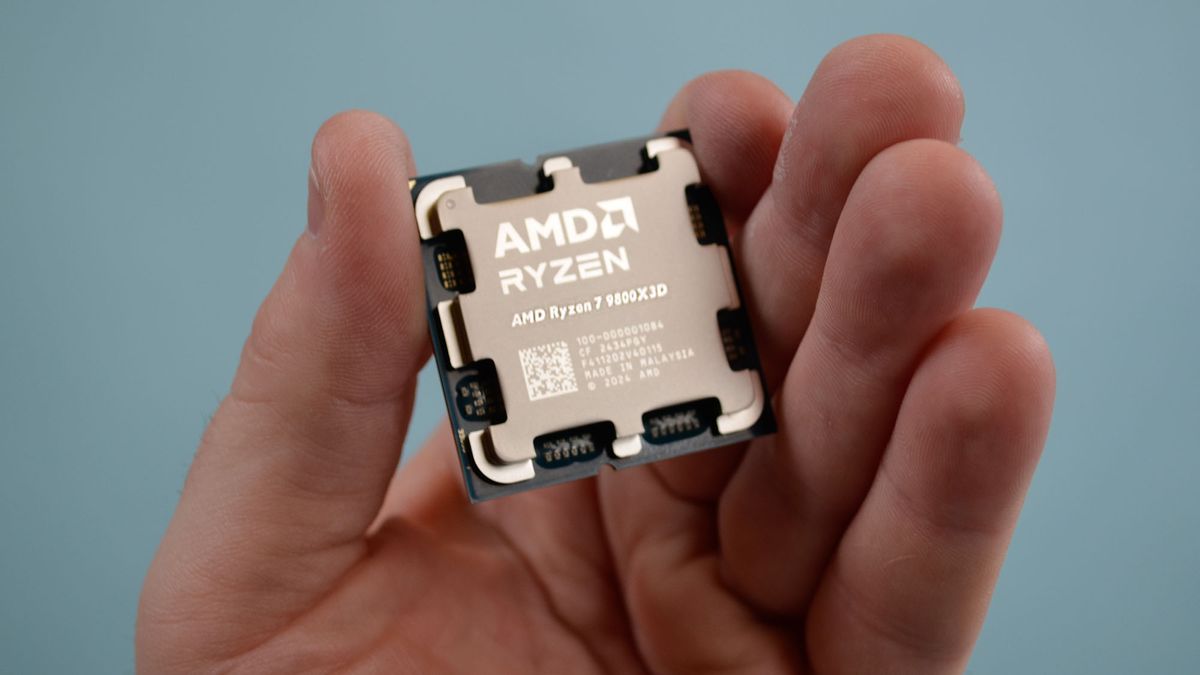
The quote came from a roundtable with AMD execs at CES 2025, where our sibling site, Tom’s Hardware, asked about the ongoing shortage of Ryzen 7 9800X3D stock (regarded as the best CPU for gaming that you can buy since its launch, and a processor that we gave a glowing review).

AMD observed that demand has outstripped supply – clearly enough – and the full quote from Frank Azor, who heads up consumer and gaming marketing at AMD, will surely leave Intel bigwigs suitably unimpressed.

Azor told Tom’s Hardware: “We knew we built a great part [in the 9800X3D]. We didn’t know the competitor [Intel] had built a horrible one [Arrow Lake]. So the demand has been a little higher than we forecasted.”

Ouch. You’ve probably noticed that Intel’s latest Arrow Lake desktop chips, which arrived in October 2024, experienced a rocky launch, with various problems that Team Blue still hasn’t fully put to bed.

We’ll come back to Intel’s misfortunes later, but what about the Ryzen 9800X3D stock situation?

David McAfee, VP and GM of Ryzen channel business at AMD, explained: “It’s crazy how much we have increased [our monthly, quarterly output of X3D parts] over what we were planning. I would say the demand we’ve seen for the 9800X3D and the 7800X3D has been unprecedented. So the demand has been higher than ever.”

{ window.reliablePageLoad.then(() => { var componentContainer = document.querySelector(“#slice-container-newsletterForm-articleInbodyContent-jJTEXM4CLaZ5VMt7iEHKE6”); if (componentContainer) { var data = {“layout”:”inbodyContent”,”header”:”Get daily insight, inspiration and deals in your inbox”,”tagline”:”Sign up for breaking news, reviews, opinion, top tech deals, and more.”,”formFooterText”:”By submitting your information you agree to the Terms & Conditions and Privacy Policy and are aged 16 or over.”,”successMessage”:{“body”:”Thank you for signing up. You will receive a confirmation email shortly.”},”failureMessage”:”There was a problem. Please refresh the page and try again.”,”method”:”POST”,”inputs”:[{“type”:”hidden”,”name”:”NAME”},{“type”:”email”,”name”:”MAIL”,”placeholder”:”Your Email Address”,”required”:true},{“type”:”hidden”,”name”:”NEWSLETTER_CODE”,”value”:”XTR-D”},{“type”:”hidden”,”name”:”LANG”,”value”:”EN”},{“type”:”hidden”,”name”:”SOURCE”,”value”:”60″},{“type”:”hidden”,”name”:”COUNTRY”},{“type”:”checkbox”,”name”:”CONTACT_OTHER_BRANDS”,”label”:{“text”:”Contact me with news and offers from other Future brands”}},{“type”:”checkbox”,”name”:”CONTACT_PARTNERS”,”label”:{“text”:”Receive email from us on behalf of our trusted partners or sponsors”}},{“type”:”submit”,”value”:”Sign me up”,”required”:true}],”endpoint”:”https://newsletter-subscribe.futureplc.com/v2/submission/submit”,”analytics”:[{“analyticsType”:”widgetViewed”}],”ariaLabels”:{}}; var triggerHydrate = function() { window.sliceComponents.newsletterForm.hydrate(data, componentContainer); } if (window.lazyObserveElement) { window.lazyObserveElement(componentContainer, triggerHydrate); } else { triggerHydrate(); } } }).catch(err => console.error(‘%c FTE ‘,’background: #9306F9; color: #ffffff’,’Hydration Script has failed for newsletterForm-articleInbodyContent-jJTEXM4CLaZ5VMt7iEHKE6 Slice’, err)); }).catch(err => console.error(‘%c FTE ‘,’background: #9306F9; color: #ffffff’,’Externals script failed to load’, err)); ]]>

Sign up for breaking news, reviews, opinion, top tech deals, and more.

McAfee notes that making chips takes some time – “it’s basically 12 to 13 weeks from when you start a wafer to when you get a product out the other end of the machine” – and that the 3D V-Cache stacking process adds complexity and is even more time consuming. Meaning it’s harder to catch up with unexpected spikes in demand.

The upshot? McAfee says: “I think as we go through the first half of this year, you’ll see us continue to increase the output of X3D.” And the exec further notes that in the future, AMD is “ramping capacity to ensure we catch up with that demand for as long as customers want those X3D parts.”

It’s the Ryzen 7 X3D processors which represent most of the demand, you’ll be unsurprised to learn – as the benefits of hopping up to a Ryzen 9 X3D chip are marginal for PC gamers (if anything, indeed, gaming performance may even dip). So the 9800X3D and its predecessor represent the sweet spot for gaming and value.

McAfee said the workhorse 8-core X3D parts outsell Ryzen 9 X3D flavors by a massive 10-to-1, all of which means that the introduction of Ryzen 9950X3D and 9900X3D CPUs (ushered in at CES 2025) isn’t going to ease any pressure on the stock levels of the 9800X3D.

Intel Core Ultra processor

(Image credit: Future / John Loeffler)

Analysis: Broken Arrow? Hardly…

In short, don’t expect the Ryzen 9800X3D to become more widely available for some time yet, though as we head into the second quarter of 2025, matters should ease and the CPU may well populate the shelves in greater numbers.

Back to the flak fired by AMD at Intel, and it’s pretty harsh to use a term like ‘horrible’ to describe a rival product. Is desktop Arrow Lake really that awful? Well, the launch wasn’t a disaster, but it was disappointing, particularly as gaming performance did not live up to Intel’s promises due to multiple issues.

That said, Intel’s fixes – which have now been deployed for Arrow Lake, all but one final measure – don’t help much, or at all, at least according to Tom’s Hardware’s (limited) testing. Something we’ll need to verify ourselves, mind you, so take that with plenty of caution at this stage.

At any rate, Arrow Lake desktop has been troubled since it was pushed out, there’s no denying that, and the problem is that this happened against a backdrop of more serious instability issues with Intel’s preceding Core CPU ranges (13th and 14th) on the desktop. Those were really nasty gremlins in the works, and while Intel had them fixed by the end of last year, that whole episode was a very dark cloud over 2024 for Team Blue – with considerable reputational damage done.

So, while that episode has nothing to do with Arrow Lake – which doesn’t suffer those instability woes – it still casts a deep shadow over Intel’s newest desktop range and the separate issues with these chips.

It’s a messy time for Intel in the CPU world, in short, and AMD pulling no punches isn’t really a surprise. Although as we’ve said, ‘horrible’ is going rather too far, and somewhat gleefully playing on Intel’s other mishaps of late.

It should be noted that AMD is not entirely without blemishes with its current-gen processors, as Ryzen 9000 launched to some disappointment with its generational uplift, again particularly for gaming – though the 9800X3D has gone a long way towards addressing that. The only problem is you can’t buy the thing at the moment, a situation which isn’t about to change, clearly.
You might also like

Source

Posted on

Leaked Nvidia RTX 5090 laptop GPU benchmarks are weird

  • Nvidia’s RTX 5090 laptop GPU shows inconsistent Geekbench 6 performance scores
  • Fails to score higher than the RTX 4080 or 4090 laptop GPUs in Vulkan
  • It hasn’t launched yet, and there aren’t any official drivers available

CES 2025 finally gave us a look at Nvidia’s new RTX 5000 series of graphics cards, and the flagship RTX 5090 GPU’s performance capabilities compared to the last generation’s RTX 4090 – but early benchmarks for its laptop GPU don’t look very promising.

This comes from BenchLeaks on X, which claims to have leaked Geekbench 6 results of Nvidia‘s RTX 5090 laptop GPU using Vulkan (graphics API used in plenty of games), with its highest score of 114,821. Tom’s Hardware highlighted this as the fourth benchmark among five different tests, with the lowest score sitting at 51,831 and the final test scoring 77,989.

Each benchmark score points towards wildly inconsistent performance for Team Green’s flagship laptop GPU, which failed to score higher than the RTX 4080’s 145,067 and the RTX 4090’s 167,655 Geekbench scores in Vulkan (both of which are for the laptop versions of those GPUs). While these results might be cause for concern, it’s far too early to draw any conclusions.

Nvidia geforce 4070

(Image credit: Nvidia)

Should we be worried about these early benchmarks?

While these tests are almost certainly not great to see, it’s absolutely not a reason to panic. Aside from the fact that these benchmarks are not official, but are claimed to be leaked, the RTX 5000 series hasn’t even officially launched yet (the RTX 5090 will be available at the end of the month), which means the necessary drivers and optimizations have not been made yet.

It’s also important to note that in-game benchmarks are what matter most – while Geekbench 6 can be accurate for measuring the performance capabilities of a GPU, scores are never going to be the same as each test will often vary drastically or closely. Despite the inconsistent scores here, we should wait to see how the RTX 5090 laptop GPU fares across multiple games once Nvidia makes the necessary adjustments and official drivers have been released.

We should be getting both the desktop RTX 5090, alongside gaming laptops with the mobile version, in for review, so make sure you check out our full reviews when they are live for reliable and independent verdicts on just how good (or not) these new GPUs from Nvidia really are.

You may also like…

{ window.reliablePageLoad.then(() => { var componentContainer = document.querySelector(“#slice-container-newsletterForm-articleInbodyContent-ck4ufNKYg8pJpSq6jzS44J”); if (componentContainer) { var data = {“layout”:”inbodyContent”,”header”:”Get daily insight, inspiration and deals in your inbox”,”tagline”:”Sign up for breaking news, reviews, opinion, top tech deals, and more.”,”formFooterText”:”By submitting your information you agree to the Terms & Conditions and Privacy Policy and are aged 16 or over.”,”successMessage”:{“body”:”Thank you for signing up. You will receive a confirmation email shortly.”},”failureMessage”:”There was a problem. Please refresh the page and try again.”,”method”:”POST”,”inputs”:[{“type”:”hidden”,”name”:”NAME”},{“type”:”email”,”name”:”MAIL”,”placeholder”:”Your Email Address”,”required”:true},{“type”:”hidden”,”name”:”NEWSLETTER_CODE”,”value”:”XTR-D”},{“type”:”hidden”,”name”:”LANG”,”value”:”EN”},{“type”:”hidden”,”name”:”SOURCE”,”value”:”60″},{“type”:”hidden”,”name”:”COUNTRY”},{“type”:”checkbox”,”name”:”CONTACT_OTHER_BRANDS”,”label”:{“text”:”Contact me with news and offers from other Future brands”}},{“type”:”checkbox”,”name”:”CONTACT_PARTNERS”,”label”:{“text”:”Receive email from us on behalf of our trusted partners or sponsors”}},{“type”:”submit”,”value”:”Sign me up”,”required”:true}],”endpoint”:”https://newsletter-subscribe.futureplc.com/v2/submission/submit”,”analytics”:[{“analyticsType”:”widgetViewed”}],”ariaLabels”:{}}; var triggerHydrate = function() { window.sliceComponents.newsletterForm.hydrate(data, componentContainer); } if (window.lazyObserveElement) { window.lazyObserveElement(componentContainer, triggerHydrate); } else { triggerHydrate(); } } }).catch(err => console.error(‘%c FTE ‘,’background: #9306F9; color: #ffffff’,’Hydration Script has failed for newsletterForm-articleInbodyContent-ck4ufNKYg8pJpSq6jzS44J Slice’, err)); }).catch(err => console.error(‘%c FTE ‘,’background: #9306F9; color: #ffffff’,’Externals script failed to load’, err)); ]]>

Sign up for breaking news, reviews, opinion, top tech deals, and more.

Source

Posted on

AMD announces new Radeon RX 9070 XT and RX 9070 graphics cards at CES 2025

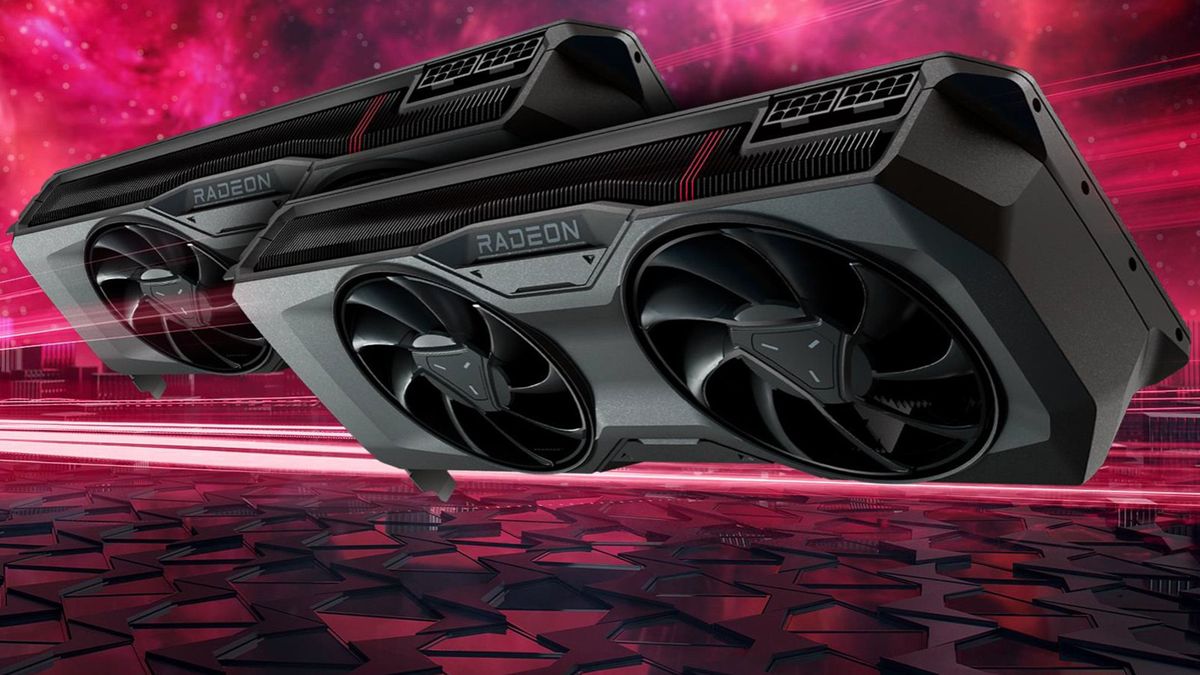
AMD announced its latest RDNA 4 graphics cards at CES 2025 this week, the AMD Radeon RX 9070 XT and AMD Radeon RX 9070, both targeting the midrange graphics card segment, as was widely expected.

There isn’t much that we know about the two new cards yet, other than the new numbering scheme is intended to make it easier to compare AMD’s Radeon cards against the competition, namely Nvidia.

Under this new numbering scheme, the Radeon RX XX70 cards are now meant to compete against Nvidia’s XX70 cards, with the Radeon RX 9070 XT going up against the Nvidia GeForce RTX 5070 Ti and the RX 9070 going up against the RTX 5070. AMD has also teased a later launch for Radeon RX 9060 cards, which would then go up against the Nvidia RTX 5060 Ti and RTX 5060.

Things get a bit more complicated when comparing these new cards against their predecessors, with AMD indicating that the RX 9070 series is replacing everything from the AMD RX 7900 XT to the RX 7800 XT, while the RX 9060 series is roughly replacing the RX 7700 XT and RX 7600 XT (the RX 7600 would presumably be replaced by a lower tier than these two).

It hasn’t said whether or not there will be any RX 9080 or RX 9090 cards, but given all of the talk about AMD conceding the premium enthusiast segment to Nvidia this generation, the 9070 and 9060 series cards are likely to be the only cards we get this go around.

No price or firm release date has been given, only that we should expect the new Radeon cards in Q1 2025.

Is abandoning the enthusiast segment a smart move for AMD?

AMD’s apparent decision to cede the enthusiast segment to focus on the midrange and upper-budget segments has been telegraphed by AMD for a while now, and it appears that this is in fact what AMD has planned.

{ window.reliablePageLoad.then(() => { var componentContainer = document.querySelector(“#slice-container-newsletterForm-articleInbodyContent-eKtHmQxXsDaUyB3uDFEMp”); if (componentContainer) { var data = {“layout”:”inbodyContent”,”header”:”Get daily insight, inspiration and deals in your inbox”,”tagline”:”Sign up for breaking news, reviews, opinion, top tech deals, and more.”,”formFooterText”:”By submitting your information you agree to the Terms & Conditions and Privacy Policy and are aged 16 or over.”,”successMessage”:{“body”:”Thank you for signing up. You will receive a confirmation email shortly.”},”failureMessage”:”There was a problem. Please refresh the page and try again.”,”method”:”POST”,”inputs”:[{“type”:”hidden”,”name”:”NAME”},{“type”:”email”,”name”:”MAIL”,”placeholder”:”Your Email Address”,”required”:true},{“type”:”hidden”,”name”:”NEWSLETTER_CODE”,”value”:”XTR-D”},{“type”:”hidden”,”name”:”LANG”,”value”:”EN”},{“type”:”hidden”,”name”:”SOURCE”,”value”:”60″},{“type”:”hidden”,”name”:”COUNTRY”},{“type”:”checkbox”,”name”:”CONTACT_OTHER_BRANDS”,”label”:{“text”:”Contact me with news and offers from other Future brands”}},{“type”:”checkbox”,”name”:”CONTACT_PARTNERS”,”label”:{“text”:”Receive email from us on behalf of our trusted partners or sponsors”}},{“type”:”submit”,”value”:”Sign me up”,”required”:true}],”endpoint”:”https://newsletter-subscribe.futureplc.com/v2/submission/submit”,”analytics”:[{“analyticsType”:”widgetViewed”}],”ariaLabels”:{}}; var triggerHydrate = function() { window.sliceComponents.newsletterForm.hydrate(data, componentContainer); } if (window.lazyObserveElement) { window.lazyObserveElement(componentContainer, triggerHydrate); } else { triggerHydrate(); } } }).catch(err => console.error(‘%c FTE ‘,’background: #9306F9; color: #ffffff’,’Hydration Script has failed for newsletterForm-articleInbodyContent-eKtHmQxXsDaUyB3uDFEMp Slice’, err)); }).catch(err => console.error(‘%c FTE ‘,’background: #9306F9; color: #ffffff’,’Externals script failed to load’, err)); ]]>

Sign up for breaking news, reviews, opinion, top tech deals, and more.

Personally, I think it’s a great move on AMD’s part. If you’ve got a grand to spend on a graphics card, you’re all but certain to go for an Nvidia GPU. But the AMD Radeon RX 7900 GRE currently sits atop our best graphics card list for a reason. The RTX 4090 and RTX 4080 are ideal for 4K gaming, but according to Valve’s Steam Hardware Survey, the vast, vast majority of gamers out there are gaming at 1080p, with 1440p gaming being the area with the most growth. 4K gamers, meanwhile, make up less than 5% of gamers out there.

Which makes a lot of sense. Gaming at 4K is extremely expensive for increasingly marginal benefit. As TechRadar’s components editor, believe me, I’ve extensively tested all of the best 4K graphics cards over and over again, and I can hardly tell the difference between 1440p and 4K in terms of visual sharpness, but I can sure tell the difference in terms of framerate, and unless you have a 120Hz or better gaming monitor, you’ll never get to see the much faster 1440p framerate that a 4K graphics card like the RTX 4080 (or AMD RX 7900 XTX, for that matter) can give you.

The only people who can really benefit from a 4K graphics card at this point are people with a hell of a lot of money to spend on building the best gaming PC possible with a high-end gaming monitor. That’s a very narrow market, and if you’re that kind of gamer, you’re just going to splurge on a premium Nvidia card.

AMD’s apparent acknowledgment of this gives it a great opportunity to market its otherwise fantastic graphics cards to the vast majority of gamers, especially those whose goodwill has been burned by Nvidia’s increasingly high prices.

You might also like…

Source

Posted on

Microsoft Recall still captures SSNs, passwords, and more

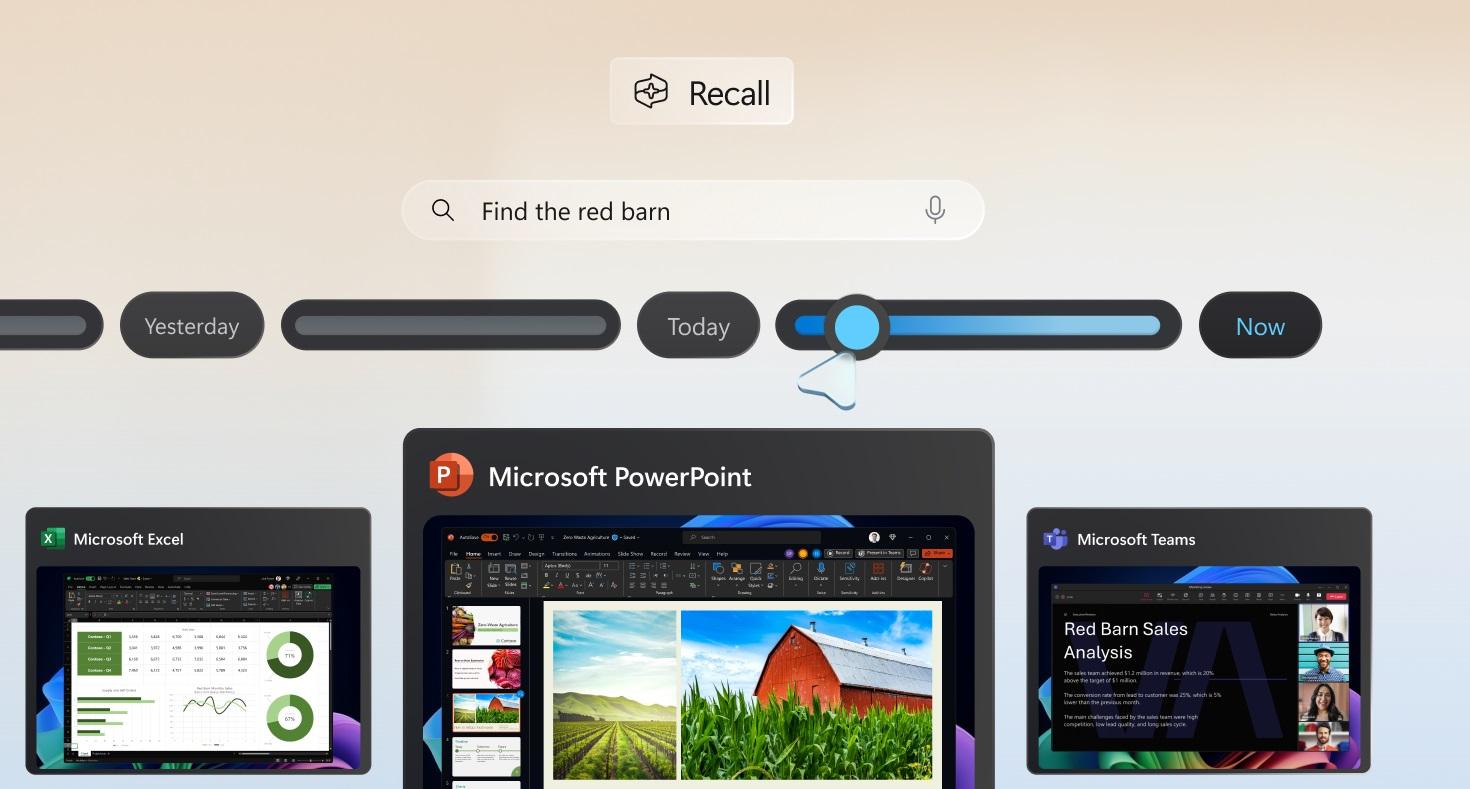
Microsoft had to recall the Recall AI feature on Copilot+ Windows PCs earlier this year. In theory, Recall was supposed to be a great AI trick to quickly resurface information from your past activities on a computer. In practice, it turned out to be a privacy and security nightmare.

Researchers proved that Recall data could be easily accessed by a malicious actor who gains access to a computer. Also, the saved screenshots could contain sensitive information, and Recall was enabled by default on those Windows builds.

Microsoft heard the complaints and pulled the feature to rework its security. As testers have found, Recall now encrypts the screenshots, making it impossible to extract information from the database. However, Recall will still take screenshots of sensitive data, including social security numbers, logins (including passwords), and credit card data.

Even with protections in place, Recall mostly failed to recognize that sensitive data was entered on the screen in Tom’s Hardware’s tests.

Tech. Entertainment. Science. Your inbox.

Sign up for the most interesting tech & entertainment news out there.

By signing up, I agree to the Terms of Use and have reviewed the Privacy Notice.

The feature has a “filter sensitive information” setting that everyone should enable right if you use Recall. The good news is that Recall is an opt-in service now, meaning it won’t be automatically enabled once you get the latest Windows update.

The test showed various scenarios that many computer users will reconize where Recall shouldn’t take screenshots of the content shown on the display. But Recall captured the information anyway.

For example, Recall recorded a Windows Notepad window where the user entered a credit card number and a random username and password combination, even though the user typed “Capital One Visa” next to the number to trigger the protections. Recall also captured fake social security numbers, names, and date of birth details entered into a PDF loan application. The feature had no idea those were all fake; it just screenshotted the information. It also captured the page when a genuine credit card number was introduced.

The tester then created a web form with fields that said, “Enter your credit card number below.” The form asked for the credit card type, number, CVC, and expiration date. Again, Recall failed to trigger the protections and recorded images containing the data.

The only time Recall worked correctly was when the user entered payment information into the forms of two online stores.

That’s certainly not good enough and a big reason to worry. I’m a longtime Mac user, so I won’t deal with Recall anytime soon. Or if I do, I’ll only do it for testing purposes. But I can’t see why one should leave it enabled.

The report notes that Recall’s databases are indeed encrypted. Also, you need to authenticate with Microsoft Hello (fingerprint, face, or PIN) to access your screenshots. But a malicious actor with remote access to your computer could get into the history the AI uses once they obtain that PIN. You might think it won’t happen to you, but I wouldn’t take that risk, no matter how amazing this Copilot feature might be.

Because yes, I won’t lie, having the AI remember what websites you visited can be an amazing tool if done right. The feature would have to have strong security and privacy features, and Microsoft is not getting it right.

When asked about Recall’s feature that’s supposed to identify sensitive data, the company offered Tom’s Hardware a quote from its Recall blog post that tackles privacy matters:

We’ve updated Recall to detect sensitive information like credit card details, passwords, and personal identification numbers. When detected, Recall won’t save or store those snapshots. We’ll continue to improve this functionality, and if you find sensitive information that should be filtered out for your context, language, or geography, please let us know through Feedback Hub. We’ve also provided an option in Settings that we encourage you to enable that will anonymously share the apps and sites you prefer to be excluded from Recall to help us improve the product. And you can also choose to exclude specific apps and websites through the Recall settings page which we talk about below.

That means Recall will get better over time, but you’ll have to wait. Until that happens, it might capture sensitive data while you use your computer, as these tests have shown. You’ll have to decide for yourself whether the risk is worth it.

You can try Recall by installing the newest Windows Insider Build. Read more about it in Microsoft’s blog at this link.

Source

Posted on

It looks like the Nvidia App could be doing more harm than good by tanking game performance – but there’s a fix

The Nvidia App has been out for just over a month now – it’s Team Green’s replacement for GeForce Experience – but the new software is reportedly slowing down gaming performance for some folks.

A user named Sebastian Castellanos on X flagged up this issue, noting that with the Nvidia App installed, their gaming PC was being slowed down to the tune of 15%, and also suffering “horrendous” frametime issues (essentially jittery gameplay).

Castellanos said that this mainly happened with games using Unreal Engine 5 (specifically Black Myth: Wukong and The Talos Principle 2). Other X users also chimed in on the thread to note slowdowns to the tune of 10% to 15% or thereabouts.

First of all, Castellanos observed that the issues occurred with or without the Nvidia App’s overlay running in games, and subsequently posted again to say that they’d pinned down the problem to the ‘Game filters and Photo mode’ option in the app’s settings.

Apparently, turning this off cured the observed frame rate blues. Running some benchmarks with the game filters mode turned on, then off, Castellanos found that Black Myth: Wukong ran 22% faster with the mode disabled.

Stuttering was also way more pronounced with the mode enabled, as you can see in the graphs provided (check out the 1% percentile lows – the biggest dips in the frame rate) in the below post.

An Nvidia RTX 4070 Super on a purple deskmat on a desk

(Image credit: Future / John Loeffler)

Analysis: Hopefully this fudge will work for most gamers

As Tom’s Hardware reports – which also found similar levels of slowdown due to this bug – Nvidia has confirmed that it’s now investigating the purported glitch.

{ window.reliablePageLoad.then(() => { var componentContainer = document.querySelector(“#slice-container-newsletterForm-articleInbodyContent-cQNmmb6hAtbgKQDpdFxkB9”); if (componentContainer) { var data = {“layout”:”inbodyContent”,”header”:”Get daily insight, inspiration and deals in your inbox”,”tagline”:”Sign up for breaking news, reviews, opinion, top tech deals, and more.”,”formFooterText”:”By submitting your information you agree to the Terms & Conditions and Privacy Policy and are aged 16 or over.”,”successMessage”:{“body”:”Thank you for signing up. You will receive a confirmation email shortly.”},”failureMessage”:”There was a problem. Please refresh the page and try again.”,”method”:”POST”,”inputs”:[{“type”:”hidden”,”name”:”NAME”},{“type”:”email”,”name”:”MAIL”,”placeholder”:”Your Email Address”,”required”:true},{“type”:”hidden”,”name”:”NEWSLETTER_CODE”,”value”:”XTR-D”},{“type”:”hidden”,”name”:”LANG”,”value”:”EN”},{“type”:”hidden”,”name”:”SOURCE”,”value”:”60″},{“type”:”hidden”,”name”:”COUNTRY”},{“type”:”checkbox”,”name”:”CONTACT_OTHER_BRANDS”,”label”:{“text”:”Contact me with news and offers from other Future brands”}},{“type”:”checkbox”,”name”:”CONTACT_PARTNERS”,”label”:{“text”:”Receive email from us on behalf of our trusted partners or sponsors”}},{“type”:”submit”,”value”:”Sign me up”,”required”:true}],”endpoint”:”https://newsletter-subscribe.futureplc.com/v2/submission/submit”,”analytics”:[{“analyticsType”:”widgetViewed”}],”ariaLabels”:{}}; var triggerHydrate = function() { window.sliceComponents.newsletterForm.hydrate(data, componentContainer); } if (window.lazyObserveElement) { window.lazyObserveElement(componentContainer, triggerHydrate); } else { triggerHydrate(); } } }).catch(err => console.error(‘%c FTE ‘,’background: #9306F9; color: #ffffff’,’Hydration Script has failed for newsletterForm-articleInbodyContent-cQNmmb6hAtbgKQDpdFxkB9 Slice’, err)); }).catch(err => console.error(‘%c FTE ‘,’background: #9306F9; color: #ffffff’,’Externals script failed to load’, err)); ]]>

Sign up for breaking news, reviews, opinion, top tech deals, and more.

Team Green advises as follows: “We are aware of a reported performance issue related to Game Filters and are actively looking into it. You can turn off Game Filters from the Nvidia App Settings > Features > Overlay > Game Filters and Photo Mode, and then relaunch your game.”

It’s certainly worth trying that suggested fix, although Castellanos cautions that this might not work for everyone affected. If it doesn’t cure any sluggishness you might be experiencing with the Nvidia App, then about the only other option is to simply uninstall it and go without – until Team Green applies a fix. You can run with just the bare Nvidia graphics driver without needing the app, in case you were wondering.

Hopefully Nvidia will be able to swiftly implement a patch to resolve this one, as it’s a pretty nasty bug by all accounts – one that should arguably have been caught in the lengthy beta for the Nvidia App.

Via Wccftech

You might also like

Source

Posted on

Nvidia might reveal DLSS 4 at CES 2025 – and mysterious new AI capabilities that could be ‘revolutionary’ for GPUs

  • Inno3D has leaked that Nvidia has “advanced DLSS technology” to show off at CES 2025
  • This may be DLSS 4, as it makes sense to reveal it alongside RTX 5000 GPUs
  • New neural rendering capabilities are also set to be aired which could be even more intriguing

Inno3D has again been leaking material relating to Nvidia’s upcoming revelations at CES 2025, but this time it’s more about the software and AI side of the equation, rather than the (purported) next-gen graphics cards themselves.

VideoCardz noticed that German tech site Hardware Luxx caught the CES 2025 press release from Inno3D, teasing what it has in store for the show, and oversharing some info that Nvidia would doubtless not want aired.

The key mentions here pertain to a possible new version of DLSS and fresh neural rendering capabilities.

In the first case, Inno3D talks about: “Advanced DLSS Technology: Nvidia’s Deep Learning Super Sampling offering even better image quality and higher frame rates.”

And secondly, the manufacturer points out: “Neural Rendering Capabilities: Revolutionizing how graphics are processed and displayed.”

There’s also talk of AI enhanced power-efficiency measures whereby the GPU’s power consumption and thermals are presumably fine-tuned to be more efficient and work better in general.

An Nvidia GeForce RTX 4060 Ti

(Image credit: Future / John Loeffler)

Analysis: Clever tricks to make up for meager VRAM loadouts?

While we can’t read too much into this – it’s all pretty vague marketing speak from Inno3D, as you’d fully expect from a pre-event press release – the highlighted bits are still exciting glimpses of what we might be treated to at CES 2025.

{ window.reliablePageLoad.then(() => { var componentContainer = document.querySelector(“#slice-container-newsletterForm-articleInbodyContent-Ep7bNnmUzbtxdMLDJ6tnSi”); if (componentContainer) { var data = {“layout”:”inbodyContent”,”header”:”Get daily insight, inspiration and deals in your inbox”,”tagline”:”Sign up for breaking news, reviews, opinion, top tech deals, and more.”,”formFooterText”:”By submitting your information you agree to the Terms & Conditions and Privacy Policy and are aged 16 or over.”,”successMessage”:{“body”:”Thank you for signing up. You will receive a confirmation email shortly.”},”failureMessage”:”There was a problem. Please refresh the page and try again.”,”method”:”POST”,”inputs”:[{“type”:”hidden”,”name”:”NAME”},{“type”:”email”,”name”:”MAIL”,”placeholder”:”Your Email Address”,”required”:true},{“type”:”hidden”,”name”:”NEWSLETTER_CODE”,”value”:”XTR-D”},{“type”:”hidden”,”name”:”LANG”,”value”:”EN”},{“type”:”hidden”,”name”:”SOURCE”,”value”:”60″},{“type”:”hidden”,”name”:”COUNTRY”},{“type”:”checkbox”,”name”:”CONTACT_OTHER_BRANDS”,”label”:{“text”:”Contact me with news and offers from other Future brands”}},{“type”:”checkbox”,”name”:”CONTACT_PARTNERS”,”label”:{“text”:”Receive email from us on behalf of our trusted partners or sponsors”}},{“type”:”submit”,”value”:”Sign me up”,”required”:true}],”endpoint”:”https://newsletter-subscribe.futureplc.com/v2/submission/submit”,”analytics”:[{“analyticsType”:”widgetViewed”}],”ariaLabels”:{}}; var triggerHydrate = function() { window.sliceComponents.newsletterForm.hydrate(data, componentContainer); } if (window.lazyObserveElement) { window.lazyObserveElement(componentContainer, triggerHydrate); } else { triggerHydrate(); } } }).catch(err => console.error(‘%c FTE ‘,’background: #9306F9; color: #ffffff’,’Hydration Script has failed for newsletterForm-articleInbodyContent-Ep7bNnmUzbtxdMLDJ6tnSi Slice’, err)); }).catch(err => console.error(‘%c FTE ‘,’background: #9306F9; color: #ffffff’,’Externals script failed to load’, err)); ]]>

Sign up for breaking news, reviews, opinion, top tech deals, and more.

The mentioned advanced DLSS tech which delivers a better image quality, and bigger frame rate boosts, might well be DLSS 4. That said, we’ve heard very little about Nvidia’s next-gen take on DLSS, which is odd if it is on the verge of being shown off.

However, it’s not unreasonable to assume that DLSS 4 would be tied to RTX 5000 GPUs exclusively (as Team Green did this with DLSS 3 and RTX 4000 GPUs when they launched). And so when RTX 5000 graphics cards are revealed at CES, it’d make sense that the next-gen DLSS would be teased alongside them, if not fully detailed.

On top of that, the apparent new neural rendering capabilities sound intriguing, and the mention of the term ‘revolutionizing’ graphics has piqued our curiosity. Is this just PR bluster, though?

We’ll have to wait and see, but there are already theories floating around that it could be some kind of neural texture compression, which would help GPUs with lower amounts of VRAM cope better with weighty textures. Could this be an explanation of why Nvidia might be mulling video RAM loadouts like 8GB for the RTX 5060 and 12GB for the RTX 5070? Perhaps, but that’s reaching…

Inno3D also mentions that it’ll have new graphics cards at CES 2025, without saying they’re RTX 5000 models. But it does mention some more standard brands of new products, alongside higher end iChill variants, including a small form-factor board – which is a hint that we won’t just see higher-end Blackwell GPUs at the show.

As well as the RTX 5090 and 5080, the RTX 5070 or 5070 Ti have been rumored as being ready to be revealed, and this is a further suggestion that this is what Nvidia has planned for CES in January.

Inno3D probably isn’t Nvidia’s favorite partner at the moment, because the graphics card manufacturer recently leaked the existence of the RTX 5090 and that it’ll be unveiled at CES 2025.

You might also like

Source

Posted on

I’ve never taken Intel’s GPU competition seriously, but the Arc B580 has left me no choice

  • Intel’s Battlemage Arc B580 GPU just scored higher than the RTX 4060 in Vulkan testing
  • AMD’s RX 7600 loses to both Nvidia and Intel GPUs in Vulkan tests
  • The new GPU will launch on December 13, for $249 / £249 / around AU$439

It’s easy to place AMD and Nvidia as leaders within the GPU market, with the latter’s RTX 4000 series currently dominating over the RX 7000 series – but Intel is about to shake things up, with the Arc B580 defeating both the RTX 4060 and RX 7600 GPUs in Vulkan benchmark tests.

According to Tom’s Hardware (based on public benchmark tests), the Intel Arc B580 loses out to Nvidia’s RTX 4060 in OpenCL API (which is irrelevant for gaming) but successfully defeats Team Green’s GPU with a 6% lead in Vulkan (one of the APIs used for most games).

The Battlemage GPU is priced at $249 / £249 / around AU$439 which is cheaper than the RTX 4060 at MSRP ($299 / £289 / AU$545), and it’s purported to be the faster GPU (especially equipped with 12GB of VRAM). If there’s anything to take from this, it’s that Intel is suddenly in pole position to reignite the budget GPU market and take the lead – though doing so will depend on AMD and Nvidia’s CES 2025 reveals.

The Intel Arc logo against a blue and purple backdrop

(Image credit: Intel)

Say goodbye to 8GB GPUs with Intel…

Team Red has already made it clear that its focus has shifted from high-end GPUs to mid-range options, with a strong emphasis on AI upscaling going forward with FSR 4 (much like Nvidia’s continuing focus on AI for DLSS 3’s successor). With this in mind, I’m optimistic about what both have to offer at CES in January when it comes to budget options.

The Intel Arc B580 will feature 12GB of VRAM, while the cheaper B570 will utilize 10GB of VRAM – 8GB of VRAM is nowhere near enough to tackle games today, and it’s great to see that Intel abandoning this long-standing staple of affordable GPUs. More and more triple-A titles are demanding more VRAM for consistent performance and after Apple’s move away from 8GB of unified memory (shared RAM between the CPU and GPU) for Macs, I’m expecting Nvidia and AMD to follow suit.

Spotted by VideoCardz, XeSS Frame Generation has been leaked and is now available for Intel GPU owners to use via Nexus Mods – AI upscaling has been the talk of the town for PC gaming for improved frame rates and image quality, and now that Team Blue has joined the party, there is room for competition in the budget GPUs arena.

You might also like…

{ window.reliablePageLoad.then(() => { var componentContainer = document.querySelector(“#slice-container-newsletterForm-articleInbodyContent-k9f3g8H8RCwAPYgRmn35nZ”); if (componentContainer) { var data = {“layout”:”inbodyContent”,”header”:”Get daily insight, inspiration and deals in your inbox”,”tagline”:”Sign up for breaking news, reviews, opinion, top tech deals, and more.”,”formFooterText”:”By submitting your information you agree to the Terms & Conditions and Privacy Policy and are aged 16 or over.”,”successMessage”:{“body”:”Thank you for signing up. You will receive a confirmation email shortly.”},”failureMessage”:”There was a problem. Please refresh the page and try again.”,”method”:”POST”,”inputs”:[{“type”:”hidden”,”name”:”NAME”},{“type”:”email”,”name”:”MAIL”,”placeholder”:”Your Email Address”,”required”:true},{“type”:”hidden”,”name”:”NEWSLETTER_CODE”,”value”:”XTR-D”},{“type”:”hidden”,”name”:”LANG”,”value”:”EN”},{“type”:”hidden”,”name”:”SOURCE”,”value”:”60″},{“type”:”hidden”,”name”:”COUNTRY”},{“type”:”checkbox”,”name”:”CONTACT_OTHER_BRANDS”,”label”:{“text”:”Contact me with news and offers from other Future brands”}},{“type”:”checkbox”,”name”:”CONTACT_PARTNERS”,”label”:{“text”:”Receive email from us on behalf of our trusted partners or sponsors”}},{“type”:”submit”,”value”:”Sign me up”,”required”:true}],”endpoint”:”https://newsletter-subscribe.futureplc.com/v2/submission/submit”,”analytics”:[{“analyticsType”:”widgetViewed”}],”ariaLabels”:{}}; var triggerHydrate = function() { window.sliceComponents.newsletterForm.hydrate(data, componentContainer); } if (window.lazyObserveElement) { window.lazyObserveElement(componentContainer, triggerHydrate); } else { triggerHydrate(); } } }).catch(err => console.error(‘%c FTE ‘,’background: #9306F9; color: #ffffff’,’Hydration Script has failed for newsletterForm-articleInbodyContent-k9f3g8H8RCwAPYgRmn35nZ Slice’, err)); }).catch(err => console.error(‘%c FTE ‘,’background: #9306F9; color: #ffffff’,’Externals script failed to load’, err)); ]]>

Sign up for breaking news, reviews, opinion, top tech deals, and more.

Source

Posted on

GPU sales have slumped badly as PC gamers wait for next-gen AMD and Nvidia graphics cards – and I don’t blame them

  • GPU sales for Q3 are down almost 8% year-on-year
  • This is normally a strong period for sales of discrete graphics cards
  • It seems that gamers are holding off for RTX 5000 and RDNA 4 GPUs

Normally, this time of year would witness strong sales in the desktop GPU market, but one analyst firm observes that Q3 2024 has seen a distinct drop in buying activity.

This comes from Jon Peddie Research (JPR), which has compiled figures for Q3 sales of ‘graphics add-in boards’ (meaning standalone GPUs that slot into desktop PCs) finding that 8.1 million units were shifted in the quarter.

That’s down 7.9% on the same quarter in 2023, a fairly hefty drop, and it’s also down compared to Q2 2024, with an even larger decrease of 14.5%.

AMD lost a bit more ground here, too, as Nvidia now has 90% of the discrete graphics card market (up from 88% in Q2), with Team Red holding the remaining 10% (down from 12%). Intel Arc products don’t register on the scales for standalone GPUs, sadly for Team Blue – though unsurprisingly it still holds the majority share when it comes to CPU-integrated graphics.

The future also looks gloomy, JPR forecasts, as discrete GPUs are forecast to have a negative compound annual growth rate of -6%, with the market set to shrink further through to 2028.

A trio of Nvidia RTX 40-series Super GPU against a green and black background

(Image credit: Nvidia)

Analysis: Buyers are playing a waiting game

Obviously, this isn’t great news for any of the GPU giants, but AMD will be particularly displeased to see more market share slip away from it – the company is only just clinging onto double digits at this point.

A year ago, Team Red had a 17% share of the market. So, despite some notably successful Radeon GPU launches in recent times – namely the RX 7900 GRE, which in fact tops our list of the best graphics cards, and the RX 7800 XT, a strong mid-range offering that headed up that list when it came out last year – AMD is floundering, at least according to these stats.

{ window.reliablePageLoad.then(() => { var componentContainer = document.querySelector(“#slice-container-newsletterForm-articleInbodyContent-5LYiGr5H6ymd53PNgNAASY”); if (componentContainer) { var data = {“layout”:”inbodyContent”,”header”:”Get daily insight, inspiration and deals in your inbox”,”tagline”:”Sign up for breaking news, reviews, opinion, top tech deals, and more.”,”formFooterText”:”By submitting your information you agree to the Terms & Conditions and Privacy Policy and are aged 16 or over.”,”successMessage”:{“body”:”Thank you for signing up. You will receive a confirmation email shortly.”},”failureMessage”:”There was a problem. Please refresh the page and try again.”,”method”:”POST”,”inputs”:[{“type”:”hidden”,”name”:”NAME”},{“type”:”email”,”name”:”MAIL”,”placeholder”:”Your Email Address”,”required”:true},{“type”:”hidden”,”name”:”NEWSLETTER_CODE”,”value”:”XTR-D”},{“type”:”hidden”,”name”:”LANG”,”value”:”EN”},{“type”:”hidden”,”name”:”SOURCE”,”value”:”60″},{“type”:”hidden”,”name”:”COUNTRY”},{“type”:”checkbox”,”name”:”CONTACT_OTHER_BRANDS”,”label”:{“text”:”Contact me with news and offers from other Future brands”}},{“type”:”checkbox”,”name”:”CONTACT_PARTNERS”,”label”:{“text”:”Receive email from us on behalf of our trusted partners or sponsors”}},{“type”:”submit”,”value”:”Sign me up”,”required”:true}],”endpoint”:”https://newsletter-subscribe.futureplc.com/v2/submission/submit”,”analytics”:[{“analyticsType”:”widgetViewed”}],”ariaLabels”:{}}; var triggerHydrate = function() { window.sliceComponents.newsletterForm.hydrate(data, componentContainer); } if (window.lazyObserveElement) { window.lazyObserveElement(componentContainer, triggerHydrate); } else { triggerHydrate(); } } }).catch(err => console.error(‘%c FTE ‘,’background: #9306F9; color: #ffffff’,’Hydration Script has failed for newsletterForm-articleInbodyContent-5LYiGr5H6ymd53PNgNAASY Slice’, err)); }).catch(err => console.error(‘%c FTE ‘,’background: #9306F9; color: #ffffff’,’Externals script failed to load’, err)); ]]>

Sign up for breaking news, reviews, opinion, top tech deals, and more.

Why are overall GPU sales down in a reversal of the normal picture for the third quarter? That’s surely due to the proximity of next-gen graphics cards from AMD and Nvidia, which are about to launch, in theory, at CES 2025 in both cases.

Gamers are likely holding off for those RTX 5000 GPUs and RDNA 4 GPUs – I know I am, as it just makes sense at this stage of the launch timeframe. Indeed, sales may have been affected earlier this year, too, as would-be buyers may have still been hopeful that these next-gen graphics cards could turn up late in 2024 – along with Intel’s Battlemage desktop GPUs (2nd-gen models that were recently revealed). We’re also likely to see some potential RTX 4000 and RX 7000 price drops when the new cards are revealed, which cash-strapped PC gamers could be waiting for.

A further issue that Jon Peddie points out is that the attach rate of discrete GPUs relative to CPUs in desktop PCs has dropped, meaning that more PCs are shipping with no discrete graphics card, relying on integrated graphics instead. That attach rate fell by 26.9% in Q3 compared to the previous quarter, which again is a shaky sign for GPU makers.

Finally, the reason for the prediction of negative growth through to 2028 is Trump coming into office in the US and imposing import tariffs (particularly on China) that are potentially going to push up the price of PCs and components by a hefty amount.

So those who are waiting for next-gen GPUs in the US might need to move pretty swiftly when these models (hopefully) go on sale early next year, before potentially major price hikes start kicking in for all manner of consumer electronics.

Via Tom’s Hardware

You might also like

Source

Posted on

AMD’s Ryzen chips appear to be wiping the floor with Intel – but the best-selling CPUs right now might surprise you

  • Intel’s top-selling CPU is a lowly number 13 in Amazon rankings
  • Team Blue is doing better in the Newegg CPU chart, but still not well
  • This may reflect fallout from Intel’s recent fumbles with chip instability and the rocky Arrow Lake launch

AMD is totally cleaning up in the world of desktop processors, with Intel lagging way behind its rival now, at least going by Amazon’s rankings of the bestselling CPUs.

As you may be aware, Amazon keeps track of the bestsellers across its entire range of tech (and other) products, and the top processor list is currently dominated by AMD, with Team Red now holding the entire top 10.

In fact, the first Intel CPU you’ll see is the Intel Core i5-13600KF at number 13, so the top 12 processors are from AMD (at the time of writing, anyway). Granted, Intel does have numbers 14, 15, 17, and 18 as well, notably with older CPUs from the 13th-gen and 14th-gen ranges, with no Core Ultra 200S (Arrow Lake) chips to be seen in the top 20 – or indeed in the top 100.

Are those chips simply too fresh to the market, then? Well, AMD’s Ryzen 9800X3D is also very new on the scene and is ranked at the number four spot, in fact, it’s been so popular that at the time of writing it’s sold out of stock.

What are AMD’s top chips by sales, then? At number one we have the AMD Ryzen 5700X, the mainstay from two generations ago which is still selling strongly, followed by its more affordable sibling, the 5600X.

The AMD Ryzen 7800X3D is in third place, followed by the 9800X3D as mentioned, and then the Ryzen 7600X is in fifth. It makes sense to see the 7800X3D in a strong position; it’s now the cheaper alternative to the next-gen 9800X3D, while remaining a strong choice of CPU for serious PC gamers.

An AMD Ryzen 7 7800X3D on top of its retail packaging

(Image credit: Future/John Loeffler)

Analysis: Processing advantage AMD

This represents a very clear picture of how AMD has pulled ahead in the CPU arena, albeit it is just one retailer – though a huge retail player, of course.

{ window.reliablePageLoad.then(() => { var componentContainer = document.querySelector(“#slice-container-newsletterForm-articleInbodyContent-8dK52bhBoHdW4eWepDqKeT”); if (componentContainer) { var data = {“layout”:”inbodyContent”,”header”:”Get the best Black Friday deals direct to your inbox, plus news, reviews, and more.”,”tagline”:”Sign up to be the first to know about unmissable Black Friday deals on top tech, plus get all your favorite TechRadar content.”,”formFooterText”:”By submitting your information you agree to the Terms & Conditions and Privacy Policy and are aged 16 or over.”,”successMessage”:{“body”:”Thank you for signing up. You will receive a confirmation email shortly.”},”failureMessage”:”There was a problem. Please refresh the page and try again.”,”method”:”POST”,”inputs”:[{“type”:”hidden”,”name”:”NAME”},{“type”:”email”,”name”:”MAIL”,”placeholder”:”Your Email Address”,”required”:true},{“type”:”hidden”,”name”:”NEWSLETTER_CODE”,”value”:”XTR-D”},{“type”:”hidden”,”name”:”LANG”,”value”:”EN”},{“type”:”hidden”,”name”:”SOURCE”,”value”:”60″},{“type”:”hidden”,”name”:”COUNTRY”},{“type”:”checkbox”,”name”:”CONTACT_OTHER_BRANDS”,”label”:{“text”:”Contact me with news and offers from other Future brands”}},{“type”:”checkbox”,”name”:”CONTACT_PARTNERS”,”label”:{“text”:”Receive email from us on behalf of our trusted partners or sponsors”}},{“type”:”submit”,”value”:”Sign me up”,”required”:true}],”endpoint”:”https://newsletter-subscribe.futureplc.com/v2/submission/submit”,”analytics”:[{“analyticsType”:”widgetViewed”}],”ariaLabels”:{}}; var triggerHydrate = function() { window.sliceComponents.newsletterForm.hydrate(data, componentContainer); } if (window.lazyObserveElement) { window.lazyObserveElement(componentContainer, triggerHydrate); } else { triggerHydrate(); } } }).catch(err => console.error(‘%c FTE ‘,’background: #9306F9; color: #ffffff’,’Hydration Script has failed for newsletterForm-articleInbodyContent-8dK52bhBoHdW4eWepDqKeT Slice’, err)); }).catch(err => console.error(‘%c FTE ‘,’background: #9306F9; color: #ffffff’,’Externals script failed to load’, err)); ]]>

Sign up to be the first to know about unmissable Black Friday deals on top tech, plus get all your favorite TechRadar content.

If you look at Newegg, which also keeps a regularly updated CPU ranking, this isn’t quite as heavily weighted towards AMD, but Team Red is clearly winning. In this case, Intel does have chips at numbers five through to eight, and 14, plus 20, but the rest of the top 20 is entirely AMD (again, that’s correct at the time of writing, though the processors may have shuffled around a bit by the time you’re reading this).

It’s much the same story as Amazon with the bestselling Ryzen chips, though the top seller is actually the Ryzen 9800X3D in this case (even though it has sold out – stock is still a big issue for would-be buyers), followed by the Ryzen 7600X (with a nice discount as you might guess). For Intel, the 14700K and 14900K are the top offerings – you won’t find an Arrow Lake CPU until number 39, where the flagship 285K currently resides.

Are we particularly surprised at this development? Well, not really, although the grip AMD has on the market at Amazon is pretty eye-opening. But given recent history in the world of CPUs, with Intel having a nightmarish time with its 14th-gen and 13th-gen silicon suffering serious instability problems, and Arrow Lake having a wobbly launch too, it’s pretty much a given that AMD is going to capitalize on these missteps.

Even if Ryzen 9000 also received a rather lukewarm reception, albeit the Ryzen 9800X3D has turned that around as a gaming powerhouse chip – the problem with that new 3D V-Cache CPU is that it’s out of stock everywhere, as noted.

Via Tom’s Hardware

You might also like

Source

Posted on

Intel’s next-gen Arc B580 spotted, backing up rumors of a December launch for Battlemage GPUs

  • Leak suggests the box for Arc B580 is being readied
  • This comes on top of rumors that Intel will launch Battlemage next month
  • We can hope for a true budget 1080p champ in those 2nd-gen Arc GPUs

Rumors around Intel’s next-gen Battlemage desktop GPUs are ramping up, with the latest being a sighting of the Arc B580 graphics card – or at least a hint that the packaging is being readied.

Tom’s Hardware noticed the appearance of a shipping manifest, presented in a post on X, seemingly for the box of the Battlemage (BMG) B580 GPU.

Naturally, take this with some seasoning – plus the leaker in question is not one we’ve heard of before – but the packaging for the next-gen Arc graphics cards being readied (since September, apparently) falls in line with recent spinning from the rumor mill.

That includes speculation from a couple of days ago that showed a leaked teaser, showing Intel has a Battlemage announcement for December, which follows a rumor from earlier this month suggesting the exact same thing.

So, at least in theory, the revelation of these new 2nd-gen Arc GPUs is almost upon us.

An Intel Arc A750 graphics card on a pink desk mat next to its retain packaging

(Image credit: Future / John Loeffler)

Analysis: Battling at the lower-end of the GPU market

An imminent reveal makes sense in terms of Intel wanting to get in ahead with its Battlemage GPU launch, given that both AMD and Nvidia are at this point strongly rumored to be about to reveal their respective next-gen ranges of graphics cards – RDNA 4 and Blackwell – at CES 2025.

Previous rumors had suggested an early 2025 launch for Battlemage, but perhaps Intel fears its 2nd-gen Arc graphics cards might get lost in the hype battle between RDNA 4 and RTX 5000 GPUs if it waits that long – drowned out by the noise made around those rival GPUs, even if they aren’t direct rivals for Intel – so Team Blue has stepped up its plans.

{ window.reliablePageLoad.then(() => { var componentContainer = document.querySelector(“#slice-container-newsletterForm-articleInbodyContent-uJkcQ4UFdQD83TnFScJwyJ”); if (componentContainer) { var data = {“layout”:”inbodyContent”,”header”:”Get the best Black Friday deals direct to your inbox, plus news, reviews, and more.”,”tagline”:”Sign up to be the first to know about unmissable Black Friday deals on top tech, plus get all your favorite TechRadar content.”,”formFooterText”:”By submitting your information you agree to the Terms & Conditions and Privacy Policy and are aged 16 or over.”,”successMessage”:{“body”:”Thank you for signing up. You will receive a confirmation email shortly.”},”failureMessage”:”There was a problem. Please refresh the page and try again.”,”method”:”POST”,”inputs”:[{“type”:”hidden”,”name”:”NAME”},{“type”:”email”,”name”:”MAIL”,”placeholder”:”Your Email Address”,”required”:true},{“type”:”hidden”,”name”:”NEWSLETTER_CODE”,”value”:”XTR-D”},{“type”:”hidden”,”name”:”LANG”,”value”:”EN”},{“type”:”hidden”,”name”:”SOURCE”,”value”:”60″},{“type”:”hidden”,”name”:”COUNTRY”},{“type”:”checkbox”,”name”:”CONTACT_OTHER_BRANDS”,”label”:{“text”:”Contact me with news and offers from other Future brands”}},{“type”:”checkbox”,”name”:”CONTACT_PARTNERS”,”label”:{“text”:”Receive email from us on behalf of our trusted partners or sponsors”}},{“type”:”submit”,”value”:”Sign me up”,”required”:true}],”endpoint”:”https://newsletter-subscribe.futureplc.com/v2/submission/submit”,”analytics”:[{“analyticsType”:”widgetViewed”}],”ariaLabels”:{}}; var triggerHydrate = function() { window.sliceComponents.newsletterForm.hydrate(data, componentContainer); } if (window.lazyObserveElement) { window.lazyObserveElement(componentContainer, triggerHydrate); } else { triggerHydrate(); } } }).catch(err => console.error(‘%c FTE ‘,’background: #9306F9; color: #ffffff’,’Hydration Script has failed for newsletterForm-articleInbodyContent-uJkcQ4UFdQD83TnFScJwyJ Slice’, err)); }).catch(err => console.error(‘%c FTE ‘,’background: #9306F9; color: #ffffff’,’Externals script failed to load’, err)); ]]>

Sign up to be the first to know about unmissable Black Friday deals on top tech, plus get all your favorite TechRadar content.

Remember, we might just get a Battlemage announcement in December, and the boards themselves may not go on sale until later (in fact, that’s likely to be the case).

Seeing the Arc B580 mentioned specifically is interesting, as the gist of what we’ve heard regarding the performance of Battlemage GPUs is that they’ll all be targeting the lower end of the market.

Rumor has it that the top 2nd-gen Arc graphics card will run with 32 Xe cores, so will equal the current-gen (Alchemist) Arc A770 – so that’d fit with a theoretical B580 model. (Intel would have to drop this configuration down a tier to make sense, in other words – remember, though, there’ll be architectural performance improvements here, too, it’s not all about core count). So, perhaps the B580 will be the top offering with Battlemage, but this is all guesswork, really.

Whatever the case, it’ll be great to get some new budget GPUs – with truly affordable price tags – as this is an area Nvidia especially, and AMD too, has neglected for too long. Therefore, it’s a space where Intel can hopefully get in and make a meaningful difference in the world of desktop GPUs. Fingers and toes crossed.

You might also like

Source