Posted on

Can You Charge Your Phone With A Wireless Charger And

We may receive a commission on purchases made from links.

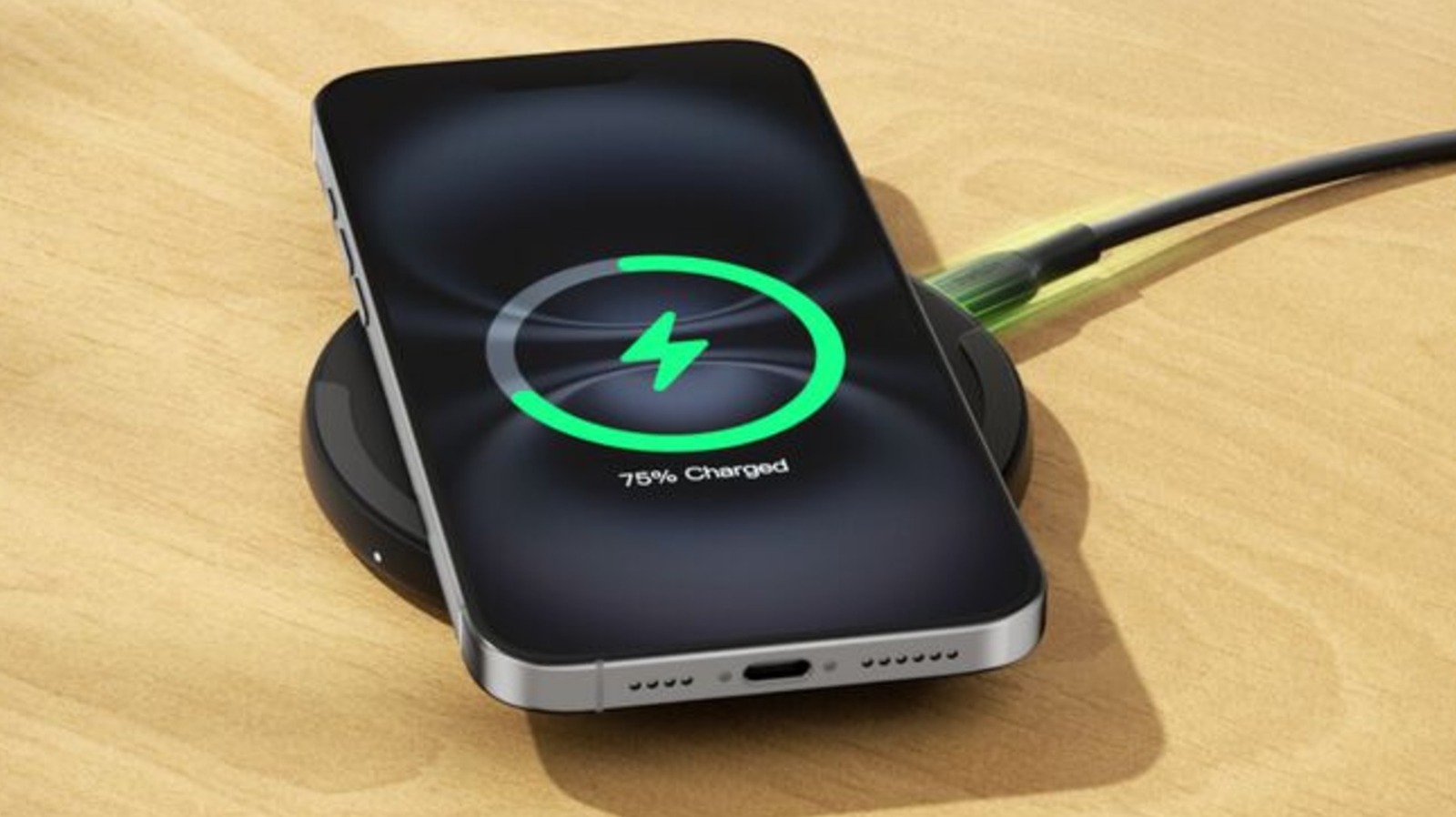
Charging a phone always takes time. Sure, you can speed up the process by activating fast-charging mode (assuming your phone supports it), but relying on it too much can reduce the battery’s maximum capacity. So, is there another way? Maybe you can charge your phone wirelessly while it’s also plugged into a wall outlet via a USB cable. Sorry, but phones are designed to prevent this, and even if you could, you wouldn’t want to.

Most modern phones are designed to prioritize wired charging connections. Even if you place your device on a charging pad first, your phone will switch to wired charging and draw power from only the cord as long as it’s attached. How does your phone tell the difference? It relies on its internal power management circuitry. When a smartphone detects a wired connection, the system actively disables the wireless charging coil to prevent hardware conflicts and overheating. Because wired connections are faster and more efficient, the phone is programmed to prioritize the cable.

This is a virtually universal rule among modern smartphones, even among iPhones. But what if you actually could use both charging methods at the same time? Hypothetically, since wired and wireless chargers produce heat, using both to speed up charging times could generate more heat than is safe. We’re not saying you would start a fire, but you could damage your battery with that much heat.

Why recharge one device faster when you can charge multiple devices at once?

At first glance, you might assume you don’t really need wireless chargers since they don’t speed up charging times when your phone is plugged into a cable. Heck, you might also assume you don’t need a wireless charger if you don’t own enough compatible electronic devices. But owning (and using) a wireless charger and charging cables has its advantages.

Quite obviously, you can charge multiple devices with both a wireless charger and a USB cable, and since charging pads are generally heavy, they are less likely to cause cable clutter. However, gadgets such as the Anker MagGo Wireless Charging Station — one of the best wireless chargers – can accommodate multiple devices at once. Sure, the device uses more electricity than the average wireless charger, but it only needs one wall socket, which is perfect for rooms where outlets are at a premium (or if you don’t want to plug multiple gadgets into a power strip).

If you use a USB cable and a wireless charger — especially one that can charge multiple devices at once — you can prioritize which gadget charges first. As previously stated, wireless chargers aren’t as efficient as wired connections, and some electricity is inevitably lost. However, placing a device on a wireless charger is perfect for a “set it and forget it” style of charging. Just hook any cables into gadgets you need quickly (or are incompatible with wireless chargers), and relegate the rest to wireless chargers. It’s a new form of organization you never knew you needed.

Source

Posted on

11 Free Apps You Should Always Install First On Your

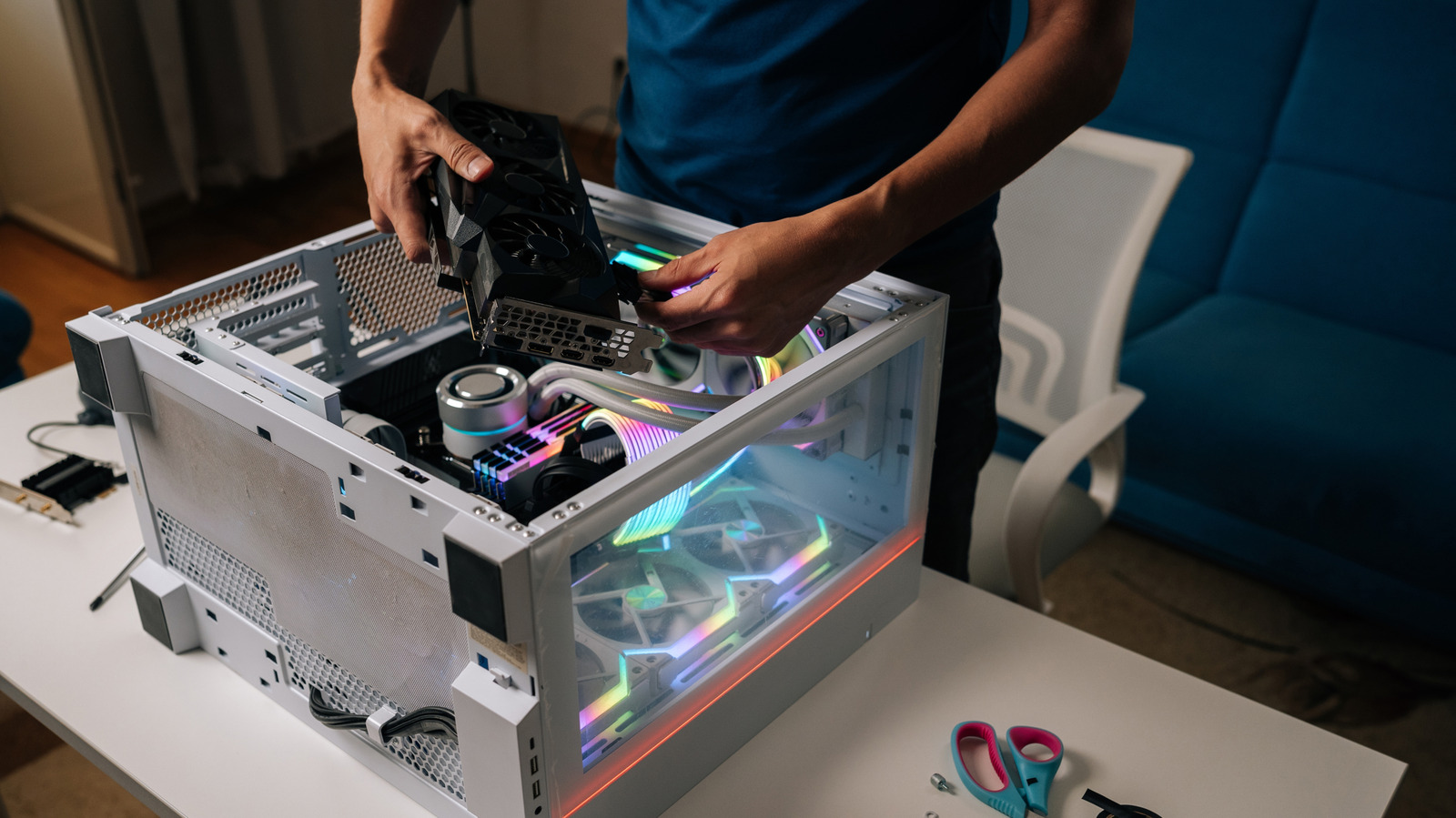
A person setting up a gaming PC Dikushin Dmitry/Shutterstock

With the components of a gaming PC skyrocketing to reach absurd price levels, many people want to upgrade as soon as possible before the AI domino effect makes it downright impossible to find cheap upgrades that turn your PC into a gaming setup. As substantial as this investment may be, the inherent satisfaction of booting up a brand-new gaming PC and checking out its performance firsthand is unbeatable. Seeing your RAM, graphics card, SSD, CPU, and other critical components work together to let you enjoy an absolute beast of a machine more than justifies the cost of procuring all these parts in the eyes of many.

However, in the excitement of booting up your new gaming PC, don’t forget to download some critical software that will help your system become an optimal gaming machine. From clients that let you download games to troubleshooting software that helps you stay on top of your PC’s performance and identify any problem points, there is a litany of applications that will make your gaming PC far more suited to its task. In case you don’t want to shell out too much cash for paid programs, then start out with these free apps to cover all the bases first. Chances are that you may not even need to spend a dime on anything other than the latest AAA and indie releases — the games themselves — after downloading these programs.

Steam

A close-up of Steam running on a PC Nwz/Shutterstock

It would be impossible to talk about the best free programs that are a must-have on a new gaming PC without mentioning Steam, the GOAT of gaming clients that puts every other company to shame. Sure, the platform’s game library is staggeringly massive, the attempts to foster a gaming community are excellent, and the reviews have become legendary for users injecting a dose of humor into their critical commentaries … but what really makes Steam such an excellent platform is how consumer-friendly it is. The biggest indication of this is the amazing pricing and deep sales that are a regular sight, with people getting some of the best games for a pittance as compared to other flagship platforms from Sony and Microsoft. This reason alone makes people choose PC gaming over consoles.

It also helps that Steam has one of the best customer support systems on the market, despite the inability to connect to a customer support executive directly. Their refund policy puts customers first and asks no questions if you decide to get a refund within two weeks of your purchase, or if you’ve only clocked in two hours of game time. Cloud saves ensure that you can play on multiple systems without losing progress, while Steam Workshop is a convenient way to download mods without resorting to third-party platforms. Most game-specific forums have answers to all the questions you have, and Big Picture mode helps you enjoy the console experience on your PC if you prefer using a controller and a bigger screen for your gaming endeavors. With all these perks, it’s easy to see why most people will raise an eyebrow or two if you say that you have a gaming PC but haven’t installed Steam on it.

Epic Games Launcher

A close-up of the Epic Games Launcher running on a PC Nwz/Shutterstock

Don’t worry — we aren’t going to list out every gaming client one by one. Once you download Steam, there isn’t really a reason to download other clients like Ubisoft Connect or the EA app, unless required by a game from these publishers. Navigating their UIs is cumbersome, and constantly having to log into these platforms can be annoying. Sometimes, these launchers straight-up prevent players from opening their games due to failed authentication or other issues. While an argument can be made that the Epic Games Store falls within the same umbrella, there’s one major factor that separates it from the rest of the pack.

In a bid to make the Epic Games Launcher appealing to people who don’t play Fortnite, the company has used its funds to enact a free monthly games program. As long as you open the platform every month, you can potentially snag an amazing deal and get your hands on a game that you’ve had your eyes on for a while … for free! Epic doesn’t skimp out on these offerings, either — some notable games they’ve given away for free include Total War: Three Kingdoms, Chivalry 2, Disco Elysium, The Callisto Protocol, Bloodstained: Ritual of the Night, and Hogwarts Legacy. The lack of a proper community and a barebones library are definitely pain points preventing this service from reaching higher levels of use, but people who install this gaming client solely to download games for free won’t care about this too much.

Discord

The Discord logo on a laptop Claudio Borquez Arias/Shutterstock

It’s amazing to see how Discord has become an enduring facet of pop culture, despite starting out as a team messaging app for gaming. With almost 700 million registered users, it’s easily the most popular multimedia messaging platform around. With support for audio, text, and video calling, the sense of community on Discord is genuinely impressive. There’s a reason why even console manufacturers have gone out of their way to integrate native support for Discord in their proprietary hardware: They also want to enjoy a slice of the pie that PC gamers have been feasting on for a long, long time.

Once you get used to the app’s slightly complicated interface – although, to be fair, Discord’s March update gave it a massive glow-up — you can join one of several servers and enjoy being a part of a growing community as you foster friendships with people from all over the world. This facet of Discord has helped it evolve from a mere gaming app into a popular messaging client that even non-gamers can have fun with, although its focus on video gaming is undeniable. You can enjoy high-quality audio chats as you cooperate with — or play against — your friends across several multiplayer games and have a blast together.

DS4Windows

A screenshot of DS4Windows running on a PC Ritwik Mitra/BGR

With Steam Input becoming more and more accepted for most modern titles, most people feel that using third-party software to connect controllers to your PC has become redundant. Xbox controllers have native support for Windows as is, and your PlayStation controller can be interpreted by Steam Input to make it compatible with numerous games.

However, there are outliers that you should definitely take into account. What if you’re playing an older game on Steam that may not support your PlayStation controller, or you’re using a different gaming client altogether to run a game? Other times, Steam Input may be messing with your controller instead of making things more convenient for you. There’s also the issue of emulated games to take into account, where you must definitely use a controller for the optimal experience. If you don’t have an Xbox controller or a third-party controller with support for XInput, you’re fresh out of luck in this department.

This is where third-party software like DS4Windows comes into the picture. It serves as a convenient way to connect your PlayStation controller to your PC and play games with full controller support. With the release of the DualSense, this software evolved to support both generations of controllers. It lets you set up different profiles for your controllers, which means you can use different mappings for specific games and even change the color of the lightbar accordingly. It has some minor bugs, but it’s hard to complain too much, given that you can use this software for the grand total of nothing.

A good GPU utility tool

People who want to fine-tune their GPU’s performance on a brand new gaming PC can download one of several GPU utility tools to achieve the same. Several free software offerings can help you in this area, with MSI Afterburner being a notable mention here. Don’t let the name dissuade you from downloading this software, since Afterburner is also compatible with non-MSI graphics cards. Overall, it’s an excellent tool that lets you monitor the real-time metrics of your graphics card. If you want to enhance your GPU’s performance beyond its preordained limits, you can adjust the fan speed and overclock your graphics card to improve performance. Just make sure that you’re not going overboard in this department, since excessive overclocking can harm your GPU in the long run. If you also have the habit of using RivaTuner, then MSI Afterburner syncs with this program for a convenient in-game overlay that is useful for precise GPU monitoring.

Now, while MSI Afterburner is definitely a reliable GPU utility, there are other alternatives you might also want to consider. ASUS GPU Tweak III is a similar tool for overclocking that lets you set up profiles to run with specific games while giving you access to other metrics. Again, this tool is compatible with all GPUs, even though it’s ASUS’ proprietary software. If you want a GPU-specific utility tool, then use AMD Adrenalin for — as you’d expect — AMD graphics cards, and EVGA Precision X1 if you have an NVIDIA GPU installed in your machine.

The emulator (or emulators) of your choice

The Matrix - Path of Neo running on the PCSX2 emulator Ritwik Mitra/BGR

Who said gaming needs to be restricted to PC-only titles on your system? The magic of emulation lets you play classics from previous console generations on your gaming system, which is a godsend if you missed out on some great old-school games that have either subpar PC ports or remained console exclusives. If you manage to snag a copy of an old-school classic like Ico, the original God of War trilogy, Castlevania: Symphony of the Night, or Super Mario Galaxy 2, but don’t have a console to play it on, emulators can save the day.

If you want to play games from multiple consoles, a one-stop solution would be to download EmuDeck. Not only does this let you download pretty much every emulation software under the sun, but it also features additional bells and whistles to make your gaming experience smoother. These include auto saves, cloud storage, and a way to compress ROM files to make them take up less space on your hard drive. Despite what the name suggests, EmuDeck isn’t restricted to the Steam Deck — you can also install it on your PC.

However, if you just want to play a game on a specific platform, then downloading that emulator individually is usually faster and lets you personalize the experience for the game in question. RetroArch is the go-to for most retro consoles, including the Atari 2600 and the Nintendo Entertainment System. It also includes OpenLara, a game engine made specifically to run old-school Tomb Raider games with a fresh coat of paint. Other emulators include the legendary PCSX2 for PlayStation 2 emulation, Dolphin for the Wii and GameCube, and PPSSPP to run PlayStation Portable games.

HWiNFO

If you want to download a free real-time monitoring tool for your CPU, then you’ll find two popular tools for this — HWiNFO and HWMonitor. The general consensus is that the latter is fine if you only want to peruse basic stats, but it lacks accuracy. This isn’t a problem with HWiNFO, which provides more details and is far more accurate at depicting the same. There’s a reason why NASA uses this program to monitor their hardware. It provides deep and detailed insights into both virtual and physical memory usage, CPU utilization metrics (including per core usage data), thermal stats, fan speeds, and relevant GPU data.

It helps that HWiNFO is also updated regularly to make the user experience easier. A notable example of this is when overlay data was added in a February 2024 update, helping it become a useful real-time data monitoring tool that made it far more convenient to use. It’s easily one of the best system monitoring tools, and one that will help you get the most out of your gaming PC.

Ninite

Any PC enthusiast knows how grating it can be to set up a new gaming PC. You’ll need to download a bunch of apps individually (including some on this list), which can get annoying after a point, as you usually end up spending a ton of time searching for the applications you need on your new system. Thankfully, there’s an easy way to do away with this cumbersome approach, courtesy of Ninite. This all-in-one installer gives you a checklist with pretty much every popular program that is commonplace across most PCs. This includes both Steam and the Epic Games Launcher, the browser of your choice, Spotify, qBittorrent, Discord, VLC, MalwareBytes, WinDirStat, and 7-Zip.

Once you choose the programs on the Ninite website, you’ll download your custom Ninite program that will automatically install all these programs with a single click. It’s so convenient that Microsoft decided to launch a similar service 16 years after Ninite made its debut. However, unlike Ninite, Microsoft’s multi-app install functionality is limited to the Microsoft Store, meaning that Ninite is still your go-to if you want to set up your PC quickly with all the software you could possibly need. The best part is that this convenience is completely free of cost.

Lively Wallpaper

Most people with gaming PCs are familiar with Wallpaper Engine, an excellent tool that you can grab from either Steam, the Humble Store, or Green Man Gaming for $4.99. As convenient as this software is for browsing a wealth of live wallpapers and applying them to your desktop, most people won’t want to shell out five bucks for it. Thankfully, there’s a free, open-source alternative you can download in its stead. Lively Wallpaper works similarly to Wallpaper Engine and is the perfect free tool to make your gaming PC look prettier.

However, there’s one major catch you should be aware of. Unlike Wallpaper Engine, there’s no option on the program itself where you can search for and download the live wallpaper of your choice. Although this may make the program slightly challenging for beginners, the flip side is that Lively Wallpaper is far more malleable when it comes to setting the wallpaper you want. For starters, you can input the URL of a website to turn it into your desktop wallpaper, which is a feature that Wallpaper Engine lacks. Lively Wallpaper’s subreddit, DeviantArt page, and GitHub repository also have viable wallpaper options. Finally, if you want to use a video that will play on loop as your wallpaper, you can upload the clip (or long) of your choice to Lively Wallpaper to customize your desktop as you see fit.

WinDirStat

Games have become so space-intensive that it’s hard to find a AAA release that doesn’t occupy upwards of 100 gigabytes on your SSD … or HDD, if you don’t mind subjecting yourself to criminally high load times. This makes it important to clean up your PC’s storage from time to time to make space for these behemoth-sized games. The problem here is that you’ll have to individually check the file size of different folders to see how much space they occupy, which can get a bit grating after a point.

Instead of going through this time-consuming ordeal, a better alternative is to download WinDirStat. It stands for Windows Directory Statistics and does precisely what this name suggests, showing a treemap that visually depicts the amount of space occupied on your hard drive. This helps you identify the biggest space-hogging culprits and take measures to either uninstall these programs altogether or figure out a way to reduce how much space they occupy. One essential gaming PC tip you should know is that your SSD should have enough free space to maintain high write speeds and ensure this component’s longevity. This is where WinDirStat can help you manage your SSD’s health while also freeing up the drive for the next AAA game on your list.

3DMark

Some AAA games have built-in benchmarks you can run to see your PC’s performance. However, it’s impractical to keep these games and start them up whenever you need to see how powerful your PC is, especially if your system is new. Why would you download a massive game like Cyberpunk 2077 or Red Dead Redemption 2 only to run a benchmark? Instead, a dedicated benchmark tool is far more capable of getting the job done, and 3DMark is a notable mention in this regard.

This app has multiple benchmark tests for low-end, mid-range, and state-of-the-art PCs, letting you gauge ray-tracing performance, average frames per second (FPS), GPU temperatures, and clock speeds. It also provides you with a 3DMark score that you can compare to other systems with similar configurations, so that you can see if there’s an area you need to troubleshoot. The free version of this program comes with seven benchmarking tests — Solar Bay, Solar Bay Extreme, Steel Nomad, Steel Nomad Light, Time Spy, Night Raid, and Fire Strike. These are more than enough to gauge your system’s performance and make 3DMark one of the most robust benchmarking tools you can install on your new gaming PC.

Source

Posted on

4 Underrated PC Brands That Can Compete With Dell

Dell logo close up on a laptop Jeppe Gustafsson/Shutterstock

The office PC scene has changed dramatically. A lot of lists for the best office PC, whether desktop or laptop, will often include the mighty Dell, but for a lot of people, its prices are often too high. This is especially exacerbated by the ongoing AI data center-induced shortage of PC parts.

It’s ironic, as Dell was originally started with the goal of undercutting the competition. Using off-the-shelf parts, Michael Dell started selling pre-built PCs out of his dorm room in 1984, but with much lower prices than what IBM or Apple were providing around that time. Now, the company is known for its expensive, hard-to-self-service machines with proprietary parts and its confusing branding after killing the Dell XPS line.

However, despite Dell’s dominance in the office space, there are plenty of different, underrated options to check out. Chinese brands like Geekom and Minisforum are facilitating low- to high-end machines that won’t take up much space. Meanwhile, Framework is providing repairable, upgradable hardware. You don’t have to settle for the big names anymore.

Geekom

A small company out of China, Geekom, primarily makes mini PCs. These small form-factor boxes have become some of the best to buy for offices, as many tasks can be handled by the somewhat limited specs inside. Geekom’s newer models, like the A8, have adopted higher-end mobile processors, which give them an edge over previous models for more intense workflows.

Geekom provides mini PCs with a wide range of specs, but you might want to avoid anything pre-Ryzen 7000 or Intel 12th generation, unless your workload is incredibly light. From the Ryzen 7000 and Intel 12th generation up, the processors and RAM configurations on offer will certainly handle more than enough for everyday work.

The mini PCs come loaded with ports, and sometimes two Ethernet ports for faster or more flexible networking. One of the top recommended models, the A8 at $879 (regularly on sale for around $689), has two HDMI ports for dual screen monitors, two USB-C, four USB-A ports, and an SD card slot. It’s small, stays out of the way, and packs an AMD 8745HS chip for both work and some very light play (it has the same graphical ability as some 2023/2024 PC handhelds).

Framework

One of the more recent brands for tech enthusiasts to drool over, Framework is a unique provider in that it actively encourages repairability. Every device it sells can be self-serviced, and it’s only the USB modules that are strictly proprietary. Of course, Framework sells every part you would need, but if you find a cheaper deal somewhere else for, say, an SSD or stick of RAM, it’ll slot right in.

Framework is also a little different in that it only has one official desktop option right now. The Framework Desktop is a self-described “heavy-duty” machine aimed at intense workflows in the AI or machine learning industries. However, its exceptional power, thanks to the AMD Ryzen AI Max chips (both 385 and 395+), makes for excellent workstations and office PCs.

If you have a knack for not being terrified of PCs, you can also buy a laptop mainboard and whack it into a case, which Framework also sells separately. This brings you a much lower-cost, but easily repairable office PC that doesn’t take up much room. The price starts at $449 when not on sale.

Chuwi

As you’ve probably noticed, outside of the major companies like Dell or Lenovo, office desktops have changed dramatically. As laptop parts have rapidly caught up, smaller companies like Chuwi can provide excellent specs in a tiny box. Similar to Geekom, Chuwi sells a range of devices, including laptops and tablets, without too much of a dramatic cost.

For the money, the $929 AuBox X with an Intel Core Ultra 7 256V will not only provide you with great performance for everyday tasks, but should be able to handle some more intense work as well. There’s a cheaper model too, at $799, which should be better for those who know they won’t be dealing with intense workflows.

Chuwi’s laptops are super cheap, but sport lackluster hardware that’s better suited for dedicated media centers or home servers. However, as a super cheap option, these should fit the bill for word processing, email, and web browsing. We’d probably stick with the mini PC boxes, as these provide the best overall pound-for-pound performance for the price, despite the ongoing price crisis.

System76

For those of us who have ditched Windows for Linux, or those who are looking for a solid, out-of-the-box Linux option, System76 is a fantastic option. A series of laptops and desktops that can be configured to your liking is available. The company also maintains its own Linux distribution, Pop_OS!, which is designed to make transitioning users to Linux a little easier. However, these PCs will run whatever operating system you need on them.

The Linux-centric company offers six variations of desktops to configure. We’d again recommend the Mira Custom and Prime Custom boxes, as these will give you greater control over the price. Again, System76 is a manufacturer impacted by shortages like any other lately, so expect prices to be a little more than usual. That said, at least there’s no Windows 11 tax, where some companies tack on additional charges for the Windows license during configuration.

Aside from these machines, there are also workstations powered by AMD Threadripper processors, a mini PC starting from $899, and laptops. If you need an office machine that’s geared towards the more technical side of the job, or again, just don’t want Windows, System76 PCs are the way to go.

Source

Posted on

This $16 Gadget Charges All Your Mobile Apple Devices At

We may receive a commission on purchases made from links.

Depending on how deep into the Apple ecosystem you are, charging multiple devices at once can lead to plenty of cord clutter. Don’t get us wrong, owning a bunch of Apple products is great for device synergy, but charging multiple devices can still take a good number of accessories. Fortunately, when we weren’t busy researching the half-life of nuclear waste, we found a cool charging accessory for Apple products on Amazon.

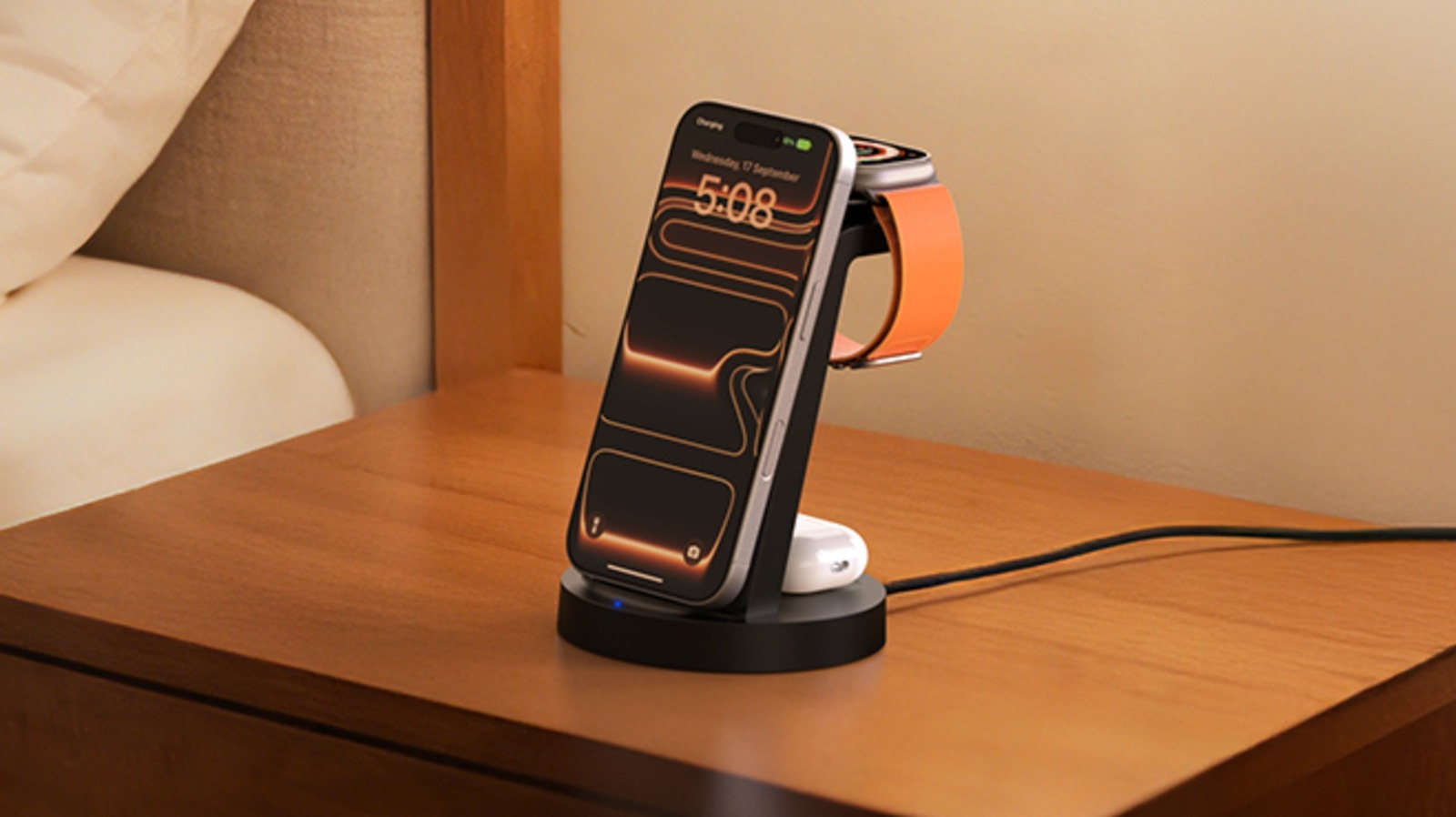
Available at a significant discount, the Anlmz 3-in-1 Charging Station for iPhone lets you charge multiple Apple devices from a single stand. Highly reviewed and ranking well on Amazon, it can charge an Apple Watch, AirPods, and an iPhone simultaneously, provided the models support wireless charging. Though the company wants to make it clear that this is not a MagSafe accessory, it still delivers a solid amount of power to Apple devices and even offers protection to keep them safe.

We’re no strangers to needing to keep devices charged, which is also why we’re constantly looking for tips and tricks to charge your iPhone faster. You may need to worry about the thickness of any iPhone cases you’re using, as this stand supports cases up to 0.2 inches thick, but the company promises that the device is good for bedside charging. The specs may help back up this claim, but those who need to charge multiple Apple devices should certainly give this stand a look.

Save 46% on this 3-in-1 wireless Apple charger

As the No. 1 best-selling cell phone charging station on Amazon, the Anlmz 3-in-1 Charging Station for iPhone relies on a single USB-C connection to charge an iPhone, an Apple Watch, and AirPods simultaneously. Users can currently save a significant amount on the typical listing price, and the accessory is available in a variety of colors. However, while options like white, pink, blue, and more are available, keep in mind that different colors may impact the price.

With support for a variety of Apple devices (be sure to check the page for the full list), the Anlmz charging stand can provide 10W of power for an iPhone, 3W for an Apple Watch, and 5W for AirPods. To carry this power, the stand comes with an 18W fast-charging adaptor, and security measures are in place to ensure a stable flow. This includes a trickle mode that helps prevent overcharging and overcurrent, and includes short-circuit protection.

With a 4.3-star rating and over 40,385 reviews on Amazon, users give this stand high marks for its ability to charge multiple devices and ease of use. Though several customers give the device points for its functionality, multiple users do report that the charging speeds could be faster. Some have even reported that the device stopped working for them after a period of time. However, 82% of customers give this item 4-stars or higher, making it a rather cool iPhone accessory not made by Apple.

Source

Posted on

Every Samsung Galaxy Ultra Owner Has Noticed This Weird S

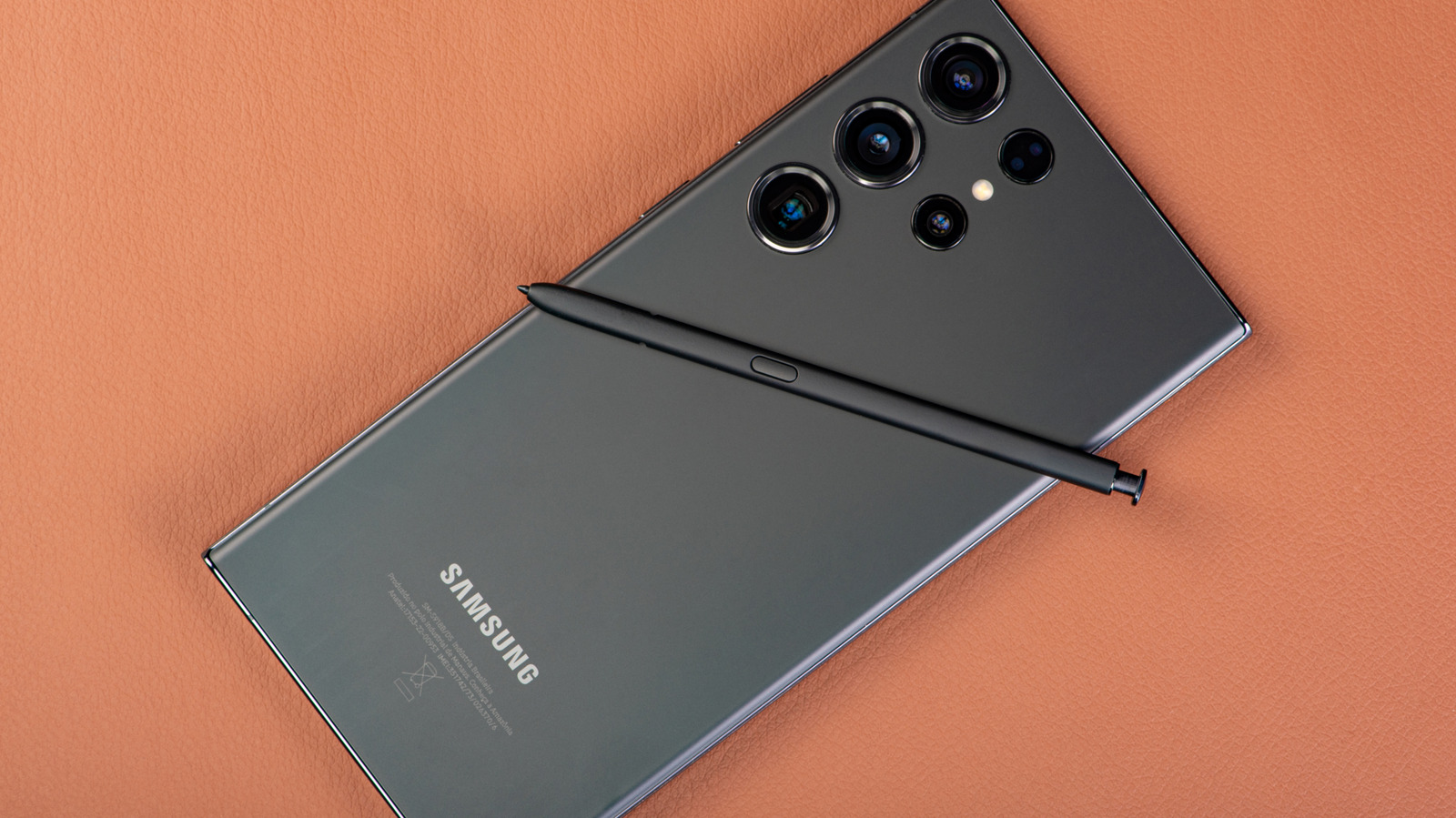
Samsung S23 Ultra phone with S Pen placed on top of it Milton Rodney Buzon/Getty Images

The Samsung S Pen is a stylus that comes built in with all current Galaxy Ultra phones. It’s helpful for note-taking, and there are even useful S Pen features that streamline how you launch or control certain apps. But have you ever noticed a weird smell coming from your S Pen? Galaxy Ultra owners have been reporting a “burning smell” ever since the S Pen was added as a feature to the Galaxy S22 Ultra phone. The issue is so prevalent that practically everyone who has owned a Galaxy Ultra phone in the last few years has noticed it at one point or another.

An official statement from Samsung in 2024 explained that “there may be a smell resembling burning emanating from the S Pen due to the new product’s plastic or rubber components.” A Samsung representative further explained (via Samsung Community) that the S Pen sits close to the phone’s heat-generating internal components when it’s in its holster. This causes the pen’s plastic and rubber exterior to heat up, resulting in the notorious scent.

The Samsung Galaxy S26 series of phones was released on March 11, 2026. In the months since these latest models launched, wary users have paid close attention to the S Pen to see if that all-too-familiar odor is still around. Luckily, S26 owners have reported that the worrisome smell seems to finally be gone — and we didn’t notice it when we reviewed the Samsung Galaxy S26 Ultra either.

Should you be worried if you notice the S Pen smell?

Samsung Galaxy S24 Ultra phone with S Pen Javi_indy/Getty Images

The burning smell coming from the Samsung S Pen does not necessarily indicate that the peripheral has been fried. Rather, you can think of it more like the harmless scent that your car’s plastic and upholstery give off after sitting in the sun. The S Pen does contain electronic components that allow it to communicate wirelessly with the phone, but reports about the pen’s smell do not coincide with claims that the pen has lost any electronic functionality. In all likelihood, an unpleasant odor coming from your S Pen is just a mild inconvenience.

What is worrisome, though, is when the burning smell is coming from the phone itself. Power surges resulting from using cheap cables or charging your phone during a thunderstorm can fry the phone’s internal components. You should also be cautious of any scent resembling nail polish remover, as this can be a sign that the phone’s lithium-ion battery is leaking. The worst part about the constant S Pen smell is that it might mask these types of problems. It’s important to never be complacent about strange odors, even if you’ve become desensitized to that signature S Pen smell.

Source

Posted on

Star Wars: Why George Lucas Abandoned His Plan To Kill

Han Solo holding his hands up in Return of the Jedi Brendanhunter/Getty Images

Arguably one of the coolest characters in the “Star Wars” franchise is scruffy-looking nerf-herder Han Solo (Harrison Ford), who was initially going to get iced a lot sooner than he did in “Star Wars: The Force Awakens.” The plan was for Solo to die in “Star Wars: Return of the Jedi,” which certainly would have made for a sci-fi movie with a very different ending. However, after careful consideration, the death was scrapped, sparking behind-the-scenes issues and prompting one creative voice to abandon this pillar of 70s fantasy movies altogether. 

In an interview with the L.A. Times, Gary Kurtz, who produced both “Star Wars” and “The Empire Strikes Back,” felt that Han’s death would have provided a more impactful ending than the one we got. “The original idea was that they would recover [the kidnapped] Han Solo in the early part of the story and that he would then die in the middle part of the film in a raid on an Imperial base,” Kurtz explained. “George then decided he didn’t want any of the principals killed. By that time, there were really big toy sales and that was a reason.” 

This was one of the first of many creative issues that didn’t sit right with Kurtz, including a gripe about the reconstruction of the Death Star: “So we agreed that I should probably leave.” While Kurtz might not have had the ending he hoped for, fragments of it would reappear decades later in another “Star Wars” film. 

Kurtz wanted a spaghetti western ending for Return of the Jedi

Mark Hamill as Luke Skywalker in The Last Jedi Lucasfilm

Instead of fireworks and dancing teddy bears celebrating the downfall of the Empire, Kurtz had an ending where the good guys won, only at a greater cost. “We had an outline, and George changed everything in it,” Kurtz said. “Instead of bittersweet and poignant, he wanted a euphoric ending with everybody happy.”

The initial draft saw the Rebel Alliance win the day, but end up in an even worse state than when we met them, with Leia taking the title of queen and the job that came with it. Meanwhile, the hero’s journey of Luke Skywalker (who almost had a much darker name) saw him wandering off on his own, which Kurtz described as “like Clint Eastwood in the spaghetti westerns.”

In hindsight, this alternate ending would’ve been more fitting given where the future trilogy and closing chapters of the Skywalker saga ended up. The route of the wandering loner aligns with the Luke we meet in “The Last Jedi,” ending up as the forgotten hero who chose the life of a recluse. Had Kurtz and Lucas met somewhere in the middle, we might have had an even better ending in “Return of the Jedi” and, as a result, “The Rise of Skywalker.” Then again, were that the case, we’d have missed out on a teddy bear party, which the franchise simply couldn’t be without now.

Source

Posted on

Star Wars: The Mandalorian And Grogu Reactions Have Critics Agreeing

Pedro Pascal acting as the Mandalorian piloting a ship while Grogu stands by his side Disney

“Star Wars: The Mandalorian and Grogu” hits theaters May 22, and it’s the first “Star Wars” movie to do so in seven years. Like other projects in the franchise, this one has some big names attached, including Sigourney Weaver, Pedro Pascal as the titular character, and Martin Scorsese, of all people, voicing Ardennian Fry Cook. While fans of the universe may be chomping at the bit to see the film in theaters, early critic reviews suggest this one may be worth skipping until it’s available on streaming.

With Rotten Tomatoes having already collected 86 reviews, the latest “Star Wars” flick currently holds a 62% Tomatometer rating with no published Popcornmeter score. Though critics are giving the movie points for having plenty of action and entertainment, many are also disappointed in the fact that it does little with the resources available in the “Star Wars” universe. Several reviewers also note that the film feels more like part of a television series rather than an actual movie.

Written and directed by Jon Favreau (who also tried to stop Iron Man’s death in “Avengers: End Game), taking place after the events of “Return of the Jedi,” the story of “The Mandalorian and Grogu” follows Din Djarin (Pascal) as he helps the New Republic rescue Rotta the Hutt (Jeremy Allen White) and partners with his adopted son Grogu. Though you may still want to see it in theaters, it’s worth taking a look at exactly why the movie isn’t winning over critics.

What Critics are saying about the latest Star Wars movie

Pedro Pascal as Din Djarin alongside Grogu as they peer over a sand mound in Disney

Many of the reviews for “The Mandalorian and Grogu” agree that Lucasfilm may not entirely know what to do with the franchise. Geeks of Color says, “Character growth is somewhat nonexistent in the movie. The movie lives and breathes cute moments and action scenes, and that’s about it.” In a review from The Playlist, critic Rodrigo Perez agrees, stating, “If the marketing struggled to communicate what the movie is actually about, that is because there is barely a movie there to describe.”

Matt Oakes of Silver Screen Riot also had some choice words for the movie, saying, “The biggest problem with ‘The Mandalorian and Grogu’ is not simply that it is boring, ugly, or dramatically inert. It is that it barely qualifies as a ‘movie.'” Though critics seem wary of the plot, not every review is entirely negative. For example, Lou Thomas of NME states that “It’s an entertaining trip to a galaxy far, far away that proves there’s still cinematic life in this universe.”

While critics seem wary of Disney’s latest “Star Wars” release, the movie has already earned itself some nominations from the Golden Trailer Awards, including Best Fantasy/Adventure and Best Summer 2026 Blockbuster Trailer. Depending on how much you love “Star Wars,” this one may be worth waiting for its Disney+ streaming arrival. Though, considering George Lucas expected audiences to hate the original “Star Wars”, “The Mandalorian and Grogu” may find itself faring better with the fans.

Source

Posted on

What Happened To Sony’s Vaio Laptops

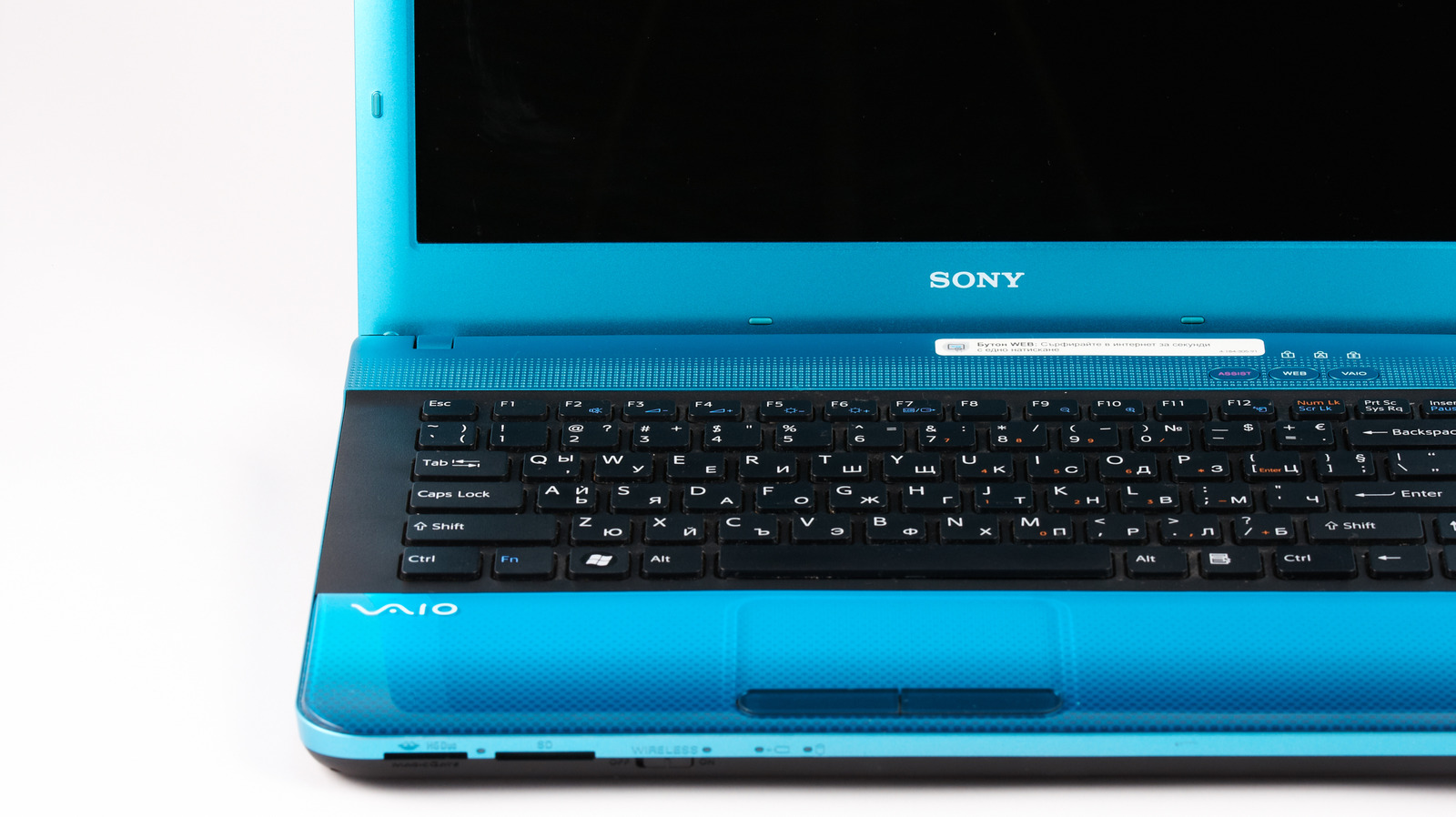
a blue Sony Vaio laptop Victorgeorgiev/Getty Images

Sony sold Vaio laptops from 1994 to 2014, marking a nearly 20-year run for the brand before its high production costs, combined with competition from rivals like Dell and Lenovo, led to its sale. In February 2014, Sony announced that it would reform its PC and TV business plan. This shake-up would shift focus away from the company’s PC business, as its computer and TV profit goals — grouped together in financial reports — were not attainable within the fiscal year ending in March 2014. 

Sony’s financial strain from Vaio was exacerbated by the PC industry’s most significant decline ever in 2013, when shipments dropped by 9.8%. On July 1, 2014, Sony officially split with Vaio, selling an overwhelming majority of the brand to Japan Industrial Partners (JIP), who acquired 95% and left Sony with a 5% minority stake. JIP is a Tokyo-based equity firm that describes itself as “specializing in corporate carve-out investment opportunities in Japan.”

Competitors shut the coffin on Vaio

a pink Sony Vaio laptop Vasiliki/Getty Images

The high costs of Vaio laptop components forced Sony to sell the computers at premium prices. For example, the Vaio Duo 13 model was available for $2,999.99 in 2013. Other high-end Vaio laptops, such as Pro 13 and Fit 15 models, were priced at $2,599.99 and $1,999.99, respectively. 

Apple’s MacBooks were also pricey in 2013, with the brand’s 13″ Pro featuring Retina display starting at $1,499, and its 13″ Air holding a base price of $1,399. Consumers could also purchase an 11″ display Macbook air for $899, a strategic $100 decrease from the computer’s previous price. 

Despite MacBooks’ costs and Vaio offering less-expensive laptops, like its 14″ Fit E – starting at $549.99 –Apple was far ahead in overall computer sales. Apple’s Mac PC division sold 3.8 million computers during 2013’s third quarter. In comparison, Sony’s Vaio PC line sold 1.5 million units in this period. Vaio also accounted for just 1.9% of worldwide PC shipments during the third quarter in 2013. Perhaps these numbers would have changed if Apple’s Steve Jobs followed through on his consideration of licensing OS X to Sony in 2001. Vaio laptops are still available online today under JIP, with the least-expensive model being the FS 14.1″.

Source

Posted on

8 Of The Best AirPlay Speakers You Can Buy

We may receive a commission on purchases made from links.

There is no shortage of excellent wireless speakers on the market, but not all of them support Apple AirPlay. For example, the Marshall Middleton 2 is an impressive portable speaker, but it completely lacks Wi-Fi connectivity, making it incompatible with Apple AirPlay. But why does that matter? Well, an AirPlay connection relies on your home network, and the wireless protocol allows for higher bandwidth streaming compared to Bluetooth. AirPlay provides better overall audio quality, the ability to stream to multiple speakers with multi-room audio (AirPlay 2), and support for Siri voice control.

For anyone deep in the Apple ecosystem, these features make AirPlay a seamless and reliable way to stream audio. Fortunately, brands like Sonos, JBL, Naim, and Harmon Kardon make plenty of great AirPlay speakers for you to choose from. To help you find the right fit, we’ve rounded up speakers that prioritize high-fidelity audio performance and smart features like automatic room calibration for a hassle-free experience. From portable outdoor speakers to complex all-in-one systems for the living room, these are the best AirPlay speakers you can buy.

Apple HomePod (2nd Generation)

The second generation Apple HomePod sitting on top of a table in front of a white wall. Christian de Looper/BGR

The 2nd-generation Apple HomePod has been around since 2023, yet it remains an excellent option in 2026. This rounded, cylindrical speaker has a mesh coating on the exterior, and its sleek appearance with both black and white color options allows it to fit into any living space. The HomePod supports Spatial Audio, Dolby Atmos, and lossless audio, provided you have an Apple Music subscription. Apple’s room-sensing feature also works surprisingly well, with the HomePod automatically tuning the sound to the room it’s in.

But it’s not just about the features, as the HomePod is also sonically impressive. Overall clarity is great, there’s a lot of detail in the output, and a welcome amount of spaciousness. With built-in temperature and humidity sensors, you can use the HomePod to trigger HomeKit automations — like closing the blinds if the room is hot. It also listens for smoke alarms, notifying you on your iPhone in case there’s something to worry about. You also get support for Matter, a smart home connectivity standard, allowing the HomePod to talk to and control other smart home devices.

At $300, the HomePod is a worthy investment for those deep into the Apple ecosystem. If you use Apple Music and HomeKit and own an iPhone, the overall integration is excellent, and you’re also getting great sound quality. You also get great support, as Apple continues to add features to the HomePod.

Cambridge Audio Evo One

The Cambridge Audio Evo One is not your run-of-the-mill AirPlay speaker. While it fully supports wireless audio through AirPlay 2, Spotify Connect, Chromecast, and Bluetooth, it’s actually an all-in-one audio solution with a massive range of physical connectivity options. The Evo One also has an HDMI eARC port to connect to your TV, a phono input for connecting to a turntable, and an Ethernet port for a reliable network connection.

An all-in-one system such as this provides a high-fidelity listening experience without the clutter of separate receivers, amplifiers, and tangled speaker wires. The Evo One is equipped with a 14-speaker system capable of 700W of amplification, meaning there’s more than enough volume to fill even the largest rooms. What Hi-Fi praised the spacious soundstage and its ability to handle drastic dynamic details. You can also adjust the seven-band EQ for the Evo One by using Cambridge Audio’s StreamMagic app.

It’s undoubtedly expensive at $1,800, but the performance and connectivity options here are undeniable. The Evo One also features a 17cm color display that beautifully displays album artwork. As an AirPlay speaker, it’s a great investment for the living room, as you can seamlessly switch to it as an audio source from your iPhone whenever you want a more impressive listening experience.

Apple HomePod Mini

The HomePod Mini is a more compact version of the standard HomePod, and despite the size, it still packs a punch. While it lacks the automatic room-sensing feature of its larger sibling, it still has the built-in Siri integration. It also works with HomeKit automations and features support for the Matter smart home standard, letting you easily control third-party smart home devices.

The HomePod Mini is shaped like a small plant pot, and it comes in more color options (Blue, Midnight, White, Yellow, Orange) than the standard HomePod. Its smaller size obviously results in less bass and a narrower soundstage, but the HomePod Mini sounds great for its price and size. What Hi-Fi’s review points out how it gets more than loud enough for the average living room, while also delivering a decent amount of bass and clarity. The HomePod Mini also supports Dolby Atmos and Spatial Audio through Apple Music.

The more dedicated listeners will appreciate the better sound quality of the standard HomePod, but those on a budget will still be happy with the Mini. For $100, you get respectable sound quality, but also the usual Apple ecosystem perks, such as handing off music by bringing your iPhone close to the speaker and seamless Apple Home integration.

Sonos Ultimate Immersive Set with Arc Ultra

This bundle of Sonos products includes the Sonos Arc Ultra soundbar, the Sonos Sub 4 wireless subwoofer, and a pair of Sonos Era 300 wireless speakers. The Arc Ultra soundbar acts as your main center channel, and it supports Dolby Atmos to create directional height and surround effects. For the full home theater setup, place the Era 300 speakers and the Sub 4 around your room, and pair them wirelessly to the soundbar through the Sonos app.

On its own, the Arc Ultra already creates an immersive soundstage, but the addition of the subwoofer adds that deep, punchy bass that makes movies more satisfying. You’ll want the Era 300 speakers to act as rear satellites, which also support Dolby Atmos. The complete setup provides a highly immersive experience, one that’s hard for standalone soundbars to compete with. With AirPlay 2 support, you can quickly jump into a high-fidelity listening or movie-watching session without worrying about cables (ignoring the power cables).

With that said, the Sonos Ultimate Immersive Set is quite expensive, costing nearly $3,000. However, you don’t have to buy it all at once. You can just get started with the Arc Ultra, and if you need more channels or a subwoofer, buy the Sub 4 and Era 300 down the line and easily pair them with the Sonos app.

Sonos Move 2

The Sonos Move 2 speaker sitting on a table, with a a small plant visible in the left corner. Christian de Looper/BGR

The Sonos Move 2 is a versatile AirPlay speaker, offering a high-fidelity audio experience that you can move from your living room to the porch or backyard. It features dual tweeters and three amplifiers, making it a stereo experience with separate channels, unlike the mono experience you got with the original. The Move 2 comes with a wireless charging base, and it takes around three hours to fully charge.

Battery life is rated at an impressive 24 hours, but while the Move 2 is technically portable, it weighs around 3 kg. This makes it hard to move around, so it’s a better fit for the home and planned trips rather than taking it with you on a whim. When outside, the Bluetooth works reliably, but AirPlay 2 provides higher bandwidth when a Wi-Fi connection is available. The speaker also features Trueplay, a room correction feature that uses mics to adjust the sound to its surroundings.

Overall sound quality is quite good, with plenty of depth and clarity. Bass is tight and controlled, and it tends to get loud. It also features an IP56 rating, meaning it offers protection against dust and light rain or splashes. The Sonos Move 2 also supports Alexa, Siri, and the brand’s own Sonos VoiceControl assistants.

Bowers & Wilkins Zeppelin Pro Edition

The Bowers & Wilkins Zeppelin Pro is as much of a showpiece as it is an excellent-sounding speaker. As the name suggests, the speaker’s shape mimics a zeppelin airship, and it’s available in two colors: Space Grey and Solar Gold. Apart from AirPlay 2, it also supports Spotify Connect, Bluetooth 5.0, and Tidal Connect (through the Bowers & Wilkins Music app). There are no physical inputs of any kind here, so the Zeppelin Pro focuses more on the ability to stream music rather than using your own files.

This wireless setup provides 240W of amplification through five drivers. For a single-unit speaker, it creates a surprisingly wide soundstage that allows tiny details in a track to shine. Loudness is not an issue either, as the Zeppelin Pro confidently manages to fill a room with sound. However, there’s unfortunately no support for Dolby Atmos music.

If you’re fine with the lack of surround support and physical inputs, you’ll find a powerful 240W speaker that looks great without having ugly cables in view. If you have Android users in the house, they can use Spotify or Tidal Connect to stream Wi-Fi to the speaker without AirPlay 2.

JBL Charge 5 Wi-Fi

The JBL Charge 5 has been succeeded by the Charge 6, but the newer version still lacks Wi-Fi and AirPlay. Until we have that option for the Charge 6, the Charge 5 Wi-Fi is the better portable option for AirPlay support. It features the iconic, rugged JBL design and an IP67 water-resistance rating, making it perfectly suited for outdoor use. When outdoors and without Wi-Fi, Bluetooth 5.3 provides a reliable connection. But when Wi-Fi is available, you can use AirPlay for higher bandwidth streaming.

Apart from AirPlay 2, the JBL Charge 5 Wi-Fi also supports Chromecast and Spotify Connect. This allows non-iPhone users in your house to still enjoy the benefits of streaming audio over Wi-Fi. While it’s a bit on the heavier side at over 2 pounds, it’s still more portable than larger Bluetooth speakers like the Sonos Move 2. The Charge 5 Wi-Fi features a slightly larger woofer than the original, and despite being a single-unit speaker, it provides a decent enough soundstage and separation.

Battery life is around 20 hours, which is similar to the original Charge 5. It also takes a bit longer to fully charge (around 6 hours). The newer Charge 6 provides around 24 hours of battery life and faster charging, but you’ll have to give up AirPlay if you go that route.

Sonos Era 100 SL

The Sonos Era 100 SL is an accessible entryway to the Sonos ecosystem. Compared to the standard Era 100, the SL version ditches the microphones, meaning it has no voice control. However, it still supports TruePlay — Sonos’s room-correction feature — by using your iPhone microphone to map out the room. Unlike the more expensive Era 300, the Era 100 SL does not support Dolby Atmos. The omission of Atmos support and microphones translates to a lower price, but still great sound quality.

With the Era 100 SL, you get dual tweeters and a mid-woofer under the hood. It does a great job of filling the room, and while it’s not a 360-degree speaker, it still sounds good even if you’re not directly sitting in front of it. The bass is a bit overpowering at times, but it still does a good job of retaining detail across various tracks.

It’s a good alternative to the Apple HomePod, though Apple’s speaker comes with Dolby Atmos support and Siri integration. However, the Era 100 SL provides better bass and treble adjustment and easy integration with other Sonos speakers, such as the Arc Ultra soundbar.

Methodology

A blue HomePod Mini on display with people in the background Hadrian/Shutterstock

To round up the best AirPlay speakers you can buy today, the selection process prioritized models that balance high-fidelity audio with reliable wireless performance. We specifically looked for speakers that were capable of room-filling audio, while maintaining clarity and detail even at high volumes. Features like automatic room correction, multi-room synchronization, and integrated voice assistant support were an added benefit where possible.

For portable entries, like the Sonos Move 2 and JBL Charge 5, durability and IP ratings for dust and water resistance were essential. Battery life was also important for such speakers, and we aimed for 15 hours as the baseline. To confirm our judgments on sound quality, we drew from recent expert reviews and hands-on testing from the likes of Rtings, What Hi-Fi, Techradar, and Soundguys. The final selections represent a good mix of premium, mid-range, portable, and budget options so readers can find the right speaker for their needs.

Source

Posted on

Your Google Pixel Watch Sleep Tracking Might Be Broken –

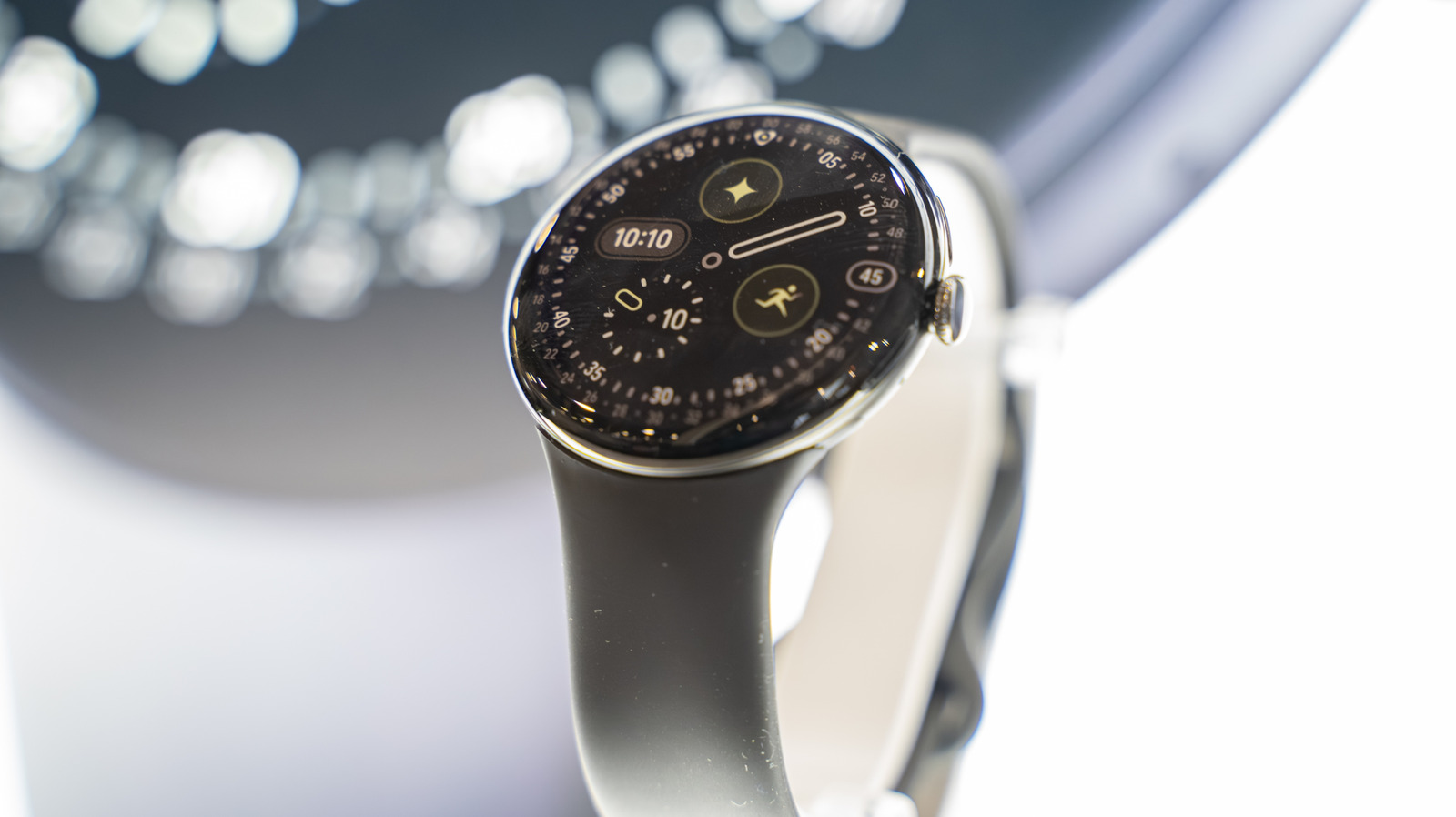
A Google Pixel Watch on display showcases a sleek black watch face. Erman Gunes/Shutterstock

Pixel Watch owners are experiencing issues with their sleep data. First identified on Reddit, users noticed that their watches showed “No recent data. Wear your watch to sleep” messages, despite Fitbit applications revealing that sleep cycles were recorded via their smart watches. Users who attempted to troubleshoot by restarting their watches saw no change in their displayed fitness data. While Reddit complaints largely center around the Google Pixel 2, the scale of the problem remains unknown.

Some users have noted that this is indicative of wider reliability issue with Google’s Pixel watch lineup. However, most users are advised not to panic. Although Google has not confirmed the source of the problem, Fitbit’s continued data collection points to the bug likely being a noncritical issue. In the meantime, Google has confirmed that it is working on it. Billed by Google as “everything you need is on your wrist,” the Pixel Watch is widely considered one of the best wearables for sleep tracking due to its long battery life and contextual recommendations. 

Providing “Morning Brief” sleep summaries and daily Sleep Scores, the Pixels’ sleep tracking capabilities remain one of the product’s most lauded attributes. However, the popular watch has experienced several health-tracking mishaps already, ranging from skewed step counts to missing data. Whether such concerns continue to persist is anyone’s guess. And while Google’s wearable lineup has suffered from these high-profile bugs, including its AI Health Coach’s early proclivity for hallucinations, the company’s willingness to patch issues as they arise will likely keep Google’s wearables popular. 

A fix, and a new app, are coming soon

Pixel owners remain in the dark regarding the malfunction’s source, as Google has yet to announce the reason behind the bug. However, help is on the way. On May 19, a Google spokesperson e-mailed Android Central to say that the company is “aware of the issue and [is] working on a fix.” When such patches are likely to come in remains unknown. 

Some observers are speculating that the bug could have resulted from Google’s push to make Google Health a widescale fitness platform. Fitbit will see its app undergo several changes as it migrates to its parent company’s new Google Health App redesign.  Some have wondered whether the slew of malfunctions is linked to this migration, although such speculation has yet to be confirmed by Google. The update will occur automatically for users between May 19 and May 26, but several fan favorite features will be discontinued.

Although the app will continue to track users’ sleep, the “Sleep Profile” function will no longer be offered. As such, users will no longer receive their monthly sleep animal, which prompted one unnamed writer’s fiancé to jump for joy. Other key sleep features that won’t be included are snore detection and estimated oxygen variation. Instead, users can check their oxygen saturation levels using the application’s SpO2data. Several social aspects of the Fitbit application are also on the cutting room floor. At this point, Google Pixel wearers might be pleased if their sleep data is displayed at all.

Source