Posted on

Final Cut Pro update brings Image Playground to Mac and iPad

Alongside the second Release Candidate version of macOS 15.4, Apple also updated Final Cut Pro for Mac and iPad. The video editor has added Apple Intelligence features in both versions, but different capabilities depending on the software.

These are the release notes for Final Cut Pro 11.1 for Mac, including Apple Intelligence features:

  • Add color corrections and effects to an adjustment clip above the timeline to apply them to a range of clips at once
  • Get inspired with Image Playground and use Apple Intelligence to quickly create stylized images based on a description, suggested concepts, or people from your Photos library
  • Speed up Magnetic Mask workflows with important bug fixes, performance improvements, and a new keyboard shortcut to show or hide the Magnetic Mask Editor
  • Use the Quantec QRS effect to create natural and transparent audio reverbs that simulate real acoustic spaces
  • Stay organized by renaming audio effects in the inspector
  • Reveal the source of a Multicam angle or synced clip in the browser
  • Move markers in the timeline by dragging them in a clip, or remove markers by dragging them out of a clip.

Final Cut Pro for iPad has been updated to version 2.2 with Apple Intelligence and these other features:

  • Expand your editing workflows with support for portrait orientation on your iPad
  • Speed up your editing with keyboard shortcuts to nudge a selection, replace with gap, and lift, or overwrite to the primary storyline
  • Get inspired with Image Playground and use Apple Intelligence to quickly create stylized images based on a description, suggested concepts, or people from your Photos library
  • Capture in 50fps for additional editing flexibility and delivery options.

Final Cut Pro for Mac is a one-time purchase, while the iPad version offers a monthly or annual subscription. Below, you can learn more about the iPad version of Apple’s professional video software editor.

Tech. Entertainment. Science. Your inbox.

Sign up for the most interesting tech & entertainment news out there.

By signing up, I agree to the Terms of Use and have reviewed the Privacy Notice.

Source

Posted on

You can now make WhatsApp your default calling and texting app on iPhone

If you spend more time communicating on your iPhone through WhatsApp than any of Apple’s first-party options, we have some good news for you. As spotted by WABetaInfo this week, the newest update for the popular third-party messaging app allows iOS users to set WhatsApp as their default app for both calling and messaging.

You might recall that Apple gave iOS users the ability to manage default apps on iPhone in iOS 18.2 late last year. Developers have to do some work behind the scenes in order to make apps appear in the default apps list, and WhatsApp has finally done that.

Here’s what you need to do to make WhatsApp the default app on your iPhone:

  1. Go to Settings > Apps > Default Apps
  2. Tap the Messaging option and select WhatsApp.
  3. Go back, tap the Calling option, and then select WhatsApp.

If you decide to change your default calling or messaging app, any phone number that you tap will automatically send you to the WhatsApp app to make a call. As universal as WhatsApp has become, this will be a huge quality-of-life improvement for many users.

Tech. Entertainment. Science. Your inbox.

Sign up for the most interesting tech & entertainment news out there.

By signing up, I agree to the Terms of Use and have reviewed the Privacy Notice.

You’ll need the latest version of the app in order to change it to the default app on your iPhone, so be sure to check the App Store and make sure you’re up to date.

Notably, Apple also recently made it possible to change the default navigation app on iOS, but this feature is currently only available in the European Union. Here’s hoping more customization makes its way to the US in the coming months and years.

Source

Posted on

Apple devices are at ‘most risk’ in UK following government ‘backdoor’ order

Users of Apple devices in the UK are “at the most risk in the world” of being hacked, following a secret government order requiring the tech company to allow ‘backdoor’ access to its users’ encrypted data, the House of Lords heard on Monday 31 March.

Liberal peer Paul Strasburger pressed the government to answer questions about a decision by the home secretary, Yvette Cooper, to issue a secret notice against Apple.

The order, first reported in the Wall Street Journal, extends law enforcement and intelligence services’ access to encrypted data stored on Apple’s iCloud to include users of Apple’s secure Advanced Data Protection (ADP) service.

In questions posed in the House of Lords on Monday, Strasburger said the government had “demonstrated its disdain for the privacy and digital security of British citizens and companies” by issuing the TCN against Apple.

The Liberal peer said the order would introduce weaknesses to encryption on Apple devices that could be exploited by criminals and hostile states.

“Strong encryption is essential to protect our data and our commerce from attack by organised crime and rogue states,” he said. “Any weakness inserted into encryption for the benefit of the authorities is also available to those who would do us harm – yet that is precisely what the government are demanding from Apple.”

Tribunal held closed-door hearing

Apple is challenging the legality of the government’s order in the Investigatory Powers Tribunal (IPT), which discussed arguments in a closed-door hearing on 14 March.

Civil society groups Privacy International and Liberty, along with two individuals whose security has been impacted by the government’s order against Apple, have filed separate legal interventions.

Ten newspapers, publishers and broadcasters – including Computer Weekly – have also filed legal submissions calling for Apple’s appeal against the widely publicised order to be heard in open court on public interest grounds.

Non-affiliated peer Claire Fox said it was not possible for Apple to open doors to its customers’ data in a way that would ensure that only the police and intelligence services would have access to its users’ encrypted data.

“It is obvious that criminals, foreign adversaries and others would exploit that weakness,” she said.

Fox said it was baffling if the Home Office was choosing to “bully tech companies into undermining their users’ privacy, security, civil liberties and free speech” while at the same time seeking to establish the UK as a leading hub for innovation and technology.

Liberal democrat peer Tim Clement Jones told the Lords that the government could be in breach of the European Court of Human Rights following a key judgment by the court last year.

In the case of Podchasov v Russia, the European Court of Human Rights found that weakening end-to-end encryption or creating backdoors could not be justified under human rights law.

Labour peer Toby Harris asked what consideration had been given to the trade-off between the “general weakening of security and confidentiality” compared with the gains made by the security services in being able to decrypt data stored by Apple.

Home Office minister and Labour peer David Hanson repeatedly declined to answer questions from peers, citing national security reasons.

“We have a long-standing position of protecting privacy while ensuring that action can be taken against child sexual abusers and terrorists,” he said.

“I cannot comment on operational matters today, including neither confirming nor denying the existence of any notices. This has been the long-standing position of successive UK governments for reasons of national security.”

Conservative peer Daniel Moylan pressed Hanson to comment on Apple’s decision to publicly withdraw its ADP encryption service from the UK, even if he could not comment on whether a notice had been issued.

He also asked the home office minister whether the US and UK governments had any high-level discussions about the order against Apple.  

Bloomberg reported on 13 March that the US and UK governments were holding private talks in an attempt to resolve US concerns that the UK was trying to force Apple to create a backdoor that would allow the UK access to encrypted data belonging to US citizens.

Hanson said he could not comment on the matter.

“Decisions made by Apple are a matter for Apple, and the removal of any features is a matter for Apple. Again, for reasons of national security I cannot confirm or deny any conversations that we have had or any issues that are undertaken,” he said

The Investigatory Powers Act contained “robust safeguards” and “oversight to protect privacy and ensure that data is obtained only on an exceptional basis and only when necessary and proportionate to do so”, he added.

A Home Office spokesperson said: “We do not comment on operational matters, including, for example, confirming or denying the existence of any such notices.”

Media companies have asked the Investigatory Powers Tribunal to hold hearings into Apple’s appeal against the technical capability notice in open court.

Separately, Big Brother Watch, Index on Censorship and the Open Rights Group have written an open letter to the tribunal calling for an open court hearing.

The media companies challenging the secrecy of Apple’s appeal in the Investigatory Powers Tribunal are Associated Newspapers Ltd, the British Broadcasting Corporation, Computer Weekly, Financial Times Group, Guardian News & Media, News Group Newspapers, Reuters News and Media, Sky News, Telegraph Media Group and Times Media.

Source

Posted on

Scottish support group for Post Office scandal victims launched

A newly launched campaign group is calling on former subpostmasters in Scotland to come forward if they were affected by the Post Office’s Horizon scandal.

The group, known as the Scottish Postmasters for Justice and Redress, will be officially launch on 2 April 2025 at the Scottish Parliament by former subpostmaster Rab Thomson, who had a wrongful conviction for theft overturned last year after 22 years.

And it is not just former Horizon users in Scotland being invited to come for support, but also those who used Capture and ECCO+ who may have suffered due to their flaws.

The group has the support of former Scottish Nationalist Party MP Marion Fellows, who was chair of the All-Party Post Office Parliamentary Group (APPG), and Calum Greenhow, the current CEO of the National Federation of Subpostmasters (NFSP). It will offer support to encourage people affected to come forward, including all those that suffered as a result of unexplained losses in their branches.

Thomson, who ran a Post Office near Alloa before his wrongful conviction, said he and his fellow group members want to support subpostmasters making claims. This will not be just for convicted subpostmasters, but for those who have suffered in other ways too, including those who paid money to the Post Office to cover unexplained losses.

Thomson originally set up a WhatsApp group to bring victims together, but trauma makes it difficult for them to come forward and tell their stories, he said, adding: “We managed to get nine people but couldn’t get anyone to talk. They just don’t want to be seen. I totally understand this, and the reason we are setting this up is so we can stand for them in the background. We will do our best for them.”

Former MP Fellows and NFSP CEO Greenhow, along with Thomson, promise to represent victims who want to come forward. Fellows said that she is frustrated with the slow progress in seeking justice and redress for Post Office scandal victims in Scotland.

“The group was set up to offer peer support and encourage people to come forward,” Fellows told Computer Weekly. “There are still subpostmasters who were prosecuted who should come forward, but there are also hundreds who were not prosecuted but had their lives turned over.”

Greenhow added: “Rab Thomson really felt there wasn’t any support groups within Scotland for victims and he wanted to pick that up. We want to make sure that everybody that was affected by the Post Office Horizon, Capture and ECCO+ systems can not only have their reputations restored but also financial redress.”

In May last year, the Scottish Parliament announced its own legislation to exonerate subpostmasters with convictions based on evidence from the Horizon system. This followed a similar law introduced for England and Wales in March last year which saw more than 700 former subpostmasters exonerated.

As the Scottish legal system is different to that in England and Wales, it was not the Post Office that prosecuted but the Procurator Fiscal, the public prosecutor, using evidence from the Post Office.

A total of 64 former subpostmasters in Scotland have now had their convictions overturned through the legislation brought through the Scottish Parliament. So far, 97 convicted subpostmasters have come forward and 86 have been assessed, out of which 64 have been overturned. Some 22 have been rejected and another 11 are still to be assessed.

Scotland’s cabinet secretary for justice and home affairs Angela Constance submitted the legislation, known as The Post Office (Horizon System) Offences (Scotland) Bill, and the Scottish Parliament agreed that the bill should be treated as an emergency at the meeting of the Parliament on 15 May 2024.

Speaking about the launch of Scottish Subpostmasters for Justice and Redress, which will take place 2 April from 12–2pm in Scottish Parliament Room P1.02, Constance said: “I very much welcome this event and the continuing need to raise awareness of the UK government redress schemes for victims of the Post Office miscarriages of justice scandal.

“The Scottish government continues to encourage anyone who considers they suffered an injustice to come forward. There is no time limit under the legislation and the Scottish government will always look into any cases where people give their name as a possible miscarriage of justice case.

“Redress is the responsibility of the UK government, and I am keen everyone who is entitled to it can access it. This event is a reminder of the need to help victims navigate through what has been and remains a traumatic experience, and I pay tribute to the work of all those involved in establishing the Scottish Postmasters for Justice and Redress Group.”

Group members are encouraging interested parties to attend the event.

Computer Weekly first exposed the scandal in 2009, revealing the stories of seven subpostmasters and the problems they suffered due to Horizon accounting software, which led to the most widespread miscarriage of justice in British history (see below timeline of Computer Weekly articles about the scandal since 2009).

Source

Posted on

ChatGPT’s Studio Ghibli-style images spark fierce debate: ‘F*** these people.’

OpenAI has once again ignited a firestorm of controversy — this time, over ChatGPT’s new image-generation capability, which allows users to request Studio Ghibli-style artwork that looks, to the casual observer, indistinguishable from actual work created by the legendary Japanese animation studio.

Some users have embraced the feature, marveling at how easily they can generate stunning Ghibli-esque images. The backlash, however, has been quite severe, with artists and fans accusing OpenAI of profiting from stolen creativity.

The Internet reacts: ‘plagiarism program’

Social media has been flooded with outrage over what many see as blatant artistic theft. One viral tweet summed up the fury:

“OpenAI has stolen Studio Ghibli’s artwork & these morons are cheering and clapping for it as if this crap has actually achieved anything. They’re literally advertising a plagiarism program that hasn’t compensated nor sought permission from Studio Ghibli. F*** these people.”

Another critic on Twitter called out OpenAI’s leadership:

Tech. Entertainment. Science. Your inbox.

Sign up for the most interesting tech & entertainment news out there.

By signing up, I agree to the Terms of Use and have reviewed the Privacy Notice.

“The CEO of OpenAI openly brags about the Studio Ghibli AI slop that’s rendered this website basically unusable over the past few days. Just a complete disregard for intellectual property/copyright – he’s proud of how much theft they’ve accomplished!”

Users on Threads echoed the frustration, with one lamenting AI’s growing role in creative fields:

“I’m so tired of hearing about AI. It’s being pushed down our throats, and the latest ChatGPT image generator is just another example. AI has a use case to replace boring manual tasks like data entry or building slide decks. It will revolutionize medicine. It can do things faster than humans ever will. But why are we using it to replace creative work? Use AI to replace the boring, repetitive work, and let humans do what we do best – creating unique pieces of art.”

Can Studio Ghibli sue?

Unfortunately, for everyone demanding that Studio Ghibli take legal action, Japan has taken a notably lenient approach to AI and copyright. According to a report from DeepLearning.AI, Japan appears to be the only major country that has explicitly made it legal for AI models to train on copyrighted works. That means, even if OpenAI had trained its models on Ghibli images, they would have done nothing illegal under Japanese law.

When I asked it directly about the issue, ChatGPT itself provided a carefully worded response, stating that OpenAI has not explicitly confirmed whether it trained its AI models on Studio Ghibli images or other copyrighted works from Japan. However, it continued, given Japan’s relaxed stance on AI and copyright, it’s legally possible that OpenAI could have used such materials for training.

Hayao Miyazaki saw this coming

Long before AI could generate Studio Ghibli-style art in seconds, legendary filmmaker and Ghibli co-founder Hayao Miyazaki made his feelings about AI-generated art clear. In a documentary, when told that computers would eventually be able to paint like humans, he responded:

“If they do that, we won’t need humans.”

Miyazaki didn’t mince words about his distaste for AI-generated creativity, adding:

“I fear the world’s end is near. Humans have lost confidence. Hand drawing’s the only answer.”

As OpenAI continues to push the boundaries of what AI-generated content can do, the debate over intellectual property, artistic integrity, and the role of AI in creative industries is only going to intensify. The question now is: If Studio Ghibli can’t stop this, who can?

Source

Posted on

New Nintendo Today app leaks mysterious Switch 2 button

Nintendo revealed the Nintendo Switch 2 design in mid-January after weeks of leaks that seemingly spoiled all the secrets of the new handheld.

However, Nintendo only showed the console’s official design, choosing not to mention any other details about the product so many gamers were waiting for. Puzzlingly, Nintendo even went out of its way to hide a new Switch 2 feature in the marketing materials it was willing to share, like the one above.

All the Switch 2 leaks that popped up online in late December and early January showed a mysterious button on the redesigned Joy-Con controllers with a “C” label. Fans speculated that the button was related to a new chat feature, but that was never confirmed. That’s the button that Nintendo hid in the Switch 2 marketing materials.

Nearly three months later, the Switch 2 launch event is upon us. Ahead of next week’s Nintendo Direct presentation, where we’ll learn everything about the new console, the company held a March Nintendo Direct event this week to announce new Switch games.

Tech. Entertainment. Science. Your inbox.

Sign up for the most interesting tech & entertainment news out there.

By signing up, I agree to the Terms of Use and have reviewed the Privacy Notice.

Nintendo also unveiled a new Nintendo Today news app for iPhone and Android, which is now available to download. That official app contains Switch 2 images that confirm that the new button will have a “C” on it.

As with all mobile apps available to download from digital stores, Nintendo Today has its own page on the App Store. That page has a short description and several screenshots, as you can see below.

Nintendo Today marketing images from the App Store page.Nintendo Today marketing images from the App Store page. Image source: App Store

Scroll through those images, and you’ll find a tiny Switch 2 image in the sixth screenshot. “Get updates on Nintendo Switch 2 news plus game info, videos, comics, and more every day,” the message on that screenshot reads.

The image is similar to the Switch 2 marketing renders Nintendo has offered since January. But VGS zoomed in and discovered that the “C” button label is no longer hidden. After zooming in, I can confirm the image still shows the button label:

Zooming in on the Nintendo Switch 2 console reveals the Zooming in on the Nintendo Switch 2 console reveals the “C” button. Image source: App Store

This must be the final version of the console. We’ve reached a point where Nintendo is comfortable showing the mysterious button without explaining it yet, or it’s all a mistake from the team that put those App Store screenshots together.

Whatever the case, there’s no question that the right Joy-Con controller will feature a new button, which will have a “C” on it. As for that letter’s significance, we have to wait until April 2nd, when Nintedo will explain everything. The Switch 2 specs, price, preorder, release date, and first batch of exclusive games will also be announced at the show next week.

On that note, it seems almost certain that Switch 2 preorders will start on April 2nd, possibly right after Nintendo Direct. Big retailers like Best Buy are already making preparations for it.

Source

Posted on

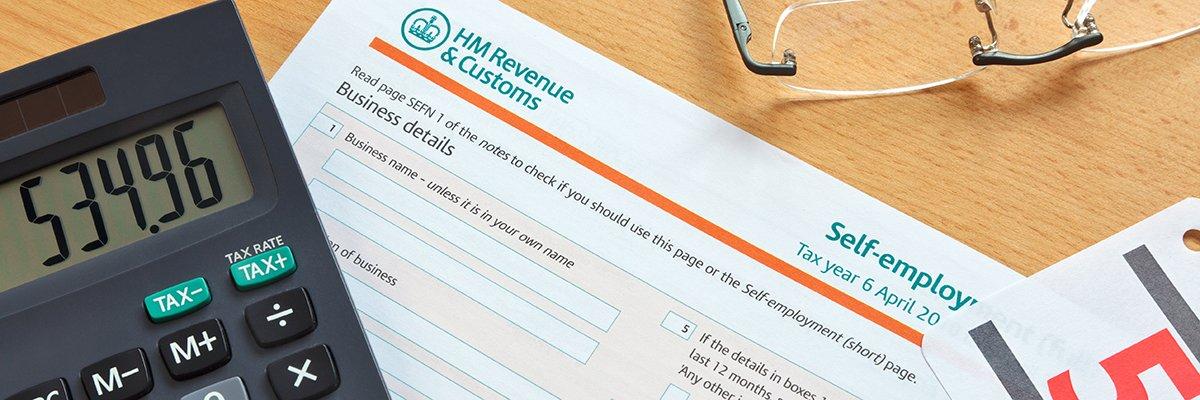
Interview: Ray McCann, Loan Charge independent review lead

The government set out plans in the Autumn Budget 2024 to commission another independent review of the Loan Charge policy that – in its words – will “help bring the matter to a close for those affected whilst ensuring fairness for all taxpayers”. This description was seized on by contractors in scope of the policy as a positive sign.

It’s not hard to see why. The policy is a mechanism for HM Revenue & Customs (HMRC) and HM Treasury to recoup tax that government estimates suggest around 50,000 contractors avoided paying by enrolling in loan-based remuneration schemes between 9 December 2010 and 6 April 2019.

Computer Weekly has heard and published numerous accounts from IT contractors who participated in these schemes and have been saddled with life-changing tax bills they claim to have no hope or means of paying, since the policy came into effect in April 2019. 

When the government publicly committed to taking actions to “help bring the matter to a close for those affected”, there was an expectation among some of those affected that this might result in the Loan Charge being repealed and their tax bills cancelled.

That notion was firmly put to bed on 23 January 2025, when the government issued confirmation that the review had been commissioned and that repealing the policy in totality was not what it meant about wanting to bring the matter to a close.

Instead, the government said the review would focus on investigating the factors stopping people from settling their Loan Charge liabilities with HMRC – and finding ways to help them do so.

It also confirmed that HM Treasury had appointed former HMRC assistant director Ray McCann to oversee it. He has also previously served as president of the Chartered Institute of Taxation and has been in private practice for almost 20 years.

“The reviewer [McCann] is being asked to draw on the available evidence and expertise, engaging with stakeholders as appropriate, to consider in detail the settlement terms available [to those] who have not yet settled and paid their tax liabilities in full to HMRC, and whether HMRC’s settlement and debt management processes sufficiently take into account their ability to pay and behaviours,” said the government statement.

“[It will also look into] how that population could now be encouraged to reach a resolution with HMRC; and what decisions would be required to ensure that, as far as possible, any new settlement proposals were properly targeted whilst not imposing significant additional administrative burdens upon HMRC.”

Contractors revolt

Once the information about what the review would entail entered the public domain, a wave of criticism was directed at the government from those affected by the policy, with many accusing the government of offering false hope with its promise the review would bring the Loan Charge matter to a close for them.

Campaign groups have also claimed the review is too narrow in scope, given its focus on what can be done to encourage people to settle their Loan Charge liabilities, rather than examining the reasons why tens of thousands of people joined loan schemes in the first place.

During a sit-down with Computer Weekly to discuss his plans for the review in more detail, McCann says the terms of the review are wider than many people suggest.

“Everything of any significance, so far as the Loan Charge is concerned, happens in the period post-2010, so that means it’s open to me to look at anything that happens in that period, including the behaviour of the promoters and the behaviour of HMRC,” he says.

The “call for evidence” period of the review started on 28 March 2025, with McCann urging those in the policy’s scope to send him evidence covering three topics: what contractors were told by promoters of these schemes, their experience of dealing with HMRC, and details about how the policy has personally affected them.

The rationale behind that, as McCann sees it, is that it would be difficult to see how the Loan Charge can be resolved without having a detailed understanding of how so many people ended up embroiled in loan schemes and why they are finding it so difficult to reach a settlement with HMRC. 

Another area that McCann plans to explore during his review is HMRC’s 2017 assessment of the impact the Loan Charge would have, in which the government tax collection agency stated that it did not foresee the policy having any “material impact” on the families of those in scope of it.

[Repealing the Loan Charge] would be a bad move because – whether people realise it or not – many individuals have got millions out of loan schemes and paid little or no tax on it Ray McCann, independent Loan Charge review

This statement has been openly criticised during the intervening years, as anecdotal accounts from contractors discussing the mental anguish of living with a sizeable Loan Charge-related tax bill hanging over them have emerged. The policy has also been linked to at least 10 suicides to date.

“I’ve been critical of [the HMRC assessment] in the past. I’ve criticised that in various formats: on Twitter, in various tax journals, publicly, and so on,” says McCann.

What is not open to McCann is to make a recommendation in his final report to repeal the Loan Charge policy. And that’s not because the contents of it are pre-determined, as some critics of the process have claimed, but because doing so would not be fair to other taxpayers.

After all, the government has previously and repeatedly stated that resolving the Loan Charge is a priority, but doing so must happen in a way that ensures fairness for all taxpayers.

“It’s not open to me to recommend that the Loan Charge be repealed, and the government has made clear from the start that repeal was not an option, and equally I don’t think it should be. It would be a bad move because – whether people realise it or not – there are many individuals who have got millions out of loan schemes and paid little or no tax on it,” says McCann.

“Government has a responsibility to the many millions who pay tax and national insurance contributions [NIC] on all of their earnings, and unless this is resolved in a way that is fair to both those affected by the loan charge and the millions of other taxpayers, many would no doubt ask why you and I should pay our tax and national insurance?”

Criticism of HMRC

As previously alluded to, McCann has proven to be a vocal critic of HMRC’s handling of the Loan Charge over the years, and was – during his time working at the government agency – closely involved in its enforcement activities against similar disguised remuneration schemes.

“I’ve been involved in [enforcement action against] loan schemes in one capacity or another for a quarter of a century. When I was in the Revenue [HMRC] in the 1990s, I was one of the first inspectors to take on one of the big employee benefit trusts [EBTs],” he says.

These trusts are the entities that pay out loans to contractors. In the late 1990s and early 2000s, many large employers in the banking and financial sector used EBTs as a mechanism to pay their employees in loans.

“One of the last things I did before I left HMRC in 2006 was pre-empt the settlement with several banks in late 2005. One of the banks that I had challenged had put a billion pounds into an employee benefit trust,” he says.

“They had claimed the corporate tax deduction for it, [but] they hadn’t deducted PAYE [Pay As You Earn] or NIC, so all told, that group of banks had avoided hundreds of millions in tax and NIC.”

During the intervening years, the profile of organisations and individuals involved in loan-based remuneration schemes has markedly changed, says McCann, to include “white collar” workers, such as financial services and IT contractors, before moving down to far lower-paid individuals, such as social workers and NHS staff.

“The thing that shocks me is how low down the income scale these things have reached. They’re like a virus. They have gone from the large corporates to the big banks to the middle-sized companies, and then down to various people working offshore, putting together schemes that are ensnaring people who are on just everyday wages,” he says.

“And that’s why successive governments have treated this as such a priority – because of the threat that they see it being towards the entire PAYE and NIC system.”

How did we get here?  

Loan-based remuneration schemes enable individuals to artificially minimise the amount of employment tax they pay.

However, many of the contractors in scope of the Loan Charge policy claim the schemes were marketed as an HMRC-compliant way of bolstering their take-home pay, and that they were assured by respected tax barristers that – in the eyes of HMRC – they were doing nothing wrong.

The way McCann sees it, that explanation only goes so far. “Many people will have concerns, even if they get assurance from the promoter. And most of them did get assurances from promoters saying, ‘It’s all fine. It’s all tried and tested, and HMRC don’t mind’,” he says.

“But I think there is only so far you can believe that to be the case without evidence, and some of that has already come into the review mailbox.”

Meanwhile, HMRC maintains that its position on the use of loan remuneration schemes has always been clear, and that it has never given its seal of approval to any such setup.

“Even if you go back to 2010 and before, HMRC’s position on [the use of EBTs] was all over the internet,” says McCann. “If you did a Google search at the time on EBTs, you might get millions of hits – and most of them were about HMRC’s view on them.”

And what this serves to highlight is one of the major difficulties McCann will face in his review: uncovering evidence that supports the argument that contractors are victims of mis-selling when so much time has passed since these schemes were originally being marketed to people.

“That’s the task before me – getting sufficient reliable evidence to show that the promoters are the bad guys that I can put in my review, so I’m in a position to put forward the argument that these are the people HMRC should have been clamping down on and – where appropriate – criticising them for not doing it,” he says.

This is why it is so important that contractors engage with the review process during the call for evidence period, so their side of the story can be fully put across, he continues.

Meanwhile, McCann has been reaching out to contacts he made during his time investigating loan schemes while at HMRC, some of whom used to “sell or market these kinds of ideas”, to engage in the review too.

“I don’t need everybody to send me details in, because if all 50,000 people in scope of the Loan Charge send me their evidence, this review would take 10 years to complete. But what I do need is enough to get involved that I can sensibly make a case that this is representative of what happened,” he says.

“What I want to be able to do [with this review] is say this is representative of what happened, and it’s reasonable to conclude that within these types of industries, this is the behaviour [of] the promoters. And up to a point, it’s reasonable to conclude that the individuals involved, who often did not have independent professional help, were persuaded that this was okay.”

He also needs contractors to engage in the review by supplying a “substantial and significant” amount of evidence that proves their claims that their treatment at the hands of HMRC has been “unreasonably and manifestly unfair” in the eyes of the average person in the street who pays tax and national insurance.

“The argument you’ve got to make is that they’re being treated in a way that’s unreasonably unfair, and in a way you and I don’t support,” McCann adds.

Stakeholder engagement

When the government set out the review’s terms of reference, a group of cross-party MPs – who make up the Loan Charge and Taxpayer Fairness All Party Parliamentary Group (APPG) – issued a statement brandishing the exercise a “farce” while calling into question how truly independent the end product would be.

This was on the basis that a former HMRC director had been appointed to oversee the review, and – as confirmed by the government – HMRC and HM Treasury would be permitted to review its contents ahead of publication.

“It will not change the position people are in, nor review the legislation and whether it was fair and justified. … This is not the review that was promised nor the review that is so desperately needed, and the APPG will continue to push for a genuine inquiry into this scandal,” said the APPG.

Despite the group’s vocal critique, McCann says he has been liaising with the APPG in the wake of its statement and has found its members are broadly supportive of what it is he is trying to achieve.

He has also been engaging with various stakeholders – including noted tax barristers and accounting firms who represent large numbers of the contractors affected by the Loan Charge – to compile evidence for the review, including impact statements.

“I’ve got a big data request that I’m drafting at the moment to send to HMRC so that I can get proper data – the numbers involved, the income spread, how long people have been under inquiry for, and that kind of thing,” he says.

“I had to delay things a bit because the need to be independent means I couldn’t use HMRC and Treasury people for support, and there had to be a recruitment process across the whole of the civil service [for people to assist].”

McCann is acutely aware that the decision to appoint him, a former HMRC inspector, to oversee the review has not gone down well with everyone.

There is no way I’m going to take instruction from HMRC or the Treasury on how to conduct the review – and they have done nothing that could be taken as trying to control the review or its direction Ray McCann, independent Loan Charge review

“Some people have said that I’m under the control of the Treasury … but there is no way I’m going to take instruction from HMRC or the Treasury on how to conduct the review – and to be fair to the Treasury and HMRC, they have done nothing that could be taken as trying to control the review or its direction,” he says.

“I obviously must comply with the law on data protection and so on, but I’m going to carry out the review as I believe it needs to be done. The minister made clear that my conclusions and recommendations must be made within the constraints of the current fiscal situation, but otherwise it’s up to me.”

And for those who have taken issue with an ex-HMRC director conducting a review into an HMRC-backed government policy, McCann says his employment history and experiences should be viewed positively.

“On the point of independence, I initially thought that should be more of a concern for HMRC than people on the other side of the inquiry, because for eight years I’ve been consistently critical of their handling of the Loan Charge,” he says.

One area that McCann has been particularly and publicly critical about HMRC over is the organisation’s approach to Loan Charge settlements.

“I have been pressurising ministers and HMRC for years to develop a better approach to settlements, and I got frustrated with the fact that it never appeared, so I started to publicly criticise them through Twitter and LinkedIn, and in various things I was writing,” adds McCann.

“Almost every article I’ve written in the last eight years mentions the Loan Charge to some extent or another, and it’s always been critical of HMRC’s approach to settlements. I’ve been consistently critical on that front, [and] I’ve made it clear to Parliament, and I’ve made it clear to government, that HMRC should have been more realistic when it came to the settlement terms.”

In terms of what he thinks HMRC should have done differently, McCann says: “I have said in the past that HMRC should have offered settlement terms that were sufficiently attractive that it made people want to settle, but what HMRC did was only give the slightest of discounts [to people who wanted to settle] and left them in a position where they did not know how they would pay.”

It is McCann’s hope that when the review concludes – which is expected to be later this summer – and its contents have been mulled over by the government, contractors will end up with a far more attainable settlement figure. 

“I want to end up with a situation where people get a settlement figure from HMRC that they can look at and say, ‘Well, okay, even if I’d rather not pay it, I can pay it, within a reasonable period if necessary’. Whereas, presently, people are saying, ‘I’d rather not pay it, but even if I did want to pay it, I can’t afford to’. I want to change that dynamic,” says McCann.

And in doing that, he hopes this will finally help bring a resolution for the tens of thousands of people who have been living under the shadow of the Loan Charge for the past eight or so years.

“We can argue that HMRC should have gone after this promoter or that promoter, and all manner of other things to do with the Loan Charge, but that doesn’t help someone who is sitting at home worried about the bailiffs coming round,” he says.

“If someone’s drowning in a river, they’re not going to be helped if people are just standing on the shore arguing about how they got in the river in the first place. They just want someone to rescue them.”

In the meantime, McCann’s priority is getting people affected by the Loan Charge to contribute to the review.

“I know people are mistrusting [after past reviews]. Whether that mistrust is justified or not, I want them to take a deep breath and engage with this review because something has to come out of it as we all need this resolved,” he concludes.

Source

Posted on

ChatGPT image generation is running into yet another big problem

OpenAI unveiled its latest image generation model earlier this week. But rather than creating a separate product, it built the GPT-4o image generation abilities right into ChatGPT. That made it even easier to come up with mind-blowing ChatGPT-generated images. Just type your detailed prompt, and ChatGPT will deliver the images you want. That includes pics that contain legible text, images that offer creative edits to real photos, deepfakes of celebrities, and more.

ChatGPT went viral overnight for its amazing image generation capabilities, as users with access to one of the paid tiers flooded the web with AI images. This sparked a new controversy due to the massive wave of Ghibli-inspired photos that flooded the web. As we explained before, OpenAI doesn’t seem to care that it’s creating deepfakes and ripping off copyrighted content.

Rather than taking steps to prevent the obvious abuse, Sam Altman & Co. are doubling down on the “freedom” they’ve embraced for this model.

While they don’t care very much about improving ChatGPT safety for the new 4o image generation model, they do care about resources. That’s why Altman announced that limits are coming to ChatGPT AI image generation, as OpenAI’s “GPUs are melting” due to the massive number of requests. So far, the OpenAI CEO only mentioned limits for the ChatGPT Free tier. That’s not much of an issue for the time being, however, since free users don’t even have access to the new image generation model.

Tech. Entertainment. Science. Your inbox.

Sign up for the most interesting tech & entertainment news out there.

By signing up, I agree to the Terms of Use and have reviewed the Privacy Notice.

Altman announced the limits on X, saying it’s “super fun seeing people love images in ChatGPT, but our GPUs are melting.”

it’s super fun seeing people love images in chatgpt.

but our GPUs are melting.

we are going to temporarily introduce some rate limits while we work on making it more efficient. hopefully won’t be long!

chatgpt free tier will get 3 generations per day soon.

That’s where he also noted that the ChatGPT Free users will be allowed to generate three images per day “soon.” 

When OpenAI unveiled the new image generation model, the company included the ChatGPT Free tier in the initial rollout plans. In practice, only ChatGPT Plus, Pro, and Team users have access to the feature.

I’m on a ChatGPT Plus plan and have already tried the service. I already generated more than three images with the AI, and I can see why it’s so appealing to do it, considering the new features ChatGPT built into it.

What I’m getting at is that paid ChatGPT users are more likely to use the feature and make those GPUs melt. But Altman announced no image generation limits for the Plus, Pro, and Team tiers.

I wouldn’t be surprised if such limits were implemented in the near future, at least as long as the service continues to receive heavy traffic. Those GPUs aren’t melting, but they’re working round the clock to generate images and satisfy other ChatGPT needs. That leads to increased energy consumption and associated costs.

Also, as a ChatGPT user myself, I don’t want to see other ChatGPT services get bogged down because OpenAI’s infrastructure is bogged down in generating images, especially if they’re deepfakes or copyright-infringing pictures.

Speaking of safety, Altman replied to the tweet above to say OpenAI is further improving the freedom ChatGPT has to generate images. Altman noted that OpenAI is “refusing some generations that should be allowed,” fixing them as fast as possible.

Source

Posted on

Help, I can’t stop engraving everything in my house with the Acmer P3 laser engraver

Guys, I’m seriously worried that my husband might leave me. Why? Because I can’t stop engraving everything in my house. Ever since Acmer sent me a P3 dual laser engraver to test, I’ve been engraving pretty much everything I own that fits into the machine. And everything my husband owns. And all my dog’s stuff. Seriously, you guys… I have a problem.

Hopefully you can exercise more restraint than I can, because you’re about to find out just how cool this gadget is. The Acmer P3 dual laser engraver is on sale with a massive double discount that slashes nearly $900. Just be sure that you use the promo code 2IN115Off at checkout to get the lowest possible price.

ACMER P3 IR&Diode Enclosed Dual Laser Engraver ACMER P3 IR&Diode Enclosed Dual Laser Engraver $1,104.15 (reg. $1,999) Double Discount!

Before I get to anything else, I’m going to answer the first question you have. I know exactly what it is because I had the very same question: What materials can you engrave with the Acmer P3 dual laser engraver?

Tech. Entertainment. Science. Your inbox.

Sign up for the most interesting tech & entertainment news out there.

By signing up, I agree to the Terms of Use and have reviewed the Privacy Notice.

The answer to that question actually comes in two parts. That’s because, as you’ll notice, the device has “dual laser engraver” right in the name.

Acmer’s P3 dual laser engraver is a 2-in-1 device that actually comes with two different lasers. First, there’s an IR laser that can be used to engrave metal, plastic, and opaque acrylic. I’ve been having a lot of fun with this one, and I do mean A LOT.

Then, there’s a diode laser that can engrave way more materials. Per Acmer’s website, the list includes “paper, wood, leather, MDF, stainless steel, some dark opaque acrylic, bamboo, fabric, dark glass, ceramic, jade, marble, shale, cement, brick, plated metal, and painted metal.”

On top of all that, the diode laser doesn’t just engrave things — it can also actually cut certain materials like paper, wood, leather, and dark acrylic. That means you can cut stuff into any shape you want, and then engrave it with any words or patterns you want.

Can you see why I’m obsessed with this thing?!

Acmer P3 appsImage source: Acmer

If you’re like me, you might be thinking that setting up the Acmer P3 dual laser engraver and using it is probably pretty complicated. I mean, when I was a kid, there used to be entire businesses in the mall that were dedicated to engraving your stuff. As a matter of fact, there’s still a kiosk in the mall near my house that engraves jewelry and whatnot. Well, I’ll be engraving my own jewelry from now on, thank you very much.

The Acmer P3 is super easy to set up anywhere in your home, studio, or garage. You’ll just want to make sure that you set it up near a window because there’s an exhaust tube that blows out the smoke created when you laser different materials. Or, if you don’t want to deal with setting it up near a window, you can pick up Acmer’s AP220 Smoke Air Purifier so you won’t have to worry about it.

As far as operation goes, that’s easy too. Acmer has apps for iOS and Android, and there’s third-party software you can use on your computer. You can load any designs you want, or draw right in the app. I don’t have that kind of talent, so I’ve been loading designs and text that I type when I want to engrave things.

ACMER P3 IR&Diode Enclosed Dual Laser Engraver ACMER P3 IR&Diode Enclosed Dual Laser Engraver $1,104.15 (reg. $1,999) Double Discount!

If there’s one downside to the Acmer P3 dual laser engraver, it might be the price. At $1,999, it’s pretty expensive — though, if you compare it to other laser engravers, you’ll spend way more than that on models that are far less capable.

With that in mind, the retail price is actually pretty reasonable. At the time of this writing, however, the P3 was on sale with a massive double discount that saves you almost $900! First, there’s a 35% discount that cuts the price to $1,299. Then, the coupon code 2IN115Off saves you another 15% and cuts your price all the way down to $1,104.15.

That’s an absolute steal for this awesome dual laser engraver. Just don’t be like me, and remember to ask your family and friends before you start engraving all their stuff.

Source

Posted on

Post Office Capture and Ecco+ users asked to make contact with Scottish statutory body

The Scottish Criminal Cases Review Commission (SCCRC) is attempting to contact any former subpostmasters that could have been prosecuted for unexplained losses on the Post Office’s pre-Horizon Capture software.

There are former subpostmasters that, like Horizon users, could have been convicted of crimes based on data from these systems.

Since the Post Office Horizon scandal hit the mainstream in January 2024 – revealing to a wide audience the suffering experienced by subpostmasters who were blamed for errors in the Horizon accounting system – users of Post Office software that predated Horizon have come forward, supported by campaigning peer Kevan Jones, to tell their stories, which echoed those of victims of the Horizon scandal.

The Criminal Cases Review Commission for England and Wales is now reviewing 21 cases of potential wrongful conviction, put forward by law firm Hudgell Solicitors, where the Capture IT system could be a factor.

Capture was a PC-based application developed by the Post Office and uploaded onto a personal computer to carry out branch accounts.

The software was a standalone system, unlike Horizon, which is a complex, networked system connected to centralised services (see below for timeline of Capture developments since January 2024).

The SCCRC is now calling on people that might have been convicted based on Capture accounts to come forward. “The commission encourages anyone who believes that their criminal conviction, or that of a relative, might have been affected by the Capture system to make contact with it,” it said.

Third system

The statutory body is also investigating a third Post Office system, known as Ecco+, which was also error-prone. It was thought this system was only used in Crown branches (directly managed by the Post Office) and Crown branches that were taken over by subpostmasters. But Computer Weekly has discovered that Ecco+ could actually be bought by subpostmasters for use in their branches.

“We are currently investigating possible miscarriages of justice relating to problems with various computer systems used in Post Office branches in the 1990s (Capture, Ecco+),” the SCCRC said.

Read the SCCRC’s related information sheet.

In May 2024, Scottish Parliament announced its own legislation to exonerate subpostmasters with convictions based on evidence from the Horizon system.

This followed a similar law introduced for England and Wales in March last year that saw over 700 former subpostmasters exonerated.

A total of 64 former subpostmasters in Scotland have now had their convictions overturned through the legislation brought through Scottish Parliament.

So far, 97 convicted subpostmasters have come forward, and 86 have been assessed, out of which the 64 have been overturned. However, 22 have been rejected and another 11 are still to be assessed.

An independent group, fronted by a former Scottish subpostmaster, is also calling on users of any of the Post Office systems to come forward to tell their stories, and for support in seeking justice and redress.

The Scottish Postmasters for Justice and Redress, as the group is known, will officially launch tomorrow at Scottish Parliament. It was set up by Rab Thomson, a former subpostmaster of a branch near Alloa, who had a wrongful theft conviction overturned last year.

The group has the support of former Scottish Nationalist Party MP Marion Fellows, who was chair of the All-Party Post Office Parliamentary Group, and Calum Greenhow, the current CEO of the National Federation of Subpostmasters.

Source