Posted on

Why Foundation’s TV Creator Refused To Adapt Isaac Asimov’s Iconic

Before Isaac Asimov’s Foundation series became Apple’s most ambitious TV show, the show’s creator, David Goyer, gave an interview to Screen Rant about why he refused to adapt the story into a movie. Basically, he said that while he’s been offered twice to recreate Asimov’s world on the big screen, he didn’t believe it would be enough to explore this universe as one should.

“Well, one of the obvious difficulties is that the first book is kind of anthological, and there are these enormous time-jumps that happen in between the stories, and a lot of the characters don’t repeat from one story to the next. Previous attempts were by and large attempts to do it as a film or as a pair of films, in fact, I was offered the opportunity to adapt it twice myself as a film. Both times I turned it down because I didn’t think it was possible to adapt it as a film or even a series of films,” he said in the interview.

That said, unlike other iconic books that got a movie version instead of a proper series, like Ursula K. Le Guin’s “Earthsea Tales,” which was horribly adapted to the big screen by Studio Ghibli, or even something more popular like “Percy Jackson” that got two bad movies before a proper Disney+ production, Goyer discovered that waiting was the most suitable decision.

Game of Thrones set the path for Foundation

David Goyer also said that “Foundation” probably would not have happened if it weren’t for the massive success of “Game of Thrones,” which opened the door for a big series to be adapted to TV instead of movies. “But then the advent of streaming happened, and you started seeing these large, sprawling, epic novelistic shows taking place like Game of Thrones. It was over the last five years or so that I started to think it might be the right time for Foundation, there might be the right format for Foundation, if I don’t have to condense the story into nine hours, but I have potentially the ability to tell the story over 60, or 70, or 80 hours, maybe it could be done. But at the time, the rights weren’t available, and then about three years ago the rights became available, and I leapt at it. I said, ‘I think now is the time.'”

As of now, “Foundation” is heading into Season 4, and the creator has an ambitious plan for a total of eight seasons. While the original Asimov’s story was made out of five books and two prequels, the TV show is heading to the beginning of book three, even though there are several changes between the original story and its small screen adaptation.

Foundation on Apple TV was the right call

“Foundation” has a critics’ rating of 87% on Rotten Tomatoes, showing that despite the creative differences between the show and the book, viewers are hooked on the series. With Season 4 expected to premiere in 2027, the only issue with the show, like many modern programs, is the incredibly long period between one season and the next. “Foundation” started in 2021, with a second season released in 2023, and a third in 2025. If the show gets renewed up to Season 8, then it wouldn’t be wrapping up until 2037.

While Asimov’s story is one of the few that can have this long timespan — characters don’t matter as much as the Foundation itself — it’ll be interesting to see how Goyer will finish up the story, as Asimov focused on clashing its robot universe with the Foundation world. As of this writing, there aren’t many details about Season 4. There hasn’t been an official teaser, trailer, or release date, and it has been a year since the show got a green light to continue its production.

Source

Posted on

5 Clever Ways To Use Gemini On Android Auto

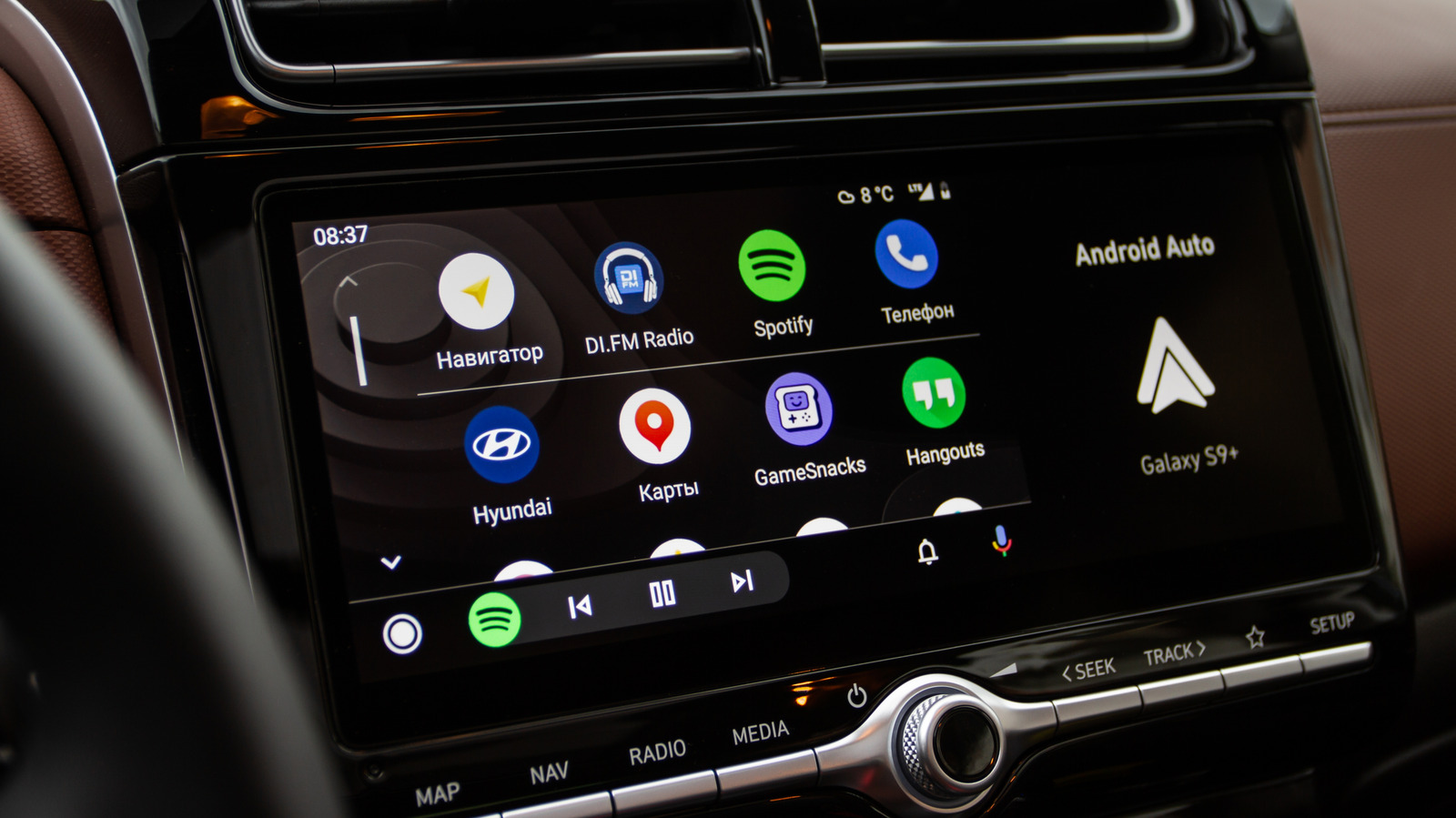
A vehicle's infotainment display showing Android Auto, there are two rows of icons featuring various apps Roman Vyshnikov/Shutterstock

So long, Google Assistant — Android Auto has Google Gemini now. For those that use Google’s in-vehicle infotainment system app, the voice-controlled Google Assistant has been replaced with Gemini, the company’s artificial intelligence model. Users will still be able to access this assistant using their voice, but how it is interacted with may be far different. We’ve already begun taking a look at some of Google Gemini’s best features for Android Auto, but now we want to pursue some ways users can get the most out of the tech.

With the new Gemini assistant, Android Auto users are able to control their navigation fairly easily. Adding stops or getting certain information can now be easier, as you no longer need to memorize specific commands to have it address your queries. It’s handy for not taking your eyes off the road, and it can perform a variety of tasks such as answering messages or providing you with information about local eateries.

Getting started with Gemini on Android Auto is pretty straightforward — just make sure you have the Gemini app installed on your phone. You’ll see a tooltip on your car’s display if the AI assistant is available. From there, you’ll have access to Gemini, and you activate it by saying “Hey Google,” tapping the microphone on your screen, or pressing and holding the voice command button on your steering wheel. Keeping this in mind, there may also be some essential Android Auto apps you should install if you’re really looking to improve your experience while on the road.

Stay on top of your email

Even during a car trip, it’s never a bad time to receive information. One of the cool things about Gemini is that you can use the assistant to check your emails. There are more than a couple of ways to get some use out of it, and you can even add information you obtain there to other apps, such as adding items to a to-do list or having Gemini take a quick note for you. Let’s look at a specific example.

You can say to Gemini something like “Hey Google, I am going to a concert tonight. The tickets and address are in my email. Can you double check and provide me with directions to the show?” Gemini will search for the email and try to find the location of your concert, which it can then add to your route. Additionally, you can also request the AI assistant to provide you with a summary of any unread emails.

You can get rather specific when talking to Gemini about your messages, which can be helpful when you’re trying to drive. If you ordered something online, you can ask Gemini when it’s arriving, or you can even have it check for coupons you may have been sent. However, you may want to make sure you’re using the right USB cable for Android Auto if you have a wired connection and are looking to get the most out of the feature.

Keep up with your text messages

Having access to your email while you drive can be nice, but Gemini also works with your messaging app. Along with being able to have the assistant summarize your recent messages, you can have it send responses in over 40 different languages — it can take care of the translation part, as well. Like others on this list, Gemini can perform more than one task at once, so you can ask it to complete multiple tasks at a single time.

To show how to use it, let’s say you’re running late to something important with your friend James. Rather than pull up Google Maps and find your ETA, you can say to Gemini something along the lines of “Hey Google, can you tell James that I’ll be late due to traffic but I still have the flowers. Can you give them my ETA and ask if they need anything else?” Gemini will send the message, and you can even add another destination to your route should you need to.

Gemini works with group messages, as well, meaning you can have the assistant summarize a chat to get the important parts of a conversation. You can even add emojis to messages just by asking. Of course, it can also really help to know some of the best tips and tricks for better audio with Android Auto if you’re looking to really take advantage of Gemini.

Learn more about a business or region

Along with being able to handle email and messages, Gemini can also help you find food locations. If you’re looking for a pizza shop while you’re on the road, for example, you can say to Gemini “Hey Google, what are the best pizza spots that are open along my route?” Gemini can provide you with some choices, but it’s also capable of providing some deeper information, should you need it.

You can get operating hours for a local business from Gemini, but be sure to ask for location recommendations that are close to your route or destination. Additionally, once you have found a place that might hit the spot, you can ask Gemini about what food items are popular at the restaurant, or even ask if a certain item is well-reviewed by guests. If you brought along your dog as a travel companion, you can even ask if a location is dog-friendly.

You can also ask for some additional information about a specific region. Say you’re taking a weekend trip to Las Vegas and want to learn some information about the area to impress your card dealer. Just ask Gemini to be your tour guide, and it will spit out a variety of information that can teach you more about the area. This has a lot of overlap with the Google Maps upgrade that brought Gemini to the app, which also includes new features like EV charging information and receiving driving directions based on real-world landmarks.

Have DJ Gemini control the tunes

A good playlist or soundtrack can make or break a long drive. For some, finding the right song can even be crucial for taking a quick drive to the nearest convenience store. Something important to remember about Android Auto is that it can lock you out of your keyboard or prevent you from scrolling through menus while you drive, so you may need to use Gemini to access Spotify or YouTube Music. Let’s take a look at some specific use cases.

Asking Gemini to find you a specific song, album, or artist is pretty straightforward — simply ask something along the lines of “Hey Google, can you play the Spanish version of David Lee Roth’s ‘Yankee Rose’?” and Gemini will get things going. You can even make sure that the assistant continues to play songs from the entire album, if you want to. If you’re still going the radio route, you can also ask Gemini to pull up a specific XM radio station.

Gemini also works with accessing playlists. Try something like, “Hey Google, I’ve got a 7-hour drive, can you give me a playlist that’s energetic and kid-friendly?” You might not get David Lee Roth from the results, but Gemini will meet your demands, nonetheless. Keeping this in mind, there can be some settings that may be ruining your Android Auto experience, including options surrounding Spotify.

Make Gemini your driving buddy

The Android Auto icon as displayed on a vehicle's infotainment screen Topuria Design/Shutterstock

While there’s a number of ways to use Google Gemini with Android Auto as you drive, you can also try holding a conversation with the assistant just to see what it produces. The AI assistant has a decent amount of versatility when it comes to holding a conversation. If you want to get things going, you can simply ask something like “Hey Google, let’s have a chat.”

One way to get the ball rolling when conversing with Gemini is by asking it questions. You can start by asking it about a specific topic, and Gemini may ask you if you want more information about the subject. Remember that if you’re already interacting with Gemini, you don’t need to say “Hey Google” each time — rather, you’ll need to manually end the chat with Gemini. A conversation may pass the time better than searching for the best major podcast apps and seeing what they have to offer.

While it can be good for idle chit-chat, you can also use Gemini for some real-world practicality. For example, if you’re driving to your parents’ anniversary dinner, you may ask Gemini for some ideas on what to get them as a gift. Something like, “Hey Google, I’m going to an anniversary party for my parents, what are some good ideas for gifts?” and Google can help provide some answers. If you’ve got Android Auto and Google Gemini, give this one a try to see what conversations you bring about.

Source

Posted on

Google Stopped Its Campaign To Build America’s Next-Gen Drone Swarms

An aerial view of the Pentagon Artem Onoprienko/Getty Images

According to a report at Bloomberg, Google has dropped out of a contest to provide the Pentagon with AI resources to power autonomous drone swarms by voice. This is after the company had advanced beyond the first round of the contest, alongside other AI firms like xAI, Palantir, and OpenAI. According to Bloomberg, the outlet reviewed a number of records indicating that the decision followed an internal ethics review, though Google’s official line was that it came as the result of insufficient “resourcing.”

A Google spokesperson also told the news agency that the search giant decided to bow out so that it could focus on “initiatives where our models are most effective.” The contest is the combined brainchild of the Special Operations Command’s Defense Autonomous Warfare Group and the Defense Innovation Unit (DIU), a government organization tasked with increasing the adoption of commercial technology for the purposes of national security and defense.

The drone technology involved

A swarm of combat drones Mikemareen/Getty Images

While Google and the other contestants haven’t provided precise details about the scope of their entries, reporting about the contest at Breaking Defense provides some indication of the Pentagon’s aims. The military is seeking what it calls drone swarm “orchestrator” software, the goal being to surpass current control limits, which restrict an operator to guiding a single drone. The project hopes to develop a user-friendly interface that would allow a controller to maneuver an entire fleet of water, ground, and air vehicles simultaneously, with up to $100 million dollars on offer for the winning contributor(s).

The brief also emphasizes the importance of plain language commands. DIU hopes to design a drone swarm control mechanism that eschews complex menus and that doesn’t require familiarity with programming. The ideal system will allow drones to operate in challenging conditions, where connectivity and cloud access are limited, what the military refers to as an “edge environment.” Drones must be able to follow common, sophisticated military commands, such as “hold position, conserve battery, and wait for further tasking unless a threat crosses Line Bravo.”

The broader context: AI and the Pentagon

Military munition drones flying above a desert FOTOGRIN/Shutterstock

While Google has officially withdrawn from this specific drone technology contest, it has signed an open-ended, $200 million contract with the Pentagon to provide AI models for any “lawful governmental purpose,” according to The New York Times. This, despite an open letter from more than 600 of Google’s employees in the AI and cloud computing divisions that urges the Alphabet Inc.-owned company to avoid providing AI assistance for classified military operations.

A similar employee-led protest in 2018 caused Google to cancel a bid for a $10B Pentagon contract for cloud computing tech. The tech firm has contributed to several other government agency-led projects, however, like when a Google-funded NASA AI drone raced a human pilot. The Pentagon has also encountered difficulty with other Silicon Valley firms, drawing criticism when it integrated Elon Musk’s Grok AI days after the technology was slammed for generating nonconsensual explicit images.

It later clashed with Anthropic, a company it had partnered with to secure Claude AI models on classified networks with the aim of advancing “nuclear deterrence, energy security, and materials science” initiatives, according to a statement from Anthropic. When the company refused to remove guardrails that would prevent its AI from being used in autonomous weapons or for domestic surveillance, the Pentagon countered by declaring Anthropic a “supply chain risk” and terminating its contract. In response, Anthropic has filed suit against the Pentagon and continues to pursue contracts with other federal departments.

Source

Posted on

4 Cheap Phone Carriers That Use AT&T’s Network

front of AT&T building with person walking outside it Wdstock/Getty Images

Whether you’re looking to swap network carriers or just trying to find a better price for your preferred network, deciding whether or not to go with one of the big three — Verizon, AT&T, or T-Mobile — can be annoying. Not only do you need to compare coverage, but you also need to look at pricing. If you’re in an area where AT&T offers the best coverage, then you have a few options to take into account.

First, you can take advantage of perks like AT&T’s OneConnect plan, bundling your home internet and phone service together. However, there are some limitations to be aware of, and if you’re just trying to get phone service, then the cheapest plan the company offers at the time of this article’s writing is $50 for a single line, and that doesn’t even get you unlimited data. This is where MVNOs (mobile virtual network operators) can really help even the playing field.

Not only do MVNOs often offer the same coverage as one of the big three networks, but their prices are often lower. This makes MVNOs one of the best ways to get a cheap phone plan. And, if you’re currently looking to get AT&T service somewhere, but don’t want to pay the full prices that AT&T asks, then there are a number of highly rated MVNOs you can choose from, all of which offer cheap plans for $50 a month or under with unlimited data.

Cricket Wireless

Cricket Wireless logo on a website II.studio/Shutterstock

Acquired by AT&T back in 2014, Cricket Wireless has become one of the better options out there for users who want AT&T service without paying for the higher prepaid or postpaid plans that the parent company offers. Cricket utilizes AT&T’s network and offers several different monthly plans for users to choose from. The cheapest is the company’s Select Unlimited, which starts at $40 a month, or $35 with autopay enabled. This plan gives users unlimited data, nationwide 5G coverage, as well as the option to add on a hotspot data plan if they need one. Additionally, you’ll also get unlimited calls and texts from the U.S. to Mexico and Canada.

The company’s other plans, like its $50 a month Smart Unlimited, also offer unlimited data, as well as 15GB of hotspot data included in your monthly price and 100 GB of cloud storage through Cricket Wireless. Furthermore, the Smart Unlimited plan will also give users unlimited texts from the U.S. to more than 200 other countries and territories, as well as service within Mexico and Canada. It’s not a bad setup for the same price that you’d pay for regular service through AT&T proper.

Cricket also offers some multi-month plans, like a 12-month unlimited plan that gives you most of the same perks as its Smart Unlimited Plan, though with only 2GB of cloud storage included, and no access to a hotspot add-on. But, for what equates to $25 a month ($300 annually), that’s not a bad deal at all.

US Mobile

Over the years, US Mobile has made quite a name for itself as a “super carrier” thanks to the fact that it offers three different networks for users to connect to. These networks all have different names — like Warp and Dark Star — which line up with the larger network they operate off of. Dark Star, for example, is US Mobile’s AT&T offering, and you can change to it at any point when using your US Mobile service.

On top of delivering the freedom to jump from network to network as needed (there is a price for this, depending on your plan), US Mobile also offers some affordable plans for users to take advantage of. Its cheapest option, the Unlimited Starter plan, runs for $25 a month and gives you access to unlimited high-speed data, unlimited talk and texting, as well as 20GB of hotspot data depending on the network you select. There’s also a smartwatch add-on available, and add-ons for international data and calling.

If you want to take full advantage of the multi-network setup, you can pay an extra $10 a month, letting you change between networks to find the best coverage in that area. This is great if you travel a lot, as your AT&T service might not always be as good as T-Mobile’s in some places. There’s also an Unlimited Premium plan for $44 a month, giving you unlimited priority data on certain networks, unlimited hotspot, 20GB of international data, and international calling and texting all within your monthly payment. And, you can take advantage of the company’s annual plans to bring those monthly prices down even more.

Straight Talk

A hand holding a sealed Straight Talk gift card. ZikG/Shutterstock

Despite being owned by Verizon, Straight Talk also has access to AT&T’s towers. You’ll need to have an AT&T-compatible device and a SIM card, but all of that can be handled during your account setup. If you’ve ever browsed the prepaid phone section in a Walmart, then you’ve seen at least one or two advertisements about Straight Talk’s services, and some of its plans will even get you an additional perk of free access to Walmart+.

The company has several affordable plans, though its cheapest with unlimited data is its Silver Unlimited, which runs for $45 a month. This nets you international calling and texting to Canada and Mexico, as well as unlimited talk, text, and data. You’ll also get 10GB of hotspot data with that monthly service. There are other plans available if you need more perks, too, including the Gold Unlimited, which runs for $55 a month. That’s the cheapest option that comes with Walmart+, but since we’re specifically focused on plans that are $50 or under, we’re not going to spend a lot of time talking about it in this article.

If the idea of additional perks does sound enticing, though, you can always take advantage of the company’s three-month purchase option for Gold Unlimited, which will cost you $150 up front. That breaks down to $50 a month, though, and gets you access to 5GUW (ultra wideband), which the company claims is up to four times faster than standard 5G, as well as 30GB of hotspot data, 100GB of cloud storage, and a Walmart+ membership on them.

H20 Wireless

This option’s cheapest plan with unlimited data is $50 a month, however, it comes with some great perks that make it a worthwhile pick for anyone who finds themselves chatting with people internationally. That’s because all H20 Wireless plans come with unlimited talk and text to 100+ countries while you’re in the U.S., as well as up to $10 in international roaming credits, should you need to travel outside the U.S. for any reason.

The $50 Unlimited plan also comes with 5GB of hotspot data, so you can connect to the internet with your laptop on the go if you need to. If you want to take the savings to other levels, you can also choose from annual plans, which can range from $5 a month to $25 a month — though these don’t offer unlimited data, and like other MVNOs, H20 Wireless also offers some multi-line plans, as well as several options for more limited data plans, in case you don’t need unlimited.

How we picked these carriers

person using a smartphone sebra/Shutterstock

When we started looking at cheap phone carriers that offer AT&T service, we knew we wanted to focus on options that were $50 or under. This would make any MVNO service we highlighted comparable to the pricing of AT&T’s cheapest postpaid plan. From there, we also knew we wanted to focus on plans that came with unlimited data. Those two requirements — $50 or under and unlimited data — were the main factors we looked at.

The additional perks we’ve highlighted for any option that includes them were simply extra benefits of choosing those carriers. Many of the MVNOs also offer multi-line discounts, though for the purpose of this article, we focused solely on the single-line pricing, as it helps highlight the biggest price differences for most people.

Source

Posted on

Samsung Just Gave Its Best PC Feature To More Windows

a person holding up a smartphone next to a laptop Athvisions/Getty Images

Being a Samsung Galaxy user has a lot of perks when you own many Galaxy-related products. The interconnectivity of linking your devices together is like creating a tightly knit network that complements each device. However, it can also pose challenges if you only have a handful of Samsung products and are missing a key component, like a Galaxy Book, that bridges everything together using a bigger screen.

While the Samsung Galaxy Book5 and Book5 Pro 360 are rated among the most popular and reliable laptops by brand, they are still quite expensive. They might already be considered a luxury item if you already own a working Windows-based computer. But the good news is that fear of missing out (FOMO) doesn’t have to beat you anymore: a key feature, Galaxy Connect, is now available on Windows 11, previously exclusive to Galaxy Books, which lets a Galaxy phone or tablet natively link together.

What is Galaxy Connect, and why is it useful?

an opened Galaxy Book showing the Galaxy Book text on screen Joan Cros Garcia – Corbis/Getty Images

Galaxy Connect, also known as Galaxy Connected or Galaxy Connection, is a Samsung app you can install on a Windows computer from the Microsoft Store to perform similar functions to a Galaxy Book. There are some limits, though. The app will only work on PCs running Windows 11 (no Windows 10 or older). It’s also only compatible with Intel- or AMD-based x64 PCs; ARM-based PCs won’t be able to use it.

When you install the app on your computer, it will prompt you to sign in to your Samsung account. From there, you should see several options in the Galaxy Connect app, such as “Continue on other devices” or “Storage share.” Selecting one of the options may prompt an additional download or open a new page (the new page should include a toggle to turn that feature on and find your available device). The crucial step is ensuring that your Galaxy tablet or phone is logged in to the same Samsung account as the Galaxy Connect app on your computer. Once you’ve added your device to the computer through the app, you can access the following functions:

  • Webpage continued viewing from your phone or tablet onto your PC.
  • Clipboard access: copy and paste text, images, files, and videos between your devices.
  • Storage share options: access files that are on your phone or tablet via Windows File Explorer.
  • Mouse and keyboard support on your connected phones and tablets (this also works for dragging and dropping content).
  • Second-screen integration: turns your Galaxy tablet into another screen for your PC.

Galaxy Connect and Link to Windows are different

A pair of earbuds sitting next to a phone with the Link to Windows app open. Mamun_Sheikh/Shutterstock

While Link to Windows was always a clever way to keep your devices connected to your PC, Galaxy Connect is more focused on cross-device access and continuity. The Link to Windows app focuses on accessing apps, files, and notifications on your phone and displaying them on your computer. It was also an app that didn’t work exclusively with Samsung devices, even though the Samsung-Microsoft partnership ensured it would be optimized for Samsung devices — you can technically use Link to Windows with any compatible Android phone to connect it and use your Android apps on your computer.

Plus, using Link to Windows meant you needed to download Phone Link on your phone to access it. You pretty much needed to have it so that both devices can recognize each other. Since Galaxy Connect has stricter requirements, the Link to Windows method might be a better way to achieve cross-device connectivity if you’re still rocking a Windows 10 build well past its technical expiry date.

Source

Posted on

Scientists Have Created A Polish That Lets You Type On

Someone with a manicure and long nails trying to use a touchscreen. GinamiPhoto/Shutterstock

If you have ever worn fake nails or let your nails grow out, you know the struggle of interacting with a touchscreen. They don’t work well with the technology, making it difficult to do even normal tasks. Of course, those used to the experience learn to compensate. But what if nails could be modified so they’re recognized by a touchscreen? Better yet, what if you could use them as a makeshift stylus? That may be possible thanks to an innovative polish that disrupts the screen’s electric field, as reported by researchers at an American Chemical Society meeting.

The way it works is simple. Touchscreen devices are engineered with a thin layer of conductive material, protected by a layer of transparent glass. The conductive layer creates an electric field that persists across the top surface of the device. When you press a stylus against the glass, or your finger, it disrupts the field — creating a unique electric signal. The device converts that interaction into a digital reaction like gestures and controls. Conventional nails are not conductive like your fingers and thus do nothing to that field. But through experimentation, scientists formulated unique polish mixtures that can, in fact, disrupt it. That’s good news considering many of the best smart home gadgets out there for minimalists now include touchscreens or touch panels.

Manasi Desai, a chemistry and biology student at Centenary College of Louisiana in Shreveport, and Joshua Lawrence — an organometallic chemist — worked together to introduce additives to commercially available clear nail polish. The goal was to keep the formula clear so you can apply it over bare nails or any manicure.

As a nail polish, it isn’t quite ready yet

Close up of someone applying clear nail polish. Hidez/Getty Images

Two of the additives the team merged with the polish were ethanolamine and taurine, which essentially employ natural acid-base chemistry to disrupt the energy field and interact with the touchscreen. At least, that’s what the team posits; more research will be needed to better understand the process. The issue currently is that there isn’t enough additive in the polish to activate the screen when it’s painted on nails. They had to glob the material with tweezers to make it work. The team plans to improve the formula with more concentrated amounts. Even so, it’s not difficult to fathom this being available relatively soon. We do already have “Total Recall”-esque color changing nails, shown off as new tech at CES 2026.

Unfortunately, as a functional nail polish the material isn’t quite ready for primetime. There’s the concentration problem already mentioned, but the slight toxicity of ethanolamine (one of the additives) could be an issue. More aptly, the mixture wears off rather quickly, and so researchers need to find a way to boost its longevity, especially if its going to be used in a consumer-grade product later down the line. It does seem a worthwhile effort, though, and has never been more relevant, with Apple planning to incorporate a touchscreen in MacBooks a la a beloved iOS feature that’s finally coming to the Mac platform. Point is, touchscreens are everywhere; we could use a few new ways to reliably interact with them.

Source

Posted on

7 Of The Best Laptops For Seniors In 2026

A senior man sitting comfortbly in his home using a laptop. Oleksandra Vinogradova/Getty Images

We may receive a commission on purchases made from links.

The best laptops you can buy in 2026 consist of high-quality screens, premium fit and finish, and bleeding-edge processors. While these aspects make a great laptop for just about anyone, seniors may have specific needs that make otherwise great devices unsuitable for them. For example, the ROG Strix G18 is a great laptop for gamers and creators, but its high price and large size make it less than ideal for seniors who might want to use it comfortably on the couch.

With that said, you don’t want to assume that any laptop with two-year-old specs will suffice for seniors. Many of today’s retirees and older adults are far more comfortable with technology than their predecessors. Having grown up with computers and spent decades using them for work and daily life, they simply want a reliable, comfortable laptop that makes everyday tasks enjoyable rather than frustrating.

To find that balance, this list focuses on laptops that prioritize ergonomics, visual clarity, and long-term reliability. For the sake of ticking all those boxes, the laptops in this list provide ample performance, comfortable keyboards and trackpads, high-quality webcams, and good portability. Here are the best laptops for seniors in 2026.

M5 MacBook Air (15-inch)

The M5 MacBook Air is one of the most widely recommended laptops out there, and for good reason. It features a thin and light profile, a high-end all-aluminum build, and Apple’s latest M5 chips for reliable everyday performance. The 15.3-inch display is sharp thanks to the high resolution (2880 x 1864), gets bright enough for both indoor and outdoor use, and delivers great colors. On top of that, you get a comfortable keyboard, a great trackpad, and all-day battery life. These are the makings of a great laptop for just about anyone, but it has subtle aspects that make it even better for seniors.

For example, the backlit Magic Keyboard features a Touch ID sensor on the power button for easy biometric login. This means you don’t have to worry about forgetting your password. A simple tap on the Touch ID sensor is all it takes to get to the desktop. The fanless design is another great bonus for seniors, as the laptop stays completely silent and never gets too hot during daily use. Video calls with the family will also be a great experience, thanks to the crisp webcam and loud speakers.

Beyond the hardware, the ability to take this laptop to any Apple Store gives seniors peace of mind knowing that help is available if they ever run into any trouble. We recommend the 15-inch model for seniors over the smaller 13-inch version for better visibility.

ASUS Chromebook Plus CX34

Chromebooks are known for being the budget alternatives to Windows laptops and MacBooks, mainly because they’re intended for educational purposes and browsing the web. ChromeOS revolves around cloud-based apps, and because of this lean architecture, Chromebooks can get away with less RAM, CPU power, and storage. But a low price doesn’t automatically translate to a bad experience, and the ASUS Chromebook Plus CX34 is proof of that. This Chromebook has a comfortable, spacious keyboard, a great trackpad, and a bright 1080p touchscreen that’s great for everyday use.

Battery life is also quite good, as it can easily last around 12 hours, as seen in PCMag’s testing. Some Chromebooks around the same price do last longer, but as seen in the same PCMag review, those devices are not as strong in terms of performance.

Speaking of which, this Chromebook features an Intel Core i5 13th generation, 8GB of RAM, and a 128GB SSD. It may not have the latest or greatest chip, but the Core i5 here is more than enough for ChromeOS. It weighs just a bit over 3 pounds, so seniors will find it easy to carry and lounge about with. The 1080p webcam also produces crisp video, so calls with friends and family won’t be a problem.

MacBook Neo

Like the MacBook Air, the biggest advantage of the MacBook Neo for seniors is that they can take it into an Apple Store whenever they have problems. However, the Neo ($689.99) is much cheaper than the base 13-inch M5 MacBook Air ($1,100), and compromises on the right things to make it a great device for seniors. For example, it only has 8GB of RAM compared to the Air’s 16GB. However, the A18 Pro chip still delivers excellent performance thanks to Apple’s optimization. Due to that optimization, you also get battery life of over 13 hours.

While the display here lacks a wide color gamut and True Tone (automatic color temperature control), it’s still bright, sharp, and delivers good colors. The Neo also features a premium aluminum housing, giving it a more high-end appearance than the price suggests. The keyboard is spacious and comfortable to type on, though it does lack backlighting. Like all MacBooks from recent years, the trackpad here is precise and enjoyable to use. You also get a sharp 1080p webcam for video calls.

One slight caveat here is that if you want biometric login (Touch ID), you’ll have to spend another $100 and get the 512GB version. If your daily use involves browsing the web, making video calls, and consuming media, then you don’t need the M5 chip seen in the MacBook Air. The Neo can do it all for less, though a backlit keyboard would have sweetened the deal further.

HP OmniBook 5 14-inch

The HP OmniBook 5 is a fantastic option for seniors who are comfortable with Windows as an operating system. It features a Snapdragon X Plus processor, 16GB of RAM, and a 1TB SSD, making it a great all-around package for the price. For surfing the web, making calls, and watching videos, the performance here is great. The real highlight here, however, is the over 30 hours of battery life, as confirmed by PCMag. Seniors can use the laptop for several days without worrying about the nearest outlet when moving about. There are plenty of laptops with exceptional battery life, but the Omnibook 5 is a top contender in 2026.

The 14-inch OLED display is also impressive here. It features a 1200p OLED panel with high brightness and excellent contrast. For seniors who love watching movies in their spare time, this is an excellent device. The 1080p webcam is excellent for video calls, and it also features an infrared sensor for biometric login. Its responsive keyboard results in a comfortable typing experience, and the trackpad is precise.

However, unlike the MacBook Neo (a close competitor in price), the build quality may fall short compared to the competition. It’s primarily made of plastic, but the finish makes it look like it’s metal. Fortunately, it is a lightweight laptop, weighing 2.85 pounds. For the price, the plastic build is excusable, considering that the battery life and display make it a great daily device for seniors.

Acer Aspire 16 AI

If you prioritize screen size above all else, the Acer Aspire 16 AI is a great budget 16-inch laptop that doesn’t sacrifice portability. While it doesn’t have an impressive OLED display like the HP Omnibook 5, some seniors might prefer the larger 16-inch screen on the Acer. The larger size obviously translates to more screen real estate, and the 120Hz refresh rate makes the display responsive. As a result, scrolling through news feeds or long documents will feel more fluid and easier on the eyes.

Unlike most 16-inch laptops, the Acer Aspire 16 AI doesn’t compromise much on portability. With a weight of 3.5 pounds and a thickness of 0.6 inches, it’s almost as portable as the 15-inch MacBook Air. Windows laptops with 16-inch screens can weigh 4 pounds or more. The Acer Aspire 16 sheds weight while still delivering a spacious keyboard and a precise trackpad.

Performance-wise, it won’t blow you away, but you won’t notice any stutters while browsing the web or talking with family either. With 16GB of RAM and 512GB of storage, the overall package is more than enough for basic computing needs. Seniors will also appreciate the backlit keyboard, biometric login through the infrared camera, and sharp 1440p webcam. It also delivers strong endurance with over 20 hours of battery life, based on CNET’s testing.

Acer Chromebook Plus 516 GE

The Acer Chromebook Plus 516GE is marketed as a gaming laptop, but because of its well-rounded specs and features, it’s also a surprisingly great choice for seniors. For example, the 16-inch 120Hz display is intended to provide a smooth gaming experience, but the large screen size, high refresh rate, and good brightness levels make it just as great for everyday use for older folks. Similarly, the RGB backlighting on the keyboard will catch the eye of gamers, but you can easily customize it to a traditional white backlight for a less distracting appearance.

It weighs around 3.75 pounds, which isn’t as light as the Acer Aspire 16, but still very reasonable for a 16-inch device. The build quality is also quite good, as there’s not much flex to the chassis or the display while opening it. Under the hood, the 516 GE is equipped with an Intel Core 5 120U, 8GB of RAM, and a 256GB SSD. Performance is rock-solid in everyday use, often beating similarly priced Chromebooks.

Now, this Chromebook isn’t more powerful than a PS5, but seniors don’t need to care about that. Instead, the main draw of this laptop for seniors is the bright, responsive 16-inch display, the comfortable backlit keyboard, and Chrome OS. A 16-inch Chromebook that’s built well and doesn’t sacrifice the fundamentals is rare, especially at this price.

Lenovo Chromebook Plus

For seniors who want the simplicity of ChromeOS without the budget feel of a traditional Chromebook, the Lenovo Chromebook Plus 14 is an excellent choice. While Lenovo doesn’t necessarily market this laptop specifically to seniors, it sure feels like it was designed with seniors in mind. For example, the bottom of the Chromebook Plus features a textured pattern, providing a better grip when carrying it around. At only 0.62 inches thick and 2.58 pounds, this laptop is easy to move around with. The touchscreen version is slightly heavier, but still under 2.8 pounds.

The star of the show is the 14-inch, 1920 x 1200 OLED display. It offers deep blacks and great contrast that make text incredibly sharp and easy to read. For seniors who find themselves squinting at washed-out laptop screens, this high-contrast panel is a significant upgrade. While the keyboard is comfortable to type on, it lacks a backlight and has tiny function keys. Fortunately, the trackpad is precise and smooth.

The Lenovo Chromebook Plus is powered by a MediaTek Kompanio Ultra chip, 16GB of RAM, and 256GB of storage. Overall performance is very strong here, so seniors don’t need to worry about random freezing or crashing in everyday use. Battery life is also excellent, with PCWorld observing anywhere from 17 to 19 hours, depending on the usage. It also does not have a fan, meaning everyday operation is whisper quiet.

Methodology

A man sitting at a table while working on his laptop. TippaPatt/Shutterstock

When selecting the best laptops for seniors, we first focused on the fundamentals: battery life, reliable performance, and display quality. High-resolution screens (1080p or higher) were a priority to ensure sharp, legible text and ample brightness to improve visibility. We also included 16-inch models for those who want to increase text size without feeling cramped.

Constant charging can be frustrating for seniors, so each selected laptop offers at least 12 hours of battery life. While features like backlit keyboards and biometric logins vary by price point, each selected laptop has a well-spaced, comfortable keyboard and a high-quality webcam for video calls.

Our list is balanced across three platforms: Chromebooks for a low-maintenance experience thanks to web apps, MacBooks for premium build quality and in-person support at the Apple Store, and Windows laptops for those familiar with the OS. All laptops feature at least 8GB of RAM and capable processors, from reliable 13th Gen Intel chips to the latest silicon from Apple and Qualcomm. Storage-wise, 128GB was the bare minimum for the cloud-based Chromebooks, and up to 1TB with Windows laptops. Our recommendations are based on recent reviews and expert testing from sources like PCMag, Wired, CNET, and Techradar.

Source

Posted on

This Classic MTV Animated Sci-Fi Series Killed Its Titular Character

Long before Cartoon Network unveiled its Adult Swim lineup of mature-themed cartoon programming in 2001, MTV gave audiences its own selection of adult cartoons in a showcase known as “Liquid Television.” Launched June 1, 1991, the series was a variety program of sorts that aired strange animations and bizarre segments. It’s where the show “Beavis and Butthead” got its start in 1992, but the showcase also brought about a dystopian cyberpunk series known as “Aeon Flux” that constantly killed its main character.

You may be familiar with the 2005 live-action movie of the same name starring Charlize Theron, but the original animated series ran from 1991 to 1995 and was created by writer Peter Chung, who was also a character designer for Nickelodeon’s “Rugrats.” “Aeon Flux” is weird, avant-garde, and also great for those who love bleak sci-fi. Like a certain animated adult sci-fi movie that deserved more attention, we can tell you where “Aeon Flux” is streaming, but be sure to put it on after the kids are in bed.

On Rotten Tomatoes, the series holds a 90% Tomatometer rating and an 83% Popcornmeter rating, with critic Sonia Saraiya stating for Vanity Fair about Season 3 that “It’s unsettling, nasty, fluidly drawn, and deliberately unsatisfying, with an attention to thematics that was way ahead of most other animated shows of the era.” Like the animated sci-fi movie starring Keanu Reeves and Robert Downey Jr., “Aeon Flux” was something completely different.

Little talking but lots of death in MTVs ‘Aeon Flux’

Starting as a series of animated shorts on “Liquid Television,” Season 1 of “Aeon Flux” was six two-minute segments. Season 2 is composed of five episodes that were five minutes in length. Along with a protagonist that dies in every episode, the first two seasons are also noteworthy for containing virtually zero dialogue, save for the occasional laugh or guttural groan.

The series follows the titular character (voiced by Denise Poirier), who is a secret agent and assassin originally from the country of Monica. While audiences are given scant details about her backstory or motivations, Flux constantly deals with her antagonist and lover, Trevor Goodchild. Within each mission, Aeon Flux uses her inhuman agility to deliver her own form of justice, when she isn’t dying, that is. As Chung never intended “Aeon Flux” to blossom into a series, they just killed her off in every episode of the first two seasons and implied that Aeon is a series of clones.

Even in the very first episode, Aeon dies due to a tack in her foot, and she frequently dies in episodes due to her own ignorance. However, by the third season, she only dies once. While the surreal series was meant to get a true reboot on Paramount+ (aside from the critically panned live-action movie), it has yet to materialize. It’s worth checking out, and you can find “Aeon Flux” on Paramount+.

Source

Posted on

Every US Airline That Supports Apple Wallet’s Revamped Boarding Passes

A woman smiles at her iPhone while sitting in an airport terminal. Frame Stock Footage/Shutterstock

If you’re a longtime Apple user, you know the mix of anticipation and dread that accompanies any interface update. Oftentimes, the frustration of waking up to find your iPhone updated to the latest operating system is enough to turn any tech-savvy customer into a begrudging Luddite. iOS 26, for instance, was particularly contentious. Introducing the company’s Liquid Glass redesign and a barrage of Apple Intelligence AI features, iOS 26 was the most dramatic shift in the company’s operating system design since iOS 7. And while some hailed the system as ushering in the next era of Apple products, others were less impressed. Complaints ranged from finicky performance to battery-hungry.

Part of this redesign meant a series of shifts, changing both the aesthetics and capabilities of several customer favorites. One such revamp involved Apple’s beloved Wallet application, which is beefed up with several helpful features to complement its new look. Apple’s boarding pass system saw several changes, adding a host of new features. However, not every boarding pass is included in the update, as the Apple allowed individual airlines to decide whether to support the new application. To date, four North American airlines have rolled out revamped boarding passes, including Air Canada, American Airlines, Southwest Airlines, and United Airlines.

Reportedly, several airlines are sure to follow, like JetBlue, Jetstar, Lufthansa, Qantas, and Virgin Australia. Meanwhile, Delta introduced the new features before withdrawing its updated application due to software glitches. However, Delta is expected to return to the new Wallet format soon. Overall, it is a rare software update to a fan favorite application that might actually be more helpful than frustrating.

A new digital boarding pass experience

The first thing users are likely to see when opening a new boarding pass is its revamped look. Like other Liquid Glass applications that received a new design, Apple’s new Wallet provides a more aesthetic experience that Apple claims is “more dynamic and configurable than ever before.” One area of improvement is boarding pass’s integration of popular Apple applications. For example, Wallet allows users to track luggage via the FindMy app. The application has integrated with Apple Maps, allowing users to navigate to, and within, airport terminals. An airline services and updates section at the bottom of the boarding pass enables travelers to customize flight experiences. In this window, users can adjust flight details, change seats, add baggage, or upgrade to priority boarding directly in the Wallet application.

A major capabilities shift is in the system’s live updates. Integrating with Apple’s flight services, the new boarding passes automatically update whenever a flight changes gates or experiences a delay, keeping an itinerary up to date. A new live activity feature shows users’ flight information throughout a trip. Users can then share this information via Messages, allowing loved ones to track the progress of their flight. With this feature, users who add an updated boarding pass subscribe to the flight’s updated flight status. Updates are automatically showcased on both the pass itself and the live activity feature. No more pestering your family members about arrival times when a flight gets delayed or trying to calculate how much time you have to clean the house before your a friend arrives for a cross-country vacation.

Additional changes to Wallet

A person opens their blue Digital ID in their Apple Wallet. Evgenia Parajanian/Shutterstock

In addition to its boarding pass update, Apple has delivered several changes to Wallet that enhance the user experience. For travelers, updates like Digital ID allow travelers to create an identification card via their U.S. passport. Users can present this ID at TSA checkpoints and other accepting locations. Similarly, wallet has made it easier to securely verify user’s identities when using web applications. According to Apple’s developer page, “instead of requiring people to scan documents or take selfies, websites can reduce friction and abandonment by letting people complete verification with a user-friendly and simple experience.” Such functionalities extend to the business side as well, as its ID Verifier functionalities allow organizations to securely verify a customer’s identity without burdensome hardware.

Along the same lines as the boarding pass update, Apple has added several features to its ticketing practices. For instance, Wallet can now hold multiple events in a single ticket. This means that season ticket holders can easily manage a sequence, as each game or event ticket retains a “comprehensive event guide, seating information, and unique ticket management link” despite sitting in the same location in your Wallet. Apple also made it easier for developers to integrate tickets into Wallet’s API, expanding functionalities to everything from loyalty cards to car rental passes.

As with Apple’s integration of FindMy and Maps into its boarding pass experience, it’s also expanding the functionalities of its Wallet application. For instance, Wallet’s integration of Mail will allow consumers to track packages and orders. Using Apple Intelligence, Wallet can display key information about your order, including merchant names, tracking numbers, and shipping status. FinanceKit, meanwhile, allows financial management applications using Apple Wallet to share information.

Source

Posted on

5 Cool Computer Accessories You Can 3D Print For Less

A laptop bag containing various gadgets and accessories. Vladimir Sukhachev/Shutterstock

It’s always fun to buy some new accessories for your PC setup, though buying every single accessory that catches your eye will probably rack up a rather unpleasant bill. 3D printing can yield all sorts of useful tools and gadgets, though even some 3D prints can have hidden costs, whether it’s an internal Raspberry Pi or even just a set of screws. If you’re feeling particularly thrifty, you can still source all manner of accessories, from keycap pullers to headphone stands, for no more than the cost of the filament you use, and very little filament at that.

Owning a 3D printer allows you to craft bespoke solutions to life’s many little headaches. Rather than having to source an external solution from a store or online for whatever’s annoying you about your computer setup, you can create something simple, streamlined, and cost-effective to perfectly suit your needs. If you need some ideas for minimalistic projects, you can find them on 3D printing enthusiast websites like Printables.

Keycap puller supreme

If you own a mechanical keyboard with hot-swappable keys, you can remove those keys for both repair and customization purposes, such as adding decorative keycaps over keys you don’t normally use. However, if you want to do this, you can’t just yank off keys with your fingers. You need a dedicated keycap puller tool, which you can create using a 3D printer.

Printables user Braga3Dprint wanted a simple and effective tool for removing keys from any mechanical keyboard, so they designed the Keycap Puller Supreme. Despite the fancy name, it’s a very simple, user-friendly tool, designed to be used without damaging your keycaps. Just insert the tabs into the notches between keys, give it a squeeze, and the cap should pop right off.

The project includes two variations of the keycap puller: a short one and a longer one, to accommodate different sizes of mechanical keyboards and keycaps. As an added perk, the puller’s basic ring-like shape uses very little filament, so it’d almost definitely be cheaper to make than to buy a similar tool.

Modern monitor stand

While most computer monitors come with some sort of stand, it’s a bit of a toss-up whether that stand will actually raise the display to eye level. Sometimes, you need to add a little extra elevation beneath your monitor, and if you’re going to do that, why not do it with a little modern style by 3D printing the Modern Monitor Stand?

Printables user 8042 designed a small desktop monitor stand based on the Sotheby’s Furtif Desk, copying its stylish, modern design in a compact package. Despite its unusual shape, it’s strong enough to keep a monitor safely propped up, with the flat panels easy to scale up if you need something a little larger. 8042 printed the stand with a 5% gyroid infill to give it sufficient strength to lift their approximately 5kg monitor (approx. 11 lbs), though they suggest using a higher infill percentage with a more complex pattern to make it thicker if you have a larger, heavier monitor. Another Printables user in the comments noted that, since this design is so easy to print, they made two and used them to prop up their laptop.

Ergonomic mouse wrist rest

A person holding their wrist in discomfort. Chanidapa Burarat/Getty Images

Working a desk job and constantly moving your mouse can be absolute murder on your wrist over the long term, which is why ergonomics are so important when shopping for PC accessories. Unfortunately, ergonomics is not an all-encompassing science; what fits one hand perfectly might not be as comfortable for another. Rather than buying a bunch of wrist rests at random, try making one with your 3D printer and customizing it to your preferences.

Printables user Referentiel wanted a simple way to avoid wrist pain while working at a computer all day, so they created an equally simple solution: an ergonomic mouse wrist rest. It’s exactly what it sounds like: a no-frills stand to place behind your mouse on your desk, where you can rest your wrist while working. Just having a smooth, ergonomic surface where you can rest your hand is already helpful, but since this project has a very simple design, it’s also very easy to customize. Users in the comments have added various simple modifications, such as adding gripping pads to the bottom, which you can find at your local hardware store for around $3.

Cable tag set

Tangled cables under a desk. Jekateryna Doronina/Shutterstock

The more complicated your PC setup gets, the more assorted cables you’re going to have snaking around behind your desk. While a cable organizer can help keep them from getting tangled, it can still be difficult to discern which cables are connected to what at a glance. You could try wrapping colored ties around them, but instead of having to invent a color-coding system for yourself, just 3D print some cable tags with simple pictures on them.

Printables user Alego designed a set of 29 assorted cable tags, each consisting of a small illustration attached to a hook sized for cables ranging from 3 to 9 mm in diameter. These tags can denote just about any cable you could possibly find behind a computer desk or entertainment center, including, but not limited to, power cables, Ethernet cables, Raspberry Pi cables, monitor cables, and, of course, 3D printer cables. Alego cautions that, due to the cables’ small size and flat design, they can be a little tricky to remove from your 3D printer’s bed. They recommend printing them on a smooth steel sheet, then carefully working the tags and hooks off using a spatula. Using the right surface is a great way to improve your 3D printer’s print quality.

Minimalist desk headphone stand

Headphones on a table next to a laptop. Alexandr Screaghin /Getty Images

Minimalism is the way of the future for many, with both home decor and gadgets for minimalists becoming popular purchases. It makes sense; opting for minimalist designs is a great way to reduce clutter in your living and work spaces. One particular spot that could probably do with a decluttering is your desk, especially if you usually leave your work or gaming headset lying on it. Free up some space by 3D printing a minimalist headphone stand.

Printables user xxoticlucas was tired of their loose headphones cluttering their desk, so they designed a straightforward, sturdy mounting point to keep them propped up and free up some space. This headphone stand has no frills, bells, or whistles; it’s a thick pole with a solid, flat bottom and a curved hook on top that keeps your headphones anchored to your desk while taking up a fraction of the space. It requires no additional components or much filament, making it the perfect budget option for sprucing up your computer space.

Source