Posted on

Anthropic is telling candidates not to use AI in job applications

If you want a job at Anthropic, the company behind the powerful AI assistant Claude, you won’t be able to depend on Claude to get you the job.

As spotted by Simon Willson (via 404 Media), job applications for nearly every open position at Anthropic include an intriguing AI policy question.

Basically, the company doesn’t want applicants to use any AI assistants to help fill out their job applications and even asks them to confirm they haven’t:

“While we encourage people to use AI systems during their role to help them work faster and more effectively, please do not use AI assistants during the application process,” Anthropic’s job applications state. “We want to understand your personal interest in Anthropic without mediation through an AI system, and we also want to evaluate your non-AI-assisted communication skills. Please indicate ‘Yes’ if you have read and agree.”

Tech. Entertainment. Science. Your inbox.

Sign up for the most interesting tech & entertainment news out there.

By signing up, I agree to the Terms of Use and have reviewed the Privacy Notice.

The note comes just before a question about why the applicant wants to work for Anthropic and a text box for a potential cover letter, which the company wants you to write yourself.

On one hand, the irony is thick enough to cut with a knife. On the other, it’s weirdly encouraging to see that even one of the leading AI firms still cares about communication skills. After all, even at an AI company, you are going to be working hand in hand with other humans every day. Until Claude and the other AI chatbots can fully replace us, Anthropic wants to ensure that it’s hiring people who are willing and able to work together.

Source

Posted on

Nvidia RTX 5090 and 5080 GPU launch was frustrating and chaotic, leaving many PC gamers disappointed – exactly as the rumors predicted

  • Nvidia’s RTX 5080 and 5090 launch was just as the rumor mill forecast
  • Stock was light and sold out very quickly indeed
  • There were queues, an inevitable clamor for next-gen GPUs, and even chaotic scenes at one Japanese retailer

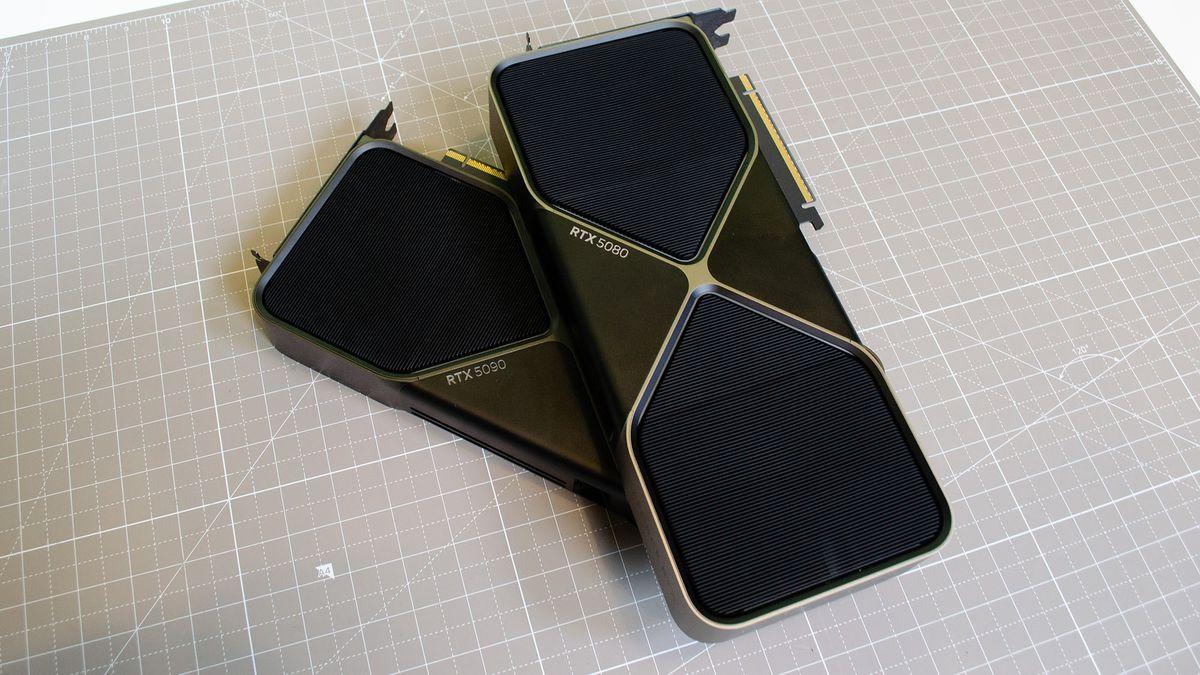
Nvidia’s RTX 5080 and 5090 graphics cards sold out in very quick fashion, just as the rumors predicted, on launch day yesterday – and there was a fair bit of chaos and clamor surrounding the release of these first Blackwell GPUs.

At the time of writing, the day after launch, everything remains sold out at the big US and UK retailers I’ve just taken a scout round, at least in terms of standalone graphics cards.

Even the seriously pricey third-party RTX 5080 models at the premium end of the spectrum sold out in the blink of an eye.

Yes, the only option to get a Blackwell GPU currently is to buy a full PC with one of the boards in it, where you’re obviously paying a lot of money for a high-end machine with a big markup.

As for the clamor, there were big lines at some retail stores in the US, with folks queuing for their shot at an RTX 5090 days before launch. As VideoCardz reports, there were somewhat chaotic scenes in Japan where, at a shop called PC Koubou, would-be Nvidia GPU buyers ended up scaling the fence of a kindergarten next door (in an effort to get in and purchase a GPU, presumably).

That was one of the stores in Japan where a lottery system was implemented to try and make buying a Blackwell GPU a fair process, but clearly, it went awry here.

All in all, there are accusations of Nvidia making the RTX 5000 a ‘paper launch’ meaning that there was only a very small amount of inventory available on release day.

{ window.reliablePageLoad.then(() => { var componentContainer = document.querySelector(“#slice-container-newsletterForm-articleInbodyContent-rEujMNwbWU9RPknYUV7xQf”); if (componentContainer) { var data = {“layout”:”inbodyContent”,”header”:”Get daily insight, inspiration and deals in your inbox”,”tagline”:”Sign up for breaking news, reviews, opinion, top tech deals, and more.”,”formFooterText”:”By submitting your information you agree to the Terms & Conditions and Privacy Policy and are aged 16 or over.”,”successMessage”:{“body”:”Thank you for signing up. You will receive a confirmation email shortly.”},”failureMessage”:”There was a problem. Please refresh the page and try again.”,”method”:”POST”,”inputs”:[{“type”:”hidden”,”name”:”NAME”},{“type”:”email”,”name”:”MAIL”,”placeholder”:”Your Email Address”,”required”:true},{“type”:”hidden”,”name”:”NEWSLETTER_CODE”,”value”:”XTR-D”},{“type”:”hidden”,”name”:”LANG”,”value”:”EN”},{“type”:”hidden”,”name”:”SOURCE”,”value”:”60″},{“type”:”hidden”,”name”:”COUNTRY”},{“type”:”checkbox”,”name”:”CONTACT_OTHER_BRANDS”,”label”:{“text”:”Contact me with news and offers from other Future brands”}},{“type”:”checkbox”,”name”:”CONTACT_PARTNERS”,”label”:{“text”:”Receive email from us on behalf of our trusted partners or sponsors”}},{“type”:”submit”,”value”:”Sign me up”,”required”:true}],”endpoint”:”https://newsletter-subscribe.futureplc.com/v2/submission/submit”,”analytics”:[{“analyticsType”:”widgetViewed”}],”ariaLabels”:{}}; var triggerHydrate = function() { window.sliceComponents.newsletterForm.hydrate(data, componentContainer); } if (window.lazyObserveElement) { window.lazyObserveElement(componentContainer, triggerHydrate); } else { triggerHydrate(); } } }).catch(err => console.error(‘%c FTE ‘,’background: #9306F9; color: #ffffff’,’Hydration Script has failed for newsletterForm-articleInbodyContent-rEujMNwbWU9RPknYUV7xQf Slice’, err)); }).catch(err => console.error(‘%c FTE ‘,’background: #9306F9; color: #ffffff’,’Externals script failed to load’, err)); ]]>

Sign up for breaking news, reviews, opinion, top tech deals, and more.

As VideoCardz points out, theorizing on Reddit – which we should be particularly careful around – suggests that there were only 250 units of the RTX 5090 at Micro Centers in the US, and just 2,400 or so of the RTX 5080. Certainly, the flagship GPU was predicted to be vanishingly thin on the ground anyway, going by the rumors, but the RTX 5080 was expected to achieve somewhat better stock levels than this rough tally from Reddit suggests.

A masculine hand holding up an Nvidia GeForce RTX 5080 against a green background

(Image credit: Future)

Analysis: Do not feed the scalpers

As mentioned, the only real shot you have currently of getting a Blackwell GPU is buying a full PC, inevitably a very expensive premium model that’s going to run you a few grand. You could, in theory, then replace the RTX 5000 GPU with your own (that you’re upgrading from), and sell the PC second-hand (as nearly new), but that’s potentially a lot of hassle and headaches, so most people won’t consider that option (I certainly wouldn’t).

The other choice, which again, isn’t really any kind of choice, is to buy an RTX 5090 or 5080 on an auction site from a scalper who has seriously jacked up the price. Don’t do this – do not feed the price gougers, whatever you do, please. It’s interesting to see on the likes of eBay that there are a good many more reasonably priced Blackwell listings which are made just to trap bots, and clearly state that they are only a photo of the GPU in the description. (As well as those trying to sell their in-place pre-orders, of course).

Just the usual chaos around the launch of a thin-on-the-ground new generation of GPUs, then. I’d suggest, for now, that you just try to be patient. (Don’t feed the scalpers, did I say that already? Just imagine the collective sweating going on if those listings don’t shift, and they have to keep dropping and dropping prices).

Keep your eyes peeled on our live blogs where TechRadar is still maintaining a watch on all the major retailers – for RTX 5090 graphics cards, and also RTX 5080 GPUs – and we’ll alert you there if any stock comes back in. But for now, the chances of buying an RTX 5090 or 5080 still seem very remote to say the least.

Of course, the attention will soon turn to the launch of RTX 5070 models next month, and how stock will shake out there. And after that, the eyes of gamers will be fixed on what AMD’s doing with RDNA 4 in March. As we know that some RX 9070 graphics cards are already at retailers, hopefully Team Red should have a much better next-gen launch for stock levels than we witnessed with Nvidia yesterday.

You might also like…

Source

Posted on

I saw Nvidia’s new DLSS 4 in action on the RTX 5090 and it’s a true game changer – here’s why

  • DLSS 4 is about to change the game for all RTX GPU users
  • The super resolution performance mode has seen a significant boost in terms of image quality and clarity
  • Frame Generation’s smearing and ghosting has been reduced

After its long-awaited reveal at CES 2025, Nvidia‘s RTX 5090 and 5080 graphics cards have now officially launched, which has opened the gateway to improved performance across numerous games with both more raw power and better Frame Generation over the last RTX 4000 series generation – but from what I’ve seen first hand after sitting down with Team Green at its office in Reading, its biggest enhancements stem from its work on DLSS 4.

DLSS 4 is now available on all RTX GPUs with support for titles like Cyberpunk 2077, Alan Wake 2, and Hogwarts Legacy – but a new feature, DLSS Override, allows users to utilize DLSS 4 and Multi Frame Generation (the latter of which is exclusive to RTX 5000 series GPUs) in games that don’t have native support yet. While that’s great to hear, you might be wondering why DLSS 4 is receiving so much praise from other users (and myself).

A new era of upscaling fidelity

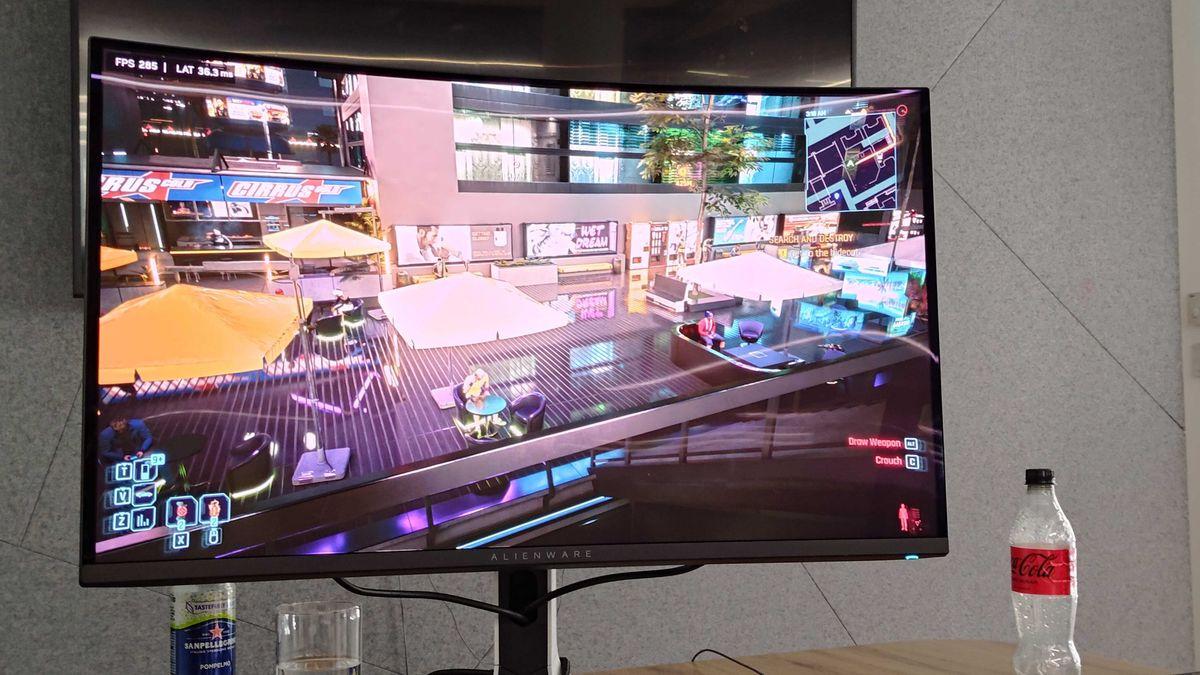
I didn’t personally review the RTX 5090 for TechRadar, but having now seen DLSS 4 in action running on the GPU thanks to Nvidia’s press invite, I can tell you that DLSS 4’s new transformer model is a genuine game changer. With the previous CNN (Convolutional Neural Network) model for older DLSS versions, ghosting and smearing were a big issue and part of the reason many worried about upscaling becoming the quick fix for game developers (which I do still believe is true to a degree) – but with this new transformer model, the likes of DLSS 4’s performance mode is visually on par if not better than DLSS 3’s quality mode (despite having a lower internal resolution).

GIF of Alan Wake 2 using DLSS 4 performance

DLSS 4 performance mode running in Alan Wake 2 on an RTX 5090 with path tracing enabled… trust me, it was magnificent, if you’ll excuse my crappy video quality. (Image credit: Future)

It’s evident in the gif above showing Alan Wake 2 (and in Nvidia’s video below), along with my first tests in Marvel’s Spider-Man 2 on PC despite its current crashing and stability issues (based on current Steam reviews), as results were consistent – for once, I could actually use DLSS performance mode without feeling disgusted by slightly – but noticeably – blurry image quality with flickering and ghosting in every sequence. This is all possible thanks to the new transformer AI model, which significantly enhances image clarity and stability, especially in motion, with Insomniac’s title taking advantage of Nvidia’s ‘ray reconstruction’ feature in this case.

I continuously flicked back and forth between the quality and performance modes, assuming my eyes were playing tricks on me, but believe me, the latter is truly that good.

The same applies to scenarios where Frame Generation for RTX 4000 series GPUs or Multi Frame Generation for RTX 5000 series GPUs is in use – as I said, input lag and ghosting were the two biggest constraints of DLSS 3’s frame-gen, and this has now been addressed with DLSS 4 along with Reflex 2 (which I saw significantly reduced input lag in competitive games like The Finals), which Nvidia confirmed will first be available to RTX 5000 series GPUs before coming to older graphics cards.

DLSS Ray Reconstruction with New Transformer Model | Alan Wake 2 – YouTube DLSS Ray Reconstruction with New Transformer Model | Alan Wake 2 - YouTube Watch On

While the demos showcased to me were with the new generation’s flagship GPU (which is unsurprisingly a powerhouse), this makes the ‘Overdrive’ path tracing preset in Cyberpunk 2077 on RTX 4000 or maybe even 3000 series GPUs possible – those with access to frame-gen will certainly yield even better frame rates, but the transformer super-resolution model set to performance mode will make it playable on GPUs that don’t have access to frame gen, without compromising image quality like the CNN model did.

{ window.reliablePageLoad.then(() => { var componentContainer = document.querySelector(“#slice-container-newsletterForm-articleInbodyContent-ZKJSYgEfftmWTQwYma9NQN”); if (componentContainer) { var data = {“layout”:”inbodyContent”,”header”:”Get daily insight, inspiration and deals in your inbox”,”tagline”:”Sign up for breaking news, reviews, opinion, top tech deals, and more.”,”formFooterText”:”By submitting your information you agree to the Terms & Conditions and Privacy Policy and are aged 16 or over.”,”successMessage”:{“body”:”Thank you for signing up. You will receive a confirmation email shortly.”},”failureMessage”:”There was a problem. Please refresh the page and try again.”,”method”:”POST”,”inputs”:[{“type”:”hidden”,”name”:”NAME”},{“type”:”email”,”name”:”MAIL”,”placeholder”:”Your Email Address”,”required”:true},{“type”:”hidden”,”name”:”NEWSLETTER_CODE”,”value”:”XTR-D”},{“type”:”hidden”,”name”:”LANG”,”value”:”EN”},{“type”:”hidden”,”name”:”SOURCE”,”value”:”60″},{“type”:”hidden”,”name”:”COUNTRY”},{“type”:”checkbox”,”name”:”CONTACT_OTHER_BRANDS”,”label”:{“text”:”Contact me with news and offers from other Future brands”}},{“type”:”checkbox”,”name”:”CONTACT_PARTNERS”,”label”:{“text”:”Receive email from us on behalf of our trusted partners or sponsors”}},{“type”:”submit”,”value”:”Sign me up”,”required”:true}],”endpoint”:”https://newsletter-subscribe.futureplc.com/v2/submission/submit”,”analytics”:[{“analyticsType”:”widgetViewed”}],”ariaLabels”:{}}; var triggerHydrate = function() { window.sliceComponents.newsletterForm.hydrate(data, componentContainer); } if (window.lazyObserveElement) { window.lazyObserveElement(componentContainer, triggerHydrate); } else { triggerHydrate(); } } }).catch(err => console.error(‘%c FTE ‘,’background: #9306F9; color: #ffffff’,’Hydration Script has failed for newsletterForm-articleInbodyContent-ZKJSYgEfftmWTQwYma9NQN Slice’, err)); }).catch(err => console.error(‘%c FTE ‘,’background: #9306F9; color: #ffffff’,’Externals script failed to load’, err)); ]]>

Sign up for breaking news, reviews, opinion, top tech deals, and more.

What does this mean for future PC ports?

Now, considering my stance on concerns about game developers taking their hands off the wheel in terms of game optimization on PC, DLSS 4 has genuinely lightened my worries – at least by a bit. While I’m still absolutely adamant that PC ports should launch without the drastic performance issues found in games like Star Wars Jedi: Survivor, DLSS 4’s performance mode (which has always been great at providing better performance in previous iterations of DLSS) now maintains fantastic image quality with the new transformer model.

In unfortunate cases where games are still poorly optimized, I have a strong feeling that DLSS 4 will work wonders with patching things up where necessary – and with DLSS Override, this can effectively be done with minimal effort on the developer’s part, although manual implementation will still be ideal. It’s especially the case for those who own an RTX 4000 series or 5000 series GPU with access to frame generation (and there’s still a chance frame-gen could come to RTX 3000 GPUs), as the enhancements made to the original Frame Generation model reduce VRAM consumption to boost performance across the board.

I’ve already acknowledged that AI upscaling is most likely the future of gaming – as much as that makes me nervous about game development, Nvidia has done a great job here at potentially helping future cases of bad PC ports, while also catering to older GPUs. In my eyes, that’s worth heaps of praise – keep doing good stuff like this, okay Nvidia?

You may also like…

Source

Posted on

Hoping for new desktop CPUs from Intel this year? I hate to break it to you, but it still very much sounds like they won’t arrive until 2026 with Nova Lake

  • Intel has confirmed its CPU roadmap for the near future
  • Panther Lake is due later in 2025, and Nova Lake in 2026
  • It’s still not made clear if Panther Lake will skip desktop, but it seems likely that next-gen desktop CPUs won’t be here until next year

Intel has confirmed its future CPU plans and how the firm’s intended roadmap will pan out across 2025 and 2026, albeit while leaving question marks over certain specifics.

We got confirmation of existing plans – that Panther Lake is due this year, and Nova Lake next year – but there’s still no certainty over whether we’ll get a new generation of desktop CPUs later in 2025 (in other words, whether Intel will stick to its usual yearly cadence).

As VideoCardz reports, what Intel’s current (interim) co-CEO Michelle Johnston Holthaus revealed during a recent earnings call is that we can expect Team Blue to release Panther Lake silicon, its next generation, in the second half of 2025.

Holthaus then observed: “2026 is even more exciting from a client perspective as Panther Lake achieves meaningful volumes and we introduce our next-generation client family codenamed Nova Lake.

“Both will provide strong performance across the entire PC stack with significantly better cost and margin for us, enhancing our competitive position and reinforcing our value proposition to our partners and customers.”

Intel Core Ultra processor

(Image credit: Future / John Loeffler)

Analysis: Form of the Panther

Okay, so next-gen Panther Lake is still due later in 2025, and 2026 will be the year of Nova Lake, the following generation. Good to know, or rather, to have that confirmed again.

The question is: what form will Panther Lake and Nova Lake take, exactly? The current rumor is that Panther Lake will be mobile chips only, meaning just laptops, not desktop PCs. The sightings of next-gen desktop chips via the rumor mill have been confined only to Nova Lake (so far, and it’s getting late in the day now).

{ window.reliablePageLoad.then(() => { var componentContainer = document.querySelector(“#slice-container-newsletterForm-articleInbodyContent-kW2cVihWHwxFWAFGec5Qpk”); if (componentContainer) { var data = {“layout”:”inbodyContent”,”header”:”Get daily insight, inspiration and deals in your inbox”,”tagline”:”Sign up for breaking news, reviews, opinion, top tech deals, and more.”,”formFooterText”:”By submitting your information you agree to the Terms & Conditions and Privacy Policy and are aged 16 or over.”,”successMessage”:{“body”:”Thank you for signing up. You will receive a confirmation email shortly.”},”failureMessage”:”There was a problem. Please refresh the page and try again.”,”method”:”POST”,”inputs”:[{“type”:”hidden”,”name”:”NAME”},{“type”:”email”,”name”:”MAIL”,”placeholder”:”Your Email Address”,”required”:true},{“type”:”hidden”,”name”:”NEWSLETTER_CODE”,”value”:”XTR-D”},{“type”:”hidden”,”name”:”LANG”,”value”:”EN”},{“type”:”hidden”,”name”:”SOURCE”,”value”:”60″},{“type”:”hidden”,”name”:”COUNTRY”},{“type”:”checkbox”,”name”:”CONTACT_OTHER_BRANDS”,”label”:{“text”:”Contact me with news and offers from other Future brands”}},{“type”:”checkbox”,”name”:”CONTACT_PARTNERS”,”label”:{“text”:”Receive email from us on behalf of our trusted partners or sponsors”}},{“type”:”submit”,”value”:”Sign me up”,”required”:true}],”endpoint”:”https://newsletter-subscribe.futureplc.com/v2/submission/submit”,”analytics”:[{“analyticsType”:”widgetViewed”}],”ariaLabels”:{}}; var triggerHydrate = function() { window.sliceComponents.newsletterForm.hydrate(data, componentContainer); } if (window.lazyObserveElement) { window.lazyObserveElement(componentContainer, triggerHydrate); } else { triggerHydrate(); } } }).catch(err => console.error(‘%c FTE ‘,’background: #9306F9; color: #ffffff’,’Hydration Script has failed for newsletterForm-articleInbodyContent-kW2cVihWHwxFWAFGec5Qpk Slice’, err)); }).catch(err => console.error(‘%c FTE ‘,’background: #9306F9; color: #ffffff’,’Externals script failed to load’, err)); ]]>

Sign up for breaking news, reviews, opinion, top tech deals, and more.

Based on what Intel’s co-CEO says here, there’s no specific mention of desktop CPUs, so that isn’t helpful. However, what we do get from Holthaus is an assertion that “both will provide strong performance across the entire PC stack” and the key word here is ‘both’ of course.

The “entire PC stack” means mobile and desktop, the works, and what appears to be stated here is that both Panther Lake and Nova Lake together will cover the entire PC stack between them. This is still true if Panther Lake doesn’t have a desktop incarnation.

Alternatively, you could read this as both Panther Lake and Nova Lake will separately cover the full stack, both desktop and mobile, in their own right – but that doesn’t feel like the intention here. By which I mean, for me, this seems to be a way of phrasing things that’s deliberately ambiguous to gloss over whether or not Panther Lake will have a desktop presence.

Take that for what you will, of course, and we absolutely don’t know for sure. Maybe Intel does have Panther Lake desktop chips in the works, but based on the rumors, it seems relatively unlikely.

Another alternative could be that Panther Lake is laptop only, but Intel could bring out an Arrow Lake Refresh on desktop later this year alongside it, as a stopgap before Nova Lake desktop CPUs in 2026. Remember, that’s what happened with Raptor Lake, and it was a very minor generational bump – but past rumors have claimed Intel is not going to carry out such a refresh with Arrow Lake for desktops.

Ultimately, for now, it seems to me that the likelihood is that Intel’s next-gen desktop silicon won’t be here until 2026 when Nova Lake blazes into town.

You might also like

Source

Posted on

Masa Son says AGI will be here even sooner than expected, but don’t get your hopes up

It’s only Tuesday but OpenAI has had a great week so far, seemingly making forgotten all the talk about DeepSeek. That’s the viral AI from China that challenged the best ChatGPT model last week, tanking the US stock market in the process.

Since Friday, OpenAI has made several announcements. First, ChatGPT o3-mini and o3-mini-high were released to all ChatGPT users. On Sunday, OpenAI unveiled the ChatGPT Deep Research model, which is available to ChatGPT Pro users. On Monday, OpenAI confirmed that it plans to make a piece of ChatGPT hardware to challenge the smartphone, something we all expected.

On Monday, OpenAI’s finances became a hot topic. Sam Altman was in Japan to kickstart a local venture with local giant SoftBank. The “SB OpenAI Japan” joint venture will see SoftBank spend $3 billion on securing access to ChatGPT for all its subsidiaries.

Separately, SoftBank will invest up to $25 billion in OpenAI in the near future, which could make the Japanese giant the biggest investor in the ChatGPT maker. Remember that SoftBank is also a key partner on the already announced $500 Stargate AI infrastructure plan for OpenAI.

Tech. Entertainment. Science. Your inbox.

Sign up for the most interesting tech & entertainment news out there.

By signing up, I agree to the Terms of Use and have reviewed the Privacy Notice.

In this context, SoftBank CEO Masayoshi Son said he was wrong about AGI, or artificial general intelligence. This massive milestone in AI development is coming earlier than he thought. That suggests the next-gen ChatGPT upgrade might be closer than we thought, and it may very well be. But you probably shouldn’t get too excited about experiencing AGI on your own just yet.

“I now realize that AGI would come much earlier,” Son said on Monday. According to The Wall Street Journal, Son predicted a few months ago that AGI would be achieved within two or three years. That timeline is in line with Anthropic CEO Dario Amodei’s recent remarks that AGI might be here in 2026 or 2027.

Earlier this year, Altman penned a blog post in which he teased that AGI is close and that his company knows how to reach this ChatGPT milestone. “We are now confident we know how to build AGI as we have traditionally understood it,” he said, reminding us that AGI is just a term that can mean anything.

As for how OpenAI understands AGI, the company’s definition mentions “highly autonomous systems that outperform humans at most economically valuable work.” 

The OpenAI-Microsoft definition of AGI is AI that can generate at least $100 billion in profits. When that happens, Microsoft will stop having access to OpenAI tech. Until the SoftBank rumored investment is confirmed, Microsoft will remain OpenAI’s biggest investor.

That’s not to say Son’s remarks on Monday aren’t important; they are. After all, he’s ready to invest tens of billions into AI tech, whose potentially brilliant future isn’t guaranteed. That’s why he must be privy to the inner workings of ChatGPT in ways we can’t imagine. Son saying that AGI will be here sooner than expected can’t be just marketing hype, which a CEO could also be prone to.

But it’s important to remember that the definition of AGI isn’t perfectly clear. The lines can be moved to serve certain interests. AGI is considered the kind of intelligence where AI will be able to handle any tasks you’d entrust it with with the same approach as a human.

However, AGI would have the advantage of having access to massive sources of information during training and new ones, on-demand, via a live connection to the internet. AGI would, therefore, exceed human abilities to some degree.

Son’s AGI reference might be about something else. He’s still referring to highly capable AI models but in the context of the corporate world, which has access to the resources needed to make AGI possible. Here’s how The Journal details Son’s AGI expectations.

Son said that artificial general intelligence, in which computers have human-level cognitive abilities, will likely be realized faster in the world of big corporations than that of individuals because the former has ample financial resources and vast amounts of specific data to train computers.

That is, we shouldn’t expect AGI to come cheap. Regular AI isn’t that cheap either, no matter the breakthroughs from DeepSeek.

Put differently, it’s likely that OpenAI will develop more advanced ChatGPT tools soon, including AI agents and next-gen models, which would bring us closer to AGI. But it’s possible those tools will be reserved for ChatGPT Enterprise users who are ready to pay the extra processing costs associated with AGI performance.

Meanwhile, ChatGPT users like you and I might have to wait a little longer for the AGI experience for the home. That ChatGPT model won’t be cheap, but it could arrive years after the AGI for Enterprise is reached when computing efficiencies are achieved.

This is speculation, mostly because AGI is a theoretical term that might not mean anything in the real world. With the goalposts shifting, we might see different definitions of AGI in the near future.

What’s clear is that multiple AI firms will reach versions of AGI in the coming years, not just OpenAI. ChatGPT won’t be the only option, whether it’s for big corporations or regular consumers. When those versions of AGI are ready, AI firms will want to make a big deal about them to sell versions of AGI to all sorts of interested buyers.

Back to ChatGPT, as that’s the main product Son’s companies will use; I’ll remind you that OpenAI has yet to announce an upgrade for GPT-4o. There’s been talk about GPT-5 delays, and some people associated the model with AGI in the past. It’s unclear when ChatGPT will be deployed.

Source

Posted on

Nvidia’s DLSS 4 is amazing – here’s what AMD’s FSR 4 needs to do to take it on

  • Nvidia’s DLSS 4 has set the bar for AMD’s FSR 4, with its new transformer model
  • The first looks at FSR 4 in performance mode are very promising
  • Team Red may struggle to compete if the entire package of FSR 4 is exclusive to RDNA 4

Nvidia has impressed me with its new DLSS 4 transformer model, which provides great image quality and stability even at super-resolution ‘performance’ modes – and now, I’m really hoping that AMD can keep up with FSR 4.

Based on my previous coverage regarding DLSS 4’s enhancements across several games, Team Red definitely has a big task ahead at potentially competing with Nvidia in this space. At the time of writing, FSR 4 is only confirmed to be available on RDNA 4 GPUs (no news yet on whether it can be used on RDNA 3 GPUs), so it may already be at a disadvantage up against DLSS 4 in terms of its capability of catering to older GPUs, since Nvidia’s new upscaling tech will be compatible with GPUs way back to the RTX 2000 series.

Taking DLSS 4’s jump from CNN (Convolutional Neural Network) to the new, superior transformer model into consideration, games will benefit from this, particularly in cases of poor optimization – while this shouldn’t give game developers an excuse to slack off in the optimization department, it’s hard to deny how important it will be going forward.

Demo footage of AMD’s FSR 4 is already out in the wild from CES 2025, and a prime example of this is the Hardware Unboxed FSR 3.1 and FSR 4 comparison video on YouTube (available below). In the same manner that Nvidia’s DLSS 4 impressed me with its improved visual clarity with DLSS 4 in performance mode, FSR 4 appears to follow in those same footsteps – now there’s no frame rate counter, so it’s difficult to judge just how good this mode will be performance wise, but it’s certainly a good sign.

Hands-On With AMD FSR 4 – It Looks… Great? – YouTube Hands-On With AMD FSR 4 - It Looks... Great? - YouTube Watch On

If AMD’s FSR 4 comes close to Nvidia’s DLSS 4, what does this mean in terms of competition?

In the event that FSR 4 goes toe-to-toe with DLSS 4, the only aspect that would then be holding Team Red back from competing would be the possible exclusivity to RDNA 4. While that could come down to hardware limitations preventing it from working on older GPUs, I’ve once held the same frustrations with Nvidia before regarding DLSS 3’s Frame Generation being exclusive to RTX 4000 series GPUs – so the same case applies here.

In this case, it would be an even bigger omission – we’re not just talking about FSR 4’s frame gen potentially being exclusive to RDNA 4, but the entire package that includes its super-resolution technology too.

As much as I absolutely want AMD to provide the necessary competition against Team Green in the GPU market, it already stated that the focus will be on mid-range GPUs (which we’re yet to really determine with the RX 9000 series), and DLSS 4 will be available on all RTX GPUs – if we’re being honest, it won’t help AMD’s position in this race…

{ window.reliablePageLoad.then(() => { var componentContainer = document.querySelector(“#slice-container-newsletterForm-articleInbodyContent-TYNPZAgzfTwFFYZMDScHoi”); if (componentContainer) { var data = {“layout”:”inbodyContent”,”header”:”Get daily insight, inspiration and deals in your inbox”,”tagline”:”Sign up for breaking news, reviews, opinion, top tech deals, and more.”,”formFooterText”:”By submitting your information you agree to the Terms & Conditions and Privacy Policy and are aged 16 or over.”,”successMessage”:{“body”:”Thank you for signing up. You will receive a confirmation email shortly.”},”failureMessage”:”There was a problem. Please refresh the page and try again.”,”method”:”POST”,”inputs”:[{“type”:”hidden”,”name”:”NAME”},{“type”:”email”,”name”:”MAIL”,”placeholder”:”Your Email Address”,”required”:true},{“type”:”hidden”,”name”:”NEWSLETTER_CODE”,”value”:”XTR-D”},{“type”:”hidden”,”name”:”LANG”,”value”:”EN”},{“type”:”hidden”,”name”:”SOURCE”,”value”:”60″},{“type”:”hidden”,”name”:”COUNTRY”},{“type”:”checkbox”,”name”:”CONTACT_OTHER_BRANDS”,”label”:{“text”:”Contact me with news and offers from other Future brands”}},{“type”:”checkbox”,”name”:”CONTACT_PARTNERS”,”label”:{“text”:”Receive email from us on behalf of our trusted partners or sponsors”}},{“type”:”submit”,”value”:”Sign me up”,”required”:true}],”endpoint”:”https://newsletter-subscribe.futureplc.com/v2/submission/submit”,”analytics”:[{“analyticsType”:”widgetViewed”}],”ariaLabels”:{}}; var triggerHydrate = function() { window.sliceComponents.newsletterForm.hydrate(data, componentContainer); } if (window.lazyObserveElement) { window.lazyObserveElement(componentContainer, triggerHydrate); } else { triggerHydrate(); } } }).catch(err => console.error(‘%c FTE ‘,’background: #9306F9; color: #ffffff’,’Hydration Script has failed for newsletterForm-articleInbodyContent-TYNPZAgzfTwFFYZMDScHoi Slice’, err)); }).catch(err => console.error(‘%c FTE ‘,’background: #9306F9; color: #ffffff’,’Externals script failed to load’, err)); ]]>

Sign up for breaking news, reviews, opinion, top tech deals, and more.

You may also like…

Source

Posted on

Bad news, PC gamers: this retailer’s worst-case prediction for the Nvidia RTX 5090 GPU is a long wait until almost June for the GPU to be back in stock

  • Nvidia RTX 5090 supply is looking very shaky according to a UK retailer
  • Overclockers has a worst-case ETA of 16 weeks for RTX 5090 stock
  • The RTX 5080 is better, but could still take up to six weeks before it’s available to buy again

Nvidia’s RTX 5090 stock situation is rather dire, to say the least, and could stay that way for longer than you’d expect – and the RTX 5080 is looking unhealthy inventory-wise, too, going by the prediction of one UK retailer.

As you doubtless realize if you’ve been mulling a purchase of either of the new Blackwell graphics cards, the RTX 5090 and 5080 are out of stock everywhere (except on auction sites where scalpers are flogging their ill-gotten GPUs at massively inflated asking prices, of course).

According to a major components retailer in the UK, Overclockers (OCUK), RTX 5090 and 5080 stock is sold out and (unsurprisingly) pre-orders aren’t being offered any longer, and they won’t be until the company has “greater clarity on availability and have fulfilled the pre-orders we have taken.”

We are told by OCUK (in the above post on X) that the ETA for stock of the RTX 5090 is three to 16 weeks, and the ETA for the RTX 5080 is two to six weeks, a bit more palatable, but still a potentially long wait.

Note that pre-orders that have been successfully placed with OCUK (but not yet dispatched) are in a queue, and the retailer is “working with our supply chain to fulfill these within the ETAs above, or sooner if possible.”

The Nvidia GeForce RTX 5090 sitting on its packaging

(Image credit: Future / John Loeffler)

Analysis: Another GPU launch hit with stock misery

Surely a bit of stock of these RTX 5000 GPUs is going to be coming in over the course of February? That must be the case (I assume), but the way in which the above statement is worded makes it sound to me like the small amount of Blackwell graphics cards that will be arriving is going towards fulfilling existing pre-orders. So, there won’t be any available stock to actually buy on the OCUK site for quite some time – maybe towards the lengthier end of the ETAs provided.

The fact that the RTX 5090 is pushed out to a possible 16 weeks is going way past the most pessimistic thoughts I was having, though. That would put us at almost the end of May before the ‘Buy’ button lights up again on some of the flagship Blackwell models, an eyebrow-raising prospect.

{ window.reliablePageLoad.then(() => { var componentContainer = document.querySelector(“#slice-container-newsletterForm-articleInbodyContent-UncbEnFMas9XFZ9PtSk5wm”); if (componentContainer) { var data = {“layout”:”inbodyContent”,”header”:”Get daily insight, inspiration and deals in your inbox”,”tagline”:”Sign up for breaking news, reviews, opinion, top tech deals, and more.”,”formFooterText”:”By submitting your information you agree to the Terms & Conditions and Privacy Policy and are aged 16 or over.”,”successMessage”:{“body”:”Thank you for signing up. You will receive a confirmation email shortly.”},”failureMessage”:”There was a problem. Please refresh the page and try again.”,”method”:”POST”,”inputs”:[{“type”:”hidden”,”name”:”NAME”},{“type”:”email”,”name”:”MAIL”,”placeholder”:”Your Email Address”,”required”:true},{“type”:”hidden”,”name”:”NEWSLETTER_CODE”,”value”:”XTR-D”},{“type”:”hidden”,”name”:”LANG”,”value”:”EN”},{“type”:”hidden”,”name”:”SOURCE”,”value”:”60″},{“type”:”hidden”,”name”:”COUNTRY”},{“type”:”checkbox”,”name”:”CONTACT_OTHER_BRANDS”,”label”:{“text”:”Contact me with news and offers from other Future brands”}},{“type”:”checkbox”,”name”:”CONTACT_PARTNERS”,”label”:{“text”:”Receive email from us on behalf of our trusted partners or sponsors”}},{“type”:”submit”,”value”:”Sign me up”,”required”:true}],”endpoint”:”https://newsletter-subscribe.futureplc.com/v2/submission/submit”,”analytics”:[{“analyticsType”:”widgetViewed”}],”ariaLabels”:{}}; var triggerHydrate = function() { window.sliceComponents.newsletterForm.hydrate(data, componentContainer); } if (window.lazyObserveElement) { window.lazyObserveElement(componentContainer, triggerHydrate); } else { triggerHydrate(); } } }).catch(err => console.error(‘%c FTE ‘,’background: #9306F9; color: #ffffff’,’Hydration Script has failed for newsletterForm-articleInbodyContent-UncbEnFMas9XFZ9PtSk5wm Slice’, err)); }).catch(err => console.error(‘%c FTE ‘,’background: #9306F9; color: #ffffff’,’Externals script failed to load’, err)); ]]>

Sign up for breaking news, reviews, opinion, top tech deals, and more.

Perhaps more disappointing is the news that this retailer isn’t going to have stock of the RTX 5080, a much less niche proposition than the RTX 5090, for maybe up to six weeks. That’d put us in the middle of March before the graphics card was available again (perhaps only briefly).

We shouldn’t get carried away with the timeframes from just one retailer, of course, and the worst-case scenarios presented by OCUK – but this does, of course, broadly reflect everything we’re seeing right now. And the general accusation of a ‘paper launch’ being leveled at Nvidia, meaning a launch with no real quantity of stock behind it (in the face of major demand).

Unless we do get a quick recovery for RTX 5080 stock that runs against OCUK’s expectations – we don’t expect the RTX 5090 to be back on shelves quickly by any means, especially given that its Blackwell chip (GB202) is more profitable in AI graphics cards, not gaming products – a lot of hope lies with the incoming RTX 5070.

Nvidia’s RTX 5070 vanilla version uses a different GB205 chip – the RTX 5070 Ti is built with GB203 (a rumor that’s now confirmed), also the engine of the RTX 5080 – and so we can hope that Nvidia has more of a depth to its GB205 production, especially as the RTX 5070 is coming a bit later. (If rumors are right, perhaps at the end of February – there’s even talk of a delay to March, which wouldn’t be a positive development, of course).

All in all, though, the situation looks distinctly rocky with Blackwell stock for now, and AMD has a chance to fully capitalize on this by building up good levels of RDNA 4 supply at retail for the launch of its RX 9070 models in March, to take on Nvidia’s RTX 5070 graphics cards. This is a clear opportunity for Team Red in the mid-range bracket of the GPU market, although AMD has had its own missteps with the RDNA 4 launch, it must be said.

Those looking for an Nvidia Blackwell graphics card should keep an eye on our guides on where to buy an RTX 5090 and an RTX 5080 respectively, where we’ll keep you up to date should we spot stock coming back in at big retailers. Best of luck out there, GPU hunters, but for now, the outlook remains seriously bleak.

Via Tom’s Hardware

You might also like…

Source

Posted on

Nvidia and AMD are set for a showdown in March, if this rumor holds any truth

  • Nvidia’s RTX 5060 Ti and RTX 5060 are reportedly set for launch in March
  • This will directly compete with AMD’s Radeon RX 9000 series launch
  • We could be seeing a repeat in this generation of 8GB of VRAM with the RTX 5060

Nvidia‘s RTX 5000 series GPU launch is well underway with the RTX 5090 and RTX 5080 now sold out at virtually every retailer (unsurprisingly), and Team Green looks set to roll out the rest of its lineup very soon – which means key rival AMD may be set for a big battle.

As reported by Tom’s Hardware, the RTX 5060 Ti and RTX 5060 are supposedly set to launch in March according to Chinese hardware manufacturer Chaintech. This is when AMD‘s Radeon RX 9000 series GPU lineup is slated to launch, which would ultimately put Team Green and Team Red in direct competition – AMD has already made it clear that mid-range GPUs will be its focus, and the new xx60-class Nvidia cards could likely challenge them.

A mysterious silhouette of a graphics card with a question mark in the center.

Will the RTX 5060 prove to be the greatest budget GPU the world has ever seen? The jury’s still out. (Image credit: Nvidia, Shutterstock)

We’re awaiting details regarding the pricing of the RX 9000 series along with just how powerful they could be compared to the previous RX 7900 XT and XTX GPUs – considering the official pricing of Nvidia’s RTX 5070 ($549 / £549 / AU$1,109), prices for the RTX 5060 Ti and 5060 could be much lower. Depending on the performance of these GPUs, AMD could win the mid-range battle – just as long as prices for its next-gen GPUs are reasonable.

Can we just be done with 8GB GPUs, please?

Looking at both Nvidia’s and AMD’s low and mid-range GPUs, my only hope is that we can finally say goodbye to 8GB of VRAM as a baseline industry standard. Games are becoming increasingly VRAM-hungry, and gamers need every advantage possible considering how bad PC ports have been recently. I believe a minimum of 12GB of VRAM is necessary for modern PC gaming – even just at 1080p – but unfortunately, it doesn’t look like that will happen.

EEC filings from Maxsun suggest the RTX 5060 will utilize 8GB of VRAM, which could mean it ends up following in the same footsteps as its predecessor – this will be disappointing, to say the least, especially since Intel‘s affordable new Battlemage GPUs have opted to give that 8GB figure the boot.

The Intel Arc B570 uses 10GB of VRAM while its big brother the B580 dons 12GB of VRAM – these are both considered to be budget- to mid-range GPUs that are capable of 1440p gaming. While the rumored 8GB RTX 5060 will likely do the same using DLSS 4 and Multi Frame Generation, the comparatively low amount of VRAM would be a worry for those looking for an affordable way into the RTX 5000 series experience.

There’s nothing confirmed on Nvidia’s part regarding the RTX 5060 Ti or 5060, but let’s hope these VRAM rumors are false. But with the RTX 5070 and 5070 Ti slated for release later this month, March certainly does seem like a reasonable launch window for the budget Blackwell GPUs.

{ window.reliablePageLoad.then(() => { var componentContainer = document.querySelector(“#slice-container-newsletterForm-articleInbodyContent-gGv3VRJY5R8eXryJ4EggPg”); if (componentContainer) { var data = {“layout”:”inbodyContent”,”header”:”Get daily insight, inspiration and deals in your inbox”,”tagline”:”Sign up for breaking news, reviews, opinion, top tech deals, and more.”,”formFooterText”:”By submitting your information you agree to the Terms & Conditions and Privacy Policy and are aged 16 or over.”,”successMessage”:{“body”:”Thank you for signing up. You will receive a confirmation email shortly.”},”failureMessage”:”There was a problem. Please refresh the page and try again.”,”method”:”POST”,”inputs”:[{“type”:”hidden”,”name”:”NAME”},{“type”:”email”,”name”:”MAIL”,”placeholder”:”Your Email Address”,”required”:true},{“type”:”hidden”,”name”:”NEWSLETTER_CODE”,”value”:”XTR-D”},{“type”:”hidden”,”name”:”LANG”,”value”:”EN”},{“type”:”hidden”,”name”:”SOURCE”,”value”:”60″},{“type”:”hidden”,”name”:”COUNTRY”},{“type”:”checkbox”,”name”:”CONTACT_OTHER_BRANDS”,”label”:{“text”:”Contact me with news and offers from other Future brands”}},{“type”:”checkbox”,”name”:”CONTACT_PARTNERS”,”label”:{“text”:”Receive email from us on behalf of our trusted partners or sponsors”}},{“type”:”submit”,”value”:”Sign me up”,”required”:true}],”endpoint”:”https://newsletter-subscribe.futureplc.com/v2/submission/submit”,”analytics”:[{“analyticsType”:”widgetViewed”}],”ariaLabels”:{}}; var triggerHydrate = function() { window.sliceComponents.newsletterForm.hydrate(data, componentContainer); } if (window.lazyObserveElement) { window.lazyObserveElement(componentContainer, triggerHydrate); } else { triggerHydrate(); } } }).catch(err => console.error(‘%c FTE ‘,’background: #9306F9; color: #ffffff’,’Hydration Script has failed for newsletterForm-articleInbodyContent-gGv3VRJY5R8eXryJ4EggPg Slice’, err)); }).catch(err => console.error(‘%c FTE ‘,’background: #9306F9; color: #ffffff’,’Externals script failed to load’, err)); ]]>

Sign up for breaking news, reviews, opinion, top tech deals, and more.

You may also like…

Source

Posted on

Apple’s App Store is under investigation in China

The European Union forced Apple last year to open the App Store under the Digital Markets Act (DMA) work. iPhone users in the EU can install third-party app marketplaces, use third-party payment systems, and sideload apps as a result. Apple and the EU are still fighting over the DMA implementations.

As an iPhone user in the EU myself, I haven’t even bothered trying to take advantage of what the DMA does for me. I don’t want access to third-party apps or payment systems, and I’ll never sideload apps.

However, I said that Apple’s war on preserving the old ways of the App Store is doing more damage than good. Apple should open the App Store similarly in other markets and let every iPhone user and developer deal with the consequences. Most people will not change a thing.

The alternative is for more jurisdictions to investigate the App Store practices. Some of them can then pass laws with similar effects to the DMA.

Tech. Entertainment. Science. Your inbox.

Sign up for the most interesting tech & entertainment news out there.

By signing up, I agree to the Terms of Use and have reviewed the Privacy Notice.

China is the newest addition to the list of countries investigating Apple’s App Store practices. The government started a probe before President Trump took office, but the investigation is making the news now, in the middle of another phase of the US-China trade war. Earlier this week, China announced a formal probe into Google right after the new US tariffs on China came into effect.

The investigation into Apple isn’t as advanced, Bloomberg reports. The State Administration for Market Regulation (SAMR) is currently examining Apple’s App Store practices.

People familiar with the proceedings informed the paper that the agency has spoken with Apple officials and app developers since last year. It’s looking at Apple’s 30% fee on in-app purchases and the ban on third-party app stores and payment systems.

The agency won’t necessarily go after Apple if the conversations go well. But changes to the App Store might have to happen.

The report notes that Chinese regulators share the same concerns as other watchdogs investigating Apple’s App Store policies.

People familiar with the probe told Bloomberg that regulators believe Apple may be charging Chinese developers unreasonably high fees. Also, the unavailability of third-party app stores and payment systems on the iPhone impacts competition and hurts consumers.

The same sources said that the government may launch a formal investigation if Apple resists making changes to the App Store.

This sounds like Apple will be encouraged to open the App Store in China just like it did in the EU, but without a legal framework like the DMA in place to force Apple’s hand.

Then again, the DMA already forced Apple to develop all the tools it would need to open the App Store in other jurisdictions. Apple could probably open the iPhone in China just as easily as it did in the EU once it reaches some sort of deal with the Chinese regulator.

It’s all speculation, however. We’re looking at entirely different conditions here. Apple manufactures many of its products in China, and the government will probably want to keep Apple happy to some extent.

On the other hand, iPhone sales aren’t doing that great in China, which is a huge market for any smartphone vendor, especially Apple. The iPhone maker might want to use third-party app stores and payment systems to generate positive buzz around the iPhone.

Then there’s the US-China trade war the Trump administration reignited. Going after big tech firms like Google and Apple might be part of China’s strategy to reach a compromise.

But even without these complexities, the App Store issues would still linger. Some app developers want to pay lower fees to Apple. Others want to deploy third-party app stores and payment systems. Apple wants to keep in place the current practices and fees, as it believes its way of policing the App Store is in the consumer’s interest.

Unlike the EU’s DMA, there are no deadlines here. It’s unclear how the informal investigation will proceed, how long it will take, and when to expect App Store changes in the country.

Source

Posted on

Nvidia’s new Smooth Motion technology is exclusive to RTX 5000 series GPUs, but not for long

  • Nvidia’s Smooth Motion replicates AMD’s Fluid Motion Frames, a driver-based version of Frame Generation
  • This will allow you to activate Frame Generation in games that don’t have native support
  • The feature only works in DX11 and DX12 games as of now

Nvidia is firing on all cylinders this generation, with the RTX 5000 lineup at the forefront of the GPU department – and now, Team Green looks set to replicate AMD’s Fluid Motion Frames not only for its new GPUs, but the RTX 4000 series too.

Highlighted by VideoCardz, Nvidia’s new Smooth Motion technology (currently exclusive to the RTX 5000 GPU lineup) will be making its way to RTX 4000 series GPUs in a future update – this will act similarly to its rival AMD‘s Fluid Motion Frames, which will allow Frame Generation to be utilized in any DX11 or DX12 game via driver settings – unlike how Nvidia’s DLSS and frame-gen tech currently needs to be implemented at the developer level.

‘GeForce Evangelist’ (an Nvidia promoter) Jacob Freeman, further hinted that while the new feature will act similarly to Frame Generation (now Multi Frame Generation for the RTX 5000 series), it won’t come close in terms of image quality and input latency. Despite this, Smooth Motion will still be highly beneficial for older games that don’t have access to Frame Generation and are unlikely to have any native support added by developers.

While DLSS 4 has already been shown to provide a significant leap in image quality and stability while using performance mode in games (and it’s now available for all RTX users), this is yet another addition that will help gamers in cases of poor optimization on PC.

A smartphone showing a red and green graphic of 'AMD VS Nvidia'.

Nvidia is really going at it against AMD this generation? Can Team Red hit back? (Image credit: Shutterstock)

Perhaps this could finally be a gateway for RTX 3000 and 2000 series users to utilize Frame Generation…

Now, looking at AMD’s Fluid Motion Frames, it’s already widely available for Radeon RX 6000 and 7000 series GPUs including a range of mobile laptop GPUs and even APUs in handheld gaming PCs. It functions by inserting an AI-generated frame in between two rendered frames, as a driver-based solution to increase in-game smoothness and increased frame rates, much like how Nvidia’s existing DLSS frame-gen solutions work. Nvidia’s Smooth Motion promises the same thing, and will even work in games that don’t support DLSS.

Not too long ago, Nvidia’s Applied Deep Learning Research VP Bryan Catanzaro hinted at the chances of Frame Generation coming to RTX 3000 series GPUs – the matter supposedly comes down to optimization of the technology, and the promise of being able to get the best out of older hardware was clear, so could Smooth Motion be the start of that?

We’ve already got confirmation that Team Green’s Reflex 2 feature will first be exclusive to RTX 5000 series GPUs but will eventually be rolled out to older GPUs, so perhaps the same could happen here. It might not turn out to be as effective as native Frame Generation (or Multi Frame Generation) in games, but it gives plenty of players a solution for games that may need it for better performance on PC.

{ window.reliablePageLoad.then(() => { var componentContainer = document.querySelector(“#slice-container-newsletterForm-articleInbodyContent-4RWKfhBTrCFTRdWJZ7W8mN”); if (componentContainer) { var data = {“layout”:”inbodyContent”,”header”:”Get daily insight, inspiration and deals in your inbox”,”tagline”:”Sign up for breaking news, reviews, opinion, top tech deals, and more.”,”formFooterText”:”By submitting your information you agree to the Terms & Conditions and Privacy Policy and are aged 16 or over.”,”successMessage”:{“body”:”Thank you for signing up. You will receive a confirmation email shortly.”},”failureMessage”:”There was a problem. Please refresh the page and try again.”,”method”:”POST”,”inputs”:[{“type”:”hidden”,”name”:”NAME”},{“type”:”email”,”name”:”MAIL”,”placeholder”:”Your Email Address”,”required”:true},{“type”:”hidden”,”name”:”NEWSLETTER_CODE”,”value”:”XTR-D”},{“type”:”hidden”,”name”:”LANG”,”value”:”EN”},{“type”:”hidden”,”name”:”SOURCE”,”value”:”60″},{“type”:”hidden”,”name”:”COUNTRY”},{“type”:”checkbox”,”name”:”CONTACT_OTHER_BRANDS”,”label”:{“text”:”Contact me with news and offers from other Future brands”}},{“type”:”checkbox”,”name”:”CONTACT_PARTNERS”,”label”:{“text”:”Receive email from us on behalf of our trusted partners or sponsors”}},{“type”:”submit”,”value”:”Sign me up”,”required”:true}],”endpoint”:”https://newsletter-subscribe.futureplc.com/v2/submission/submit”,”analytics”:[{“analyticsType”:”widgetViewed”}],”ariaLabels”:{}}; var triggerHydrate = function() { window.sliceComponents.newsletterForm.hydrate(data, componentContainer); } if (window.lazyObserveElement) { window.lazyObserveElement(componentContainer, triggerHydrate); } else { triggerHydrate(); } } }).catch(err => console.error(‘%c FTE ‘,’background: #9306F9; color: #ffffff’,’Hydration Script has failed for newsletterForm-articleInbodyContent-4RWKfhBTrCFTRdWJZ7W8mN Slice’, err)); }).catch(err => console.error(‘%c FTE ‘,’background: #9306F9; color: #ffffff’,’Externals script failed to load’, err)); ]]>

Sign up for breaking news, reviews, opinion, top tech deals, and more.

Regardless, it’s nice to see that Nvidia isn’t locking certain features to the RTX 5000 series when they can reasonably be used on older GPUs, and long may it continue. After all, getting your hands on an RTX 5090 isn’t exactly easy right now…

You may also like…

Source