Posted on

Nvidia RTX 5090 and 5080 GPUs again rumored for CES – but suggestion the RTX 5080 could be positioned as a ‘professional’ GPU might worry PC gamers

  • More rumors are lining up behind a CES 2025 launch for RTX 5090 and 5080
  • However, Nvidia might just pitch both GPUs at the ‘professional’ market
  • That could indicate the RTX 5090 and 5080 will end up seriously pricey

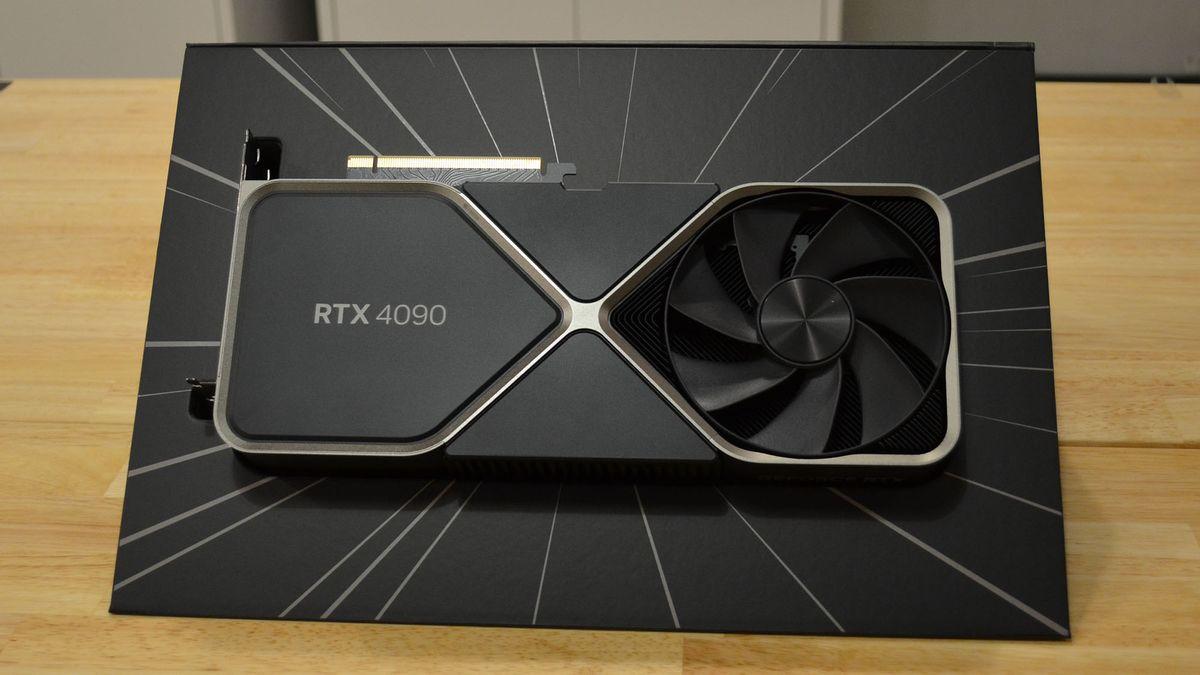
It’s looking more and more likely that Nvidia’s RTX 5090 and 5080 graphics cards are indeed being revealed at CES 2025, as previous chatter has indicated – plus we’ve heard some more worrying hints on pricing, sadly.

Much of the latest next-gen Blackwell speculation over the weekend comes from Moore’s Law is Dead (MLID), and the info here should be regarded with some skepticism, naturally.

MLID’s latest YouTube video has word from two sources at Nvidia’s retail partners who both claim that the unveiling of the RTX 5090 and 5080 is set to happen at CES 2025.

The first source MLID has heard from notes that their firm is currently talking to Nvidia about initial shipment numbers of these graphics cards, and that the on-sale date of the RTX 5090 and 5080 is a matter of weeks after the reveal – so likely late January.

On top of that, VideoCardz noticed that a leaker on X, MegaSizeGPU, has aired details of the GB202 chip (the GPU in the RTX 5090), which will supposedly be 20% bigger than the AD102 in the RTX 4090.

Furthermore, a second leaker on X, Hongxing2020, has shared a purported image of the PCIe 5.0 interface for the Blackwell flagship, and these pieces of spillage are likely from sample 5090 cards that have been sent out – which underlines that the next-gen GPU could be imminent.

Back to MLID’s video (which you can view below), and interestingly, the second source cited also mentions the RTX 5070 is going to be revealed in January – possibly teased at CES 2025, and then getting a proper announcement later in the month, by the sound of things.

{ window.reliablePageLoad.then(() => { var componentContainer = document.querySelector(“#slice-container-newsletterForm-articleInbodyContent-2sbnGrLP7djEVbsasTRMBe”); if (componentContainer) { var data = {“layout”:”inbodyContent”,”header”:”Get the best Black Friday deals direct to your inbox, plus news, reviews, and more.”,”tagline”:”Sign up to be the first to know about unmissable Black Friday deals on top tech, plus get all your favorite TechRadar content.”,”formFooterText”:”By submitting your information you agree to the Terms & Conditions and Privacy Policy and are aged 16 or over.”,”successMessage”:{“body”:”Thank you for signing up. You will receive a confirmation email shortly.”},”failureMessage”:”There was a problem. Please refresh the page and try again.”,”method”:”POST”,”inputs”:[{“type”:”hidden”,”name”:”NAME”},{“type”:”email”,”name”:”MAIL”,”placeholder”:”Your Email Address”,”required”:true},{“type”:”hidden”,”name”:”NEWSLETTER_CODE”,”value”:”XTR-D”},{“type”:”hidden”,”name”:”LANG”,”value”:”EN”},{“type”:”hidden”,”name”:”SOURCE”,”value”:”60″},{“type”:”hidden”,”name”:”COUNTRY”},{“type”:”checkbox”,”name”:”CONTACT_OTHER_BRANDS”,”label”:{“text”:”Contact me with news and offers from other Future brands”}},{“type”:”checkbox”,”name”:”CONTACT_PARTNERS”,”label”:{“text”:”Receive email from us on behalf of our trusted partners or sponsors”}},{“type”:”submit”,”value”:”Sign me up”,”required”:true}],”endpoint”:”https://newsletter-subscribe.futureplc.com/v2/submission/submit”,”analytics”:[{“analyticsType”:”widgetViewed”}],”ariaLabels”:{}}; var triggerHydrate = function() { window.sliceComponents.newsletterForm.hydrate(data, componentContainer); } if (window.lazyObserveElement) { window.lazyObserveElement(componentContainer, triggerHydrate); } else { triggerHydrate(); } } }).catch(err => console.error(‘%c FTE ‘,’background: #9306F9; color: #ffffff’,’Hydration Script has failed for newsletterForm-articleInbodyContent-2sbnGrLP7djEVbsasTRMBe Slice’, err)); }).catch(err => console.error(‘%c FTE ‘,’background: #9306F9; color: #ffffff’,’Externals script failed to load’, err)); ]]>

Sign up to be the first to know about unmissable Black Friday deals on top tech, plus get all your favorite TechRadar content.

Nvidia RTX 5090 & 5080 CES Leak | Intel Battlemage G31 Delay | AMD RDNA 4 Release Date – YouTube Nvidia RTX 5090 & 5080 CES Leak | Intel Battlemage G31 Delay | AMD RDNA 4 Release Date - YouTube Watch On

That third Blackwell GPU will go on sale shortly after January, MLID says, so we could reasonably guess it will be in February (and this isn’t the first time the RTX 5070 has been rumored to be inbound for the near future).

This second source also mentions pricing, and the more positive piece of news here is that on the topic of the RTX 5090, it seems this GPU will be priced at the lower end of the range that was previously leaked.

If you recall, that rumored range was $1,999 to $2,499 in the US (and proportional to that elsewhere, as ever), so it seems that two grand is what Nvidia is now mulling. That is, of course, still 25% pricier than the MSRP of the RTX 4090, and therefore a major hike, so it’s hardly great news – and there’s a gloomier note to follow.

Namely, a claim that some of the marketing materials Nvidia has provided on the subject of talking to customers notes that retailers should be telling would-be buyers that anything above the RTX 5070 Ti is “really for professionals” – so that’s effectively a hint that the RTX 5080 could be pricey, too. Why, exactly? Let’s dive into that next.

Analysis: GeForce is for gaming – right?

What Nvidia appears to be doing here – take all of this with plentiful seasoning, and this bit of speculation, even more so – is preparing retailers for the reality that the top Blackwell models, the RTX 5090 and 5080, are going to be seriously expensive.

So, when PC gamers come into the shop and see the price tags on those GPUs, staff are primed to basically justify those asking prices on the basis that these are really graphics cards for professional use. In other words, gamers don’t need that much horsepower and should be looking at the RTX 5070 (or its variants) or indeed lower (eventually, when the range is filled out).

Now, you could certainly argue this is true of the RTX 4090 already, but it seems like Nvidia is shifting up a gear in this respect, and including the RTX 5080 in that ‘pro’ bracket – possibly due to a weighty price tag of perhaps $1,200 in the US, or maybe even more, up towards $1,400, or so MLID has theorized in the past.

However, if this is true, it feels a bit odd to have not just the flagship, but the top two tiers of the GeForce range of Blackwell GPUs as models angled towards ‘professionals’ – remember, this is a gaming brand. However, we’re getting ahead of ourselves here really, and we need to see if this pricing pans out.

On that point, we should note that in the past, we have heard more positive predictions about pricing not being a ‘significant’ hike for the RTX 5090 – which we’d read as maybe more like a $200 rise – but MLID is very much doubling down on his previous forecast here.

Whatever happens with pricing – and Nvidia may still be judging online reaction to these leaks at this point – it seems that with the weight of rumors now, the RTX 5090 and 5080 are likely imminent (and we might well see Blackwell laptop GPUs at CES 2025, too).
You might also like

Source

Posted on

Is Intel about to turn Arrow Lake CPUs around? Leak suggests ‘big changes’ are coming for Core Ultra 200 chips

  • A leaker claims some major tweaks are close at hand for Arrow Lake
  • We don’t know their nature beyond being ‘voltage-frequency’ related
  • This could be the start of some big performance boosts for Arrow Lake

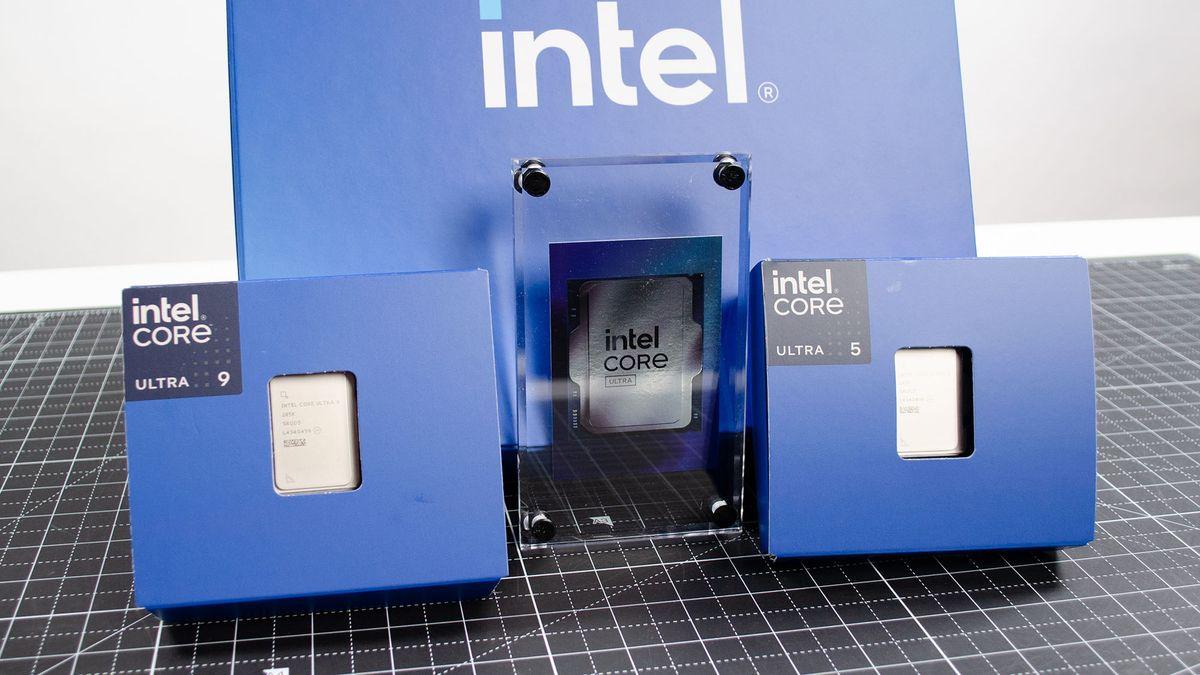
Intel’s tweaks, which are incoming to help boost the performance of its recently released Arrow Lake (Core Ultra 200S) processors – that rather disappointed upon their arrival – could be about to land.

Or at least we might be about to witness the start of Intel fixing up these desktop CPUs. We’re told by expert overclocker Skatterbench (who’s affiliated with Asus, and regularly sets world records using the firm’s motherboards) on X that Intel has some big changes coming in its next microcode update for Arrow Lake chips (add seasoning, as ever).

These pertain to the ‘VF behavior’ which means voltage-frequency, and as VideoCardz, which noticed this, pointed out, the overclocker likely already has access to the beta update.

Hopefully, it won’t be long before whatever tweaks and improvements are being introduced here come to all Core Ultra 200 CPU owners (though there will be a beta BIOS deployed by motherboard makers first, no doubt, before the full release).

The socket interface of the Intel Core Ultra processor

(Image credit: Intel)

Analysis: A new chapter for Arrow Lake?

So, the crux of the matter here is whether these changes are about delivering better performance for the Core Ultra 200S family, or perhaps more about fixing overclocking (as Skatterbench indicates later in that thread on X). Meaning these (rumored) tweaks could be more about, say, shoring up stability (especially for overclocking), rather than juicing up Arrow Lake CPUs with performance improvements.

The expectation is that this has something to do with Robert Hallock’s (VP of marketing at Intel) previous observation that Arrow Lake’s disappointing performance (particularly with gaming) was due to multiple issues in Windows and the BIOS, and an accompanying promise that fixes are inbound for those problems.

Is this upcoming microcode patch the start of those fixes? Quite possibly, but we’d temper our expectations, as it sounds like Intel has a lot of work to do on this front. Remember, we were also promised a full audit of all the issues in play with Arrow Lake’s missteps, so it seems like a thorny tangle of gremlins in the works, and we’re betting this is going to be a multi-step cure (for “multifactor issues” as Hallock called them).

{ window.reliablePageLoad.then(() => { var componentContainer = document.querySelector(“#slice-container-newsletterForm-articleInbodyContent-bwnwKEQTHui4bgV3tzJXpK”); if (componentContainer) { var data = {“layout”:”inbodyContent”,”header”:”Get the best Black Friday deals direct to your inbox, plus news, reviews, and more.”,”tagline”:”Sign up to be the first to know about unmissable Black Friday deals on top tech, plus get all your favorite TechRadar content.”,”formFooterText”:”By submitting your information you agree to the Terms & Conditions and Privacy Policy and are aged 16 or over.”,”successMessage”:{“body”:”Thank you for signing up. You will receive a confirmation email shortly.”},”failureMessage”:”There was a problem. Please refresh the page and try again.”,”method”:”POST”,”inputs”:[{“type”:”hidden”,”name”:”NAME”},{“type”:”email”,”name”:”MAIL”,”placeholder”:”Your Email Address”,”required”:true},{“type”:”hidden”,”name”:”NEWSLETTER_CODE”,”value”:”XTR-D”},{“type”:”hidden”,”name”:”LANG”,”value”:”EN”},{“type”:”hidden”,”name”:”SOURCE”,”value”:”60″},{“type”:”hidden”,”name”:”COUNTRY”},{“type”:”checkbox”,”name”:”CONTACT_OTHER_BRANDS”,”label”:{“text”:”Contact me with news and offers from other Future brands”}},{“type”:”checkbox”,”name”:”CONTACT_PARTNERS”,”label”:{“text”:”Receive email from us on behalf of our trusted partners or sponsors”}},{“type”:”submit”,”value”:”Sign me up”,”required”:true}],”endpoint”:”https://newsletter-subscribe.futureplc.com/v2/submission/submit”,”analytics”:[{“analyticsType”:”widgetViewed”}],”ariaLabels”:{}}; var triggerHydrate = function() { window.sliceComponents.newsletterForm.hydrate(data, componentContainer); } if (window.lazyObserveElement) { window.lazyObserveElement(componentContainer, triggerHydrate); } else { triggerHydrate(); } } }).catch(err => console.error(‘%c FTE ‘,’background: #9306F9; color: #ffffff’,’Hydration Script has failed for newsletterForm-articleInbodyContent-bwnwKEQTHui4bgV3tzJXpK Slice’, err)); }).catch(err => console.error(‘%c FTE ‘,’background: #9306F9; color: #ffffff’,’Externals script failed to load’, err)); ]]>

Sign up to be the first to know about unmissable Black Friday deals on top tech, plus get all your favorite TechRadar content.

You might also like

Source

Posted on

Infinidat gets in on the RAG act with workflow architecture offer

Infinidat has launched a retrieval augmented generation (RAG) workflow architecture, deliverable as a consultancy service to its storage customers, which allows them to build in up-to-date, private data from multiple company data sources to artificial intelligence (AI) from any NFS storage in their organisation.

The move reflects a trend that has seen multiple storage companies address AI workloads, and RAG issues – in particular in generative AI (GenAI) – that result when data used for training is incomplete, out of date or lacks the type of information that can only be gained from private data, such as within an organisation or from expert knowledge.

When an organisation wants to develop GenAI, it puts a dataset through a training process in which the AI learns how to recognise particular attributes that can be used for information, or for triggers in applications.

Those training processes are often built around datasets that are very general, can go out of date or perhaps initially lack specialised or private data. This is often the case with AI projects inside organisations that need to stay up to date over time, said Infinidat chief marketing officer Eric Herzog.

“A lot of organisations are using generative AI as an internal project with private data,” said Herzog. “And as well as wanting to protect their IP, they have concerns about accuracy, avoiding hallucinations, etc.

“For example, a large enterprise that generates vast amounts of data – in sales, support, operations – would want to boost the performance of what it is doing, and that’s very much tied to its storage performance.

“The customer wants to see accurate data in near real time. It can use AI to understand the details – it might be screws in a component, the type, the supplier, any number of details – and be able to update that information on a continual basis.”

What Infinidat now offers is professional services consulting to allow its customers to access data for RAG purposes from its own and other suppliers’ storage, as long as it is in NFS file storage format.

According to Herzog, that comprises help with configuring the storage system to get at data and metadata rapidly for RAG purposes. He said Infinidat is well-positioned to do this because of the importance it places on metadata and the “neural cache” within its architecture and the InfuzeOS environment.

Infinidat arrays can be all-flash or hybrid spinning disk and solid state, and are mostly targeted at high-end enterprise and service provider customers. Their hardware products feature triple-active controllers and use of a so-called neural cache that marshals data to the most appropriate media, with the bulk of I/O requests going via very fast DRAM, with a cache hit rate of more than 90% claimed.

Infinidat’s focus here on RAG capabilities sees it join other storage suppliers that have recently made a push for customers embarking on AI projects.

Pure Storage CEO Charlie Giancarlo was keen to highlight his company’s AI push at its Accelerate event in June, with storage write speed and availability emphasised. Meanwhile, NetApp launched a push towards data management for AI with the announcement of data classification for AI via its OnTap operating system at its annual Insight shindig in September.

Source

Posted on

Adventures in AI at Tripadvisor

Thank you for joining!

Access your Pro+ Content below.

19 November 2024

Adventures in AI at Tripadvisor

  • Share this item with your network:

In this week’s Computer Weekly, we find out how travel site Tripadvisor is embracing AI to offer new products and services to its users. Gartner says the chance of a successful digital project is like ‘flipping a coin’ – we went to its annual IT leadership symposium to ask why. And we examine what companies must do to comply with the EU’s new NIS2 cyber security rules. Read the issue now.

Source

Posted on

Intel Battlemage GPU spotted in benchmark – chill out, PC gamers, there’s no need to panic over that leaked B580 core count

  • Intel’s Arc B580 GPU has been leaked via a Geekbench result
  • The score itself is meaningless, but it provides key spec details
  • B580’s core count could be lower than A580, but other specs might balance that out

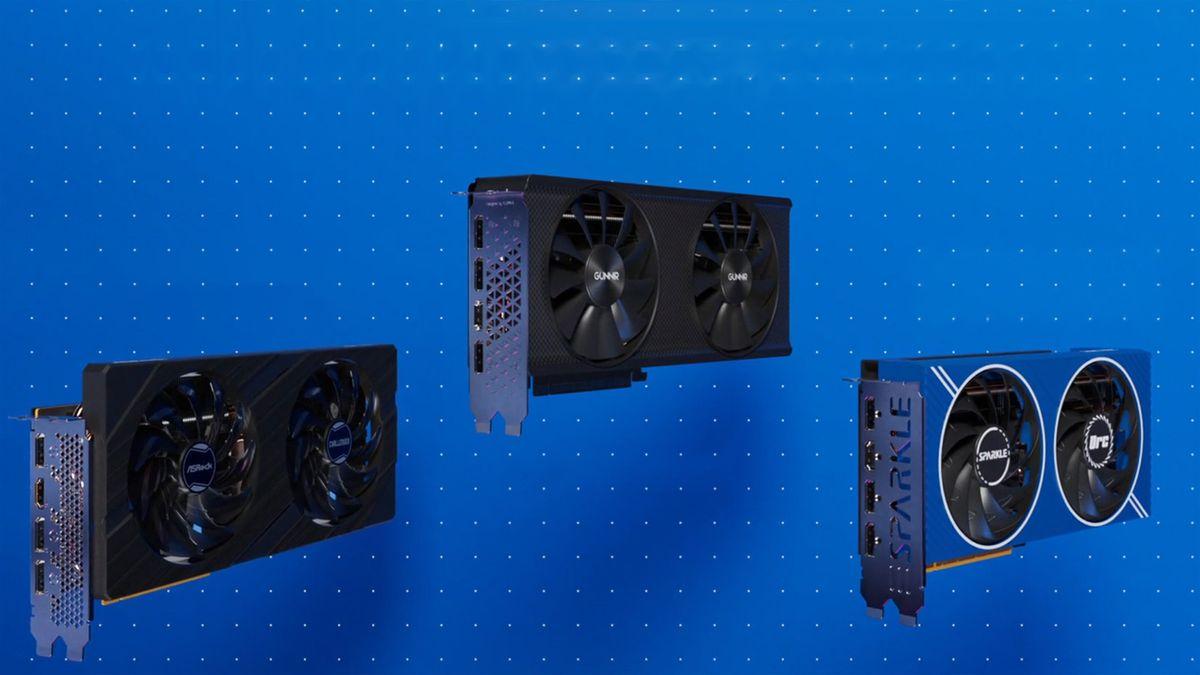
Intel’s Battlemage graphics cards are supposedly set to launch in December if the rumors are right, and we’ve got another nugget suggesting that – a glimpse of the purported spec of the B580.

That Arc Battlemage B580 GPU is purportedly going to be the first of Intel’s 2nd-gen desktop graphics cards out of the door, and VideoCardz noticed that Tomasz Gawroński flagged up a Geekbench result on X.

The benchmark result itself is pretty meaningless – it’s a sample B580 (in theory, we should add – sprinkle seasoning liberally), and the OpenCL score is hardly a useful metric for a gaming graphics card anyway.

The key point here is the specs shown for the B580, which is apparently set to be loaded with 12GB of VRAM and a boost clock running up to 2.85GHz. We also learn that this GPU has 160 Compute Units (CUs).

As VideoCardz points out, this should mean the B580 has 20 Xe2 cores (with 8 CUs per core in theory).

It’s also worth noting that the video memory spec aligns with a previous leak about an ASRock B580 graphics card, which was also shown with 12GB. And at 2.8GHz, the previous clock speed was in the same area as this new leak too.

A pair of Intel Arc Alchemist chips in front of a dark purple background

(Image credit: Intel)

Analysis: Don’t panic over those specs

So how do these specs seem to be shaping up? There’s some consternation from some of those commenting online about the drop in core count compared to the existing Arc A580 GPU – as the A580 has 24 cores versus 20 here.

{ window.reliablePageLoad.then(() => { var componentContainer = document.querySelector(“#slice-container-newsletterForm-articleInbodyContent-fJaNnspVPA5k92t66wMpEP”); if (componentContainer) { var data = {“layout”:”inbodyContent”,”header”:”Get the best Black Friday deals direct to your inbox, plus news, reviews, and more.”,”tagline”:”Sign up to be the first to know about unmissable Black Friday deals on top tech, plus get all your favorite TechRadar content.”,”formFooterText”:”By submitting your information you agree to the Terms & Conditions and Privacy Policy and are aged 16 or over.”,”successMessage”:{“body”:”Thank you for signing up. You will receive a confirmation email shortly.”},”failureMessage”:”There was a problem. Please refresh the page and try again.”,”method”:”POST”,”inputs”:[{“type”:”hidden”,”name”:”NAME”},{“type”:”email”,”name”:”MAIL”,”placeholder”:”Your Email Address”,”required”:true},{“type”:”hidden”,”name”:”NEWSLETTER_CODE”,”value”:”XTR-D”},{“type”:”hidden”,”name”:”LANG”,”value”:”EN”},{“type”:”hidden”,”name”:”SOURCE”,”value”:”60″},{“type”:”hidden”,”name”:”COUNTRY”},{“type”:”checkbox”,”name”:”CONTACT_OTHER_BRANDS”,”label”:{“text”:”Contact me with news and offers from other Future brands”}},{“type”:”checkbox”,”name”:”CONTACT_PARTNERS”,”label”:{“text”:”Receive email from us on behalf of our trusted partners or sponsors”}},{“type”:”submit”,”value”:”Sign me up”,”required”:true}],”endpoint”:”https://newsletter-subscribe.futureplc.com/v2/submission/submit”,”analytics”:[{“analyticsType”:”widgetViewed”}],”ariaLabels”:{}}; var triggerHydrate = function() { window.sliceComponents.newsletterForm.hydrate(data, componentContainer); } if (window.lazyObserveElement) { window.lazyObserveElement(componentContainer, triggerHydrate); } else { triggerHydrate(); } } }).catch(err => console.error(‘%c FTE ‘,’background: #9306F9; color: #ffffff’,’Hydration Script has failed for newsletterForm-articleInbodyContent-fJaNnspVPA5k92t66wMpEP Slice’, err)); }).catch(err => console.error(‘%c FTE ‘,’background: #9306F9; color: #ffffff’,’Externals script failed to load’, err)); ]]>

Sign up to be the first to know about unmissable Black Friday deals on top tech, plus get all your favorite TechRadar content.

However, there’s give and take in these specs. If the core count is dropped to 20 (and it may not be), those are still next-gen Xe2 cores benefiting from a new, faster architecture. On top of that, the boost clock is much faster than the A580 (which is officially clocked at 1.7GHz, although third-party models ran at 2GHz or so – but 2.8GHz is a big leap over that).

Furthermore, you’ve got a more comfortable loadout of VRAM here at 12GB versus 8GB (even though, if the rumors are right, memory bandwidth will be a touch tighter with the B580 versus the A580).

All of this remains speculation, and we should bear in mind two points here. Firstly, the B580 will be appreciably faster than the A580, whatever happens. Intel would look foolish if it was otherwise, obviously enough. And secondly, no matter where the spec comes out, Intel can still attack at the low-end of the GPU market by pricing the B580 to undercut AMD and Nvidia’s budget offerings.

With all these leaks springing up around Battlemage in the past week or two, it seems fairly certain that we will see the B580 unveiled next month – but clearly, we can’t be sure of that (and even if it’s Intel’s intention right now, a last-minute delaying factor could still interfere).

It makes sense that Intel will want to grab the desktop GPU limelight for a while before AMD and Nvidia bring out their big guns (or medium-sized artillery, perhaps, in the case of RDNA 4) at CES 2025 in January as the grapevine insists.

You might also like

Source

Posted on

Your Apple ID was not suspended

With over 2 billion Apple devices in use worldwide, it’s likely that hundreds of millions of people receive scary emails telling them they need to act fast as their Apple ID is in some sort of danger. Maybe the Apple ID was suspended, or perhaps you need to refresh your Apple Pay information because it’s supposedly not up to date.

These emails look similar to what Apple might send. They try to convince you to click a button to help you rectify the problem. That button will lead to a website that looks like Apple’s, but it’s not. 

Whatever you do, don’t click the link, and do not fill in your information. Why? Well, your Apple ID was not suspended, and your Apple Pay cards still work. It’s not Apple contacting you; it’s hackers trying to steal access to your Apple Account.

I get these emails occasionally, and you probably do as well. They’ll even send scary Apple ID emails to email accounts that aren’t actually associated with my Apple Account. They have no way of knowing that, and that’s the first red flag you’re dealing with phishing attacks.

Tech. Entertainment. Science. Your inbox.

Sign up for the most interesting tech & entertainment news out there.

By signing up, I agree to the Terms of Use and have reviewed the Privacy Notice.

By the way, Apple ID is no longer called that. It’s an Apple Account, and that’s another hint that you’ve received a phishing email trying to get access to your login credentials.

How do hackers target you?

With so many data breaches occurring in the past years, hackers have obtained a treasure trove of information about hundreds of millions of people. All they need is a valid email address to start sending phishing attacks in bulk. 

That explains why you’ll receive “Apple ID suspended” emails from email accounts not associated with your Apple Account. 

The hackers hope a percentage of the unsuspecting victims will click the links in the emails where they’d fill in passwords and/or credit card numbers. 

What do the hackers want?

Any phishing attack is looking for access first and foremost. You’ll be told to click a link that looks like something you’d get from Apple. From there, you might be prompted to log into your Apple ID on a website that looks like Apple’s, but it’s fraudulent. Just look at the URL you’re being directed to. It’ll have a strange address rather than something simple associated with Apple.com or iCloud.com.

The attackers might even try to obtain two-factor authentication (2FA) codes from you once you fill in your login details to bypass Apple’s security protections. Never accept that, either. 

Once they obtain your login data and 2FA data, they might try to purchase products and gift cards or just snoop around. Maybe you hold passwords in your iCloud Notes, which would become accessible to them once they get in. 

Or they might be after Apple Pay data so that they can use credit cards to buy things online, which they’ll then sell on the black market.

Logging into my Apple ID on iCloud.com.Logging into my Apple ID on iCloud.com. Image source: Chris Smith, BGR


What you should do

First of all, do not panic. Rather than acting in a rush, just inspect the email carefully. Email services usually catch some of these, sending them directly to the spam folder. But others make it to your inbox. 

The first thing you should do is look at the sender’s email address and compare it to emails you receive regularly from Apple. If your Apple ID is associated with the same email account, you can easily compare them.

Hackers might spoof their emails to make them look like they’re coming from Apple. Just hover over the “From” field to see what it says without clicking. Do the same for links and buttons in the phishing email.  They might say, “Go to Apple ID” or “Update Account,” but these are not official. 

Next, look at the text in the email. It often includes inconsistencies. Hackers might try to make it look like the real thing, using Apple logos and similar colors. The email might also include your name if the hackers obtained it from the data breach your email address came from and purported case IDs.

However, the text will often contain grammar and punctuation mistakes. It’ll be easy to spot them. 

After all of that, just go about your day. Send that scary email to the spam folder, and forget about it. 

What if…

I know what you’re thinking: maybe the email is from Apple after all.

In that case, continue to do nothing the sender tells you to do. Instead, inspect your Apple ID on your iPhone, Mac, or iPad and ensure it’s working properly. Go outside and use Apple Pay to make sure you can make payments. 

You’ll notice that your Apple ID has not been suspended, and Apple Pay still works. 

The email you’ve just received will often contain a deadline to pressure you into action. You have 24 or 48 hours to save your account. Wait it out. The hackers might reach out again or not. Your Apple ID will continue to work properly.

You should also contact Apple directly and ask for guidance. Apple actually has a detailed support document that explains some of the scams associated with Apple products, including Apple Accounts.

Finally, if these emails are increasingly frequent, you should change your Apple ID email address to a freshly minted email address. Then, use that email address only for your Apple account and nothing else.

While we’re at it, change your Apple ID passwords from time to time. Use password managers to create unique, strong passwords for each online service you might use.

Mind you, some hackers might also call you pretending to be Apple support staff. They’re looking to extract the same information. Whatever you do, don’t provide it. Hang up, and call Apple yourself. If you’re lucky, some scammers will talk to a Grandma AI instead of you, which will keep them on the line so they can’t target real people.

Apple will never ask you to provide critical account information over the phone or email. Here’s what Apple says in the support document above: 

Apple will never ask you to log in to any website, or to tap Accept in the two-factor authentication dialog, or to provide your password, device passcode, or two-factor authentication code or to enter it into any website.

Rinse and repeat every time you receive a scary email telling you your Apple ID has been suspended. 

Mind you, the same scam can apply to all sorts of online accounts. But hackers will target Apple users first. Treat those emails with the same circumspection and do nothing to fix the problem they instruct you to fix.

After your first shock when receiving such an email, you’ll soon get used to recognizing phishing attacks that warn you that your internet account has just been suspended because you’ll continue to get these emails time and again.

Source

Posted on

FCC approves T-Mobile and Starlink plan to expand internet coverage

On Tuesday, the Federal Communications Commission (FCC) approved a license for T-Mobile and SpaceX’s Starlink unit to provide supplemental internet coverage from space. According to Reuters, this is the first time the FCC has given a satellite operator and a cell carrier permission to provide coverage from space using spectrum bands allocated to terrestrial service. The goal of the partnership is to eliminate “dead zones” and provide coverage in remote areas.

T-Mobile and SpaceX first announced the partnership in 2022. SpaceX CEO Elon Musk said at the time that by connecting many existing mobile devices to satellites, the two companies would end the need for cell towers and offer coverage where it doesn’t yet exist.

FCC Chair Jessica Rosenworcel shared the following statement about the plans: “The FCC is actively promoting competition in the space economy by supporting more partnerships between terrestrial mobile carriers and satellite operators to deliver on a single network future that will put an end to mobile dead zones.”

SpaceX satellites feature direct-to-cell technology that will work with T-Mobile’s existing network, which reaches hundreds of millions of Americans. That said, the cell carrier has noted that over 500,000 square miles of the US is still unreachable by towers.

Tech. Entertainment. Science. Your inbox.

Sign up for the most interesting tech & entertainment news out there.

By signing up, I agree to the Terms of Use and have reviewed the Privacy Notice.

This approval comes just weeks after the FCC allowed Musk’s SpaceX and T-Mobile to provide direct-to-cell coverage for areas of North Carolina impacted by Hurricane Helene.

T-Mobile and Starlink is the first approved partnership, but Reuters notes that other companies have sent in applications for similar services that are pending review by the FCC.

Source

Posted on

UK government seeks AI innovators to support clean energy transition and pursuit of net zero by 2050

The government is seeking support from artificial intelligence (AI)-focused academics and entrepreneurs to help build clean energy systems and help the UK hit its net zero by 2050 goal.

Interested parties are invited to apply for funding to develop technologies that could decarbonise the UK energy grid, improve the nation’s energy security and help the government achieve its wider aim of positioning the country as a clean energy superpower.

The funding is being made available through the launch of the second round of the Manchester Prize, an initiative launched in 2023 by the Department for Science, Innovation and Technology (DSIT) to support AI-led innovation in the UK over the coming decade.

The first round of the Manchester Prize is due to conclude in April 2025, and is focused on the role AI can play in the areas of energy, the environment and infrastructure.

The second round of the competition will see the government offer up to £100,000 to 10 applicants, and one winner will be chosen from them who will secure a £1m prize to support the further development of their AI offering. The closing date for applications is 17 January 2025.

“Over the next eight weeks, applicants can come forward to demonstrate how their innovations will boost low-cost energy, reduce energy demand and make energy use more efficient across the country,” said the government in a statement.

“These could include new avenues for boosting the power generated by wind and solar farms, using AI to increase energy efficiency in our homes and businesses, and tapping into the technology to build up a better understanding of future spikes in energy demand.”

Expanding on this theme, Feryal Clark, UK government minister for AI, said the second round of the Manchester Prize looks set to have a transformative impact on the UK.

“AI can transform our public services, make us more productive and tackle some of the biggest shared challenges in society. AI is already having a positive impact on so many aspects of our lives, but there’s much more waiting to be tapped into,” said Clark.

“The second round of the Manchester Prize will bring brilliant British innovation to bear to deliver a clean, secure energy future for the UK. Whether in energy, healthcare, or beyond, we’re backing AI innovations to deliver real and lasting change across the country.”

Paul Monks, chief scientific adviser at the Department for Energy Security and Net Zero, said the climate crisis is “the greatest long-term challenge” society is up against, and initiatives like this will play an important role in helping address it.

“The greatest long-term challenge we face is the climate and nature crisis. That’s why we have our world-leading targets to decarbonise the electricity grid by 2030 and to reach net zero by 2050,” he said.

“We need an ambitious approach to using artificial intelligence across the development, engineering and operation of our energy systems, so I am pleased to see the Manchester Prize recognising that with its dedicated new round on decarbonisation.”

Source

Posted on

Nationwide Building Society backs HPE GreenLake for hybrid cloud push

Nationwide Building Society is drawing on HPE’s private cloud capabilities to help deliver on the next phase of its multi-year hybrid cloud strategy.

The company, which has more than 17 million customers in the UK and employs 18,000 people, is in midst of a hybrid cloud-focused digital transformation project, geared towards improving the online experience for its customers.

As previously reported by Computer Weekly, this work, which began in 2018, has seen the firm use public cloud technologies, such as those offered by Amazon Web Services, and embrace the use of DevOps-style software development methodologies within its teams.

The project has also seen Nationwide adopt different cloud technologies based on what is best for that particular type of data or workload, which is why the company is now adding the HPE Greenlake private cloud setup to its supplier mix too.

“Nationwide’s hybrid cloud strategy is vital to our ability to compete and means we can continue to meet the needs and expectations of our customers – HPE GreenLake cloud is a core component of our hybrid cloud strategy,” said Paul Walsh, director of infrastructure and service delivery at Nationwide.

“With them, we’re building a cloud platform that will further improve our resilience and agility, enabling us to provide even better levels of service and deliver new capabilities to our developers faster than ever before.”

Specifically, Nationwide will use HPE GreenLake management services to automate and orchestrate its infrastructure management workloads and deliver infrastructure-as-code, the company said.

“This [will] enable [Nationwide] to focus on innovation, value-add activities and gain better control over application builds and security,” said the company, in a statement. “Faster release cycles will accelerate the time to market, providing consistent customer experiences across all digital platforms.”

The HPE GreenLake cloud setup will also provide Nationwide with an overview of its energy consumption and emissions, so that it can take proactive steps to reduce its environmental footprint, the company added.

Matt Harris, senior vice-president and managing director for the UK, Ireland, Middle East and Africa at HPE, said the complexities of the deployment highlight why taking a public cloud-only approach would not work for a company like Nationwide.

“Nationwide’s modernisation journey showcases the effectiveness of HPE GreenLake cloud, with the storied institution transitioning from complex, legacy technology to a modern, future-proofed hybrid cloud operating model where a one-size-fits-all public cloud could never be the only answer,” said Harris.

Nationwide is not the only financial services company tapping into HPE GreenLake to deliver on its hybrid cloud strategy, as Barclays Bank also set out plans in September 2024 to ramp up its use of the technology for that purpose.

Source

Posted on

AMD pushes GPU advantage with HPC top spot

The AMD-powered El Capitan supercomputer, housed at the Lawrence Livermore National Laboratory (LLNL), is now ranked as the world’s fastest supercomputer.

Built by HPE, the supercomputer uses AMD Instinct MI300A accelerated processing units (APUs). It achieved a High-Performance Linpack (HPL) score of 1.742 exaflops based on the latest Top500 list. 

The LLNL is using the supercomputer for nuclear security. El Capitan is the first exascale-class machine for the National Nuclear Security Administration (NNSA) and will be used to advance scientific discovery and national security, providing what AMD says is “the computational power necessary to ensure the safety, security and reliability of the nation’s nuclear deterrent without testing”.

It is being used for modelling and simulation capabilities to support NNSA’s Stockpile Stewardship Programme, which certifies the ageing nuclear stockpile and other critical nuclear security missions, such as non-proliferation and counter terrorism. 

“El Capitan is crucial to the National Nuclear Security Administration’s core mission and significantly bolsters our ability to perform large ensembles of high-fidelity 3D simulations that address the intricate scientific challenges facing the mission,” said Rob Neely, director of LLNL’s advanced simulation and computing programme.  

LLNL and the other NNSA at Los Alamos and Sandia National Laboratories are also using El Capitan and its companion system, Tuolumne, to drive artificial intelligence (AI) and machine learning-assisted data analysis. El Capitan will apply AI to high energy density problems such as inertial confinement fusion research, while Tuolumne will be used for unclassified open science applications including climate modelling, biosecurity/drug discovery and earthquake modelling.

Bronis R de Supinski, LLNL’s chief technology officer for Livermore Computing, said: “With AI becoming increasingly prevalent in our field, El Capitan allows us to integrate AI with our traditional simulation and modelling workloads, opening new avenues for discovery across various scientific disciplines.”

AMD said its Instinct MI300X and MI325X accelerators provide AI performance and memory capabilities, while the AMD Instinct MI300A APU puts central processing unit (CPU) and graphics processing unit (GPU) cores and stacked memory together into a single package, enabling “new levels of efficiency and performance” for high-performance computing (HPC) and AI workloads.  

Its EPYC processors and Instinct accelerators are also being used to power many new supercomputing and AI projects and deployments, including Italian energy company Eni, whose HPC 6 supercomputer is powered by AMD EPYC processors and AMD Instinct GPUs. The University of Paderborn is also set to take delivery of a new supercomputer powered by the latest fifth-generation AMD Epyc technology.
   
Separately, IBM and AMD have announced a collaboration to deploy AMD Instinct MI300X accelerators as a service on IBM Cloud. The new service, available in the first half of 2025, will target performance and power efficiency for generative AI models. Through the collaboration, support for AMD Instinct MI300X accelerators is being made available within IBM’s Watsonx AI and data platform, as well as through the Red Hat Enterprise Linux AI inferencing platform. 

Source