Posted on

iPhone 17 Air design has never looked better than it does in this leak

It’s only a matter of time until Apple reveals the upcoming iPhone 17 Air. While it’s still unclear if that’s the name of the company’s ultra-thin iPhone, we’re certain it exists and will be unveiled in five months. This time, Majin Bu, who recently shared details about an upgrade-downgrade decision for the new iPhone 17 Pro’s telephoto lens, posted a new image highlighting a 3D model of the iPhone 17 Air.

This 3D model resembles everything we’ve seen from CAD files and concept images. It features a new camera bar design with a single rear camera, which might be anything from the iPhone 16e 48MP camera to the iPhone 16 main lens. The flashlight and microphone are on the other side.

Rumors expect this module to be the thickest part of the iPhone 17 Air, up to 9.5mm thick. In addition to the Action and volume buttons, the side button can also be seen. While reports expect the iPhone 17 Air to feature Camera Control, the image doesn’t make it clear if the 3D model has it.

It’s also worth noting that some of the tech that will debut on the iPhone 17 Air is expected to pave the way for a foldable iPhone.

Tech. Entertainment. Science. Your inbox.

Sign up for the most interesting tech & entertainment news out there.

By signing up, I agree to the Terms of Use and have reviewed the Privacy Notice.

Another important part of this iPhone being highlighted is the MagSafe support. Since Apple removed the MagSafe capability from the iPhone 16e, it’s good to see the iPhone 17 Air won’t lose it, despite rumors that it might have a few compromises, such as eSIM-only versions.

Finally, we expect this device to be around 5.5-6.0mm thick, have Apple’s A19 chip, and have Apple’s own Wi-Fi and 5G modems. It’s unclear if the iPhone 17 Air will get a revamped version of the C1 chip introduced with the iPhone 16e or if the company will use the same version without mmWave support and other minor features.

In addition to this device, Apple is expected to introduce an iPhone 17 model with the same look as the iPhone 16, as well as redesigned iPhone 17 Pro and iPhone 17 Pro Max options.

Source

Posted on

Latest leaks reveal iPhone Fold may have impressive battery life and an innovative hinge

There are two new leaks regarding the upcoming iPhone Fold, the Galaxy Z Fold-like device Apple is expected to unveil in late 2026 or early 2027. One of them comes from the news aggregator account yeux1122. According to them, Apple is working to improve the display DDI part to make the panel thinner.

Still, yeux1122 says that even though Apple wants to make the iPhone Fold as thin as possible, the company will also make sure to add the best battery available to its device, as it’s working on power-efficiency-related features. We can also assume that some of these functions could include a new C1 chip, Apple’s 5G modem, and the company’s own Wi-Fi chip, which is expected to be available with this year’s iPhone 17 lineup.

With these new processors, Apple will likely improve battery life, as It will have better control over both hardware and software. Analyst Ming-Chi Kuo also brings the latest leak on the iPhone Fold.

According to his industry research, Apple will use liquid metal in the hinges of this upcoming device. He writes: “Apple is focused on improving durability, enhancing screen flatness, and minimizing crease marks in its foldable iPhone design. To achieve these goals, key components like the hinges will be crafted from liquid metal using a die-casting process.”

Tech. Entertainment. Science. Your inbox.

Sign up for the most interesting tech & entertainment news out there.

By signing up, I agree to the Terms of Use and have reviewed the Privacy Notice.

The analyst says Apple has used liquid metal for small components, such as SIM ejector pins, for years. Still, the iPhone Fold will mark the first significant use of the material in a critical mechanical part. Interestingly, Android manufacturers are rumored to start using this technology to improve durability and minimize the crease of the display.

According to the rumors and leaks, Apple wants to deliver an ultra-thin iPhone Fold with great battery life and a creaseless foldable display. If the company can achieve that, it might show the competitors that even though it took a long time to enter the foldable market, it has waited enough to outperform every competitor.

Source

Posted on

iPhone 16e reportedly has a Bluetooth audio problem that can’t be fixed

New iPhone hardware might launch with functionality issues that need to be ironed out via subsequent software updates, assuming software can provide fixes. The same goes for Android products. Hearing that the iPhone 16e has a Bluetooth issue where the audio cuts out briefly while music is playing should not be that surprising. However, the iPhone 16e isn’t exactly a new iPhone, is it? It has the same design as every other iPhone with a notch that has been released since the iPhone 12.

Apple also recycled many of the internal components to make this device. Even the iPhone 16’s A18 chip and the 8GB of RAM inside the iPhone 16e aren’t new-new. Therefore, other internal components, including the Bluetooth chip, shouldn’t be brand new.

The only completely new iPhone 16e components might be the new battery, which gives the handset the best battery life in 6.1-inch iPhones, and the C1 modem.

With all that in mind, one shouldn’t expect Bluetooth audio connectivity issues with the iPhone 16e. But it turns out that several iPhone 16e owners have encountered Bluetooth disconnects, and Apple doesn’t know how to fix them for the time being. It doesn’t seem like a hardware issue, so exchanging your iPhone 16e for a new one might not fix it.

Tech. Entertainment. Science. Your inbox.

Sign up for the most interesting tech & entertainment news out there.

By signing up, I agree to the Terms of Use and have reviewed the Privacy Notice.

Some iPhone 16e owners suspect the device has issues handling multiple Bluetooth connections, like an Apple Watch and AirPods. That’s actually a nightmare scenario for this longtime iPhone user. I run a lot, and I wear the Apple Watch to track my workouts while AirPods handle the entertainment.

As is often the case with issues concerning new devices, affected users took to social media and forums to complain. A discussion on Apple forums is particularly interesting, as an iPhone 16e owner details their issues with the Bluetooth audio and their experience with Apple support.

After talking to UK/Europe support, the user was escalated to Apple’s US support, and they had him perform a diagnostic test on the iPhone 16e to figure out why the Bluetooth audio stops:

Then they had me install a profile on my iPhone which logged the Bluetooth and Wifi signals / exchanges in a diagnostic report, which ran for about 20 minutes, whilst I reproduced the issue and noted down the time (to the second) of whenever the audio stutters. This was done with data over Wifi, and data over 5G. Then they phoned me up again, the logs were packaged up, and sent through. All they could do was tell me the data and timestamps etc. were going to be looked at by engineering and they would contact me back if they wanted me to run more test…

The same person said the update to iOS 18.3.2, which dropped earlier this week, did not fix the problem.

A different person found that using an Oura ring might impact the Bluetooth audio on the iPhone 16e. Closing the app completely seems to fix the problem:

Yes, I have the same problem, too. I found a couple of reddit threads with people experiencing the same issue. In my case it appears that the stuttering is related to having another Bluetooth connection (an Oura smart ring). If I close the Oura app, so it’s not running in the background, the audio appears to work OK, but it’s early days and I’m still investigating. Do you have multiple Bluetooth connections other than the headphones? I hope it’s not a hardware issue with the phone.

Over on Reddit, a Fitbit user said that closing the Fitbit app didn’t work, but they removed the wearable from the iPhone 16e, and the Bluetooth audio was fixed.

Obviously, these aren’t acceptable fixes. Again, Apple is selling us devices that are connected via Bluetooth to the iPhone, whether it’s Apple Watch models, AirPods, or Beats earphones. Apple wants iPhone users to buy both the Apple Watch and AirPods, so both should stay connected to the iPhone at the same time.

Even if you use non-Apple wearables and wireless earphones, you should be able to mix and match products without experiencing Bluetooth audio issues.

It’s unclear how widespread the iPhone 16e Bluetooth audio problem is, but Apple is certainly aware of it. Hopefully, a permanent fix will be available soon.

Source

Posted on

Gemini AI is replacing Google Assistant on most mobile devices in 2025

Nearly a decade after Google Assistant arrived, the software is being sunset as Gemini AI takes its place. On Friday, Google announced that before the end of 2025, Gemini will replace Google Assistant on most mobile devices. According to 9to5Google, the only exceptions will be devices running Android 9 or earlier with less than 2GB of RAM.

Google claims that millions of people have already made the switch and use Gemini instead of Google Assistant. Now, Google’s bringing everyone else up to speed, whether they like it or not. The company explained that most users will automatically be upgraded to Gemini in the coming months, and by the end of 2025, “Google Assistant will no longer be accessible on most mobile devices or available for new downloads on mobile app stores.”

It won’t just be your phone, either. Gemini is coming to tablets, cars, watches, and headphones. There is also a Gemini-powered experience in the works for home devices like speakers, smart displays, and TVs. Basically, if it connects to the internet, it’s getting Gemini.

As the widespread switch from Google Assistant to Gemini begins, Google says it is “continuing to focus on improving the quality of the day-to-day Gemini experience, especially for those who have come to rely on Google Assistant.”

Tech. Entertainment. Science. Your inbox.

Sign up for the most interesting tech & entertainment news out there.

By signing up, I agree to the Terms of Use and have reviewed the Privacy Notice.

Google linked to a blog post comparing the two for those curious about how they differ and the features they share. Gemini can now do almost everything Google Assistant can, from providing weather forecasts and creating calendar events to searching for flights and sending messages. The biggest difference is that Gemini is powered by AI.

The timing couldn’t be worse for Apple, which delayed its AI-powered Siri reboot in a failure that the company is referring to as “ugly and embarrassing” internally. While other phone makers are moving full speed ahead with AI, Apple is stuck in neutral.

Source

Posted on

EY: Industrial companies worldwide stunted in emerging technology use

Many companies from a range of industries worldwide are stuck at a trial stage of emerging technologies usage, according to the sixth annual EY Reimagining industry futures study.

The firm surveyed 1,635 enterprises in November 2024, including 9% in the UK, 6% in Germany and 20% in the US. Respondents were drawn from a range of industries, including financial services (13%), cars and transport (13%), energy, mining and utilities (13%), and manufacturing (12%).

The study has a strong 5G and internet of things (IoT) orientation, as it has done in previous years. The lead authors come from the firm’s telecoms, media and technology (TMT) practices, Rob Atkinson, area managing partner for UK and Ireland TMT; and Adrian Baschnonga, global TMT lead analyst.

The press statement that goes with the report says nearly half (47%) of the respondents are investing in generative artificial intelligence (GenAI), compared with 43% last year.

Some 43% are investing in IoT, and 33% are investing in 5G technology, suggesting an upward trend from 39% and 27% respectively in 2024.

However, the report finds that businesses struggle to convert technology trials into live deployments. Only 1% of organisations have active deployments of GenAI. And while IoT investment seems to be rising year-on-year, the proportion of businesses with active IoT deployments is in decline, slipping to 16% this year compared with 19% in 2024.

Active deployments of edge computing are also flat year-on-year, at 22%.

CEOs get more into technology selection

The report finds decision-making inside enterprises is spreading out across the C-suite, with 49% of CEOs now involved in emerging technology strategy, including in choice of suppliers. Organisations where the CEO is a key decision-maker are further along, the report found.

Over half (51%) of businesses with CEOs involved in new technology decisions are investing in GenAI, compared with 44% of organisations where the CEO is less involved.

“As well as posing a challenge to unlocking long-term value, a failure to progress beyond the trial phase means businesses risk missing out on the combined impact of different technologies deployed together, an area where four in five (79%) organisations are looking to achieve more,” said Atkinson. “There could also be a danger that too many emerging technologies initiatives will be conducted in isolation, limiting the resulting business benefits.”

The report discovered that respondents are limitedly aware of what IT suppliers have on offer.

Some 73% said they need a better understanding of the changing supplier landscape. EY comments that this reflects “an environment where collaborative ecosystems featuring alliances between different technology providers are becoming the norm”.

More than half (56%) the respondents believe they lack awareness of their technology suppliers’ partners. Less than a third of organisations have high awareness of new mobile technology capabilities such as network application programming interfaces (32%) and network slicing (26%).

“Organisations view ecosystem collaboration as a route to access new skills and capabilities but lack understanding of changing supplier ecosystems,” said Baschnonga. “With many companies under pressure to consolidate vendors, suppliers should prioritise their ecosystem and alliance strategies by concentrating on key partners and adapting their operating models and go-to-market approaches accordingly.”

The report found the ability to scale and integrate different technologies is important to one in four (25%) of those surveyed.

“The intention to focus spending on a smaller number of key suppliers makes it even more important that ICT providers present them as effective ecosystem orchestrators, able to provide end-to-end solutions with the assistance of partners and intermediaries,” said Atkinson. “As part of this, suppliers should take care to underline capabilities that extend beyond their core products.

“While enterprises remain committed to embracing leading-edge technologies like GenAI, IoT and 5G, they are facing challenges in translating their investments into real business value,” he said. “Now is the time for IoT suppliers to reposition themselves as holistic partners to their business customers and help them realise the full benefits of their spending on digital transformation.”

In the report itself, the authors say: “This year’s findings show that organisations across all sectors remain committed to investing in emerging technologies to transform their operations – but that issues around scalability and legacy integration are top of mind. Meanwhile, ICT vendors need to pay close attention to enterprises’ increasing focus on security and growing demand for ecosystem orchestration.”

Businesses dimly aware of datacentre environmental impact

They also pick out sustainability as an increasingly relevant theme for enterprise IT, especially with regard to datacentres. “Sustainability factors increasingly weigh on decisions about emerging technology investments, with organisations more sensitive than before to the potentially ambivalent role of new technologies in the decarbonisation agenda.

Datacentres, the report’s authors comment, are an area of low environmental, social, and governance awareness for businesses. Half the organisations surveyed are unaware of their datacentres’ emissions profiles.

Respondents are looking at a range of GenAI use cases, with no standout preferences, the report found. Some 50% of businesses see cyber security and data protection as a leading GenAI impediment, while 46% said a need to improve data governance to combat risks concerning data accuracy and ethics would be critical to future implementations.

Data governance scores highest among manufacturers (46%) as a GenAI concern, while capturing productivity gains ranks top among EY’s respondents in the consumer (48%) and energy (47%) sectors.

Across all sectors, the most favoured GenAI use cases are software development, customer service and employee training or collaboration. However, financial services, healthcare and manufacturing respondents rated predictive or real-time operations and supply chain management as top-five GenAI use cases.

Upskilling and more collaboration

The report says the two most important changes that organisations can make are employee upskilling and deeper collaboration across business functions.

On a country level, education and employee upskilling is highly ranked by German respondents (36%), while deeper collaboration between business functions leads as an action among Chinese businesses (31%).

Elsewhere, Indian (20%) and Japanese (18%) businesses are most likely to prioritise collaboration with suppliers.

Source

Posted on

There won’t be an iPhone SE 4 because Apple isn’t calling it that

Tim Cook teased the “newest member of the family” last week on X, seemingly confirming what the leaks have been saying. The iPhone SE 4, Apple’s cheapest new iPhone, will be unveiled on February 14th. It should generate plenty of interest in the coming months.

Cook might not have named the product launching this week, but the iPhone SE 4 is the only Apple product that makes sense to get a mid-February launch. iPhone sales were down in the December quarter, and while Apple reported record revenue for the period, it couldn’t have liked the drop in iPhone sales.

The iPhone did the worst in China, one of Apple’s most important markets. A $500 iPhone SE 4 that looks like an iPhone 14 and behaves like the iPhone 16 and 16 Plus is a device many buyers should consider. Launching the handset as soon as possible makes the most sense.

Speaking of names, there might not be an iPhone SE 4 in Apple’s lineup come Wednesday. Technically, Apple would call it the iPhone SE (4th generation) if it were to use that name. But Apple is expected to coin a new marketing term for this special breed of iPhone rather than rely on a product name that might hurt the phone.

Tech. Entertainment. Science. Your inbox.

Sign up for the most interesting tech & entertainment news out there.

By signing up, I agree to the Terms of Use and have reviewed the Privacy Notice.

A few weeks ago, rumors said the iPhone SE 4 would be known as the iPhone 16E. At the time, I said the name fits much better for a phone that will essentially be one of the best iPhones you can buy right now.

The iPhone SE 4 will offer better performance than the iPhone 14 and iPhone 15, devices Apple still stells. The handset will rock iPhone 16-grade hardware so it can run Apple Intelligence features. That means an A18 chip paired with 8GB of RAM.

Apple has made obvious compromises to keep the price at around $500. The display has a notch instead of a Dynamic Island at the top, and the rear camera has a single lens. Also, Apple will introduce its own 5G modem with the iPhone SE 4, which should help it save money.

All that makes the iPhone SE 4 a more interesting handset than the previous-gen iPhone SE models. Those devices always featured high-end hardware on par with the same-year flagships. For example, the iPhone SE 3 matches the power of the iPhone 13 and 13 mini. Some of the previous iPhone SE models sold very well, too. But the iPhone SE name is synonymous with a phone with huge bezels and a Touch ID button. That name could hurt the iPhone SE 4 sales.

Mark Gurman, who said in previous weeks that the iPhone SE 4 was imminent, mentioned the name change in his latest Power On newsletter. However, he didn’t confirm the previously leaked iPhone 16E moniker.

The Bloomberg reporter said that Cook’s teaser, the “newest member of the family,” may indicate that the iPhone SE 4 will get a new name. In turn, Apple will market it as a new addition to its lineups. “Given how drastic the overhaul is to the iPhone SE, a new name makes complete sense,” Gurman concluded.

I’ve been thinking that way ever since the iPhone 16E rumor. The phone deserves a new name to set it apart from the iPhone SE of the past.

I can also see a scenario where Apple discontinues the iPhone 14 and 14 Plus come Wednesday. Once the $500 iPhone SE 4 launches, there’s no reason to buy the $599 iPhone 14, which can’t support Apple Intelligence. Not to mention that the iPhone 14 models aren’t available in Europe anymore, as they come with Lightning ports instead of USB-C.

There’s no point in manufacturing the iPhone 14 now that the iPhone SE 4 is coming out, no matter what name the latter gets. It’s all speculation for now, but we’ll cross that bridge come Wednesday, when Apple will refresh its iPhone lineup.

Source

Posted on

Nvidia’s RTX 5080 has dethroned AMD’s RX 7900 XTX at the same price – but good luck finding one

  • Nvidia’s new RTX 5080 GPU performs better than AMD’s Radeon RX 7900 XTX at raw rasterization and ray tracing
  • DLSS 4 performance takes it further, while the RX 7900 XTX only has FSR 3 for now
  • Scalping could leave many people buying AMD GPUs instead

The best of Nvidia‘s RTX 5000 series GPUs are finally here, with the RTX 5090 ($1,999 / £1,939 / AU$4,039) and the RTX 5080 ($999 / £939 / AU$2,019) launching yesterday. With comparisons now out in the wild, it’s clear to see that the RTX 5080 defeats AMD’s Radeon RX 7900 XTX while sitting at the same listed price – although the chances of finding one at that price are slim.

At both raw rasterization and (unsurprisingly) ray tracing performance, Team Green’s RTX 5080 comes out on top against its rivals’ flagship RX 7000 series GPU in several games as evident in Gamer Meld‘s comparison on YouTube (available below). Whilst it isn’t by a huge margin (at least in raw rasterization), it completes the job the previous generation’s RTX 4080 Super set out to do.

Examples of this are notable in Black Myth: Wukong, as the RTX 5080 scored an average frame rate of 42fps versus the RX 7900 XTX’s 32fps at 4K max graphics settings with no upscaling or ray tracing, a 27% performance difference. With RT Overdrive enabled in Cyberpunk 2077 at 4K max graphics settings and upscaling on (performance mode for both), the RTX 5080 had an average of 59.84 fps versus the 7900 XTX’s 30.02 fps.

It’s worth noting that this is while Team Green’s powerhouse GPU was using DLSS 4 and the RX 7900 XTX was using FSR 3 – you could call it an unfair comparison, but Team Red’s FSR 4 will only be available for RDNA 4 GPUs (at least for now), and the GPU in question isn’t one of them. We will have to wait just a little longer for more information on what the new RX 9070 series offers (especially while using FSR 4), and whether this could stack up to Nvidia’s offerings.

RTX 5080 vs RX 7900 XTX! – YouTube RTX 5080 vs RX 7900 XTX! - YouTube Watch On

Unless you’re lucky enough to grab an RTX 5080 FE before scalpers, you likely won’t get it at its listed price

Now, this may be a circumstance where I’d recommend sticking with AMD‘s RX 7900 XTX if you already own the GPU – the RTX 5080 FE would likely be the better option going forward (especially if DLSS 4 is better than FSR 4), but the scalpers will likely be the main obstacle to stop you from purchasing it at reasonable prices.

We’ve seen this happen on numerous occasions with Nvidia’s GPUs and other PC hardware, so expect it to be the same case here. It’ll likely be much worse for those chasing the RTX 5090 with its $1,999 / £1,939 / AU$4,039 price (which I frankly don’t think is worth it if you already own an RTX 4090).

While Nvidia’s RTX 5080 is the stronger GPU, the RX 7900 XTX doesn’t stray too far behind in raw rasterization – ray tracing and upscaling are great don’t get me wrong, but I’ve already stated that this shouldn’t be the deciding factor for a GPU purchase.

{ window.reliablePageLoad.then(() => { var componentContainer = document.querySelector(“#slice-container-newsletterForm-articleInbodyContent-3N2myjJF5GHhXV475rogRC”); if (componentContainer) { var data = {“layout”:”inbodyContent”,”header”:”Get daily insight, inspiration and deals in your inbox”,”tagline”:”Sign up for breaking news, reviews, opinion, top tech deals, and more.”,”formFooterText”:”By submitting your information you agree to the Terms & Conditions and Privacy Policy and are aged 16 or over.”,”successMessage”:{“body”:”Thank you for signing up. You will receive a confirmation email shortly.”},”failureMessage”:”There was a problem. Please refresh the page and try again.”,”method”:”POST”,”inputs”:[{“type”:”hidden”,”name”:”NAME”},{“type”:”email”,”name”:”MAIL”,”placeholder”:”Your Email Address”,”required”:true},{“type”:”hidden”,”name”:”NEWSLETTER_CODE”,”value”:”XTR-D”},{“type”:”hidden”,”name”:”LANG”,”value”:”EN”},{“type”:”hidden”,”name”:”SOURCE”,”value”:”60″},{“type”:”hidden”,”name”:”COUNTRY”},{“type”:”checkbox”,”name”:”CONTACT_OTHER_BRANDS”,”label”:{“text”:”Contact me with news and offers from other Future brands”}},{“type”:”checkbox”,”name”:”CONTACT_PARTNERS”,”label”:{“text”:”Receive email from us on behalf of our trusted partners or sponsors”}},{“type”:”submit”,”value”:”Sign me up”,”required”:true}],”endpoint”:”https://newsletter-subscribe.futureplc.com/v2/submission/submit”,”analytics”:[{“analyticsType”:”widgetViewed”}],”ariaLabels”:{}}; var triggerHydrate = function() { window.sliceComponents.newsletterForm.hydrate(data, componentContainer); } if (window.lazyObserveElement) { window.lazyObserveElement(componentContainer, triggerHydrate); } else { triggerHydrate(); } } }).catch(err => console.error(‘%c FTE ‘,’background: #9306F9; color: #ffffff’,’Hydration Script has failed for newsletterForm-articleInbodyContent-3N2myjJF5GHhXV475rogRC Slice’, err)); }).catch(err => console.error(‘%c FTE ‘,’background: #9306F9; color: #ffffff’,’Externals script failed to load’, err)); ]]>

Sign up for breaking news, reviews, opinion, top tech deals, and more.

Both GPUs are at the same listed price, with third-party options of the RX 7900 XTX at lower prices (since it’s been out for 2 years) so it would be the easy and most affordable option in this case – but once more users catch wind of performance comparisons, you’ll likely see the RX 7900 XTX disappear from online retailers too with low stock. A potential purchase of the RTX 5080 is entirely down to whether you own AMD’s GPU already or a GPU that’s weaker on either Team Red or Team Green’s end.

You may also like…

Source

Posted on

Helium Mobile launched the first-ever free phone plan, with 5G data and voice for $0

You might not be familiar with Helium Mobile, but you should get acquainted with the company if you want to spend less on your phone bill. That’s because Helium introduced three new mobile plans this week, including the nation’s first free phone plan. For $0/month, you get 3GB of data, 300 texts, and 100 minutes of voice calling. Pay $15 or $30 each month, and those limits increase significantly.

You might think this must be all a marketing gimmick. Nothing is free, so how can Helium afford to offer a free plan? The explanation might lie in how Helium works. It’s not just a Mobile Virtual Network Operator (MVNO) that uses a larger provider (T-Mobile in this case) to provide coverage to interested consumers. Helium also builds its own 5G network in ways other carriers have not considered.

Helium owns an expanding decentralized network where individuals operate small cellular hotspots. Combined with T-Mobile’s network, these 5G hotspots help reduce costs.

This explains how the new Zero Plan can exist and serve those smartphone owners looking for the cheapest possible solution to get 5G data and voice minutes. Access to Zero Plan customers’ anonymized data is another.

Tech. Entertainment. Science. Your inbox.

Sign up for the most interesting tech & entertainment news out there.

By signing up, I agree to the Terms of Use and have reviewed the Privacy Notice.

The obvious downside is that the Zero Plan limits will not necessarily be enough for many users. That 3GB of data will run out quickly without access to free Wi-Fi. Also, 100 voice minutes might not be enough. Luckily, Helium has two other options that consumers on a budget might appreciate even more than the Zero Plan. Here’s the full structure of Helium’s new mobile offerings:

  • Zero Plan ($0/month): 3GB of data, 300 texts, 100 minutes
  • Air Plan ($15/month): 10GB of data with unlimited talk and text
  • Infinity Plan ($30/month): Unlimited data, talk and text

At $15, the Air Plan makes sense if you need more data while on the go. The $30 Infinity Plan is the best choice, as you get unlimited data, talk, and text.

Helium Mobile outdoor hotspot.Helium Mobile outdoor hotspot. Image source: Helium Mobile

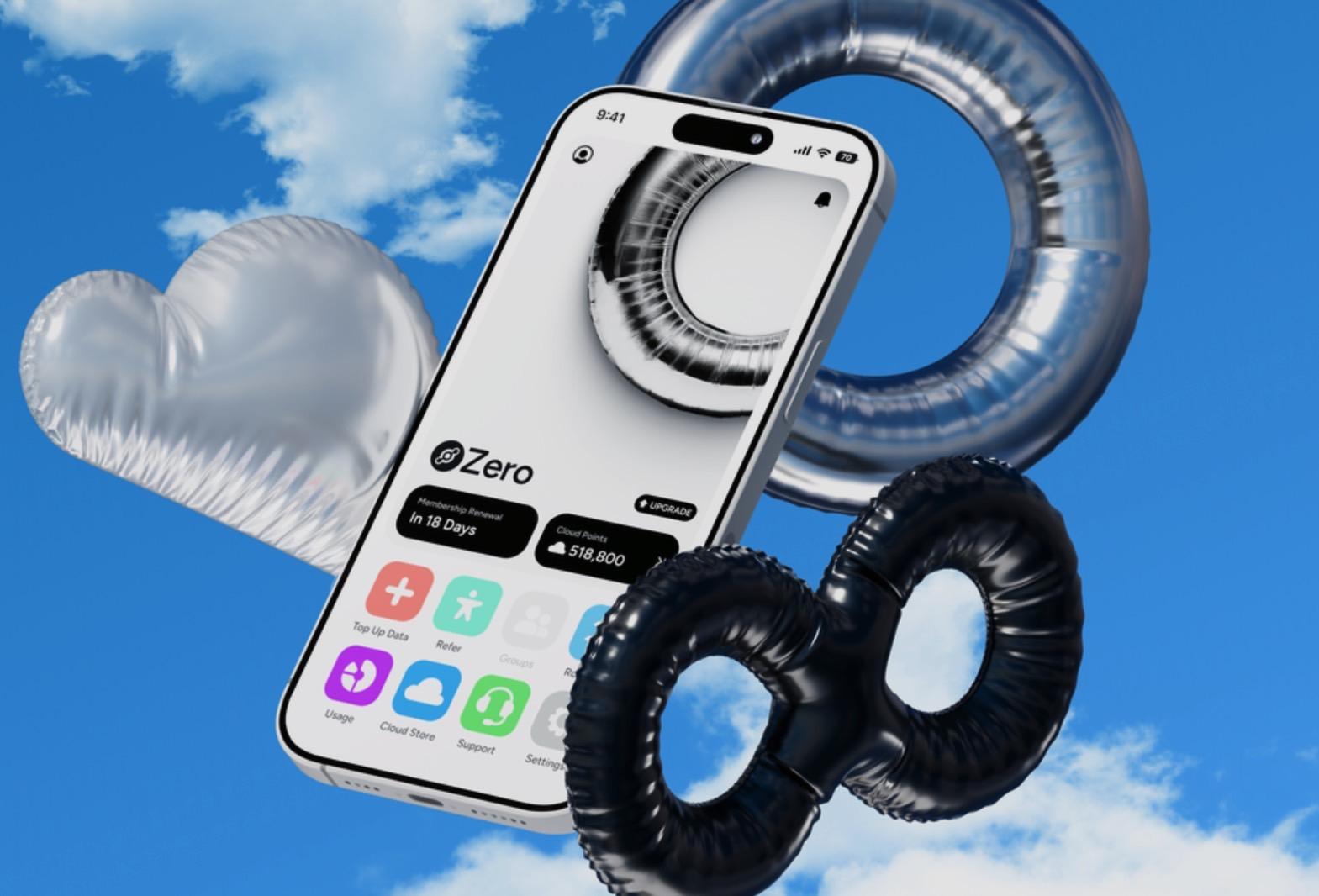
Helium Mobile also has a reward system that lets you collect Cloud Points for various activities. The most important one might be sharing your location anonymously, which lets Helium improve coverage in underserved areas.

It’s important to note that location-sharing is required for the Zero Plan.

You can collect Cloud Points for referring friends to sign up, answer surveys, and other activities. In turn, you can spend Cloud Points on movie, restaurant, and rideshare gift cards. Cloud Points can be used to pay your monthly bill and activate other services, like international roaming.

To get on Helium Mobile, you can use your current number and the device you already own. Download the iPhone or Android app to get started.

There is one big caveat here. Helium Mobile is invite-only. You can either get an invite code from an existing subscriber or join the waitlist at this link. Also, check out this link to read more about the new plans, including the Zero Plan offer.

Source

Posted on

Will the iPhone SE 4 have a Dynamic Island or a notch?

Despite all the DeepSeek hype and OpenAI recently accusing the Chinese company of training its model with ChatGPT, there’s still room for iPhone SE 4 rumors. Did you even remember that Apple is getting ready to announce its first new iPhone of 2025? Apple’s most affordable iPhone with the A18 chip, 6.1-inch OLED display, Dynamic Island cutout, a single rear camera, and Apple’s exclusive 5G and Wi-Fi modems? Well, it seems not all of those rumors are true.

Over the past few weeks, we’ve seen leaks claiming the iPhone SE 4 would have a Dynamic Island cutout instead of the iPhone 14-like notch, which was already rumored for years.

This possible change was teased by credible leaker Evan Blass, followed by controversial leaker Majin Bu. While seeing a new iPhone SE with all this tech would be pretty impressive, it would make sense if Apple held back just a little. Now, thanks to display analyst Ross Young, we’ve pretty much got confirmation.

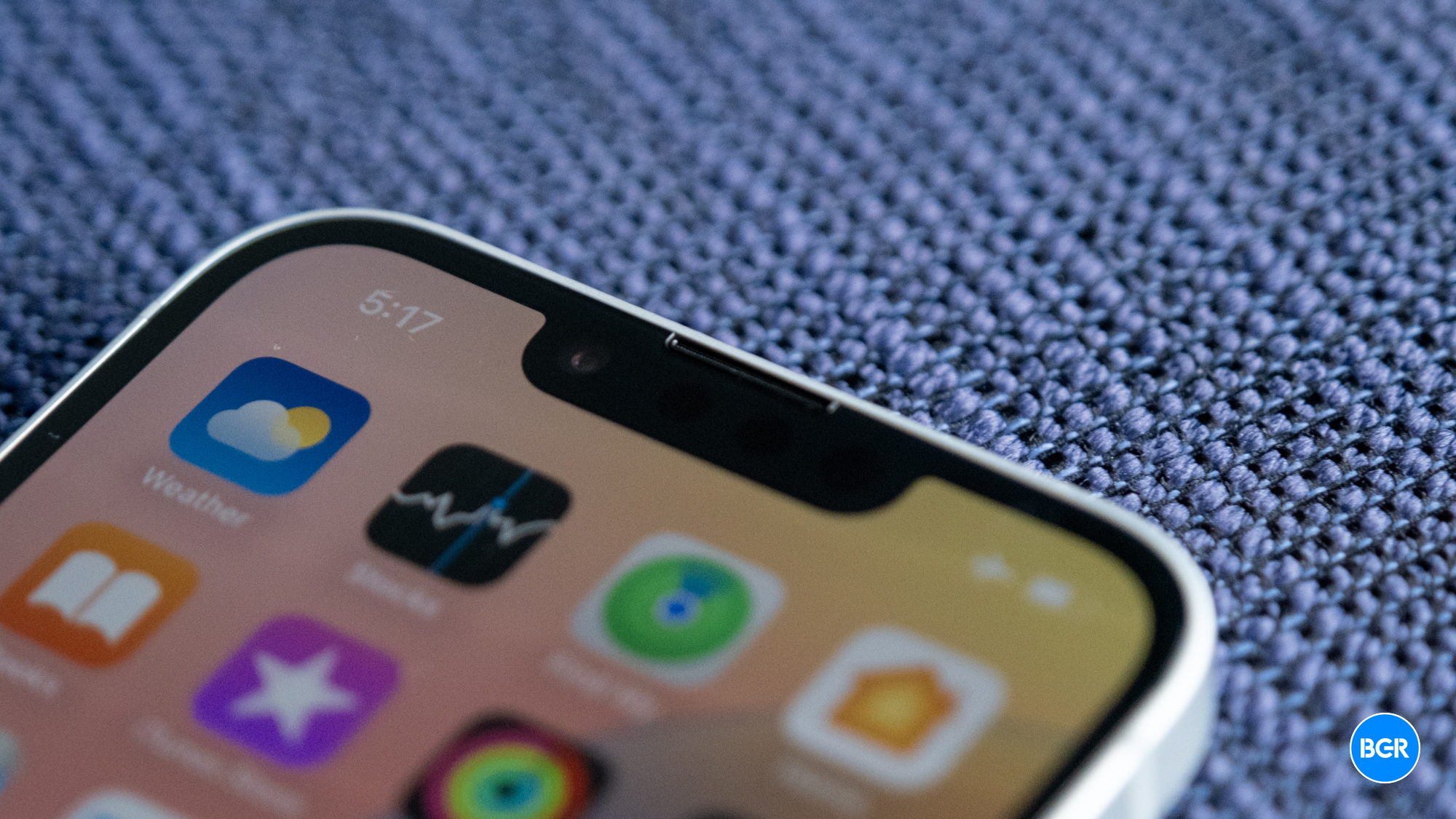
Young has a perfect track record, and he recently posted on X that the iPhone SE 4 will feature an iPhone 14-like notch cutout. Even if the analyst didn’t say that, Apple has been consistent with its iPhone SE releases to assume that.

Tech. Entertainment. Science. Your inbox.

Sign up for the most interesting tech & entertainment news out there.

By signing up, I agree to the Terms of Use and have reviewed the Privacy Notice.

In the past three iterations, Apple used the previous iPhone design. For example, with the iPhone SE 1, Apple rocked the iPhone 5-like design while it already offered the new iPhone 6 style. With the second and third generations of the iPhone SE, it remained with an iPhone 6/8-like design because Apple was already offering iPhone models with a notch. Finally, now that the company moved on to Dynamic Island, it makes sense the notch and larger displays are the next big improvement.

That said, even if the new iPhone SE 4 gets the notch, it’s still a big improvement over the past design, especially since Apple will finally phase out Touch ID on the iPhone and offer Face ID across its lineup.

Apple is expected to hold a spring event to announce this new iPhone alongside other new products. BGR will let you know once we learn more about it.

Source

Posted on

Foodora tests drone and robot deliveries in Sweden

Foodora Norway, the Oslo-based subsidiary of online quick-commerce (Q-commerce) food delivery brand Foodora Group, has partnered with Nordic communications company Tele2 to pilot test home deliveries using robots and drones supported by 5G internet of things (IoT) technology.

The Stockholm metropolitan area was chosen as the test location for the ground robot and drone delivery trials. The Doora robot will be used in the ground tests while the drone trials are being conducted as part of the parallel Foodora Air project.  

A subsidiary of Berlin-based Delivery Hero, Foodora is currently present in Norway, Sweden and Finland, where the company delivers restaurant food, groceries and other consumer goods using cars and bicycles. Foodora also operates in Austria , Hungary and Czechia.

The collaboration with Tele2 forms part of Foodora’s two-year plan to roll out GPS-based robot home deliveries across the Nordic countries by in 2025 and 2026. The ambitious joint venture with Tele2 is focused on self-driving robots and drones connected to 5G and IoT technologies.

Foodora is hoping to roll out commercial Doora ground robot deliveries in Sweden and Norway by year-end 2025, with drone services introduced in 2026.  

Scandinavian countries are lagging behind the US and Finland as regards the development of self-driving robot food delivery services, said Prashant Søegaard, CEO at Foodora Norway. “Our partnership with Tele2 in Sweden will help identify the opportunities, challenges and physical obstacles we face in making Doora work as a viable and popular form of food delivery across Nordic markets,” he added.

In Finland, S-Group and its S-Market supermarket chain partnered with the Tallinn-based Starship Technologies in 2023 to roll out the Starship Robot. The first autonomous S-Market delivery robots (ADRs) became operational in selected towns during December 2023. Monitored in real-time for disruptions to service, the electric-powered Starship ADRs use artificial intelligence (AI) and GPS to plan routes and complete delivery missions.

Mobile app

The Starship Robot platform, over the five-month operating period to 30 May 2024, delivered 150,000 orders to households. Working off S-Market’s dedicated home delivery mobile app, the service had linked to an initial 100 S-Market grocery stores by the end of November.

The platform currently serves 14 towns and cities across Finland , including Helsinki , Tampere and Espoo . S-Group is estimating full-year 2024 deliveries exceeding 400,000 homes.

Additionally, S-Market is recording downloads of over 20,000 per month for the home delivery app, said Tiina Meyer, a senior business developer of retail ecommerce at S-Group.  

“The robot delivery service is a major retailing innovation boosting our grocery business,” she said. “Because of its convenience, it’s hugely popular. Customers appreciate the convenience of this new technology, the speed at which their orders are processed and delivered, the aesthetically pleasing robots, and especially enjoy the music the robots play upon delivery.”

Starship Technologies was incorporated in 2014 by Janus Friis and Ahti Heinla, the two Estonian co-founders of Skype. Headquartered in San Francisco , the company operates engineering subsidiaries in Tallinn and Helsinki .

Foodora’s pilot trials of the ground delivery Doora in Sweden include specific tests related to how the robot navigates pedestrian crossings and curbs, as well as how the robot recognises its surroundings and communicates.

Test and evaluation

The Doora and Foodora Air projects will help to test and evaluate the full potential of the delivery systems when connected to Tele2’s 5G network and IoT technology, said Stefan Trampus, the executive vice-president of Tele2 B2B.

“Within this project, we will be able to use the robot delivery concept to look at other industries and areas of use,” he said. “We can track how GPS and IoT function, and look to optimise solutions. The 5G IoT technology is essential for the drones’ smooth operation. The target is to achieve rapid response times and substantial data transfer capabilities to ensure safe delivery management.”

The Doora ground robot is designed to transport food and other products up to a maximum weight of 20kg. The delivery robot has a top speed of 6km (3.72 miles) per hour and a battery life of eight hours, with a four-hour charge.

The Foodora Air project’s core focus is on testing the operability of a fleet of battery-powered drones, utilising 5G technology provided by Tele2, to deliver meals from various restaurants located in the Stockholm suburb of Värmdö. The Nimbi drones, developed by Swedish firm Aerit, are integrated into Foodora Air’s technology platform.

The all-weather certified Nimbi drones used by Foodora Air are able to operate within a maximum delivery range of 21km and emit 2g of carbon dioxide per kilometre. The Nimbi has a maximum payload carrying capacity of 4kg (10lb), and features a proprietary winching system that enables package pick-up and drop-off without the need for supporting infrastructure.

As part of the Foodora Air trial, deliveries are being restricted to customers’ properties, including front and back gardens where packages can be safely lowered by cable from airborne drones.

The results, and shared test data, emanating from the Doora robot and Foodora Air trials in Sweden will help to shape how the company rolls out drone and robot-supported delivery services in Norway , said Søegaard. “We are closely following the tests in Sweden and hope to learn from that experience,” he said. “The data we collect from the project and trials will better inform us about the challenges we face in Norway and need to overcome and solve.”

Foodora has opened a dialogue with public and private players to expand robot delivery services across Norway . The first significant hurdle will be to obtain authorisation from the Norwegian Public Roads Administration (Statens Vegvesen), and local municipalities, ahead of launching autonomous robots, and at a later stage, drones, in Norway.

Foodora is hoping to roll out a robot delivery service in Norway during the first half of 2025, in collaboration with Danish autonomous air and ground vehicle firm Holo.

In August, Holo partnered with Foodora Norway to conduct a demonstration test at Fornebu, a suburb of Oslo , using a six-wheeled delivery robot supplied by California-based Cartken. The Cartken robot is equipped with three 5G modems and connectivity to multiple mobile operators to ensure continuous communication to shield against signal drop-off. The Cartken uses a PIN code system enabling customers to unlock and retrieve food and other deliveries.

Holo also collaborated with Posten , Norway ’s state-controlled postal service, on a pilot trial to test electric-powered delivery robot Ottobot. The robot was supplied by New York-based Ottonomy.IO. The test, which was conducted in the Oslo district of Filipstadkaia in November and December 2022, has so far not resulted in a decision by Postern to procure delivery robot units for commercial use.  

The Ottobot pilot test was run as a partnership project with AMOI, Norway ’s largest digital marketplace that connects specialist retailers, including restaurants, with customers ordering home delivery.

Posten has been something of a trailblazer in Norway as regards the testing of ground robot delivery systems. In 2018, the company conducted a pilot trial in Oslo on the Buddy Mobility autonomous parcel delivery robot. However, high operating costs and low demand for the service resulted in Posten shuttering the project in 2019.

Source