Posted on

Pure aims at AI beyond the enterprise with FlashBlade//Exa

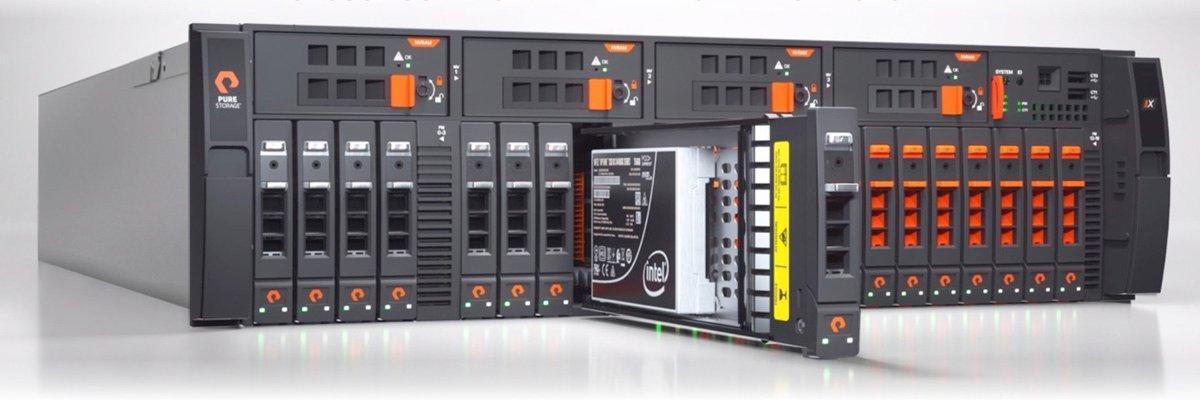
Pure Storage has announced FlashBlade//Exa, which aims at artificial intelligence (AI) and high-performance computing (HPC) workloads that demand extremely high throughput to graphics processing units (GPUs). That will serve customers between large enterprise users of AI and the hyperscalers.

At the same time, FlashBlade//Exa has also introduced a new architecture to a Pure product line, one in which metadata and bulk storage are disaggregated with different hardware and protocols in use.

All of which is in line with Pure’s orientation towards architectures used by the hyperscalers, and comes hot on the heels of last week’s revelation that Meta is the mystery hyperscaler that decided to buy Pure’s Direct Flash Modules (DFMs) for its own systems (see below).

According to Patrick Smith, field chief technology officer at Pure Storage, Exa addresses challenges in storage for AI that include GPU utilisation, inconsistent performance generally, all specifically with metadata, scalability and management complexity.

Exa aims at a performance level somewhat higher than current FlashBlade products, targeting AI factories and GPU-as-a-service providers such as Coreweave, Tenstorrent, DataCrunch and Foundry, as well as research labs, HPC users and sovereign cloud projects. All of which, Pure said, have performance needs in the 1TBps (terabytes per second) to 50TBps throughput range, with 100PB (petabytes) to multiple exabytes of capacity and support for thousands to tens of thousands of GPUs.

FlashBlade is Pure’s fast file and object family, although Exa appears to be file access-only for now.

“It’s next level in comparison to the FlashBlade S500,” said Smith, citing FlashBlade//Exa performance figures of greater than 10TBps read performance in a single namespace, 3.4TBps throughput per rack, and an increase of 20 times in the number of files handled under single namespace.

The novel architecture – for Pure – that lays the ground for the new product, is disaggregation between the metadata and bulk storage data nodes. Metadata is stored on FlashBlade nodes – ie with controller hardware – and connects to customers’ compute cluster via NFS v4.1 parallel file access and TCP. Meanwhile, data nodes connect via Network File System (NFS) v3 (not parallelised) and Remote Direct Memory Access (RDMA).

For the first time, Pure will offer this with Pure-recommended network interface cards (NICs) in customer-specified commodity non-volatile memory express (NVMe) storage servers, but later this year, Pure DFMs will be available for use with FlashBlade//Exa.

As mentioned, this is the first time Pure has released a product without its own DFM capacity, but according to Smith, a decision was forced by “acceleration in the AI [artificial intelligence] landscape, increased demand and especially increased scale”.

“And so, coming out with a platform that allows customers to meet those scale demands in terms of performance and capacity is something we felt we shouldn’t wait on,” he added.

This disaggregation of metadata storage and bulk storage, as well as the independent supply of its flash modules, is in keeping with recent developments that saw it unveil Meta as a hyperscaler customer for Pure’s DFMs.

Around the turn of the year, Pure announced Kioxia and Micron as quad-level cell (QLC) flash chip providers for DFM modules for supply to “a hyperscaler” customer. That customer has now been revealed as Meta, which has gone public with a blog post detailing a shift from hard disk drives to QLC flash.

That is for workloads that suit QLC’s performance profile of highly sequential data and infrequent/low-intensity writes due to its low write endurance, and because QLC is “not yet price competitive enough for a broader deployment”.

General availability of FlashBlade//Exa will be in summer 2025. Also planned for later this year are S3 object storage access via RDMA, Nvidia certification and Pure Storage Fusion integration.

Source

Posted on

MSP cuts costs with Scality pay-as-you-go anti-ransomware storage

London-based managed service provider (MSP) Autodata Products has opted for Scality Artesca object storage through its Scality cloud service provider (SCSP) pay-as-you-go purchasing option, which it uses to supply on-premise backup against ransomware for customers.

Benefits of the SCSP licensing model include being able to offer customers highly scalable backup with short recovery time objectives (RTOs) and at the same cost per terabyte (TB) whether it’s for 25TB or 2.5PB (petabytes).

Autodata Products provides IT solutions focused on backup, storage and security via its Cloudlake offer, predominantly based on Wasabi cloud, Veeam backup and Scality storage. It has around 500 customers on rolling monthly contracts and has offices in the US and the Netherlands.

Within its core offer it has Cloudlake Ransomware Recovery Vault (RRV), and it is here that it decided to offer services using Scality Artesca and SCSP. It was already a customer of Veeam’s pay-as-you-go programme.  

RRV is based around the provision of on-site immutable storage for customers. Here, Autodata deploys Scality Artesca object storage as a backup target and pays only for what is used by its customers.

Artesca is Scality’s object storage product aimed at single application use cases and is heavily targeted at data protection. Scality version 3.0 launched in 2024 and emphasised the anti-ransomware resilience capabilities of its object storage platform. These centre on native S3 immutability, anti-exfiltration capabilities, making data indecipherable to attackers at storage and architecture level, as well as by retaining it in multiple geographic instances.  

According to head of datacentre and cloud services Ant Bucknor, Autodata recommends customers keep a workable amount of critical data on-site so they can restore very quickly should a ransomware attack or other outage occur.

He said: “Our clients were restoring their data from the cloud. But that would often break their RTO policy because of the length of time it would take to get everything back up and running, then they would connect to the cloud location and then it would take them longer to bring the data back.”

So, how much data does Autodata recommend customers store on-site?

“I would suggest probably the last 30 days,” said Bucknor. “That would be my base guide, but obviously every client’s different. We’ve got clients where they have data they need to recover quickly from the last six months and others where if it’s over 48 hours old the data is completely worthless.

“The cloud will provide you with a full copy, and it will be immutable. But it isn’t necessarily going to be quick enough.” 

Key to the benefits for Autodata are that it can supply ransomware recovery solutions that would have been out of reach of SME and mid-market customers previously, and that as it buys more product from Scality prices should decrease.

Bucknor said: “Traditionally, these solutions were in the hundreds of thousands of pounds. Whereas, because of the flexibility we have with Scality, we now have solutions that are suitable for SMB, mid-market, education, local government, etc, whereas these solutions just wouldn’t have been accessible to that market before.

“There’s a benefit from a profitability at scale point of view, as in the more of these we do over time, the bigger the benefit there is to Autodata as a business, with a knock-on effect in the better commercial terms for our customers.”

Pay-as-you-go is relatively new in storage purchasing, but it’s a rising trend. HPE offers pay-as-you-go storage as part of its Greenlake offer that stretches across its IT portfolio. NetApp, meanwhile, offers Keystone storage as-a-service, while Pure Storage has its Evergreen storage programmes.

“Pay-as-you-go is the future,” said Bucknor. “The reason is, people want to have a cloud-like purchasing model where they can buy what they want for as long as they want it, and when they don’t want it any more, they can stop paying for it. They want to know what their costs are. Not have bought something over five years and suddenly they want to buy an extra few terabytes of data and it’s three times the price because they’re locked in. People want a more flexible solution.”

Source

Posted on

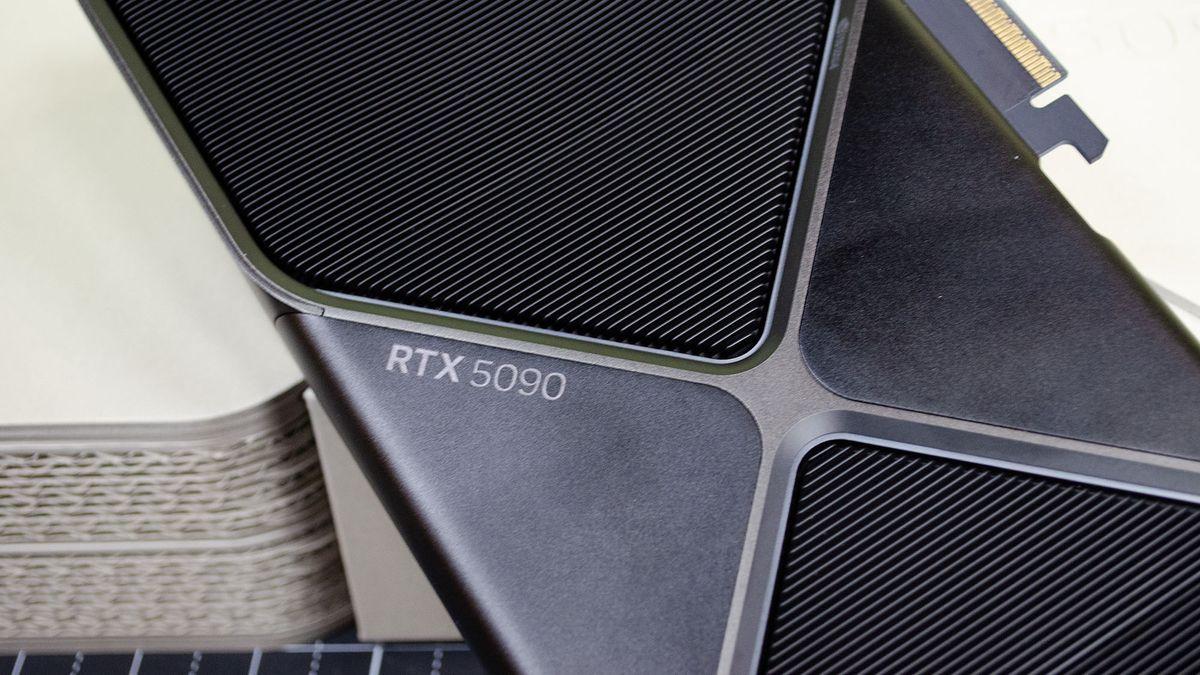
Does the Nvidia RTX 5090 have a cable melting problem? It’s complicated

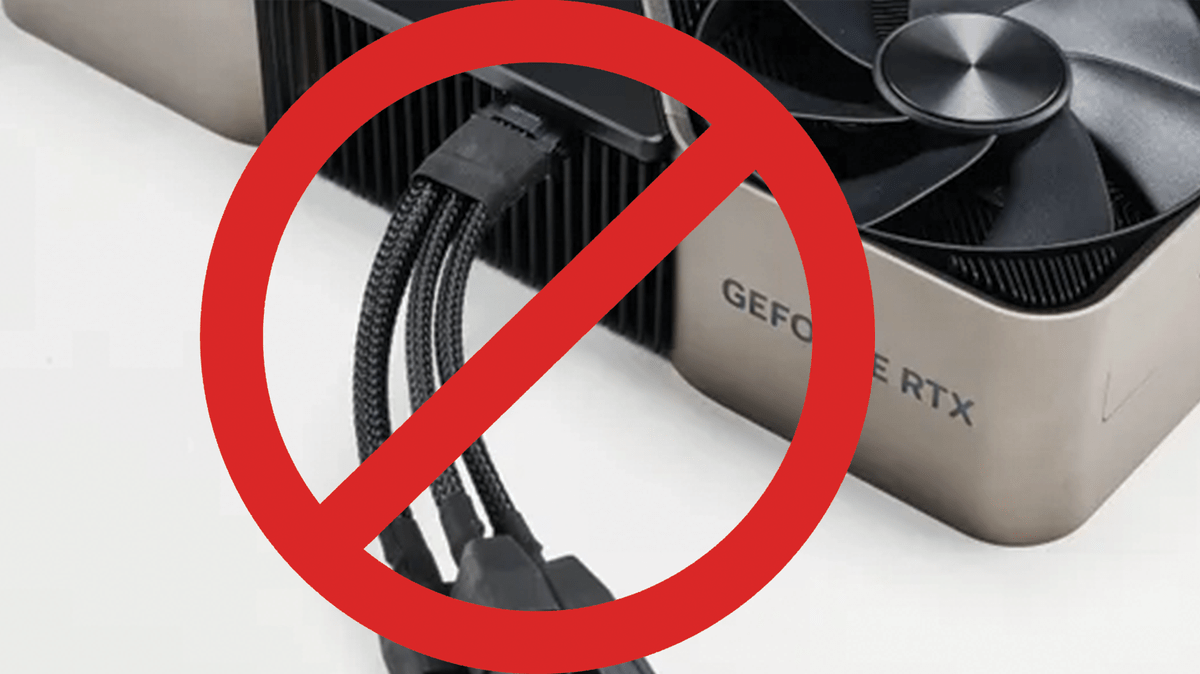
  • A small number of reports of RTX 5090 power cables overheating and melting have been confirmed
  • This follows widespread reports of similar issues with the previous RTX 4090
  • However, it’s possible that third-party cables could be to blame this time around

Remember ‘cablegate’? Back in late 2022, users started to report that the power connectors of their Nvidia RTX 4090 graphics cards were overheating and essentially melting into unusable hunks of plastic – and now, according to some buyers, the same issue could be plaguing the newly-released RTX 5090.

Now, I covered the cablegate fiasco when the story was at its peak, and at the time, I was willing to assign at least some portion of the blame to Nvidia, as the PCIe Special Interest Group (PCI-SIG) had previously published a report warning of ‘thermal variance’ risks regarding the 12VHPWR adapter used for the RTX 4090. This time around, though, I’m really not so sure Nvidia is at fault.

For starters, the issues appear far less widespread than with the RTX 4090; while there were literally dozens of reports back in 2022 (which continued well into 2024), we’ve only seen two isolated confirmed cases of cable-melting with regard to the RTX 5090. The first came from a Reddit user, while the second was reported by the Spanish YouTube channel Toro Tocho Reviews. Both reported the same issue: the power cable overheated and melted at both ends, something we didn’t see in the majority of RTX 4090 connector failures.

Secondly, the first of these cases was confirmed to have involved a third-party power cable from PC-modding supplier MODDIY, introducing a new potential point of failure. Nvidia has now moved over to the 12V-2×6 connection standard for more stable power delivery and more secure pin connections, and although MODDIY claims its cables support the new standard, the Reddit user stated that they’d been using this cable for two years with an RTX 4090. Backward compatibility with third-party 12VHPWR cables is likely to continue to be an issue for Nvidia’s GPUs – notably, MODDIY now has a page on its website advising buyers with RTX 5000-series GPUs to purchase new-for-2025 12V-2×6 cables.

So is there really a problem?

In other words, at least one of these cable-melting cases appears to have been caused by user error: the 12VHPWR cable that melted, despite being physically compatible with the RTX 5090, was presumably unable to handle the power delivery taking place. Nvidia’s latest flagship GPU is a hungry girl, after all, with an obscene 575W TDP.

PC modders are gonna mod, of course, but given the known issues with the previous-gen card’s power connector, I’d personally be very reluctant to use anything but the cables supplied in the box at this point. A Reddit megathread on the topic has been created to compile additional cases, and there’s a fair amount of debate in the comments as to whether Nvidia is to blame or if users should be taking more care to avoid third-party cables – even if they claim to be compatible.

Naturally, I reached out to my contact at Nvidia to ask for a quote, but Team Green declined to comment – not even a ‘we’re investigating’, instead pointing me to MODDIY’s page warning about using older 12VHPWR cables. It seems Nvidia feels more confident this time around, further reinforcing the idea that the cases we’ve seen so far were caused not by the GPUs themselves but rather third-party hardware.

{ window.reliablePageLoad.then(() => { var componentContainer = document.querySelector(“#slice-container-newsletterForm-articleInbodyContent-ynv8HU7B3GgGxvFc4RG8a7”); if (componentContainer) { var data = {“layout”:”inbodyContent”,”header”:”Get daily insight, inspiration and deals in your inbox”,”tagline”:”Sign up for breaking news, reviews, opinion, top tech deals, and more.”,”formFooterText”:”By submitting your information you agree to the Terms & Conditions and Privacy Policy and are aged 16 or over.”,”successMessage”:{“body”:”Thank you for signing up. You will receive a confirmation email shortly.”},”failureMessage”:”There was a problem. Please refresh the page and try again.”,”method”:”POST”,”inputs”:[{“type”:”hidden”,”name”:”NAME”},{“type”:”email”,”name”:”MAIL”,”placeholder”:”Your Email Address”,”required”:true},{“type”:”hidden”,”name”:”NEWSLETTER_CODE”,”value”:”XTR-D”},{“type”:”hidden”,”name”:”LANG”,”value”:”EN”},{“type”:”hidden”,”name”:”SOURCE”,”value”:”60″},{“type”:”hidden”,”name”:”COUNTRY”},{“type”:”checkbox”,”name”:”CONTACT_OTHER_BRANDS”,”label”:{“text”:”Contact me with news and offers from other Future brands”}},{“type”:”checkbox”,”name”:”CONTACT_PARTNERS”,”label”:{“text”:”Receive email from us on behalf of our trusted partners or sponsors”}},{“type”:”submit”,”value”:”Sign me up”,”required”:true}],”endpoint”:”https://newsletter-subscribe.futureplc.com/v2/submission/submit”,”analytics”:[{“analyticsType”:”widgetViewed”}],”ariaLabels”:{}}; var triggerHydrate = function() { window.sliceComponents.newsletterForm.hydrate(data, componentContainer); } if (window.lazyObserveElement) { window.lazyObserveElement(componentContainer, triggerHydrate); } else { triggerHydrate(); } } }).catch(err => console.error(‘%c FTE ‘,’background: #9306F9; color: #ffffff’,’Hydration Script has failed for newsletterForm-articleInbodyContent-ynv8HU7B3GgGxvFc4RG8a7 Slice’, err)); }).catch(err => console.error(‘%c FTE ‘,’background: #9306F9; color: #ffffff’,’Externals script failed to load’, err)); ]]>

Sign up for breaking news, reviews, opinion, top tech deals, and more.

It is still possible that we’re only at the beginning of a tidal wave of similar reports – given the extremely limited availability of the RTX 5090 at launch, we might be yet to see the full extent of the issue as only a small number of users have managed to get their hands on the GPU.

Still, we shouldn’t jump to conclusions. Two cases (with a few more unconfirmed) aren’t exactly the cavalcade of issues we saw after the RTX 4090 launch, so there’s every chance these problems won’t be so widespread. If you were lucky enough to snag one of Nvidia’s new flagship GPUs, my only advice is this: stick with the supplied cables for now! If you’ve got thoughts on this, please feel free to tell me what a genius/idiot I am in our shiny new comments section below. Frankly, I’d love to chat with someone who actually managed to buy one of these cards…

You might also like…

Source

Posted on

DeepSeek-R1: Budgeting challenges for on-premise deployments

Until now, IT leaders have needed to consider the cyber security risks posed by allowing users to access large language models (LLMs) like ChatGPT directly via the cloud. The alternative has been to use open source LLMs that can be hosted on-premise or accessed via a private cloud. 

The artificial intelligence (AI) model needs to run in-memory and, when using graphics processing units (GPUs) for AI acceleration, this means IT leaders need to consider the costs associated with purchasing banks of GPUs to build up enough memory to hold the entire model.

Nvidia’s high-end AI acceleration GPU, the H100, is configured with 80Gbytes of random-access memory (RAM), and its specification shows it’s rated at 350w in terms of energy use.

China’s DeepSeek has been able to demonstrate that its R1 LLM can rival US artificial intelligence without the need to resort to the latest GPU hardware. It does, however, benefit from GPU-based AI acceleration.

Nevertheless, deploying a private version of DeepSeek still requires significant hardware investment. To run the entire DeepSeek-R1 model, which has 671 billion parameters in-memory, requires 768Gbytes of memory. With Nvidia H100 GPUs, which are configured with 80GBytes of video memory card each, 10 would be required to ensure the entire DeepSeek-R1 model can run in-memory. 

IT leaders may well be able to negotiate volume discounts, but the cost of just the AI acceleration hardware to run DeepSeek is around $250,000.

Less powerful GPUs can be used, which may help to reduce this figure. But given current GPU prices, a server capable of running the complete 670 billion-parameter DeepSeek-R1 model in-memory is going to cost over $100,000.

The server could be run on public cloud infrastructure. Azure, for instance, offers access to the Nvidia H100 with 900 GBytes of memory for $27.167 per hour, which, on paper, should easily be able to run the 671 billion-parameter DeepSeek-R1 model entirely in-memory.

If this model is used every working day, and assuming a 35-hour week and four weeks a year of holidays and downtime, the annual Azure bill would be almost $46,000 a year. Again, this figure could be reduced significantly to $16.63 per hour ($23,000) per year if there is a three-year commitment.

Less powerful GPUs will clearly cost less, but it’s the memory costs that make these prohibitive. For instance, looking at current Google Cloud pricing, the Nvidia T4 GPU is priced at $0.35 per GPU per hour, and is available with up to four GPUs, giving a total of 64 Gbytes of memory for $1.40 per hour, and 12 would be needed to fit the DeepSeek-R1 671 billion-parameter model entirely-in memory, which works out at $16.80 per hour. With a three-year commitment, this figure comes down to $7.68, which works out at just under $13,000 per year.

A cheaper approach

IT leaders can reduce costs further by avoiding expensive GPUs altogether and relying entirely on general-purpose central processing units (CPUs). This setup is really only suitable when DeepSeek-R1 is used purely for AI inference.

A recent tweet from Matthew Carrigan, machine learning engineer at Hugging Face, suggests such a system could be built using two AMD Epyc server processors and 768 Gbytes of fast memory. The system he presented in a series of tweets could be put together for about $6,000.

Responding to comments on the setup, Carrigan said he is able to achieve a processing rate of six to eight tokens per second, depending on the specific processor and memory speed that is installed. It also depends on the length of the natural language query, but his tweet includes a video showing near-real-time querying of DeepSeek-R1 on the hardware he built based on the dual AMD Epyc setup and 768Gbytes of memory.

Carrigan acknowledges that GPUs will win on speed, but they are expensive. In his series of tweets, he points out that the amount of memory installed has a direct impact on performance. This is due to the way DeepSeek “remembers” previous queries to get to answers quicker. The technique is called Key-Value (KV) caching.

“In testing with longer contexts, the KV cache is actually bigger than I realised,” he said, and suggested that the hardware configuration would require 1TBytes of memory instead of 76Gbytes, when huge volumes of text or context is pasted into the DeepSeek-R1 query prompt.

Buying a prebuilt Dell, HPE or Lenovo server to do something similar is likely to be considerably more expensive, depending on the processor and memory configurations specified.

A different way to address memory costs

Among the approaches that can be taken to reduce memory costs is using multiple tiers of memory controlled by a custom chip. This is what California startup SambaNova has done using its SN40L Reconfigurable Dataflow Unit (RDU) and a proprietary dataflow architecture for three-tier memory.

“DeepSeek-R1 is one of the most advanced frontier AI models available, but its full potential has been limited by the inefficiency of GPUs,” said Rodrigo Liang, CEO of SambaNova.

The company, which was founded in 2017 by a group of ex-Sun/Oracle engineers and has an ongoing collaboration with Stanford University’s electrical engineering department, claims the RDU chip collapses the hardware requirements to run DeepSeek-R1 efficiently from 40 racks down to one rack configured with 16 RDUs.

Earlier this month at the Leap 2025 conference in Riyadh, SambaNova signed a deal to introduce Saudi Arabia’s first sovereign LLM-as-a-service cloud platform. Saud AlSheraihi, vice-president of digital solutions at Saudi Telecom Company, said: “This collaboration with SambaNova marks a significant milestone in our journey to empower Saudi enterprises with sovereign AI capabilities. By offering a secure and scalable inferencing-as-a-service platform, we are enabling organisations to unlock the full potential of their data while maintaining complete control.”

This deal with the Saudi Arabian telco provider illustrates how governments need to consider all options when building out sovereign AI capacity. DeepSeek demonstrated that there are alternative approaches that can be just as effective as the tried and tested method of deploying immense and costly arrays of GPUs.

And while it does indeed run better, when GPU-accelerated AI hardware is present, what SambaNova is claiming is that there is also an alternative way to achieve the same performance for running models like DeepSeek-R1 on-premise, in-memory, without the costs of having to acquire GPUs fitted with the memory the model needs.

Source

Posted on

Where to buy Nvidia RTX 5070 Ti: I’m expecting stock here first

Refresh

2025-02-20T21:48:38.229Z

To absolutely nobody’s surprise, and as was the case for the RTX 5080 and 5090 before it, nearly all stock for the RTX 5070 Ti has been scooped up and accounted for on the first day.

While you probably won’t have much luck getting a standalone GPU until retailers restock (stay tuned!), you do still have some options for prebuilt PCs and gaming laptops from retailers like Newegg and B&H Photo. These options aren’t exactly budget-friendly, but they do offer a chance at the latest hardware in a professional, pre-planned and fully compatible build, oftentimes with a warranty as an added layer of protection.

2025-02-20T20:23:41.184Z

One key question some shoppers may be asking is this: should I get an RTX 5070 Ti, or just wait for the regular 5070?

For some PC gamers, this might be an answer as simple as ‘do I have an extra two hundred bucks’, but for those who could spring for the 5070 To but are uncertain, it’s a much harder decision. Personally, I want to say that the 4070 Ti Super-beating performance makes it a sure bet, but we’re still a few weeks away from the 5070 launch on March 5, so it’s too soon to say – with a fairly significant price difference, I’d say that unless the Ti model outperforms the regular 5070 by a margin of at least 20% before upscaling tech is applied, the cheaper card may in fact be the better option when it comes to value for money.

2025-02-20T18:55:17.804Z

Access to upscaling and frame-gen tools is clearly going to become the Next Big Thing in gaming, with even home consoles starting to implement resolution upscaling (I do still think PSSR is a terrible name, though).

With that in mind, the RTX 5070 Ti – and the upcoming RTX 5070 – make a lot of sense for gamers looking to upgrade from an older GPU. If you’re still rocking a 2000 card or even something from the GTX generations, these midrange Blackwell cards will be a worthy upgrade purely for DLSS 4, let alone the raw performance improvements.

2025-02-20T17:17:08.267Z

Honing in on 4K gaming, the RTX 5070 Ti puts up some impressive numbers at its MSRP of $749. That said, as we discuss in our review, without a Founders Edition 5070 Ti to serve as a baseline, that price is more of a suggestion than a steadfast rule for partner cards.

Still, if you can find a 5070 Ti for a respectable price, you’re looking at “31% better overall average FPS than the RTX 4070 Ti and about 23% better average FPS than the RTX 4070 Ti Super” per our benchmark tests.

The graph below has some customization options – use the top drop down bars to select different test results and single out specific GPUs, like the RTX 5070 Ti vs the RTX 4070 Ti.

2025-02-20T16:14:33.914Z

Our Nvidia GeForce RTX 5070 Ti review just went live!

TechRadar’s Components Editor, John Loeffler, put the Asus Prime GeForce RTX 5070 Ti through its paces in our comprehensive benchmark suite of creative, AI, and gaming testing.

The results speak for themselves – the RTX 5070 Ti looks to be the best graphics card currently on the market for most systems…if you can manage to buy one. Read the full review for an outstanding in-depth breakdown of the RTX 5070 Ti’s performance and value proposition.

2025-02-20T15:11:30.394Z

Image of Nvidia's DLSS 4 Frame Generation

(Image credit: Nvidia)

Don’t get me wrong, mind you: DLSS 4 with Nvidia’s newly boosted frame-gen tech is seriously impressive. I recently saw it in action in Cyberpunk 2077, and having used the first-gen iteration of the software, the difference is truly night and day.

It’s still not perfect, but visual tearing, blurring, and artifacting while upscaled to 4K with frame-gen turned on is significantly reduced even against DLSS 3 on a 4000-series GPU, to the point where it’s almost completely unnoticeable even when I’m actively looking for it. I spotted the occasional tiny bit of blurring on the HUD while driving and shooting at high speeds, but that was literally it – Nvidia’s framerate-boosting features have come a long way since the comparatively iffy original DLSS.

2025-02-20T14:11:50.787Z

Although its pricing and performance (the latter of which places it almost on par with the more expensive RTX 5080) could make the RTX 5070 Ti the de facto best pick of Nvidia’s current crop of GPUs, finding one at retail price could prove difficult – and if it does, I’d feel compelled to say you should sit and wait.

That goes double for anyone who already has an RTX 4000 card; frankly, I’ll be sticking with my RTX 4080 for a while, Multi Frame Generation be damned.

2025-02-20T11:31:02.259Z

Of course, we’re still updating our where to buy the Nvidia RTX 5080 and where to buy the Nvidia RTX 5090 guides as well, though stock remains extremely low, so there’s not too much to report at the moment.

2025-02-20T11:13:17.121Z

And, while this might not be the case with the more affordable 5070 Ti, we have seen in the past inflated GPU prices which meant buying an entire PC with the GPU installed wasn’t much more expensive than buying the GPU by itself! Considering you’re getting other new components with an entire PC, it can end up being better value than you might first imagine.

So, we’ll also highlight any great prebuilt gaming PCs that come with the RTX 5070 Ti as well.

2025-02-20T11:06:49.881Z

An HP Victus 15L, the best budget gaming PC pick overall, against a pink techradar background

(Image credit: Future / HP)

As with previous GPUs that were subject to high demand, one alternative way of getting hold of one is by buying a pre-built gaming PC with the GPU installed.

While this might seem an expensive way of doing things, it can be worth it if you were thinking of upgrading several parts of your Pc at once. You could also sell your old PC if you no longer need it, and that could make the initial outlay more affordable.

2025-02-20T10:40:50.061Z

As well as the main retailers, we’ll also check out less well known stores as well, as they can sell out more slowly as most people will check out the likes of Best Buy and Currys (in the UK) first.

2025-02-20T10:25:31.351Z

Phone scammer

(Image credit: Shutterstock)

Using this page to help you find stock will also keep you from being scammed or overpaying. Unfortunately, unscrupulous people will use the excitement and demand of the 5070 Ti to take advantage of people.

This could be done by selling fake cards, or (in a process known as ‘scalping’) buying real 5070 Tis and then selling them on for hugely inflated prices.

We’ll only recommend trusted retailers that we know won’t rip you off, and we’ll only link to 5070 Ti models that are sensibly priced. With the RTX 5090 launch, I found several retailers selling the GPU for around $4,000 – a huge mark up. No matter how desperate you are to get a new 5070 Ti, you really don’t want to pay obscene amounts just to get one. It’s much better to wait until more stock arrives – trust me.

2025-02-20T10:19:34.213Z

Nvidia GTC 2024

(Image credit: Future / Mike Moore)

So, there’s going to be a big rush when the RTX 5070 Ti goes on sale – but there are some things we’ve learned from the earlier launches that can help improve your chances of getting one.

Firstly, I recommend you keep this page open throughout the day, as we’ll be updating it live – and we’ll be giving stock alerts when we find a retailer that is still selling 5070 Tis, and we’ll link directly to the GPUs so you can quickly buy them.

2025-02-20T10:17:56.553Z

Nvidia RTX 5080 against a yellow TechRadar background

(Image credit: Future)

So, why do we think the RTX 5070 Ti will sell out fast? Well, for a start, as I mentioned earlier, the RTX 5080 and RTX 5090 sold out incredibly quickly when they went on sale a few weeks ago, proving that there’s a huge demand for Nvidia’s latest GPUs.

Those two cards are high-end and very expensive GPUs, which makes the fact they sold out so fast even more impressive.

However, this doesn’t bode well for RTX 5070 Ti stock availability. For a start, everyone who tried and failed to get a 5090 or 5080 will likely try to get a 5070 Ti, as reviews suggest it’s an excellent card.

On top of that, the 5070 Ti has a much more affordable price tag, which should mean it’ll be more popular than the premium GPU, so we could see even more people try to snag one.

2025-02-20T10:16:29.656Z

MSI RTX 5070 Ti Gaming Trio OC Front-on

(Image credit: MSI)

Good morning! Today’s the day that the Nvidia RTX 5070 Ti goes on sale. If Nvidia’s previous RTX 5000 series launches are anything to go buy, expect stock to go live around 9am ET / 2PM GMT.

That’s still a few hours away, so now is a good time to check out the retailers above, and make sure you’re signed in to your accounts ahead of the GPUs going on sale.

This is because, like the RTX 5080 and RTX 5090 GPUs that launched a few weeks ago, I expect the RTX 5070 Ti to sell out fast, so you’ll want to make sure you’re as prepared as usual. You don’t want to have a new GPU in your shopping cart, only to find out when you come to pay that you need to sign in with a long-forgotten password.

Source

Posted on

RTX 5050 spotted in HP Victus 15, another hint that Nvidia has a mobile GPU to pep up affordable gaming laptops

  • Nvidia’s RTX 5050 GPU has been spotted in gaming laptops alongside the RTX 5060
  • Incoming HP Victus 15 notebooks will feature these Blackwell GPUs
  • The RTX 5050 is likely to be a laptop-only graphics card, as with the previous Lovelace generation

Away from the RTX 5090 and RTX 5080, and the continued stock woes around these GPUs, we’ve had another sighting of the RTX 5050 (and 5060) at the other end of the Blackwell line-up.

In this case, though, these are mobile graphics cards for notebooks, not desktop models.

VideoCardz managed to get hold of a specifications sheet for HP‘s Victus 15 (model FA2) gaming laptops which reveals that these devices will feature Nvidia’s GeForce RTX 5060 and RTX 5050.

This appears to confirm the existence of these graphics cards, but as ever, we must be cautious around leaked material which may turn out to be using outdated information (or even be faked).

The new Victus 15 spec also features Intel‘s 13th-generation CPUs, complementing the Blackwell laptop GPUs with enough processing power for good performance. However, this is in contrast to the higher-end RTX 5090 and RTX 5080-powered laptops, which will use some of Intel’s newer Core Ultra processors.

Note that both the RTX 5060 and RTX 5050 GPUs have not been officially confirmed by Nvidia (for desktop PCs, or laptops), and they were missing from the Blackwell announcements made at CES 2025.

It seems likely that they’re coming at some point, of course, but the RTX 5050 will probably be a laptop-only GPU, based on the rumors we’ve heard thus far. (They are all about the mobile part, and there’s nothing really to suggest a desktop graphics card – though that doesn’t rule out the possibility).

{ window.reliablePageLoad.then(() => { var componentContainer = document.querySelector(“#slice-container-newsletterForm-articleInbodyContent-gH45yvdS9CNuBAXA4siPuJ”); if (componentContainer) { var data = {“layout”:”inbodyContent”,”header”:”Get daily insight, inspiration and deals in your inbox”,”tagline”:”Sign up for breaking news, reviews, opinion, top tech deals, and more.”,”formFooterText”:”By submitting your information you agree to the Terms & Conditions and Privacy Policy and are aged 16 or over.”,”successMessage”:{“body”:”Thank you for signing up. You will receive a confirmation email shortly.”},”failureMessage”:”There was a problem. Please refresh the page and try again.”,”method”:”POST”,”inputs”:[{“type”:”hidden”,”name”:”NAME”},{“type”:”email”,”name”:”MAIL”,”placeholder”:”Your Email Address”,”required”:true},{“type”:”hidden”,”name”:”NEWSLETTER_CODE”,”value”:”XTR-D”},{“type”:”hidden”,”name”:”LANG”,”value”:”EN”},{“type”:”hidden”,”name”:”SOURCE”,”value”:”60″},{“type”:”hidden”,”name”:”COUNTRY”},{“type”:”checkbox”,”name”:”CONTACT_OTHER_BRANDS”,”label”:{“text”:”Contact me with news and offers from other Future brands”}},{“type”:”checkbox”,”name”:”CONTACT_PARTNERS”,”label”:{“text”:”Receive email from us on behalf of our trusted partners or sponsors”}},{“type”:”submit”,”value”:”Sign me up”,”required”:true}],”endpoint”:”https://newsletter-subscribe.futureplc.com/v2/submission/submit”,”analytics”:[{“analyticsType”:”widgetViewed”}],”ariaLabels”:{}}; var triggerHydrate = function() { window.sliceComponents.newsletterForm.hydrate(data, componentContainer); } if (window.lazyObserveElement) { window.lazyObserveElement(componentContainer, triggerHydrate); } else { triggerHydrate(); } } }).catch(err => console.error(‘%c FTE ‘,’background: #9306F9; color: #ffffff’,’Hydration Script has failed for newsletterForm-articleInbodyContent-gH45yvdS9CNuBAXA4siPuJ Slice’, err)); }).catch(err => console.error(‘%c FTE ‘,’background: #9306F9; color: #ffffff’,’Externals script failed to load’, err)); ]]>

Sign up for breaking news, reviews, opinion, top tech deals, and more.

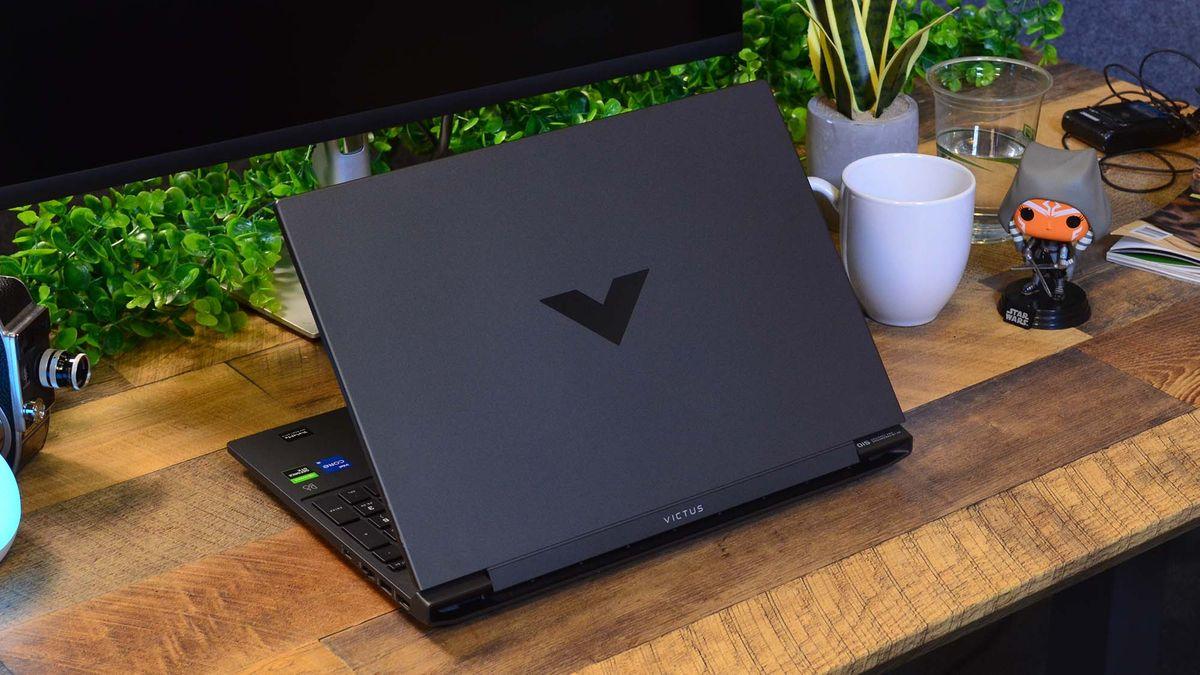
An HP Victus 15 on a desk

(Image credit: Future)

The RTX 5050 GPU has a trump card in DLSS 4

Considering the RTX 5050’s (which I reiterate isn’t officially confirmed by Nvidia) position as the lowest tier option for a Blackwell laptop GPU, it’s going to face some stiff competition. Particularly from AMD‘s Strix Halo APUs, which pack some serious grunt with their integrated graphics for gaming laptops (or handhelds).

However, Nvidia does have a secret weapon here – namely DLSS 4, which will certainly come in handy to give the RTX 5050 some more oomph. I’ve already highlighted how much of a game changer the upscaling tech is, improved by leaps and bounds thanks to its new transformer model and Multi Frame Generation (MFG), which enhance image stability and quality, and boost frame rates respectively. (With PC games that support the tech, of course).

That’s not to say that the RTX 5050 won’t perform well enough at a resolution like 1080p, but reports suggest it will only use 8GB of VRAM, which is now looking shaky for AAA games today (and certainly in the future). The old Frame Generation tech introduced with RTX 4000 GPUs had ghosting issues coupled with input latency headaches – these drawbacks have both been improved with MFG.

For those on a budget, the RTX 5060 and RTX 5050-powered HP Victus 15 gaming laptops may end up being a reasonable option.

You may also like…

Source

Posted on

Has Pure got the first of its ‘HDD is doomed’ ducks in a row?

Pure Storage thinks things are slotting into place for its predicted imminent demise of enterprise spinning disk.

In December 2024, it announced an unnamed hyperscaler had inked an agreement to take Pure’s DirectFlash Modules (DFMs) as components for storage infrastructure.

Meanwhile, Pure Storage now counts Nand flash makers Micron and Kioxia as supply chain partners.

The Micron partnership was announced earlier this month, with Pure making plans to take quantities of Micron’s gen 9 QLC Nand memory.

Last month, Pure and Kioxia announced the latter would supply QLC flash for DFM modules to supply to hyperscaler customers.

Here, Pure Storage is setting itself up as a provider of hyperscaler systems or components in a ground-breaking move for an enterprise storage array maker.

The wider significance is that because hyperscalers are such huge buyers of hard drives, a switch to all-flash would make a big dent in spinning disk manufacturing volumes, and that could spell the hard disk drive’s (HDD’s) death knell. 

Selling to hyperscalers: The nails in HDD’s coffin?

In June 2024, Pure announced it had been working to adapt its DFM technology to the needs of hyperscaler environments. DFMs are not ordinary SSDs, like those sold by the big drive makers. Because Pure controls DFM design and manufacture, and because they also design and build controller systems, data management functionality can be distributed across drive and array systems.

According to Pure, that brings efficiencies in use of cache and data placement that in part can make for better longevity in QLC-based flash.

It also means less energy used, more rapid input/output (I/O) and savings on space that allow for more Nand to be installed. That amounts to a claimed capacity multiplier of around 2.5x compared with what’s possible from commodity SSD-equipped arrays. For hyperscalers that buy massive quantities of drive capacity, these advantages are significant.

Pure Storage said one hyperscaler has sung the praises of its DFMs after deploying a proof-of-concept.

For Pure Storage, the challenge will be scale in the supply chain. Amazon Web Services (AWS), Azure, GCP and Meta buy about 43% of global server production. And they only buy white box hardware that they customise themselves. That market is one hitherto effectively barred to enterprise storage makers because their products are not specialised to it.

So, according to their strategy, Pure Storage will sell their DFMs as components that will work with the hyperscalers’ own storage. Officially, it’s not known which hyperscaler Pure has struck a deal with, but it is known that GCP and Meta, at least, have driven the adoption of the software data placement technique, flexible data placement.

SSDs with 10x more capacity than HDD

Until now, hyperscalers have preferred to use spinning disk HDDs to drive their storage services largely because they have been cheaper. But they are also slower. And, with the advent of artificial intelligence (AI), the need for more rapid access to colder data has arisen – such as in backups and data lakes – and so the big hosting companies have started to look at SSD.

However, so far, SSD had lacked the capacity to be profitably deployed. Now, the latest generations of QLC flash from Micron and Kioxia allow Pure to make DFMs that provide 150TB, which will soon reach 300TB, the equivalent of 10 HDDs.

Kioxia’s latest generation of Nand flash, unveiled late last year, uses charge trap (CT) cells to create smaller SSDs with higher density and while using less energy. Meanwhile, Kioxia also released test results that showed writes with flexible data placement (using NoSQL database RocksDB) that gave read speed 1.8x faster and Nand cell lifespan increased by 3x.

Micron is already a supplier to Pure Storage of Nand in its DFMs. It hasn’t shared much detail about its next generation of SSD, but what is known is that its Nand circuits will give 19% more capacity than the current one.

In December 2024, Pure Storage announced quarterly revenue of $831m, 9% up year-on-year. That puts it behind Dell, which generated revenue of $4bn in the past quarter (up 4% year-on-year); also behind NetApp, which took $1.66bn in the same period (up 6% year-on-year), and almost certainly behind HPE, which doesn’t disclose the share taken by storage in its quarterly revenue of $8.5bn.

Is it the beginning of the end for HDD?

Will Pure’s partnership to supply its high-capacity flash modules to a hyperscaler customer be the first set of nails in the coffin of spinning disk hard drives?

Pure Storage chief technology officer Rob Lee said last week at a press event in Prague that the company’s first hyperscaler design win will be “transformative”, and that a switch to flash by the hyperscalers could lead to collapse in the HDD market.

The deal he’s talking about was announced in December, and will see Pure supply its DFM SSD modules – which will offer up to 300TB capacity by 2026 – to an unnamed hyperscaler.

“We won’t be supplying arrays,” said Lee. “They want the benefits of direct flash but don’t need the other data services. We’re co-engineering with the hyperscaler to integrate with their custom system.

“They were all ready to build something like DFM, but then thought, ‘Why build it ourselves? Let’s just integrate [Pure’s flash modules]’.”

He said the move on the part of the hyperscalers is driven by data growth and the needs of AI, in particular the requirement to access large and relatively dormant stores of data.

Lee added that there is something like 100,000 exabytes of HDD produced quarterly, with hyperscalers taking “60% or 70%”. That, in turn, would take such a chunk out of the volume of HDD manufacturing as to make it much less viable.

Source

Posted on

AMD’s big RX 9070 launch might happen later in February – and we could find out how these GPUs compare to the Nvidia RTX 5070

  • Rumor has it there’ll be a press event for AMD RX 9070 GPUs at the end of February
  • This should be a big reveal, hopefully complete with pricing details
  • It makes sense that it’d come just ahead of a confirmed on-sale date of March for the RX 9070 and its XT sibling

AMD’s RX 9070 models might be formally announced later in February, a new rumor suggests, ahead of the scheduled March arrival for these graphics cards.

Harukaze5719 on X noticed that Benchlife, a Chinese tech site, posted this info in a story that was primarily about Nvidia’s incoming RTX 5070 GPUs, which will be direct rivals for the RX 9070 cards. (Although AMD’s next-gen GPUs are potential RTX 5070 killers, if some rumors are right).

We’re told that the current plan is for AMD to “hold a press conference for the Radeon RX 9000 series” at the end of February, but the exact details are still to be confirmed.

I’d advise a thick coating of seasoning with this one due to the way the nugget of info is crowbarred in at the end of the article, and the fact that this is translated. Also, Benchlife isn’t top of our list of reliable sites for rumors, but that said, it has got things right in the past – and this makes some sense, as I’ll discuss next.

A PC gamer looking happy

(Image credit: Shutterstock)

Analysis: Pricing details for RDNA 4, ASAP, please

The way this rumor is phrased (again, remember the translation leaves some room for doubt) is that things still sound rather up in the air for RDNA 4. However, it is AMD’s intention to debut these RX 9070 GPUs in March as that has been formally announced as an on-sale date, not just a reveal.

Team Red subsequently noted that more time was being taken to hone elements like GPU drivers and FSR 4 support, as well as ensuring healthier stock levels for the RX 9070s, which sounds like a good idea to me, particularly given how the Nvidia Blackwell launch has gone (terribly, stock-wise).

If we are looking at March for the RX 9070 graphics cards to be on shelves, some kind of formal announcement should come before that (AMD has promised a launch event too – indeed, it was rumored for late January at one point). And so a late February timeframe does make sense in that light, but we still need to maintain an appropriate level of skepticism here.

{ window.reliablePageLoad.then(() => { var componentContainer = document.querySelector(“#slice-container-newsletterForm-articleInbodyContent-ppjHeFisJZP5dEcFjuZL9J”); if (componentContainer) { var data = {“layout”:”inbodyContent”,”header”:”Get daily insight, inspiration and deals in your inbox”,”tagline”:”Sign up for breaking news, reviews, opinion, top tech deals, and more.”,”formFooterText”:”By submitting your information you agree to the Terms & Conditions and Privacy Policy and are aged 16 or over.”,”successMessage”:{“body”:”Thank you for signing up. You will receive a confirmation email shortly.”},”failureMessage”:”There was a problem. Please refresh the page and try again.”,”method”:”POST”,”inputs”:[{“type”:”hidden”,”name”:”NAME”},{“type”:”email”,”name”:”MAIL”,”placeholder”:”Your Email Address”,”required”:true},{“type”:”hidden”,”name”:”NEWSLETTER_CODE”,”value”:”XTR-D”},{“type”:”hidden”,”name”:”LANG”,”value”:”EN”},{“type”:”hidden”,”name”:”SOURCE”,”value”:”60″},{“type”:”hidden”,”name”:”COUNTRY”},{“type”:”checkbox”,”name”:”CONTACT_OTHER_BRANDS”,”label”:{“text”:”Contact me with news and offers from other Future brands”}},{“type”:”checkbox”,”name”:”CONTACT_PARTNERS”,”label”:{“text”:”Receive email from us on behalf of our trusted partners or sponsors”}},{“type”:”submit”,”value”:”Sign me up”,”required”:true}],”endpoint”:”https://newsletter-subscribe.futureplc.com/v2/submission/submit”,”analytics”:[{“analyticsType”:”widgetViewed”}],”ariaLabels”:{}}; var triggerHydrate = function() { window.sliceComponents.newsletterForm.hydrate(data, componentContainer); } if (window.lazyObserveElement) { window.lazyObserveElement(componentContainer, triggerHydrate); } else { triggerHydrate(); } } }).catch(err => console.error(‘%c FTE ‘,’background: #9306F9; color: #ffffff’,’Hydration Script has failed for newsletterForm-articleInbodyContent-ppjHeFisJZP5dEcFjuZL9J Slice’, err)); }).catch(err => console.error(‘%c FTE ‘,’background: #9306F9; color: #ffffff’,’Externals script failed to load’, err)); ]]>

Sign up for breaking news, reviews, opinion, top tech deals, and more.

The big hope is that we’ll get some pricing details with that reveal in possibly a few weeks’ time, as those MSRPs will be absolutely key in how these RDNA 4 graphics cards stack up to Nvidia’s RTX 5070 models. Although AMD has made another promise here, too, namely that RDNA 4 will be very competitively priced, and so we can hope the RX 9070 models will really pack a value punch in the mid-range of the GPU spectrum.

Right now, all we have is a lot of promises, though. We just need to hope that they manifest into a reality of AMD gunning for Nvidia’s mid-range Blackwell offerings in a big way, as that should force Team Green to be more competitive, too.

Via VideoCardz

You might also like…

Source

Posted on

New Nvidia GeForce RTX 5060 Ti and RTX 5060 rumor suggests they could end up being great budget buys

  • New rumor suggests Nvidia GeForce RTX 5060 Ti and RTX 5060 won’t need a 12VHPWR power connector
  • Should make upgrading a lot easier
  • If you have a 650W PSU or higher, you should also be fine

It looks like the upcoming Nvidia GeForce RTX 5060 Ti and RTX 5060 graphics cards could prove to be even better value for money than initially thought, as a new rumor suggests that the mid-range graphics cards won’t require Nvidia’s 12VHPWR connector (which the powerful RTX 5090 and RTX 5080 use).

Instead, as VideoCardz reports, a new rumor from Brother Pan Talks Computers (BPTC) claims that the two upcoming GPUs will use standard 8-pin power connectors. BPTC is a Chinese website that appears to have inside knowledge about Zotac, a components company that makes (among other things) third-party GPUs. While this is still an unconfirmed rumor, there could be some truth to it.

The same rumor suggests that the Nvidia GeForce RTX 5060 Ti and RTX 5060 graphics cards will require 650W power supply units (PSUs), much less than the RTX 5080’s 850W PSU demands.

The 4 8-pin to 16-pin 12VHPWR adapter included with the Nvidia GeForce RTX 5090

(Image credit: Future / John Loeffler)

Less to upgrade, less to spend

If this all seems like a load of numbers and jargon – don’t worry. Essentially, if this rumor is correct, it should be good news for people considering the RTX 5060 Ti or RTX 5060, as it looks like you won’t have to upgrade your PSU or buy any new cables.

This will make upgrading to the GPUs easier and less expensive because if you did need to upgrade your PSU to support the new GPUs, you’d need to spend extra money – and because the PSU is used to power various parts of your PC, swapping it out can be a time-consuming and frustrating experience – trust me.

As with previous xx60 GPUs, like the RTX 4060 and RTX 3060, the RTX 5060 Ti and RTX 5060 will likely be aimed at budget-conscious gamers, so the fact they will likely not need to buy a new PSU will undoubtedly be welcome. Further, it would certainly make them a good value pick (assuming the price, which hasn’t been confirmed, is correct).

Of course, there are caveats to this. First, this is all rumor and speculation, so we won’t know for sure until Nvidia gives us more information about these cards (a recent rumor suggests they’ll launch in March).

{ window.reliablePageLoad.then(() => { var componentContainer = document.querySelector(“#slice-container-newsletterForm-articleInbodyContent-YzZudNGZg7p9xTK8Fsd3eQ”); if (componentContainer) { var data = {“layout”:”inbodyContent”,”header”:”Get daily insight, inspiration and deals in your inbox”,”tagline”:”Sign up for breaking news, reviews, opinion, top tech deals, and more.”,”formFooterText”:”By submitting your information you agree to the Terms & Conditions and Privacy Policy and are aged 16 or over.”,”successMessage”:{“body”:”Thank you for signing up. You will receive a confirmation email shortly.”},”failureMessage”:”There was a problem. Please refresh the page and try again.”,”method”:”POST”,”inputs”:[{“type”:”hidden”,”name”:”NAME”},{“type”:”email”,”name”:”MAIL”,”placeholder”:”Your Email Address”,”required”:true},{“type”:”hidden”,”name”:”NEWSLETTER_CODE”,”value”:”XTR-D”},{“type”:”hidden”,”name”:”LANG”,”value”:”EN”},{“type”:”hidden”,”name”:”SOURCE”,”value”:”60″},{“type”:”hidden”,”name”:”COUNTRY”},{“type”:”checkbox”,”name”:”CONTACT_OTHER_BRANDS”,”label”:{“text”:”Contact me with news and offers from other Future brands”}},{“type”:”checkbox”,”name”:”CONTACT_PARTNERS”,”label”:{“text”:”Receive email from us on behalf of our trusted partners or sponsors”}},{“type”:”submit”,”value”:”Sign me up”,”required”:true}],”endpoint”:”https://newsletter-subscribe.futureplc.com/v2/submission/submit”,”analytics”:[{“analyticsType”:”widgetViewed”}],”ariaLabels”:{}}; var triggerHydrate = function() { window.sliceComponents.newsletterForm.hydrate(data, componentContainer); } if (window.lazyObserveElement) { window.lazyObserveElement(componentContainer, triggerHydrate); } else { triggerHydrate(); } } }).catch(err => console.error(‘%c FTE ‘,’background: #9306F9; color: #ffffff’,’Hydration Script has failed for newsletterForm-articleInbodyContent-YzZudNGZg7p9xTK8Fsd3eQ Slice’, err)); }).catch(err => console.error(‘%c FTE ‘,’background: #9306F9; color: #ffffff’,’Externals script failed to load’, err)); ]]>

Sign up for breaking news, reviews, opinion, top tech deals, and more.

Also, as VideoCardz points out, if the RTX 5060 Ti and RTX 5060 will indeed require a 650W PSU, that is a bump up from the 550W requirements of the RTX 4060 and RTX 4060 Ti. This means that some people might still need to upgrade their PSU to use these GPUs, and that will drastically reduce the value proposition for those gamers.

Hopefully, we’ll find out soon when Nvidia provides more information about these hotly-anticipated GPUs, especially as the RTX 5090 and RTX 5080 have sold out and are hard to find.

You might also like

Source

Posted on

Nvidia could be drastically reducing RTX 4060 GPU supply right now – another heavy hint that the RTX 5060 is imminent

  • Nvidia is apparently scaling back RTX 4060 production, big time
  • This is another hint that the RTX 5060 could be arriving in March
  • Don’t panic if you want an RTX 4060, though, as they aren’t going to be disappearing off shelves anytime soon

Nvidia is now drastically reducing the production volume of its RTX 4060 graphics cards, if fresh speculation from those apparently in the know is correct.

The first thing to be aware of is that this comes from the Board Channels forum in China (via VideoCardz), a regular source of gossip on hardware-related happenings populated by folks who are close to the supply chain over in Asia.

As such, the rumor pertains specifically to that region, but if Nvidia is pulling back supply of chips for RTX 4060 graphics cards in Asia, the same thing will surely be happening on a global scale.

According to the post on the forum, from February – so this is already underway – Nvidia is reducing RTX 4060 chip supply to its third-party graphics card manufacturing partners by at least 60% (compared to the final quarter of 2024).

Put simply, that means we could be looking at only a third of the volume of chips being produced by Nvidia and supplied to card makers, which would mean an identical drop in the level of new RTX 4060 (and 4060 Ti) graphics cards coming to the market.

As ever, though, this is just a rumor, so be careful about believing it too readily.

An Nvidia GeForce RTX 4060 on a table with its retail packaging

(Image credit: Future / John Loeffler)

Analysis: Even if this is correct, the move will take time to filter through

The reason why Nvidia might be running down production – to a large extent – on a popular graphics card would seem to be obvious. In short, this is another clear indication that the RTX 5060 is imminent, with a number of rumors suggesting that this graphics card is set to launch in March 2025.

{ window.reliablePageLoad.then(() => { var componentContainer = document.querySelector(“#slice-container-newsletterForm-articleInbodyContent-bZrJovFHGG9JzqKLwyf76g”); if (componentContainer) { var data = {“layout”:”inbodyContent”,”header”:”Get daily insight, inspiration and deals in your inbox”,”tagline”:”Sign up for breaking news, reviews, opinion, top tech deals, and more.”,”formFooterText”:”By submitting your information you agree to the Terms & Conditions and Privacy Policy and are aged 16 or over.”,”successMessage”:{“body”:”Thank you for signing up. You will receive a confirmation email shortly.”},”failureMessage”:”There was a problem. Please refresh the page and try again.”,”method”:”POST”,”inputs”:[{“type”:”hidden”,”name”:”NAME”},{“type”:”email”,”name”:”MAIL”,”placeholder”:”Your Email Address”,”required”:true},{“type”:”hidden”,”name”:”NEWSLETTER_CODE”,”value”:”XTR-D”},{“type”:”hidden”,”name”:”LANG”,”value”:”EN”},{“type”:”hidden”,”name”:”SOURCE”,”value”:”60″},{“type”:”hidden”,”name”:”COUNTRY”},{“type”:”checkbox”,”name”:”CONTACT_OTHER_BRANDS”,”label”:{“text”:”Contact me with news and offers from other Future brands”}},{“type”:”checkbox”,”name”:”CONTACT_PARTNERS”,”label”:{“text”:”Receive email from us on behalf of our trusted partners or sponsors”}},{“type”:”submit”,”value”:”Sign me up”,”required”:true}],”endpoint”:”https://newsletter-subscribe.futureplc.com/v2/submission/submit”,”analytics”:[{“analyticsType”:”widgetViewed”}],”ariaLabels”:{}}; var triggerHydrate = function() { window.sliceComponents.newsletterForm.hydrate(data, componentContainer); } if (window.lazyObserveElement) { window.lazyObserveElement(componentContainer, triggerHydrate); } else { triggerHydrate(); } } }).catch(err => console.error(‘%c FTE ‘,’background: #9306F9; color: #ffffff’,’Hydration Script has failed for newsletterForm-articleInbodyContent-bZrJovFHGG9JzqKLwyf76g Slice’, err)); }).catch(err => console.error(‘%c FTE ‘,’background: #9306F9; color: #ffffff’,’Externals script failed to load’, err)); ]]>

Sign up for breaking news, reviews, opinion, top tech deals, and more.

So, if the successor to the RTX 4060 is due to be unleashed next month, it’d fully make sense that this current-gen graphics card would start to be ushered out the door by Nvidia from around about now.

Again, exercise caution around the rumors for the RTX 5060 launch, but all these small pieces of the puzzle seem to be fitting together nicely enough.

Does this mean that, in theory, you soon won’t be able to buy an RTX 4060? No, it’s not as simple as that. Even if this two-thirds slashing of production is underway right now, it will take a while before that impact is felt on graphics cards that are actually shipping. Furthermore, there’s going to be quite a lot of stock in warehouses and other parts of the distribution cycle, too, and even when all of that sells through, there will still be some RTX 4060 boards being made.

This graphics card is still going to be on shelves for some time, then, but it will become rarer as this year rolls on, assuming this rumor is correct, as the RTX 5060 takes the limelight on the lower-mid-range GPU stage.

I’ll put my hands up and admit, I was skeptical that Nvidia would launch the RTX 5060 as soon as March, following the RTX 5070 so closely – but it increasingly seems like this is going to be the case.

It’s also worth noting that we just heard another positive rumor on the topic of the RTX 5060 and its cabling, with the GPU apparently not needing a 12VHPWR power connector (which will make upgrading a lot easier, and we go into exactly why this is the case here, if you’re interested).

You might also like

Source