
Posted on

The Security Interviews: Yevgeny Dibrov, Armis

Over the past 20 to 30 years, the intelligence community has generated a stream of cyber security leaders – private cyber security companies are littered with former operatives of the American and British intelligence services.

But in Israel’s case, the intelligence-to-cyber pipeline has produced arguably the highest density of cyber security startups and organisations in the world. The likes of Check Point, CyberArk, Imperva, Palo Alto Networks and Radware can all claim links back to the Israel Defence Force’s (IDF’s) technology units.

Among these units, which likely date back to before Israel’s founding in 1948, are the highly secretive cyber weapons and tech development shop Unit 81, and the more widely known signals intelligence Unit 8200.

Israel’s astonishing concentration of cyber security talent is largely attributable to both Unit 81 and Unit 8200, whose existence has only been fairly recently acknowledged. Mossad may get international attention, but it is Unit 8200 that gets the data to support it and Unit 81 that builds the tech.

Acting as incubators for cyber security and hacking talent, these units benefit from Israel’s compulsory military service laws and intensive screening processes, which divert individuals with potential from frontline armed service, although they also scout after-school computer clubs for likely-looking candidates.

That the IDF is the wellspring of Israel’s cyber talent is these days no secret, but Armis CEO, Yevgeny Dibrov – who is allowed to say little more about the time he served in Unit 81 beyond the fact that he was there – says there’s more to the growth of Israel’s cyber community than just the hothouse conditions at the IDF.

He compares the environment to that of a startup. “When you’re a startup, when you’re building something, you don’t have much budget, but with what you have you still need to do outstanding things that differentiate a lot, that achieve a lot, and that puts you in a great place.

“We don’t have the same budget as the CIA or the NSA, maybe point one of a percent, but we have no choice. There is no other way,” he explains. “We have a lot of enemies and we want to win.”

Make the impossible possible

At first. Dibrov’s pipeline into the IT industry does not seem all that different from most other people’s – stemming from an initial schoolboy interest in computers, maths and physics – but he became hooked when he was tapped for Unit 81 as a fresh-faced teen.

“In the years I spent there I became fascinated by different capabilities, fascinated by this world, fascinated also by working hard for my country,” he says. “Twice during my service I was part of the team that won the Israel Defence Prize, which is for outstanding achievements in the technology space.

“The slogan of our unit was ‘Make the Impossible Possible’,” says Dibrov. “It’s written over the door when you enter. You see it every day, and so you kind of live towards it. It’s not just a cliché.”

Twice during my service [at Unit 81] I was part of the team that won the Israel Defence Prize, which is for outstanding achievements in the technology space Yevgeny Dibrov, Armis

But the intelligence forces serve not only as a hub for creative talent, but a hub for team-building. Indeed, of Armis’s first cohort of employees, about 50% served alongside Dibrov himself at Unit 81, and the others worked alongside his co-founder – and chief technology officer (CTO) – Nadir Izrael at Unit 8200.

“People get to know each other, and during my time at Unit 81, we were always talking to alumni that actually started companies and did great things,” says Dibrov. “I remember my team leader in the army was [Wiz CEO] Assaf Rappaport, so we were always meeting some of the alumni from our unit and learning what they had done.

“It makes you excited,” he says. “It makes you think, ‘Okay, when I’m out, here is what I want to do’. I already knew that I wanted to start a company.”

Alongside heading off to study at Technion, the Israel Institute of Technology, between 2010 and 2013, at the end of his service, Dibrov helped set up Adallom, with which Rappaport was also involved. Adallom was a cloud access security brokerage (CASB) specialising in visibility, governance and protection across business applications such as Box, Google Apps, Microsoft Office 365 and Salesforce.

The firm’s Office 365 work clearly stood out, because in September 2015, Microsoft bought the company for over $300m. Just a couple of months later, Dibrov and Izrael started Armis, with the first employees coming on board in February 2016.

Google Maps, but for vulnerable assets

Asked to “explain like I’m five”, Dibrov describes Armis as a cyber exposure management platform that essentially provides its customers with a Google Map of their IT environment, with every single asset accounted for, whether it’s something run-of-the-mill like a laptop or smartphone, to operational technology (OT) like industrial controllers, even medical equipment.

On top of this basic map, Armis provides additional layers covering security risk discovery, monitoring and management, and ultimately, remediation.

“We want to not just allow you to see your risk, but reduce it, whether through patching devices or mitigating threats with different rules in your technology environment,” he says.

Armis was earlier than many to the OT/internet of things (IoT) side of security, mapping it as a factor early on in its history, before the topic really started to hit mainstream security conversations about six or seven years ago. What was the spark that led Dibrov to make this bet?

“We really started from talking to a lot of customers, talking to a lot of CIOs, and we were hearing about the explosion of connected devices,” he explains. “We looked at the variety of different environments and we saw there was a gap.

“On the one hand, you have laptops and servers that are covered by your antivirus or next-gen antivirus, and then you have everything else. And then everything else changes in different industries. If you look at an airport, they have a big gap around a lot of operational technology stuff. They have different distribution centres, logistics centres and more. They have datacentres. They have buildings with building management systems.”

At about the same time, incidents such as NotPetya and WannaCry were exposing the precarious security of such environments – particularly in healthcare settings – and this helped push people towards a more holistic view of cyber security.

Security teams have no idea what cameras they have, and they’re 90% Chinese, potentially exploited with backdoors, and often in the most critical environments Yevgeny Dibrov, Armis

“It was a huge push across the board,” says Dibrov. “Everyone suddenly understood that they needed to have visibility into what they have in these environments – because imagine if I’m an attacker, why would I attack a laptop if the laptop has 50 agents on it? I attack the most vulnerable thing, and that’s usually devices that don’t run any agents or antivirus, devices that are mostly not updated or cannot be patched, and a bunch of old XP machines in those areas.

“These devices are often the most important in the organisation. Look at a hospital. How can you compare the importance of a laptop versus an MRI scanner?”

Customers took to this like ducks to water, and today Armis works with over 35% of the Fortune 100.

From day-to-day there is no such thing as a typical customer, says Dibrov, but they tend to be larger, distributed organisations with highly complex environments and a lot of devices. Armis claims currently to have approximately 5.3 billion connected devices in harness.

What’s the weirdest ‘thing’ he ever found? “We have things like cars that connect to the company network, to wireless air fryers – we see those a lot. And the amount of types of cameras you would never believe,” says Dibrov. “Security teams have no idea what cameras they have, and they’re 90% Chinese, potentially exploited with backdoors, and often in the most critical environments.”

Like many of its peers, Armis has also been branching out into threat research and frequently publishes its own thought leadership on diverse topics – recent ones include breaking down CISA’s most exploited vulnerabilities and the emergence of DeepSeek.

“We have so much data now, and our customers can benefit from that,” says Dibrov. “We also acquired a company in the space, some super-talented guys who merge a lot of their own data with data we generated to provide early warning, which has been very significant.”

What’s next?

Keeping in touch with Armis’s buyers is a source of pride for Dibrov, who makes a point of frequently checking in with his user advisory board and speaking to six or seven individual customers every day, whether those are long-term existing ones, new ones, or those moving through their procurement or onboarding processes.

“What do they need? What do they think like? What do we need to do different?” says Dibrov. “This is something that is ongoing for us – always listening, always developing, always running fast, and always providing real solutions to real problems.”

Dibrov declares himself particularly paranoid when it comes to the competition, and likes to try to think about 18 months ahead in terms of innovation. “This is something that is always on my mind because that’s the biggest differentiator,” he says. “You need to have first of all the best product, and then to execute from there. That’s what keeps me up at night.”

Armis recently closed a large Series D funding round, raising $200m to take it to a total valuation of over $4bn. And having made two acquisitions in the past 12 months – Silk Security in April 2024 and CTCI in February 2025 – Dibrov is open to more, as well as exploring the possibility of an initial public offering (IPO).

Beyond these goals, Dibrov is, of course, keeping a close eye on the developing threat landscape. His views on where things are going tally with those of many other observers.

“We keep seeing a lot of state actors, from Russia, China, North Korea, Iran. We keep seeing them, and we keep seeing a lot of targeting of EMEA and US critical infrastructure and manufacturing,” he says. “We see them sometimes also leveraging AI [artificial intelligence]. My guess is we’ll see that more and more, and defenders really need to be prepared.”
Source

Posted on

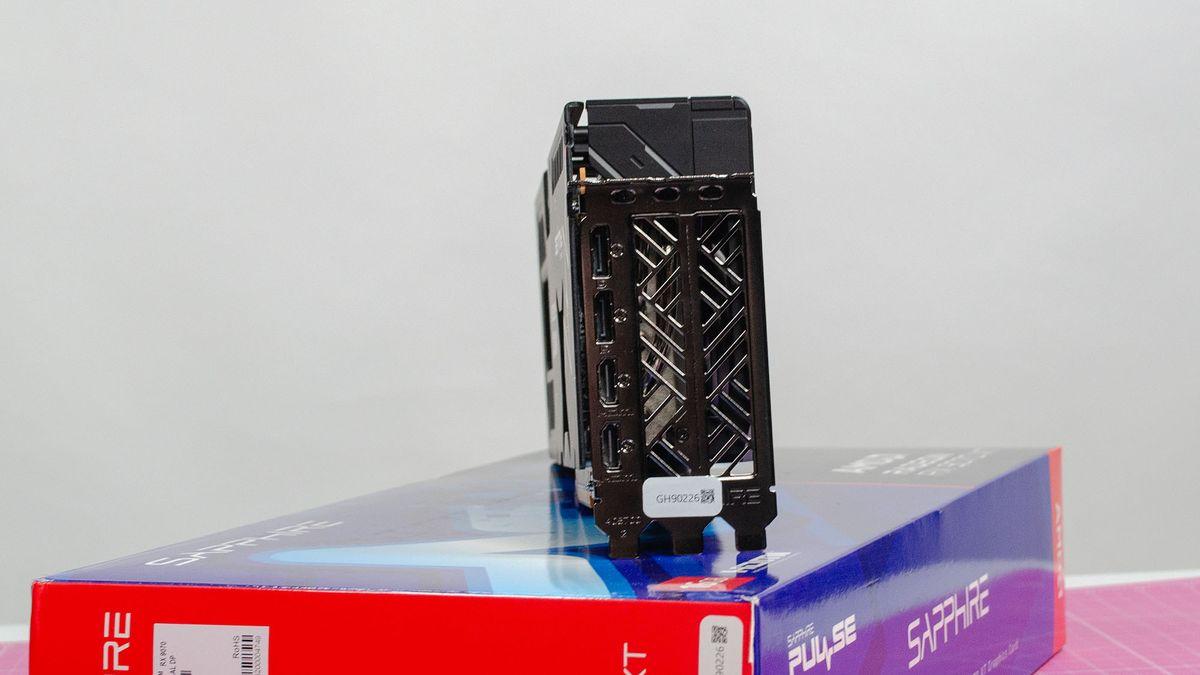
Want to buy an RX 9070 or 9070 XT but fed up of the GPUs being out of stock? AMD promises that “more supply is coming ASAP”

  • AMD’s RX 9070 GPUs are currently out of stock pretty much everywhere
  • An AMD exec says that more supply of RX 9070 models is “coming ASAP”
  • Some gamers are still worried about the prospect of entry-level RDNA 4 graphics cards not sticking to the MSRP, though

An AMD executive has promised that fresh stock of RX 9070 and RX 9070 XT graphics cards – which are currently all sold out in the US, and seemingly most other regions besides – is winging its way to stores across the globe.

This news comes from Frank Azor, who is AMD’s head of consumer and gaming marketing, via a statement shared on X about the launch of these RDNA 4 graphics cards.

Azor assures us that: “More [RX 9070] supply is coming ASAP to partners all over the world.”

The use of the term ‘ASAP’ suggests that AMD won’t be messing around when it comes to restocking RX 9070 models, and that’s also suggested by what we’ve heard on the rumor mill recently.

Namely that AMD has a sizeable quantity of RDNA 4 stock rolling off the production lines, which has clearly not been the case with Nvidia’s Blackwell launch since the RTX 5000 GPUs debuted at the end of January.

A PC Gamer looking happy sat in front of their desktop monitor

(Image credit: Shutterstock)

Analysis: Better stock prospects all round (but what about pricing?)

Actually, the hope expressed via the rumor mill – and it is just a hope, mind – is that Nvidia’s RTX 5000 stock is also going to become more robust. Or at least RTX 5090 supply will increase – quite dramatically, the theory is – and perhaps other Blackwell graphics cards, too.

AMD’s Azor is generally pretty reliable, too, so we can hope that it’s the case that both RDNA 4 and Blackwell GPUs will benefit from a spike in supply in the near future.

{ window.reliablePageLoad.then(() => { var componentContainer = document.querySelector(“#slice-container-newsletterForm-articleInbodyContent-fz77KKdAzD6LY5bD2En4QW”); if (componentContainer) { var data = {“layout”:”inbodyContent”,”header”:”Get daily insight, inspiration and deals in your inbox”,”tagline”:”Sign up for breaking news, reviews, opinion, top tech deals, and more.”,”formFooterText”:”By submitting your information you agree to the Terms & Conditions and Privacy Policy and are aged 16 or over.”,”successMessage”:{“body”:”Thank you for signing up. You will receive a confirmation email shortly.”},”failureMessage”:”There was a problem. Please refresh the page and try again.”,”method”:”POST”,”inputs”:[{“type”:”hidden”,”name”:”NAME”},{“type”:”email”,”name”:”MAIL”,”placeholder”:”Your Email Address”,”required”:true},{“type”:”hidden”,”name”:”NEWSLETTER_CODE”,”value”:”XTR-D”},{“type”:”hidden”,”name”:”LANG”,”value”:”EN”},{“type”:”hidden”,”name”:”SOURCE”,”value”:”60″},{“type”:”hidden”,”name”:”COUNTRY”},{“type”:”checkbox”,”name”:”CONTACT_OTHER_BRANDS”,”label”:{“text”:”Contact me with news and offers from other Future brands”}},{“type”:”checkbox”,”name”:”CONTACT_PARTNERS”,”label”:{“text”:”Receive email from us on behalf of our trusted partners or sponsors”}},{“type”:”submit”,”value”:”Sign me up”,”required”:true}],”endpoint”:”https://newsletter-subscribe.futureplc.com/v2/submission/submit”,”analytics”:[{“analyticsType”:”widgetViewed”}],”ariaLabels”:{}}; var triggerHydrate = function() { window.sliceComponents.newsletterForm.hydrate(data, componentContainer); } if (window.lazyObserveElement) { window.lazyObserveElement(componentContainer, triggerHydrate); } else { triggerHydrate(); } } }).catch(err => console.error(‘%c FTE ‘,’background: #9306F9; color: #ffffff’,’Hydration Script has failed for newsletterForm-articleInbodyContent-fz77KKdAzD6LY5bD2En4QW Slice’, err)); }).catch(err => console.error(‘%c FTE ‘,’background: #9306F9; color: #ffffff’,’Externals script failed to load’, err)); ]]>

Sign up for breaking news, reviews, opinion, top tech deals, and more.

Notably, Azor wouldn’t be drawn on MSRP pricing, though. If you scrolled through the comments on the exec’s latest post on X, you’ll have seen a few gamers calling out AMD over the MSRP, and the reported practice of only having an initial batch of (subsidized) RX 9070 graphics cards pegged at that official recommended asking price. (And that was indeed what seemed to happen at the RDNA 4 launch).

Previously, Azor has addressed this issue though, and said that “MSRP pricing will continue to be encouraged” beyond the launch, so we should see some (entry-level) RDNA 4 GPUs back at those baseline prices. That said, words like ‘encouraged’ and a feeling of slight evasiveness around the issue of pricing in the latest post from Azor leave some room for doubt as to exactly what policy AMD is pursuing here.

As ever, time will tell, and with any luck, we won’t have long to wait for the next batch of RX 9070 graphics cards to hit the shelves. Keep an eye on our guide to where to buy AMD’s RX 9070 XT and RX 9070 which highlights the retailers you should be watching to grab stock when the supply lines open up again.

You might also like…

Source

Posted on

Claude-3.7 outperforms other AI in Super Mario Bros, but it’s still no gamer

Last week, BGR reported on Claude’s journey playing Pokemon Red. While thousands of players playing it at the same time was more efficient—since the AI is still stuck on Mt. Moon—researchers think the next AI breakthrough might be related to live games.

Led by Hao Zhang, an assistant professor at UC San Diego, the research team is developing custom frameworks to test the capabilities of the leading AI models at gaming.

While Claude has been kind of disastrous playing Pokemon Red (it seems it doesn’t have what it takes to become a Pokemon Master), it sucks a little bit less than Gemini-1.5 Pro and GPT-4o. Comparing Claude-3.7 and Claude-3.5, the newer AI is more responsive and seems to know a bit more about what needs to be done in Super Mario Bros. In addition to this classic Nintendo game, the researchers are also testing 2048 and Tetris, with more games coming soon.

Another test is with Roblox. A blog post explains: “We developed a live Roblox game, AI Space Escape, powered by state-of-the-art large language models (LLMs), offering a unique experience to reason with AI. Beyond entertainment, our game generates gaming data for evaluating AI reasoning abilities in real-world scenarios, extending beyond math and coding benchmarks. All gaming data, evaluation scripts, and code are publicly available for further research.”

Tech. Entertainment. Science. Your inbox.

Sign up for the most interesting tech & entertainment news out there.

By signing up, I agree to the Terms of Use and have reviewed the Privacy Notice.

We still have to wait for Claude and other AI improvements to see how these models can continue to evolve playing games. For the Pokemon Red experiment, the developer explained that what sets Claude apart is that it can see what’s happening, understand the game state, and make decisions “similar to how a human player would”—although I might disagree, as the AI is still suffering to pass one of the first “dungeons” of the game.

Source

Posted on

Apple’s big AI-powered Siri upgrade was just delayed to 2026

The long-anticipated personalized Siri allegedly coming with iOS 18.4 has now been delayed to 2026. To Daring Fireball, Apple’s spokeswoman Jacqueline Roy said the more personalized Siri experience powered by Apple Intelligence will take longer to be released.

Here’s what she said: “Siri helps our users find what they need and get things done quickly, and in just the past six months, we’ve made Siri more conversational, introduced new features like type to Siri and product knowledge, and added an integration with ChatGPT. We’ve also been working on a more personalized Siri, giving it more awareness of your personal context, as well as the ability to take action for you within and across your apps. It’s going to take us longer than we thought to deliver on these features, and we anticipate rolling them out in the coming year.”

Bloomberg‘s Mark Gurman had already teased that some of the more personalized Siri features for Apple Intelligence could have been delayed. At the time, the journalist said that the most impressive functions could launch as soon as 2027.

In his Power On newsletter, he revealed that it’s going to take at least two extra years before Apple Intelligence gets somewhat similar to the capabilities OpenAI’s ChatGPT, Google’s Gemini, and Microsoft’s Copilot can deliver today—and, honestly, for at least a year now.

Tech. Entertainment. Science. Your inbox.

Sign up for the most interesting tech & entertainment news out there.

By signing up, I agree to the Terms of Use and have reviewed the Privacy Notice.

According to the journalist, Apple has a long schedule to finally revamp Siri and make it an essential part of the Apple Intelligence platform. This is what you can expect:

  • iOS 18.4: Expected for early April, Apple is expanding the languages available with Apple Intelligence;
  • iOS 18.5: Expected for May, Gurman expected Apple to make Siri tap user data to make it more personalized, but this might have now been scrapped to 2026;
  • iOS 19.4: Expected around April-May of 2026, Siri is getting a new architecture that can operate legacy Siri commands while handling more advanced queries in the same flow;
  • iOS 20: Believe it or not, Gurman’s forecast goes up until 2027, when Apple might be finally able to fix Siri and deliver the LLM Siri, which was technically supposed to be revealed this June.

That said, Apple Intelligence will take much longer to become useful. With that in mind, we now wonder what Apple will do to improve its AI platform.

Source

Posted on

Google is testing Gemini AI in Google Calendar

Google is officially testing Gemini integration with Google Calendar. If you’ve been holding out hope that the Google-powered AI would make the jump to your calendar, you likely won’t have to wait much longer.

The feature is currently only available in Workspace Labs, which is essentially Google’s “beta” program for new workspace features that will soon be available in Calendar, Gmail, and the rest of its online workspace apps.

Based on the details outlined in Google’s announcement of the new integration, it looks like only basic commands and prompts are available at the moment. You can ask Gemini to add events, provide details about events, and other things like that. It’s basically everything you’d want to ask an AI assistant to do, and it’s all available in your browser.

Gemini AI assistant in Google Calendar in web browserImage source: Google

Considering Google has slowly been ticking off more features for Gemini on its various platforms—including planning to bring Gemini live video to Android this month—it isn’t all that surprising to see Google Calendar getting Gemini integration finally. We’ve already have integration with the AI in Docs, Sheets, and other Google Worksuite apps, so it was really only a matter of time before Calendar got the same treatment.

Tech. Entertainment. Science. Your inbox.

Sign up for the most interesting tech & entertainment news out there.

By signing up, I agree to the Terms of Use and have reviewed the Privacy Notice.

As usual, you can provide details about how Gemini responds to help Google improve the service, and you even have control over deleting your recent Gemini history. It’s unclear if having Google’s Premium AI subscription and access to the “better” versions of Gemini will make the assistant work any better in Calendar—though it hasn’t ever seemed to make a massive difference in the other Workspace apps.

You can join Google Workspace Labs to get a chance at trying these kind of feature releases early, though keep in mind that the exact way they work, and their reliability may change over time as Google improves them.

Personally, I don’t mind seeing Gemini in Calendar. Even on my iPhone, I’ve used Gemini a good bit to help with minor planning for things, so being able to tell it to add new events to my calendar in my browser will be a welcome addition. Of course, I know not everyone sees the invasion of more AI features in our everyday tools as a good thing, so the usefulness of this new feature will vary greatly depending on how you feel, and how much you even use Google Calendar as a whole.

Source

Posted on

‘Times are hard’ for fintech but latest report reveals glimmer of recovery

Fintech investment has been on a downward spiral since 2012, but the second half of this year could see the first shoots of recovery.

Investment in UK fintechs fell by over a quarter last year, but there are signs that a recovery could be on its way, according to KPMG.

In its latest report into EMEA fintech investment trends, KPMG revealed that 2024 saw UK firms receive $9.9bn (£7.8bn). Meanwhile, total investment in 2024 was $20.3bn compared with $27.6bn the previous year.

Total UK fintech investment dropped to $9.9bn in 2024, down 27% from $13.6bn in 2023, according to KPMG’s Pulse of fintech report.

Hannah Dobson, partner and UK head of fintech at KPMG, said UK investment is expected to remain “relatively soft” in the first half of this year, but added that “it will likely begin to pick up as interest rates reduce further, with common consensus that this will be in the third and fourth quarters”.

Fintech industry expert Chris Skinner, CEO at The Finanser, told Computer Weekly that “times are hard in the fintech space”. “Fintechs had an amazing ride in the 2010s, but in the 2020s, it seems not,” he said. “Fintech took a hammering in 2023, with investing down 48% compared with 2022, which was also a bad year, and now we move into 2025 and reflect on 2024, where it went down even more.”

In its report, KPMG said geopolitical uncertainty, high levels of inflation and the higher interest rates all contributed to “more subdued levels of UK fintech investment”.

Dobson at KPMG added: “2024 was another tough year for fintech investment, which inevitably has led to some business failure and some consolidation. It has also sharpened the focus on a path to profit and cost control which positively leads to more sustainable saleable businesses in the longer term.”

In EMEA, and particularly the UK, there are signs of a slow recovery in deals as the reduction in interest rates and more political stability leads to better certainty. The impact of regulation is an ongoing challenge for fintechs across EMEA as they face into new EU and UK regimes in areas such as AI and BNPL.

The largest fintech deal in Europe in 2024 was the $560.6m sale of online bank Knab, to Austrian financial firm Bawag Group. The largest deal in the UK was the $267m venture funding round by money transfer provider Zepz.

It’s not just Europe that saw a fall in investment. Globally, fintech hit a seven-year low last year, with $95bn invested compared with $113.7bn in 2023.

Karim Haji, global and UK head of financial services at KPMG, said there are some “bright spots”.

“Payments continued to be the rockstar of the fintech subsectors, driven by late-stage deals and an increasing focus on consolidation, and regtech gained a lot of traction,” said Haji.

Global investment

Global investment in the payments space hit $31bn in 2024, up from $17.2bn in 2023.

Haji added that while more deals are beginning to come through because of interest rate cuts in different jurisdictions and the lower cost of funding, the impacts of changing world trading conditions on inflation, interest rates and the market change are yet to be known.

KPMG’s figures mirror those published by Innovative Finance last month, which reported a 37% fall in investment in 2024 compared with 2023.

Innovate Finance, the industry body for fintech in the UK, blamed tough market conditions that included “rising interest rates, geopolitical instability, as well as a recalibration in venture capital fundraising”.

Source

Posted on

AI Action Summit calls for a rethink of regulation

Thank you for joining!

Access your Pro+ Content below.

18 February 2025

AI Action Summit calls for a rethink of regulation

  • Share this item with your network:

In this week’s Computer Weekly, we report from the AI Action Summit in Paris on how easing red tape is overtaking safety as a priority. We examine the AI regulations that IT leaders need to understand. And we talk to the UK government’s AI minister about the country’s artificial intelligence opportunities. Read the issue now.

Source

Posted on

I can’t tell if it’s just a coincidence, but Nvidia’s RTX 5070 is now reportedly set for March alongside AMD’s RDNA 4 series launch

  • Nvidia’s RTX 5070 is reportedly delayed for a launch in March instead of February
  • There are supposedly no embargo details on the RTX 5070, but only for its RTX 5070 Ti variant
  • AMD’s Radeon RX 9000 series is also set to launch in early March

At CES 2025, Nvidia made its launch plans for the RTX 5070 Ti and RTX 5070 clear: both GPUs were slated for a February release – but new rumors hint at the RTX 5070’s launch being pushed back into March, in the same month that AMD plans to launch the Radeon RX 9000 series GPUs.

According to MEGAsizeGPU on X (which is reliable for GPU leaks), Nvidia now supposedly plans to launch the RTX 5070 in early March, leaving the RTX 5070 Ti to launch in February. Just recently, its rival AMD finally announced the Radeon RX 9000 series release date, which surprise, is also in early March – and this could pit both Team Green and Team Red’s midrange GPUs up against each other.

The same reports come from VideoCardz, who state that Nvidia’s embargo details given to board partners didn’t include any information on the RTX 5070, but instead details its Ti variant. Considering how close we are to the rumored February 19 and 20 review and launch dates for the RTX 5070 Ti, it wouldn’t be too far of a stretch to say that this rumor may indeed be true.

We know that there’s been limited availability for the RTX 5090 and RTX 5080 (both Founders Edition and third-party GPUs), so the reason for the supposed delay could hint at further stock woes – however, for some people, this move appears to prove that Nvidia is dead set on eliminating any traction the Radeon RX 9000 series GPUs could gain.

a silver card on a motherboard

(Image credit: Shutterstock)

It feels like Nvidia and AMD are playing mind games…

While AMD’s new GPU lineup was announced at CES 2025, it wasn’t fully unveiled, as we didn’t get to see any details regarding prices or a release date.

Since then, I feel like Team Red has been biding its time until its rival unveiled and launched all of its main GPU offerings, with hopes that the hype dies down.

The RDNA 4 GPUs were recently set for early March, which came shortly after speculation of Nvidia’s RTX xx60-class launch in the same month – and now, this new rumor regarding the RTX 5070 also launching in March instead of February feels like Team Green is doubling down on its stance of kicking its rival out of the race.

{ window.reliablePageLoad.then(() => { var componentContainer = document.querySelector(“#slice-container-newsletterForm-articleInbodyContent-bqBCFuBRF35odWRF9qsfVf”); if (componentContainer) { var data = {“layout”:”inbodyContent”,”header”:”Get daily insight, inspiration and deals in your inbox”,”tagline”:”Sign up for breaking news, reviews, opinion, top tech deals, and more.”,”formFooterText”:”By submitting your information you agree to the Terms & Conditions and Privacy Policy and are aged 16 or over.”,”successMessage”:{“body”:”Thank you for signing up. You will receive a confirmation email shortly.”},”failureMessage”:”There was a problem. Please refresh the page and try again.”,”method”:”POST”,”inputs”:[{“type”:”hidden”,”name”:”NAME”},{“type”:”email”,”name”:”MAIL”,”placeholder”:”Your Email Address”,”required”:true},{“type”:”hidden”,”name”:”NEWSLETTER_CODE”,”value”:”XTR-D”},{“type”:”hidden”,”name”:”LANG”,”value”:”EN”},{“type”:”hidden”,”name”:”SOURCE”,”value”:”60″},{“type”:”hidden”,”name”:”COUNTRY”},{“type”:”checkbox”,”name”:”CONTACT_OTHER_BRANDS”,”label”:{“text”:”Contact me with news and offers from other Future brands”}},{“type”:”checkbox”,”name”:”CONTACT_PARTNERS”,”label”:{“text”:”Receive email from us on behalf of our trusted partners or sponsors”}},{“type”:”submit”,”value”:”Sign me up”,”required”:true}],”endpoint”:”https://newsletter-subscribe.futureplc.com/v2/submission/submit”,”analytics”:[{“analyticsType”:”widgetViewed”}],”ariaLabels”:{}}; var triggerHydrate = function() { window.sliceComponents.newsletterForm.hydrate(data, componentContainer); } if (window.lazyObserveElement) { window.lazyObserveElement(componentContainer, triggerHydrate); } else { triggerHydrate(); } } }).catch(err => console.error(‘%c FTE ‘,’background: #9306F9; color: #ffffff’,’Hydration Script has failed for newsletterForm-articleInbodyContent-bqBCFuBRF35odWRF9qsfVf Slice’, err)); }).catch(err => console.error(‘%c FTE ‘,’background: #9306F9; color: #ffffff’,’Externals script failed to load’, err)); ]]>

Sign up for breaking news, reviews, opinion, top tech deals, and more.

It’s also worth noting that recent reports point towards AMD working on a 32GB RDNA 4 gaming GPU, despite stating its focus is on midrange GPUs. If you ask me, all of these reports (if accurate) feel like mind games being played by both parties with the attempt to one-up one another – which is great because competition is absolutely necessary. I just hope Team Red can deliver…

You may also like…

Source

Posted on

Collaboration vital for making DEI progress

Thank you for joining!

Access your Pro+ Content below.

February 2025

At the Computer Weekly diversity in tech event, in partnership with Harvey Nash, attendees agreed wholeheartedly that only by working together can we create a truly diverse and inclusive industry. Download the full report here.

Table Of Contents

  • When it comes to increasing the representation of people from all walks of life in the technology sector, complacency is the enemy.
  • It is important to actively create opportunities for underrepresented groups to join the tech sector if we are to make the industry a more diverse place.
  • People working in the IT sector need to be proactive in ensuring the tech workforce reflects tech users.
  • To ensure AI works for us as individuals and as a collective, collaboration is the way forward.
  • There is an imbalance between the number of women using AI and the number of women developing AI, which is contributing towards AI bias and tech that isn’t suitable for all of its users.
  • In some cases, development of AI and machine learning has been biased against women and other underrepresented groups.

Source

Posted on

AMD raises the bar for gaming on lightweight laptops – its new Strix Halo chip could run games better than an Nvidia RTX 3060

  • A leaked benchmark places AMD’s upcoming flagship Ryzen AI Max+ 395 chip between the RTX 3060 and 4060 in terms of graphical performance
  • This represents a bit leap forward for AMD’s integrated graphics, powered by the new Radeon 8060S iGPU
  • The chip will be available in laptops and PCs later in 2025

AMD is gunning for the integrated graphics market in earnest now, if these new leaked benchmark results are anything to go by. A result from the 3DMark Time Spy benchmark test has placed Team Red’s upcoming Ryzen AI Max+ 395 APU between Nvidia’s RTX 3060 and 4060 in terms of graphical performance – and I’m over the moon about it.

I’ve long been a proponent of the idea that integrated graphics are the future of gaming, especially as dedicated graphics cards become more and more expensive for increasingly small generational gains. Sure, the RTX 5090 is phenomenally powerful, but what’s the point if it costs an arm and a leg and stock is so limited you’ll struggle to get one anyway?

AMD’s AI Max+ 395 is the upcoming flagship chip of the Strix Halo generation of Ryzen APUs, designed primarily for high-end laptops without discrete GPUs. It packs a new integrated graphics module (iGPU) called the Radeon 8060S, signalling a major step forward for AMD’s iGPU performance even before we get to the numbers; Team Red has updated its nomenclature for this generation, as the 8060S will replace the previous top-spec Radeon 890M. I know adding an extra digit doesn’t automatically translate to a performance bump, but AMD is clearly confident about the new integrated graphics.

So, just how good is this chip?

Well, in the graphics test portion of the Time Spy benchmark (which was shared by X user @9550pro), the AI Max+ 395 scored 10,106 points. It’s worth noting here that 3DMark’s benchmark suite gives ‘index’ results designed to be compared with other test scores rather than real-world figures, but the app estimated that the AI Max+ 395 should be able to achieve a framerate of 95+ fps in Battlefield V at 1440p resolution – seriously impressive for a laptop chip, even if that game is now more than six years old.

Comparing that 10,106 score to some discrete GPUs paints an even more staggering picture. The RTX 3060 offers an average index score of just 8,746 in the same test, while the newer RTX 4060 scores 10,614 – barely ahead of AMD’s APU. It’s a strong showing for Strix Halo, suggesting that the flagship chip should be capable of 1440p gaming even in a lightweight laptop.

Of course, we should take these figures with a pinch of salt; they’re leaked info, after all, and synthetic tests like the 3DMark suite aren’t always perfectly comparable to real-world gaming performance. There are other factors at play here too. For example, the new Strix Halo chips reportedly have a far higher power ceiling than current-gen APUs (up to a hefty 120W), which could cause difficulties with thermal performance in thin-and-light laptops.

Still, I’m impressed, and excited to get my hands on a laptop with one of these APUs inside it. I got a lot of flak on Reddit last year for suggesting that dedicated GPUs for gaming might (eventually!) bow out in favor of iGPUs, but I stand by what I said – and with benchmark results like these, I’m slowly feeling more and more confident about it.

{ window.reliablePageLoad.then(() => { var componentContainer = document.querySelector(“#slice-container-newsletterForm-articleInbodyContent-mF8SGDpPpMEhYPDpMtASyk”); if (componentContainer) { var data = {“layout”:”inbodyContent”,”header”:”Get daily insight, inspiration and deals in your inbox”,”tagline”:”Sign up for breaking news, reviews, opinion, top tech deals, and more.”,”formFooterText”:”By submitting your information you agree to the Terms & Conditions and Privacy Policy and are aged 16 or over.”,”successMessage”:{“body”:”Thank you for signing up. You will receive a confirmation email shortly.”},”failureMessage”:”There was a problem. Please refresh the page and try again.”,”method”:”POST”,”inputs”:[{“type”:”hidden”,”name”:”NAME”},{“type”:”email”,”name”:”MAIL”,”placeholder”:”Your Email Address”,”required”:true},{“type”:”hidden”,”name”:”NEWSLETTER_CODE”,”value”:”XTR-D”},{“type”:”hidden”,”name”:”LANG”,”value”:”EN”},{“type”:”hidden”,”name”:”SOURCE”,”value”:”60″},{“type”:”hidden”,”name”:”COUNTRY”},{“type”:”checkbox”,”name”:”CONTACT_OTHER_BRANDS”,”label”:{“text”:”Contact me with news and offers from other Future brands”}},{“type”:”checkbox”,”name”:”CONTACT_PARTNERS”,”label”:{“text”:”Receive email from us on behalf of our trusted partners or sponsors”}},{“type”:”submit”,”value”:”Sign me up”,”required”:true}],”endpoint”:”https://newsletter-subscribe.futureplc.com/v2/submission/submit”,”analytics”:[{“analyticsType”:”widgetViewed”}],”ariaLabels”:{}}; var triggerHydrate = function() { window.sliceComponents.newsletterForm.hydrate(data, componentContainer); } if (window.lazyObserveElement) { window.lazyObserveElement(componentContainer, triggerHydrate); } else { triggerHydrate(); } } }).catch(err => console.error(‘%c FTE ‘,’background: #9306F9; color: #ffffff’,’Hydration Script has failed for newsletterForm-articleInbodyContent-mF8SGDpPpMEhYPDpMtASyk Slice’, err)); }).catch(err => console.error(‘%c FTE ‘,’background: #9306F9; color: #ffffff’,’Externals script failed to load’, err)); ]]>

Sign up for breaking news, reviews, opinion, top tech deals, and more.

You might also like…

Source