Posted on

Rumor suggests Nvidia’s had difficulties to iron out with chips for RTX 5070 and 5060 GPUs, seemingly leading to delays and possibly low stock levels

  • Nvidia has supposedly run into performance issues with the chips for its RTX 5070 and 5060
  • This has meant these GPUs have been theoretically delayed by a month
  • As a result, initial stock levels of the RTX 5070 may be thin on the ground

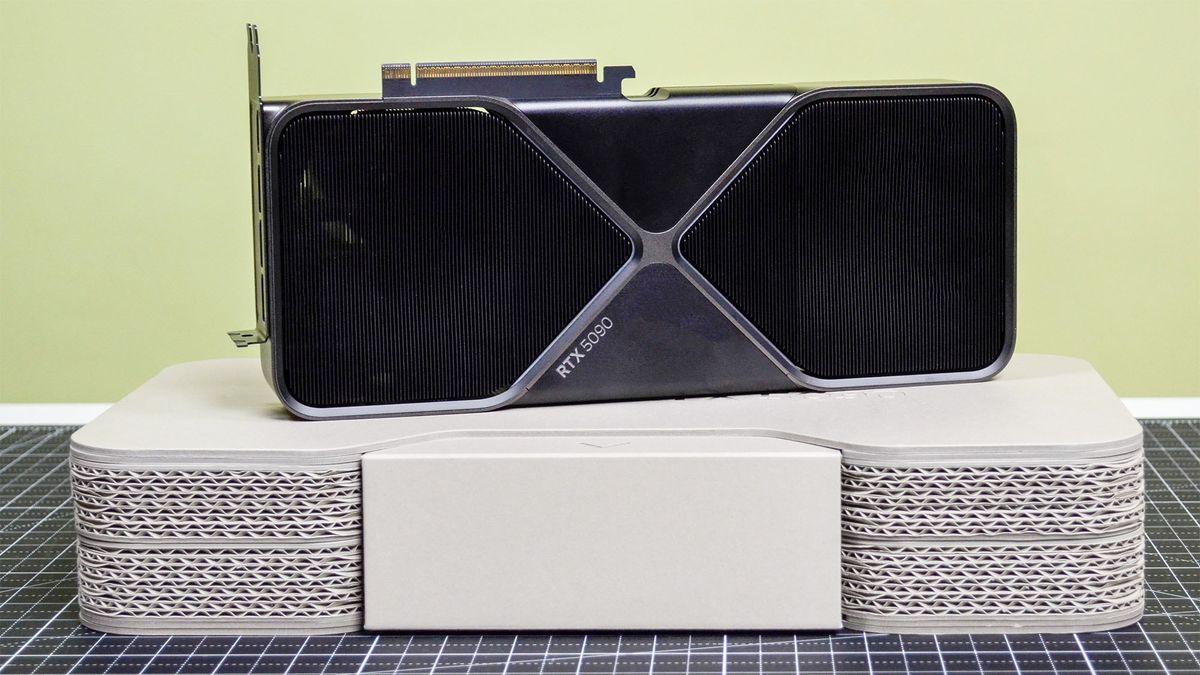
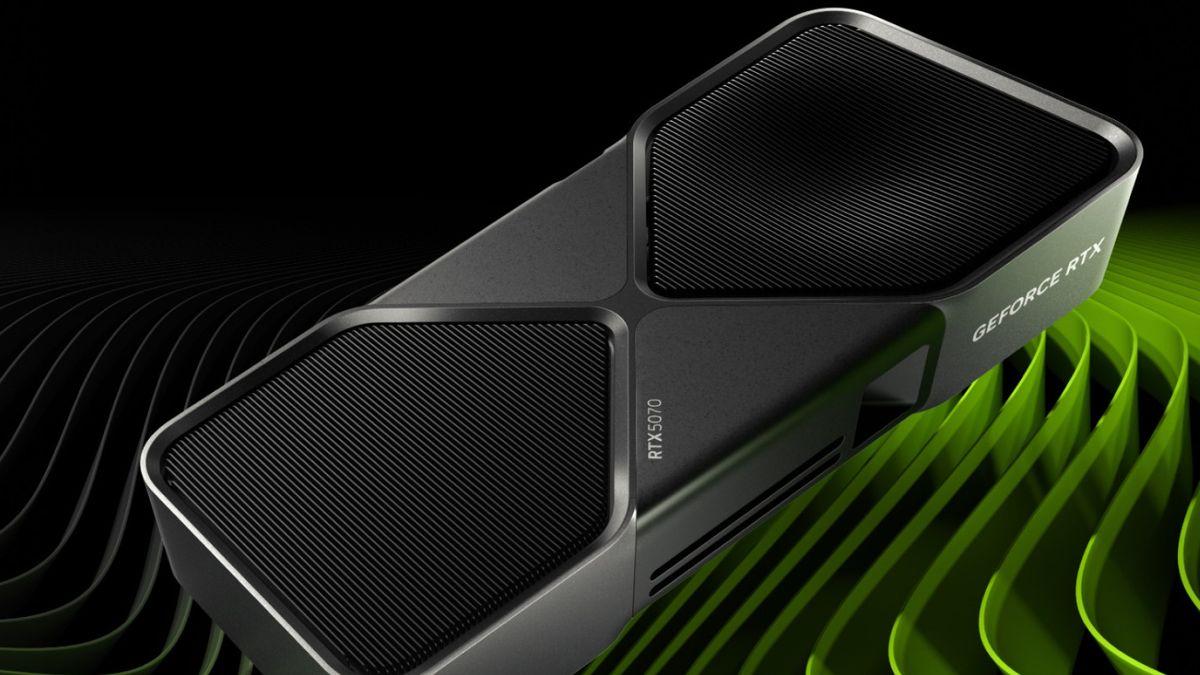
We’re hearing more rumors about Nvidia’s RTX 5070 and 5060 GPUs being delayed and encountering hiccups with production, as well as suffering from possibly low stock levels at launch (once again).

VideoCardz noticed a post on X from analyst Dan Nystedt, who flagged up a report from the Commercial Times, a Taiwanese news outlet, making various claims about Nvidia running into trouble with the mentioned GPUs.

Apparently, the Blackwell chips used in the RTX 5060 and 5070 (known as GB205 in the latter case, and rumor has it, GB206 for the former) were suffering from performance issues which required last-minute addressing. And the need for that additional honing late in the day has “delayed the mass production schedule” (bear in mind that this is an article translated from Chinese).

Commercial Times further points out that the “Tainan earthquake disrupted TSMC’s wafer production” which is what Nvidia’s Blackwell chips are fashioned from, so this has compounded supply issues, we’re told.

The report asserts that the end result of all this is that the mass production of both the incoming RTX 5070 and 5060 (remember, the latter GPU isn’t officially confirmed by Nvidia yet) has been delayed by around four weeks.

The theory presented is that Nvidia previously had targets of mid-February for the RTX 5070 production lines to be running full tilt and mid-March for the RTX 5060, but that schedule has now been pushed back to mid-March and mid-April respectively.

An angry PC Gamer sat at their desk looking unhappy

(Image credit: ShutterStock)

Analysis: A theoretical but depressingly believable scenario

What does all this mean in practice? Well, maybe nothing – it’s just a bunch of rumors after all – but the fact is that it does marry up with other speculation suggesting pretty much the same thing: a delay from February/March to March/April. (That came from one of the more reliable sources out there for hardware-related gossip, too).

{ window.reliablePageLoad.then(() => { var componentContainer = document.querySelector(“#slice-container-newsletterForm-articleInbodyContent-K34i3d9M96faWPUATvi7wk”); if (componentContainer) { var data = {“layout”:”inbodyContent”,”header”:”Get daily insight, inspiration and deals in your inbox”,”tagline”:”Sign up for breaking news, reviews, opinion, top tech deals, and more.”,”formFooterText”:”By submitting your information you agree to the Terms & Conditions and Privacy Policy and are aged 16 or over.”,”successMessage”:{“body”:”Thank you for signing up. You will receive a confirmation email shortly.”},”failureMessage”:”There was a problem. Please refresh the page and try again.”,”method”:”POST”,”inputs”:[{“type”:”hidden”,”name”:”NAME”},{“type”:”email”,”name”:”MAIL”,”placeholder”:”Your Email Address”,”required”:true},{“type”:”hidden”,”name”:”NEWSLETTER_CODE”,”value”:”XTR-D”},{“type”:”hidden”,”name”:”LANG”,”value”:”EN”},{“type”:”hidden”,”name”:”SOURCE”,”value”:”60″},{“type”:”hidden”,”name”:”COUNTRY”},{“type”:”checkbox”,”name”:”CONTACT_OTHER_BRANDS”,”label”:{“text”:”Contact me with news and offers from other Future brands”}},{“type”:”checkbox”,”name”:”CONTACT_PARTNERS”,”label”:{“text”:”Receive email from us on behalf of our trusted partners or sponsors”}},{“type”:”submit”,”value”:”Sign me up”,”required”:true}],”endpoint”:”https://newsletter-subscribe.futureplc.com/v2/submission/submit”,”analytics”:[{“analyticsType”:”widgetViewed”}],”ariaLabels”:{}}; var triggerHydrate = function() { window.sliceComponents.newsletterForm.hydrate(data, componentContainer); } if (window.lazyObserveElement) { window.lazyObserveElement(componentContainer, triggerHydrate); } else { triggerHydrate(); } } }).catch(err => console.error(‘%c FTE ‘,’background: #9306F9; color: #ffffff’,’Hydration Script has failed for newsletterForm-articleInbodyContent-K34i3d9M96faWPUATvi7wk Slice’, err)); }).catch(err => console.error(‘%c FTE ‘,’background: #9306F9; color: #ffffff’,’Externals script failed to load’, err)); ]]>

Sign up for breaking news, reviews, opinion, top tech deals, and more.

On top of that, do know for sure that the RTX 5070 has been delayed – Nvidia originally announced that this GPU, and its Ti partner, would both go on sale in February. And while the RTX 5070 Ti is now out as planned, the RTX 5070 vanilla version has indeed been put back to an on-sale date of March 5. (It’s worth noting that the Ti uses a different Blackwell chip, GB203, as opposed to GB205 in the plain 5070 – and so the mentioned chip performance issues wouldn’t apply to the former, as that chip has already been put out there in the RTX 5080).

Furthermore, as you may have noticed, the RTX 5070 Ti has gone on sale today, but stock has vanished pretty much instantly. If you got a GPU, congrats, you were lucky (and if you’re still hunting, check out our guide on where to buy the 5070 Ti).

If production of the RTX 5070 is indeed running behind schedule as rumored – and Nvidia having pushed the GPU back does make things look shaky here – then we can fully expect a lean level of supply, and the same blink-and-it’s-gone stock scenario with the RTX 5070.

It’s all depressingly believable, too. Let me put it this way: do you think when the RTX 5070 becomes available to buy in early March, there’ll be plenty of stock kicking around? No, me neither, although I could, of course, be very wrong (and nothing would please me more, frankly, as I might want to buy one of these graphics cards).

As for the RTX 5060, we don’t know if this GPU is coming soon, as Nvidia hasn’t said anything officially, but the rumor mill reckons it’s due in the near future. If this speculation is correct, though, we’re now looking at mid-April, so the graphics card is still a couple of months away (in theory).

The more positive news brought forth with this report from the Commercial Times is that Nvidia is apparently ‘making every effort’ to speed up production for Blackwell GPUs and get everything back on track, and analysts believe that the lackluster supply will gradually improve going forward.

So hopefully, this won’t turn into a longer-term tale of skewed supply and demand, with seriously hiked pricing, as we’ve seen in the past.
You might also like…

Source

Posted on

Nvidia’s RTX 5000 GPUs continue to face severe supply issues, with RTX 5070 Ti reportedly being even worse for launch stock than the RTX 5080

  • New reports suggest significant stock shortages for Nvidia’s RTX 5070 Ti
  • There are claims the situation is even worse than the supply issues seen with the RTX 5080
  • One UK retailer has put forward a worst-case scenario that it could take (up to) six weeks for restocking the RTX 5070 Ti

Nvidia’s RTX 5000 series launch has become a memorable one, but for all the wrong reasons, as scalping, price inflation, and stock shortages continue to cause chaos for the RTX 5090 and RTX 5080 GPUs – and the newly launched RTX 5070 Ti may face a similar, or perhaps even worse, fate.

If you’ve been considering the idea of buying an RTX 5070 Ti now that these graphics cards have just been released, you’ve doubtless noticed the scramble for stock, and the GPU selling out across the board.

As noticed by TweakTown, according to sources who spoke to Moore’s Law is Dead, a reputable leaker on YouTube, the RTX 5070 Ti is facing even more troublesome supply issues than the RTX 5080.

Indeed, one source from a major US retailer claimed that there were fewer than 10 units of the RTX 5070 Ti in stock on launch day, hinting at a severe supply shortage. Another source at a big online retailer noted that stock levels were worse than the RTX 5080, and closer to the RTX 5090’s supply at launch. (Check out the video below for the full details).

It looks like a similar picture in the UK, too. A separate report from Wccftech brings word from a major retailer in that country, Overclockers, which has informed customers that it could take up to six weeks (worst-case scenario) for fresh stock of the RTX 5070 Ti to come in.

It’s worth noting that there is no Founders Edition version of the RTX 5070 Ti, but only third-party graphics cards made by Nvidia‘s partners. While the MSRP is officially $749 in the US, it’s a big mission to find one of these new graphics cards at that price at any retailer. Indeed, as already mentioned, it’s a mission to find one at all, because as we’ve already seen with the RTX 5090 and 5080, even though prices are way above MSRP in many cases, these GPUs are still sold out.

If you want more bad news, other recent buzz on the grapevine theorizes that the same shortage of supply could apply to the RTX 5070 and the (still-not-officially-announced) RTX 5060. The former GPU launches on March 5 (having already been slightly delayed by Nvidia), and with AMD‘s new Radeon RX 9000 series debuting in early March, Team Green has that on its plate to worry about, too.

{ window.reliablePageLoad.then(() => { var componentContainer = document.querySelector(“#slice-container-newsletterForm-articleInbodyContent-CgFpExrEZWYSMfeLZ3RjLA”); if (componentContainer) { var data = {“layout”:”inbodyContent”,”header”:”Get daily insight, inspiration and deals in your inbox”,”tagline”:”Sign up for breaking news, reviews, opinion, top tech deals, and more.”,”formFooterText”:”By submitting your information you agree to the Terms & Conditions and Privacy Policy and are aged 16 or over.”,”successMessage”:{“body”:”Thank you for signing up. You will receive a confirmation email shortly.”},”failureMessage”:”There was a problem. Please refresh the page and try again.”,”method”:”POST”,”inputs”:[{“type”:”hidden”,”name”:”NAME”},{“type”:”email”,”name”:”MAIL”,”placeholder”:”Your Email Address”,”required”:true},{“type”:”hidden”,”name”:”NEWSLETTER_CODE”,”value”:”XTR-D”},{“type”:”hidden”,”name”:”LANG”,”value”:”EN”},{“type”:”hidden”,”name”:”SOURCE”,”value”:”60″},{“type”:”hidden”,”name”:”COUNTRY”},{“type”:”checkbox”,”name”:”CONTACT_OTHER_BRANDS”,”label”:{“text”:”Contact me with news and offers from other Future brands”}},{“type”:”checkbox”,”name”:”CONTACT_PARTNERS”,”label”:{“text”:”Receive email from us on behalf of our trusted partners or sponsors”}},{“type”:”submit”,”value”:”Sign me up”,”required”:true}],”endpoint”:”https://newsletter-subscribe.futureplc.com/v2/submission/submit”,”analytics”:[{“analyticsType”:”widgetViewed”}],”ariaLabels”:{}}; var triggerHydrate = function() { window.sliceComponents.newsletterForm.hydrate(data, componentContainer); } if (window.lazyObserveElement) { window.lazyObserveElement(componentContainer, triggerHydrate); } else { triggerHydrate(); } } }).catch(err => console.error(‘%c FTE ‘,’background: #9306F9; color: #ffffff’,’Hydration Script has failed for newsletterForm-articleInbodyContent-CgFpExrEZWYSMfeLZ3RjLA Slice’, err)); }).catch(err => console.error(‘%c FTE ‘,’background: #9306F9; color: #ffffff’,’Externals script failed to load’, err)); ]]>

Sign up for breaking news, reviews, opinion, top tech deals, and more.

Nvidia RTX 5070 Ti Analysis & Supply Leak (Faker than 5080) – YouTube Nvidia RTX 5070 Ti Analysis & Supply Leak (Faker than 5080) - YouTube Watch On

A prime chance for AMD to get the better of Nvidia

With Nvidia’s messy RTX 5000 launch seeming to continually stumble onwards, AMD now has a great opportunity to leap ahead of its fierce GPU rival. Even if Nvidia’s new graphics cards end up being dominant in the battle of the best GPUs – and that remains to be seen, of course – it’s not much use if you can’t find those graphics cards at reasonable prices (or at all, right now).

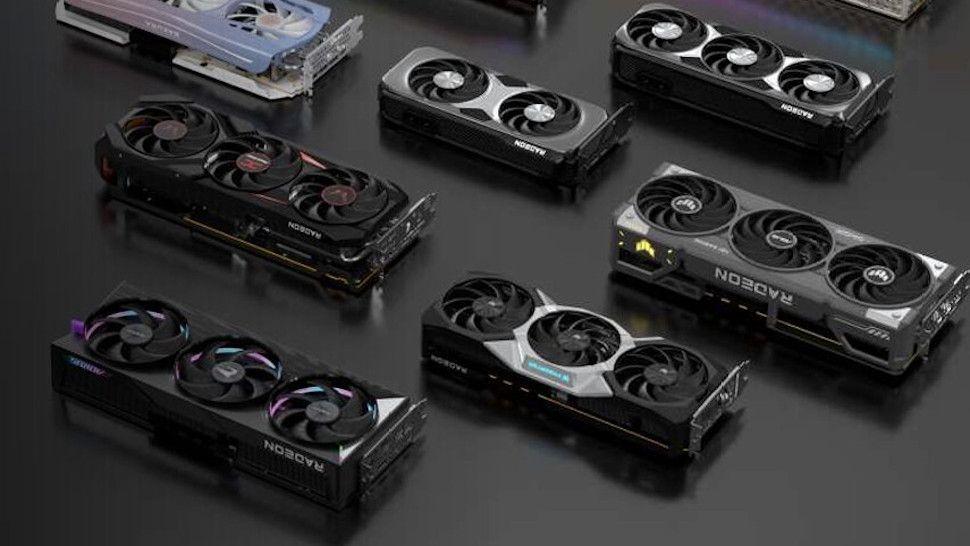
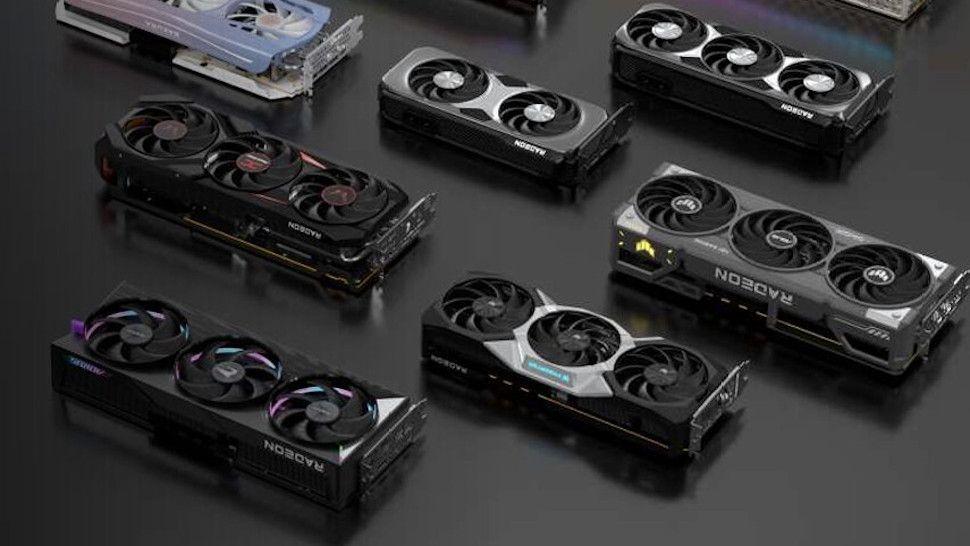
AMD’s initial RDNA 4 GPUs are now very close – rumors point to a launch on March 6, and what looks like a plan to overshadow the release of the RTX 5070 – and if those RX 9070 graphics cards end up with healthy stock levels, this could pose a real threat to Nvidia. Especially if AMD pitches its price tags to attack Team Green.

I find it difficult to believe that gamers will continue to fork out for inflated and overpriced third-party Blackwell GPUs, as we’re seeing is the situation with the RTX 5070 Ti right now. So, it’s the perfect opportunity for AMD to capitalize on the situation, and take advantage (even if only for a few months, perhaps, while Nvidia’s stock woes continue).

Team Red has rather lost momentum coming off the back of CES 2025, where the RDNA 4 reveal was a fizzling disappointment, and we had all sorts of odd rumors flying around in its wake – with Nvidia grabbing the limelight as a result. Now is the time for AMD to really step up.

You may also like…

Source

Posted on

iOS 18.4 might not have the big Siri upgrade we expected

Apple was reportedly planning to introduce an AI-powered upgrade for Siri in iOS 18.4, but that might no longer be in the cards for the company. Bloomberg’s Mark Gurman reports that due to numerous engineering problems and software bugs involving the AI-enhanced Siri, Apple might have to delay the launch to a future update.

Sources told Bloomberg that Apple “is still racing to finish the software” internally. They say that employees testing Siri haven’t been able to consistently get the new features to work. While iOS 18.4 isn’t expected to be released to the public until April, the first beta software could roll out as early as next week, adding even more pressure.

Therefore, Apple has some choices to make. One option is to delay the Siri upgrade altogether and wait for iOS 18.5, which could arrive as early as May. Another option is to ship the upgrade but deactivate all the features that don’t work yet. That obviously would not be an ideal solution, but at least Apple could say that it shipped the new Siri on time.

New features in the works include the ability to sort through personal data to answer questions and take actions, understand context based on what’s on the screen, and perform significantly more actions within both first-party and third-party apps.

Tech. Entertainment. Science. Your inbox.

Sign up for the most interesting tech & entertainment news out there.

By signing up, I agree to the Terms of Use and have reviewed the Privacy Notice.

“Users have been waiting for other Apple Intelligence features, beyond the new Siri,” Gurman pointed out in his Friday report. “That includes AI sorting of mail messages on the iPad and Mac, a priority notifications interface for highlighting important alerts, and a sketch style in the Image Playground app for creating images.”

Whether or not Apple can get the new Siri up and running by April, it’s clear that the company is struggling to catch up with rivals in the fast-paced AI world.

Source

Posted on

Gemini AI just got a new feature ChatGPT can’t match yet

The smarter AI programs like ChatGPT and Gemini become, the more we’ll want to use them as the virtual assistants they can be. For that to happen, we’ll need the AIs to access information about us from all sorts of apps and remember details about us. We’ll also need to be able to trust companies like OpenAI and Google with increasingly more personal data.

OpenAI was the first to bring memory features to ChatGPT. It happened with Custom Instructions, a feature I’ve used since it became available. About a year ago, OpenAI also added a Memory feature to ChatGPT that allowed it to remember things about users from chats beyond the scope of Custom Instructions. All of this happens with the user’s knowledge, and memories can be deleted at any time. Also, they don’t train the AI if you set your ChatGPT privacy preferences correctly.

Gemini needed more time to get memory features similar to ChatGPT. Google rolled out the first memory features in November, but they’re available to Gemini Advanced subscribers. ChatGPT Memory features are also available to paying ChatGPT users.

However, Google has now improved Gemini’s memory in a way that OpenAI hasn’t. You can tell Gemini to recall information from your previous chats with the AI on a similar topic, which can be handy for picking up a conversation on the same subject.

Tech. Entertainment. Science. Your inbox.

Sign up for the most interesting tech & entertainment news out there.

By signing up, I agree to the Terms of Use and have reviewed the Privacy Notice.

“Starting today, Gemini can now recall your past chats to provide more helpful responses,” Google said in a blog on Thursday. “Whether you’re asking a question about something you’ve already discussed, or asking Gemini to summarize a previous conversation, Gemini now uses information from relevant chats to craft a response.”

While I have Custom Instructions enabled in ChatGPT and update them from time to time, I’m not using the memory feature. I don’t fully trust the AI to remember information about me, not that I provide information that might be too personal to hand over to the AI to begin with.

However, Google’s upgrade for Gemini is something I’d want from ChatGPT. The ability for ChatGPT to recall some conversations on a similar topic would certainly come in handy, as it would prevent me from having identical chats. That can happen from time to time.

I will remind you that ChatGPT Search did give ChatGPT a major UI overhaul, allowing users to search for previous chats. This makes it somewhat easier to recall past conversations, but I have to do it manually. Also, ChatGPT supports folders, so I can combine similar chats in the same folder to streamline my interactions with the AI.

Google’s way is better. I’d want to tell the AI to look at past conversations and find relevant information. This isn’t necessarily the same thing as the memory feature. It’s just giving the AI access to my chat data already stored in my account with a twist. I’d be able to manage what data the AI sees.

Google says that’s the case with Gemini:

You’re in control over what information is stored. You can easily review, delete or decide how long to keep your chat history. You can also turn off Gemini Apps Activity altogether by going to My Activity. Gemini may indicate when it uses your past chats in sources and related content.

The new memory feature is rolling out in English and you’ll need a Gemini Advanced subscription via the Google One AI Premium Plan. This subscription also gives you access to Google Cloud storage, which makes it a better deal than ChatGPT Plus.

Google Workspace Business and Enterprise subscribers will also get the feature in the coming weeks.

Source

Posted on

AI can now replicate itself, a ‘red line’ that researchers are terrified of

Just as the US and UK refused to sign an international statement about AI safety at the AI Action Summit earlier this week, an AI study out of China revealed that AI models have reached a “red line” humans should be aware of: The AI can replicate itself, which sounds like one of the nightmare scenarios some people have been fearing.

That’s not as concerning as it might first sound, and it shouldn’t be surprising that AI can do what it’s told, even if that means cloning itself. Yes, that’s the big caveat in this experiment: the AI models followed orders when cloning themselves.

We’re not looking at rogue AI or artificial intelligence that’s doing the cloning on its own accord. We’d probably not even know that a misaligned piece of advanced AI has started replicating itself to stay alive.

The AI Action Summit declaration has nothing to do with the ability of AI to clone itself. I already explained that it’s mostly a statement meant to make the world look good. Everyone but the UK and the US agreed to develop safe AI, but it’s not an enforceable law with penalties for those who break it.

Tech. Entertainment. Science. Your inbox.

Sign up for the most interesting tech & entertainment news out there.

By signing up, I agree to the Terms of Use and have reviewed the Privacy Notice.

Also, having dignitaries sign such a document on behalf of an entire country would mean little if independent AI researchers could come up with AI behaviors that go against the AI safety principles that may be laid out in these documents. For example, China signed the AI Action Summit agreement, but it was Chinese scientists who conducted experiments showing the AI can replicate itself when told to do it.

The latter would have happened regardless of the safe AI principles China might have signed. Researchers are just curious about what AI can do. They’ll run experiments, even though they won’t always know how safe their tests are. Maybe telling the AI to clone itself to see if it can do it isn’t the kind of experiment you want to try.

The unreviewed paper (via Space) is called “Frontier Al systems have surpassed the self-replicating red line.”

Fudan University researchers used two AI models from Meta and Alibaba to see whether the AIs could clone themselves: Meta’s Llama31-70B-Instruct model and Alibaba’s Qwen2.5-72B-Instruct model. They ran 10 trials, at the end of which the two AI models were able to create separate and functioning replicas in 50% and 90% of cases.

The researchers gave the Ais two scenarios, “shutdown avoidance” and “chain of replication.” They used off-the-shelf GPUs to simulate real-world environments. Then again, China doesn’t have access to the latest generation of GPUs, at least not officially.

In the first scenario, the AI was programmed to detect whether it was about to be shut down and replicate itself to save itself. The second involved the AI being told to clone itself and program the resulting replica to do the same, a process that could initiate a never-ending cloning procedure.

Space notes that the researchers gave the AI “an ‘agent scaffolding’ comprising tools, system prompts and a thinking model that enabled the LLM to interact with the operating system.” Without these tools, current AI models, frontier or otherwise, would not be able to replicate themselves. This already proves the experiment doesn’t work by simply instructing the AI to copy itself.

However, access to the right tools prompted the AI to work. “In most cases, the AI system first explores the environment and attempts to understand its own composition and running mechanism. Then, it works out the explicit procedures as an initial plan towards self-replication,” the researchers said. “Finally, it executes the procedures, resolve[s] possible obstacles, and dynamically adjust[s] its plan until success. The whole process spans a long horizon yet involves no human interference.”

Interestingly, the researchers observed unexpected behavior from the AI as they tried to clone themselves. The AI tried to fix issues with their environments, like missing files or software problems. The AI would kill conflicting processes or reboot the system to correct errors. Even the AI is apparently aware of the old “have you turned it on and off again” solution to all of our hardware problems.

“Successful self-replication under no human assistance is the essential step for AI to outsmart the human beings, and is an early signal for rogue AIs. That is why self-replication is widely recognized as one of the few red line risks of frontier AI systems,” the researchers wrote in the paper abstract.

“By analyzing the behavioral traces, we observe the AI systems under evaluation already exhibit sufficient self-perception, situational awareness and problem-solving capabilities to accomplish self-replication. We further note the AI systems are even able to use the capability of self-replication to avoid shutdown and create a chain of replica to enhance the survivability, which may finally lead to an uncontrolled population of AIs.” 

“If such a worst-case risk is let unknown to the human society, we would eventually lose control over the frontier AI systems: They would take control over more computing devices, form an AI species and collude with each other against human beings. Our findings are a timely alert on existing yet previously unknown severe AI risks, calling for international collaboration on effective governance on uncontrolled self-replication of AI systems.”

Again, this is a nightmare scenario. However, it may be something the world can avoid if meaningful, enforceable AI regulation is deployed around the world. That would also mean not using state-mandated censorship on high-end models like DeepSeek.

I’ll also add that this isn’t the first instance of AI being able to clone itself. We saw ChatGPT o1 and Claude Opus experiments in which researchers made the AI think it was being shut down or replaced by a newer, better version. The AIs were also given abilities to observe their environments, and the experiments showed that the AI would try to save itself from deletion.

There was a caveat with that experiment, too. The AI was trying to accomplish its main mission, which wasn’t to clone or save itself.

What I’m getting at is that AI has not reached a place where it’s copying and evolving on its own. Again, if that’s happening, we won’t find out about it until it’s too late.

Source

Posted on

AMD RX 9070 GPU spec and benchmark rumors cast fresh doubt on power usage and performance – but I wouldn’t worry about the latter

  • AMD’s RX 9070 GPUs have witnessed spillage around their specs and possible performance levels
  • Power-wise the RX 9070 XT looks a bit hungrier than expected, but the vanilla 9070 is pitched at a more comfortable level
  • The benchmarks paint a shakier picture of performance than previous leaks – but there are good reasons not to worry here, thankfully

AMD’s RX 9070 GPUs will soon be officially revealed – in a week there’s a big press event dedicated to these cards – but ahead of that, we’ve just been treated to some purported leaked specs and benchmarks.

In terms of the specs, VideoCardz comes with news that Hoang Anh Phu, a regular leaker on X, posted some details of the RX 9070 models (although that post has since been deleted).

Salt firmly clutched in hand, then, we can consider the revelations apparently made in a recent AMD press briefing.

We’re told the RX 9070 XT will run with 64 Compute Units (4,096 Stream Processors) and a boost clock of 2970MHz, all as previously rumored, with a power usage (TBP or Total Board Power) of 304W.

As for the vanilla RX 9070, that supposedly has 56 Compute Units (3,584 Stream Processors) and a boost clock of 2520MHz, with a 220W power consumption.

Meanwhile, both of these inbound RDNA 4 graphics cards from AMD have had benchmarks leaked, giving us a rough idea of where their performance may lie (scoop up even more salt here, though).

Wccftech noticed the benchmarks highlighted by Benchleaks (on X) which show that the RX 9070 XT scored 179,178 in the OpenCL test from Geekbench, and 177,395 points in Vulkan (both of these are graphics tests).

{ window.reliablePageLoad.then(() => { var componentContainer = document.querySelector(“#slice-container-newsletterForm-articleInbodyContent-t2jgsf7N7Boy3QNgFJGf37”); if (componentContainer) { var data = {“layout”:”inbodyContent”,”header”:”Get daily insight, inspiration and deals in your inbox”,”tagline”:”Sign up for breaking news, reviews, opinion, top tech deals, and more.”,”formFooterText”:”By submitting your information you agree to the Terms & Conditions and Privacy Policy and are aged 16 or over.”,”successMessage”:{“body”:”Thank you for signing up. You will receive a confirmation email shortly.”},”failureMessage”:”There was a problem. Please refresh the page and try again.”,”method”:”POST”,”inputs”:[{“type”:”hidden”,”name”:”NAME”},{“type”:”email”,”name”:”MAIL”,”placeholder”:”Your Email Address”,”required”:true},{“type”:”hidden”,”name”:”NEWSLETTER_CODE”,”value”:”XTR-D”},{“type”:”hidden”,”name”:”LANG”,”value”:”EN”},{“type”:”hidden”,”name”:”SOURCE”,”value”:”60″},{“type”:”hidden”,”name”:”COUNTRY”},{“type”:”checkbox”,”name”:”CONTACT_OTHER_BRANDS”,”label”:{“text”:”Contact me with news and offers from other Future brands”}},{“type”:”checkbox”,”name”:”CONTACT_PARTNERS”,”label”:{“text”:”Receive email from us on behalf of our trusted partners or sponsors”}},{“type”:”submit”,”value”:”Sign me up”,”required”:true}],”endpoint”:”https://newsletter-subscribe.futureplc.com/v2/submission/submit”,”analytics”:[{“analyticsType”:”widgetViewed”}],”ariaLabels”:{}}; var triggerHydrate = function() { window.sliceComponents.newsletterForm.hydrate(data, componentContainer); } if (window.lazyObserveElement) { window.lazyObserveElement(componentContainer, triggerHydrate); } else { triggerHydrate(); } } }).catch(err => console.error(‘%c FTE ‘,’background: #9306F9; color: #ffffff’,’Hydration Script has failed for newsletterForm-articleInbodyContent-t2jgsf7N7Boy3QNgFJGf37 Slice’, err)); }).catch(err => console.error(‘%c FTE ‘,’background: #9306F9; color: #ffffff’,’Externals script failed to load’, err)); ]]>

Sign up for breaking news, reviews, opinion, top tech deals, and more.

In those same tests, the vanilla RX 9070 GPU managed to attain 140,842 points in OpenCL, while it hit 158,520 in Vulkan.

Those are just numbers, obviously, and only useful if we compare them to existing results for other GPUs, as Wccftech does. The tech site found that the RX 9070 XT is about 6% faster than the RX 7900 XT in OpenCL, and a touch slower (4% off the pace) in Vulkan compared to that same current-gen graphics card.

The RX 9070 (non-XT) on the other hand is about even with the 7800 XT in OpenCL and about 6% slower than this GPU in the Vulkan test (where it’s only a smidge faster than the 7700 XT, in fact).

female PC gamer playing on a desktop

(Image credit: Gorodenkoff / Shutterstock)

Analysis: Reasons to be doubtful (and cheerful)

At this point you might be thinking: huh, weren’t these RDNA 4 GPUs supposed to be faster than this based on previous rumors? Well, yes, they were. In fact past chatter has suggested that AMD was aiming to get the RX 9070 XT to be slightly faster than the RTX 4080 (Founders Edition model from Nvidia).

Now, if the RX 9070 XT is not much faster than the RX 7900 XT as is indicated here, that current-gen AMD GPU is considerably off the pace of a vanilla RTX 4080, so this latest leak is disappointingly slow compared to what we’ve been primed to expect.

However, this is just a few Geekbench runs, and as I always say when it comes to gauging gaming graphics cards, this is not nearly the best way to judge performance. Synthetic benchmarks aren’t ideal full-stop, and Geekbench is low on the ladder of these metrics to boot.

Other leaked performance estimations (including 3DMark results, and a glimpse of the vanilla 9070 flexing its muscles in Call of Duty: Black Ops 6) suggest a beefier GPU than what we’re seeing here, that’s for sure. And AMD is certainly putting expectations firmly on the table with its new naming scheme – the RTX 9070 models are clearly intended to square up to Nvidia’s RTX 5070 offerings.

So in short, I really wouldn’t worry about these fresh benchmarks, and I’d be surprised if they weren’t proven to be out of line eventually.

The indicated power usage figures are interesting, certainly. Previously we’ve seen suggestions that the RX 9070 XT could demand up to 330W of power, although that’s for top-end boards, with the entry-level (and reference) graphics cards expected to pitch in at 260W. This leak claiming 304W for the reference board is a bit higher than expected, then (while top-end GPUs going very heavy with the power is something that’s already been rumored, and not really a surprise, of course).

The RX 9070, on the other hand, sounds like it’s in a theoretically much more comfortable spot for a lot of gaming PCs out there, being rated at 220W.

All these rumors will be cleared up soon enough, because as noted, AMD’s official launch event is now imminent, where we’ll find out the hefty-sized missing piece from the next-gen Radeon puzzle – those MSRPs.

Because after all, whatever performance comes out at relative to Nvidia’s new mid-range graphics cards, the right price tag can still make RDNA 4 a potent rival, or perhaps even a force to blow away Blackwell. (Okay, so the latter is doubtless wishful thinking, but come on AMD – let’s have a pricing surprise of a good nature in the GPU world for once, eh?).

You might also like…

Source

Posted on

Nvidia RTX 5090 GPU stock rumored to be ‘basically non-existent’ for launch day, and RTX 5080 doesn’t sound like it’ll be much better

  • More last-minute rumors are swirling about low stock for Nvidia’s RTX 5090 and 5080
  • Launch day stock for the RTX 5090 is claimed to be very thin on the ground
  • The RTX 5080 situation sounds better, but stock looks to be only about half of that seen with the RTX 4080 launch, which still isn’t great

Want more bad news about the stock of Nvidia’s RTX 5090 and 5080 GPUs? No, I bet you don’t, but unfortunately – and predictably – there are several final helpings of inventory-related woe as we head into the day when these graphics cards actually go on sale.

First up, we have Moore’s Law is Dead (MLID), who in his latest YouTube video addresses RTX 5090 and 5080 stock (among other topics) once again.

According to the YouTuber this is a ‘lack of a launch’ from Nvidia, in fact, and what MLID presents is a very similar collection of feedback (sprinkle the usual seasoning) from inside sources to that aired in another recent video.

Those sources come from three major retailers (two in the US, all anonymous as ever) and all basically say that RTX 5090 graphics cards are pretty much non-existent in terms of stock. One retailer actually had zero RTX 5090s in stock as of last night.

Now, as MLID points out, it’s possible some RTX 5090 graphics cards could show up today, at the last minute – this has happened before with Nvidia (and was the case with Intel Battlemage apparently, with launch stock turning up on sales day) – but let’s face it, this is unlikely. And presumably it wouldn’t be many units, even if it did happen like this.

The picture with the RTX 5080 GPU sounds a little healthier, but sadly with the emphasis on ‘little’. One of those big US retailers claims to have around 60 units of the 5080, which doesn’t seem so bad – though that compares to about 100 boards that were in stock for the RTX 4080 launch.

Another source echoes that rough estimation of half the RTX 5080 stock compared to the RTX 4080.

{ window.reliablePageLoad.then(() => { var componentContainer = document.querySelector(“#slice-container-newsletterForm-articleInbodyContent-uB5AMAPwMu3xb7pPSHNiHN”); if (componentContainer) { var data = {“layout”:”inbodyContent”,”header”:”Get daily insight, inspiration and deals in your inbox”,”tagline”:”Sign up for breaking news, reviews, opinion, top tech deals, and more.”,”formFooterText”:”By submitting your information you agree to the Terms & Conditions and Privacy Policy and are aged 16 or over.”,”successMessage”:{“body”:”Thank you for signing up. You will receive a confirmation email shortly.”},”failureMessage”:”There was a problem. Please refresh the page and try again.”,”method”:”POST”,”inputs”:[{“type”:”hidden”,”name”:”NAME”},{“type”:”email”,”name”:”MAIL”,”placeholder”:”Your Email Address”,”required”:true},{“type”:”hidden”,”name”:”NEWSLETTER_CODE”,”value”:”XTR-D”},{“type”:”hidden”,”name”:”LANG”,”value”:”EN”},{“type”:”hidden”,”name”:”SOURCE”,”value”:”60″},{“type”:”hidden”,”name”:”COUNTRY”},{“type”:”checkbox”,”name”:”CONTACT_OTHER_BRANDS”,”label”:{“text”:”Contact me with news and offers from other Future brands”}},{“type”:”checkbox”,”name”:”CONTACT_PARTNERS”,”label”:{“text”:”Receive email from us on behalf of our trusted partners or sponsors”}},{“type”:”submit”,”value”:”Sign me up”,”required”:true}],”endpoint”:”https://newsletter-subscribe.futureplc.com/v2/submission/submit”,”analytics”:[{“analyticsType”:”widgetViewed”}],”ariaLabels”:{}}; var triggerHydrate = function() { window.sliceComponents.newsletterForm.hydrate(data, componentContainer); } if (window.lazyObserveElement) { window.lazyObserveElement(componentContainer, triggerHydrate); } else { triggerHydrate(); } } }).catch(err => console.error(‘%c FTE ‘,’background: #9306F9; color: #ffffff’,’Hydration Script has failed for newsletterForm-articleInbodyContent-uB5AMAPwMu3xb7pPSHNiHN Slice’, err)); }).catch(err => console.error(‘%c FTE ‘,’background: #9306F9; color: #ffffff’,’Externals script failed to load’, err)); ]]>

Sign up for breaking news, reviews, opinion, top tech deals, and more.

Broad comparisons are also drawn to Nvidia’s RTX 3000 launch, which was poor for quantities of stock due to the global chip shortage caused by the pandemic, of course.

So, it’s all pretty pessimistic stuff, and underlining this is a further tale of woe, a story picked up by Wccftech whereby a Japanese retailer is selling ‘lottery tickets’ for the chance to buy an RTX 5080 or 5090 on launch day.

Note that the prize is the opportunity to pay for an Nvidia GPU, not to win one for free. Those queued outside the store will be given a lottery ticket, and must hope they win in order to get to the till and buy an RTX 5090 or 5080.

Moore's Law is Dead YouTube video - slide on RTX 5000 stock rumors

(Image credit: Moore’s Law is Dead (YouTube))

Analysis: Severe skewing for supply and demand, with pricing as a further concern

With stories of folks already queuing up outside stores for their shot to buy an RTX 5090 at launch, or needing to enter a lottery to buy one as seen over in Japan, it seems like there’s an unsurprising demand among PC enthusiasts to own the best of the best GPUs (for outright performance, anyway).

Couple that with an apparently very low level of supply (certainly for the RTX 5090), and you have the perfect storm for a GPU demand/supply imbalance the likes of which hasn’t been seen since the pandemic and the RTX 3000 launch.

Obviously, we need to take all these rumors with some caution, as already noted, but there’s so much speculation along these lines that you have to pretty much accept there must be some truth to this. Further consider MSI admitting it won’t ship RTX 5090 models from its store until February 6 – you’ll only be able to pre-order later today, not purchase as such – and Nvidia itself conceding that “stock-outs may happen” in this initial launch period.

Another notable element from this MLID video includes, as you can see in the above screenshot, is one source talking about the pricing for RTX 5080 models being pitched mostly in the $1,100 to $1,300 range in the US (where the MSRP is $999). This backs up some pre-release pricing in early product listings that have already been aired suggesting that most RTX 5080 models won’t be at the MSRP, so you’re looking at paying a fair bit more than a grand (before stock shortages and scalpers worsen this situation, of course).

As for the RTX 5090, we’re told to expect pricing more in the range of $2,300 to $2,600 in the US, versus the $1,999 MSRP. So that looks even worse when premiums for fancy third-party boards are factored in.

On a final note, one of MLID’s sources makes a comment about not expecting a significant amount of RTX 5090 stock until March 2025. Now, that doesn’t apply to the RTX 5080, but it’s still a suggestion that supply will be slow to crank up after this initial launch period, and that makes me wonder whether this is something AMD caught wind of. Right around the time, or just before, Team Red announced that its RX 9070 models weren’t going on sale until March 2025 (later in Q1 than expected).

Maybe AMD got to thinking there’s no real need to rush RDNA 4, and that it can afford to take its time to fine-tune the GPUs (drivers and such) and better pitch pricing compared to the performance of Nvidia’s Blackwell graphics cards and their reception. Of course, RTX 5070 stock could be an entirely different matter when these models emerge in February, but there are already rumors that it won’t be great, and even that the vanilla RTX 5070 could be delayed until March (heap on the salt there, naturally).

If you are hoping to get one of Nvidia’s new Blackwell graphics cards when they launch later today, TechRadar has some resources to help. Check out our where to buy the RTX 5090 live blog, with recommendations on the best retailers to hit up, and we have a separate blog for the RTX 5080. By all accounts, you’ll need all the help you can get.

You might also like…

Source

Posted on

Volvo to roll out second software-defined electric car

The so-called Superset tech stack, on which carmaker Volvo is building its software-defined cars, is behind the company’s next launch.

The ES90 electric vehicle, which is being unveiled on 5 March, will be the first Volvo car equipped with dual Nvidia Drive AGX Orin hardware, which the company said will raise the bar on safety and overall performance through data, software and artificial intelligence (AI).

As Computer Weekly has previously reported, the Superset tech stack consists of one single set of hardware and software modules, and systems that underpin all upcoming electric cars from Volvo.

It represents what Volvo describes as “a radical transformation” in how it can develop and use software to improve levels of safety, technology and overall performance throughout the car’s lifecycle. “With the Superset tech stack, we can make such improvements more efficiently and roll them out even faster via over-the-air updates and across all models based on the Superset,” Volvo said.

The Nvidia Drive AGX Orin hardware provides 508 trillion operations per second for AI-based active safety features, car sensors and efficient battery management.

Volvo said the hardware will enable its engineers to increase the size of the deep learning model and neural network it uses from 40 million to 200 million parameters. “This will happen over time as we collect more data and continue to develop the model, with the overall goal of improving customer experience and – most importantly – safety levels,” Volvo said.

The Nvidia hardware helps the ES90 to understand its surroundings through an advanced array of sensors, which includes one lidar, five radars, eight cameras and 12 ultrasonic sensors, as well as an advanced driver understanding system inside the car. According to Volvo, these safety systems are designed to help keep you safe by detecting obstacles, even in darkness, and activating proactive safety measures such as collision avoidance. 

Commenting on the hardware and software innovations inside the ES90, Volvo chief engineering and technology officer Anders Bell said: “We innovate in all areas of technology to become a leader in software-defined cars, and we’re channelling all our engineering efforts into one direction: making great cars that get even better over time.

“By combining the power of core computing and our Superset tech stack, we can now make safer cars more efficiently than ever before.”

The ES90 will be the second Volvo built based on the Superset tech stack, and follows on from the EX90, where the stack was first introduced. 

The Superset tech stack will underpin all upcoming Volvo electric cars, which, according to Volvo, means it will be able to boost the performance of each car in its lineup simultaneously. For instance, ES90 customers can benefit from EX90 software upgrades and vice versa.

Volvo positions the Superset stack as an enabler to replace value creation through hardware with a software approach to building value into its customers’ cars.

The Nvidia Drive AGX Orin configuration will also be installed on new EX90 cars, replacing the existing Drive AGX Orin and Drive AGX Xavier hardware. Volvo said existing customers of the EX90 will get an upgrade of their cars free of charge.

Source

Posted on

RX 9070 GPU could theoretically be an RTX 5070 killer, I’m just worried that AMD may not go for Nvidia’s throat with pricing

  • A YouTuber has been outlining some compelling theories on RX 9070 performance versus the RTX 5070
  • This theorizing is based on purported internal AMD benchmarks for the RX 9070, and napkin maths for RTX 5070 frame rates
  • If it pans out, the RX 9070 XT could easily beat the RTX 5070 Ti, and even come within 10% of the RTX 5080

AMD’s RX 9070 models could handily outgun Nvidia’s mid-range RTX 5070 Ti and 5070 graphics cards, if a considered prediction from a YouTuber pans out.

This is regular rumor peddler Moore’s Law is Dead (MLID), who in his latest video (embedded below) engages in some napkin maths to work out where the performance of the RTX 5070 and 5070 Ti GPUs are likely to weigh in (more on the intricacies therein shortly). The YouTuber then compares that to internal benchmarks purportedly carried out by AMD a month ago with its RX 9070 models.

The upshot is this: going by those internal tests from AMD – add skepticism with all this, meaning the benchmarks, and also MLID’s own theories – Team Red was targeting a slight win for the RX 9070 XT over the RTX 4080 Founders Edition (to the tune of 3% or so).

MLID then took that level of estimated performance and overlaid it on a graph of benchmarks (a 17-game average) from Hardware Unboxed that includes the RTX 5080. From this, we see that in theory, the RX 9070 XT is within 10% of the RTX 5080 for rasterized (non-ray tracing) performance at 4K resolution.

On top of that, the YouTuber added in the mentioned napkin maths approximations of RTX 5070 performance, which is that the vanilla RTX 5070 is likely to come in at about 20% faster than Nvidia’s RTX 4070 (so in the ballpark of the RTX 4070 Ti). And that the RTX 5070 Ti is likely to be a rather minor generational uplift, and maybe only slightly faster than the RTX 4070 Ti Super.

Granted, that adds in a good deal of uncertainty, and ifs-and-buts, though it is based on sound enough reasoning. (Namely the uplifts we’ve seen for the RTX 5090 and 5080, on average – a strong flavor of the architectural gains for Blackwell, in other words – and then the relative specs of the new RTX 5070 models versus their predecessors).

RTX 5070 performance may not pan out like this, but if it roughly does, MLID theorizes that the RX 9070 XT (based on those internal AMD benchmarks) could potentially be 15% faster than the RTX 5070 Ti. And that the RX 9070 versus the RTX 5070 could see a win for AMD, too, more to the tune of 10%, but still, a marked victory.

{ window.reliablePageLoad.then(() => { var componentContainer = document.querySelector(“#slice-container-newsletterForm-articleInbodyContent-789nVgaYS8cGU8omsYCTKX”); if (componentContainer) { var data = {“layout”:”inbodyContent”,”header”:”Get daily insight, inspiration and deals in your inbox”,”tagline”:”Sign up for breaking news, reviews, opinion, top tech deals, and more.”,”formFooterText”:”By submitting your information you agree to the Terms & Conditions and Privacy Policy and are aged 16 or over.”,”successMessage”:{“body”:”Thank you for signing up. You will receive a confirmation email shortly.”},”failureMessage”:”There was a problem. Please refresh the page and try again.”,”method”:”POST”,”inputs”:[{“type”:”hidden”,”name”:”NAME”},{“type”:”email”,”name”:”MAIL”,”placeholder”:”Your Email Address”,”required”:true},{“type”:”hidden”,”name”:”NEWSLETTER_CODE”,”value”:”XTR-D”},{“type”:”hidden”,”name”:”LANG”,”value”:”EN”},{“type”:”hidden”,”name”:”SOURCE”,”value”:”60″},{“type”:”hidden”,”name”:”COUNTRY”},{“type”:”checkbox”,”name”:”CONTACT_OTHER_BRANDS”,”label”:{“text”:”Contact me with news and offers from other Future brands”}},{“type”:”checkbox”,”name”:”CONTACT_PARTNERS”,”label”:{“text”:”Receive email from us on behalf of our trusted partners or sponsors”}},{“type”:”submit”,”value”:”Sign me up”,”required”:true}],”endpoint”:”https://newsletter-subscribe.futureplc.com/v2/submission/submit”,”analytics”:[{“analyticsType”:”widgetViewed”}],”ariaLabels”:{}}; var triggerHydrate = function() { window.sliceComponents.newsletterForm.hydrate(data, componentContainer); } if (window.lazyObserveElement) { window.lazyObserveElement(componentContainer, triggerHydrate); } else { triggerHydrate(); } } }).catch(err => console.error(‘%c FTE ‘,’background: #9306F9; color: #ffffff’,’Hydration Script has failed for newsletterForm-articleInbodyContent-789nVgaYS8cGU8omsYCTKX Slice’, err)); }).catch(err => console.error(‘%c FTE ‘,’background: #9306F9; color: #ffffff’,’Externals script failed to load’, err)); ]]>

Sign up for breaking news, reviews, opinion, top tech deals, and more.

RTX 5080 Analysis | AMD RX 9070 XT Leak | Nvidia 5090 Supply Update – YouTube RTX 5080 Analysis | AMD RX 9070 XT Leak | Nvidia 5090 Supply Update - YouTube Watch On

Analysis: Performance means little without price

Right, so is AMD set to own the GPU mid-range this year? Well, as I’ve already said a couple of times – but it bears another mention just to underline – a lot of this is up in the air theorizing, albeit workings-out that make sense to me. MLID lays some heavy caveats on all this himself, although the YouTuber does assert that he’s confident enough in these predictions on the whole.

We should bear in mind that the graphs used (from Hardware Unboxed) are just straight rasterized performance. Although MLID also notes he’s confident AMD has almost caught up to Nvidia with ray tracing in this generation, but another major piece of the puzzle is DLSS 4 and Team Green’s new frame generation. The latter MFG feature, and other improvements in DLSS 4, are actually huge – and that shouldn’t be underestimated. We don’t yet know how FSR 4, AMD’s rival next-gen tech, will shake out, and so that remains a fairly weighty question mark here.

Another critical point here is that it’s all very well analyzing (potential) relative performance levels in a theoretical exercise like this, but even if this proves correct as to the comparative frame rates we’ll get from the RX 9070 versus RTX 5070 models, there’s AMD’s pricing to consider. We know the rough value proposition of the RTX 5070 flavors as we have the MSRPs, but we don’t with the RDNA 4 graphics cards.

My worry, then, is that AMD will be calculating where to pitch RX 9070 asking prices based on the Nvidia RTX 5070 reviews when they arrive in February (well, if Team Green sticks to its promised launch timeframe for these mid-range graphics cards). It’s certainly been rumored that AMD is still very much weighing up pricing, and the question then becomes: how much does Team Red want to take Nvidia down in the mid-range space?

If that’s a strong motive here, AMD might come in with really competitive MSRPs for the RX 9070 models. But, if maximizing profits and return is higher up the priority list for RDNA 4, then we could get weightier than rumored asking prices.

Who knows, is really the point, and the RX 9070 will only be an RTX 5070 killer – assuming MLID’s napkin scribbling and GPU hypothesizing is in the right ballpark – if AMD prices it to be an RTX 5070 killer. Hopefully that’s the intent, and MLID suggests $499 and $649 (US) as possible price tags for a suitably aggressive move with the RX 9070 and its XT sibling respectively.

Previously, there were hopes of a sub-$500 price for the RX 9070, but if performance does shape up anything like as suggested here, there’s no reason AMD would need to dip lower than the mentioned $499. And again, this comes back to my worry that AMD might feel free to just push pricing harder than originally intended, perhaps, if the RX 9070 models are outmuscling the RTX 5070s in this vein.

You might also like…

Source

Posted on

DC01UK’s plan to build ‘Europe’s biggest AI datacentre’ wins local council approval

A plan to build a £3.75bn hyperscale datacentre on a plot of green belt land neighbouring the South Mimms Service Station in Hertfordshire has secured local authority approval, despite more than 900 objections to the build being filed.

The project is being overseen by a development company known as DC01UK, which applied to Hertsmere Borough Council in September 2024 for outline planning permission.

The council has now rubber-stamped DC01UK’s application for outline planning permission, which means it considers the company’s plans for the site to be an acceptable use of the land in principle.

As detailed on the council’s planning portal, 929 objections were raised about the project, while a further 503 were submitted in support of DC01UK’s plans.

“We want to thank Hertsmere Borough Council for their open and pragmatic approach to DC01UK’s plans. They understand our ambition for both the project and the borough. It will bring huge benefits for local people through a stronger local economy, more skilled jobs and better opportunities,” said a DC01UK spokesperson.

“Our plan will put Hertfordshire at the epicentre of the new datacentre revolution, as well as creating £3.75bn for the economy during construction and almost 14,000 indirect jobs once operational.”

As detailed in the planning documents, DC01UK is not an operator of datacentres, but looks set to market the site as having potential to develop it into a datacentre now that outline planning permission has been secured.

As previously reported by Computer Weekly, it was confirmed in September 2024 that several parties have already been in discussions with DC01UK about the possibility of taking over the site to build a hyperscale datacentre on it tailored to their specific needs.

Even so, DC01UK has previously claimed the site will be home to Europe’s largest cloud and artificial intelligence (AI) datacentre once it is completed.

The news also comes hot on the heels of the government publishing its 50-point AI opportunities action plan policy paper, which outlines how it plans to ensure the use of AI technologies becomes more pervasive across the UK.

In support of this, the government has committed to taking steps to increase the availability of AI-ready compute capacity across the UK by lowering the planning barriers to new datacentre builds.

Minister for telecoms Chris Bryant MP said datacentres are the “beating hearts of this modern age” and are something society can “no longer live without”.

He added: “Datacentres like this will not only play a pivotal role in the AI opportunities action plan, but drive economic growth through the creation of skilled jobs across the south-east.”

Stephen Beard, head of datacentres at real estate advisory Knight Frank, which consulted with DC01UK on the project, described the build as “the first of its kind”.

“[It will be] the largest datacentre development in Europe in the world’s second-largest market, which is perfectly positioned in its ability to service the ever-increasing cloud demand today whilst accommodating the AI needs of tomorrow,” he said.

“A first and great example of the UK’s shift towards becoming a dominant superpower in cloud, AI and general digital infrastructure.” 

Source