Posted on

Microsoft 365 price hike: Are you forced to pay more even if you don’t want AI?

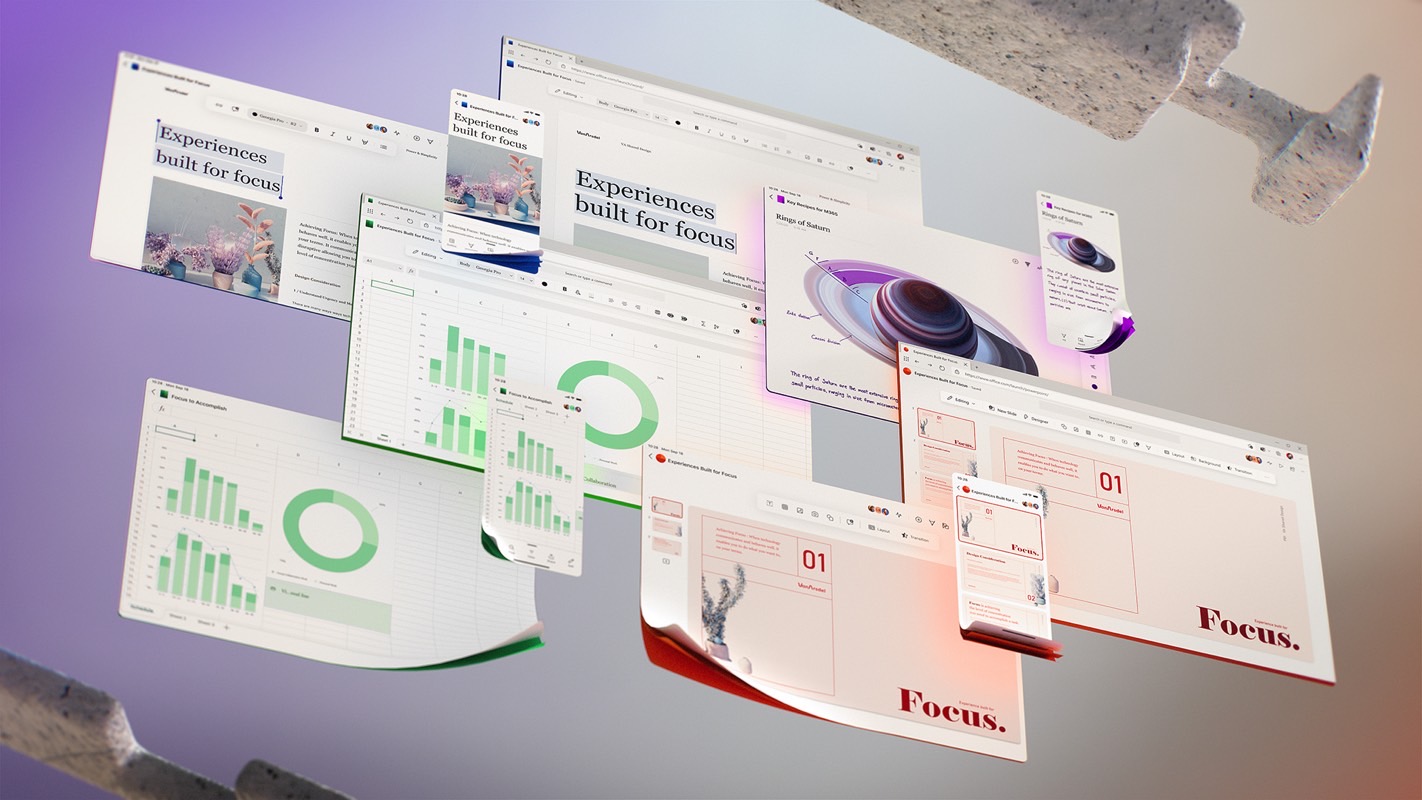
If you thought Microsoft’s forcing Windows 10 users to upgrade to Windows 11 to keep using Microsoft 365 Office apps was bad, you haven’t seen anything yet. Microsoft will further annoy many of its customers by embedding Copilot AI into all Office apps and charging an extra $3 per month for it. Microsoft announced the price hike for the Office 365 apps in a blog post explaining the changes.

Yes, AI development is expensive, and I absolutely agree that we, as end users, have to pay for access. That’s why I’m a ChatGPT Plus subscriber and won’t ditch that $20/month subscription anytime soon. If anything, I’m ready to pay for additional AI products that might improve aspects of my life. Take Apple Intelligence; I’ll keep buying expensive iPhones, iPads, and Macs, which will pay for Apple’s AI.

However, as a Microsoft 365 subscriber who has no interest in Copilot AI at this point, I’m not too thrilled about potentially having to shell out an extra $3 per month for my Family subscription. AI should be optional rather than mandatory in all apps. So, is there a way to keep your current subscription price if you’re like me and you don’t want Copilot AI? Well, it’s complicated.

Microsoft is forcing Copilot AI on millions of users

Microsoft 365 Personal and Family subscribers will get Copilot AI and a new Designer AI image generation app in most markets. This will lead to a price hike of $3 per month in the US, Microsoft’s first price hike for the productivity bundle subscription in 12 years. You’ll have to check your local Microsoft 365 portal to see the price increase in your local market.

Tech. Entertainment. Science. Your inbox.

Sign up for the most interesting tech & entertainment news out there.

By signing up, I agree to the Terms of Use and have reviewed the Privacy Notice.

Microsoft says that most of its 84 million consumer subscribers will have access to Copilot in Office apps whether they want it or not.

The new Copilot AI integration is separate from the Microsoft Copilot Pro subscription, which costs $20 per month. Copilot will be available in Word, Excel, PowerPoint, Outlook, OneNote, and the new Designer app.

To use the latter, Microsoft 365 Personal and Family subscribers will use AI credits that come with their subscription. The monthly allotment of AI credits applies to all Office apps and should be “enough for most subscribers.”

Let’s appreciate the good things

Microsoft knows that Copilot shouldn’t always be active in Office apps, so it’s giving users the ability to turn it off. That’s good news for students who rely on Office apps for taking notes during class.

Also important here is Microsoft’s commitment to privacy. I might not like the price hike because I don’t plan to use Copilot AI in Office apps anytime soon, but I appreciate the fact that Microsoft will not use any Office app AI data to train its models:

To protect your privacy, we do not use your prompts, responses, or file content (such as Word documents or Excel spreadsheets) when you use Copilot in the Microsoft 365 apps to train our foundation models.

You can opt out, for now

Microsoft is aware that not all Office app users will want access to Copilot AI, so there are ways to opt out and keep your current subscription price. That’s another thing I can appreciate. But there are big caveats here.

First, you have to be an existing Microsoft 365 subscriber to opt out of the Copilot AI price hike. Second, you must enable recurring billing to avoid the price increase. Those who don’t have it enabled, such as myself, won’t be able to stick with the non-AI versions of the apps.

Users with recurring billing can switch to a Basic plan, or they can keep their current plan as it exists today by switching to the new Personal Classic or Family Classic plans “for a limited time.” Once these plan options disappear, you’ll only have access to Copilot AI plans.

In other words, you’ll still be forced to pay for AI you might not want if you miss the opportunity to grab one of these limited-time plans.

Finally, there’s another big issue with the non-AI plans here. Microsoft says it will maintain the Basic and Classic plans “as they exist today,” but you risk not getting new features. For “certain new innovations and features you’ll need a Microsoft 365 Personal and Family subscription,” Microsoft says. Therefore, you’ll need to pay that extra $3 per month, or whatever it converts to in your local currency.

Should you cancel Microsoft 365?

Don’t get me wrong, I don’t think access to Copilot AI is a bad thing. It’s certainly a great tool and much more useful than, say, AI chatbots ruining WhatsApp. As you can see in the examples above, Copilot can be quite helpful in all sorts of instances using Office apps.

However, it should be up to the customer to choose to use AI. There’s no reason for Microsoft not to continue supporting non-AI Office apps in the future other than greed. That’s what it looks like, at least.

Also, since I’ve defended Netflix price hikes in the past, I’d do the same with Microsoft 365 prices if they were to go up.

My first reaction wasn’t to cancel my subscription or opt for the non-Copilot Office experience. I wanted to ask family members in the group if they wanted any built-in AI access. But I can’t even do that, considering that Copilot AI will only be available to me, the subscription owner.
Source

Posted on

Here’s why I’d cancel Netflix before ChatGPT Plus

As I type these lines, we’re halfway through OpenAI’s big “12 Days” of ChatGPT event, which brought us several exciting features. ChatGPT o1 is out of beta, as is the Canvas mode, with the latter delivering a big UI change for the ChatGPT experience. OpenAI also released the text-to-video Sora service to the public and brought live video streaming and screen sharing to GPT-4o’s Advanced Voice Mode.

As a ChatGPT Plus user, I’d have early access to all of them, but since I’m in the European Union, OpenAI is more cautious with its releases here. As such, Sora and the live video streaming support for Advanced Voice Mode are not available in the region. The latter is especially exciting, as the AI will get eyes in specific conversations.

These developments made me realize, again, that the Plus subscription isn’t as good in Europe as elsewhere. Still, I’m not going to cancel it, as I find that ChatGPT has become too valuable to me, both for work and personal computing. I also thought that, if I were to choose, I’d rather cancel Netflix than ChatGPT Plus at this particular point in my life.

It’s an apples-to-oranges comparison, sure. The two products aren’t actual competitors. If anything, I found that ChatGPT can be a great companion for streaming certain Netflix shows.

Tech. Entertainment. Science. Your inbox.

Sign up for the most interesting tech & entertainment news out there.

By signing up, I agree to the Terms of Use and have reviewed the Privacy Notice.

It just happens that I’m not binging Netflix like I would have done years ago. I skip some of the shows completely.

Meanwhile, Netflix has tightened its password-sharing crackdown to the point where circumventing it is almost impossible.

Separately, YouTube got a massive price hike this week, which, combined with OpenAI’s ongoing event, made me compare streaming subscriptions like Netflix to ChatGPT Plus. It’s not just Google that’s periodically increasing prices; Netflix is doing it, too, as I just got one such price hike notification for my region.

I often argued that the password-sharing ban and price hikes are worth dealing with, considering what you’re getting in return. I said that I’ll keep my Netflix subscription as long as I spend more money on coffee when going out. The latter consideration also applies to ChatGPT Plus.

What I’m getting at is that I’m not in a position where I have to choose between the various software and service subscriptions I might pay each month and cut some of the costs.

But if I were to start cutting something, streaming services would go well before ChatGPT Plus. Netflix could be on the chopping block too.

At $20/month, ChatGPT Plus is actually more expensive than what I pay for Netflix. But combine all the streaming subscriptions I’m subscribed to, and ChatGPT Plus is the cheaper option. Also, those costs add up over a year, according to an Excel doc where I keep track of everything.

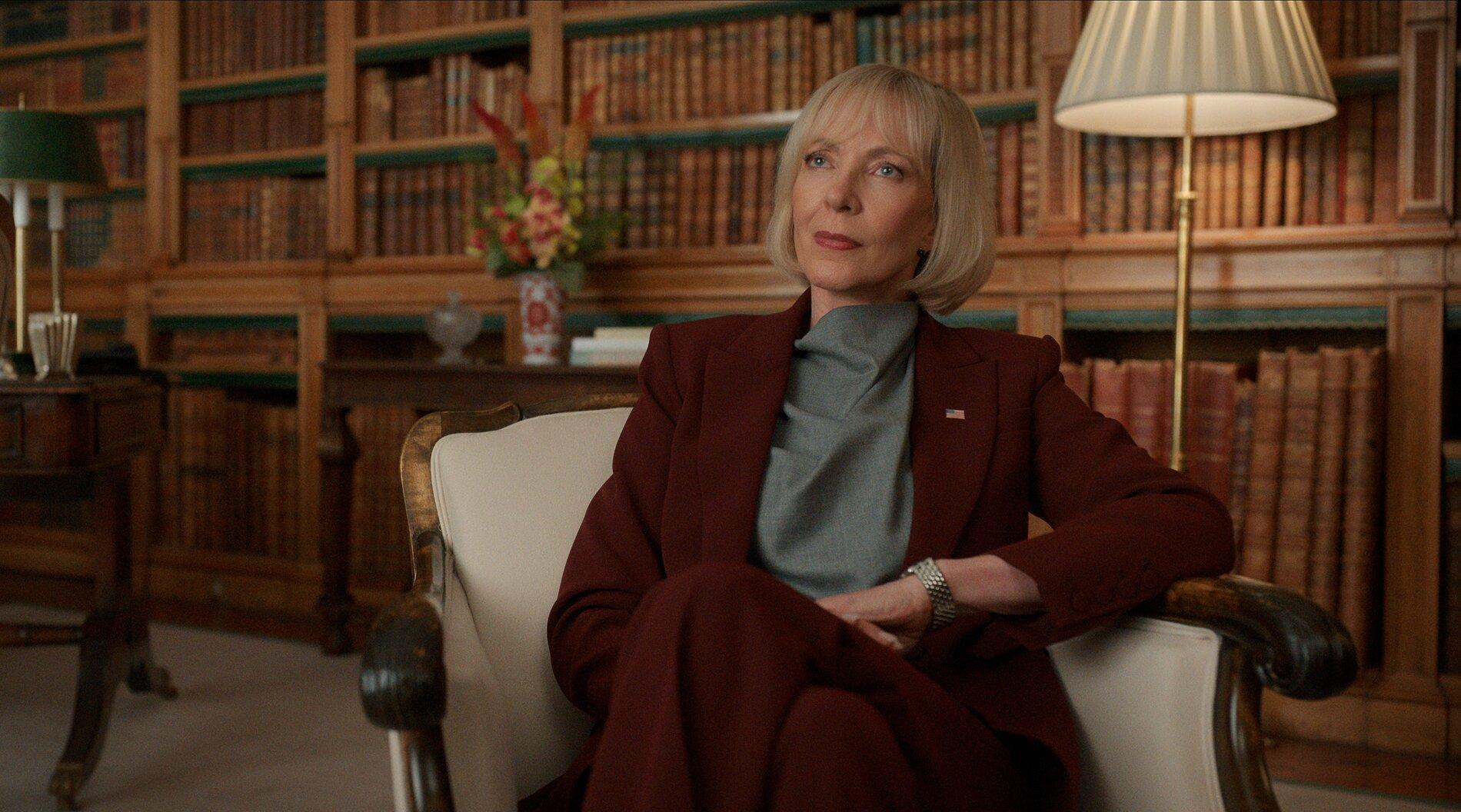
Ted Danson in A Man on the Inside on NetflixTed Danson as Charles in “A Man on the Inside.” Image source: Colleen E. Hayes/Netflix
I reduced my streaming time so I could focus on exercising more. I run marathons now, which means I’m spending hours running and walking outside. Watching Netflix isn’t what it used to be, and it has nothing to do with the time I spend on ChatGPT.

As for the AI chatbot, I’ve been using it increasingly more in the past year, especially since I jumped on the Plus subscription. It’s not just for work, though; as you can imagine, keeping tabs on all things AI is a good reason to have an active premium AI subscription. I use ChatGPT for more complex research, which would take a lot longer to use traditional search engines.

I’m still questioning what the AI is telling me, but with the addition of ChatGPT Search, OpenAI has made a big move towards showing the sources of ChatGPT’s claims. By the way, ChatGPT Search continues to be exclusive to premium tiers like ChatGPT Plus.

I use ChatGPT to plan workouts and travel, and I use it to ask any question I can think of, including the sillier kind. That latter part actually comes in handy while traveling to all sorts of places and visiting museums and other landmarks. ChatGPT can be an invaluable source of information, and it’ll be an even better tool once video streaming support rolls out to Advanced Voice Mode.

I wouldn’t have necessarily expected it earlier this year, but a premium AI subscription is a top priority for me. Even if I cancel ChatGPT Plus, I’d consider a premium replacement from the competition. The Netflix subscription, meanwhile, is much lower on that priorities list, and I’m sure I’d cancel it long before I ditch ChatGPT Plus.

Source

Posted on

Netflix is cracking down even harder on password sharing

It’s been about 18 months since Netflix started enforcing its password-sharing ban, and the move was highly profitable for the company. While some subscribers canceled their accounts in anger once the streamer announced the measures, many others chose to keep their Netflix subscriptions.

Back in June 2023, I told you that Netflix would not do anything to you while enforcing its password-sharing ban. No one had to worry about being blocked or banned. Instead, you get Netflix household verification requests from time to time. You then have 15 minutes to complete the checks for people outside your household sharing your passwords.

Netflix has now ramped up its game when it comes to enforcing household verification checks in an effort to further punish people for sharing their passwords. Netflix appears to be much more aggressive with its checks, making it almost impossible to share passwords outside of your household.

In the 18 months since I made the first changes to my Netflix household, Netflix kept sending verification requests. These messages would pop up on TVs and other devices and require me to click a button in an email to confirm that the gadgets were part of the same household.

Tech. Entertainment. Science. Your inbox.

Sign up for the most interesting tech & entertainment news out there.

By signing up, I agree to the Terms of Use and have reviewed the Privacy Notice.

It all worked great without any hiccups. Sometimes, the checks would come in every couple of weeks, and other times, they’d be much rarer.

There was even a point where I thought Netflix had stopped checking or that it no longer mattered. After all, Netflix added millions of new customers after banning password-sharing, so there couldn’t be that many people left using the same account from two different locations. That’s essentially what households boil down to.

Another reason for the less frequent checks might concern the actual use of the account. Maybe people were accessing the account less frequently than before.

Whatever the case, it’s been a while since I received multiple requests to verify my Netflix household on the same day. But then something unusual happened around the time Disney started enforcing its own password-sharing ban: Netflix became more aggressive.

Nobody Wants This on NetflixKristen Bell as Joanne and Adam Brody as Noah in “Nobody Wants This.” Image source: Adam Rose/Netflix

Say User A and User B simultaneously used the same Netflix login from two different addresses a few weeks ago. User A got a notification to verify the household, which I assisted with, expecting to be a normal check. As soon as I did that, User B got a verification prompt. That was new. I verified the household again, and guess what happened next? User A got kicked off, and Netflix requested another check.

Do this a few times, and you’ll end up with at least some devices logged out of the account. Again, I didn’t see that happen in the previous 18 months.

Also, it’s definitely not the kind of Netflix password-sharing experience you want. It would still work if you wanted to. You can plan your Netflix access to avoid being online on the same account from two different locations. But who wants to bother with that?

It’s also the first time I’ve seen Netflix being so aggressive. I joked that with 2024 almost over, Netflix is trying to improve its financials for the December quarter by signing up more subscribers. I imagine other users have dealt with similar scenarios in the past few weeks.

Regarding subscribers, Netflix had 282.7 million customers at the end of the September quarter, up from 260.38 million subscribers at the end of 2023. Interestingly, Netflix netted 30 million new customers in 2023, the year it announced the password-sharing ban and started enforcing it.

So what did I do when Netflix started cracking down even harder? Nothing. I didn’t cancel Netflix. I accepted it. I get why Netflix is doing it, and I know this is the way things have to work. If you want to stream Netflix, you have to pay.

You can easily get a new Netflix account. The cheapest ad-based tier is still relatively affordable. That’s probably the account Netflix wants you to get in the first place. Ads might benefit its bottom line even more than a more expensive subscription, depending on how much you watch.

Also, ad-based tiers are increasingly popular on streaming services. Disney’s Bob Iger revealed recently that some 30% of Disney Plus global subscribers are on the ad tier. That’s about 37 million accounts.

Netflix, meanwhile, recently reported 70 million monthly users on the ad tier. That’s almost double the 40 million mark it hit back in May.

Source