
Posted on

Nakivo aims at VMware refugees tempted by Proxmox

Backup software vendor Nakivo has added Microsoft 365 cloud-to-cloud backup, support for backups of Proxmox virtualisation environments, and cloud as a target for NAS backups in the latest version – v11 – of its Backup & Replication product.

Support for data protection of Microsoft 365 environments brings Nakivo into line with numerous backup suppliers that protect data in the main cloud services. Here, they are capitalising on the fact that the hyperscaler cloud providers do no more than rudimentary protection of customer data.

Sergei Serdyuk, product management vice-president at Nakivo, said: “Microsoft’s business model is that you are responsible for your data and they are responsible for their infrastructure. So, if you accidentally delete something, you are responsible. What we have launched allows customers to put their data somewhere it can be recovered from and they can set up a repository where they want.”

This extends Nakivo’s cloud backup capabilities from its existing EC2 support. Serdyuk said other cloud platforms would be added, but would not say when.

Meanwhile, Nakivo added support for agentless backups in the open source Proxmox virtualisation environment. According to Serdyuk, around one third (33%) of its customers – mostly small to medium-sized enterprises (SMEs) – who responded to an internal survey said that they planned to migrate to Proxmox and away from VMware.

The background to this is the Broadcom purchase of VMware and subsequent licensing changes and reported cost rises, said Serdyuk.

“Broadcom acquired VMware and changed the licensing model from perpetual to subscription,” said Serdyuk. “Customers have reported increased costs as a result and so many are looking elsewhere. Proxmox is free, or comes with inexpensive support, and is suited to SMEs. As a virtualisation platform, it can displace VMware. We also see a smaller percentage migrate to Nutanix and Hyper-V.”

Prominent backup product maker Veeam – which made its name providing backup for VMware – started to offer Proxmox during the summer, in a move seen as a key moment for those considering moving away from VMware. That move is seen as potentially unlocking migration to Proxmox because it removes the barrier to protecting those environments.

Nakivo has also added backup of NAS devices to cloud targets. According to Serdyuk, this necessitated the company developing a way to make file data suitable for S3 storage.

“Most cloud vendors claim S3 compatibility [for file data], but there have needed to be some tweaks to work with the API,” he said. “So, there has been some fine-tuning to work with file data – block data is easier – because when we copy file data to S3, the whole file needs to be transformed to work in the cloud.”

Version 11 also saw the addition of backup from NetApp Storage Snapshots for FAS and AFF arrays to allow customers to backup VMware VMs on these devices from storage snapshots. Federated repository capability allows customers to create a scalable storage pool from multiple locations, with failover to useable capacity elsewhere should first choice storage in the pool fail.

Nakivo now offers a tenant overview dashboard for service provider customers that allows them to manage tenant activity, performance and resource metrics from a single screen.

Nakivo was founded in 2012 and started out by specialising in VM backup. Its version 1.0 offered VMware support and installation on Windows.

It now supports workloads in VMware, Microsoft Hyper-V, Nutanix, Windows and Linux, and in the cloud in Amazon EC2 and Microsoft 365.

It supports use cases that range from SMEs, to large enterprises and managed service providers (MSPs), with deployment possible on NAS, Windows and Linux, as well as in a virtual appliance or from an Amazon instance in the cloud. It can restore with granularity that ranges from single files to entire sites.

Version 10.9 of Backup & Replication software added ransomware malware scanning, as well as bare metal recovery and recovery from tape directly to virtual machine (VM).
Source

Posted on

Nvidia’s rumored CPU could pack integrated GPU to rival RTX 4070 mobile – should AMD and Intel start to worry now?

  • Nvidia APU rumored to equal RTX 4070 laptop GPU in performance
  • Laptops are already being made with the APU, including from Alienware
  • The Arm-based APU could outgun AMD’s Strix Halo by miles for efficiency

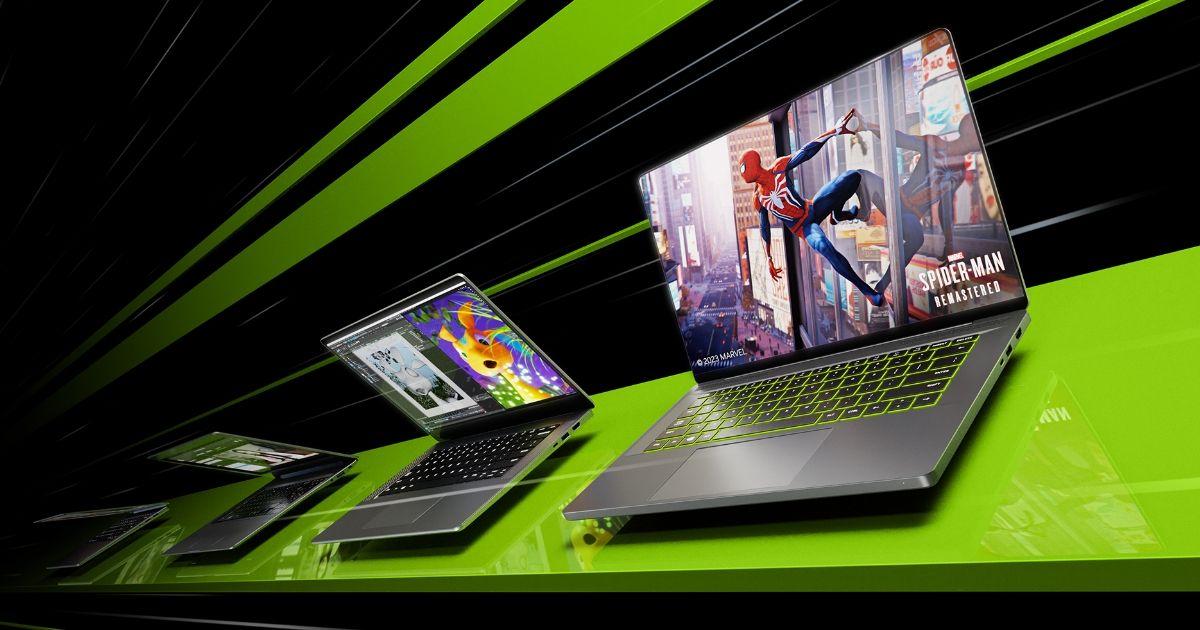
Nvidia’s apparent plan to make an Arm-based CPU for PCs – in conjunction with MediaTek – raised some eyebrows, certainly, and now we’re hearing a bit more about how powerful said APU from Team Green might be in terms of its integrated graphics.

For the uninitiated, an APU is an all-in-one chip (packing a processor, alongside an integrated GPU and NPU) and with a powerful enough graphics solution, these can make for a great engine for thin-and-light gaming laptops, dispensing with the need to have a separate graphics card in the chassis. (They’re also ideal for PC gaming handhelds, too).

Moore’s Law is Dead (MLID) has some fresh info on Nvidia’s rumored Arm-based SoC, namely that said integrated graphics will match the RTX 4070 laptop GPU (with the chip running at around 65W).

MLID further notes that laptop makers are already working with Nvidia to realize this APU, and there’s a rumored deal with Alienware on the boil.

We could see new entrants bursting onto our best gaming laptop list powered by the Nvidia APU as soon as the end of 2025, or the leaker still believes that’s a possibility – though we may realistically be waiting until 2026.

It is, after all, a big move for Nvidia, and one that Team Green and its partners will want to get right.

PS5 Pro Review, Nvidia APU Performance Leak, AMD RDNA 4, XBOX Future | NX Gamer | Broken Silicon 283 – YouTube PS5 Pro Review, Nvidia APU Performance Leak, AMD RDNA 4, XBOX Future | NX Gamer | Broken Silicon 283 - YouTube Watch On

Analysis: The battle against a Halo product

If you recall, AMD also has powerful APUs on the cards, and is closer to launch than Nvidia – in fact, Team Red is expected to reveal new Strix Halo chips at CES 2025 (alongside a whole heap of other goodies).

{ window.reliablePageLoad.then(() => { var componentContainer = document.querySelector(“#slice-container-newsletterForm-articleInbodyContent-ZpcEZKJdQ5A7Pqu5VzCBub”); if (componentContainer) { var data = {“layout”:”inbodyContent”,”header”:”Get the best Black Friday deals direct to your inbox, plus news, reviews, and more.”,”tagline”:”Sign up to be the first to know about unmissable Black Friday deals on top tech, plus get all your favorite TechRadar content.”,”formFooterText”:”By submitting your information you agree to the Terms & Conditions and Privacy Policy and are aged 16 or over.”,”successMessage”:{“body”:”Thank you for signing up. You will receive a confirmation email shortly.”},”failureMessage”:”There was a problem. Please refresh the page and try again.”,”method”:”POST”,”inputs”:[{“type”:”hidden”,”name”:”NAME”},{“type”:”email”,”name”:”MAIL”,”placeholder”:”Your Email Address”,”required”:true},{“type”:”hidden”,”name”:”NEWSLETTER_CODE”,”value”:”XTR-D”},{“type”:”hidden”,”name”:”LANG”,”value”:”EN”},{“type”:”hidden”,”name”:”SOURCE”,”value”:”60″},{“type”:”hidden”,”name”:”COUNTRY”},{“type”:”checkbox”,”name”:”CONTACT_OTHER_BRANDS”,”label”:{“text”:”Contact me with news and offers from other Future brands”}},{“type”:”checkbox”,”name”:”CONTACT_PARTNERS”,”label”:{“text”:”Receive email from us on behalf of our trusted partners or sponsors”}},{“type”:”submit”,”value”:”Sign me up”,”required”:true}],”endpoint”:”https://newsletter-subscribe.futureplc.com/v2/submission/submit”,”analytics”:[{“analyticsType”:”widgetViewed”}],”ariaLabels”:{}}; var triggerHydrate = function() { window.sliceComponents.newsletterForm.hydrate(data, componentContainer); } if (window.lazyObserveElement) { window.lazyObserveElement(componentContainer, triggerHydrate); } else { triggerHydrate(); } } }).catch(err => console.error(‘%c FTE ‘,’background: #9306F9; color: #ffffff’,’Hydration Script has failed for newsletterForm-articleInbodyContent-ZpcEZKJdQ5A7Pqu5VzCBub Slice’, err)); }).catch(err => console.error(‘%c FTE ‘,’background: #9306F9; color: #ffffff’,’Externals script failed to load’, err)); ]]>

Sign up to be the first to know about unmissable Black Friday deals on top tech, plus get all your favorite TechRadar content.

Interestingly, the Strix Halo flagship APU has also been strongly rumored to have seriously peppy integrated graphics, and comparisons have been drawn to the discrete RTX 4070 laptop GPU here, as well – or that Team Red’s top chip might even be slightly more powerful.

Still, in Nvidia’s favor, it’s not clear if that flagship APU will serve gaming laptops, or just workstations, as we’ve discussed in the past. And even if the Nvidia APU is a bit behind in terms of the performance of its integrated GPU, it’s targeting much better efficiency. (Strix Halo rumors point to 120W for the flagship, and as we see here, 65W is mentioned for Nvidia’s effort – that kind of power difference is huge in the world of portables).

We can also expect a seriously powerful NPU from Nvidia, and AMD Strix Halo for that matter.

What’s going to be the problematic area for Nvidia is that its APU is Arm-based, so will run Windows on Arm with its inherent drawbacks, as seen with current Snapdragon SoCs. Whereas AMD’s Strix Halo is a traditional x86 chip and won’t have any compatibility (or performance overhead) worries – though come 2026, the picture for Arm chips in that respect may have changed a great deal. Microsoft is certainly betting on that, and Nvidia too, no doubt – if this rumor is right.

More competition in the mobile CPU arena will be a prospect that Intel isn’t keen on. Team Blue has a big business in producing laptop CPUs, an area it continues to be strong in despite all the woes around its desktop processors. Is that going to change with Nvidia’s entry into the laptop CPU market? It’s not what Intel needs right now, that’s for sure.

Via TweakTown

You might also like…

Source