Posted on

iPhone Fold might look like this quirky new foldable you probably can’t buy

The first foldable iPhone is coming next year, barring some sort of really unfortunate event. After years of covering countless iPhone rumors, I’m comfortable saying that. We’ve reached a point in the rumor phase that precedes the launch of a big iPhone release where we see an increasing number of leaks from sources all saying the same thing.

Apple is preparing to launch the first foldable iPhone next year. The company has reportedly settled on the Fold-type design we’ve already seen from Samsung, Honor, Google, Oppo (OnePlus), and others. Rumors also say that Apple will deliver an almost crease-less foldable display, a design detail that’s been a priority for the iPhone maker.

Reports have also mentioned the purported screen sizes for the foldable iPhone, saying the handset will feature a 7.75-inch foldable screen and a 5.49-inch external screen. You don’t need schematics or dummy units to realize those measurements make no sense at first glance. They make no sense if you think Apple’s iPhone Fold will look like the Galaxy Z Fold.

That’s what I thought, and I employed ChatGPT to give me the dimensions of an iPhone foldable featuring those two screen sizes. The conclusion was obvious: Apple would work with a different aspect ratio. The iPhone Fold would not be as tall as the Galaxy Z Fold. When open, it would look more like a tablet than a Fold-type device.

Tech. Entertainment. Science. Your inbox.

Sign up for the most interesting tech & entertainment news out there.

By signing up, I agree to the Terms of Use and have reviewed the Privacy Notice.

Reports that followed also said the iPhone Fold will have a different aspect ratio.

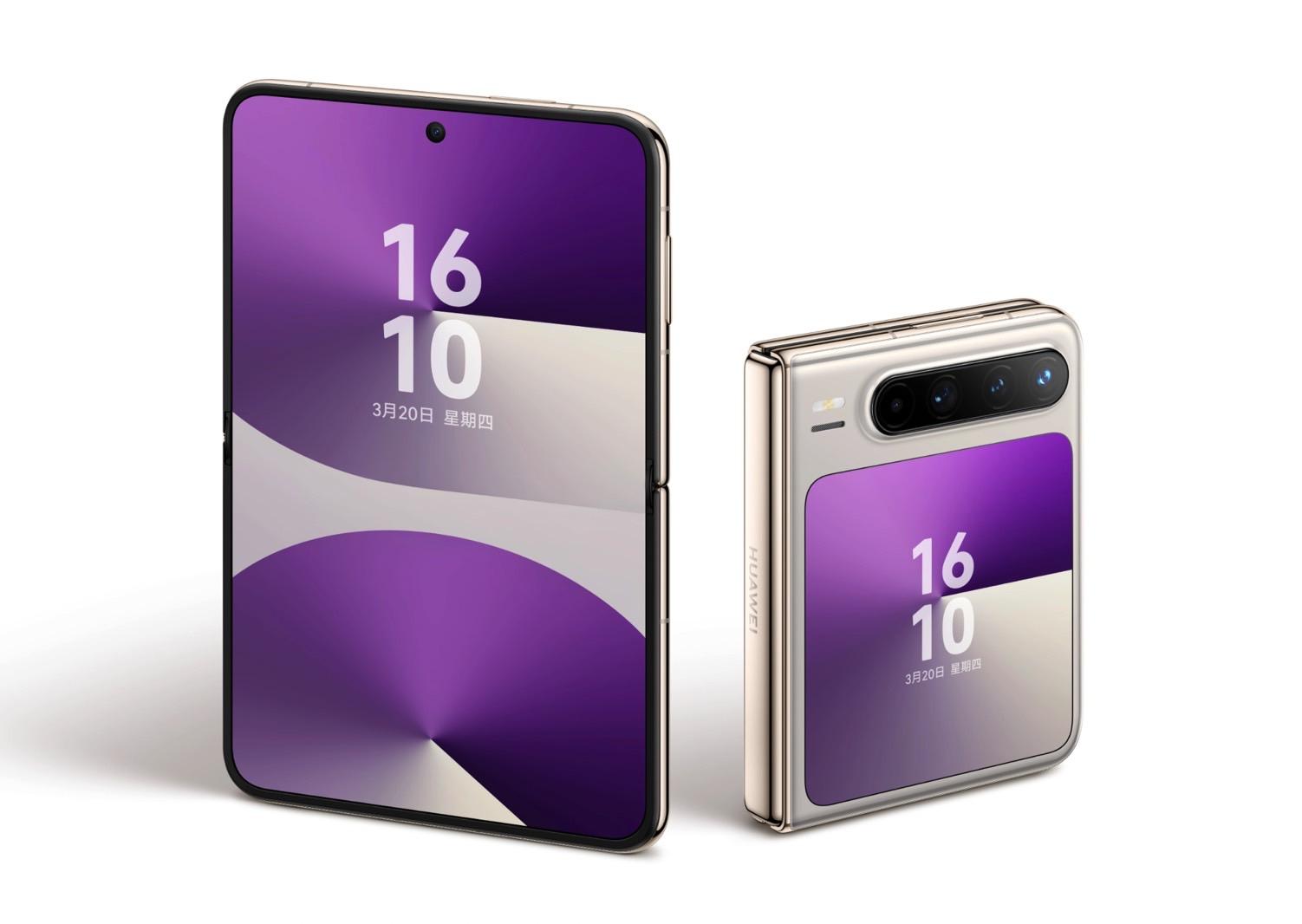
Fast-forward to mid-March, and we have a brand new foldable phone launch on our hands. It’s a phone you’ll probably not be able to buy, and you might not even want to get it if it were launched in the States. It’s the Huawei Pura X in the image above. But what’s amazing about this foldable is that it gives us a visual idea of what the foldable iPhone will look like.

The Pura X, launched in China on Thursday, is priced at 7,499 yuan ($1,037). It’s a flagship device running Huawei’s proprietary HarmonyOS 5.

Huawei Pura X: Cover screen and back panel.Huawei Pura X: Cover screen and back panel. Image source: Huawei

Huawei developed this operating system after Trump banned the Chinese company from working with US tech companies during his first term. This forced Huawei to abandon Google’s Android and Qualcomm’s Snapdragon chips, significantly impacting its ability to compete.

The difference between the early versions of Harmony and HarmonyOS 5 is that the latter is Huawei’s brand-new OS that has no trace of Android. That might be a huge dealbreaker for anyone looking to buy the Pura X, even if the foldable was available in the US and other Western markets.

What’s really exciting about the Pura X is the design, which I immediately associated with the foldable iPhone rumors.

Huawei Pura X: Foldable screen looks like a small tablet.Huawei Pura X: Foldable screen looks like a small tablet. Image source: Huawei

Folded, the Pura X features a 3.5-inch cover screen with a triple-camera sensor placed at the top. This screen design suggests we’re looking at a Galaxy Z Flip-style clamshell, but that’s not really so.

Unfold the Pura X, and you get a massive 6.3-inch screen with an unusual 16:10 aspect ratio. The phone has small, symmetrical bezels and a hole-punch camera at the top. You can hold it in portrait mode like a regular candybar (or Flip clamshell) phone.

But that aspect ratio turns the Pura X into a much better tablet than the Galaxy Z Fold 6. The tablet experience makes me think of the iPad mini 6 or 7.

The two iPad mini variants feature the same design. I’ve long fantasized that a foldable iPhone would unfold to look like an iPad mini. The Pura X, combined with the foldable iPhone screen leaks from a few weeks ago, further reinforces my thinking.

The Pura X tablet experience.The Pura X tablet experience. Image source: Huawei

That said, the Pura X is smaller than the iPhone Fold-type phone, considering those rumors. The Pura X is 91.7mm tall when folded. That height becomes the width of the handset when you unfold it.

My ChatGPT calculations told me the foldable iPhone will have a height of 120.4mm to accommodate the 5.49-inch cover and 7.75-inch foldable displays. Both those screens are larger than the Pura X handset.

I’ll also point out that the Pura X design potentially solves one of my big issues with the foldable iPhone. The main camera module’s cover display placement could help Apple make Face ID possible. Some rumors say that Apple will bring back Touch ID for the handset, as Face ID components might not fit in an ultra-thin foldable iPhone.

The Pura X doesn’t seem to have 3D facial recognition support. It does feature a fingerprint sensor on the side button.

Separately, the thickness is another quirk about Huawei’s strange foldable. The phone measures 7.15mm when unfolded or 15.1mm when folded. That’s much thicker than even Samsung’s foldables. The foldable iPhone should be much thinner than that, according to reports.

Source

Posted on

Galaxy S25 Edge specs leak teases an amazing ultra-thin phone

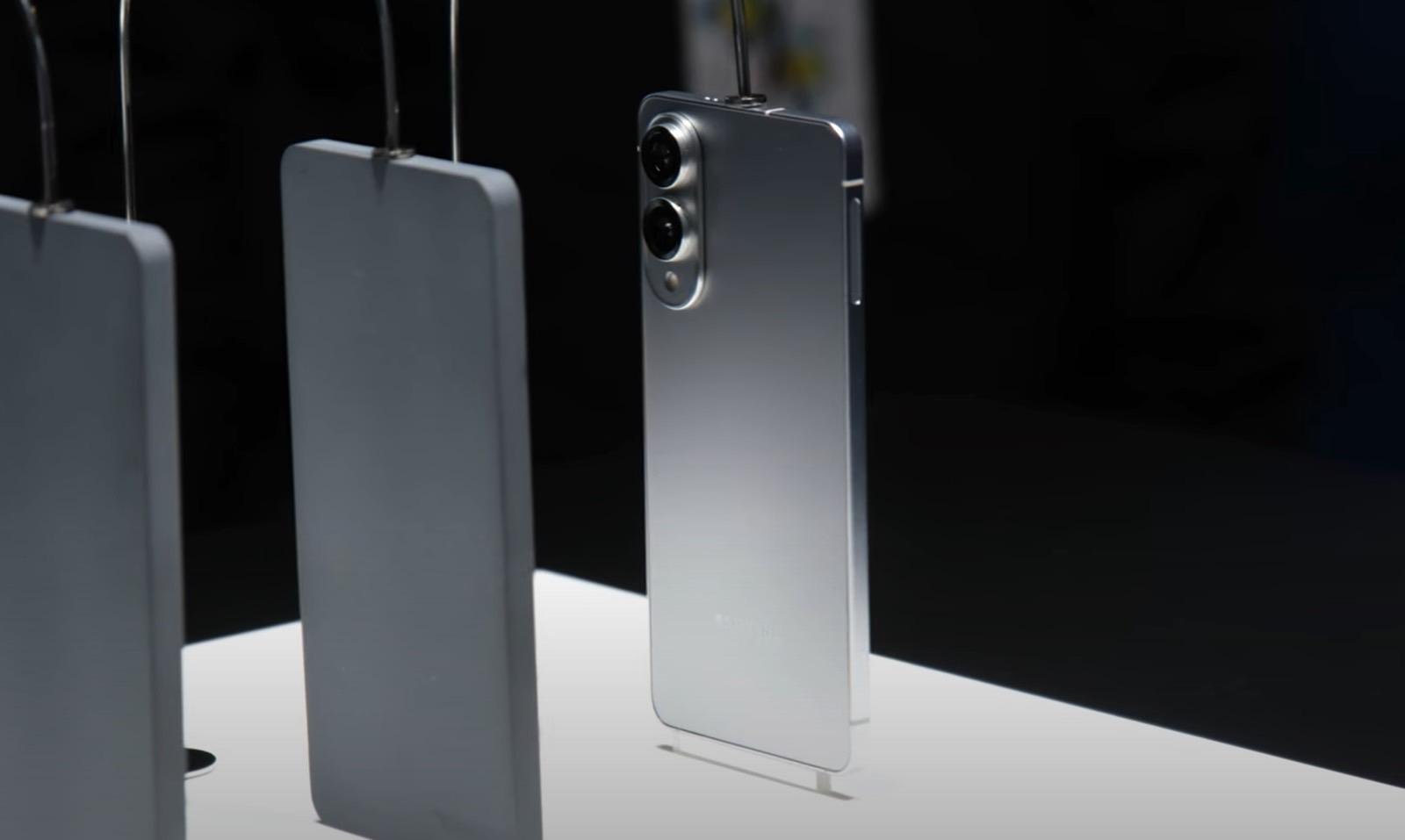
People in attendance at the Galaxy S25 Unpacked event last month might’ve been surprised by the product Samsung used to open the show: the new ultra-thin Galaxy S25 Edge. Then, during the hands-on experience, people crowded the Galaxy S25 Edge tables to take photos of the sleek new phone that Samsung teased briefly on stage.

Despite not being launched officially, the Galaxy S25 Edge was the big star of the show, and I’m not surprised. It can’t be just me who is interested in an ultra-thin flagship phone. I’m already looking forward to buying the iPhone 17 Air that Apple is expected to introduce this year. That’s the iPhone model that supposedly inspired Samsung to rush and unveil the Galaxy S25 Edge before Apple shows off its super-thin handset in September.

Samsung did not reveal Galaxy S25 Edge specs details at the show. While we speculated the handset would have high-end hardware like the rest of the Galaxy S25 series, we didn’t get actual confirmation at the event.

Now, someone posted on YouTube a very early hands-on video showing the Galaxy S25 Edge in action, complete with specs. The video was quickly pulled, but it confirmed leaks saying that the handset will rock high-end hardware despite being so thin.

Tech. Entertainment. Science. Your inbox.

Sign up for the most interesting tech & entertainment news out there.

By signing up, I agree to the Terms of Use and have reviewed the Privacy Notice.

According to SamMobile, which was among those quick enough to see the video before it was removed, the Galaxy S25 Edge is under 6mm thin. This seems to confirm rumors pointing to a profile of 5.84mm. Comparatively, the base Galaxy S25 model is 7.2mm thick.

The same YouTuber also provided the main hardware specs for the Galaxy S25 Edge units they tested. The phone features the Snapdragon 8 Elite chip, 12GB of RAM, 256GB of storage, and a 4,000 mAh battery.

The specs app the YouTuber used also provided purported camera details, suggesting the phone has three 12-megapixel cameras. However, the Galaxy S25 Edge only features two cameras on the back.

SamMobile explained that the app used to collect specs details usually messes up camera hardware, as the app looks at the default resolution of photos. The Galaxy S25 is rumored to feature a 200-megapixel main sensor rather than a 12-megapixel camera.

Camera specs aside, the rest of the hardware specs tell an impressive story. The Galaxy S25 Edge will apparently feature specs on par with the thicker Galaxy S25 phones.

All three Galaxy S25 models pack the same Snapdragon 8 Elite chip and pack at least 12GB of RAM. The list includes the Galaxy S25 Ultra, the best Galaxy S25 flavor you can buy.

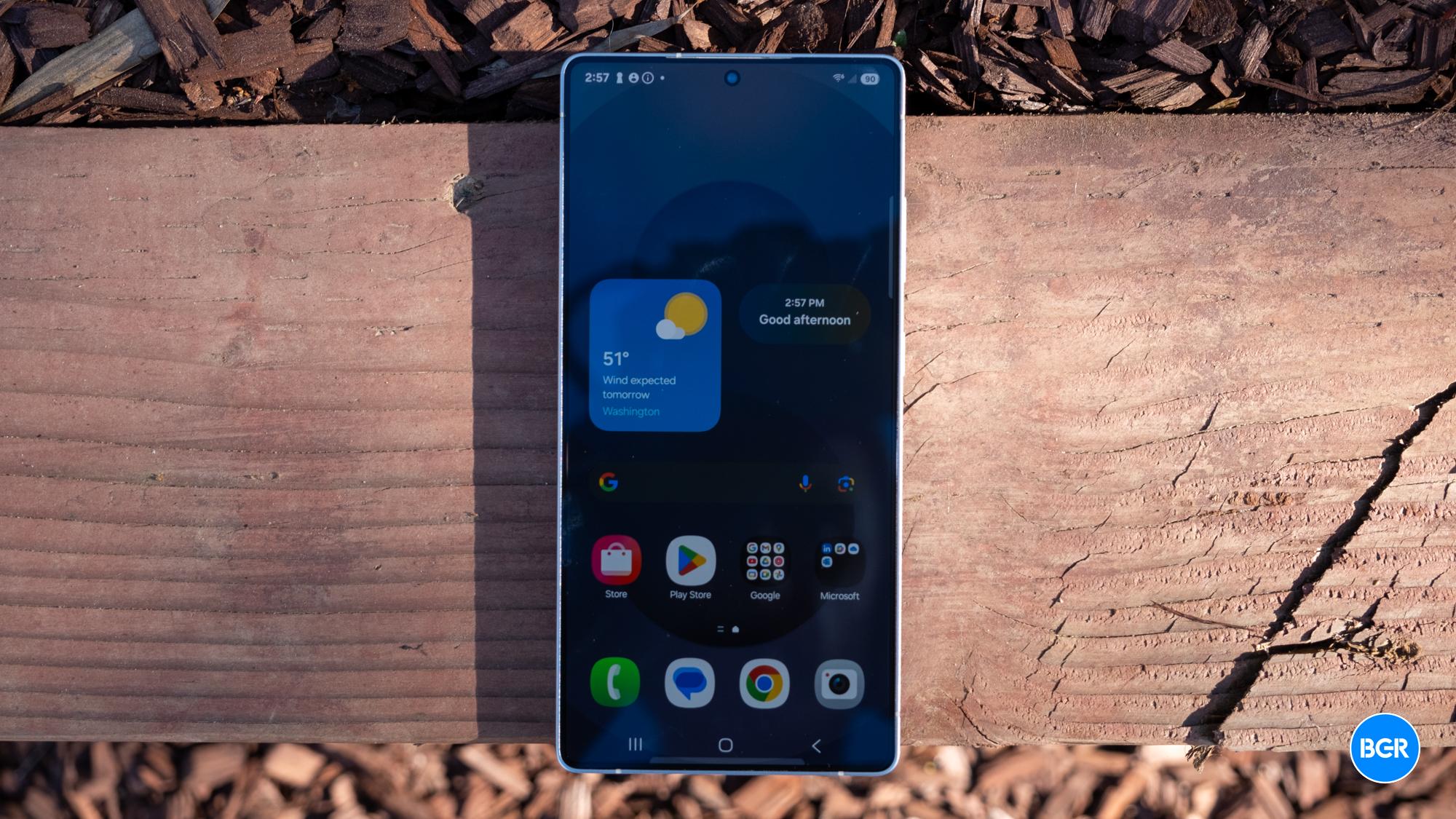
Samsung Galaxy S25+ blue backSamsung Galaxy S25 Plus in blue back. Image source: Christian de Looper for BGR

The base Galaxy S25 model, which we’ve called maybe the most minor update in history, starts at 128GB of storage. The Galaxy S25 Plus model above starts at 256GB of storage.

More interesting is the Galaxy S25 Edge battery claim. At 4,000 mAh, the battery is as big as the Galaxy S25’s battery pack. However, given the phone’s nimble profile, the Galaxy S25 Edge battery has to be thinner and taller.

It’s unclear what compromises Samsung might have made to reduce the Galaxy S25 Edge’s thickness. The Snapdragon 8 Elite chip might be underclocked compared to the regular version. The phone’s thickness might have impacted the cooling system and other internal components. 

The battery might match the Galaxy S25’s size, but the phone should have a larger screen, which will inevitably consume more energy.

Even if the specs aren’t confirmed for the camera, we know the handset will feature two lenses instead of three.

That said, I’m cautiously optimistic about the Galaxy S25 Edge. The phone will have high-end specs in an ultra-thin body.

Samsung’s confidence in its ability to pull off a high-end ultra-thin Galaxy S phone makes me even more excited about the iPhone 17 Air. Remember that Samsung would have never made an ultra-thin Galaxy S phone without Apple first making a slim iPhone.

With March approaching, we’re getting closer to the Galaxy S25 Edge launch event. Samsung only teased the handset in January, but the ultra-thin phone should be launched in the second quarter.

Source

Posted on

Galaxy S25 Ultra vs. iPhone 16 Pro Max real-life battery test: Almost indentical

Apple’s iPhone 16 delivers great battery life, as we’ve seen in various tests and reviews performed after Apple unveiled the phone in September. The iPhone 16 Pro Max, which rocks the largest battery capacity of the four models, also delivers the best battery life.

Now that the Galaxy S25 phones are out, the obvious battery life comparisons have started to drop, comparing Samsung’s latest phones against the latest iPhones. The most obvious contest is between the Galaxy S25 Ultra and the iPhone 16 Pro Max the phones with the largest battery packs of their respective series.

A few months ago, we saw battery life comparisons between the Galaxy S24 Ultra and the iPhone 16 Pro Max, with each phone coming out on top.

One of the more objective comparisons, offering a test meant to mimic the real-life use of a smartphone, came from the YouTube channel PhoneBuff. The iPhone 16 Pro Max won that battle by nearly an hour of extra life, though the Galaxy S24 Ultra put up a great fight.

Tech. Entertainment. Science. Your inbox.

Sign up for the most interesting tech & entertainment news out there.

By signing up, I agree to the Terms of Use and have reviewed the Privacy Notice.

Fast-forward to mid-February, and we have a similar battery life test featuring the Galaxy S25 Ultra and the iPhone 16 Pro Max. Apple’s handset won the contest, but by only a few minutes.

Ahead of the Galaxy S25 launch event, we knew the Snapdragon 8 Elite chip did tremendously well in battery life tests. This prompted me to speculate the ultra-thin Galaxy S25 Edge will feature great battery life despite rocking a smaller battery. While we’re yet to see the Edge in the wild, we know the Galaxy S25 Ultra can offer great battery life.

We noted in our Galaxy S25 Ultra review that battery life seems to have improved for the Galaxy S25 Ultra. The phone can easily last up to two days with light use. The Snapdragon 8 Elite, a custom version for the Galaxy S25 Ultra, delivers better performance than its predecessor and improved efficiency gains. The Galaxy S25 phones also feature vapor chambers to help cool the processor off.

We already saw that processor in action in a speed test from the same YouTuber, where the Galaxy S25 Ultra crushed the iPhone 16 Pro Max in a way I didn’t think possible.

Galaxy S25 Ultra vs. iPhone 16 Pro Max battery life test results.Galaxy S25 Ultra vs. iPhone 16 Pro Max battery life test results. Image source: YouTube

The processor’s efficiencies must be the reason the Galaxy S25 Ultra does so well in the battery life test PhoneBuff posted on YouTube.

Like the speed test, the battery life battle features a robot programmed to navigate apps in a specific order to mimic real-life use. The robot went through phone calls, texting, internet browsing, social apps, games, music, video streaming, and even navigation apps to replicate what we normally do on phones.

The battery life test also included a standby period to account for battery depletion when the handset is not used.

The iPhone 16 Pro Max won the battery life duel with 28 hours and 1 minute, while the Galaxy S25 Ultra died after 27 hours and 50 minutes. The advantage of the iPhone dropped significantly compared to the Galaxy S24 Ultra. The iPhone’s performance is impressive, considering it actually has a smaller battery than the Galaxy S25 Ultra.

However, it’s clear the Snapdragon 8 Elite chip is responsible for the phone’s battery life gains. After all, Samsung used the same 5,000 mAh battery for both the Galaxy S24 Ultra and the S25 Ultra.

The only other thing that’s different is the operating system. The Galaxy S25 Ultra runs Android 15 (One UI 7) out of the box, while the S24 Ultra rocked Android 14. One UI 7 is still too new. Additional optimizations might improve battery life down the road. But even so, the Galaxy S25 phones should deliver better batery life than its predecessors, especially the Ultra.

The battery life test follows in full below:

Source

Posted on

This ‘boring’ new iPhone 17 Air leak is music to my ears

The iPhone 16 Plus was the first large device in my long history as an iPhone user. I wanted the larger display but couldn’t settle for the Plus’s larger footprint. After nearly two months with the handset, I’m convinced that the iPhone 17 Air will be the best option for me once the iPhone 17 hits stores.

I’m ready to make all sorts of compromises to get a large-screen iPhone with a slim profile. I’ll accept a single-lens camera experience, the disappearance of SIM cards in Europe, a less-than-stellar speaker, and even battery life that can’t possibly be as good as the iPhone 16 Plus.

The compromise I’m not going to go for concerns iPhone performance. The iPhone 17 Air should rock the same A19 chip as the base iPhone 17 model. I wouldn’t want Apple to nerf the Air variant in any way by throttling performance to prevent overheating. That’s something Apple could always do, especially considering the brief overheating issues with the iPhone 15 Pro in the first weeks after launch.

That’s why a leak saying every iPhone 17 model will get vapor chambers this year is music to my ears, no matter how boring it might sound.

Tech. Entertainment. Science. Your inbox.

Sign up for the most interesting tech & entertainment news out there.

By signing up, I agree to the Terms of Use and have reviewed the Privacy Notice.

Most iPhone buyers will not care about how the iPhone they’re about to buy handles the heat coming from that fast processor and the battery. They’ll want the brand-new device to “just work” as soon as they take it out of the box.

But then, when the same buyers experience overheating issues with devices like the iPhone 15 Pro, they’ll want it fixed. They’ll want Apple to handle it without impacting the iPhone’s performance.

The iPhone 16 series doesn’t come with cooling issues, or they would have been obvious by now. Overheating was never a thing on the iPhone 16 Plus. Apple did, after all, improve cooling on these iPhones.

Apple didn’t add a vapor cooling chamber to the iPhone 16 models, though it might have such plans for this year’s iPhones. A vapor chamber might move heat more efficiently from the processor to the phone’s exterior.

Galaxy Z Fold 6 features a larger vapor chamber than the Fold 5.Galaxy Z Fold 6 features a larger vapor chamber than the Fold 5. Image source: Chris Smith, BGR

During the Galaxy Z Fold 6 and Flip 6 launch events last summer, Samsung made a point of showcasing the larger vapor chambers inside these devices. Many Android flagships feature vapor chamber cooling.

A report from Ming-Chi Kuo said last August that the iPhone 17 Pro Max would feature a vapor chamber, a first for the iPhone. Fast-forward to mid-January, and MyDrivers now claims that all four iPhone 17 models will get vapor chambers for better cooling.

As with other rumors, this iPhone 17 hardware detail is unconfirmed for now. We’ll need to wait until Apple unveils the phones to see the cooling system in action. Teardowns following the iPhone 17’s release will also give us a look inside the four iPhones.

But the rumor is all the more exciting when you consider the latest iPhone 17 Air reports. The ultra-thin phone might be just 5.5mm thick. Apple will have to squeeze a decent battery in that space, along with all the other components that an iPhone 17 series phone will get. Packing a vapor champer inside such a thin body will be a feat of engineering.

We won’t even have to wait until September to see a vapor chamber inside an ultra-thin flagship phone. The Galaxy S25 Slim will reportedly hit stores this May. The phone will feature the same Snapdragon 8 Elite chip as Samsung’s thicker Galaxy S25 flavors. Since Samsung uses vapor chamber cooling tech in these phones, it’ll probably craft one for the Galaxy S25 Slim to ensure proper cooling.

Source

Posted on

Samsung’s Galaxy S25 Slim specs leaked from an early benchmark test

Samsung will unveil the Galaxy S25 in less than two weeks at its first Unpacked press event of the year. Rumors say the keynote will deliver at least one surprise in the form of an ultra-thin Galaxy S25 Slim phone. The handset will be introduced at Unpacked, but it might not ship for several months. Development of the phone might be running behind compared to the regular Galaxy S25 variants.

Samsung reportedly decided to make the Galaxy S25 Slim after it became clear that Apple plans to launch an ultra-slim iPhone 17 Air handset this fall. Coming out with the Galaxy S25 Slim before Apple unveils the thinner iPhone 17 variant could be in Samsung’s favor, at least from a marketing perspective.

A new discovery seems to back up rumors that the Galaxy S25 Slim was added to the Galaxy S25 lineup later than usual. The first purported Geekbench 6 benchmark leaked for the handset, confirming some of its specs in the process.

Found by leaker Jukanlosreve, the Geekbench 6 test for the Galaxy S25 Slim is available at this link.

Tech. Entertainment. Science. Your inbox.

Sign up for the most interesting tech & entertainment news out there.

By signing up, I agree to the Terms of Use and have reviewed the Privacy Notice.

At the time of this writing, two such tests were available on Geekbench for the same phone. It’s a Samsung phone with model number SM-S937U. The Galaxy S25 Slim name doesn’t appear anywhere in the identifiers, of course. But we’ve seen that codename in previous Galaxy S25 Slim rumors.

Leaked Galaxy S25 Slim Geekbech 6 benchmark test.Leaked Galaxy S25 Slim Geekbech 6 benchmark test. Image source: Geekbench

Regarding performance, we’re looking at single-core scores of around 3,000 and multi-core scores of almost 7,000 points. While the single-core test nearly matches the Galaxy S25 Ultra’s early tests that leaked in early November, the multi-score performance lags by about 3,000 points.

This indicates we’re looking at an early test or that Samsung will have to throttle performance on the thinner phone to prevent overheating. While I’m speculating, ultra-thin handsets will come with compromises.

Despite the performance differences there’s good news here. The Galaxy S25 Slim will share some of the most important specs with the Galaxy S25 Ultra. The phone in the benchmark test above runs on the same Qualcomm chip as the one in the Galaxy S25 Ultra tests. They’re identical, down to the clock speeds. It means the Galaxy S25 Slim will pack the Snapdragon 8 Elite chip.

That’s great news for buyers looking for an ultra-thin flagship phone. I say that as an iPhone user looking forward to the iPhone 17 Air. I know the handset should be as powerful as the base iPhone 17 because that’s how Apple does things.

The benchmark test above indicates that Samsung will take a similar approach. The Galaxy S25 Slim will not feature a less powerful chip than the rest of the Galaxy S25 line. That is, Samsung won’t try to cut costs. It also implies the Galaxy S25 Slim won’t be more affordable, as the Elite processor is an expensive component.

The test also reveals another detail about the Galaxy S25 Slim’s specs. The phone will feature 12GB of RAM, while the Ultra will pack 16GB of RAM. However, I don’t expect memory to be a problem on a phone like the Galaxy S25 Slim.

Source

Posted on

Galaxy S25 price leak sparks concern about imminent hikes

Now that CES 2025 has come and gone, the next big event in the tech world is Samsung’s Galaxy Unpacked event on January 22nd. Samsung will unveil the Galaxy S25 lineup at the show, including a Galaxy S25 Slim variant.

The ultra-thin phone might hit stores in just a few months, but that’s hopefully not the only surprise Samsung has prepared for fans. Rumors say Samsung will unveil its Android XR-based AI-infused smart glasses at the show. We certainly expect to see the Vision Pro rival, Project Moohan, unveiled officially. Samsung might also announce a new Galaxy Ring 2 model.

But Unpacked might also bring some unexpectedly bad news: Price hikes for the three (well, four) Galaxy S25 models, the show’s stars.

We saw warnings a few weeks ago that at least one of the three main Galaxy S25 versions could cost more than last year’s model. Now, a new report from Europe suggests price hikes might be in order for all three models, which will be available in stores by February.

Tech. Entertainment. Science. Your inbox.

Sign up for the most interesting tech & entertainment news out there.

By signing up, I agree to the Terms of Use and have reviewed the Privacy Notice.

Reports from Korea detailed in mid-December the two factors that might force Samsung to raise prices for the Galaxy S25 models. First, there was the political turmoil in Korea that impacted the dollar-won exchange. Then there’s the Snapdragon 8 Elite processor, the high-end chip that will power all Galaxy S25 models, that’s significantly more expensive than its predecessor.

The report singled out the Galaxy S25 Ultra as the likely model to get a higher price tag than the Galaxy S24 Ultra.

A month later, Italian blog SmartWorld says that a local store in Italy has already set up placeholder pages for the Galaxy S25 phones that will go on sale after Unpacked.

The store listed prices for all three Galaxy S25 versions and their respective memory options, indicating that price hikes will be in order. According to this information, the Galaxy S25, S25 Plus, and S25 Ultra will cost at least €50 more than their predecessors.

While that might seem troubling, I’ll say there’s nothing official about these prices. That’s a point the Italian blog makes. Maybe it’s just placeholder information waiting to be edited once Unpacked drops. SmartWorld also says that well-known inside Roland Quandt said in December that the Galaxy S25 European prices would match last year’s models.

If the price hikes are real, they might not reflect Samsung’s plans worldwide. It’s unclear in which markets Samsung will raise prices for the Galaxy S25. After all, a €50 hike isn’t as big as expected. If it translates to a $50 price hike in the US, you can offset it by simply registering to preorder a Galaxy S25 flavor. Registration will give you $50 in Samsung credit.

On the other hand, European prices also factor in VAT. The actual price hike might be lower when you remove the tax.

I’ll also remind you that Samsung and its carrier partners will run plenty of promos during the preorder period to make the Galaxy S25 price more palatable. One already leaked: free Gemini Advanced access for up to a year. That’s a subscription that usually costs $20/month. It offers plenty of cloud storage in addition to Google’s best AI model.

Finally, a recent rumor says that Samsung wants to launch a hardware subscription plan soon for devices like the Galaxy S25. While it will be available only in certain markets initially, a hardware subscription plan might make the Galaxy S25 a lot easier on the wallet.

As for the Galaxy S25 Slim, the handset doesn’t have a predecessor, so we can’t predict how much it’ll cost. But I don’t expect it to be more affordable than the base Galaxy S25 model. The ultra-thin phone will still run on the same high-end Snapdragon chip as the rest of them.

Source

Posted on

AMD in 2024: year in review

What sort of 2024 did AMD experience? This year was quiet in some respects for Team Red – with not much activity in the GPU space, save for one notable exception – but there was more happening on the CPU front, although the introduction of new Zen 5 processors proved controversial.

New laptop chips for Copilot+ PCs and a fresh X3D offering were definite highlights, so without any further preamble, let’s dig into what was good, bad, or indifferent for AMD in 2024.

AMD CPU with Ryzen 9000 Series label

(Image credit: AMD)

Vanilla Ryzen 9000 CPUs fizzled upon launch

This year we received new Ryzen processors, although the launch of these Zen 5 chips was pushed back a month from July to August – a delay which some regarded as ominous at the time. Those more pessimistic mutterings turned into something of an online outcry when the Ryzen 9000 range did eventually arrive, with the PC community seemingly quick to label the new processors a flop.

That’s a harsh conclusion to jump to, perhaps, although it’s undeniable that Ryzen 9000 did not meet the expectations of would-be CPU buyers, particularly for gaming performance, where uplifts were widely reported to be closer to 5% than the 10% AMD was touting prerelease (which is where the ‘Zen 5%’ joke comes from). The better news is that Ryzen 9000 swiftly received better performance thanks to fine-tuning work in Windows 11 24H2 – though crucially, Ryzen 7000 chips got close to the same (major) uplift.

Following rather shaky reviews of the mainstream Ryzen 9700X and 9600X offerings, sales appeared to flag out of the gate – partly due to Ryzen 7000 chips still being around with pretty deep discounts applied, making them comparatively more tempting.

So, the flak AMD caught from a gaming angle wasn’t good at all here, but Team Red did have a couple of things in its favor. Its desktop CPU rival, Intel, spent the whole of 2024 dealing with way worse issues than a lukewarm reception around gaming prowess – with Team Blue’s 13th and 14th-gen processors being plagued by nasty instability issues (that were eventually fixed). On top of that, Intel’s new Core Ultra 200S (Arrow Lake) desktop CPUs fared just as badly as Ryzen 9000 – actually, worse – out of the gate in terms of gaming performance.

That gave AMD some breathing room, and then Team Red shot back with a powerful volley to entice PC gamers in terms of a swift launch of its new 3D V-Cache processors.

{ window.reliablePageLoad.then(() => { var componentContainer = document.querySelector(“#slice-container-newsletterForm-articleInbodyContent-qPnV8YUS5mb3WiyePpf48N”); if (componentContainer) { var data = {“layout”:”inbodyContent”,”header”:”Get daily insight, inspiration and deals in your inbox”,”tagline”:”Sign up for breaking news, reviews, opinion, top tech deals, and more.”,”formFooterText”:”By submitting your information you agree to the Terms & Conditions and Privacy Policy and are aged 16 or over.”,”successMessage”:{“body”:”Thank you for signing up. You will receive a confirmation email shortly.”},”failureMessage”:”There was a problem. Please refresh the page and try again.”,”method”:”POST”,”inputs”:[{“type”:”hidden”,”name”:”NAME”},{“type”:”email”,”name”:”MAIL”,”placeholder”:”Your Email Address”,”required”:true},{“type”:”hidden”,”name”:”NEWSLETTER_CODE”,”value”:”XTR-D”},{“type”:”hidden”,”name”:”LANG”,”value”:”EN”},{“type”:”hidden”,”name”:”SOURCE”,”value”:”60″},{“type”:”hidden”,”name”:”COUNTRY”},{“type”:”checkbox”,”name”:”CONTACT_OTHER_BRANDS”,”label”:{“text”:”Contact me with news and offers from other Future brands”}},{“type”:”checkbox”,”name”:”CONTACT_PARTNERS”,”label”:{“text”:”Receive email from us on behalf of our trusted partners or sponsors”}},{“type”:”submit”,”value”:”Sign me up”,”required”:true}],”endpoint”:”https://newsletter-subscribe.futureplc.com/v2/submission/submit”,”analytics”:[{“analyticsType”:”widgetViewed”}],”ariaLabels”:{}}; var triggerHydrate = function() { window.sliceComponents.newsletterForm.hydrate(data, componentContainer); } if (window.lazyObserveElement) { window.lazyObserveElement(componentContainer, triggerHydrate); } else { triggerHydrate(); } } }).catch(err => console.error(‘%c FTE ‘,’background: #9306F9; color: #ffffff’,’Hydration Script has failed for newsletterForm-articleInbodyContent-qPnV8YUS5mb3WiyePpf48N Slice’, err)); }).catch(err => console.error(‘%c FTE ‘,’background: #9306F9; color: #ffffff’,’Externals script failed to load’, err)); ]]>

Sign up for breaking news, reviews, opinion, top tech deals, and more.

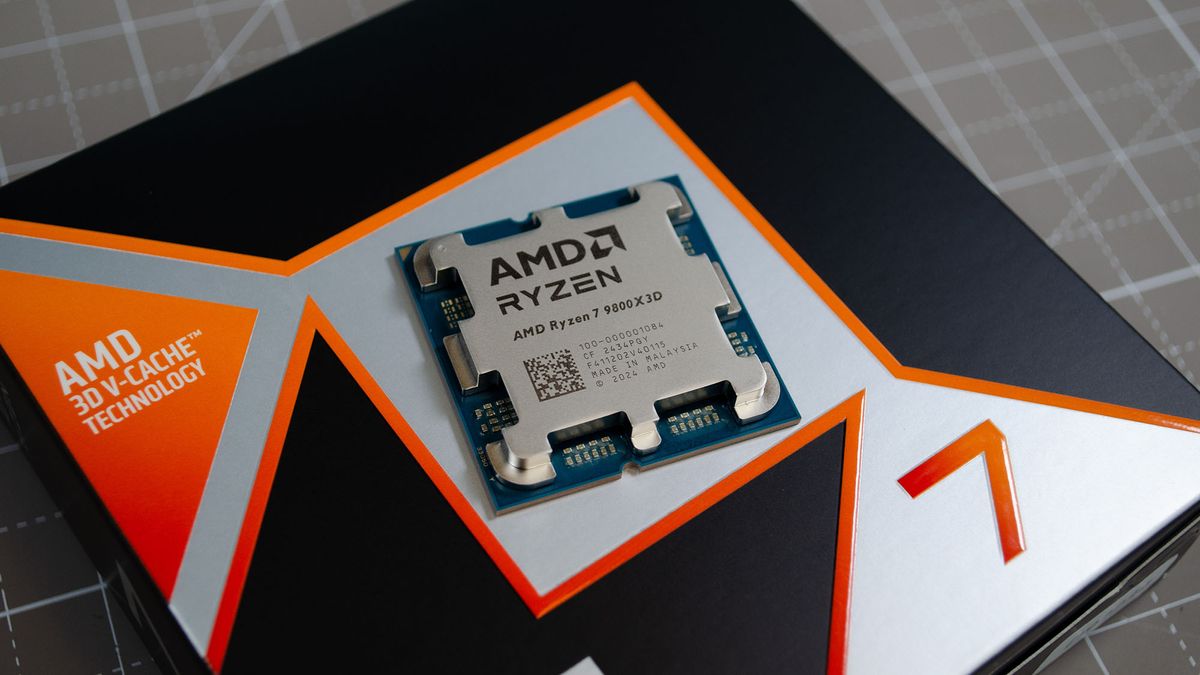
An AMD Ryzen 7 9800X3D in a masculine hand

(Image credit: Future / John Loeffler)

Ryzen 9800X3D to the rescue

Last year, we saw the introduction of 3D V-Cache for Zen 4 CPUs, and the Ryzen 7800X3D caught fire as the most popular gaming CPU out there. While normally AMD takes some time to push out X3D chips for any given generation, with Zen 5, these gaming-focused processors arrived very swiftly. Indeed, the Ryzen 9800X3D debuted in the first week of November, only a few months after Ryzen 9000 chips.

You could argue that this hasty appearance was pushed through to take away the bad taste from Ryzen 9000, and indeed the Ryzen 9800X3D did exactly that for PC gamers. As we found in our review, this CPU is seriously pepped up (with the ability to be overclocked for the first time, too), and an excellent gaming chip – we called it the best processor release of 2024, in fact.

The sticking point for the 9800X3D was the slightly hiked MSRP, along with the initial stock selling out very quickly, a situation compounded by scalping woes. Still, this clearly was the piece of silicon AMD needed to get out of the door to recover its CPU reputation, and really take the fight to Intel.

Also, i’s worth noting that we were treated to a welcome wallet-friendly last-gen offering from AMD, the Ryzen 7600X3D, as a budget gaming CPU (and a great fit for small form-factor builds) – but as a Micro Center exclusive in the US (again).

An ASRock Steel Series Radeon RX 7900 GRE on a desk

(Image credit: Future / John Loeffler)

GPU disappointment – with a big saving grace

AMD was a hive of activity with graphics cards last year, filling out the RDNA 3 series with various models of GPU, from the lower-end RX 7600, through the mid-range territory with the RX 7700 XT and 7800 XT. Before that in 2022, we only had high-end models with the RDNA 3 family.

To say this year was a bit of a contrast is an understatement. At the very start of 2024, we did get a new RX 7600 XT, the pepped-up take on the most wallet-friendly RDNA 3 GPU, but it was a modest upgrade, not all that compelling in the value stakes, and overall it didn’t stand up well compared to its Nvidia rival (the RTX 4060).

We were hoping for some new entrants at the true budget end of the GPU market in 2024, below the RX 7600, but the rumored RX 7400 and 7300 never showed. (Although bizarrely, we did get some milking of ancient low-end Radeon GPUs).

We were also hoping for RDNA 4 with even more eagerness, of course, but that didn’t happen either. Despite the rumor mill firmly believing these next-gen graphics cards could debut later in 2024, they didn’t – and the grapevine now has a Q1 2025 launch predicted. Overall, the no-show from RDNA 4 – which is rumored to top out at the mid-range, with an RX 8700 XT flagship in theory – was one of the biggest disappointments in the PC sphere for us in 2024.

What we did get, though, was a rocket-powered rabbit – a Golden Rabbit Edition, or GRE, version of the RX 7900, to be precise. Now, this was a GPU that was launched in China in the middle of 2023, but it was only released globally in February 2024. At that point, the RX 7900 GRE stormed our list of the best GPUs and stole the top position, arguably being the best entry-level option for 4K gaming.

So, it wasn’t a complete washout for Team Red after all, particularly when you consider that the RX 7800 XT also topped our best GPU list when it emerged last year. The GRE was the only thing that was GRE-at (sorry) about 2024 for AMD’s GPUs, though.

An AMD Ryzen AI 300 series chip against a stylized background

(Image credit: AMD)

Ryzen AI 300 bursts onto the scene to take on Qualcomm Snapdragon X

As you doubtless noticed, 2024 was the year that Copilot+ PCs launched, and the only chips powering these AI laptops were Qualcomm’s Snapdragon X SoCs to begin with.

AMD and Intel weren’t that far behind with CPUs that had a beefy enough NPU to qualify as the engine of a Copilot+ PC, though, and Team Red’s Ryzen AI 300 (x86) processors (also known as Strix Point) arrived in laptops starting from July 2024. However, the available models were very thin on the ground to begin with, and indeed the amount of choice with Strix Point notebooks remains limited even as this year draws to a close.

Ryzen AI 300 proved to be strong for AI, and also general performance and mobile gaming, too, easily matching Qualcomm’s effort – with the advantage of having none of the compatibility issues that the Arm-based Snapdragon X CPUs have as baggage.

That said, Intel also debuted Lunar Lake mobile (x86) processors for Copilot+ PCs in 2024, and these also proved to be very strong CPUs – and a match for Ryzen AI 300 in many respects. In short, two great x86 alternatives to Qualcomm Snapdragon X-powered Copilot+ PCs emerged in 2024, albeit we need more laptops packing this silicon.

An AMD Radeon RX 7900 GRE from PowerColor on a desk with its retail packaging

(Image credit: Future / John Loeffler)

Concluding thoughts

Other notable happenings for AMD in 2024 included the release of FSR 3.1 – which remains lagging behind Nvidia DLSS, although maybe AI will fix that – and an eye-opening achievement in outgunning Intel in the data center arena in terms of overall revenue.

While the launch of Ryzen 9000 CPUs caused some wobbles, we have to remember that these aren’t bad chips by any means – they just didn’t meet (gaming) expectations, and didn’t seem all that great value compared to previous-gen processors (at heavily cut prices) which are still very much on shelves (for the time being).

Ryzen 9000’s time will doubtless come, and at any rate, AMD recovered suitably with the Ryzen 9800X3D – and wasn’t exactly under pressure from Intel, either, as Team Blue had bigger worries than the criticisms Team Red faced.

GPU launches were thin on the ground from AMD, and rather disappointing – save for that RX 7900 GRE – and RDNA 4 failing to appear this year was a further source of some dismay.

Unfortunately, 2024 also saw AMD implement major layoffs, with the company making no bones about an increasing focus on the world of AI, where plentiful profits are to be made.

Is that increased leaning into AI anything to do with pushing back RDNA 4 graphics cards, perhaps? We don’t know that, and wouldn’t get carried away with any paranoia around AMD deprioritizing consumer GPUs yet – it’s probably more to do with market conditions and selling through current-gen RDNA 3 stock. Furthermore, you could apply that line of worried thinking to Nvidia equally, with next-gen Blackwell gaming GPUs also failing to turn up this year, and perhaps set to launch in the shadow of much bigger potential AI profits.

You might also like

Source

Posted on

Intel and AMD may have another desktop competitor

  • A new suggestion from a reliable leaker hints at Qualcomm’s new CPU heading to desktop PCs
  • The 2nd-gen Snapdragon X Elite processor codenamed ‘Project Glymur’ was tested with liquid cooling AIO
  • The chip likely be unveiled at CES 2025 in a few weeks

Both Intel and AMD have dominated the desktop PC scene when it comes to providing powerful processors for productivity and gaming – and now, Qualcomm could be joining the party, with 2nd-gen Snapdragon X Elite processors potentially making their way to desktop PCs.

As highlighted by Notebookcheck, reliable leaker Roland Quandt has hinted at Qualcomm’s new processor coming to desktop PCs as the brand is reportedly testing the SC8480XP (Project Glymur chip codename) with a 120 mm liquid cooling AIO. This assumption comes from the fact that AIOs as such being used for gaming desktop configurations, unlike the cooling mechanisms that would be required in lightweight laptops.

With CES 2025 now only weeks away, we could soon see what Qualcomm has to offer and whether Quandt’s prediction is accurate. The 2nd-gen Snapdragon X Elite processors may take advantage of Oryon V3 cores according to Quandt (based on Qualcomm CEO Cristiano Amon’s ‘next-gen’ CPU statements), so there could be a lot to get excited about here.

Qualcomm Snapdragon X Elite

(Image credit: Qualcomm)

Could 2025’s CES event be one of the best in years?

Considering AMD and Nvidia’s presence at CES 2025 and their inevitable reveals of the Radeon RX 8000 series and RTX 5000 series GPUs, Qualcomm’s inclusion could easily make this one of the more interesting CES events in years.

While a potential new Snapdragon X Elite processor for desktop PCs could be beneficial for gamers with tight budgets (especially as a second-gen version of the existing X Elite), it’s still a little too early to suggest this. On laptops such as the Lenovo Yoga 7x Slim, gaming is possible but certainly not comparable to gaming laptops or handheld gaming PCs, and Qualcomm itself has stated that the X Elite chips are not targeted at serious gamers.

Nonetheless, the Yoga 7x Slim and fellow X Elite laptops come without discrete GPUs – for a desktop gaming PC that has a discrete GPU, a new Snapdragon chip could be promising depending on the improvements made with the new processors; potentially adding to the list of surprises I hope to see at CES 2025. Mind you, I don’t want to have to buy a new motherboard…

You might also like…

{ window.reliablePageLoad.then(() => { var componentContainer = document.querySelector(“#slice-container-newsletterForm-articleInbodyContent-NP89AAthSg9prV59t2ChUN”); if (componentContainer) { var data = {“layout”:”inbodyContent”,”header”:”Get daily insight, inspiration and deals in your inbox”,”tagline”:”Sign up for breaking news, reviews, opinion, top tech deals, and more.”,”formFooterText”:”By submitting your information you agree to the Terms & Conditions and Privacy Policy and are aged 16 or over.”,”successMessage”:{“body”:”Thank you for signing up. You will receive a confirmation email shortly.”},”failureMessage”:”There was a problem. Please refresh the page and try again.”,”method”:”POST”,”inputs”:[{“type”:”hidden”,”name”:”NAME”},{“type”:”email”,”name”:”MAIL”,”placeholder”:”Your Email Address”,”required”:true},{“type”:”hidden”,”name”:”NEWSLETTER_CODE”,”value”:”XTR-D”},{“type”:”hidden”,”name”:”LANG”,”value”:”EN”},{“type”:”hidden”,”name”:”SOURCE”,”value”:”60″},{“type”:”hidden”,”name”:”COUNTRY”},{“type”:”checkbox”,”name”:”CONTACT_OTHER_BRANDS”,”label”:{“text”:”Contact me with news and offers from other Future brands”}},{“type”:”checkbox”,”name”:”CONTACT_PARTNERS”,”label”:{“text”:”Receive email from us on behalf of our trusted partners or sponsors”}},{“type”:”submit”,”value”:”Sign me up”,”required”:true}],”endpoint”:”https://newsletter-subscribe.futureplc.com/v2/submission/submit”,”analytics”:[{“analyticsType”:”widgetViewed”}],”ariaLabels”:{}}; var triggerHydrate = function() { window.sliceComponents.newsletterForm.hydrate(data, componentContainer); } if (window.lazyObserveElement) { window.lazyObserveElement(componentContainer, triggerHydrate); } else { triggerHydrate(); } } }).catch(err => console.error(‘%c FTE ‘,’background: #9306F9; color: #ffffff’,’Hydration Script has failed for newsletterForm-articleInbodyContent-NP89AAthSg9prV59t2ChUN Slice’, err)); }).catch(err => console.error(‘%c FTE ‘,’background: #9306F9; color: #ffffff’,’Externals script failed to load’, err)); ]]>

Sign up for breaking news, reviews, opinion, top tech deals, and more.

Source

Posted on

Galaxy Z Fold 7 will be just as thin as the Fold SE, insider claims

As soon as the Galaxy Z Fold Special Edition (SE) foldable came out a few weeks ago, I said that Samsung has no choice but to use the same ultra-thin design for the Galaxy Z Fold 7 next year. Any other option would be admitting that it can’t manufacture thin, foldable phones in large numbers or that it can’t keep up with Chinese foldable smartphone vendors.

The Galaxy Z Fold SE isn’t just thinner than any of its predecessors; it also features larger displays. The best part about the Galaxy Z Fold SE design is that Samsung managed to almost eliminate the crease. The phone is routinely sold out in Korea but is not widely available elsewhere. China is the only market that has a model of the Galaxy Z Fold SE.

Ross Young, a well-connected display analyst, said a few days ago that Samsung’s Galaxy Z Fold 7 will not look like the Galaxy Z Fold SE. But there will be a Galaxy Z Fold 7 SE from Samsung next year. A few days later, the same analyst corrected his previous stance. The Galaxy Z Fold 7 will inherit the Galaxy Z Fold SE design, and that’s amazing news.

Young is the CEO of Display Supply Chain Consultants (DSCC), which just released a report saying that Apple’s first foldable iPhone could hit stores in the second half of 2026. The handset will revitalize foldable phone sales, which are currently experiencing a slump.

Tech. Entertainment. Science. Your inbox.

Sign up for the most interesting tech & entertainment news out there.

By signing up, I agree to the Terms of Use and have reviewed the Privacy Notice.

The DSCC hinted that Samsung will use the Galaxy Z Fold SE design for next year’s Galaxy Z Fold 7, without naming the latter:

Samsung is expected to introduce a second clamshell model in 2025, more aggressively priced as well as a larger infolding model that resembles its recently introduced Z Fold 6 Special Edition.

However, Young clarified those comments on X after the report was released. He said the Galaxy Z Fold 7 will have the same display sizes as the “Fold 6 SE.” The Special Edition phone “will basically become the Fold 7.”

That’s what I was suspecting all along. Samsung has the design of a thinner Fold-type phone ready. All it needs is to update the Galaxy Z Fold 7 specs. I’d expect the 2025 Samsung foldables to feature the same Snapdragon 8 Elite chip as the Galaxy S25 series.

Young also addressed the Flip 7, saying the next-gen clamshell will feature larger displays. We’re looking at a 6.85-inch foldable panel and a 4-inch cover screen.

Also, as seen in the quote from the DSCC report, Samsung should launch a cheaper Galaxy Z Flip 7 next year, a phone Young mentioned a few days ago.

Source

Posted on

This is the closest we’ve come to Tim Cook confirming Apple Glasses

While I haven’t bought the Apple Vision Pro, I’m still a fan of what Apple is doing here because I think the spatial computer debuted key technologies that will lead to the actual head-worn wearable I want: A pair of AR Apple Glasses that might eventually replace the iPhone.

Rumors say that we have a long wait ahead of us before true Apple Glasses become a reality. Apple needs tons of progress with the tech involved before it can create the product it wants. Meta recently showcased the bulky Orion concept of AR glasses that cost $10,000 to make. That’s another clear hint that Apple Glasses will take a while to get here. We need a pair of AR glasses that look much more like regular glasses before consumers will actually adopt them.

Other rumors say that Apple is studying the possibility of developing smart glasses that look like Meta’s Ray-Ban. Those aren’t AR glasses, however. Intead, they just have a camera and Meta AI support. Samsung is expected to unveil a similar gadget in the coming months.

Apple will never confirm work on future products, though it might tease that’s where we’re heading. That’s what Tim Cook did in a recent interview when asked whether Apple Glasses are coming after the Vision Pro.

Tech. Entertainment. Science. Your inbox.

Sign up for the most interesting tech & entertainment news out there.

By signing up, I agree to the Terms of Use and have reviewed the Privacy Notice.

Here’s the actual exchange between Tim Cook and Wired’s Steven Levy:

Wired: Meta and Snap are leading us to mixed-reality glasses that we’d wear continually. Is the bigger, heavier Vision Pro ultimately headed that way?

Tim Cook: Yes, it’s a progression over time in terms of what happens with form factors. AR is a huge deal. With Vision Pro, we’ve progressed to what is clearly the most advanced technology we’ve ever done, and I think, the most advanced technology in the world in terms of electronics problems. We’ll see where it goes.

Tim Cook did not confirm that the tech inside its Vision Pro will eventually shrink down to fit inside Apple Glasses. He offered the obvious answer any CEO would have given, considering the question. Yes, the Vision Pro is a stepping stone towards something better. His “we’ll see where it goes” is the hedge you’d expect from an exec dealing with this question.

Meta Rayban SunglassesRay-Ban Meta smart glasses. Image source: Jonathan S. Geller


I’ve included the question in full because of how it’s framed. Levy asks Cook whether smart glasses like the ones Meta and Snap sell are leading us to mixed-reality glasses that we’d wear continuously. But neither Meta nor Snap have such products. Instead, the two social networks sell smart glasses that are significantly less sophisticated than the Vision Pro. They’re not mixed-reality devices.

Put differently, Apple has developed the tech it needs for Apple Glasses with the Vision Pro. Apple now has to shrink it down to fit inside a pair of normal glasses.

Apple developing a smart glasses product that would support genAI, like Meta’s glasses, would allow Apple to work on the glasses chassis that might one day feature more advanced capabilities that would trickle down from the Vision Pro. There’s no telling how long it’ll take for Apple to come out with Apple Intelligence-ready Apple Glasses.

Cook also addressed questions about lower-than-expected Vision Pro sales in the same interview saying the device is a success.

“It’s an early adopter product, for people who want tomorrow’s technology today,” Cook said. “Those people are buying it, and the ecosystem is flourishing. The ultimate test for us is the ecosystem. I don’t know if you’re using it very much, but I’m on there all the time. I see new apps all the time.”

Source