Posted on

ByteDance’s InfiniteYou AI lets you create infinite fake photos of yourself

ChatGPT’s 4o image generation model is the talk of the town right now, but it’s not the only AI software that can offer mind-blowing image generation. TikTok parent company ByteDance has a new AI model called InfiniteYou, whose sole purpose is to let users generate photos of themselves starting from a single uploaded photo.

It’s not that ChatGPT’s new image generation powers can’t edit photos you upload to the chatbot while preserving the identity of those characters. Other AI tools exist to let you edit your images in ways that fit your needs, even if that essentially means creating fakes; photos showing events that never happened and people who weren’t in that picture when it was taken.

However, the purpose of ByteDance’s new model is to generate fake pictures of a real subject while preserving their identity. That’s the whole point of InfiniteYou: To let you create any sort of image, starting from a simple photo upload that contains the main subject and a text prompt that describes what you want the AI to generate.

I’ll say from the get-go that the whole premise here is disturbing, not because I’m already worried about how incredibly easy it is to create lifelike fakes that can manipulate public opinion, but that the whole InfiniteYou research project comes from a company behind a product that’s often been accused of influencing public opinion via content algorithms. That’s social network TikTok, which still faces a major ban in the US.

Tech. Entertainment. Science. Your inbox.

Sign up for the most interesting tech & entertainment news out there.

By signing up, I agree to the Terms of Use and have reviewed the Privacy Notice.

The InfiniteYou service isn’t available as a standalone mobile app or web app, but you can test it at this link. Also, the AI research project is listed on HuggingFace, with the full study being available at this link.

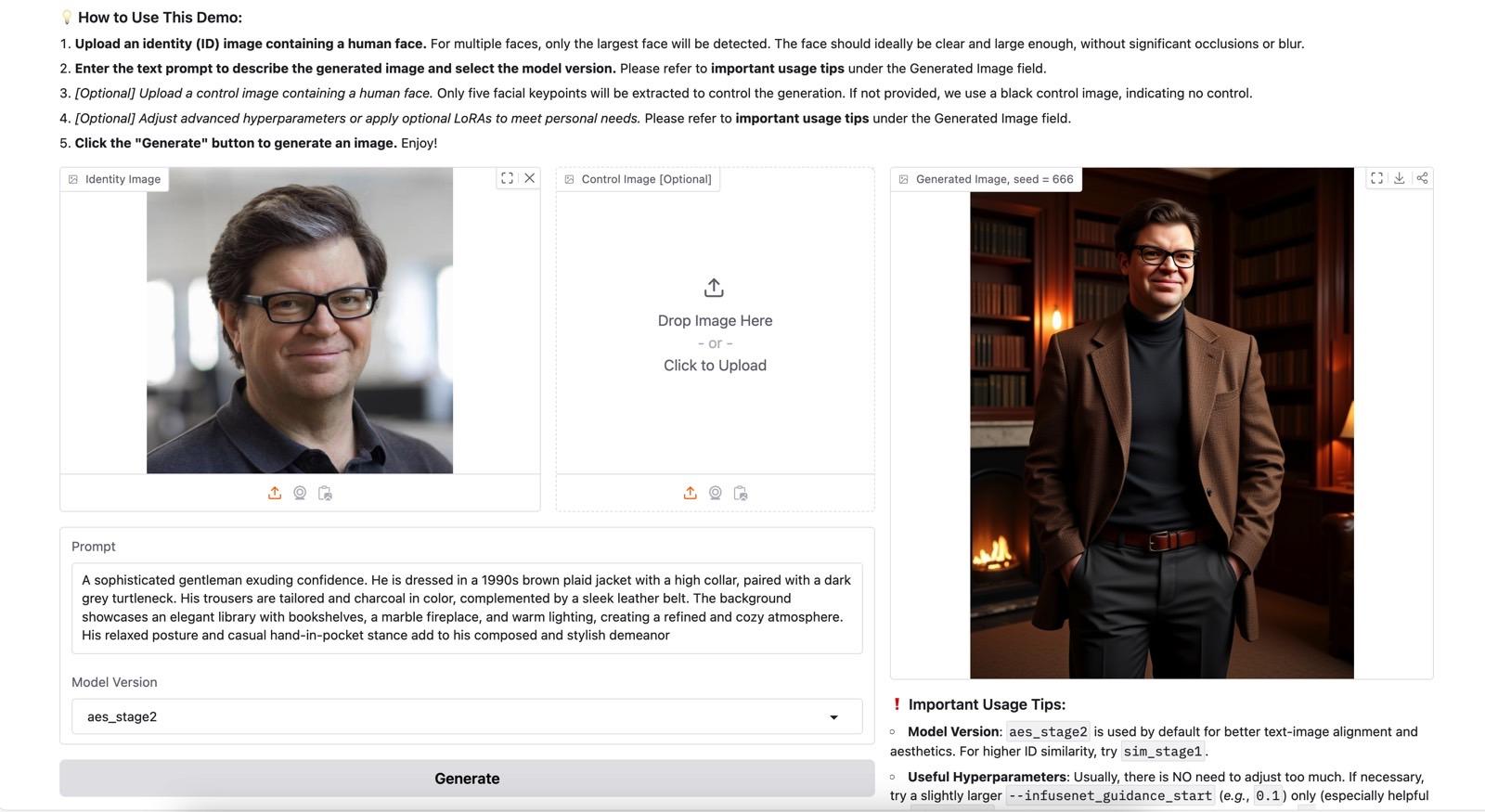
As you’ll see in the following screenshot, you don’t even have to upload your own image to see what the AI can do. Just pick one of the available images, as I did, and then text a prompt. The photo I picked already came with the following prompt, so I didn’t even change it, as I was curious to see what the result would be:

A sophisticated gentleman exuding confidence. He is dressed in a 1990s brown plaid jacket with a high collar, paired with a dark grey turtleneck. His trousers are tailored and charcoal in color, complemented by a sleek leather belt. The background showcases an elegant library with bookshelves, a marble fireplace, and warm lighting, creating a refined and cozy atmosphere. His relaxed posture and casual hand-in-pocket stance add to his composed and stylish demeanor

The AI took a while to process the uploaded photo and the requirements in the text, and then it generated the image on the right side here:

ByteDance's InfiniteYou: Example of creating fake photos.ByteDance’s InfiniteYou test: Example of creating fake photos. Image source: HuggingFace

As you can see, the AI image preserved the subject’s likeness and recreated the entire background and the subject’s body to adhere to the prompt’s requirements.

The resemblance between the subject in the photo and the AI version is clear, though you can tell the image on the right is AI-generated. There’s no watermark to indicate it’s an AI photo (which itself is a red flag), but you can tell this isn’t a real photo.

Perhaps that’s a good thing. Otherwise, InfiniteYou could be easily used to create deepfakes of celebrities in lifelike photos, a problem the new ChatGPT image generation model already has.

Then again, I only briefly tested this new AI on HuggingFace. A commercial product will likely offer even higher-quality images that are harder to identify as AI-generated images.

InfiniteYou examples from the ByteDance study.InfiniteYou examples from the ByteDance study. Image source: HuggingFace

After all, the images the researchers offered in the study suggest that the AI model can create high-quality, albeit fake, images of a subject with the help of a real photo and a text prompt.

Take the examples above, each containing the original photo, the text prompt InfiniteYou was given, and the result. We are looking at high-end, frontier AI tech here.

The ByteDance engineers also provided the following comparison between InfiniteYou and other AI models that can generate images.

Comparison between ByteDance and other AI image generation services.Comparison between ByteDance and other AI image generation services. Image source: HuggingFace

It’s unclear where ByteDance might use this AI tech next, but it’s clear where it might want to deploy it. TikTok comes to mind again, as AI tech like InfiniteYou would certainly come in handy to creators.

That would not be a problem as long as AI content is clearly labeled as such and is not used for malicious purposes.

The AI researchers addressed safety concerns in the study, but only briefly. Rather than offering solutions to prevent fakes, they suggest InfiniteYou can be further improved. As for creating fake images, the researchers say they “developing robust media forensics approaches can serve as effective safeguards:”

Limitations and societal impact. Despite promising results, the identity similarity and overall quality of InfU could be further improved. Potential solutions include additional model scaling and an enhanced InfuseNet design. On another note, InfU may raise concerns about its potential to facilitate high-quality fake media synthesis. However, we believe that developing robust media forensics approaches can serve as effective safeguards.

Who will develop those safeguards? Who knows?

Meanwhile, you can explore ByteDance’s sophisticated InfiniteYou AI model at this link.

Source

Posted on

Pixel 9a will arrive on April 10 missing some of Google’s best AI features

Google’s newest budget phone is finally ready for release. After an inexplicable delay due to a “component quality issue,” the company has confirmed the Pixel 9a release date: April 10 in the US, Canada, and the UK.

The rest of the world will follow shortly after, with launches in Europe on April 14 and select Asian-Pacific regions on April 16. We’ve known about the Pixel 9a for at least a week now—with official confirmation giving us a price and a good look at the design.

The Pixel 9a might look like a flagship at first glance, sharing the same sleek design language and housing Google’s Tensor G4 chip. But look closer, and it’s clear that a few of Google’s headline features didn’t make the trip down to this more affordable device.

That’s especially true when it comes to AI.

Tech. Entertainment. Science. Your inbox.

Sign up for the most interesting tech & entertainment news out there.

By signing up, I agree to the Terms of Use and have reviewed the Privacy Notice.

Despite sporting the same chip as the Pixel 9 and 9 Pro, the 9a has a tighter memory ceiling at just 8GB of RAM. That limitation means the phone can’t run the full version of Gemini Nano, Google’s powerful on-device AI model. Instead, it comes with a lightweight, text-only variant.

Google Pixel 9 Pro Fold GeminiDon’t expect the same level of Gemini support on the 9a as Google’s flagship devices. Image source: Christian de Looper for BGR

In practical terms, that means you won’t be using the 9a for AI-powered voice summarization or multimodal features like image-based Q&A and contextual suggestions, which are available on Google’s flagship devices.

This is likely an intentional move by Google, aimed at balancing affordability with performance. But it also means buyers hoping for a full suite of on-device AI tools will need to temper their expectations.

That’s not the only trade-off. The Pixel 9a also skips satellite communication support and features an older cellular modem, which could affect signal efficiency and battery life in fringe areas.

Still, for $499 in the US (with a $100 bump for double the storage), the 9a offers a competitive entry point into the Pixel ecosystem. Pricing varies slightly by region, with a price tag of $679 CAD in Canada, £499 in the UK, and €549 in most of Europe.

Interestingly, Japan—a regular participant in Google’s device launches—still lacks a confirmed Pixel 9a release date, though Google insists it’s coming “soon.”

If you’ve already signed up for availability notifications through the Google Store, you’ll be among the first to know when preorders go live. And if you’re after a clean Android experience with a side of pared-down AI, the 9a could still hit the sweet spot.

Just don’t expect the same Gemini-powered goodies its flagship siblings enjoy.

Source

Posted on

Microsoft wants you to delete your password and no, it’s not a gimmick

Microsoft has officially declared war on the password. In a sweeping update affecting more than a billion users, the company is making it clear—it’s time to ditch your Microsoft account password for good. This is just the latest move in Microsoft’s passkey update, which aims to move all users away from the security wyas of olden days.

Starting in April, Microsoft will begin rolling out a new sign-in and account creation experience that puts passkeys at the center. “Our ultimate goal is to remove passwords completely,” the company said in a security update posted in December.

Microsoft says it now blocks around 7,000 password-related attacks per second, nearly double the rate from last year. With AI-fueled phishing attempts and increasingly clever hacks, passwords—no matter how long or quirky—just aren’t holding up. Forcing a passkey on Microsoft users seems to be the easiest way to address the problem.

That’s where the passkey comes in. This credential is tied to your physical device and unlocked by something only you have—like a fingerprint, face scan, or device PIN. Unlike a password, a passkey can’t be phished, guessed, or intercepted. It’s stored securely on your device and never leaves it.

Tech. Entertainment. Science. Your inbox.

Sign up for the most interesting tech & entertainment news out there.

By signing up, I agree to the Terms of Use and have reviewed the Privacy Notice.

1Password lets you save passkeys for internet accounts.Password managers like Proton Pass and 1Password will let you save passkeys for internet accounts. Image source: 1Password
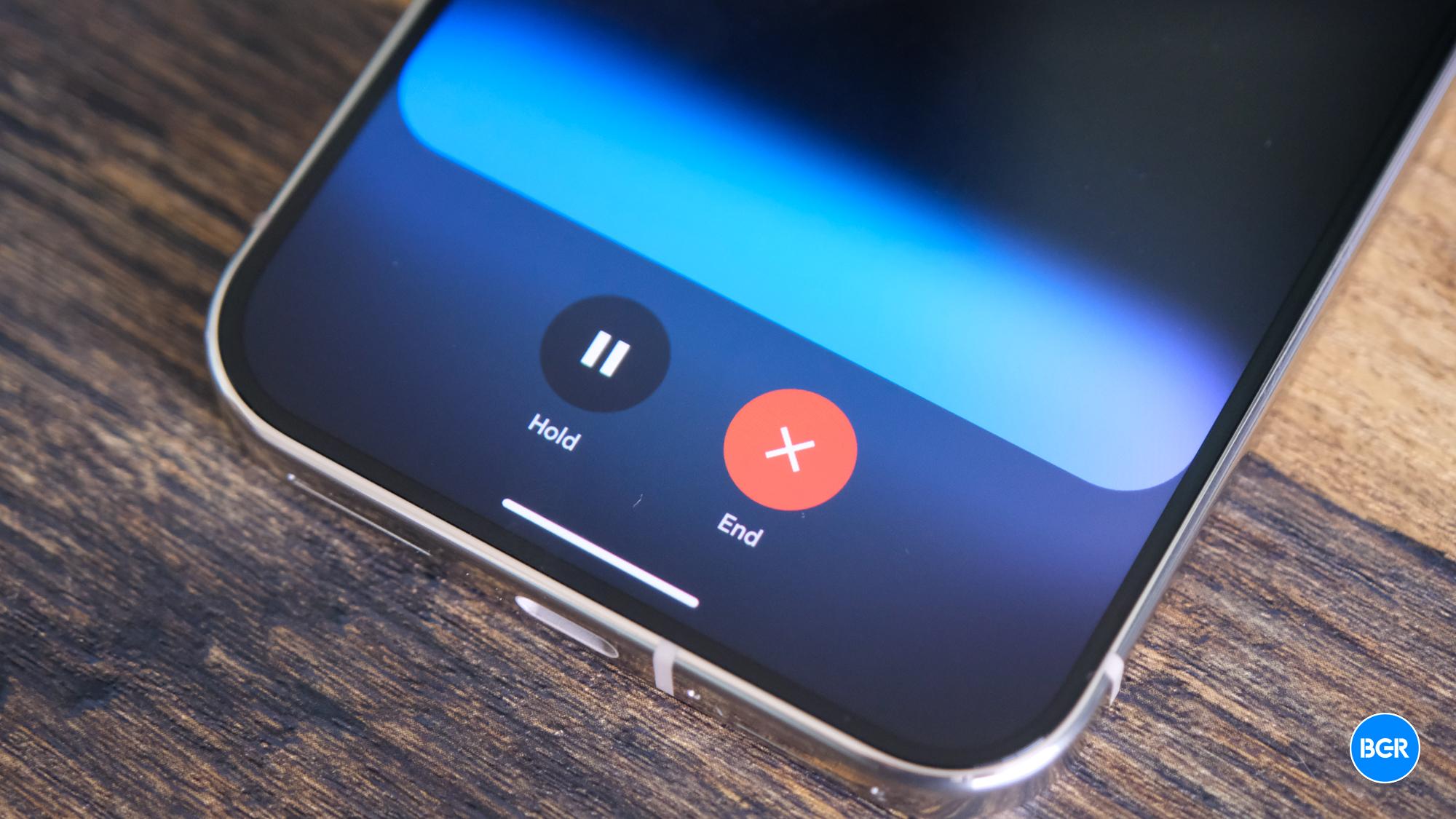
More importantly, it’s fast. Microsoft says passkeys are not only more secure but three times faster than typing in a traditional password. And the transition is already underway.

When creating a new Microsoft account, you won’t be asked to set a password. Instead, you’ll verify your email once and then create a passkey. For existing accounts, the sign-in experience is being redesigned to push passkeys as the default to nudge users toward a truly passwordless future.

That’s because having a passkey isn’t enough if you’re still keeping the old password around “just in case.” According to Microsoft, that’s like locking your front door but leaving the window wide open for anyone to enter.

The presence of a password—even as a backup—leaves your account open to phishing, brute-force attacks, and social engineering scams. That’s why the company says this isn’t just a shift in preference. Microsoft’s passkey update is a massive security imperative.

Millions of users have already deleted their passwords, according to Microsoft. And this change is about scaling that momentum across its entire user base.

Microsoft’s bold move sets a new bar—but not everyone is sprinting toward it. Google, for instance, still supports passwords as fallback credentials, which keeps that potential vulnerability alive.

Security researchers and privacy advocates argue that consistency across platforms will be key to making passwordless systems mainstream. For now, Microsoft is leading the charge, both in tech and in messaging clarity.

Source

Posted on

Gemini just got live video AI features, while Siri can’t even tell me what month it is

Google has had a great month when it comes to Gemini AI announcements, beefing up its chatbot across the board. The new Gemini 2.0 Flash experimental model powers better Deep Research features, Personalization, and incredible photo editing features. Also, Gemini got Canvas for improved collaboration with the AI, and Audio Overview, a feature that turns document summaries into podcasts.

Google also confirmed at MWC 2025 that Gemini Live would get a couple of amazing new video features in March, and they’re now rolling out to users. Gemini Live can see the live video from your camera in real time and chat with you about it. It can also see the contents of your screen if you’re looking to talk to the AI about something on your phone. 

All of this happened while Apple has had a terrible month when it comes to Apple Intelligence. The company was forced to delay the smart Siri until next year, making us realize that the Siri AI vision demoed at WWDC 2024 was just vaporware. Also, while the Gemini Live assistant can talk to you about live video, Siri can’t even tell what month it is.

Gemini Live is the AI assistant Google built under Project Astra, a research project Google demoed at I/O, showing what an AI assistant with multimodal support would be able to do. That multimodality also included access to live video from the phone’s camera, and that functionality is rolling out to Gemini Live users who are also Gemini Advanced subscribers. That’s the premium Gemini tier which gets you access to the latest Gemini features.

Tech. Entertainment. Science. Your inbox.

Sign up for the most interesting tech & entertainment news out there.

By signing up, I agree to the Terms of Use and have reviewed the Privacy Notice.

A Reddit user discovered a new option to share the phone’s screen with Gemini Live. Tap it, and you’ll give the AI assistant access to the contents of your display. You’ll then be able to ask the AI questions about what’s on your screen.

The Redditor posted a clip to demo the Gemini Live capability that rolled out to their Xiaomi phone. That’s an indication the feature will not be restricted to Pixel phones at launch — here’s the short video:

Sharing the screen while talking to Gemini Live is even better than using Circle to Search to start a Google Search about the contents of your screen. You might be able to get answers even faster this way, as Gemini Live will look at what’s on your display and provide assistance when it can. As you can see in the clip above, Gemini Live can’t perform other tasks, like opening apps for the user.

More interesting to me is Gemini Live’s ability to see the world through the camera lens. That real-time video support should also be rolling out to Gemini Live users with Advanced subscriptions. It’s unclear if the Redditor above got the functionality, as they didn’t share a similar demo. I would expect users who are able to screen-share with Gemini Live also to be able to use live videos with the AI.

Google has Gemini Live demos that show a user interacting with the AI while showing Gemini Live their surroundings via live video. In this example, the user is asking the AI for paint suggestions for their home:

If you have a Gemini Advanced subscription, you’ll want to check if Gemini Live got the new live video features. It’s likely you’ll get them soon now that users have started spotting them in the wild.

Source

Posted on

ChatGPT now tells you its limits with Deep Research and GPT-4.5 chats

While ChatGPT is available for free and without an account, premium access gets you better features, fewer limitations, and the ability to try some of the company’s newest AI features before they roll out more widely. People can choose between the ChatGPT Plus ($20/month) and Pro ($200/month) models, with the latter offering the best perks. For example, ChatGPT Pro was the first tier to get ChatGPT Operator and Deep Research, OpenAI’s first AI agents. Since then, OpenAI has brought Deep Research to the cheaper subscription option, but with more limitations.

OpenAI also launched its newest model, GPT-4.5, which is fully available to premium users. However, again, ChatGPT Plus users have limits in place. Thankfully, now there’s an easy way to see some of these limits when using your ChatGPT Plus subscription to get Deep Research reports or chat with GPT-4.5.

I’ve been a ChatGPT Plus subscriber for over a year now, and I’ve generally been happy with the experience. I am willing to pay a subscription for better AI features rather than get an ad-based subscription. But I’m hardly ready to make the jump to the ChatGPT Pro tier. I’m yet to see a feature that would warrant spending $200/month to access all the AI tools OpenAI has to offer and increase limits significantly.

That said, I’m also aware of the limits on my Plus tier. I recently got Deep Research access in the EU, and I’ve already started using it. For example, I went to ChatGPT for a Deep Research report on visiting Tokyo, and it was an amazing decision.

Tech. Entertainment. Science. Your inbox.

Sign up for the most interesting tech & entertainment news out there.

By signing up, I agree to the Terms of Use and have reviewed the Privacy Notice.

Similarly, GPT-4.5 is available to ChatGPT Plus users, the model OpenAI is currently testing before a wider rollout and before the launch of GPT-5. But it also comes with limitations.

OpenAI gives ChatGPT Plus users 10 Deep Research reports a month, 12 times fewer than the Pro option. The GPT-4.5 limits for Plus aren’t clear, but Pro users have full access to all OpenAI models.

ChatGPT Plus now shows you Deep Research and GPT-4.5 limits.ChatGPT Plus now shows you Deep Research and GPT-4.5 limits. Image source: Chris Smith, BGR

When using these two features, I’ve noticed pop-ups appear above the ChatGPT composer. They informed me how many Deep Research reports I have left this month and how many GPT-4.5 chats I have.

The pop-ups have an upgrade option for ChatGPT Pro, not that I’m considering it. But they’re still great to see, allowing me to keep track of my current usage.

Even without the pop-ups, OpenAI developed a handy feature to let you quickly see the number of Deep Research reports left this month. Just hover the mouse over the Deep Research button, and you’ll see the number of reports left and the date the limits reset for your account. The screenshot above shows it in action. Pro users would also see how many Deep Research queries they have left this way.

I’ve also caught the GPT-4.5 limit warning in the screenshot above. As you can see, I have 5 responses from GPT-4.5 remaining until the limits reset later this week. I don’t care as much about this particular limit. I’ll just switch back to GPT-4o, which is good enough for most of my needs. 

However, there’s no other way to see your GPT-4.5 limits, at least not as easily as the Deep Research count. I’ll also say that the number of responses likely refers to distinct chats with the AI rather than independent responses across the AI experience. Or that seems to be the case right now.

Then again, this is the first month I’ve seen these limit counts in the ChatGPT user interface. I’ll have a better chance to explore them in April.

Source

Posted on

Siri needs its iCloud moment: A complete rebrand

Even without the current Apple Intelligence fiasco, we already realized that Apple needs to ditch Siri or rebrand it in favor of a new personal assistant. Long before Apple Intelligence or LLMs started taking over the internet, we already felt like Siri was lost in time.

In the past few years, reports suggested the issue with Cupertino’s personal assistant is bigger than it seems. In 2023, the New York Times reported about the rise and fall of the assistants, including why Siri struggles with what sounds like regular tasks. John Burkey, a former Apple engineer who worked on the virtual assistant, said it had a “cumbersome design that made it time-consuming to add new features.”

In 2014, he was given the job of improving Siri. But since its database contains a gigantic list of words in nearly two dozen languages, its vast knowledge bade it “one big snowball,” as if someone wants to add a word to Siri’s database, “it goes in one big pile.”

With that in mind, Burkey explained that what seemed like small updates, such as new phrases, would require rebuilding the entire database, which could take up to six weeks. More complex features like new search tools could take nearly a year, meaning Siri could never become a creative assistant like ChatGPT unless it’s completely rebuilt.

Tech. Entertainment. Science. Your inbox.

Sign up for the most interesting tech & entertainment news out there.

By signing up, I agree to the Terms of Use and have reviewed the Privacy Notice.

When looking back at this report, it makes sense why Apple decided to indefinitely delay Siri’s on-screen awareness capabilities, as it still doesn’t know which month we are. This is why I think Apple should rebrand Siri and do something similar to what the MobileMe-iCloud transition was.

Siri feels like MobileMe, but Apple was fast enough to address it

Before iCloud was a thing, Apple had MobileMe. The service was available from July 2008 until October 2011, when iCloud was introduced. However, this subscription-based service was very unstable and had several syncing issues.

This is why when Steve Jobs introduced iCloud and said the service “just worked,” he rhetorically asked: “Why should I believe them? They’re the ones that brought me MobileMe!” Still, iCloud was better than MobileMe, and even though it had a few issues over the years, it’s Apple’s main service.

With that in mind, I think Siri needed a similar approach. At this moment, Apple is focusing on reshaping the personal assistant’s command structure. However, I don’t think promoting executives is enough. If Apple wants to be serious about AI, it must catch up with major players and offer a different experience. Should it call the new assistant Newton, Siri 2.0, or Apple Assistant? It doesn’t matter.

Siri’s revamp is urgent, and Cupertino needs to offer a faster response and service to users.

Source

Posted on

Our data, our decisions, our AI future: why we need an AI Regulation Bill

There were many consequences of the extraordinary timing of last July’s General Election.  One was that my AI Regulation Bill, which had made its way through all stages in the House of Lords and was just about to go to the Commons, was stopped in its tracks. Almost a year later, a new government and another Parliament has provided the opportunity to reintroduce my AI Bill, as I did last week.

If the need for artificial intelligence (AI) regulation was pressing in November 2023, when I first brought my Bill to bear, that need is now well past urgent and, it seems, even further from fruition.

How the sands have shifted, both domestically and internationally.  A UK government, keen on AI regulation while in opposition, slated an AI Bill in the King’s Speech last summer. Now, some eight months later, there is still no sign of a Bill and what appears to be an increasing reluctance to do anything much until they have squared it with the US. 

Making the case for regulation

At the Paris AI Action Summit earlier this year, a declaration for inclusive and sustainable AI was signed by international participants, although both the UK and US decided not to put their pens to that paper. 

Further, the AI Safety Institute has been renamed the AI Security Institute signalling a definite shift towards cyber security rather than a broader focus on “safety” that would include mitigating risks associated with societal impacts of AI models

All of this makes the case – the more than urgent case – for UK AI regulation. It seems we still have to slay that falsehood which recurs with tedious inevitability – that you can have innovation or regulation but you can’t have both. This is a false dichotomy. The choice is not between innovation or regulation. The challenge is to design right-sized regulation – a challenge that has become much more pronounced in the digital age.

With no current AI-specific regulation, it is us, as consumers, creatives and citizens who find ourselves exposed to the technologies Lord Chris Holmes

Every learning from history informs us, right-sized regulation is good for citizen, consumer, creative, innovator, and investor. We all know bad regulation – sure, there’s some of that around but that’s bad regulation, that in no sense says to us regulation of itself is bad. 

Take the UK approach to open banking as an illustration, replicated by over 60 jurisdictions right around the world.  A determined, thought-through regulatory intervention created in the UK – good for consumer, good for innovator and investor.

We know how to get right-sized regulation, well, right. This could be no more important than when it comes to AI, a suite of technologies with such potentially positively transforming opportunities – economic, social, psychological.  All potentially positive if we regulate it right.

A regulatory approach

My attempt to design a flexible, principles-based, outcomes-focused and inputs-understood, regulatory approach for AI is set out in the provisions of the Bill.

First, an AI Authority.  Don’t think of a huge bureaucratic burdensome behemoth – not a bit of it. We need an agile, right-touch, horizontally focused, small “r” regulator, intended to range across all existing regulators to assess their capacity and competency to address the opportunities and challenges AI affords.  Through this, crucially, to identify the gaps where there exists no regulator or regulatory cover, recruitment being one obvious example. 

The AI Authority would stand as the champion and custodian of the principles set out for voluntary consideration in the previous government’s whitepaper – those principles, put into statute through this Bill.

The Bill would also establish AI responsible officers, to the extent that any business which develops, deploys or uses AI must have a designated AI officer. The AI responsible officer would have to ensure the safe, ethical, unbiased and non-discriminatory use of AI by the business and to ensure, so far as reasonably practicable, that data used by that business in any AI technology is unbiased. 

Again, don’t think unnecessarily bureaucratic and burdensome. Proportionality prevails and we already have a well-established and well-understood path for reporting through adding to the provisions set out in the Companies Act.

With no current AI-specific regulation, it is us, as consumers, creatives and citizens who find ourselves exposed to the technologies. Clear, effective labelling, as provided for in the Bill, would hugely help. 

It holds that, any person supplying a product or service involving AI must give customers clear and unambiguous health warnings, labelling and opportunities to give or withhold informed consent in advance. Technologies already exist to enable such labelling.

Similarly, the Bill supports our creatives through intellectual property and copyright protection. No AI business should be able to simply gobble up others property without consent and, rightly, remuneration.

Public engagement

The most important provisions in the Bill are those around the question of public engagement. The Bill requires the government to “implement a programme for meaningful, long-term public engagement”. It is only through such engagement that we are likely to be able to move forward together, cognisant of the risks and mitigations, rationally optimistic as to the opportunities. 

When the Warnock inquiry was established to do just this as IVF was being developed in the 1980s, we had the luxury of time. The inquiry was set up in 1982 and the Human Fertilisation and Embryology Act came into force in 1991.

Technologies, not least AI, are developing so rapidly we have to act faster. The technologies themselves offer some of the solution, enabling real-time ongoing public engagement in a manner not possible even a few years ago. If we don’t address this, the likely outcome is that many will fail to avail themselves of the advantages while simultaneously being saddled with the downsides, sharp at best – at extreme, existential.

To conclude, we need regulation – cross-sector AI regulation for citizen, consumer, creative, innovator, investor.  We must make this a reality and bring to life, for all our lives, that uniting truth – our data, our decisions, our AI futures.

Source

Posted on

IT Sustainability Think Tank: Environmental trends to redefine IT strategies in 2025

Sustainability is a critical driver for business growth. This is not just a response to consumer demand but also a strategic move to mitigate risks associated with environmental changes. For instance, changing weather patterns have already impacted over half of global businesses, prompting significant operational shifts.

Investors are also raising the bar. Companies with strong sustainability credentials are becoming more attractive, with these credentials often surpassing traditional metrics like productivity.

With this in mind, Gartner has identified nine environmental trends IT leaders need to get on the front foot of in order to redefine their IT strategies in 2025.

These trends are not just reactive measures but proactive strategies that offer competitive advantages.

Distributed energy resources (DERs)

Small-scale energy systems, such as solar panels and microgrids, are revolutionising power consumption. DERs reduce costs, alleviate grid congestion, and provide organisations with more control over energy sources. IT leaders should explore integrating DERs into operations, particularly for powering datacentres and edge computing sites.

Climate adaptation

The increasing frequency of extreme weather events necessitates robust climate adaptation strategies. Resilient infrastructure, predictive weather analytics, and other measures are essential for safeguarding operations and ensuring business continuity.

Resource-positive buildings

 Imagine buildings that generate more energy, water, or heat than they consume. Resource-positive designs are reshaping sustainable construction, with IT playing a crucial role through smart sensors, Internet of Things platforms, and real-time monitoring systems.

 Digitally enabled sustainability

 Digital tools such as analytics, artificial intelligence (AI), and automation are becoming indispensable for reducing environmental impacts. IT leaders can leverage predictive maintenance to optimise energy consumption and use AI-driven insights to identify inefficiencies across operations.

Circular economy models

The days of “take, make, waste” are over. Circular economy principles focus on extending product lifecycles through reuse, repair, and recycling. For IT, this means adopting modular hardware designs, refurbishing assets, and reducing e-waste.

Hidden greenhouse gas and emissions from waste

Unaccounted-for emissions from landfills are a silent contributor to climate change. IT leaders must track these emissions across supply chains and operations, implementing better waste management systems to address the issue.

Be prepared for course corrections on the path to net-zero

 Setting net-zero targets is easy – achieving them is another story. IT leaders must focus on practical, interim actions such as transitioning to renewable energy, tracking scope 3 emissions, and adopting carbon-offsetting technologies. Transparency is key to building stakeholder trust.

Environmental consequences of conflict

Geopolitical unrest exacerbates environmental challenges, from damaged infrastructure to displaced populations and biodiversity loss. Organisations must assess supply chain vulnerabilities and implement strategies to manage risks in volatile regions.

Space pollution

A growing concern, space debris from retired satellites and discarded rocket components threatens critical infrastructure, including communications networks. IT leaders should stay informed on this emerging issue and advocate for sustainable satellite technologies.

Ignoring these trends is not an option. From regulatory penalties to reputational damage, the risks of inaction are clear. IT leaders must take proactive steps to address environmental challenges and transform them into opportunities for growth and resilience.

This involves adopting resilient practices by building infrastructure and processes that can withstand environmental disruptions, as well as implementing systems to monitor and manage greenhouse gas emissions across operations.

Embracing circularity is another crucial strategy, which includes transitioning to modular, reusable IT assets and prioritising recycling initiatives to minimise waste.

Additionally, IT leaders should reduce dependency on centralised grids by leveraging localised energy solutions, such as distributed energy resources, to enhance operational efficiency and sustainability. By acting decisively and thinking innovatively, IT leaders can ensure their organisations remain competitive in the face of environmental challenges.

Looking ahead: a strategic necessity

The environmental challenges outlined here are not distant threats — they are immediate disruptors that demand urgent action. Every delay increases the risks of resource depletion, regulatory penalties, and reputational damage.

IT leaders have a pivotal role in shaping the response, not just by mitigating risks but by positioning their organisations as innovators in sustainability.

The question isn’t whether to act—it’s how quickly you can adapt to these realities. Organisations that proactively integrate these environmental trends into their IT strategies will not only safeguard their future but also unlock competitive advantages that propel them ahead of their peers.

Source

Posted on

The end is near for Windows 10 and Microsoft won’t let you forget it

If you’re still using Windows 10, Microsoft wants to make sure you know that time is running out. The company has officially started emailing users with a not-so-subtle reminder that support for Windows 10 will end on October 14, 2025. The message is clear: upgrade now or risk being left behind.

The email was recently spotted by Windows Latest and comes with a bold headline: “End of support for Windows 10 is approaching.” It then provides direct links for users to check their upgrade eligibility or buy a new PC—because, of course, Microsoft would rather you do the latter.

The reminder also includes a FAQ section to answer some burning questions. Microsoft confirms that after October 2025, Windows 10 devices will no longer receive updates, including critical security patches. While your PC will still work, it will gradually lose compatibility with apps and become more vulnerable to cyber threats.

What’s interesting is what Microsoft doesn’t mention. There’s no real discussion of the Extended Security Updates (ESU) program, which offers one extra year of security updates for Windows 10 for $30. While Enterprise users have additional options, Microsoft seems reluctant to promote any solution other than upgrading to Windows 11.

Tech. Entertainment. Science. Your inbox.

Sign up for the most interesting tech & entertainment news out there.

By signing up, I agree to the Terms of Use and have reviewed the Privacy Notice.

Panos Panay at a Windows 11 eventImage source: Microsoft

The lack of emphasis on the ESU program in this latest Windows 10 end-of-support email might suggest that Microsoft doesn’t expect everyday users to pay for security patches—or that they simply want to push people toward a full upgrade instead.

Another not-so-subtle nudge in the email is a suggestion to back up files with OneDrive. While this is useful advice, it’s also an obvious attempt to promote Microsoft’s cloud storage service. But don’t worry; OneDrive isn’t going anywhere, and there’s no reason to believe it will stop working after Windows 10 reaches its expiration date.

For millions of users still clinging to Windows 10, the decision isn’t so simple, though. Many older PCs aren’t eligible for Windows 11, leaving users with limited options. Then there are the myriad of AI features Microsoft is pushing with Windows 11 that many aren’t huge fans of.

As the deadline gets closer, Microsoft’s messaging is only going to get louder. Whether you choose to upgrade, pay for extended security, or switch to another OS, Windows 10’s time is officially running out.

Source

Posted on

Salesforce execs at TDX 25: Agentforce a whole system AI play

At the TDX 2025 developer conference in San Francisco, Salesforce executives presented its Agentforce agentic AI technology as a “whole system” approach, where large language models (LLMs) are less significant than a “trinity” of data, applications and agents. Relatedly, they consistently disparage “DIY” artificial intelligence (AI) programmes.

Paula Goldman, the supplier’s chief ethical and humane use officer, said: “I think a lot of the public discourse about AI has been about [large language] models. But if you think about Agentforce, it’s a whole system. There’s a foundation model, and then there’s a series of smaller models that go into our Atlas system, and there are workflows that are automated that people can draw on. We’ve got used to talking about AI as models over the past few years, but I think we need to be talking about systems.”

David Schmaier, president and chief product officer at Salesforce, said the supplier’s entire technology stack, including Slack and Tableau, comes into play with Agentforce. He also pointed to its Data Cloud platform as central to its AI offer.

“You couldn’t have a computer without a microprocessor; you need storage and RAM and a display and an operating system around it. That’s what we’ve done. We have our data cloud, which harmonises hundreds of thousands of systems. It gives you the data, the metadata and the semantics. That’s why we can outperform an LLM by itself. LLMs have hallucinations, they have bias, toxicity. An LLM is necessary but insufficient. We add to the LLM. Our view is the data powers the AI and then the AI powers the customer experience of the future,” he said.

An LLM is necessary but insufficient. We add to the LLM. Our view is the data powers the AI and then the AI powers the customer experience of the future David Schmaier, Salesforce

“We call it the ‘holy trinity’. We have the Data Cloud, then we have our Sales Cloud, Service Cloud and Marketing Cloud apps – which is how we got the name Salesforce – as well as Slack, Mulesoft and Tableau. And now we have Agentforce on top of all that. That’s how we can turn on 10,600 customers over three days with agents. It’s because we are using the same platform as we have for 25 years. So, with a healthcare company, for example, that has workflows it has bult in its Salesforce deployment, it can make all those available for [virtual] agents,” Schmaier added.

He believes too many organisations are doing DIY AI. “Most people are just trying to take whatever apps they have, whether it’s Salesforce or SAP or Workday, and just buying ChatGPT and trying to plug it in. No other competitor has what we have, in terms of agents. We think we have a real lead in this agentic field. We’ve sold to 5,200 customers since launching at Dreamforce [in September 2024]. Now, we have 200,000 customers, and most don’t use Agentforce today,” he said.

Rahul Auradkar, executive vice-president and general manager of Unified Data Services and Einstein at Salesforce, made a similar argument about what the provider calls DIY AI.

“What we are doing with agents is an entire system. We’re not shipping a model, an app or a copilot. We’re shipping an AI system on a deeply unified platform. What that system allows our enterprise customers, who don’t want to do the DIY, to do is surface customer-centric analytics and workflows, and listen to the customers to feed back to the system so the agents get better. Copilots are a narrow sliver of what AI can be,” he said.

“The difference between a DIY AI and an enterprise using [our] system is that the enterprise can focus on things that they are good at, which is plenty of things. They have their data. The have their transactions. They have their engagement data. They have their AI policies, their workflows, their automations. We bring all that together within a deeply unified platform and drive value for our customers,” added Auradkar.

DIY AI programmes strongly in evidence among users

And yet, analyst research from Informa TechTarget’s Enterprise Strategy Group (ESG) offers a contrast with Salesforce’s disparagement of DIY AI – a complicating contrast rather than a confutation, but a contrast nevertheless.

Towards the end of 2024, ESG surveyed 832 professionals at organisations across the globe involved in the strategy, decision-making, selection, deployment and management of generative AI (GenAI) initiatives and projects at their organisations and familiar with their organisation’s use of third parties to support GenAI initiatives.

The resulting report, The state of the generative AI market: Widespread transformation continues – authored by Mark Beccue, principal analyst, Mike Leone, practice director and principal analyst, and Emily Marsh, associate research director – does find support for an agentic AI philosophy: “Respondents most often said that they see AI agents, virtual assistants, and intelligent chatbots powered by AI as valuable productivity tools, though they also often said they view them with cautious optimism (41%). Over two-thirds of organisations are planning for or considering AI agents, which represents a significant opportunity for AI vendors to target these requirements with capabilities and services.”

They also note, however: “The AI agent market is extremely nascent and loaded with challenges, including managing single-task agents, interoperability problems, the potential emergence of multitask agents and security.”

But the authors also remark, similarly to Salesforce’s Auradkar, that: “A wide majority (84%) of respondents agreed it is important to incorporate their own enterprise data into models that support generative AI. GenAI models themselves are not a competitive differentiator. Rather, effectively identifying, organising and vetting internal data for use with GenAI models is the key to creating unique and highly actionable insights.”

The research also found user organisations to be embracing a variety of LLMs – open source and proprietary. The largest percentage of respondent organisations (43%) are both proprietary and open source models.

Alongside this enthusiasm for using large language models, the study found that organisations are placing “their bets on internal resources, planning to reskill or upskill employees (58%) and provide education and awareness training to employees (43%)”. This suggests a growing cadre of employees who will want to do DIY AI.

The authors comment: “Employee enthusiasm for these technologies is likely at a high point as GenAI excitement pervades many facets of society, so this internal investment will likely be a win-win situation whereby personnel receive welcome development opportunities and the business gains valuable GenAI expertise.”

At Dreamforce in September 2024, Marc Benioff, co-founder, chairman and CEO of Salesforce, was in combative mood in respect of Agentforce, positioning it as a wholescale alternative to generative AI copilot usage, associated with Microsoft and Google, but with other vendors too.

“There’s a lot of narratives out there from vendors, and a lot of it is not true,” he said at the time. “You need to sit with those customers [at the Dreamforce event], look at the code and break the hypnosis coming from all the vendors. There’s plenty of real customers here who are really deploying real AI. But there are billions being invested in copilots, delivering how much productivity increase? Is there a better way to do it? And so, that’s our gambit.”

The game is still being played. The middle game lies ahead.

Source