Posted on

UK data centers ready for expansion

A study by data center specialists Onnec has revealed that local authorities in the UK’s 20 largest cities have overwhelmingly approved data center projects, with 89% of applications receiving planning permission over the past five years. Of the 88 applications reviewed, only three were rejected, five were withdrawn, and one remained undecided.

Onnec looked at 44 local councils and their planning applications for the report. The researchers found that data centers are generally approved, which shows local support for digital infrastructure. To provide computing power and data storage for AI deployment makes that support crucial. Only three applications in Sheffield were rejected. Local authorities looked into possible issues around the design and impact of the centers, along with whether they would fit the character of the surroundings or damage the Green Belt.

Data Center Spread

Notably, the British government has made data centers critical national infrastructure to emphasize their report. That said, the report urges a holistic approach to planning and a nationwide approach to achieve the best outcomes. The UK has pledged £6.3 billion in data center investment as part of its work to make the UK a hub for AI. The UK’s Department for Science, Innovation, and Technology (DSIT) is trying to reduce the friction in building data centers. It has looked into rejected projects to see where there is room for improvement.

“Data centers are critical for driving AI growth, and with the race for AI supremacy in full swing, the UK has recognized that to get ahead, the right infrastructure must be in place,” Matt Salter, Data Centre Director at Onnec. “Data centers can become the new oil for regions and cities, but only if they are planned holistically – this means considering every aspect of the data center instead of focusing solely on factors such as power and cooling. For example, thinking about the importance of cabling in providing the bandwidth needed to get the most from data center hardware.

London is the largest data center market in Europe, but the report suggests trying to up the availability of data centers elsewhere in the country. Relying solely on London means there is limited power availability along with problems around sustainability. Spreading data centers to other regions would also mean spreading the benefits to the people there. That means improved job opportunities not only for the data centers but for anywhere that the digital skills required for data centers are useful.

“Failing to take a holistic approach will result in sites that aren’t fit for purpose, don’t deliver on the UK’s needs, and degrade over time – poor planning could mean a new data center can feel five years old after the first year of operation, and in need of an expensive retrofit,” Salter said. “The UK risks losing ground in the race for AI supremacy if data centers aren’t built to last.”

You Might Also Like

{ window.reliablePageLoad.then(() => { var componentContainer = document.querySelector(“#slice-container-newsletterForm-articleInbodyContent-oeW4cMrV6xwsNgBjfa9xmT”); if (componentContainer) { var data = {“layout”:”inbodyContent”,”header”:”Are you a pro? Subscribe to our newsletter”,”tagline”:”Sign up to the TechRadar Pro newsletter to get all the top news, opinion, features and guidance your business needs to succeed!”,”formFooterText”:”By submitting your information you agree to the Terms & Conditions and Privacy Policy and are aged 16 or over.”,”successMessage”:{“body”:”Thank you for signing up. You will receive a confirmation email shortly.”},”failureMessage”:”There was a problem. Please refresh the page and try again.”,”method”:”POST”,”inputs”:[{“type”:”hidden”,”name”:”NAME”},{“type”:”email”,”name”:”MAIL”,”placeholder”:”Your Email Address”,”required”:true},{“type”:”hidden”,”name”:”NEWSLETTER_CODE”,”value”:”XTP-X”},{“type”:”hidden”,”name”:”LANG”,”value”:”EN”},{“type”:”hidden”,”name”:”SOURCE”,”value”:”60″},{“type”:”hidden”,”name”:”COUNTRY”},{“type”:”checkbox”,”name”:”CONTACT_OTHER_BRANDS”,”label”:{“text”:”Contact me with news and offers from other Future brands”}},{“type”:”checkbox”,”name”:”CONTACT_PARTNERS”,”label”:{“text”:”Receive email from us on behalf of our trusted partners or sponsors”}},{“type”:”submit”,”value”:”Sign me up”,”required”:true}],”endpoint”:”https://newsletter-subscribe.futureplc.com/v2/submission/submit”,”analytics”:[{“analyticsType”:”widgetViewed”}],”ariaLabels”:{}}; var triggerHydrate = function() { window.sliceComponents.newsletterForm.hydrate(data, componentContainer); } if (window.lazyObserveElement) { window.lazyObserveElement(componentContainer, triggerHydrate); } else { triggerHydrate(); } } }).catch(err => console.error(‘%c FTE ‘,’background: #9306F9; color: #ffffff’,’Hydration Script has failed for newsletterForm-articleInbodyContent-oeW4cMrV6xwsNgBjfa9xmT Slice’, err)); }).catch(err => console.error(‘%c FTE ‘,’background: #9306F9; color: #ffffff’,’Externals script failed to load’, err)); ]]>

Sign up to the TechRadar Pro newsletter to get all the top news, opinion, features and guidance your business needs to succeed!

Source

Posted on

Netflix is cracking down even harder on password sharing

It’s been about 18 months since Netflix started enforcing its password-sharing ban, and the move was highly profitable for the company. While some subscribers canceled their accounts in anger once the streamer announced the measures, many others chose to keep their Netflix subscriptions.

Back in June 2023, I told you that Netflix would not do anything to you while enforcing its password-sharing ban. No one had to worry about being blocked or banned. Instead, you get Netflix household verification requests from time to time. You then have 15 minutes to complete the checks for people outside your household sharing your passwords.

Netflix has now ramped up its game when it comes to enforcing household verification checks in an effort to further punish people for sharing their passwords. Netflix appears to be much more aggressive with its checks, making it almost impossible to share passwords outside of your household.

In the 18 months since I made the first changes to my Netflix household, Netflix kept sending verification requests. These messages would pop up on TVs and other devices and require me to click a button in an email to confirm that the gadgets were part of the same household.

Tech. Entertainment. Science. Your inbox.

Sign up for the most interesting tech & entertainment news out there.

By signing up, I agree to the Terms of Use and have reviewed the Privacy Notice.

It all worked great without any hiccups. Sometimes, the checks would come in every couple of weeks, and other times, they’d be much rarer.

There was even a point where I thought Netflix had stopped checking or that it no longer mattered. After all, Netflix added millions of new customers after banning password-sharing, so there couldn’t be that many people left using the same account from two different locations. That’s essentially what households boil down to.

Another reason for the less frequent checks might concern the actual use of the account. Maybe people were accessing the account less frequently than before.

Whatever the case, it’s been a while since I received multiple requests to verify my Netflix household on the same day. But then something unusual happened around the time Disney started enforcing its own password-sharing ban: Netflix became more aggressive.

Nobody Wants This on NetflixKristen Bell as Joanne and Adam Brody as Noah in “Nobody Wants This.” Image source: Adam Rose/Netflix



Say User A and User B simultaneously used the same Netflix login from two different addresses a few weeks ago. User A got a notification to verify the household, which I assisted with, expecting to be a normal check. As soon as I did that, User B got a verification prompt. That was new. I verified the household again, and guess what happened next? User A got kicked off, and Netflix requested another check.

Do this a few times, and you’ll end up with at least some devices logged out of the account. Again, I didn’t see that happen in the previous 18 months.

Also, it’s definitely not the kind of Netflix password-sharing experience you want. It would still work if you wanted to. You can plan your Netflix access to avoid being online on the same account from two different locations. But who wants to bother with that?

It’s also the first time I’ve seen Netflix being so aggressive. I joked that with 2024 almost over, Netflix is trying to improve its financials for the December quarter by signing up more subscribers. I imagine other users have dealt with similar scenarios in the past few weeks.

Regarding subscribers, Netflix had 282.7 million customers at the end of the September quarter, up from 260.38 million subscribers at the end of 2023. Interestingly, Netflix netted 30 million new customers in 2023, the year it announced the password-sharing ban and started enforcing it.

So what did I do when Netflix started cracking down even harder? Nothing. I didn’t cancel Netflix. I accepted it. I get why Netflix is doing it, and I know this is the way things have to work. If you want to stream Netflix, you have to pay.

You can easily get a new Netflix account. The cheapest ad-based tier is still relatively affordable. That’s probably the account Netflix wants you to get in the first place. Ads might benefit its bottom line even more than a more expensive subscription, depending on how much you watch.

Also, ad-based tiers are increasingly popular on streaming services. Disney’s Bob Iger revealed recently that some 30% of Disney Plus global subscribers are on the ad tier. That’s about 37 million accounts.

Netflix, meanwhile, recently reported 70 million monthly users on the ad tier. That’s almost double the 40 million mark it hit back in May.

Source

Posted on

UK consumers losing more than ever to holiday scams

The UK’s National Cyber Security Centre (NCSC) and Action Fraud have launched their annual appeal to consumers to pay more attention to fraud, after publishing figures that reveal rising losses to online scammers during the festive shopping season, which kicks off in earnest over the next fortnight heading into Black Friday.

Despite giving similar warnings last, and every, year, Brits lost over £11.5m to cyber criminals during November and December of 2023 – a jump of about £1m – with clothing, technology products and cars among the most prominent items targeted. Victims lost an average of £695 each, and those aged 30 to 39 submitted the largest number of reports, closely followed by 40 to 49 year-olds.

According to the statistics, about 43% of reported incidents involved a social media platform, and 19% an online marketplace.

The NCSC is today launching a national campaign to encourage people to take the bare minimum of steps to protect themselves, such as turning on multi-factor authentication (MFA) to protect their online accounts.

“As we head into the holiday shopping season, people are understandably eager to find the best deals online,” said NCSC CEO Richard Horne. “Unfortunately, this is also prime time for cyber criminals, who exploit bargain hunters with increasingly sophisticated scams – sometimes crafted using AI – making them harder to detect. To stay protected, I strongly recommend following our online shopping guidance, including setting up two-step verification and creating memorable-but-secure passwords using three random words.”

Recently appointed Home Office minister for fraud Lord Hanson added: “We know that more needs to be done to tackle online fraud. Our message to anyone shopping online as we approach Black Friday is simple: if you come across anything that doesn’t feel right – stop what you’re doing, break contact, and do not click any links.

“This government is committed to defeating this scourge, and we will continue our work with industry and other partners to better protect the public from this appalling crime,” he said.

NCSC guidance

Besides implementing simple technical measures, online shoppers are also being encouraged to be on the lookout for standard-yet-effective cyber criminal tactics. For example, some fraudsters often try to create a false sense of urgency using limited-time offers, or promoting apparently scarce or exclusive items.

In all instances, the best course of action is to shop sceptically – always keeping in mind the old adage that if something seems too good to be true, it almost certainly is. If something doesn’t seem quite right, the best course of action is to stop, break off contact, do not click on any links that have already been sent, and research the company or seller through trusted review sites.

Consumers can find out more about this year’s campaign at the Stop! Think Fraud microsite.

Rocio Concha, director of policy and advocacy at consumer protection organisation Which?, said she was in favour of the NCSC and government doing more to raise awareness of fraud and scams, but urged them to go further, saying it was not right that the onus always falls on consumers to protect themselves.

“Tackling fraud must be made a national priority, and the government should lead a more coordinated approach by encouraging sectors to share data and stop scams spreading,” she said. 

“New duties, equivalent to the obligations being introduced for banks and online platforms, should be placed on telecom providers, online advertising providers and domain registrars to ensure they verify the legitimacy of users.”

Source

Posted on

Denmark’s AI-powered welfare system fuels mass surveillance

Artificial intelligence (AI) tools used by the Danish welfare authority violate individual privacy, risk discrimination and breach the European Union’s (EU) AI Act’s regulations on social scoring systems, according to analysis from Amnesty International.

Udbetaling Danmark (UDK, or Payout Denmark) – established in 2012 to centralise the payment of various welfare benefits across five municipalities – uses AI-powered algorithms to flag individuals who are considered at the highest risk of committing social benefits fraud for further investigation. These were developed in partnership with ATP, Denmark’s largest pensions processing company, and various private multinational corporations.

The report details how UDK’s fraud control algorithms breach the human rights of social security benefits recipients, including their rights to privacy, equality and social security. It also concludes that the system creates a barrier to accessing social benefits for certain marginalised groups, including people with disabilities, low-income individuals and migrants.

“This mass surveillance has created a social benefits system that risks targeting, rather than supporting, the very people it was meant to protect,” said Hellen Mukiri-Smith, Amnesty International’s researcher on artificial intelligence and human rights.

“The way the Danish automated welfare system operates is eroding individual privacy and undermining human dignity. By deploying fraud control algorithms and traditional surveillance methods to identify social benefits fraud, the authorities are enabling and expanding digitised mass surveillance.”

Amnesty argues that UDK’s fraud detection system likely falls under the “social scoring” ban under the EU’s AI Act, which came into force on 1 August 2024.

The act defines AI social scoring systems as those that “evaluate or classify” individuals or groups based on social behaviour or personal traits, causing “detrimental or unfavourable treatment” of those people.

Mukiri-Smith said: “The information that Amnesty International has collected and analysed suggests that the system used by the UDK and ATP functions as a social scoring system under the new EU Artificial Intelligence law – and should therefore be banned.”

UDK and ATP provided Amnesty with redacted documentation on the design of certain algorithmic systems, and allegedly rejected Amnesty’s requests for a collaborative audit, refusing to provide full access to the code and data used in their algorithms.

The Danish authority also rejected Amnesty’s assessment that its fraud detection system likely falls under the AI Act’s social scoring ban, but did not offer an explanation for this reasoning.

In response to this, Amnesty has called on the European Commission to issue clear guidelines on which AI practices constitute a social scoring system in its AI Act guidance. The organisation has also requested that the Danish authorities stop using the system until it can be confirmed that it does not fall under this ban.

Mukiri-Smith added: “The Danish authorities must urgently implement a clear and legally binding ban on the use of data related to ‘foreign affiliation’ or proxy data in risk scoring for fraud control purposes. They must also ensure robust transparency and adequate oversight in the development and deployment of fraud control algorithms.”

Computer Weekly contacted UDK about the claims made by Amnesty International but received no response by the time of publication.

Violation of privacy

Alongside ATP, UDK uses a system of up to 60 algorithms to identify fraudulent social benefit applications and flag individuals for further investigation by Danish authorities.

To power these models, Danish authorities have enacted laws enabling the extensive collection and merging of personal data from public databases of millions of Danish residents. This includes information on residency status, citizenship, and other data that can also serve as proxies for a person’s race, ethnicity or sexual orientation.

Mukiri-Smith added: “This expansive surveillance machine is used to document and build a panoramic view of a person’s life that is often disconnected from reality. It tracks and monitors where a social benefit claimant lives, works, their travel history, health records, and even their ties to foreign countries.”

Individuals interviewed by Amnesty described the psychological impact of being subjected to surveillance by fraud investigators and case workers. Describing the feeling of being investigated for benefits fraud, Stig Langvad of Dansk Handicap Foundation told Amnesty that it is like “sitting at the end of a gun”.

UDK stated that its collection and merging of personal data to detect social benefits fraud is “legally grounded”.

Exacerbation of structural marginalisation

The report also reveals that the benefits fraud control system developed by UDK and ATP is built on inherently discriminatory structures in Denmark’s legal and social systems, which categorises people and communities based on difference.

According to the report, Danish law already creates a “hostile environment for migrants and people who have been granted refugee status”, with residency requirements for those seeking to claim benefits that disproportionately affect people from non-Western countries, with many refugees in Denmark, including Syria, Afghanistan and Lebanon.

The Really Single fraud control algorithm predicts a person’s family or relationship status to assess risk of benefit fraud in pensions and childcare schemes. One of the parameters employed by the algorithm includes “unusual” or “atypical” living patterns or family arrangements, but contains no clarity on what constitutes such situations, leaving room for dangerously arbitrary decision-making.

Mukiri-Smith added: “People in non-traditional living arrangements – such as those with disabilities who are married but live apart due to their disabilities; older people in relationships who live apart; or those living in a multi-generational household, a common arrangement in migrant communities – are all at risk of being targeted by the Really Single algorithm for further investigation into social benefits fraud.”

Gitte Nielsen, the chairperson of the social and labour market policy committee at Dansk Handicap Foundation, described the feeling of being constantly scrutinised and reassessed: “It is eating you up. A lot of our members … have depression because of this interrogation.”

UDK and ATP additionally use inputs related to “foreign affiliation” in their algorithmic models. For example, the Model Abroad algorithm identifies groups of beneficiaries deemed to have “medium and high-strength ties” to non-EEA countries and prioritises these groups for further investigation.

Amnesty’s research found that algorithms such as these discriminate against people based on factors such as national origin and migration status.

In a response to Amnesty, UDK stated that the use of “citizenship” as a parameter in their algorithms does not constitute processing of sensitive personal information.

Source

Posted on

OpenAI’s AI-powered video maker Sora appears to have leaked

Update: We added a statement from OpenAI at the end of the article.

OpenAI’s upcoming AI-powered video maker, Sora, appears to have leaked. At least, this is what X account @legit_rumors posted. According to them, HuggingFace found OpenAI Sora’s access through Discord channels and shared some of the use cases of this AI video maker tool online.

While OpenAI hasn’t given Sora a proper release date, some people have had access to this tool for a while. According to the company, Sora is an “AI model that can create realistic and imaginative scenes from text instructions. Sora can generate videos up to a minute long while maintaining visual quality and adherence to the user’s prompt.”

However, only a few visual artists, designers, and filmmakers have access to this tool, which allows the company to “gain feedback on how to advance the model to be most helpful for creative professionals.”

Tech. Entertainment. Science. Your inbox.

Sign up for the most interesting tech & entertainment news out there.

By signing up, I agree to the Terms of Use and have reviewed the Privacy Notice.

That being said, it seems hackers have leaked OpenAI’s Sora as a protest. Those people believe they’re being lured into “art washing.” They write: “Hundreds of artists provide unpaid labor through bug testing, feedback, and experimental work for the program for a $150B valued company. While hundreds contribute for free, a select few will be chosen through a competition to have their Sora-created films screened – offering minimal compensation which pales in comparison to the substantial PR and marketing value OpenAI receives.” This is why, they say they are “releasing this tool to give everyone an opportunity to experiment with what ~300 artists were offered; a free and unlimited access to this tool.”

They continue: “We are not against the use of AI technology as a tool for the arts (if we were, we probably wouldn’t have been invited to this program). What we don’t agree with is how this artist program has been rolled out and how the tool is shaping up ahead of a possible public release. We are sharing this with the world in the hopes that OpenAI becomes more open, more artist-friendly, and supports the arts beyond PR stunts.”

These are some of the examples of what OpenAI’s Sora can do at the moment:

The platform has been offering the ability to use Sora through the HuggingFace website, but it doesn’t seem to be working anymore. In a statement sent to BGR, OpenAI said:

Sora is still in research preview, and we’re working to balance creativity with robust safety measures for broader use. Hundreds of artists in our alpha have shaped Sora’s development, helping prioritize new features and safeguards. Participation is voluntary, with no obligation to provide feedback or use the tool. We’ve been excited to offer these artists free access and will continue supporting them through grants, events, and other programs. We believe AI can be a powerful creative tool and are committed to making Sora both useful and safe.

Source

Posted on

AWS widening scope of MFA programme after early success

Amazon Web Services (AWS) is to widen the scope of a mandatory multi-factor authentication (MFA) programme it introduced earlier this year, after seeing strong uptake among customers and a slump in password-related phishing attacks.

The cloud giant made MFA compulsory for management account root users in the AWS Management Console beginning in May 2024, starting with its largest accounts. In June, it added support for FIDO2 passkeys as an MFA method to give users more options, and expanded the original requirement to include root users in standalone accounts, too.

According to AWS principal product manager of account protection Arynn Crow, over 750,000 root users have enabled MFA since April, with customer registration rates more than doubling since the addition of FIDO2 passkeys to the mix. She claimed the policy change had prevented “greater than 99%” of password-related attacks.

“At AWS, we’ve built our services with secure-by-design principles from day one, including features that set a high bar for our customers’ default security posture,” said Crow. “Strong authentication is a foundational component in overall account security, and the use of MFA is one of the simplest and most effective ways to help prevent unauthorised individuals from gaining access to systems or data.”

Based on this early success, AWS will now be expanding MFA requirements to member accounts in AWS organisations from Spring 2025.

“Customers who have not enabled central management of root access will be required to register MFA for their AWS Organizations member account root users in order to access the AWS Management Console,” said Crow.

“As with our previous expansions to management and standalone accounts, we will roll this change out gradually and notify individual customers who are required to take action in advance, to help customers adhere to the new requirements while minimising impact to their day-to-day operations.”

No more passwords anymore

On the back of its early successes with an MFA mandate, Crow said AWS was keen to do more to shore up security for its customers, and had recognised another opportunity to try to eliminate unnecessary passwords for good.

She said that on top of the run-of-the-mill security issues seen with standard passwords, attempting to secure password-based authentication was introducing too much operational overhead for AWS customers, especially those operating at scale or subject to regulatory requirements to rotate their credentials frequently.

As such, AWS has now launched a new capability to centrally manage root access for accounts managed in AWS Organizations, enabling them to cut down on the number of passwords they need to manage while still keeping control over the use of root principals.

Crow explained that customers can now turn on centralised root access with a quick configuration change – either in the identity and access management console or the AWS command line interface – and then remove the long-term credentials of member account root users.

“This will improve the security posture of our customers while simultaneously reducing their operational effort,” she concluded.

Source

Posted on

RTX 5070 Ti leak suggests Nvidia has a powerful GPU up its sleeve that uses the same chip as the RTX 5080

  • Nvidia RTX 5070 Ti has joined the roster of leaked Blackwell GPUs
  • It will purportedly use the GB203 chip that’s in the RTX 5080
  • Obviously it would be a cut-down GB203, possibly with 8,960 CUDA cores

Nvidia’s next-gen GPUs are supposedly arriving at CES 2025, and we’ve just caught a fresh rumor about a new model – a purported RTX 5070 Ti.

So far, the rumor mill has been sharing details about the RTX 5090, 5080, and 5070, so the 5070 Ti is a fresh leak, coming from one of the more regular providers of GPU-related rumors on X, Kopite7kimi.

In this case, Kopite7kimi hasn’t posted any details on X, but instead shared some info directly with VideoCardz.

We’re told that the RTX 5070 Ti is going to have 8,960 CUDA cores, which would mean 70 SMs (Streaming Multiprocessors), and indicates that the graphics card will use a cut-down take on the GB203 chip from Blackwell.

That’s the same chip as the RTX 5080 is rumored to run with (with the GB202 being the flagship GPU for the RTX 5090 alone).

Kopite7kimi also claims power usage will be pitched at 300W for the RTX 5070 Ti, but it isn’t clear what metric the mentioned figure might be (TGP or TDP). At any rate, this is only speculation, so season it liberally.

There’s no info provided about clock speeds at this point, or the crucial video memory loadout. The RTX 5070 has been rumored to run with 12GB of VRAM in the past, worryingly, but other gossip has suggested that a higher-tier variant – like a 5070 Ti or Super – could run with more (to the tune of 18GB).

{ window.reliablePageLoad.then(() => { var componentContainer = document.querySelector(“#slice-container-newsletterForm-articleInbodyContent-Qaq5eb8hcoGjSXA9YtySXQ”); if (componentContainer) { var data = {“layout”:”inbodyContent”,”header”:”Get the best Black Friday deals direct to your inbox, plus news, reviews, and more.”,”tagline”:”Sign up to be the first to know about unmissable Black Friday deals on top tech, plus get all your favorite TechRadar content.”,”formFooterText”:”By submitting your information you agree to the Terms & Conditions and Privacy Policy and are aged 16 or over.”,”successMessage”:{“body”:”Thank you for signing up. You will receive a confirmation email shortly.”},”failureMessage”:”There was a problem. Please refresh the page and try again.”,”method”:”POST”,”inputs”:[{“type”:”hidden”,”name”:”NAME”},{“type”:”email”,”name”:”MAIL”,”placeholder”:”Your Email Address”,”required”:true},{“type”:”hidden”,”name”:”NEWSLETTER_CODE”,”value”:”XTR-D”},{“type”:”hidden”,”name”:”LANG”,”value”:”EN”},{“type”:”hidden”,”name”:”SOURCE”,”value”:”60″},{“type”:”hidden”,”name”:”COUNTRY”},{“type”:”checkbox”,”name”:”CONTACT_OTHER_BRANDS”,”label”:{“text”:”Contact me with news and offers from other Future brands”}},{“type”:”checkbox”,”name”:”CONTACT_PARTNERS”,”label”:{“text”:”Receive email from us on behalf of our trusted partners or sponsors”}},{“type”:”submit”,”value”:”Sign me up”,”required”:true}],”endpoint”:”https://newsletter-subscribe.futureplc.com/v2/submission/submit”,”analytics”:[{“analyticsType”:”widgetViewed”}],”ariaLabels”:{}}; var triggerHydrate = function() { window.sliceComponents.newsletterForm.hydrate(data, componentContainer); } if (window.lazyObserveElement) { window.lazyObserveElement(componentContainer, triggerHydrate); } else { triggerHydrate(); } } }).catch(err => console.error(‘%c FTE ‘,’background: #9306F9; color: #ffffff’,’Hydration Script has failed for newsletterForm-articleInbodyContent-Qaq5eb8hcoGjSXA9YtySXQ Slice’, err)); }).catch(err => console.error(‘%c FTE ‘,’background: #9306F9; color: #ffffff’,’Externals script failed to load’, err)); ]]>

Sign up to be the first to know about unmissable Black Friday deals on top tech, plus get all your favorite TechRadar content.

The power connector for an Nvidia GeForce RTX 4070 graphics card

(Image credit: Future / John Loeffler)

Analysis: The ever-swirling rumors around Blackwell

It’s certainly interesting to see the RTX 5070 Ti popping up in leaks now.

It remains unclear if, as per original rumors, Nvidia might just launch a pair of Blackwell GPUs at CES 2025, the RTX 5090 and 5080 – or whether Team Green might just squeeze in another model, such as the RTX 5070, as is already rumored. Or perhaps this RTX 5070 Ti is a possibility? We doubt it, on balance, and Kopite7kimi couldn’t be drawn to comment on that speculation (VideoCardz did pose the question).

If the core count mentioned is correct, it’d be a 16% uplift on the RTX 4070 Ti (as was before Nvidia discontinued that model). Previous leaks around the RTX 5070 have suggested its core count could be relatively low – a 6,400 CUDA core count has been mentioned in the past, for example – and so that looks a bit shakier in light of this latest leak.

It’d be a pretty hefty jump from the 5070 to 5070 Ti if that was the case, a more pronounced leap than with their predecessor graphics cards – although that could be Nvidia’s plan. Either that, or the previous RTX 5070 speculation is off the mark.

You might also like

Source

Posted on

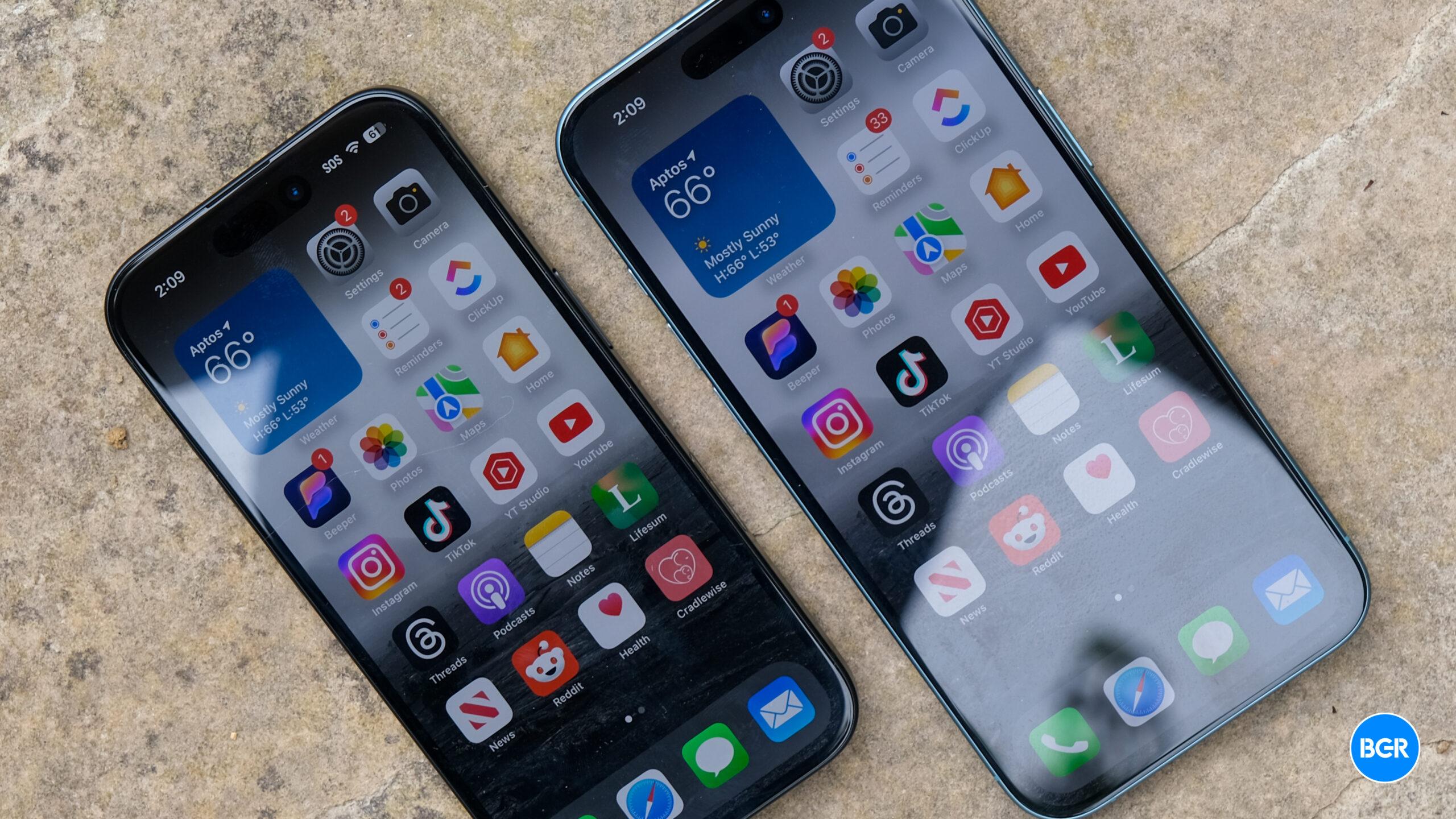
I want Apple’s iPhone 17 Air, but I have one major concern

I’ve been a fan of the iPhone 17 Air rumor for months now, hoping that Apple will indeed release its thinnest iPhone in years, or perhaps ever. After using the iPhone 16 Plus for nearly two months, I’m convinced I need an iPhone with a large display, but I definitely want it to be a lot thinner.

I’ll probably buy the iPhone 17 Air as soon as it comes out next year, even though I’ll have to accept certain compromises. Considering what Apple did with the ultra-thin M4 iPad Pro, I knew the camera would be the phone’s main compromise. The battery size is another obvious area where Apple will have to make compromises.

But a new report gives us a few additional issues iPhone 17 Air buyers might have to deal with. Among them, there’s a change that could prove to be my biggest concern about buying an ultra-thin iPhone. It’s also something I didn’t see coming: The potential lack of a physical SIM card slot.

Apple stopped selling new iPhones with SIM cards in the US in 2022 when the iPhone 14 series was released. However, international versions of the phones came with the same physical SIM cards as their predecessors. The iPhone 16 models also feature SIM cards in markets like the European Union (EU), where I happen to shop for new iPhones.

Tech. Entertainment. Science. Your inbox.

Sign up for the most interesting tech & entertainment news out there.

By signing up, I agree to the Terms of Use and have reviewed the Privacy Notice.

I never switched to eSIM cards because I never had to. I hoped Apple would take longer to drop physical SIM cards in Europe. Then again, I also understand why removing SIM cards makes sense. eSIM cards might be safer and easier to use. Best of all, they free up space inside the iPhone, which can then be repurposed for the battery. This is exactly what Apple might want to do with an iPhone 17 Air that’s between 5mm and 6mm thick.

But the EU isn’t like the US. It’s a lot easier to manage multiple physical SIMs in Europe, where the mobile market is far more competitive. Roaming charges are almost gone, but some limitations exist. Prepaid plans are quite affordable and a great solution for avoiding potential roaming charges when traveling. Buying prepaid SIM cards is incredibly easy, as is swapping between them.

That’s my biggest issue about a SIM-less iPhone 17 Air in Europe. It’s not that it would be difficult to manage multiple eSIMs on the same phone. The iPhone 16 can store more than eight eSIMs, two of which can be active simultaneously. It’s that carriers might have to make changes to the way they sell prepaid cards in Europe.

It’s also about my convenience, which, yes, is based on habit. I routinely travel with at least one backup phone. That second phone might be something as old as the 2015 iPhone 6s, which doesn’t have eSIM card support. If I were to convert physical SIMs into eSIMs for the iPhone 17 Air, I’d be unable to switch cards between the main phone and the one on mobile hotspot duty.

This is a very specific problem that I have, one I will eventually have to deal with. Whether it’s happening with the iPhone 17 Air or future models, SIM cards are probably going to disappear from EU iPhones sooner rather than later. All 2024 cellular iPads sold in the region only support eSIMs. I just hoped it would be later and that I would have more time to adjust to the iPhone abdandoning physical SIMs.

I don’t care as much about the iPhone 17 Air rocking a single lens on the back, featuring worse battery life than the base model, lacking a speaker on the bottom, or packing Apple’s 5G modem instead of Qualcomm.

Then again, I’m certain I want a thin iPhone. If that means losing the ability to quickly and easily switch SIM cards, so be it.

Source

Posted on

Nvidia RTX 5090 and 5080 GPUs again rumored for CES – but suggestion the RTX 5080 could be positioned as a ‘professional’ GPU might worry PC gamers

  • More rumors are lining up behind a CES 2025 launch for RTX 5090 and 5080
  • However, Nvidia might just pitch both GPUs at the ‘professional’ market
  • That could indicate the RTX 5090 and 5080 will end up seriously pricey

It’s looking more and more likely that Nvidia’s RTX 5090 and 5080 graphics cards are indeed being revealed at CES 2025, as previous chatter has indicated – plus we’ve heard some more worrying hints on pricing, sadly.

Much of the latest next-gen Blackwell speculation over the weekend comes from Moore’s Law is Dead (MLID), and the info here should be regarded with some skepticism, naturally.

MLID’s latest YouTube video has word from two sources at Nvidia’s retail partners who both claim that the unveiling of the RTX 5090 and 5080 is set to happen at CES 2025.

The first source MLID has heard from notes that their firm is currently talking to Nvidia about initial shipment numbers of these graphics cards, and that the on-sale date of the RTX 5090 and 5080 is a matter of weeks after the reveal – so likely late January.

On top of that, VideoCardz noticed that a leaker on X, MegaSizeGPU, has aired details of the GB202 chip (the GPU in the RTX 5090), which will supposedly be 20% bigger than the AD102 in the RTX 4090.

Furthermore, a second leaker on X, Hongxing2020, has shared a purported image of the PCIe 5.0 interface for the Blackwell flagship, and these pieces of spillage are likely from sample 5090 cards that have been sent out – which underlines that the next-gen GPU could be imminent.

Back to MLID’s video (which you can view below), and interestingly, the second source cited also mentions the RTX 5070 is going to be revealed in January – possibly teased at CES 2025, and then getting a proper announcement later in the month, by the sound of things.

{ window.reliablePageLoad.then(() => { var componentContainer = document.querySelector(“#slice-container-newsletterForm-articleInbodyContent-2sbnGrLP7djEVbsasTRMBe”); if (componentContainer) { var data = {“layout”:”inbodyContent”,”header”:”Get the best Black Friday deals direct to your inbox, plus news, reviews, and more.”,”tagline”:”Sign up to be the first to know about unmissable Black Friday deals on top tech, plus get all your favorite TechRadar content.”,”formFooterText”:”By submitting your information you agree to the Terms & Conditions and Privacy Policy and are aged 16 or over.”,”successMessage”:{“body”:”Thank you for signing up. You will receive a confirmation email shortly.”},”failureMessage”:”There was a problem. Please refresh the page and try again.”,”method”:”POST”,”inputs”:[{“type”:”hidden”,”name”:”NAME”},{“type”:”email”,”name”:”MAIL”,”placeholder”:”Your Email Address”,”required”:true},{“type”:”hidden”,”name”:”NEWSLETTER_CODE”,”value”:”XTR-D”},{“type”:”hidden”,”name”:”LANG”,”value”:”EN”},{“type”:”hidden”,”name”:”SOURCE”,”value”:”60″},{“type”:”hidden”,”name”:”COUNTRY”},{“type”:”checkbox”,”name”:”CONTACT_OTHER_BRANDS”,”label”:{“text”:”Contact me with news and offers from other Future brands”}},{“type”:”checkbox”,”name”:”CONTACT_PARTNERS”,”label”:{“text”:”Receive email from us on behalf of our trusted partners or sponsors”}},{“type”:”submit”,”value”:”Sign me up”,”required”:true}],”endpoint”:”https://newsletter-subscribe.futureplc.com/v2/submission/submit”,”analytics”:[{“analyticsType”:”widgetViewed”}],”ariaLabels”:{}}; var triggerHydrate = function() { window.sliceComponents.newsletterForm.hydrate(data, componentContainer); } if (window.lazyObserveElement) { window.lazyObserveElement(componentContainer, triggerHydrate); } else { triggerHydrate(); } } }).catch(err => console.error(‘%c FTE ‘,’background: #9306F9; color: #ffffff’,’Hydration Script has failed for newsletterForm-articleInbodyContent-2sbnGrLP7djEVbsasTRMBe Slice’, err)); }).catch(err => console.error(‘%c FTE ‘,’background: #9306F9; color: #ffffff’,’Externals script failed to load’, err)); ]]>

Sign up to be the first to know about unmissable Black Friday deals on top tech, plus get all your favorite TechRadar content.

Nvidia RTX 5090 & 5080 CES Leak | Intel Battlemage G31 Delay | AMD RDNA 4 Release Date – YouTube Nvidia RTX 5090 & 5080 CES Leak | Intel Battlemage G31 Delay | AMD RDNA 4 Release Date - YouTube Watch On

That third Blackwell GPU will go on sale shortly after January, MLID says, so we could reasonably guess it will be in February (and this isn’t the first time the RTX 5070 has been rumored to be inbound for the near future).

This second source also mentions pricing, and the more positive piece of news here is that on the topic of the RTX 5090, it seems this GPU will be priced at the lower end of the range that was previously leaked.

If you recall, that rumored range was $1,999 to $2,499 in the US (and proportional to that elsewhere, as ever), so it seems that two grand is what Nvidia is now mulling. That is, of course, still 25% pricier than the MSRP of the RTX 4090, and therefore a major hike, so it’s hardly great news – and there’s a gloomier note to follow.

Namely, a claim that some of the marketing materials Nvidia has provided on the subject of talking to customers notes that retailers should be telling would-be buyers that anything above the RTX 5070 Ti is “really for professionals” – so that’s effectively a hint that the RTX 5080 could be pricey, too. Why, exactly? Let’s dive into that next.

Analysis: GeForce is for gaming – right?

What Nvidia appears to be doing here – take all of this with plentiful seasoning, and this bit of speculation, even more so – is preparing retailers for the reality that the top Blackwell models, the RTX 5090 and 5080, are going to be seriously expensive.

So, when PC gamers come into the shop and see the price tags on those GPUs, staff are primed to basically justify those asking prices on the basis that these are really graphics cards for professional use. In other words, gamers don’t need that much horsepower and should be looking at the RTX 5070 (or its variants) or indeed lower (eventually, when the range is filled out).

Now, you could certainly argue this is true of the RTX 4090 already, but it seems like Nvidia is shifting up a gear in this respect, and including the RTX 5080 in that ‘pro’ bracket – possibly due to a weighty price tag of perhaps $1,200 in the US, or maybe even more, up towards $1,400, or so MLID has theorized in the past.

However, if this is true, it feels a bit odd to have not just the flagship, but the top two tiers of the GeForce range of Blackwell GPUs as models angled towards ‘professionals’ – remember, this is a gaming brand. However, we’re getting ahead of ourselves here really, and we need to see if this pricing pans out.

On that point, we should note that in the past, we have heard more positive predictions about pricing not being a ‘significant’ hike for the RTX 5090 – which we’d read as maybe more like a $200 rise – but MLID is very much doubling down on his previous forecast here.

Whatever happens with pricing – and Nvidia may still be judging online reaction to these leaks at this point – it seems that with the weight of rumors now, the RTX 5090 and 5080 are likely imminent (and we might well see Blackwell laptop GPUs at CES 2025, too).

You might also like

Source

Posted on

Is Intel about to turn Arrow Lake CPUs around? Leak suggests ‘big changes’ are coming for Core Ultra 200 chips

  • A leaker claims some major tweaks are close at hand for Arrow Lake
  • We don’t know their nature beyond being ‘voltage-frequency’ related
  • This could be the start of some big performance boosts for Arrow Lake

Intel’s tweaks, which are incoming to help boost the performance of its recently released Arrow Lake (Core Ultra 200S) processors – that rather disappointed upon their arrival – could be about to land.

Or at least we might be about to witness the start of Intel fixing up these desktop CPUs. We’re told by expert overclocker Skatterbench (who’s affiliated with Asus, and regularly sets world records using the firm’s motherboards) on X that Intel has some big changes coming in its next microcode update for Arrow Lake chips (add seasoning, as ever).

These pertain to the ‘VF behavior’ which means voltage-frequency, and as VideoCardz, which noticed this, pointed out, the overclocker likely already has access to the beta update.

Hopefully, it won’t be long before whatever tweaks and improvements are being introduced here come to all Core Ultra 200 CPU owners (though there will be a beta BIOS deployed by motherboard makers first, no doubt, before the full release).

The socket interface of the Intel Core Ultra processor

(Image credit: Intel)

Analysis: A new chapter for Arrow Lake?

So, the crux of the matter here is whether these changes are about delivering better performance for the Core Ultra 200S family, or perhaps more about fixing overclocking (as Skatterbench indicates later in that thread on X). Meaning these (rumored) tweaks could be more about, say, shoring up stability (especially for overclocking), rather than juicing up Arrow Lake CPUs with performance improvements.

The expectation is that this has something to do with Robert Hallock’s (VP of marketing at Intel) previous observation that Arrow Lake’s disappointing performance (particularly with gaming) was due to multiple issues in Windows and the BIOS, and an accompanying promise that fixes are inbound for those problems.

Is this upcoming microcode patch the start of those fixes? Quite possibly, but we’d temper our expectations, as it sounds like Intel has a lot of work to do on this front. Remember, we were also promised a full audit of all the issues in play with Arrow Lake’s missteps, so it seems like a thorny tangle of gremlins in the works, and we’re betting this is going to be a multi-step cure (for “multifactor issues” as Hallock called them).

{ window.reliablePageLoad.then(() => { var componentContainer = document.querySelector(“#slice-container-newsletterForm-articleInbodyContent-bwnwKEQTHui4bgV3tzJXpK”); if (componentContainer) { var data = {“layout”:”inbodyContent”,”header”:”Get the best Black Friday deals direct to your inbox, plus news, reviews, and more.”,”tagline”:”Sign up to be the first to know about unmissable Black Friday deals on top tech, plus get all your favorite TechRadar content.”,”formFooterText”:”By submitting your information you agree to the Terms & Conditions and Privacy Policy and are aged 16 or over.”,”successMessage”:{“body”:”Thank you for signing up. You will receive a confirmation email shortly.”},”failureMessage”:”There was a problem. Please refresh the page and try again.”,”method”:”POST”,”inputs”:[{“type”:”hidden”,”name”:”NAME”},{“type”:”email”,”name”:”MAIL”,”placeholder”:”Your Email Address”,”required”:true},{“type”:”hidden”,”name”:”NEWSLETTER_CODE”,”value”:”XTR-D”},{“type”:”hidden”,”name”:”LANG”,”value”:”EN”},{“type”:”hidden”,”name”:”SOURCE”,”value”:”60″},{“type”:”hidden”,”name”:”COUNTRY”},{“type”:”checkbox”,”name”:”CONTACT_OTHER_BRANDS”,”label”:{“text”:”Contact me with news and offers from other Future brands”}},{“type”:”checkbox”,”name”:”CONTACT_PARTNERS”,”label”:{“text”:”Receive email from us on behalf of our trusted partners or sponsors”}},{“type”:”submit”,”value”:”Sign me up”,”required”:true}],”endpoint”:”https://newsletter-subscribe.futureplc.com/v2/submission/submit”,”analytics”:[{“analyticsType”:”widgetViewed”}],”ariaLabels”:{}}; var triggerHydrate = function() { window.sliceComponents.newsletterForm.hydrate(data, componentContainer); } if (window.lazyObserveElement) { window.lazyObserveElement(componentContainer, triggerHydrate); } else { triggerHydrate(); } } }).catch(err => console.error(‘%c FTE ‘,’background: #9306F9; color: #ffffff’,’Hydration Script has failed for newsletterForm-articleInbodyContent-bwnwKEQTHui4bgV3tzJXpK Slice’, err)); }).catch(err => console.error(‘%c FTE ‘,’background: #9306F9; color: #ffffff’,’Externals script failed to load’, err)); ]]>

Sign up to be the first to know about unmissable Black Friday deals on top tech, plus get all your favorite TechRadar content.

You might also like

Source