Posted on

Musk claims of Ukraine DDoS attack derided by cyber community

Tech oligarch Elon Musk has drawn criticism from cyber security experts following unsubstantiated claims that Ukraine was behind an apparent distributed denial of service (DDoS) attack on his social media platform, X, formerly known as Twitter.

Musk, who currently heads the US government’s Department of Government Efficiency (Doge) that has fired thousands of federal workers, accused the Ukrainian government of being behind the incident that brought down X services for many users on Monday 10 March. Speaking to the Fox Business news channel, he claimed a “massive cyber attack” targeting X appeared to have originated from IP addresses located in Ukraine.

The incident came amid a serious deterioration in relations between Ukraine and the US, and just days after US Cyber Command, the country’s military offensive and defensive cyber unit, suspended offensive operations against Russia in a significant climbdown.

Ukrainian officials were quick to refute the suggestion Kyiv was behind the cyber attack, and in conversation with the BBC, former National Cyber Security Centre head Ciaran Martin described Musk’s accusations as unconvincing and “pretty much garbage”.

Martin told the BBC he would be hard-pressed to think of an organisation of X’s scale that has been so badly impacted by such an incident in recent years and suggested the incident did not paint a good picture of the platform’s wider cyber resilience.

In a DDoS attack, malicious actors bombard a server with junk web traffic to overwhelm it, forcing it offline and leaving legitimate users unable to access it.

Such crude forms of cyber attack are well-known and relatively common – they frequently form a key element in hacktivist actions thanks to their accessibility, which at first glance lends a certain element of credibility to Musk’s claims.

However, DDoS attacks are launched via geographically disperse networks of computers and other devices that have been co-opted into botnets without their owner’s knowledge or consent. This makes it very hard to accurately locate the individuals responsible for them.

Tom Parker, cyber security author and chief technology officer (CTO) at NetSPI, said the magnitude of the attack did strongly suggest the involvement of a sophisticated threat actor but it was important to understand that accurately attributing DDoS incidents is “notoriously difficult”.

“Such adversaries are highly adept at concealing their tracks. We must be extremely cautious about pointing fingers and sabre rattling without clear and compelling evidence to demonstrate capability, motive,and likely benefit for the party involved,” Parker told Computer Weekly. 

“Despite recent events, I do believe Ukraine is still seeking to foster a more positive relationship with the US, which would make it unlikely that the claims of Ukrainian involvement are well-grounded. Rather, the scenario appears to align more with a ‘false flag’ operation deliberately crafted to implicate Ukraine.

“As we often see in these complex situations, the most straightforward explanation isn’t always correct, and drawing conclusions prematurely can lead us astray,” he said.

Pro-Palestine group

Lending more weight to arguments against Musk, a pro-Palestinian hacktivist group known as Dark Storm Team subsequently claimed via Telegram that it had been behind the incident.

An account on the Bluesky social media platform claiming to be associated with this group and appearing to have links to the Anonymous collective, described the DDoS attack as a peaceful protest and said attacks would continue.

Jake Moore, global cyber security advisor at ESET, said: “Cyber criminals attack from all angles and are incredibly fearless in their attempts. Whether they are directed by geopolitical groups or financially motivated gangs, DDoS attacks are a clever way of targeting a website without having to hack into the mainframe, and therefore the perpetrators can remain largely anonymous and difficult to point a finger at.

“This also makes it that much more difficult to protect from when the landscape is completely unknown apart from having generic DDoS protection. However, even with such protection, each year, threat actors become better equipped and use even more IP addresses such as home IoT devices to flood systems, making it increasingly more difficult to protect from.”

Added Moore: “Unfortunately, X remains one of the most talked about platforms, making it a typical target for hackers marking their own territory. All that can be done to future-proof their networks is to continue to expect the unexpected and build even more robust DDoS protection layers.”

Source

Posted on

iPhone 16e reportedly has a Bluetooth audio problem that can’t be fixed

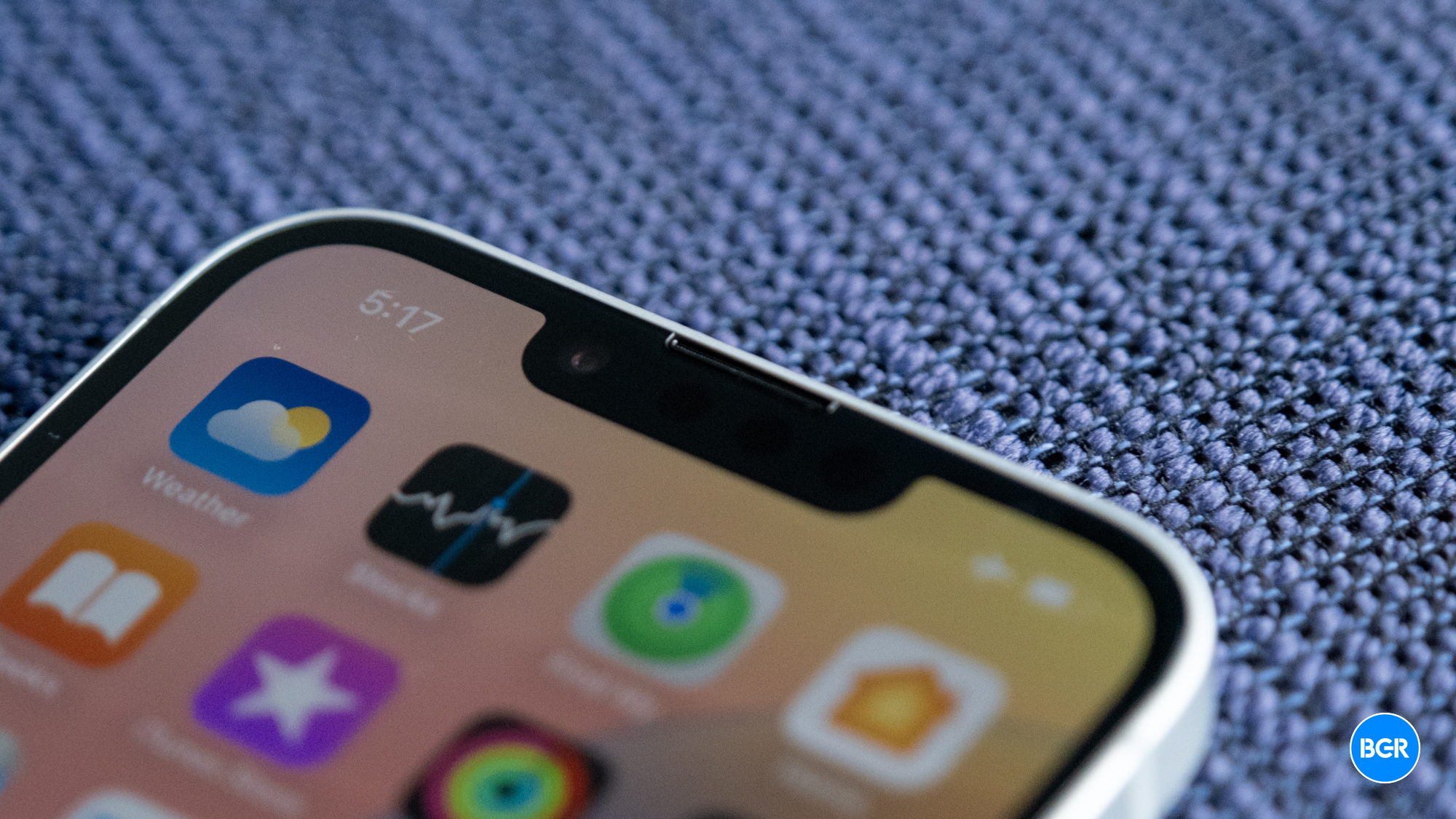
New iPhone hardware might launch with functionality issues that need to be ironed out via subsequent software updates, assuming software can provide fixes. The same goes for Android products. Hearing that the iPhone 16e has a Bluetooth issue where the audio cuts out briefly while music is playing should not be that surprising. However, the iPhone 16e isn’t exactly a new iPhone, is it? It has the same design as every other iPhone with a notch that has been released since the iPhone 12.

Apple also recycled many of the internal components to make this device. Even the iPhone 16’s A18 chip and the 8GB of RAM inside the iPhone 16e aren’t new-new. Therefore, other internal components, including the Bluetooth chip, shouldn’t be brand new.

The only completely new iPhone 16e components might be the new battery, which gives the handset the best battery life in 6.1-inch iPhones, and the C1 modem.

With all that in mind, one shouldn’t expect Bluetooth audio connectivity issues with the iPhone 16e. But it turns out that several iPhone 16e owners have encountered Bluetooth disconnects, and Apple doesn’t know how to fix them for the time being. It doesn’t seem like a hardware issue, so exchanging your iPhone 16e for a new one might not fix it.

Tech. Entertainment. Science. Your inbox.

Sign up for the most interesting tech & entertainment news out there.

By signing up, I agree to the Terms of Use and have reviewed the Privacy Notice.

Some iPhone 16e owners suspect the device has issues handling multiple Bluetooth connections, like an Apple Watch and AirPods. That’s actually a nightmare scenario for this longtime iPhone user. I run a lot, and I wear the Apple Watch to track my workouts while AirPods handle the entertainment.

As is often the case with issues concerning new devices, affected users took to social media and forums to complain. A discussion on Apple forums is particularly interesting, as an iPhone 16e owner details their issues with the Bluetooth audio and their experience with Apple support.

After talking to UK/Europe support, the user was escalated to Apple’s US support, and they had him perform a diagnostic test on the iPhone 16e to figure out why the Bluetooth audio stops:

Then they had me install a profile on my iPhone which logged the Bluetooth and Wifi signals / exchanges in a diagnostic report, which ran for about 20 minutes, whilst I reproduced the issue and noted down the time (to the second) of whenever the audio stutters. This was done with data over Wifi, and data over 5G. Then they phoned me up again, the logs were packaged up, and sent through. All they could do was tell me the data and timestamps etc. were going to be looked at by engineering and they would contact me back if they wanted me to run more test…

The same person said the update to iOS 18.3.2, which dropped earlier this week, did not fix the problem.

A different person found that using an Oura ring might impact the Bluetooth audio on the iPhone 16e. Closing the app completely seems to fix the problem:

Yes, I have the same problem, too. I found a couple of reddit threads with people experiencing the same issue. In my case it appears that the stuttering is related to having another Bluetooth connection (an Oura smart ring). If I close the Oura app, so it’s not running in the background, the audio appears to work OK, but it’s early days and I’m still investigating. Do you have multiple Bluetooth connections other than the headphones? I hope it’s not a hardware issue with the phone.

Over on Reddit, a Fitbit user said that closing the Fitbit app didn’t work, but they removed the wearable from the iPhone 16e, and the Bluetooth audio was fixed.

Obviously, these aren’t acceptable fixes. Again, Apple is selling us devices that are connected via Bluetooth to the iPhone, whether it’s Apple Watch models, AirPods, or Beats earphones. Apple wants iPhone users to buy both the Apple Watch and AirPods, so both should stay connected to the iPhone at the same time.

Even if you use non-Apple wearables and wireless earphones, you should be able to mix and match products without experiencing Bluetooth audio issues.

It’s unclear how widespread the iPhone 16e Bluetooth audio problem is, but Apple is certainly aware of it. Hopefully, a permanent fix will be available soon.

Source

Posted on

AI-driven personalisation appealing to UK shoppers, says research

Almost a third of shoppers in the UK have said that personalisation assisted by artificial intelligence (AI) increases their loyalty to brands, according to research from Bazaarvoice.

The content generation platform’s Shopper experience index report found that 31% of shoppers in the UK believe AI-driven loyalty rewards increase their brand loyalty, and 28% claimed tailored rewards makes them shop more often.

More than 40% of shoppers in the UK also reported that personalised discounts or offers are more likely to encourage them to share a product or brand on their social media.

Zarina Stanford, CMO of Bazaarvoice, said: “In an era where consumers are inundated with choices, personalisation and contextualisation can prove to be a differentiator for brand loyalty and customer engagement.

“Why? It creates seamless and relevant experiences. Personalised and contextual – right time, right place, right form – offers and rewards go beyond generic discounts; they shape consumer decisions by delivering meaningful value tailored to individual preferences.”

Retail isn’t the only place where AI is having a huge impact, with a large number of companies and individuals already using technologies such as generative AI (GenAI) in their daily lives.

Personalisation has played a large role in retail over the past 10 years as consumers become increasingly demanding, so AI becoming entangled in the generation of personalised rewards is a natural step that has developed along the way.

Shopping habits have been changing as younger consumers grow to gain spending power, leading a large number of consumers between the ages of 18 and 34 to increasingly turn to social media for inspiration about what to buy and from where.

But consumers have also been turning away from shopping online in recent years as physical discount stores offer more lucrative deals, forcing online retailers to try harder to entice shoppers back to the web through the use of loyalty schemes and personalised deals.

Content from other shoppers, such as reviews, are also becoming increasingly important for UK consumers when online shopping, with more than half of shoppers saying they find reviews useful, and 45% saying an item needs to have between 11 and 50 reviews before they will even consider buying it.

Almost 70% of shoppers said they also find content generated by other shoppers useful when making decisions about what to buy, with 12% saying it definitely impacts their shopping behaviour, and 43% saying it can have an effect most of the time.

Some 16% of shoppers report they are likely to make a purchase based on user-generated content such as reviews, ratings, photos and videos.

Stanford said that retailers need to be utilising personalisation, combined with good timing, to encourage consumers to make more purchases, something AI can help with, adding: “AI-infused tools like product recommendations and targeted offers and social proofing present a massive opportunity to amplify these personalised, relevant, contextual experiences. They save time and deliver tailored information to shoppers that brands might not otherwise have the resources or ability to provide.”

But personalisation isn’t the only aspect of retail AI is helping with – this year’s Retail Federation Big Show saw retailers showcase AI use cases such as creating “digital twins” of stores to keep track of inventory, or helping retail associates use generative AI to more easily access and interpret store or product data.

Regardless of how they are using it, retailers using AI to help boost purchases and productivity is an inevitability as AI dominates the next wave of tech adoption.

Source

Posted on

Meta’s planned subsea cable will exceed circumference of Earth and support AI innovation

Meta has announced its plan for a subsea cable that will span the globe, connecting emerging economies such as India, South Africa and Brazil to the US.

Facebook, Instagram and WhatsApp’s parent company announced what is known as Project Waterworth in a blog post.

The social media giant’s vice-president of network engineering, Gaya Nagarajan, and Alex-Handrah Aimé, its global head of network investments, said the 50,000 km cable will be the world’s longest, and use “the highest-capacity technology available”. 

Regions of rapid economic growth will be connected directly to the US through the cable, which the Meta executives said “will enable greater economic cooperation, facilitate digital inclusion and open opportunities for technological development in these regions”.

Meta said it has already developed over 20 subsea cables. “With Project Waterworth, we continue to advance engineering design to maintain cable resilience, enabling us to build the longest 24 fibre pair cable project in the world and enhance overall speed of deployment,” wrote the Meta executives.

The multibillion-dollar investment, which will see cables laid at depths of 7,000 meters, will take years to complete, but promises increased access to high-speed connectivity, which it said could, for example, support artificial intelligence (AI) innovation across the world.

“AI is revolutionising every aspect of our lives, from how we interact with each other to how we think about infrastructure – and Meta is at the forefront of building these innovative technologies,” the company said. “As AI continues to transform industries and societies around the world, it’s clear that capacity, resilience and global reach are more important than ever to support leading infrastructure.”

The blog post added: “With Project Waterworth, we can help ensure that the benefits of AI and other emerging technologies are available to everyone, regardless of where they live or work.”

While subsea cables promise to enable global connectivity, there are concerns over how these costly and critical infrastructures can be protected from attacks from hostile states.

MPs and peers recently launched an inquiry into the UK’s ability to protect undersea internet cables that link the country with the rest of the world. This followed heightened threats of sabotage.

The Joint Committee on the National Security Strategy, which scrutinises government decision-making on national security, aims to assess the UK’s readiness for potential attacks on critical undersea communication cables.

The inquiry followed a statement by defence secretary John Healey, warning that Russian president Vladimir Putin is targeting the UK’s undersea oil, gas, electricity and internet cables after a Russian spy ship entered British waters.

According to the parliamentary committee, 99% of the UK’s data passes through undersea internet cables.

“As the geopolitical environment worsens, foreign states are seeking asymmetric ways to hold us at risk,” said committee chairman Matt Western. “Our internet cable network looks like an increasingly vulnerable soft underbelly. There is no need for panic – we have a good degree of resilience, and awareness of the challenge is growing. But we must be clear-eyed about the risks and consequences: an attack of this nature would hit us hard.”

The global internet, which is critical for international communications and commerce, relies on a network of 500 cables that carry 95% of internet traffic. The cables are often in remote places, making them difficult and expensive to monitor.

Source

Posted on

ARM and Meta: Plotting a path to dilute GPU capacity

News that ARM is embarking on developing its own datacentre processors for Meta, as reported in the Financial Times, is indicative of the chip designer’s move to capitalise on the tech industry’s appetite for affordable, energy-efficient artificial intelligence (AI).

Hyperscalers and social media giants such as Meta use vast arrays of expensive graphics processing units (GPUs) to run workloads that require AI acceleration. But along with the cost, GPUs tend to use a lot of energy and require investment in liquid cooling infrastructure.

Meta sees AI as a strategic technology initiative that spans its platforms, including Facebook, Instagram and WhatApp. CEO Mark Zuckerberg is positioning Meta AI as the artificial intelligence everyone will use. In the company’s latest earnings call, he said: “In AI, I expect this is going to be the year when a highly intelligent and personalised AI assistant reaches more than one billion people, and I expect Meta AI to be that leading AI assistant.”

To reach this volume of people, the company has been working to scale its AI infrastructure and plans to migrate from GPU-based AI acceleration to custom silicon chips, optimised for its workloads and datacentres.

During the earnings call, Meta chief financial officer Susan Li said the company was “very invested in developing our own custom silicon for unique workloads, where off-the-shelf silicon isn’t necessarily optimal”.

In 2023, the company began a long-term venture called Meta Training and Inference Accelerator (MTIA) to provide the most efficient architecture for its unique workloads.

Li said Meta began adopting MTIA in the first half of 2024 for core ranking and recommendations inference. “We’ll continue ramping adoption for those workloads over the course of 2025 as we use it for both incremental capacity and to replace some GPU-based servers when they reach the end of their useful lives,” she added. “Next year, we’re hoping to expand MTIA to support some of our core AI training workloads, and over time some of our GenAI [generative AI] use cases.”

Driving efficiency and total cost of ownership

Meta has previously said efficiency is one of the most important factors for deploying MTIA in its datacentres. This is measured in performance-per-watt metric (TFLOPS/W), which it said is a key component of the total cost of ownership. The MTIA chip is fitted to an Open Compute Platform (OCP) plug-in module, which consumes about 35W. But the MTIA architecture requires a central processing unit (CPU) together with memory and chips for connectivity.

The reported work it is doing with ARM could help the company move from the highly customised application-specific integrated circuits (ASICs) it developed for its first generation chip, MTIA 1, to a next-generation architecture based on general-purpose ARM processor cores.

Looking at ARM’s latest earnings, the company is positioning itself to offer AI that can scale power efficiently. ARM has previously partnered with Nvidia to deliver power-efficient AI in the Nvidia Blackwell Grace architecture

At the Consumer Electronics Show in January, Nvidia unveiled the ARM-based GB10 Grace Blackwell Superchip, which it claimed offers a petaflop of AI computing performance for prototyping, fine-tuning and running large AI models. The chip uses an ARM processor with Nvidia’s Blackwell accelerator to improve the performance of AI workloads.

The semiconductor industry offers system on a chip (SoC) devices, where various computer building blocks are integrated into a single chip. Grace Blackwell is an example of an SoC. Given the work Meta has been doing to develop its MTIA chip, the company may well be exploring how it can work with ARM to integrate its own technology with the ARM CPU on a single device.

Although an SoC is more complex from a chip fabrication perspective, the economies of scale when production is ramped up, and the fact that the device can integrate several external components into one package, make it considerably more cost-effective for system builders.

Li’s remarks on replacing GPU servers and the goal of MTIA to reduce Meta’s total cost of ownership for AI correlate with the reported deal with ARM, which would potentially enable it to scale up AI cost effectively and reduce its reliance on GPU-based AI acceleration.

Boosting ARM’s AI credentials

ARM, which is a SoftBank company, recently found itself at the core of the Trump administration’s Stargate Project, a SoftBank-backed initiative to deploy sovereign AI capabilities in the US.

During the earnings call for ARM’s latest quarterly results, CEO Rene Haas described Stargate as “an extremely significant infrastructure project”, adding: “We are extremely excited to be the CPU of choice for such a platform combined with the Blackwell CPU with [ARM-based] Grace. Going forward, there’ll be huge potential for technology innovation around that space.”

Haas also spoke about the Cristal intelligence collaboration with OpenAI, which he said enables AI agents to move across every node of the hardware ecosystem. “If you think about the smallest devices, such as earbuds, all the way to the datacentre, this is really about agents increasingly being the interface and/or the driver of everything that drives AI inside the device,” he added.

Source

Posted on

Is ChatGPT ‘the best search product on the web’ with new GPT-4o update?

OpenAI CEO Sam Altman recently addressed the future of ChatGPT, confirming that a GPT-5 upgrade is coming later this year. Before that, we’ll get GPT-4.5, an upgraded model expected to arrive in the coming weeks. Before any of those big upgrades arrive, OpenAI gave GPT-4o an unexpected upgrade that should improve the entire ChatGPT experience. The upgrade might also make ChatGPT Search better than before, with OpenAI Sam Altman calling it the “best search product on the web” over the weekend.

Don’t get too excited too fast, however. This is marketing speak at best. Altman dropped the comment in reply to a question from Aravind Srinivas, the CEO of Perplexity AI, which is an AI search engine that competes against ChatGPT.

“We put out an update to ChatGPT (4o). It is pretty good. It is soon going to get much better, team is cooking,” Altman tweeted out of the blue on Saturday.

Users are saying on social media that the latest ChatGPT update made GPT-4o’s upgrade much better. An X user called the AI’s writing “unbelievably good.” ChatGPT is supposedly “way more human-like, better at writing (emails, scripts, marketing etc) & actually follows style guides, esp with examples,” the tweet reads. “First time a model writes without sounding like slop (even better than Claude).”

Tech. Entertainment. Science. Your inbox.

Sign up for the most interesting tech & entertainment news out there.

By signing up, I agree to the Terms of Use and have reviewed the Privacy Notice.

Altman retweeted these observations to prove his point that GPT-4o has gotten better.

Altman was unusually active on X over the weekend, posting, among other things, visuals from a study that debunks the claims that AI like ChatGPT uses a lot of water.

Sam Altman talking on X about the ChatGPT GPT-4o upgrade including ChatGPT Search.Sam Altman talking about the ChatGPT GPT-4o upgrade, including ChatGPT Search. Image source: X
In this back and forth on X, Altman made the ChatGPT Search claim above that the GPT-4o update makes ChatGPT “the best search product on the web” in response to a question from Srinivas. The Perplexity exec asked what the ChatGPT GPT-4o update was all about.

Interstingly, Perplexity launched its own Deep Research AI agent tool for Perplexity AI just as Sam Altman teased the GPT-4o improvements. We’d probably need an AI model to compare the internet search experience between various products to determine the best search product on the web.

Marketing and banter aside, I use ChatGPT Search a lot during my chats with the AI. It’s not that I invoke ChatGPT Search, but I instruct the chatbot to look for stuff on the web for me. The experience is much better than I’d have ever hoped, and I’m not even taking into account any upgrades the latest GPT-4o upgrade might have brought over.

What seemed impossible when ChatGPT became a viral hit in November 2022 — that an AI chatbot might replace Google Search — is getting closer to becoming a reality.

I had already replaced Google Search by the time ChatGPT Search rolled out. OpenAI’s solution is just part of how I browse the web with a caveat. I rely on ChatGPT Search when giving ChatGPT more complex tasks that a simple search query would not solve. The AI then browses the web for me to answer that question.

AI agents like Operator and Deep Research will only improve this aspect, researching the web for more complex information about various topics. But I’m not sure I need ChatGPT Search to handle all my internet searches, even if Altman’s claims are real and OpenAI improved the search experience significantly.

The good news about this unexpected GPT-4o update is that it should improve your ChatGPT experience at all levels, even if you use the Free chatbot version.

Source

Posted on

Apple Invites and Sports apps could hint at major iOS 19 redesign

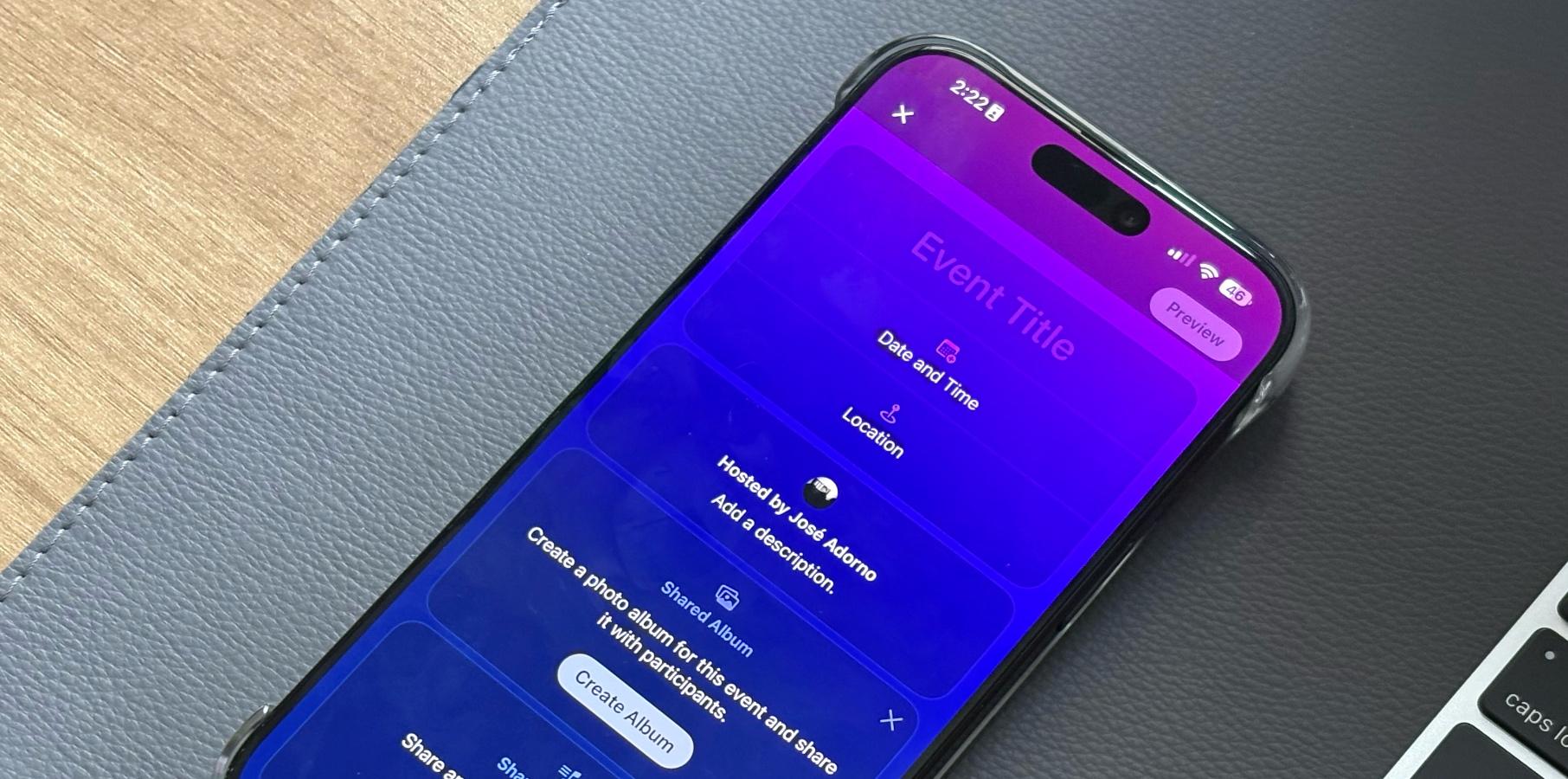
This past year, Apple released two new apps: Apple Invites and Apple Sports. Besides that, with iOS 18, the company unveiled two unique UIs for the Action Button and the iMessage menu. With all that in mind, some iPhone users think Apple might be preparing a big iOS 19 redesign, and they might be correct.

Before iOS 18 was introduced, there was an ongoing rumor that Apple was planning a visionOS-like redesign for this software update. While it didn’t happen, it’s only natural that this rumor might be passed to iOS 19.

In January, Front Page Tech also suggested iOS 19 might get a redesign inspired by visionOS, especially the Camera app, which several users find more confusing than ever. With several layers of interaction, some have suggested Apple might need to make the Camera app simple again, and redesigning it with the visionOS UI might be a possibility.

On social media, one X user shared several screenshots of the Apple Invites app and asked, “Does this mean iOS 19 is getting a UI redesign?” Another was more confident: “iOS 19 is redesign year. I’m calling it.”

Tech. Entertainment. Science. Your inbox.

Sign up for the most interesting tech & entertainment news out there.

By signing up, I agree to the Terms of Use and have reviewed the Privacy Notice.

So far, it’s unclear if Apple plans to redesign iOS 19. Since the significant iOS 7 overhaul, Apple has been cautious enough to make slight changes over the updates. While the company hasn’t completely overhauled its system at once, the iPhone operating system is far different from what it was a decade ago.

Apple Sports appImage source: Apple Inc.

Still, that didn’t stop Apple from revamping the Control Center and the Home Screen with customizable widgets, tinted icons, and so on.

Users have been asking for a visionOS-inspired iOS update as Apple has prioritized rounder cards, glassy effects, and other UI changes previously unavailable on iOS. In addition, with less exciting iPhone updates, Apple needs to make the software stand out so upgrading becomes more enticing. Otherwise, the company might have its Samsung Galaxy S25 moment, with the same smartphone with a few software tweaks as new features.

Wrap up

BGR has a comprehensive iOS 19 guide. We’ll keep updating it as we learn more about this future software update, which is expected to be announced at WWDC 2025 around June.

Source

Posted on

North Korean hackers created new macOS malware disguised as popular app installers

Another day, another macOS malware is trying to actively exploit your Mac. This time, North Korean hackers are using fake job offers hidden in updates to popular apps like Zoom and Google Chrome to invade your Mac.

As security researchers from SentinelLabs (via AppleInsider) reported, North Korean hackers are pushing the macOS Ferret family of malware. Even though Apple has successfully prevented some of these viruses with the on-device malware tool XProtect, caution is still recommended.

This is not the first time someone has tried to install malware on people’s Macs using the “Contagious Interview campaign” method. Basically, targets are asked to go on an interview through a link that shows an error message and a request to install or update some required software, such as Zoom or Google Chrome. After all, who hasn’t tried to join a call only to have Zoom or WebEx ask for an update?

Thankfully, the macOS 15.3 update added a few new security improvements to prevent this malware from infecting your Mac. However, some of the Ferret viruses can still bypass Apple’s security.

Tech. Entertainment. Science. Your inbox.

Sign up for the most interesting tech & entertainment news out there.

By signing up, I agree to the Terms of Use and have reviewed the Privacy Notice.

The researchers from SentinelLabs write: “The ‘Contagious Interview’ campaign and the FERRET family of malware represent an ongoing and active campaign, with threat actors pivoting from signed applications to functionally similar unsigned versions as required. Diverse tactics help the threat actors deliver malware to a variety of targets in the developer community, both in targeted efforts and what appears to be more ‘scatter gun’ approaches via social media and code sharing sites like Github.”

How do you protect yourself from this macOS malware threat?

The best way to protect yourself from this macOS malware threat is to ensure you have the official apps downloaded on your Mac. For example, instead of taking web Zoom calls, make sure to always have them on your Mac app. The same is worth it for WebEx. For Google Chrome, don’t forget to check updates through the browser itself. In addition, having the latest macOS update can guarantee you’re protected against the latest threats as well.

Keep checking BGR for the latest macOS malware trying to exploit your Mac and more.

Source

Posted on

DeepSeek: Welcome to US artificial intelligence’s Sputnik moment

Following last weekend’s introduction of the latest large language model (LLM) from DeepSeek, ChatGPT’s new artificial intelligence (AI) rival has topped the Apple App Store for iPhone downloads.

The DeepSeek R1 LLM is open source and uses reasoning combined with what the company calls “cold start data”, which means that rather than trawling the internet and social media sites to amass vast quantities of machine learning data, it relies instead on reinforced learning to improve accuracy.

On its GitHub page, the developers of DeepSeek describe R1 as a large-scale reinforcement learning on the base model. “We directly apply reinforcement learning to the base model without relying on supervised fine-tuning as a preliminary step,” it says. “This approach allows the model to explore chain-of-thought for solving complex problems.”

An estimated 2.1 million searches for DeepSeek were recorded over the weekend, with at least 1.6 million of these on Sunday 26 January alone. This is 12.3% of ChatGPT’s 13 million searches in the same timeframe.

Along with taking a different approach to ChatGPT, the interest in DeepSeek is also being driven by competitive pricing and the fact that the code is open source.

While OpenAI, the maker of ChatGPT, charges $2.50 per million input tokens for its GPT-4o model, DeepSeek is priced at $0.14 per million input tokens in situations where the AI engine is able to draw on previously cached information. Non-cached inputs are priced at $0.55 per million tokens.

The extent of interest in the AI from the Chinese firm resulted in turmoil in the valuation of tech stocks in the US. Reuters reported that Nvidia saw its share price drop 17%, which effectively wiped $593bn off its market valuation.

Wake-up call

In a speech on Monday, US president Donald Trump described DeepSeek as a wake-up call for the US tech sector.

Among the numerous subjects Trump spoke about in his speech to Republican party members of Congress were the executive orders revoking the AI regulations introduced under former president Joe Biden. “We don’t want to have any future president ever sabotage our economy with out-of-control regulations,” he said. “Last week I signed an order revoking Joe Biden’s destructive artificial intelligence regulations so that AI companies can once again focus on being the best, not just being the most woke.”

He then referenced DeepSeek as he continued talking about why deregulation is important for AI in the US. “Today and over the last couple of days I’ve been reading about China and [one Chinese company] in particular coming up with a faster method of AI and a much less expensive method. Hopefully the release of DeepSeek AI from a Chinese company should be a wake-up call for our industries that we need to be laser-focused on competing to win.”

DeepSeek’s developers have been able to combine cutting-edge algorithms to slash the energy demands of AI training and deployment. In his speech, Trump described what DeepSeek had achieved as “good”, since companies aiming to develop AI applications that use DeepSeek do not have to spend as much money compared with rival LLMs. “I view that as a positive, as an asset,” he added.
 
Commenting on what the rise of DeepSeek has meant to financial markets, Charu Chanana, chief investment strategist at investment platform Saxo, pointed out that DeepSeek took only two months to develop and less than $6m to build, using reduced-capability chips from Nvidia. This is significant given that the Biden administration banned the export of high-end Nvidia graphics processors (GPUs) to China in 2023.

“US tech companies are trading at premium valuations, with major AI players like Nvidia, Microsoft and Alphabet commanding forward P/E [price to earnings] multiples far above historical averages,” she said. “With these stocks priced for perfection, even minor disruptions, such as DeepSeek proving advanced AI can be built without top-tier chips, could weigh heavily on share prices. For Nvidia, in particular, its role as a key supplier of AI chips makes it vulnerable if demand for its high-end products wanes.”

The idea of lower-cost and more energy-efficient AI coming from DeepSeek appears to have an immediate impact both on the US tech giants and the energy sector, which has been banking on the growth of AI-fuelled power consumption.

“DeepSeek’s breakthrough signals a shift toward efficiency in AI, which will redefine both energy and AI markets,” said Nigel Green, the CEO of global financial advisory giant DeVere Group. “The opportunities for investors willing to act now are enormous.

“This challenges the assumption that AI’s growth is tied to ever-increasing energy consumption. While the market is reacting to short-term uncertainty, efficiency-driven AI models will expand adoption into new markets and industries. This means more widespread use, deeper integration and, ultimately, sustained demand for energy solutions.”

Arguably, it’s the fact that DeepSeek has been able to achieve results using inferior hardware and offer its LLM at a highly competitive price that is set to change every organisation’s approach to AI: it doesn’t necessarily require throwing vast amounts of costly GPUs at the hardware and having to recoup these costs by charging end users a premium.

“By developing cutting-edge generative AI models without relying on the latest, most expensive hardware, DeepSeek has demonstrated that agility and strategy can outpace raw computational power,” said Kjell Carlsson, head of AI strategy at Domino Data Lab. “Their achievements also highlight the vulnerability of incumbents in the generative AI space – proving that open-source innovation continues to be a powerful equaliser, enabling challengers to match and even surpass established players years into the revolution.”

What all this means is that DeepSeek signifies Chinese competition to Silicon Valley’s existing AI models and is a demonstration of how the pace of AI development is pushing boundaries and lowering costs. 

Source

Posted on

EU law could usher in transformative change to digital ecosystems

In October 2024, the European Commission (EC) published its Digital fairness fitness check report as part of a continued effort to evaluate the effectiveness of European Union (EU) legislation with consumer protection laws.

Specifically, it evaluated the efficacy of the Unfair Commercial Practices Directive, the Consumer Rights Directive, and the Unfair Contract Terms Directive.

The report revealed these existing laws “have only partially achieved the objectives of providing a high level of consumer protection”, with harmful commercial practices online costing EU consumers at least €7.9bn per year, and further drew attention to the power and information imbalances between businesses and consumers online. Now, its findings are being used to shape the latest development in tech policy in Europe, the Digital Fairness Act (DFA).

Following the report, president of the European Commission Ursula von der Leyen wrote to Michael McGrath, the EU’s commissioner for consumer protection, to urge his successor to develop a Digital Fairness Act.

The mission letter outlined five core problematic practices in consumer-facing apps and online platforms today; including “dark patterns”, addictive design, personalised targeting features, problematic commercial practices of social media influencers, and features that make it excessively difficult to cancel digital subscriptions. 

Recent legislation such as the UK’s Online Safety Act and the EU’s Digital Services Act (DSA) have aimed to address some of the illegal and harmful online practices that persist online, but a Digital Fairness Act could potentially tackle some of the more pervasive technological tools that have been adopted by tech companies and digital platforms to persuade and engage consumers.

For example, a study conducted by the EC in 2022 found that 97% of the most popular websites and apps used by EU consumers use at least one dark pattern, which are manipulative interface designs and functionalities which undermine informed consent and mislead users.

Similarly, the European Consumer Organisation’s (BEUC) consumer survey in September 2023 revealed that the majority of consumers feel personal data analysis and monetisation is unfair (60%), and less than half (43%) do not feel fully in control of the decisions they make or the content they are shown online.

With the DFA currently in its proposal phase, civil society organisations and campaigners are putting forward their suggestions to the European Commission. Many civil society organisations across Europe are hopeful that the act will tackle some of the most exploitative techniques that have been fundamental to the tech industry’s growth, and which they believe are responsible for many of the harms that digital users face today. 

Fairness by design

European Digital Rights (EDRi) is the largest European network of organisations defending rights and freedoms online, and are working on a position paper with their members on the DFA. They hope that the act will address exploitative practices often employed by Big Tech and ad tech intermediaries, which they say “exploit users’ vulnerabilities, undermine their autonomy, and disproportionately impact marginalised communities”.

One area of focus they have for the DFA is to ensure it adopts a rights-centred approach that recognises digital users not just as consumers, but as people with broader individual and collective rights.

“A core assumption underpinning this approach is that vulnerability is inherent to the digital realm as we know it today, driven by an imbalance of power and significant information asymmetries,” says Itxaso Dominguez, a policy adviser at EDRi.

To address these challenges, EDRi are advocating for embedding principles of “fairness by design” and “fairness by default” into the act. They hope this will ensure that fairness and respect for fundamental rights are integral to the development and operation of digital platforms and services, rather than optional considerations. 

Superrr Lab, an organisation advocating for just digital futures, recently published a position paper titled Digital fairness – shaping consumer protection in a just and future-proof way.

They too echo the desire for fairness by design and by default to be enshrined in the act: “The DFA will be most effective in truly enhancing digital rights if it addresses the root-causes of power imbalances in the digital realm. Consumers are humans with rights beyond markets and consumer protection law, and an effective DFA, should be shaped accordingly to ensure true digital fairness – in the sense of no discriminatory practices and opportunities for participation.”

The addictive nature of social media platforms is another digital design feature that the act could address, and an area where there is increasing public scrutiny, particularly in relation to its effects on children and young people’s mental wellbeing. Challenging this feature through policy could potentially address one of the main tenets of the industry’s extractive business model. 

“Commissioner for justice Michael McGrath has said it plainly: ‘They want to keep people online constantly, including our children, and this is how to get money from advertising’,” Rosie Morgan-Stuart, campaign and policy consultant for People Vs Big Tech, said. “Meanwhile, the evidence of harm is mounting. Binding rules are clearly needed, given the severity of the risks and Big Tech’s repeated refusal to prioritise safety over profit.”

Enforcement and real accountability

Better enforcement is another core ambition for the DFA. The Digital fairness fitness check report drew attention to the pervasive non-compliance popular among tech companies and social media platforms, and the need for real accountability. Earlier in 2024, the European Commission opened proceedings against Meta, Alphabet and Apple over their failure to effectively comply with their obligations under the existing Digital Markets Act (DMA).

“To make a real difference, the Digital Fairness Act needs to set out clear rules that are easy to understand, to apply and – if necessary – to enforce. Unfortunately, current EU law does not provide sufficient legal certainty in relation to unfair commercial practices online and therefore does not adequately protect consumers,” says Urs Buscke, senior legal officer at BEUC.

EDRi echo the need for more robust enforcement mechanisms and the prohibition of manipulative practices outright, rather than relying on voluntary compliance mechanisms, which have historically failed.

Aside from voluntary compliance mechanisms, gaps in enforcement have also persisted due to the fact that the existing directives covered by the fitness check do not contain any reporting obligations.

An ambitious digital future: breaking up Big Tech

Some believe the DFA could potentially break up the monopolies within the tech industry seen across some of the Very Large Online Platforms (VLOPs), which the DSA defines as platforms or search engines that have more than 45 million users per month in the EU. Instead, they advocate for a digital ecosystem that allows independent, third-party content curation and moderation services. 

“Unbundling the social networks could address many of the harms connected to addictive design and predatory data surveillance by providing consumers with a marketplace of options for recommender systems and other content curation tools,” says Katarzyna Szymielewicz, co-founder of freedom and privacy NGO Panoptykon Foundation. “This would also address the problematic nature of relying on VLOPs themselves as the arbiters of quality and credibility in ranking algorithms.”

On 16 January 2025, 18 former European presidents and prime ministers wrote to Von der Leyen urging the EC to pursue a structural breaking up of Google’s services to restore competition and end Google’s monopoly. 

“Forced breakups are do-able and have a long and distinguished record through modern history – from John D. Rockefeller’s Standard Oil in 1911, to Germany’s gigantic IG Farben conglomerate after the Second World War, to AT&T in 1982,” says Claire Godfrey, executive director of Balanced Economy Project.

“They’ve just fallen out of favour. The US has proposed a break up of Google to fix the search monopoly, and the EU is in a position to support the US and break the tech giant’s monopoly over digital advertising. It needs the political will and courage more than anything.”

Despite the challenges, many of those Computer Weekly spoke with said the DFA could potentially result in transformative changes to the modern digital ecosystem. “The Digital Fairness Act offers a rare opportunity to set a global precedent, ensuring that fairness, transparency and accountability are embedded into the foundations of the digital ecosystem,” says Dominguez.

But this will only happen if policymakers strive to be bold. As Kim Van Spaarentak, GroenLinks MEP, urges: “We don’t have to accept the status quo. We can still fix our online environments if we dare to be ambitious enough. Alternatives are perfectly possible.

“If ethical design becomes the standard, the online space can be a fantastic place for knowledge-sharing, community forming and creativity. But whether the EU dares to go far enough is the big question for the next few years.”

Source