Posted on

iPhone Fold might look like this quirky new foldable you probably can’t buy

The first foldable iPhone is coming next year, barring some sort of really unfortunate event. After years of covering countless iPhone rumors, I’m comfortable saying that. We’ve reached a point in the rumor phase that precedes the launch of a big iPhone release where we see an increasing number of leaks from sources all saying the same thing.

Apple is preparing to launch the first foldable iPhone next year. The company has reportedly settled on the Fold-type design we’ve already seen from Samsung, Honor, Google, Oppo (OnePlus), and others. Rumors also say that Apple will deliver an almost crease-less foldable display, a design detail that’s been a priority for the iPhone maker.

Reports have also mentioned the purported screen sizes for the foldable iPhone, saying the handset will feature a 7.75-inch foldable screen and a 5.49-inch external screen. You don’t need schematics or dummy units to realize those measurements make no sense at first glance. They make no sense if you think Apple’s iPhone Fold will look like the Galaxy Z Fold.

That’s what I thought, and I employed ChatGPT to give me the dimensions of an iPhone foldable featuring those two screen sizes. The conclusion was obvious: Apple would work with a different aspect ratio. The iPhone Fold would not be as tall as the Galaxy Z Fold. When open, it would look more like a tablet than a Fold-type device.

Tech. Entertainment. Science. Your inbox.

Sign up for the most interesting tech & entertainment news out there.

By signing up, I agree to the Terms of Use and have reviewed the Privacy Notice.

Reports that followed also said the iPhone Fold will have a different aspect ratio.

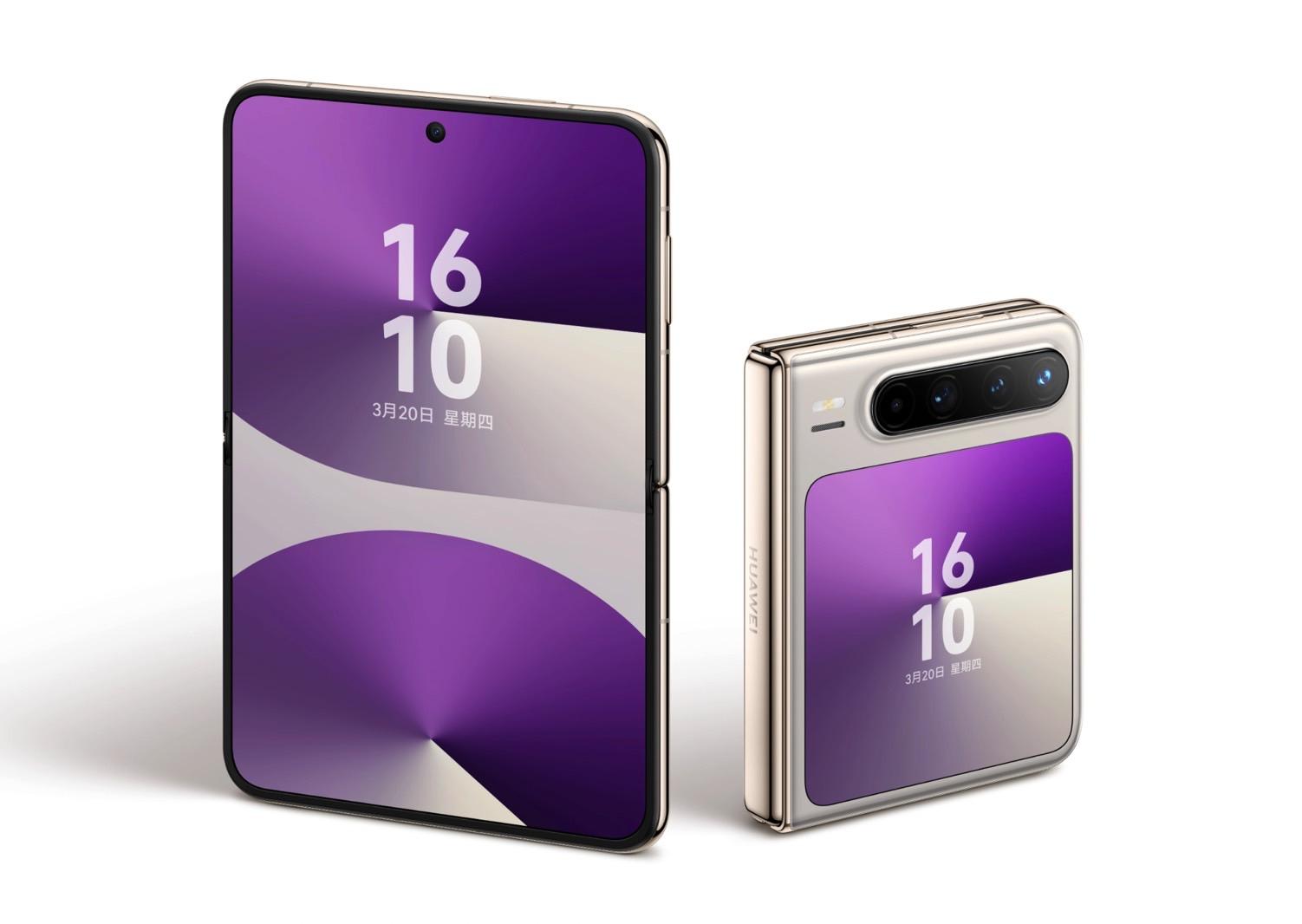
Fast-forward to mid-March, and we have a brand new foldable phone launch on our hands. It’s a phone you’ll probably not be able to buy, and you might not even want to get it if it were launched in the States. It’s the Huawei Pura X in the image above. But what’s amazing about this foldable is that it gives us a visual idea of what the foldable iPhone will look like.

The Pura X, launched in China on Thursday, is priced at 7,499 yuan ($1,037). It’s a flagship device running Huawei’s proprietary HarmonyOS 5.

Huawei Pura X: Cover screen and back panel.Huawei Pura X: Cover screen and back panel. Image source: Huawei

Huawei developed this operating system after Trump banned the Chinese company from working with US tech companies during his first term. This forced Huawei to abandon Google’s Android and Qualcomm’s Snapdragon chips, significantly impacting its ability to compete.

The difference between the early versions of Harmony and HarmonyOS 5 is that the latter is Huawei’s brand-new OS that has no trace of Android. That might be a huge dealbreaker for anyone looking to buy the Pura X, even if the foldable was available in the US and other Western markets.

What’s really exciting about the Pura X is the design, which I immediately associated with the foldable iPhone rumors.

Huawei Pura X: Foldable screen looks like a small tablet.Huawei Pura X: Foldable screen looks like a small tablet. Image source: Huawei

Folded, the Pura X features a 3.5-inch cover screen with a triple-camera sensor placed at the top. This screen design suggests we’re looking at a Galaxy Z Flip-style clamshell, but that’s not really so.

Unfold the Pura X, and you get a massive 6.3-inch screen with an unusual 16:10 aspect ratio. The phone has small, symmetrical bezels and a hole-punch camera at the top. You can hold it in portrait mode like a regular candybar (or Flip clamshell) phone.

But that aspect ratio turns the Pura X into a much better tablet than the Galaxy Z Fold 6. The tablet experience makes me think of the iPad mini 6 or 7.

The two iPad mini variants feature the same design. I’ve long fantasized that a foldable iPhone would unfold to look like an iPad mini. The Pura X, combined with the foldable iPhone screen leaks from a few weeks ago, further reinforces my thinking.

The Pura X tablet experience.The Pura X tablet experience. Image source: Huawei

That said, the Pura X is smaller than the iPhone Fold-type phone, considering those rumors. The Pura X is 91.7mm tall when folded. That height becomes the width of the handset when you unfold it.

My ChatGPT calculations told me the foldable iPhone will have a height of 120.4mm to accommodate the 5.49-inch cover and 7.75-inch foldable displays. Both those screens are larger than the Pura X handset.

I’ll also point out that the Pura X design potentially solves one of my big issues with the foldable iPhone. The main camera module’s cover display placement could help Apple make Face ID possible. Some rumors say that Apple will bring back Touch ID for the handset, as Face ID components might not fit in an ultra-thin foldable iPhone.

The Pura X doesn’t seem to have 3D facial recognition support. It does feature a fingerprint sensor on the side button.

Separately, the thickness is another quirk about Huawei’s strange foldable. The phone measures 7.15mm when unfolded or 15.1mm when folded. That’s much thicker than even Samsung’s foldables. The foldable iPhone should be much thinner than that, according to reports.

Source

Posted on

Samsung’s Galaxy S25 Slim specs leaked from an early benchmark test

Samsung will unveil the Galaxy S25 in less than two weeks at its first Unpacked press event of the year. Rumors say the keynote will deliver at least one surprise in the form of an ultra-thin Galaxy S25 Slim phone. The handset will be introduced at Unpacked, but it might not ship for several months. Development of the phone might be running behind compared to the regular Galaxy S25 variants.

Samsung reportedly decided to make the Galaxy S25 Slim after it became clear that Apple plans to launch an ultra-slim iPhone 17 Air handset this fall. Coming out with the Galaxy S25 Slim before Apple unveils the thinner iPhone 17 variant could be in Samsung’s favor, at least from a marketing perspective.

A new discovery seems to back up rumors that the Galaxy S25 Slim was added to the Galaxy S25 lineup later than usual. The first purported Geekbench 6 benchmark leaked for the handset, confirming some of its specs in the process.

Found by leaker Jukanlosreve, the Geekbench 6 test for the Galaxy S25 Slim is available at this link.

Tech. Entertainment. Science. Your inbox.

Sign up for the most interesting tech & entertainment news out there.

By signing up, I agree to the Terms of Use and have reviewed the Privacy Notice.

At the time of this writing, two such tests were available on Geekbench for the same phone. It’s a Samsung phone with model number SM-S937U. The Galaxy S25 Slim name doesn’t appear anywhere in the identifiers, of course. But we’ve seen that codename in previous Galaxy S25 Slim rumors.

Leaked Galaxy S25 Slim Geekbech 6 benchmark test.Leaked Galaxy S25 Slim Geekbech 6 benchmark test. Image source: Geekbench

Regarding performance, we’re looking at single-core scores of around 3,000 and multi-core scores of almost 7,000 points. While the single-core test nearly matches the Galaxy S25 Ultra’s early tests that leaked in early November, the multi-score performance lags by about 3,000 points.

This indicates we’re looking at an early test or that Samsung will have to throttle performance on the thinner phone to prevent overheating. While I’m speculating, ultra-thin handsets will come with compromises.

Despite the performance differences there’s good news here. The Galaxy S25 Slim will share some of the most important specs with the Galaxy S25 Ultra. The phone in the benchmark test above runs on the same Qualcomm chip as the one in the Galaxy S25 Ultra tests. They’re identical, down to the clock speeds. It means the Galaxy S25 Slim will pack the Snapdragon 8 Elite chip.

That’s great news for buyers looking for an ultra-thin flagship phone. I say that as an iPhone user looking forward to the iPhone 17 Air. I know the handset should be as powerful as the base iPhone 17 because that’s how Apple does things.

The benchmark test above indicates that Samsung will take a similar approach. The Galaxy S25 Slim will not feature a less powerful chip than the rest of the Galaxy S25 line. That is, Samsung won’t try to cut costs. It also implies the Galaxy S25 Slim won’t be more affordable, as the Elite processor is an expensive component.

The test also reveals another detail about the Galaxy S25 Slim’s specs. The phone will feature 12GB of RAM, while the Ultra will pack 16GB of RAM. However, I don’t expect memory to be a problem on a phone like the Galaxy S25 Slim.

Source

Posted on

A more affordable Galaxy Z Flip FE is set to launch this year

Samsung’s next-gen foldable phones are at least seven months away, but it looks like 2025 will be the year when the Korean giant introduces cheaper models instead of giving us another round of price hikes.

Rumors in November and December mentioned the affordable Galaxy Z Flip FE model that Samsung is supposedly developing for a summer 2025 launch. We now have more evidence that indicates the “Fan Edition” version of the Galaxy Z Flip 7 is real and likely launching this year.

According to SmartPrix, the Galaxy Z Flip FE appeared in the GSMA database already. The device has been added to the database after Christmas, listed as a “Galaxy Z Flip XE” device with model number SM-F761B.

The “XE” designator in the name is either a spelling mistake or an attempt to avoid detection. Another possibility is that Samsung is not sure which moniker to use.

Tech. Entertainment. Science. Your inbox.

Sign up for the most interesting tech & entertainment news out there.

By signing up, I agree to the Terms of Use and have reviewed the Privacy Notice.

Fan Edition (FE) is a name Samsung routinely uses for the cheaper Galaxy S models that launch in the second half of the year. Then there’s the Special Edition (SE) name that Samsung used in late 2024 for a limited version of a thin Galaxy Z Fold 6.

Considering the previous leaks that claimed Samsung is developing a cheaper Flip-type foldable, the Fan Edition name seems more likely. That’s why the Galaxy Z Flip FE designator makes more sense.

Also, the Galaxy Z Flip line sells much better than the Fold, as it’s more affordable. Also, the Fold 6 got slightly more expensive last year. Making a cheaper version of the foldable that gets more attention from buyers might be the better play here.

The GSMA listing doesn’t provide details about the Galaxy Z Flip FE. It’s unclear what compromises we should expect from a cheaper Flip variant launching this year. Samsung will also have a regular Galaxy Z Flip 7 in stores and a Fold 7 phone that will look much like the Galaxy Z Fold SE.

I expect the Galaxy Z Flip SE to use the Flip 6 design and some of its main specs. Samsung can also save money by replacing the Qualcomm flagship chip with an Exynos variant, but that’s all just a guess.

Last year’s Galaxy Z Flip 6 is easily Samsung’s best Flip phone to date, a better flagship than any of its predecessors. The phone starts at $1,099 before any deals, which is more expensive than candybar flagships. It’ll be interesting to see what Samsung prices the Flip FE variant.

The base 2024 Motorola Razr costs $699.99, which is a great price for a foldable handset. I’d expect Samsung to target this price point with the Galaxy Z Flip FE.

Source

Posted on

AMD in 2024: year in review

What sort of 2024 did AMD experience? This year was quiet in some respects for Team Red – with not much activity in the GPU space, save for one notable exception – but there was more happening on the CPU front, although the introduction of new Zen 5 processors proved controversial.

New laptop chips for Copilot+ PCs and a fresh X3D offering were definite highlights, so without any further preamble, let’s dig into what was good, bad, or indifferent for AMD in 2024.

AMD CPU with Ryzen 9000 Series label

(Image credit: AMD)

Vanilla Ryzen 9000 CPUs fizzled upon launch

This year we received new Ryzen processors, although the launch of these Zen 5 chips was pushed back a month from July to August – a delay which some regarded as ominous at the time. Those more pessimistic mutterings turned into something of an online outcry when the Ryzen 9000 range did eventually arrive, with the PC community seemingly quick to label the new processors a flop.

That’s a harsh conclusion to jump to, perhaps, although it’s undeniable that Ryzen 9000 did not meet the expectations of would-be CPU buyers, particularly for gaming performance, where uplifts were widely reported to be closer to 5% than the 10% AMD was touting prerelease (which is where the ‘Zen 5%’ joke comes from). The better news is that Ryzen 9000 swiftly received better performance thanks to fine-tuning work in Windows 11 24H2 – though crucially, Ryzen 7000 chips got close to the same (major) uplift.

Following rather shaky reviews of the mainstream Ryzen 9700X and 9600X offerings, sales appeared to flag out of the gate – partly due to Ryzen 7000 chips still being around with pretty deep discounts applied, making them comparatively more tempting.

So, the flak AMD caught from a gaming angle wasn’t good at all here, but Team Red did have a couple of things in its favor. Its desktop CPU rival, Intel, spent the whole of 2024 dealing with way worse issues than a lukewarm reception around gaming prowess – with Team Blue’s 13th and 14th-gen processors being plagued by nasty instability issues (that were eventually fixed). On top of that, Intel’s new Core Ultra 200S (Arrow Lake) desktop CPUs fared just as badly as Ryzen 9000 – actually, worse – out of the gate in terms of gaming performance.

That gave AMD some breathing room, and then Team Red shot back with a powerful volley to entice PC gamers in terms of a swift launch of its new 3D V-Cache processors.

{ window.reliablePageLoad.then(() => { var componentContainer = document.querySelector(“#slice-container-newsletterForm-articleInbodyContent-qPnV8YUS5mb3WiyePpf48N”); if (componentContainer) { var data = {“layout”:”inbodyContent”,”header”:”Get daily insight, inspiration and deals in your inbox”,”tagline”:”Sign up for breaking news, reviews, opinion, top tech deals, and more.”,”formFooterText”:”By submitting your information you agree to the Terms & Conditions and Privacy Policy and are aged 16 or over.”,”successMessage”:{“body”:”Thank you for signing up. You will receive a confirmation email shortly.”},”failureMessage”:”There was a problem. Please refresh the page and try again.”,”method”:”POST”,”inputs”:[{“type”:”hidden”,”name”:”NAME”},{“type”:”email”,”name”:”MAIL”,”placeholder”:”Your Email Address”,”required”:true},{“type”:”hidden”,”name”:”NEWSLETTER_CODE”,”value”:”XTR-D”},{“type”:”hidden”,”name”:”LANG”,”value”:”EN”},{“type”:”hidden”,”name”:”SOURCE”,”value”:”60″},{“type”:”hidden”,”name”:”COUNTRY”},{“type”:”checkbox”,”name”:”CONTACT_OTHER_BRANDS”,”label”:{“text”:”Contact me with news and offers from other Future brands”}},{“type”:”checkbox”,”name”:”CONTACT_PARTNERS”,”label”:{“text”:”Receive email from us on behalf of our trusted partners or sponsors”}},{“type”:”submit”,”value”:”Sign me up”,”required”:true}],”endpoint”:”https://newsletter-subscribe.futureplc.com/v2/submission/submit”,”analytics”:[{“analyticsType”:”widgetViewed”}],”ariaLabels”:{}}; var triggerHydrate = function() { window.sliceComponents.newsletterForm.hydrate(data, componentContainer); } if (window.lazyObserveElement) { window.lazyObserveElement(componentContainer, triggerHydrate); } else { triggerHydrate(); } } }).catch(err => console.error(‘%c FTE ‘,’background: #9306F9; color: #ffffff’,’Hydration Script has failed for newsletterForm-articleInbodyContent-qPnV8YUS5mb3WiyePpf48N Slice’, err)); }).catch(err => console.error(‘%c FTE ‘,’background: #9306F9; color: #ffffff’,’Externals script failed to load’, err)); ]]>

Sign up for breaking news, reviews, opinion, top tech deals, and more.

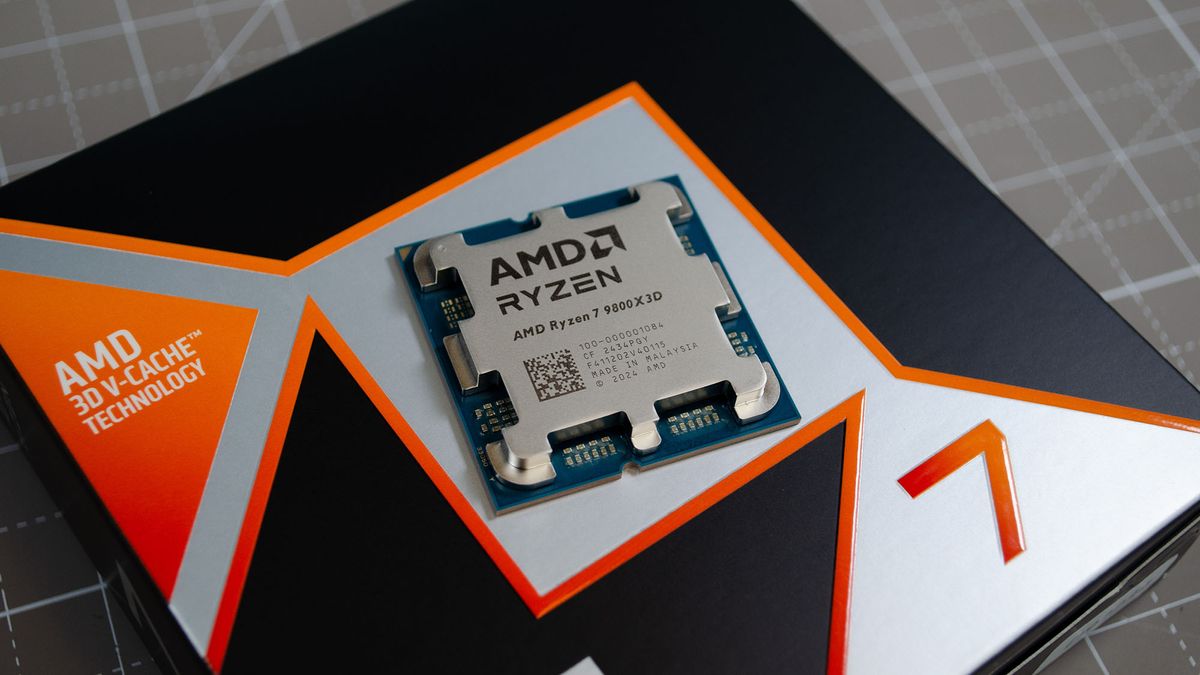
An AMD Ryzen 7 9800X3D in a masculine hand

(Image credit: Future / John Loeffler)

Ryzen 9800X3D to the rescue

Last year, we saw the introduction of 3D V-Cache for Zen 4 CPUs, and the Ryzen 7800X3D caught fire as the most popular gaming CPU out there. While normally AMD takes some time to push out X3D chips for any given generation, with Zen 5, these gaming-focused processors arrived very swiftly. Indeed, the Ryzen 9800X3D debuted in the first week of November, only a few months after Ryzen 9000 chips.

You could argue that this hasty appearance was pushed through to take away the bad taste from Ryzen 9000, and indeed the Ryzen 9800X3D did exactly that for PC gamers. As we found in our review, this CPU is seriously pepped up (with the ability to be overclocked for the first time, too), and an excellent gaming chip – we called it the best processor release of 2024, in fact.

The sticking point for the 9800X3D was the slightly hiked MSRP, along with the initial stock selling out very quickly, a situation compounded by scalping woes. Still, this clearly was the piece of silicon AMD needed to get out of the door to recover its CPU reputation, and really take the fight to Intel.

Also, i’s worth noting that we were treated to a welcome wallet-friendly last-gen offering from AMD, the Ryzen 7600X3D, as a budget gaming CPU (and a great fit for small form-factor builds) – but as a Micro Center exclusive in the US (again).

An ASRock Steel Series Radeon RX 7900 GRE on a desk

(Image credit: Future / John Loeffler)

GPU disappointment – with a big saving grace

AMD was a hive of activity with graphics cards last year, filling out the RDNA 3 series with various models of GPU, from the lower-end RX 7600, through the mid-range territory with the RX 7700 XT and 7800 XT. Before that in 2022, we only had high-end models with the RDNA 3 family.

To say this year was a bit of a contrast is an understatement. At the very start of 2024, we did get a new RX 7600 XT, the pepped-up take on the most wallet-friendly RDNA 3 GPU, but it was a modest upgrade, not all that compelling in the value stakes, and overall it didn’t stand up well compared to its Nvidia rival (the RTX 4060).

We were hoping for some new entrants at the true budget end of the GPU market in 2024, below the RX 7600, but the rumored RX 7400 and 7300 never showed. (Although bizarrely, we did get some milking of ancient low-end Radeon GPUs).

We were also hoping for RDNA 4 with even more eagerness, of course, but that didn’t happen either. Despite the rumor mill firmly believing these next-gen graphics cards could debut later in 2024, they didn’t – and the grapevine now has a Q1 2025 launch predicted. Overall, the no-show from RDNA 4 – which is rumored to top out at the mid-range, with an RX 8700 XT flagship in theory – was one of the biggest disappointments in the PC sphere for us in 2024.

What we did get, though, was a rocket-powered rabbit – a Golden Rabbit Edition, or GRE, version of the RX 7900, to be precise. Now, this was a GPU that was launched in China in the middle of 2023, but it was only released globally in February 2024. At that point, the RX 7900 GRE stormed our list of the best GPUs and stole the top position, arguably being the best entry-level option for 4K gaming.

So, it wasn’t a complete washout for Team Red after all, particularly when you consider that the RX 7800 XT also topped our best GPU list when it emerged last year. The GRE was the only thing that was GRE-at (sorry) about 2024 for AMD’s GPUs, though.

An AMD Ryzen AI 300 series chip against a stylized background

(Image credit: AMD)

Ryzen AI 300 bursts onto the scene to take on Qualcomm Snapdragon X

As you doubtless noticed, 2024 was the year that Copilot+ PCs launched, and the only chips powering these AI laptops were Qualcomm’s Snapdragon X SoCs to begin with.

AMD and Intel weren’t that far behind with CPUs that had a beefy enough NPU to qualify as the engine of a Copilot+ PC, though, and Team Red’s Ryzen AI 300 (x86) processors (also known as Strix Point) arrived in laptops starting from July 2024. However, the available models were very thin on the ground to begin with, and indeed the amount of choice with Strix Point notebooks remains limited even as this year draws to a close.

Ryzen AI 300 proved to be strong for AI, and also general performance and mobile gaming, too, easily matching Qualcomm’s effort – with the advantage of having none of the compatibility issues that the Arm-based Snapdragon X CPUs have as baggage.

That said, Intel also debuted Lunar Lake mobile (x86) processors for Copilot+ PCs in 2024, and these also proved to be very strong CPUs – and a match for Ryzen AI 300 in many respects. In short, two great x86 alternatives to Qualcomm Snapdragon X-powered Copilot+ PCs emerged in 2024, albeit we need more laptops packing this silicon.

An AMD Radeon RX 7900 GRE from PowerColor on a desk with its retail packaging

(Image credit: Future / John Loeffler)

Concluding thoughts

Other notable happenings for AMD in 2024 included the release of FSR 3.1 – which remains lagging behind Nvidia DLSS, although maybe AI will fix that – and an eye-opening achievement in outgunning Intel in the data center arena in terms of overall revenue.

While the launch of Ryzen 9000 CPUs caused some wobbles, we have to remember that these aren’t bad chips by any means – they just didn’t meet (gaming) expectations, and didn’t seem all that great value compared to previous-gen processors (at heavily cut prices) which are still very much on shelves (for the time being).

Ryzen 9000’s time will doubtless come, and at any rate, AMD recovered suitably with the Ryzen 9800X3D – and wasn’t exactly under pressure from Intel, either, as Team Blue had bigger worries than the criticisms Team Red faced.

GPU launches were thin on the ground from AMD, and rather disappointing – save for that RX 7900 GRE – and RDNA 4 failing to appear this year was a further source of some dismay.

Unfortunately, 2024 also saw AMD implement major layoffs, with the company making no bones about an increasing focus on the world of AI, where plentiful profits are to be made.

Is that increased leaning into AI anything to do with pushing back RDNA 4 graphics cards, perhaps? We don’t know that, and wouldn’t get carried away with any paranoia around AMD deprioritizing consumer GPUs yet – it’s probably more to do with market conditions and selling through current-gen RDNA 3 stock. Furthermore, you could apply that line of worried thinking to Nvidia equally, with next-gen Blackwell gaming GPUs also failing to turn up this year, and perhaps set to launch in the shadow of much bigger potential AI profits.

You might also like

Source

Posted on

Intel and AMD may have another desktop competitor

  • A new suggestion from a reliable leaker hints at Qualcomm’s new CPU heading to desktop PCs
  • The 2nd-gen Snapdragon X Elite processor codenamed ‘Project Glymur’ was tested with liquid cooling AIO
  • The chip likely be unveiled at CES 2025 in a few weeks

Both Intel and AMD have dominated the desktop PC scene when it comes to providing powerful processors for productivity and gaming – and now, Qualcomm could be joining the party, with 2nd-gen Snapdragon X Elite processors potentially making their way to desktop PCs.

As highlighted by Notebookcheck, reliable leaker Roland Quandt has hinted at Qualcomm’s new processor coming to desktop PCs as the brand is reportedly testing the SC8480XP (Project Glymur chip codename) with a 120 mm liquid cooling AIO. This assumption comes from the fact that AIOs as such being used for gaming desktop configurations, unlike the cooling mechanisms that would be required in lightweight laptops.

With CES 2025 now only weeks away, we could soon see what Qualcomm has to offer and whether Quandt’s prediction is accurate. The 2nd-gen Snapdragon X Elite processors may take advantage of Oryon V3 cores according to Quandt (based on Qualcomm CEO Cristiano Amon’s ‘next-gen’ CPU statements), so there could be a lot to get excited about here.

Qualcomm Snapdragon X Elite

(Image credit: Qualcomm)

Could 2025’s CES event be one of the best in years?

Considering AMD and Nvidia’s presence at CES 2025 and their inevitable reveals of the Radeon RX 8000 series and RTX 5000 series GPUs, Qualcomm’s inclusion could easily make this one of the more interesting CES events in years.

While a potential new Snapdragon X Elite processor for desktop PCs could be beneficial for gamers with tight budgets (especially as a second-gen version of the existing X Elite), it’s still a little too early to suggest this. On laptops such as the Lenovo Yoga 7x Slim, gaming is possible but certainly not comparable to gaming laptops or handheld gaming PCs, and Qualcomm itself has stated that the X Elite chips are not targeted at serious gamers.

Nonetheless, the Yoga 7x Slim and fellow X Elite laptops come without discrete GPUs – for a desktop gaming PC that has a discrete GPU, a new Snapdragon chip could be promising depending on the improvements made with the new processors; potentially adding to the list of surprises I hope to see at CES 2025. Mind you, I don’t want to have to buy a new motherboard…

You might also like…

{ window.reliablePageLoad.then(() => { var componentContainer = document.querySelector(“#slice-container-newsletterForm-articleInbodyContent-NP89AAthSg9prV59t2ChUN”); if (componentContainer) { var data = {“layout”:”inbodyContent”,”header”:”Get daily insight, inspiration and deals in your inbox”,”tagline”:”Sign up for breaking news, reviews, opinion, top tech deals, and more.”,”formFooterText”:”By submitting your information you agree to the Terms & Conditions and Privacy Policy and are aged 16 or over.”,”successMessage”:{“body”:”Thank you for signing up. You will receive a confirmation email shortly.”},”failureMessage”:”There was a problem. Please refresh the page and try again.”,”method”:”POST”,”inputs”:[{“type”:”hidden”,”name”:”NAME”},{“type”:”email”,”name”:”MAIL”,”placeholder”:”Your Email Address”,”required”:true},{“type”:”hidden”,”name”:”NEWSLETTER_CODE”,”value”:”XTR-D”},{“type”:”hidden”,”name”:”LANG”,”value”:”EN”},{“type”:”hidden”,”name”:”SOURCE”,”value”:”60″},{“type”:”hidden”,”name”:”COUNTRY”},{“type”:”checkbox”,”name”:”CONTACT_OTHER_BRANDS”,”label”:{“text”:”Contact me with news and offers from other Future brands”}},{“type”:”checkbox”,”name”:”CONTACT_PARTNERS”,”label”:{“text”:”Receive email from us on behalf of our trusted partners or sponsors”}},{“type”:”submit”,”value”:”Sign me up”,”required”:true}],”endpoint”:”https://newsletter-subscribe.futureplc.com/v2/submission/submit”,”analytics”:[{“analyticsType”:”widgetViewed”}],”ariaLabels”:{}}; var triggerHydrate = function() { window.sliceComponents.newsletterForm.hydrate(data, componentContainer); } if (window.lazyObserveElement) { window.lazyObserveElement(componentContainer, triggerHydrate); } else { triggerHydrate(); } } }).catch(err => console.error(‘%c FTE ‘,’background: #9306F9; color: #ffffff’,’Hydration Script has failed for newsletterForm-articleInbodyContent-NP89AAthSg9prV59t2ChUN Slice’, err)); }).catch(err => console.error(‘%c FTE ‘,’background: #9306F9; color: #ffffff’,’Externals script failed to load’, err)); ]]>

Sign up for breaking news, reviews, opinion, top tech deals, and more.

Source

Posted on

iPhone 17 Air may ditch these 5 Pro features to achieve its ultra-thin design

Following the report of a redesigned iPhone 17 Pro, The Information‘s Wayne Ma details Apple’s efforts to release the ultra-thin iPhone 17 Air next year. According to the journalist, Cupertino will remove several features to make this innovative iPhone that thin.

Ma reports that iPhone 17 Air prototypes are between 5 and 6 millimeters thick, which could possibly make it thinner than the iPhone 6, released a decade ago. While the iPhone 16 is 7.8mm thick, this could make the iPhone 17 Air as thin as the new M4 iPad Pro.

Unfortunately, not everything is good news. Apple will have to sacrifice several crucial features to achieve this ultra-thin design. For example, The Information says Apple engineers are “finding it hard to fit the battery and thermal materials into the device,” which means Cupertino will likely have to add a smaller battery to this iPhone.

Besides, a major compromise on the iPhone 17 Air might be a single earpiece speaker. According to Ma, “the iPhone will only have a single speaker in its earpiece because there’s no room for a second speaker at the bottom, which is standard in other models.”

Tech. Entertainment. Science. Your inbox.

Sign up for the most interesting tech & entertainment news out there.

By signing up, I agree to the Terms of Use and have reviewed the Privacy Notice.

The journalist also confirms another rumored change: the iPhone 17 Air will have a “large, centered camera bump.” That said, forget about one of the iPhone’s most widely-used camera features, the optical zoom.

While Apple’s in-house 5G modem is expected to be available with this iPhone, the chip doesn’t perform as well as Qualcomm’s. The report says it’s more efficient, but it won’t be as fast, and it will lack a feature some US users benefit a lot, the mmWave 5G technology, which Apple’s future processor won’t have.

Finally, Apple engineers couldn’t figure out how to add a physical SIM tray to the iPhone 17 Air. While iPhone users in the US are used to that, Apple will have issues, at least in China, which requires phones to be sold with a SIM card. Without this market, sales of this upcoming iPhone might not be as enticing as they could.

Wrap up

Considering all that, I wonder if these trade-offs are worth it for an all-new iPhone design. I still think Pro users will keep buying Pro phones, while regular iPhone users won’t be enticed to pay extra for this new design. So, who might be this new iPhone for?

Source

Posted on

I want Apple’s iPhone 17 Air, but I have one major concern

I’ve been a fan of the iPhone 17 Air rumor for months now, hoping that Apple will indeed release its thinnest iPhone in years, or perhaps ever. After using the iPhone 16 Plus for nearly two months, I’m convinced I need an iPhone with a large display, but I definitely want it to be a lot thinner.

I’ll probably buy the iPhone 17 Air as soon as it comes out next year, even though I’ll have to accept certain compromises. Considering what Apple did with the ultra-thin M4 iPad Pro, I knew the camera would be the phone’s main compromise. The battery size is another obvious area where Apple will have to make compromises.

But a new report gives us a few additional issues iPhone 17 Air buyers might have to deal with. Among them, there’s a change that could prove to be my biggest concern about buying an ultra-thin iPhone. It’s also something I didn’t see coming: The potential lack of a physical SIM card slot.

Apple stopped selling new iPhones with SIM cards in the US in 2022 when the iPhone 14 series was released. However, international versions of the phones came with the same physical SIM cards as their predecessors. The iPhone 16 models also feature SIM cards in markets like the European Union (EU), where I happen to shop for new iPhones.

Tech. Entertainment. Science. Your inbox.

Sign up for the most interesting tech & entertainment news out there.

By signing up, I agree to the Terms of Use and have reviewed the Privacy Notice.

I never switched to eSIM cards because I never had to. I hoped Apple would take longer to drop physical SIM cards in Europe. Then again, I also understand why removing SIM cards makes sense. eSIM cards might be safer and easier to use. Best of all, they free up space inside the iPhone, which can then be repurposed for the battery. This is exactly what Apple might want to do with an iPhone 17 Air that’s between 5mm and 6mm thick.

But the EU isn’t like the US. It’s a lot easier to manage multiple physical SIMs in Europe, where the mobile market is far more competitive. Roaming charges are almost gone, but some limitations exist. Prepaid plans are quite affordable and a great solution for avoiding potential roaming charges when traveling. Buying prepaid SIM cards is incredibly easy, as is swapping between them.

That’s my biggest issue about a SIM-less iPhone 17 Air in Europe. It’s not that it would be difficult to manage multiple eSIMs on the same phone. The iPhone 16 can store more than eight eSIMs, two of which can be active simultaneously. It’s that carriers might have to make changes to the way they sell prepaid cards in Europe.

It’s also about my convenience, which, yes, is based on habit. I routinely travel with at least one backup phone. That second phone might be something as old as the 2015 iPhone 6s, which doesn’t have eSIM card support. If I were to convert physical SIMs into eSIMs for the iPhone 17 Air, I’d be unable to switch cards between the main phone and the one on mobile hotspot duty.

This is a very specific problem that I have, one I will eventually have to deal with. Whether it’s happening with the iPhone 17 Air or future models, SIM cards are probably going to disappear from EU iPhones sooner rather than later. All 2024 cellular iPads sold in the region only support eSIMs. I just hoped it would be later and that I would have more time to adjust to the iPhone abdandoning physical SIMs.

I don’t care as much about the iPhone 17 Air rocking a single lens on the back, featuring worse battery life than the base model, lacking a speaker on the bottom, or packing Apple’s 5G modem instead of Qualcomm.

Then again, I’m certain I want a thin iPhone. If that means losing the ability to quickly and easily switch SIM cards, so be it.

Source

Posted on

Samsung is developing Gemini AI-powered XR glasses, and we might’ve already seen them

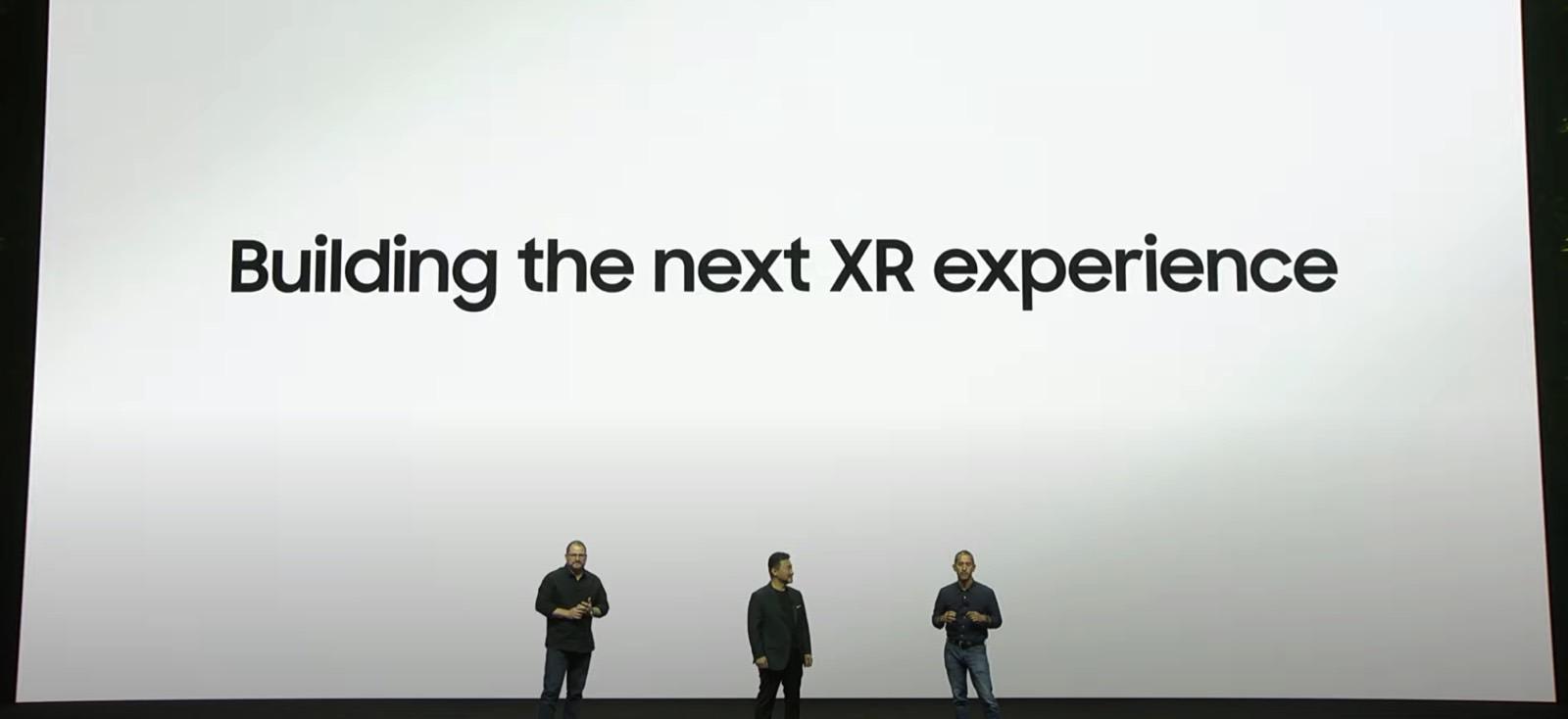
Remember when Samsung invited Google and Qualcomm to announce the “next XR experience“? I know I do because it happened in early February 2023, during the Galaxy S23 event. At the time, the web was filled with rumors about Apple’s mixed reality device, which would launch as the Vision Pro. Apple’s spatial computer dropped a few months after that teaser from Samsung, Google, and Qualcomm. It was immediately clear that the Vision Pro was so sophisticated that Samsung couldn’t possibly launch a rival anytime soon. 

Nearly two years later, that Samsung XR headset still doesn’t exist. But Samsung has been teasing it again recently, saying the device should be unveiled at some point next year.

While Samsung never detailed the specs and features of the XR device, a new leak may give us an idea of what Samsung is working on. Unsurprisingly, Samsung isn’t building a Vision Pro rival. Instead, it’s doing something that might be more useful to most people. The first Samsung XR device will apparently be a pair of glasses with Gemini AI at the core. And it turns out that we might have seen it already during Google’s Project Astra demo at I/O 2024.

Samsung had this to say about the unnamed XR headset a few weeks ago during its most recent quarterly earnings report:

Tech. Entertainment. Science. Your inbox.

Sign up for the most interesting tech & entertainment news out there.

By signing up, I agree to the Terms of Use and have reviewed the Privacy Notice.

We plan to contribute to the expansion of the Samsung Health ecosystem through the Galaxy Ring launched this year and to strengthen the connectivity experience between our products, such as the XR (eXtended Reality) device scheduled to be launched in the future.

I wouldn’t be surprised if Samsung brought the XR headset to the Galaxy S25 Unpacked launch event that’s supposed to happen in mid-January. Samsung could then keep teasing the XR glasses before giving them a summer 2025 launch. That’s what Samsung did with the Galaxy Ring last year.

A report from the Korean site Maeil Business Newspaper said a few days ago that Samsung will release smart glasses with built-in AI in the third quarter of 2025. Google and Qualcomm are named as Samsung’s partners. That means this is the “next XR experience” that Samsung teased nearly two years ago.

Meta Rayban SunglassesRay-Ban Meta smart glasses. Image source: Jonathan S. Geller

Samsung will manufacture some 500,000 units, according to a report from Chinese research company Wellsen XR.

In terms of specs, the Samsung XR headset will rely on Qualcomm’s AR1 chip as the main CPU and an auxiliary NXP chip. The headset will feature a 12-megapixel camera sporting a Sony IMX681 CMOS image sensor. The wearable will feature a 155 mAh battery and weigh 50 grams.

Gemini will be preinstalled, which is hardly a surprise. If Google is involved, that’s what Google can bring to the table. We’ve already seen Meta make great use of smart glasses for Meta AI features. Apple is also looking into creating smart glasses of its own.

The Samsung product will also support mobile payments via a QR code scanning feature. It’ll also recognize hand gestures.

As 9to5Google points out, the Samsung XR glasses feature an almost identical battery to the Ray-Ban Meta glasses, and they are almost similar in weight. This suggests that the Samsung XR device can’t possibly incorporate a screen. The reports from Asia make no mention of one.

All this suggests Samsung’s “next XR experience” device is more of a Ray-Ban Meta clone than a Vision Pro rival. That’s enough to give you an idea of what the glasses would look like. But I’ll also remind you of Google’s impressive Project Astra demo from I/O 2024.

OpenAI hosted an unexpected ChatGPT event in early May to introduce GPT-4o and Advanced Voice Mode. OpenAI’s demos showed the chatbot’s ability to handle multimodal inputs, including a new conversational voice mode that sounded like a real conversation between people.

Google used the smart glasses on the right to demo Project Astra (Gemini Live) at I/O 2024.Google used the smart glasses on the right to demo Project Astra (Gemini Live) at I/O 2024. Image source: Google



OpenAI stole Google’s thunder by a few days. Google’s Project Astra showed the same AI abilities for Gemini that OpenAI had just demoed for ChatGPT. Google used two devices to demo Project Astra: an unnamed Pixel device and an unnamed XR headset. The person talking to Gemini switched between them halfway through the demo.

The glasses are visible above, by the red apple. The clip at the end of this post will give you an even better look.

There’s no way to prove those are Samsung XR smart glasses. But I’d speculate that’s what it is. We’re looking at a prototype unit with Gemini preloaded.

Part of Project Astra became a reality rather quickly. That’s the Gemini Live conversational AI experience available on Pixel phones and other places. That’s all the more reason to indicate the smart glasses by the red apple are happening. Samsung is the likely partner in this endeavor.

Source