Sheridan Ash, founder and co-CEO of Tech She Can, has become the 13th person to be named Computer Weekly’s Most Influential Woman in UK Tech.
Launched in 2012, the Computer Weekly list of the 50 Most Influential Women in UK Tech started as a list of 25, expanding to 50 in 2015, and now seeing hundreds of nominations each year.
The list was originally created to showcase the amazing women in the technology industry, shining a light on the sector’s role models who may inspire the next generation of women in tech.
As well as the 2024 longlist of more than 700 nominated women, and our list of Rising Stars, there are also new entrants to our Hall of Fame, launched to acknowledge those who have made a lifetime contribution to the UK’s technology sector.
This year’s winner, Sheridan Ash, launched Tech She Can to teach girls and young women about technology careers and subjects to inspire them to choose this path in the future.
Until 2023, Ash led technology innovation at PwC UK, and is currently co-CEO and founder of the charity Tech She Can. She was a board member of the Institute of Coding for four years and, in 2020, received an MBE for services to young girls and women through technology.
Tech She Can is an award-winning charity with more than 240 member organisations, which together work with industry, government and schools to improve the ratio of women in technology roles. It provides initiatives and pathways into tech careers across all the different stages of girls’ and women’s lives.
At PwC, Ash led change in the technology workforce, pioneering initiatives that saw the percentage of women in tech more than double to reach 32%.
Timperley is a freelance consultant and co-founder of Tech North Advocates, a private sector-led collection of tech experts who champion the technology sector in the north of England.
In 2021, she co-founded advisory firm Growth Strategy Innovation, which helps to grow startup and scaleup organisations. She is now innovation director for Oxford Innovation, which helps organisations develop ecosystems for entrepreneurs and innovators, in turn boosting local areas.
Timperley was named a Computer Weekly Women in Tech Rising Star in 2017 when, until 2021, she was a board member of FutureEverything. She previously co-founded Enterprise Lab.
Turner founded Angel Academe, a pro-women and pro-diversity angel investment group focused on technology, and is currently CEO of the group.
Until 2023, Turner was also an advisory board member of tech recruiter Spinks, and in 2007 co-founded consultancy Turner Hopkins, which helps businesses create digital strategies.
Previously, Turner was an external board member and chair of the investment committee for venture capital fund the Low Carbon Innovation Fund and a board member of the UK Business Angels Association, the trade association for early-stage investment.
Hunter founded Coding Black Females in 2017 to help black female software developers meet each other and network. Alongside her work at Coding Black Females, Hunter is a software developer.
She is an advisory board industry representative in the University of Essex Online’s computing department, technical director at SAM Software Solutions, and technical director at full-stack and front-end training organisation Black CodHer Bootcamp.
Previously, Hunter was lead software engineer at Made Tech, and held roles such as senior software developer, lead Java developer, app developer and technical consultant at various firms. She was named a Computer Weekly Women in UK Tech Rising Star in 2020.
Before her time as an MP, Niblett had a long career in technology, having roles such as industry sales leader at DXC Technology and head of alliances, channel and ecosystem in EMEA at 1E.
Now, alongside her role as an MP, she’s founder of the Labour: Women in Tech group, which campaigns to reach equal gender opportunities in the technology industry. She’s also the co-chair of the All-Party Parliamentary Group on FinTech and the Parliamentary Internet, Communications and Technology Forum (PICTFOR), as well as the chair for the Interparliamentary Forum on Emerging Technologies and a member of the Women and Equalities Select Committee.
An entrepreneur and co-founder, Brailsford joined Code First Girls as CEO in 2019, where she works to encourage more women into the tech sector by providing software development skills and education.
Prior to her work at Code First Girls, she co-founded and was CEO of performance management firm Frisbee, which was part of venture capital fund Founders Factory. Until summer 2024, she was was a board member for the Institute of Coding, where she focused specifically on diversity and inclusion. She is also a self-employed commercial and strategy consultant.
As part of her role as partner and head of digital for Europe at Oliver Wyman, O’Neill leads digital transformation and new proposition launches at companies all over the world.
Alongside this, she is also a strategic partner at FutureDotNow, a board trustee for Girlguiding and special adviser to the founder at The Youth Group.
Sillem worked for the Royal Academy of Engineering for 12 years before being appointed its CEO in 2018. Previous roles at the academy include deputy CEO and director of strategy, director of programmes and fellowship, and head of international activities.
As well as her work for the academy, Sillem is a trustee of EngineeringUK and the Foundation for Science and Technology, and CEO of the Queen Elizabeth Prize for Engineering.
Lakhani founded Century Tech as a teaching and learning platform focused on subjects such as artificial intelligence (AI), cognitive neuroscience, big data analytics and blockchain, where she is also CEO.
A frequent public speaker, she has previously been a member of the UK’s AI Council, a board member for the Foundation for Education Development, a board member for Unboxed 2022, and a non-executive director for the Department for Digital, Culture, Media and Sport (DCMS).
She is a digital patron for Cottesmore School, and has appeared on the BBC’s AI Decoded news segment. She was awarded an OBE in 2014.
Mary McKenna is a huge supporter of entrepreneurship and startups, holding several roles as an adviser and investor. Her social enterprise, AwakenHub, where she is co-founder, is focused on building a community of female founders in Ireland.
As well as being an expert adviser for the European Commission, she is an entrepreneurship expert with the Entrepreneurship Centre at the University of Oxford’s Said Business School, and a trustee for CAST, among many other board memberships and non-executive directorships.
Thorne is co-CEO of Tech She Can, a charity aimed at increasing the number of women in the technology sector, as well as a venture partner at Deep Science Ventures and a diversity and inclusion advisory board member for the Institute of Coding.
She has a background in the education sector, previously holding roles as director of innovation strategy for the University of Surrey and executive officer to the vice-president (innovation) at Imperial College London.
Williams is CEO of inclusion campaign FutureDotNow, which aims to ensure people are not left behind by the growing skills gap caused by digital adoption. She is a member of the UK government’s Digital Skills Council, and chair of the Good Things Foundation.
Prior to her current work, Williams spent more than 20 years at BT in a number of different roles, including programme director for sustainable business, director of tech literacy and education programmes, and director of digital society. Until 2024, she was a member of the board of trustees for Transport for London.
With a background in law surrounding telecoms, the internet and media, Wright now uses her expertise as director of not-for-profit The Institute of AI, as well as partner at Harbottle & Lewis, heading up the tech, data and digital group.
She has worked in the tech sector for over 20 years. Her team at Harbottle & Lewis is comprised of 66% female and 66% ethnic minority members.
During 2023, she worked with the OECD, WEF and the ITU to build a reputation in relation to the regulation of AI. She is also working with the Ditchley Foundation, considering whether the collaborative approach in relation to telecoms can work for AI regulation.
In her 30 years at KPMG, Mehta has had many responsibilities, including building the firm’s focus on trade and investment, and helping scaleup clients to access financial support.
She is now chair of the organisation, and in 2022 was awarded an MBE for services to UK trade and investment and supporting female entrepreneurs.
An expert in diversity, inclusion and community building, Farooq co-founded Muslamic Makers in 2016 as a networking group for Muslims in tech, design and development.
As well as a freelance diversity and inclusion consultant, Farooq is a scout for Ada Ventures with special interest in edtech, healthtech and fintech, and until March 2024 was a community manager for Big Society Capital.
She has an extensive background in digital and AI in both the private and public sectors.
Taylor co-founded TechReturners, where she is currently CEO, to give skilled individuals who have had a career break the opportunity to connect with firms and help them back into mid-level to senior-level tech roles.
She is also co-founder of The Confidence Community, which aims to provide resources, training information and events to give people more career confidence. Taylor is co-founder of community WIT North and co-founder of ReframeWIT.
She recently founded community platform Voices in Tech to help connect speakers with event opportunities.
Dawes has headed up Ofcom since 2020 following her previous role as permanent secretary at the Ministry of Housing, Communities and Local Government, as well as many other roles across the Civil Service.
She has previously been a trustee at Patchwork Foundation, which aims to encourage under-represented young people to participate in democracy, and a non-executive director of consumer group Which?.
Award-winning entrepreneur Avril Chester is currently the CTO of the Royal Pharmaceutical Society, her most recent in a series of roles heading up technology in organisations. In 2018, she founded technology charity platform Cancer Central to help support people with cancer.
Martin has a history of working as a test consultant at firms such as Barclays, Sony, the UK Home Office, Shazam and Sky, and is currently a startup adviser and founder of her own coaching and consultancy firm.
Prior to this, she was head of quality at Adarga and is currently chair for the BCS Special Interest Group in Software Testing, and until January 2023 was the vice-chair of the BCS LGBTQIA+ tech specialist group.
Amanda Brock’s role at OpenUK sees her leading the sustainable and ethical development of open technologies in the UK, including technology such as open source software, hardware and data.
She also sits on the boards of both the Cabinet Office Open Standards Board and US cyber security firm Mimoto, is an advisory board member of several firms, as well as acting as a judge for the CIO 100 Awards.
Moore has been at Apps for Good since 2019, originally as director of education, products and events, then as chief operating officer (COO), before becoming CEO in 2021.
Her career background has been heavily weighted towards education, having been international education programme coordinator for London 2012, and volunteering as governor at the Harris Academy Ockendon and Sixth Form.
Tanaka is currently part of the programme team for All4Health&Care, a community launched during the pandemic to connect digital healthcare providers with the public sector. She is also the head of the CMO Office for NHS Black Country ICB, and is on the community support committee for BCS.
Previously, she has been a fellow, independent audit for AI systems for ForHumanity, and BCS Women membership secretary.
Calista has a history in both technology and the public sector.
Alongside her role at Labour Digital, she is head of policy and public affairs at UK scaleup Vorboss, and she co-founded network Women in Tech Policy.
She volunteers as an adviser for digital citizenship charity Glitch, and is a policy board member for OpenUK.
With experience in cloud at companies such as Salesforce and IBM, Kelisky started her role at Google in 2022 well-equipped with the skills needed to run its cloud division.
Alongside this, Kelisky is on the board of directors for Calnex Solutions, and is a member of the board of directors for the Women in Telecoms and Technology networking group.
Lila Ibrahim became Google DeepMind’s first COO in 2018, looking after teams in disciplines such as engineering, virtual environments, programme management and operations.
Prior to this role, she was COO of online skills platform Coursera, and has also acted at general manager for emerging markets platforms in China at Intel.
Philpot has a background in both sales, and learning and development, which she uses in her role as the vice-president of global sales enablement at Getty Images. She has held various roles both in and outside of sales at many notable firms, such as Shell, Mars and GSK.
As well as being a board member for the TLA Black Women in Tech group, she is a member and speaker for the Sales Enablement Directive.
Hodson has an extensive background in the technology sector, and has had roles such as managing consultant at EY and general manager at Siemens Business Services responsible for public sector, healthcare, financial services and manufacturing.
More recently, she was vice-president for global sales, marketing and operations – field transformation at Microsoft, before becoming chief executive of IBM in UK and Ireland at the beginning of 2023.
She’s also a board member and deputy president of TechUK, and holds several non-executive directorships.
As managing director of Jomas Associates (Engineering & Environmental), Savage specialises in geotechnical and environmental engineering.
She is also passionate about topics such as women in engineering and social mobility, and is on the UK government’s SME Business Council.
With a long history of CEO positions, Kirkby has experience in running companies with a background in telecoms, and in February this year took over as CEO of BT Group. Her past CEO roles have included TDC group, Tele2 and Telia, and she is also a non-executive director of Brookfield asset management.
Barclay has been with Microsoft for more than 10 years, holding several roles including director of SMB, general manager of small and mid-market solutions and partners, COO, and CEO in the UK.
In November 2024, she became president of enterprise and industry for Microsoft in the UK. She is chair of the industrial strategy advisory council for the Department for Business and Trade, volunteers as a board member for the British Heart Foundation and, until recently, was a non-executive director at CBI.
Oniwinde Agoro founded BYP Network in 2016 to help black professionals network and have easier access to jobs, after a trip abroad confirmed the challenges young black people face in getting jobs both in and outside the UK.
Until 2024, she was board trustee for volunteer organisation Getting On Board, and has received several awards and accolades, including Forbes 30 Under 30 and Financial Times Top 100 BAME Leaders in Technology.
Wallace heads up diversity and inclusion, partnerships and people change at Sky, and one of her focuses in this role is designing and delivering the people strategy for technology within the firm.
Outside of this, Wallace was a member of the advisory board for recently disbanded Tech Talent Charter, and volunteers as a cub and scout assistant.
Scullion is a serial founder, having founded dressCode, a not-for-profit that encourages young women in Scotland to consider a career in computer science, and co-founded the Ada Scotland Festival, which aims to use collaboration to close the gender gap in computer science education in Scotland.
These endeavours stem from her being a computer science teacher passionate about encouraging more children to take the subject. Alongside this work, she is a volunteer for the Scottish Tech Army, a not-for-profit aimed at using tech for good.
Earlier this year, Tulip took on the role of chief growth officer at software engineering consultancy Conquer Technology. In 2018, she co-founded community-led initiative Women In Leeds Digital, which encourages and helps minority groups to consider a career in technology.
Tulip is also chair of the regional productivity forum in Yorkshire, Humberside and the North East for the Productivity Institute, ambassador for Leeds as a digital city at Leeds City Council, and managing director at &Then Consulting.
Moore co-founded data analytics and AI firm Panintelligence in 2010 with the aim of helping firms properly organise their data to more easily adopt AI. She became CEO in 2018.
Alongside this, Moore also founded low-code tech community No Code Lab and gender equality community Lean In Leeds. As well as a position as chair for Lifted Ventures, Moore is an Ada Angel for inclusive venture firm Ada Ventures.
As global director of identity at Sky, Moore is responsible for leading the firm’s identity management projects. Prior to this, she held several roles as a project manager, and was previously the head of infotainment group technology for Vodafone.
As well as being a member of the board for Tech Talent Charter, she is the co-founder of female tech leaders community Lift as we Climb.
Maria Axente is the head of AI public policy and ethics at PwC in the UK, where she combines her skills in analytics and ethical AI policy development to ensure AI is developed with humans in mind.
Previously, she was the artificial intelligence and AI-for-good lead at the firm, responsible for advising clients on responsible use of AI, and ensuring ethical development of PwC AI operations, products and services.
She’s a vice-chair for the data, analytics and AI leadership committee at TechUK, and in the past she has been an advisory board member for the APPG for AI, and adviser for the PHI for Augmented Intelligence.
As CEO of Nash Squared, White heads up the global firm which provides IT recruitment, technology solutions and leadership services out of 36 offices across the world.
White has a long background in the tech sector, having previously held roles as CIO and director of IT, as well as completing a degree in computer science.
Bentinck was named a Computer Weekly Rising Star in 2014, and has co-founded several organisations, including Entrepreneur First, a firm that supports European technology startups, and not-for-profit coding training programme Code First Girls.
She is on the Computer Science Department Industrial Liaison Board for Imperial College London, is a board trustee for Generation and is the author of startup business book How to be a founder.
Hirt joined Innovate Finance in 2015 as the industry body’s head of community, before eventually becoming its CEO six years later. She now heads up the organisation, aiming to drive innovation and transformation in the fintech sector to make it more inclusive.
She has worked around the world in a variety of roles, including acting head of corporate relations for Chatham House in the UK, head of membership for the Brazilian-American Chamber of Commerce in New York, and head new hire trainer for an English language training programme in Japan.
Davis is the co-founder of diversity career platform Diversifying, and founder and CEO of recruitment organisation BAME Recruitment and Consulting.
She is chair of the board of directors for Pop Up Projects and a board trustee for charity Over the Wall, both aimed at changing young people’s lives for the better.
Davis has previously held roles in talent acquisition in the STEM sector, at telecoms firm BT, and as part of a short-term project at an aerospace, aviation, F1 and motorsport organisation.
The first female to head up GCHQ, Keast-Butler moved into the director role last year after serving as deputy director general of MI5. With a long career in security and defence, her previous roles have included overseeing the upkeep of functions that support MI5’s operational activities and the launch of the UK’s National Cyber Security Programme.
As well as her work as senior EUC engineer, infrastructure and cloud engineering at the London Stock Exchange Group, Opong is a freelancer and STEM adviser and a board trustee for The Blair Project Foundation.
Until recently, she was part of the City of London Corporation volunteer advisory group for equality, diversity and inclusion, and was previously an advisory board member for Neurodiversity in Business, and a mentor at the TechUp mentor programme for Durham University.
Opong was a contributor for Voices in the shadows, the book of black female role models created by the 2022 Computer Weekly Most Influential Woman in UK Tech, Flavilla Fongang.
Munby has a long history of working in government, and became permanent secretary leading the Department for Science, Innovation and Technology in February 2023.
She has also been partner, leader of strategy and corporate finance practice in UK and Ireland at McKinsey & Company, where she led the firm’s work on productivity across the UK economy.
Crosswell is managing director of consulting firm Exadin, as well as chair for the Centre for Finance, Innovation and Technology. She holds several other non-executive directorships in firms such as Freemarket and the Centre for Policy Studies. In 2021, she received an OBE for services to the financial services sector.
Graham has been the CEO of not-for-profit the ScaleUp Institute since 2015, and has an OBE for services to UK business and economy.
As well as being a visiting professor of entrepreneurship at Strathclyde University, Graham holds various non-executive and advisory roles.
As CEO of Salesforce in the UK and Ireland, Bahrololoumi is responsible for the workforce in these regions across all industries and functions, and is particularly focused on ensuring its customers are ready for digital transformation.
She sits on several boards, including for Seeing Is Believing Coventry Place, Movement to Work and Cancer Research UK Corporate Partnerships, and is an independent non-executive director on the TSB board.
In 2023, she was awarded a CBE for services to the information technology sector.
Naming the technology sector her “familiar territory”, Gardner has an extensive background in the technology sector, having held roles such as first line support at Fujitsu, senior supply chain administrator at Technicolor and project manager at the BBC as a member of the BBC’s Design and Technology Business Management Unit HQ Team.
Now, she’s a business operations analyst as part of the technology arm of News UK, and is a board trustee of food and hygiene bank Necessities UK.
Cardell has been at the Competition and Markets Authority since 2013, first as general counsel, then as interim CEO, and now as CEO.
Prior to her time at the Competition and Markets Authority, she was a legal partner for the markets division of energy markets authority Ofgem, and in her early career spent 11 years at law firm Slaughter and May, working her way from trainee solicitor to partner.
Sinel founded Teens in AI and Acorn Aspirations to help young people who want to solve real-world problems using technology such as AI, virtual, augmented and mixed reality.
She has won awards for her work, including CogX 2017 Award in Using AI for Social Good Projects, and is currently an education taskforce committee member for the All Parliamentary Group on Artificial Intelligence, and a business mentor at Microsoft for Startups.
Before working on Acorn Associates and Teens in AI, Sinel was a consultant for several firms, including the British Council, NGOs, Chittagong Hill Tracts and the Ethiopian Cultural Heritage Project.
Source





 Using the Camera Control button to take a photo on the iPhone 16 and 16 Plus. Image source: Apple Inc.

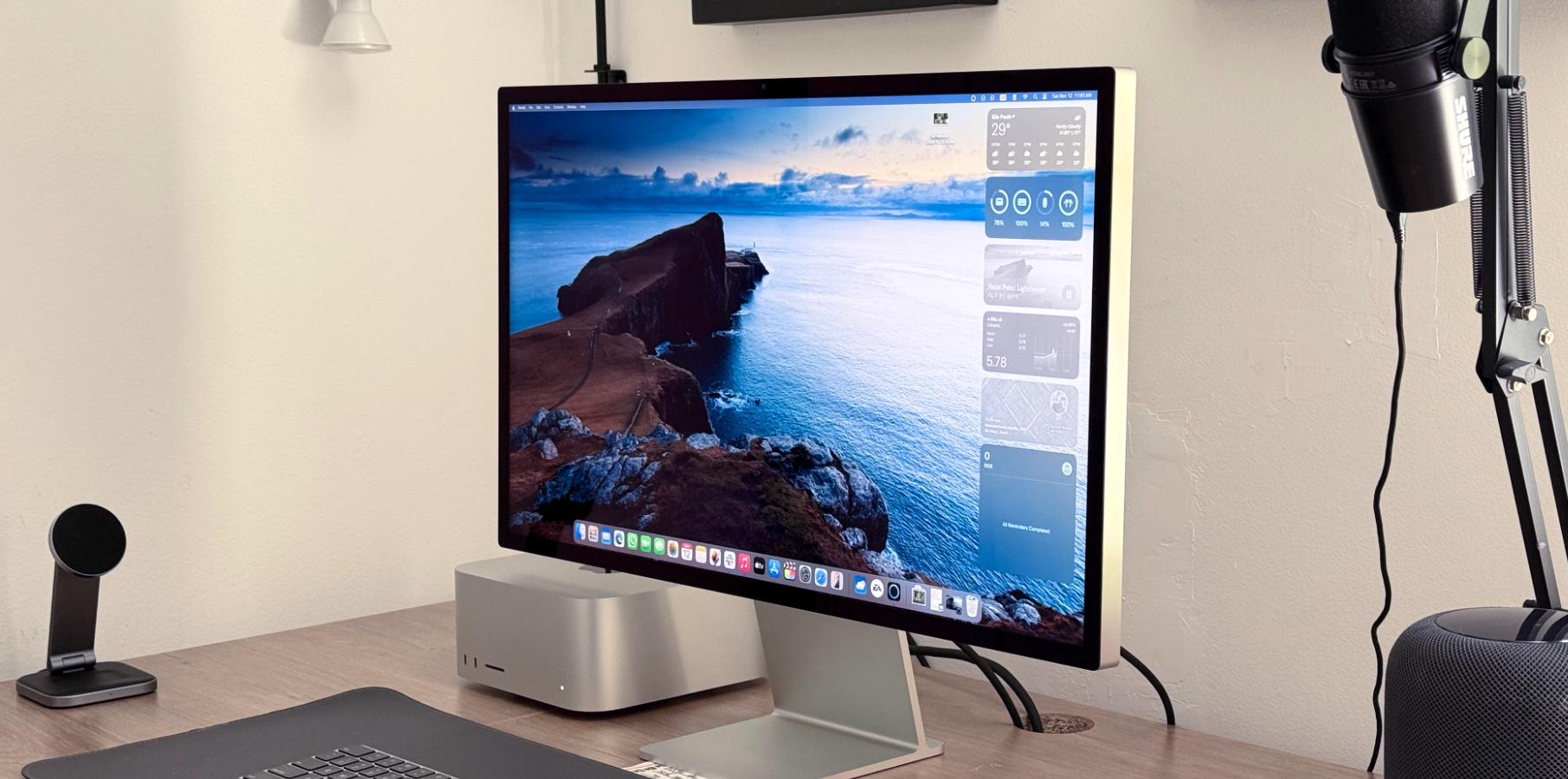
 Portal for Mac now offers widget support. Image source: José Adorno for BGR
 Image source: José Adorno for BGR