Posted on

Apple Watch Series 10 just dropped to $299 and you need one in your life

As a longtime user of most of Apple’s products, I have to say that I’ve been less impressed with the company’s recent updates. Yes, each new iteration of an iPhone or MacBook obviously refines and improves upon the last. But lately, it seems like Apple is focused mainly on trying to catch up in the AI wars, and other things are falling through the cracks.

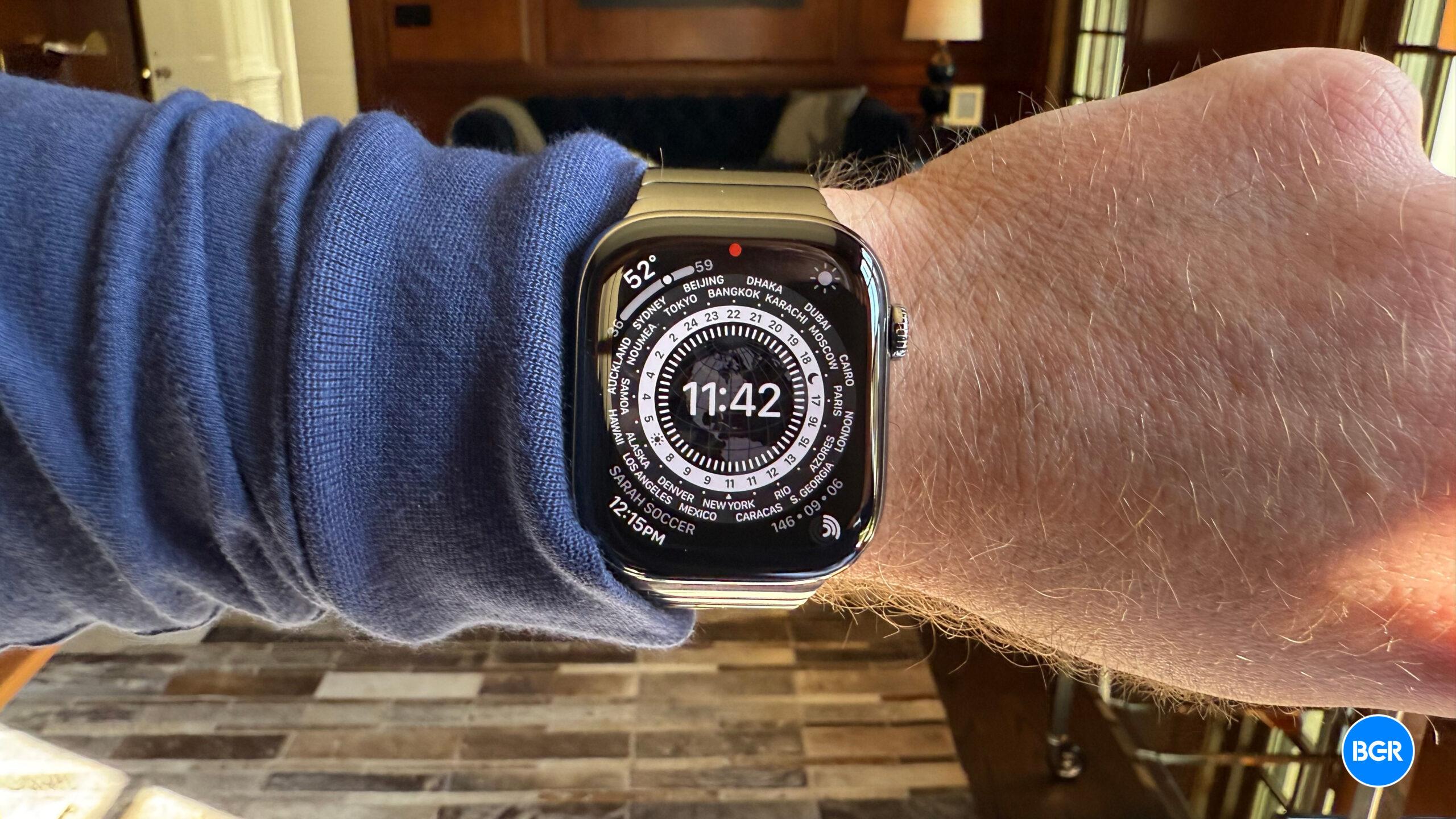
Despite all that, there was one update released last year that I was pretty impressed with — the Apple Watch Series 10. It’s not a massive update with tons of new features, and it’s still missing the pulse oximetry feature that Apple was forced to remove in the US. However, it features a thinner design that’s so much sleeker on the wrist, plus larger displays with narrower bezels around them. It’s absolutely gorgeous, and it’s currently on sale starting at just $299. If ever there was a time to upgrade to a Series 10 model, it’s right now while it’s on sale at all-time low prices.

Amazon Logo See Pricing Amazon Logo See Pricing Amazon Logo See Pricing Amazon Logo See Pricing

The Apple Watch Series 10 is the model that I personally use. To be frank, I have tested dozens of other smartwatch models, and I wouldn’t consider using any of them over the Series 10. With or without a blood oxygen sensor like the older models have, it’s easily the best smartwatch for most Apple users.

Tech. Entertainment. Science. Your inbox.

Sign up for the most interesting tech & entertainment news out there.

By signing up, I agree to the Terms of Use and have reviewed the Privacy Notice.

The only other model that piques my interest is the Apple Watch Ultra 2, which is a fantastic upgrade from Apple’s regular smartwatch models. But it’s also massive, and it’s way too big for my wrist. If you’re interested in the Apple Watch Ultra 2, you should know that it’s currently on sale with a $67 discount if you want the black titanium model. That’s not the best deal I’ve seen, but it’s still a pretty solid bargain.

As for the Series 10 model, it appeals to a much wider range of users. It also comes in two sizes that look great on just about any wrist size. You can read BGR’s in-depth Apple Watch Series 10 review to learn all about what makes this model so impressive.

One of my favorite features is the enhanced sleep tracking that’s bolstered by Apple’s newer temperature sensor. I have issues falling asleep and staying asleep, so it’s great to get some insights into which sleep aids work best when I try new ones. The good news is that Apple’s sleep tracking still works great for me, even without pulse oximetry.

On top of that, the new design with a larger screen is so sleek. I love how thin the Series 10 is on my wrist. Also, believe it or not, the bigger 46mm model actually has a larger display than the Ultra 2, even though the Ultra 2’s overall footprint is bigger. That’s how narrow the bezels are on Apple’s latest model!

Amazon Logo See Pricing Amazon Logo See Pricing

There are plenty of other great features on the Apple Watch Series 10, of course. It’s not Apple’s biggest update ever, but it definitely refines much of what made the Series 8 and Series 9 models so impressive.

Just like I stated earlier, prices start at just $299 right now, and most of Apple’s different colorways are on sale. Also, the 46mm GPS version is on sale starting at $329 instead of $429. Those are both all-time low prices.

If you want cellular connectivity in addition to GPS, prices start at $399 instead of $499 for the 41mm Cellular + GPS Apple Watch Series 10. Again, that’s the lowest price ever for this SKU.

Amazon Logo See Pricing Amazon Logo See Pricing

Be sure to visit our extensive guide for all the best Apple Watch deals on other models, including previous-generation Apple Watches that are on sale with deep discounts.

Source

Posted on

Apple’s M3 Ultra jaw-dropping performance revealed in early benchmark test

Apple’s most powerful chip ever is the M3 Ultra, which is currently exclusive to the 2025 Mac Studio. With up to an 80-core GPU, twice what’s available on the M4 Max, this chipset is a beast for graphics performance. However, how much better is it really than the M4 Max and the previous M2 Ultra?

In a Geekbench 6 result that surfaced on the web and that was spotted by MacRumors, the top-end M3 Ultra with an 80-core GPU had a Metal score of 259,668, up from 222,582 with the M2 Ultra processor with a 76-core GPU. If you do the maths, it gives up to 16% faster graphic performance than the previous iteration.

While the result may vary a little, the 16-inch MacBook Pro with M4 Max and a 40-core GPU has a Metal score of 187,460, which means the graphic performance between the M4 Max Mac Studio and M3 Ultra Mac Studio could be around 38%.

A CPU performance test revealed that the M3 Ultra is up to 10% faster than the M4 chip, so users upgrading to this more expensive Mac should know that the M3 Ultra’s benefits lie in the GPU performance.

Tech. Entertainment. Science. Your inbox.

Sign up for the most interesting tech & entertainment news out there.

By signing up, I agree to the Terms of Use and have reviewed the Privacy Notice.

Apple says this chip has been built using the company’s “innovative UltraFusion packaging architecture, which links two M3 Max dies over 10,000 high-speed connections that offer low latency and high bandwidth.”

Officially, Cupertino states the M3 Ultra provides the most performance of any Mac chip while still delivering “exceptional power efficiency” thanks to its silicon. It features up to a 32-core CPU with 24 performance cores and eight efficiency cores, up to 1.5x the performance of the M2 Ultra and 1.8x of the M1 Ultra. Its GPU makes it perform up to 2x faster than the M2 Ultra and 2.6x faster than the M1 Ultra.

Apple says the M3 Ultra provides the most performance of any Mac chip while still delivering exceptional power efficiency thanks to its silicon. It features up to a 32-core CPU with 24 performance cores and eight efficiency cores, up to 1.5x the performance of the M2 Ultra and 1.8x of the M1 Ultra. It also has the largest GPU in any Apple chip, with up to 80 graphics cores, making it up to 2x faster performance than the M2 Ultra and 2.6x than the M1 Ultra.

The new Mac Studio starts with 96GB of RAM, but thanks to the M3 Ultra chip, this is the first Apple Silicon Mac to feature up to 512GB of RAM. Apple says this spec removes limitations for ”pro workloads that demand large amounts of graphics memory like 3D rendering, visual effects, and AI.”

The M3 Ultra Mac Studio will be available in stores starting March 12.

Source

Posted on

How Apple plans to fix the biggest design flaw of foldable phones

Apple will supposedly launch its first foldable iPhone in 2026, a phone we’ve been calling the iPhone Fold on account of its presumed design. The phone will fold like a book, which is the design Samsung first used for a foldable of its own, called the Galaxy Z Fold. Since then, many Chinese smartphone vendors released Fold-type phones.

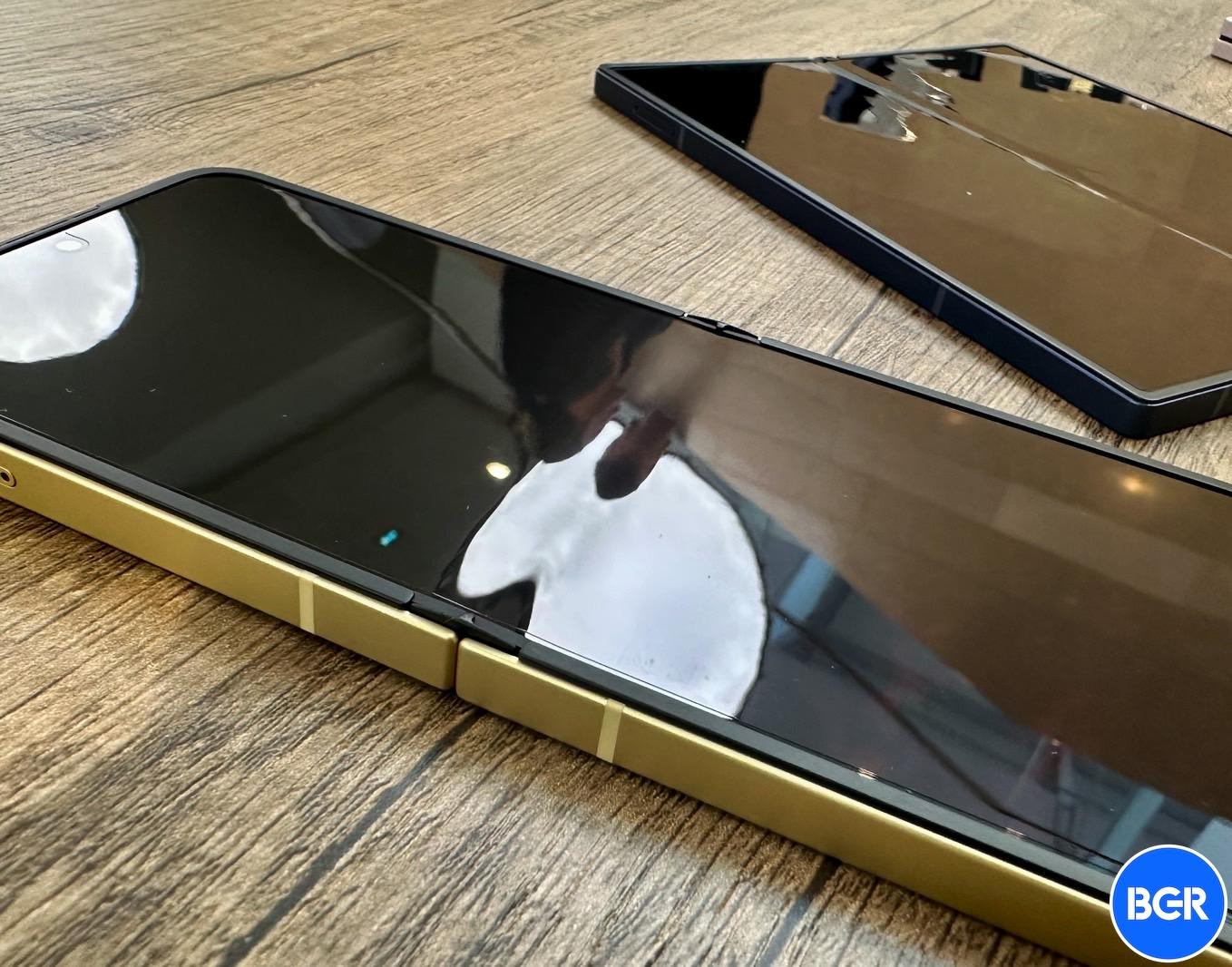
When the iPhone Fold arrives, Apple might do something that Samsung and other Chinese companies haven’t really been able to do. Apple might release a foldable phone with an almost perfect foldable screen. That is, the foldable display might be creaseless, with Apple having reportedly spared no expense to fix this foldable phone design compromise. 

That’s according to a report from Korea that claims Apple will finalize its supply chain for the first-gen iPhone Fold this year, with component manufacturing to start by the end of the year.

Apple’s purported manufacturing plans for the iPhone Fold come from ETNews. The Korean outlet has learned that supplier selection is imminent, as Apple managed to improve the display crease significantly. By April, Apple should have chosen the suppliers that would manufacture key iPhone Fold components.

Tech. Entertainment. Science. Your inbox.

Sign up for the most interesting tech & entertainment news out there.

By signing up, I agree to the Terms of Use and have reviewed the Privacy Notice.

This development suggests that Apple will indeed release a foldable iPhone next year, matching claims from other recent rumors.

Samsung will be the sole manufacturer of that nearly creaseless display. Apple reportedly worked only with Samsung since last year. Apparently, it’s only Samsung Display that managed to deliver a screen that matches Apple’s needs.

Galaxy Z Fold 6 crease.Galaxy Z Fold 6 has a large crease. Image source: Chris Smith, BGR

That means Samsung might be the first company to significantly improve the foldable display crease. As a reminder, the Galaxy Z Fold SE has a significantly reduced crease. The upcoming Galaxy Z Fold 7 should be based on the same design. It’s unclear, however, if Samsung is using the same innovations on its own phones.

Unsurprisingly, Apple had strict technical requirements from Samsung on how to fix the display crease.

“Apple has made the decision to eliminate creases completely, regardless of cost, in order to differentiate their foldable phone from existing models,” an insider told the outlet. “It is understood that they have successfully achieved this by using new materials that prevent creases from forming on the display.” It’s unclear what these materials are.

The report provides another interesting detail about the iPhone Fold design. Fixing the crease doesn’t mean fixing only the foldable screen. It also means looking at how the screen connects to the hinge below it and the ultra-thin glass at the top. 

Apparently, Apple has found a way to prevent creasing by looking at the problem holistically. The report also says Apple has encouraged cooperation between the various parts suppliers.

Samsung will provide the foldable OLED panel for the iPhone Fold. Amphenol, which manufactures hinges for MacBook Pros, has been tapped to make the iPhone Fold’s hinge.

Apple will reportedly use Corning cover screens, likely for the external display. The foldable screen will get ultra-thin glass covers, similar to Samsung’s Galaxy Z Fold models. Samsung might provide UTG tech, though Apple is reportedly working with other components.

A foldable display with no crease will surely offer Apple an advantage over rivals next year. That’s assuming Samsung and others won’t come up with almost creaseless foldable phone screens themselves. It’s not just the Galaxy Z Fold SE that might feature a smaller crease. The recently launched Oppo Find N5 also supposedly features a smaller crease.

The crease might not be the only thing that sets the iPhone Fold apart. Recent reports from China have revealed the purported screen sizes for the foldable iPhone. They suggest the phone will be much shorter than the Galaxy Z Fold 6. When opened, this phone would look a lot like an iPad mini.

Source

Posted on

We might finally know when the M4 MacBook Air will launch

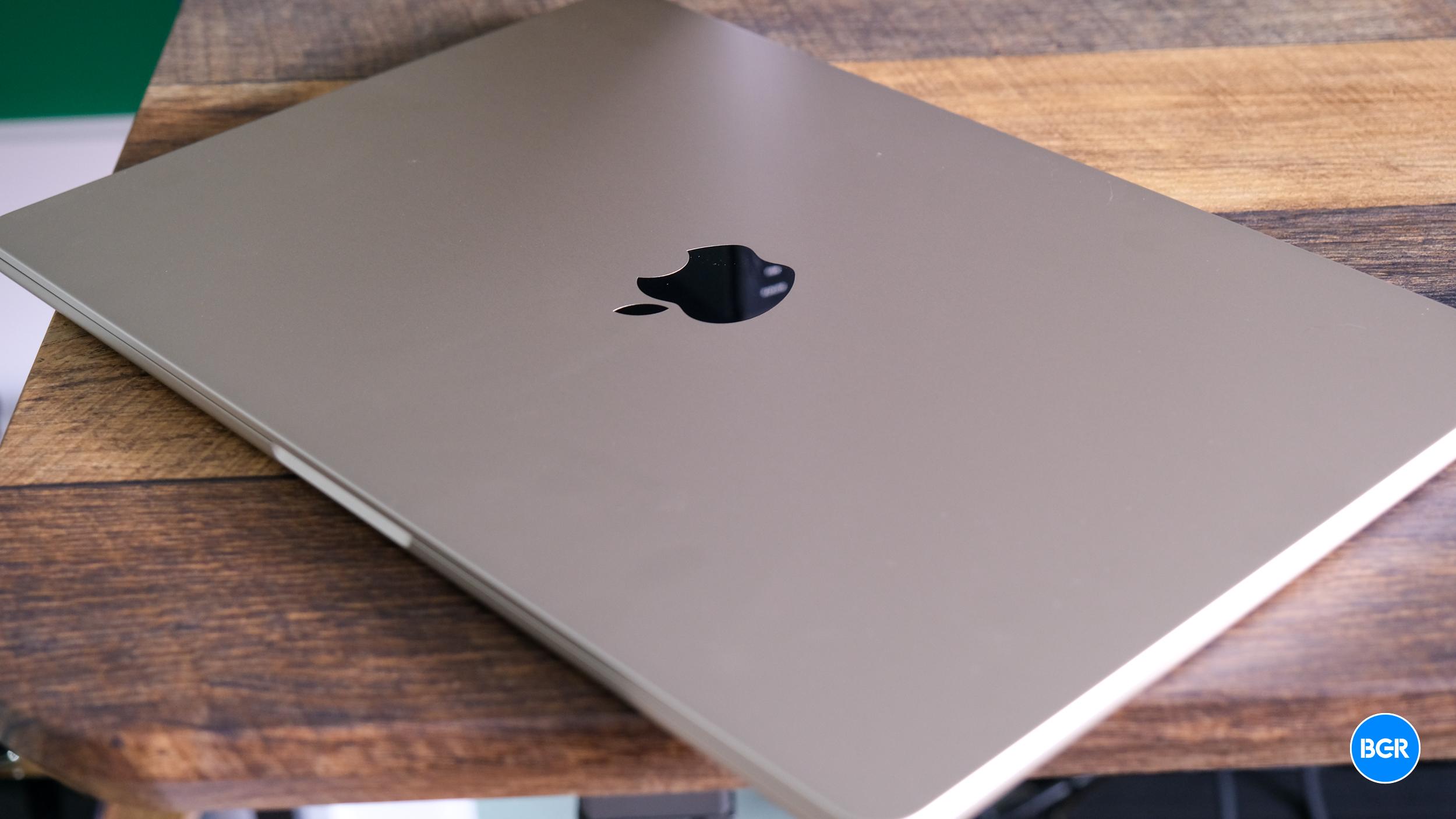
The M4 MacBook Air was expected to be Apple’s first launch of 2025. However, the company seems to have other plans, as the new iPhone SE will likely be the first release from Cupertino this year.

Still, Bloomberg‘s Mark Gurman has reported that the M4 MacBook Air could launch anytime. After saying this machine could have been available as soon as the last week of January and then correcting his report to “within the next few weeks,” the journalist wrote in his Power On newsletter that this laptop will be available by March “at the latest.”

While “within the next few weeks” is still accurate, as February won’t last much longer, Apple might be holding up this release to coincide with other products. Previously, a top Mac executive said the company would release new computers “as soon as they were ready.”

Even though Gurman has been inaccurate about the M4 MacBook launch date, we’ve seen evidence that this might happen soon. For example, inventory for the M3 MacBook Air has been dwindling. In addition, the company revealed on its macOS beta code that these laptops exist. This is why we believe the company might want to wait at least a year to release a new iteration of its MacBook Air models.

Tech. Entertainment. Science. Your inbox.

Sign up for the most interesting tech & entertainment news out there.

By signing up, I agree to the Terms of Use and have reviewed the Privacy Notice.

That said, customers won’t have to wait that long. After all, WWDC 2025 is in June, and Apple might have other Macs to unveil, such as the long-rumored Mac Studio with M4 Ultra processor. A redesigned Mac Pro can be teased at the conference, as it happened previously.

Despite the new chip, which is a great improvement over the M3 processor, the new MacBook Air could have the new 12MP Ultrawide camera, which has been available on the latest MacBook Pro and iMac models.

We don’t expect this laptop to have other design tweaks or improved specs. Still, the M4 MacBook Air will likely have the best battery of any Apple laptop. Currently, the most power-efficient MacBook is the base-model MacBook Pro.

BGR will let you know once Apple releases its new Macs.

Source

Posted on

When will Apple release M5 Macs?

Apple has a few more M4 Macs to release before moving on computers powered by its next-generation M5 chips. This generation will mark an important milestone for Apple, as the company keeps improving its processors to better perform AI tasks.

While there are only a few rumors about when Apple is expected to release M5 Macs, the picture of what the company could unveil in the next few quarters is taking shape.

M5 will be big for Apple Intelligence

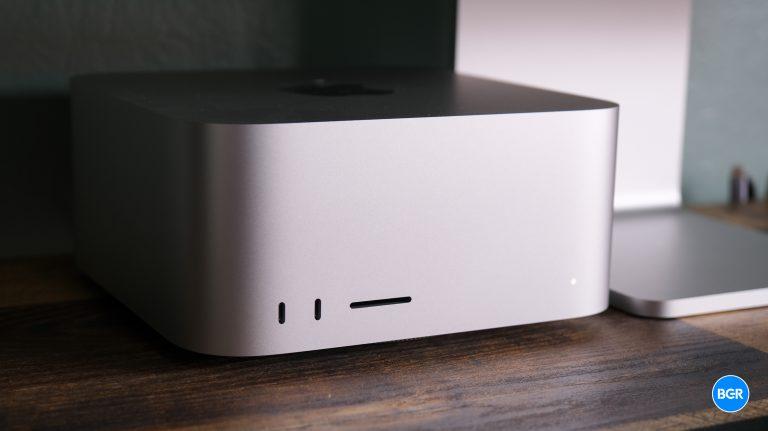
2023 Mac Studio On DeskImage source: Christian de Looper for BGR

Apple reportedly started mass-producing the M5 chip in January. While we’re still many months away from an official release, ET News says the “Apple M5 chip packaging is handled by Taiwan’s ASE, the U.S.’s Amkor, and China’s JCET. Initial mass production has been started by ASE, and mass production with Amkor and JCET will follow suit.”

These companies also add resources to make the high-end M5 Pro, M5 Max, and M5 Ultra chips. While power efficiency has been improved by 5-10% and performance improved by 5% compared to the M4 chip, we need to see them in action to know if the AI processors can fully power Apple Intelligence and other complex tasks.

Tech. Entertainment. Science. Your inbox.

Sign up for the most interesting tech & entertainment news out there.

By signing up, I agree to the Terms of Use and have reviewed the Privacy Notice.

According to The Elec, the M5 chip will feature an enhanced ARM architecture and be manufactured using TSMC’s latest 3-nanometer process technology, an improvement over the M3 and M4 chips. The M5 processor will adopt a new System on Integrated Chip (SoIC) technology, which enhances thermal management and reduces electrical leakage.

With that, we could see enhancements in performance and efficiency and a broader focus on Neural Engine tasks for AI and Apple Intelligence. While we know that Apple has moved on to producing its newer processors, the company will still release a number of new M4-powered devices, including some that have yet to be unveiled.

M5 MacBook and Mac release dates

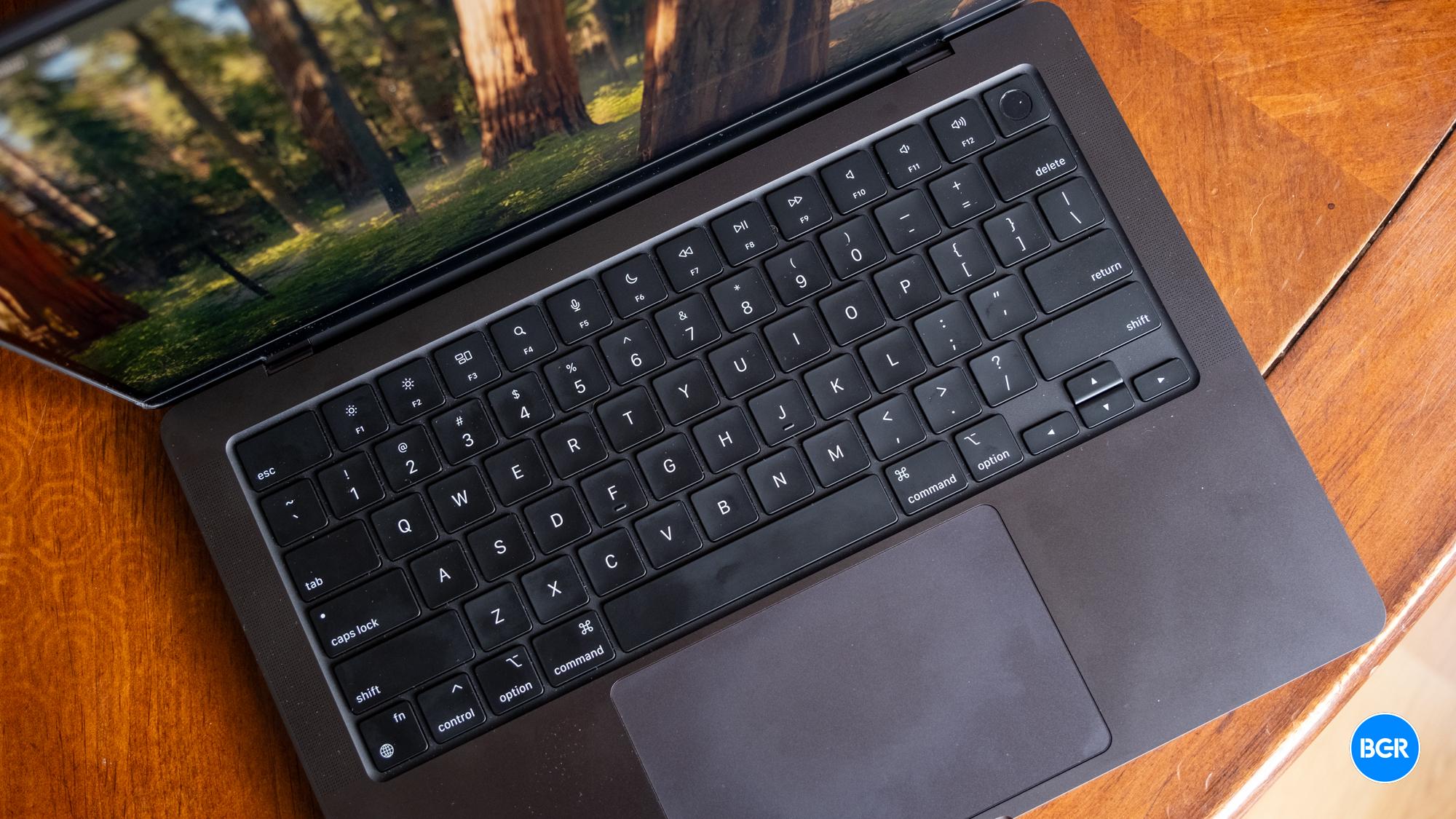
M4 MacBook Pro keyboardImage source: Christian de Looper for BGR

The M5 Macs aren’t expected to be released before the fall of 2025. Currently, Apple has to launch the M4 MacBook Air, expected by March, then the Mac Studio in mid-2025, and a new Mac Pro by the second half of this year.

With that in mind, this is when we could expect new M5 Macs:

  • MacBook Pro: The M5 MacBook Pro is expected to be released in the second half of 2025, not before the fall; should include M5, M5 Pro, and M5 Max options.
  • MacBook Air: If Apple follows the trend, a new MacBook Air will likely be released by the beginning of 2026, around the first quarter.
  • Mac Studio: Rumors suggest that Apple is planning a new Studio Display, so the company might release a new Mac Studio with the M5 chip as well. This computer could ship with an M5 Ultra chip by mid-2026.

Apple’s schedule for releasing Mac mini, iMac, and Mac Pro updates has been irregular lately. That said, if the company plans to release these Macs, the first two could be available anytime from late 2025 to mid-2026, while the latter could be available from mid-2026 to late 2026.

Source

Posted on

Apple reportedly started M5 mass production ahead of 2025 Mac releases

A few months after Apple ordered TSMC to start the production development of the M5 chip, ET News reports that mass production for this upcoming processor has now begun. According to the publication, mass production for the M5 chip, which is expected to power new Macs, iPads, and Apple Vision Pro, started in January. ET News writes: “Apple M5 chip packaging is handled by Taiwan’s ASE, the U.S.’s Amkor, and China’s JCET. Initial mass production has been started by ASE, and mass production with Amkor and JCET will follow suit.”

These companies also add resources to make the high-end M5 Pro, M5 Max, and M5 Ultra chips. While power efficiency has been improved by 5-10% and performance improved by 5% compared to the M4 chip, this is yet Apple’s new tackle on AI processors to power Apple Intelligence and other complex tasks.

While the M5 mass production has already started, Apple has yet to release its M4 MacBook Air models. They’re expected to be released in the first half of 2025, in addition to the M4 Ultra chip with the Mac Studio, which is scheduled for mid-2025. Finally, a new Mac Pro could also be in the works for late 2025. If that turns out to be accurate, this release could coincide with the first M5 products.

So far, the first Apple products we expect to unveil with the M5 chip are the iPad Pro, the MacBook Pro, and the Apple Vision Pro. Still, none of them should debut before fall 2025.

Tech. Entertainment. Science. Your inbox.

Sign up for the most interesting tech & entertainment news out there.

By signing up, I agree to the Terms of Use and have reviewed the Privacy Notice.

That being said, we still have plenty of time with M4 products. Also, it doesn’t seem Apple plans a major revamp for its products with the M5 chip. According to rumors, Cupertino could start tweaking the design of some of its Macs by 2026 when it plans to ditch the miniLED display for a new OLED technology.

Below, you can learn more about when to expect new M4 Macs.

Source

Posted on

Intel announces new Core Ultra 200 series mobile CPUs at CES 2025, targeting enthusiasts and edge users

Intel announced its latest series of mobile processors at CES 2025, the Intel Core Ultra 200HX series, the Core Ultra 200H series, and the Core Ultra 200U series, targeting enthusiasts, premium, and thin and light laptop users, respectively.

The new chips, hot on the heels of the incredibly well-received Intel Lunar Lake chips (sold as the Intel Core Ultra 200V series), offer even more variety of processing power for users who found the Core Ultra 200V series to be good, but not quite powerful enough for their needs.

The new chip lines, which are built off the same Intel Arrow Lake architecture used in the Intel Core Ultra 200S series desktop processors (including the Intel Corez Ultra 9 285K and Core Ultra 5 265K), have a bit of an expectations problem.

Arrow Lake for desktop was rather underwhelming (for gamers at least) at launch and the arguably more advanced Intel Lunar Lake laptop chips currently on the market are simply some of the best laptop processors anyone has ever made, so following that up with an already maligned architecture will be tough.

That said, Intel Arrow Lake has a lot going for it, especially once you step away from gaming. In everyday and professional workloads. On desktop, The Intel Core Ultra 200S series chips came out pretty much even with the previous-gen Intel Raptor Lake Refresh chips (Intel’s Core 14000 series), while using less power to do so. The hope, it appears, is that Intel is offering at least even or better laptop chip performance compared to the previous generation with meaningfully less power consumption, something that actually matters for laptops.

It remains to be seen if any of this will sway anyone expecting big performance gains, but at least for these mobile chips, improved energy efficiency could be enough to tip the scales in their favor.

New Intel mobile SKUs

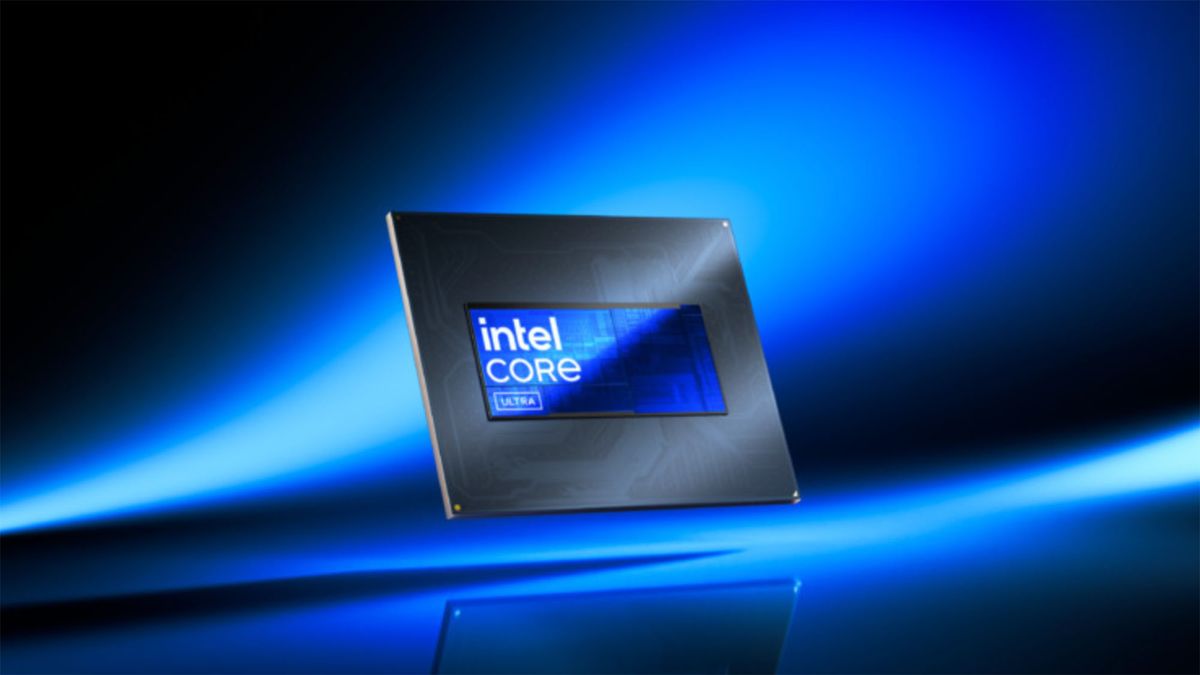
A mockup of the Intel Core Ultra 200HX against a blue swoosh background

(Image credit: Intel)

Here are all of the new Intel Core Ultra 200HX, Core Ultra 200H, and Core Ultra 200U SKUs announced during Intel’s CES 2025 keynote.

{ window.reliablePageLoad.then(() => { var componentContainer = document.querySelector(“#slice-container-newsletterForm-articleInbodyContent-KUyyNBD5QHn6aeGMEMgAa8”); if (componentContainer) { var data = {“layout”:”inbodyContent”,”header”:”Get daily insight, inspiration and deals in your inbox”,”tagline”:”Sign up for breaking news, reviews, opinion, top tech deals, and more.”,”formFooterText”:”By submitting your information you agree to the Terms & Conditions and Privacy Policy and are aged 16 or over.”,”successMessage”:{“body”:”Thank you for signing up. You will receive a confirmation email shortly.”},”failureMessage”:”There was a problem. Please refresh the page and try again.”,”method”:”POST”,”inputs”:[{“type”:”hidden”,”name”:”NAME”},{“type”:”email”,”name”:”MAIL”,”placeholder”:”Your Email Address”,”required”:true},{“type”:”hidden”,”name”:”NEWSLETTER_CODE”,”value”:”XTR-D”},{“type”:”hidden”,”name”:”LANG”,”value”:”EN”},{“type”:”hidden”,”name”:”SOURCE”,”value”:”60″},{“type”:”hidden”,”name”:”COUNTRY”},{“type”:”checkbox”,”name”:”CONTACT_OTHER_BRANDS”,”label”:{“text”:”Contact me with news and offers from other Future brands”}},{“type”:”checkbox”,”name”:”CONTACT_PARTNERS”,”label”:{“text”:”Receive email from us on behalf of our trusted partners or sponsors”}},{“type”:”submit”,”value”:”Sign me up”,”required”:true}],”endpoint”:”https://newsletter-subscribe.futureplc.com/v2/submission/submit”,”analytics”:[{“analyticsType”:”widgetViewed”}],”ariaLabels”:{}}; var triggerHydrate = function() { window.sliceComponents.newsletterForm.hydrate(data, componentContainer); } if (window.lazyObserveElement) { window.lazyObserveElement(componentContainer, triggerHydrate); } else { triggerHydrate(); } } }).catch(err => console.error(‘%c FTE ‘,’background: #9306F9; color: #ffffff’,’Hydration Script has failed for newsletterForm-articleInbodyContent-KUyyNBD5QHn6aeGMEMgAa8 Slice’, err)); }).catch(err => console.error(‘%c FTE ‘,’background: #9306F9; color: #ffffff’,’Externals script failed to load’, err)); ]]>

Sign up for breaking news, reviews, opinion, top tech deals, and more.

Swipe to scroll horizontally

Intel Core Ultra 200HX SKUs

Header Cell – Column 0 Core Ultra 9 285HX Core Ultra 9 275HX Core Ultra 7 265HX Core Ultra 7 255HX Core Ultra 5 245HX Core Ultra 5 235HX
P-Cores 8 8 8 8 6 6
E-Cores 16 16 12 12 8 8
Total Threads 24 24 20 20 14 14
L3 Cache (MB) 36 36 30 30 24 24
P-Core Max Clock (GHz) 5.5 5.4 5.3 5.2 5.1 5.1
E-Core Max Clock (GHz) 2.8 2.7 2.6 2.4 3.1 2.9
Graphics Intel Graphics Intel Graphics Intel Graphics Intel Graphics Intel Graphics Intel Graphics
Base TDP (W) 15 15 15 15 15 15
Max TDP (W) 57 57 57 57 57 57

Swipe to scroll horizontally

Intel Core Ultra 200H SKUs

Header Cell – Column 0 Core Ultra 9 258H Core Ultra 7 265H Core Ultra 7 255H Core Ultra 5 235H Core Ultra 5 225H
P-Cores 6 6 6 4 4
E-Cores 8 8 8 8 8
LPE-Cores 2 2 2 2 2
Total Threads 16 16 16 14 14
L3 Cache (MB) 24 24 24 18 18
P-Core Max Clock (GHz) 5.4 5.3 5.1 5.0 4.9
Graphics Intel Arc Graphics Intel Arc Graphics Intel Arc Graphics Intel Arc Graphics Intel Arc Graphics
Base TDP (W) 45 28 28 28 28
Max TDP (W) 115 115 115 115 115

Swipe to scroll horizontally

Intel Core Ultra 200U SKUs

Header Cell – Column 0 Core Ultra 7 265U Core Ultra 7 255U Core Ultra 5 235U Core Ultra 5 225U
P-Cores 2 2 2 2
E-Cores 8 8 8 8
LPE-Cores 2 2 2 2
Total Threads 12 12 12 12
L3 Cache (MB) 12 12 12 12
P-Core Max Clock (GHz) 5.3 5.2 4.9 4.8
Graphics Intel Graphics Intel Graphics Intel Graphics Intel Graphics
Base TDP (W) 15 15 15 15
Max TDP (W) 57 57 57 57

A mockup of the Intel Core Ultra 200H against a blue swoosh background

(Image credit: Intel)

There are some notable things about the specs we’ve gotten on these new SKUs.

For one, only the Core Ultra 200H series has integrated Intel Arc graphics, while the HX and U series chips all opt for the basic, lower-end Intel Graphics GPU. This makes some sense, as the 200HX series will likely be paired with a discrete GPU, so the basic integrated GPU will be more than enough for basic Windows use to save power.

The 200U series, meanwhile, won’t have a discrete GPU, but it also won’t likely be called upon to do any heavy-duty graphics like 3D gaming, so Intel Graphics is fine for the U series.

The 200H series, however, might need to do a little bit more gaming or video processing/encoding than the U series, but not enough to get a discrete GPU, so Intel opted to give it its higher-end integrated Arc GPU.

This is likely the same integrated Arc graphics found in Intel Meteor Lake chips since Arrow Lake is largely built off that architecture rather than the more advanced Lunar Lake Xe2 graphics. It also has a higher max TDP, likely to account for more GPU power than the other two chip series.

We also don’t have the max clock for the E-cores and LPE-cores on the 200H and 200U series SKUs yet, but hopefully, Intel will provide more detail in the days ahead.

The battle of the Core Ultra 200 series chips

The new Intel Core Ultra logo

(Image credit: Intel)

I’ll be honest, there’s simply no getting around how good Intel’s recent laptop chips are (the Intel Core Ultra 200V series, based on Lunar Lake).

Intel has had an Apple problem ever since Apple moved to its own M-series silicon based on ARM‘s BIG.little processor design, with several generations of its laptop chips simply not being able to keep pace with the best Apple had to offer.

However, all that changed with Intel Lunar Lake, released late last year. While Lunar Lake laptop chips still lag well behind Apple’s latest M4 chips, they are more than capable enough that you’d only be able to tell the difference if you had the two side-by-side.

Meanwhile, Lunar Lake’s greatly improved energy efficiency and powerful integrated GPU based on Intel Arc Battlemage architecture turned out to be an incredibly powerful combo that offered incredible battery life on a Windows PC to rival even the best MacBook Air models and a GPU powerful enough to play the best PC games remarkably well for a thin and light laptop processor.

Intel Lunar Lake isn’t an enthusiast-class processor, however, and those who demand the highest levels of performance from their laptops, whether for work or play, haven’t had much to look forward to for a least a year or more.

Needless to say, there’s a lot of pressure on Intel’s newest laptop chips to avoid the mistakes that undercut their desktop counterpart, and it remains to be seen if Intel can deliver.

You might also like…

Source

Posted on

iPad 11 leak may reveal release timing for Apple’s new entry-level tablet

Apple’s upcoming iPad 11 can’t come soon enough. The latest leak says that Cupertino’s entry-level tablet will be released with iPadOS 18.3. While we don’t think this device will be announced alongside iPadOS 18.3, the news suggests that an iPad 11 release is coming before iPadOS 18.4 rolls out in April.

The information comes from a prominent X leaker who prefers not to be named. The device will have two options: Wi-Fi and Wi-Fi + Cellular. So far, leaks on the iPad 11 reveal Apple will bump its specifications to bring Apple Intelligence to the company’s entry-level tablet.

That being said, the iPad 11 will feature 8GB of RAM and, most likely, Apple’s A18 chip. More interestingly, today’s leak reveals that this tablet could have Apple’s upcoming custom 5G modem, which is also expected to be available with the new iPhone SE 4.

Even if Apple keeps the same design, display, and ports, this $349 tablet would be an instant hit. People in school would have a powerful tablet with several capabilities without having to spend a ton of money. In addition, when this tablet is released, Apple Intelligence will be a more reliable platform with even more features.

Tech. Entertainment. Science. Your inbox.

Sign up for the most interesting tech & entertainment news out there.

By signing up, I agree to the Terms of Use and have reviewed the Privacy Notice.

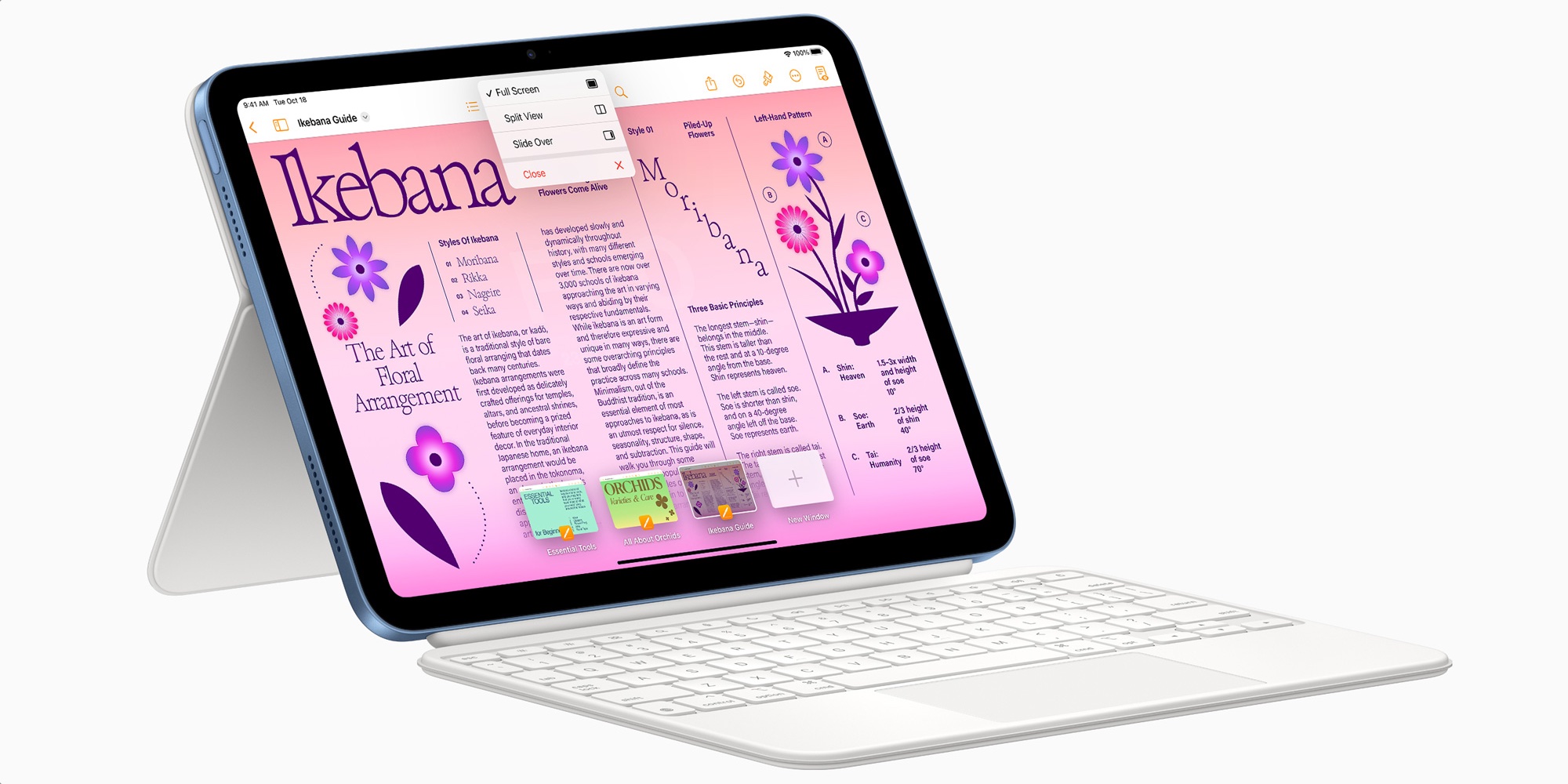
Bloomberg’s Mark Gurman says Apple is also working on a revamped keyboard for the entry-level iPad 11 and the iPad Air, which could be released in mid-2025. This tablet will support the USB-C Apple Pencil.

iPad 11 will likely debut at a spring event

With today’s iPad 11 leak, it makes sense for Apple to release this tablet at a spring event. So far, iPadOS 18.3 is expected to launch in late January. If Cupertino follows the trend, we could see a keynote in March highlighting this entry-level tablet, the new iPhone SE 4, Apple’s 13-inch and 15-inch MacBook Air with the M4 chip, and AirTag 2.

Fortunately, it won’t take long until the company unveils this tablet, which is a top seller for education and those looking for a more reliable device than an entry-level Windows notebook.

Source

Posted on

M4 MacBook Air to launch before iPhone SE 4 and iPad 11

Apple upgraded several Macs to the M4 chip a few weeks ago, including the MacBook Pro, iMac, and Mac mini. The former is easily the most exciting of the three, as Apple gave fans a much-needed upgrade. The M4 MacBook Pro comes with 16GB of RAM instead of 8GB, effectively reducing the laptop’s price for those who would spend extra money for more memory.

It’s all in the name of Apple Intelligence, a suite of genAI features still in its early days. Apple is ensuring that all its devices will have the resources to handle AI and one’s non-AI computing needs.

I said at the time that Apple had no choice but to give the M4 MacBook Air the same 16GB memory upgrade. Apple practically confirmed this during the M4 Mac launch week when it said that existing M2 and M3 MacBook Airs will also come with 16GB of RAM as the new default.

Apple didn’t reveal the M4 MacBook Air release date at the time, but leaks said the 13-inch and 15-inch laptops would drop at some point in the first quarter of 2025. A new update from an insider teases an even faster launch than expected, as Apple might not want to wait until the iPhone SE 4 and iPad 11 are also ready to launch.

Tech. Entertainment. Science. Your inbox.

Sign up for the most interesting tech & entertainment news out there.

By signing up, I agree to the Terms of Use and have reviewed the Privacy Notice.

After the iPhone 16 launch event, we thought we’d get a Mac-centric keynote for the M4 Macs. Apple chose to announce the laptops via press releases, though it also posted extended presentations on YouTube for each of the three Macs that got the M4 treatment.

Before Apple’s announcements in the first quarter of 2025, reports said that the iPhone SE 4 would drop in March. That’s also going to be a rather exciting iPhone for certain buyers.

Considering the mid-ranged iPhone’s rollout expectations and what Apple did with the M4 Macs, it’s easy to assume the company would repeat the play: Pick a week in March and announce a new product each day. We’d get the M4 MacBook Air, the iPhone SE 4, and the iPad 11, in whatever order Apple chooses to do it.

However, Mark Gurman said on X that the M4 MacBook Air launch is coming sooner than expected. He didn’t divulge an actual release date for the M4 MacBook Air models, but he said that the laptops will precede the iPhone SE 4 and iPad 11:

As I wrote in October, new entry level iPads (J481 and J482) are coming in the spring. iPhone SE, new iPad Air are on the same general timeline. The M4 MacBook Air will be earlier.

The Bloomberg reporter also penned a newsletter over the weekend, where he also addressed Apple’s tentative roadmap for the M4 Macs. He said the M4 MacBook Airs will arrive early next year, without mentioning the iPhone SE 4 and iPad 11:

But the real meat of the Mac lineup will get refreshed in the first three quarters of 2025. Things will kick off pretty early next year with M4 versions of the 13-inch and 15-inch MacBook Air (these models are already deep into the manufacturing phase). As the year progresses, there will be a new Mac Studio with a high-end M4 chip. The M4 transition will get completed later in the year with a version of the Mac Pro. This will mark the first time since Apple began using in-house chips that its entire computer portfolio moved to a new M-series generation.

The tweet above gives us a better estimate of when to expect the new MacBook Airs. That said, we have no release dates, so it’s unclear how soon the M4 MacBook Airs will arrive.

Finally, I’ll remind you that Apple has confirmed the M4 MacBook Air in a recent software update. Given Gurman’s claims, Apple’s accidental reveal makes sense if the launch is imminent.

Source

Posted on

iPhone 17 Air will feature ProMotion, but I’d buy it either way

I’m ready to buy the iPhone 17 Air, even if that means dealing with several compromises Apple will have to make to create a thinner iPhone than ever before. By that, I mean I’m ready for a single-lens camera, potentially worse battery life than what you’d expect from a typical 6.6-inch iPhone, and a single speaker on the bottom.

I’d even be ready to use a 60Hz display rather than one that supports ProMotion. After all, I did that for two years with the iPhone 14 Pro. That actually might have helped me get used to the iPhone 16 Plus’s 60Hz screen. I had no problem transitioning to a non-ProMotion screen during my two-month stint with the iPhone 16 Plus.

However, it looks like the iPhone 16 will be the last generation in which the non-Pro iPhones lack 120Hz refresh rate support. We have already seen a series of reports saying that Apple will bring LTPO tech to all iPhone 17 models, including the iPhone 17 Air, and there’s another story out that seemingly confirms this development.

LTPO is a key display tech that allows Apple to offer dynamic refresh rates on ProMotion devices with OLED panels. The refresh rate adapts to what’s showing on the screen, dropping as low as 1Hz in some instances rather than staying at 120Hz, regardless of what you might be doing. The benefit of dynamic refresh rate screens is that they conserve battery life.

Tech. Entertainment. Science. Your inbox.

Sign up for the most interesting tech & entertainment news out there.

By signing up, I agree to the Terms of Use and have reviewed the Privacy Notice.

On that note, that’s probably one way I improved battery life on the iPhone 14 Pro, as my refresh rate moves between 1Hz and 60Hz rather than the full 120Hz.

My display preferences aside, plenty of iPhone users have rightly called out Apple for restricting the ProMotion displays to the Pro models. Meanwhile, many Android vendors ship mid-range phones that support 120Hz refresh rates.

Thankfully, all iPhone models will get ProMotion screens, starting with the iPhone 17 series. Korean website DT penned the latest report that says Apple suppliers are preparing to meet Apple’s OLED panel needs for the iPhone 17.

The report says that all four iPhone 17 models will use LTPO OLED panels, which implies that the iPhone 17 Air will support 120Hz refresh rates. The story doesn’t single out the ultra-thin iPhone or the other three models, instead focusing on the suppliers.

If the information is accurate, LG Display will be the big winner of Apple’s iPhone 17 screen orders. The Korean company had a 10% share of orders last year, which grew to 30% this year. LG’s share will continue to rise next year when it will account for 40% of Apple’s OLED panel needs.

Chinese company BOE is apparently the big loser, as it is unable to manufacture the LTPO panels Apple wants for the iPhone 17.

Samsung will continue to get the lion’s share of OLED panels for the iPhone, likely accounting for 60% of orders.

M4 iPad Pro Home Screen running iPadOS 18M4 iPad Pro OLED display. Image source: José Adorno for BGR


The inability of OLED panel vendors to meet Apple’s production needs might explain why Apple has kept using LTPS 60Hz OLED panels in non-Pro handsets so far, but that’s just speculation from this iPhone user. Apple sells over 200 million iPhones every year, so its display needs dwarf those of rivals.

The DT story implies that supply is an issue, as it explains that LG will not build new manufacturing lines to accommodate a larger influx of orders from Apple. Instead, LG will retool its iPad Pro OLED screen production line to manufacture iPhone displays.

Apple’s M4 iPad Pro hasn’t been selling as well as expected, so LG’s move makes sense. While the Korean company won’t confirm such changes, it did say during the Q3 earnings report that it plans to adapt its production infrastructure to market conditions.

LG adapting to Apple’s needs will have an unwanted side effect. The report says LG’s investments in a next-gen supply facility of OLED panels for tablets and laptops will be slightly delayed. Interestingly, Apple is expected to use OLED panels in more products, including the iPad mini, MacBook Air, and a foldable Mac/iPad set to launch sometime in the next four years.

Back to the iPhone 17, the report doesn’t mention screen sizes for the four phones. I’d expect Apple to stick with the 6.1-inch, 6.3-inch, and 6.9-inch screen sizes for the iPhone 17, 17 Pro, and 17 Pro Max, respectively. Rumors say the iPhone 17 Air should feature a 6.6-inch display.

Source