Posted on

This is the closest we’ve come to Tim Cook confirming Apple Glasses

While I haven’t bought the Apple Vision Pro, I’m still a fan of what Apple is doing here because I think the spatial computer debuted key technologies that will lead to the actual head-worn wearable I want: A pair of AR Apple Glasses that might eventually replace the iPhone.

Rumors say that we have a long wait ahead of us before true Apple Glasses become a reality. Apple needs tons of progress with the tech involved before it can create the product it wants. Meta recently showcased the bulky Orion concept of AR glasses that cost $10,000 to make. That’s another clear hint that Apple Glasses will take a while to get here. We need a pair of AR glasses that look much more like regular glasses before consumers will actually adopt them.

Other rumors say that Apple is studying the possibility of developing smart glasses that look like Meta’s Ray-Ban. Those aren’t AR glasses, however. Intead, they just have a camera and Meta AI support. Samsung is expected to unveil a similar gadget in the coming months.

Apple will never confirm work on future products, though it might tease that’s where we’re heading. That’s what Tim Cook did in a recent interview when asked whether Apple Glasses are coming after the Vision Pro.

Tech. Entertainment. Science. Your inbox.

Sign up for the most interesting tech & entertainment news out there.

By signing up, I agree to the Terms of Use and have reviewed the Privacy Notice.

Here’s the actual exchange between Tim Cook and Wired’s Steven Levy:

Wired: Meta and Snap are leading us to mixed-reality glasses that we’d wear continually. Is the bigger, heavier Vision Pro ultimately headed that way?

Tim Cook: Yes, it’s a progression over time in terms of what happens with form factors. AR is a huge deal. With Vision Pro, we’ve progressed to what is clearly the most advanced technology we’ve ever done, and I think, the most advanced technology in the world in terms of electronics problems. We’ll see where it goes.

Tim Cook did not confirm that the tech inside its Vision Pro will eventually shrink down to fit inside Apple Glasses. He offered the obvious answer any CEO would have given, considering the question. Yes, the Vision Pro is a stepping stone towards something better. His “we’ll see where it goes” is the hedge you’d expect from an exec dealing with this question.

Meta Rayban SunglassesRay-Ban Meta smart glasses. Image source: Jonathan S. Geller

I’ve included the question in full because of how it’s framed. Levy asks Cook whether smart glasses like the ones Meta and Snap sell are leading us to mixed-reality glasses that we’d wear continuously. But neither Meta nor Snap have such products. Instead, the two social networks sell smart glasses that are significantly less sophisticated than the Vision Pro. They’re not mixed-reality devices.

Put differently, Apple has developed the tech it needs for Apple Glasses with the Vision Pro. Apple now has to shrink it down to fit inside a pair of normal glasses.

Apple developing a smart glasses product that would support genAI, like Meta’s glasses, would allow Apple to work on the glasses chassis that might one day feature more advanced capabilities that would trickle down from the Vision Pro. There’s no telling how long it’ll take for Apple to come out with Apple Intelligence-ready Apple Glasses.

Cook also addressed questions about lower-than-expected Vision Pro sales in the same interview saying the device is a success.

“It’s an early adopter product, for people who want tomorrow’s technology today,” Cook said. “Those people are buying it, and the ecosystem is flourishing. The ultimate test for us is the ecosystem. I don’t know if you’re using it very much, but I’m on there all the time. I see new apps all the time.”
Source

Posted on

Tim Cook says Apple Intelligence was always going to be free

If you own an iPhone 15 Pro, iPhone 15 Pro Max, or any of the four iPhone 16 models, you can use Apple Intelligence for free. The same goes for iPads and Macs that feature Apple M-series chips. Apple Intelligence is available for free as part of the respective iOS, iPadOS, and macOS updates.

At the same time, Apple Intelligence, in its current state, is incomplete compared to what Apple showed at WWDC 2024. It’ll take several more months to get that full Apple Intelligence functionality on the iPhone. And even then, work on Apple Intelligence will not stop as the company should add new capabilities year after year.

In its current state, Apple Intelligence can only be free. Will Apple ever charge for it? Tim Cook addressed the question in an interview, saying that the tech is as similar and pivotal as the iPhone’s multitouch feature, which you also get for free with your iPhone purchase.

Apple Intelligence was one of the main topics in Wired’s wide-ranging interview with Tim Cook. That’s when the question about Apple Intelligence’s potential price came up:

Tech. Entertainment. Science. Your inbox.

Sign up for the most interesting tech & entertainment news out there.

By signing up, I agree to the Terms of Use and have reviewed the Privacy Notice.

Wired: Some companies charge for AI-enhanced services. Did you consider that?

Tim Cook: We never talked about charging for it. We view it sort of like multitouch, which enabled the smartphone revolution and the modern tablet.

That’s a great way to frame the answer. Cook is practically saying that Apple Intelligence will be a key tech for Apple products, including the iPhone, just like multitouch is. The latter is a key innovation that made touchscreen devices like the iPhone and iPad possible.

We hardly talk about multitouch support in iPhone or Android products because that’s a feature we take for granted. They’re all touch-first devices. That’s how we interact with them.

Cook’s answer is somewhat misleading because the comparison is valid up to a point. While I’m sure multitouch gets innovations that go under the radar, Apple Intelligence and genAI, in general, will see tremendous progress in the coming years that will not go under the radar.

Apple’s Apple Intelligence innovations will take the spotlight year after year. Some of those features might require extra costs, which might be passed on to the buyer.

As a user, I’ll want to pay for a secure, private, ad-free AI experience, whether Apple’s or someone else’s.

That said, Cook’s take on Apple Intelligence being free is in line with what I’m expecting for Apple’s AI in the near future. I explained earlier this year why Apple Intelligence should always be free. Well, make that “free,” because iPhone users will always be paying for it by paying a premium price for the iPhone.

I still think that’s going to be true for several years, even after Apple catches up with its rivals. Cook’s remark above further reinforces my line of thinking.

Then again, even if Apple is developing premium Apple Intelligence plans, don’t expect Cook to confirm anything years in advance. Some rumors say paid Apple Intelligence features will come in 2027 at the earliest.

As for the more distant future, if Apple can ship a multi-device Apple-Intelligence-first operating system similar to the movie Her, that operating system might be worth paying a subscription.

Speaking of a more distant future of AI, Cook also addressed AGI questions. That’s the advanced general intelligence holy grail that OpenAI and others are trying to achieve. AGI will be able to reason and approach any problem as a human would, though it’ll have a far vaster knowledge database.

The CEO suggested AGI isn’t necessarily a priority for Apple, but the company is certainly looking at where the future might lead. For now, AI is “good enough where we can deliver it to people and change their lives, and that’s what we’re focused on.”

Source

Posted on

Intel isn’t giving up on desktop graphics cards after Battlemage, as rumor claims 3rd-gen Celestial GPUs are still coming

  • Intel is still planning for 3rd-gen desktop GPUs to follow Battlemage
  • This dismisses other rumors that Intel may not make these desktop cards
  • The truth is likely that Intel hasn’t yet fully made the decision itself

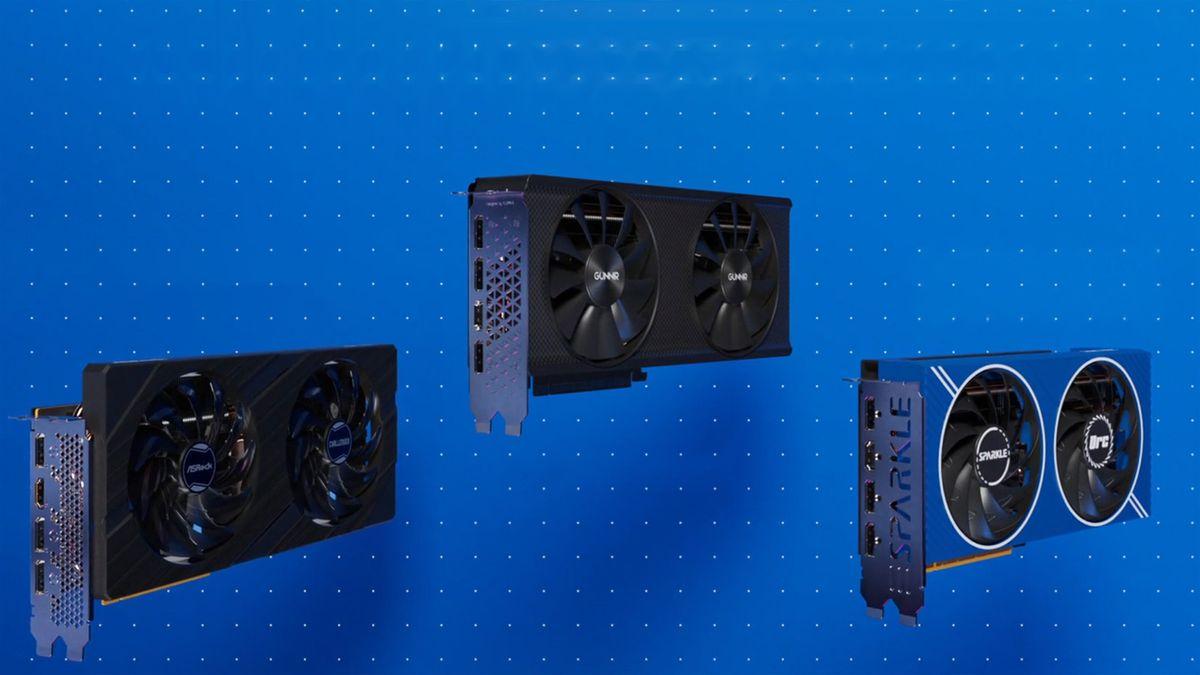
Intel’s Celestial graphics cards for the desktop, which will be the 3rd-gen of Arc GPUs, to follow Battlemage – the next-gen that’s imminent – are still being planned and worked on for the future.

That’s the latest word from the grapevine, courtesy of a well-known leaker on X, Bionic Squash.

As you can see, the leaker says that Intel still has plans for discrete GPUs (DGPUs), meaning desktop graphics cards, after the desktop models for Battlemage have been unleashed.

If the current run of rumors is correct, those Battlemage graphics cards could arrive in December, with one model being the B580 – possibly the top-of-the-range GPU – which was recently leaked.

An Intel Arc A770 LE graphics card on a table with a pink desk mat

(Image credit: Future / John Loeffler)

Analysis: Some mixed messages from the rumor mill

You might be wondering: why would there be any concerns about Celestial, anyway? Well, in the recent past, there have been some suggestions that Intel might not have another generation of GPUs after Battlemage, or at least not desktop models – and that Celestial could be for integrated graphics only.

Bionic Squash seems pretty confident this isn’t the case, and recent hints appear to back that up. Intel is certainly working on Celestial already, and could even have radical plans for more powerful desktop GPUs in the 3rd generation, going by a recently spotted patent.

That said, Celestial GPUs of the desktop variety still haven’t turned up in leaks – it’s too early for that at this point – and some other recent chatter has suggested that Intel may be waiting to see how successful Battlemage is, before fully committing to discrete Celestial products. However, take that past rumor, and this new one, too, with plenty of caution.

{ window.reliablePageLoad.then(() => { var componentContainer = document.querySelector(“#slice-container-newsletterForm-articleInbodyContent-LjQUQ57LYu5trzEoCHRakF”); if (componentContainer) { var data = {“layout”:”inbodyContent”,”header”:”Get the best Black Friday deals direct to your inbox, plus news, reviews, and more.”,”tagline”:”Sign up to be the first to know about unmissable Black Friday deals on top tech, plus get all your favorite TechRadar content.”,”formFooterText”:”By submitting your information you agree to the Terms & Conditions and Privacy Policy and are aged 16 or over.”,”successMessage”:{“body”:”Thank you for signing up. You will receive a confirmation email shortly.”},”failureMessage”:”There was a problem. Please refresh the page and try again.”,”method”:”POST”,”inputs”:[{“type”:”hidden”,”name”:”NAME”},{“type”:”email”,”name”:”MAIL”,”placeholder”:”Your Email Address”,”required”:true},{“type”:”hidden”,”name”:”NEWSLETTER_CODE”,”value”:”XTR-D”},{“type”:”hidden”,”name”:”LANG”,”value”:”EN”},{“type”:”hidden”,”name”:”SOURCE”,”value”:”60″},{“type”:”hidden”,”name”:”COUNTRY”},{“type”:”checkbox”,”name”:”CONTACT_OTHER_BRANDS”,”label”:{“text”:”Contact me with news and offers from other Future brands”}},{“type”:”checkbox”,”name”:”CONTACT_PARTNERS”,”label”:{“text”:”Receive email from us on behalf of our trusted partners or sponsors”}},{“type”:”submit”,”value”:”Sign me up”,”required”:true}],”endpoint”:”https://newsletter-subscribe.futureplc.com/v2/submission/submit”,”analytics”:[{“analyticsType”:”widgetViewed”}],”ariaLabels”:{}}; var triggerHydrate = function() { window.sliceComponents.newsletterForm.hydrate(data, componentContainer); } if (window.lazyObserveElement) { window.lazyObserveElement(componentContainer, triggerHydrate); } else { triggerHydrate(); } } }).catch(err => console.error(‘%c FTE ‘,’background: #9306F9; color: #ffffff’,’Hydration Script has failed for newsletterForm-articleInbodyContent-LjQUQ57LYu5trzEoCHRakF Slice’, err)); }).catch(err => console.error(‘%c FTE ‘,’background: #9306F9; color: #ffffff’,’Externals script failed to load’, err)); ]]>

Sign up to be the first to know about unmissable Black Friday deals on top tech, plus get all your favorite TechRadar content.

It’s very likely that the truth is Intel still has decisions to make on this front, but if Bionic Squash is right, the plan for now is to release a 3rd-generation of Arc desktop GPUs.

Via Wccftech

You might also like

Source

Posted on

It’s easier than ever to use SearchGPT on your iPhone

It’s impressive that in only a few months, OpenAI’s ChatGPT became a fundamental part of Apple’s iPhone devices. Whether you have a phone with Apple Intelligence or not, you can take advantage of ChatGPT through its app or by integrating it with Apple’s AI platform.

With the latter, ChatGPT can currently improve Writing Tools technology. Apple explains:

With ChatGPT from OpenAI integrated into Siri and Writing Tools, you get even more expertise when it might be helpful for you — no need to jump between tools. Siri can tap into ChatGPT for certain requests, including questions about photos or documents. And with Compose in Writing Tools, you can create and illustrate original content from scratch.

You control when ChatGPT is used and will be asked before any of your information is shared. Anyone can access ChatGPT for free, without creating an account. ChatGPT subscribers can connect accounts to access paid features within these experiences.

However, if you prefer using OpenAI’s ChatGPT app, the latest update brought an important upgrade. Now, you can set a Shortcut with SearchGPT. For those unaware, OpenAI’s SearchGPT is designed to give you an answer, as it will “quickly and directly respond to your questions with up-to-date information from the web while giving you clear links to relevant sources.” Users will be able to ask follow-up questions as the GPT understands the context of each query.

By using Apple’s Shortcuts app, you could give Siri a command to open SearchGPT or even add it to the Action Button of your iPhone 15 Pro or iPhone 16 models.

Tech. Entertainment. Science. Your inbox.

Sign up for the most interesting tech & entertainment news out there.

By signing up, I agree to the Terms of Use and have reviewed the Privacy Notice.

So far, SearchGPT is available for OpenAI subscribers with ChatGPT Plus and ChatGPT Teams services. Still, the company plans to roll out support to free users in the coming months. To access this feature, don’t forget to update your ChatGPT app to the latest version from the App Store.

Source

Posted on

Denmark’s AI-powered welfare system fuels mass surveillance

Artificial intelligence (AI) tools used by the Danish welfare authority violate individual privacy, risk discrimination and breach the European Union’s (EU) AI Act’s regulations on social scoring systems, according to analysis from Amnesty International.

Udbetaling Danmark (UDK, or Payout Denmark) – established in 2012 to centralise the payment of various welfare benefits across five municipalities – uses AI-powered algorithms to flag individuals who are considered at the highest risk of committing social benefits fraud for further investigation. These were developed in partnership with ATP, Denmark’s largest pensions processing company, and various private multinational corporations.

The report details how UDK’s fraud control algorithms breach the human rights of social security benefits recipients, including their rights to privacy, equality and social security. It also concludes that the system creates a barrier to accessing social benefits for certain marginalised groups, including people with disabilities, low-income individuals and migrants.

“This mass surveillance has created a social benefits system that risks targeting, rather than supporting, the very people it was meant to protect,” said Hellen Mukiri-Smith, Amnesty International’s researcher on artificial intelligence and human rights.

“The way the Danish automated welfare system operates is eroding individual privacy and undermining human dignity. By deploying fraud control algorithms and traditional surveillance methods to identify social benefits fraud, the authorities are enabling and expanding digitised mass surveillance.”

Amnesty argues that UDK’s fraud detection system likely falls under the “social scoring” ban under the EU’s AI Act, which came into force on 1 August 2024.

The act defines AI social scoring systems as those that “evaluate or classify” individuals or groups based on social behaviour or personal traits, causing “detrimental or unfavourable treatment” of those people.

Mukiri-Smith said: “The information that Amnesty International has collected and analysed suggests that the system used by the UDK and ATP functions as a social scoring system under the new EU Artificial Intelligence law – and should therefore be banned.”

UDK and ATP provided Amnesty with redacted documentation on the design of certain algorithmic systems, and allegedly rejected Amnesty’s requests for a collaborative audit, refusing to provide full access to the code and data used in their algorithms.

The Danish authority also rejected Amnesty’s assessment that its fraud detection system likely falls under the AI Act’s social scoring ban, but did not offer an explanation for this reasoning.

In response to this, Amnesty has called on the European Commission to issue clear guidelines on which AI practices constitute a social scoring system in its AI Act guidance. The organisation has also requested that the Danish authorities stop using the system until it can be confirmed that it does not fall under this ban.

Mukiri-Smith added: “The Danish authorities must urgently implement a clear and legally binding ban on the use of data related to ‘foreign affiliation’ or proxy data in risk scoring for fraud control purposes. They must also ensure robust transparency and adequate oversight in the development and deployment of fraud control algorithms.”

Computer Weekly contacted UDK about the claims made by Amnesty International but received no response by the time of publication.

Violation of privacy

Alongside ATP, UDK uses a system of up to 60 algorithms to identify fraudulent social benefit applications and flag individuals for further investigation by Danish authorities.

To power these models, Danish authorities have enacted laws enabling the extensive collection and merging of personal data from public databases of millions of Danish residents. This includes information on residency status, citizenship, and other data that can also serve as proxies for a person’s race, ethnicity or sexual orientation.

Mukiri-Smith added: “This expansive surveillance machine is used to document and build a panoramic view of a person’s life that is often disconnected from reality. It tracks and monitors where a social benefit claimant lives, works, their travel history, health records, and even their ties to foreign countries.”

Individuals interviewed by Amnesty described the psychological impact of being subjected to surveillance by fraud investigators and case workers. Describing the feeling of being investigated for benefits fraud, Stig Langvad of Dansk Handicap Foundation told Amnesty that it is like “sitting at the end of a gun”.

UDK stated that its collection and merging of personal data to detect social benefits fraud is “legally grounded”.

Exacerbation of structural marginalisation

The report also reveals that the benefits fraud control system developed by UDK and ATP is built on inherently discriminatory structures in Denmark’s legal and social systems, which categorises people and communities based on difference.

According to the report, Danish law already creates a “hostile environment for migrants and people who have been granted refugee status”, with residency requirements for those seeking to claim benefits that disproportionately affect people from non-Western countries, with many refugees in Denmark, including Syria, Afghanistan and Lebanon.

The Really Single fraud control algorithm predicts a person’s family or relationship status to assess risk of benefit fraud in pensions and childcare schemes. One of the parameters employed by the algorithm includes “unusual” or “atypical” living patterns or family arrangements, but contains no clarity on what constitutes such situations, leaving room for dangerously arbitrary decision-making.

Mukiri-Smith added: “People in non-traditional living arrangements – such as those with disabilities who are married but live apart due to their disabilities; older people in relationships who live apart; or those living in a multi-generational household, a common arrangement in migrant communities – are all at risk of being targeted by the Really Single algorithm for further investigation into social benefits fraud.”

Gitte Nielsen, the chairperson of the social and labour market policy committee at Dansk Handicap Foundation, described the feeling of being constantly scrutinised and reassessed: “It is eating you up. A lot of our members … have depression because of this interrogation.”

UDK and ATP additionally use inputs related to “foreign affiliation” in their algorithmic models. For example, the Model Abroad algorithm identifies groups of beneficiaries deemed to have “medium and high-strength ties” to non-EEA countries and prioritises these groups for further investigation.

Amnesty’s research found that algorithms such as these discriminate against people based on factors such as national origin and migration status.

In a response to Amnesty, UDK stated that the use of “citizenship” as a parameter in their algorithms does not constitute processing of sensitive personal information.

Source

Posted on

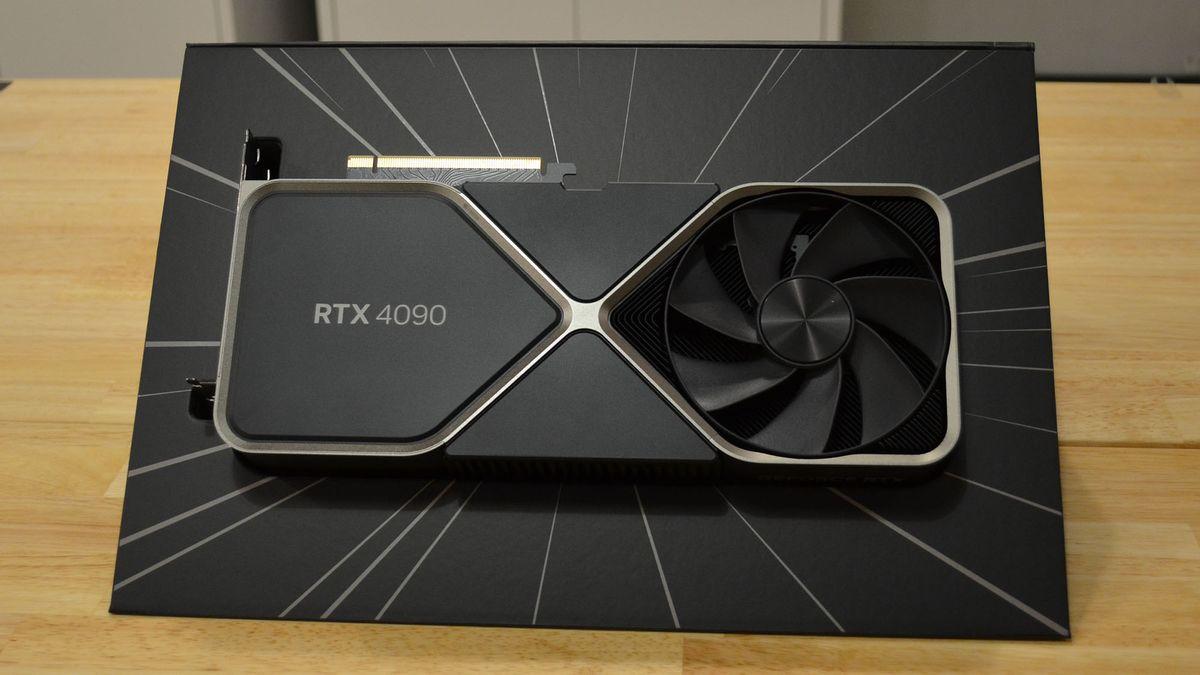
Nvidia RTX 5090 and 5080 GPUs again rumored for CES – but suggestion the RTX 5080 could be positioned as a ‘professional’ GPU might worry PC gamers

  • More rumors are lining up behind a CES 2025 launch for RTX 5090 and 5080
  • However, Nvidia might just pitch both GPUs at the ‘professional’ market
  • That could indicate the RTX 5090 and 5080 will end up seriously pricey

It’s looking more and more likely that Nvidia’s RTX 5090 and 5080 graphics cards are indeed being revealed at CES 2025, as previous chatter has indicated – plus we’ve heard some more worrying hints on pricing, sadly.

Much of the latest next-gen Blackwell speculation over the weekend comes from Moore’s Law is Dead (MLID), and the info here should be regarded with some skepticism, naturally.

MLID’s latest YouTube video has word from two sources at Nvidia’s retail partners who both claim that the unveiling of the RTX 5090 and 5080 is set to happen at CES 2025.

The first source MLID has heard from notes that their firm is currently talking to Nvidia about initial shipment numbers of these graphics cards, and that the on-sale date of the RTX 5090 and 5080 is a matter of weeks after the reveal – so likely late January.

On top of that, VideoCardz noticed that a leaker on X, MegaSizeGPU, has aired details of the GB202 chip (the GPU in the RTX 5090), which will supposedly be 20% bigger than the AD102 in the RTX 4090.

Furthermore, a second leaker on X, Hongxing2020, has shared a purported image of the PCIe 5.0 interface for the Blackwell flagship, and these pieces of spillage are likely from sample 5090 cards that have been sent out – which underlines that the next-gen GPU could be imminent.

Back to MLID’s video (which you can view below), and interestingly, the second source cited also mentions the RTX 5070 is going to be revealed in January – possibly teased at CES 2025, and then getting a proper announcement later in the month, by the sound of things.

{ window.reliablePageLoad.then(() => { var componentContainer = document.querySelector(“#slice-container-newsletterForm-articleInbodyContent-2sbnGrLP7djEVbsasTRMBe”); if (componentContainer) { var data = {“layout”:”inbodyContent”,”header”:”Get the best Black Friday deals direct to your inbox, plus news, reviews, and more.”,”tagline”:”Sign up to be the first to know about unmissable Black Friday deals on top tech, plus get all your favorite TechRadar content.”,”formFooterText”:”By submitting your information you agree to the Terms & Conditions and Privacy Policy and are aged 16 or over.”,”successMessage”:{“body”:”Thank you for signing up. You will receive a confirmation email shortly.”},”failureMessage”:”There was a problem. Please refresh the page and try again.”,”method”:”POST”,”inputs”:[{“type”:”hidden”,”name”:”NAME”},{“type”:”email”,”name”:”MAIL”,”placeholder”:”Your Email Address”,”required”:true},{“type”:”hidden”,”name”:”NEWSLETTER_CODE”,”value”:”XTR-D”},{“type”:”hidden”,”name”:”LANG”,”value”:”EN”},{“type”:”hidden”,”name”:”SOURCE”,”value”:”60″},{“type”:”hidden”,”name”:”COUNTRY”},{“type”:”checkbox”,”name”:”CONTACT_OTHER_BRANDS”,”label”:{“text”:”Contact me with news and offers from other Future brands”}},{“type”:”checkbox”,”name”:”CONTACT_PARTNERS”,”label”:{“text”:”Receive email from us on behalf of our trusted partners or sponsors”}},{“type”:”submit”,”value”:”Sign me up”,”required”:true}],”endpoint”:”https://newsletter-subscribe.futureplc.com/v2/submission/submit”,”analytics”:[{“analyticsType”:”widgetViewed”}],”ariaLabels”:{}}; var triggerHydrate = function() { window.sliceComponents.newsletterForm.hydrate(data, componentContainer); } if (window.lazyObserveElement) { window.lazyObserveElement(componentContainer, triggerHydrate); } else { triggerHydrate(); } } }).catch(err => console.error(‘%c FTE ‘,’background: #9306F9; color: #ffffff’,’Hydration Script has failed for newsletterForm-articleInbodyContent-2sbnGrLP7djEVbsasTRMBe Slice’, err)); }).catch(err => console.error(‘%c FTE ‘,’background: #9306F9; color: #ffffff’,’Externals script failed to load’, err)); ]]>

Sign up to be the first to know about unmissable Black Friday deals on top tech, plus get all your favorite TechRadar content.

Nvidia RTX 5090 & 5080 CES Leak | Intel Battlemage G31 Delay | AMD RDNA 4 Release Date – YouTube Nvidia RTX 5090 & 5080 CES Leak | Intel Battlemage G31 Delay | AMD RDNA 4 Release Date - YouTube Watch On

That third Blackwell GPU will go on sale shortly after January, MLID says, so we could reasonably guess it will be in February (and this isn’t the first time the RTX 5070 has been rumored to be inbound for the near future).

This second source also mentions pricing, and the more positive piece of news here is that on the topic of the RTX 5090, it seems this GPU will be priced at the lower end of the range that was previously leaked.

If you recall, that rumored range was $1,999 to $2,499 in the US (and proportional to that elsewhere, as ever), so it seems that two grand is what Nvidia is now mulling. That is, of course, still 25% pricier than the MSRP of the RTX 4090, and therefore a major hike, so it’s hardly great news – and there’s a gloomier note to follow.

Namely, a claim that some of the marketing materials Nvidia has provided on the subject of talking to customers notes that retailers should be telling would-be buyers that anything above the RTX 5070 Ti is “really for professionals” – so that’s effectively a hint that the RTX 5080 could be pricey, too. Why, exactly? Let’s dive into that next.

Analysis: GeForce is for gaming – right?

What Nvidia appears to be doing here – take all of this with plentiful seasoning, and this bit of speculation, even more so – is preparing retailers for the reality that the top Blackwell models, the RTX 5090 and 5080, are going to be seriously expensive.

So, when PC gamers come into the shop and see the price tags on those GPUs, staff are primed to basically justify those asking prices on the basis that these are really graphics cards for professional use. In other words, gamers don’t need that much horsepower and should be looking at the RTX 5070 (or its variants) or indeed lower (eventually, when the range is filled out).

Now, you could certainly argue this is true of the RTX 4090 already, but it seems like Nvidia is shifting up a gear in this respect, and including the RTX 5080 in that ‘pro’ bracket – possibly due to a weighty price tag of perhaps $1,200 in the US, or maybe even more, up towards $1,400, or so MLID has theorized in the past.

However, if this is true, it feels a bit odd to have not just the flagship, but the top two tiers of the GeForce range of Blackwell GPUs as models angled towards ‘professionals’ – remember, this is a gaming brand. However, we’re getting ahead of ourselves here really, and we need to see if this pricing pans out.

On that point, we should note that in the past, we have heard more positive predictions about pricing not being a ‘significant’ hike for the RTX 5090 – which we’d read as maybe more like a $200 rise – but MLID is very much doubling down on his previous forecast here.

Whatever happens with pricing – and Nvidia may still be judging online reaction to these leaks at this point – it seems that with the weight of rumors now, the RTX 5090 and 5080 are likely imminent (and we might well see Blackwell laptop GPUs at CES 2025, too).

You might also like

Source

Posted on

Is Intel about to turn Arrow Lake CPUs around? Leak suggests ‘big changes’ are coming for Core Ultra 200 chips

  • A leaker claims some major tweaks are close at hand for Arrow Lake
  • We don’t know their nature beyond being ‘voltage-frequency’ related
  • This could be the start of some big performance boosts for Arrow Lake

Intel’s tweaks, which are incoming to help boost the performance of its recently released Arrow Lake (Core Ultra 200S) processors – that rather disappointed upon their arrival – could be about to land.

Or at least we might be about to witness the start of Intel fixing up these desktop CPUs. We’re told by expert overclocker Skatterbench (who’s affiliated with Asus, and regularly sets world records using the firm’s motherboards) on X that Intel has some big changes coming in its next microcode update for Arrow Lake chips (add seasoning, as ever).

These pertain to the ‘VF behavior’ which means voltage-frequency, and as VideoCardz, which noticed this, pointed out, the overclocker likely already has access to the beta update.

Hopefully, it won’t be long before whatever tweaks and improvements are being introduced here come to all Core Ultra 200 CPU owners (though there will be a beta BIOS deployed by motherboard makers first, no doubt, before the full release).

The socket interface of the Intel Core Ultra processor

(Image credit: Intel)

Analysis: A new chapter for Arrow Lake?

So, the crux of the matter here is whether these changes are about delivering better performance for the Core Ultra 200S family, or perhaps more about fixing overclocking (as Skatterbench indicates later in that thread on X). Meaning these (rumored) tweaks could be more about, say, shoring up stability (especially for overclocking), rather than juicing up Arrow Lake CPUs with performance improvements.

The expectation is that this has something to do with Robert Hallock’s (VP of marketing at Intel) previous observation that Arrow Lake’s disappointing performance (particularly with gaming) was due to multiple issues in Windows and the BIOS, and an accompanying promise that fixes are inbound for those problems.

Is this upcoming microcode patch the start of those fixes? Quite possibly, but we’d temper our expectations, as it sounds like Intel has a lot of work to do on this front. Remember, we were also promised a full audit of all the issues in play with Arrow Lake’s missteps, so it seems like a thorny tangle of gremlins in the works, and we’re betting this is going to be a multi-step cure (for “multifactor issues” as Hallock called them).

{ window.reliablePageLoad.then(() => { var componentContainer = document.querySelector(“#slice-container-newsletterForm-articleInbodyContent-bwnwKEQTHui4bgV3tzJXpK”); if (componentContainer) { var data = {“layout”:”inbodyContent”,”header”:”Get the best Black Friday deals direct to your inbox, plus news, reviews, and more.”,”tagline”:”Sign up to be the first to know about unmissable Black Friday deals on top tech, plus get all your favorite TechRadar content.”,”formFooterText”:”By submitting your information you agree to the Terms & Conditions and Privacy Policy and are aged 16 or over.”,”successMessage”:{“body”:”Thank you for signing up. You will receive a confirmation email shortly.”},”failureMessage”:”There was a problem. Please refresh the page and try again.”,”method”:”POST”,”inputs”:[{“type”:”hidden”,”name”:”NAME”},{“type”:”email”,”name”:”MAIL”,”placeholder”:”Your Email Address”,”required”:true},{“type”:”hidden”,”name”:”NEWSLETTER_CODE”,”value”:”XTR-D”},{“type”:”hidden”,”name”:”LANG”,”value”:”EN”},{“type”:”hidden”,”name”:”SOURCE”,”value”:”60″},{“type”:”hidden”,”name”:”COUNTRY”},{“type”:”checkbox”,”name”:”CONTACT_OTHER_BRANDS”,”label”:{“text”:”Contact me with news and offers from other Future brands”}},{“type”:”checkbox”,”name”:”CONTACT_PARTNERS”,”label”:{“text”:”Receive email from us on behalf of our trusted partners or sponsors”}},{“type”:”submit”,”value”:”Sign me up”,”required”:true}],”endpoint”:”https://newsletter-subscribe.futureplc.com/v2/submission/submit”,”analytics”:[{“analyticsType”:”widgetViewed”}],”ariaLabels”:{}}; var triggerHydrate = function() { window.sliceComponents.newsletterForm.hydrate(data, componentContainer); } if (window.lazyObserveElement) { window.lazyObserveElement(componentContainer, triggerHydrate); } else { triggerHydrate(); } } }).catch(err => console.error(‘%c FTE ‘,’background: #9306F9; color: #ffffff’,’Hydration Script has failed for newsletterForm-articleInbodyContent-bwnwKEQTHui4bgV3tzJXpK Slice’, err)); }).catch(err => console.error(‘%c FTE ‘,’background: #9306F9; color: #ffffff’,’Externals script failed to load’, err)); ]]>

Sign up to be the first to know about unmissable Black Friday deals on top tech, plus get all your favorite TechRadar content.

You might also like

Source

Posted on

Intel Battlemage GPU spotted in benchmark – chill out, PC gamers, there’s no need to panic over that leaked B580 core count

  • Intel’s Arc B580 GPU has been leaked via a Geekbench result
  • The score itself is meaningless, but it provides key spec details
  • B580’s core count could be lower than A580, but other specs might balance that out

Intel’s Battlemage graphics cards are supposedly set to launch in December if the rumors are right, and we’ve got another nugget suggesting that – a glimpse of the purported spec of the B580.

That Arc Battlemage B580 GPU is purportedly going to be the first of Intel’s 2nd-gen desktop graphics cards out of the door, and VideoCardz noticed that Tomasz Gawroński flagged up a Geekbench result on X.

The benchmark result itself is pretty meaningless – it’s a sample B580 (in theory, we should add – sprinkle seasoning liberally), and the OpenCL score is hardly a useful metric for a gaming graphics card anyway.

The key point here is the specs shown for the B580, which is apparently set to be loaded with 12GB of VRAM and a boost clock running up to 2.85GHz. We also learn that this GPU has 160 Compute Units (CUs).

As VideoCardz points out, this should mean the B580 has 20 Xe2 cores (with 8 CUs per core in theory).

It’s also worth noting that the video memory spec aligns with a previous leak about an ASRock B580 graphics card, which was also shown with 12GB. And at 2.8GHz, the previous clock speed was in the same area as this new leak too.

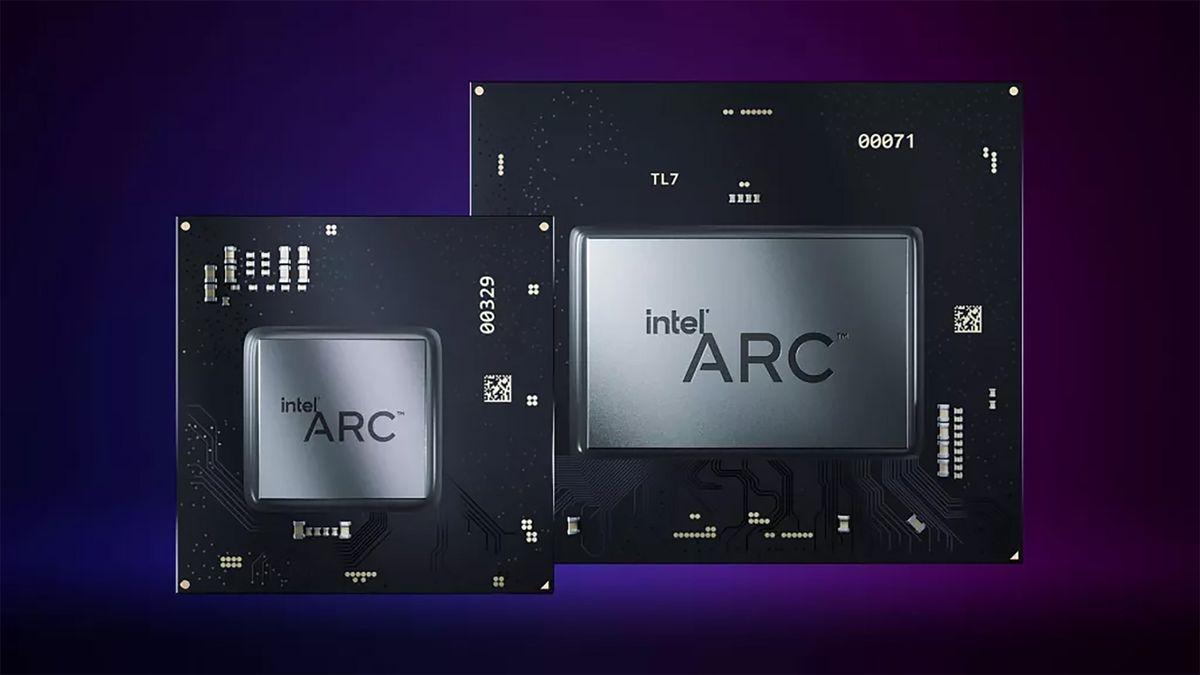
A pair of Intel Arc Alchemist chips in front of a dark purple background

(Image credit: Intel)

Analysis: Don’t panic over those specs

So how do these specs seem to be shaping up? There’s some consternation from some of those commenting online about the drop in core count compared to the existing Arc A580 GPU – as the A580 has 24 cores versus 20 here.

{ window.reliablePageLoad.then(() => { var componentContainer = document.querySelector(“#slice-container-newsletterForm-articleInbodyContent-fJaNnspVPA5k92t66wMpEP”); if (componentContainer) { var data = {“layout”:”inbodyContent”,”header”:”Get the best Black Friday deals direct to your inbox, plus news, reviews, and more.”,”tagline”:”Sign up to be the first to know about unmissable Black Friday deals on top tech, plus get all your favorite TechRadar content.”,”formFooterText”:”By submitting your information you agree to the Terms & Conditions and Privacy Policy and are aged 16 or over.”,”successMessage”:{“body”:”Thank you for signing up. You will receive a confirmation email shortly.”},”failureMessage”:”There was a problem. Please refresh the page and try again.”,”method”:”POST”,”inputs”:[{“type”:”hidden”,”name”:”NAME”},{“type”:”email”,”name”:”MAIL”,”placeholder”:”Your Email Address”,”required”:true},{“type”:”hidden”,”name”:”NEWSLETTER_CODE”,”value”:”XTR-D”},{“type”:”hidden”,”name”:”LANG”,”value”:”EN”},{“type”:”hidden”,”name”:”SOURCE”,”value”:”60″},{“type”:”hidden”,”name”:”COUNTRY”},{“type”:”checkbox”,”name”:”CONTACT_OTHER_BRANDS”,”label”:{“text”:”Contact me with news and offers from other Future brands”}},{“type”:”checkbox”,”name”:”CONTACT_PARTNERS”,”label”:{“text”:”Receive email from us on behalf of our trusted partners or sponsors”}},{“type”:”submit”,”value”:”Sign me up”,”required”:true}],”endpoint”:”https://newsletter-subscribe.futureplc.com/v2/submission/submit”,”analytics”:[{“analyticsType”:”widgetViewed”}],”ariaLabels”:{}}; var triggerHydrate = function() { window.sliceComponents.newsletterForm.hydrate(data, componentContainer); } if (window.lazyObserveElement) { window.lazyObserveElement(componentContainer, triggerHydrate); } else { triggerHydrate(); } } }).catch(err => console.error(‘%c FTE ‘,’background: #9306F9; color: #ffffff’,’Hydration Script has failed for newsletterForm-articleInbodyContent-fJaNnspVPA5k92t66wMpEP Slice’, err)); }).catch(err => console.error(‘%c FTE ‘,’background: #9306F9; color: #ffffff’,’Externals script failed to load’, err)); ]]>

Sign up to be the first to know about unmissable Black Friday deals on top tech, plus get all your favorite TechRadar content.

However, there’s give and take in these specs. If the core count is dropped to 20 (and it may not be), those are still next-gen Xe2 cores benefiting from a new, faster architecture. On top of that, the boost clock is much faster than the A580 (which is officially clocked at 1.7GHz, although third-party models ran at 2GHz or so – but 2.8GHz is a big leap over that).

Furthermore, you’ve got a more comfortable loadout of VRAM here at 12GB versus 8GB (even though, if the rumors are right, memory bandwidth will be a touch tighter with the B580 versus the A580).

All of this remains speculation, and we should bear in mind two points here. Firstly, the B580 will be appreciably faster than the A580, whatever happens. Intel would look foolish if it was otherwise, obviously enough. And secondly, no matter where the spec comes out, Intel can still attack at the low-end of the GPU market by pricing the B580 to undercut AMD and Nvidia’s budget offerings.

With all these leaks springing up around Battlemage in the past week or two, it seems fairly certain that we will see the B580 unveiled next month – but clearly, we can’t be sure of that (and even if it’s Intel’s intention right now, a last-minute delaying factor could still interfere).

It makes sense that Intel will want to grab the desktop GPU limelight for a while before AMD and Nvidia bring out their big guns (or medium-sized artillery, perhaps, in the case of RDNA 4) at CES 2025 in January as the grapevine insists.

You might also like

Source

Posted on

We may now know when Apple Intelligence will get Google Gemini integration

iOS 18.2 will finally bring OpenAI’s wildly popular ChatGPT to Siri thanks to integration with Apple Intelligence. This partnership will make Apple’s AI platform even more clever by upgrading Writing Tools and beefing up Siri with ChatGPT’s most recent large language models.

While deeper integration isn’t expected until iOS 18.4, when Siri will be able to control people’s iPhones, there’s a lot of anticipation about this partnership between Apple and OpenAI. Here’s how Apple explains it:

With ChatGPT from OpenAI integrated into Siri and Writing Tools, you get even more expertise when it might be helpful for you — no need to jump between tools. Siri can tap into ChatGPT for certain requests, including questions about photos or documents. And with Compose in Writing Tools, you can create and illustrate original content from scratch.

You control when ChatGPT is used and will be asked before any of your information is shared. Anyone can access ChatGPT for free, without creating an account. ChatGPT subscribers can connect accounts to access paid features within these experiences.

iOS 18.2 ChatGPT integration with Apple IntelligenceiOS 18.2 ChatGPT integration with Apple Intelligence Image source: José Adorno for BGR
However, this isn’t the only LLM that will be available with its AI platform. Back in June, during the WWDC 2024 keynote, Apple announced that Apple Intelligence would work with third-party LLMs. While this partnership starts with ChatGPT, more companies will be able to join the party later.

So far, Bloomberg has reported that Antropic’s Claude and Google’s Gemini were working on this integration. Apple’s Craig Federighi already stated that he would love to have Gemini integration with Apple Intelligence.

Tech. Entertainment. Science. Your inbox.

Sign up for the most interesting tech & entertainment news out there.

By signing up, I agree to the Terms of Use and have reviewed the Privacy Notice.

Now in his latest Power On newsletter, Bloomberg‘s Mark Gurman gave a tidbit on when to expect Google Gemini integration in Apple Intelligence. With an official app recently released for iPhone users, Gurman expects Google Gemini to be available with Apple Intelligence sometime next year. That’s obviously bad news if you’re eagerly awaiting the ability to use Gemini in place of ChatGPT within Apple Intelligence, though we’re not sure how many people out there fall into that category.

The supposed delay is probably due to Apple’s deal with OpenAI. Since Cupertino doesn’t pay OpenAI for this integration, the reporter thinks Apple gave it a “nice window of exclusivity,” which is why “I wouldn’t expect the Gemini chatbot to arrive in iOS until next year.”

Source

Posted on

AMD’s Ryzen chips appear to be wiping the floor with Intel – but the best-selling CPUs right now might surprise you

  • Intel’s top-selling CPU is a lowly number 13 in Amazon rankings
  • Team Blue is doing better in the Newegg CPU chart, but still not well
  • This may reflect fallout from Intel’s recent fumbles with chip instability and the rocky Arrow Lake launch

AMD is totally cleaning up in the world of desktop processors, with Intel lagging way behind its rival now, at least going by Amazon’s rankings of the bestselling CPUs.

As you may be aware, Amazon keeps track of the bestsellers across its entire range of tech (and other) products, and the top processor list is currently dominated by AMD, with Team Red now holding the entire top 10.

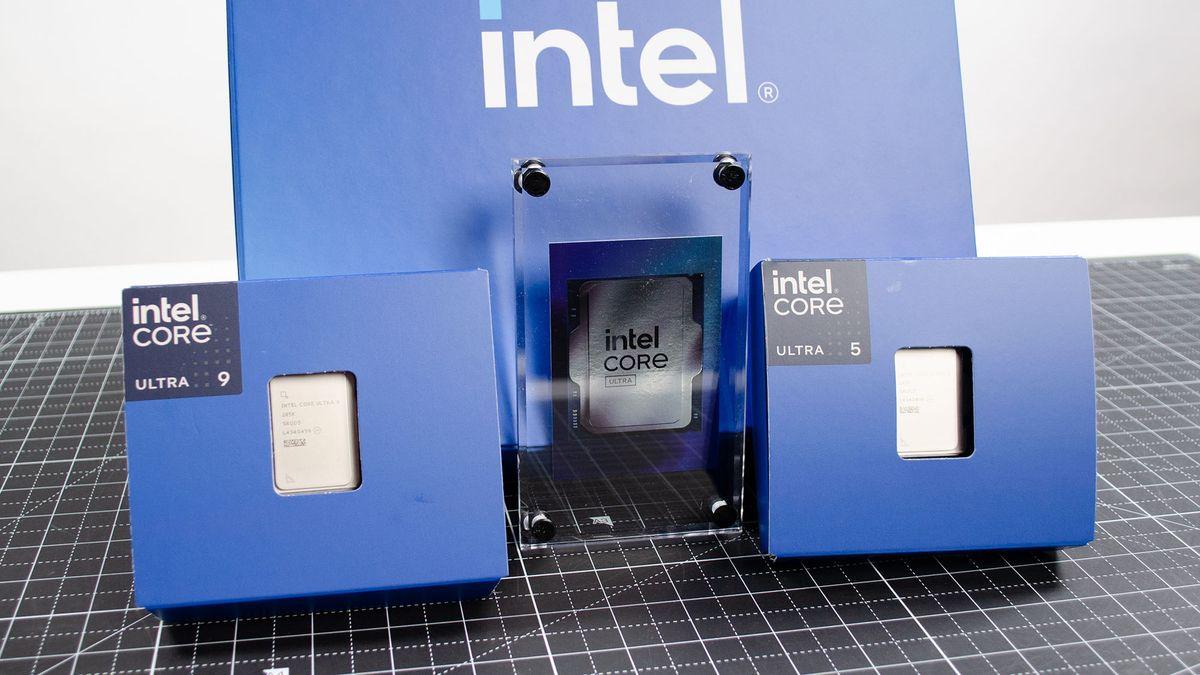
In fact, the first Intel CPU you’ll see is the Intel Core i5-13600KF at number 13, so the top 12 processors are from AMD (at the time of writing, anyway). Granted, Intel does have numbers 14, 15, 17, and 18 as well, notably with older CPUs from the 13th-gen and 14th-gen ranges, with no Core Ultra 200S (Arrow Lake) chips to be seen in the top 20 – or indeed in the top 100.

Are those chips simply too fresh to the market, then? Well, AMD’s Ryzen 9800X3D is also very new on the scene and is ranked at the number four spot, in fact, it’s been so popular that at the time of writing it’s sold out of stock.

What are AMD’s top chips by sales, then? At number one we have the AMD Ryzen 5700X, the mainstay from two generations ago which is still selling strongly, followed by its more affordable sibling, the 5600X.

The AMD Ryzen 7800X3D is in third place, followed by the 9800X3D as mentioned, and then the Ryzen 7600X is in fifth. It makes sense to see the 7800X3D in a strong position; it’s now the cheaper alternative to the next-gen 9800X3D, while remaining a strong choice of CPU for serious PC gamers.

An AMD Ryzen 7 7800X3D on top of its retail packaging

(Image credit: Future/John Loeffler)

Analysis: Processing advantage AMD

This represents a very clear picture of how AMD has pulled ahead in the CPU arena, albeit it is just one retailer – though a huge retail player, of course.

{ window.reliablePageLoad.then(() => { var componentContainer = document.querySelector(“#slice-container-newsletterForm-articleInbodyContent-8dK52bhBoHdW4eWepDqKeT”); if (componentContainer) { var data = {“layout”:”inbodyContent”,”header”:”Get the best Black Friday deals direct to your inbox, plus news, reviews, and more.”,”tagline”:”Sign up to be the first to know about unmissable Black Friday deals on top tech, plus get all your favorite TechRadar content.”,”formFooterText”:”By submitting your information you agree to the Terms & Conditions and Privacy Policy and are aged 16 or over.”,”successMessage”:{“body”:”Thank you for signing up. You will receive a confirmation email shortly.”},”failureMessage”:”There was a problem. Please refresh the page and try again.”,”method”:”POST”,”inputs”:[{“type”:”hidden”,”name”:”NAME”},{“type”:”email”,”name”:”MAIL”,”placeholder”:”Your Email Address”,”required”:true},{“type”:”hidden”,”name”:”NEWSLETTER_CODE”,”value”:”XTR-D”},{“type”:”hidden”,”name”:”LANG”,”value”:”EN”},{“type”:”hidden”,”name”:”SOURCE”,”value”:”60″},{“type”:”hidden”,”name”:”COUNTRY”},{“type”:”checkbox”,”name”:”CONTACT_OTHER_BRANDS”,”label”:{“text”:”Contact me with news and offers from other Future brands”}},{“type”:”checkbox”,”name”:”CONTACT_PARTNERS”,”label”:{“text”:”Receive email from us on behalf of our trusted partners or sponsors”}},{“type”:”submit”,”value”:”Sign me up”,”required”:true}],”endpoint”:”https://newsletter-subscribe.futureplc.com/v2/submission/submit”,”analytics”:[{“analyticsType”:”widgetViewed”}],”ariaLabels”:{}}; var triggerHydrate = function() { window.sliceComponents.newsletterForm.hydrate(data, componentContainer); } if (window.lazyObserveElement) { window.lazyObserveElement(componentContainer, triggerHydrate); } else { triggerHydrate(); } } }).catch(err => console.error(‘%c FTE ‘,’background: #9306F9; color: #ffffff’,’Hydration Script has failed for newsletterForm-articleInbodyContent-8dK52bhBoHdW4eWepDqKeT Slice’, err)); }).catch(err => console.error(‘%c FTE ‘,’background: #9306F9; color: #ffffff’,’Externals script failed to load’, err)); ]]>

Sign up to be the first to know about unmissable Black Friday deals on top tech, plus get all your favorite TechRadar content.

If you look at Newegg, which also keeps a regularly updated CPU ranking, this isn’t quite as heavily weighted towards AMD, but Team Red is clearly winning. In this case, Intel does have chips at numbers five through to eight, and 14, plus 20, but the rest of the top 20 is entirely AMD (again, that’s correct at the time of writing, though the processors may have shuffled around a bit by the time you’re reading this).

It’s much the same story as Amazon with the bestselling Ryzen chips, though the top seller is actually the Ryzen 9800X3D in this case (even though it has sold out – stock is still a big issue for would-be buyers), followed by the Ryzen 7600X (with a nice discount as you might guess). For Intel, the 14700K and 14900K are the top offerings – you won’t find an Arrow Lake CPU until number 39, where the flagship 285K currently resides.

Are we particularly surprised at this development? Well, not really, although the grip AMD has on the market at Amazon is pretty eye-opening. But given recent history in the world of CPUs, with Intel having a nightmarish time with its 14th-gen and 13th-gen silicon suffering serious instability problems, and Arrow Lake having a wobbly launch too, it’s pretty much a given that AMD is going to capitalize on these missteps.

Even if Ryzen 9000 also received a rather lukewarm reception, albeit the Ryzen 9800X3D has turned that around as a gaming powerhouse chip – the problem with that new 3D V-Cache CPU is that it’s out of stock everywhere, as noted.

Via Tom’s Hardware

You might also like

Source