Posted on

New Nintendo Today app leaks mysterious Switch 2 button

Nintendo revealed the Nintendo Switch 2 design in mid-January after weeks of leaks that seemingly spoiled all the secrets of the new handheld.

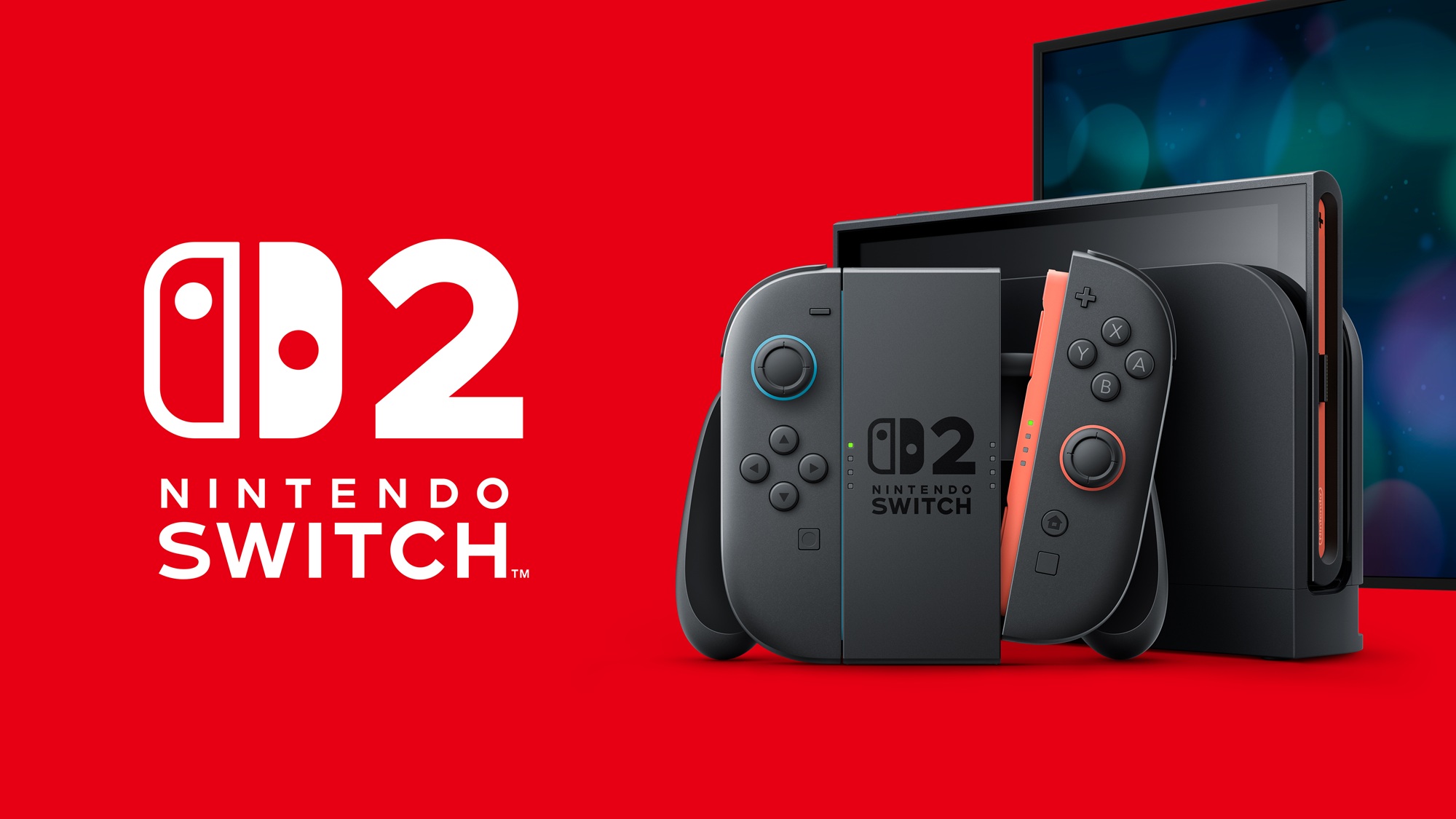
However, Nintendo only showed the console’s official design, choosing not to mention any other details about the product so many gamers were waiting for. Puzzlingly, Nintendo even went out of its way to hide a new Switch 2 feature in the marketing materials it was willing to share, like the one above.

All the Switch 2 leaks that popped up online in late December and early January showed a mysterious button on the redesigned Joy-Con controllers with a “C” label. Fans speculated that the button was related to a new chat feature, but that was never confirmed. That’s the button that Nintendo hid in the Switch 2 marketing materials.

Nearly three months later, the Switch 2 launch event is upon us. Ahead of next week’s Nintendo Direct presentation, where we’ll learn everything about the new console, the company held a March Nintendo Direct event this week to announce new Switch games.

Tech. Entertainment. Science. Your inbox.

Sign up for the most interesting tech & entertainment news out there.

By signing up, I agree to the Terms of Use and have reviewed the Privacy Notice.

Nintendo also unveiled a new Nintendo Today news app for iPhone and Android, which is now available to download. That official app contains Switch 2 images that confirm that the new button will have a “C” on it.

As with all mobile apps available to download from digital stores, Nintendo Today has its own page on the App Store. That page has a short description and several screenshots, as you can see below.

Nintendo Today marketing images from the App Store page.Nintendo Today marketing images from the App Store page. Image source: App Store

Scroll through those images, and you’ll find a tiny Switch 2 image in the sixth screenshot. “Get updates on Nintendo Switch 2 news plus game info, videos, comics, and more every day,” the message on that screenshot reads.

The image is similar to the Switch 2 marketing renders Nintendo has offered since January. But VGS zoomed in and discovered that the “C” button label is no longer hidden. After zooming in, I can confirm the image still shows the button label:

Zooming in on the Nintendo Switch 2 console reveals the Zooming in on the Nintendo Switch 2 console reveals the “C” button. Image source: App Store

This must be the final version of the console. We’ve reached a point where Nintendo is comfortable showing the mysterious button without explaining it yet, or it’s all a mistake from the team that put those App Store screenshots together.

Whatever the case, there’s no question that the right Joy-Con controller will feature a new button, which will have a “C” on it. As for that letter’s significance, we have to wait until April 2nd, when Nintedo will explain everything. The Switch 2 specs, price, preorder, release date, and first batch of exclusive games will also be announced at the show next week.

On that note, it seems almost certain that Switch 2 preorders will start on April 2nd, possibly right after Nintendo Direct. Big retailers like Best Buy are already making preparations for it.

Source

Posted on

ChatGPT image generation is running into yet another big problem

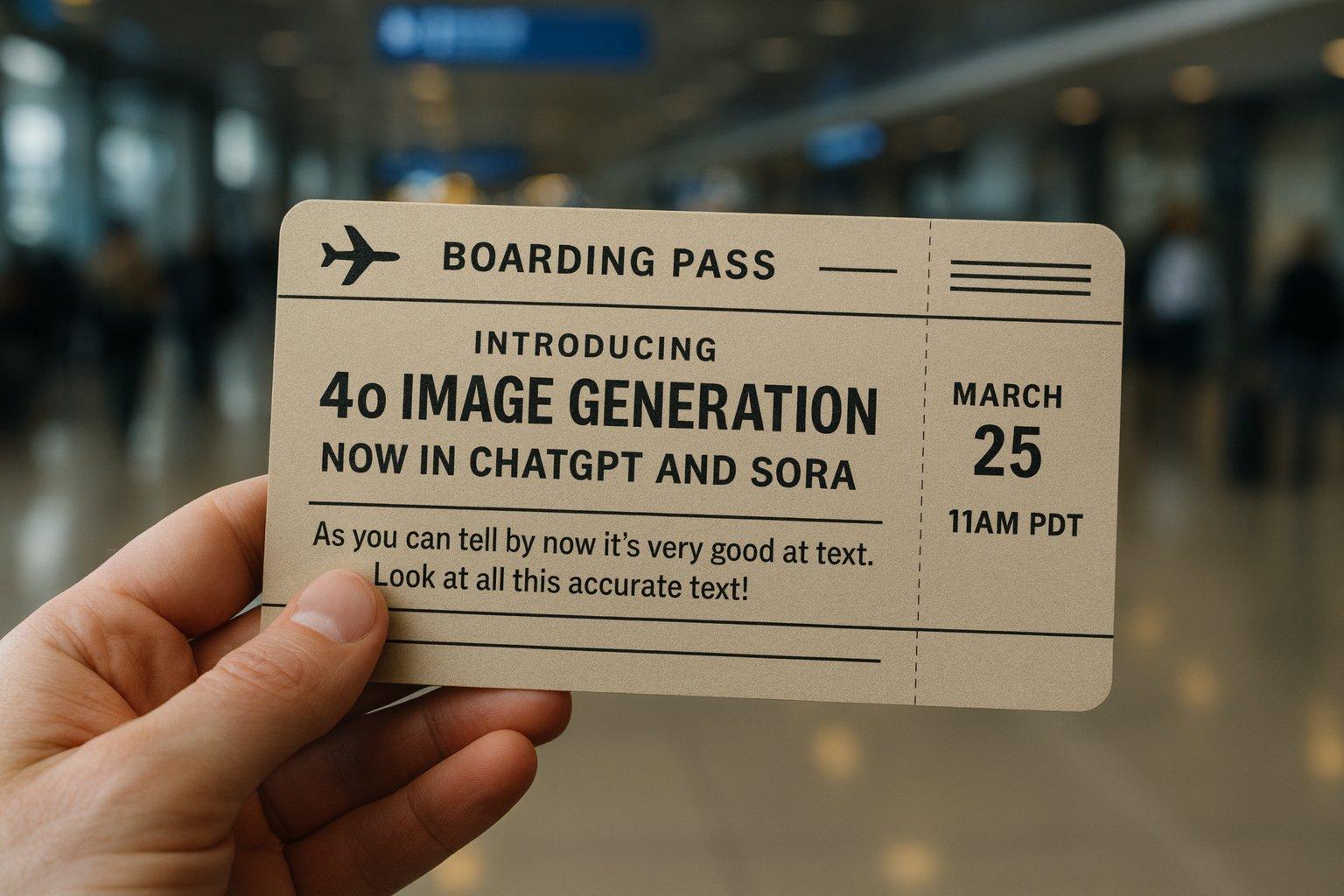
OpenAI unveiled its latest image generation model earlier this week. But rather than creating a separate product, it built the GPT-4o image generation abilities right into ChatGPT. That made it even easier to come up with mind-blowing ChatGPT-generated images. Just type your detailed prompt, and ChatGPT will deliver the images you want. That includes pics that contain legible text, images that offer creative edits to real photos, deepfakes of celebrities, and more.

ChatGPT went viral overnight for its amazing image generation capabilities, as users with access to one of the paid tiers flooded the web with AI images. This sparked a new controversy due to the massive wave of Ghibli-inspired photos that flooded the web. As we explained before, OpenAI doesn’t seem to care that it’s creating deepfakes and ripping off copyrighted content.

Rather than taking steps to prevent the obvious abuse, Sam Altman & Co. are doubling down on the “freedom” they’ve embraced for this model.

While they don’t care very much about improving ChatGPT safety for the new 4o image generation model, they do care about resources. That’s why Altman announced that limits are coming to ChatGPT AI image generation, as OpenAI’s “GPUs are melting” due to the massive number of requests. So far, the OpenAI CEO only mentioned limits for the ChatGPT Free tier. That’s not much of an issue for the time being, however, since free users don’t even have access to the new image generation model.

Tech. Entertainment. Science. Your inbox.

Sign up for the most interesting tech & entertainment news out there.

By signing up, I agree to the Terms of Use and have reviewed the Privacy Notice.

Altman announced the limits on X, saying it’s “super fun seeing people love images in ChatGPT, but our GPUs are melting.”

it’s super fun seeing people love images in chatgpt.

but our GPUs are melting.

we are going to temporarily introduce some rate limits while we work on making it more efficient. hopefully won’t be long!

chatgpt free tier will get 3 generations per day soon.

That’s where he also noted that the ChatGPT Free users will be allowed to generate three images per day “soon.” 

When OpenAI unveiled the new image generation model, the company included the ChatGPT Free tier in the initial rollout plans. In practice, only ChatGPT Plus, Pro, and Team users have access to the feature.

I’m on a ChatGPT Plus plan and have already tried the service. I already generated more than three images with the AI, and I can see why it’s so appealing to do it, considering the new features ChatGPT built into it.

What I’m getting at is that paid ChatGPT users are more likely to use the feature and make those GPUs melt. But Altman announced no image generation limits for the Plus, Pro, and Team tiers.

I wouldn’t be surprised if such limits were implemented in the near future, at least as long as the service continues to receive heavy traffic. Those GPUs aren’t melting, but they’re working round the clock to generate images and satisfy other ChatGPT needs. That leads to increased energy consumption and associated costs.

Also, as a ChatGPT user myself, I don’t want to see other ChatGPT services get bogged down because OpenAI’s infrastructure is bogged down in generating images, especially if they’re deepfakes or copyright-infringing pictures.

Speaking of safety, Altman replied to the tweet above to say OpenAI is further improving the freedom ChatGPT has to generate images. Altman noted that OpenAI is “refusing some generations that should be allowed,” fixing them as fast as possible.

Source

Posted on

Help, I can’t stop engraving everything in my house with the Acmer P3 laser engraver

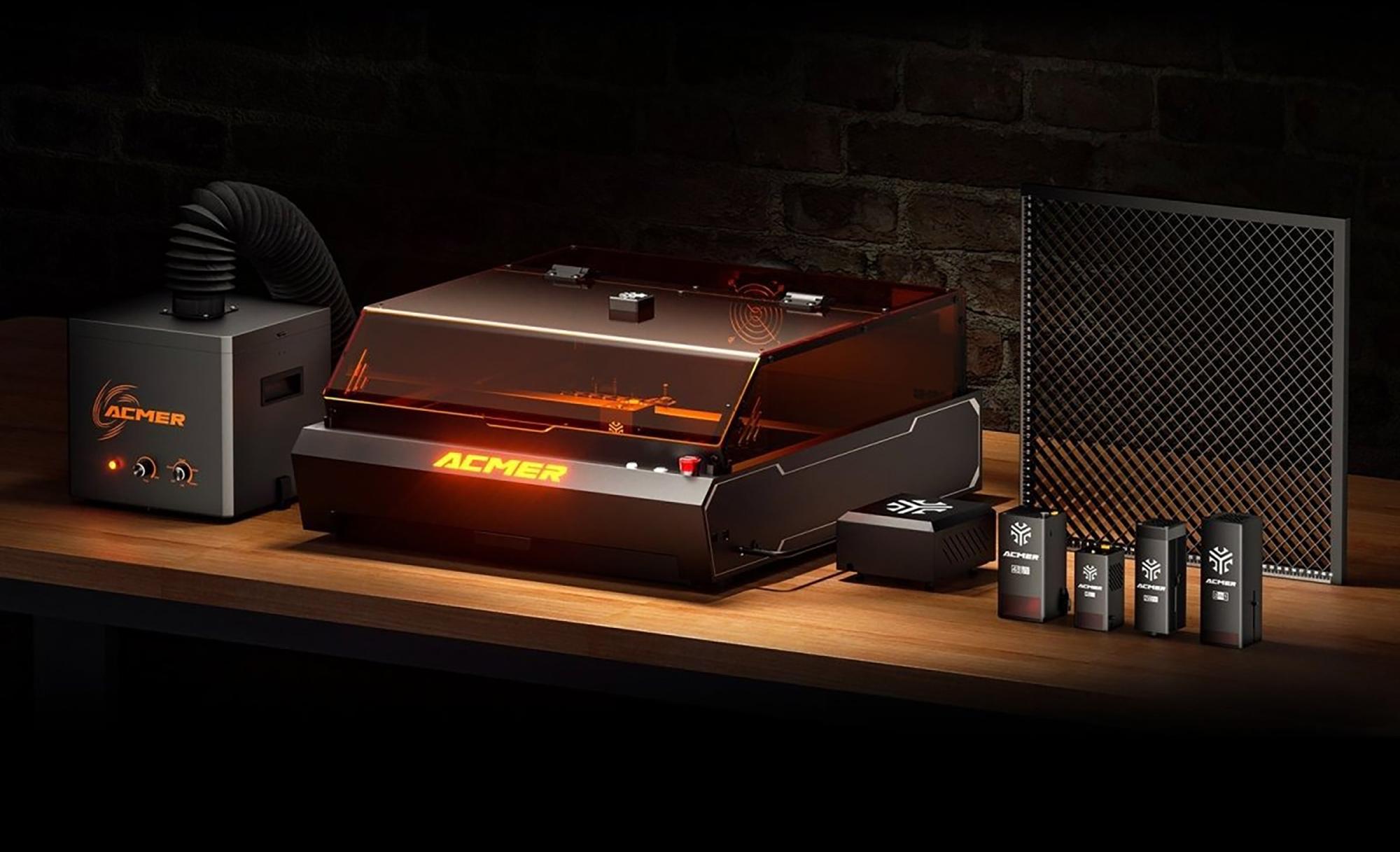
Guys, I’m seriously worried that my husband might leave me. Why? Because I can’t stop engraving everything in my house. Ever since Acmer sent me a P3 dual laser engraver to test, I’ve been engraving pretty much everything I own that fits into the machine. And everything my husband owns. And all my dog’s stuff. Seriously, you guys… I have a problem.

Hopefully you can exercise more restraint than I can, because you’re about to find out just how cool this gadget is. The Acmer P3 dual laser engraver is on sale with a massive double discount that slashes nearly $900. Just be sure that you use the promo code 2IN115Off at checkout to get the lowest possible price.

ACMER P3 IR&Diode Enclosed Dual Laser Engraver ACMER P3 IR&Diode Enclosed Dual Laser Engraver $1,104.15 (reg. $1,999) Double Discount!

Before I get to anything else, I’m going to answer the first question you have. I know exactly what it is because I had the very same question: What materials can you engrave with the Acmer P3 dual laser engraver?

Tech. Entertainment. Science. Your inbox.

Sign up for the most interesting tech & entertainment news out there.

By signing up, I agree to the Terms of Use and have reviewed the Privacy Notice.

The answer to that question actually comes in two parts. That’s because, as you’ll notice, the device has “dual laser engraver” right in the name.

Acmer’s P3 dual laser engraver is a 2-in-1 device that actually comes with two different lasers. First, there’s an IR laser that can be used to engrave metal, plastic, and opaque acrylic. I’ve been having a lot of fun with this one, and I do mean A LOT.

Then, there’s a diode laser that can engrave way more materials. Per Acmer’s website, the list includes “paper, wood, leather, MDF, stainless steel, some dark opaque acrylic, bamboo, fabric, dark glass, ceramic, jade, marble, shale, cement, brick, plated metal, and painted metal.”

On top of all that, the diode laser doesn’t just engrave things — it can also actually cut certain materials like paper, wood, leather, and dark acrylic. That means you can cut stuff into any shape you want, and then engrave it with any words or patterns you want.

Can you see why I’m obsessed with this thing?!

Acmer P3 appsImage source: Acmer

If you’re like me, you might be thinking that setting up the Acmer P3 dual laser engraver and using it is probably pretty complicated. I mean, when I was a kid, there used to be entire businesses in the mall that were dedicated to engraving your stuff. As a matter of fact, there’s still a kiosk in the mall near my house that engraves jewelry and whatnot. Well, I’ll be engraving my own jewelry from now on, thank you very much.

The Acmer P3 is super easy to set up anywhere in your home, studio, or garage. You’ll just want to make sure that you set it up near a window because there’s an exhaust tube that blows out the smoke created when you laser different materials. Or, if you don’t want to deal with setting it up near a window, you can pick up Acmer’s AP220 Smoke Air Purifier so you won’t have to worry about it.

As far as operation goes, that’s easy too. Acmer has apps for iOS and Android, and there’s third-party software you can use on your computer. You can load any designs you want, or draw right in the app. I don’t have that kind of talent, so I’ve been loading designs and text that I type when I want to engrave things.

ACMER P3 IR&Diode Enclosed Dual Laser Engraver ACMER P3 IR&Diode Enclosed Dual Laser Engraver $1,104.15 (reg. $1,999) Double Discount!

If there’s one downside to the Acmer P3 dual laser engraver, it might be the price. At $1,999, it’s pretty expensive — though, if you compare it to other laser engravers, you’ll spend way more than that on models that are far less capable.

With that in mind, the retail price is actually pretty reasonable. At the time of this writing, however, the P3 was on sale with a massive double discount that saves you almost $900! First, there’s a 35% discount that cuts the price to $1,299. Then, the coupon code 2IN115Off saves you another 15% and cuts your price all the way down to $1,104.15.

That’s an absolute steal for this awesome dual laser engraver. Just don’t be like me, and remember to ask your family and friends before you start engraving all their stuff.

Source

Posted on

UK government under-prepared for catastrophic cyber attack, hears PAC

The government is under-prepared for a catastrophic cyber attack and still dogged by legacy IT, but making progress, the Public Accounts Committee of the House of Commons has heard.

The committee, chaired by Geoffrey Clifton-Brown, Conservative MP for North Cotswolds, took testimony on 10 March from four high-ranking government IT leaders about the cyber resilience of Whitehall departments. This followed the publication, in January, of a report by the National Audit Office (NAO), which found government cyber resilience lacking, weakened by legacy IT and skills shortages, and facing mounting threats.

In its Government cyber resilience report, the public spending watchdog warned that the cyber threat to the UK government is “severe and advancing quickly”. It found that 58 critical government IT systems, assessed in 2024, had significant gaps in cyber resilience, and the government does not know how vulnerable at least 228 “legacy” IT systems are to cyber attack.

The NAO spotted that the government’s cyber assurance scheme, GovAssure, found significant gaps in cyber resilience, with multiple fundamental system controls at low levels of maturity across departments. GovAssure assesses the critical systems of government organisations. It was set up in April 2023.

The question, according to the report under review at the PAC committee session, is no longer if the government will face a damaging cyber attack, but how severe the impacts may be, as the sophistication and number of attacks continues to rise.

As the government’s operations become increasingly digitised, so too does the severity of potential impacts resulting from cyber attacks. In an effort to combat this, the government published a Cyber Security Strategy in 2022, which set out plans to make the public sector resilient to cyber attacks by 2030. The PAC chair said the committee would look at “how the government understands the severity of the cyber threat that it faces, how it can best achieve the aim of the strategy, and build the government’s resilience to cyber attacks”.

Testifying before the committee were: Cat Little, chief operating officer for the Civil Service and permanent secretary to the Cabinet Office; Vincent Devine, government chief security officer and head of the Cabinet Office’s Government Security Function; Joanna Davinson, interim government chief digital officer at the Department for Science, Innovation and Technology; and Bella Powell, cyber director of the Cabinet Office’s Government Security Group.

One matter of concern to the MPs on the committee is the lack of visibility civil servants seem to have into the very number of government IT systems, spread across departments and “arms-length bodies”, and to what extent they are “legacy” systems especially vulnerable to cyber attack.

Clive Betts, Labour MP for Sheffield South East, said: “This is quite a critical issue. This is about the threat from potential cyber attack that could be launched against a legacy system, and we don’t yet know what the systems are to begin with.”

This is quite a critical issue. This is about the threat from potential cyber attack that could be launched against a legacy system, and we don’t yet know what the systems are to begin with Clive BettsLabour MP for Sheffield South East

Davinson responded: “It’s not a simple, ‘What’s the list?’ We’ve asked that question of departments, and have had responses through our legacy risk framework. We’ve got that understanding and we are continuing to expand that out to other organisations. [But] it’s not a resource-free exercise.”

Little added: “What this part of our discussion really brings to light is that government, in a period of scarce resources, has got to make prioritised decisions based on risks and how much assurance is desired. And it’s for the government to set its risk appetite, and to use that risk appetite and information to allocate resources accordingly.

“We’ve made huge progress in understanding the most significant issues that we’ve got [in terms of legacy], and whilst it’s not every single system, it is the vast majority … [and] we’re using both GovAssure and our technical expertise in legacy IT to set out for ministers the choices about risk and how much risk they want to buy out. That is the fundamental question. If you’ve got X billion pounds available to fund people, resources, skills, to remediate legacy IT, and to invest in new technology, how you use your allocative resource has got to be risk based, and it’s got to be outcome based. The whole point of the Spending Review process is to bring outcomes and risks together so that ministers can make a funding allocation choice.”

Powell said: “We are ramping up the number of systems that we’re looking at. We are not doing that in an exponential fashion, but I think it’s also worth noting that with GovAssure, we are driving the car and building it at the same time. We launched it in April 2023 following some early pilots with departments [when] it was still at an early-stage assurance process.

“There is much more that we can and need to do, particularly in terms of automation of that process, in terms of providing stronger support and guidance to departments in implementing it, and also in the root cause analysis to better understand the data that we are gathering from that process. It is by no means a finished product, it is by no means a perfect product, but what it’s already starting to do is give us the outcomes that we need in terms of understanding resilience levels and where we can take action.”

MPs were also concerned about the extent to which the government has, as the NAO report states, under-estimated the extent of cyber risk.

Devine was candid in relation to the lateness of the introduction of GovAssure in April 2023. “We probably have woken up to the scale of cyber risk more slowly than we should have done. We were probably unrealistic in relying upon self-assessment [of government departments],” he said.

We didn’t ramp up the government response to cyber security from assurance through to response as quickly as we should have … because we [weren’t] as alive to the threats as we should have been Vincent DevineCabinet Office

“Despite recognising this in 2010, starting to invest money significantly in 2016, we didn’t ramp up the government response to cyber security from assurance through to response as quickly as we should have, in retrospect. Why? Because I don’t think we were as alive to the threats as we should have been, and probably because we hadn’t had the incidents that brought it to life for us that we and our allies have had over the last five years. It’s not a good answer, but it is the true answer,” Devine added.

To that, Little added: “It’s really difficult to go back in time to our predecessors. Like all good risk management, you manage risks as best you can until they become an issue. When they become an issue, and they’re live and they’re real, you step up your response…. We’ve always known about the risks, but it wasn’t until it became a real, live issue that the scale of what we were dealing with became clear, and it needs a different sort of response.”

The original NAO report gave, as an example of how damaging cyber attacks can be, the instance, in June 2024, of an attack on a supplier of pathology services to the NHS in south-east London, which led to two NHS foundation trusts postponing 10,152 acute outpatient appointments and 1,710 elective procedures. It also cited the British Library ransomware attack in October 2023, which has already cost £600,000 to rebuild services. The library expects to spend many times more as it continues to recover. These were mentioned in the PAC session.

The report found that the biggest risk to making the UK government resilient to cyber attack is a gaping skills gap. One in three cyber security roles in government were vacant or filled by temporary – and more expensive – staff in 2023-24, while more than half of cyber roles in several departments were vacant, and 70% of specialist security architects were staff on temporary contracts.

In the Public Accounts Committee meeting, Little said she was sad to see a continued over-reliance on contractors, but that initiatives such as a cyber security Fast Stream and a new “digital pay framework” were “starting to have an impact”.

Powell added that the overall number of digital technology professionals in the civil service has grown, and stands at nearly 6%. “It’s not as much as we’d like it to be. We are struggling with the very technical resources, and that’s a market problem – they are scarce in the private sector as well as in the public sector,” she said.

Source

Posted on

ChatGPT celebrity deepfakes are going viral, and there’s only one way to stop them

The new ChatGPT 4o image generation model is the talk of the town, and not just for good reasons. Everyone is marveling at the AI’s amazing new abilities, which include generating legible text in images, creating fake photos out of real ones, creating deepfakes of celebrities, and replicating copyrighted content like Studio Ghibli characters. It all happens incredibly fast, with the AI able to respond to your needs.

But some people have been quick to point out the bad things about the new AI image model. First, the most obvious problem that we’re not really talking about is that ChatGPT has dealt a swift blow to all sorts of content creators, including graphic designers and photographers. Of course, we already have other AI image-generation programs that endanger those professions. This isn’t a ChatGPT safety issue, either.

The fact that ChatGPT-created images have no visible watermark to inform unsuspecting people they’re not real images is a big safety concern. More visible is the Studio Ghibli controversy, which shows that OpenAI is willing to let 4o image generation easily rip off copyrighted content.

The even more annoying thing about ChatGPT’s new image generation abilities is how easy it is to make deepfakes of celebrities. This one is especially troubling to me, an internet user, because malicious actors have unfettered access to the tool.

Tech. Entertainment. Science. Your inbox.

Sign up for the most interesting tech & entertainment news out there.

By signing up, I agree to the Terms of Use and have reviewed the Privacy Notice.

OpenAI has started paying attention to the criticism it received since the launch of 4o image generation, but it’s not taking any action, especially on the deepfake problem. It turns out the only way to stop someone from using your face with ChatGPT is to opt out of it with OpenAI.

As I pointed out before, OpenAI never addressed these ChatGPT security matters in its original announcement. But the company retweeted a blog post from OpenAI engineer Joanne Jang explaining the lax security features in ChatGPT 4o image generation. Sam Altman also retweeted the same blog post. Why not publish it on the OpenAI blog if this is the company’s official stance?

Jang, who leads model behavior at OpenAI, took to Substack to explain the lax safety features in ChatGPT 4o image generation. The engineer makes the case for OpenAI giving ChatGPT more freedom so users can unleash their creativity rather than be stopped by the AI’s refusal to generate images based on more drastic safety features.

“Images are visceral,” Jang says, and I definitely agree. “There’s something uniquely powerful and visceral about images; they can deliver unmatched delight and shock. Unlike text, images transcend language barriers and evoke varied emotional responses. They can clarify complex ideas instantly.”

Also, it’s great to see that OpenAI is more malleable when it comes to certain censorship features. Jang gives an example of how ChatGPT offensive content:

When it comes to “offensive” content, we pushed ourselves to reflect on whether any discomfort was stemming from our personal opinions or preferences vs. potential for real-world harm. Without clear guidelines, the model previously refused requests like “make this person’s eyes look more Asian” or “make this person heavier,” unintentionally implying these attributes were inherently offensive.

The blog also covers the use of hate symbols in images and the “stronger protections and tighter guardrails” for people under 18.

What’s more problematic is OpenAI’s openness to allowing ChatGPT to create deepfakes with such ease.

Here’s Jang’s explanation of how ChatGPT 40 image generation handles public figures:

We know it can be tricky with public figures—especially when the lines blur between news, satire, and the interests of the person being depicted. We want our policies to apply fairly and equally to everyone, regardless of their “status.” But rather than be the arbiters of who is “important enough,” we decided to create an opt-out list to allow anyone who can be depicted by our models to decide for themselves.

Remember when Scarlett Johansson called out that deepfake anti-Kanye video that used her face without her permission and asked the government to take action against the use of deepfakes?

Well, ChatGPT makes it easier than ever for anyone to come up with deepfakes showing celebrities in fake photos. I’m not talking about Ghibli-style images showing President Trump announcing the Stargate AI initiative. We all know how to interpret that. I’m talking about AI images that are indiscernible from real photos and can manipulate public opinion. 

Satire has nothing to do with it, either. Those capable of drawing cartoons featuring political figures to mock their actions never needed ChatGPT to do it. Also, people seeing those images would recognize it’s satire and not real. Now, ChatGPT makes it incredibly easy to generate fake news.

What’s more annoying is that Jang says people who feel “important enough” can opt out. Where? How? Where is the list? Why didn’t OpenAI announce this list before making ChatGPT 4o image generation available to the masses? After all, ChatGPT has already started using celebrities in their ChatGPT creations, and those celebrities might not like it.

It sure looks like OpenAI is using the new image generation product to introduce much more laxer AI safety features than before. I hope that’s not the case, but that’s what it feels like right now. Jang’s blog further confirms that OpenAI won’t necessarily take a stronger safety approach for the 4o image generation tool right away.

Then again, so many AI safety engineers left OpenAI in the past years that it makes sense to see the company lower safety protections. By the way, it’s not just OpenAI that’s going for a very lax safety policy for AI image models. Others have been doing it, too. It’s just that ChatGPT has just gone viral for its incredible image-generation powers, so we can’t ignore the safety protocols governing it.

Source

Posted on

ByteDance’s InfiniteYou AI lets you create infinite fake photos of yourself

ChatGPT’s 4o image generation model is the talk of the town right now, but it’s not the only AI software that can offer mind-blowing image generation. TikTok parent company ByteDance has a new AI model called InfiniteYou, whose sole purpose is to let users generate photos of themselves starting from a single uploaded photo.

It’s not that ChatGPT’s new image generation powers can’t edit photos you upload to the chatbot while preserving the identity of those characters. Other AI tools exist to let you edit your images in ways that fit your needs, even if that essentially means creating fakes; photos showing events that never happened and people who weren’t in that picture when it was taken.

However, the purpose of ByteDance’s new model is to generate fake pictures of a real subject while preserving their identity. That’s the whole point of InfiniteYou: To let you create any sort of image, starting from a simple photo upload that contains the main subject and a text prompt that describes what you want the AI to generate.

I’ll say from the get-go that the whole premise here is disturbing, not because I’m already worried about how incredibly easy it is to create lifelike fakes that can manipulate public opinion, but that the whole InfiniteYou research project comes from a company behind a product that’s often been accused of influencing public opinion via content algorithms. That’s social network TikTok, which still faces a major ban in the US.

Tech. Entertainment. Science. Your inbox.

Sign up for the most interesting tech & entertainment news out there.

By signing up, I agree to the Terms of Use and have reviewed the Privacy Notice.

The InfiniteYou service isn’t available as a standalone mobile app or web app, but you can test it at this link. Also, the AI research project is listed on HuggingFace, with the full study being available at this link.

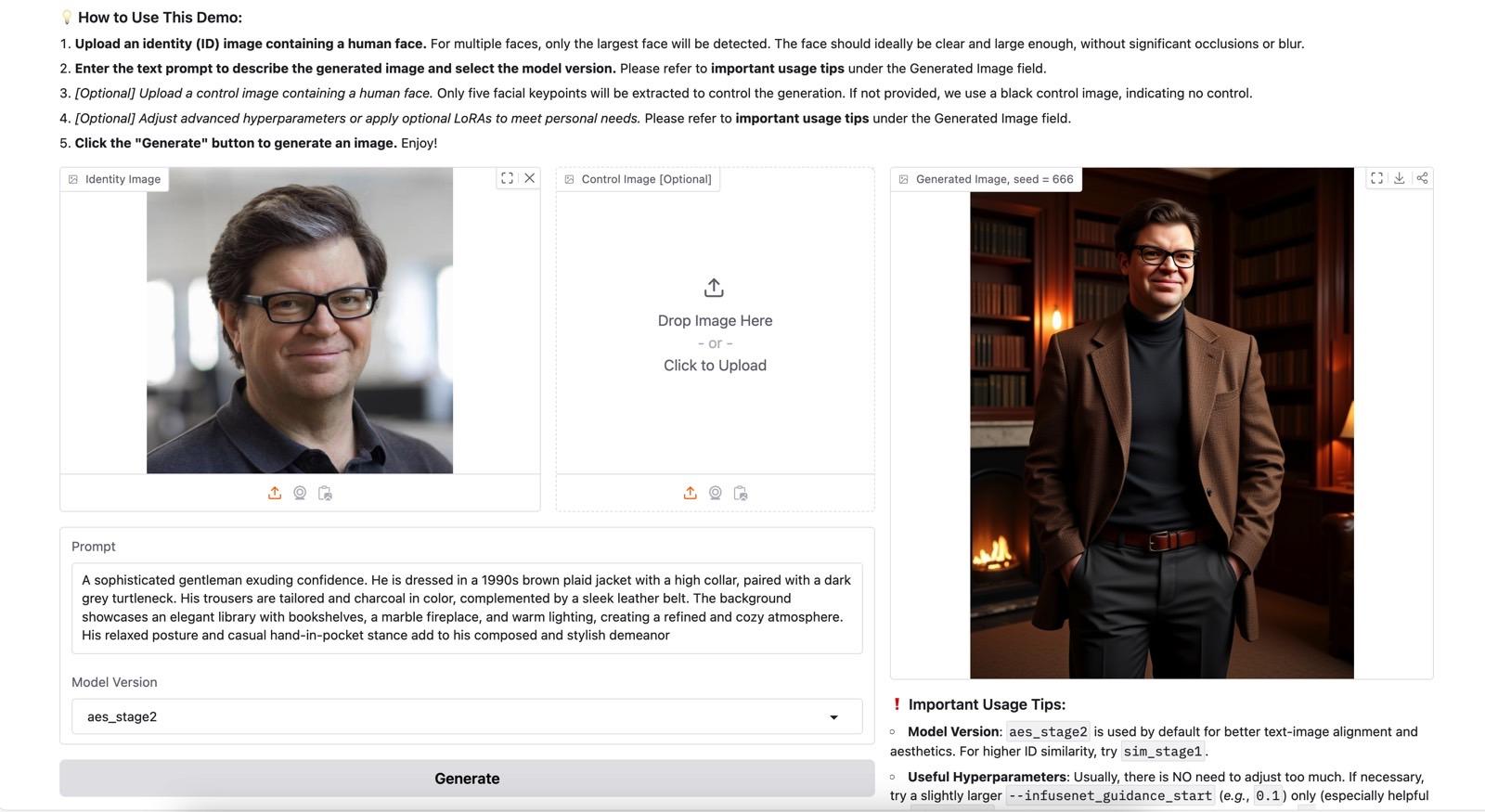
As you’ll see in the following screenshot, you don’t even have to upload your own image to see what the AI can do. Just pick one of the available images, as I did, and then text a prompt. The photo I picked already came with the following prompt, so I didn’t even change it, as I was curious to see what the result would be:

A sophisticated gentleman exuding confidence. He is dressed in a 1990s brown plaid jacket with a high collar, paired with a dark grey turtleneck. His trousers are tailored and charcoal in color, complemented by a sleek leather belt. The background showcases an elegant library with bookshelves, a marble fireplace, and warm lighting, creating a refined and cozy atmosphere. His relaxed posture and casual hand-in-pocket stance add to his composed and stylish demeanor

The AI took a while to process the uploaded photo and the requirements in the text, and then it generated the image on the right side here:

ByteDance's InfiniteYou: Example of creating fake photos.ByteDance’s InfiniteYou test: Example of creating fake photos. Image source: HuggingFace

As you can see, the AI image preserved the subject’s likeness and recreated the entire background and the subject’s body to adhere to the prompt’s requirements.

The resemblance between the subject in the photo and the AI version is clear, though you can tell the image on the right is AI-generated. There’s no watermark to indicate it’s an AI photo (which itself is a red flag), but you can tell this isn’t a real photo.

Perhaps that’s a good thing. Otherwise, InfiniteYou could be easily used to create deepfakes of celebrities in lifelike photos, a problem the new ChatGPT image generation model already has.

Then again, I only briefly tested this new AI on HuggingFace. A commercial product will likely offer even higher-quality images that are harder to identify as AI-generated images.

InfiniteYou examples from the ByteDance study.InfiniteYou examples from the ByteDance study. Image source: HuggingFace

After all, the images the researchers offered in the study suggest that the AI model can create high-quality, albeit fake, images of a subject with the help of a real photo and a text prompt.

Take the examples above, each containing the original photo, the text prompt InfiniteYou was given, and the result. We are looking at high-end, frontier AI tech here.

The ByteDance engineers also provided the following comparison between InfiniteYou and other AI models that can generate images.

Comparison between ByteDance and other AI image generation services.Comparison between ByteDance and other AI image generation services. Image source: HuggingFace
It’s unclear where ByteDance might use this AI tech next, but it’s clear where it might want to deploy it. TikTok comes to mind again, as AI tech like InfiniteYou would certainly come in handy to creators.

That would not be a problem as long as AI content is clearly labeled as such and is not used for malicious purposes.

The AI researchers addressed safety concerns in the study, but only briefly. Rather than offering solutions to prevent fakes, they suggest InfiniteYou can be further improved. As for creating fake images, the researchers say they “developing robust media forensics approaches can serve as effective safeguards:”

Limitations and societal impact. Despite promising results, the identity similarity and overall quality of InfU could be further improved. Potential solutions include additional model scaling and an enhanced InfuseNet design. On another note, InfU may raise concerns about its potential to facilitate high-quality fake media synthesis. However, we believe that developing robust media forensics approaches can serve as effective safeguards.

Who will develop those safeguards? Who knows?

Meanwhile, you can explore ByteDance’s sophisticated InfiniteYou AI model at this link.

Source

Posted on

Secret London tribunal to hear appeal in Apple vs government battle over encryption

A secret tribunal is due to meet at the High Court in London this week to hear tech giant Apple appeal against a Home Office order to compromise the encryption of data stored by its customers on the iCloud service worldwide.

The Investigatory Powers Tribunal (IPT) has taken the unusual step of publishing a notification of a closed-door hearing on Friday 14 March, days after leaks revealed that Apple was intending to appeal against the secret order.

Press and civil society groups are expected to petition the Tribunal, which rules on matters of national security, to hold the hearings in open court, given the important public interest surrounding the case and the fact the government’s order has been widely leaked.

The decision by home secretary Yvette Cooper to issue a Technical Capability Notice requiring Apple to give UK law enforcement and intelligence services “backdoor” access to data stored by Apple’s customers on the encrypted version of its iCloud service, has raised tensions between the UK and the US.

US lawmakers are expected to intervene further in the case after the US director of national intelligence Tulsi Gabbard – President Trump’s most senior advisor on intelligence and security – warned that any order from the UK that could put Americans’ privacy at risk would be a “clear and egregious violation”.

As a result of the UK government’s move, Apple in the UK has withdrawn its Advanced Data Protection (ADP) service which allows users to store data in end-to-end encrypted form on iCloud.

The decision is likely to expose people in the UK using Apple services to greater risk of cyber threat as they will no longer have the ability to encrypt their personal data on Apple’s iCloud with end-to-end encryption, though the service will remain available elsewhere in the world.

The president of the IPT, Lord Justice Rabinder Singh, and a senior High Court Judge, Mr Justice Jeremy Johnson, have made themselves available at short notice to hear a case behind closed doors on the morning of 14 March, according to court listings.

The IPT hears national security cases in secure courts at the High Court in the Strand – the only central London venue authorised for national security cases, aside from a secure court on Chancery Lane used for immigration cases.

A series of leaks about the secret order issued by the UK have made it more difficult for the Home Office and security agencies to maintain a stance of neither confirming nor denying the move against Apple.

Privacy International, which has brought a number of cases against government agencies in the IPT, said the Apple hearings should be conducted in public.

Caroline Wilson Palow, legal director and general counsel at Privacy International said: “This is a very important debate to have in public, because we’re talking about the security of our computer systems that can affect millions, if not billions, of people around the world, given the reported technical capability notice has global reach.”

Last month, over 100 cyber security experts, companies and civil society groups signed a letter calling for home secretary Cooper to drop the demands for Apple to create a backdoor that would allow government access to encrypted communications and data stored on Apple’s iCloud service.

Apple has previously said that despite withdrawing Advanced Data Protection from the UK 14 categories of data stored on Apples iCloud will still be end-to-end encrypted by default, including health data.

UK users will not be able to opt for more secure end-to-end encryption for iCloud Backup; iCloud Drive; Photos; Notes; Reminders; Safari Bookmarks; Siri Shortcuts; Voice Memos; Wallet Passes; and Freeform, a collaboration tool.

Source

Posted on

Pixel 9a will arrive on April 10 missing some of Google’s best AI features

Google’s newest budget phone is finally ready for release. After an inexplicable delay due to a “component quality issue,” the company has confirmed the Pixel 9a release date: April 10 in the US, Canada, and the UK.

The rest of the world will follow shortly after, with launches in Europe on April 14 and select Asian-Pacific regions on April 16. We’ve known about the Pixel 9a for at least a week now—with official confirmation giving us a price and a good look at the design.

The Pixel 9a might look like a flagship at first glance, sharing the same sleek design language and housing Google’s Tensor G4 chip. But look closer, and it’s clear that a few of Google’s headline features didn’t make the trip down to this more affordable device.

That’s especially true when it comes to AI.

Tech. Entertainment. Science. Your inbox.

Sign up for the most interesting tech & entertainment news out there.

By signing up, I agree to the Terms of Use and have reviewed the Privacy Notice.

Despite sporting the same chip as the Pixel 9 and 9 Pro, the 9a has a tighter memory ceiling at just 8GB of RAM. That limitation means the phone can’t run the full version of Gemini Nano, Google’s powerful on-device AI model. Instead, it comes with a lightweight, text-only variant.

Google Pixel 9 Pro Fold GeminiDon’t expect the same level of Gemini support on the 9a as Google’s flagship devices. Image source: Christian de Looper for BGR

In practical terms, that means you won’t be using the 9a for AI-powered voice summarization or multimodal features like image-based Q&A and contextual suggestions, which are available on Google’s flagship devices.

This is likely an intentional move by Google, aimed at balancing affordability with performance. But it also means buyers hoping for a full suite of on-device AI tools will need to temper their expectations.

That’s not the only trade-off. The Pixel 9a also skips satellite communication support and features an older cellular modem, which could affect signal efficiency and battery life in fringe areas.

Still, for $499 in the US (with a $100 bump for double the storage), the 9a offers a competitive entry point into the Pixel ecosystem. Pricing varies slightly by region, with a price tag of $679 CAD in Canada, £499 in the UK, and €549 in most of Europe.

Interestingly, Japan—a regular participant in Google’s device launches—still lacks a confirmed Pixel 9a release date, though Google insists it’s coming “soon.”

If you’ve already signed up for availability notifications through the Google Store, you’ll be among the first to know when preorders go live. And if you’re after a clean Android experience with a side of pared-down AI, the 9a could still hit the sweet spot.

Just don’t expect the same Gemini-powered goodies its flagship siblings enjoy.

Source

Posted on

Musk claims of Ukraine DDoS attack derided by cyber community

Tech oligarch Elon Musk has drawn criticism from cyber security experts following unsubstantiated claims that Ukraine was behind an apparent distributed denial of service (DDoS) attack on his social media platform, X, formerly known as Twitter.

Musk, who currently heads the US government’s Department of Government Efficiency (Doge) that has fired thousands of federal workers, accused the Ukrainian government of being behind the incident that brought down X services for many users on Monday 10 March. Speaking to the Fox Business news channel, he claimed a “massive cyber attack” targeting X appeared to have originated from IP addresses located in Ukraine.

The incident came amid a serious deterioration in relations between Ukraine and the US, and just days after US Cyber Command, the country’s military offensive and defensive cyber unit, suspended offensive operations against Russia in a significant climbdown.

Ukrainian officials were quick to refute the suggestion Kyiv was behind the cyber attack, and in conversation with the BBC, former National Cyber Security Centre head Ciaran Martin described Musk’s accusations as unconvincing and “pretty much garbage”.

Martin told the BBC he would be hard-pressed to think of an organisation of X’s scale that has been so badly impacted by such an incident in recent years and suggested the incident did not paint a good picture of the platform’s wider cyber resilience.

In a DDoS attack, malicious actors bombard a server with junk web traffic to overwhelm it, forcing it offline and leaving legitimate users unable to access it.

Such crude forms of cyber attack are well-known and relatively common – they frequently form a key element in hacktivist actions thanks to their accessibility, which at first glance lends a certain element of credibility to Musk’s claims.

However, DDoS attacks are launched via geographically disperse networks of computers and other devices that have been co-opted into botnets without their owner’s knowledge or consent. This makes it very hard to accurately locate the individuals responsible for them.

Tom Parker, cyber security author and chief technology officer (CTO) at NetSPI, said the magnitude of the attack did strongly suggest the involvement of a sophisticated threat actor but it was important to understand that accurately attributing DDoS incidents is “notoriously difficult”.

“Such adversaries are highly adept at concealing their tracks. We must be extremely cautious about pointing fingers and sabre rattling without clear and compelling evidence to demonstrate capability, motive,and likely benefit for the party involved,” Parker told Computer Weekly. 

“Despite recent events, I do believe Ukraine is still seeking to foster a more positive relationship with the US, which would make it unlikely that the claims of Ukrainian involvement are well-grounded. Rather, the scenario appears to align more with a ‘false flag’ operation deliberately crafted to implicate Ukraine.

“As we often see in these complex situations, the most straightforward explanation isn’t always correct, and drawing conclusions prematurely can lead us astray,” he said.

Pro-Palestine group

Lending more weight to arguments against Musk, a pro-Palestinian hacktivist group known as Dark Storm Team subsequently claimed via Telegram that it had been behind the incident.

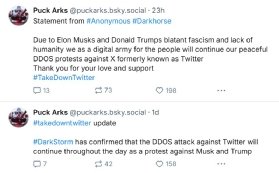
An account on the Bluesky social media platform claiming to be associated with this group and appearing to have links to the Anonymous collective, described the DDoS attack as a peaceful protest and said attacks would continue.

Jake Moore, global cyber security advisor at ESET, said: “Cyber criminals attack from all angles and are incredibly fearless in their attempts. Whether they are directed by geopolitical groups or financially motivated gangs, DDoS attacks are a clever way of targeting a website without having to hack into the mainframe, and therefore the perpetrators can remain largely anonymous and difficult to point a finger at.

“This also makes it that much more difficult to protect from when the landscape is completely unknown apart from having generic DDoS protection. However, even with such protection, each year, threat actors become better equipped and use even more IP addresses such as home IoT devices to flood systems, making it increasingly more difficult to protect from.”

Added Moore: “Unfortunately, X remains one of the most talked about platforms, making it a typical target for hackers marking their own territory. All that can be done to future-proof their networks is to continue to expect the unexpected and build even more robust DDoS protection layers.”

Source

Posted on

Microsoft wants you to delete your password and no, it’s not a gimmick

Microsoft has officially declared war on the password. In a sweeping update affecting more than a billion users, the company is making it clear—it’s time to ditch your Microsoft account password for good. This is just the latest move in Microsoft’s passkey update, which aims to move all users away from the security wyas of olden days.

Starting in April, Microsoft will begin rolling out a new sign-in and account creation experience that puts passkeys at the center. “Our ultimate goal is to remove passwords completely,” the company said in a security update posted in December.

Microsoft says it now blocks around 7,000 password-related attacks per second, nearly double the rate from last year. With AI-fueled phishing attempts and increasingly clever hacks, passwords—no matter how long or quirky—just aren’t holding up. Forcing a passkey on Microsoft users seems to be the easiest way to address the problem.

That’s where the passkey comes in. This credential is tied to your physical device and unlocked by something only you have—like a fingerprint, face scan, or device PIN. Unlike a password, a passkey can’t be phished, guessed, or intercepted. It’s stored securely on your device and never leaves it.

Tech. Entertainment. Science. Your inbox.

Sign up for the most interesting tech & entertainment news out there.

By signing up, I agree to the Terms of Use and have reviewed the Privacy Notice.

1Password lets you save passkeys for internet accounts.Password managers like Proton Pass and 1Password will let you save passkeys for internet accounts. Image source: 1Password



More importantly, it’s fast. Microsoft says passkeys are not only more secure but three times faster than typing in a traditional password. And the transition is already underway.

When creating a new Microsoft account, you won’t be asked to set a password. Instead, you’ll verify your email once and then create a passkey. For existing accounts, the sign-in experience is being redesigned to push passkeys as the default to nudge users toward a truly passwordless future.

That’s because having a passkey isn’t enough if you’re still keeping the old password around “just in case.” According to Microsoft, that’s like locking your front door but leaving the window wide open for anyone to enter.

The presence of a password—even as a backup—leaves your account open to phishing, brute-force attacks, and social engineering scams. That’s why the company says this isn’t just a shift in preference. Microsoft’s passkey update is a massive security imperative.

Millions of users have already deleted their passwords, according to Microsoft. And this change is about scaling that momentum across its entire user base.

Microsoft’s bold move sets a new bar—but not everyone is sprinting toward it. Google, for instance, still supports passwords as fallback credentials, which keeps that potential vulnerability alive.

Security researchers and privacy advocates argue that consistency across platforms will be key to making passwordless systems mainstream. For now, Microsoft is leading the charge, both in tech and in messaging clarity.

Source