Posted on

Apple may be forced discontinue these 3 iPhone models in Europe

In September, Apple released the new iPhone 16 lineup. With that, the company finally stopped selling the 2021 iPhone 13 and only offered customers the following options through its store:

  • iPhone SE 3 (2022)
  • iPhone 14 (2022)
  • iPhone 14 Plus (2022)
  • iPhone 15 (2023)
  • iPhone 15 Plus (2023)
  • iPhone 16 series

However, the French Apple blog iGeneration reports that Apple will discontinue all Lightning iPhone models in Europe at the start of 2025.

Since European legislation requires all smartphones to have a universal USB-C port, the iPhone 14, iPhone 14 Plus, and iPhone SE 3 won’t follow the rule, as they have a Lightning port.

There’s always the possibility that Apple could tweak those smartphones with a USB-C port, as the company has done with the AirPods Max. However, it doesn’t seem Cupertino will follow that path.

Tech. Entertainment. Science. Your inbox.

Sign up for the most interesting tech & entertainment news out there.

By signing up, I agree to the Terms of Use and have reviewed the Privacy Notice.

Of course, a fourth-generation iPhone SE is expected to launch early next year, which means the current generation will soon be discontinued anyway. Besides that, when Apple introduces the iPhone 17 line, it will also stop selling the iPhone 14 and iPhone 14 Plus.

In other words, Apple is set to discontinue all three of these old iPhone models anyway in 2025. Still, if you’re not in Europe, you don’t need to worry about any of this, as Apple will continue to sell them until new models are introduced over the course of the year.

The new iPhone SE 4 is expected to feature a design like the iPhone 14 with a single camera, the A18 processor, and Apple’s new 5G modem. By the second half of 2025, Cupertino is rumored to launch the iPhone 17 lineup, including an all-new iPhone 17 Air, which will be the thinnest iPhone to date with some high-end features but hardware that’s not as good as an iPhone Pro.

BGR reached out to Apple but did not hear back at the time this story was published. We’ll update it if we hear from the company.

Source

Posted on

Nvidia might reveal DLSS 4 at CES 2025 – and mysterious new AI capabilities that could be ‘revolutionary’ for GPUs

  • Inno3D has leaked that Nvidia has “advanced DLSS technology” to show off at CES 2025
  • This may be DLSS 4, as it makes sense to reveal it alongside RTX 5000 GPUs
  • New neural rendering capabilities are also set to be aired which could be even more intriguing

Inno3D has again been leaking material relating to Nvidia’s upcoming revelations at CES 2025, but this time it’s more about the software and AI side of the equation, rather than the (purported) next-gen graphics cards themselves.

VideoCardz noticed that German tech site Hardware Luxx caught the CES 2025 press release from Inno3D, teasing what it has in store for the show, and oversharing some info that Nvidia would doubtless not want aired.

The key mentions here pertain to a possible new version of DLSS and fresh neural rendering capabilities.

In the first case, Inno3D talks about: “Advanced DLSS Technology: Nvidia’s Deep Learning Super Sampling offering even better image quality and higher frame rates.”

And secondly, the manufacturer points out: “Neural Rendering Capabilities: Revolutionizing how graphics are processed and displayed.”

There’s also talk of AI enhanced power-efficiency measures whereby the GPU’s power consumption and thermals are presumably fine-tuned to be more efficient and work better in general.

An Nvidia GeForce RTX 4060 Ti

(Image credit: Future / John Loeffler)

Analysis: Clever tricks to make up for meager VRAM loadouts?

While we can’t read too much into this – it’s all pretty vague marketing speak from Inno3D, as you’d fully expect from a pre-event press release – the highlighted bits are still exciting glimpses of what we might be treated to at CES 2025.

{ window.reliablePageLoad.then(() => { var componentContainer = document.querySelector(“#slice-container-newsletterForm-articleInbodyContent-Ep7bNnmUzbtxdMLDJ6tnSi”); if (componentContainer) { var data = {“layout”:”inbodyContent”,”header”:”Get daily insight, inspiration and deals in your inbox”,”tagline”:”Sign up for breaking news, reviews, opinion, top tech deals, and more.”,”formFooterText”:”By submitting your information you agree to the Terms & Conditions and Privacy Policy and are aged 16 or over.”,”successMessage”:{“body”:”Thank you for signing up. You will receive a confirmation email shortly.”},”failureMessage”:”There was a problem. Please refresh the page and try again.”,”method”:”POST”,”inputs”:[{“type”:”hidden”,”name”:”NAME”},{“type”:”email”,”name”:”MAIL”,”placeholder”:”Your Email Address”,”required”:true},{“type”:”hidden”,”name”:”NEWSLETTER_CODE”,”value”:”XTR-D”},{“type”:”hidden”,”name”:”LANG”,”value”:”EN”},{“type”:”hidden”,”name”:”SOURCE”,”value”:”60″},{“type”:”hidden”,”name”:”COUNTRY”},{“type”:”checkbox”,”name”:”CONTACT_OTHER_BRANDS”,”label”:{“text”:”Contact me with news and offers from other Future brands”}},{“type”:”checkbox”,”name”:”CONTACT_PARTNERS”,”label”:{“text”:”Receive email from us on behalf of our trusted partners or sponsors”}},{“type”:”submit”,”value”:”Sign me up”,”required”:true}],”endpoint”:”https://newsletter-subscribe.futureplc.com/v2/submission/submit”,”analytics”:[{“analyticsType”:”widgetViewed”}],”ariaLabels”:{}}; var triggerHydrate = function() { window.sliceComponents.newsletterForm.hydrate(data, componentContainer); } if (window.lazyObserveElement) { window.lazyObserveElement(componentContainer, triggerHydrate); } else { triggerHydrate(); } } }).catch(err => console.error(‘%c FTE ‘,’background: #9306F9; color: #ffffff’,’Hydration Script has failed for newsletterForm-articleInbodyContent-Ep7bNnmUzbtxdMLDJ6tnSi Slice’, err)); }).catch(err => console.error(‘%c FTE ‘,’background: #9306F9; color: #ffffff’,’Externals script failed to load’, err)); ]]>

Sign up for breaking news, reviews, opinion, top tech deals, and more.

The mentioned advanced DLSS tech which delivers a better image quality, and bigger frame rate boosts, might well be DLSS 4. That said, we’ve heard very little about Nvidia’s next-gen take on DLSS, which is odd if it is on the verge of being shown off.

However, it’s not unreasonable to assume that DLSS 4 would be tied to RTX 5000 GPUs exclusively (as Team Green did this with DLSS 3 and RTX 4000 GPUs when they launched). And so when RTX 5000 graphics cards are revealed at CES, it’d make sense that the next-gen DLSS would be teased alongside them, if not fully detailed.

On top of that, the apparent new neural rendering capabilities sound intriguing, and the mention of the term ‘revolutionizing’ graphics has piqued our curiosity. Is this just PR bluster, though?

We’ll have to wait and see, but there are already theories floating around that it could be some kind of neural texture compression, which would help GPUs with lower amounts of VRAM cope better with weighty textures. Could this be an explanation of why Nvidia might be mulling video RAM loadouts like 8GB for the RTX 5060 and 12GB for the RTX 5070? Perhaps, but that’s reaching…

Inno3D also mentions that it’ll have new graphics cards at CES 2025, without saying they’re RTX 5000 models. But it does mention some more standard brands of new products, alongside higher end iChill variants, including a small form-factor board – which is a hint that we won’t just see higher-end Blackwell GPUs at the show.

As well as the RTX 5090 and 5080, the RTX 5070 or 5070 Ti have been rumored as being ready to be revealed, and this is a further suggestion that this is what Nvidia has planned for CES in January.

Inno3D probably isn’t Nvidia’s favorite partner at the moment, because the graphics card manufacturer recently leaked the existence of the RTX 5090 and that it’ll be unveiled at CES 2025.

You might also like

Source

Posted on

From front to back: tech vice-president Dan Lake on Notonthehighstreet.com’s tech strategy

The big news from online marketplace Notonthehighstreet.com (NOTHS) in the build-up to peak trading is its new partnership with delivery platform Deliveroo, announced in September.

NOTHS is one of the early wave of non-food-specific retail businesses partnering with Deliveroo to add speedy fulfilment options to their offering. Screwfix led the charge in 2023, and others such as B&Q, Ann Summers, Wilko, and The Perfume Shop have followed suit in 2024, opening up rapid delivery via the Deliveroo app to London consumers who need their items pronto.

Launching with 15 brands under the umbrella of NOTHS, the partnership enables Deliveroo customers to order personalised gifts on-demand for the first time – via the presence of luxury jewellery and accessories retailer and NOTHS partner Hurley Burley on the app – as well as access to goods from a variety of small non-food businesses.

Paul Wilkinson, Deliveroo product director, paid compliment to his company’s integrations team on a LinkedIn post in October, saying their work means consumers have up-to-date product and availability information “at their fingertips” from launch.

“These use a new dedicated API [application programming interface] that we have designed from the ground up for grocery and retail partners, and it has taken a whole village of amazing people to build and ship this,” he wrote.

Contrastingly, the direct tech integration with NOTHS is non-existent at present, according to Dan Lake, vice-president for technology at the online marketplace. The hardware and software integrations are through the NOTHS brand partners, with a NOTHS logo accompanying brand pages on the Deliveroo app to signify the connection.

“It’s an obvious brand partnership that is beneficial to the business,” Lake says of the Deliveroo tie-up, which he says generates “unprompted NOTHS brand awareness”.

“We’ve not invested anything from a tech point of view, but if it goes very well and we want to scale across the UK, there will be some tech investment needed. This approach buys us time to make our platform easier for integrating into third parties.”

And therein lies the crux of the technology challenge NOTHS faces right now. So much of the focus for the business in its 18 years of operating, since being founded by Holly Tucker in 2006, has been on the consumer experience and its front-end capabilities.

But in the past two years, since Lake’s arrival from high-flying fitness brand and retailer Gymshark, simplifying behind the scenes and exploring where a “buy, not build” approach to technology might be more appropriate has been the name of the game.

Front to back

“We’ve underinvested in the back end,” Lake says. “In the two years I’ve been here, we’ve gone through a lot of change and been purposeful. It’s about going back to what the company was about in the first place –shouting about and supporting small businesses in the UK.”

From a tech perspective, he says, it has been important to articulate NOTHS’s definition of customer is a “dual definition” – encompassing the end consumer, but also the small brands selling through the platform.

“It sounds obvious – and it is obvious internally – but it can get missed on how we decide what we’re going to focus on and invest into,” he says.

Lake’s senior leadership position reports directly to CEO Leanne Rothwell, and he has the responsibility of looking after tech products across the organisation. He acknowledges he joined NOTHS “primarily for the tech challenge”, identifying it as a reverse job to what he faced at Gymshark, where he was engineering director.

When Gymshark went through its exponential growth period, which resulted in its 2020 unicorn status as a £1bn-valued privately-owned business, it needed to internally build out tech to support its core Shopify foundations. At NOTHS, there’s a need to more comprehensively work with tech partners and stop relying on building everything in house.

“At NOTHS, we’re trying to end up in the same space but from the opposite end,” Lake says, adding that the business is looking to buy more tech rather than build it in house. “My view is we should only invest in or own things that are strategically important to us or we would have operational challenges without – we have too much stuff that falls into the commoditised bracket.”

In what might be welcome news for the retail technology ecosystem, NOTHS is now looking for products on the market – where there is commoditisation. Albeit, there is not a bottomless pit for investment.

Lake talks of the need for products within a retail organisation’s tech stack to contribute to strategic and operational performance. With so much built in house, NOTHS finds itself with components that are no longer contributing to either and are “holding us back” – it’s a typical retail legacy system tale of entanglement.

“Everything is owned and maintained, so my focus is on identifying what’s now been commoditised and what have other people done a better job of building – and we can then think about what we can chop away at. After all, we’re not a tier one tech company.”

Fundamental shift

NOTHS has already started its journey of modernisation under Lake’s stewardship. The marketplace has migrated promotional capabilities to a third-party engine platform – Talon One.

“Although pretty simplistic in approach compared to most businesses, it represents the first time we’ve gone out and bought a capability and integrated it in a composable MACH tech way,” Lake says.

“It’s a fundamental shift in thinking internally for the engineering and product teams. We deprecated and removed the old promo engine which – surprise, surprise – we had built. It did one thing and we had the age-old problem that you never come back to it – you go on to the next priority and it becomes a problem for people.”

This change will support in the running of campaigns, but is also set to be a capability utilised as NOTHS explores its options around building a loyalty proposition. “This takes a number of things the tech team shouldn’t need to be involved in off their plate, so we can focus in the investments we want to make,” Lake adds.

With e-commerce stack technology, “the most commoditised” area of retail tech, according to Lake, there’s lots of focus on what to bring in to the NOTHS business in this area: “We’re headless already, but some better decisions probably could have been made – you should own the user experience as it can contribute to strategic differentiation.

“What we hadn’t done in the move to headless was consider the service or integration layers just under that, so we built a load of microservices, some with thin veneers into the monolithic platform. We hadn’t thought about how to take off parts we shouldn’t really own which can be a distraction and they take time with maintenance on bugs.”

NOTHS is using Contentstack from a headless content management system point of view, but a stream of work currently well under way with Kin + Carta and Valtech is focused on better optimising the digital experience.

Lake says the NOTHS search and discovery process starts with its brand partners putting product data in – and this is an area where improvements are sought.

“For trade reasons, we focused on very outer edge of search and discovery and how results had ranked and reranked – and we’re using Google Vertex AI,” he adds. “Search went live last year and there have been marked improvements there. We’re doing tests on browse currently.

“We have circa 450,000 products on the platform, and surfacing the most relevant of those is a big challenge and we have built a load of tech that doesn’t really lean into surfacing the most relevant thing.”

That is being addressed using Google Vertex, and the work with Kin + Carta involves improving data quality and product information management processes so NOTHS can “augment the effects of the AI”.

In terms of AI strategy, a lot will depend on finding the most suitable partners. “A lot of the third-party companies we might buy into will be bringing AI to us because they are integrating it into their products – and that’s great,” Lake says.

“That’s the benefit you find yourself in as a D2C or online business. You can see the pressure on fellow CTOs working for SaaS businesses because there is a race to market – and there will be a number of misses, but we can benefit from that.”

Lake admits NOTHS was looking at how to use AI for search and discovery, “but then Google Vertex came along”. He predicts this type of situation will continue to happen for a while as the AI hype and focus continues.

“Once we have solved some problems and operational issues – and removed friction for partners and internally – we can think about how to utilise AI for something that is really interesting,” he says.

Lake describes his team as a “lean” 40-45 people covering tech and product, and says his leadership style follows a “teach-a-man-to-fish mentality”.

“It’s no good me steaming in and saying, ‘Cut that out, remove this, and go and buy this’, as it won’t build the sustainability in the approach we need,” he says, adding that the team is realising this new working method is aimed at making their lives easier as much as it is part of a method for driving the business forward.

The team covers IT infrastructure, cyber security, and support, with delivery managers, and an engineering team overseeing online, back and front-end, and mobile work across iOS and Android. There are members of the team focused on data analytics and data science, and those looking after platform infrastructure and product management.

“Good people get bought into the culture,” Lake adds.

It is their job to ensure the tech serves the five to six million customers NOTHS has in the UK, but under Lake’s leadership, they are also increasingly focused on making the lives of circa 5,000 marketplace sellers – some of which have started their journeys with Deliveroo this autumn – easier and more fruitful.

Source

Posted on

AMD looks to have scrapped its RX 7900 GRE – the graphics card that’s our current pick for best GPU

  • AMD has reportedly stopped production of the Radeon RX 7900 GRE
  • This is reflected in the mid-range GPU vanishing rapidly off the shelves
  • AMD is likely preparing the way for new RDNA 4 graphics cards

AMD is ditching the Radeon RX 7900 GRE from its current-gen GPU line-up, if fresh gossip from the grapevine is to be believed.

According to a report from Dutch tech site Tweakers, the RX 7900 GRE is now end-of-life, with AMD halting production of this graphics card.

Tweakers explains that it received a tip from a retail store that this was the case, with that outlet having heard from multiple suppliers that the 7900 GRE is effectively out of the mix.

Add plenty of salt, but if true, once existing stock has sold through, it’ll be curtains for this popular GPU. (The RX 7900 GRE is, in fact, still currently our top pick of the best graphics cards out there).

The site clarifies that AMD will continue to support the card with its software (driver updates), as would clearly be expected.

Tweakers further notes that AMD didn’t reply to requests to confirm that the RX 7900 GRE had been discontinued, but that’s not surprising, we wouldn’t expect Team Red to do so.

The report also observes that stock (presumably in The Netherlands) is dwindling, and the lack of availability backs up the notion that this RDNA 3 GPU – which was first introduced as an Asia-only model, before releasing globally – is on the way out.

{ window.reliablePageLoad.then(() => { var componentContainer = document.querySelector(“#slice-container-newsletterForm-articleInbodyContent-uW7zDgEuwUjGKkK6A9AVpL”); if (componentContainer) { var data = {“layout”:”inbodyContent”,”header”:”Get daily insight, inspiration and deals in your inbox”,”tagline”:”Sign up for breaking news, reviews, opinion, top tech deals, and more.”,”formFooterText”:”By submitting your information you agree to the Terms & Conditions and Privacy Policy and are aged 16 or over.”,”successMessage”:{“body”:”Thank you for signing up. You will receive a confirmation email shortly.”},”failureMessage”:”There was a problem. Please refresh the page and try again.”,”method”:”POST”,”inputs”:[{“type”:”hidden”,”name”:”NAME”},{“type”:”email”,”name”:”MAIL”,”placeholder”:”Your Email Address”,”required”:true},{“type”:”hidden”,”name”:”NEWSLETTER_CODE”,”value”:”XTR-D”},{“type”:”hidden”,”name”:”LANG”,”value”:”EN”},{“type”:”hidden”,”name”:”SOURCE”,”value”:”60″},{“type”:”hidden”,”name”:”COUNTRY”},{“type”:”checkbox”,”name”:”CONTACT_OTHER_BRANDS”,”label”:{“text”:”Contact me with news and offers from other Future brands”}},{“type”:”checkbox”,”name”:”CONTACT_PARTNERS”,”label”:{“text”:”Receive email from us on behalf of our trusted partners or sponsors”}},{“type”:”submit”,”value”:”Sign me up”,”required”:true}],”endpoint”:”https://newsletter-subscribe.futureplc.com/v2/submission/submit”,”analytics”:[{“analyticsType”:”widgetViewed”}],”ariaLabels”:{}}; var triggerHydrate = function() { window.sliceComponents.newsletterForm.hydrate(data, componentContainer); } if (window.lazyObserveElement) { window.lazyObserveElement(componentContainer, triggerHydrate); } else { triggerHydrate(); } } }).catch(err => console.error(‘%c FTE ‘,’background: #9306F9; color: #ffffff’,’Hydration Script has failed for newsletterForm-articleInbodyContent-uW7zDgEuwUjGKkK6A9AVpL Slice’, err)); }).catch(err => console.error(‘%c FTE ‘,’background: #9306F9; color: #ffffff’,’Externals script failed to load’, err)); ]]>

Sign up for breaking news, reviews, opinion, top tech deals, and more.

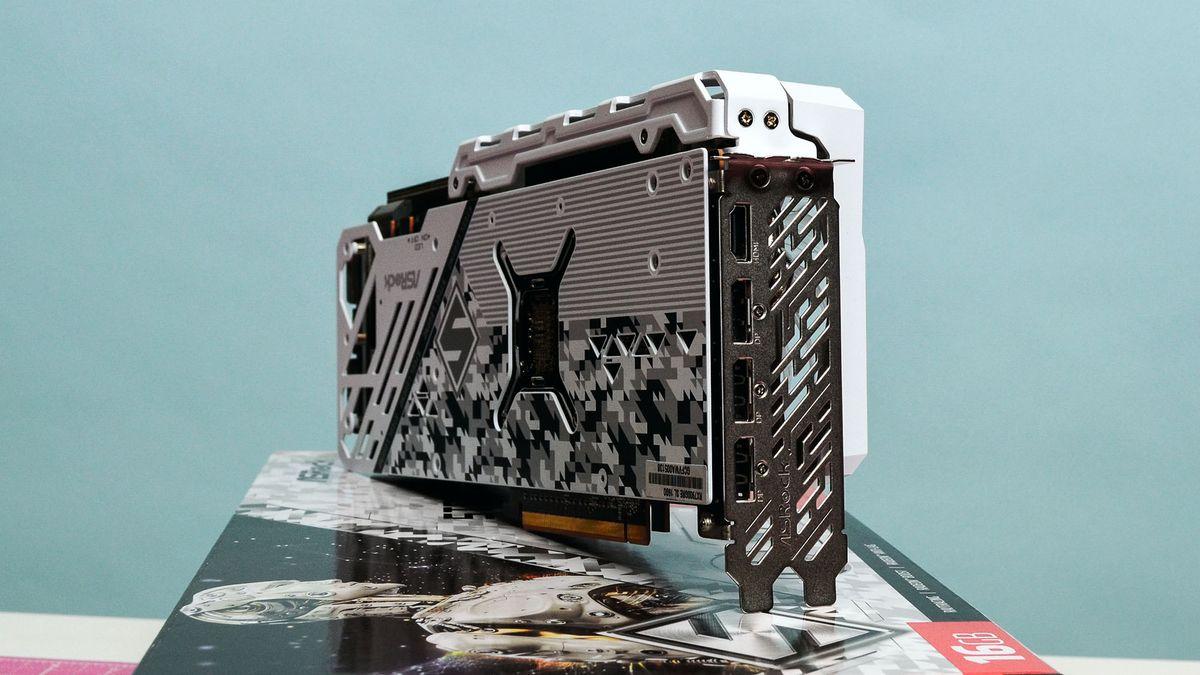
An AMD Radeon RX 7900 GRE from ASRock on a pink desk mat with its retail packaging

(Image credit: Future / John Loeffler)

Analysis: Stock has indeed all but vanished

Hopping on over to Newegg in the US, we note that there’s only one model of RX 7900 GRE left on sale – the Acer BiFrost spin on the AMD GPU – with all the others now out of stock. Micro Center looks to be out of stock almost entirely, too, so this graphics card does indeed seem to be vanishing. Going by reports, stock has been dwindling over the past month or two.

Why might AMD be canning our favorite GPU of the moment? Well, it could be something to do with yields of the Navi 31 chip, meaning the silicon that doesn’t make the cut for higher-end RX 7900 models – which would be repurposed for the GRE – has simply run out.

Of course, production of Navi 31 is likely being scaled back anyway, as we have new RDNA 4 graphics cards rumored to be launching in Q1 of 2025. Those will supposedly include the RX 8800 XT (and more), with that GPU possibly making the RX 7900 GRE redundant in terms of its value proposition.

In short, this is another sign that a potent mid-range offering is due imminently – AMD will supposedly reveal its new RDNA 4 GPUs at CES 2025, with the boards launching soon after – and we can’t wait to see how those RX 8000 models shape up.

Via VideoCardz

You might also like

Source

Posted on

The most pressing challenges for CISOs and cyber security teams

The UK Ministry of Defence recently published its Global Strategic Trends report which sets out the developments that will shape the world over the next five years. These provide an insight into some of the challenges that CISOs and cyber security teams will face.

The first threat is that of global and regional political instability. As regional and global power competition intensifies, we may see growing authoritarianism and a decline in democracy. The capabilities of violent extremist organisations and organised crime groups to cause harm will increase. Access to data will become a key component of global power for both state and non-state actors, all of which will require greater vigilance from cyber teams.

The second area of concern comes from the expanding attack surface, The exponential reliance on data and connectivity across states, organisations, and individuals in an increasingly connected world will significantly expand the attack surface. With stretched resources from dealing with an ageing population and climate change, nation states may not be able to provide the increasing level of direct support needed for cyber defence operations.

A further trend driving cyber threats is the technological arms race. The increased reliance on data and connectivity, coupled with advances in Quantum and AI, will escalate the arms race between cyber exploiters and victims. This shift is already being seen in the rise of zero-day attacks. The National Cyber Security Centre (NCSC), in collaboration with cyber security agencies from the US, Australia, Canada, New Zealand, and others, identified that most of the top 15 vulnerabilities exploited in 2023 were initially targeted as zero-day attacks. This trend has continued into 2024, highlighting the evolving tactics of cyber adversaries and the increasing availability of advanced exploitation tools.

Pressing challenges for CISOs and security teams

Given these trends, the most pressing challenges for CISOs in the next five years will be related to the rise of AI, building a culture that fosters secure behaviours, the threats from insiders, data management and patching and monitoring, as well as the ongoing need for operational resilience.

The rise and risk of AI is increasing as adversaries weaponise AI for malicious purposes, using it to create undetectable malware, automate reconnaissance, and execute deepfake-based scams. Organisations are rapidly chasing the ‘AI dream’, looking at ways in which it can deliver significant business benefits and CISOs will need to make their voice heard at the planning stage to avoid security being seen as a secondary consideration.

Organisations invest heavily in protecting their digital systems, physical assets, and people from adversaries with software solutions to detect cyber threats, restrict access to buildings and safeguard sensitive employee information. However, up to 95% of security incidents typically result from human actions, whether through unintentional errors or intentional breaches. A technical solution alone is not going to keep the future organisation safe. To protect what matters most CISOs should look to leverage the power of their people by embedding the right security behaviours into organisational culture to create an effective first line of defence. A robust security culture ensures every individual within the organisation understands their role in maintaining security and takes proactive steps each day to enhance it. 

Insider threats, whether stemming from intentional actions by malicious employees and contractors or unintentional mistakes by negligent staff, remain a significant source of security breaches. These risks are further amplified by the rise of hybrid work models, which reduce organisational control over devices and network environments. These create additional vulnerabilities that security teams must address through more joined up approaches to physical and cyber security.

Data management and protection is ever more critical as there is more data and greater connectivity to manage. CISOs need to know what their critical data is, where it is located, who has access to it, how it flows, how it is protected, and where it is vulnerable. Understanding their own systems and their residual risks, as well as the risks to their data when it is in the hands of others, is crucial. CISOs also must have confidence in their supply chain and its ability to protect assets properly. Networks and data sources must be appropriately protected both in transit and at rest. Ransomware and phishing remain a persistent and evolving danger, with attacks becoming more targeted and destructive. Meanwhile, the advent of quantum computing poses a looming threat to traditional encryption methods, compelling organisations to prepare for a transition to post-quantum cryptographic standards.

The increasing use of effective zero-day exploits means that we need to stay on top of patching and monitoring, which itself will occur at a faster pace. CISOs must get smarter with protective monitoring so that they can identity suspicious system behaviour as early as possible. They should also make better use of AI and machine learning tools as they develop.

As all these threats increase, security teams will have to prioritise operational resilience so they can respond to natural disasters, geopolitical instability, and supply chain disruptions that can compromise infrastructure and data availability. The growing reliance on third-party vendors and services heightens the risk of supply chain attacks, exposing organisations to vulnerabilities that lie beyond their direct control. Ensuring rapid recovery and effective business continuity will increasingly become central to security strategies.

Many of these threats are not new but their number and impact is growing and it is clear that the task of the CIO is only going get harder in the next five years.

Source

Posted on

AMD Strix Halo leak suggests chips are imminent, but gives me a couple of reasons to worry about the flagship laptop CPU

One of AMD’s incoming Strix Halo chips has been spotted in a benchmark for the first time, and this is the flagship APU in fact, indicating that as rumors suggest, these Ryzen laptop processors are nearing release.

VideoCardz noticed the Geekbench result for a 16-core (Zen 5) Strix Halo chip with Radeon 8060S integrated graphics.

The APU – which is AMD’s fancy name for an all-in-one processor with an integrated GPU and NPU – is called the AMD Ryzen AI Max+ Pro 395, and is shown as boosting up to 5.1GHz.

As for the actual benchmark result, the test run is Vulkan performance, which interestingly is a graphics metric. However, the score of 67,004 is slower than expected – but there’s a reason for that, which I’ll discuss next.

Canva

(Image credit: Canva)

Analysis: GPU performance and workstation-only worries

That’s a relatively disappointing score, because as VideoCardz points out, the RX 7600 desktop graphics card hits about 90,000 in that test. The hope is that the Radeon 8060S integrated GPU in the Strix Halo flagship will be able to get a lot closer to the RX 7600 than this, based on prerelease hype – which has compared it to an Nvidia RTX 4070 discrete mobile GPU in the past – and it might well do, in the end.

Remember, this is still an early sample chip, so the finished Ryzen AI Max+ Pro 395 will undoubtedly run faster. It’s too soon to make judgments, especially based on just a single leak (from Geekbench – which is hardly the first pick for graphics benchmarks, of course).

This leak is more about the fact that the Strix Halo flagship is floating around being tested, rather than the actual result itself. It’s another hefty hint that the rumors of AMD launching the new range of APUs at CES 2025 are correct.

{ window.reliablePageLoad.then(() => { var componentContainer = document.querySelector(“#slice-container-newsletterForm-articleInbodyContent-pJ7zySXWLXuUu2JSotoCZK”); if (componentContainer) { var data = {“layout”:”inbodyContent”,”header”:”Get daily insight, inspiration and deals in your inbox”,”tagline”:”Sign up for breaking news, reviews, opinion, top tech deals, and more.”,”formFooterText”:”By submitting your information you agree to the Terms & Conditions and Privacy Policy and are aged 16 or over.”,”successMessage”:{“body”:”Thank you for signing up. You will receive a confirmation email shortly.”},”failureMessage”:”There was a problem. Please refresh the page and try again.”,”method”:”POST”,”inputs”:[{“type”:”hidden”,”name”:”NAME”},{“type”:”email”,”name”:”MAIL”,”placeholder”:”Your Email Address”,”required”:true},{“type”:”hidden”,”name”:”NEWSLETTER_CODE”,”value”:”XTR-D”},{“type”:”hidden”,”name”:”LANG”,”value”:”EN”},{“type”:”hidden”,”name”:”SOURCE”,”value”:”60″},{“type”:”hidden”,”name”:”COUNTRY”},{“type”:”checkbox”,”name”:”CONTACT_OTHER_BRANDS”,”label”:{“text”:”Contact me with news and offers from other Future brands”}},{“type”:”checkbox”,”name”:”CONTACT_PARTNERS”,”label”:{“text”:”Receive email from us on behalf of our trusted partners or sponsors”}},{“type”:”submit”,”value”:”Sign me up”,”required”:true}],”endpoint”:”https://newsletter-subscribe.futureplc.com/v2/submission/submit”,”analytics”:[{“analyticsType”:”widgetViewed”}],”ariaLabels”:{}}; var triggerHydrate = function() { window.sliceComponents.newsletterForm.hydrate(data, componentContainer); } if (window.lazyObserveElement) { window.lazyObserveElement(componentContainer, triggerHydrate); } else { triggerHydrate(); } } }).catch(err => console.error(‘%c FTE ‘,’background: #9306F9; color: #ffffff’,’Hydration Script has failed for newsletterForm-articleInbodyContent-pJ7zySXWLXuUu2JSotoCZK Slice’, err)); }).catch(err => console.error(‘%c FTE ‘,’background: #9306F9; color: #ffffff’,’Externals script failed to load’, err)); ]]>

Sign up for breaking news, reviews, opinion, top tech deals, and more.

However, perhaps everyone should temper their expectations a little in some respects. Yes, the Strix Halo flagship’s Radeon GPU has 40 CUs and is based on a refreshed take of RDNA 3 (dubbed RDNA 3.5) – compared to 32 CUs and vanilla RDNA 3 in the RX 7600 – but the latter is still a discrete desktop GPU, and integrated solutions are clearly more limited in terms of design and thermals.

We will just have to see how performance shakes out when it comes to reviews, of course, or indeed further leaks. What I’m betting we can all agree on, most likely, is that name, which seems very clunky – but it also carries another worrying hint.

The ‘Pro’ in the name (Ryzen AI Max+ Pro 395) indicates that this is a workstation part. Now, there could be a Ryzen AI Max+ 395 (non-Pro) counterpart for thin-and-light gaming laptops that come with the same CPU and GPU configuration – or, as previous chatter on the grapevine has suggested, AMD might reserve this flagship APU for workstations only.

Gaming notebooks may only get a lesser Ryzen AI Max+ chip, and this is a hint that this is the case, albeit an admittedly thin one. Again, all we can do is keep watching the leaks, but we’ll likely find out at CES 2025 with that big Strix Halo reveal: will it be workstation-only, or not, for the flagship?

You might also like

Source

Posted on

I’ve never taken Intel’s GPU competition seriously, but the Arc B580 has left me no choice

  • Intel’s Battlemage Arc B580 GPU just scored higher than the RTX 4060 in Vulkan testing
  • AMD’s RX 7600 loses to both Nvidia and Intel GPUs in Vulkan tests
  • The new GPU will launch on December 13, for $249 / £249 / around AU$439

It’s easy to place AMD and Nvidia as leaders within the GPU market, with the latter’s RTX 4000 series currently dominating over the RX 7000 series – but Intel is about to shake things up, with the Arc B580 defeating both the RTX 4060 and RX 7600 GPUs in Vulkan benchmark tests.

According to Tom’s Hardware (based on public benchmark tests), the Intel Arc B580 loses out to Nvidia’s RTX 4060 in OpenCL API (which is irrelevant for gaming) but successfully defeats Team Green’s GPU with a 6% lead in Vulkan (one of the APIs used for most games).

The Battlemage GPU is priced at $249 / £249 / around AU$439 which is cheaper than the RTX 4060 at MSRP ($299 / £289 / AU$545), and it’s purported to be the faster GPU (especially equipped with 12GB of VRAM). If there’s anything to take from this, it’s that Intel is suddenly in pole position to reignite the budget GPU market and take the lead – though doing so will depend on AMD and Nvidia’s CES 2025 reveals.

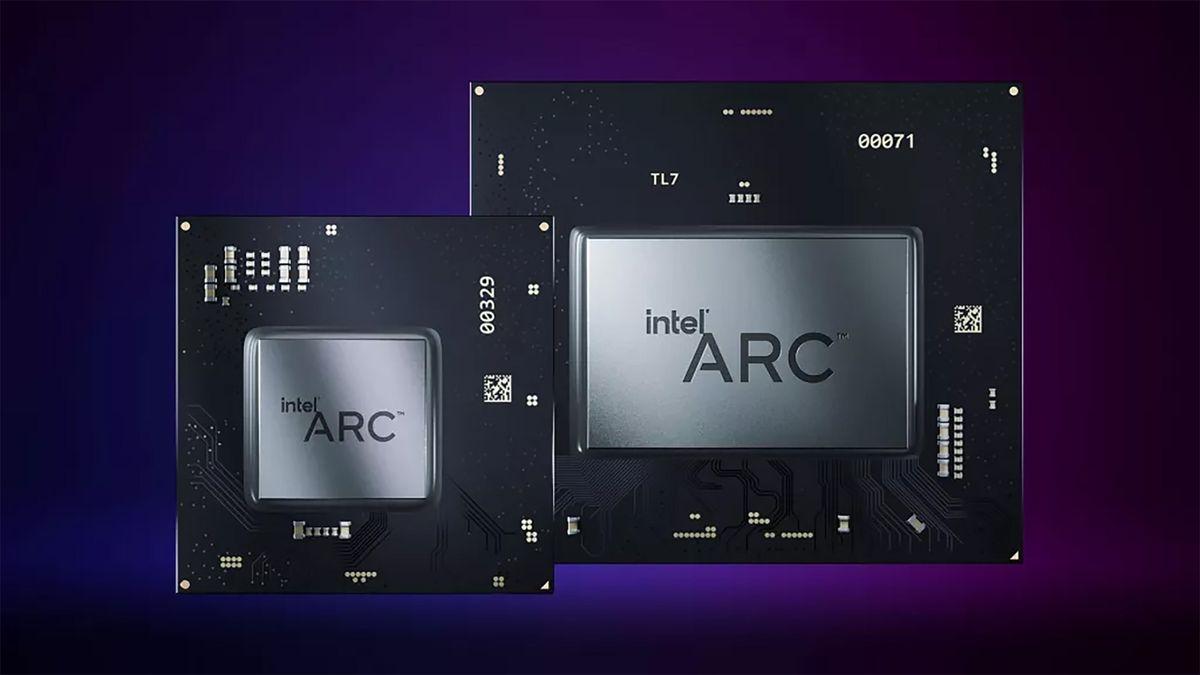
The Intel Arc logo against a blue and purple backdrop

(Image credit: Intel)

Say goodbye to 8GB GPUs with Intel…

Team Red has already made it clear that its focus has shifted from high-end GPUs to mid-range options, with a strong emphasis on AI upscaling going forward with FSR 4 (much like Nvidia’s continuing focus on AI for DLSS 3’s successor). With this in mind, I’m optimistic about what both have to offer at CES in January when it comes to budget options.

The Intel Arc B580 will feature 12GB of VRAM, while the cheaper B570 will utilize 10GB of VRAM – 8GB of VRAM is nowhere near enough to tackle games today, and it’s great to see that Intel abandoning this long-standing staple of affordable GPUs. More and more triple-A titles are demanding more VRAM for consistent performance and after Apple’s move away from 8GB of unified memory (shared RAM between the CPU and GPU) for Macs, I’m expecting Nvidia and AMD to follow suit.

Spotted by VideoCardz, XeSS Frame Generation has been leaked and is now available for Intel GPU owners to use via Nexus Mods – AI upscaling has been the talk of the town for PC gaming for improved frame rates and image quality, and now that Team Blue has joined the party, there is room for competition in the budget GPUs arena.

You might also like…

{ window.reliablePageLoad.then(() => { var componentContainer = document.querySelector(“#slice-container-newsletterForm-articleInbodyContent-k9f3g8H8RCwAPYgRmn35nZ”); if (componentContainer) { var data = {“layout”:”inbodyContent”,”header”:”Get daily insight, inspiration and deals in your inbox”,”tagline”:”Sign up for breaking news, reviews, opinion, top tech deals, and more.”,”formFooterText”:”By submitting your information you agree to the Terms & Conditions and Privacy Policy and are aged 16 or over.”,”successMessage”:{“body”:”Thank you for signing up. You will receive a confirmation email shortly.”},”failureMessage”:”There was a problem. Please refresh the page and try again.”,”method”:”POST”,”inputs”:[{“type”:”hidden”,”name”:”NAME”},{“type”:”email”,”name”:”MAIL”,”placeholder”:”Your Email Address”,”required”:true},{“type”:”hidden”,”name”:”NEWSLETTER_CODE”,”value”:”XTR-D”},{“type”:”hidden”,”name”:”LANG”,”value”:”EN”},{“type”:”hidden”,”name”:”SOURCE”,”value”:”60″},{“type”:”hidden”,”name”:”COUNTRY”},{“type”:”checkbox”,”name”:”CONTACT_OTHER_BRANDS”,”label”:{“text”:”Contact me with news and offers from other Future brands”}},{“type”:”checkbox”,”name”:”CONTACT_PARTNERS”,”label”:{“text”:”Receive email from us on behalf of our trusted partners or sponsors”}},{“type”:”submit”,”value”:”Sign me up”,”required”:true}],”endpoint”:”https://newsletter-subscribe.futureplc.com/v2/submission/submit”,”analytics”:[{“analyticsType”:”widgetViewed”}],”ariaLabels”:{}}; var triggerHydrate = function() { window.sliceComponents.newsletterForm.hydrate(data, componentContainer); } if (window.lazyObserveElement) { window.lazyObserveElement(componentContainer, triggerHydrate); } else { triggerHydrate(); } } }).catch(err => console.error(‘%c FTE ‘,’background: #9306F9; color: #ffffff’,’Hydration Script has failed for newsletterForm-articleInbodyContent-k9f3g8H8RCwAPYgRmn35nZ Slice’, err)); }).catch(err => console.error(‘%c FTE ‘,’background: #9306F9; color: #ffffff’,’Externals script failed to load’, err)); ]]>

Sign up for breaking news, reviews, opinion, top tech deals, and more.

Source

Posted on

GPU sales have slumped badly as PC gamers wait for next-gen AMD and Nvidia graphics cards – and I don’t blame them

  • GPU sales for Q3 are down almost 8% year-on-year
  • This is normally a strong period for sales of discrete graphics cards
  • It seems that gamers are holding off for RTX 5000 and RDNA 4 GPUs

Normally, this time of year would witness strong sales in the desktop GPU market, but one analyst firm observes that Q3 2024 has seen a distinct drop in buying activity.

This comes from Jon Peddie Research (JPR), which has compiled figures for Q3 sales of ‘graphics add-in boards’ (meaning standalone GPUs that slot into desktop PCs) finding that 8.1 million units were shifted in the quarter.

That’s down 7.9% on the same quarter in 2023, a fairly hefty drop, and it’s also down compared to Q2 2024, with an even larger decrease of 14.5%.

AMD lost a bit more ground here, too, as Nvidia now has 90% of the discrete graphics card market (up from 88% in Q2), with Team Red holding the remaining 10% (down from 12%). Intel Arc products don’t register on the scales for standalone GPUs, sadly for Team Blue – though unsurprisingly it still holds the majority share when it comes to CPU-integrated graphics.

The future also looks gloomy, JPR forecasts, as discrete GPUs are forecast to have a negative compound annual growth rate of -6%, with the market set to shrink further through to 2028.

A trio of Nvidia RTX 40-series Super GPU against a green and black background

(Image credit: Nvidia)

Analysis: Buyers are playing a waiting game

Obviously, this isn’t great news for any of the GPU giants, but AMD will be particularly displeased to see more market share slip away from it – the company is only just clinging onto double digits at this point.

A year ago, Team Red had a 17% share of the market. So, despite some notably successful Radeon GPU launches in recent times – namely the RX 7900 GRE, which in fact tops our list of the best graphics cards, and the RX 7800 XT, a strong mid-range offering that headed up that list when it came out last year – AMD is floundering, at least according to these stats.

{ window.reliablePageLoad.then(() => { var componentContainer = document.querySelector(“#slice-container-newsletterForm-articleInbodyContent-5LYiGr5H6ymd53PNgNAASY”); if (componentContainer) { var data = {“layout”:”inbodyContent”,”header”:”Get daily insight, inspiration and deals in your inbox”,”tagline”:”Sign up for breaking news, reviews, opinion, top tech deals, and more.”,”formFooterText”:”By submitting your information you agree to the Terms & Conditions and Privacy Policy and are aged 16 or over.”,”successMessage”:{“body”:”Thank you for signing up. You will receive a confirmation email shortly.”},”failureMessage”:”There was a problem. Please refresh the page and try again.”,”method”:”POST”,”inputs”:[{“type”:”hidden”,”name”:”NAME”},{“type”:”email”,”name”:”MAIL”,”placeholder”:”Your Email Address”,”required”:true},{“type”:”hidden”,”name”:”NEWSLETTER_CODE”,”value”:”XTR-D”},{“type”:”hidden”,”name”:”LANG”,”value”:”EN”},{“type”:”hidden”,”name”:”SOURCE”,”value”:”60″},{“type”:”hidden”,”name”:”COUNTRY”},{“type”:”checkbox”,”name”:”CONTACT_OTHER_BRANDS”,”label”:{“text”:”Contact me with news and offers from other Future brands”}},{“type”:”checkbox”,”name”:”CONTACT_PARTNERS”,”label”:{“text”:”Receive email from us on behalf of our trusted partners or sponsors”}},{“type”:”submit”,”value”:”Sign me up”,”required”:true}],”endpoint”:”https://newsletter-subscribe.futureplc.com/v2/submission/submit”,”analytics”:[{“analyticsType”:”widgetViewed”}],”ariaLabels”:{}}; var triggerHydrate = function() { window.sliceComponents.newsletterForm.hydrate(data, componentContainer); } if (window.lazyObserveElement) { window.lazyObserveElement(componentContainer, triggerHydrate); } else { triggerHydrate(); } } }).catch(err => console.error(‘%c FTE ‘,’background: #9306F9; color: #ffffff’,’Hydration Script has failed for newsletterForm-articleInbodyContent-5LYiGr5H6ymd53PNgNAASY Slice’, err)); }).catch(err => console.error(‘%c FTE ‘,’background: #9306F9; color: #ffffff’,’Externals script failed to load’, err)); ]]>

Sign up for breaking news, reviews, opinion, top tech deals, and more.

Why are overall GPU sales down in a reversal of the normal picture for the third quarter? That’s surely due to the proximity of next-gen graphics cards from AMD and Nvidia, which are about to launch, in theory, at CES 2025 in both cases.

Gamers are likely holding off for those RTX 5000 GPUs and RDNA 4 GPUs – I know I am, as it just makes sense at this stage of the launch timeframe. Indeed, sales may have been affected earlier this year, too, as would-be buyers may have still been hopeful that these next-gen graphics cards could turn up late in 2024 – along with Intel’s Battlemage desktop GPUs (2nd-gen models that were recently revealed). We’re also likely to see some potential RTX 4000 and RX 7000 price drops when the new cards are revealed, which cash-strapped PC gamers could be waiting for.

A further issue that Jon Peddie points out is that the attach rate of discrete GPUs relative to CPUs in desktop PCs has dropped, meaning that more PCs are shipping with no discrete graphics card, relying on integrated graphics instead. That attach rate fell by 26.9% in Q3 compared to the previous quarter, which again is a shaky sign for GPU makers.

Finally, the reason for the prediction of negative growth through to 2028 is Trump coming into office in the US and imposing import tariffs (particularly on China) that are potentially going to push up the price of PCs and components by a hefty amount.

So those who are waiting for next-gen GPUs in the US might need to move pretty swiftly when these models (hopefully) go on sale early next year, before potentially major price hikes start kicking in for all manner of consumer electronics.

Via Tom’s Hardware

You might also like

Source

Posted on

Nvidia cranks RTX 5000 GPU hype machine up to full speed, teasing ‘GeForce at CES 2025’ as Witcher 4 trailer drops a big hint

  • Nvidia has teased revelations about ‘GeForce at CES 2025’
  • This must surely be next-gen GPUs, likely the RTX 5090 and 5080
  • Witcher 4 trailer also drops a big clue the RTX 5090 may be imminent

Nvidia has finally discarded what’s been one of the worst kept secrets in the tech world this year – alongside Apple’s M4 Macs – and teased that it is indeed about to reveal new GeForce products at CES 2025.

The teaser (highlighted by VideoCardz) stops short of mentioning RTX 5000, or RTX 50 series, or Blackwell, or any specific name at all, and just mentions ‘GeForce at CES 2025’ – but of course, this must surely be the launch of the next-gen graphics cards.

Previously, Nvidia has let us know about its CES 2025 keynote – which CEO Jensen Huang will give – but not what it’ll be about. Now we know it’s GeForce-related, and will surely consist of an RTX 5090 reveal, and probably other GPUs too (the RTX 5080 is another strong possibility, going by the rumors – and likely next-gen Blackwell laptop GPUs, as well).

Backing this up is the fact that the Witcher 4 has seen its first cinematic trailer aired at The Game Awards, and interestingly, there’s a mention of this footage being “pre-rendered in Unreal Engine 5 on an unannounced Nvidia GeForce RTX GPU.”

That must surely be the flagship RTX 5090, and this represents another weighty hint that said graphics card is about to be announced at CES, which is only a few weeks away now.

Nvidia GeForce CES 2025 Teaser

(Image credit: Nvidia / VideoCardz)

Analysis: Exciting times just around the corner

At this point, the RTX 5000 reveal is as confirmed as it’s going to be – without mentioning any product names – until Jensen takes the stage on January 6, at CES 2025, and actually unveils the RTX 5090 and probably RTX 5080 too. There’s further chatter about the possibility of the RTX 5070 turning up alongside them, but that GPU might be saved for a bit later – though it’s still expected to arrive early in 2025, going by the grapevine.

I certainly hope that the RTX 5070 is in the mix for an early launch, as this is the GPU that I’m most interested in regarding a near-future upgrade for my gaming PC. On the Nvidia side, that is – I’m also very keen to see how the rumored RX 8800 XT shapes up in comparison, particularly in terms of pricing (or whatever RDNA 4 products are revealed by AMD, also at CES 2025, as they’re almost certainly going to be strong mid-range offerings).

{ window.reliablePageLoad.then(() => { var componentContainer = document.querySelector(“#slice-container-newsletterForm-articleInbodyContent-RWutzCTEfuAS6smSi5f4LA”); if (componentContainer) { var data = {“layout”:”inbodyContent”,”header”:”Get daily insight, inspiration and deals in your inbox”,”tagline”:”Sign up for breaking news, reviews, opinion, top tech deals, and more.”,”formFooterText”:”By submitting your information you agree to the Terms & Conditions and Privacy Policy and are aged 16 or over.”,”successMessage”:{“body”:”Thank you for signing up. You will receive a confirmation email shortly.”},”failureMessage”:”There was a problem. Please refresh the page and try again.”,”method”:”POST”,”inputs”:[{“type”:”hidden”,”name”:”NAME”},{“type”:”email”,”name”:”MAIL”,”placeholder”:”Your Email Address”,”required”:true},{“type”:”hidden”,”name”:”NEWSLETTER_CODE”,”value”:”XTR-D”},{“type”:”hidden”,”name”:”LANG”,”value”:”EN”},{“type”:”hidden”,”name”:”SOURCE”,”value”:”60″},{“type”:”hidden”,”name”:”COUNTRY”},{“type”:”checkbox”,”name”:”CONTACT_OTHER_BRANDS”,”label”:{“text”:”Contact me with news and offers from other Future brands”}},{“type”:”checkbox”,”name”:”CONTACT_PARTNERS”,”label”:{“text”:”Receive email from us on behalf of our trusted partners or sponsors”}},{“type”:”submit”,”value”:”Sign me up”,”required”:true}],”endpoint”:”https://newsletter-subscribe.futureplc.com/v2/submission/submit”,”analytics”:[{“analyticsType”:”widgetViewed”}],”ariaLabels”:{}}; var triggerHydrate = function() { window.sliceComponents.newsletterForm.hydrate(data, componentContainer); } if (window.lazyObserveElement) { window.lazyObserveElement(componentContainer, triggerHydrate); } else { triggerHydrate(); } } }).catch(err => console.error(‘%c FTE ‘,’background: #9306F9; color: #ffffff’,’Hydration Script has failed for newsletterForm-articleInbodyContent-RWutzCTEfuAS6smSi5f4LA Slice’, err)); }).catch(err => console.error(‘%c FTE ‘,’background: #9306F9; color: #ffffff’,’Externals script failed to load’, err)); ]]>

Sign up for breaking news, reviews, opinion, top tech deals, and more.

The worries for Nvidia’s next-gen GeForce graphics cards are that pricing might be pushed harder again (groan), and that VRAM loadouts could be thin, with perhaps only 16GB for the RTX 5080 and 12GB for the RTX 5070. That said, there may be mitigating circumstances to some extent with VRAM performance, but still, those video RAM allocations look distinctly shaky in terms of future-proofing – add seasoning appropriately, as all these specs are still rumors.

You might also like

Source

Posted on

iPhone 17 Air will feature ProMotion, but I’d buy it either way

I’m ready to buy the iPhone 17 Air, even if that means dealing with several compromises Apple will have to make to create a thinner iPhone than ever before. By that, I mean I’m ready for a single-lens camera, potentially worse battery life than what you’d expect from a typical 6.6-inch iPhone, and a single speaker on the bottom.

I’d even be ready to use a 60Hz display rather than one that supports ProMotion. After all, I did that for two years with the iPhone 14 Pro. That actually might have helped me get used to the iPhone 16 Plus’s 60Hz screen. I had no problem transitioning to a non-ProMotion screen during my two-month stint with the iPhone 16 Plus.

However, it looks like the iPhone 16 will be the last generation in which the non-Pro iPhones lack 120Hz refresh rate support. We have already seen a series of reports saying that Apple will bring LTPO tech to all iPhone 17 models, including the iPhone 17 Air, and there’s another story out that seemingly confirms this development.

LTPO is a key display tech that allows Apple to offer dynamic refresh rates on ProMotion devices with OLED panels. The refresh rate adapts to what’s showing on the screen, dropping as low as 1Hz in some instances rather than staying at 120Hz, regardless of what you might be doing. The benefit of dynamic refresh rate screens is that they conserve battery life.

Tech. Entertainment. Science. Your inbox.

Sign up for the most interesting tech & entertainment news out there.

By signing up, I agree to the Terms of Use and have reviewed the Privacy Notice.

On that note, that’s probably one way I improved battery life on the iPhone 14 Pro, as my refresh rate moves between 1Hz and 60Hz rather than the full 120Hz.

My display preferences aside, plenty of iPhone users have rightly called out Apple for restricting the ProMotion displays to the Pro models. Meanwhile, many Android vendors ship mid-range phones that support 120Hz refresh rates.

Thankfully, all iPhone models will get ProMotion screens, starting with the iPhone 17 series. Korean website DT penned the latest report that says Apple suppliers are preparing to meet Apple’s OLED panel needs for the iPhone 17.

The report says that all four iPhone 17 models will use LTPO OLED panels, which implies that the iPhone 17 Air will support 120Hz refresh rates. The story doesn’t single out the ultra-thin iPhone or the other three models, instead focusing on the suppliers.

If the information is accurate, LG Display will be the big winner of Apple’s iPhone 17 screen orders. The Korean company had a 10% share of orders last year, which grew to 30% this year. LG’s share will continue to rise next year when it will account for 40% of Apple’s OLED panel needs.

Chinese company BOE is apparently the big loser, as it is unable to manufacture the LTPO panels Apple wants for the iPhone 17.

Samsung will continue to get the lion’s share of OLED panels for the iPhone, likely accounting for 60% of orders.

M4 iPad Pro Home Screen running iPadOS 18M4 iPad Pro OLED display. Image source: José Adorno for BGR


The inability of OLED panel vendors to meet Apple’s production needs might explain why Apple has kept using LTPS 60Hz OLED panels in non-Pro handsets so far, but that’s just speculation from this iPhone user. Apple sells over 200 million iPhones every year, so its display needs dwarf those of rivals.

The DT story implies that supply is an issue, as it explains that LG will not build new manufacturing lines to accommodate a larger influx of orders from Apple. Instead, LG will retool its iPad Pro OLED screen production line to manufacture iPhone displays.

Apple’s M4 iPad Pro hasn’t been selling as well as expected, so LG’s move makes sense. While the Korean company won’t confirm such changes, it did say during the Q3 earnings report that it plans to adapt its production infrastructure to market conditions.

LG adapting to Apple’s needs will have an unwanted side effect. The report says LG’s investments in a next-gen supply facility of OLED panels for tablets and laptops will be slightly delayed. Interestingly, Apple is expected to use OLED panels in more products, including the iPad mini, MacBook Air, and a foldable Mac/iPad set to launch sometime in the next four years.

Back to the iPhone 17, the report doesn’t mention screen sizes for the four phones. I’d expect Apple to stick with the 6.1-inch, 6.3-inch, and 6.9-inch screen sizes for the iPhone 17, 17 Pro, and 17 Pro Max, respectively. Rumors say the iPhone 17 Air should feature a 6.6-inch display.

Source