Posted on

How to share lost AirTag location with an airline

iOS 18.2 has just been released, and it’s full of Apple Intelligence features. However, there’s one feature available to everyone that might greatly improve their next trip.

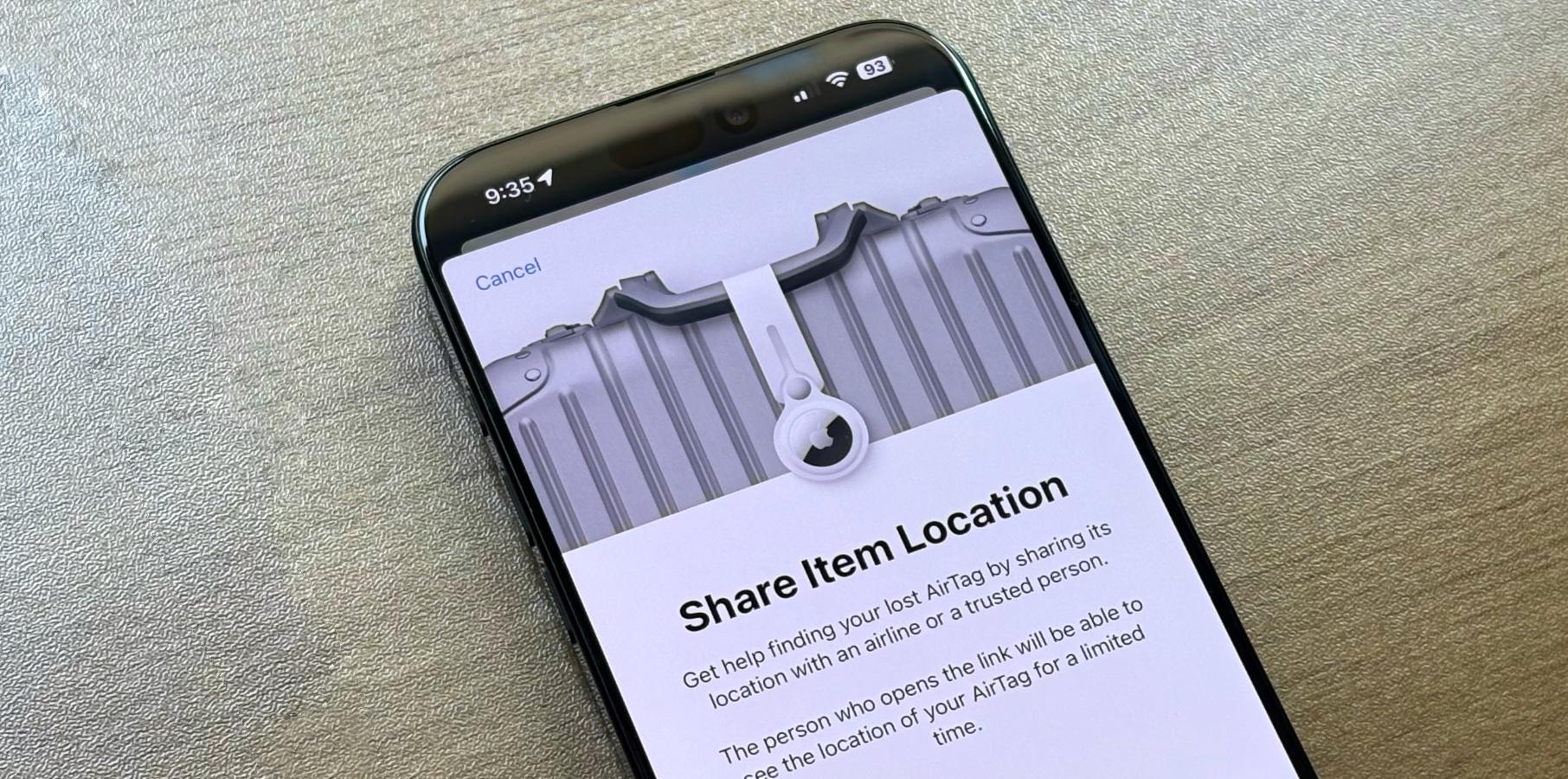
The new Share Item Location feature lets iPhone and iPad users share their AirTag or third-party item tracker location with another person or an airline. It was first available as part of the iOS 18.2 beta and is now rolling out to everyone.

According to Apple, over 15 airlines are planning support for this Find My feature: Aer Lingus, Air Canada, Air New Zealand, Austrian Airlines, British Airways, Brussels Airlines, Delta Air Lines, Eurowings, Iberia, KLM Royal Dutch Airlines, Lufthansa, Qantas, Singapore Airlines, Swiss International Air Lines, Turkish Airlines, United, Virgin Atlantic, and Vueling.

Suppose you lose your keychain in a restaurant. You can send the manager a link using Share Item Location, and they can track your AirTag using their iPhone 11 or newer with Precision Find.

Tech. Entertainment. Science. Your inbox.

Sign up for the most interesting tech & entertainment news out there.

By signing up, I agree to the Terms of Use and have reviewed the Privacy Notice.

Additionally, you can already share your AirTag location with friends and family members using the Find My network.

How to share a Lost AirTag using Find My

If you have an AirTag and your iPhone is updated to iOS 18.2, follow the steps below:

  • Open the Find My app and open the “Items” tab.
  • Select the lost AirTag and scroll down the menu.
  • Tap “Show Contact Info” so people can contact you when they find your item.
  • Lastly, tap “Share Item Location” so you can create a link that people can click to see your AirTag location for a limited time.

Apple says the “Show Contact Info” feature lets others hold your AirTag close to the top of their phone to open a website with more information, including your phone number or email address, so they can contact you to let you know they found your device.

Below, you can learn more about the latest iOS 18.2 features.

Source

Posted on

NCA takes out network that laundered ransomware payments

The UK’s National Crime Agency (NCA) has exposed and disrupted two Russian money laundering networks that handled cash stolen by the Ryuk ransomware gang, among others.

Operation Destabilise took out the Smart and TGR criminal networks, which besides providing services to cyber criminals also played a key role in drugs and firearms trafficking into the UK.

The two networks also helped Russian clients bypass financial restrictions to invest money illegally in the UK, transferred money to support the activities of a sanctioned Russian-language media organisation, alleged to be banned propaganda network Russia Today (RT), and provided financial assistance to fund Russian espionage activities.

The NCA said it had also demonstrated clear links between the cryptocurrency addresses used by Smart and TGR, and sanctioned crypto exchange Garantex, which allegedly has links to payments made for weapons components for Russian troops in Ukraine.

“Operation Destabilise has exposed billion-dollar money laundering networks operating in a way previously unknown to international law enforcement or regulators,” said Rob Jones, NCA director general of operations.

“For the first time, we have been able to map out a link between Russian elites, crypto-rich cyber criminals and drugs gangs on the streets of the UK. The thread that tied them together – the combined force of Smart and TGR – was invisible until now.

For the first time, we have been able to map out a link between Russian elites, crypto-rich cyber criminals and drugs gangs on the streets of the UK. The thread that tied them together – the combined force of Smart and TGR – was invisible until now Rob Jones, NCA

“The NCA and partners have disrupted this criminal service at every level. We have identified and acted against the Russians pulling the strings at the very top, removing the air of legitimacy that enabled them to weave illicit funds into our economy,” he added.

“We also took out the key coordinators that enabled the cash-based element of their operation in the UK, making it extremely difficult for them to operate here and sending a clear message that this is not a safe haven for money laundering,” said Jones.

The NCA also named six key players in the two networks, all of whom have been sanctioned by the United States Office of Foreign Assets Control (OFAC) today: Ekaterina Zhdanova, Khadzi-Murat Magomedov and Nikita Krasnov, who between them led the Smart operation; and George Rossi, Elena Chirkinyan and Andrejs Bradens (aka Andrejs Carenoks), who headed up TGR.

The NCA said that dating back to 2021, Zhdanova played a key role in laundering $2.3m (£1.8m) of crypto-based ransoms paid to the Ryuk ransomware crew. The Ryuk gang – a predecessor to Conti – callously targeted health sector organisations in both the UK and US during the Covid-19 pandemic in 2020.

Members of Ryuk, sanctioned by the UK in 2023, were responsible for extorting over £27m from at least 149 known victims in the UK – the gang’s true impact was likely much higher.

“This is stellar work from the NCA, OFAC and partners, demonstrating the simple truth that paying ransoms contributes to crime on the streets in the UK and other countries,” said Don Smith, vice-president of threat intelligence at the Secureworks Counter Threat Unit.

“Paying ransoms is, and always has been, nothing more than putting funds in the hands of criminals,” he said.

84 arrests

NCA-coordinated activity against Smart and TGR has so far resulted in 84 arrests, with many individuals already behind bars and over £20m in assets seized.

The networks formed the core of a complex scheme that collected money in one jurisdiction and performed a series of crypto-for-cash swaps to make the equivalent value available elsewhere. In this manner, they were able to not only launder money for cyber criminals, but also streamline the movement of money made by other organised crime gangs and help Russian oligarchs and elites bypass sanctions.

This is stellar work from the NCA, OFAC and partners, demonstrating the simple truth that paying ransoms contributes to crime on the streets in the UK and other countries. Paying ransoms is nothing more than putting funds in the hands of criminals Don Smith, Secureworks Counter Threat Unit

The UK unwittingly played a key role as a hub for Smart and TGR, with investigators frequently witnessing in-person, street-level cash handovers, which were followed almost immediately by cryptocurrency movements.

After receiving their crypto funds back, the networks enabled criminals to reinvest in drugs or firearms without needing to move actual money across borders, perpetuating a cycle of violence and harm in Britain.

“The networks disrupted by Operation Destabilise were hidden in plain sight, operating from within our communities, moving vast sums of money linked to the drugs trade and serious violence on our streets,” said Nik Adams, T/assistant commissioner for City of London Police and National Police Chiefs’ Council lead for economic crime.

Cash couriers run by Smart and TCG used over 50 different locations in England, Scotland, Wales and even the Channel Islands over a four-month period, to swap funds for more than 20 distinct criminal groups. One of the couriers, Fawad Saiedi, who is now serving a four-year and four-month prison sentence, personally oversaw the laundry of £15m of funds.

A different group, coordinated by Krasnov, ran couriers to launder over £12m in just two-and-a-half months. Three individuals are currently serving time for these offences in the UK and Ireland.

The NCA also revealed how its investigation did not go unnoticed by the networks, with many members speaking openly about their reservations over operating in London as the agency and its partners slowly turned up the heat.

By summer 2024, a few short months ago, Russian money laundering networks in London were charging extremely high commission rates as it became harder and harder for them to work in the city. This proved costly to both groups, which were operating on extremely low profit margins.

Source

Posted on

Shared digital gateway was source of three NHS ransomware attacks

Liverpool’s Alder Hey Children’s NHS Foundation Trust has revealed that a shared service operated by itself and Liverpool Heart and Chest Hospital NHS Foundation Trust was the source of an INC Ransom intrusion that has affected patient data at both hospitals, as well as Royal Liverpool University Hospital.

The attack, which came to light on 28 November, has seen data exfiltrated from the Trusts’ IT systems, but is not linked to a separate ransomware attack against Wirral University Hospitals NHS Foundation trust, which unfolded a few days earlier and has been linked to the RansomHub crew.

In an update shared on 4 December, Alder Hey said: “Criminals gained unlawful access to data through a digital gateway service shared by Alder Hey and Liverpool Heart and Chest Hospital.

“This has resulted in the attacker unlawfully getting access to systems containing data from Alder Hey Children’s NHS Foundation Trust, Liverpool Heart and Chest Hospital, and a small amount of data from Royal Liverpool University Hospital.

The Trust said its investigation into exactly what data has been stolen is ongoing, and this may take some time. It warned that there was a possibility that the ransomware gang may publish the data before its investigation is complete, an indication that it is standing firm and resisting demands, as is public sector policy in the UK.

“As soon as we are able to update on the impact to people’s data, we will provide a further update. Work is continuing with the National Crime Agency to secure impacted systems and to take further steps in line with law enforcement advice. We are also following guidance from the Information Commissioner’s Office and will ensure that anyone impacted by this data breach is contacted directly and supported,” Alder Hey said.

It emphasised that its core frontline services remain unaffected and are running as usual – patients should still attend appointments as scheduled.

The Trust’s added that its recovery efforts were making strong headway, saying: “As part of our response to this threat we have made progress in securing impacted systems and ensuring the attackers do not have continued access. This means that we are in a position to begin to reconnect our systems when it is safe to do so.”

Was Citrix Bleed involved?

Alder Hey’s assertion that a digital gateway service served as the entry point for INC Ransom’s operators appears to confirm earlier reports – per Infosecurity – that the gang attacked a Citrix instance operated by the Trust.

If this was the case, the gang likely used a critical vulnerability in Citrix NetScaler Application Delivery Controller (ADC) and Citrix NetScaler Gateway appliances, tracked as CVE-2023-4966, but more commonly known as Citrix Bleed.

Discovered towards the end of 2023, Citrix Bleed enables both session hijacking and data disclosure. It is one of the most widely exploited zero-days of the past 12 months and has been widely used in ransomware attacks – notably a number of high-profile incidents involving the LockBit gang. According to Secureworks’ intelligence, INC Ransom has also targeted it with great enthusiasm.

Rafe Pilling, director of threat intelligence at the Secureworks Counter Threat Unit, said: “Criminal gangs are opportunistic in the hunt for the next pay-out, the impact of their actions is not their concern. The fact that this is a highly specialist children’s hospital will not cause them to lose any sleep. We have previously seen Gold Ionic – the group that operates INC ransomware – hit NHS Dumfries and Galloway. These attacks on front line healthcare underline that this sector, is a vulnerable target and must be protected.

“INC ransom was one of the most active threat groups the Secureworks CTU observed over the past year, having started operating in July 2023. Its victims are predominantly based in the US, however it’s global reach is growing. Its victims represent a wide range of sectors, but the most common are industrial, healthcare and education organisations.”

Source

Posted on

CMA gives Vodafone-Three merger green light

The UK’s Competitions and Markets Authority (CMA) has cleared the Vodafone-Three merger, subject to legally binding commitments. It’s expected to formally complete in the first half of 2025.

The CMA had previously warned that the proposed merger of Vodafone and Three would likely lead to higher prices and reduced service. The deal is subject to Vodafone-Three delivering a joint network plan, which sets out the network upgrade, integration and improvements the two companies will make to their combined network across the UK over the next eight years.

Vodafone and Three will also need to cap selected mobile tariffs and data plans for three years, which the CMA said would directly protect large numbers of Vodafone-Three customers from short-term price rises in the early years of the network plan. The merged company will also be required to offer pre-set prices and contract terms for wholesale services for three years, to ensure that virtual network providers can obtain competitive terms and conditions as the network plan is rolled out.

The merger of Vodafone and Three is regarded as Vodafone’s response to BT’s 2016 purchase of EE, and the 2021 merger of Virgin Media and O2 to form VMO2.

Margherita Della Valle, Vodafone Group’s CEO, described the combination as being “great for customers, great for competition and great for the country”.

The two companies have committed to investing £11bn to create what they claim is one of Europe’s most advanced 5G networks. The aim is to reach 99% of the population and benefit over 50 million customers. The investment in mobile networking promises better quality, greater reliability and enhanced capacity for handling ever-increasing data demand, according to Vodafone and Three, who see demand for mobile data servers increasing with more widespread adoption of new technology, such as artificial intelligence (AI).

“The CMA’s decision is not a surprise – it has signalled for some time that it was receptive to approving the merger subject to appropriate concessions from the parties,” said Alex Haffner, a competition partner at Fladgate. “Nevertheless, it is noteworthy in that it has permitted a ‘4-3’ merger in the mobile sector on the basis of purely behavioural remedies – over the past decade, a multitude of ‘4-3’ mobile network mergers across Europe have been permitted only on the basis of significant structural remedies being conceded by the merging parties. In doing so, the CMA has displayed a degree of pragmatism, sensing that consumers will ultimately benefit more from competition between three well-resourced mobile operators in the UK market.”

Kester Mann, director of consumer and connectivity at CCS Insight, described the deal as “one of the most significant moments in the history of UK mobile”, heralding the arrival of a new market leader with a combined 29 million customers.

“The CMA’s decision to approve the merger is the right one, and largely strikes a good balance between nurturing competition and encouraging investment,” he said. “It should pave the way for more efficient investments to bring about much-needed improvements to mobile services in the UK.”

However, as Matthew Howett, founder and CEO at Assembly Research, noted, there is still a chance Sky may seek to challenge the decision. He nonetheless said a successful appeal to the CMA’s decision would be hard-fought, expensive and face a high bar. “We expect positive implications overall, not only for investment in, and the quality of, networks (including standalone 5G), but also for the wholesale customers, consumers and businesses that rely on them,” he said.

For Howett, telco regulator Ofcom has a significant new role focused on the oversight of the Vodafone-Three merger. “The regulator seems emboldened to assume these responsibilities,” he said. “Its monitoring will need to be carried out in an agile a way as possible to ensure the merged entity is living up to expectations, and to minimise any risk of circumvention or market distortions that some have warned about.”

Source

Posted on

Here’s why I’d cancel Netflix before ChatGPT Plus

As I type these lines, we’re halfway through OpenAI’s big “12 Days” of ChatGPT event, which brought us several exciting features. ChatGPT o1 is out of beta, as is the Canvas mode, with the latter delivering a big UI change for the ChatGPT experience. OpenAI also released the text-to-video Sora service to the public and brought live video streaming and screen sharing to GPT-4o’s Advanced Voice Mode.

As a ChatGPT Plus user, I’d have early access to all of them, but since I’m in the European Union, OpenAI is more cautious with its releases here. As such, Sora and the live video streaming support for Advanced Voice Mode are not available in the region. The latter is especially exciting, as the AI will get eyes in specific conversations.

These developments made me realize, again, that the Plus subscription isn’t as good in Europe as elsewhere. Still, I’m not going to cancel it, as I find that ChatGPT has become too valuable to me, both for work and personal computing. I also thought that, if I were to choose, I’d rather cancel Netflix than ChatGPT Plus at this particular point in my life.

It’s an apples-to-oranges comparison, sure. The two products aren’t actual competitors. If anything, I found that ChatGPT can be a great companion for streaming certain Netflix shows.

Tech. Entertainment. Science. Your inbox.

Sign up for the most interesting tech & entertainment news out there.

By signing up, I agree to the Terms of Use and have reviewed the Privacy Notice.

It just happens that I’m not binging Netflix like I would have done years ago. I skip some of the shows completely.

Meanwhile, Netflix has tightened its password-sharing crackdown to the point where circumventing it is almost impossible.

Separately, YouTube got a massive price hike this week, which, combined with OpenAI’s ongoing event, made me compare streaming subscriptions like Netflix to ChatGPT Plus. It’s not just Google that’s periodically increasing prices; Netflix is doing it, too, as I just got one such price hike notification for my region.

I often argued that the password-sharing ban and price hikes are worth dealing with, considering what you’re getting in return. I said that I’ll keep my Netflix subscription as long as I spend more money on coffee when going out. The latter consideration also applies to ChatGPT Plus.

What I’m getting at is that I’m not in a position where I have to choose between the various software and service subscriptions I might pay each month and cut some of the costs.

But if I were to start cutting something, streaming services would go well before ChatGPT Plus. Netflix could be on the chopping block too.

At $20/month, ChatGPT Plus is actually more expensive than what I pay for Netflix. But combine all the streaming subscriptions I’m subscribed to, and ChatGPT Plus is the cheaper option. Also, those costs add up over a year, according to an Excel doc where I keep track of everything.

Ted Danson in A Man on the Inside on NetflixTed Danson as Charles in “A Man on the Inside.” Image source: Colleen E. Hayes/Netflix

I reduced my streaming time so I could focus on exercising more. I run marathons now, which means I’m spending hours running and walking outside. Watching Netflix isn’t what it used to be, and it has nothing to do with the time I spend on ChatGPT.

As for the AI chatbot, I’ve been using it increasingly more in the past year, especially since I jumped on the Plus subscription. It’s not just for work, though; as you can imagine, keeping tabs on all things AI is a good reason to have an active premium AI subscription. I use ChatGPT for more complex research, which would take a lot longer to use traditional search engines.

I’m still questioning what the AI is telling me, but with the addition of ChatGPT Search, OpenAI has made a big move towards showing the sources of ChatGPT’s claims. By the way, ChatGPT Search continues to be exclusive to premium tiers like ChatGPT Plus.

I use ChatGPT to plan workouts and travel, and I use it to ask any question I can think of, including the sillier kind. That latter part actually comes in handy while traveling to all sorts of places and visiting museums and other landmarks. ChatGPT can be an invaluable source of information, and it’ll be an even better tool once video streaming support rolls out to Advanced Voice Mode.

I wouldn’t have necessarily expected it earlier this year, but a premium AI subscription is a top priority for me. Even if I cancel ChatGPT Plus, I’d consider a premium replacement from the competition. The Netflix subscription, meanwhile, is much lower on that priorities list, and I’m sure I’d cancel it long before I ditch ChatGPT Plus.

Source

Posted on

UK government set to hit target for 85% gigabit broadband coverage in 2025

The government is set to hit its target for 85% of the UK to have full-fibre, gigabit-capable broadband connectivity in 2025, according to the latest figures from industry regulator Ofcom.

The telecoms watchdog said 20.7 million homes can now access full-fibre broadband links if they wish, representing 69% of all households, up from 57% in September 2023. When the numbers for houses with cable network connectivity are included, this means 83% of the country already has gigabit broadband capability.

Northern Ireland is the best-connected region, with 94% of residential properties having full-fibre broadband. Wales lags behind at 74%.

The government’s £5bn Project Gigabit programme was introduced in 2021 with the aim of accelerating the UK’s recovery from Covid-19, prioritising areas with slow connections that would otherwise be left behind in telcos’ commercial plans and giving rural communities access to the fastest internet on the market, so helping to grow the economy.

“It’s a record-breaking year for broadband in the UK, as the roll-out of full fibre continues to steam ahead,” said Natalie Black, networks and communications group director at Ofcom. “Whether you’re running a business, streaming your favourite programmes, or doing Christmas shopping online, it’s more likely than ever that you’ll be able to benefit from a fast and reliable broadband connection.”

However, work remains to be done on encouraging households to take-up gigabit broadband services.

As of July this year, only 35% or 7.5 million households had signed up to receive a full-fibre connection – up from 28% in May 2023. Notably, rural areas are more likely to adopt high-speed connectivity, with over half (52%) of homes signed up, compared with a third (32%) in urban areas.

Take-up of so-called “superfast” broadband – with download speeds of at least 30 Mbit/s – has increased from 72% to 75% of residential and business premises.

Meanwhile, Elon Musk’s Starlink satellite broadband service has signed up 87,000 connections in the UK, mostly in rural areas – up from 42,000 last year.

However, Ofcom said that availability of 5G mobile services remains patchy, with 5G deployed in 42% of sites in urban areas, compared with just 16% of sites in rural areas – although 95% of the country is capable of receiving 5G coverage from at least one mobile operator.

5G roll-out is likely to receive a boost as a result of Vodafone’s acquisition of Three, where the two companies have had to agree to legally binding targets for an £11bn network investment plan to receive regulatory approval for the merger from the Competition and Markets Authority.

One-fifth (21%) of mobile data traffic in the UK now passes over 5G connections. Total monthly mobile traffic has grown by 18% this year to 1069 petabytes, slower than the 25% growth seen between 2022 and 2023.

Recent investments in gigabit broadband capability have seen the full-fibre network extended to properties in rural Yorkshire, Nottinghamshire and West Lincolnshire, and the New Forest area.

Project Gigabit has also led to the growth of new entrants into the broadband infrastructure market to rival the incumbent Openreach, BT’s network delivery arm, and Virgin Media, the main cable provider. City Fibre has won numerous contracts to become a leading rival to Openreach, while smaller alternative networks, or altnets, such as Community Fibre, Toob and MS3, have become competitive in local regions.

Source

Posted on

Intel and AMD may have another desktop competitor

  • A new suggestion from a reliable leaker hints at Qualcomm’s new CPU heading to desktop PCs
  • The 2nd-gen Snapdragon X Elite processor codenamed ‘Project Glymur’ was tested with liquid cooling AIO
  • The chip likely be unveiled at CES 2025 in a few weeks

Both Intel and AMD have dominated the desktop PC scene when it comes to providing powerful processors for productivity and gaming – and now, Qualcomm could be joining the party, with 2nd-gen Snapdragon X Elite processors potentially making their way to desktop PCs.

As highlighted by Notebookcheck, reliable leaker Roland Quandt has hinted at Qualcomm’s new processor coming to desktop PCs as the brand is reportedly testing the SC8480XP (Project Glymur chip codename) with a 120 mm liquid cooling AIO. This assumption comes from the fact that AIOs as such being used for gaming desktop configurations, unlike the cooling mechanisms that would be required in lightweight laptops.

With CES 2025 now only weeks away, we could soon see what Qualcomm has to offer and whether Quandt’s prediction is accurate. The 2nd-gen Snapdragon X Elite processors may take advantage of Oryon V3 cores according to Quandt (based on Qualcomm CEO Cristiano Amon’s ‘next-gen’ CPU statements), so there could be a lot to get excited about here.

Qualcomm Snapdragon X Elite

(Image credit: Qualcomm)

Could 2025’s CES event be one of the best in years?

Considering AMD and Nvidia’s presence at CES 2025 and their inevitable reveals of the Radeon RX 8000 series and RTX 5000 series GPUs, Qualcomm’s inclusion could easily make this one of the more interesting CES events in years.

While a potential new Snapdragon X Elite processor for desktop PCs could be beneficial for gamers with tight budgets (especially as a second-gen version of the existing X Elite), it’s still a little too early to suggest this. On laptops such as the Lenovo Yoga 7x Slim, gaming is possible but certainly not comparable to gaming laptops or handheld gaming PCs, and Qualcomm itself has stated that the X Elite chips are not targeted at serious gamers.

Nonetheless, the Yoga 7x Slim and fellow X Elite laptops come without discrete GPUs – for a desktop gaming PC that has a discrete GPU, a new Snapdragon chip could be promising depending on the improvements made with the new processors; potentially adding to the list of surprises I hope to see at CES 2025. Mind you, I don’t want to have to buy a new motherboard…

You might also like…

{ window.reliablePageLoad.then(() => { var componentContainer = document.querySelector(“#slice-container-newsletterForm-articleInbodyContent-NP89AAthSg9prV59t2ChUN”); if (componentContainer) { var data = {“layout”:”inbodyContent”,”header”:”Get daily insight, inspiration and deals in your inbox”,”tagline”:”Sign up for breaking news, reviews, opinion, top tech deals, and more.”,”formFooterText”:”By submitting your information you agree to the Terms & Conditions and Privacy Policy and are aged 16 or over.”,”successMessage”:{“body”:”Thank you for signing up. You will receive a confirmation email shortly.”},”failureMessage”:”There was a problem. Please refresh the page and try again.”,”method”:”POST”,”inputs”:[{“type”:”hidden”,”name”:”NAME”},{“type”:”email”,”name”:”MAIL”,”placeholder”:”Your Email Address”,”required”:true},{“type”:”hidden”,”name”:”NEWSLETTER_CODE”,”value”:”XTR-D”},{“type”:”hidden”,”name”:”LANG”,”value”:”EN”},{“type”:”hidden”,”name”:”SOURCE”,”value”:”60″},{“type”:”hidden”,”name”:”COUNTRY”},{“type”:”checkbox”,”name”:”CONTACT_OTHER_BRANDS”,”label”:{“text”:”Contact me with news and offers from other Future brands”}},{“type”:”checkbox”,”name”:”CONTACT_PARTNERS”,”label”:{“text”:”Receive email from us on behalf of our trusted partners or sponsors”}},{“type”:”submit”,”value”:”Sign me up”,”required”:true}],”endpoint”:”https://newsletter-subscribe.futureplc.com/v2/submission/submit”,”analytics”:[{“analyticsType”:”widgetViewed”}],”ariaLabels”:{}}; var triggerHydrate = function() { window.sliceComponents.newsletterForm.hydrate(data, componentContainer); } if (window.lazyObserveElement) { window.lazyObserveElement(componentContainer, triggerHydrate); } else { triggerHydrate(); } } }).catch(err => console.error(‘%c FTE ‘,’background: #9306F9; color: #ffffff’,’Hydration Script has failed for newsletterForm-articleInbodyContent-NP89AAthSg9prV59t2ChUN Slice’, err)); }).catch(err => console.error(‘%c FTE ‘,’background: #9306F9; color: #ffffff’,’Externals script failed to load’, err)); ]]>

Sign up for breaking news, reviews, opinion, top tech deals, and more.

Source

Posted on

UK medical trial of four-day week finds staff happier and more productive

Learning technology firm Thrive has taken part in the UK’s first medical trial of the four-day work week, which found that shorter hours lead to happier, more productive staff.

Conducted by Thrive in partnership with the University of Sussex, the trial collected data on 115 Thrive employees between July and October 2024, including research tests such as MRI scans, blood tests and sleep tracking, as well as weekly questionnaires covering their workplace experiences and wellbeing.

Regular feedback was also sought from Thrive customers – which the company supplies with an artificial intelligence (AI)-powered learning management system (LMS) to help them train and upskill their employees faster – to determine the impact of the trial on quality of service, while sales and product metrics were also evaluated to assess the effects on business productivity.

According to the results, there were notable improvements in a number of employee wellbeing metrics – particularly those related to stress levels, sleep quality, and detachment from work – indicating a significant improvement in work-life balance.

This includes a 20% reduction in sleep problems, a “considerable” 8.6% reduction in perceived stress, a 14.7% decrease in “emotional exhaustion”, and a “statistically significant” 5% reduction in anxiety symptoms.

“The results speak for themselves. These significant improvements in areas related to physical and mental wellbeing demonstrate the transformative power of a four-day work week,” said Charlotte Rae, research lead at the University of Sussex. “Improved sleep quality and reduced stress and exhaustion are factors that could have a significant impact on our health, with the potential to enhance our lives in and outside of work. This study provides further compelling evidence for the benefits of flexible working models.”

In terms of the impact on work productivity, the trial found that despite working fewer hours, the task execution of employees remained consistent, with many reporting increased goal attainment and self-efficacy. Researchers said this reflected a boost in their confidence and belief in their ability to achieve desired outcomes at work.

Cassie Gasson, co-CEO at Thrive, said that being a tech-focused business brought a range of advantages to the firm when conducting the trial: “Working in the tech space means our teams are naturally aligned with using tools like AI, which allowed us to streamline workflows and prioritise the work that matters most.

“As creators and users of AI-powered solutions, we’ve seen first-hand how impactful it can be in enabling flexibility without compromising on results, which has proven beneficial in the context of the four-day work week.”

She added that while Thrive’s teams are already equipped with the skills and tech to make the most of a four-day week – as the company has used its platform to continually upskill its own workforce – the trial highlighted that success depends on fostering the right culture to make the working changes sustainable.

“Because of this, we recognise that this approach doesn’t suit every business or team dynamic,” she said. “By balancing flexibility with customer needs, we’re exploring how to make the four-day work week a sustainable option for the future, opting for a seasonal approach going forward.”

Widespread cultural change needed for success

Despite the dual benefits on employee wellbeing and productivity, the trail highlighted the difficulty of providing consistent customer service in a business landscape where most other firms are still operating on the traditional five-day working model.

“Our four-day work week trial revealed incredibly encouraging results and we saw a fantastic impact on the people within our business,” said Gasson. “While we would have loved to implement it on a full-time basis, our experiences in the trial highlighted that the success of a four-day work week will rely on widespread cultural change across the UK business landscape.

“As a business serving hundreds of organisations, it highlighted that five-day coverage for our customers is essential when they’re operating more traditional ways of working.”

Gasson added that the UK government should consider implementing policies to help make a four-day work week a reality: “The benefits are evident through its potential to boost business productivity, increase wellbeing, and generally make the country happier and healthier. The UK has the potential to take the lead on this by pioneering the four-day work week and reaping the rewards.”

Until then, she said Thrive would look to implement a four-day work week on a seasonal basis.

In May 2022, more than 3,000 workers at 60 companies took part in a coordinated, six-month trial of a four-day working week in the UK. Organised by 4-Day Week Global in partnership with think tank Autonomy and the 4-Day Week UK Campaign, the trial saw 60 firms – including several technology companies – adopt a reduced working week with no loss of pay from June to December 2022.

Speaking with Computer Weekly at the time, many of the tech firms highlighted positive results in terms of productivity, as well as talent attraction and retention.

While issues were highlighted for business in sectors such as cyber security, where “switching off” for a day is not necessarily an option, researchers at Autonomy said businesses could circumvent this issue through the introduction of a better rota system or by hiring additional staff. Ultimately, most firms involved deciding to continue with shorter weeks on a permanent basis.

Prior to this, the largest four-day week trial to date was run in Iceland by Reykjavík City Council and the national government, which included more than 2,500 workers. It found that productivity either remained the same or improved in the majority of workplaces involved.

In November 2023, Autonomy published a paper on the potential for AI-driven large language models (LLMs) to shorten people’s work weeks, noting while they could lead to significant reductions in working time without a loss of pay or productivity, realising the benefits of such AI-driven productivity gains in this way will require concerted political action.

Autonomy noted that although people have long been predicting and expecting far shorter working weeks due to technological advances, historical increases in productivity over recent decades have not translated into increased wealth or leisure time for most people, largely as a result of economic inequality.

It said that there is often a sense of pessimism around AI-driven productivity gains, with most conversations emphasising the potential for job losses and degraded working conditions, but that such gains could also be used to deliver shorter working weeks for many while maintaining their pay and performance.

A number of IT firms have moved to a four-day week over the past couple of years due to the benefits, including cloud provider Civo, channel player Highgate IT Solutions, and challenger bank Atom.

Source

Posted on

Apple Watch Series 10 has a frustrating problem with workout tracking

I switched from a 40mm Apple Watch SE 2 to a 42mm Apple Watch Series 10 in late September, and it’s the best thing I’ve ever done. But there’s an unexpected twist, and it’s so annoying.

I run marathons now, and I want Apple’s wearables to track my health parameters during races and the entire training phase leading up to a race. My old Apple Watch SE’s battery health dropped below 80%, at which point I had to recharge it twice a day to ensure it would not die suddenly.

I could have replaced the battery or purchased another SE model. But, as I get older, I also want better health tracking — and the premium Apple Watch Series 10 delivers that. I want the wearable to track my health parameters around the clock, not just while I’m training.

I should also tell you that I’m always running the latest watchOS 11 beta, which can often explain various bugs. But there’s one that I keep seeing, and it has nothing to do with the current beta OS I’m running: The Apple Watch Series 10’s sensors don’t consistently track my heart rate during workouts.

Tech. Entertainment. Science. Your inbox.

Sign up for the most interesting tech & entertainment news out there.

By signing up, I agree to the Terms of Use and have reviewed the Privacy Notice.

I started noticing this bug in mid-October. Since then, I’ve seen some improvements, but I’m still missing data from the run and walk session. It turns out I’m not the only one. BGR’s editor Zach Epstein got a 46mm Apple Watch Series 10. He also encountered the same issue during an elliptical workout, and he’s not running a beta version of watchOS. He also had the same problem with his older Apple Watch Ultra, which means the problem isn’t just an issue with the Series 10 model.

We both dealt with this heart rate tracking issue sometime during the early watchOS 11 betas over the summer. Zach found a workaround I’ve used on my Apple Watch SE 2 for weeks, until Apple seemingly fixed it.

We would take heart rate readings with the watch’s dedicated Heart Rate app just before starting a workout. This would sort of warm up the heart rate sensor, so to speak, and it would keep working throughout the subsequent workout. Apple appeared to have addressed it a few weeks later, as my Apple Watch SE 2 started working fine.

But fast-forward to October, and the same problem appeared on the Apple Watch Series 10. By early December, the issue is still here.

It’s unclear exactly what is causing the Apple Watch Series 10 to fail when performing readings. I’ve already shared some screenshots that prove heart rate data was absent when I first covered the issue, so I’ll share a few fresh ones below.

The missing heart rate data

Here’s Zach’s most recent elliptical session, which lacks about 10 minutes of heart rate data at the start of his workout:

Missing heart rate data from an elliptical workout.Missing heart rate data from an elliptical workout. Image source: Zach Epstein, BGR

Here’s my 9K run from Sunday afternoon that shows two different types of behaviors. First, we can see that it’s missing all of my heart rate data early in the workout. But then, the Apple Watch Series 10 also runs into issues later in the workout:

Missing heart rate data from a 9K run.Missing heart rate data from a 9K run. Image source: Chris Smith, BGR

I ran my second marathon — which was my first while wearing the Apple Watch Series 10 — a few days before the 9K run. The Apple Watch Series 10 was amazing when it came to battery life. And, from the looks of the following graph, it registered my heart rate throughout the race.

Heart rate data captured during a marathon race.Heart rate data captured during a marathon race. Image source: Chris Smith, BGR


But did it really? Or are we simply too zoomed out in the graph to spot any missing information? After all, this was a race that lasted more than four hours. The app had to fit all the heart rate data into the same limited space as my 9K run or Zach’s elliptical workout.

I’ve been using the Apple Watch since the first generation came out. There’s no chance here that I’m wearing it wrong. I know how snug it has to be to record health parameters. I wear the Watch on the same arm and same location. I also don’t have any tattoos that would interfere with the sensor.

What I’m getting at is that heart rate readings were not as big of a problem before watchOS 11 and the Apple Watch Series 10.

It’s not just about workouts

I didn’t buy the best Apple Watch out there, save for the Ultra, just for training. I want it to provide health readings around the clock. But considering the repeated issues during my workouts, how would I even know the Apple Watch Series 10 is taking the regular heart rate readings it has to perform with accuracy?

I could manually review the logbook of readings and compare them with Apple Watch SE 2 readings from the past to see if the number of data points matches during rest or sleep, but I’m not going to do that.

Hopefully, the Apple Watch will catch heart rate issues in the early stages once I’m older. For that to happen, and for the Apple Watch to save my life, I would have to know for certain that it’s always performing pulse readings without hiccups.

Finally, I want to upgrade my dad’s Apple Watch to a Series 10. But the accuracy of heart rate readings is paramount here. Unlike me, he has heart issues that come with age, and the Apple Watch is potentially a life-saving device.

It’s unclear what’s causing the issue and how many people have encountered it. But we have at least two cases that we can talk about. I’ll also point out that I bought my Apple Watch Series 10 in Europe, so I still have a working blood oxygen sensor, whereas Zach got his in the US. These units come from entirely different batches.

Is this a software issue? I could always jump off beta and find out. But, again, Zach isn’t currently running a beta OS on his watch. Is it a hardware issue? I can’t tell.

As much as I love the Apple Watch Series 10, I’ll have to take it in for potential repairs if the situation persists. I would have returned it if I knew the heart rate issue would persist, but my return window has passed.

Source

Posted on

visionOS 2.2 beta 4 now available ahead of official release

A couple of weeks after releasing visionOS 2.2 beta 3 to developers, Apple has now seeded its fourth testing version. Unlike the tame visionOS 2.1 update, this new build brings a long-awaited feature: wider Mac Virtual Display options.

Mac Virtual Display is one of the OG features of Apple Vision Pro. However, with new wide and ultrawide modes, the spatial computer offers a more immersive experience.

Here’s what this feature is all about:

Using Mac Virtual Display is like having an expandable, ultrawide screen that wraps around you. It’s the equivalent of having two 4K displays sitting side by side — everything looks astoundingly sharp and incredibly detailed.

Now, with an ultrawide view, Apple says it feels like you have two physical 4K displays sitting side by side on a desk, except you don’t have something limiting the two displays. This Apple Vision Pro feature is perfect for anyone multitasking on a Mac, and it feels better than having several windows floating around.

Tech. Entertainment. Science. Your inbox.

Sign up for the most interesting tech & entertainment news out there.

By signing up, I agree to the Terms of Use and have reviewed the Privacy Notice.

With this feature, you can open several apps at once and visualize them before you with Vision Pro’s incredible displays. Not only will this boost productivity, but it will also make this spatial computer a more compelling upgrade than two Studio Displays, as you can use it for more than just mirroring your Mac once you finish working.

Apple is expected to expand Mac Visual Display in early December when visionOS 2.2 is expected to be released to all users. While rumors about a new Vision Pro are contradictory, the latest reports expect Apple to update this product next year with a more capable processor, most likely the M5.

However, a revamped interaction is still a few years away. At this moment, Apple has only released visionOS 2.2 beta 4 to Apple Vision Pro developers. We’ll let you know if more betas or RCs are released this week.

Source