Posted on

AMD reveals RX 9070 GPUs won’t go on sale until March, which might be too late to prevent Nvidia cleaning up with RTX 5070 models

  • AMD has confirmed RX 9070 models will be on shelves in March 2025
  • This runs against rumors that suggested a late January launch
  • PC gamers aren’t happy, particularly as stock of RDNA 4 graphics cards is rumored to have shipped to retailers already

AMD has confirmed that its RX 9070 graphics cards, the first initial models from the RDNA 4 family, won’t be available until March.

David McAfee, who is VP and GM of Ryzen CPU and Radeon graphics at AMD, posted on X to share the news.

So, the on-sale date for the initial RX 9070 XT and vanilla 9070 GPUs is March, which has put the cat among the GPU pigeons, to say the least, if you take a brief saunter through the replies on X (and other assorted feedback on Reddit).

What’s got folks annoyed? Well, firstly this is disappointing news based on the rumors that AMD was ready to launch these RX 9070 GPUs later in January to take the mid-range fight to Nvidia, getting in ahead of the release of RTX 5070 variants in February.

Or at least that AMD was going to have a big reveal of RX 9070 graphics cards, possibly later this week, which surely won’t happen now. There’s no point having a big announcement late in January if these next-gen GPUs aren’t turning up for what could be the best part of two months from now.

Part of the problem is that a couple of AMD execs have been dropping hints that the RX 9070 announcement ‘won’t be long’ and will be in the ‘near future’ which to me, and clearly others, suggested it’s pretty imminent.

Granted, all AMD has officially said is that RDNA 4 graphics cards will be launched in Q1 2025, and March still fits that, of course. But based on that timeframe, nothing about March marries with the hints of the full reveal being ‘near’ – indeed it couldn’t really be any further away in this initial quarter of 2025.

{ window.reliablePageLoad.then(() => { var componentContainer = document.querySelector(“#slice-container-newsletterForm-articleInbodyContent-sf6a4h3JvdWGBdH7JZpRXo”); if (componentContainer) { var data = {“layout”:”inbodyContent”,”header”:”Get daily insight, inspiration and deals in your inbox”,”tagline”:”Sign up for breaking news, reviews, opinion, top tech deals, and more.”,”formFooterText”:”By submitting your information you agree to the Terms & Conditions and Privacy Policy and are aged 16 or over.”,”successMessage”:{“body”:”Thank you for signing up. You will receive a confirmation email shortly.”},”failureMessage”:”There was a problem. Please refresh the page and try again.”,”method”:”POST”,”inputs”:[{“type”:”hidden”,”name”:”NAME”},{“type”:”email”,”name”:”MAIL”,”placeholder”:”Your Email Address”,”required”:true},{“type”:”hidden”,”name”:”NEWSLETTER_CODE”,”value”:”XTR-D”},{“type”:”hidden”,”name”:”LANG”,”value”:”EN”},{“type”:”hidden”,”name”:”SOURCE”,”value”:”60″},{“type”:”hidden”,”name”:”COUNTRY”},{“type”:”checkbox”,”name”:”CONTACT_OTHER_BRANDS”,”label”:{“text”:”Contact me with news and offers from other Future brands”}},{“type”:”checkbox”,”name”:”CONTACT_PARTNERS”,”label”:{“text”:”Receive email from us on behalf of our trusted partners or sponsors”}},{“type”:”submit”,”value”:”Sign me up”,”required”:true}],”endpoint”:”https://newsletter-subscribe.futureplc.com/v2/submission/submit”,”analytics”:[{“analyticsType”:”widgetViewed”}],”ariaLabels”:{}}; var triggerHydrate = function() { window.sliceComponents.newsletterForm.hydrate(data, componentContainer); } if (window.lazyObserveElement) { window.lazyObserveElement(componentContainer, triggerHydrate); } else { triggerHydrate(); } } }).catch(err => console.error(‘%c FTE ‘,’background: #9306F9; color: #ffffff’,’Hydration Script has failed for newsletterForm-articleInbodyContent-sf6a4h3JvdWGBdH7JZpRXo Slice’, err)); }).catch(err => console.error(‘%c FTE ‘,’background: #9306F9; color: #ffffff’,’Externals script failed to load’, err)); ]]>

Sign up for breaking news, reviews, opinion, top tech deals, and more.

AMD RX 9070 GPU models

(Image credit: AMD / TechPowerup)

Analysis: An unfortunate sense of confusion and chaos

While AMD has not reneged on any of its promises, then, it very much feels like that to some PC gamers. Never mind the theoretically delayed release date, or full reveal, beyond this, why even mention the GPUs at all at CES 2025? Or at least AMD could have made it clear with that teaser that these cards weren’t imminent, which was very much the expectation. (Actually, most folks were, not unreasonably, expecting the full details and unveiling at CES, not a brief glimpse).

Whatever the case, the underlying problem here is that it feels like AMD is bouncing around its RDNA 4 plans, changing directions and generally causing confusion among would-be buyers of the best GPUs as 2025 kicks off. Regardless of what the actual truth is concerning what might be going on behind closed doors at Team Red, based on what we can see, and the rumors flying around, it all feels very chaotic.

We must remember that these are just rumors, but there have been a lot of sightings of RX 9070 models in boxes, ready to go on shelves, at retailers. VideoCardz, which spotted AMD’s post on X, further claims that reviewers have had sample RDNA 4 GPUs even before retailers had them shipped, and so we have all this info bubbling about, causing some bad feeling from gamers.

If stock really is in place now – as it appears to be, with a suitable handful of salt at the ready – why wait? This is where other chatter from behind the scenes comes into play about AMD having unfortunate problems with adjusting launch pricing, after being surprised by where Nvidia pitched its RTX 5070 models (which surprised us all, let’s be honest). And issues therein in dealing with adjusting MSRPs and compensating retailers, although all of that is very much deep into rumor territory.

The trouble is, not a lot else except this scenario makes much sense, and the pieces of the puzzle (curtailed launch, then mostly radio silence following that, save for those mentioned vague hints of a full reveal ‘soon’) seem to fit well enough.

This also leaves AMD in a very weird position. Instead of being able to get in, ahead of the RTX 5070 which turns up in February, Team Red is going to wait until those rival mid-range graphics cards have been out, maybe for a month, so there could be a lot of defectors turning to Team Green. Well, assuming RTX 5070 stock isn’t something of a washout, and that appears to be the main threat to douse Nvidia’s next-gen GPU fire – that there’ll only be a relative trickle of Blackwell graphics cards early in 2025.

I didn’t see the next-gen GPU wars panning out like this, that’s for sure, and maybe AMD really does need to put out a full spec reveal and pricing announcement, sooner rather than later, even if the RDNA 4 on-sale date is March, and this leaves a big gap. Assuming that those MSRPs have even been decided yet, as this would at least allow gamers to know what to expect, perhaps persuading them to not give up and just go RTX 5070 in February, instead of waiting for the RX 9070 GPUs.

However, already there are gamers saying that is forcing them away from a planned next-gen Radeon purchase to Nvidia Blackwell, though how much of that is an initial angry reaction, we shall have to see.
You might also like…

Source

Posted on

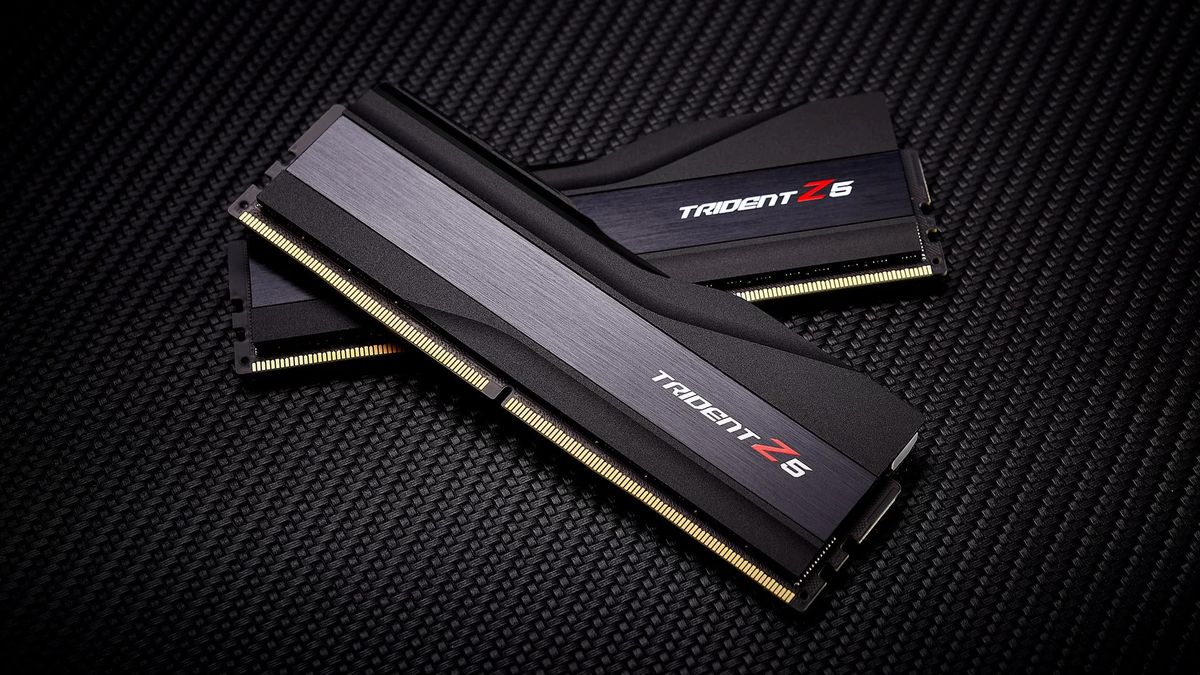
G.Skill DDR5 RAM is overclocked to a blazing 12,054MT/s with no liquid nitrogen needed – just air cooling

  • G.Skill Trident Z5 DDR5 was overclocked to 6027MHz or 12,054MT/s
  • That was achieved using just air cooling, with no need for liquid nitrogen
  • There is, however, a catch (of sorts) in how the CPU was configured

G.Skill has again been setting records with its DDR5 RAM, this time with a seriously impressive overclock that doesn’t use any exotic cooling.

This feat was achieved using G.Skill Trident Z5 DDR5 by an expert overclocker from Indonesia, a certain ‘speed.fastest,’ who managed to crank the RAM up to 6027MHz (or 12,054MT/s).

That isn’t a DDR5 world record, going by HWBot’s rankings – in fact it’s 16th place in the global rankings (at the time of writing) – but all the faster speeds attained used the likes of liquid nitrogen cooling.

The key point here is that just air cooling was used, with a fan pointing at the memory (and water cooling for the CPU). In other words, this was a normal PC (well, almost – it was normal in terms of the components, but not the configuration, and we’ll come back to that in a moment).

As G.Skill tells us: “Previously, reaching the DDR5-12000 milestone required a more extreme cooling method, such as liquid nitrogen or dry ice. These incredible achievements with air cooling demonstrate the amazing overclock potential of modern hardware.”

The record was achieved with a single 24GB stick of RAM from a Trident Z5 DDR5-8000 CL38 2 x 24GB kit. Speed.fastest ran that memory module in a PC with an Intel Core Ultra 9 285K processor and an Asus ROG Maximus Z890 Apex motherboard.

A separate attempt from another overclocker, this time it was ‘saltycroissant’ based in Canada, reached 12,050MT/s, again on air cooling, with the same RAM module (in an ASRock Z890 Taichi OCF motherboard this time).

{ window.reliablePageLoad.then(() => { var componentContainer = document.querySelector(“#slice-container-newsletterForm-articleInbodyContent-gJE9GZ7RVqX7bu5vXtHvZ4”); if (componentContainer) { var data = {“layout”:”inbodyContent”,”header”:”Get daily insight, inspiration and deals in your inbox”,”tagline”:”Sign up for breaking news, reviews, opinion, top tech deals, and more.”,”formFooterText”:”By submitting your information you agree to the Terms & Conditions and Privacy Policy and are aged 16 or over.”,”successMessage”:{“body”:”Thank you for signing up. You will receive a confirmation email shortly.”},”failureMessage”:”There was a problem. Please refresh the page and try again.”,”method”:”POST”,”inputs”:[{“type”:”hidden”,”name”:”NAME”},{“type”:”email”,”name”:”MAIL”,”placeholder”:”Your Email Address”,”required”:true},{“type”:”hidden”,”name”:”NEWSLETTER_CODE”,”value”:”XTR-D”},{“type”:”hidden”,”name”:”LANG”,”value”:”EN”},{“type”:”hidden”,”name”:”SOURCE”,”value”:”60″},{“type”:”hidden”,”name”:”COUNTRY”},{“type”:”checkbox”,”name”:”CONTACT_OTHER_BRANDS”,”label”:{“text”:”Contact me with news and offers from other Future brands”}},{“type”:”checkbox”,”name”:”CONTACT_PARTNERS”,”label”:{“text”:”Receive email from us on behalf of our trusted partners or sponsors”}},{“type”:”submit”,”value”:”Sign me up”,”required”:true}],”endpoint”:”https://newsletter-subscribe.futureplc.com/v2/submission/submit”,”analytics”:[{“analyticsType”:”widgetViewed”}],”ariaLabels”:{}}; var triggerHydrate = function() { window.sliceComponents.newsletterForm.hydrate(data, componentContainer); } if (window.lazyObserveElement) { window.lazyObserveElement(componentContainer, triggerHydrate); } else { triggerHydrate(); } } }).catch(err => console.error(‘%c FTE ‘,’background: #9306F9; color: #ffffff’,’Hydration Script has failed for newsletterForm-articleInbodyContent-gJE9GZ7RVqX7bu5vXtHvZ4 Slice’, err)); }).catch(err => console.error(‘%c FTE ‘,’background: #9306F9; color: #ffffff’,’Externals script failed to load’, err)); ]]>

Sign up for breaking news, reviews, opinion, top tech deals, and more.

PC Gamer looking happy

(Image credit: Shutterstock)

Analysis: Still impractical, but very cool

In case you were thinking of trying this at home, or getting somewhere up towards this level, as VideoCardz points out, while this is air cooling and nothing fancy is used to juice up the DDR5 to incredible speeds, there is a catch. Namely that the CPU is running just a single core at 400MHz, which obviously wouldn’t be any good in any real-world use scenario.

So, while there’s no exotic cooling needed, this still remains an achievement which isn’t useful in a practical sense – save for showing the general overclocking potential of DDR5 in an Arrow Lake system, which remains seriously impressive. Team Blue certainly has a win on its hands in that respect, even if the Arrow Lake launch has been, shall we say, less than ideal (especially given the backdrop of previous-gen instability issues).

You may also like…

Source

Posted on

Watch Apple Wallet’s awesome new live event ticket experience in action

When Apple introduced iOS 18, one of the experiences the company talked about was Event Tickets with Apple Wallet. Basically, Cupertino wanted to revamp the experience from the moment you add a ticket to the wallet until you leave your concert, match, or other event.

The company describes this feature as follows: “Enjoy a richer fan experience with a beautiful new design and great new features, including support for Live Activities and a smart event guide that combines helpful information about your event with recommendations from your favorite Apple apps.”

As exciting as it seems, I was a bit skeptical at first, mostly because some of these cool in-app features never get adopted (take the Apple Wallet Parcels, for example; it’s so hard actually to track a purchase through that function). However, content creator Brad Canning posted a video highlighting the experience of his first event using the Apple Wallet Event Tickets function.

He attended the Australian Open 2025, which fully supports this new iOS 18 feature. He tells his followers about the experience. As he approaches the venue, the Apple Wallet begins a Live Activity highlighting where he will stay.

Tech. Entertainment. Science. Your inbox.

Sign up for the most interesting tech & entertainment news out there.

By signing up, I agree to the Terms of Use and have reviewed the Privacy Notice.

To access the venue, he put his phone closer to the Ticketmaster terminal and received the ticket validation through NFC. Then, he briefly shows how easy it is to find a friend through the Find My app, a similar experience I covered when I was at a Taylor Swift concert and used the Find My app on the iPhone 15 to locate a friend.

However, expanding the ticket information reveals a new UI that lets him add friends attending the event and then locate them, which is pretty cool. To find his seat, tapping the Live Activity reveals precisely where he needs to be in the arena, thanks to a map.

From there, he can check the city’s weather, open the merch shop, and enjoy an Apple Music playlist curated for the event.

We hope other events soon start to support Apple Wallet’s Event Tickets feature so iPhone users can have an even better experience when attending their favorite concerts, matches, and more.

Source

Posted on

A possible Nvidia RTX 5090 prototype shows what might have been – an absolute monster with nearly 25K CUDA cores and an 800W TDP

The Nvidia GeForce RTX 5090 is already shaping up to be a beast of a GPU, given the specs unveiled at CES 2025, but if a new report is correct, it could have been even more of a monster.

A well-regarded rumor miller, HXL, shared a post on the Chinese hardware forum ChipHell that claims to show the PCB for an early prototype RTX 5090, along with some rather eye-watering specs well beyond those for the production model RTX 5090 due out next week.

According to the poster, the prototype was an engineering sample produced in mid-July 2024 and was sent to AIB partners to help them prepare their own versions of the GPU. How the user got their hand on the prototype – assuming it’s real, which is not at all certain, so take everything with a heap of salt – they did not say, but they did provide some of the supposed specs on the sample.

This includes the GPU SKU of GB202-200-A1, a CUDA core count of 24,576 (or about 13% more than the 21,760 in the production RTX 5090), a slightly higher clock speed of 2,100MHz base and 2,514MHz boost, and slightly faster GDDR7 memory modules clocked at 32Gbps (compared to the 28 Gbps chips in the production RTX 5090). These would have pushed the card’s memory bandwidth to 2TB/s rather than 1.79TB/s for the production 5090.

Given the CUDA core count, we can also extrapolate that there would have been 192 SMs for the GPU, so 192 ray tracing cores and 768 Tensor cores for AI workloads.

The most incredible spec, however, is the 800W TDP, which is almost double the power draw of the RTX 4090 and about 40% more than the RTX 5090. As such, it would require two 12VHPWR connectors to supply enough power for the card.

Could it be a Blackwell Titan RTX?

As our buddies over at Tom’s Hardware note, this card could also fit the specs of a Titan RTX card built on Blackwell or an RTX 5090 Ti. We haven’t seen a Titan RTX since the Turing era, though the argument can be made (and has) that the RTX 3090 and RTX 4090 graphics cards are the successors to the Titan RTX cards of old, and it’s definitely possible that an RTX 5090 TI could sport these kinds of increased specs.

{ window.reliablePageLoad.then(() => { var componentContainer = document.querySelector(“#slice-container-newsletterForm-articleInbodyContent-rAuEuY2ahPnWWV6NBDY2QL”); if (componentContainer) { var data = {“layout”:”inbodyContent”,”header”:”Get daily insight, inspiration and deals in your inbox”,”tagline”:”Sign up for breaking news, reviews, opinion, top tech deals, and more.”,”formFooterText”:”By submitting your information you agree to the Terms & Conditions and Privacy Policy and are aged 16 or over.”,”successMessage”:{“body”:”Thank you for signing up. You will receive a confirmation email shortly.”},”failureMessage”:”There was a problem. Please refresh the page and try again.”,”method”:”POST”,”inputs”:[{“type”:”hidden”,”name”:”NAME”},{“type”:”email”,”name”:”MAIL”,”placeholder”:”Your Email Address”,”required”:true},{“type”:”hidden”,”name”:”NEWSLETTER_CODE”,”value”:”XTR-D”},{“type”:”hidden”,”name”:”LANG”,”value”:”EN”},{“type”:”hidden”,”name”:”SOURCE”,”value”:”60″},{“type”:”hidden”,”name”:”COUNTRY”},{“type”:”checkbox”,”name”:”CONTACT_OTHER_BRANDS”,”label”:{“text”:”Contact me with news and offers from other Future brands”}},{“type”:”checkbox”,”name”:”CONTACT_PARTNERS”,”label”:{“text”:”Receive email from us on behalf of our trusted partners or sponsors”}},{“type”:”submit”,”value”:”Sign me up”,”required”:true}],”endpoint”:”https://newsletter-subscribe.futureplc.com/v2/submission/submit”,”analytics”:[{“analyticsType”:”widgetViewed”}],”ariaLabels”:{}}; var triggerHydrate = function() { window.sliceComponents.newsletterForm.hydrate(data, componentContainer); } if (window.lazyObserveElement) { window.lazyObserveElement(componentContainer, triggerHydrate); } else { triggerHydrate(); } } }).catch(err => console.error(‘%c FTE ‘,’background: #9306F9; color: #ffffff’,’Hydration Script has failed for newsletterForm-articleInbodyContent-rAuEuY2ahPnWWV6NBDY2QL Slice’, err)); }).catch(err => console.error(‘%c FTE ‘,’background: #9306F9; color: #ffffff’,’Externals script failed to load’, err)); ]]>

Sign up for breaking news, reviews, opinion, top tech deals, and more.

Personally, if the GPU posted to ChipHell is legitimately an early engineering sample of the RTX 5090 that has made its way to production, I think it is simply that: a sample. It’d be analogous to a first- or second-draft GPU before refining the architecture down to the RTX 5090 that will go on sale next week.

While it’s interesting to see some behind-the-scenes engineering compared to the actual production model, ultimately, it probably isn’t much more than that.

You might also like…

Source

Posted on

Nvidia RTX 5090 Founders Edition is possibly the best-looking GPU I’ve seen in a while

Nvidia‘s RTX 5090 Founders Edition GPU is almost here, promising to step performance up across the board from the previous generation’s RTX 4090 – fortunately, we’ve got our hands on it with an early unboxing. While we won’t be able to share more about its performance with the new Multi Frame Generation feature until the January 24 review embargo lifts, today we’re able to unveil its box and everything inside.

RTX 5090’s Box & Power Connector

RTX 5090 FE unboxing

Now, tell me that box doesn’t at least remind you of the PS1 in some way… I’m waiting. (Image credit: Future)

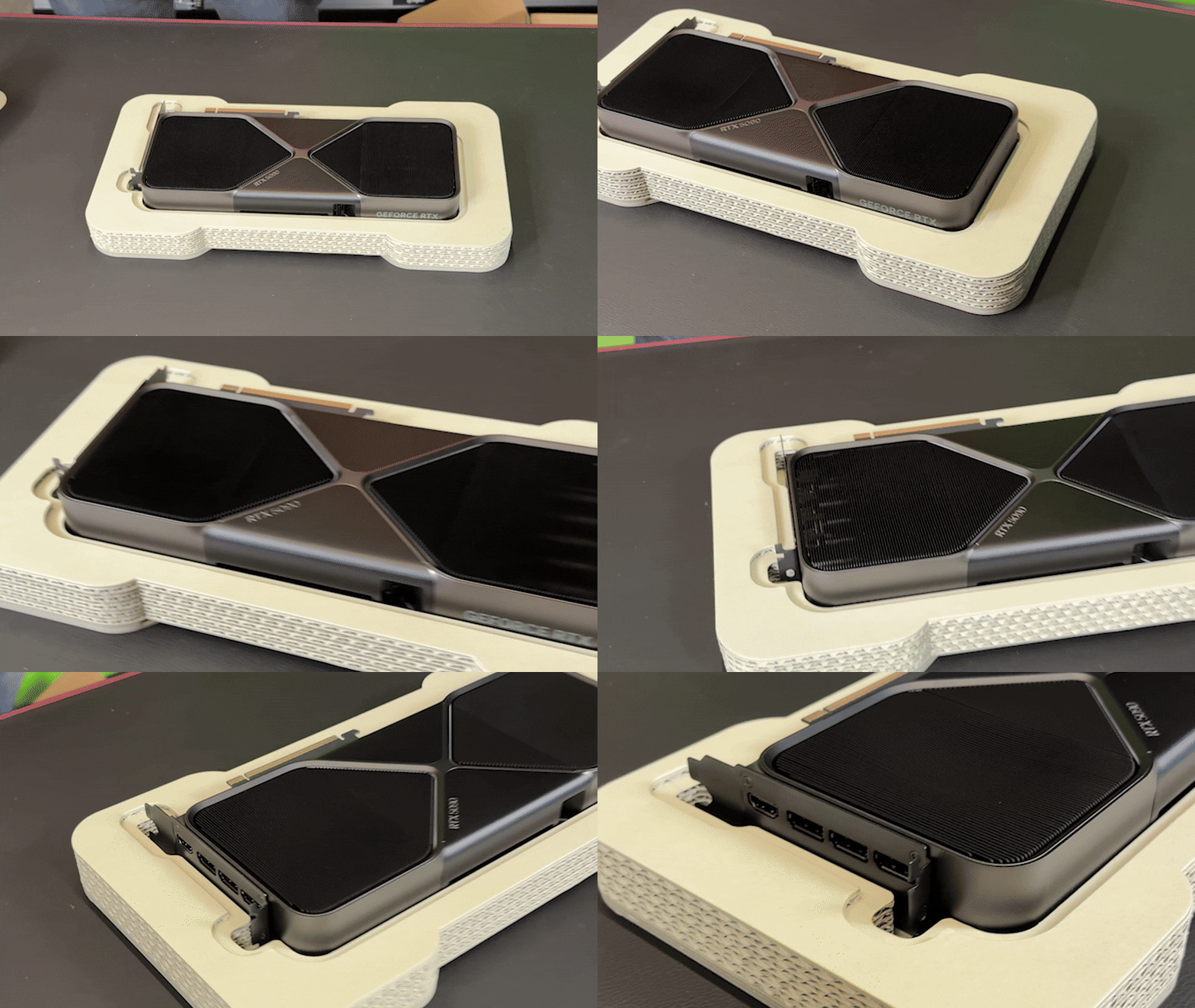
Starting with the box itself, Team Green has changed the packaging, opting for a cool retro design (at least in my eyes) – and I love the look, which reminds me of Sony‘s PlayStation 1 with its grey color scheme for the paperboard design protecting the GPU. This is a huge contrast to the RTX 4090’s packaging, which had a much bigger box catering to the GPU’s large form factor size, and that’s changed here (something I’ll dive into later).

Whilst the box itself is a purely cosmetic change that will likely end up in the garbage of many buyers, the new power connector deserves some attention here – the previous adapter was an issue for myself and many other PC gamers attempting to shut their case or at least maintain an appealing build, with its short and stiff design, while also posing a potential fire hazard based on user reports.

RTX 5090 FE unboxing gif

No more stiff power connectors… I’m forever grateful Nvidia (Image credit: Future)

I had similar troubles with the Asus RTX 4080 Super TUF OC Edition, as I couldn’t close my PC case’s side panel without excessively bending the connector – this eventually forced my hand to buy a more flexible Seasonic 12VHPWR Cable so I could finally shut the case.

With the new power connector, we hopefully won’t need to worry about this, as Nvidia has taken extra care regarding the matter by introducing additional sense wires (which was previously rumored). This should improve and secure the 8-pin connection, while also being much longer and more flexible.

Nvidia RTX 5090 Founders Edition GPU

RTX 5090 FE unboxing gif

This paperboard packaging is 100% recyclable, which is a nice plus – though as you can see here, it’s a little difficult to get inside! (Image credit: Future)

Now moving on to what you came here for – the RTX 5090 Founders Edition in all its glory is much sleeker with its new design. Team Green has paid attention to those who prefer slim PC builds, as this is much smaller than the previous generation’s flagship GPU – this was evident with the new box used to house the new dual-slot GPU compared to the 4090’s triple-slot design.

While some rumors hinted at the 5090 being much louder compared to previous GPUs, some videos have already been enough to debunk it such as PC Centric’s CES video, showcasing just how quiet it is under heavy load in Cyberpunk 2077.

{ window.reliablePageLoad.then(() => { var componentContainer = document.querySelector(“#slice-container-newsletterForm-articleInbodyContent-UVs9mSsCSbC8LuUZJXtS5i”); if (componentContainer) { var data = {“layout”:”inbodyContent”,”header”:”Get daily insight, inspiration and deals in your inbox”,”tagline”:”Sign up for breaking news, reviews, opinion, top tech deals, and more.”,”formFooterText”:”By submitting your information you agree to the Terms & Conditions and Privacy Policy and are aged 16 or over.”,”successMessage”:{“body”:”Thank you for signing up. You will receive a confirmation email shortly.”},”failureMessage”:”There was a problem. Please refresh the page and try again.”,”method”:”POST”,”inputs”:[{“type”:”hidden”,”name”:”NAME”},{“type”:”email”,”name”:”MAIL”,”placeholder”:”Your Email Address”,”required”:true},{“type”:”hidden”,”name”:”NEWSLETTER_CODE”,”value”:”XTR-D”},{“type”:”hidden”,”name”:”LANG”,”value”:”EN”},{“type”:”hidden”,”name”:”SOURCE”,”value”:”60″},{“type”:”hidden”,”name”:”COUNTRY”},{“type”:”checkbox”,”name”:”CONTACT_OTHER_BRANDS”,”label”:{“text”:”Contact me with news and offers from other Future brands”}},{“type”:”checkbox”,”name”:”CONTACT_PARTNERS”,”label”:{“text”:”Receive email from us on behalf of our trusted partners or sponsors”}},{“type”:”submit”,”value”:”Sign me up”,”required”:true}],”endpoint”:”https://newsletter-subscribe.futureplc.com/v2/submission/submit”,”analytics”:[{“analyticsType”:”widgetViewed”}],”ariaLabels”:{}}; var triggerHydrate = function() { window.sliceComponents.newsletterForm.hydrate(data, componentContainer); } if (window.lazyObserveElement) { window.lazyObserveElement(componentContainer, triggerHydrate); } else { triggerHydrate(); } } }).catch(err => console.error(‘%c FTE ‘,’background: #9306F9; color: #ffffff’,’Hydration Script has failed for newsletterForm-articleInbodyContent-UVs9mSsCSbC8LuUZJXtS5i Slice’, err)); }).catch(err => console.error(‘%c FTE ‘,’background: #9306F9; color: #ffffff’,’Externals script failed to load’, err)); ]]>

Sign up for breaking news, reviews, opinion, top tech deals, and more.

RTX 5090 FE gif

While it’s a lot smaller than the previous RTX 4090 FE, the 5090 FE is still a chunky card. (Image credit: Future)

While the new power connector I mentioned earlier will surely help many PC builders, Nvidia has taken an extra step to alleviate any potential issues by setting the power connector at an angle to avoid cables pushing up against side panels.

It’s insane to imagine that a GPU this small packs greater power than the RTX 4090, so I must say I’m impressed with Nvidia’s efforts here. There’s still a lot left to be unveiled in terms of the power consumption leap from the previous 450W to 575W (with rumors suggesting that it’s actually 600W) and whether an upgrade to this GPU will be worthwhile – but from what I’ve seen so far with the unboxing, it’s certainly so far so good from Team Green.

You may also like…

Source

Posted on

The Data Bill: Considering datacentres’ hunger for power

As the Data Bill continues its legislative journey through the House of Lords, it’s important to also consider where all that data “lives”, including what it costs to house it.

Datacentres, until relatively recently, were a bit of a niche interest, known little outside the technology world. Now, if not everywhere, they are certainly moving into many a community – potentially one near you. Of the many issues we should consider, surely at the top of the list must be how such centres are powered and where that energy is sourced?

For this reason, I put down an amendment to the Data Bill, which says: “Consultation: datacentre power usage. On the day on which this Act is passed, the secretary of state must launch a consultation on the implications of the provisions in this Act for the power usage and energy efficiency of datacentres.”

As I said in the House of Lords debate, “It seems at least curious to have a Data Bill without talking about datacentres in terms of their power usage, their environmental impact…’

This is, rightly, a growing concern. A recent edition of the MIT Technology Review highlighted, “AI emissions [are] set to skyrocket even further”. This “skyrocketing” is seen in a trebling of datacentre emissions since 2018.

The MIT article is based upon a new paper, from teams at the Harvard T.H. Chan School of Public Health and UCLA Fielding School of Public Health, whose research examined 2132 datacentres in the US – representing 78% of all facilities in the country.

It is important for all of us to remember, it’s not just the training of these vast AI models that, particularly in the US, all too often burns coal and fossil fuels – every time we ask a query of any of the models, the power draws on.

Is data growth sustainable?

AI models are moving from mere language to video, music and more and the so need for power more than surges. Also, it’s not just AI, datacentres are the bedrock of so much of what we do, our pictures in the cloud or our work website, all needing that datacentre power.

In the US so much of this power comes from fossil fuels, not least coal due to the location of the centres and that fuel’s ability to deliver to demand all hours, in contrast to renewables. Is any of that sustainable though – both environmentally and energy wise? 

We have a real opportunity in the UK to lead when it comes to datacentre technologies. If the government chooses to, we could also take a positive role when it comes to the power usage, the sustainability and environmental position of these increasingly critical national and global infrastructure.

If the government wants to lead when it comes to green energy, the datacentre question seems very much to be at the centre

It’s far more than a technology question or even simply environmental – in so many senses, it is existential. In short, how do we power our lives? Even if we can generate the renewable energy, there are questions around how to store, how to deploy, how to even get it onto the grid in the first place with current connection constraints.

If the government wants to lead when it comes to green energy, if it wants to lead when it comes to new technologies, the datacentre question seems very much to be, well, at the centre of it.

Currently, power usage effectiveness (PUE) is the accepted measure for datacentre energy efficiency. I’m interested in views as to the effectiveness of this standard. I asked the government, during the debate, about its view of the current PUE standard. Is it something that gives the right measure of confidence to consumers?’

The government promised to write to me with a detailed response on all these issues. It will be good to understand what approach they intend to take on such an important environmental, economic, as well as technological matter. 

In conclusion, it’s abundantly clear that data is far from the “new oil” – rather, it requires multiple supplies of old oil to fuel its flow. We may well, one day, be able to power datacentres through nuclear options and sustainable sources, but even so questions must be asked as to the opportunity cost of using all of that resource against how it may otherwise be deployed. 

Data and the technologies it underpins and enables has such possibilities for our economic, social, and common good. But, as ever, it’s in our human hands – the discourse we drive, the decisions we take and the societies we enable will determine this. Ultimately, positively – we have the power.

Source

Posted on

Nvidia RTX 5090 and 5080 GPU stock shortage rumors are piling high – and now there’s a suggestion the RTX 5070 could be delayed

  • Another rumor hints that Nvidia may not have much stock for the release of its RTX 5090 and 5080 GPUs
  • There are worries about hiked pricing at the launch of the next-gen GPUs, too
  • A further possibility aired is that the RTX 5070 might be delayed until March

More worrying rumors have emerged about Nvidia’s next-gen GPUs, casting doubt on stock levels (again) and also the pricing of the GeForce RTX 5090 and 5080 – and the launch timing of RTX 5070 models, too.

In a report (hat tip to Wccftech) on AMD’s RX 9070 launch (now confirmed for March), Chinese tech site Benchlife also touches on Nvidia’s incoming Blackwell graphics cards, telling us that the RTX 5090 and 5080 will be short on supply. Apparently this is “mainly due to some communication issues between Nvidia and AIC partners” (AIC stands for add-in card, meaning graphics card makers).

Another issue is the Chinese New Year (and related manufacturing slowdowns, due to holidays and factories being shut), but the better news is that the situation is expected to improve in February.

Benchlife also claims that the RTX 5070 Ti will appear in mid-to-late February – so far, Nvidia has only said February for both 5070 models, and we don’t have a firm date, but it seems that it could be later, rather than sooner.

And then the report drops something of a bombshell in mentioning that the RTX 5070 may not be available until early March.

Wccftech also flags a report from UDN (also in China, via Dan Nystedt, a financial analyst on X), which underlines the stock woes around the initial Blackwell GPUs (but appears to be mostly based on a previous video from a YouTube leaker). However, this article also highlights that consumers might have to pay increased prices for Blackwell GPUs initially, even to the tune of them being doubled.

That’s in Asia, of course, so may not reflect the situation elsewhere – and indeed it may be completely off the mark full-stop. I’d hope so, and it doesn’t seem realistic that graphics cards could be selling for double their MSRP – well, at least not at retailers (though maybe on auction sites where scalpers will sell their ill-gotten gains).

{ window.reliablePageLoad.then(() => { var componentContainer = document.querySelector(“#slice-container-newsletterForm-articleInbodyContent-RU39d7LPiWDnzCJNKWZMDd”); if (componentContainer) { var data = {“layout”:”inbodyContent”,”header”:”Get daily insight, inspiration and deals in your inbox”,”tagline”:”Sign up for breaking news, reviews, opinion, top tech deals, and more.”,”formFooterText”:”By submitting your information you agree to the Terms & Conditions and Privacy Policy and are aged 16 or over.”,”successMessage”:{“body”:”Thank you for signing up. You will receive a confirmation email shortly.”},”failureMessage”:”There was a problem. Please refresh the page and try again.”,”method”:”POST”,”inputs”:[{“type”:”hidden”,”name”:”NAME”},{“type”:”email”,”name”:”MAIL”,”placeholder”:”Your Email Address”,”required”:true},{“type”:”hidden”,”name”:”NEWSLETTER_CODE”,”value”:”XTR-D”},{“type”:”hidden”,”name”:”LANG”,”value”:”EN”},{“type”:”hidden”,”name”:”SOURCE”,”value”:”60″},{“type”:”hidden”,”name”:”COUNTRY”},{“type”:”checkbox”,”name”:”CONTACT_OTHER_BRANDS”,”label”:{“text”:”Contact me with news and offers from other Future brands”}},{“type”:”checkbox”,”name”:”CONTACT_PARTNERS”,”label”:{“text”:”Receive email from us on behalf of our trusted partners or sponsors”}},{“type”:”submit”,”value”:”Sign me up”,”required”:true}],”endpoint”:”https://newsletter-subscribe.futureplc.com/v2/submission/submit”,”analytics”:[{“analyticsType”:”widgetViewed”}],”ariaLabels”:{}}; var triggerHydrate = function() { window.sliceComponents.newsletterForm.hydrate(data, componentContainer); } if (window.lazyObserveElement) { window.lazyObserveElement(componentContainer, triggerHydrate); } else { triggerHydrate(); } } }).catch(err => console.error(‘%c FTE ‘,’background: #9306F9; color: #ffffff’,’Hydration Script has failed for newsletterForm-articleInbodyContent-RU39d7LPiWDnzCJNKWZMDd Slice’, err)); }).catch(err => console.error(‘%c FTE ‘,’background: #9306F9; color: #ffffff’,’Externals script failed to load’, err)); ]]>

Sign up for breaking news, reviews, opinion, top tech deals, and more.

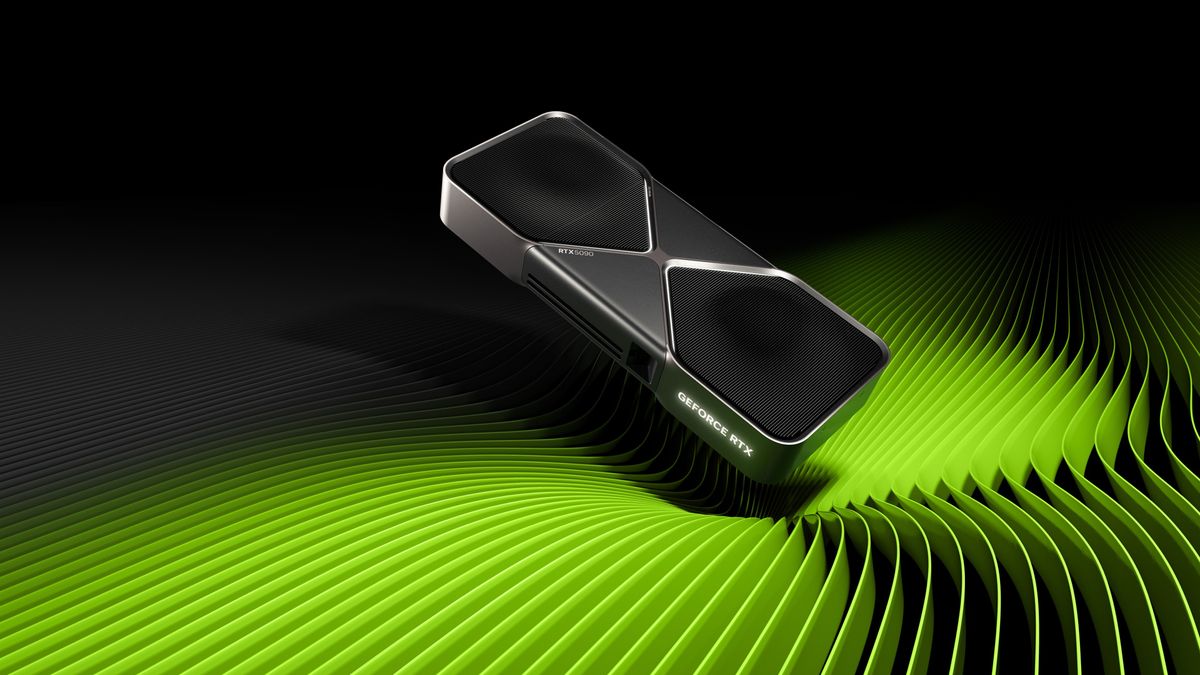
An Nvidia RTX 5000 series graphics card against a green and black background

(Image credit: Nvidia)

Analysis: A touch of hysteria?

On the one hand, the sheer number of concerns being raised about RTX 5000 stock and Nvidia’s next-gen launch has got to be a worry. Although on the other, I’m tempted to say it feels like a touch of hysteria (and/or limelight grabbing) is creeping in at this point.

There’s not usually smoke without fire, though, as they say, and given the widespread chatter about worryingly low initial stock levels for the RTX 5090 and 5080, I’m bracing myself for this to be the case, at this stage.

There’s something even worse to fret about here, of course, for the mainstream GPU buyers who’ll be looking at a mid-range graphics card, and not the much pricier Blackwell models – and that’s this sudden theory that the RTX 5070 could be delayed, and not make the promised February launch.

This seems unlikely, though, that Nvidia would break that promise – although there’s always the prospect of a so-called ‘paper launch’ with hardly any boards released initially. With all the negativity flying around regarding stock levels, this idea might be easier to believe.

A further thought is that this could also explain why AMD has just announced that its RX 9070 models won’t launch until March, much later than expected. Maybe Team Red got wind of rumors from distributors relating to Nvidia’s launch plans, and knows that there’s no rush to get its RDNA 4 mid-range GPUs to market before March – if the rival RTX 5070 isn’t going to be around in any quantity.

Take all this with a wheelbarrow full of salt, and remember that AMD purportedly has its own issues to sort out around RX 9070 pricing. For now, I’m not going to buy these suggestions of an RTX 5070 delay – at least not until we hear this from other corners of the rumor mill.

You might also like…

Source

Posted on

Microsoft 365 price hike: Are you forced to pay more even if you don’t want AI?

If you thought Microsoft’s forcing Windows 10 users to upgrade to Windows 11 to keep using Microsoft 365 Office apps was bad, you haven’t seen anything yet. Microsoft will further annoy many of its customers by embedding Copilot AI into all Office apps and charging an extra $3 per month for it. Microsoft announced the price hike for the Office 365 apps in a blog post explaining the changes.

Yes, AI development is expensive, and I absolutely agree that we, as end users, have to pay for access. That’s why I’m a ChatGPT Plus subscriber and won’t ditch that $20/month subscription anytime soon. If anything, I’m ready to pay for additional AI products that might improve aspects of my life. Take Apple Intelligence; I’ll keep buying expensive iPhones, iPads, and Macs, which will pay for Apple’s AI.

However, as a Microsoft 365 subscriber who has no interest in Copilot AI at this point, I’m not too thrilled about potentially having to shell out an extra $3 per month for my Family subscription. AI should be optional rather than mandatory in all apps. So, is there a way to keep your current subscription price if you’re like me and you don’t want Copilot AI? Well, it’s complicated.

Microsoft is forcing Copilot AI on millions of users

Microsoft 365 Personal and Family subscribers will get Copilot AI and a new Designer AI image generation app in most markets. This will lead to a price hike of $3 per month in the US, Microsoft’s first price hike for the productivity bundle subscription in 12 years. You’ll have to check your local Microsoft 365 portal to see the price increase in your local market.

Tech. Entertainment. Science. Your inbox.

Sign up for the most interesting tech & entertainment news out there.

By signing up, I agree to the Terms of Use and have reviewed the Privacy Notice.

Microsoft says that most of its 84 million consumer subscribers will have access to Copilot in Office apps whether they want it or not.

The new Copilot AI integration is separate from the Microsoft Copilot Pro subscription, which costs $20 per month. Copilot will be available in Word, Excel, PowerPoint, Outlook, OneNote, and the new Designer app.

To use the latter, Microsoft 365 Personal and Family subscribers will use AI credits that come with their subscription. The monthly allotment of AI credits applies to all Office apps and should be “enough for most subscribers.”

Let’s appreciate the good things

Microsoft knows that Copilot shouldn’t always be active in Office apps, so it’s giving users the ability to turn it off. That’s good news for students who rely on Office apps for taking notes during class.

Also important here is Microsoft’s commitment to privacy. I might not like the price hike because I don’t plan to use Copilot AI in Office apps anytime soon, but I appreciate the fact that Microsoft will not use any Office app AI data to train its models:

To protect your privacy, we do not use your prompts, responses, or file content (such as Word documents or Excel spreadsheets) when you use Copilot in the Microsoft 365 apps to train our foundation models.

You can opt out, for now

Microsoft is aware that not all Office app users will want access to Copilot AI, so there are ways to opt out and keep your current subscription price. That’s another thing I can appreciate. But there are big caveats here.

First, you have to be an existing Microsoft 365 subscriber to opt out of the Copilot AI price hike. Second, you must enable recurring billing to avoid the price increase. Those who don’t have it enabled, such as myself, won’t be able to stick with the non-AI versions of the apps.

Users with recurring billing can switch to a Basic plan, or they can keep their current plan as it exists today by switching to the new Personal Classic or Family Classic plans “for a limited time.” Once these plan options disappear, you’ll only have access to Copilot AI plans.

In other words, you’ll still be forced to pay for AI you might not want if you miss the opportunity to grab one of these limited-time plans.

Finally, there’s another big issue with the non-AI plans here. Microsoft says it will maintain the Basic and Classic plans “as they exist today,” but you risk not getting new features. For “certain new innovations and features you’ll need a Microsoft 365 Personal and Family subscription,” Microsoft says. Therefore, you’ll need to pay that extra $3 per month, or whatever it converts to in your local currency.

Should you cancel Microsoft 365?

Don’t get me wrong, I don’t think access to Copilot AI is a bad thing. It’s certainly a great tool and much more useful than, say, AI chatbots ruining WhatsApp. As you can see in the examples above, Copilot can be quite helpful in all sorts of instances using Office apps.

However, it should be up to the customer to choose to use AI. There’s no reason for Microsoft not to continue supporting non-AI Office apps in the future other than greed. That’s what it looks like, at least.

Also, since I’ve defended Netflix price hikes in the past, I’d do the same with Microsoft 365 prices if they were to go up.

My first reaction wasn’t to cancel my subscription or opt for the non-Copilot Office experience. I wanted to ask family members in the group if they wanted any built-in AI access. But I can’t even do that, considering that Copilot AI will only be available to me, the subscription owner.

Source

Posted on

Will Europe be the first region to enact regulation for green software?

So far, there is no regulation anywhere in the world specific to the environmental impact of software – a fact that runs alongside the reality that neither consumers nor investors are towards or away from companies based on the green credentials of their software.  

Many experts expect Europe to be the first region to enact regulation that enforces green software practices. One of them is Santiago Fontanarrosa, vice-president of technology at Globant, a digital services company and author of the book Green software engineering: exploring green technology for sustainable IT solutions.

According to Fontanarrosa, Europe is well-positioned to lead in green software regulation thanks in part to its strong sustainability initiatives and advancements in software engineering. Europe is commitment to sustainability, as demonstrated by ambitious initiatives like the European Green Deal. Moreover, France leads in green software research, and Germany’s Blue Angels offers the first global eco-friendly software certification.  

Fontanarrosa said green software is not only about applying certain development practices, it’s also about how to deploy and use the resulting applications. As for what developers can do, many of the green software techniques can be taken from the practices used by people who wrote programs in the 1970s, when CPUs were much less powerful, and memory and storage were much more limited. As processors became faster and memory and storage grew, software engineers have become more complacent. 

“Today, my iPhone has more computing power than the machine I used when I started working in the 1990s,” says Fontanarrosa. “I have seen a big change since I began my career. Developers have become less concerned about how they use resources, like CPU and memory. And they no longer apply optimisation techniques. For example, when you have an algorithm that does a loop to go through a very long list, they don’t look for ways of making that part of their code more efficient.”  

When it comes to green software, efficiency pertains to how much energy a program consumes to perform its functions. This involves optimising not only the use of CPU time, memory access and I/O, but also the transfer of data over networks. If coders simply thought more about the physical operations going on underneath their code, they would develop greener software. 

For example, as compared to a program that periodically checks for updates, an event-based architecture that reacts only when new data becomes available is more efficient because it reduces the number of network requests. Bigger design decisions are also important – an architect can take into account the fact that energy is cleaner at certain times of the day, and decide to have certain intensive tasks performed during those optimal periods.  

As for deploying software, one of the underlying principles is to minimise the amount of data traveling around networks, while another is to be selective of datacentres. 

“The cloud nowadays is a commodity everyone uses,” says Fontanarrosa. “But the cloud is actually a big datacentre somewhere that consumes a lot of energy. If I can choose a data provider cloud that uses more green energy, that will have a big impact on my carbon footprint.” 

Fontanarrosa also advises developers and operators to reduce the number of instances they’re using on the cloud. “Nowadays, you have a credit card, you do two clicks, and you have a whole new infrastructure up there,” he says. “You don’t even worry about it. That’s the kind of mentality that we need to start changing.” 

One example that illustrates how much of an impact software can have is given by Dutch software guru Danny van Kooten in a 2020 blog post that influenced many other developers to make similar changes.

Van Kooten estimates that he reduced emissions by 59,000 kg of CO₂ per month by making a very small change to his WordPress plugins that run on more than two million websites. That savings is the amount of CO₂ used to fly from Amsterdam to New York five times. He says that assuming the average website receives about 10,000 visitors a month and uses cache to serve returning users, a monthly savings of 10,000 kWh can be achieved for every 1 kilobyte a programmer shaves off of their JavaScript.

Another example is described in Fontanarrosa’s book, where he compares two implementations of the Fibonacci sequence, using the CodeCarbon tool to measure energy consumption. The first implementation used a recursive implementation and the second used an iterative approach with a for-loop. The iterative implementation used 99.34% less energy and reduced CO₂ emissions by 99.35%. 

“This striking difference demonstrates how thoughtful implementation choices in algorithm design can drastically reduce energy consumption and emissions, showcasing the potential for greener and more efficient software development,” says Fontanarrosa. 

Fontanarrosa says that even if governments are not pushing for green software, businesses and consumers can make it a reality. One encouraging sign is that a lot of companies have joined the Green Software Foundation since its inception in May 2021, including Fontanarrosa’s organisation, Globant. 

The mission of the Green Software Foundation – which was founded by Accenture, GitHub, Microsoft and ThoughtWorks – is to “build a trusted ecosystem of people, standards, tooling and best practices for green software”.

According to Green Software Foundation, the ICT sector will account for 14% of the world’s carbon footprint by 2040, most of which will be from smartphones and datacentres. The website says that software developers contribute to global emissions in many ways. One is by producing new versions of their products, which often requires better hardware to run, rendering the existing computers obsolete.  

One encouraging sign of progress is that the Green Software Foundation’s Software Carbon Intensity (SCI) specification recently achieved ISO standard status. However, this is nothing like government-backed regulation as SCI is still a voluntary, industry-driven standard. 

“I encourage everyone to learn about green software,” says Fontanarrosa. “Go to the Green Software Foundation webpage, or any other related resource, to start thinking about it and trying to introduce minor changes in your digital products. Minor changes sum up to a big impact.” 

Source

Posted on

AMD CES 2025 Keynote live blog: as it happened

Refresh

2025-01-06T18:40:08.666Z

Good morning folks. We’re queueing up outside the South Seas Ballroom at Mandalay Bay, awaiting the start of AMD’s CES 2025 keynote, and it’s sure to be a packed 45 minutes to an hour. I’ll be here bringing you all the latest news as it breaks, as well as my thoughts on what’s being announced.

I’ll keep you updated once I’m in my seat, so stay tuned!

2025-01-06T18:58:45.541Z

The stage at AMD's CES 2025 press conference

(Image credit: Future / John Loeffler)

We’re five minutes away from the start of AMD’s press conference, so it’s time to settle in.

2025-01-06T19:03:53.280Z

AMD Senior VP Jack Huynh is taking the stage now, No Lisa Su this time.

2025-01-06T19:06:21.698Z

The AMD Ryzen 9 9950X3D and 9900X3D are up first.

2025-01-06T19:09:16.673Z

Slides from the AMD CES 2025 keynote

(Image credit: Future / John Loeffler)

Not to brag or anything…

2025-01-06T19:11:58.810Z

An AMD executive presenting at CES 2025

(Image credit: Future / John Loeffler)

Ryzen 9 9950X3D and 9900X3D coming in March 2025.

2025-01-06T19:13:32.508Z

AMD Ryzen 9 9955HX3D coming to laptops, along with a pair of non-X3D HX chips (I missed the model names of the other two, I’ll grab those in a sec).

2025-01-06T19:15:08.368Z

An AMD executive presenting at CES 2025

(Image credit: Future / John Loeffler)

AMD’s SVP of Client Business Rahul Tikoo is on stage now to talk about AI PCs.

New Ryzen AI 300 chips, targeting the midrange user with Ryzen AI 7 350 and Ryzen 5 340.

2025-01-06T19:25:28.725Z

Image 1 of 4

A slide showing the new AMD Ryzen AI Max skus(Image credit: Future / John Loeffler)Slides showing Ryzen AI Max benchmarks at CES 2025(Image credit: Future / John Loeffler)Slides showing Ryzen AI Max benchmarks at CES 2025(Image credit: Future / John Loeffler)Slides showing Ryzen AI Max benchmarks at CES 2025(Image credit: Future / John Loeffler)

Now we’re moving on to the new Ryzen AI Max series, which are workstation CPUs with up to 40 RDNA 3.5 compute units, which is a hell of a lot for an integrated GPU. Up to 50 TOPS XDNA 2 NPU, and up to 256GB/s memory bandwidth.

2025-01-06T19:27:19.802Z

Ok, so we’re on to enterprise products, namely AMD Epyc and AMD Instinct data center CPU and GPUs.

2025-01-06T19:28:02.748Z

We’ve also got some discussion of AMD Ryzen AI 300 Pro.

2025-01-06T19:30:49.763Z

I have no idea what TCO means, but Shell says AMD Ryzen CPUs offer the best, so there’s that.

2025-01-06T19:32:27.820Z

Now PC manufacturer executives are singing AMD’s praises, including HP, Lenovo, and Asus.

2025-01-06T19:38:46.234Z

An AMD and Dell Executive talking about the new Dell Pro portfolio at CES 2025

(Image credit: Future / John Loeffler)

So Dell is now on stage with AMD talking about the first Dell professional PCs and laptops to feature AMD chips. Oh, and Dell is completely rebranding its entire product portfolio, but that’s for another news story.

2025-01-06T19:41:09.567Z

Everyone keeps talking about the ‘AI revolution’, but honestly, I’ve yet to see anything from AI PCs so far that is truly revolutionary. I’m sure its coming at some point in the future, but the future isn’t here just yet.

2025-01-06T19:47:13.070Z

OK, so the press conference has wrapped, and there was no discussion of AMD Radeon graphics cards, as we were expecting, but we know they’re coming so there might be more to come on that over the next few days.

For now, though, the big news is the new Ryzen 9 9950X3D and Ryzen 9 9900X3D chips due out in March, as well as new high-performance mobile ships for both enthusiasts, gamers, and enterprise users.

There’ll be more from me today, but for now, we have to clear out of the ballroom, so stay tuned for more from us here at CES 2025.

Source