Posted on

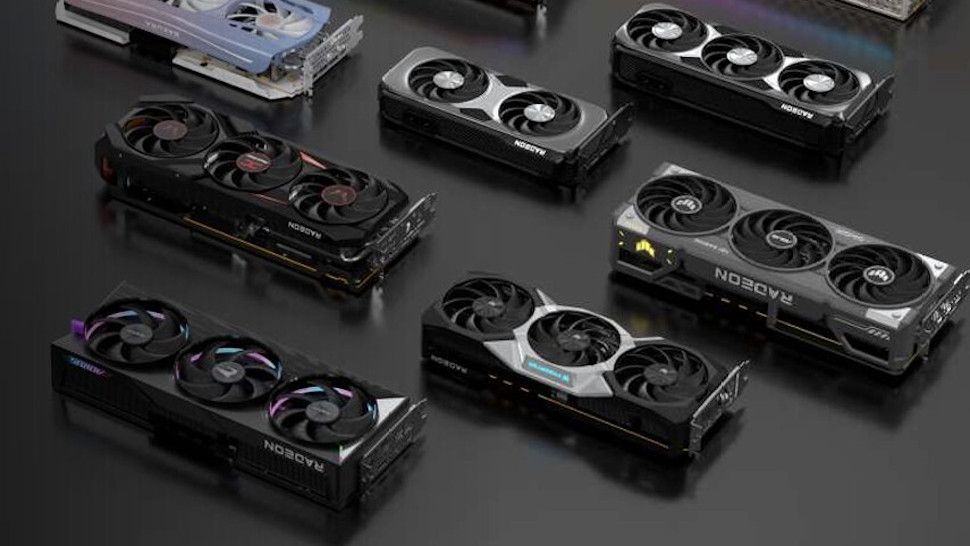
Rumor has it AMD’s feeling the heat from Nvidia’s RTX 5000 GPU launch prices – but a decision on RX 9070 pricing must be made soon

  • AMD is purportedly struggling to iron out RX 9070 pricing with retailers
  • The theory is that AMD’s original prices were too high compared to where Nvidia pitched its RTX 5000 GPUs
  • AMD needs to put all this gossip and speculation to bed as soon as possible

More rumors are circulating about AMD’s RDNA 4 graphics cards, due to launch at some point in Q1 2025, and there’s some fresh info about what could potentially be going on behind the scenes.

There’s no denying that the reveal of RX 9070 models at CES 2025 was confusingly brief, though an AMD exec has since clarified why – namely the lack of time for Team Red’s presentation at that event (a flimsy excuse, yes), and an apparent admission (possible translation issues must be noted, mind) that the company wanted to wait and see how Nvidia pitched its RTX 5000 GPUs.

Fresh speculation (via VideoCardz) from a forum moderator (Pokerclock, who recently brought us gossip on Nvidia’s Blackwell stock levels) at German site PC Games Hardware throws something else into the mix.

Namely a theory that pricing for RX 9070 models has proved problematic and that MSRPs have not been officially agreed, because the price tags AMD planned originally ended up too high compared to what Nvidia announced with its next-gen Blackwell graphics cards.

Pokerclock asserts that there are difficulties in rejigging that price and working out how to balance and correct this with what retail partners already paid for these RDNA 4 products. Working out this – and we must be extremely cautious around this rumor – is what’s apparently causing some trouble for AMD, and kind of leaving its RX 9070 graphics cards in a state of launch limbo, as it were.

An AMD Radeon RX 7900 XTX on a table against a white backdrop

(Image credit: Future)

Analysis: Time to take action, AMD

Could there be something in this? Well, it does make sense in some ways, by which I mean that Nvidia’s RTX 5070 and 5080 pricing was certainly surprising – it caught me off guard, and likely AMD, too, I’d imagine. Also, it does fit with what’s happened in terms of AMD’s sort of ‘half-launch’ at CES 2025, and the fact that we still haven’t got a date for the proper launch (an event that could be coming this week, if rumors are right – on January 23 or 24, but that’s very close at hand now, obviously).

Moreover, there are multiple sightings of the RX 9070 graphics cards having arrived at retailers, so that also suggests that the pieces of the launch were all fitting into place, and then suddenly an Nvidia-shaped spanner was chucked into the RDNA 4 works when Blackwell pricing was revealed.

{ window.reliablePageLoad.then(() => { var componentContainer = document.querySelector(“#slice-container-newsletterForm-articleInbodyContent-EWej4GxGwAxjRCyM9d3FQT”); if (componentContainer) { var data = {“layout”:”inbodyContent”,”header”:”Get daily insight, inspiration and deals in your inbox”,”tagline”:”Sign up for breaking news, reviews, opinion, top tech deals, and more.”,”formFooterText”:”By submitting your information you agree to the Terms & Conditions and Privacy Policy and are aged 16 or over.”,”successMessage”:{“body”:”Thank you for signing up. You will receive a confirmation email shortly.”},”failureMessage”:”There was a problem. Please refresh the page and try again.”,”method”:”POST”,”inputs”:[{“type”:”hidden”,”name”:”NAME”},{“type”:”email”,”name”:”MAIL”,”placeholder”:”Your Email Address”,”required”:true},{“type”:”hidden”,”name”:”NEWSLETTER_CODE”,”value”:”XTR-D”},{“type”:”hidden”,”name”:”LANG”,”value”:”EN”},{“type”:”hidden”,”name”:”SOURCE”,”value”:”60″},{“type”:”hidden”,”name”:”COUNTRY”},{“type”:”checkbox”,”name”:”CONTACT_OTHER_BRANDS”,”label”:{“text”:”Contact me with news and offers from other Future brands”}},{“type”:”checkbox”,”name”:”CONTACT_PARTNERS”,”label”:{“text”:”Receive email from us on behalf of our trusted partners or sponsors”}},{“type”:”submit”,”value”:”Sign me up”,”required”:true}],”endpoint”:”https://newsletter-subscribe.futureplc.com/v2/submission/submit”,”analytics”:[{“analyticsType”:”widgetViewed”}],”ariaLabels”:{}}; var triggerHydrate = function() { window.sliceComponents.newsletterForm.hydrate(data, componentContainer); } if (window.lazyObserveElement) { window.lazyObserveElement(componentContainer, triggerHydrate); } else { triggerHydrate(); } } }).catch(err => console.error(‘%c FTE ‘,’background: #9306F9; color: #ffffff’,’Hydration Script has failed for newsletterForm-articleInbodyContent-EWej4GxGwAxjRCyM9d3FQT Slice’, err)); }).catch(err => console.error(‘%c FTE ‘,’background: #9306F9; color: #ffffff’,’Externals script failed to load’, err)); ]]>

Sign up for breaking news, reviews, opinion, top tech deals, and more.

It’s notable that Moore’s Law is Dead also spilled some RDNA 4 details in his latest video on YouTube, and there was no rumored pricing, just a comment that he’s heard a lot of different rumors – from $450 (in the US) upwards.

Again, that paints a picture of everything still being rather up in the air at this late stage for RDNA 4, though the YouTuber gives us a rough guess of $499 (in the US) for the RX 9070 and $599 for the RX 9070 XT. That would, based on some purported internal benchmarks from AMD also shared by the leaker, make for a pair of RDNA 4 graphics cards that would be RTX 5070 and 5070 Ti killers.

Interesting and potentially exciting times indeed, but AMD can’t let these rumors on its next-gen GPU launch and pricing continue to simmer and bubble for too long – it needs to make a final decision on RDNA 4 pricing, if the company hasn’t already, of course. And then those prices need to be aired very soon (which might indeed happen, as noted, if the rumor mill is right).
You might also like

Source

Posted on

Nvidia RTX 5090 FE rumor claims high-end GPU gets loud

  • A new rumor suggests the RTX 5090 will use 600W of power
  • Comments in a Chinese forum point toward the new GPU being much louder
  • Other reports contradict this, however

Update: We’ve updated this story to give more context about the source of this latest rumor, while also highlighting other reports and evidence that suggest the RTX 5090 FE is in fact “very, very quiet”.

Nvidia‘s RTX 5090 promises to provide a step up from the previous generation’s RTX 4090, but that could come at a significant cost according to new rumors – and you might want to invest in a beefy power supply. However, this rumor is contradicted in some other early leaks and previews – so it looks like we won’t get the full picture until reviews for the new flagship GPU land.

As reported by Tomasz Gawronski on X, discussions within Chiphell (a Chinese forum page about the latest PC hardware) suggest that Nvidia’s RTX 5090 Founders Edition GPU will use 600W of power while being much louder compared to the 4090. This is based on what appears to be an upcoming review with the embargo set for January 24, with a post translated from Chinese that says “The editor cursed while testing… After all, the power consumption increased, the current increased, and the screaming also increased~”.

Considering the pricing of the RTX 5090 ($1,999 / £1,939 / AU$4,039) and the reported 30% performance increase (according to Blender benchmarks highlighted by VideoCardz), this rumor likely won’t bode well with anyone intent on upgrading to Team Green’s latest flagship GPU. The RTX 4090’s power consumption is 450W, and while this is still plenty, the rumored jump to 600W isn’t very appealing either.

The Chiphell rumor makes a big deal of the RTX 5090 being a noisy GPU and while there are plenty of legitimate reasons why people are worried about the noise produced by the RTX 5090, due to the built-in fans working hard to keep the powerful components cool, this should also be taken with a huge pinch of salt.

For a start, this is a comment on a Chinese-language website, so translating it, and the context, is difficult. There’s also no evidence provided (that we can see) about this claim.

Meanwhile, while we’re still waiting for in-depth looks at the RTX 5090’s performance – including how noisy it gets – there have been hints that the ‘loud RTX 5090’ rumors are wrong.

{ window.reliablePageLoad.then(() => { var componentContainer = document.querySelector(“#slice-container-newsletterForm-articleInbodyContent-NGVG5TdNPDSoiww56DXyJW”); if (componentContainer) { var data = {“layout”:”inbodyContent”,”header”:”Get daily insight, inspiration and deals in your inbox”,”tagline”:”Sign up for breaking news, reviews, opinion, top tech deals, and more.”,”formFooterText”:”By submitting your information you agree to the Terms & Conditions and Privacy Policy and are aged 16 or over.”,”successMessage”:{“body”:”Thank you for signing up. You will receive a confirmation email shortly.”},”failureMessage”:”There was a problem. Please refresh the page and try again.”,”method”:”POST”,”inputs”:[{“type”:”hidden”,”name”:”NAME”},{“type”:”email”,”name”:”MAIL”,”placeholder”:”Your Email Address”,”required”:true},{“type”:”hidden”,”name”:”NEWSLETTER_CODE”,”value”:”XTR-D”},{“type”:”hidden”,”name”:”LANG”,”value”:”EN”},{“type”:”hidden”,”name”:”SOURCE”,”value”:”60″},{“type”:”hidden”,”name”:”COUNTRY”},{“type”:”checkbox”,”name”:”CONTACT_OTHER_BRANDS”,”label”:{“text”:”Contact me with news and offers from other Future brands”}},{“type”:”checkbox”,”name”:”CONTACT_PARTNERS”,”label”:{“text”:”Receive email from us on behalf of our trusted partners or sponsors”}},{“type”:”submit”,”value”:”Sign me up”,”required”:true}],”endpoint”:”https://newsletter-subscribe.futureplc.com/v2/submission/submit”,”analytics”:[{“analyticsType”:”widgetViewed”}],”ariaLabels”:{}}; var triggerHydrate = function() { window.sliceComponents.newsletterForm.hydrate(data, componentContainer); } if (window.lazyObserveElement) { window.lazyObserveElement(componentContainer, triggerHydrate); } else { triggerHydrate(); } } }).catch(err => console.error(‘%c FTE ‘,’background: #9306F9; color: #ffffff’,’Hydration Script has failed for newsletterForm-articleInbodyContent-NGVG5TdNPDSoiww56DXyJW Slice’, err)); }).catch(err => console.error(‘%c FTE ‘,’background: #9306F9; color: #ffffff’,’Externals script failed to load’, err)); ]]>

Sign up for breaking news, reviews, opinion, top tech deals, and more.

For example, there’s a video from CES from the PC Centric channel (that you can view below), which includes an admittedly basic sound test (the presenter literally puts his ear next to the GPU), where the RTX 5090 is running “very, very quiet”, which is especially impressive as this is after a decent amount of time running the demanding Cyberpunk 2077 at maximum settings. PC Centric’s claim that “for the amount of power and the fact this is a two-slot card, that’s ridiculous,” flies in the face of the latest rumor, and from the video itself, it does indeed seem like the RTX 5090 FE will be impressively quiet – though of course we’ll again have to wait for full reviews, including our own, to really find out just how loud (or not) this monster GPU is.

Gaming On The RTX 5090 With DLSS 4! – YouTube Gaming On The RTX 5090 With DLSS 4! - YouTube Watch On

The mere fact that the RTX 5090 FE has been slimmed down to a dual-slot size, rather than the huge size of the 4090, which was a 3.5 slot behemoth, suggests that Nvidia is in fact pretty bullish about the power requirements and noise of the Founders Edition card.

As mentioned earlier, components, especially powerful GPUs, can run very hot when in use, and this often means the fans kick in to help cool it down – which can end up being distractingly noisy. To combat this, companies will often make their products larger so airflow is better. By making the RTX 5090 FE smaller than the 4090, it feels like Nvidia is confident in the efficiency and quality of the new ‘cooling innovations’ that it’s showcased ahead of launch.

According to Nvidia, the RTX 5090 Founders Edition has been designed with cooling capacity in mind, including improved Liquid Metal thermal interface material (TIM), and a unique three-piece PCB that is designed to maximise cooling without resorting to turning the fans up to max.

So, while some parts of the internet are getting concerned about the rumor from Chiphell, it seems there’s plenty of counter evidence out there that should allay some of those fears.

What does this mean in terms of PSU requirements?

When it comes to the power consumption of the new GPU, it’s again important to note that this is just a rumor, but if it’s legitimate, then RTX 5090 users will certainly have to shell out more than $1,999 / £1,939 / AU$4,039. If you don’t already own a 1000W PSU, then you’ll more than likely need to invest in one – the recommended PSU requirement for the RTX 5090 is 1000W according to Corsair.

This is especially the case if you’ve got a high-end CPU equipped, as you’ll want to avoid any system malfunctions due to your PSU not wielding enough power. Once reviews arrive, we’ll have to measure just how much of a jump the RTX 5000 series flagship GPU is from the previous generation.

If I’m honest, even the RTX 4090 is still overkill for gamers, which will also be true of the RTX 5090 – so if you invest in a new GPU and new PSU, you might have to wait a while to really get the most out of your rig.

You may also like…

Source

Posted on

Rumors are swirling that OpenAI is on the brink of AGI and ASI

We’ve been waiting for a big ChatGPT upgrade for months now, but OpenAI has yet to announce one. Sure, the company had a monster month of announcements in December. OpenAI took the o1 reasoning model out of beta, making it available to more ChatGPT users. The text-to-video Sora tool is now available to users in certain markets. The o3 reasoning model has also been announced and is currently undergoing testing.

These are just a few of the AI announcements OpenAI made in December, but there’s no word on when the GPT-4o upgrade will drop. Unofficially, reports say that ChatGPT GPT-5, or whatever it ends up being called, is running behind schedule, as OpenAI has had issues training the next-gen AI model. OpenAI isn’t the only AI company experiencing such problems.

Sam Altman has been hyping OpenAI’s accomplishments recently, teasing potential ChatGPT features to come in 2025 while also talking about the larger goals. AGI (artificial general intelligence) is the next big thing, an AI that can tackle any task just like a human would. After AGI, we get to artificial superintelligence (ASI), which is AI that exceeds the capabilities of the human mind.

“We are now confident we know how to build AGI as we have traditionally understood it,” Altman said in a blog post recently, adding that OpenAI is already starting to look at superintelligence development.

Tech. Entertainment. Science. Your inbox.

Sign up for the most interesting tech & entertainment news out there.

By signing up, I agree to the Terms of Use and have reviewed the Privacy Notice.

How close are we to that big AI breakthrough? Some people think the recent excitement that some OpenAI engineers are displaying online suggests that the company is indeed close to some sort of big advancement in AI.

Some AI fans noticed the recent teasers from OpenAI employees, as well as an essay from an AI researcher who goes by the name of “Gwern” online.

Gwern theorized that OpenAI may hold the key to developing AGI and superintelligence. A powerful reasoning model like the o1 or o1 pro can produce the data needed to train more advanced reasoning models.

The essay author in the tweet above also said they’re surprised OpenAI isn’t keeping o1-pro private so they can use it for training o3 and newer models. Eventually, AI models will train themselves, leading to the big AGI and ASI breakthroughs we’re waiting for.

Gwern suggests that OpenAI may already be on the verge of a big breakthrough, or they’ve already done it behind closed doors:

If you’re wondering why OAers are suddenly weirdly, almost euphorically, optimistic on Twitter, watching the improvement from the original 4o model to o3 (and wherever it is now!) may be why. It’s like watching the AlphaGo Elo curves: it just keeps going up… and up… and up… 

There may be a sense that they’ve ‘broken out’ and have finally crossed the last threshold of criticality, from merely cutting-edge Al work, which everyone else will replicate in a few years, to takeoff – cracked intelligence to the point of being recursively self-improving and where o4 or o5 will be able to automate AI R&D and finish off the rest.

This isn’t just about OpenAI being close to the next massive improvement in AI but also the future beyond that. Access to superintelligence will make subsequent AI developments easier and more efficient because an AI mind will handle the next innovations.

Also, in a scenario where OpenAI might be close to AGI and ASI, it would obtain an incredible advantage over competitors. Other AI firms that have not established their own superintelligence will have to develop AI with traditional methods. In contrast, OpenAI would have ASI employing its own discoveries to create better AI, and it’ll do it more efficiently.

This is all speculation at this point, as OpenAI has yet to make any announcements. But it’s all based on the recent hype from Sam Altman and other OpenAI engineers. Of course, they always seem to go out of their way to hype OpenAI’s efforts on social media, so this all could simply be more of the same.

Also, if and when ChatGPT AGI and ASI are reached, don’t expect it to be affordable or even available publicly. At least, not initially. OpenAI rivals might be just as close to AGI and ASI, but they might be more restrained in teasing imminent breakthroughs.

Finally, there’s also the safety aspect to consider. Artificial intelligence, from the current ChatGPT models to AGI and ASI, will have to be aligned with humanity’s interests so it doesn’t develop its own agenda, which could almost certainly endanger our species.

Back to GPT-5, it’ll still be interesting to see what OpenAI does next in terms of ChatGPT upgrades. More news about o3 should come soon. Then, GPT-4o will celebrate its first anniversary this summer. Some sort of upgrade for the base ChatGPT model is surely due soon.

Source

Posted on

Corporate cover-up behind world-beating cyber security record in Middle East

Only two of the top 100 listed companies in the Middle East reported cyber security incidents last year, according to defence vulnerability scanning firm SecurityScorecard, but most incidents in the region went unreported, it said. 

SecurityScorecard’s findings highlighted an impressive record in the Middle East and North Africa (MENA) when compared with Europe, where 18 of the top 100 firms had security breaches, and to the US, where 21% of firms in the S&P 500 stock market index were hit. 

Gulf states in particular have invested heavily in cyber security to deter rampant attacks in the region as they transform from central, state-controlled petro-states to diverse economies more dependent on vulnerable information communications. But experts said it still lagged EU and US in laws required to guarantee open reporting deemed necessary for resilience. 

Ryan Sherstobitoff, vice-president of research at SecurityScorecard, said he believed most security breaches that large MENA corporations suffered last year went unreported. 

“I would say probably 80% is not reported,” he said. “The Middle East isn’t exactly required to report breaches in the same way as North America, or even some locations in Europe. So, it’s never going to be recorded.”

When a MENA security breach did become public, it was usually because hackers had hit the subsidiary of a foreign corporation whose home rules required it to report the incident, said Sherstobitoff. Moreover, the geopolitical situation spawned more attacks than elsewhere. Four-fifths of the top 100 MENA corporations are in Gulf countries – usually state-owned banks, energy firms and utilities. 

The would-be ratings agency noted a correlation between firms that reported no breaches and those it scored ‘A’, after assessing detailed scans it did of their security vulnerabilities, along with incident reports. Breaches diminish a firm’s rating significantly, but only briefly, according to its methodology

It gave half the top 100 MENA firms A ratings – twice as many as Europe, and a fifth more than the US S&P 500. SecurityScorecard rated 84 of the 100 as either A or B. The strength of MENA cyber security, widely attributed to massive investment, was confirmed in the ITU global index, with Gulf economies ranked among the most secure in the world. 

MENA incident reports that appear more reliable involve indirect attacks, with 84 of the top 100 firms admitting they suffered breaches caused by the mistakes of their suppliers, according to SecurityScorecard. Almost every single top EU firm reported the same. A spokesperson said that it has not produced comparable third party breaches of US firms. 

Ross Brewer, an expert with deep experience of high-level security in the region, said MENA’s immense spending on cyber resilience was not as good in reality as on paper. “In Western societies, bad news travels fast. In the Middle East, if the government has anything to do with it, bad news does not travel at all. When you are building a utopian future that will attract global tourists, you want to present the absolute best image,” he said. 

Firms “in these pretentious countries” did not report incidents because the culture encouraged dignified face-saving, said Brewer. Intense government control of all communications in and out of the region, and internally, was effective at catching attackers. But MENA investment in cyber defences, according to Brewer, had been hasty, shoddy and done piecemeal by expats who left behind them a fractured and vulnerable security architecture. People were afraid to speak out, he claimed. 

Bharat Raigangari, board adviser to Dubai security consultancy 1CxO, a company which large firms in the region, said an independent security ratings agency was just what the region needed to address the security problems implied by its third party breaches. Raigangari said was trying to create one, with the backing of the UAE cyber security Council, “but it is much easier said than done”.

It was true MENA had fewer reported incidents because firms were not inclined to report them, he said. But the region’s security, and its regulations, were maturing fast and catching up with the West. 

Experts in the region applaud state authorities for their progress in building cyber defences and enacting legislation. 

Yedhu Krishna Menon, head of third-party cyber security at a MENA bank, who asked for his employer to remain anonymous because it is culturally unacceptable to reveal it, said that reported incidents were low because the region’s defences were particularly good. 

Whereas hiding security breaches to save face was not limited to MENA, a bigger concern is “reputation damage, fear of negative publicity, of stigma – it’s a global thing”, he said. 

“They don’t report the majority because they don’t want to lose business,” he added. MENA culture had also progressed. “It’s not like 10 years back.” 

Attackers, aiming to bring down economies and exploit vulnerabilities introduced by the region’s transforming economies, had merely prompted MENA countries to implement regulation to drive investment in security. The regulatory impetus had been momentous and like nowhere else in the world, said Menon. 

Munir Subor, a partner at law firm Taylor Wessing in Dubai, said that it was common practice for firms in the region not to report incidents. Those reported to government would remain secret. 

Nick Loumakis, MENA managing director at Obrela, a Greek firm working closely with UAE cyber security authorities, believed the region’s low incident numbers were correct. 

Government was “always in the room” whenever he had dealt with an incident, but he knew of only one large firm hit in the past two years. He didn’t think saving face played a factor. “It’s not easy to keep this information hidden,” he said, believing that government control of large firms and an oligarchical economy has allowed MENA countries to stamp out attackers more effectively. 

MENA state authorities contacted by Computer Weekly were unavailable for comment. 

Source

Posted on

US Treasury incident a clear warning on supply chain security in 2025

A major state-sponsored cyber incident that targeted the United States Department of the Treasury in the weeks prior to Christmas 2024 appears to have begun as the result of a compromise at a third-party tech support supplier, serving as a warning on the precarious security and vulnerable nature of technology supply chains for IT firms and their customers alike.

The cyber attack was allegedly the work of an undisclosed China-backed advanced persistent threat (APT) actor and, according to The Washington Post, it targeted among other things the Office of Foreign Assets Control (OFAC), a department of the Treasury that administers and enforces foreign sanctions against individuals, organisations and countries.

Due to its involvement in sanctions and enforcement actions against malicious cyber actors – it has played a key role in multinational operations against financially motivated ransomware gangs – OFAC presents a very obvious target for threat actors.

In a letter to senators Sherrod Brown and Tim Scott, who sit on the Committee on Banking, Housing and Urban Affairs – a copy of which has been reviewed by Computer Weekly – Treasury assistant secretary for management, Aditi Hardikar, confirmed the department was notified by a third-party software services provider that it had been compromised on 8 December 2024.

The organisation in question, BeyondTrust, said the APT gained access to a key that it was using to secure a cloud-based remote tech support service.

“With access to the stolen key, the threat actor was able override the service’s security, remotely access certain Treasury DO user workstations, and access certain unclassified documents maintained by those users,” wrote Hardikar.

“Treasury has been working with the Cybersecurity and Infrastructure Security Agency (CISA), the Federal Bureau of Investigation (FBI), the Intelligence Community, and third-party forensic investigators to fully characterise the incident and determine its overall impact.

“Based on available indicators, the incident has been attributed to a China state-sponsored APT  actor. The compromised BeyondTrust service has been taken offline and at this time there is no evidence indicating the threat actor has continued access to Treasury information,” wrote Hardikar.

The Chinese authorities have denied the Americans’ allegations, with a spokesperson for Beijing’s embassy in Washington DC describing them as “irrational” and part of a “smear campaign”.

BeyondTrust vulnerabilities

The tech firm at the centre of the incident, BeyondTrust, is a US-based supplier with roots dating back to the mid-1980s. It specialises in privileged identity management and privileged access management (PIM/PAM), privileged remoter access and vulnerability management services. It claims more than 20,000 customers in 100 countries, including the likes of tech firms such as Axians and ServiceNow.

It is also particularly well-used in the public sector, with multiple customers in local government, healthcare and utilities, including a number of NHS bodies in the UK.

In a statement posted to its website, BeyondTrust said it identified an incident impacting a “limited number” of Remote Support SaaS customers that arose through the compromise of an application programming interface (API) key. It revoked the key immediately on concluding a root cause analysis into a remote support SaaS technical issue on 5 December 2024, and began notifying affected users, including the Treasury.

It has since identified two specific vulnerabilities within the Remote Support and Privileged Remote Access product lines – one of critical severity and one of medium severity. These have been assigned designations CVE-2024-12356 and CVE-2024-12686 respectively. Both have been patched for both cloud-hosted and on-prem versions as of 18 December 2024.

According to BeyondTrust, the issues are both command injection vulnerabilities that, successfully exploited, enable an unauthenticated remote attacker to execute operating system commands in the context of the site user.

A BeyondTrust spokesperson told Computer Weekly: “BeyondTrust previously identified and took measures to address a security incident in early December 2024 that involved the Remote Support product. BeyondTrust notified the limited number of customers who were involved, and it has been working to support those customers since then. No other BeyondTrust products were involved. Law enforcement was notified and BeyondTrust has been supporting the investigative efforts.”

Security supply chain still a big issue in 2025

With this incident, BeyondTrust unfortunately becomes the latest in a long-line of cyber security specialists to find themselves making headlines after the compromise of products and solutions designed to keep end-users safe.

Avishai Avivi, CISO at SafeBreach, a supplier of breach and attack simulation tools, explained how the breach likely unfolded. “BeyondTrust, unironically, provides a secure method for IT support personnel to provide remote support to end users,” he said. “This method involves establishing a trusted connection between the support person and the end-user.

“This trusted connection punches through traditional perimeter security controls and gives the support person full access and control over the end-user workstation. Once inside, the support person can send documents back over that secure channel or masquerade as the end-user and send the same documents directly.

“The security controls protecting the US Treasury network have no way of knowing something nefarious is happening, as the trusted connection is, well, trusted.

“Was there something that the US Treasury could have done to prevent this? The sad answer appears to be yes. Again, referring to the technical information BeyondTrust provided, the system administrators at the US Treasury, or the vendor likely to provide support services, failed to configure trusted locations from which the support agents could connect. We refer to this as IP whitelisting [allowlisting].

“This failure is a critical risk with any such service [and] the same issue led to notable breaches in 2023 and 2024. This oversight is why we urge all service vendors, especially trusted ICT vendors, to follow the CISA Secure-by-Default guidance.”

Source

Posted on

TikTok ban still on track as Supreme Court rejects appeal

On Friday, the Supreme Court rejected an appeal from TikTok and parent company ByteDance, allowing the ban set to take place this weekend to go forward.

The Supreme Court was effectively TikTok’s last chance to sidestep divestiture or a nationwide ban in the United States. The court didn’t find TikTok’s argument that banning its popular video-sharing app would be a violation of the First Amendment compelling.

The Supreme Court did acknowledge that “TikTok offers a distinctive and expansive outlet for expression, means of engagement, and source of community” for 170 million Americans. “But Congress has determined that divestiture is necessary to address its well-supported national security concerns regarding TikTok’s data collection practices and relationship with a foreign adversary,” the justices concluded.

Therefore, the Protecting Americans from Foreign Adversary Controlled Applications Act will go into effect on January 19, which means TikTok and ByteDance have hours to decide whether to cease operations in the US or find a buyer.

Tech. Entertainment. Science. Your inbox.

Sign up for the most interesting tech & entertainment news out there.

By signing up, I agree to the Terms of Use and have reviewed the Privacy Notice.

According to CNN, the Biden administration will leave it up to President-elect Donald Trump to enforce the ban, which Trump now says he wants to reverse.

“Our position on this has been clear,” a Biden official said. “TikTok should continue to operate under American ownership. Given the timing of when [the Protecting Americans from Foreign Adversary Controlled Applications Act] goes into effect over a holiday weekend a day before inauguration, it will be up to the next administration to implement.”

Barring a surprise extension by President Biden, there’s a good chance that TikTok will no longer be accessible in the United States (at least temporarily) as of Sunday.

Source

Posted on

Revised NHS App key to tackling waiting list

A revised NHS app will form a key part of the government’s Elective Reform Plan to address the NHS waiting times crisis. The Department of Health and Social Care (DHSC) said that the upgraded NHS App will enable patients to choose providers, book appointments in more settings and receive test results all in one place.

NHS chief executive Amanda Pritchard said: “As part of the Elective Reform Plan, we will fully harness the potential of the NHS app, giving patients more information, choice and control over their care while freeing up the time of our staff so they can work more productively.
 
“Using technology to revolutionise access to NHS care, alongside offering more availability of tests, checks and scans closer to people’s homes, will help us to tackle waiting times and put patients in the driving seat of elective care.”
 
The Elective Reform Plan proposes to cut waiting times and reduce waiting times to 18 weeks and offer greater choice and control for patients. As part of its Plan for Change, the new NHS App is among a raft of proposals which the government aims to use to offer patients greater power over how and when they receive elective treatment. 

Missed appointments add significant delay to patients receiving care, increasing pressures on elective services and potentially other areas of the health service. According to the DHSC, the proportion of missing appointments has been shown to fall by up to 80% when patients are sent appointment reminders.
 
In an attempt to reduce the proportion of missed appointments, the government said that the upgrades to the NHS App will enable patients requiring non-emergency elective treatment to view and manage appointments at a time and place that is convenient to them. It added that the app will also enable patients to choose from a wide range of providers, including in the independent sector, and book diagnostic tests through the NHS App at convenient locations, such as a Community Diagnostic Centres (CDCs) in a local shopping centre.

The DHSC said that the health service is working on a pilot AI system that identifies patients more likely to miss appointments and provide support, such as free transport, to those most in need.  
 
The NHS App is also being positioned as a way to speed up the time for processing test results. Currently, most patients receive test results through a phone call from a clinician, or a letter with either the result or instructions to book an appointment to discuss them further. This can be a significant time after the diagnostics took place.

To address this inefficiency, the NHS App will offer a single place where patients can receive test results and book either a follow-up virtual consultation or a surgery visit.  

Health and Social Care secretary Wes Streeting said: “This government’s reform agenda will take the NHS from a one-size-fits-all, top-down, ‘like-it-or-lump-it’ service, to a modern service that puts patients in the driving seat and treats them on time – delivering on our Plan for Change to drive a decade of national renewal.
 
“By bringing our analogue NHS into the digital age, we will cut waiting times from 18 months to 18 weeks and give working class patients the same choice, control and convenience as the wealthy receive.”

Source

Posted on

It sure looks like Apple is getting ready to release a HomePod with a display

Another rumor suggests Apple’s long-rumored HomePod with a display is launching in 2025. This time, a paywalled report by DigiTimes (via MacRumors) says Tianma Microelectronics will supply the gadget’s 7-inch LCD panel. Taiwan’s Radiant will reportedly handle backlight module production, and BYD will assemble the device.

Rumors about this HomePod with a screen have been floating on the web for years now, especially with conflicting reports about Apple’s upcoming home robot.

Last year, tvOS 17.4 hinted at this device, and Bloomberg’s Mark Gurman said Apple was planning to combine the Apple TV, FaceTime, and HomePod in one system. The journalist said Cupertino also wanted to create a “HomePod with a screen that swivels like a robotic arm.” This HomePod with an iPad-like display could be released as soon as 2026.

In 2023, analyst Ming-Chi Kuo said Apple was readying a HomePod with a screen for the first half of 2024. While he eventually reframed his prediction to 2025, he believed it could feature a 7-inch display with Tianma manufacturing it. “The HomePod, which equips a panel, could enable tighter integration with Apple’s other hardware products, marking a significant shift in the company’s smart home strategy.”

Tech. Entertainment. Science. Your inbox.

Sign up for the most interesting tech & entertainment news out there.

By signing up, I agree to the Terms of Use and have reviewed the Privacy Notice.

Rumors say Apple has been working on several HomePod variants with screens. Two of them are a tabletop device with a robotic arm, and the other is an iPad-like product with a speaker combo and a built-in camera, something like an Amazon Echo Show.

In addition, a HomePod 3 is expected to be released as Apple’s smart home hub. Although reports suggest Apple Intelligence could play a big role in a smart speaker/display device, adding a better A17 Pro or M chip could greatly increase the price of a device most people aren’t willing to buy.

It seems that this product could be revealed in the third quarter of 2025, after the WWDC 2025 keynote. As always, BGR will monitor rumors and reports about this smart speaker and let you know if we learn more.

Source

Posted on

How Toyota is transforming its digital employee experience

Toyota, one of the world’s largest car manufacturers, has embarked on a project to transform its digital employee experience (DEX).

In the US, Toyota has ambitions to eliminate its traditional IT service desk this year, and if it’s unable to hit that target, it aims to at least reduce IT helpdesk calls by 80%. Part of the strategy to get there is the use of automation, predictive analytics and virtual assistants. “The traditional service desk is always reactive,” says Zakir Mohammed, manager of artificial intelligence and automation at Toyota. 

Looking at the experience employees can go through on a traditional IT helpdesk, he says it can take days, or even weeks, for support personnel to respond and fix an IT problem. For instance, if someone needed a new piece of software, they would need to raise a helpdesk ticket. In Mohammed’s experience, IT support would contact the individual who raised the ticket two to three days later, then block out a slot of 30 minutes or an hour to install the application.

“There was a lot of reactiveness happening,” he says. “At some point, our employees gave up opening tickets and started suffering in silence. We decided the traditional way of running a helpdesk was not sustainable. We needed to have a proactive approach.”

The company is a Gartner client, and Gartner’s digital employee experience market research recommends tools that conform to industry standards. Gartner defines DEX management tools as software that measures and continuously improves the performance of employee sentiment towards company-provided technology.

The tools tend to offer near-real-time processing of aggregated data from endpoints, applications, employee sentiment and actionable insights, which, according to Gartner, can power self-healing automation and enhance employee interactions with self-service portals and chatbots. Gartner says DEX tools also help IT support, asset management, procurement and other teams whose work depends on reliable information.

“Some of the tools and technology we evaluated looked very promising,” says Mohammed. “But the tool we currently use is Nexthink, which aligns with our requirements.”

Instead of waiting for IT issues to be manually triaged, Toyota’s 100,000 staff members now benefit from the IT department using Nexthink’s DEX technology to proactively detect, diagnose and remedy IT issues across endpoints.

Getting started with DEX

Toyota initially began a small-scale pilot of Nexthink with 100 users. Metrics were collected, enabling the IT team to understand the issues the pilot users were experiencing.

One of the challenges Toyota faced was that while it had deployed advanced observability tools to monitor business applications and IT infrastructure such as storage, the company lacked the tools required to monitor users, the performance of their devices, their experience of the IT they used and their overall sentiment.

Given people are considered a business’s most important asset, Mohammed believes it’s important to measure their experience of the IT they require to do their jobs.

Having evaluated a sample of 100 employees, he says: “What we saw was eye-opening. There were so many issues.”

Toyota then scaled up the proof of concept to 30,000 users. This step involved using automation. “We deployed to 30,000 users,” says Mohammed. “We were not only collecting the information, but we also started automating.”

Discussing the benefits of the roll-out, he says Toyota now has visibility of user devices, which helps the company offer a seamless digital experience and automates certain helpdesk tasks. 

Nexthink is also being used for predictive maintenance, such as replacing laptop batteries before they die. “If the performance of a certain type of battery is going from 80% to 60% in the next six months, these batteries may require replacement,” says Mohammed. “This is great information for the IT delivery team. It means they not only buy the batteries in advance, but can also proactively replace them before the old battery dies.”

Another way Nexthink is being used is in software reclamation. “There are tonnes of software sitting on laptops and we’re paying software licences for them,” he says. “Nexthink is able to check if the software has been used in the past 90 days. This information can then be used to send an automated message to ask if the application is still required. One click and it’s automatically reclaimed by the IT software library.”

The final piece of the DEX story at Toyota is the use of a virtual assistant. “We want to make it like a ChatGPT for Toyota, so that employees can submit a request and it does the work behind the scenes,” says Mohammed.

In effect, the virtual assistant is used to parse free text entered by users and translate these requests into actions that can be sent to Nexthink.

Another use of the virtual assistant is to enable users to request software directly. “If you need PowerBI, it connects behind the scenes with Nexthink, picks up the software and installs it,” he says. “You don’t have to do anything. Once the install is done, you get a notification saying that your software is ready.”

If Toyota’s goal is to reduce IT helpdesk calls, the ability for a user to have IT problems proactively resolved via a virtual assistant, or perhaps use it to request new software, shows where the digital employee experience is heading. 

Source

Posted on

Nordic innovators drive the evolution of engagement

Consumers around the world are no longer strangers to digital, interactive experiences in their daily lives. However, the extent and depth of interaction is being taken to new levels thanks to a Nordic contingent that is leaning on the perfect set of cultural conditions to accelerate the evolution of engagement. 

No sectors, subsectors or even casual past-times are off limits to a region that has a knack for driving innovation into the most niche of spaces. In some cases, the result is a reinvention of practices that are centuries old – from overhauling traditional education, to a simple game of chess, or learning a musical instrument. 

No matter how traditional, how typically face-to-face, or how unlikely to succumb to digital disruption, there are Nordic startups identifying the potential for greater accessibility elevated through digital engagement. 

There is an ecosystem willing to support such blue sky thinking, a penchant for rethinking the traditional, and – perhaps most important of all – a skill of tailoring advanced tech to the basic needs and wants of modern life. 

An Uber for online music lessons 

It is this latter cultural differentiator that Margrét Juliana Sigurdardottir sees as the key reason for the success of Moombix– an interactive solution making music education more accessible to adults around the world. 

The company is the Icelandic entrepreneur’s second tech startup, describing it as: “An Uber for online music lessons – a comprehensive platform and marketplace connecting adult students with expert teachers worldwide for live, online and real-time learning, at their own pace, according to their schedules, and from the comfort of their homes.”

In October 2024, Moombix reached a significant milestone by securing £1.9m in seed funding – the latest, exciting stage of a journey that Sigurdardottir believes is indicative of Nordic tech’s relationship with consumer engagement. 

“Moombix’s journey reflects a broader trend within Nordic tech,” says Sigurdardottir. “We’re not just adapting traditional services for digital, but reimagining them in ways that meet modern lifestyle needs and integrate seamlessly with daily life. Through Moombix, we hope to inspire more people to see music education as an accessible, enriching part of life – one that technology has the power to democratise and bring to all.” 

Sigurdardottir notes that there is a genuine need for lifestyle-oriented learning, alluding to this ability among Nordic tech startups to tap into the daily needs of consumers. 

“The demand for interactive digital experiences is greater than ever, and Moombix taps directly into this trend,” she adds. “As people’s lives become more digital, they want their online interactions to feel as engaging and personalised as in-person experiences. We’re witnessing a shift in consumer preferences toward platforms that offer flexibility and cater to self-improvement – whether for health, time management or simply personal growth. 

“For Moombix, our ability to build a community around shared interests and passions has been a defining factor in our success.” 

Innovating the physical and analogue 

The Nordic startup ecosystem has become a global leader in transforming traditional industries such as musical instrument teaching, but there are some targeted spaces that seem even less naturally suited to digital disruption – Norwegian company, Take Take Take, for example. 

“It’s chess,” says Mats André Kristiansen, the company’s CEO and co-founder who already has unicorn, Oda, Northern Europe’s largest online grocery company, in his portfolio.

“Take Take Take is an innovative platform I co-founded with world-renowned chess champion, Magnus Carlsen. Launched in October this year, the app is designed to revolutionise how fans experience chess. Digital transformation is reshaping every sector, and the Nordics have been at the forefront of leading this charge.” 

So, why not chess? 

“Exactly,” Kristiansen says. “Take Take Take targets the millions of casual chess enthusiasts globally, providing a completely new, interactive and engaging way to watch and follow matches. Our goal is to make the game more accessible and engaging through an entertaining and spectator-friendly format.”

The app provides an immersive experience for all levels of chess players, offering features such as real-time match commentary, player evaluations, a Fantasy Chess feature and personalised content based on user preferences. 

It’s difficult to imagine how a 1,500 year-old game would be ripe for heightened digital engagement, but Kristiansen notes that it comes from a Nordic startup strength to innovate the “very physical or analogue”.  

“We have a knack for integrating technology to enhance experiences and create new ways of interacting with longstanding traditions,” he adds. “Nordic founders also tend to have a strong ability to spot emerging cultural trends and capitalise on them early. There’s a deep understanding of how the world is changing and how people’s needs and desires are evolving. This anticipatory mindset allows us to create solutions that resonate emotionally with customers.” 

Governmental backing and a problem-solving culture

It’s a blend of creativity and pragmatism that also aligns with the wider ecosystem. For any startup to scale, there needs to be support, and the Nordics are world leaders in terms of generating that much needed buy-in regionally so they can take their solutions to market globally. 

“I believe that Nordic companies are leading the way in digital innovation as they are driven by a unique and robust regional ecosystem that nurtures creativity and technological progress,” says Sean D’Arcy, chief of solutions at Kahoot!, another Norwegian company founded in 2012, gamifying learning across traditional institutions (Kahoot! at School), for workplaces (Kahoot! at Work), and at home (Kahoot! at Home).  

“Kahoot! is a perfect example of how a culture of innovation plays out in the real world. As a Norwegian company, it thrives in an environment that’s both tech-savvy and open to new digital possibilities,” D’Arcy adds. “The region boasts high levels of digital literacy, creating a population that is not only tech-savvy but also eager to engage with emerging technologies.  

“This combination of governmental backing and a culture of problem solving and collaboration has enabled Nordic businesses to embrace and leverage new digital solutions. As a result, these companies have continuously become leaders across various sectors.” 

Enhancing engagement has been the Kahoot! mission from day one, founded by Morten Versvik, Johan Brand and Jamie Brooker more than 10 years ago, long before education as a general sector was given a shove into online interactions during Covid-19.  

Accessible, meaningful experiences 

It affirms once again, the Nordics’ ability to see opportunities for innovation long before the rest of the world, compounded by an ecosystem that is willing to take a chance on new ideas. 

“Kahoot!’s success reflects the broader mindset in the Nordic region where people are always looking for ways to improve, simplify and engage with digital solutions,” D’Arcy says. “However, it’s not just about using technology for convenience; it’s about creating more accessible, meaningful experiences. 

“We have seen first-hand how Nordic core values such as collaboration, sustainability and forward-thinking have helped shape the success of companies across the region. This culture fosters a connection between businesses and consumers’ needs, allowing companies to anticipate what people will want, often before they even know it themselves.” 

From the oldest of games and past-times, to the most traditional of sectors, the evolution of engagement is being dictated by the Nordic tech scene. 

Source