Posted on

Modders do what AMD can’t (or won’t) by adding FSR 4 support to more games

  • AMD’s FSR 4 can now be used in more games that don’t have an official implementation, thanks to the Optiscaler mod
  • It isn’t compatible with all games, as FSR 4 reportedly doesn’t support Vulkan yet
  • Players may run into trouble using the mod in anti-cheat games

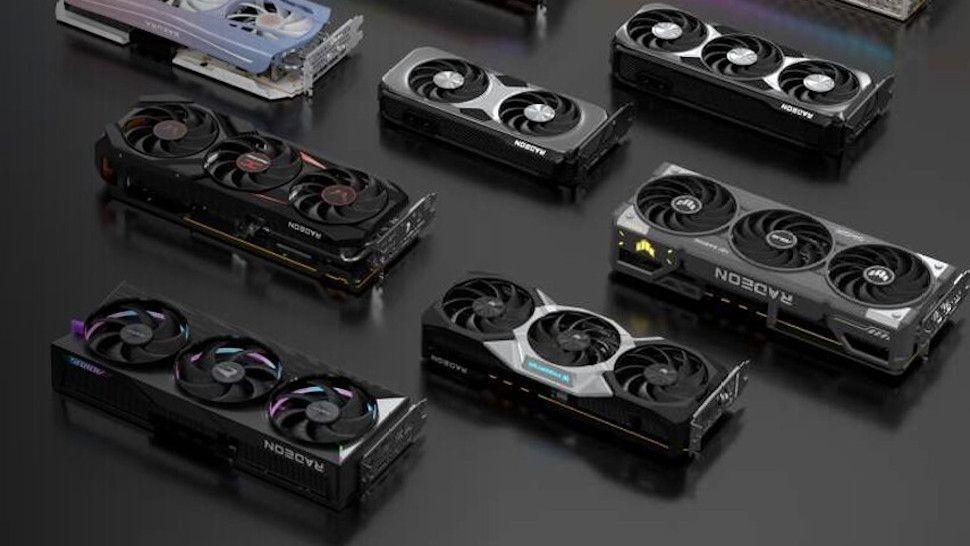
The reception to AMD’s Radeon RX 9070 series GPU launch was mixed considering the inflated prices, and lack of availability for some. However, if you were fortunate enough to land one at MSRP, a new and improved mod may make life a little easier regarding AMD‘s new upscaling method and its compatibility in games.

As reported by VideoCardz, modders have managed to implement AMD FSR 4 support in numerous titles that already have DLSS or XeSS (Nvidia and Intel’s similar technologies, respectively). This is all thanks to a mod known as Optiscaler on GitHub from cdozdil, which has previously been used to enable other older versions of upscaling methods in titles that don’t have official support.

It’s an important mod for Radeon RX 9070 and RX 9070 XT users to take advantage of since so far, there are only a few titles that have official FSR 4 implementation from game developers. FSR 4 significantly enhances visual quality, particularly with its performance mode – which is arguably a game changer as previous FSR models suffered from ghosting issues that caused a blurry image or trail left behind by in-game UI or character models when in motion.

As well as super-resolution (Xe Super Sampling for Intel’s XeSS), frame generation can also be injected in unsupported games – this is similar to Nukem (on GitHub) which uses DLSS’ Frame Generation in games to implement FSR 3’s frame generation.

While it certainly isn’t as well polished as official support (it’s currently an experimental addition), it could be enough to hold users over for the time being. It’s worth noting that not all games are supported on Optiscaler as of now, which is supposedly because FSR 4 doesn’t support Vulkan (a graphics API used for rendering in plenty of games) yet.

There’s no guarantee that certain titles will even get official FSR 4 implementation – it took CD Projekt Red several months to add FSR 3 to Cyberpunk 2077 (likely because of its partnership with Nvidia), so don’t expect it to happen overnight with FSR 4 – especially with other titles that share a similar agreement with Nvidia.

The AMD Radeon Graphics badge displayed over an RGB gaming keyboard.

(Image credit: Ralf Liebhold / Shutterstock)

Modding capabilities as such should be allowed on anti-cheat games

While mods like this are great for RDNA 4 users and those who can’t use frame generation (mostly owners of Nvidia RTX 3000 series and older GPUs), the only major downside is that it doesn’t seem to work with games that use anti-cheating tools.

{ window.reliablePageLoad.then(() => { var componentContainer = document.querySelector(“#slice-container-newsletterForm-articleInbodyContent-ybjdo6imnFozpiad7eqc4F”); if (componentContainer) { var data = {“layout”:”inbodyContent”,”header”:”Get daily insight, inspiration and deals in your inbox”,”tagline”:”Sign up for breaking news, reviews, opinion, top tech deals, and more.”,”formFooterText”:”By submitting your information you agree to the Terms & Conditions and Privacy Policy and are aged 16 or over.”,”successMessage”:{“body”:”Thank you for signing up. You will receive a confirmation email shortly.”},”failureMessage”:”There was a problem. Please refresh the page and try again.”,”method”:”POST”,”inputs”:[{“type”:”hidden”,”name”:”NAME”},{“type”:”email”,”name”:”MAIL”,”placeholder”:”Your Email Address”,”required”:true},{“type”:”hidden”,”name”:”NEWSLETTER_CODE”,”value”:”XTR-D”},{“type”:”hidden”,”name”:”LANG”,”value”:”EN”},{“type”:”hidden”,”name”:”SOURCE”,”value”:”60″},{“type”:”hidden”,”name”:”COUNTRY”},{“type”:”checkbox”,”name”:”CONTACT_OTHER_BRANDS”,”label”:{“text”:”Contact me with news and offers from other Future brands”}},{“type”:”checkbox”,”name”:”CONTACT_PARTNERS”,”label”:{“text”:”Receive email from us on behalf of our trusted partners or sponsors”}},{“type”:”submit”,”value”:”Sign me up”,”required”:true}],”endpoint”:”https://newsletter-subscribe.futureplc.com/v2/submission/submit”,”analytics”:[{“analyticsType”:”widgetViewed”}],”ariaLabels”:{}}; var triggerHydrate = function() { window.sliceComponents.newsletterForm.hydrate(data, componentContainer); } if (window.lazyObserveElement) { window.lazyObserveElement(componentContainer, triggerHydrate); } else { triggerHydrate(); } } }).catch(err => console.error(‘%c FTE ‘,’background: #9306F9; color: #ffffff’,’Hydration Script has failed for newsletterForm-articleInbodyContent-ybjdo6imnFozpiad7eqc4F Slice’, err)); }).catch(err => console.error(‘%c FTE ‘,’background: #9306F9; color: #ffffff’,’Externals script failed to load’, err)); ]]>

Sign up for breaking news, reviews, opinion, top tech deals, and more.

Titles like Elden Ring, Warhammer 40,000: Space Marine 2, and The Finals, use anti-cheat software which is used to prevent cheating online. While I won’t argue against these measures (even though they can ruin performance in some games), they make mods like Optiscaler effectively useless, as users could be banned if they are using it.. Now, I haven’t seen cases of this myself without players genuinely cheating, but it doesn’t mean it’s impossible either.

I’ve shared the same frustrations when it comes to games that don’t support ultrawide resolutions and aspect ratios – those games usually require modification, as evident in Street Fighter 6 which cannot be played at 21:9 or 32:9 aspect ratios unless you use RE Framework by Praydog on GitHub, but Capcom views modding as cheating.

It’s a very similar scenario in this case – gamers spend hard-earned money to acquire new hardware, and if you can’t even use upscaling methods like FSR 4 in a large number of titles, mods like Optiscaler are the only way. So, with those anti-cheat measurements, maybe dial it down a little…Please?

You may also like…

Source

Posted on

DeepSeek is rushing to get its next-gen R2 model out sooner than expected

After taking the world by storm with the debut of its R1 reasoning model in January, Chinese AI startup DeepSeek is reportedly looking to maintain the momentum by rushing its new R2 model to market as quickly as possible, Reuters reports.

DeepSeek at first planned to launch R2 in early May, but sources familiar with the company tell Reuters that DeepSeek wants to speed up the schedule. However, the sources didn’t provide a new release date for DeepSeek-R2, which has yet to be announced.

We don’t know much about DeepSeek’s next AI model yet, but the Chinese company wants R2 to have improved coding skills and reason in languages other than English.

When DeepSeek-R1 launched, the entire industry was taken aback by the research paper that claimed the highly sophisticated model was trained at a fraction of the cost of OpenAI’s o1. The pushback was immediate, though, as OpenAI posited that DeepSeek distilled ChatGPT to train its model, and Google called DeepSeek’s claims “exaggerated.”

Tech. Entertainment. Science. Your inbox.

Sign up for the most interesting tech & entertainment news out there.

By signing up, I agree to the Terms of Use and have reviewed the Privacy Notice.

Nevertheless, many companies were quick to adopt the new model, including OpenAI investor Microsoft, which added DeepSeek-R1 to Azure AI Foundry and GitHub. You can also find R1 in the Amazon Web Services (AWS) model catalog.

With the arrival of GPT-4.5 still weeks away and GPT-5 potentially months out, DeepSeek has a chance to shake up the market once again if R2 launches soon.

Source

Posted on

DeepSeek: Welcome to US artificial intelligence’s Sputnik moment

Following last weekend’s introduction of the latest large language model (LLM) from DeepSeek, ChatGPT’s new artificial intelligence (AI) rival has topped the Apple App Store for iPhone downloads.

The DeepSeek R1 LLM is open source and uses reasoning combined with what the company calls “cold start data”, which means that rather than trawling the internet and social media sites to amass vast quantities of machine learning data, it relies instead on reinforced learning to improve accuracy.

On its GitHub page, the developers of DeepSeek describe R1 as a large-scale reinforcement learning on the base model. “We directly apply reinforcement learning to the base model without relying on supervised fine-tuning as a preliminary step,” it says. “This approach allows the model to explore chain-of-thought for solving complex problems.”

An estimated 2.1 million searches for DeepSeek were recorded over the weekend, with at least 1.6 million of these on Sunday 26 January alone. This is 12.3% of ChatGPT’s 13 million searches in the same timeframe.

Along with taking a different approach to ChatGPT, the interest in DeepSeek is also being driven by competitive pricing and the fact that the code is open source.

While OpenAI, the maker of ChatGPT, charges $2.50 per million input tokens for its GPT-4o model, DeepSeek is priced at $0.14 per million input tokens in situations where the AI engine is able to draw on previously cached information. Non-cached inputs are priced at $0.55 per million tokens.

The extent of interest in the AI from the Chinese firm resulted in turmoil in the valuation of tech stocks in the US. Reuters reported that Nvidia saw its share price drop 17%, which effectively wiped $593bn off its market valuation.

Wake-up call

In a speech on Monday, US president Donald Trump described DeepSeek as a wake-up call for the US tech sector.

Among the numerous subjects Trump spoke about in his speech to Republican party members of Congress were the executive orders revoking the AI regulations introduced under former president Joe Biden. “We don’t want to have any future president ever sabotage our economy with out-of-control regulations,” he said. “Last week I signed an order revoking Joe Biden’s destructive artificial intelligence regulations so that AI companies can once again focus on being the best, not just being the most woke.”

He then referenced DeepSeek as he continued talking about why deregulation is important for AI in the US. “Today and over the last couple of days I’ve been reading about China and [one Chinese company] in particular coming up with a faster method of AI and a much less expensive method. Hopefully the release of DeepSeek AI from a Chinese company should be a wake-up call for our industries that we need to be laser-focused on competing to win.”

DeepSeek’s developers have been able to combine cutting-edge algorithms to slash the energy demands of AI training and deployment. In his speech, Trump described what DeepSeek had achieved as “good”, since companies aiming to develop AI applications that use DeepSeek do not have to spend as much money compared with rival LLMs. “I view that as a positive, as an asset,” he added.
 
Commenting on what the rise of DeepSeek has meant to financial markets, Charu Chanana, chief investment strategist at investment platform Saxo, pointed out that DeepSeek took only two months to develop and less than $6m to build, using reduced-capability chips from Nvidia. This is significant given that the Biden administration banned the export of high-end Nvidia graphics processors (GPUs) to China in 2023.

“US tech companies are trading at premium valuations, with major AI players like Nvidia, Microsoft and Alphabet commanding forward P/E [price to earnings] multiples far above historical averages,” she said. “With these stocks priced for perfection, even minor disruptions, such as DeepSeek proving advanced AI can be built without top-tier chips, could weigh heavily on share prices. For Nvidia, in particular, its role as a key supplier of AI chips makes it vulnerable if demand for its high-end products wanes.”

The idea of lower-cost and more energy-efficient AI coming from DeepSeek appears to have an immediate impact both on the US tech giants and the energy sector, which has been banking on the growth of AI-fuelled power consumption.

“DeepSeek’s breakthrough signals a shift toward efficiency in AI, which will redefine both energy and AI markets,” said Nigel Green, the CEO of global financial advisory giant DeVere Group. “The opportunities for investors willing to act now are enormous.

“This challenges the assumption that AI’s growth is tied to ever-increasing energy consumption. While the market is reacting to short-term uncertainty, efficiency-driven AI models will expand adoption into new markets and industries. This means more widespread use, deeper integration and, ultimately, sustained demand for energy solutions.”

Arguably, it’s the fact that DeepSeek has been able to achieve results using inferior hardware and offer its LLM at a highly competitive price that is set to change every organisation’s approach to AI: it doesn’t necessarily require throwing vast amounts of costly GPUs at the hardware and having to recoup these costs by charging end users a premium.

“By developing cutting-edge generative AI models without relying on the latest, most expensive hardware, DeepSeek has demonstrated that agility and strategy can outpace raw computational power,” said Kjell Carlsson, head of AI strategy at Domino Data Lab. “Their achievements also highlight the vulnerability of incumbents in the generative AI space – proving that open-source innovation continues to be a powerful equaliser, enabling challengers to match and even surpass established players years into the revolution.”

What all this means is that DeepSeek signifies Chinese competition to Silicon Valley’s existing AI models and is a demonstration of how the pace of AI development is pushing boundaries and lowering costs. 

Source

Posted on

Microsoft just added DeepSeek R1 to Azure AI Foundry and GitHub

When it comes to artificial intelligence, Microsoft refuses to be left behind. On Wednesday, the Redmond company announced that the R1 model from DeepSeek is now available on Azure AI Foundry and GitHub. This surprisingly sudden move comes despite the fact that OpenAI claims DeepSeek built AI models using its data without permission.

“As part of Azure AI Foundry, DeepSeek R1 is accessible on a trusted, scalable, and enterprise-ready platform, enabling businesses to seamlessly integrate advanced AI while meeting SLAs, security, and responsible AI commitments—all backed by Microsoft’s reliability and innovation,” Microsoft CVP Asha Sharma said in a blog post.

Sharma also repeated DeepSeek’s pitch for R1, explaining that its power and low cost will give more users access to state-of-the-art AI without heavy investment.

Of course, Microsoft understands the concerns raised about DeepSeek during its rapid rise to prominence in recent weeks, including the sheer amount of data the Chinese company collects. According to Microsoft, the model “has undergone rigorous red teaming and safety evaluations, including automated assessments of model behavior and extensive security reviews to mitigate potential risks.” Plus, Azure AI has tools like content filtering and the ability to test applications before deployment to protect developers and end users.

Tech. Entertainment. Science. Your inbox.

Sign up for the most interesting tech & entertainment news out there.

By signing up, I agree to the Terms of Use and have reviewed the Privacy Notice.

If you want to test out DeepSeek R1 through Azure AI Foundry, you will need an Azure account. Once you’re signed in, search for “DeepSeek R1” in the model catalog. After opening the model card, click “Deploy” to obtain the inference API, the key, and access to the playground. You can try out your prompts in the playground to try out R1.

You can also “explore additional resources and step-by-step guides to integrate DeepSeek R1 seamlessly into your applications” on GitHub. Microsoft says Copilot+ PC owners will soon be able to run distilled versions of DeepSeek R1 locally as well.

Source

Posted on

Open-R1 is a truly open version of DeepSeek AI

On Monday, DeepSeek R1 crashed the stock market once it became clear to some of the investors trading AI-related stocks that the Chinese startup had found a way to train AI as capable as ChatGPT o1 without access to the state-of-the-art NVIDIA chips that OpenAI and US AI firms have access to. That’s why firms creating hardware for AI infrastructure suffered the most. NVIDIA shed nearly $600 billion in market cap, while the entire market lost almost $1 trillion.

I said at the time that the reactions might be blown out of proportion. Yes, DeepSeek employed software optimizations to develop AI as capable as o1 instead of relying on hardware. But that doesn’t mean NVIDIA’s GPUs are suddenly obsolete. It just realigns the playing field while providing a new way to innovate.

I still think that AI firms with access to the latest hardware and top-tier software talent will have an edge over Chinese rivals. All a company like OpenAI or Google has to do is replicate some of the tricks DeepSeek used to match the Chinese startup’s AI training and usage efficiency and then leapfrog it. The latest AI chips will still be very important here.

It turns out it’s not just the big AI firms that might try to copy what DeepSeek has done. A team of developers calling themselves Open-R1 wants to replicate the DeepSeek R1 success to create a reasoning AI model that’s just as powerful as R1. There’s a big twist in all of this that AI fans in Western markets will appreciate. Open-R1 should be even more transparent than DeepSeek R1.

Tech. Entertainment. Science. Your inbox.

Sign up for the most interesting tech & entertainment news out there.

By signing up, I agree to the Terms of Use and have reviewed the Privacy Notice.

DeepSeek’s decision to make its AI models open-source was brilliant. This ensured that anyone could access and install the model on their computer. From there, they’d have a local model as capable as ChatGPT o1. The open-source route would also drive up adoption and testing. News about R1’s capabilities would spread rapidly.

But, as the Open-R1 researchers explain on Hugging Face, DeepSeek R1 isn’t fully open-source:

The release of DeepSeek-R1 is an amazing boon for the community, but they didn’t release everything—although the model weights are open, the datasets and code used to train the model are not .

That’s where Open-R1 is coming in: 

The goal of Open-R1 is to build these last missing pieces so that the whole research and industry community can build similar or better models using these recipes and datasets. And by doing this in the open, everybody in the community can contribute!

Specifically, the Open-R1 team wants to answer the following questions about DeepSeek R1 while they develop an identical AI:

Data collection: How were the reasoning-specific datasets curated?

Model training: No training code was released by DeepSeek, so it is unknown which hyperparameters work best and how they differ across different model families and scales.

Scaling laws: What are the compute and data trade-offs in training reasoning models?

The researchers plan to clone DeepSeek’s development strategy for R1, further fine-tune it, and create a truly open-source Open-R1 model that anyone could use.

Interestingly, the Open-R1 researchers want to distill DeepSeek R1 and create a high-quality reasoning dataset. DeepSeek might have done its own distillation, with OpenAI claiming the Chinese startup used ChatGPT to train its earlier versions of AI. That work might have been critical to getting to DeepSeek R1. It’s unclear if OpenAI can prove these allegations with absolute certainty.

However, the Open-R1 researchers have their own strategy after distilling R1, with the blog explaining how they plan to go forward.

If successful, Open-R1 could be a stepping-stone for developing other sophisticated AI models, and anyone could do it. The advantage here is that you would not have to go through the same training process. Conversely, that’s what OpenAI says DeepSeek did with ChatGPT, using some of its outputs to save money on training the AI.

An open-source reasoning model like the Open-R1 model the researchers propose could be used for other purposes, not just math and coding. The researchers mention medicine, where reasoning AI “could have significant impact.”

That said, it’s unclear how long the project will take and when Open-R1 will be ready for testing. Other AI researchers interested in Open-R1 can check out the project on GitHub.

Source

Posted on

Will Europe be the first region to enact regulation for green software?

So far, there is no regulation anywhere in the world specific to the environmental impact of software – a fact that runs alongside the reality that neither consumers nor investors are towards or away from companies based on the green credentials of their software.  

Many experts expect Europe to be the first region to enact regulation that enforces green software practices. One of them is Santiago Fontanarrosa, vice-president of technology at Globant, a digital services company and author of the book Green software engineering: exploring green technology for sustainable IT solutions.

According to Fontanarrosa, Europe is well-positioned to lead in green software regulation thanks in part to its strong sustainability initiatives and advancements in software engineering. Europe is commitment to sustainability, as demonstrated by ambitious initiatives like the European Green Deal. Moreover, France leads in green software research, and Germany’s Blue Angels offers the first global eco-friendly software certification.  

Fontanarrosa said green software is not only about applying certain development practices, it’s also about how to deploy and use the resulting applications. As for what developers can do, many of the green software techniques can be taken from the practices used by people who wrote programs in the 1970s, when CPUs were much less powerful, and memory and storage were much more limited. As processors became faster and memory and storage grew, software engineers have become more complacent. 

“Today, my iPhone has more computing power than the machine I used when I started working in the 1990s,” says Fontanarrosa. “I have seen a big change since I began my career. Developers have become less concerned about how they use resources, like CPU and memory. And they no longer apply optimisation techniques. For example, when you have an algorithm that does a loop to go through a very long list, they don’t look for ways of making that part of their code more efficient.”  

When it comes to green software, efficiency pertains to how much energy a program consumes to perform its functions. This involves optimising not only the use of CPU time, memory access and I/O, but also the transfer of data over networks. If coders simply thought more about the physical operations going on underneath their code, they would develop greener software. 

For example, as compared to a program that periodically checks for updates, an event-based architecture that reacts only when new data becomes available is more efficient because it reduces the number of network requests. Bigger design decisions are also important – an architect can take into account the fact that energy is cleaner at certain times of the day, and decide to have certain intensive tasks performed during those optimal periods.  

As for deploying software, one of the underlying principles is to minimise the amount of data traveling around networks, while another is to be selective of datacentres. 

“The cloud nowadays is a commodity everyone uses,” says Fontanarrosa. “But the cloud is actually a big datacentre somewhere that consumes a lot of energy. If I can choose a data provider cloud that uses more green energy, that will have a big impact on my carbon footprint.” 

Fontanarrosa also advises developers and operators to reduce the number of instances they’re using on the cloud. “Nowadays, you have a credit card, you do two clicks, and you have a whole new infrastructure up there,” he says. “You don’t even worry about it. That’s the kind of mentality that we need to start changing.” 

One example that illustrates how much of an impact software can have is given by Dutch software guru Danny van Kooten in a 2020 blog post that influenced many other developers to make similar changes.

Van Kooten estimates that he reduced emissions by 59,000 kg of CO₂ per month by making a very small change to his WordPress plugins that run on more than two million websites. That savings is the amount of CO₂ used to fly from Amsterdam to New York five times. He says that assuming the average website receives about 10,000 visitors a month and uses cache to serve returning users, a monthly savings of 10,000 kWh can be achieved for every 1 kilobyte a programmer shaves off of their JavaScript.

Another example is described in Fontanarrosa’s book, where he compares two implementations of the Fibonacci sequence, using the CodeCarbon tool to measure energy consumption. The first implementation used a recursive implementation and the second used an iterative approach with a for-loop. The iterative implementation used 99.34% less energy and reduced CO₂ emissions by 99.35%. 

“This striking difference demonstrates how thoughtful implementation choices in algorithm design can drastically reduce energy consumption and emissions, showcasing the potential for greener and more efficient software development,” says Fontanarrosa. 

Fontanarrosa says that even if governments are not pushing for green software, businesses and consumers can make it a reality. One encouraging sign is that a lot of companies have joined the Green Software Foundation since its inception in May 2021, including Fontanarrosa’s organisation, Globant. 

The mission of the Green Software Foundation – which was founded by Accenture, GitHub, Microsoft and ThoughtWorks – is to “build a trusted ecosystem of people, standards, tooling and best practices for green software”.

According to Green Software Foundation, the ICT sector will account for 14% of the world’s carbon footprint by 2040, most of which will be from smartphones and datacentres. The website says that software developers contribute to global emissions in many ways. One is by producing new versions of their products, which often requires better hardware to run, rendering the existing computers obsolete.  

One encouraging sign of progress is that the Green Software Foundation’s Software Carbon Intensity (SCI) specification recently achieved ISO standard status. However, this is nothing like government-backed regulation as SCI is still a voluntary, industry-driven standard. 

“I encourage everyone to learn about green software,” says Fontanarrosa. “Go to the Green Software Foundation webpage, or any other related resource, to start thinking about it and trying to introduce minor changes in your digital products. Minor changes sum up to a big impact.” 

Source