
Posted on

Overcoming the cyber paradox: Shrinking budgets – growing threats

Recent years have seen a general cost-cutting in organisations caused by economic pressures. Many organisations have seen a fall in customer demand due to the cost-of-living crisis, as well as inflationary pressures affecting costs. Higher interest rates, increasing organisations’ cost of capital, are another factor.

There’s also a sense of fatigue associated with spending on cyber security. Businesses’ spending on cyber has been increasing year-on-year for a sustained period of time, and a tendency has crept in for organisations to feel that, by now, they have done the necessary investing required to protect themselves, even though the reality is that the cyber threat landscape is ever-intensifying and regulatory pressures are mounting.

Lastly, we’ve seen a ‘platformisation’ of cyber software, with the big suppliers creating cohesive, unified cyber solutions. This encourages CISOs to embrace economies of scale in their spending, allowing them to do ‘more with less’. This has led to reductions in spending on single-use-case software solutions.

All of these factors combined are contributing to a flatlining of cyber budgets over the past 12 to 18 months in many organisations.

What makes organisations feel security is a worthwhile ‘cut’?

In this area, spending is highly correlated to compliance – often more than risk appetite. Compliance drives action, and this leads to a situation where if the organisation feels compliance has been achieved, the spend begins to plateau as the sense of urgency around cyber dissipates.

Some sectors are pushing hard on compliance, for example DORA for financial services in EMEIA and NIS2 for critical infrastructure in the European Union (EU). Spending on cyber security is more robust in these sectors, commensurate with the demands of these regulatory frameworks, but in sectors where regulation is less onerous, the spend is measurably flattening.

How can CISOs and security leaders lobby to maintain their budgets?

This is where a shift in perspective is badly needed. The case needs to be made that spending on cyber is a value investment – not just a risk management cost. Organisations need to start regarding cyber as an enabling ecosystem which unlocks value in multiple ways. It can enable AI implementation right across the organisation, for one thing. It can help enable acquisitions, for another. Creating a strong platform can also differentiate the organisation in the eyes of customers. All this contributes tangible value.

This is an important shift in mindset, from a perspective that views cyber only as a cost to one that understands it as an enabling infrastructure that links directly to the value generated by the products and services it underpins.

This new perspective should enable businesses to consider that, instead of relying solely on central funding for cyber, they can allocate to cyber a share of their budgets for new initiatives – on the basis that an optimal cyber infrastructure is a necessary condition of the initiative’s success.

It’s also useful to quantify the effectiveness of cyber spend, using Cyber Risk Quantification to demonstrate the tangible link between risk reduction and spend.

How can CISOs and security leaders increase their budgets?

One of the main things cyber can enable is AI, and this is becoming the fastest-moving – and fastest-growing – change catalyst in the whole landscape. There is no doubt that AI is a cyber threat multiplier, allowing cyber criminals to become better at what they do: better malware, better phishing, and so on.

This means that the custodians of business need to become better, too. And that’s going to require ongoing investment, and an ongoing evolution of the tools and solutions we implement, to enable organisations to try and keep up with the criminals.

As cyber criminals avail themselves of AI to create more effective cyber-attacks, organisations are going to need to fight AI with AI.  It is important to look at opportunities to automate cyber defence, especially in key use cases around Threat Detection and Response, Automated Testing and User Access Rights management. 

EY’s research shows that one of the key indicators of organisations who perform best in cyber security is that they consistently adopt emerging technology – especially automation – quickly. Companies who can ingrain that technology-friendly approach are the ones that suffer the least from being attacked.

The threat outlook for 2025

The existing big threats – ransomware, phishing and supply chain attacks – will all continue, and will continue to grow in sophistication. Alongside that, we expect to see more targeting of Operational Technology (OT), as well as the Internet of Things (IoT).

It’s reasonable to expect that the fast growth of AI implementation across organisations and sectors will produce new vulnerabilities, and that as a result, more data breaches will occur as an inevitable aspect of this fast pace of change.

Finally, the other key development will be the way cyber criminals are themselves utilising and deploying AI. The intensity of malware attacks is likely to increase, as attackers weaponise GenAI. The pace of development is capable of being equally effective on both sides of the battle, which is precisely why organisations cannot afford to be complacent.

Richard Watson is global and APAC cyber security consulting lead at EY
Source

Posted on

iPhone 17 Air will be the thinnest iPhone ever made, new rumor claims

Last week, we wrote about how Apple’s rumored “iPhone 17 Air” doesn’t need to break records to be a worthwhile experiment. That said, it would undoubtedly draw quite a crowd if Apple could make it thinner than any other iPhone, and according to a reliable source, that’s still in the cards for the ultra-slim iPhone 17.

In a research note released this week, Apple analyst Jeff Pu appeared to corroborate the recent rumor which suggested the iPhone 17 Air would be the thinnest iPhone yet.

“We agreed with the recent chatter of [a] 6mm thickness ultra-slim design of the iPhone 17 Slim model,” he wrote in the note seen by MacRumors. This is in line with a blog post from yeux1122, which said that “the industry expects the slim model to be around 6mm.”

MacRumors points out that the thinnest iPhone to date is the iPhone 6, with a width of 6.9mm. Every model prior to the iPhone 6 was between 7.6mm and 12.3mm thick, while newer models measure in between 7.1mm and 8.3mm thick.

Tech. Entertainment. Science. Your inbox.

Sign up for the most interesting tech & entertainment news out there.

By signing up, I agree to the Terms of Use and have reviewed the Privacy Notice.

None of these phones are as slim as the 13-inch iPad Pro that launched this year, which is just 5.1mm thick. That’s the thinnest portable device Apple has put out into the world, and based on the latest reports, the iPhone 17 Air (or iPhone 17 Slim, as Pu calls it in his research note) is not likely to top it when it launches in September 2025.

There’s still plenty we don’t know about the iPhone 17 lineup, but other rumors have suggested that the ultra-slim model will feature a 6.6-inch display, an A19 chip, a Dynamic Island, a single rear camera, and a 5G model designed and built by Apple.

Source

Posted on

Underfunded, under pressure: We must act to support cyber teams

Cyber resilience has dominated headlines this year as major outages impacting people, businesses, and public services hit the headlines.

But what about the cyber security professionals working behind the scenes? Although they often receive little media attention, the importance of their role in safeguarding day-to-day life has never been clearer. As AI technologies become more integrated across businesses and cyber threats grow increasingly sophisticated, demands on cybersecurity teams are higher than ever.

The key question remains: are businesses doing enough to support them?

Cyber attacks aren’t going away – and cyber teams are feeling the strain 

New research from ISACA’s latest State of Cybersecurity report reveals that 41% of cyber security professionals say they are experiencing more cyber attacks this year than last. This is a growing issue which will only worsen if businesses do not act immediately. Indeed, not only are attacks increasing in number, but also in complexity. GenAI technologies are becoming more accessible, allowing bad actors to make their attacks harder to detect by more accurately simulating real human speech patterns and behaviours.

And cyber security professionals are feeling the strain. 68% of those surveyed report that their role is more stressful now than a year ago, with 79% attributing this rise to the increasingly complex threat landscape. With a worrying 58% of professionals expecting to experience an attack within the next year, it is no longer a matter of if businesses are going to be attacked, but rather when. Organisations must invest in their workforce to ensure they have the people with the right skills and expertise needed to combat these escalating threats and protect people and assets. 

Yet cyber teams are underskilled, underfunded, and stressed 

Despite this imminent threat to businesses, not enough organisations are making it a priority. Over half (52%) of professionals say that their organisations’ cyber security budget is underfunded, leaving them vulnerable to attacks. This is especially concerning because businesses do not exist within a vacuum — as we have seen in cases such as the CrowdStrike outage, weakness in one organisation can put entire digital ecosystems and supply chains at risk. 

The issue of chronic underfunding is directly impacting staffing of cyber security professionals, too. 53% report that employees are leaving positions due to poor financial incentives, which is why a further 61% say that their organisations’ teams are understaffed. It is imperative that businesses take action by financially prioritising their cyber security teams as only these crucial investments can improve retention and fix the understaffing crisis. Without doing so, professionals’ stress levels will continue to increase and they will be ill-prepared to tackle mounting external threats. 

Job role criteria is holding the cyber industry back

In addition to the problem of retaining staff, cyber security teams are also struggling to recruit. 19% of professionals say that their organisation has unfilled and open entry-level positions available, rising to almost half (48%) having unfilled open positions which require experience, a university degree, or other credentials. These numbers are concerning and suggest that businesses must take a broader approach to recruitment by diversifying the types of candidates they are considering and then offering sufficient training. 

Our research shows that this will not only help with numbers of staff, but that it will have a positive impact on the quality of teams, too. When surveyed, over half (52%) of professionals highlighted soft skills as those most lacking amongst their current peers. If businesses choose to recruit staff from a wider pool, this skills gap can be effectively addressed, increasing the overall strength and efficacy of their teams. When enthusiastic candidates with the right soft skills are recruited, they can receive training to become adept cyber professionals while bringing an additional wealth of knowledge to the role. 

Among these soft skills, communication stands out, with 54% of respondents identifying it as an area of concern. This is a critical issue for the cyber security field, as effective communication enables professionals to advocate for themselves within their organisations and externally, strengthening the visibility of cyber security’s value and enhancing public understanding. Given the data on underfunding, it’s evident that businesses often overlook cyber security, so it is vital to diversify employee skills and help integrate cyber security more closely into daily operations. 

Hire beyond the traditional cyber security professional 

When looking for candidates, businesses must invest in encouraging candidates from a wide range of backgrounds, including those who have developed these soft skills in another field and are now looking to make a career change. If applicants show a willingness and aptitude to learn, financial backing must be provided to allow them to upskill within the role. Training must also be offered to current employees to upskill them and ensure they have the knowledge and skills to match hackers, especially as new emerging technologies exacerbate the tactics used by these groups.

Investing in the ongoing professional development of new and existing employees isn’t just a strategy, it’s a necessity in closing the cyber skills gap. As external threats continue to worsen, businesses must adopt this proactive approach to build a resilient, future-ready workforce that stands as the first line of defence in protecting people and assets. 

Chris Dimitriadis is global chief strategy officer at ISACA

Source

Posted on

Nvidia fans, it’s time to get excited

  • Auras Technology expects Nvidia’s RTX 5000 series to dominate the GPU market
  • Focus among suppliers anticipated to shift towards next-gen GPUs
  • A reveal or teaser could be weeks away

Considering the rumors and supposed leaks of RTX 5000 series GPUs, it’s no surprise that Nvidia’s next-gen GPUs are the current hot topic among PC gamers. Now, a Taiwanese cooling supplier has given us more reasons to get excited about Team Green’s upcoming launch.

Auras Technology manufactures cooling components for discrete GPUs as well as notebooks, motherboards, and servers, and its CEO Yu-Shen Lin has just claimed that Nvidia’s Blackwell GPUs could “seize the markets starting in December” (as revealed by DigiTimes). Lin expects the RTX 5000 series to launch with high levels of interest and demand, similar to what we saw previously with the RTX 4000 series launch.

The official reveal of Team Green’s next-gen GPUs could be closer than ever, with CEO Jensen Huang’s appearance at CES 2025 already confirmed – this will take place in January 2025 with Nvidia’s fierce rivals, AMD, also making an appearance. Team Red isn’t anticipated to compete within the high-end GPU market with a narrowed focus on mid-range, adding further credence to Lin’s expectation of Nvidia dominance.

This latest news corroborates earlier reports suggesting that Nvidia’s production of RTX 5000 series GPUs has stepped up – along with other suppliers, Auras Technology is anticipated to shift priorities toward the new GPU range.

Will this help with the inevitable high demand for the RTX 5000 series?

There is no doubt that the RTX 5000 series GPUs will be highly sought-after once it launches, especially if DLSS 3’s successor delivers major enhancements (though I personally will be upset if Nvidia’s ‘DLSS 4’ is exclusive to owners of a 5000-series card). It’s no secret that the next-gen GPUs will be driven by AI, and this could easily draw more attention from PC gamers looking for greater GPU performance.

Scalping has been an issue surrounding PC hardware, particularly for Nvidia fans – while suppliers’ current preparation for the new GPUs could help with the expected high demand, there’s only so much that can be done to prevent third-party sellers from taking advantage of the situation.

If the purported price of the RTX 5090 (a hefty $2,500, around £2000 / AU$3900) holds any truth, we could see the worst examples of scalping within the PC hardware market yet. Fingers crossed it isn’t too rough…

{ window.reliablePageLoad.then(() => { var componentContainer = document.querySelector(“#slice-container-newsletterForm-articleInbodyContent-ahKgx46e5qfjU6cwVybwSn”); if (componentContainer) { var data = {“layout”:”inbodyContent”,”header”:”Get the best Black Friday deals direct to your inbox, plus news, reviews, and more.”,”tagline”:”Sign up to be the first to know about unmissable Black Friday deals on top tech, plus get all your favorite TechRadar content.”,”formFooterText”:”By submitting your information you agree to the Terms & Conditions and Privacy Policy and are aged 16 or over.”,”successMessage”:{“body”:”Thank you for signing up. You will receive a confirmation email shortly.”},”failureMessage”:”There was a problem. Please refresh the page and try again.”,”method”:”POST”,”inputs”:[{“type”:”hidden”,”name”:”NAME”},{“type”:”email”,”name”:”MAIL”,”placeholder”:”Your Email Address”,”required”:true},{“type”:”hidden”,”name”:”NEWSLETTER_CODE”,”value”:”XTR-D”},{“type”:”hidden”,”name”:”LANG”,”value”:”EN”},{“type”:”hidden”,”name”:”SOURCE”,”value”:”60″},{“type”:”hidden”,”name”:”COUNTRY”},{“type”:”checkbox”,”name”:”CONTACT_OTHER_BRANDS”,”label”:{“text”:”Contact me with news and offers from other Future brands”}},{“type”:”checkbox”,”name”:”CONTACT_PARTNERS”,”label”:{“text”:”Receive email from us on behalf of our trusted partners or sponsors”}},{“type”:”submit”,”value”:”Sign me up”,”required”:true}],”endpoint”:”https://newsletter-subscribe.futureplc.com/v2/submission/submit”,”analytics”:[{“analyticsType”:”widgetViewed”}],”ariaLabels”:{}}; var triggerHydrate = function() { window.sliceComponents.newsletterForm.hydrate(data, componentContainer); } if (window.lazyObserveElement) { window.lazyObserveElement(componentContainer, triggerHydrate); } else { triggerHydrate(); } } }).catch(err => console.error(‘%c FTE ‘,’background: #9306F9; color: #ffffff’,’Hydration Script has failed for newsletterForm-articleInbodyContent-ahKgx46e5qfjU6cwVybwSn Slice’, err)); }).catch(err => console.error(‘%c FTE ‘,’background: #9306F9; color: #ffffff’,’Externals script failed to load’, err)); ]]>

Sign up to be the first to know about unmissable Black Friday deals on top tech, plus get all your favorite TechRadar content.

You might also like…

Source

Posted on

HarperCollins asks authors to license their books to train AI models

If your goal is to make a bunch of authors exceedingly angry with you, I honestly can’t think of many better ways than asking them to sell their work to train AI. And yet, that’s what publishing company HarperCollins has started doing with its authors, as exposed by writer and comedian Daniel Kibblesmith in a post on Bluesky late last week.

“Abominable,” Kibblesmith wrote, sharing screenshots of the correspondence between himself and his agent about the deal. The publisher was interested in including his 2017 children’s book Santa’s Husband and was willing to pay a non-negotiable sum of $2,500 to license his book for three years in order to train an AI language learning model.

The A.V. Club reported on the incident last week. 404 Media then reached out to HarperCollins on Monday for the publisher’s side of the story and received this response:

HarperCollins has reached an agreement with an artificial intelligence technology company to allow limited use of select nonfiction backlist titles for training AI models to improve model quality and performance. While we believe this deal is attractive, we respect the various views of our authors, and they have the choice to opt in to the agreement or to pass on the opportunity.

HarperCollins has a long history of innovation and experimentation with new business models. Part of our role is to present authors with opportunities for their consideration while simultaneously protecting the underlying value of their works and our shared revenue and royalty streams. This agreement, with its limited scope and clear guardrails around model output that respects author’s rights, does that.

On the one hand, the fact that HarperCollins is giving the authors the ability to opt-out at all is encouraging. Given how much money is presumably at stake, the publisher might have chosen to bully authors into taking the deal instead of asking for permission. On the other hand, it’s a bit hard to imagine many authors taking HarperCollins up on the deal and potentially contributing to their own obsolescence, especially for the paltry payday of $2,500 per title.

Tech. Entertainment. Science. Your inbox.

Sign up for the most interesting tech & entertainment news out there.

By signing up, I agree to the Terms of Use and have reviewed the Privacy Notice.

“It seems like they think they’re cooked, and they’re chasing short money while they can,” said Kibblesmith to A.V. Club. “I disagree. The fear of robots replacing authors is a false binary. I see it as the beginning of two diverging markets, readers who want to connect with other humans across time and space, or readers who are satisfied with a customized on-demand content pellet fed to them by the big computer so they never have to be challenged again.”

Needless to say, Kibblesmith did not agree to the terms. That said, not every author is willing or able to take a moral stand, especially if $2,500 or more could help pay the bills.

Source

Posted on

CMA clears Google over Anthropic partnership

The Competition and Markets Authority (CMA) has said Alphabet’s partnership with Anthropic does not qualify for investigation under the merger provisions of the Enterprise Act 2002.

In October 2023, Alphabet invested $2bn in OpenAI rival Anthropic. The artificial intelligence (AI) startup has also received $4bn funding from Amazon.

The CMA is concerned that the foundational model sector is developing in ways that risk negative market outcomes. In particular, the likes of Google, Amazon, Meta, Microsoft and Apple have the market dominance to buy up or shut down competition. It is also worried that partnerships between these major technology providers and developers of AI foundation models may limit choice and be anti-competitive.

In September, the CMA concluded its investigation of Microsoft’s hiring of key staff from Inflection, finding that Inflection AI was not a strong competitor to the consumer chatbots Microsoft has developed directly in partnership with OpenAI.

Discussing the outcome of the latest investigation, Joel Bamford, executive director of the CMA, wrote on LinkedIn: “Our investigation has shown that Google has not acquired the ability to materially influence Anthropic’s commercial policy and therefore the partnership does not meet the jurisdictional threshold for UK merger control to apply.”

He described the conclusion of this latest investigation as “another decision by the CMA which provides greater clarity for businesses and their investors”.

In a summary of its findings from the phase one investigation into the deal, the CMA said it did not believe Google had acquired material influence over Anthropic as a result of the partnership. The CMA said it looked at the risk of Google exercising influence over Anthropic at shareholder and/or board level, along with an assessment of Google’s own Vertex AI product.

“The available evidence did not indicate that Google has the ability to exercise material influence over Anthropic through the partnership,” the CMA concluded.

The CMA said it had considered the fact that Anthropic and Google offer two of the leading foundational AI models globally. However, given Anthropic’s turnover is below the £70m threshold, which is one of the criteria it takes into account when assessing whether to look further into a deal, pursuing this thread of investigation was not necessary.

The CMA is also looking at whether it should investigate Amazon’s partnership with Anthropic, due to the $4bn funding the AI startup received from Amazon. 

Some industry experts believe the CMA should continue looking at the foundation model market. Josh Mesout, chief innovation officer at Civo, said: “While the CMA has decided not to pursue an investigation into the Anthropic/Alphabet partnership, the broader concerns raised in the investigation about potential market concentration in AI remain valid.

“Over-dependence on a handful of major firms could still stifle innovation, limit consumer choice and potentially lead to a monopoly that favours Big Tech. Even without a formal investigation, it is the responsibility of everyone in the industry to ensure the AI market remains fair, competitive and conducive to ongoing technological advancement.”

Source

Posted on

Computer Weekly’s Women in UK Tech Rising Stars 2024

This year’s most influential woman in UK technology – Sheridan Ash, founder and co-CEO of Tech She Can – created the charity to bridge the accessibility gap that exists when it comes to female role models in the technology space.

While there are many high-profile women in tech, these role models are people to aspire to be, and many young girls feel they need women only one or two steps ahead of them in their careers to show them the path to the top.

Computer Weekly’s Rising Stars category was introduced in 2014 as a way to increase the number of women showcased as industry role models.

Each year, alongside the top 50 list, Computer Weekly asks its judges to suggest Rising Stars who are starting their journey towards a possible place in the top 50 in the future, and who represent the future of the tech sector.

This year’s Rising Stars are:

Alice Hendy, CEO and founder, R;pple; cyber culture manager, Deloitte

Hendy founded digital suicide prevention tool R;pple in 2020, designed to help people who are making online searches relating to self-harm or suicide.

She is CEO of the charity, which she does alongside her work as the cyber culture manager at Deloitte.

With an extensive background in cyber, Hendy is also a TEDx speaker, an ambassador for One Young World and a JAAQ creator, covering the topic of suicide prevention.

Sarah Underhill, HR director, technology and data (Group Chief Operating Office), Lloyds Banking Group

Underhill has spent her entire career at Lloyds Banking Group, since joining the firm as a graduate in 1999.

She has held several roles at Lloyds, and is currently HR director for technology and data, part of the firm’s Group Chief Operating Office, where she is responsible for developing its people strategies for technology.

She has previously sat on the board of now disbanded tech diversity collective the Tech Talent Charter.

Feryal Clark, Parliamentary under secretary of state for AI and digital government, DSIT

Clark has worked in the public sector for many years, most recently being appointed the parliamentary under-secretary of state for artificial intelligence (AI) and digital government at the Department for Science, Innovation and Technology (DSIT).

Her responsibilities range across AI and digital, including AI regulation, transparency and ethics, as well as cyber security and digital identity, and public services.

Before her Parliamentary career, Clark’s focus was on medicine, having studied bioinformatics at the University of Exeter and worked in roles in diagnostic biochemistry and diagnostic virology.

Tania Duarte, founder, We and AI

Heavily focused on the use of AI, Duarte co-founded non-profit We and AI in 2020 to ensure AI is developed with everyone in mind, creating communities to ensure diverse teams of people are involved in the technology’s future development.

She is also the lead of Better Images of AI, a not-for-profit that offers a free library of images that better represent AI to reduce the use of stereotypical representations of AI such as “humanoid robots, glowing brains, outstretched robot hands, blue backgrounds and the Terminator”.

In 2020, she also became the founding editorial board member of the AI and Ethics Journal, published by Springer Nature.

Anushka Davis, head of talent, engagement and diversity, and head of learning and development, Softcat

Davis heads up talent, engagement and diversity, as well as learning and development, for IT infrastructure firm Softcat.

Her role involves looking after the development of all employees across the organisation, as well as developing the firm’s graduate and apprenticeship programmes.

She is also an advisory board member of community group Women of the Channel.

Nikita Thakrar, founder and CEO, Included VC

Thakrar founded and is CEO of Included VC, a venture capital fund dedicated to making sure diversity entrepreneurs gain the funding they need.

It’s not her first time working with entrepreneurs – previously she headed up innovation and entrepreneurship in Deep Science Ventures at Imperial College London.

Source

Posted on

From beauty model to tech role model – this year’s most influential woman in UK tech

“My husband has to sew my buttons on – I still can’t sew,” confesses co-CEO of technology education charity Tech She Can, Sheridan Ash.

This year’s Computer Weekly most influential woman in UK technology has always had a sense of wanting to right the injustice inflicted on women by gender stereotyping.

“At school, the girls had to do sewing or needlework or typing, and the boys did metalwork and woodwork. So I went to the local newspaper. I set up a petition. I got other pupils to stand outside the school with placards. Anyway, I got it changed. Hence, I can’t sew or type, but I’m great at welding,” says Ash.

Computer Weekly attended the launch of the first Tech She Can research eight years ago, when it was still a part of Ash’s work at PwC.

Ash has since left the professional services firm to focus on the technology education charity full-time, but like many women in the tech sector, her journey has not been linear.

Ash left school at 16 with no qualifications, which she puts down, in part, to undiagnosed dyslexia. Not knowing what to do, she accepted a modelling job she was offered when window shopping with her mother in London.

While this sufficed for a while, in her early 20s, Ash needed a career change for various reasons. After getting help with her dyslexia, she returned to education to study psychological sciences, then worked in the pharmaceutical industry before returning to school again to gain a master’s in business administration.

Eventually, Ash was offered a job at PwC to implement the firm’s health and technology practice.

Pushing for equality

Ash has always been passionate about equality – hence wanting to weld at school – and in her role at PwC, she started to notice the diversity gap in the technology sector.

“What was going wrong? Why was it so predominantly male?” she found herself wondering at the time.

After the firm selected its first technology leader to sit on the board, the work Ash had done to collect data around diversity, both within PwC and the wider sector, began to pay off in a big way.

The Tech She Can team

She explains: “I worked directly for that technology leader. I wrote the whole technology and innovation strategy for the firm, and at the heart of that, I embedded the piece around diversity.”

It was when working with the board of PwC eight years ago that Ash was inspired to commission the first piece of research on diversity, which eventually evolved into the Tech She Can movement.

Ash says while there had been research at the time about the lack of women in the sector and the reasons for that, there was not enough around why younger girls were overlooking jobs in tech.

After asking thousands of young people between the ages of 18 and 24, Ash explains: “They said, ‘We know who Sheryl Sandberg is, and Ada Lovelace, but one’s been dead a long time and the other’s a COO’. What they were looking for is relatable role models, people [in roles] they could see a pathway to.”

The research also found girls were less likely than boys to have technology suggested to them as a career option by others in their lives, such as teachers, parents or career advisors.

Girls were also more likely to say they wanted a career that has a positive impact on society, but Ash speculates the digital native generations don’t see how technology can achieve that because it’s so embedded in their lives.

She explains: “They wanted to have a positive impact on themselves, the community, their family, the UK and the wider world, and they didn’t understand the relationship between technology and doing that.”

Recognising that no single person or organisation will be able to shift the dial alone, Tech She Can is focused on acting as a “bridge” between government, schools and industry.

“We’re quite good at bridging that demand and supply [gap], along with [addressing] what’s putting girls off, the perception issues and all of those things,” Ash claims. “Often, you don’t get [to hear] teachers’, schools’ and children’s voices.”

Changing perceptions

Tech She Can was launched as a charter with 18 partner organisations to collaborate on improving the pipeline of women going into technology roles. As part of this, it has become focused on helping educate children about tech careers.

A common barrier between young girls and tech careers is a lack of understanding about what a tech career involves, what roles are available, how to go about pursuing a tech career, and the kinds of people who work in the industry.

This goes hand in hand with a lack of visible and accessible role models, as young women are less likely to be drawn to a career if they don’t see anyone like them in such roles.

Photographer: Elyse Marks

“I want to persuade girls they have a role to play in making sure that the world isn’t just developed by a lot of white tech bros, that they could be part of making sure the world is a fit place for everybody, and that it is somewhere women are treated equally in creating that world”

Sheridan Ash, Tech She Can

Ash urges: “We’ve got to start changing these perceptions and addressing the inspiration and aspiration gaps very early on, and children’s understanding of what technology is and what roles and careers there are out there. Nobody seems to be doing that.”

Tech She Can regularly visits schools and provides online learning to prepare young people for technology careers, educating them about possible roles and how technology will play a role in their future careers. It also helps government and industry “connect” with schools with the aim of closing the technology skills and diversity gaps.

“We don’t teach the coding. We teach the inspiration, the aspiration, and show them how the technology they can use [translates into] careers and jobs.”

Last year, Ash left PwC to pursue Tech She Can full-time, launching the initiative as a charity in partnership with co-CEO Claire Thorne.

The programme has gone from strength to strength. It now has 200 member organisations, 800 registered “champions”, and has reached more than 130,000 children.

At a time when so many organisations are stepping back when it comes to implementing diversity and inclusion in their technology remit, how does Tech She Can make sure those involved are not using it as lip service?

“What we concentrate on is what we call our ‘strategic partners’, which are the people who fund us, and across all our partners we train champions to go into schools, we package up all our live lessons in a way that the champions can take them out and deliver them in person. In primary schools, they often do it to a whole assembly, and in secondary schools, it’s usually to individual classes.”

During these sessions, the champions explain technology concepts, how they apply in the real world and what tech jobs involve, which over time has changed the way children perceive technology, the subjects they choose to study and what careers they consider in the future.

Underpinning it all is data. For example, the organisation uses social mobility data to ensure it offers its services to schools that have the greatest need for it.

Being Wonder Woman

Wearing other hats, Ash is a non-executive director for several other organisations, leaning into her life-long need to help women achieve equality.

But she still has moments when she needs to perform a Wonder Woman-style power pose to amp herself up.

Portfolio images of Sheridan Ash as a teen beauty model

We often talk about technology role models, and in Ash’s childhood, she aspired to be Wonder Woman.

“She kicked the ass of the baddies,” she says. “She wanted to have a positive impact. She did good shit. And that felt right from a young age, whether I was conscious or not about what I wanted in life.”

There is plenty of research highlighting the importance of role models for young women, especially in the technology space. Ash is a role model herself.

Ash says she wants every young woman to know that not only is technology a “joyful” career, but it is going to be “one of the most important factors of shaping her world”.

She says: “I want to persuade girls they have a role to play in making sure that the world isn’t just developed by a lot of white tech bros, that they could be part of making sure the world is a fit place for everybody, and that it is somewhere women are treated equally in creating that world.”

Source

Posted on

This is Apple’s official fix for the bug that makes notes disappear in iOS 18

Some iPhone owners recently discovered that their Notes were missing from the handset. Savvy users figured out that accepting the new iCloud terms of service on the iPhone triggers the bug, and the Notes disappear. It happens after the iOS 18 update, but the iPhone doesn’t delete the Notes documents.

That data is still safe in iCloud, but the Notes app won’t sync with it properly after agreeing to the updated terms of service.

We showed you how to fix the disappearing Notes bug a few days ago. People figured out that syncing their Notes from iCloud would do the trick. Judging from the emails I received, the solution actually works, and the affected users have already regained access to their Notes.

Meanwhile, Apple has issued a support document that addresses the issue. The company doesn’t explain what’s causing the problem, but it offers a solution that matches the unofficial fix from a few days ago.

Tech. Entertainment. Science. Your inbox.

Sign up for the most interesting tech & entertainment news out there.

By signing up, I agree to the Terms of Use and have reviewed the Privacy Notice.

I’ve been using the Notes app religiously since Apple introduced it several years ago. It’s my go-to note-taking app on Mac and iPhone, and I don’t want to imagine losing access to local or iCloud notes.

I haven’t experienced the disappearing Notes bug at any point since running iOS 18. I have installed the first beta as soon as it came out this summer, and I’m currently on the latest iOS 18.2 beta.

In the process, I have agreed to all terms of service updates, without really reading any of it. I have no idea if I already agreed to the new iCloud tems of service, but I suspect I did.

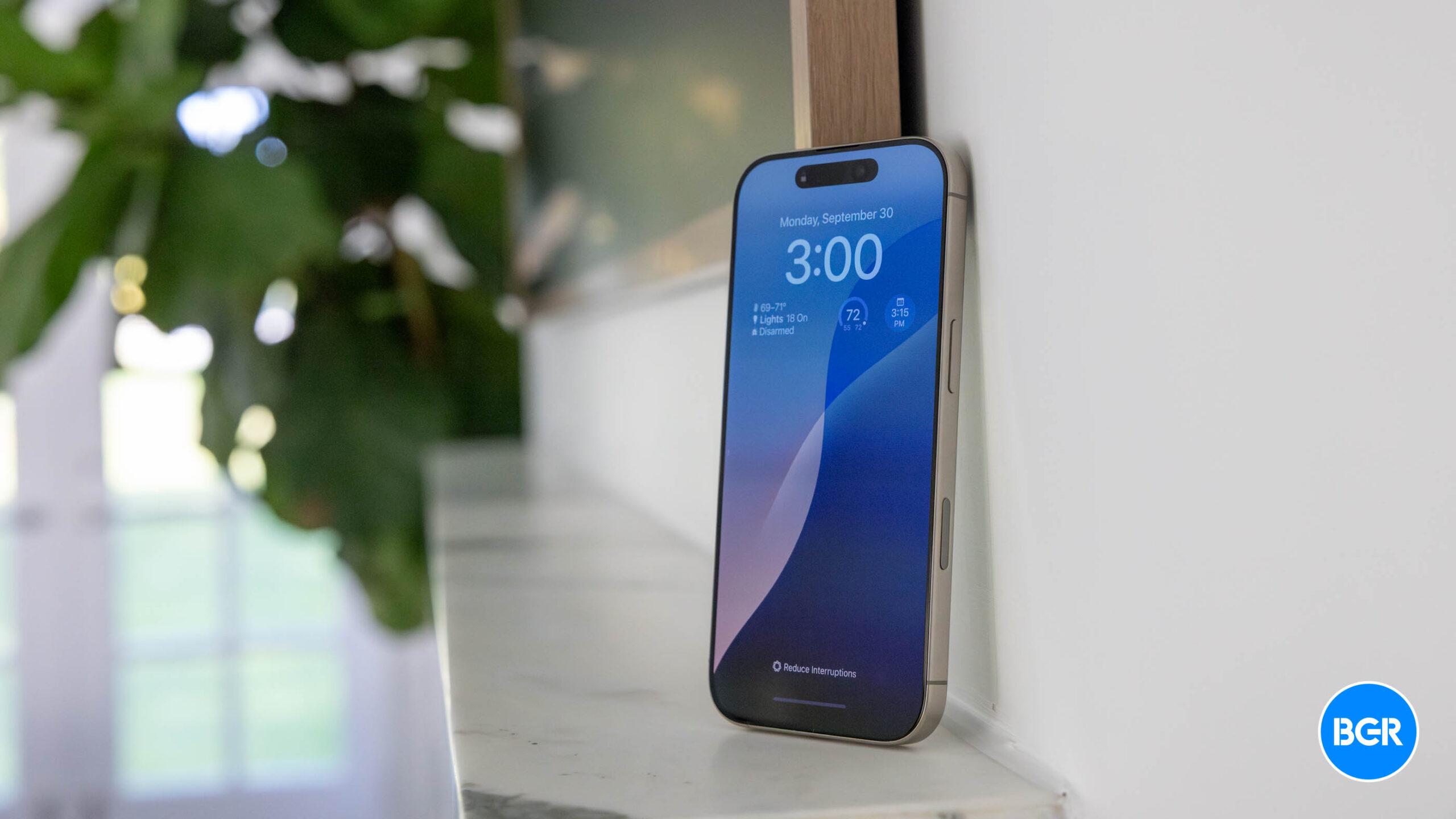
This is the Notes toggle you are looking for.This is the Notes toggle you are looking for. Image source: Chris Smith, BGR
Plenty of iPhone users would be affected if Apple decided to put out a support page to address the problem. Here’s the entirety of Apple’s support document:

Here’s how to check your iCloud sync settings and restart if needed.

If your iCloud notes aren’t appearing on your iPhone, iPad, or Apple Vision Pro, follow these steps.

  1. Open the Settings app and tap your name.
  2. Tap iCloud, then tap Notes.
  3. Make sure Sync this [device] is on, then check the Notes app.
  4. If you still don’t see your notes, restart your iPhone, iPad, or Apple Vision Pro. After restarting, check your settings again.

After these steps, your iCloud notes should appear and start syncing again on devices signed in to the same Apple Account. When syncing completes, content previously synced to iCloud should appear.

That’s all you need to do to recover your Notes. Again, they were not deleted, you have not lost anything. A synchronization issue is to blame here, as the iCloud notes did not sync with your Notes app.

Apple’s solution matches the unofficial fix we covered a few days ago. It’s unclear whether Apple will prevent it from happening with subsequent iOS 18 updates. If you still haven’t fixed your Notes problem, or you’re running into it for the first time, you should follow the steps above.

You should also make a mental note of the fix and return to iCloud every time you encounter any sort of iCloud sync issues, whether it’s Notes or a different app. The fix is as easy as turning a toggle off and back on again.

Source

Posted on

Opera and Spotify partner to bring seamless music streaming to your browser

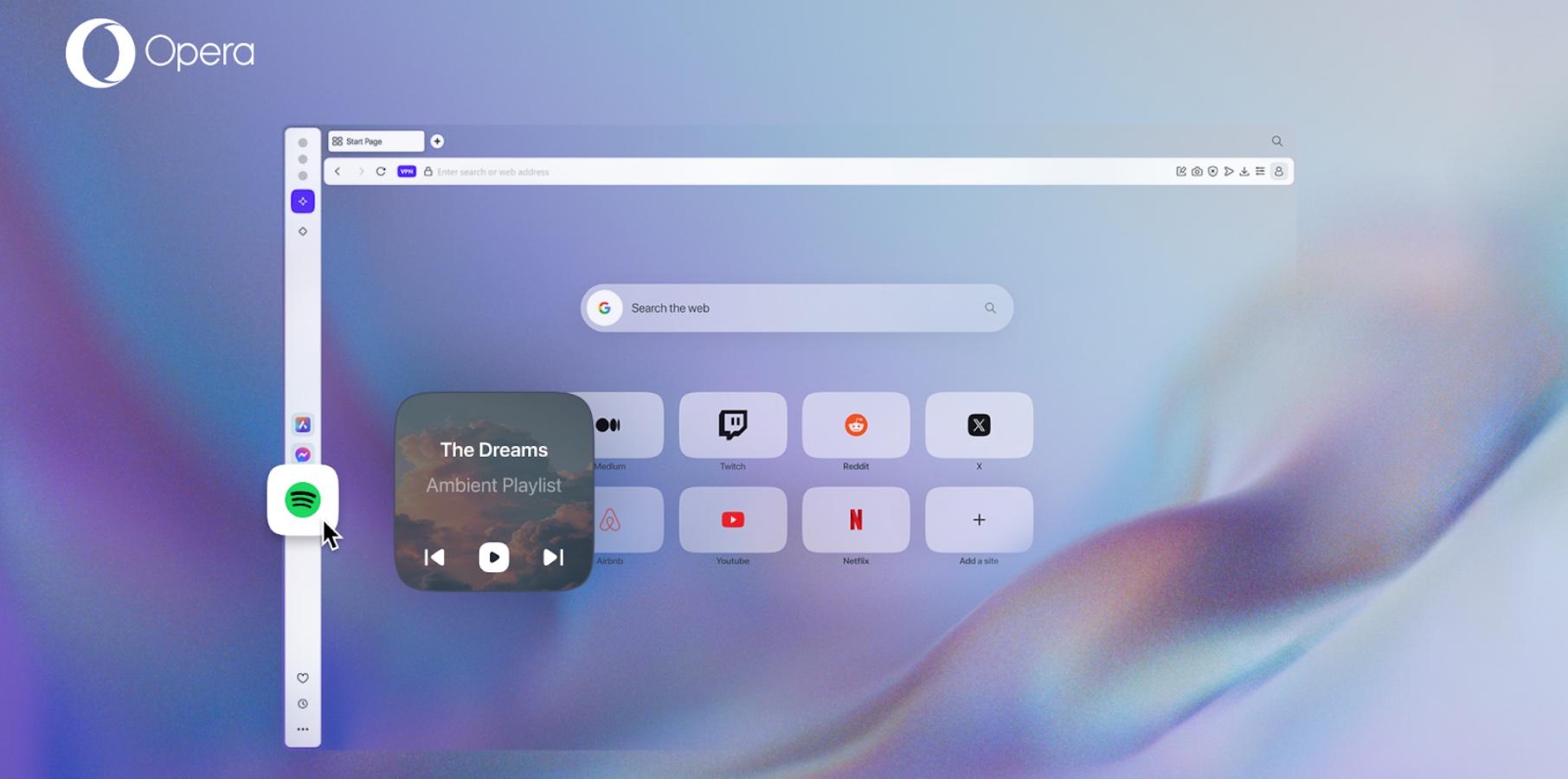
Following Opera One’s recent R2 update, the Nordic browser still has a few more surprises for its users. Starting today, Opera and Spotify have partnered to make it easier for users to listen to their favorite music, podcasts, and audiobooks while browsing on their computers.

Spotify is the default streaming service within the revamped Music Player in Opera’s flagship browser. To celebrate this partnership, Opera is offering up to three free months of Spotify Premium to users in Argentina, Brazil, France, Germany, India, Indonesia, Italy, Malaysia, the Philippines, Poland, Spain, Thailand, Turkey, the United Kingdom, the United States, and Vietnam

“People love listening to music and podcasts while at their computers. Now, with Spotify in the sidebar of Opera One, everything’s right there at your fingertips – you can shop, write, plan a trip, all while never having to stop listening to your favorite music and audio via the browser’s floating multimedia player,” said Joanna Czajka, Product Director at Opera.

The new music player with Spotify is located in the sidebar of the Opera One browser. When activated, it can be detached and moved around the screen without interrupting a user’s browsing flow. That said, instead of switching between tabs and apps, you can use the floating browser window.

Another perk of the built-in widget is that Spotify audio pauses when you join a meeting or call and resumes afterward.

Tech. Entertainment. Science. Your inbox.

Sign up for the most interesting tech & entertainment news out there.

By signing up, I agree to the Terms of Use and have reviewed the Privacy Notice.

Opera One R2 new features

Image source: Opera

Opera One R2 also offers a brand-new experience. Expanding on the modular design introduced with Opera One, R2 features the company’s latest AI innovations, new dynamic themes, and enhancements for tab management.

With this major browser update, users can take advantage of several new AI features. With a more powerful Command Line interface, Aria, the browser’s free AI, can quickly summarize a webpage, analyze an article, or even help users compare products when shopping online.

Image Generation and Image Understanding are also part of the Opera One R2 update. Users can even upload pictures in the sidebar chat, where Aria can explain what’s in the image. It’s even possible to upload a landscape sketch and ask the AI assistant to create a realistic version.

Other highlights of this update include:

  • Tab management enhancements: With Split Screen and Tab Traces, users can join two tabs and divide their screen into halves to have them open at the same time. The latter gives subtle visual cues about their five most recently visited tabs. This is available to users with more than 30 tabs open.
  • Detachable music and video player controls: The redesigned Music Player can be detached and moved around the screen. The video player also works with video calls. For those listening to music before joining a Google Meet, the music automatically fades out and pauses for the duration of the call.
  • Native ad blocker support: Opera One R2 includes the company’s famous native ad blocker support. Opera says it brings a cleaner, safer, and more private experience.

Source