Posted on

Microsoft Recall still captures SSNs, passwords, and more

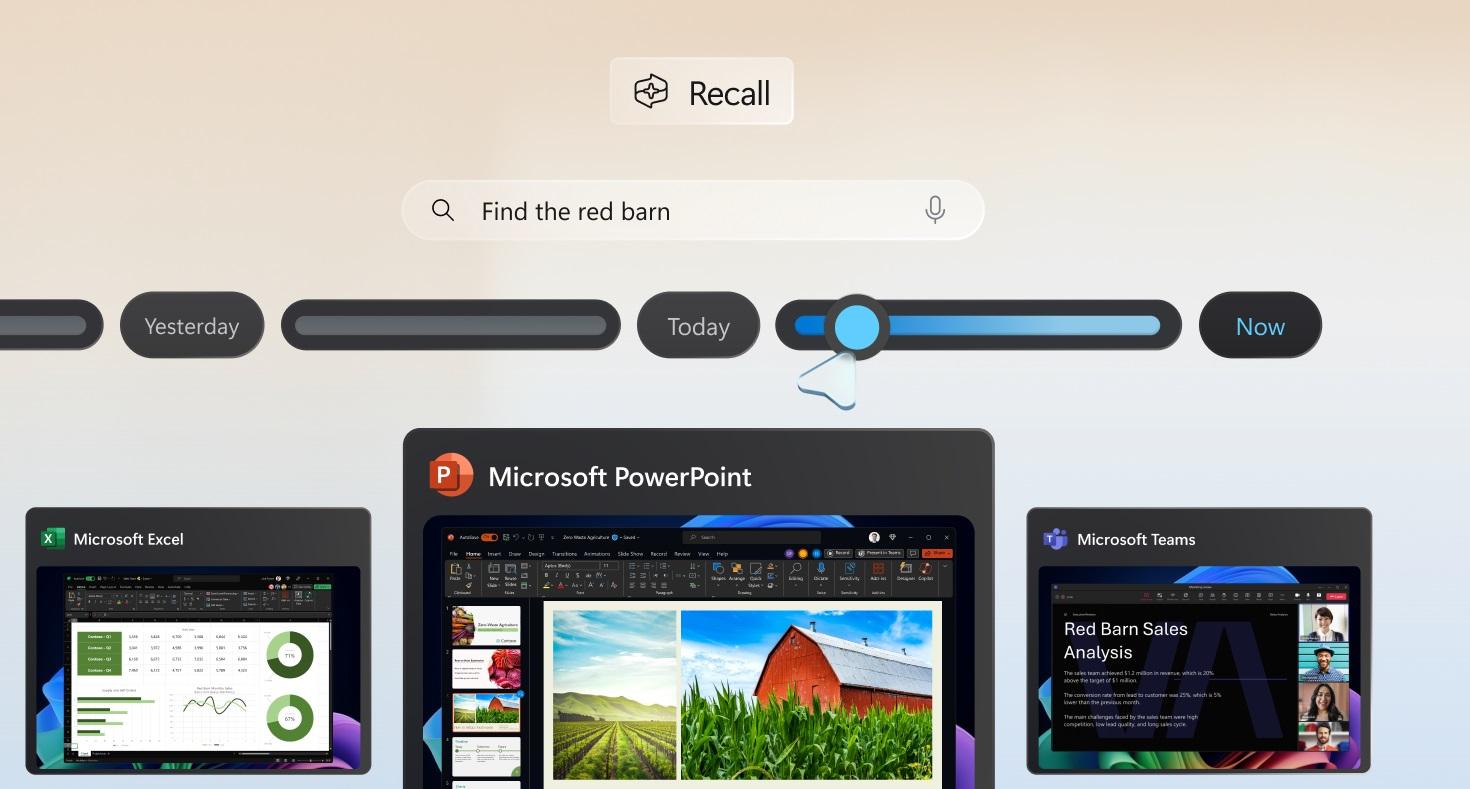
Microsoft had to recall the Recall AI feature on Copilot+ Windows PCs earlier this year. In theory, Recall was supposed to be a great AI trick to quickly resurface information from your past activities on a computer. In practice, it turned out to be a privacy and security nightmare.

Researchers proved that Recall data could be easily accessed by a malicious actor who gains access to a computer. Also, the saved screenshots could contain sensitive information, and Recall was enabled by default on those Windows builds.

Microsoft heard the complaints and pulled the feature to rework its security. As testers have found, Recall now encrypts the screenshots, making it impossible to extract information from the database. However, Recall will still take screenshots of sensitive data, including social security numbers, logins (including passwords), and credit card data.

Even with protections in place, Recall mostly failed to recognize that sensitive data was entered on the screen in Tom’s Hardware’s tests.

Tech. Entertainment. Science. Your inbox.

Sign up for the most interesting tech & entertainment news out there.

By signing up, I agree to the Terms of Use and have reviewed the Privacy Notice.

The feature has a “filter sensitive information” setting that everyone should enable right if you use Recall. The good news is that Recall is an opt-in service now, meaning it won’t be automatically enabled once you get the latest Windows update.

The test showed various scenarios that many computer users will reconize where Recall shouldn’t take screenshots of the content shown on the display. But Recall captured the information anyway.

For example, Recall recorded a Windows Notepad window where the user entered a credit card number and a random username and password combination, even though the user typed “Capital One Visa” next to the number to trigger the protections. Recall also captured fake social security numbers, names, and date of birth details entered into a PDF loan application. The feature had no idea those were all fake; it just screenshotted the information. It also captured the page when a genuine credit card number was introduced.

The tester then created a web form with fields that said, “Enter your credit card number below.” The form asked for the credit card type, number, CVC, and expiration date. Again, Recall failed to trigger the protections and recorded images containing the data.

The only time Recall worked correctly was when the user entered payment information into the forms of two online stores.

That’s certainly not good enough and a big reason to worry. I’m a longtime Mac user, so I won’t deal with Recall anytime soon. Or if I do, I’ll only do it for testing purposes. But I can’t see why one should leave it enabled.

The report notes that Recall’s databases are indeed encrypted. Also, you need to authenticate with Microsoft Hello (fingerprint, face, or PIN) to access your screenshots. But a malicious actor with remote access to your computer could get into the history the AI uses once they obtain that PIN. You might think it won’t happen to you, but I wouldn’t take that risk, no matter how amazing this Copilot feature might be.

Because yes, I won’t lie, having the AI remember what websites you visited can be an amazing tool if done right. The feature would have to have strong security and privacy features, and Microsoft is not getting it right.

When asked about Recall’s feature that’s supposed to identify sensitive data, the company offered Tom’s Hardware a quote from its Recall blog post that tackles privacy matters:

We’ve updated Recall to detect sensitive information like credit card details, passwords, and personal identification numbers. When detected, Recall won’t save or store those snapshots. We’ll continue to improve this functionality, and if you find sensitive information that should be filtered out for your context, language, or geography, please let us know through Feedback Hub. We’ve also provided an option in Settings that we encourage you to enable that will anonymously share the apps and sites you prefer to be excluded from Recall to help us improve the product. And you can also choose to exclude specific apps and websites through the Recall settings page which we talk about below.

That means Recall will get better over time, but you’ll have to wait. Until that happens, it might capture sensitive data while you use your computer, as these tests have shown. You’ll have to decide for yourself whether the risk is worth it.

You can try Recall by installing the newest Windows Insider Build. Read more about it in Microsoft’s blog at this link.

Source

Posted on

Uh oh… Zotac just leaked Nvidia’s next-gen launch line-up, including RTX 5090 GPU with 32GB of VRAM

  • Nvidia RTX 5090 has 32GB based on leaked info from Zotac’s website
  • Next-gen launch GPUs are supposedly the RTX 5090, 5080, 5070 Ti and 5070
  • There is, however, no sign of the RTX 5060 in this spillage

Zotac just leaked details of what might be the initial line-up of next-gen desktop graphics cards from Nvidia.

VideoCardz did the sleuthing here, turning up details Zotac accidentally aired on its own website, showing us the Blackwell GPUs that the graphics card maker will initially debut (in theory, anyway). Furthermore, Zotac also dropped a tasty nugget of info on the VRAM configuration for what’s surely the next-gen flagship.

The models listed by Zotac – and all the spilled details have now been removed, we should clarify – were as follows:

  • Nvidia GeForce RTX 5090
  • Nvidia GeForce RTX 5090D
  • Nvidia GeForce RTX 5080
  • Nvidia GeForce RTX 5070 Ti
  • Nvidia GeForce RTX 5070

The Nvidia RTX 5090D is the variant of the flagship for China, following in the footsteps of the RTX 4090D, as you’re likely aware.

As for the VRAM info, Zotac has filters for its GPUs to allow sorting by memory type and capacity, and mistakenly put a GDDR7 option in the former, as well as an allocation of 32GB in the latter.

This shows us that RTX 5000 graphics cards will carry GDDR7 VRAM as (heavily) rumored – all models will use this cutting-edge memory, supposedly – and that there’ll be a 32GB allocation of video RAM in the line-up, as there isn’t with the current-gen (which tops out at 24GB).

The GPU paired with 32GB must, of course, be the RTX 5090, and this is what’s already been rumored for the next-gen flagship.

{ window.reliablePageLoad.then(() => { var componentContainer = document.querySelector(“#slice-container-newsletterForm-articleInbodyContent-cjjioXmoF6tM27hYVun9X3”); if (componentContainer) { var data = {“layout”:”inbodyContent”,”header”:”Get daily insight, inspiration and deals in your inbox”,”tagline”:”Sign up for breaking news, reviews, opinion, top tech deals, and more.”,”formFooterText”:”By submitting your information you agree to the Terms & Conditions and Privacy Policy and are aged 16 or over.”,”successMessage”:{“body”:”Thank you for signing up. You will receive a confirmation email shortly.”},”failureMessage”:”There was a problem. Please refresh the page and try again.”,”method”:”POST”,”inputs”:[{“type”:”hidden”,”name”:”NAME”},{“type”:”email”,”name”:”MAIL”,”placeholder”:”Your Email Address”,”required”:true},{“type”:”hidden”,”name”:”NEWSLETTER_CODE”,”value”:”XTR-D”},{“type”:”hidden”,”name”:”LANG”,”value”:”EN”},{“type”:”hidden”,”name”:”SOURCE”,”value”:”60″},{“type”:”hidden”,”name”:”COUNTRY”},{“type”:”checkbox”,”name”:”CONTACT_OTHER_BRANDS”,”label”:{“text”:”Contact me with news and offers from other Future brands”}},{“type”:”checkbox”,”name”:”CONTACT_PARTNERS”,”label”:{“text”:”Receive email from us on behalf of our trusted partners or sponsors”}},{“type”:”submit”,”value”:”Sign me up”,”required”:true}],”endpoint”:”https://newsletter-subscribe.futureplc.com/v2/submission/submit”,”analytics”:[{“analyticsType”:”widgetViewed”}],”ariaLabels”:{}}; var triggerHydrate = function() { window.sliceComponents.newsletterForm.hydrate(data, componentContainer); } if (window.lazyObserveElement) { window.lazyObserveElement(componentContainer, triggerHydrate); } else { triggerHydrate(); } } }).catch(err => console.error(‘%c FTE ‘,’background: #9306F9; color: #ffffff’,’Hydration Script has failed for newsletterForm-articleInbodyContent-cjjioXmoF6tM27hYVun9X3 Slice’, err)); }).catch(err => console.error(‘%c FTE ‘,’background: #9306F9; color: #ffffff’,’Externals script failed to load’, err)); ]]>

Sign up for breaking news, reviews, opinion, top tech deals, and more.

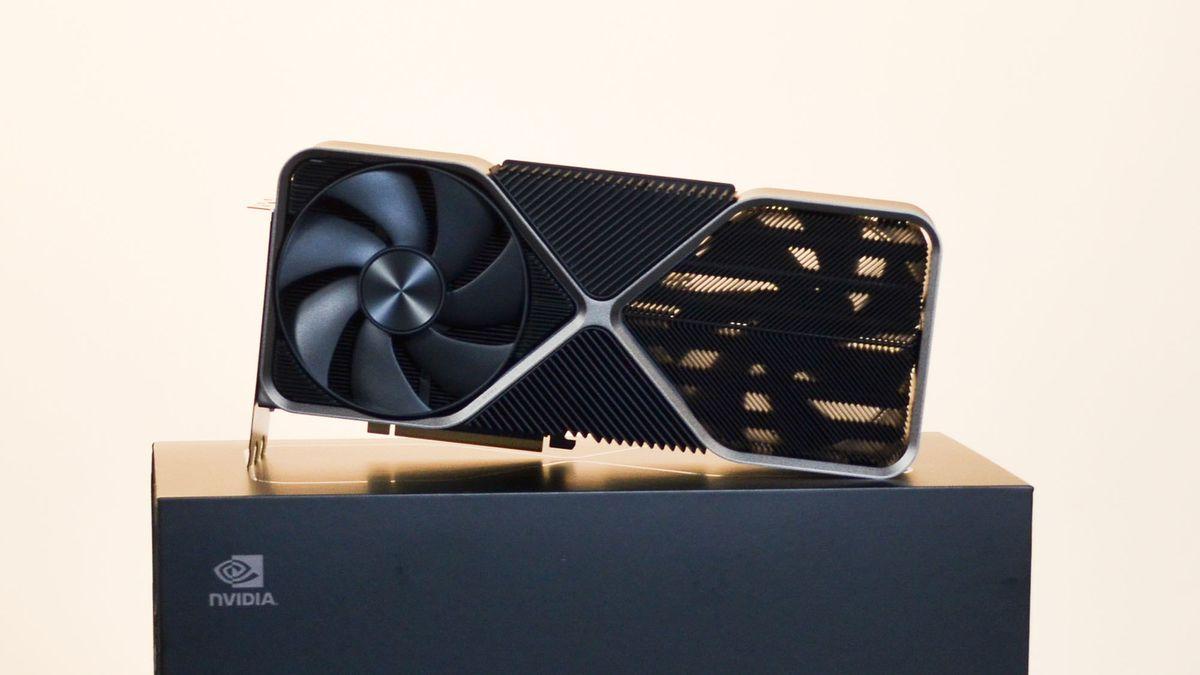
An Nvidia GeForce RTX 4060 on a table with its retail packaging

(Image credit: Future / John Loeffler)

Analysis: What about the RTX 5060, though?

With this kind of work going on with manufacturer websites, in the background – well, it should have been on the quiet, in the background, but was accidentally sent live by a Zotac employee, clearly – shows we are about to get new RTX 5000 GPUs at CES 2025. Although Nvidia has all but said that, anyway, at this point.

The really interesting bit here is the underlining of the RTX 5090 being a mighty GPU sporting 32GB of video RAM, and the range of models available initially, which are as expected, pretty much. Well, the RTX 5090 and 5080 are, anyway, the rumor mill just isn’t quite sure if we’ll also get the RTX 5070 or the 5070 Ti – and maybe this is a suggestion that Nvidia will push out both. Alternatively, perhaps one of those RTX 5070 variants may come slightly later.

Notably, there’s no mention of the RTX 5060, which has recently floated up on the rumor winds as a possible GPU launch for later in the first quarter of 2025. Zotac may not be prepping that because it’s a couple of months down the line from these initial launches – or perhaps this is a hint that this lower-tier Blackwell graphics card won’t turn up until later in 2025.

You might also like

Source

Posted on

Google smart glasses with Gemini AI hands-on: Google Glass done right

When it demoed Project Astra at I/O 2024 in May, Google teased smart glasses for the first time. The company did the same thing during Wednesday’s big Gemini 2.0 announcement, where the wearable was part of a longer Project Astra demo. Google also suggested Gemini AI smart glasses might be coming soon.

At the time, I thought Google was simply showing off a prototype of a pair of Samsung XR glasses that would be unveiled next month during the Galaxy S25 Unpacked press event. Little did I know that Samsung and Google had bigger things in mind.

A day later, the two companies unveiled Project Moohan, a Vision Pro spatial computer rival. Google also announced the Android XR platform that will power it. Both Samsung and Google mentioned smart glasses in their announcements. But Google’s was more impressive, as the company showed off AR features for smart glasses powered by Gemini AI.

Google didn’t offer a name for the smart glasses or a release date. But the company did give a select few people a hands-on experience with Project Moohan and the unnamed smart glasses. It turns out the Gemini AI wearable is quite interesting, seemingly delivering the Google Glass experience that Google failed to offer more than a decade ago.

Tech. Entertainment. Science. Your inbox.

Sign up for the most interesting tech & entertainment news out there.

By signing up, I agree to the Terms of Use and have reviewed the Privacy Notice.

We all remember the Google Glass project, which was, in retrospect, ahead of its time. That smart glasses concept sparked privacy worries at a time when Google wasn’t exactly known for great privacy. Also, there was no generative AI at the time to truly make Google Glass useful.

Fast-forward to late 2024, and Google seems confident enough to demo a product that could become a must-have accessory for people who want AI assistance all the time. Wired tested Google’s Gemini AI glasses and Project Moohan, finding the former the more compelling product.

The glasses seem to take inspiration from the North Focals, smart glasses from a company that Google purchased a few years ago. But they’re slimmer and more comfortable than the Focals.

Even so, smart glasses have thick arms and thicker rims around the eyes, which is what you’d expect from glasses that incorporate AR abilities. They feature clear or sunglasses lenses and will support prescription lenses like Moohan.

North Focals glasses.North Focals glasses. Image source: North

When it comes to AR capabilities, the glasses come in three versions. The no-AR model is presumably the cheapest, as it lacks a display. Then there’s a pair that projects images on one of the lenses, the monocular display.

The best experience, and probably the most expensive, comes from the binocular display version that will center AR images, as seen in the photos above and below.

The processing is passed on to a nearby smartphone, presumably a Pixel phone that connects wirelessly to the glasses. That’s where Gemini resides, and the AI is ready to help with a tap on the arm of the glasses. A tap on the side also brings up the display in those models that support AR.

Google Pixel 9 Pro Fold GeminiGoogle Pixel 9 Pro Fold: Gemini support. Image source: Christian de Looper for BGR

The camera is also built into the frame, and an LED turns on when it is active. Built-in microphones pick up your commands for Gemini, and a speaker in the frames lets you hear the AI talk back.

The glasses are meant to last a full day on a charge, though battery life will probably depend on how much you use them. The hands-on experience with the Gemini AI smart glasses doesn’t offer actual battery characteristics, and it’s too early for that.

The report explains the various scenarios where AI smart glasses will be useful. For example, the glasses support Google Maps navigation, a feature Google showed in the Android XR platform announcement (image below).

Google Maps AR navigation on smart glasses.Google Maps AR navigation on smart glasses. Image source: Google

You also get AI summaries of notifications displayed in front of your eyes. The same goes for real-time translation of text. Impressively, the glasses can translate spoken foreign languages in real-time. Gemini will also caption conversations, a great feature for people with hearing issues. And Gemini can answer in multiple languages, a feature ChatGPT’s Advanced Voice Mode also supports.

The AR capabilities do not stop there. The glasses will show you previews of photos you take, and you’ll be able to play video when needed. The display experience isn’t the greatest, which is understandable. But it still sounds like the hands-on demo was a success.

Gemini powers all the smart AI features, like real-time translation and captioning. The AI can also summarize content seen while on the go, like the page of a book. Gemini has a short-term memory, too, so it can recall some of the things you’ve just done and seen a few minutes ago.

Interestingly, Gemini can also identify products and offer instructions on how to use them. In this hands-on, the Wired reporter asked how to use a Nespresso machine.

As impressive as the demo might sound, Google wasn’t ready to provide a release date and pricing information. The Gemini AI smart glasses it unveiled are clearly superior to the Meta Ray-Ban smart glasses, which only offer AI support, with the AR component missing. I’d expect Google’s glasses to be more expensive, assuming Google wants to sell them.

Since Project Astra is still in the early days, I’d expect Google to launch the glasses once the Gemini assistant abilities it’s working on for Project Astra are ready to launch. No point in having smart glasses in store if the Gemini software isn’t ready.

Meanwhile, you should check out Wired’s full hands-on experience for more details.

Source

Posted on

AWS on using GenAI to speed up legacy VMware and Microsoft datacentre migrations

Amazon Web Services (AWS) has set out how its investments in artificial intelligence (AI) chips and software are saving customers money and helping them migrate their legacy Windows and VMware workloads off-premise much quicker.

AWS CEO Matt Garman used the opening keynote at the public cloud giant’s Re:Invent customer and partner conference in Las Vegas, which is the first he has delivered since taking over the company reins in June 2024, to talk up the potential for generative AI (GenAI) to digitally transform the way that businesses operate. He also talked at length about the work that goes into ensuring the AWS cloud infrastructure is equipped to cope with the growing demand from its customers for the compute power they need to run AI and GenAI workloads.

As previously reported by Computer Weekly, the demand for GenAI workloads from its customers was recently cited as the reason for a “significant re-acceleration” in AWS’s annual growth rate, with the company reporting a 19.1% year-on-year uptick in revenue during its third-quarter results.  

Garman touched on Amazon’s 14-year-long collaboration with Nvidia, which he said has enabled it to roll out a succession of increasingly more powerful graphics processing unit (GPU) instances based on the latter’s technology so it can keep pace with its customers’ AI demands.

The company has also doubled down on the creation of its own AI silicon – namely its family of Tranium chips – to support a wider range of instances that are designed to improve the cost performance of running compute-intensive workloads. To this point, Garman used the keynote to announce that the second generation of Tranium instances had now become generally available, claiming the latest iteration can deliver “30-40%” better price performance than “current GPU-powered instances”.

This is based on feedback from early adopters of the technology, with Garman naming Adobe as among the customers who have seen some “promising” early wins with the technology.

Another is AI-focused software engineering startup Poolside, who has reportedly committed to training all future versions of their large frontier model on Tranium 2. The company is also anticipating the move will generate savings in the region of 40%. “Databricks is one of the largest data and AI companies in the world,” he said. “[It] plans to use Trainium 2 to deliver better results and [to] lower the total cost of ownership for our joint customers by up to 30%.” 

Opening up about Amazon’s use of GenAI

The conversation later moved on to how GenAI is also changing the way that AWS operates, with particular focus on how its own offerings are helping to speed up the time it takes to refactor legacy, on-premise workloads and ready them for migration to the public cloud.

Central to this bit of the discussion was Amazon Q, which is the company’s generative AI chatbot assistant that is designed for in-house use by software developers, business analysts and contact centre employees to make the work they do more efficient.

The migration of customer workloads out of private datacentres and into the public cloud is a process that fuelled the company’s growth for a decade or more after its inception in 2006.

However, despite the company previously acknowledging that a large proportion of enterprise workloads remain on-premise, it was an area that was markedly less talked about during the keynote, until Garman flagged how Amazon Q can assist with this task.

“Our goal at AWS is to help every builder be able to innovate, [and] we want to free you from the undifferentiated heavy lifting to really focus on those creative things that make your building unique … [and] generative AI is a huge accelerator of this capability,” he said.

As an example, he talked about how Amazon Q Developer, an iteration of the chatbot specifically designed to help developers speed up their CodeDeploy processes, is helping customers deploy faster, more secure and better-quality software updates.

Garman then went onto announce several new features that were being added to Amazon Q Developer that will generate unit tests, documentation and code reviews on behalf of developers, so they can spend more time each day writing code than dealing with the admin associated with it.

Addressing the legacy

The software is also reducing the amount of time they have to spend managing legacy applications, it is claimed.

“One of [the software’s] most powerful capabilities we already have is [its ability to] automate Java version upgrades,” said Garman. “What it can do is transform a Java application from an old version of Java to a new version in a fraction of the time it would take to do manually. This is work that no developer loves to do, but is critically important.”

According to Garman, integrating this capability into Amazon’s own internal systems saw it “migrate literally tens of thousands of production applications” to Java 17 in a “small fraction of the time” it would typically take. “The estimate from our teams is this saved us 4,500 developer years … [and] this is a mind-blowing amount of time saved, and because we’re now running on modern Java, we can use less hardware, too. So, we saved $260m a year through this process.”

Java upgrades are one thing, but – in Garman’s opinion – a migration that a lot of enterprises want assistance with is moving from Windows to Linux. And this is something AWS can assist with now through the preview release of a new version of Amazon Q Developer.

“Customers love an easy button to get off of Windows,” he said. “They’re tired of constant security issues, the constant packing or patching, all the scalability challenges that they have to deal with, and they definitely hate the onerous licensing costs.

“But we do recognise today that this is hard. Actually, modernising away from Windows is not easy, [but] with Q Developer, modernising windows just got a lot easier … [as it allows you] to transform .Net applications that are running on Windows to Linux in a fraction of the time.”

Signature IT

As an example, Garman flagged digital transactions, signing software company Signature IT, and the work it has done to modernise its legacy .Net applications and migrate them from Windows to Linux. “It was a project they estimated was going to take six to eight months, [and] they actually completed it in just a few days,” he said. “That is a game-changing amount of time.”

But it’s not just Windows workloads that enterprises are having a hard time modernising. “Windows is not the only legacy platform in the datacentre that is slowing down all your modernisation efforts … oftentimes it is VMware workloads that customers would really love to modernise to cloud-native services,” said Garman.

“VMware is deeply entrenched in many datacentres, and has been for a really long time. And what happens is … because it’s been there for a long time, there ends up [being] this kind of spaghetti mess of interconnected applications.”

“[So] really the hardest part about modernising is finding out what are the dependencies of those applications,” he said. “And the migrations are error-prone, because it’s hard to understand if you move something, if it is going to break something else. And again, of course, licensing is expensive.”

To assist with this, Q Developer also has capabilities that will allow VMware-based datacentre workloads to be reconfigured to become cloud-native, with the system able to identify the dependencies and create a migration plan for the user.

“[This] really reduces a ton of the migration time, and significantly it reduces [the organisation’s] risk,” said Garman. “It also launches agents that can convert on-premise VMware network configurations into modern AWS equivalents. This takes what used to be months and months of work into hours to weeks.”

The next complex datacentre migration project the company is looking to simplify for enterprises, with the help of Amazon Q, concerns mainframes, which Garman described as “by far the most difficult to migrate to the cloud”.

“When you talk to customers, just the effort of trying to analyse, document and plan mainframe modernisation is often too much, [and] people give up [because] it’s too hard. Turns out, Q can help with this, too,” he said.

The software has a number of agents in it that are able to do mainframe code analysis, refactor applications and create documentation in real time for legacy COBOL code so enterprises can fill in any knowledge gaps about what it might do.

“Most customers will tell you their mainframe migration will probably take three to five years … but planning a project for three to five years is nearly impossible,” said Garman. “A lot of the time, they just don’t get done.”

And while it’s beyond the capabilities of Amazon Q to make mainframe migrations a “one-click” job right now, he said early testing suggests the software could significantly accelerate the pace of these projects.

“We think Q can actually turn what was going to be a multi-year effort into a multi quarter effort, cutting by more than 50% the time to migrate mainframes,” said Garman. “If you can take a multi-year effort and bring it down to a couple of quarters, that’s something that people can really get their heads around. And customers are incredibly excited about this.”

Source

Posted on

2025: The year of AI for business – top trends to watch out for

You might not have started thinking about your Christmas shopping yet, but I bet you’ve been thinking about what artificial intelligence (AI) for business is going to look like in 2025. If you haven’t, then settle in with a glass of mulled wine, because now is your chance.

AI has come leaps and bounds over the past few years and is currently one of the biggest opportunities for business growth. With capabilities to intelligently automate admin tasks, take on customer service tasks, and analyse masses of data, the advantages are endless. But there’s still lots of room for development, in ways which will and won’t surprise you.

Stepping into the year of AI for business

Like your list of New Year’s Resolutions, the regulation landscape is constantly changing and adapting to the needs of tech businesses. For AI development to thrive in 2025, there must be a supportive environment ready for it. There’s no denying the appetite for AI, with over 120 bills on AI currently before the United States Congress. These build upon regulations already in place, such as the EU AI Act, which promotes the rapid adoption of trustworthy AI through reduced administrative burdens for SMEs and clear requirements for AI use.

The EU AI Act defines AI systems by their risk rating, splitting them up into prohibited, high-risk, limited-risk, and minimal-risk groups. This is something we could see changing in 2025, with the potential for new legislation focusing on AI classification over risk. This approach would consider criteria such as the intended uses and basic properties of AI systems.

New legislation coming into effect next year will significantly impact how businesses can use AI. Data management is one area likely to see substantial legislative focus, ensuring that AI does not compromise the security and privacy of business and customer data.

AI developments – The weird and the wonderful

As new legislation is rolled out in 2025, it will give businesses and developers more freedom and safety to largen AI’s scope. Many of us will already have AI ingrained into our processes, but what will we be bringing on board next?

  • Leading the way – Microsoft

One company which has been leading the way in AI development in 2024 has been tech giant Microsoft. At its recent Ignite 2024 event, it made several announcements which demonstrate the acceleration of AI in 2025. One of these was that Microsoft Teams will let participants speak in a language of their choice, through its new AI-powered Interpreter feature. Facilitating global communication and collaboration, this is one powerful way in which AI will fuel business growth.

Microsoft also announced the introduction of its AI agents this year. These agents will drive organisational wide optimisation and automation by collaborating with workers, a step forward from the AI assistants we already have. Agents can be trained to know your organisation from top to bottom and can compile details for business pitches and presentations whilst you focus on more valuable tasks.

  • Cutting corners with automation

Like AI agents, other AI systems which rely on trigger-based automation will flourish in 2025. Once the system is notified of a trigger, such as an email being received, it can digest the information and deliver an automated response to the trigger. Automated AI will seamlessly slot into business processes, taking care of admin tasks which frees up time for workers in all levels of the business to spend more time with customers and focus on their long-term needs.

The rise of automated AI poses a need for focus on responsible usage. Automation means that AI could be exposed to confidential data, and without the right protection measures in place, could learn that data and share it without authorisation. Legislation will play a key role in ensuring the responsible and ethical use of AI, but responsibility lies with business leaders as well to make sure that AI adoption goes hand in hand with education. Its important to understand that we will always include a human in the loop and full observability of these interactions with AI.

AI-powered systems might be forging new opportunities for businesses, but they lose their value and customer trust if inaccurate. To prioritise the accuracy of the models AI systems are trained on, we will see a shift in the New Year on how this process works. Grounding an model in accurate, secure data is extremely important. The better he data the more accurate the responses will be. Developers may synthesise their training data on large language models, and then train the AI system on a small language model.

This will approve the accuracy of the AI system, but as it adds degrees of complexity, it also poses the risk of potential bias or incorrect activity, such as the AI hallucination concept. When AI produces information like it is fact without any data to back it up, it’s a sign that something has gone wrong with the training data. Whilst 2025 will be a big year for the development of training models, businesses need to be aware of how their AI systems are being trained to avoid bias and unethical practice.

Not just a New Year’s Resolution

The huge amount of investment in 2025 is just one of many signs that AI isn’t a fleeting New Year’s Resolution. Companies like OpenAI and Microsoft have made a long-term commitment to investing in AI development, because they know we’re still unlocking its full portfolio of capabilities. Even if they’re not profiting off AI right now, it’s undoubtable that the future is rich. But this isn’t just a game for the big players, small businesses will also be staking their claim by adopting and investing in AI.

With the developments we’ll see next year in automation, robotics, and training data, it’s certain that there’ll be a flurry of businesses who haven’t explored AI yet looking to adopt. To make the most of the new developments, don’t wait until New Year’s Day to get started, reach out to the experts now to help your business get AI ready.

Chris Huntingford is the newly-promoted director of AI at ANS, a digital transformation provider and Microsoft’s UK Services Partner of the Year 2024. Headquartered in Manchester, it offers public and private cloud, security, business applications, low code, and data services to thousands of customers, from enterprise to SMB and public sector organisations.

Source

Posted on

It looks like the Nvidia App could be doing more harm than good by tanking game performance – but there’s a fix

The Nvidia App has been out for just over a month now – it’s Team Green’s replacement for GeForce Experience – but the new software is reportedly slowing down gaming performance for some folks.

A user named Sebastian Castellanos on X flagged up this issue, noting that with the Nvidia App installed, their gaming PC was being slowed down to the tune of 15%, and also suffering “horrendous” frametime issues (essentially jittery gameplay).

Castellanos said that this mainly happened with games using Unreal Engine 5 (specifically Black Myth: Wukong and The Talos Principle 2). Other X users also chimed in on the thread to note slowdowns to the tune of 10% to 15% or thereabouts.

First of all, Castellanos observed that the issues occurred with or without the Nvidia App’s overlay running in games, and subsequently posted again to say that they’d pinned down the problem to the ‘Game filters and Photo mode’ option in the app’s settings.

Apparently, turning this off cured the observed frame rate blues. Running some benchmarks with the game filters mode turned on, then off, Castellanos found that Black Myth: Wukong ran 22% faster with the mode disabled.

Stuttering was also way more pronounced with the mode enabled, as you can see in the graphs provided (check out the 1% percentile lows – the biggest dips in the frame rate) in the below post.

An Nvidia RTX 4070 Super on a purple deskmat on a desk

(Image credit: Future / John Loeffler)

Analysis: Hopefully this fudge will work for most gamers

As Tom’s Hardware reports – which also found similar levels of slowdown due to this bug – Nvidia has confirmed that it’s now investigating the purported glitch.

{ window.reliablePageLoad.then(() => { var componentContainer = document.querySelector(“#slice-container-newsletterForm-articleInbodyContent-cQNmmb6hAtbgKQDpdFxkB9”); if (componentContainer) { var data = {“layout”:”inbodyContent”,”header”:”Get daily insight, inspiration and deals in your inbox”,”tagline”:”Sign up for breaking news, reviews, opinion, top tech deals, and more.”,”formFooterText”:”By submitting your information you agree to the Terms & Conditions and Privacy Policy and are aged 16 or over.”,”successMessage”:{“body”:”Thank you for signing up. You will receive a confirmation email shortly.”},”failureMessage”:”There was a problem. Please refresh the page and try again.”,”method”:”POST”,”inputs”:[{“type”:”hidden”,”name”:”NAME”},{“type”:”email”,”name”:”MAIL”,”placeholder”:”Your Email Address”,”required”:true},{“type”:”hidden”,”name”:”NEWSLETTER_CODE”,”value”:”XTR-D”},{“type”:”hidden”,”name”:”LANG”,”value”:”EN”},{“type”:”hidden”,”name”:”SOURCE”,”value”:”60″},{“type”:”hidden”,”name”:”COUNTRY”},{“type”:”checkbox”,”name”:”CONTACT_OTHER_BRANDS”,”label”:{“text”:”Contact me with news and offers from other Future brands”}},{“type”:”checkbox”,”name”:”CONTACT_PARTNERS”,”label”:{“text”:”Receive email from us on behalf of our trusted partners or sponsors”}},{“type”:”submit”,”value”:”Sign me up”,”required”:true}],”endpoint”:”https://newsletter-subscribe.futureplc.com/v2/submission/submit”,”analytics”:[{“analyticsType”:”widgetViewed”}],”ariaLabels”:{}}; var triggerHydrate = function() { window.sliceComponents.newsletterForm.hydrate(data, componentContainer); } if (window.lazyObserveElement) { window.lazyObserveElement(componentContainer, triggerHydrate); } else { triggerHydrate(); } } }).catch(err => console.error(‘%c FTE ‘,’background: #9306F9; color: #ffffff’,’Hydration Script has failed for newsletterForm-articleInbodyContent-cQNmmb6hAtbgKQDpdFxkB9 Slice’, err)); }).catch(err => console.error(‘%c FTE ‘,’background: #9306F9; color: #ffffff’,’Externals script failed to load’, err)); ]]>

Sign up for breaking news, reviews, opinion, top tech deals, and more.

Team Green advises as follows: “We are aware of a reported performance issue related to Game Filters and are actively looking into it. You can turn off Game Filters from the Nvidia App Settings > Features > Overlay > Game Filters and Photo Mode, and then relaunch your game.”

It’s certainly worth trying that suggested fix, although Castellanos cautions that this might not work for everyone affected. If it doesn’t cure any sluggishness you might be experiencing with the Nvidia App, then about the only other option is to simply uninstall it and go without – until Team Green applies a fix. You can run with just the bare Nvidia graphics driver without needing the app, in case you were wondering.

Hopefully Nvidia will be able to swiftly implement a patch to resolve this one, as it’s a pretty nasty bug by all accounts – one that should arguably have been caught in the lengthy beta for the Nvidia App.

Via Wccftech

You might also like

Source

Posted on

Nvidia might reveal DLSS 4 at CES 2025 – and mysterious new AI capabilities that could be ‘revolutionary’ for GPUs

  • Inno3D has leaked that Nvidia has “advanced DLSS technology” to show off at CES 2025
  • This may be DLSS 4, as it makes sense to reveal it alongside RTX 5000 GPUs
  • New neural rendering capabilities are also set to be aired which could be even more intriguing

Inno3D has again been leaking material relating to Nvidia’s upcoming revelations at CES 2025, but this time it’s more about the software and AI side of the equation, rather than the (purported) next-gen graphics cards themselves.

VideoCardz noticed that German tech site Hardware Luxx caught the CES 2025 press release from Inno3D, teasing what it has in store for the show, and oversharing some info that Nvidia would doubtless not want aired.

The key mentions here pertain to a possible new version of DLSS and fresh neural rendering capabilities.

In the first case, Inno3D talks about: “Advanced DLSS Technology: Nvidia’s Deep Learning Super Sampling offering even better image quality and higher frame rates.”

And secondly, the manufacturer points out: “Neural Rendering Capabilities: Revolutionizing how graphics are processed and displayed.”

There’s also talk of AI enhanced power-efficiency measures whereby the GPU’s power consumption and thermals are presumably fine-tuned to be more efficient and work better in general.

An Nvidia GeForce RTX 4060 Ti

(Image credit: Future / John Loeffler)

Analysis: Clever tricks to make up for meager VRAM loadouts?

While we can’t read too much into this – it’s all pretty vague marketing speak from Inno3D, as you’d fully expect from a pre-event press release – the highlighted bits are still exciting glimpses of what we might be treated to at CES 2025.

{ window.reliablePageLoad.then(() => { var componentContainer = document.querySelector(“#slice-container-newsletterForm-articleInbodyContent-Ep7bNnmUzbtxdMLDJ6tnSi”); if (componentContainer) { var data = {“layout”:”inbodyContent”,”header”:”Get daily insight, inspiration and deals in your inbox”,”tagline”:”Sign up for breaking news, reviews, opinion, top tech deals, and more.”,”formFooterText”:”By submitting your information you agree to the Terms & Conditions and Privacy Policy and are aged 16 or over.”,”successMessage”:{“body”:”Thank you for signing up. You will receive a confirmation email shortly.”},”failureMessage”:”There was a problem. Please refresh the page and try again.”,”method”:”POST”,”inputs”:[{“type”:”hidden”,”name”:”NAME”},{“type”:”email”,”name”:”MAIL”,”placeholder”:”Your Email Address”,”required”:true},{“type”:”hidden”,”name”:”NEWSLETTER_CODE”,”value”:”XTR-D”},{“type”:”hidden”,”name”:”LANG”,”value”:”EN”},{“type”:”hidden”,”name”:”SOURCE”,”value”:”60″},{“type”:”hidden”,”name”:”COUNTRY”},{“type”:”checkbox”,”name”:”CONTACT_OTHER_BRANDS”,”label”:{“text”:”Contact me with news and offers from other Future brands”}},{“type”:”checkbox”,”name”:”CONTACT_PARTNERS”,”label”:{“text”:”Receive email from us on behalf of our trusted partners or sponsors”}},{“type”:”submit”,”value”:”Sign me up”,”required”:true}],”endpoint”:”https://newsletter-subscribe.futureplc.com/v2/submission/submit”,”analytics”:[{“analyticsType”:”widgetViewed”}],”ariaLabels”:{}}; var triggerHydrate = function() { window.sliceComponents.newsletterForm.hydrate(data, componentContainer); } if (window.lazyObserveElement) { window.lazyObserveElement(componentContainer, triggerHydrate); } else { triggerHydrate(); } } }).catch(err => console.error(‘%c FTE ‘,’background: #9306F9; color: #ffffff’,’Hydration Script has failed for newsletterForm-articleInbodyContent-Ep7bNnmUzbtxdMLDJ6tnSi Slice’, err)); }).catch(err => console.error(‘%c FTE ‘,’background: #9306F9; color: #ffffff’,’Externals script failed to load’, err)); ]]>

Sign up for breaking news, reviews, opinion, top tech deals, and more.

The mentioned advanced DLSS tech which delivers a better image quality, and bigger frame rate boosts, might well be DLSS 4. That said, we’ve heard very little about Nvidia’s next-gen take on DLSS, which is odd if it is on the verge of being shown off.

However, it’s not unreasonable to assume that DLSS 4 would be tied to RTX 5000 GPUs exclusively (as Team Green did this with DLSS 3 and RTX 4000 GPUs when they launched). And so when RTX 5000 graphics cards are revealed at CES, it’d make sense that the next-gen DLSS would be teased alongside them, if not fully detailed.

On top of that, the apparent new neural rendering capabilities sound intriguing, and the mention of the term ‘revolutionizing’ graphics has piqued our curiosity. Is this just PR bluster, though?

We’ll have to wait and see, but there are already theories floating around that it could be some kind of neural texture compression, which would help GPUs with lower amounts of VRAM cope better with weighty textures. Could this be an explanation of why Nvidia might be mulling video RAM loadouts like 8GB for the RTX 5060 and 12GB for the RTX 5070? Perhaps, but that’s reaching…

Inno3D also mentions that it’ll have new graphics cards at CES 2025, without saying they’re RTX 5000 models. But it does mention some more standard brands of new products, alongside higher end iChill variants, including a small form-factor board – which is a hint that we won’t just see higher-end Blackwell GPUs at the show.

As well as the RTX 5090 and 5080, the RTX 5070 or 5070 Ti have been rumored as being ready to be revealed, and this is a further suggestion that this is what Nvidia has planned for CES in January.

Inno3D probably isn’t Nvidia’s favorite partner at the moment, because the graphics card manufacturer recently leaked the existence of the RTX 5090 and that it’ll be unveiled at CES 2025.

You might also like

Source

Posted on

From front to back: tech vice-president Dan Lake on Notonthehighstreet.com’s tech strategy

The big news from online marketplace Notonthehighstreet.com (NOTHS) in the build-up to peak trading is its new partnership with delivery platform Deliveroo, announced in September.

NOTHS is one of the early wave of non-food-specific retail businesses partnering with Deliveroo to add speedy fulfilment options to their offering. Screwfix led the charge in 2023, and others such as B&Q, Ann Summers, Wilko, and The Perfume Shop have followed suit in 2024, opening up rapid delivery via the Deliveroo app to London consumers who need their items pronto.

Launching with 15 brands under the umbrella of NOTHS, the partnership enables Deliveroo customers to order personalised gifts on-demand for the first time – via the presence of luxury jewellery and accessories retailer and NOTHS partner Hurley Burley on the app – as well as access to goods from a variety of small non-food businesses.

Paul Wilkinson, Deliveroo product director, paid compliment to his company’s integrations team on a LinkedIn post in October, saying their work means consumers have up-to-date product and availability information “at their fingertips” from launch.

“These use a new dedicated API [application programming interface] that we have designed from the ground up for grocery and retail partners, and it has taken a whole village of amazing people to build and ship this,” he wrote.

Contrastingly, the direct tech integration with NOTHS is non-existent at present, according to Dan Lake, vice-president for technology at the online marketplace. The hardware and software integrations are through the NOTHS brand partners, with a NOTHS logo accompanying brand pages on the Deliveroo app to signify the connection.

“It’s an obvious brand partnership that is beneficial to the business,” Lake says of the Deliveroo tie-up, which he says generates “unprompted NOTHS brand awareness”.

“We’ve not invested anything from a tech point of view, but if it goes very well and we want to scale across the UK, there will be some tech investment needed. This approach buys us time to make our platform easier for integrating into third parties.”

And therein lies the crux of the technology challenge NOTHS faces right now. So much of the focus for the business in its 18 years of operating, since being founded by Holly Tucker in 2006, has been on the consumer experience and its front-end capabilities.

But in the past two years, since Lake’s arrival from high-flying fitness brand and retailer Gymshark, simplifying behind the scenes and exploring where a “buy, not build” approach to technology might be more appropriate has been the name of the game.

Front to back

“We’ve underinvested in the back end,” Lake says. “In the two years I’ve been here, we’ve gone through a lot of change and been purposeful. It’s about going back to what the company was about in the first place –shouting about and supporting small businesses in the UK.”

From a tech perspective, he says, it has been important to articulate NOTHS’s definition of customer is a “dual definition” – encompassing the end consumer, but also the small brands selling through the platform.

“It sounds obvious – and it is obvious internally – but it can get missed on how we decide what we’re going to focus on and invest into,” he says.

Lake’s senior leadership position reports directly to CEO Leanne Rothwell, and he has the responsibility of looking after tech products across the organisation. He acknowledges he joined NOTHS “primarily for the tech challenge”, identifying it as a reverse job to what he faced at Gymshark, where he was engineering director.

When Gymshark went through its exponential growth period, which resulted in its 2020 unicorn status as a £1bn-valued privately-owned business, it needed to internally build out tech to support its core Shopify foundations. At NOTHS, there’s a need to more comprehensively work with tech partners and stop relying on building everything in house.

“At NOTHS, we’re trying to end up in the same space but from the opposite end,” Lake says, adding that the business is looking to buy more tech rather than build it in house. “My view is we should only invest in or own things that are strategically important to us or we would have operational challenges without – we have too much stuff that falls into the commoditised bracket.”

In what might be welcome news for the retail technology ecosystem, NOTHS is now looking for products on the market – where there is commoditisation. Albeit, there is not a bottomless pit for investment.

Lake talks of the need for products within a retail organisation’s tech stack to contribute to strategic and operational performance. With so much built in house, NOTHS finds itself with components that are no longer contributing to either and are “holding us back” – it’s a typical retail legacy system tale of entanglement.

“Everything is owned and maintained, so my focus is on identifying what’s now been commoditised and what have other people done a better job of building – and we can then think about what we can chop away at. After all, we’re not a tier one tech company.”

Fundamental shift

NOTHS has already started its journey of modernisation under Lake’s stewardship. The marketplace has migrated promotional capabilities to a third-party engine platform – Talon One.

“Although pretty simplistic in approach compared to most businesses, it represents the first time we’ve gone out and bought a capability and integrated it in a composable MACH tech way,” Lake says.

“It’s a fundamental shift in thinking internally for the engineering and product teams. We deprecated and removed the old promo engine which – surprise, surprise – we had built. It did one thing and we had the age-old problem that you never come back to it – you go on to the next priority and it becomes a problem for people.”

This change will support in the running of campaigns, but is also set to be a capability utilised as NOTHS explores its options around building a loyalty proposition. “This takes a number of things the tech team shouldn’t need to be involved in off their plate, so we can focus in the investments we want to make,” Lake adds.

With e-commerce stack technology, “the most commoditised” area of retail tech, according to Lake, there’s lots of focus on what to bring in to the NOTHS business in this area: “We’re headless already, but some better decisions probably could have been made – you should own the user experience as it can contribute to strategic differentiation.

“What we hadn’t done in the move to headless was consider the service or integration layers just under that, so we built a load of microservices, some with thin veneers into the monolithic platform. We hadn’t thought about how to take off parts we shouldn’t really own which can be a distraction and they take time with maintenance on bugs.”

NOTHS is using Contentstack from a headless content management system point of view, but a stream of work currently well under way with Kin + Carta and Valtech is focused on better optimising the digital experience.

Lake says the NOTHS search and discovery process starts with its brand partners putting product data in – and this is an area where improvements are sought.

“For trade reasons, we focused on very outer edge of search and discovery and how results had ranked and reranked – and we’re using Google Vertex AI,” he adds. “Search went live last year and there have been marked improvements there. We’re doing tests on browse currently.

“We have circa 450,000 products on the platform, and surfacing the most relevant of those is a big challenge and we have built a load of tech that doesn’t really lean into surfacing the most relevant thing.”

That is being addressed using Google Vertex, and the work with Kin + Carta involves improving data quality and product information management processes so NOTHS can “augment the effects of the AI”.

In terms of AI strategy, a lot will depend on finding the most suitable partners. “A lot of the third-party companies we might buy into will be bringing AI to us because they are integrating it into their products – and that’s great,” Lake says.

“That’s the benefit you find yourself in as a D2C or online business. You can see the pressure on fellow CTOs working for SaaS businesses because there is a race to market – and there will be a number of misses, but we can benefit from that.”

Lake admits NOTHS was looking at how to use AI for search and discovery, “but then Google Vertex came along”. He predicts this type of situation will continue to happen for a while as the AI hype and focus continues.

“Once we have solved some problems and operational issues – and removed friction for partners and internally – we can think about how to utilise AI for something that is really interesting,” he says.

Lake describes his team as a “lean” 40-45 people covering tech and product, and says his leadership style follows a “teach-a-man-to-fish mentality”.

“It’s no good me steaming in and saying, ‘Cut that out, remove this, and go and buy this’, as it won’t build the sustainability in the approach we need,” he says, adding that the team is realising this new working method is aimed at making their lives easier as much as it is part of a method for driving the business forward.

The team covers IT infrastructure, cyber security, and support, with delivery managers, and an engineering team overseeing online, back and front-end, and mobile work across iOS and Android. There are members of the team focused on data analytics and data science, and those looking after platform infrastructure and product management.

“Good people get bought into the culture,” Lake adds.

It is their job to ensure the tech serves the five to six million customers NOTHS has in the UK, but under Lake’s leadership, they are also increasingly focused on making the lives of circa 5,000 marketplace sellers – some of which have started their journeys with Deliveroo this autumn – easier and more fruitful.

Source

Posted on

AMD looks to have scrapped its RX 7900 GRE – the graphics card that’s our current pick for best GPU

  • AMD has reportedly stopped production of the Radeon RX 7900 GRE
  • This is reflected in the mid-range GPU vanishing rapidly off the shelves
  • AMD is likely preparing the way for new RDNA 4 graphics cards

AMD is ditching the Radeon RX 7900 GRE from its current-gen GPU line-up, if fresh gossip from the grapevine is to be believed.

According to a report from Dutch tech site Tweakers, the RX 7900 GRE is now end-of-life, with AMD halting production of this graphics card.

Tweakers explains that it received a tip from a retail store that this was the case, with that outlet having heard from multiple suppliers that the 7900 GRE is effectively out of the mix.

Add plenty of salt, but if true, once existing stock has sold through, it’ll be curtains for this popular GPU. (The RX 7900 GRE is, in fact, still currently our top pick of the best graphics cards out there).

The site clarifies that AMD will continue to support the card with its software (driver updates), as would clearly be expected.

Tweakers further notes that AMD didn’t reply to requests to confirm that the RX 7900 GRE had been discontinued, but that’s not surprising, we wouldn’t expect Team Red to do so.

The report also observes that stock (presumably in The Netherlands) is dwindling, and the lack of availability backs up the notion that this RDNA 3 GPU – which was first introduced as an Asia-only model, before releasing globally – is on the way out.

{ window.reliablePageLoad.then(() => { var componentContainer = document.querySelector(“#slice-container-newsletterForm-articleInbodyContent-uW7zDgEuwUjGKkK6A9AVpL”); if (componentContainer) { var data = {“layout”:”inbodyContent”,”header”:”Get daily insight, inspiration and deals in your inbox”,”tagline”:”Sign up for breaking news, reviews, opinion, top tech deals, and more.”,”formFooterText”:”By submitting your information you agree to the Terms & Conditions and Privacy Policy and are aged 16 or over.”,”successMessage”:{“body”:”Thank you for signing up. You will receive a confirmation email shortly.”},”failureMessage”:”There was a problem. Please refresh the page and try again.”,”method”:”POST”,”inputs”:[{“type”:”hidden”,”name”:”NAME”},{“type”:”email”,”name”:”MAIL”,”placeholder”:”Your Email Address”,”required”:true},{“type”:”hidden”,”name”:”NEWSLETTER_CODE”,”value”:”XTR-D”},{“type”:”hidden”,”name”:”LANG”,”value”:”EN”},{“type”:”hidden”,”name”:”SOURCE”,”value”:”60″},{“type”:”hidden”,”name”:”COUNTRY”},{“type”:”checkbox”,”name”:”CONTACT_OTHER_BRANDS”,”label”:{“text”:”Contact me with news and offers from other Future brands”}},{“type”:”checkbox”,”name”:”CONTACT_PARTNERS”,”label”:{“text”:”Receive email from us on behalf of our trusted partners or sponsors”}},{“type”:”submit”,”value”:”Sign me up”,”required”:true}],”endpoint”:”https://newsletter-subscribe.futureplc.com/v2/submission/submit”,”analytics”:[{“analyticsType”:”widgetViewed”}],”ariaLabels”:{}}; var triggerHydrate = function() { window.sliceComponents.newsletterForm.hydrate(data, componentContainer); } if (window.lazyObserveElement) { window.lazyObserveElement(componentContainer, triggerHydrate); } else { triggerHydrate(); } } }).catch(err => console.error(‘%c FTE ‘,’background: #9306F9; color: #ffffff’,’Hydration Script has failed for newsletterForm-articleInbodyContent-uW7zDgEuwUjGKkK6A9AVpL Slice’, err)); }).catch(err => console.error(‘%c FTE ‘,’background: #9306F9; color: #ffffff’,’Externals script failed to load’, err)); ]]>

Sign up for breaking news, reviews, opinion, top tech deals, and more.

An AMD Radeon RX 7900 GRE from ASRock on a pink desk mat with its retail packaging

(Image credit: Future / John Loeffler)

Analysis: Stock has indeed all but vanished

Hopping on over to Newegg in the US, we note that there’s only one model of RX 7900 GRE left on sale – the Acer BiFrost spin on the AMD GPU – with all the others now out of stock. Micro Center looks to be out of stock almost entirely, too, so this graphics card does indeed seem to be vanishing. Going by reports, stock has been dwindling over the past month or two.

Why might AMD be canning our favorite GPU of the moment? Well, it could be something to do with yields of the Navi 31 chip, meaning the silicon that doesn’t make the cut for higher-end RX 7900 models – which would be repurposed for the GRE – has simply run out.

Of course, production of Navi 31 is likely being scaled back anyway, as we have new RDNA 4 graphics cards rumored to be launching in Q1 of 2025. Those will supposedly include the RX 8800 XT (and more), with that GPU possibly making the RX 7900 GRE redundant in terms of its value proposition.

In short, this is another sign that a potent mid-range offering is due imminently – AMD will supposedly reveal its new RDNA 4 GPUs at CES 2025, with the boards launching soon after – and we can’t wait to see how those RX 8000 models shape up.

Via VideoCardz

You might also like

Source

Posted on

The most pressing challenges for CISOs and cyber security teams

The UK Ministry of Defence recently published its Global Strategic Trends report which sets out the developments that will shape the world over the next five years. These provide an insight into some of the challenges that CISOs and cyber security teams will face.

The first threat is that of global and regional political instability. As regional and global power competition intensifies, we may see growing authoritarianism and a decline in democracy. The capabilities of violent extremist organisations and organised crime groups to cause harm will increase. Access to data will become a key component of global power for both state and non-state actors, all of which will require greater vigilance from cyber teams.

The second area of concern comes from the expanding attack surface, The exponential reliance on data and connectivity across states, organisations, and individuals in an increasingly connected world will significantly expand the attack surface. With stretched resources from dealing with an ageing population and climate change, nation states may not be able to provide the increasing level of direct support needed for cyber defence operations.

A further trend driving cyber threats is the technological arms race. The increased reliance on data and connectivity, coupled with advances in Quantum and AI, will escalate the arms race between cyber exploiters and victims. This shift is already being seen in the rise of zero-day attacks. The National Cyber Security Centre (NCSC), in collaboration with cyber security agencies from the US, Australia, Canada, New Zealand, and others, identified that most of the top 15 vulnerabilities exploited in 2023 were initially targeted as zero-day attacks. This trend has continued into 2024, highlighting the evolving tactics of cyber adversaries and the increasing availability of advanced exploitation tools.

Pressing challenges for CISOs and security teams

Given these trends, the most pressing challenges for CISOs in the next five years will be related to the rise of AI, building a culture that fosters secure behaviours, the threats from insiders, data management and patching and monitoring, as well as the ongoing need for operational resilience.

The rise and risk of AI is increasing as adversaries weaponise AI for malicious purposes, using it to create undetectable malware, automate reconnaissance, and execute deepfake-based scams. Organisations are rapidly chasing the ‘AI dream’, looking at ways in which it can deliver significant business benefits and CISOs will need to make their voice heard at the planning stage to avoid security being seen as a secondary consideration.

Organisations invest heavily in protecting their digital systems, physical assets, and people from adversaries with software solutions to detect cyber threats, restrict access to buildings and safeguard sensitive employee information. However, up to 95% of security incidents typically result from human actions, whether through unintentional errors or intentional breaches. A technical solution alone is not going to keep the future organisation safe. To protect what matters most CISOs should look to leverage the power of their people by embedding the right security behaviours into organisational culture to create an effective first line of defence. A robust security culture ensures every individual within the organisation understands their role in maintaining security and takes proactive steps each day to enhance it. 

Insider threats, whether stemming from intentional actions by malicious employees and contractors or unintentional mistakes by negligent staff, remain a significant source of security breaches. These risks are further amplified by the rise of hybrid work models, which reduce organisational control over devices and network environments. These create additional vulnerabilities that security teams must address through more joined up approaches to physical and cyber security.

Data management and protection is ever more critical as there is more data and greater connectivity to manage. CISOs need to know what their critical data is, where it is located, who has access to it, how it flows, how it is protected, and where it is vulnerable. Understanding their own systems and their residual risks, as well as the risks to their data when it is in the hands of others, is crucial. CISOs also must have confidence in their supply chain and its ability to protect assets properly. Networks and data sources must be appropriately protected both in transit and at rest. Ransomware and phishing remain a persistent and evolving danger, with attacks becoming more targeted and destructive. Meanwhile, the advent of quantum computing poses a looming threat to traditional encryption methods, compelling organisations to prepare for a transition to post-quantum cryptographic standards.

The increasing use of effective zero-day exploits means that we need to stay on top of patching and monitoring, which itself will occur at a faster pace. CISOs must get smarter with protective monitoring so that they can identity suspicious system behaviour as early as possible. They should also make better use of AI and machine learning tools as they develop.

As all these threats increase, security teams will have to prioritise operational resilience so they can respond to natural disasters, geopolitical instability, and supply chain disruptions that can compromise infrastructure and data availability. The growing reliance on third-party vendors and services heightens the risk of supply chain attacks, exposing organisations to vulnerabilities that lie beyond their direct control. Ensuring rapid recovery and effective business continuity will increasingly become central to security strategies.

Many of these threats are not new but their number and impact is growing and it is clear that the task of the CIO is only going get harder in the next five years.

Source