Posted on

Masa Son says AGI will be here even sooner than expected, but don’t get your hopes up

It’s only Tuesday but OpenAI has had a great week so far, seemingly making forgotten all the talk about DeepSeek. That’s the viral AI from China that challenged the best ChatGPT model last week, tanking the US stock market in the process.

Since Friday, OpenAI has made several announcements. First, ChatGPT o3-mini and o3-mini-high were released to all ChatGPT users. On Sunday, OpenAI unveiled the ChatGPT Deep Research model, which is available to ChatGPT Pro users. On Monday, OpenAI confirmed that it plans to make a piece of ChatGPT hardware to challenge the smartphone, something we all expected.

On Monday, OpenAI’s finances became a hot topic. Sam Altman was in Japan to kickstart a local venture with local giant SoftBank. The “SB OpenAI Japan” joint venture will see SoftBank spend $3 billion on securing access to ChatGPT for all its subsidiaries.

Separately, SoftBank will invest up to $25 billion in OpenAI in the near future, which could make the Japanese giant the biggest investor in the ChatGPT maker. Remember that SoftBank is also a key partner on the already announced $500 Stargate AI infrastructure plan for OpenAI.

Tech. Entertainment. Science. Your inbox.

Sign up for the most interesting tech & entertainment news out there.

By signing up, I agree to the Terms of Use and have reviewed the Privacy Notice.

In this context, SoftBank CEO Masayoshi Son said he was wrong about AGI, or artificial general intelligence. This massive milestone in AI development is coming earlier than he thought. That suggests the next-gen ChatGPT upgrade might be closer than we thought, and it may very well be. But you probably shouldn’t get too excited about experiencing AGI on your own just yet.

“I now realize that AGI would come much earlier,” Son said on Monday. According to The Wall Street Journal, Son predicted a few months ago that AGI would be achieved within two or three years. That timeline is in line with Anthropic CEO Dario Amodei’s recent remarks that AGI might be here in 2026 or 2027.

Earlier this year, Altman penned a blog post in which he teased that AGI is close and that his company knows how to reach this ChatGPT milestone. “We are now confident we know how to build AGI as we have traditionally understood it,” he said, reminding us that AGI is just a term that can mean anything.

As for how OpenAI understands AGI, the company’s definition mentions “highly autonomous systems that outperform humans at most economically valuable work.” 

The OpenAI-Microsoft definition of AGI is AI that can generate at least $100 billion in profits. When that happens, Microsoft will stop having access to OpenAI tech. Until the SoftBank rumored investment is confirmed, Microsoft will remain OpenAI’s biggest investor.

That’s not to say Son’s remarks on Monday aren’t important; they are. After all, he’s ready to invest tens of billions into AI tech, whose potentially brilliant future isn’t guaranteed. That’s why he must be privy to the inner workings of ChatGPT in ways we can’t imagine. Son saying that AGI will be here sooner than expected can’t be just marketing hype, which a CEO could also be prone to.

But it’s important to remember that the definition of AGI isn’t perfectly clear. The lines can be moved to serve certain interests. AGI is considered the kind of intelligence where AI will be able to handle any tasks you’d entrust it with with the same approach as a human.

However, AGI would have the advantage of having access to massive sources of information during training and new ones, on-demand, via a live connection to the internet. AGI would, therefore, exceed human abilities to some degree.

Son’s AGI reference might be about something else. He’s still referring to highly capable AI models but in the context of the corporate world, which has access to the resources needed to make AGI possible. Here’s how The Journal details Son’s AGI expectations.

Son said that artificial general intelligence, in which computers have human-level cognitive abilities, will likely be realized faster in the world of big corporations than that of individuals because the former has ample financial resources and vast amounts of specific data to train computers.

That is, we shouldn’t expect AGI to come cheap. Regular AI isn’t that cheap either, no matter the breakthroughs from DeepSeek.

Put differently, it’s likely that OpenAI will develop more advanced ChatGPT tools soon, including AI agents and next-gen models, which would bring us closer to AGI. But it’s possible those tools will be reserved for ChatGPT Enterprise users who are ready to pay the extra processing costs associated with AGI performance.

Meanwhile, ChatGPT users like you and I might have to wait a little longer for the AGI experience for the home. That ChatGPT model won’t be cheap, but it could arrive years after the AGI for Enterprise is reached when computing efficiencies are achieved.

This is speculation, mostly because AGI is a theoretical term that might not mean anything in the real world. With the goalposts shifting, we might see different definitions of AGI in the near future.

What’s clear is that multiple AI firms will reach versions of AGI in the coming years, not just OpenAI. ChatGPT won’t be the only option, whether it’s for big corporations or regular consumers. When those versions of AGI are ready, AI firms will want to make a big deal about them to sell versions of AGI to all sorts of interested buyers.

Back to ChatGPT, as that’s the main product Son’s companies will use; I’ll remind you that OpenAI has yet to announce an upgrade for GPT-4o. There’s been talk about GPT-5 delays, and some people associated the model with AGI in the past. It’s unclear when ChatGPT will be deployed.
Source

Posted on

Apple’s App Store is under investigation in China

The European Union forced Apple last year to open the App Store under the Digital Markets Act (DMA) work. iPhone users in the EU can install third-party app marketplaces, use third-party payment systems, and sideload apps as a result. Apple and the EU are still fighting over the DMA implementations.

As an iPhone user in the EU myself, I haven’t even bothered trying to take advantage of what the DMA does for me. I don’t want access to third-party apps or payment systems, and I’ll never sideload apps.

However, I said that Apple’s war on preserving the old ways of the App Store is doing more damage than good. Apple should open the App Store similarly in other markets and let every iPhone user and developer deal with the consequences. Most people will not change a thing.

The alternative is for more jurisdictions to investigate the App Store practices. Some of them can then pass laws with similar effects to the DMA.

Tech. Entertainment. Science. Your inbox.

Sign up for the most interesting tech & entertainment news out there.

By signing up, I agree to the Terms of Use and have reviewed the Privacy Notice.

China is the newest addition to the list of countries investigating Apple’s App Store practices. The government started a probe before President Trump took office, but the investigation is making the news now, in the middle of another phase of the US-China trade war. Earlier this week, China announced a formal probe into Google right after the new US tariffs on China came into effect.

The investigation into Apple isn’t as advanced, Bloomberg reports. The State Administration for Market Regulation (SAMR) is currently examining Apple’s App Store practices.

People familiar with the proceedings informed the paper that the agency has spoken with Apple officials and app developers since last year. It’s looking at Apple’s 30% fee on in-app purchases and the ban on third-party app stores and payment systems.

The agency won’t necessarily go after Apple if the conversations go well. But changes to the App Store might have to happen.

The report notes that Chinese regulators share the same concerns as other watchdogs investigating Apple’s App Store policies.

People familiar with the probe told Bloomberg that regulators believe Apple may be charging Chinese developers unreasonably high fees. Also, the unavailability of third-party app stores and payment systems on the iPhone impacts competition and hurts consumers.

The same sources said that the government may launch a formal investigation if Apple resists making changes to the App Store.

This sounds like Apple will be encouraged to open the App Store in China just like it did in the EU, but without a legal framework like the DMA in place to force Apple’s hand.

Then again, the DMA already forced Apple to develop all the tools it would need to open the App Store in other jurisdictions. Apple could probably open the iPhone in China just as easily as it did in the EU once it reaches some sort of deal with the Chinese regulator.

It’s all speculation, however. We’re looking at entirely different conditions here. Apple manufactures many of its products in China, and the government will probably want to keep Apple happy to some extent.

On the other hand, iPhone sales aren’t doing that great in China, which is a huge market for any smartphone vendor, especially Apple. The iPhone maker might want to use third-party app stores and payment systems to generate positive buzz around the iPhone.

Then there’s the US-China trade war the Trump administration reignited. Going after big tech firms like Google and Apple might be part of China’s strategy to reach a compromise.

But even without these complexities, the App Store issues would still linger. Some app developers want to pay lower fees to Apple. Others want to deploy third-party app stores and payment systems. Apple wants to keep in place the current practices and fees, as it believes its way of policing the App Store is in the consumer’s interest.

Unlike the EU’s DMA, there are no deadlines here. It’s unclear how the informal investigation will proceed, how long it will take, and when to expect App Store changes in the country.

Source

Posted on

Apple Invites and Sports apps could hint at major iOS 19 redesign

This past year, Apple released two new apps: Apple Invites and Apple Sports. Besides that, with iOS 18, the company unveiled two unique UIs for the Action Button and the iMessage menu. With all that in mind, some iPhone users think Apple might be preparing a big iOS 19 redesign, and they might be correct.

Before iOS 18 was introduced, there was an ongoing rumor that Apple was planning a visionOS-like redesign for this software update. While it didn’t happen, it’s only natural that this rumor might be passed to iOS 19.

In January, Front Page Tech also suggested iOS 19 might get a redesign inspired by visionOS, especially the Camera app, which several users find more confusing than ever. With several layers of interaction, some have suggested Apple might need to make the Camera app simple again, and redesigning it with the visionOS UI might be a possibility.

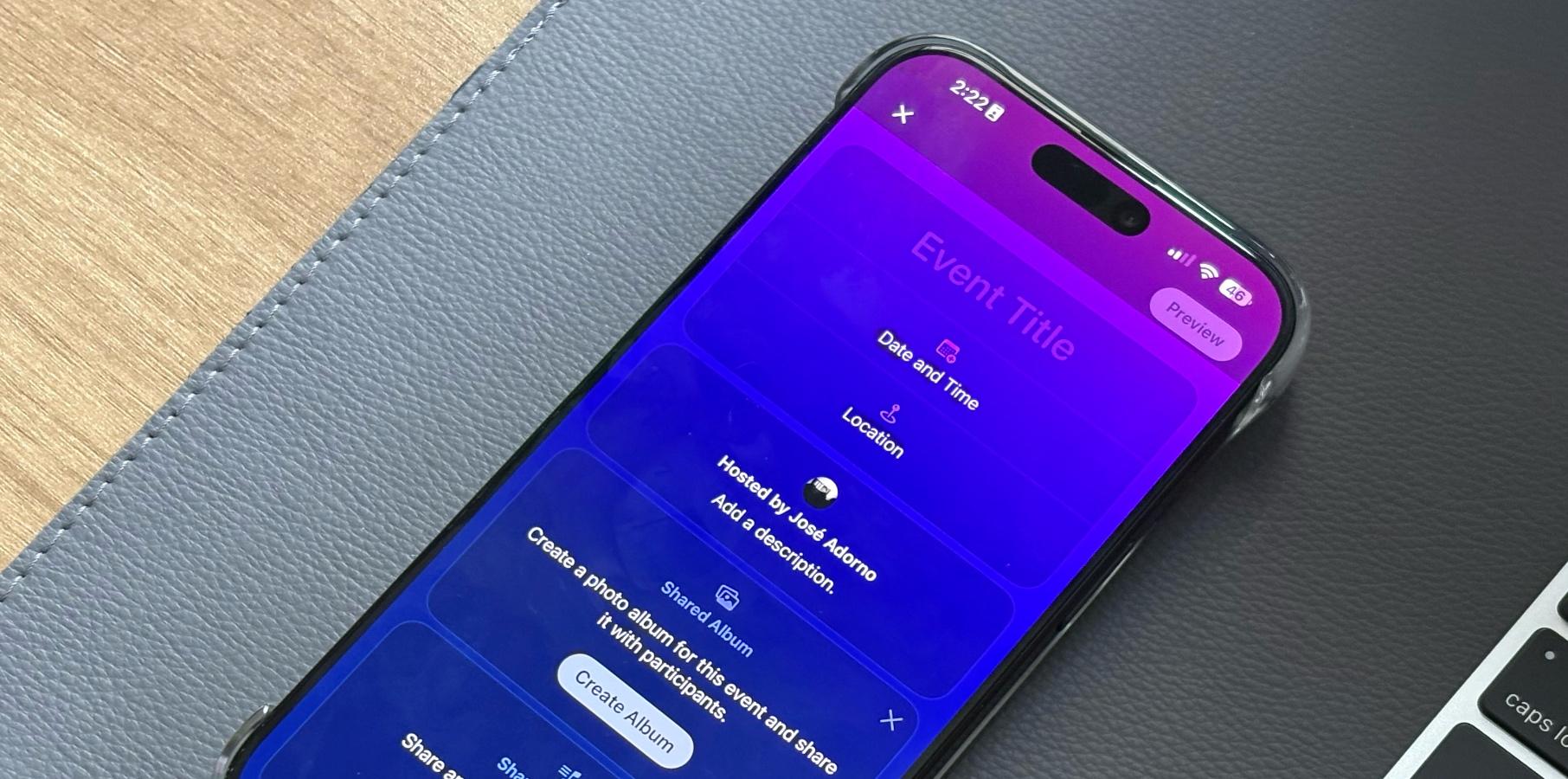
On social media, one X user shared several screenshots of the Apple Invites app and asked, “Does this mean iOS 19 is getting a UI redesign?” Another was more confident: “iOS 19 is redesign year. I’m calling it.”

Tech. Entertainment. Science. Your inbox.

Sign up for the most interesting tech & entertainment news out there.

By signing up, I agree to the Terms of Use and have reviewed the Privacy Notice.

So far, it’s unclear if Apple plans to redesign iOS 19. Since the significant iOS 7 overhaul, Apple has been cautious enough to make slight changes over the updates. While the company hasn’t completely overhauled its system at once, the iPhone operating system is far different from what it was a decade ago.

Apple Sports appImage source: Apple Inc.

Still, that didn’t stop Apple from revamping the Control Center and the Home Screen with customizable widgets, tinted icons, and so on.

Users have been asking for a visionOS-inspired iOS update as Apple has prioritized rounder cards, glassy effects, and other UI changes previously unavailable on iOS. In addition, with less exciting iPhone updates, Apple needs to make the software stand out so upgrading becomes more enticing. Otherwise, the company might have its Samsung Galaxy S25 moment, with the same smartphone with a few software tweaks as new features.

Wrap up

BGR has a comprehensive iOS 19 guide. We’ll keep updating it as we learn more about this future software update, which is expected to be announced at WWDC 2025 around June.

Source

Posted on

Apple reportedly started M5 mass production ahead of 2025 Mac releases

A few months after Apple ordered TSMC to start the production development of the M5 chip, ET News reports that mass production for this upcoming processor has now begun. According to the publication, mass production for the M5 chip, which is expected to power new Macs, iPads, and Apple Vision Pro, started in January. ET News writes: “Apple M5 chip packaging is handled by Taiwan’s ASE, the U.S.’s Amkor, and China’s JCET. Initial mass production has been started by ASE, and mass production with Amkor and JCET will follow suit.”

These companies also add resources to make the high-end M5 Pro, M5 Max, and M5 Ultra chips. While power efficiency has been improved by 5-10% and performance improved by 5% compared to the M4 chip, this is yet Apple’s new tackle on AI processors to power Apple Intelligence and other complex tasks.

While the M5 mass production has already started, Apple has yet to release its M4 MacBook Air models. They’re expected to be released in the first half of 2025, in addition to the M4 Ultra chip with the Mac Studio, which is scheduled for mid-2025. Finally, a new Mac Pro could also be in the works for late 2025. If that turns out to be accurate, this release could coincide with the first M5 products.

So far, the first Apple products we expect to unveil with the M5 chip are the iPad Pro, the MacBook Pro, and the Apple Vision Pro. Still, none of them should debut before fall 2025.

Tech. Entertainment. Science. Your inbox.

Sign up for the most interesting tech & entertainment news out there.

By signing up, I agree to the Terms of Use and have reviewed the Privacy Notice.

That being said, we still have plenty of time with M4 products. Also, it doesn’t seem Apple plans a major revamp for its products with the M5 chip. According to rumors, Cupertino could start tweaking the design of some of its Macs by 2026 when it plans to ditch the miniLED display for a new OLED technology.

Below, you can learn more about when to expect new M4 Macs.

Source

Posted on

Helium Mobile launched the first-ever free phone plan, with 5G data and voice for $0

You might not be familiar with Helium Mobile, but you should get acquainted with the company if you want to spend less on your phone bill. That’s because Helium introduced three new mobile plans this week, including the nation’s first free phone plan. For $0/month, you get 3GB of data, 300 texts, and 100 minutes of voice calling. Pay $15 or $30 each month, and those limits increase significantly.

You might think this must be all a marketing gimmick. Nothing is free, so how can Helium afford to offer a free plan? The explanation might lie in how Helium works. It’s not just a Mobile Virtual Network Operator (MVNO) that uses a larger provider (T-Mobile in this case) to provide coverage to interested consumers. Helium also builds its own 5G network in ways other carriers have not considered.

Helium owns an expanding decentralized network where individuals operate small cellular hotspots. Combined with T-Mobile’s network, these 5G hotspots help reduce costs.

This explains how the new Zero Plan can exist and serve those smartphone owners looking for the cheapest possible solution to get 5G data and voice minutes. Access to Zero Plan customers’ anonymized data is another.

Tech. Entertainment. Science. Your inbox.

Sign up for the most interesting tech & entertainment news out there.

By signing up, I agree to the Terms of Use and have reviewed the Privacy Notice.

The obvious downside is that the Zero Plan limits will not necessarily be enough for many users. That 3GB of data will run out quickly without access to free Wi-Fi. Also, 100 voice minutes might not be enough. Luckily, Helium has two other options that consumers on a budget might appreciate even more than the Zero Plan. Here’s the full structure of Helium’s new mobile offerings:

  • Zero Plan ($0/month): 3GB of data, 300 texts, 100 minutes
  • Air Plan ($15/month): 10GB of data with unlimited talk and text
  • Infinity Plan ($30/month): Unlimited data, talk and text

At $15, the Air Plan makes sense if you need more data while on the go. The $30 Infinity Plan is the best choice, as you get unlimited data, talk, and text.

Helium Mobile outdoor hotspot.Helium Mobile outdoor hotspot. Image source: Helium Mobile

Helium Mobile also has a reward system that lets you collect Cloud Points for various activities. The most important one might be sharing your location anonymously, which lets Helium improve coverage in underserved areas.

It’s important to note that location-sharing is required for the Zero Plan.

You can collect Cloud Points for referring friends to sign up, answer surveys, and other activities. In turn, you can spend Cloud Points on movie, restaurant, and rideshare gift cards. Cloud Points can be used to pay your monthly bill and activate other services, like international roaming.

To get on Helium Mobile, you can use your current number and the device you already own. Download the iPhone or Android app to get started.

There is one big caveat here. Helium Mobile is invite-only. You can either get an invite code from an existing subscriber or join the waitlist at this link. Also, check out this link to read more about the new plans, including the Zero Plan offer.

Source

Posted on

North Korean hackers created new macOS malware disguised as popular app installers

Another day, another macOS malware is trying to actively exploit your Mac. This time, North Korean hackers are using fake job offers hidden in updates to popular apps like Zoom and Google Chrome to invade your Mac.

As security researchers from SentinelLabs (via AppleInsider) reported, North Korean hackers are pushing the macOS Ferret family of malware. Even though Apple has successfully prevented some of these viruses with the on-device malware tool XProtect, caution is still recommended.

This is not the first time someone has tried to install malware on people’s Macs using the “Contagious Interview campaign” method. Basically, targets are asked to go on an interview through a link that shows an error message and a request to install or update some required software, such as Zoom or Google Chrome. After all, who hasn’t tried to join a call only to have Zoom or WebEx ask for an update?

Thankfully, the macOS 15.3 update added a few new security improvements to prevent this malware from infecting your Mac. However, some of the Ferret viruses can still bypass Apple’s security.

Tech. Entertainment. Science. Your inbox.

Sign up for the most interesting tech & entertainment news out there.

By signing up, I agree to the Terms of Use and have reviewed the Privacy Notice.

The researchers from SentinelLabs write: “The ‘Contagious Interview’ campaign and the FERRET family of malware represent an ongoing and active campaign, with threat actors pivoting from signed applications to functionally similar unsigned versions as required. Diverse tactics help the threat actors deliver malware to a variety of targets in the developer community, both in targeted efforts and what appears to be more ‘scatter gun’ approaches via social media and code sharing sites like Github.”

How do you protect yourself from this macOS malware threat?

The best way to protect yourself from this macOS malware threat is to ensure you have the official apps downloaded on your Mac. For example, instead of taking web Zoom calls, make sure to always have them on your Mac app. The same is worth it for WebEx. For Google Chrome, don’t forget to check updates through the browser itself. In addition, having the latest macOS update can guarantee you’re protected against the latest threats as well.

Keep checking BGR for the latest macOS malware trying to exploit your Mac and more.

Source

Posted on

When will Apple start beta testing iOS 18.4?

Now that iOS 18.3 has been available for almost two weeks now, we’re all wondering what the release date of iOS 18.4 beta 1 will be. Unlike the previous version, iOS 18.4 is expected to be one of the most important updates of the iOS 18 cycle. That said, here’s what we know about iOS 18.4 and when Apple could start beta testing it.

iOS 18.4 beta 1 release date based on previous x.4 updates

It’s been almost ten days since Apple released iOS 18.3. In the past, this is how long Apple has taken to start beta testing an x.4 update after releasing an x.3 update:

  • iOS 17.4: 3 days
  • iOS 16.4: 24 days
  • iOS 15.4: 1 day
  • iOS 14.4: 2 days

With iOS 13.4, Apple took an incredible 57 days to start beta testing it. However, you shouldn’t have to worry about waiting that long, as the company promised Apple Intelligence would expand to more languages in April, confirming iOS 18.4 will launch by then.

In addition, iOS 16.4 wasn’t a very notable update, with the most impressive features being new emoji and Crash Detection optimization. With that in mind, there wasn’t a good reason for the company to delay the start of its beta testing.

Tech. Entertainment. Science. Your inbox.

Sign up for the most interesting tech & entertainment news out there.

By signing up, I agree to the Terms of Use and have reviewed the Privacy Notice.

That said, BGR has reason to believe Apple could seed iOS 18.4 beta 1 any day now. While previous x.4 betas had two to five builds, it’s possible that Apple will spend longer testing this upcoming version, as it has important in store for iOS as a whole.

iPhone 16Image source: José Adorno for BGR

These are the most important features we hope Apple adds in iOS 18.4

Unlike the previous versions, iOS 18.4 is expected to open the path for a truly competitive Siri, a personal assistant that can finally understand context and look through your messages and apps to find precisely what you need. While it’s unclear if these features will be ready in iOS 18.4 beta 1, the company will likely start adding these Apple Intelligence improvements over the coming months.

In this update, Apple says its AI platform will support Chinese, English (India), English (Singapore), French, German, Italian, Japanese, Korean, Portuguese, Spanish, and Vietnamese. Apple is also expected to offer other minor features, such as creating images in Image Playground in Sketch style and a better display of Priority Notifications across Apple and third-party apps. Finally, new emojis might be available with this update.

Source

Posted on

ChatGPT no longer requires you to have an account to search

Google’s dominance in online search has been virtually undisputed for over 20 years, but a real challenger might have finally arrived. As of Wednesday, OpenAI no longer requires you to log in to use ChatGPT’s search engine. In fact, you don’t even need an account.

“ChatGPT search is now available to everyone in regions where ChatGPT is available,” OpenAI noted on its website in an update. “No signup required.”

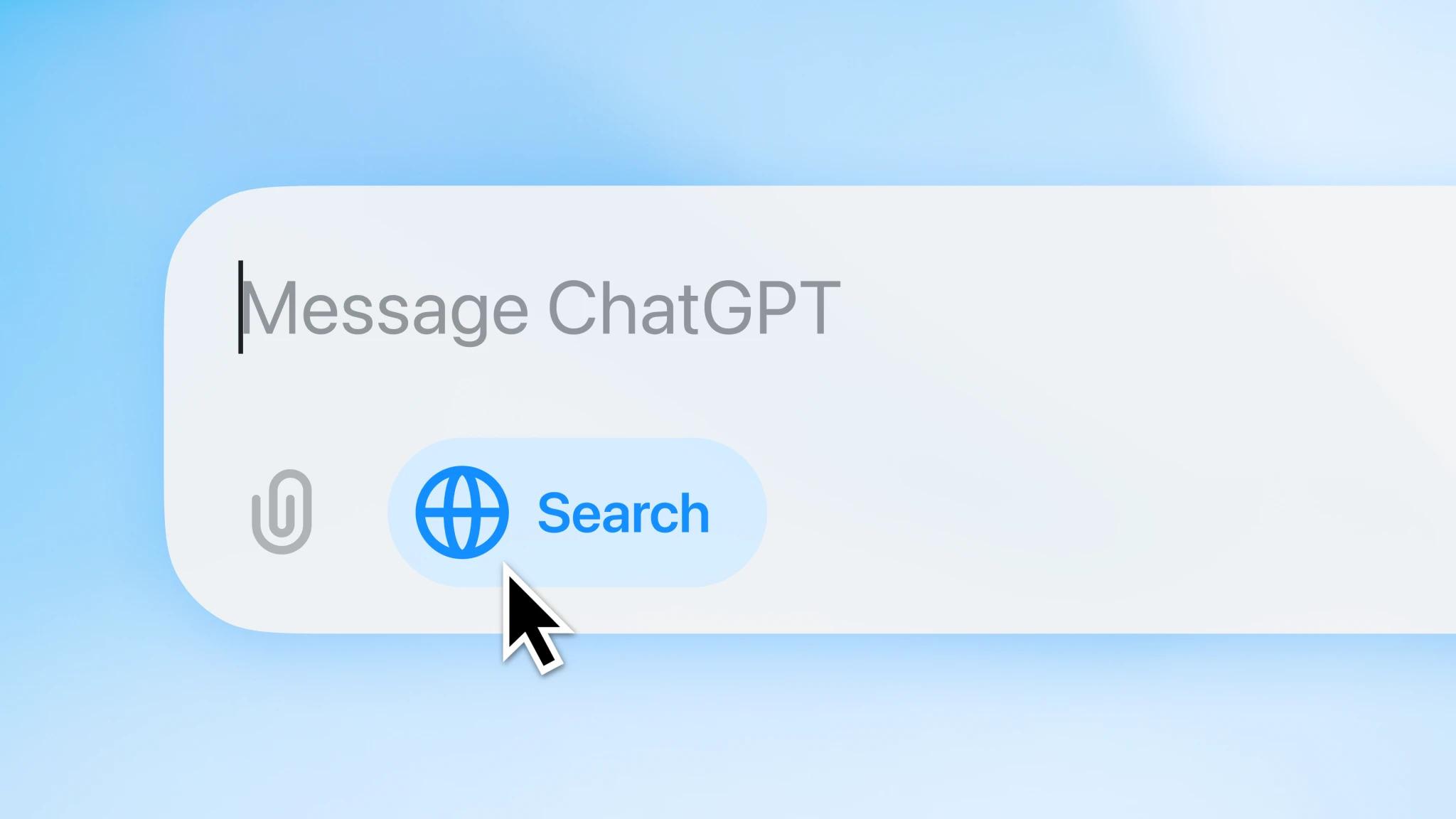
OpenAI launched its search engine on October 31st, 2024, granting access to paid subscribers and SearchGPT waitlist users. It then rolled out to free users on December 16, but now, anyone can search on ChatGPT by visiting ChatGPT.com and clicking the “Search” button.

“The search model is a fine-tuned version of GPT-4o, post-trained using novel synthetic data generation techniques, including distilling outputs from OpenAI o1-preview,” OpenAI explained last year. “ChatGPT search leverages third-party search providers, as well as content provided directly by our partners, to provide the information users are looking for.”

Tech. Entertainment. Science. Your inbox.

Sign up for the most interesting tech & entertainment news out there.

By signing up, I agree to the Terms of Use and have reviewed the Privacy Notice.

Now that everyone has unrestricted access to ChatGPT search, it will be fascinating to see how many people try to ditch Google for good, and how successful they are at doing so.

This is the latest in a flood of major updates and new releases from OpenAI in recent weeks as the company pushes back against DeepSeek mania. Within the last two weeks alone, OpenAI has launched two AI agents: Operator and Deep Research.

Source

Posted on

Taylor Swift singing in Japanese: Mind-blowing new AI tech from China

Less than a year ago, Microsoft’s VASA-1 blew my mind. The company showed how it could animate any photo and turn it into a video featuring the person in the image. This wasn’t the only impressive part, as the subject of the image would also be able to speak in the video.

VASA-1 surpassed anything we’d seen back then. This was April 2024, when we had already seen Sora, OpenAI’s text-to-video generation tool that would not be released until December. Sora did not feature similarly advanced face animation and audio synchronization technologies.

Unlike OpenAI, Microsoft never intended to make VASA-1 available to the project. I said then that a public tool like VASA-1 could harm, as anyone could create misleading videos of people saying whatever the creator conceives. Microsoft’s research project also indicated that it would be only a matter of time before others could develop similar technology.

Now, TikTok parent company ByteDance has developed an AI tool called OmniHuman-1 that can replicate what VASA-1 did while taking things to a whole new level.

Tech. Entertainment. Science. Your inbox.

Sign up for the most interesting tech & entertainment news out there.

By signing up, I agree to the Terms of Use and have reviewed the Privacy Notice.

The Chinese company can take a single photo and turn it into a fully animated video. The subject in the image can speak in sync with the provided audio, similar to what the VASA-1 examples showed. But it gets crazier than that. OmniHuman-1 can also animate body part movements and gestures, as seen in the following examples.

The similarities to VASA-1 shouldn’t be surprising. The Chinese researchers mention on the OmniHuman-1’s research page that they used VASA-1 as a template, and even took audio samples from Microsoft and other companies.

According to Business Standard, OmniHuman-1 uses multiple input sources simultaneously, including images, audio, text, and body poses. The result is a more precise and fluid motion synthesis.

ByteDance used 19,000 hours of video footage to create OmniHuman-1. That’s how they were able to teach the AI to create video sequences that are almost indiscernible from real video footage. Some of the samples above are practically perfect. In others, it’s clear that we’re looking at AI generating movement, especially the subject’s mouth.

The Albert Einstein speech in the clip above is certainly a highlight for OmniHuman-1. Taylor Swift singing the theme song from the anime Naruto in Japanese in the video below is another example of OmniHuman-1 in action:

OmniHuman-1 can be used to create AI-generated videos showing human subjects (real or fabricated) speaking or singing in all sorts of instances. This opens the service for abuse, as I’m sure some people, including malicious actors, would use the service to impersonate celebrities for scams or misleading purposes.

OmniHuman-1 also works well for animating cartoon and video game characters. This could be a great use for the technology, as it could help creators more accurately animate facial expressions and speech for such characters.

Also interesting is the claim that OmniHuman-1 can generate videos of unlimited length. The examples available range between five and 25 seconds. The memory is apparently a bottleneck, not the AI’s ability to create longer clips.

Business Standard points out that ByteDance’s OmniHuman-1 is an expected development from the Chinese company. ByteDance also unveiled INFP recently, an AI project aimed to animate facial expressions in conversations. ByteDance is also well-known for its CapCut editing app, that was removed from app stores alongside TikTok a few weeks ago.

It’s only natural to see ByteDance expand its AI video generation capabilities and introduce services like OmniHuman-1.

It’s unclear when OmniHuman-1 will be availabel to users, if ever. ByteDance has a website at this link where you can read more details about the AI research project and see more samples.

ByteDance researchers also mention “ethics concerns” in the document, which is great to see. This signals that ByteDance might take a more cautious approach to deploying the product, though I’m just speculating here.

But if OmniHuman-1 is released in the wild too soon, it’ll only be a matter of time before someone creates lifelike videos of real-life celebrities or made-up humans who say (or sing) anything the creator wants them to, in any language. And it won’t always be just for entertainment purposes.

Source

Posted on

OpenAI says it has evidence DeepSeek used ChatGPT to train its AI

Chinese startup DeepSeek stunned the world with its sophisticated DeepSeek R1 reasoning model, which is as good as ChatGPT o1. That’s not a surprising achievement; it’s only a matter of time before other AI models can replicate what OpenAI has done in terms of AI reasoning. Also, OpenAI will soon make o3 available, the successor to o1.

What really shocked the markets was DeepSeek’s research, which showed that the company was able to train R1 to achieve the same capabilities at a fraction of the cost of training o1.

Because of US sanctions, DeepSeek didn’t have access to the latest NVIDIA GPUs that AI firms like OpenAI use to train high-end AI models. It turned to software optimizations to compensate for what it lacked in hardware to create an AI model that could match ChatGPT o1.

But it turns out software optimization isn’t everything DeepSeek might have done to train its AI. OpenAI claims it has evidence that DeepSeek distilled ChatGPT to train the DeepSeek AI models.

Tech. Entertainment. Science. Your inbox.

Sign up for the most interesting tech & entertainment news out there.

By signing up, I agree to the Terms of Use and have reviewed the Privacy Notice.

If that’s true, the practice violates OpenAI’s terms of service for ChatGPT. Ironically, if OpenAI’s claim is true, it’ll make the company experience what many creators felt when they discovered OpenAI may have trained its ChatGPT models using copyrighted materials without consent.

OpenAI told The Financial Times it found evidence that DeepSeek used the US models to train DeepSeek AI.

OpenAI found evidence of “distillation,” which it believes came from DeepSeek. Distillation is a process where AI firms use an already trained large AI model to train smaller models. The “student” models will match similar results to the “teacher” AI in specific tasks.

Some early DeepSeek testers were surprised to see the AI identify itself as ChatGPT in early responses, which prompted speculation that DeepSeek AI might have been trained with ChatGPT chats.

OpenAI claims that DeepSeek might have distilled ChatGPT make sense, but it’s unclear whether the US AI firm can prove the IP theft beyond doubt. Even if it can provide conclusive evidence that DeepSeek used ChatGPT to train its AIs, there’s probably little OpenAI can do. After all, DeepSeek R1 is already out in the wild.

DeepSeek made its models available open-source, which means anyone can install them on computers. The DeepSeek app is topping the App Store, and it’s available in the Google Play store. Unless DeepSeek is banned in the US, the app won’t go away anytime soon.

The FT says that OpenAI and Microsoft investigated accounts believed to belong to DeepSeeka last year. They were using OpenAI’s API for ChatGPT access. OpenAI blocked access, suspecting they may rely on distillation to train other models.

DeepSeek has not commented on these allegations. The company is seen as a hero in China after the release of DeepSeek R1, which wiped nearly $1 billion from the US market.

On the other hand, it’s not just Chinese AI companies like DeepSeek that might rely on the distillation of ChatGPT and other frontier AIs to train better AI models. The FT notes that it’s common practice for AI labs in China and the US to use outputs from bigger companies.

OpenAI and others have already trained AI using humans to teach the models how to produce responses that sound more conversational. This is an expensive process, so smaller firms will distill established models to train smaller ones. In such a case, a company like DeepSeek would have gotten the human feedback step for free.

I said earlier that DeepSeek’s use of distillation to train R1 is something others could benefit from, Apple included. I wasn’t referring to stealing AI work done by others but to using advanced, proprietary models to train smaller models that Apple might need for its on-device Apple Intelligence approach.

If OpenAI has strong evidence that DeepSeek used ChatGPT to train its AI models, we could be looking at the second good reason to ban DeepSeek in the US and elsewhere. The first is that DeepSeek collects plenty of user data and sends it all to China.

A ban is a process that will take time. And, again, even if all of this is successful, DeepSeek will still have strong AI models on its hands, which it can use to create next-gen AI of its own.

Meanwhile, OpenAI still has to deal with allegations that it used copyrighted content without consent to create ChatGPT.

Source