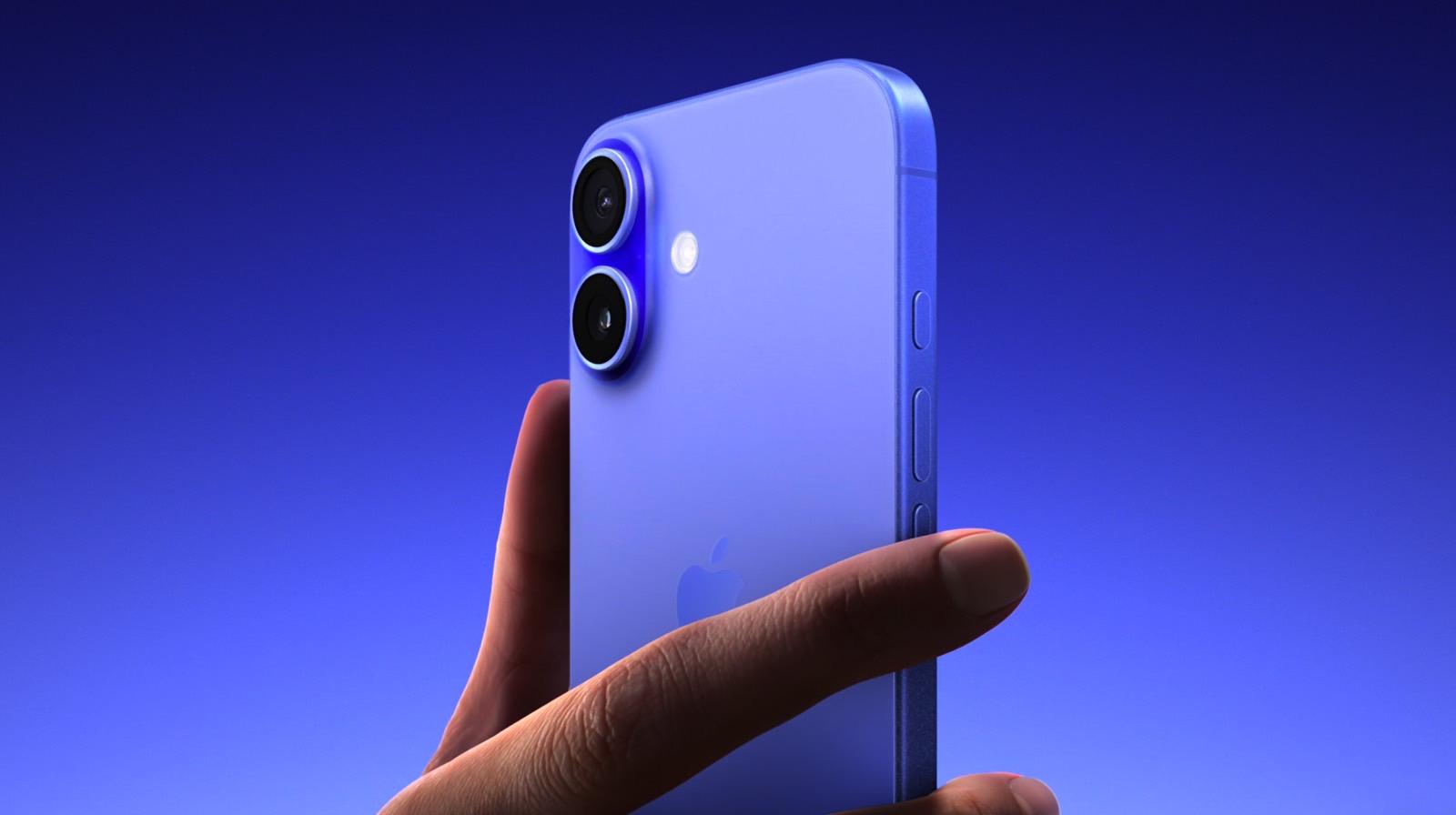
Ma reports that iPhone 17 Air prototypes are between 5 and 6 millimeters thick, which could possibly make it thinner than the iPhone 6, released a decade ago. While the iPhone 16 is 7.8mm thick, this could make the iPhone 17 Air as thin as the new M4 iPad Pro.
Unfortunately, not everything is good news. Apple will have to sacrifice several crucial features to achieve this ultra-thin design. For example, The Information says Apple engineers are “finding it hard to fit the battery and thermal materials into the device,” which means Cupertino will likely have to add a smaller battery to this iPhone.
Besides, a major compromise on the iPhone 17 Air might be a single earpiece speaker. According to Ma, “the iPhone will only have a single speaker in its earpiece because there’s no room for a second speaker at the bottom, which is standard in other models.”
Tech. Entertainment. Science. Your inbox.
Sign up for the most interesting tech & entertainment news out there.
While Apple’s in-house 5G modem is expected to be available with this iPhone, the chip doesn’t perform as well as Qualcomm’s. The report says it’s more efficient, but it won’t be as fast, and it will lack a feature some US users benefit a lot, the mmWave 5G technology, which Apple’s future processor won’t have.
Finally, Apple engineers couldn’t figure out how to add a physical SIM tray to the iPhone 17 Air. While iPhone users in the US are used to that, Apple will have issues, at least in China, which requires phones to be sold with a SIM card. Without this market, sales of this upcoming iPhone might not be as enticing as they could.
Wrap up
Considering all that, I wonder if these trade-offs are worth it for an all-new iPhone design. I still think Pro users will keep buying Pro phones, while regular iPhone users won’t be enticed to pay extra for this new design. So, who might be this new iPhone for?
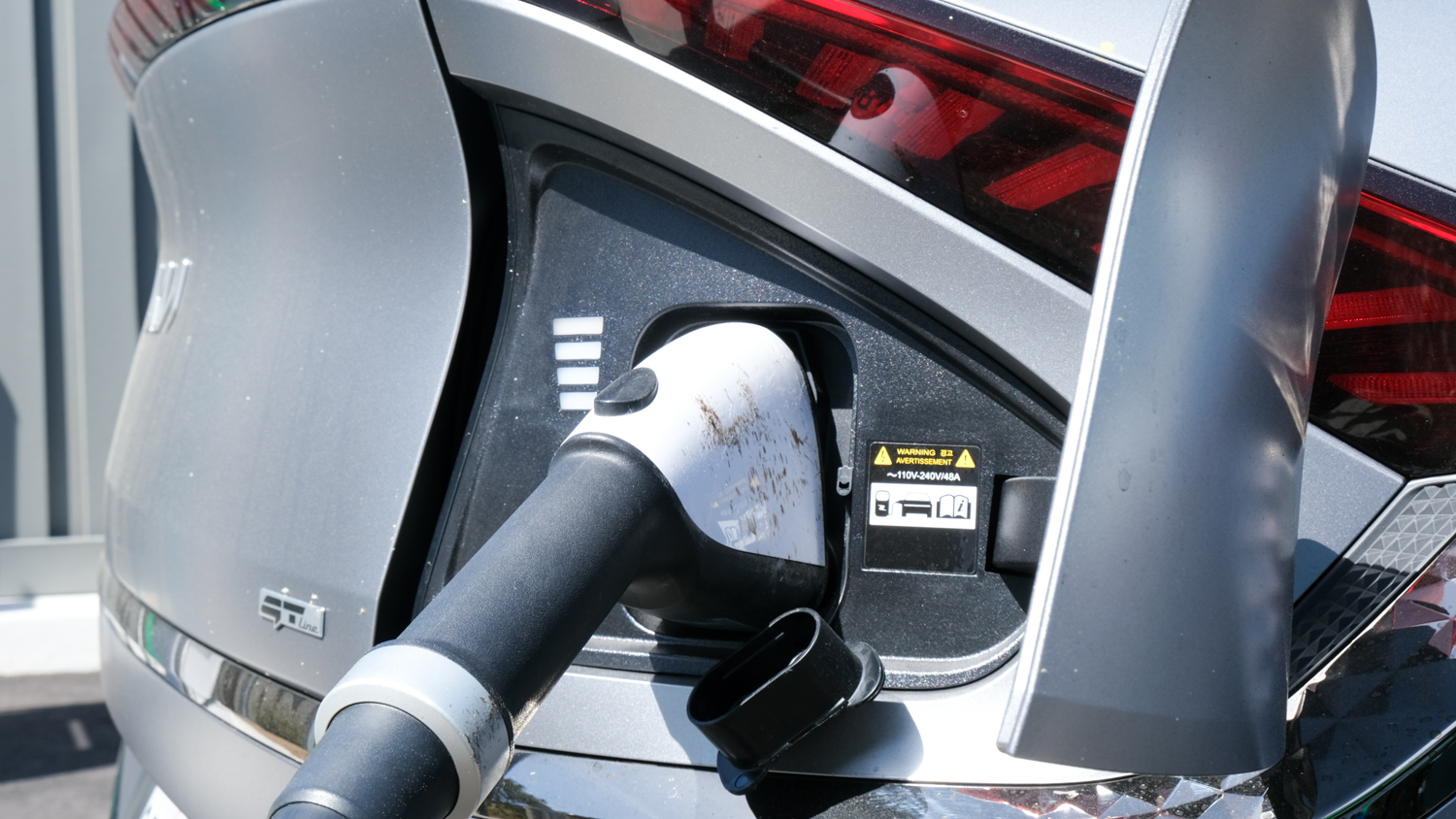
What if charging your electric car was as quick as grabbing a coffee? Thanks to an incredible breakthrough by ProLogium, that vision is becoming a reality. The company revealed a first-of-its-kind, cutting-edge EV battery that can deliver up to 186 miles of driving range after just five minutes of charging.
This innovation is more than just a fast charge, though. ProLogium’s new EV battery is a leap forward in energy density. Traditional lithium-ion batteries, the kind in most EVs today, top out at about 300 watt-hours per kilogram (Wh/kg). However, ProLogium’s battery reaches an impressive 321 Wh/kg—and that’s just the start.
The company claims it plans to further boost the performance of its cutting-edge EV battery up to 77 percent by the end of 2024. This could lead to lighter, more efficient batteries that don’t sacrifice range for a fast charging speed. Of course, this isn’t the first time we’ve seen EV batteries pushing the current boundaries of fast charging.
What’s especially exciting about ProLogium’s development, though, is the battery’s modular design. If part of the battery breaks, you don’t have to replace the whole thing—just the damaged section. This could cut repair costs significantly and make EV ownership even more appealing, something EV manufacturers have been struggling to do.
Tech. Entertainment. Science. Your inbox.
Sign up for the most interesting tech & entertainment news out there.
Sure, the Cybertruck might be appealing to some because of how off-the-wall it looks on the road. There’s no doubt that Tesla has made quite an imprint on the EV market. However, the widespread adoption of EVs is still far from what many would like to see it become. ProLogium’s new cutting-edge EV battery could help with that.
This breakthrough is a big step toward making electric cars not just an eco-friendly option but also the most convenient one. With faster charging, longer range, and smarter designs, the future of electric vehicles has even more room to grow with batteries like this.
Nvidia may keep the RTX 4050 mobile when RTX 5000 laptop GPUs launch
It will sit at the bottom tier, below the Blackwell mobile graphics cards
What isn’t clear is if it’ll drop in price to help with cheaper gaming laptops
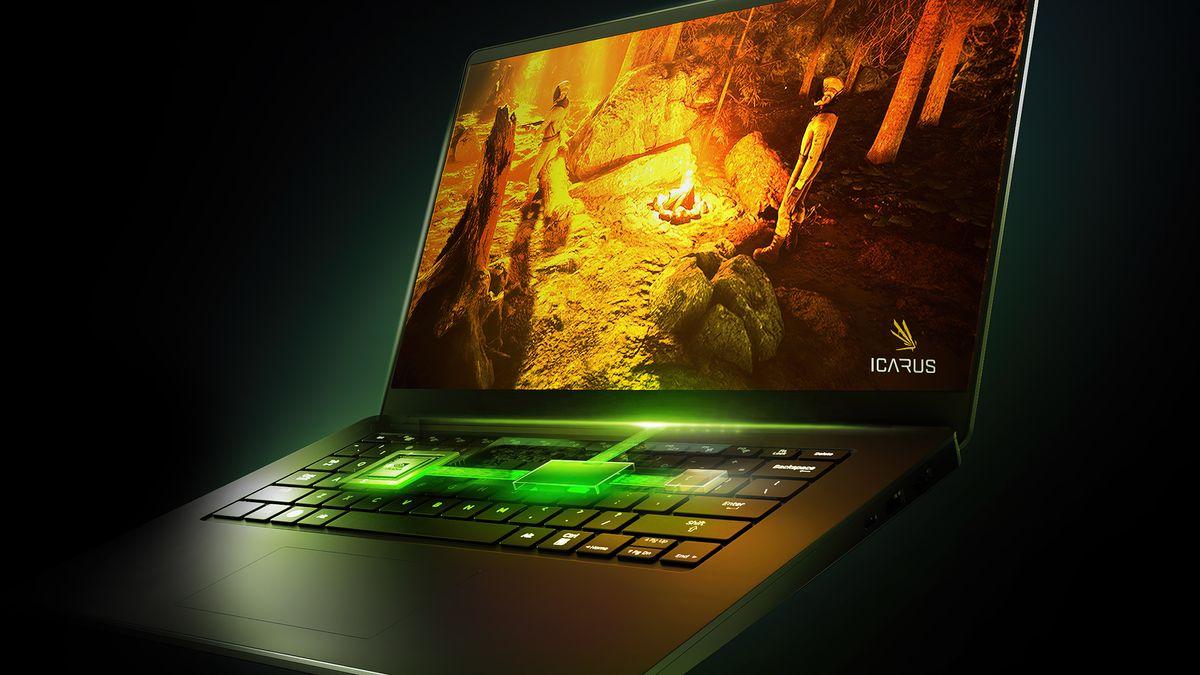
Nvidia will apparently keep its RTX 4050 GPU for laptops when new RTX 5000 mobile graphics cards arrive, though the rest of the Lovelace notebook range will be canned.
Wccftech grabbed the scoop on this rumor, which comes from a leaker on Weibo who we’re not familiar with, so we’d advise doubling down on the skepticism with this info.
The RTX 5000 laptop range could arrive as soon as CES 2025 in January (alongside Blackwell desktop GPUs), according to previous buzz on the grapevine, and when Nvidia does launch these new mobile GPUs, we can expect the RTX 4060 laptop graphics card and above – running through to the RTX 4090 – to be discontinued.
Does Nvidia keeping the RTX 4050 mean there won’t be an RTX 5050 graphics card for gaming laptops? Actually, that’s not the case because the leaker claims Team Green will indeed launch an RTX 5050, but what will happen is the RTX 4050 will be kept alive to serve as the tier below that offering.
So, in theory, we’ll have an RTX 5090 running all the way down to the RTX 5050 mobile, with the RTX 4050 underneath that – but again, we should underline the speculative nature of this chatter.
(Image credit: Future)
Analysis: Fresh hope for cheaper budget laptops? Or not…
What we hope will happen (if the rumor is true) is that the RTX 4050 remains as a (cheaper) budget option for more affordable gaming laptops, away from the new Blackwell mobile GPUs. However, the Weibo leaker seems to hint that the price of the RTX 5050 will not be kept the same as the RTX 4050 when it was launched, and it might increase by a ‘step’ – but we should caution the wording (and translation) is confusing and unclear here.
However, we take it as a suggestion Nvidia might maintain RTX 4050 pricing as it is, and increase the (launch) asking price of the RTX 5050 (what’s charged to laptop makers, that is – and naturally that’s reflected in the final price of the notebook to the consumer). But, as we say, this is far from clear – though if Team Green wants to go the moneymaking route, obviously this would be the thing to do.
Sign up to be the first to know about unmissable Black Friday deals on top tech, plus get all your favorite TechRadar content.
We can still hope the RTX 4050 is being maintained as a wallet-friendly option going forward, and its price could drop, with the new RTX 5050 coming in at the 4050’s old level. There’s precedence for this already, too: Nvidia kept the RTX 2050 sticking around as a budget laptop alternative after the 3000 series was released.
Nvidia keeping the RTX 4050 suggests it has proved a popular mobile option for laptop gamers, although it can’t hold a candle to the RTX 4060. At least not going by Valve’s Steam hardware survey, where the RTX 4060 mobile is the second favorite mobile GPU of all, with 4.3% of market share, compared to the RTX 4050 mobile with around 1.1%.
That’s still pretty popular, though, and obviously, the RTX 4050 can have a place in Nvidia’s new Blackwell mobile GPU regime, where it neatly slots in at the bottom tier, whereas that isn’t true with the RTX 4060 (assuming Nvidia really is making an RTX 5050, of course – presumably as a laptop-only GPU, again).
We’ve just got to hope Nvidia prices these next-gen mobile GPUs reasonably and gives us more options in the way of cheap gaming laptops – though if you’re after one of these, Black Friday could see some killer offers, as ever. Notebook price cuts are always plentiful, and sometimes we see some very deep discounts, with those Black Friday gaming laptop deals having started already.
Early last year, I got back into long-distance running, aiming to start running half-marathon races. I used ChatGPT to get back into shape, and the experience has been amazing. I now run a half-marathon almost every week. It’s just another day at the park.
I also decided to move on to marathons last year, something I had never done before and never thought I’d be able to do. I employed the services of ChatGPT once again, and I’ve now completed two official races. If all goes well, more will follow.
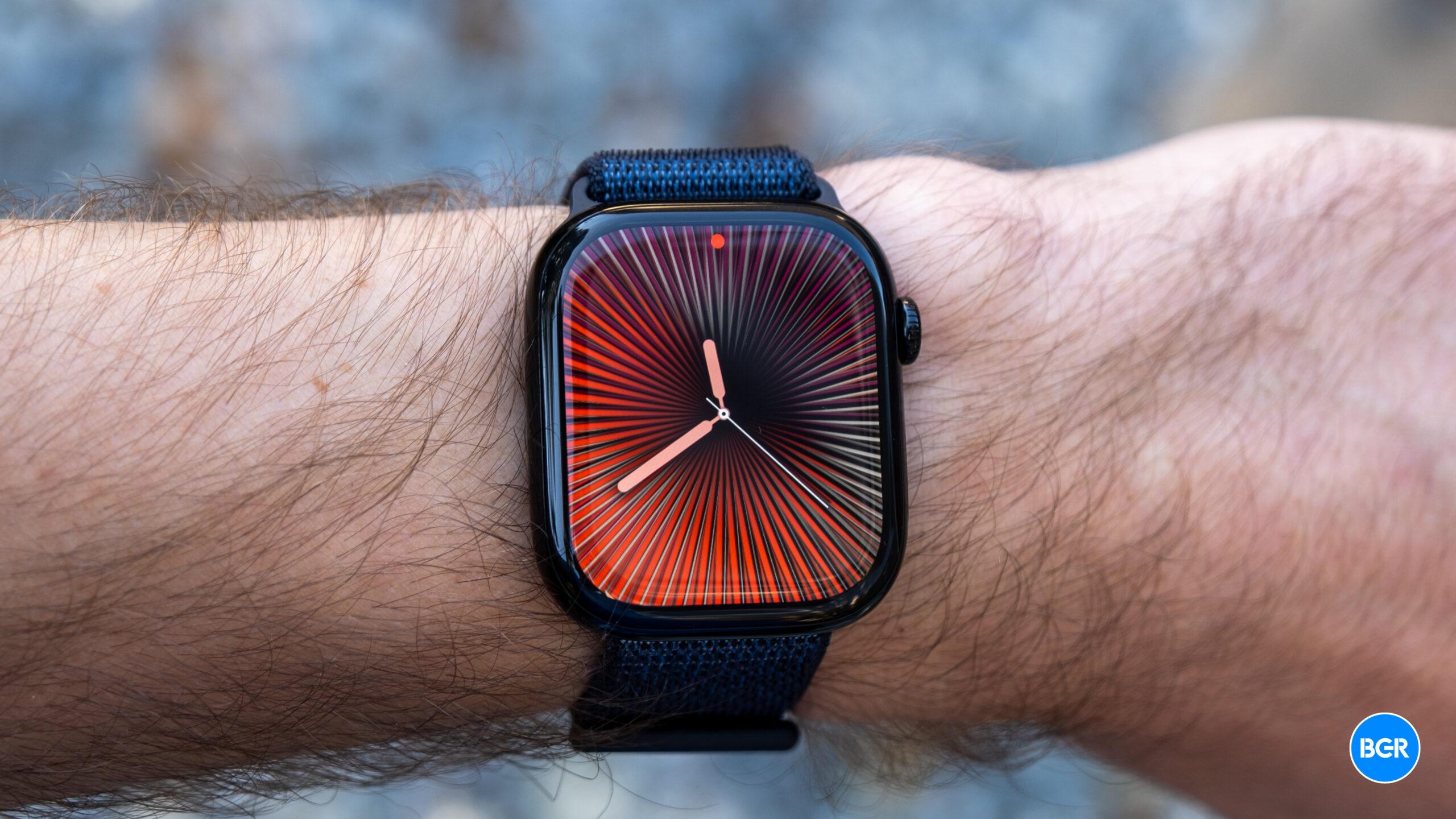
Six months later, I used an Apple Watch Series 10 to run my second marathon. I’ve been wearing it since late September, and the battery health is still at 100% after about two months. The Apple Watch Series 10 would have easily lasted the entire marathon race even if the battery health were slightly lower. Even if I were slower, it would have made it.
Tech. Entertainment. Science. Your inbox.
Sign up for the most interesting tech & entertainment news out there.
I knew the Apple Watch Series 10 battery life was amazing before the race. I never had any doubts. As I explained more than once, the Apple Watch Series 10 can last up to 36 hours with mild activity. It routinely lasts for 30 hours, even on harder training days. And I always use the Watch to track my sleep.
But knowing all of that, the Apple Watch Series 10 battery still blew my mind, and it’s not just because of the stellar longevity.
I’ve never run professionally, so I’m not one of those runners who can pull off sub-3-hour marathons. Yet.
I’m also unable to run a marathon under 4 hours, though that was my intention this time. I’m telling you this because the longer a wearable has to track activity, the more battery it will consume.
The 40mm Apple Watch SE 2 depleted almost its entire battery to track my first marathon. I finished the race in around four hours and 30 minutes. The Watch died about an hour after I crossed the finish.
The 42mm Apple Watch 10 had about 27% battery life when I finished the run. That was at around four hours and 16 minutes. I was faster, yes, even though I didn’t achieve my goal. But the point I’m trying to make here is that the Apple Watch Series 10 battery life was simply amazing.
I’m sure it would have lasted a six-hour marathon race, assuming I’d have been much slower. Or if I had to walk a lot following an injury.
It’s not just the battery life that’s amazing, but also the battery charging time. The Apple Watch Series 10 charges much faster than any previous model.
Charging the Apple Watch Series 10 before and after a marathon race. Image source: Chris Smith, BGR
I put the Apple Watch 10 on its charger for about an hour at around 10:00 PM the night before the race (image above). It still had over 50% charge, but I couldn’t risk it.
I removed it with a 98% charge, which dropped to 90% by the morning of the race. Again, I’m always sleeping with the Apple Watch Series 10 on, looking to track my vitals as long as possible. Comparatively, I topped up my Apple Watch SE 2 the morning of my first marathon, knowing I’d need every bit of juice for a race that could have lasted up to six hours.
The Apple Watch used up to 63% of its battery life for the marathon race. I say “up to” as I walked about 2km to the venue and then forgot to check the battery capacity at the start of the race. Obviously, I had to walk the same distance back home, which took what felt like forever. Human feet don’t work similarly after a marathon.
I put the Apple Watch Series 10 on its charger at around 2:00 PM, when it dropped to around 24%. After about an hour, it reached 96%, and I removed it to wear it.
Again, I want to keep the Apple Watch Series 10 on a charger as little as possible, especially on days when I have races scheduled. I want the wearable to collect as much data as possible, which might come in handy at some point in the future.
The Watch battery lasted 16 hours, including the entire night and the full marathon race. Given the intensity of the effort, I couldn’t be happier.
I know some runners prefer to use wearables from Garmin and other companies. I’m happy with the Apple Watch because I use it to track all my health data. I figure it’ll offer similar performance during training and at rest. That’s even if some runners say the Apple Watch isn’t as good for running as other wearables. I’d have no way of knowing.
Also, the Apple Watch Series 10 I wear had issues recording my heart rate correctly during the first weeks of use, which appear to have been mostly resolved by now. I’m also on the latest watchOS 11 beta.
I’m telling you all that so you have the complete picture. The bottom line is that the Apple Watch Series 10 is so efficient that you’ll have no problem using it for longer activities that require tracking. Whether it’s a marathon race or a hike that lasts several hours, the Apple Watch Series 10 will be ready to record your parameters. And it’ll only need about an hour of charging to go from about 25% to over 95%.
Put differently, you don’t need an Apple Watch Ultra to get you through a marathon. If Apple gives a future Watch SE the same chip and battery tech as the Watch 10, you could just get that and be on your way.
How will the Apple Watch Series 10 perform once the battery health drops? That’s a story for a different marathon. Then again, I’m trying to get faster myself, so hopefully, I’ll finish future races well before the wearable dies.
A few days ago, after showing you a series of Galaxy S25 Ultra photos, I told you I wouldn’t be surprised to see more Galaxy S25 images leaked ahead of Samsung’s mid-January Unpacked event. Those images featured purported Galaxy S25 Ultra prototypes with a new design compared to the current Galaxy S24 Ultra.
It turns out we didn’t even have to wait that long. There’s a leaked video floating around that gives us a closer look at the Galaxy S25 Ultra. This time, we have what appears to be a functional unit. Unsurprisingly, the phone in the clip features the same design as the prototypes from last week’s photos.
A Redditor posted a 10-second Galaxy S25 Ultra video that doesn’t show the entire unit. But those 10 seconds are enough to confirm the Galaxy S25 Ultra that so many fans must have wanted.
The phone in the clip at the end of the post has slightly rounded corners at the top, which means it also has rounded corners at the bottom. This was my biggest gripe with the boxy Galaxy S24 Ultra earlier this year. The phone’s rectangular corners made it uncomfortable to hold for long periods.
Tech. Entertainment. Science. Your inbox.
Sign up for the most interesting tech & entertainment news out there.
The rounded corners are a welcome design change, but they’re not the only thing Samsung has modified to improve usability. The Galaxy S25 Ultra will have flat sides, with the frame bending towards the back. Comparatively, the Galaxy S24 Ultra has curved edges.
The new design should shrink the phone’s width by a few millimeters, which might be enough to make it easier to hold. Slightly curving the edges towards the back should further improve usability.
The video also shows us the rear camera module, which features standalone cameras protruding through the back rather than a single camera module. The cameras seem to take inspiration from the Galaxy Z Fold 6.
The clip doesn’t show the bottom of this purported Galaxy S25 Ultra. We don’t get to see the S Pen stylus placement. It’ll be interesting to see whether Samsung tweaked the design of the stylus to account for the curved corners. That is, the top side of the S Pen might be slightly curved, matching the phone’s corner curvature.
As for the screen, it might be turned on, but we don’t get to see how thin the bezels are on account of the black background of what appears to be Reddit running on the phone.
We are probably looking at a leaked Galaxy S25 Ultra device in this clip. It must be the phone’s final design, as Samsung must be getting ready to manufacture it. The leaks are only going to get better at this point, and we’ll probably learn everything about the Galaxy S25 phones well ahead of Unpacked.
The past 12 months saw flash storage nudge into areas from which it had hitherto been absent. In particular, this was because of the availability of denser – and therefore cheaper per-gigabyte (GB) – quad-level cell (QLC) flash storage into array markets and use cases that were once considered nearline.
Alongside this, we saw the price-per-GB of flash drop towards the level of spinning disk hard disk drives (HDDs) then rebound rapidly as memory manufacturers chased profitability. Meanwhile, the keenest of flash storage advocates predicted the demise of the hard drive and the imminent victory of the all-flash datacentre.
In this article, we define enterprise flash storage, look into its QLC and triple-level cell (TLC) variants, the benefits of non-volatile memory express (NVMe) flash, and examine the pros and cons of flash versus HDD in terms of cost, performance, flash in the cloud, and the likelihood (or otherwise) of the all-flash datacentre.
What is enterprise flash storage?
Enterprise flash storage refers to systems that comprise multiple flash drives housed in datacentre rack-mounted array form factor products.
In enterprise flash storage arrays, the capacity of many drives is aggregated, with access to storage media governed by controller hardware.
The controller is compute that powers the intelligence needed to handle input/output (I/O) from hosts to the storage, decision-making over allocation of data to media, but also in flash arrays to carry out maintenance tasks such as wear levelling, garbage collection, and so on.
Enterprise flash storage array capacities run from tens of terabytes (TB) to many petabytes (PB). As with HDD-based arrays, access to storage can be block (for performance-hungry database use cases, for example), file (for general use and unstructured data) or object (for unstructured data also).
What is QLC flash storage?
QLC is the latest generation of flash storage media. QLC stands for quad-level cell. That means that every cell in the flash chip can store four bits of data using 16 states.
That means it can store more data in the same space than TLC flash, which is also widely available. Previously widely available were single-level cell (SLC) flash and multi-level cell (MLC, meaning two states), but these have been largely superseded now.
At the start of 2024, most enterprise storage arrays are built with TLC drives for general-purpose and mission-critical use cases. But QLC has edged into the mainstream and gained traction for unstructured data workloads, in particular with key enterprise storage array makers adding QLC-based products in the past year or so.
As manufacturers increase the number of possible states per cell, storage density increases and the cost of storage per GB decreases. But, as storage density increases in terms of cell capacity, issues can arise that can limit the endurance of flash media.
But NVMe is at the forefront now for flash drive performance. NVMe’s key innovation was to optimise queues and buffers for use with flash, which improved performance many times over.
As a follow-on, suppliers then developed ways of allowing NVMe connectivity across physically more distant connections across the datacentre. Such NVMe-over-fabrics technologies include the ability to carry NVMe via Ethernet, Infiniband, TCP, RDMA (ie, memory-to-memory connectivity) and more.
What is HDD?
Hard disk drives (HDDs) that rely on magnetic read/write heads and mechanically spinning disks have been around for decades, with flash a competitor that has emerged in the past 10 years or so.
As with flash, HDDs can be aggregated into datacentre rack-mounted array products and the capacity of multiple drives pooled for enterprise users. In fact, HDD-based arrays long preceded enterprise flash arrays and are still widely used.
What’s the difference in performance between flash and HDD?
When we look at flash versus disk, the key thing that stands out is that flash is fast – many times faster than spinning disk HDD.
Flash drives offer lower latency, with access times down to low milliseconds, or even microseconds, compared with the multiple milliseconds of spinning disk, particularly for reads. That means enterprise flash can also offer vastly more input/output operations per second (IOPS) when aggregated into a storage array.
In throughput terms, flash offers gigabit-per-second (Gbps) rates four or five times quicker than HDD.
Such rapidity has been the key draw for enterprise flash storage and is a result of the lack of moving parts. With spinning platters, HDD is limited by physics in ways that solid-state storage is not.
In terms of capacities, HDD is available in up to around 22TB units. And while some flash drives have been marketed that run to 60-plus terabytes, they generally come in smaller sizes, but part of that is because of cost.
What’s the cost difference between flash and HDD?
In terms of per-GB cost at drive level, flash costs more than spinning disk.
Flash prices spiked significantly in late 2023 and the early months of 2024 as manufacturers throttled back production in an effort to raise prices and achieve profitability.
Solid-state drive (SSD) prices per gigabyte reached an average of $0.095/GB by April 2024, which was a rise of 26.67% since autumn 2023.
But, flash drive prices then fell steadily over the first three quarters of 2024 to an average of $0.085 per gigabyte (GB) in September 2024.
In October 2023, flash had averaged $0.075/GB while HDD averaged $0.05/GB for SAS and $0.035/GB for SATA drives.
Average spinning disk (SAS and SATA) hard drive prices held steady during the six months to September 2024 at $0.039 per gigabyte. That figure was $0.041/GB in early April.
For a customer that planned to deploy 20TB of flash, based on those prices, it would have cost $1,500 in October 2023, $1,900 in April 2024, and $1,700 in September 2024. That compares to the equivalent for spinning disk of $850 in October 2023 and $780 in September 2024.
Will flash kill HDD? How much longer for HDD?
In particular, Pure Storage has declared HDDs will be dead by 2028, with its flash products the chief agent in the cull, and all owing to its ability to aggregate much more flash capacity on its proprietary modules than occurs on commodity flash drives.
With flash module sizes of up to 300TB by 2026 promised by Pure, it contends that spinning disk will be commercially unviable.
Meanwhile, companies such as Panasas, which specialises in storage for unstructured data, point to hyperscaler datacentres’ overwhelming use of spinning disk in ratios up to 90/10 against flash. Panasas argues that there’s still a five-times differential between the lowest-cost flash and HDD, and that for most, something like the hyperscaler solution is optimal.
When can you use flash and HDD in the cloud?
Enterprise users can also specify flash storage and spinning disk in the cloud. It is more likely in most cases that cloud storage will be specified by performance and cost criteria, in which case the customer may never know what media underlies it.
But it is possible also to specify flash storage in the cloud and the three largest hyperscalers – Amazon Web Services (AWS), Microsoft Azure and Google Cloud Platform (GCP) – have solid-state storage options that mix cost, capacity and performance.
The hyperscalers all offer flash storage to support compute with service levels based on capacity and IOPS per volume that range from general-purpose to premium levels aimed at specific workloads (eg, SQL, Oracle, SAP Hana) and environments (eg, Windows, Lustre, MacOS).
There are also options aimed at flash for file storage and flash storage from named suppliers, such as Azure’s NetApp Files.
What is the all-flash datacentre?
For about a decade, the idea of the all-flash datacentre has been discussed. The all-flash datacentre replaces HDD and other media such as tape with flash storage.
Driving it is the continued decrease in the cost of flash storage – as with QLC flash – but also the advantages of flash in terms of rapid access. The latter becomes more relevant as customers want to run analytics on bigger subsets of their data.
So, for example, where backups may previously have been held on nearline media such as slower HDDs, advocates of flash for such use cases point to the ability to run artificial intelligence (AI) on large customer datasets and to gain value therefrom.
Also, with backups as an example, the idea of being able to recover quickly from flash media in case of a ransomware attack is another use case touted by all-flash datacentre boosters.
When will the all-flash datacentre arrive?
While enthusiastic suppliers of flash storage such as Pure talk down the obstacles to the all-flash datacentre, analysts point to the spread of (especially QLC) flash into secondary workloads but not necessarily all use cases, with spinning disk likely to retain its usefulness for some time for some datasets.
Meanwhile, HDD suppliers such as Toshiba say around 85% of all data is still on spinning disk. That fact, it says, is not likely to change rapidly, not least because the flash capacity to replace it doesn’t exist.
The major incident caused by the failure of the UK’s National Air Traffic Services (Nats) in August 2023 may be a very rare occurrence, but a final report into the system failure has recommended 34 changes.
The report, prepared for the UK Civil Aviation Authority (CAA) by the Independent Review Panel, looked at what could be done better to limit the effects of the failure that occurred because an incorrectly formatted flight plan was submitted to the system.
In the event of a failure of a primary system, the backup system is designed to seamlessly take over processing. The authors of the Nats major incident investigation final report noted that in this instance, the primary system had not failed, but had acted as programmed. It placed itself into maintenance mode to make sure irreconcilable – and therefore potentially unsafe – information was not sent to an air traffic controller.
However, the backup system applied the same logic to the flight plan with the same result. It subsequently raised its own critical exception, writing a log file into the system log, and placed itself into maintenance mode.
The failure of Nats occurred because both the primary and backup Flight Plan Reception Suite Automated – Replacement (FPRSA-R) subsystems were in maintenance mode to protect the safety of the air traffic control operations. This meant flight plans could no longer be automatically processed, and manual intervention was now required.
The report recommended that Nats should review the current command structure, its supporting technology and processes. This should analyse whether the current model is likely to lead to the best outcomes in the majority of incidents, or whether it can be optimised further with the addition of alternative options.
The report’s authors recommended that this review should include, as a minimum, options for alternative models and examples of other effective command structures, including the use of a single incident manager model. They also noted that such options should include guidance about when the use of each option is most appropriate, and suggested a review of training requirements to maximise operational oversight capabilities during incidents, and system and process requirements to support selected structures, including decision-making, escalation and creation of a common operating picture.
When Nats went offline, a subset of unprocessed data remained in the system but was outside the established pause queue. This required further escalation to identify the root cause of the issue.
The report recommended that air traffic control documentation should be reviewed to ensure that the system complexity and behaviour can be better understood by engineers and users who are not dedicated to the system. There should also be a high-level joint Technical Services and Operations review of key critical systems. The report recommended that this review should confirm that the operational documentation for each system reviewed has sufficient description and clarity to allow the system to be operated safely and resiliently in unexpected circumstances.
While escalation procedures were followed, the authors of the report pointed out that earlier contact with the supplier would most likely have expedited the resolution of the event.
They recommended that Nats should update the escalation process to provide guidance on the time or other key criteria that should trigger when, and under what circumstances, supplier support is requested. “Nats should create a single controlled document detailing the supplier contracts and associated contacts, who provide 24-hour support,” the report stated. “These details should be accessible by anyone in Nats likely to be required to support an incident response. As a minimum, these should include Levels 1 through 3 of engineering support.”
Among the minor recommendations is that given the complexity of the system architecture, which is regularly changed and upgraded, it is impossible to maintain up-to-date overall system mapping of Nats. The report’s authors recommended conducting an assessment of the feasibility of using new technology, or a model-based engineering process, to rapidly produce the required system schematic information to the teams during the early stages of an incident.
They also said that the technical services director should review the current operational documentation in support of implementing new technology, or a model-based engineering process that supports rapid mapping. “This must ensure that there is sufficient and accurate detail for the various levels of engineering support to see the high-level, key interfacing systems and methods by which they connect,” they wrote.
The key aim of this review should be to assist in the identification of problems that might be upstream or downstream of the specific system where a fault first occurs.
Intel is still planning for 3rd-gen desktop GPUs to follow Battlemage
This dismisses other rumors that Intel may not make these desktop cards
The truth is likely that Intel hasn’t yet fully made the decision itself
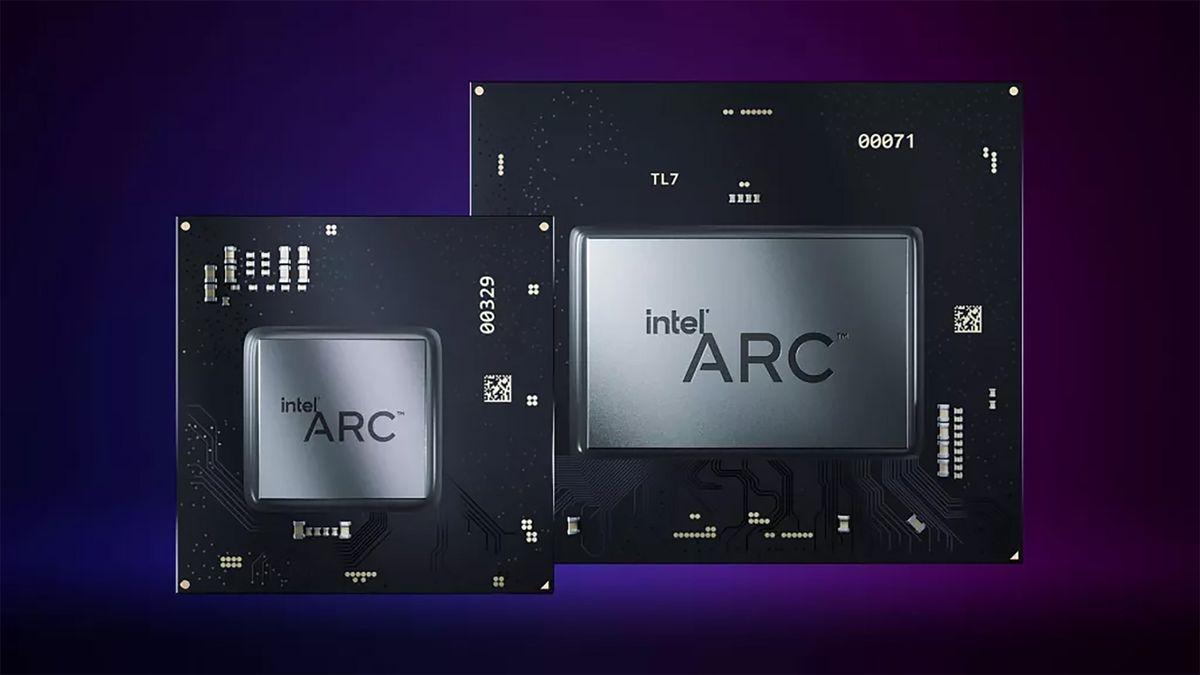
Intel’s Celestial graphics cards for the desktop, which will be the 3rd-gen of Arc GPUs, to follow Battlemage – the next-gen that’s imminent – are still being planned and worked on for the future.
That’s the latest word from the grapevine, courtesy of a well-known leaker on X, Bionic Squash.
As you can see, the leaker says that Intel still has plans for discrete GPUs (DGPUs), meaning desktop graphics cards, after the desktop models for Battlemage have been unleashed.
You might be wondering: why would there be any concerns about Celestial, anyway? Well, in the recent past, there have been some suggestions that Intel might not have another generation of GPUs after Battlemage, or at least not desktop models – and that Celestial could be for integrated graphics only.
That said, Celestial GPUs of the desktop variety still haven’t turned up in leaks – it’s too early for that at this point – and some other recent chatter has suggested that Intel may be waiting to see how successful Battlemage is, before fully committing to discrete Celestial products. However, take that past rumor, and this new one, too, with plenty of caution.
Sign up to be the first to know about unmissable Black Friday deals on top tech, plus get all your favorite TechRadar content.
It’s very likely that the truth is Intel still has decisions to make on this front, but if Bionic Squash is right, the plan for now is to release a 3rd-generation of Arc desktop GPUs.
It’s impressive that in only a few months, OpenAI’s ChatGPT became a fundamental part of Apple’s iPhone devices. Whether you have a phone with Apple Intelligence or not, you can take advantage of ChatGPT through its app or by integrating it with Apple’s AI platform.
With the latter, ChatGPT can currently improve Writing Tools technology. Apple explains:
With ChatGPT from OpenAI integrated into Siri and Writing Tools, you get even more expertise when it might be helpful for you — no need to jump between tools. Siri can tap into ChatGPT for certain requests, including questions about photos or documents. And with Compose in Writing Tools, you can create and illustrate original content from scratch.
You control when ChatGPT is used and will be asked before any of your information is shared. Anyone can access ChatGPT for free, without creating an account. ChatGPT subscribers can connect accounts to access paid features within these experiences.
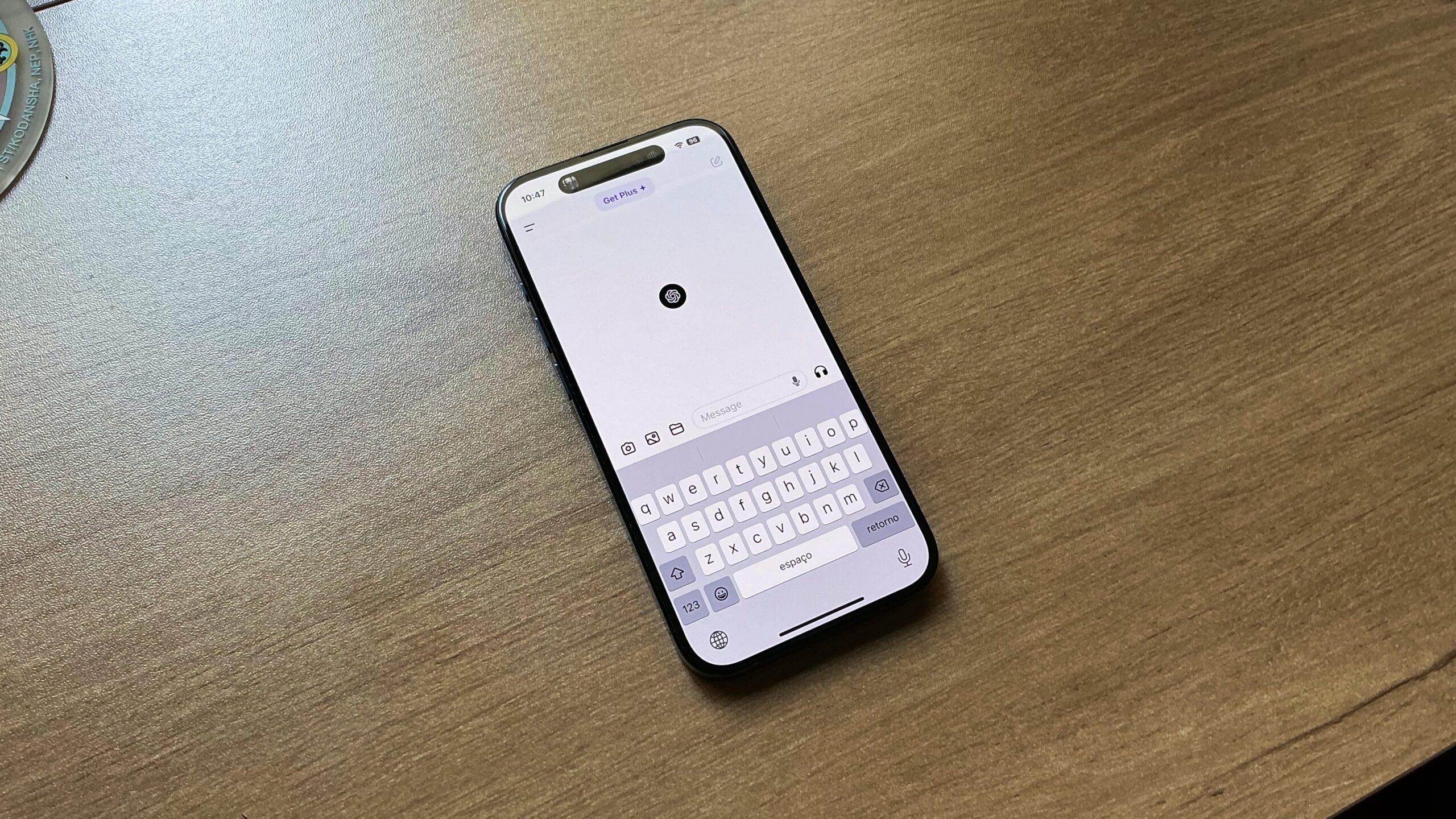
However, if you prefer using OpenAI’s ChatGPT app, the latest update brought an important upgrade. Now, you can set a Shortcut with SearchGPT. For those unaware, OpenAI’s SearchGPT is designed to give you an answer, as it will “quickly and directly respond to your questions with up-to-date information from the web while giving you clear links to relevant sources.” Users will be able to ask follow-up questions as the GPT understands the context of each query.
So far, SearchGPT is available for OpenAI subscribers with ChatGPT Plus and ChatGPT Teams services. Still, the company plans to roll out support to free users in the coming months. To access this feature, don’t forget to update your ChatGPT app to the latest version from the App Store.
A study by data center specialists Onnec has revealed that local authorities in the UK’s 20 largest cities have overwhelmingly approved data center projects, with 89% of applications receiving planning permission over the past five years. Of the 88 applications reviewed, only three were rejected, five were withdrawn, and one remained undecided.
Onnec looked at 44 local councils and their planning applications for the report. The researchers found that data centers are generally approved, which shows local support for digital infrastructure. To provide computing power and data storage for AI deployment makes that support crucial. Only three applications in Sheffield were rejected. Local authorities looked into possible issues around the design and impact of the centers, along with whether they would fit the character of the surroundings or damage the Green Belt.
Data Center Spread
Notably, the British government has made data centers critical national infrastructure to emphasize their report. That said, the report urges a holistic approach to planning and a nationwide approach to achieve the best outcomes. The UK has pledged £6.3 billion in data center investment as part of its work to make the UK a hub for AI. The UK’s Department for Science, Innovation, and Technology (DSIT) is trying to reduce the friction in building data centers. It has looked into rejected projects to see where there is room for improvement.
“Data centers are critical for driving AI growth, and with the race for AI supremacy in full swing, the UK has recognized that to get ahead, the right infrastructure must be in place,” Matt Salter, Data Centre Director at Onnec. “Data centers can become the new oil for regions and cities, but only if they are planned holistically – this means considering every aspect of the data center instead of focusing solely on factors such as power and cooling. For example, thinking about the importance of cabling in providing the bandwidth needed to get the most from data center hardware.
London is the largest data center market in Europe, but the report suggests trying to up the availability of data centers elsewhere in the country. Relying solely on London means there is limited power availability along with problems around sustainability. Spreading data centers to other regions would also mean spreading the benefits to the people there. That means improved job opportunities not only for the data centers but for anywhere that the digital skills required for data centers are useful.
“Failing to take a holistic approach will result in sites that aren’t fit for purpose, don’t deliver on the UK’s needs, and degrade over time – poor planning could mean a new data center can feel five years old after the first year of operation, and in need of an expensive retrofit,” Salter said. “The UK risks losing ground in the race for AI supremacy if data centers aren’t built to last.”


 Charging the Apple Watch Series 10 before and after a marathon race. Image source: Chris Smith, BGR