Posted on

Opera and Spotify partner to bring seamless music streaming to your browser

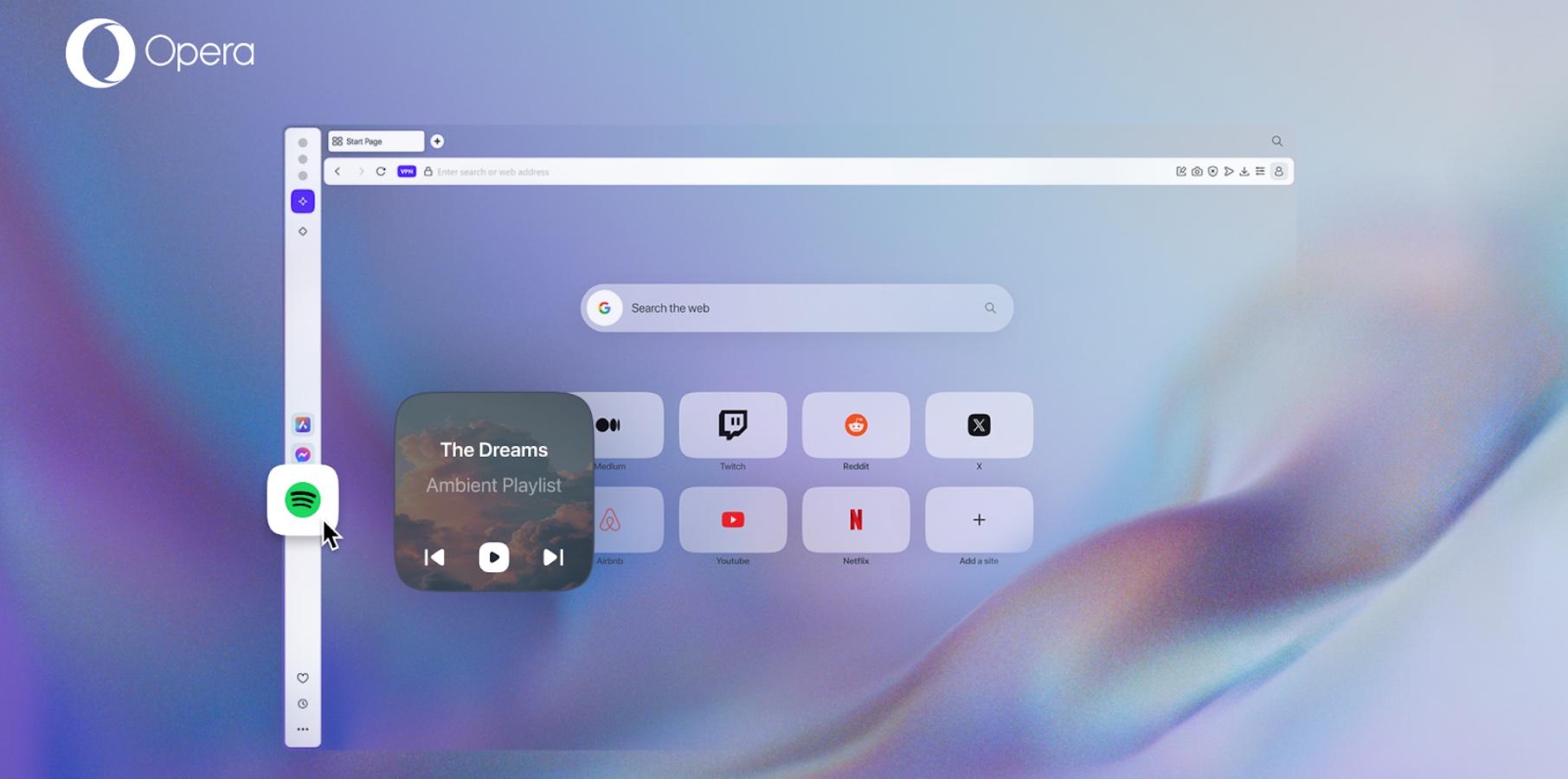
Following Opera One’s recent R2 update, the Nordic browser still has a few more surprises for its users. Starting today, Opera and Spotify have partnered to make it easier for users to listen to their favorite music, podcasts, and audiobooks while browsing on their computers.

Spotify is the default streaming service within the revamped Music Player in Opera’s flagship browser. To celebrate this partnership, Opera is offering up to three free months of Spotify Premium to users in Argentina, Brazil, France, Germany, India, Indonesia, Italy, Malaysia, the Philippines, Poland, Spain, Thailand, Turkey, the United Kingdom, the United States, and Vietnam

“People love listening to music and podcasts while at their computers. Now, with Spotify in the sidebar of Opera One, everything’s right there at your fingertips – you can shop, write, plan a trip, all while never having to stop listening to your favorite music and audio via the browser’s floating multimedia player,” said Joanna Czajka, Product Director at Opera.

The new music player with Spotify is located in the sidebar of the Opera One browser. When activated, it can be detached and moved around the screen without interrupting a user’s browsing flow. That said, instead of switching between tabs and apps, you can use the floating browser window.

Another perk of the built-in widget is that Spotify audio pauses when you join a meeting or call and resumes afterward.

Tech. Entertainment. Science. Your inbox.

Sign up for the most interesting tech & entertainment news out there.

By signing up, I agree to the Terms of Use and have reviewed the Privacy Notice.

Opera One R2 new features

Image source: Opera

Opera One R2 also offers a brand-new experience. Expanding on the modular design introduced with Opera One, R2 features the company’s latest AI innovations, new dynamic themes, and enhancements for tab management.

With this major browser update, users can take advantage of several new AI features. With a more powerful Command Line interface, Aria, the browser’s free AI, can quickly summarize a webpage, analyze an article, or even help users compare products when shopping online.

Image Generation and Image Understanding are also part of the Opera One R2 update. Users can even upload pictures in the sidebar chat, where Aria can explain what’s in the image. It’s even possible to upload a landscape sketch and ask the AI assistant to create a realistic version.

Other highlights of this update include:

  • Tab management enhancements: With Split Screen and Tab Traces, users can join two tabs and divide their screen into halves to have them open at the same time. The latter gives subtle visual cues about their five most recently visited tabs. This is available to users with more than 30 tabs open.
  • Detachable music and video player controls: The redesigned Music Player can be detached and moved around the screen. The video player also works with video calls. For those listening to music before joining a Google Meet, the music automatically fades out and pauses for the duration of the call.
  • Native ad blocker support: Opera One R2 includes the company’s famous native ad blocker support. Opera says it brings a cleaner, safer, and more private experience.

Source

Posted on

Intel’s next-gen Arc B580 spotted, backing up rumors of a December launch for Battlemage GPUs

  • Leak suggests the box for Arc B580 is being readied
  • This comes on top of rumors that Intel will launch Battlemage next month
  • We can hope for a true budget 1080p champ in those 2nd-gen Arc GPUs

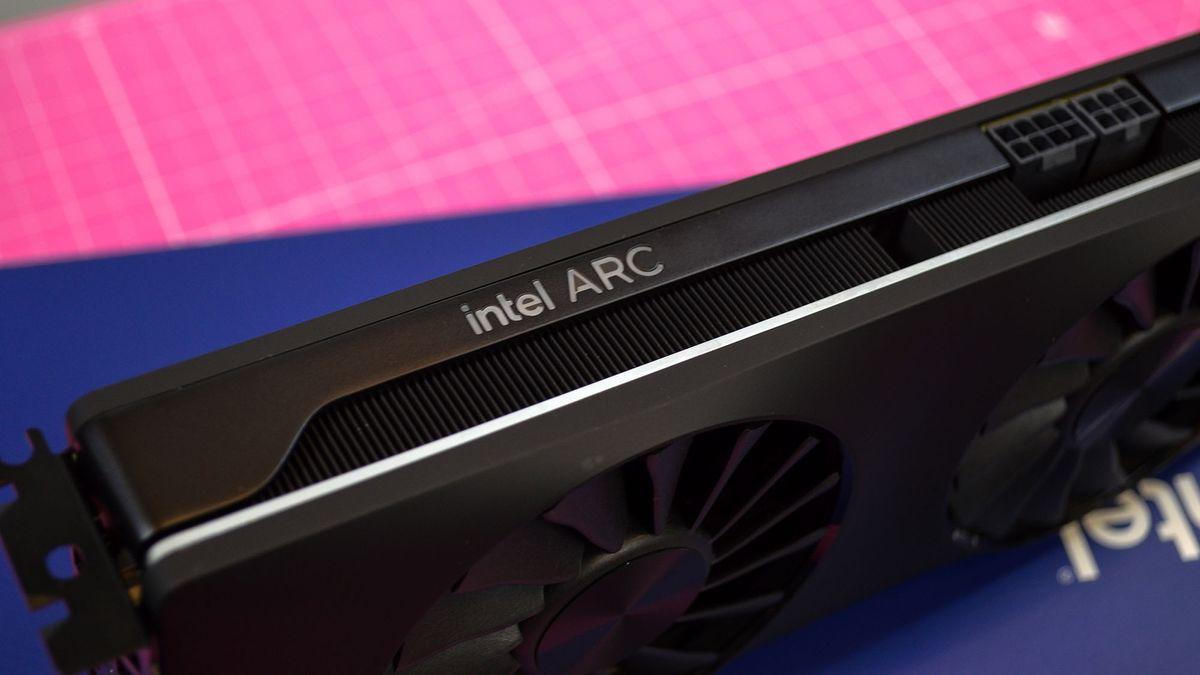
Rumors around Intel’s next-gen Battlemage desktop GPUs are ramping up, with the latest being a sighting of the Arc B580 graphics card – or at least a hint that the packaging is being readied.

Tom’s Hardware noticed the appearance of a shipping manifest, presented in a post on X, seemingly for the box of the Battlemage (BMG) B580 GPU.

Naturally, take this with some seasoning – plus the leaker in question is not one we’ve heard of before – but the packaging for the next-gen Arc graphics cards being readied (since September, apparently) falls in line with recent spinning from the rumor mill.

That includes speculation from a couple of days ago that showed a leaked teaser, showing Intel has a Battlemage announcement for December, which follows a rumor from earlier this month suggesting the exact same thing.

So, at least in theory, the revelation of these new 2nd-gen Arc GPUs is almost upon us.

An Intel Arc A750 graphics card on a pink desk mat next to its retain packaging

(Image credit: Future / John Loeffler)

Analysis: Battling at the lower-end of the GPU market

An imminent reveal makes sense in terms of Intel wanting to get in ahead with its Battlemage GPU launch, given that both AMD and Nvidia are at this point strongly rumored to be about to reveal their respective next-gen ranges of graphics cards – RDNA 4 and Blackwell – at CES 2025.

Previous rumors had suggested an early 2025 launch for Battlemage, but perhaps Intel fears its 2nd-gen Arc graphics cards might get lost in the hype battle between RDNA 4 and RTX 5000 GPUs if it waits that long – drowned out by the noise made around those rival GPUs, even if they aren’t direct rivals for Intel – so Team Blue has stepped up its plans.

{ window.reliablePageLoad.then(() => { var componentContainer = document.querySelector(“#slice-container-newsletterForm-articleInbodyContent-uJkcQ4UFdQD83TnFScJwyJ”); if (componentContainer) { var data = {“layout”:”inbodyContent”,”header”:”Get the best Black Friday deals direct to your inbox, plus news, reviews, and more.”,”tagline”:”Sign up to be the first to know about unmissable Black Friday deals on top tech, plus get all your favorite TechRadar content.”,”formFooterText”:”By submitting your information you agree to the Terms & Conditions and Privacy Policy and are aged 16 or over.”,”successMessage”:{“body”:”Thank you for signing up. You will receive a confirmation email shortly.”},”failureMessage”:”There was a problem. Please refresh the page and try again.”,”method”:”POST”,”inputs”:[{“type”:”hidden”,”name”:”NAME”},{“type”:”email”,”name”:”MAIL”,”placeholder”:”Your Email Address”,”required”:true},{“type”:”hidden”,”name”:”NEWSLETTER_CODE”,”value”:”XTR-D”},{“type”:”hidden”,”name”:”LANG”,”value”:”EN”},{“type”:”hidden”,”name”:”SOURCE”,”value”:”60″},{“type”:”hidden”,”name”:”COUNTRY”},{“type”:”checkbox”,”name”:”CONTACT_OTHER_BRANDS”,”label”:{“text”:”Contact me with news and offers from other Future brands”}},{“type”:”checkbox”,”name”:”CONTACT_PARTNERS”,”label”:{“text”:”Receive email from us on behalf of our trusted partners or sponsors”}},{“type”:”submit”,”value”:”Sign me up”,”required”:true}],”endpoint”:”https://newsletter-subscribe.futureplc.com/v2/submission/submit”,”analytics”:[{“analyticsType”:”widgetViewed”}],”ariaLabels”:{}}; var triggerHydrate = function() { window.sliceComponents.newsletterForm.hydrate(data, componentContainer); } if (window.lazyObserveElement) { window.lazyObserveElement(componentContainer, triggerHydrate); } else { triggerHydrate(); } } }).catch(err => console.error(‘%c FTE ‘,’background: #9306F9; color: #ffffff’,’Hydration Script has failed for newsletterForm-articleInbodyContent-uJkcQ4UFdQD83TnFScJwyJ Slice’, err)); }).catch(err => console.error(‘%c FTE ‘,’background: #9306F9; color: #ffffff’,’Externals script failed to load’, err)); ]]>

Sign up to be the first to know about unmissable Black Friday deals on top tech, plus get all your favorite TechRadar content.

Remember, we might just get a Battlemage announcement in December, and the boards themselves may not go on sale until later (in fact, that’s likely to be the case).

Seeing the Arc B580 mentioned specifically is interesting, as the gist of what we’ve heard regarding the performance of Battlemage GPUs is that they’ll all be targeting the lower end of the market.

Rumor has it that the top 2nd-gen Arc graphics card will run with 32 Xe cores, so will equal the current-gen (Alchemist) Arc A770 – so that’d fit with a theoretical B580 model. (Intel would have to drop this configuration down a tier to make sense, in other words – remember, though, there’ll be architectural performance improvements here, too, it’s not all about core count). So, perhaps the B580 will be the top offering with Battlemage, but this is all guesswork, really.

Whatever the case, it’ll be great to get some new budget GPUs – with truly affordable price tags – as this is an area Nvidia especially, and AMD too, has neglected for too long. Therefore, it’s a space where Intel can hopefully get in and make a meaningful difference in the world of desktop GPUs. Fingers and toes crossed.

You might also like

Source

Posted on

Computer Weekly announces the Most Influential Women in UK Tech 2024

Sheridan Ash, founder and co-CEO of Tech She Can, has become the 13th person to be named Computer Weekly’s Most Influential Woman in UK Tech.

Launched in 2012, the Computer Weekly list of the 50 Most Influential Women in UK Tech started as a list of 25, expanding to 50 in 2015, and now seeing hundreds of nominations each year.

The list was originally created to showcase the amazing women in the technology industry, shining a light on the sector’s role models who may inspire the next generation of women in tech.

As well as the 2024 longlist of more than 700 nominated women, and our list of Rising Stars, there are also new entrants to our Hall of Fame, launched to acknowledge those who have made a lifetime contribution to the UK’s technology sector.

This year’s winner, Sheridan Ash, launched Tech She Can to teach girls and young women about technology careers and subjects to inspire them to choose this path in the future.

Until 2023, Ash led technology innovation at PwC UK, and is currently co-CEO and founder of the charity Tech She Can. She was a board member of the Institute of Coding for four years and, in 2020, received an MBE for services to young girls and women through technology.

Tech She Can is an award-winning charity with more than 240 member organisations, which together work with industry, government and schools to improve the ratio of women in technology roles. It provides initiatives and pathways into tech careers across all the different stages of girls’ and women’s lives.

At PwC, Ash led change in the technology workforce, pioneering initiatives that saw the percentage of women in tech more than double to reach 32%.

Timperley is a freelance consultant and co-founder of Tech North Advocates, a private sector-led collection of tech experts who champion the technology sector in the north of England.

In 2021, she co-founded advisory firm Growth Strategy Innovation, which helps to grow startup and scaleup organisations. She is now innovation director for Oxford Innovation, which helps organisations develop ecosystems for entrepreneurs and innovators, in turn boosting local areas.

Timperley was named a Computer Weekly Women in Tech Rising Star in 2017 when, until 2021, she was a board member of FutureEverything. She previously co-founded Enterprise Lab.

Turner founded Angel Academe, a pro-women and pro-diversity angel investment group focused on technology, and is currently CEO of the group.

Until 2023, Turner was also an advisory board member of tech recruiter Spinks, and in 2007 co-founded consultancy Turner Hopkins, which helps businesses create digital strategies.

Previously, Turner was an external board member and chair of the investment committee for venture capital fund the Low Carbon Innovation Fund and a board member of the UK Business Angels Association, the trade association for early-stage investment.

Hunter founded Coding Black Females in 2017 to help black female software developers meet each other and network. Alongside her work at Coding Black Females, Hunter is a software developer.

She is an advisory board industry representative in the University of Essex Online’s computing department, technical director at SAM Software Solutions, and technical director at full-stack and front-end training organisation Black CodHer Bootcamp.

Previously, Hunter was lead software engineer at Made Tech, and held roles such as senior software developer, lead Java developer, app developer and technical consultant at various firms. She was named a Computer Weekly Women in UK Tech Rising Star in 2020.

Before her time as an MP, Niblett had a long career in technology, having roles such as industry sales leader at DXC Technology and head of alliances, channel and ecosystem in EMEA at 1E.

Now, alongside her role as an MP, she’s founder of the Labour: Women in Tech group, which campaigns to reach equal gender opportunities in the technology industry. She’s also the co-chair of the All-Party Parliamentary Group on FinTech and the Parliamentary Internet, Communications and Technology Forum (PICTFOR), as well as the chair for the Interparliamentary Forum on Emerging Technologies and a member of the Women and Equalities Select Committee.

An entrepreneur and co-founder, Brailsford joined Code First Girls as CEO in 2019, where she works to encourage more women into the tech sector by providing software development skills and education.

Prior to her work at Code First Girls, she co-founded and was CEO of performance management firm Frisbee, which was part of venture capital fund Founders Factory. Until summer 2024, she was was a board member for the Institute of Coding, where she focused specifically on diversity and inclusion. She is also a self-employed commercial and strategy consultant.

As part of her role as partner and head of digital for Europe at Oliver Wyman, O’Neill leads digital transformation and new proposition launches at companies all over the world.

Alongside this, she is also a strategic partner at FutureDotNow, a board trustee for Girlguiding and special adviser to the founder at The Youth Group.

Sillem worked for the Royal Academy of Engineering for 12 years before being appointed its CEO in 2018. Previous roles at the academy include deputy CEO and director of strategy, director of programmes and fellowship, and head of international activities.

As well as her work for the academy, Sillem is a trustee of EngineeringUK and the Foundation for Science and Technology, and CEO of the Queen Elizabeth Prize for Engineering.

Lakhani founded Century Tech as a teaching and learning platform focused on subjects such as artificial intelligence (AI), cognitive neuroscience, big data analytics and blockchain, where she is also CEO.

A frequent public speaker, she has previously been a member of the UK’s AI Council, a board member for the Foundation for Education Development, a board member for Unboxed 2022, and a non-executive director for the Department for Digital, Culture, Media and Sport (DCMS).

She is a digital patron for Cottesmore School, and has appeared on the BBC’s AI Decoded news segment. She was awarded an OBE in 2014.

Mary McKenna is a huge supporter of entrepreneurship and startups, holding several roles as an adviser and investor. Her social enterprise, AwakenHub, where she is co-founder, is focused on building a community of female founders in Ireland.

As well as being an expert adviser for the European Commission, she is an entrepreneurship expert with the Entrepreneurship Centre at the University of Oxford’s Said Business School, and a trustee for CAST, among many other board memberships and non-executive directorships.

Thorne is co-CEO of Tech She Can, a charity aimed at increasing the number of women in the technology sector, as well as a venture partner at Deep Science Ventures and a diversity and inclusion advisory board member for the Institute of Coding.

She has a background in the education sector, previously holding roles as director of innovation strategy for the University of Surrey and executive officer to the vice-president (innovation) at Imperial College London.

Williams is CEO of inclusion campaign FutureDotNow, which aims to ensure people are not left behind by the growing skills gap caused by digital adoption. She is a member of the UK government’s Digital Skills Council, and chair of the Good Things Foundation.

Prior to her current work, Williams spent more than 20 years at BT in a number of different roles, including programme director for sustainable business, director of tech literacy and education programmes, and director of digital society. Until 2024, she was a member of the board of trustees for Transport for London.

With a background in law surrounding telecoms, the internet and media, Wright now uses her expertise as director of not-for-profit The Institute of AI, as well as partner at Harbottle & Lewis, heading up the tech, data and digital group.

She has worked in the tech sector for over 20 years. Her team at Harbottle & Lewis is comprised of 66% female and 66% ethnic minority members.

During 2023, she worked with the OECD, WEF and the ITU to build a reputation in relation to the regulation of AI. She is also working with the Ditchley Foundation, considering whether the collaborative approach in relation to telecoms can work for AI regulation.

In her 30 years at KPMG, Mehta has had many responsibilities, including building the firm’s focus on trade and investment, and helping scaleup clients to access financial support.

She is now chair of the organisation, and in 2022 was awarded an MBE for services to UK trade and investment and supporting female entrepreneurs.

An expert in diversity, inclusion and community building, Farooq co-founded Muslamic Makers in 2016 as a networking group for Muslims in tech, design and development.

As well as a freelance diversity and inclusion consultant, Farooq is a scout for Ada Ventures with special interest in edtech, healthtech and fintech, and until March 2024 was a community manager for Big Society Capital.

She has an extensive background in digital and AI in both the private and public sectors.

Taylor co-founded TechReturners, where she is currently CEO, to give skilled individuals who have had a career break the opportunity to connect with firms and help them back into mid-level to senior-level tech roles.

She is also co-founder of The Confidence Community, which aims to provide resources, training information and events to give people more career confidence. Taylor is co-founder of community WIT North and co-founder of ReframeWIT.

She recently founded community platform Voices in Tech to help connect speakers with event opportunities.

Dawes has headed up Ofcom since 2020 following her previous role as permanent secretary at the Ministry of Housing, Communities and Local Government, as well as many other roles across the Civil Service.

She has previously been a trustee at Patchwork Foundation, which aims to encourage under-represented young people to participate in democracy, and a non-executive director of consumer group Which?.

Award-winning entrepreneur Avril Chester is currently the CTO of the Royal Pharmaceutical Society, her most recent in a series of roles heading up technology in organisations. In 2018, she founded technology charity platform Cancer Central to help support people with cancer.

Martin has a history of working as a test consultant at firms such as Barclays, Sony, the UK Home Office, Shazam and Sky, and is currently a startup adviser and founder of her own coaching and consultancy firm.

Prior to this, she was head of quality at Adarga and is currently chair for the BCS Special Interest Group in Software Testing, and until January 2023 was the vice-chair of the BCS LGBTQIA+ tech specialist group.

Amanda Brock’s role at OpenUK sees her leading the sustainable and ethical development of open technologies in the UK, including technology such as open source software, hardware and data.

She also sits on the boards of both the Cabinet Office Open Standards Board and US cyber security firm Mimoto, is an advisory board member of several firms, as well as acting as a judge for the CIO 100 Awards.

Moore has been at Apps for Good since 2019, originally as director of education, products and events, then as chief operating officer (COO), before becoming CEO in 2021.

Her career background has been heavily weighted towards education, having been international education programme coordinator for London 2012, and volunteering as governor at the Harris Academy Ockendon and Sixth Form.

Tanaka is currently part of the programme team for All4Health&Care, a community launched during the pandemic to connect digital healthcare providers with the public sector. She is also the head of the CMO Office for NHS Black Country ICB, and is on the community support committee for BCS.

Previously, she has been a fellow, independent audit for AI systems for ForHumanity, and BCS Women membership secretary.

Calista has a history in both technology and the public sector.

Alongside her role at Labour Digital, she is head of policy and public affairs at UK scaleup Vorboss, and she co-founded network Women in Tech Policy.

She volunteers as an adviser for digital citizenship charity Glitch, and is a policy board member for OpenUK.

With experience in cloud at companies such as Salesforce and IBM, Kelisky started her role at Google in 2022 well-equipped with the skills needed to run its cloud division.

Alongside this, Kelisky is on the board of directors for Calnex Solutions, and is a member of the board of directors for the Women in Telecoms and Technology networking group.

Lila Ibrahim became Google DeepMind’s first COO in 2018, looking after teams in disciplines such as engineering, virtual environments, programme management and operations.

Prior to this role, she was COO of online skills platform Coursera, and has also acted at general manager for emerging markets platforms in China at Intel.

Philpot has a background in both sales, and learning and development, which she uses in her role as the vice-president of global sales enablement at Getty Images. She has held various roles both in and outside of sales at many notable firms, such as Shell, Mars and GSK.

As well as being a board member for the TLA Black Women in Tech group, she is a member and speaker for the Sales Enablement Directive.

Hodson has an extensive background in the technology sector, and has had roles such as managing consultant at EY and general manager at Siemens Business Services responsible for public sector, healthcare, financial services and manufacturing.

More recently, she was vice-president for global sales, marketing and operations – field transformation at Microsoft, before becoming chief executive of IBM in UK and Ireland at the beginning of 2023.

She’s also a board member and deputy president of TechUK, and holds several non-executive directorships.

As managing director of Jomas Associates (Engineering & Environmental), Savage specialises in geotechnical and environmental engineering.

She is also passionate about topics such as women in engineering and social mobility, and is on the UK government’s SME Business Council.

With a long history of CEO positions, Kirkby has experience in running companies with a background in telecoms, and in February this year took over as CEO of BT Group. Her past CEO roles have included TDC group, Tele2 and Telia, and she is also a non-executive director of Brookfield asset management.

Barclay has been with Microsoft for more than 10 years, holding several roles including director of SMB, general manager of small and mid-market solutions and partners, COO, and CEO in the UK.

In November 2024, she became president of enterprise and industry for Microsoft in the UK. She is chair of the industrial strategy advisory council for the Department for Business and Trade, volunteers as a board member for the British Heart Foundation and, until recently, was a non-executive director at CBI.

Oniwinde Agoro founded BYP Network in 2016 to help black professionals network and have easier access to jobs, after a trip abroad confirmed the challenges young black people face in getting jobs both in and outside the UK.

Until 2024, she was board trustee for volunteer organisation Getting On Board, and has received several awards and accolades, including Forbes 30 Under 30 and Financial Times Top 100 BAME Leaders in Technology.

Wallace heads up diversity and inclusion, partnerships and people change at Sky, and one of her focuses in this role is designing and delivering the people strategy for technology within the firm.

Outside of this, Wallace was a member of the advisory board for recently disbanded Tech Talent Charter, and volunteers as a cub and scout assistant.

Scullion is a serial founder, having founded dressCode, a not-for-profit that encourages young women in Scotland to consider a career in computer science, and co-founded the Ada Scotland Festival, which aims to use collaboration to close the gender gap in computer science education in Scotland.

These endeavours stem from her being a computer science teacher passionate about encouraging more children to take the subject. Alongside this work, she is a volunteer for the Scottish Tech Army, a not-for-profit aimed at using tech for good.

Earlier this year, Tulip took on the role of chief growth officer at software engineering consultancy Conquer Technology. In 2018, she co-founded community-led initiative Women In Leeds Digital, which encourages and helps minority groups to consider a career in technology.

Tulip is also chair of the regional productivity forum in Yorkshire, Humberside and the North East for the Productivity Institute, ambassador for Leeds as a digital city at Leeds City Council, and managing director at &Then Consulting.

Moore co-founded data analytics and AI firm Panintelligence in 2010 with the aim of helping firms properly organise their data to more easily adopt AI. She became CEO in 2018.

Alongside this, Moore also founded low-code tech community No Code Lab and gender equality community Lean In Leeds. As well as a position as chair for Lifted Ventures, Moore is an Ada Angel for inclusive venture firm Ada Ventures.

As global director of identity at Sky, Moore is responsible for leading the firm’s identity management projects. Prior to this, she held several roles as a project manager, and was previously the head of infotainment group technology for Vodafone.

As well as being a member of the board for Tech Talent Charter, she is the co-founder of female tech leaders community Lift as we Climb.

Maria Axente is the head of AI public policy and ethics at PwC in the UK, where she combines her skills in analytics and ethical AI policy development to ensure AI is developed with humans in mind.

Previously, she was the artificial intelligence and AI-for-good lead at the firm, responsible for advising clients on responsible use of AI, and ensuring ethical development of PwC AI operations, products and services.

She’s a vice-chair for the data, analytics and AI leadership committee at TechUK, and in the past she has been an advisory board member for the APPG for AI, and adviser for the PHI for Augmented Intelligence.

As CEO of Nash Squared, White heads up the global firm which provides IT recruitment, technology solutions and leadership services out of 36 offices across the world.

White has a long background in the tech sector, having previously held roles as CIO and director of IT, as well as completing a degree in computer science.

Bentinck was named a Computer Weekly Rising Star in 2014, and has co-founded several organisations, including Entrepreneur First, a firm that supports European technology startups, and not-for-profit coding training programme Code First Girls.

She is on the Computer Science Department Industrial Liaison Board for Imperial College London, is a board trustee for Generation and is the author of startup business book How to be a founder.

Hirt joined Innovate Finance in 2015 as the industry body’s head of community, before eventually becoming its CEO six years later. She now heads up the organisation, aiming to drive innovation and transformation in the fintech sector to make it more inclusive.

She has worked around the world in a variety of roles, including acting head of corporate relations for Chatham House in the UK, head of membership for the Brazilian-American Chamber of Commerce in New York, and head new hire trainer for an English language training programme in Japan.

Davis is the co-founder of diversity career platform Diversifying, and founder and CEO of recruitment organisation BAME Recruitment and Consulting.

She is chair of the board of directors for Pop Up Projects and a board trustee for charity Over the Wall, both aimed at changing young people’s lives for the better.

Davis has previously held roles in talent acquisition in the STEM sector, at telecoms firm BT, and as part of a short-term project at an aerospace, aviation, F1 and motorsport organisation.

The first female to head up GCHQ, Keast-Butler moved into the director role last year after serving as deputy director general of MI5. With a long career in security and defence, her previous roles have included overseeing the upkeep of functions that support MI5’s operational activities and the launch of the UK’s National Cyber Security Programme.

As well as her work as senior EUC engineer, infrastructure and cloud engineering at the London Stock Exchange Group, Opong is a freelancer and STEM adviser and a board trustee for The Blair Project Foundation.

Until recently, she was part of the City of London Corporation volunteer advisory group for equality, diversity and inclusion, and was previously an advisory board member for Neurodiversity in Business, and a mentor at the TechUp mentor programme for Durham University.

Opong was a contributor for Voices in the shadows, the book of black female role models created by the 2022 Computer Weekly Most Influential Woman in UK Tech, Flavilla Fongang.

Munby has a long history of working in government, and became permanent secretary leading the Department for Science, Innovation and Technology in February 2023.

She has also been partner, leader of strategy and corporate finance practice in UK and Ireland at McKinsey & Company, where she led the firm’s work on productivity across the UK economy.

Crosswell is managing director of consulting firm Exadin, as well as chair for the Centre for Finance, Innovation and Technology. She holds several other non-executive directorships in firms such as Freemarket and the Centre for Policy Studies. In 2021, she received an OBE for services to the financial services sector.

Graham has been the CEO of not-for-profit the ScaleUp Institute since 2015, and has an OBE for services to UK business and economy.

As well as being a visiting professor of entrepreneurship at Strathclyde University, Graham holds various non-executive and advisory roles.

As CEO of Salesforce in the UK and Ireland, Bahrololoumi is responsible for the workforce in these regions across all industries and functions, and is particularly focused on ensuring its customers are ready for digital transformation.

She sits on several boards, including for Seeing Is Believing Coventry Place, Movement to Work and Cancer Research UK Corporate Partnerships, and is an independent non-executive director on the TSB board.

In 2023, she was awarded a CBE for services to the information technology sector.

Naming the technology sector her “familiar territory”, Gardner has an extensive background in the technology sector, having held roles such as first line support at Fujitsu, senior supply chain administrator at Technicolor and project manager at the BBC as a member of the BBC’s Design and Technology Business Management Unit HQ Team.

Now, she’s a business operations analyst as part of the technology arm of News UK, and is a board trustee of food and hygiene bank Necessities UK.

Cardell has been at the Competition and Markets Authority since 2013, first as general counsel, then as interim CEO, and now as CEO.

Prior to her time at the Competition and Markets Authority, she was a legal partner for the markets division of energy markets authority Ofgem, and in her early career spent 11 years at law firm Slaughter and May, working her way from trainee solicitor to partner.

Sinel founded Teens in AI and Acorn Aspirations to help young people who want to solve real-world problems using technology such as AI, virtual, augmented and mixed reality.

She has won awards for her work, including CogX 2017 Award in Using AI for Social Good Projects, and is currently an education taskforce committee member for the All Parliamentary Group on Artificial Intelligence, and a business mentor at Microsoft for Startups.

Before working on Acorn Associates and Teens in AI, Sinel was a consultant for several firms, including the British Council, NGOs, Chittagong Hill Tracts and the Ethiopian Cultural Heritage Project. 

Source

Posted on

Tineco CARPET ONE CRUISER is the most convenient carpet cleaner in history

This is a sponsored article. All content and opinions expressed within are of the author.

In 2024, your household probably has vacuuming covered. There are so many great vacuum models out there for tough jobs, plus most of us have at least one robot vacuum to take care of routine cleaning. But what about all those tricky messes on your carpets? And what happens when something spills on one of your rugs?

Spraying a cleaner and blotting the mess with a towel never really gets the job done, and we all know it. That’s where the Tineco CARPET ONE CRUISER comes in. This brilliant new device makes deep cleaning your carpets and rugs as easy as vacuuming, and there’s no question that it’ll be a game-changer in your home.

Amazon Logo Available on Amazon

Clean your carpet the easy way

Using the new Tineco CARPET ONE CRUISER is as easy as vacuuming your floor. If you’ve ever tried a carpet cleaner, you know that’s not always the case.

Tech. Entertainment. Science. Your inbox.

Sign up for the most interesting tech & entertainment news out there.

By signing up, I agree to the Terms of Use and have reviewed the Privacy Notice.

Carpet cleaners are typically big, bulky machines that take all of your strength to move. They soak your carpet or rug with water and chemicals, and they never seem to come anywhere close to sucking up all the liquid. That means you’re left waiting all day for your carpet to dry. You might even set up a few fans or a dehumidifier to try to speed things up, but they barely help. And is your wood flooring under those rugs even still OK after being wet for so long?

Thankfully, using the Tineco CARPET ONE CRUISER is an entirely different experience.

First of all, Tineco uses what it calls “3-level SmoothPower Tech” to ensure that the CARPET ONE CRUISER is always easy to move and maneuver. There are three different levels of power assistance that help while pushing and pulling the carpet cleaner, making it as effortless as possible. If you can use a vacuum, you can use the CARPET ONE CRUISER. Even your young kids can handle it… as long as you bribe them with candy or screen time.

Next, Tineco uses iLoop Smart Sensor Technology to automatically adjust water flow and suction based on how much dirt is detected on your carpet or rug. You never have to worry about manually adjusting the settings. Just turn it on and start cleaning.

“But what about all those stains in hard-to-reach spots,” you ask? Don’t worry, the Tineco CARPET ONE CRUISER has that covered, too. It comes with a special handheld spot cleaner that quickly connects to the CARPET ONE CRUISER so you can reach anywhere.

Deep clean any carpet or rug

Tineco Carpet ONE CruiserImage source: Tineco

This new Tineco model is perfect for cleaning dust, dirt, spills, and even unwanted presents left behind by your dog or cat. No matter what you need to clean, the Tineco CARPET ONE CRUISER can handle it.

iLoop Smart Sensor Technology uses low water flow and light suction when it doesn’t detect much dirt on your carpet. But when the soil level increases, so does the cleaning power. The CARPET ONE CRUISER ramps up to 130W of maximum suction power to ensure that even the worst messes are cleaned up in just one or two passes.

When it comes time to tackle a really bad mess or an old stain, Tineco has you covered there, too. The unit comes with a special pre-treat formula in a spray bottle that you can use on extra tough stains and messes. Just spray the area and leave the formula to do its thing. Then, 3-5 minutes later, the CARPET ONE CRUISER will be able to suck up even the most stubborn messes in no time.

CARPET ONE CRUISER cleans your carpets, then cleans itself

Tineco Carpet ONE CruiserImage source: Tineco

One of the best aspects of the Tineco CARPET ONE CRUISER experience is what happens after you’re done cleaning your carpets and rugs.

Most people know that other carpet cleaners leave your floors wet for hours or even more than a day. As a matter of fact, that might be the reason you find yourself avoiding cleaning your carpets altogether.

Meanwhile, the Tineco CARPET ONE CRUISER has high-temperature PowerDry that goes to work after you’re done cleaning. It uses heating elements built into the bottom of the machine to heat your carpet or rug to 167°F. This special drying feature reduces the time it takes to dry your carpet by 50% compared to other common carpet cleaners.

Last but not least, when you’re finished washing and drying your carpet, the CARPET ONE CRUISER has one more trick hiding up its sleeve. Place it on the charging dock and start the FlashDry self-cleaning cycle so the CARPET ONE CRUISER can clean itself once it’s done cleaning your carpets. It deep cleans the brush roller, brush roller cover, and inlet with just one press of a button. Then, it uses 131°F hot air to dry everything and prevent odors and mildew.

Amazon Logo Available on Amazon

Source

Posted on

Here are all the devices Apple sells that still have Lightning ports

With Apple’s recent iPhone 16 event and M4 Macs release, the company followed an important path by eliminating the Lightning port from more devices. By opting for USB-C, not only is the company agreeing with the European Union’s Digital Markets Act, but it’s also showing a future where customers will be able to use the same cable for all their electronic devices.

That said, there are still some products that require a Lightning port and a few accessories that support this old standard. Here they are.

Apple still sells four iPhone models with Lightning port

iPhone 14 Plus salesImage source: Apple Inc.

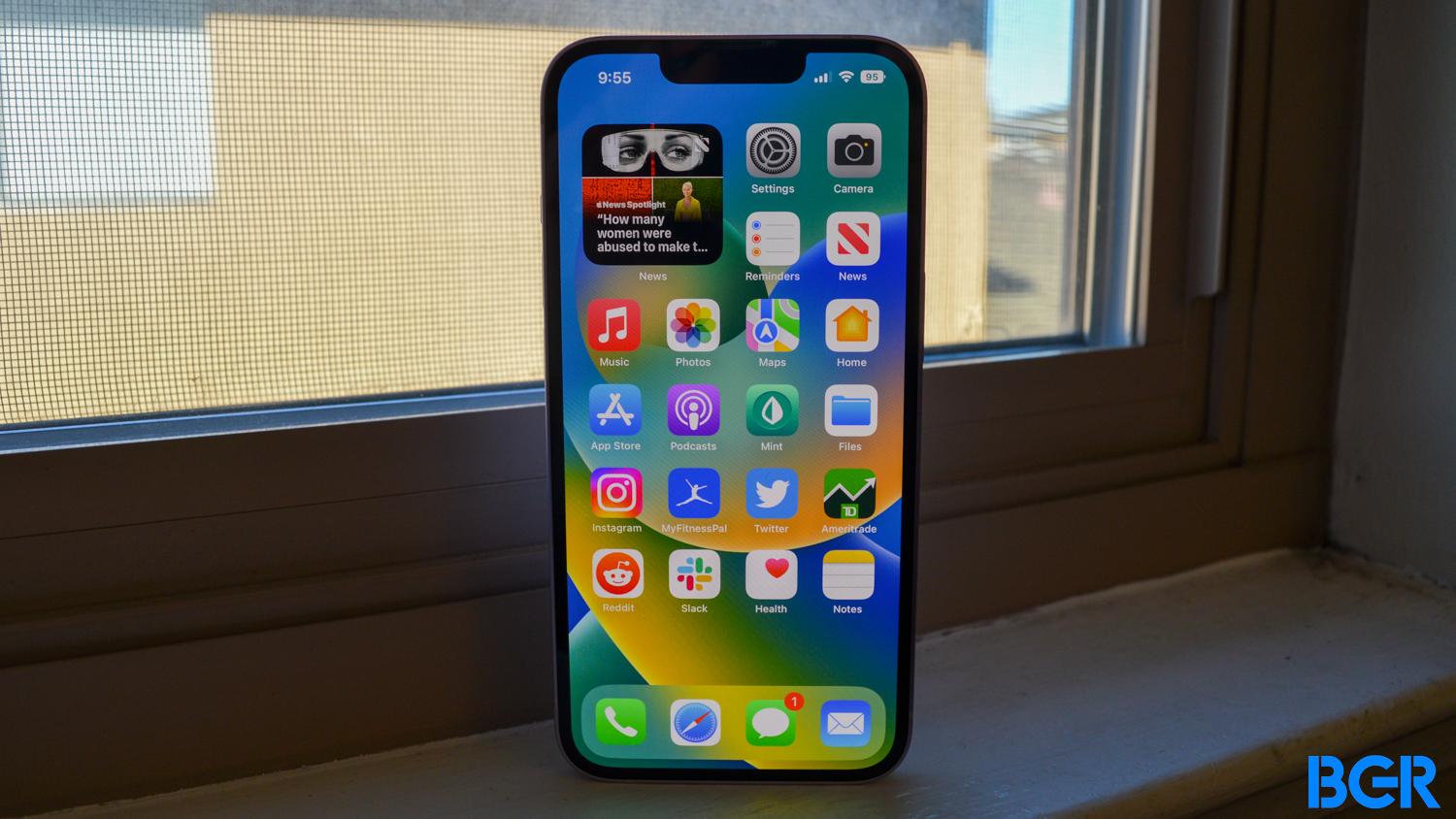
Although the iPhone 16 series offers a USB-C port, Apple still has three other iPhone models that still rely on Lightning cables. The 2022 iPhone 14 and iPhone 14 Plus, and the 2022 iPhone SE 3.

While Apple is said to be planning a new iPhone SE 4 for 2025, this means the company will take another year to fully eliminate the Lightning port from all the iPhone models it sells. That means that only when the iPhone 17 is announced will we have a full lineup of USB-C phones.

Tech. Entertainment. Science. Your inbox.

Sign up for the most interesting tech & entertainment news out there.

By signing up, I agree to the Terms of Use and have reviewed the Privacy Notice.

Not only is there still a long way to go, but millions of customers will hold with their iPhone 14 – or older models – for years to come.

All iPad models sold by Apple are USB-C, but the first-gen Apple Pencil is still here

Apple iPad 9Apple iPad 9 with keyboard accessory. Image source: Apple Inc.

The 2021 iPad 9 was the last iPad model with a Lightning port. Earlier this year, Apple discontinued this product and lowered the price of the USB-C iPad 10.

While both iPads work with the first-gen Apple Pencil, Apple also released a USB-C accessory that’s perfect for the iPad 10. However, millions of people with a Lightning iPad still require that first-gen Apple Pencil, which is why the company still sells it.

There are other accessories Lightning-compatible still available

Apple EarPodsImage source: José Adorno for BGR

Apple recently revamped the AirPods lineup. With no more second and third generations available, the company also updated the AirPods Max with a USB-C port. With that, there are only a few Lightning accessories, which include:

  • Lightning EarPods
  • USB-C to Lightning cable
  • USB-A to Lightning cable

Wrap up

As you can see, in a year, Apple almost killed all the Lightning products it used to have. By 2025, we’ll likely only have those three accessories available alongside the first-gen Apple Pencil, as the company will continue to offer them for older devices.

Source

Posted on

Data bill aims to boost police and NHS productivity

Thank you for joining!

Access your Pro+ Content below.

5 November 2024

Data bill aims to boost police and NHS productivity

  • Share this item with your network:

In this week’s Computer Weekly, the government’s new data bill promises to improve productivity and efficiency for the NHS and police, but will it ensure privacy as well? We talk to Dell’s global CTO about how the IT giant sees the AI boom playing out. And we examine which industries stand to benefit most from the collaboration opportunities of virtual reality. Read the issue now.

Source

Posted on

Apple’s hotly anticipated iPhone SE 4 might not launch as soon as we hoped

The iPhone SE 4 isn’t even out, yet I can’t stop recommending this unreleased Apple product. That’s because all rumors paint the same picture of this mid-range iPhone that’s supposed to hit stores next year. If you’re not buying the iPhone 16 but want a new iPhone, the iPhone SE 4 is probably for you.

The iPhone SE 4 will deliver flagship performance comparable to the iPhone 16 since Apple wants it to run Apple Intelligence. The only real compromises concern the design and camera. Apple will recycle the iPhone 14 design for this model, and you’ll get only one camera on the back instead of two or three.

But if you consider the likely price of the iPhone SE 4 — $499 — it should be an instant hit.

The good news is that the iPhone SE 4 should launch soon. All reports say the phone is coming in early 2025. But it won’t be as early as you might have hoped, with a more recent report indicating the handset won’t hit stores until March 2025.

Tech. Entertainment. Science. Your inbox.

Sign up for the most interesting tech & entertainment news out there.

By signing up, I agree to the Terms of Use and have reviewed the Privacy Notice.

Korean website AjuNews says that LG Innotek will provide the 48-megapixel camera module for the iPhone SE 4. It’s currently testing the component, and LG will reportedly start mass-producing the camera module next month.

The report notes that LG Innotek usually supplies camera modules three months before the launch of a new product. With manufacturing expected to start in December, the iPhone SE 4 should get a March 2025 release date.

While some iPhone fans might have hoped for an earlier launch, the March window makes sense for Apple. Previous iPhone SE variants were launched around that time each year.

I’ll add that an iPhone SE 4 specs and price leak also recently offered a March 2025 release window. But that might have been an educated guess based on Apple’s iPhone SE release history. The report from Korea says that LG is a confirmed camera supplier for the upcoming iPhone model. The iPhone SE 4 camera will be produced at a factory in Vietnam.

The report notes that the LG camera will feature a 48-megapixel sensor, which should be a big upgrade over the iPhone SE 3’s camera. It’s probably the same sensor Apple uses in the iPhone 16 series.

AjuNews provides the same story about the iPhone SE 4 that other leaks have offered. The iPhone SE 4 should support Apple Intelligence, which implies the handset should feature the same hardware as the iPhone 15 Pros or iPhone 16 phones. These are the only handsets that can run Apple Intelligence right now.

The A18 is the chip that makes the most sense for the iPhone SE 4. It’s the processor that powers the iPhone 16 and 16 Plus, and it’s more energy efficient and cheaper than the A17 Pro that powers the iPhone 15 Pros. Whatever silicon Apple goes for, the company will pair it with 8GB of RAM, the minimum amount of memory Apple Intelligence needs.

The report doesn’t mention a precise release date for the iPhone SE 4, nor should we expect one yet. But other rumors say that Apple will launch several new products next quarter. The list includes the M4 MacBook Air, a new iPad Air, and new accessories. Seeing all these products come out around the same time would make sense.

Source

Posted on

Nakivo aims at VMware refugees tempted by Proxmox

Backup software vendor Nakivo has added Microsoft 365 cloud-to-cloud backup, support for backups of Proxmox virtualisation environments, and cloud as a target for NAS backups in the latest version – v11 – of its Backup & Replication product.

Support for data protection of Microsoft 365 environments brings Nakivo into line with numerous backup suppliers that protect data in the main cloud services. Here, they are capitalising on the fact that the hyperscaler cloud providers do no more than rudimentary protection of customer data.

Sergei Serdyuk, product management vice-president at Nakivo, said: “Microsoft’s business model is that you are responsible for your data and they are responsible for their infrastructure. So, if you accidentally delete something, you are responsible. What we have launched allows customers to put their data somewhere it can be recovered from and they can set up a repository where they want.”

This extends Nakivo’s cloud backup capabilities from its existing EC2 support. Serdyuk said other cloud platforms would be added, but would not say when.

Meanwhile, Nakivo added support for agentless backups in the open source Proxmox virtualisation environment. According to Serdyuk, around one third (33%) of its customers – mostly small to medium-sized enterprises (SMEs) – who responded to an internal survey said that they planned to migrate to Proxmox and away from VMware.

The background to this is the Broadcom purchase of VMware and subsequent licensing changes and reported cost rises, said Serdyuk.

“Broadcom acquired VMware and changed the licensing model from perpetual to subscription,” said Serdyuk. “Customers have reported increased costs as a result and so many are looking elsewhere. Proxmox is free, or comes with inexpensive support, and is suited to SMEs. As a virtualisation platform, it can displace VMware. We also see a smaller percentage migrate to Nutanix and Hyper-V.”

Prominent backup product maker Veeam – which made its name providing backup for VMware – started to offer Proxmox during the summer, in a move seen as a key moment for those considering moving away from VMware. That move is seen as potentially unlocking migration to Proxmox because it removes the barrier to protecting those environments.

Nakivo has also added backup of NAS devices to cloud targets. According to Serdyuk, this necessitated the company developing a way to make file data suitable for S3 storage.

“Most cloud vendors claim S3 compatibility [for file data], but there have needed to be some tweaks to work with the API,” he said. “So, there has been some fine-tuning to work with file data – block data is easier – because when we copy file data to S3, the whole file needs to be transformed to work in the cloud.”

Version 11 also saw the addition of backup from NetApp Storage Snapshots for FAS and AFF arrays to allow customers to backup VMware VMs on these devices from storage snapshots. Federated repository capability allows customers to create a scalable storage pool from multiple locations, with failover to useable capacity elsewhere should first choice storage in the pool fail.

Nakivo now offers a tenant overview dashboard for service provider customers that allows them to manage tenant activity, performance and resource metrics from a single screen.

Nakivo was founded in 2012 and started out by specialising in VM backup. Its version 1.0 offered VMware support and installation on Windows.

It now supports workloads in VMware, Microsoft Hyper-V, Nutanix, Windows and Linux, and in the cloud in Amazon EC2 and Microsoft 365.

It supports use cases that range from SMEs, to large enterprises and managed service providers (MSPs), with deployment possible on NAS, Windows and Linux, as well as in a virtual appliance or from an Amazon instance in the cloud. It can restore with granularity that ranges from single files to entire sites.

Version 10.9 of Backup & Replication software added ransomware malware scanning, as well as bare metal recovery and recovery from tape directly to virtual machine (VM).

Source

Posted on

CarPlay just got one of my favorite Apple apps

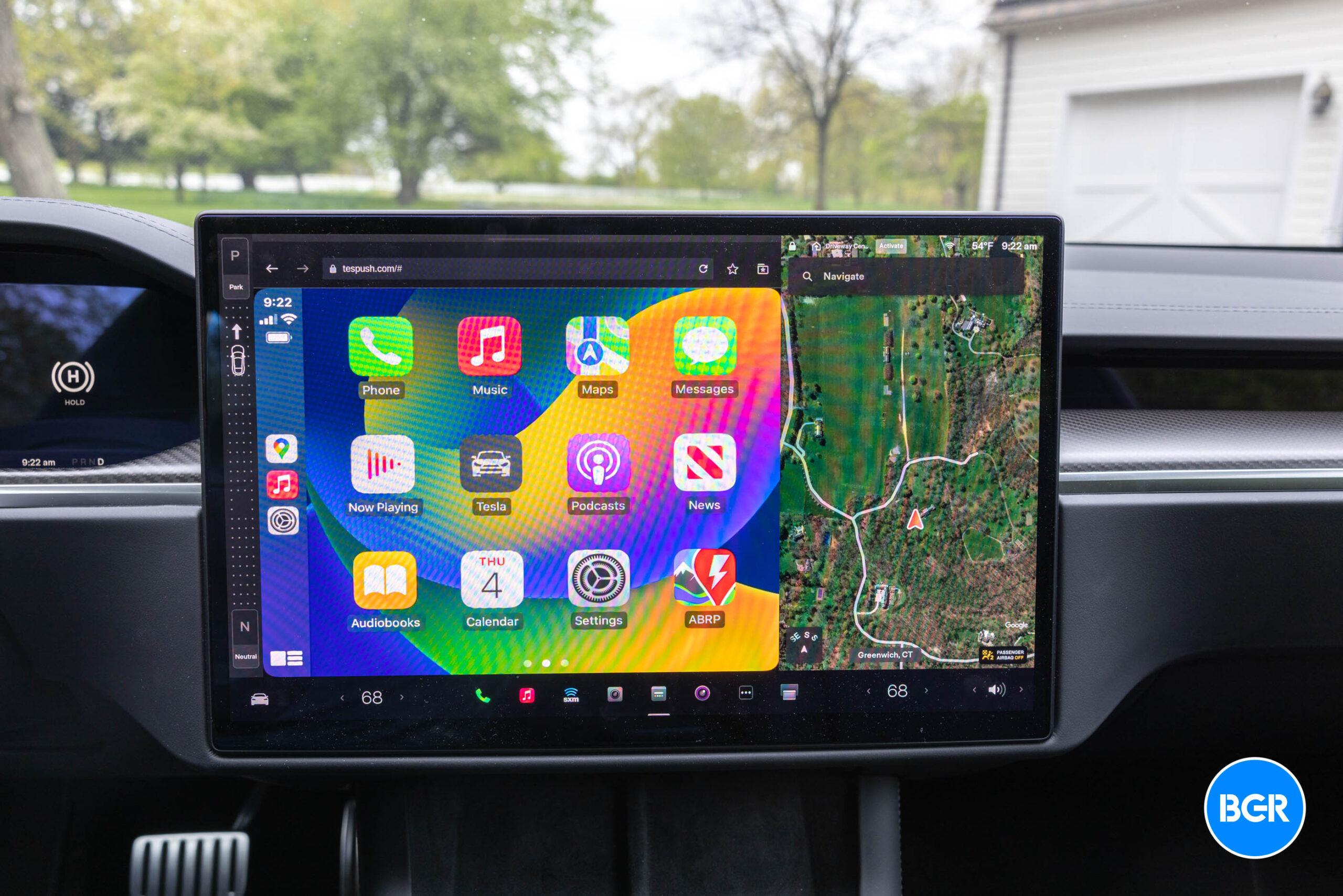
CarPlay just got even more useful, as one of my favorite Apple apps has been added. Starting today, CarPlay users can take advantage of Apple Music Classical, Apple’s music streaming service for classical songs.

According to the app’s release notes, this update adds “support for CarPlay and Siri, plus stability and performance enhancements.” This is the first major expansion since Apple added support for Android on May 30.

Apple Music Classical is a service based on Primephonic, a classical music streaming service the company bought in 2021. After two years of development, the company released its own version of the app, which has a similar look to Apple Music but with new tweaks and a focus on this specific genre of music.

With it, you can access the world’s largest classical music catalog. Search by composer, work, conductor, and more to quickly find any recording. Explore composers, periods, instruments, and more through curated playlists and composer biographies. Get detailed information about what you are listening to.

Tech. Entertainment. Science. Your inbox.

Sign up for the most interesting tech & entertainment news out there.

By signing up, I agree to the Terms of Use and have reviewed the Privacy Notice.

Apple Music ClassicalImage source: Apple Inc.

The service has the largest classical library with over 100 million songs and the world’s largest catalog of classical music — more than 5 million tracks and 1.2 million recordings. It features:

  • 20K+ composers;
  • 115K+ unique classical workers listed;
  • 350+ movements available.

It is available in Lossless and Hi-Res Lossless up to 24 bits. Spatial Audio with Dolby Atmos is also supported. That said, CarPlay users can also take advantage of songs in Spatial Audio, thanks to the iOS 18 update. The latest version brought these three new features:

  • Spatial Audio: Drivers can now listen to Spatial Audio songs and albums available in Apple Music and third-party apps while connected to CarPlay. Vehicles with multichannel audio capabilities can enable an immersive sound experience. Spatial Audio with support for Dolby Atmos can also be implemented in compatible vehicles.
  • Announced Notifications support: Announce Notifications can read aloud your notification summaries when using AirPods or CarPlay.
  • Accessibility: Color Filters, Bold Text, Voice Control, and Sound Recognition accessibility settings are now available in CarPlay in IOS 18, providing a consistent experience between the iPhone and the vehicle.

Apple Music Classical is available as part of an active Apple Music subscription, whether it’s a standalone subscription or part of Apple One.

Source

Posted on

Gartner Symposium: Why ServiceNow wants to be seen as the AI platform for business transformation

ServiceNow and Rimini Street have expanded their partnership to enable organisations to use older enterprise resource planning (ERP) systems as a starting point for enterprise artificial intelligence (AI) initiatives.

Using a single architecture and single data model from ServiceNow with Rimini Street’s third-party enterprise software support, the offering is being positioned as a way to enable organisations to innovate across procurement, finance, supply chain, HR, customer service and IT.

The partnership with Rimini Street represents a major step in the company’s strategy to evolve from case management to delivering AI-enabled workflow management that can coordinate and orchestrate systems of record in business, and also improve by learning from the data these systems hold.

During a presentation at the Gartner Symposium in Barcelona, Hartmut Mueller, chief transformation officer at ServiceNow, described the company’s platform as “connecting all systems of record and connecting [their] metrics to the value stream”.

In other words, if an AI can learn from the data held in traditional enterprise systems, it can figure out how to improve the business processes these applications power.

AI without new enterprise systems

Business and IT leaders need to justify the cost of new platform investments, and this is where the partnership with Rimini Street has been positioned.

Speaking to Computer Weekly during the Gartner conference, Eric Helmer, chief technology officer at Rimini Street, said that in the past, the chief information officer (CIO) role has traditionally been back-office. “People were expected to keep the lights on, run the business of IT and firefight,” he said. “The new role of the CIO is in the front office.” This implies their actions have a direct impact on the organisation’s bottom line.

“Today’s CIOs are expected to be the ideas people, and they are expected to figure out things like artificial intelligence and come up with revolutionary ideas that will be game-changers for the business,” he added.

However, as Gartner warned at the start of the annual European conference, it’s easy to lose a lot of money on misguided AI initiatives. A Gartner survey of 300 CIOs conducted in July found that 90% believe managing costs is limiting the value they can get from AI. Moreover, as every enterprise software provider AI-enables their products, Gartner expects a large proportion of IT budgets are likely to be spent on these products. 

But ServiceNow, in collaboration with Rimini Street, is trying to offer a different approach, which relies on the third-party support provider’s track record in keeping ERP systems from the major providers running, even after mainstream support has officially ended. These older systems of records remain useful, if not essential, data sources for machine learning to improve ServiceNow’s understanding of how the business operates.

Helmer said the partnership with ServiceNow helps IT departments make more use of existing enterprise IT assets. “If the value of an ERP system for AI is the data it contains, then the version of ERP you run becomes irrelevant because you already have the data,” he said.

While ServiceNow is often seen as a company specialising in case management, Helmer said it has a raft of tools focused on IT modernisation, which sit on top of existing IT assets. These, he said, can be used to modernise the user interface, automate workflows, and run AI and predictive analytics. “GenAI capabilities can be achieved in a matter of months, instead of years,” he claimed, since the ERP system does not have to be upgraded to the latest AI-capable version first.

Bill McDermott, chairman and chief executive officer at ServiceNow, described the enterprise systems deployed in businesses as 20th-century systems that hundred progress. “ServiceNow’s partnership with Rimini Street gives customers a more unified, intelligent platform to maximise their existing software investments, for faster paths to transformation,” he said.

The fact that ServiceNow can be applied to manage business processes just as it’s used in case management offers a way, according to Helmer, to route and automate workflows between various line-of-business applications, which means IT leaders do not need to go through the cost and disruption of an enterprise application modernisation programme to get the benefits of AI.

Switching software maintenance to third-party support has traditionally been regarded as something only a few brave IT leaders embark on.

Being a premier sponsor at the Gartner Symposium, alongside the likes of AWS, PWC and SAP among others, is perhaps an indication of where ServiceNow sees itself in the corporate IT landscape. If it’s successful at offering an AI platform for running and optimising business processes, there may well be a compelling reason not to upgrade to the latest AI-enabled enterprise system and rely, instead, on third-party support of an existing ERP system.

Source