Google’s dominance in online search has been virtually undisputed for over 20 years, but a real challenger might have finally arrived. As of Wednesday, OpenAI no longer requires you to log in to use ChatGPT’s search engine. In fact, you don’t even need an account.
“ChatGPT search is now available to everyone in regions where ChatGPT is available,” OpenAI noted on its website in an update. “No signup required.”
OpenAI launched its search engine on October 31st, 2024, granting access to paid subscribers and SearchGPT waitlist users. It then rolled out to free users on December 16, but now, anyone can search on ChatGPT by visiting ChatGPT.com and clicking the “Search” button.
“The search model is a fine-tuned version of GPT-4o, post-trained using novel synthetic data generation techniques, including distilling outputs from OpenAI o1-preview,” OpenAI explained last year. “ChatGPT search leverages third-party search providers, as well as content provided directly by our partners, to provide the information users are looking for.”
Tech. Entertainment. Science. Your inbox.
Sign up for the most interesting tech & entertainment news out there.
Now that everyone has unrestricted access to ChatGPT search, it will be fascinating to see how many people try to ditch Google for good, and how successful they are at doing so.
This is the latest in a flood of major updates and new releases from OpenAI in recent weeks as the company pushes back against DeepSeek mania. Within the last two weeks alone, OpenAI has launched two AI agents: Operator and Deep Research.
A Finnish retailer has aired price tags for Gigabyte’s RTX 5080 models
Only the WindForce variant is at the MSRP
The six other RTX 5080 boards shown are 15% to 35% pricier
Nvidia’s RTX 5080 is priced at an MSRP of $999 in the US – and in line with that in other regions – which was a pleasant surprise, but it seems that the worst fears of some gamers might be realized, if pricing on some third-party boards that just popped up is anything to go by.
This info come from a Finnish retailer, Proshop, which has jumped the gun and listed Gigabyte’s RTX 5080 models with pricing, and only one graphics card is set at the MSRP in Finland (€1,229) out of a total of seven boards.
As VideoCardz reports, only the Gigabyte WindForce model is pitched at that €1,229, with the other six variants being a good deal more expensive.
Even the most affordable of those non-WindForce offerings, the Gaming OC and Aero OC, are both €1,419, which is a considerable premium over the baseline graphics card.
The Aorus variants are a good deal more expensive still, with the priciest version of those, the Aorus Xtreme WaterForce, reaching €1,669.
What this means is that Gigabyte has one RTX 5080 board, the WindForce, at the MSRP, and the other flavors are between 15% and 35% pricier. Obviously we should exercise a whole lot of caution around these prices, in case they turn out to be wrong somehow, or placeholders, but we’re very close to release now (and they sound plausible).
Sign up for breaking news, reviews, opinion, top tech deals, and more.
On the one hand, it was great to see that $999 MSRP attached to the RTX 5080, when rumors had suggested Nvidia might sell it at $1,200 in the US (and proportional to that elsewhere), or maybe a good chunk more than that. Especially considering that the RTX 5090 price got jacked up.
On the other hand, the main concern was that most third-party models wouldn’t be at MSRP, and that scenario is exactly what appears to be playing out with Gigabyte’s RTX 5080 graphics cards – at least if the info from Proshop is correct. And it may not be, as already mentioned, so we mustn’t jump to any conclusions yet.
This remains just an ominous hint at the moment, then, although even if it proves right, there’s a chance that other graphics card makers won’t follow suit, and may have more models at the MSRP level. Or rather, their second-tier above baseline models hopefully won’t have a 15% hike, and instead exhibit a more modest increase.
If there are very few third-party RTX 5080 models on sale at the MSRP (or close), then the likelihood is that at launch – and maybe for quite some time after – those boards will sell out in a flash (along with Nvidia’s Founders Edition). Making the reality of getting an RTX 5080 at the MSRP level a shaky prospect, in short, but there’s still hope yet that this scenario won’t play out.
However, in the latter case, promotional material for the LG Gram for 2025 shows the laptop equipped with an RTX 5050 GPU – while the provided specs refer to an RTX 4050 model, confusingly.
As discovered by BullsLab Jay on X – check out the above post – we see the RTX 5050, except with the accompanying details showing a GPU with the Lovelace architecture (RTX 4000) and GDDR6 VRAM.
What could have happened theoretically – add plenty of seasoning – is that LG was planning on the RTX 5050 for the launch of this notebook, but Nvidia delayed the GPU. So LG switched to the RTX 4050 instead, but someone made a mistake and left the RTX 5050 name in, by the look of things.
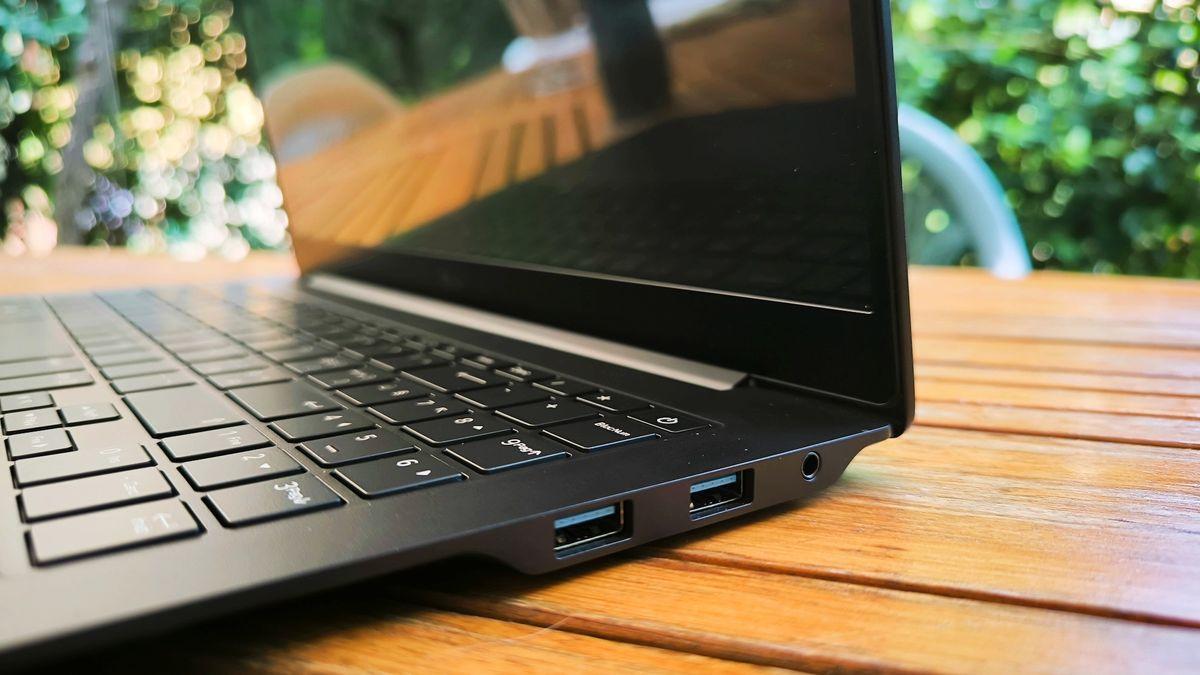
(Image credit: Valerio Porcu)
Analysis: A delayed Nvidia RTX 5050?
This theory seems plausible enough given that we heard more than one piece of chatter from the grapevine that Nvidia would be showing off the RTX 5050 to 5090 mobile GPUs at CES 2024. Which would also mirror what happened at the Lovelace notebook launch, where the RTX 4050 and upwards were all revealed.
The upshot is that it seems likely the RTX 5050 will get an airing in the future, the question being: how long will we have to wait? To an extent, that’s anyone’s guess, but if this purported GPU was indeed sidelined late in the game by Nvidia, just before CES 2025, there must be a good reason for that. So, don’t expect to see the RTX 5050 soon, but I’d be surprised if we have to wait all that long for this mobile graphics card to turn up.
Sign up for breaking news, reviews, opinion, top tech deals, and more.
Away from LG’s Gram notebook, the RTX 5050 (and RTX 5060) will enable cheaper gaming laptops to be pepped up with next-generation GPUs, and that includes the use of DLSS 4, which will help to speed up frame rates for on-the-go gaming.
In theory, the RTX 5050 will run with 8GB of VRAM, which would be a solid allocation for this level of GPU – considering it’ll match not just the RTX 5060 (in theory), but also the RTX 5070, which we know has controversially stuck with 8GB of video RAM (perhaps the reason why the mobile side of Blackwell was a rather lowkey affair at the recent CES).
However, Nvidia does have neural shader tricks up its sleeve for textures which, just like DLSS 4, the company argues is going to make a huge difference to RTX 5000 graphics cards.
Fujitsu has been forced to escalate problems with a key IT system used by Airtricity in the Republic of Ireland (RoI) to avoid potentially impacting the energy company’s customers, Computer Weekly has learned.
Fears over the billing application developed for SSE Airtricity RoI by Fujitsu have raised alarms in Fujitsu’s leadership.
According to a source, the issues should have been fixed as part of a Fujitsu initiative, known as Project Ivy, launched after the Post Office Horizon scandal, which seeks to tackle critical software defects, and improve testing and governance across its systems. “It has had to be escalated for urgent attention before it does real harm to customers,” they said.
Fujitsu said it’s reviewing its software for potential problems in response to the Post Office Horizon scandal. In his fifth witness statement to the scandal public inquiry, Paul Patterson, the CEO of Fujitsu in Europe, stated that the company is addressing the remediation of systems and technology under the Rebuilding Trust Programme.
After multiple attempts by Computer Weekly, Fujitsu refused to comment on the alleged problems with its application. SSE Airtricity said: “The other SSE Airtricity services which utilise the all island billing system supplied by Hansen and the proprietary system supported by Fujitsu include the Republic of Ireland business. There are no issues related to system performance which are materially impacting customers.”
There is no suggestion the Hansen system is causing the issues. According to the source, “the billing application is separate from Hansen’s billing system but integrates with it, processing key data before passing it on for billing and account reconciliation”.
The source told Computer Weekly that Fujitsu is concerned, and that the issue has been escalated to Fujitsu in Japan.
Airtricity would not comment on whether Fujitsu is addressing these issues, stating that “any queries regarding Fujitsu business operations should be directed to the company itself”, but Fujitsu refused to comment, citing customer confidentiality.
In March 2024, Fujitsu closed down its Republic of Ireland business for new business after a review of the operation’s performance and market outlook, with the contract with SSE Airtricity transferred to the UK business.
“It is with regret that we have taken a difficult decision and plan not to pursue new business in the Irish office,” the email stated. “Going forward, Fujitsu plans to refocus its Irish operations on the fulfilment of existing customer contractual commitments.”
Long-term partners
Fujitsu and Airtricity have a long relationship, with Fujitsu playing a key role in its operations across both Northern Ireland and the Republic of Ireland. Fujitsu developed and integrated a Customer Information System (CIS), automated billing and customer communication processes and managed the system integration and selection of IT suppliers.
In December 2023, a senior SSE Airtricity employee in RoI publicly praised Fujitsu’s role in supporting its operations, presenting a Certificate of Excellence to the IT development team on behalf of SSE Airtricity’s business and IT customer support teams.
Separately, last year, problems were experienced by SSE Airtricity customers when a CRM software migration caused service issues in Northern Ireland. The source told Computer Weekly: “The CRM migration was part SSE Airtricity RoI’s Project Genesis programme, which included upgrading core billing and CRM systems.”
Local reports described problems, which were unrelated to Fujitsu, being experienced by customers in Northern Ireland. SSE Airtricity said this happened during a CRM system migration.
In November, TheBelfast Telegraph reported that SSE Airtricity had sent elderly and vulnerable residents in a social housing development gas bills despite them not having gas boilers installed, and this continued even after the company was told as much.
Airtricity said the issues in Northern Ireland have been resolved. “SSE Airtricity Gas Northern Ireland undertook a CRM system migration to a new platform which was completed in May 2024 for all gas customers in Northern Ireland,” said an SSE Airtricity spokesperson. “We took a phased approach to migrating customers to the platform in order to minimise disruption. While some customers experienced service issues as the systems bedded in, these have since been resolved.”
Less than a year ago, Microsoft’s VASA-1 blew my mind. The company showed how it could animate any photo and turn it into a video featuring the person in the image. This wasn’t the only impressive part, as the subject of the image would also be able to speak in the video.
VASA-1 surpassed anything we’d seen back then. This was April 2024, when we had already seen Sora, OpenAI’s text-to-video generation tool that would not be released until December. Sora did not feature similarly advanced face animation and audio synchronization technologies.
Unlike OpenAI, Microsoft never intended to make VASA-1 available to the project. I said then that a public tool like VASA-1 could harm, as anyone could create misleading videos of people saying whatever the creator conceives. Microsoft’s research project also indicated that it would be only a matter of time before others could develop similar technology.
Now, TikTok parent company ByteDance has developed an AI tool called OmniHuman-1 that can replicate what VASA-1 did while taking things to a whole new level.
Tech. Entertainment. Science. Your inbox.
Sign up for the most interesting tech & entertainment news out there.
The Chinese company can take a single photo and turn it into a fully animated video. The subject in the image can speak in sync with the provided audio, similar to what the VASA-1 examples showed. But it gets crazier than that. OmniHuman-1 can also animate body part movements and gestures, as seen in the following examples.
The similarities to VASA-1 shouldn’t be surprising. The Chinese researchers mention on the OmniHuman-1’s research page that they used VASA-1 as a template, and even took audio samples from Microsoft and other companies.
According to Business Standard, OmniHuman-1 uses multiple input sources simultaneously, including images, audio, text, and body poses. The result is a more precise and fluid motion synthesis.
ByteDance used 19,000 hours of video footage to create OmniHuman-1. That’s how they were able to teach the AI to create video sequences that are almost indiscernible from real video footage. Some of the samples above are practically perfect. In others, it’s clear that we’re looking at AI generating movement, especially the subject’s mouth.
The Albert Einstein speech in the clip above is certainly a highlight for OmniHuman-1. Taylor Swift singing the theme song from the anime Naruto in Japanese in the video below is another example of OmniHuman-1 in action:
OmniHuman-1 can be used to create AI-generated videos showing human subjects (real or fabricated) speaking or singing in all sorts of instances. This opens the service for abuse, as I’m sure some people, including malicious actors, would use the service to impersonate celebrities for scams or misleading purposes.
OmniHuman-1 also works well for animating cartoon and video game characters. This could be a great use for the technology, as it could help creators more accurately animate facial expressions and speech for such characters.
Also interesting is the claim that OmniHuman-1 can generate videos of unlimited length. The examples available range between five and 25 seconds. The memory is apparently a bottleneck, not the AI’s ability to create longer clips.
Business Standard points out that ByteDance’s OmniHuman-1 is an expected development from the Chinese company. ByteDance also unveiled INFP recently, an AI project aimed to animate facial expressions in conversations. ByteDance is also well-known for its CapCut editing app, that was removed from app stores alongside TikTok a few weeks ago.
It’s only natural to see ByteDance expand its AI video generation capabilities and introduce services like OmniHuman-1.
It’s unclear when OmniHuman-1 will be availabel to users, if ever. ByteDance has a website at this link where you can read more details about the AI research project and see more samples.
ByteDance researchers also mention “ethics concerns” in the document, which is great to see. This signals that ByteDance might take a more cautious approach to deploying the product, though I’m just speculating here.
But if OmniHuman-1 is released in the wild too soon, it’ll only be a matter of time before someone creates lifelike videos of real-life celebrities or made-up humans who say (or sing) anything the creator wants them to, in any language. And it won’t always be just for entertainment purposes.
Chinese startup DeepSeek stunned the world with its sophisticated DeepSeek R1 reasoning model, which is as good as ChatGPT o1. That’s not a surprising achievement; it’s only a matter of time before other AI models can replicate what OpenAI has done in terms of AI reasoning. Also, OpenAI will soon make o3 available, the successor to o1.
What really shocked the markets was DeepSeek’s research, which showed that the company was able to train R1 to achieve the same capabilities at a fraction of the cost of training o1.
Because of US sanctions, DeepSeek didn’t have access to the latest NVIDIA GPUs that AI firms like OpenAI use to train high-end AI models. It turned to software optimizations to compensate for what it lacked in hardware to create an AI model that could match ChatGPT o1.
But it turns out software optimization isn’t everything DeepSeek might have done to train its AI. OpenAI claims it has evidence that DeepSeek distilled ChatGPT to train the DeepSeek AI models.
Tech. Entertainment. Science. Your inbox.
Sign up for the most interesting tech & entertainment news out there.
If that’s true, the practice violates OpenAI’s terms of service for ChatGPT. Ironically, if OpenAI’s claim is true, it’ll make the company experience what many creators felt when they discovered OpenAI may have trained its ChatGPT models using copyrighted materials without consent.
OpenAI told The Financial Times it found evidence that DeepSeek used the US models to train DeepSeek AI.
OpenAI found evidence of “distillation,” which it believes came from DeepSeek. Distillation is a process where AI firms use an already trained large AI model to train smaller models. The “student” models will match similar results to the “teacher” AI in specific tasks.
Some early DeepSeek testers were surprised to see the AI identify itself as ChatGPT in early responses, which prompted speculation that DeepSeek AI might have been trained with ChatGPT chats.
OpenAI claims that DeepSeek might have distilled ChatGPT make sense, but it’s unclear whether the US AI firm can prove the IP theft beyond doubt. Even if it can provide conclusive evidence that DeepSeek used ChatGPT to train its AIs, there’s probably little OpenAI can do. After all, DeepSeek R1 is already out in the wild.
DeepSeek made its models available open-source, which means anyone can install them on computers. The DeepSeek app is topping the App Store, and it’s available in the Google Play store. Unless DeepSeek is banned in the US, the app won’t go away anytime soon.
The FT says that OpenAI and Microsoft investigated accounts believed to belong to DeepSeeka last year. They were using OpenAI’s API for ChatGPT access. OpenAI blocked access, suspecting they may rely on distillation to train other models.
On the other hand, it’s not just Chinese AI companies like DeepSeek that might rely on the distillation of ChatGPT and other frontier AIs to train better AI models. The FT notes that it’s common practice for AI labs in China and the US to use outputs from bigger companies.
OpenAI and others have already trained AI using humans to teach the models how to produce responses that sound more conversational. This is an expensive process, so smaller firms will distill established models to train smaller ones. In such a case, a company like DeepSeek would have gotten the human feedback step for free.
I said earlier that DeepSeek’s use of distillation to train R1 is something others could benefit from, Apple included. I wasn’t referring to stealing AI work done by others but to using advanced, proprietary models to train smaller models that Apple might need for its on-device Apple Intelligence approach.
A ban is a process that will take time. And, again, even if all of this is successful, DeepSeek will still have strong AI models on its hands, which it can use to create next-gen AI of its own.
Meanwhile, OpenAI still has to deal with allegations that it used copyrighted content without consent to create ChatGPT.
In a rare move, Chinese tech company Alibaba released a new version of the Qwen 2.5 artificial intelligence model during the Lunar New Year. The tech firm claims this update surpasses DeepSeek-V3, which had a meteoric rise in popularity in the past three weeks.
With this release, we’re now seeing that not only are US companies intensifying the AI race against the Chinese, but local competition also wants to stay ahead.
As first reported by Reuters, Alibaba announced that its new AI model outperforms the most recent LLM models available, even though it doesn’t offer ChatGPT Operator-like features. “Qwen 2.5-Max outperforms… almost across the board GPT-4o, DeepSeek-V3 and Llama-3.1-405B,” posted the company on WeChat.
That said, Alibaba continues to defy other major Chinese players, including DeepSeek, Baidu, and Tencent. Last year, the company slashed its usage prices since the DeepSeek-V2 was not only open-source but also cost around $0.14 per 1 million tokens. Baidu also followed the price cut.
Tech. Entertainment. Science. Your inbox.
Sign up for the most interesting tech & entertainment news out there.
Over here, OpenAI’s CEO, Sam Altman, teased several “exciting new features” coming to ChatGPT as DeepSeek’s popularity exploded. Then, the company announced a new ChatGPT Gov tool to strengthen ties with the US government, followed by a post with Microsoft’s Satya Nadella about all the crazy new stuff OpenAI has planned.
This is all due to DeepSeek’s sophisticated R1 reasoning model. While it’s as good as ChatGPT’s o1, what impressed everyone is that training the model costs a fraction of what OpenAI usually spends.
That being said, OpenAI says there is evidence that DeepSeek distilled ChatGPT to train its AI models. If true, the practice violates OpenAI’s terms of service for ChatGPT.
Ironically, if OpenAI’s claim is true, it’ll make the company experience what many creators felt when they discovered OpenAI may have trained its ChatGPT models using copyrighted materials without consent.
BGR will let you know as we learn more about new AI models from China, such as Alibaba, DeepSeek, and others, as well as the latest advancements in the US market.
Over the past few weeks, we’ve seen leaks claiming the iPhone SE 4 would have a Dynamic Island cutout instead of the iPhone 14-like notch, which was already rumored for years.
This possible change was teased by credible leaker Evan Blass, followed by controversial leaker Majin Bu. While seeing a new iPhone SE with all this tech would be pretty impressive, it would make sense if Apple held back just a little. Now, thanks to display analyst Ross Young, we’ve pretty much got confirmation.
Young has a perfect track record, and he recently posted on X that the iPhone SE 4 will feature an iPhone 14-like notch cutout. Even if the analyst didn’t say that, Apple has been consistent with its iPhone SE releases to assume that.
Tech. Entertainment. Science. Your inbox.
Sign up for the most interesting tech & entertainment news out there.
In the past three iterations, Apple used the previous iPhone design. For example, with the iPhone SE 1, Apple rocked the iPhone 5-like design while it already offered the new iPhone 6 style. With the second and third generations of the iPhone SE, it remained with an iPhone 6/8-like design because Apple was already offering iPhone models with a notch. Finally, now that the company moved on to Dynamic Island, it makes sense the notch and larger displays are the next big improvement.
That said, even if the new iPhone SE 4 gets the notch, it’s still a big improvement over the past design, especially since Apple will finally phase out Touch ID on the iPhone and offer Face ID across its lineup.
Apple is expected to hold a spring event to announce this new iPhone alongside other new products. BGR will let you know once we learn more about it.
Intel’s upcoming Arc B570 GPU is only 12% slower than B580 according to early benchmark
The Arc B580 will start at $249 while the B570 will start at $219
Intel has taken a great leap in its GPU and gaming focus
While Nvidia and AMD‘s new GPUs may have taken the spotlight over recent weeks with a slew of big new reveals, notably Team Green’s RTX 5000 series at CES 2025, Intel is slowly becoming a dark horse within the budget GPU market – and PC gamers with tight budgets should pay attention.
According to an early test result spotted in the Geekbench 6 database (initially highlighted by Wccftech), the Intel Arc B570 is only 12% slower – perfect, since it’s also 12% cheaper than the Arc B580, which we noted offers fierce competition in terms of performance against its affordable rivals in our Intel Arc B580 review. This was made evident with the B570’s 86,718 score compared to the B580’s 98,343 in the OpenCL API benchmark.
Whilst there are multiple different benchmark results for the B580 (with the same expected for the B570 once it hits full release), Wccftech states most range between 95,000 and 100,000 points, suggesting slower performance on its lower-spec counterpart.
Considering the price of the Arc B580 ($249 / £249 / AU$439) and the Arc B570 ($219 / £219 / around AU$350), PC gamers on a budget will have a variety of competent options for 1080p gaming this generation. With Team Blue’s XeSS upscaling method gradually improving, Intel could claim pole position to become the budget GPU king if it can compete with Nvidia’s DLSS and AMD’s FSR.
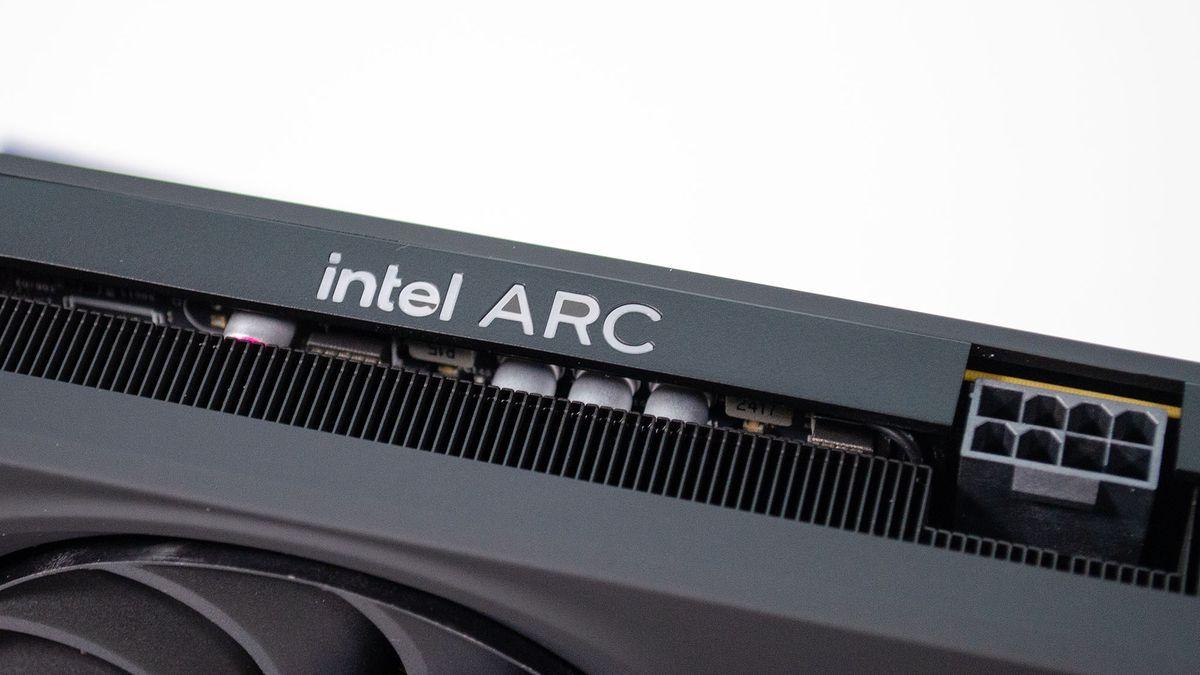
(Image credit: Intel)
Is it time to take Intel’s GPU and gaming efforts seriously?
Nvidia has consistently ruled over the years, while Intel has focused on providing stronger processors for PC builds and AMD has historically been a plucky underdog in both markets. The tide is now turning within the budget GPU space, and it’s safe to say that Team Blue is now one to take seriously.
Besides the upcoming Arc B580 and B570, Intel’s new Lunar Lake processors have been shown to benefit handheld gaming PCs as well – the MSI Claw 8 AI+ is powered by the Ultra Core 7 258V processor, which will reportedly allow gamers to play games likeCyberpunk 2077 on higher settings using ray tracing.
There’s still a long way to go for Intel to catch up to AMD and Nvidia in terms of providing high-end GPU hardware, but it’s already off to a great start – I hope its next lineup of GPUs showcases a big step forward in performance.
The other day, I wondered whether the US should consider a DeepSeek ban amid all the excitement. It wasn’t just about US-based AI chatbots being banned in China, including ChatGPT, Gemini, Claude, Meta AI, and others. It’s also about the DeepSeek privacy policy since all data is sent in China. Also, there’s the DeepSeek censorship related to sensitive topics for China, and the risk of China using AI algorithms in its own interest, similar to how TikTok allegedly operated its algorithm.
While I started wondering whether a US ban on DeepSeek was imminent, it looks like localized bans were in effect long before then. The US Navy issued an order on Friday warning “shipmates” not to use DeepSeek AI “in any capacity” due to “potential security and ethical concerns associated with the model’s origin and usage.”
A spokesperson for the US Navy confirmed to CNBC that the email it reported on was genuine. The email was in reference to the Department of the Navy’s Chief Information Officer’s generative AI policy.
“We would like to bring to your attention a critical update regarding a new AI model called DeepSeek,” the email said. The US Navy informed everyone in the OpNav distribution list that it was “imperative” that members do not use DeepSeek AI “for any work-related tasks or personal use.”
Tech. Entertainment. Science. Your inbox.
Sign up for the most interesting tech & entertainment news out there.
Recipients were told to “refrain from downloading, installing, or using the DeepSeek model in any capacity.”
OpNav stands for Operational Navy, which means the email was an all-hands demo. CNBC further explains that the warning was based on an advisory from the Naval Air Warcraft Center Division Cyber Workforce Manager.
A specific, localized ban on the use of generative AI like ChatGPT isn’t surprising for any new AI tool, whether DeepSeek or something else. It happened during the early days of ChatGPT, both in the US and internationally. Countries in the EU even briefly banned OpenAI’s chatbot, citing privacy issues.
Such bans were applied at the company level, with Samsung’s ban on ChatGPT being one of the memorable ones. At the time, some Samsung employees uploaded sensitive code to ChatGPT. The early days of ChatGPT use were not the best for privacy-conscious individuals. It wasn’t easy to opt out of model training, as OpenAI made several improvements to its privacy policy along the way.
Similar precautions should be taken with DeepSeek AI, especially by governmental employees like the US Navy. I wouldn’t be surprised if other military or government branches issued similar messages in the US and other countries. In a way, this mimics the US government’s reaction to TikTok, which was initially banned from devices belonging to government employees.
Then there are the special concerns mentioned above. DeepSeek user data and chat content go to China, and DeepSeek also conducts censorship in real time. It makes sense for the US Navy to ban DeepSeek and do it very early. The memo was sent out on Friday, just a few days before DeepSeek went viral.