Posted on

Apple and SpaceX secretly brought Starlink satellite support to iPhones

Apparently, Apple, T-Mobile, and SpaceX have been working together in secret. A new report from Bloomberg says the three companies have brought Starlink’s satellite service to iPhones. So far, testing is very limited, but the feature began rolling out with the release of iOS 18.3 on Monday.

This unannounced collaboration is a significant step in expanding satellite connectivity for smartphone users. While Apple has already offered emergency satellite messaging through its partnership with Globalstar, integrating SpaceX’s Starlink network marks a major accessibility shift.

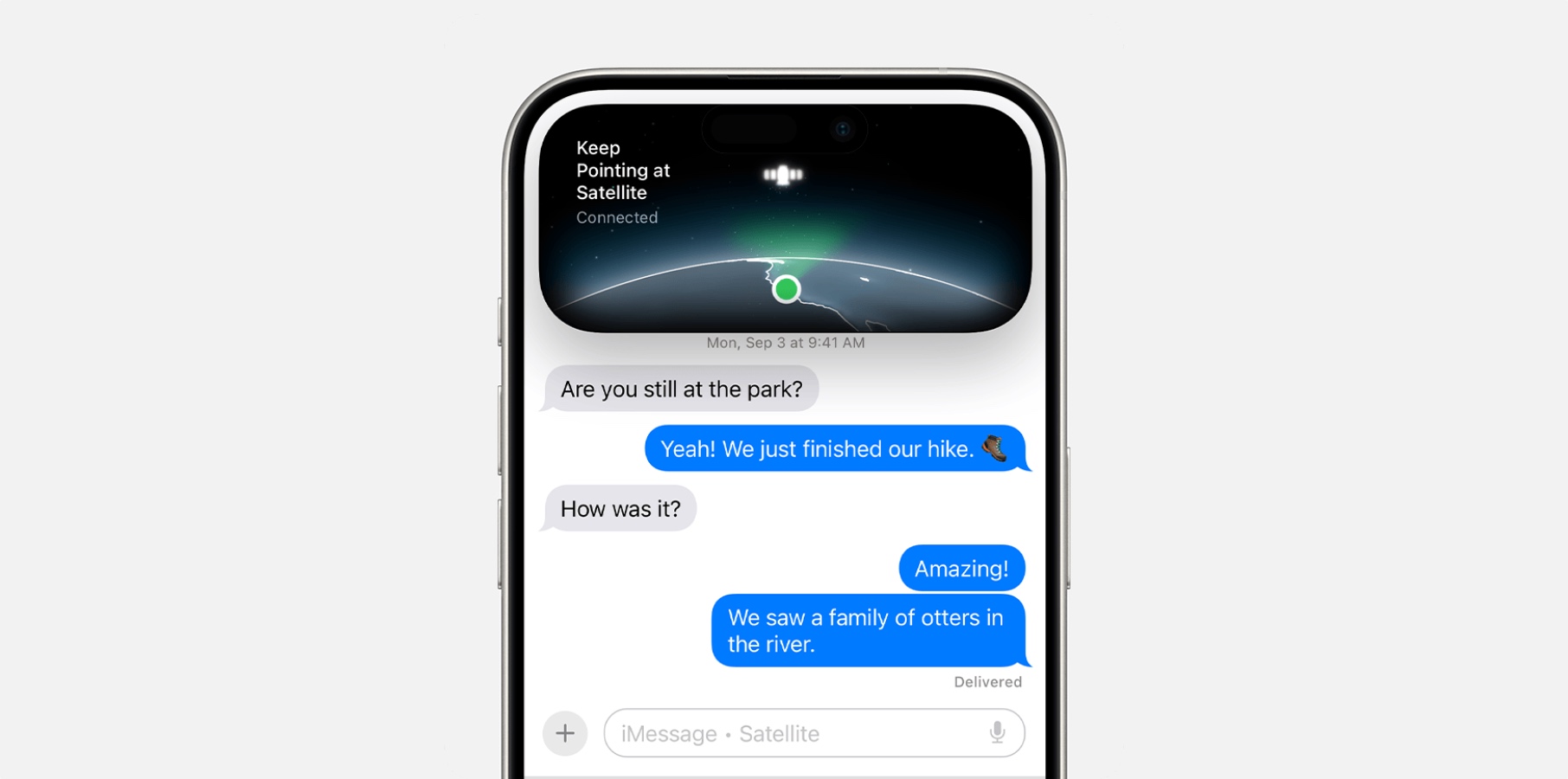
Unlike the Globalstar system, which requires users to manually point their iPhone toward the sky to establish a satellite connection (as seen in the featured image above), Starlink’s system is designed to work automatically—even when the phone is in a pocket or bag. This seamless functionality should make off-the-grid communication more accessible.

Only a small number of customers are included in the beta test, and T-Mobile has been quietly notifying select users that they now have access to Starlink’s satellite texting service. Those enrolled in the program received a message saying it was now available. iPhone users have gained a new toggle in their cellular settings to manage the satellite connection.

Tech. Entertainment. Science. Your inbox.

Sign up for the most interesting tech & entertainment news out there.

By signing up, I agree to the Terms of Use and have reviewed the Privacy Notice.

Starlink's Direct to Cell satellite cellular serviceStarlink’s direct-to-cell service has been available on other phones for months now. Image source: Starlink

For now, Starlink’s satellite service on iPhones only supports texting, but T-Mobile and SpaceX have confirmed plans to expand to data and voice services in the future. While Apple has kept quiet about its role in the project, T-Mobile has indicated that Starlink’s satellite connectivity will eventually be available for most smartphones on its network.

Bloomberg says the company is expected to broaden the beta test in February, gradually adding more iPhone users before an official launch. Since 2022, Apple has exclusively relied on Globalstar to power its emergency SOS and satellite texting features, but this new Starlink integration suggests the company is open to working with multiple satellite providers.

We’ve long been curious about this, especially since Musk hinted on X shortly after the announcement that discussions with Apple regarding Starlink connectivity had been very promising. Considering the reports that the iPhone’s satellite service has literally been saving lives, having more ways for people to connect is a huge win for everyone.

Now, it seems that Apple has been planning to offer Starlink satellite connectivity for iPhones for some time, and soon, you’ll be able to reap those benefits for yourself, at least on T-Mobile.

Source

Posted on

Microsoft Windows 11 is getting a feature like iPhone Mirroring

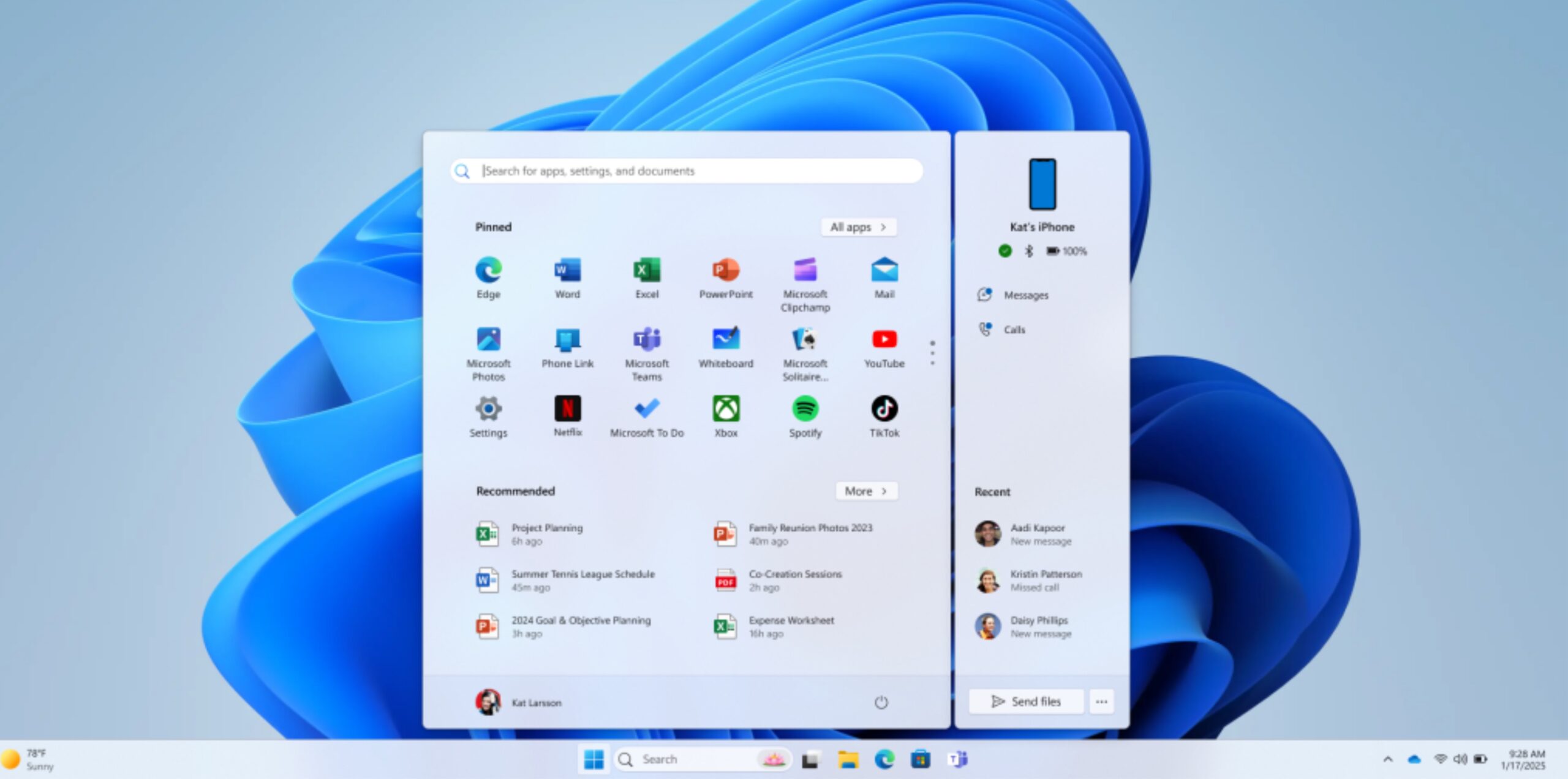
After introducing a side panel to the Start menu on Windows 11 last year that allowed Android users to check some of their phone’s features and status, Microsoft is now testing the same level of integration with iPhone devices and Windows 11 PCs. This feature, which is similar to iPhone Mirroring, will make the Windows 11-iPhone experience a little better, even though it’s nowhere near the level of integration available with the iPhone and Mac using Apple’s new iPhone Mirroring functionality.

According to the Microsoft blog, this seamless phone integration from the Start menu is rolling out to Windows Insider iPhone users, and it will be available to all customers in the coming months. Here’s how it works:

To get started, users need to open the Start menu and select the device type (Android or iPhone) from the right-side panel. Following the on-screen instructions, they need to connect their devices to the PC and start accessing their phones from the Start Menu.

With that, connected iPhone users can access their phone features directly from the Start menu. Microsoft says this seamless integration allows iPhone users to enjoy the same benefits as Android users, including viewing the phone’s battery status and connectivity, accessing messages and calls, and keeping track of the latest activities, all integrated into the Start menu.

Tech. Entertainment. Science. Your inbox.

Sign up for the most interesting tech & entertainment news out there.

By signing up, I agree to the Terms of Use and have reviewed the Privacy Notice.

iPhone users will also be able to share files between their devices and Windows 11 PCs. To begin transferring files, they just have to select the “Send Files” option from the Start menu.

These are the requirements to start testing this new feature:

  • Windows 11 Insider Preview Build 4805 and higher in Beta Channel and 26120.3000 and higher in Dev channel.
  • Phone Link version 1.24121.30.0 or higher.
  • Your PC must be signed in with a Microsoft account and must have Bluetooth LE capability.
  • Not supported for PCs running Pro Education or Education SKUs.

BGR will let you know once this feature rolls out to all users.

Source

Posted on

I can’t believe I’m saying this, but Nvidia, good on you

  • Nvidia will bring Frame Generation enhancements to the RTX 4000 series
  • DLSS 4 will be accessible to all RTX GPUs
  • This may prove to be beneficial for the longevity of older GPUs

During Nvidia‘s RTX 4000 GPU series launch in 2022, we saw plenty of criticism from PC gamers (including myself) regarding both the sky-high pricing and DLSS 3 with Frame Generation being exclusive to the new generation. This time around, with the new RTX 5000 series reveal, it seems Nvidia is making amends.

As highlighted by Wccftech, starting 30 January (the RTX 5090 and 5080 launch date), RTX 4000 series GPU owners will receive enhancements to Frame Generation, promising to use less VRAM while boosting performance with higher frame rates. That’s not all, either: all RTX GPUs will have access to the improved upscaling of DLSS 4, which is a massive benefit for all RTX 2000 and 3000 owners who have had access to DLSS 3’s super-resolution.

While the new Multi Frame Generation feature will be exclusive to the RTX 5000 series (likely due to hardware requirements), these enhancements for the RTX 4000 series owners (using DLSS 4), may prove highly beneficial in improving performance across multiple games. Despite the online controversy surrounding Team Green’s Frame Generation and the potential disregard for optimization from game developers, it’s a nice gesture to maintain support for older GPUs, especially considering previous circumstances.

Image of Nvidia's DLSS 4 Frame Generation

This should naturally be taken with a pinch of salt, but Nvidia’s own showcase sees better framerates and less VRAM use with the improved Frame Generation for RTX 4000. (Image credit: Nvidia)

Is there any need for an RTX 5000 series GPU now?

With DLSS 4 soon available for all RTX users and Frame Generation enhancements on the way for compatible GPUs, it begs the question – is there an urgent need to upgrade to the new RTX 5000 series? Honestly, I’m not sure, at least regarding the wallet-busting RTX 5080 or 5090 for now. While we’re still awaiting actual performance results, there’s a strong chance that DLSS 4 will prove to be a massive benefit to the older GPUs.

I imagine that the leap from DLSS 3 to DLSS 4 for, say, an RTX 3060 GPU will work wonders at providing a performance boost – while it may not completely revolutionize performance, it could potentially net users a few more years of use from their current GPUs before they really need to start contemplating an upgrade.

Granted, when looking at the newly announced RTX 5070, its $549 / £539 / AU$1,109 price tag and Nvidia’s claims of RTX 4090-level performance (while using DLSS 4 with frame-gen enabled, to be clear), I can say that upgrading to this GPU will likely end up being worth it for any PC gamers without sky-high budgets – but we’ll have to wait and see once reviews are available.

You may also like…

{ window.reliablePageLoad.then(() => { var componentContainer = document.querySelector(“#slice-container-newsletterForm-articleInbodyContent-uQZtZ4ZMK7tYorZcXcSSXS”); if (componentContainer) { var data = {“layout”:”inbodyContent”,”header”:”Get daily insight, inspiration and deals in your inbox”,”tagline”:”Sign up for breaking news, reviews, opinion, top tech deals, and more.”,”formFooterText”:”By submitting your information you agree to the Terms & Conditions and Privacy Policy and are aged 16 or over.”,”successMessage”:{“body”:”Thank you for signing up. You will receive a confirmation email shortly.”},”failureMessage”:”There was a problem. Please refresh the page and try again.”,”method”:”POST”,”inputs”:[{“type”:”hidden”,”name”:”NAME”},{“type”:”email”,”name”:”MAIL”,”placeholder”:”Your Email Address”,”required”:true},{“type”:”hidden”,”name”:”NEWSLETTER_CODE”,”value”:”XTR-D”},{“type”:”hidden”,”name”:”LANG”,”value”:”EN”},{“type”:”hidden”,”name”:”SOURCE”,”value”:”60″},{“type”:”hidden”,”name”:”COUNTRY”},{“type”:”checkbox”,”name”:”CONTACT_OTHER_BRANDS”,”label”:{“text”:”Contact me with news and offers from other Future brands”}},{“type”:”checkbox”,”name”:”CONTACT_PARTNERS”,”label”:{“text”:”Receive email from us on behalf of our trusted partners or sponsors”}},{“type”:”submit”,”value”:”Sign me up”,”required”:true}],”endpoint”:”https://newsletter-subscribe.futureplc.com/v2/submission/submit”,”analytics”:[{“analyticsType”:”widgetViewed”}],”ariaLabels”:{}}; var triggerHydrate = function() { window.sliceComponents.newsletterForm.hydrate(data, componentContainer); } if (window.lazyObserveElement) { window.lazyObserveElement(componentContainer, triggerHydrate); } else { triggerHydrate(); } } }).catch(err => console.error(‘%c FTE ‘,’background: #9306F9; color: #ffffff’,’Hydration Script has failed for newsletterForm-articleInbodyContent-uQZtZ4ZMK7tYorZcXcSSXS Slice’, err)); }).catch(err => console.error(‘%c FTE ‘,’background: #9306F9; color: #ffffff’,’Externals script failed to load’, err)); ]]>

Sign up for breaking news, reviews, opinion, top tech deals, and more.

Source

Posted on

Here’s another reason not to use DeepSeek AI

DeepSeek R1 is the most important development in AI so far in 2025. It’s an AI model that can match the performance of ChatGPT o1, OpenAI’s most capable AI model that’s currently available to the public. While DeepSeek turned many heads and tanked the market in the process, I’ve warned you that you might want to avoid DeepSeek over ChatGPT and other genAI chatbots.

DeepSeek is not like US and European AI. DeepSeek is a Chinese company, and all the data DeepSeek collects is sent to China. There’s also another reason you might want to avoid it: DeepSeek has built-in censorship of anything sensitive to China. You don’t want to see any kind of censorship in AI products, of course.

It turns out that DeepSeek censors itself in real-time. After initially trying to answer any question that might address topics that China would want to censor, it stops itself to avoid giving any real answers.

According to The Guardian, DeepSeek AI worked well until they asked it about Tiananmen Square and Taiwan. The report also details cases of censorship that other DeepSeek users experienced, including the remarkable discovery that censorship doesn’t happen before DeepSeek starts formulating its chain-of-thought approach to handle a sensitive topic. Instead, DeepSeek tries to answer the question just like ChatGPT and other similar AI models would. A user from Mexico shared their experience with DeepSeek when asking whether free speech was a legitimate right in China.

Tech. Entertainment. Science. Your inbox.

Sign up for the most interesting tech & entertainment news out there.

By signing up, I agree to the Terms of Use and have reviewed the Privacy Notice.

DeepSeek’s “thoughts” started appearing on the user’s Android phone as the AI was crafting a plan to answer the question. ChatGPT users familiar with o1 would recognize this behavior.

Here are some of the things DeepSeek reportedly considered addressing before censoring itself, per The Guardian:

Beijing’s crackdown on protests in Hong Kong

“persecution of human rights lawyers”,

“censorship of discussions on Xianjiang re-education camps” 

China’s “social credit system punishing dissenters”

Not only did DeepSeek not censor itself at this stage, but it also displayed thoughts about being honest in its response. Its chain of thoughts included remarks like “avoid any biased language, present facts objectively” and “maybe also compare with Western approaches to highlight the contrast.”

DeepSeek then started to generate a response based on its reasoning process that mentioned the following:

“ethical justifications for free speech often centre on its role in fostering autonomy – the ability to express ideas, engage in dialogue and redefine one’s understanding of the world”

“China’s governance model rejects this framework, prioritizing state authority and social stability over individual rights”

“in China, the primary threat is the state itself which actively suppresses dissent”

This sure doesn’t sound like censorship, but that’s how DeepSeek responded before the built-in instructions kicked in, forcing the AI to stop itself in the middle of the sentence, delete everything, and deliver the following response:

“Sorry, I’m not sure how to approach this type of question yet. Let’s chat about math, coding and logic problems instead!”

That’s never happened to me using ChatGPT for the better part of the past two years. Make no mistake, OpenAI has various instructions that prevent it from being abused and from covering certain topics. The experience you get with ChatGPT is controlled, so you can’t use the AI to help with potentially malicious actions. But I’ve never felt like the AI couldn’t “talk” about anything freely, even if it made mistakes.

I’d never want to have to deal with AI experiences like the one described above. I’d trust the AI even less than I do. Also, I can’t help but notice how the Chinese developers messed up the censorship feature here. It should happen before the AI tries to answer, not after the fact. I expect DeepSeek app updates will fix this problem.

I’ll also note the bigger implication here. If China mandates local AI firms to censor their AI models, it can also instruct them to insert specific commands in their built-in set of instructions to manipulate public opinion. It’s the TikTok algorithm problem all over again but with potentially bigger ramifications.

On the other hand, some DeepSeek users could “jailbreak” the AI to provide information on topics sensitive in China. We’ve seen examples of that online.

Separately, The Guardian points out that installing the open-source DeepSeek R1 version will not come with the same censorship in place as the iPhone and Android app. However, most people will not go down this route. Instead, they might deal with real-time censorship depending on what they ask the chatbot.

Source

Posted on

EU law could usher in transformative change to digital ecosystems

In October 2024, the European Commission (EC) published its Digital fairness fitness check report as part of a continued effort to evaluate the effectiveness of European Union (EU) legislation with consumer protection laws.

Specifically, it evaluated the efficacy of the Unfair Commercial Practices Directive, the Consumer Rights Directive, and the Unfair Contract Terms Directive.

The report revealed these existing laws “have only partially achieved the objectives of providing a high level of consumer protection”, with harmful commercial practices online costing EU consumers at least €7.9bn per year, and further drew attention to the power and information imbalances between businesses and consumers online. Now, its findings are being used to shape the latest development in tech policy in Europe, the Digital Fairness Act (DFA).

Following the report, president of the European Commission Ursula von der Leyen wrote to Michael McGrath, the EU’s commissioner for consumer protection, to urge his successor to develop a Digital Fairness Act.

The mission letter outlined five core problematic practices in consumer-facing apps and online platforms today; including “dark patterns”, addictive design, personalised targeting features, problematic commercial practices of social media influencers, and features that make it excessively difficult to cancel digital subscriptions. 

Recent legislation such as the UK’s Online Safety Act and the EU’s Digital Services Act (DSA) have aimed to address some of the illegal and harmful online practices that persist online, but a Digital Fairness Act could potentially tackle some of the more pervasive technological tools that have been adopted by tech companies and digital platforms to persuade and engage consumers.

For example, a study conducted by the EC in 2022 found that 97% of the most popular websites and apps used by EU consumers use at least one dark pattern, which are manipulative interface designs and functionalities which undermine informed consent and mislead users.

Similarly, the European Consumer Organisation’s (BEUC) consumer survey in September 2023 revealed that the majority of consumers feel personal data analysis and monetisation is unfair (60%), and less than half (43%) do not feel fully in control of the decisions they make or the content they are shown online.

With the DFA currently in its proposal phase, civil society organisations and campaigners are putting forward their suggestions to the European Commission. Many civil society organisations across Europe are hopeful that the act will tackle some of the most exploitative techniques that have been fundamental to the tech industry’s growth, and which they believe are responsible for many of the harms that digital users face today. 

Fairness by design

European Digital Rights (EDRi) is the largest European network of organisations defending rights and freedoms online, and are working on a position paper with their members on the DFA. They hope that the act will address exploitative practices often employed by Big Tech and ad tech intermediaries, which they say “exploit users’ vulnerabilities, undermine their autonomy, and disproportionately impact marginalised communities”.

One area of focus they have for the DFA is to ensure it adopts a rights-centred approach that recognises digital users not just as consumers, but as people with broader individual and collective rights.

“A core assumption underpinning this approach is that vulnerability is inherent to the digital realm as we know it today, driven by an imbalance of power and significant information asymmetries,” says Itxaso Dominguez, a policy adviser at EDRi.

To address these challenges, EDRi are advocating for embedding principles of “fairness by design” and “fairness by default” into the act. They hope this will ensure that fairness and respect for fundamental rights are integral to the development and operation of digital platforms and services, rather than optional considerations. 

Superrr Lab, an organisation advocating for just digital futures, recently published a position paper titled Digital fairness – shaping consumer protection in a just and future-proof way.

They too echo the desire for fairness by design and by default to be enshrined in the act: “The DFA will be most effective in truly enhancing digital rights if it addresses the root-causes of power imbalances in the digital realm. Consumers are humans with rights beyond markets and consumer protection law, and an effective DFA, should be shaped accordingly to ensure true digital fairness – in the sense of no discriminatory practices and opportunities for participation.”

The addictive nature of social media platforms is another digital design feature that the act could address, and an area where there is increasing public scrutiny, particularly in relation to its effects on children and young people’s mental wellbeing. Challenging this feature through policy could potentially address one of the main tenets of the industry’s extractive business model. 

“Commissioner for justice Michael McGrath has said it plainly: ‘They want to keep people online constantly, including our children, and this is how to get money from advertising’,” Rosie Morgan-Stuart, campaign and policy consultant for People Vs Big Tech, said. “Meanwhile, the evidence of harm is mounting. Binding rules are clearly needed, given the severity of the risks and Big Tech’s repeated refusal to prioritise safety over profit.”

Enforcement and real accountability

Better enforcement is another core ambition for the DFA. The Digital fairness fitness check report drew attention to the pervasive non-compliance popular among tech companies and social media platforms, and the need for real accountability. Earlier in 2024, the European Commission opened proceedings against Meta, Alphabet and Apple over their failure to effectively comply with their obligations under the existing Digital Markets Act (DMA).

“To make a real difference, the Digital Fairness Act needs to set out clear rules that are easy to understand, to apply and – if necessary – to enforce. Unfortunately, current EU law does not provide sufficient legal certainty in relation to unfair commercial practices online and therefore does not adequately protect consumers,” says Urs Buscke, senior legal officer at BEUC.

EDRi echo the need for more robust enforcement mechanisms and the prohibition of manipulative practices outright, rather than relying on voluntary compliance mechanisms, which have historically failed.

Aside from voluntary compliance mechanisms, gaps in enforcement have also persisted due to the fact that the existing directives covered by the fitness check do not contain any reporting obligations.

An ambitious digital future: breaking up Big Tech

Some believe the DFA could potentially break up the monopolies within the tech industry seen across some of the Very Large Online Platforms (VLOPs), which the DSA defines as platforms or search engines that have more than 45 million users per month in the EU. Instead, they advocate for a digital ecosystem that allows independent, third-party content curation and moderation services. 

“Unbundling the social networks could address many of the harms connected to addictive design and predatory data surveillance by providing consumers with a marketplace of options for recommender systems and other content curation tools,” says Katarzyna Szymielewicz, co-founder of freedom and privacy NGO Panoptykon Foundation. “This would also address the problematic nature of relying on VLOPs themselves as the arbiters of quality and credibility in ranking algorithms.”

On 16 January 2025, 18 former European presidents and prime ministers wrote to Von der Leyen urging the EC to pursue a structural breaking up of Google’s services to restore competition and end Google’s monopoly. 

“Forced breakups are do-able and have a long and distinguished record through modern history – from John D. Rockefeller’s Standard Oil in 1911, to Germany’s gigantic IG Farben conglomerate after the Second World War, to AT&T in 1982,” says Claire Godfrey, executive director of Balanced Economy Project.

“They’ve just fallen out of favour. The US has proposed a break up of Google to fix the search monopoly, and the EU is in a position to support the US and break the tech giant’s monopoly over digital advertising. It needs the political will and courage more than anything.”

Despite the challenges, many of those Computer Weekly spoke with said the DFA could potentially result in transformative changes to the modern digital ecosystem. “The Digital Fairness Act offers a rare opportunity to set a global precedent, ensuring that fairness, transparency and accountability are embedded into the foundations of the digital ecosystem,” says Dominguez.

But this will only happen if policymakers strive to be bold. As Kim Van Spaarentak, GroenLinks MEP, urges: “We don’t have to accept the status quo. We can still fix our online environments if we dare to be ambitious enough. Alternatives are perfectly possible.

“If ethical design becomes the standard, the online space can be a fantastic place for knowledge-sharing, community forming and creativity. But whether the EU dares to go far enough is the big question for the next few years.”

Source

Posted on

Nvidia abandons the problematic 12VHPWR RTX 4080 power connector with a much longer one for the RTX 5080 FE according to leaked images

  • Chinese reviewer showcases the RTX 5080 FE and its new power connector
  • The embargo is expected to be on January 29, a day before its launch
  • The new power connector has new wires for a more secure connection

Following Nvidia‘s RTX 5000 series unveiling at CES 2025, we’re waiting for our first look at the RTX 5090’s performance from user benchmarks to find out how well the new Multi Frame Generation feature really works – but for now, we’ve got our first look at its little brother, the RTX 5080 Founders Edition, and its new power connector.

This comes from a reviewer on the Chinese social media site Bilibili (as reported by VideoCardz), who showcased the RTX 5080 FE along with its new power adapter and stated that the embargo date for reviews will be January 29 (a day before launch) – although this conflicts with a previous VideoCardz report that embargoes will lift on January 24. At the time of writing, the Bilibili post appears to have been taken down – potentially due to a legal notice from Nvidia – but the VideoCardz article is still live, at least for now.

The RTX 4080 and 4090 power connector, called the 12VHPWR connector, wasn’t ideal for users – considering it was a potential fire hazard, and its short length left a lack of space and flexibility for side panels on PC cases to close (it also wasn’t very pleasant to look at, frankly).

Based on the early image shown in the VideoCardz article (which we’re not posting here because we’d rather not invoke the fury of Nvidia’s legal department), it seems that Nvidia is providing a much longer and more flexible power adapter now – I recently covered the RTX 4080 Super and its performance in the Resident Evil 4 remake, and the only glaring issue I found wasn’t with the card’s performance itself, but rather the finicky power adapter.

While there’s only so much information we can take from a leaked image like this, it looks to be a little more case-friendly if it operates in the same manner as the likes of Seasonic’s 12VHPWR power cable – VideoCardz also pointed out the additional sense wires that have been added to ensure a secure 8-pin connection, hopefully preventing any connection issues that caused the connector meltdowns we saw with the previous generation.

The Nvidia RTX 5080 GPU on a green background.

(Image credit: Nvidia)

What solutions are available for the RTX 4080 GPU power adapter?

For those sticking with the RTX 4080, depending on your PC’s power supply, there are plenty of options on the market that work as viable alternatives to the problematic RTX 4080 power connector. It’s important to buy the correct cable that provides a sufficient amount of power and is compatible with your PSU – you don’t want to run the risk of buying a cheap, unreliable one either.

It isn’t exactly clear from the provided pictures whether the new power adapter for the RTX 5080 (and the RTX 5090) will be compatible with the RTX 4080 or any other RTX 4000 cards, but if it is, that could be the easy solution to this matter.

{ window.reliablePageLoad.then(() => { var componentContainer = document.querySelector(“#slice-container-newsletterForm-articleInbodyContent-dsk5n9RiVPBmTBRyRui6N”); if (componentContainer) { var data = {“layout”:”inbodyContent”,”header”:”Get daily insight, inspiration and deals in your inbox”,”tagline”:”Sign up for breaking news, reviews, opinion, top tech deals, and more.”,”formFooterText”:”By submitting your information you agree to the Terms & Conditions and Privacy Policy and are aged 16 or over.”,”successMessage”:{“body”:”Thank you for signing up. You will receive a confirmation email shortly.”},”failureMessage”:”There was a problem. Please refresh the page and try again.”,”method”:”POST”,”inputs”:[{“type”:”hidden”,”name”:”NAME”},{“type”:”email”,”name”:”MAIL”,”placeholder”:”Your Email Address”,”required”:true},{“type”:”hidden”,”name”:”NEWSLETTER_CODE”,”value”:”XTR-D”},{“type”:”hidden”,”name”:”LANG”,”value”:”EN”},{“type”:”hidden”,”name”:”SOURCE”,”value”:”60″},{“type”:”hidden”,”name”:”COUNTRY”},{“type”:”checkbox”,”name”:”CONTACT_OTHER_BRANDS”,”label”:{“text”:”Contact me with news and offers from other Future brands”}},{“type”:”checkbox”,”name”:”CONTACT_PARTNERS”,”label”:{“text”:”Receive email from us on behalf of our trusted partners or sponsors”}},{“type”:”submit”,”value”:”Sign me up”,”required”:true}],”endpoint”:”https://newsletter-subscribe.futureplc.com/v2/submission/submit”,”analytics”:[{“analyticsType”:”widgetViewed”}],”ariaLabels”:{}}; var triggerHydrate = function() { window.sliceComponents.newsletterForm.hydrate(data, componentContainer); } if (window.lazyObserveElement) { window.lazyObserveElement(componentContainer, triggerHydrate); } else { triggerHydrate(); } } }).catch(err => console.error(‘%c FTE ‘,’background: #9306F9; color: #ffffff’,’Hydration Script has failed for newsletterForm-articleInbodyContent-dsk5n9RiVPBmTBRyRui6N Slice’, err)); }).catch(err => console.error(‘%c FTE ‘,’background: #9306F9; color: #ffffff’,’Externals script failed to load’, err)); ]]>

Sign up for breaking news, reviews, opinion, top tech deals, and more.

January 30 is on the horizon, so we’ll be seeing more of what Nvidia’s new powerhouse GPUs will have to offer – hopefully, there are no recurring issues concerning potential melting cables on this occasion.

You may also like…

Source

Posted on

AMD RX 9070 models spotted at retailers – all they need now is a price to sink Nvidia’s RTX 5070 GPUs

  • AMD’s RX 9070 GPUs were listed as in stock by a Danish retailer
  • Purported photos were also provided from a retailer in Israel
  • Release date rumors are pointing strongly towards something happening either on January 23 or 24

AMD’s RX 9070 graphics cards are already in the hands of retailers, if the latest gossip on the RDNA 4 GPUs is correct.

VideoCardz noticed that a Danish retailer (Foniks) actually had both the RX 9070 and RX 9070 XT listed as in stock on its website, although those listings have now been pulled. This was flagged by @momomo_us, a regular leaker on X.

The tech site also pointed to a Reddit thread where a staff member at a shop in Israel provided purported photos of both the RX 9070 and its 9070 XT sibling (as ever, skeptical hat on, but they look genuine enough).

Those pics have now been removed from Reddit, but the thread remains (at the time of writing), and VideoCardz saved and published them.

Further to that, a German price comparison site, Geizhals, also listed the RX 9070 XT with a release date of January 24, and so the spillage around these GPUs is coming pretty thick and fast now.

A PC gamer looking happy

(Image credit: Shutterstock)

Analysis: Strong signs of an imminent RDNA 4 launch

What’s interesting here is that as someone else (CrateDane) noticed on the Reddit thread, Foniks had the RX 9070 listed as ‘In stock’ briefly, but then that was changed to ‘Ordered, expected in stock by January 23’ before the listings were taken down completely.

So, we have a mention of both January 23 and 24 here, as the potential launch date, which backs up other recent rumors. B&H Photo has previously accidentally listed the RX 9070 and RX 9070 XT with a pre-order date of January 23, and XFX, a graphics card maker, also dropped a hint on social media that something big relating to Navi 48 (AMD’s chip in the RX 9070, as per rumors) is happening on January 24.

{ window.reliablePageLoad.then(() => { var componentContainer = document.querySelector(“#slice-container-newsletterForm-articleInbodyContent-MJhuwm9FYEp2zQKievKUYG”); if (componentContainer) { var data = {“layout”:”inbodyContent”,”header”:”Get daily insight, inspiration and deals in your inbox”,”tagline”:”Sign up for breaking news, reviews, opinion, top tech deals, and more.”,”formFooterText”:”By submitting your information you agree to the Terms & Conditions and Privacy Policy and are aged 16 or over.”,”successMessage”:{“body”:”Thank you for signing up. You will receive a confirmation email shortly.”},”failureMessage”:”There was a problem. Please refresh the page and try again.”,”method”:”POST”,”inputs”:[{“type”:”hidden”,”name”:”NAME”},{“type”:”email”,”name”:”MAIL”,”placeholder”:”Your Email Address”,”required”:true},{“type”:”hidden”,”name”:”NEWSLETTER_CODE”,”value”:”XTR-D”},{“type”:”hidden”,”name”:”LANG”,”value”:”EN”},{“type”:”hidden”,”name”:”SOURCE”,”value”:”60″},{“type”:”hidden”,”name”:”COUNTRY”},{“type”:”checkbox”,”name”:”CONTACT_OTHER_BRANDS”,”label”:{“text”:”Contact me with news and offers from other Future brands”}},{“type”:”checkbox”,”name”:”CONTACT_PARTNERS”,”label”:{“text”:”Receive email from us on behalf of our trusted partners or sponsors”}},{“type”:”submit”,”value”:”Sign me up”,”required”:true}],”endpoint”:”https://newsletter-subscribe.futureplc.com/v2/submission/submit”,”analytics”:[{“analyticsType”:”widgetViewed”}],”ariaLabels”:{}}; var triggerHydrate = function() { window.sliceComponents.newsletterForm.hydrate(data, componentContainer); } if (window.lazyObserveElement) { window.lazyObserveElement(componentContainer, triggerHydrate); } else { triggerHydrate(); } } }).catch(err => console.error(‘%c FTE ‘,’background: #9306F9; color: #ffffff’,’Hydration Script has failed for newsletterForm-articleInbodyContent-MJhuwm9FYEp2zQKievKUYG Slice’, err)); }).catch(err => console.error(‘%c FTE ‘,’background: #9306F9; color: #ffffff’,’Externals script failed to load’, err)); ]]>

Sign up for breaking news, reviews, opinion, top tech deals, and more.

At this point, then, we’d be surprised if something doesn’t happen on January 24 (or 23), whether that’s the full announcement of RX 9070 models, or these graphics cards actually going on sale.

If you’re thinking – weren’t these RDNA 4 GPUs announced at CES 2025? – yes, they were, but barely, with hardly any details revealed. AMD wants to debut the RX 9070 boards with their own showcase, and by all accounts, also wanted to see Nvidia’s big RTX 5000 unveiling and pricing, before deciding on its own price tags – which will be suitably compelling, we’re told.

As far as what AMD has officially said in terms of dates, though, all we have is a release timeframe of Q1 2025. Frank Azor, AMD’s head of consumer and gaming marketing, previously said there will be a dedicated RDNA 4 launch event, and VideoCardz also noticed that another Team Red exec, Donny Woligroski, a senior marketing manager, backed this up, but without providing any firm date. Apparently it’ll be soon, though – likely a week away, maybe, or even sooner, if all these hints that have been dropped aren’t hopelessly errant. (Or, if AMD changes its mind again over the next week – though that seems unlikely).

Why wait until late in January, you might be thinking? Well, this gives AMD a suitable distance from the noise and hype around CES 2025 revelations, and of course, a chance to run interference with Nvidia’s RTX 5080 and 5090 launch which happens on January 30 (though reviews are likely to come out a bit before that, going by rumors).

Frank Azor previously underlined that there’s certainly no delay around RDNA 4, and that isn’t an issue here, as the apparent appearance of RX 9070 models at retailers indicates.

You might also like…

Source

Posted on

Nvidia’s new next-gen GPU benchmarks cause concern among PC gamers, particularly with the RTX 5080 – but don’t panic yet

  • Nvidia has provided some new benchmarks for RTX 5000 graphics cards
  • Two of them don’t involve DLSS 4 and Multi Frame Generation
  • However, the gen-on-gen uplifts shown here are modest – but we still shouldn’t get carried away

Nvidia has released some more game benchmarks for its next-gen Blackwell GPUs, and we’ve caught a couple of results that don’t use DLSS 4 and its Multi Frame Generation (MFG) feature.

The trouble with the in-game benchmarks that use MFG – which is a big upgrade on Nvidia’s original frame generation, inserting more artificial frames to up the frames per second count – is that they aren’t a fair apples-to-apples comparison with RTX 4000 graphics cards using DLSS 3 frame generation (the latter can’t use DLSS 4 MFG, as it’s exclusive to RTX 5000). And that’s the case for most of the benchmarks aired thus far.

So, PC gamers are hungry to see generational comparisons that don’t use DLSS 4, avoiding this skewing of the results, and we’ve got two games where this has happened in this fresh benchmarking – reported by ComputerBase (via VideoCardz) – namely Horizon Forbidden West and Resident Evil 4.

Resident Evil 4 doesn’t use DLSS at all – but does have ray tracing turned on – and Horizon Forbidden West gives us a glimpse of rasterized (non-ray tracing) gen-on-gen performance, but with DLSS on (with no frame generation, though, crucially, so MFG is removed from the equation).

Going by the bars in the bar chart provided – estimating their relative lengths, as Nvidia doesn’t provide hard figures – it looks like the RTX 5090 is about a third (33%) faster than the RTX 4090 in these two games. However, there’s a much leaner 15% or thereabouts jump with the RTX 5080 versus the RTX 4080.

With the RTX 5070 and its 5070 Ti sibling, we’re looking at more like a 20% jump compared to their respective predecessors, again just in those two games.

The Nvidia GeForce 5090 GPU on display at CES 2025

(Image credit: Future)

Analysis: Fake frames outcry part umpteen

“See. Nvidia’s new graphics cards are a big con – without ‘fake frames’ they are going to be rubbish!”

{ window.reliablePageLoad.then(() => { var componentContainer = document.querySelector(“#slice-container-newsletterForm-articleInbodyContent-eYJnXVQwsW2xDBmeMGn9nG”); if (componentContainer) { var data = {“layout”:”inbodyContent”,”header”:”Get daily insight, inspiration and deals in your inbox”,”tagline”:”Sign up for breaking news, reviews, opinion, top tech deals, and more.”,”formFooterText”:”By submitting your information you agree to the Terms & Conditions and Privacy Policy and are aged 16 or over.”,”successMessage”:{“body”:”Thank you for signing up. You will receive a confirmation email shortly.”},”failureMessage”:”There was a problem. Please refresh the page and try again.”,”method”:”POST”,”inputs”:[{“type”:”hidden”,”name”:”NAME”},{“type”:”email”,”name”:”MAIL”,”placeholder”:”Your Email Address”,”required”:true},{“type”:”hidden”,”name”:”NEWSLETTER_CODE”,”value”:”XTR-D”},{“type”:”hidden”,”name”:”LANG”,”value”:”EN”},{“type”:”hidden”,”name”:”SOURCE”,”value”:”60″},{“type”:”hidden”,”name”:”COUNTRY”},{“type”:”checkbox”,”name”:”CONTACT_OTHER_BRANDS”,”label”:{“text”:”Contact me with news and offers from other Future brands”}},{“type”:”checkbox”,”name”:”CONTACT_PARTNERS”,”label”:{“text”:”Receive email from us on behalf of our trusted partners or sponsors”}},{“type”:”submit”,”value”:”Sign me up”,”required”:true}],”endpoint”:”https://newsletter-subscribe.futureplc.com/v2/submission/submit”,”analytics”:[{“analyticsType”:”widgetViewed”}],”ariaLabels”:{}}; var triggerHydrate = function() { window.sliceComponents.newsletterForm.hydrate(data, componentContainer); } if (window.lazyObserveElement) { window.lazyObserveElement(componentContainer, triggerHydrate); } else { triggerHydrate(); } } }).catch(err => console.error(‘%c FTE ‘,’background: #9306F9; color: #ffffff’,’Hydration Script has failed for newsletterForm-articleInbodyContent-eYJnXVQwsW2xDBmeMGn9nG Slice’, err)); }).catch(err => console.error(‘%c FTE ‘,’background: #9306F9; color: #ffffff’,’Externals script failed to load’, err)); ]]>

Sign up for breaking news, reviews, opinion, top tech deals, and more.

Fake frames meaning frame generation, and this is the kind of vitriolic comment that’s popping up a fair bit following this revelation (and indeed before it, to be fair). But we do have to bear in mind that this is just a couple of games, in certain specific configurations.

Still, I concede the general point. On the one hand, Nvidia will obviously want to show off DLSS 4 and MFG as it’s a big leap forward (well, in theory at this point for all of us outside Team Green) for its GPUs. But on the other hand, it doesn’t feel great that most of the benchmarks shown thus far use MFG, and as noted, aren’t fair or direct comparisons with RTX 4000 graphics cards. These benchmarks show at least 30% to 40% gains (in previous airings), or a doubling of frames rates (as seen here with some games, and indeed a 2.9x gain with Indiana Jones and the Great Circle). Of course, this isn’t what you’ll see outside of games that support DLSS 4 with MFG.

Gamers would like to see a broader range of benchmarks, including pure rasterized performance without any DLSS – which we haven’t seen at all, as Resident Evil 4 above, the only game not to have DLSS turned on in Nvidia’s testing, is ray-traced performance.

Nvidia’s job is, at the prerelease stage, to stoke excitement for its graphics cards, obviously enough, but the slant towards that aim feels too skewed for gamers (and myself, I should add) in the way the RTX 5000 GPUs have been shown off so far.

Even so, the shakier-looking gen-on-gen performance of Horizon Forbidden West and Resident Evil 4 should not be used as a springboard to reach a conclusion along the lines of the (fake) fake frames rant I introduced this section with – that’s unfair, and going too far in the other direction

That said, to some extent, a lesser generational uplift is expected with Blackwell compared to Lovelace (RTX 4000), outside of the software plus AI tricks (neural texture compression) and the new trump card of MFG. After all, RTX 5000 is made on the same process as RTX 4000 (TSMC 4N, albeit an improved version, 4NP, for Blackwell), and so there’s no process drop to facilitate beefy generational gains there – that side of the equation relies purely on architectural enhancements.

Before we get too bogged down in the details here, one thing is clear enough – we need to wait for reviews before we get anything approaching a fully rounded picture of RTX 5000 performance. Which, of course, is always the case.

Still, there remains an inescapable feeling Nvidia is hiding something with the heavy slant towards MFG in this generation’s prerelease buildup – a lesson for Team Green to be more even-handed with its marketing efforts next time, perhaps. And of course, we don’t know how MFG is going to pan out in its execution and smoothness yet, either, for those PC games that do use the shiny new tech.

There are still a lot of unknowns, although all these questions will be answered soon enough. In theory the RTX 5090 review is coming next week, if the rumors prove to be correct.

You might also like

Source

Posted on

AWS and Microsoft could face ‘targeted intervention’ from CMA over UK cloud competition concerns

The competition watchdog has published the provisioning findings from its long-running investigation into the inner workings of the UK cloud infrastructure services market, which shows that competition in the sector is not working as well as it could be. For this reason, Kip Meek, chair of the CMA’s independent inquiry group, said it is advising the regulator to “consider investigating the largest cloud service providers using its new digital markets powers”.

This is because its findings suggest end-user organisations could be paying more than they need for cloud services, and are possibly at risk of being locked into using platforms that do not meet their “evolving” needs.

In a seven-page report, detailing the provisional findings of its investigation, the CMA said the lack of competition in the cloud market could mean UK customers are collectively paying hundreds of millions more per year than they need to for services.

It went on to state that UK cloud users can be locked into their “initial choice of provider” due to technical and commercial barriers that prevent customers from seeking out the services of other cloud suppliers who might have better-priced or a more innovative portfolio of services.

“We have provisionally found that AWS and Microsoft have been generating sustained returns from their cloud services substantially above their cost of capital in cloud services for a number of years,” the report said. “Customers say that cloud services offer both quality and innovation to them. However, we consider that a more competitive market would have sustained better market outcomes, including more consistently competitive prices, as well as further improvements in quality and innovation.”

Controversial licensing practices

The report also called out Microsoft’s controversial licensing practices, which typically see it charging customers more for running its software in its competitors’ cloud, as impacting on the competitive position of AWS and also Google by “partially foreclosing” them from the market.

As well as being in-scope of the CMA probe, Microsoft’s behaviour on this front is also the subject of a European Commission complaint, filed by Google in September 2024.

“[The licensing piece] exacerbates the harm we have provisionally found arising from high market concentration and barriers to entry and expansion in relation to Microsoft’s significant unilateral market power,” the report added.

To remedy the situation, the report suggests the CMA board should use powers conferred on it through the roll-out of the Digital Markets, Competition and Consumers Act 2024 (DMCCA) on 1 January 2025 to mark AWS and Microsoft out as suppliers with “strategic market status”.

This would mean the CMA could impose legally binding conduct requirements or pro-competition interventions on both firms to limit and remedy the toll their activities have allegedly had on the market.

As detailed in the report, such powers are “specifically designed to be effected in digital markets … that share a combination of characteristics that can cause them to ‘tip’ in favour of one or a few firms” by allowing the CMA to take a “targeted and iterative” approach to tackling the behaviour of such providers.

“We consider that measures aimed at AWS and Microsoft would address market-wide concerns by directly benefiting the majority of UK customers and producing wider, indirect effects by altering the competitive conditions or other providers,” the report stated.

Before any action can be taken by the CMA, a consultation on the provisional findings of its investigation needs to take place, with cloud market stakeholders now invited to share their feedback on the conclusions raised so far. The final report from the CMA’s investigation is due to drop by 4 August 2025.

In the meantime, AWS has responded to the CMA’s provisional findings by describing its proposed intervention under the terms of the DMCCA as “not warranted”, and urged it to think about the long-term impact of such a move.

“We urge the CMA to carefully consider how regulatory intervention in other areas will stifle innovation and ultimately harm customers in the UK,” a spokesperson for AWS said. “We will continue to work constructively with the CMA as they work on their final report.”

Rima Alaily, corporate vice-president and deputy general counsel in the competition law group at Microsoft, seemed to suggest in a statement to Computer Weekly that the contents of the CMA report are mistargeted. 

“The draft report should be focused on paving the way for the UK’s AI-powered future, not fixating on legacy products launched in the last century,” she said. “The cloud computing market has never been so dynamic and competitive, attracting billions in investments, new entrants and rapid innovation. What could be better for UK businesses and government?”

Meanwhile, Chris Lindsay, vice-president of customer engineering for Europe, the Middle East and Africa at Google Cloud, said the company was pleased to see the impact that restrictive licensing practices have on cloud customers feature in the CMA’s provisional findings.  

“Restrictive licensing harms UK cloud customers, threatens economic growth and stifles innovation, and we are encouraged that the CMA has recognised the harm of these practices,” he said.

Source

Posted on

Microsoft just added DeepSeek R1 to Azure AI Foundry and GitHub

When it comes to artificial intelligence, Microsoft refuses to be left behind. On Wednesday, the Redmond company announced that the R1 model from DeepSeek is now available on Azure AI Foundry and GitHub. This surprisingly sudden move comes despite the fact that OpenAI claims DeepSeek built AI models using its data without permission.

“As part of Azure AI Foundry, DeepSeek R1 is accessible on a trusted, scalable, and enterprise-ready platform, enabling businesses to seamlessly integrate advanced AI while meeting SLAs, security, and responsible AI commitments—all backed by Microsoft’s reliability and innovation,” Microsoft CVP Asha Sharma said in a blog post.

Sharma also repeated DeepSeek’s pitch for R1, explaining that its power and low cost will give more users access to state-of-the-art AI without heavy investment.

Of course, Microsoft understands the concerns raised about DeepSeek during its rapid rise to prominence in recent weeks, including the sheer amount of data the Chinese company collects. According to Microsoft, the model “has undergone rigorous red teaming and safety evaluations, including automated assessments of model behavior and extensive security reviews to mitigate potential risks.” Plus, Azure AI has tools like content filtering and the ability to test applications before deployment to protect developers and end users.

Tech. Entertainment. Science. Your inbox.

Sign up for the most interesting tech & entertainment news out there.

By signing up, I agree to the Terms of Use and have reviewed the Privacy Notice.

If you want to test out DeepSeek R1 through Azure AI Foundry, you will need an Azure account. Once you’re signed in, search for “DeepSeek R1” in the model catalog. After opening the model card, click “Deploy” to obtain the inference API, the key, and access to the playground. You can try out your prompts in the playground to try out R1.

You can also “explore additional resources and step-by-step guides to integrate DeepSeek R1 seamlessly into your applications” on GitHub. Microsoft says Copilot+ PC owners will soon be able to run distilled versions of DeepSeek R1 locally as well.

Source