Posted on

AMD in 2024: year in review

What sort of 2024 did AMD experience? This year was quiet in some respects for Team Red – with not much activity in the GPU space, save for one notable exception – but there was more happening on the CPU front, although the introduction of new Zen 5 processors proved controversial.

New laptop chips for Copilot+ PCs and a fresh X3D offering were definite highlights, so without any further preamble, let’s dig into what was good, bad, or indifferent for AMD in 2024.

AMD CPU with Ryzen 9000 Series label

(Image credit: AMD)

Vanilla Ryzen 9000 CPUs fizzled upon launch

This year we received new Ryzen processors, although the launch of these Zen 5 chips was pushed back a month from July to August – a delay which some regarded as ominous at the time. Those more pessimistic mutterings turned into something of an online outcry when the Ryzen 9000 range did eventually arrive, with the PC community seemingly quick to label the new processors a flop.

That’s a harsh conclusion to jump to, perhaps, although it’s undeniable that Ryzen 9000 did not meet the expectations of would-be CPU buyers, particularly for gaming performance, where uplifts were widely reported to be closer to 5% than the 10% AMD was touting prerelease (which is where the ‘Zen 5%’ joke comes from). The better news is that Ryzen 9000 swiftly received better performance thanks to fine-tuning work in Windows 11 24H2 – though crucially, Ryzen 7000 chips got close to the same (major) uplift.

Following rather shaky reviews of the mainstream Ryzen 9700X and 9600X offerings, sales appeared to flag out of the gate – partly due to Ryzen 7000 chips still being around with pretty deep discounts applied, making them comparatively more tempting.

So, the flak AMD caught from a gaming angle wasn’t good at all here, but Team Red did have a couple of things in its favor. Its desktop CPU rival, Intel, spent the whole of 2024 dealing with way worse issues than a lukewarm reception around gaming prowess – with Team Blue’s 13th and 14th-gen processors being plagued by nasty instability issues (that were eventually fixed). On top of that, Intel’s new Core Ultra 200S (Arrow Lake) desktop CPUs fared just as badly as Ryzen 9000 – actually, worse – out of the gate in terms of gaming performance.

That gave AMD some breathing room, and then Team Red shot back with a powerful volley to entice PC gamers in terms of a swift launch of its new 3D V-Cache processors.

{ window.reliablePageLoad.then(() => { var componentContainer = document.querySelector(“#slice-container-newsletterForm-articleInbodyContent-qPnV8YUS5mb3WiyePpf48N”); if (componentContainer) { var data = {“layout”:”inbodyContent”,”header”:”Get daily insight, inspiration and deals in your inbox”,”tagline”:”Sign up for breaking news, reviews, opinion, top tech deals, and more.”,”formFooterText”:”By submitting your information you agree to the Terms & Conditions and Privacy Policy and are aged 16 or over.”,”successMessage”:{“body”:”Thank you for signing up. You will receive a confirmation email shortly.”},”failureMessage”:”There was a problem. Please refresh the page and try again.”,”method”:”POST”,”inputs”:[{“type”:”hidden”,”name”:”NAME”},{“type”:”email”,”name”:”MAIL”,”placeholder”:”Your Email Address”,”required”:true},{“type”:”hidden”,”name”:”NEWSLETTER_CODE”,”value”:”XTR-D”},{“type”:”hidden”,”name”:”LANG”,”value”:”EN”},{“type”:”hidden”,”name”:”SOURCE”,”value”:”60″},{“type”:”hidden”,”name”:”COUNTRY”},{“type”:”checkbox”,”name”:”CONTACT_OTHER_BRANDS”,”label”:{“text”:”Contact me with news and offers from other Future brands”}},{“type”:”checkbox”,”name”:”CONTACT_PARTNERS”,”label”:{“text”:”Receive email from us on behalf of our trusted partners or sponsors”}},{“type”:”submit”,”value”:”Sign me up”,”required”:true}],”endpoint”:”https://newsletter-subscribe.futureplc.com/v2/submission/submit”,”analytics”:[{“analyticsType”:”widgetViewed”}],”ariaLabels”:{}}; var triggerHydrate = function() { window.sliceComponents.newsletterForm.hydrate(data, componentContainer); } if (window.lazyObserveElement) { window.lazyObserveElement(componentContainer, triggerHydrate); } else { triggerHydrate(); } } }).catch(err => console.error(‘%c FTE ‘,’background: #9306F9; color: #ffffff’,’Hydration Script has failed for newsletterForm-articleInbodyContent-qPnV8YUS5mb3WiyePpf48N Slice’, err)); }).catch(err => console.error(‘%c FTE ‘,’background: #9306F9; color: #ffffff’,’Externals script failed to load’, err)); ]]>

Sign up for breaking news, reviews, opinion, top tech deals, and more.

An AMD Ryzen 7 9800X3D in a masculine hand

(Image credit: Future / John Loeffler)

Ryzen 9800X3D to the rescue

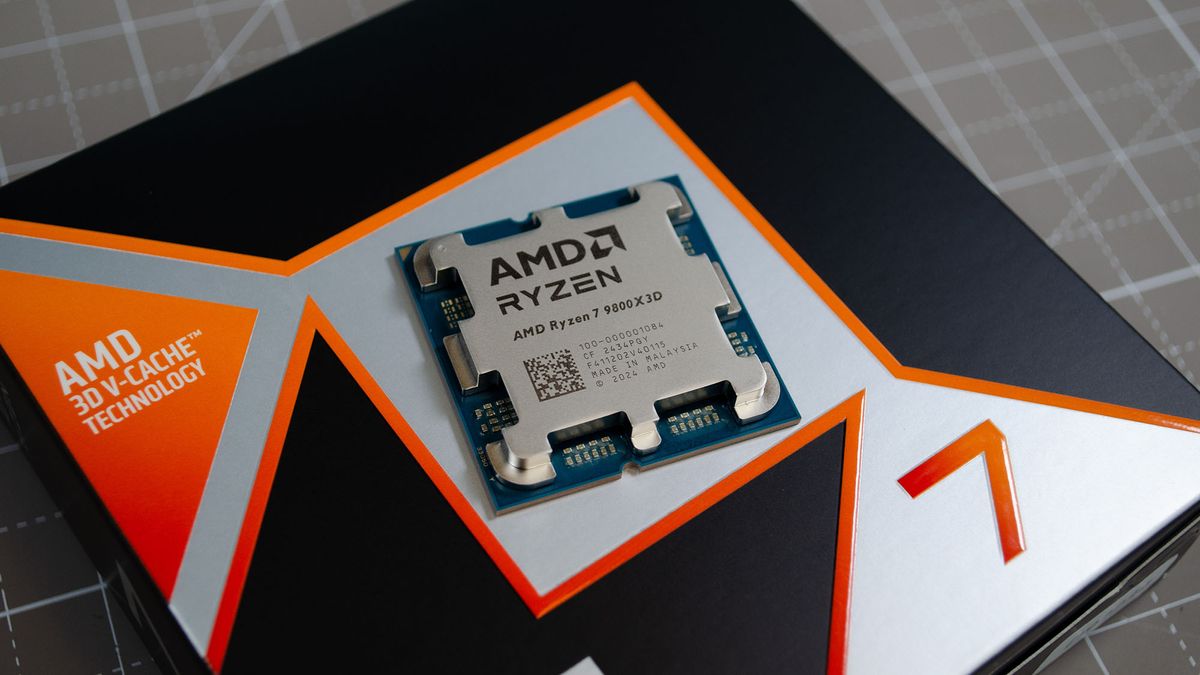
Last year, we saw the introduction of 3D V-Cache for Zen 4 CPUs, and the Ryzen 7800X3D caught fire as the most popular gaming CPU out there. While normally AMD takes some time to push out X3D chips for any given generation, with Zen 5, these gaming-focused processors arrived very swiftly. Indeed, the Ryzen 9800X3D debuted in the first week of November, only a few months after Ryzen 9000 chips.

You could argue that this hasty appearance was pushed through to take away the bad taste from Ryzen 9000, and indeed the Ryzen 9800X3D did exactly that for PC gamers. As we found in our review, this CPU is seriously pepped up (with the ability to be overclocked for the first time, too), and an excellent gaming chip – we called it the best processor release of 2024, in fact.

The sticking point for the 9800X3D was the slightly hiked MSRP, along with the initial stock selling out very quickly, a situation compounded by scalping woes. Still, this clearly was the piece of silicon AMD needed to get out of the door to recover its CPU reputation, and really take the fight to Intel.

Also, i’s worth noting that we were treated to a welcome wallet-friendly last-gen offering from AMD, the Ryzen 7600X3D, as a budget gaming CPU (and a great fit for small form-factor builds) – but as a Micro Center exclusive in the US (again).

An ASRock Steel Series Radeon RX 7900 GRE on a desk

(Image credit: Future / John Loeffler)

GPU disappointment – with a big saving grace

AMD was a hive of activity with graphics cards last year, filling out the RDNA 3 series with various models of GPU, from the lower-end RX 7600, through the mid-range territory with the RX 7700 XT and 7800 XT. Before that in 2022, we only had high-end models with the RDNA 3 family.

To say this year was a bit of a contrast is an understatement. At the very start of 2024, we did get a new RX 7600 XT, the pepped-up take on the most wallet-friendly RDNA 3 GPU, but it was a modest upgrade, not all that compelling in the value stakes, and overall it didn’t stand up well compared to its Nvidia rival (the RTX 4060).

We were hoping for some new entrants at the true budget end of the GPU market in 2024, below the RX 7600, but the rumored RX 7400 and 7300 never showed. (Although bizarrely, we did get some milking of ancient low-end Radeon GPUs).

We were also hoping for RDNA 4 with even more eagerness, of course, but that didn’t happen either. Despite the rumor mill firmly believing these next-gen graphics cards could debut later in 2024, they didn’t – and the grapevine now has a Q1 2025 launch predicted. Overall, the no-show from RDNA 4 – which is rumored to top out at the mid-range, with an RX 8700 XT flagship in theory – was one of the biggest disappointments in the PC sphere for us in 2024.

What we did get, though, was a rocket-powered rabbit – a Golden Rabbit Edition, or GRE, version of the RX 7900, to be precise. Now, this was a GPU that was launched in China in the middle of 2023, but it was only released globally in February 2024. At that point, the RX 7900 GRE stormed our list of the best GPUs and stole the top position, arguably being the best entry-level option for 4K gaming.

So, it wasn’t a complete washout for Team Red after all, particularly when you consider that the RX 7800 XT also topped our best GPU list when it emerged last year. The GRE was the only thing that was GRE-at (sorry) about 2024 for AMD’s GPUs, though.

An AMD Ryzen AI 300 series chip against a stylized background

(Image credit: AMD)

Ryzen AI 300 bursts onto the scene to take on Qualcomm Snapdragon X

As you doubtless noticed, 2024 was the year that Copilot+ PCs launched, and the only chips powering these AI laptops were Qualcomm’s Snapdragon X SoCs to begin with.

AMD and Intel weren’t that far behind with CPUs that had a beefy enough NPU to qualify as the engine of a Copilot+ PC, though, and Team Red’s Ryzen AI 300 (x86) processors (also known as Strix Point) arrived in laptops starting from July 2024. However, the available models were very thin on the ground to begin with, and indeed the amount of choice with Strix Point notebooks remains limited even as this year draws to a close.

Ryzen AI 300 proved to be strong for AI, and also general performance and mobile gaming, too, easily matching Qualcomm’s effort – with the advantage of having none of the compatibility issues that the Arm-based Snapdragon X CPUs have as baggage.

That said, Intel also debuted Lunar Lake mobile (x86) processors for Copilot+ PCs in 2024, and these also proved to be very strong CPUs – and a match for Ryzen AI 300 in many respects. In short, two great x86 alternatives to Qualcomm Snapdragon X-powered Copilot+ PCs emerged in 2024, albeit we need more laptops packing this silicon.

An AMD Radeon RX 7900 GRE from PowerColor on a desk with its retail packaging

(Image credit: Future / John Loeffler)

Concluding thoughts

Other notable happenings for AMD in 2024 included the release of FSR 3.1 – which remains lagging behind Nvidia DLSS, although maybe AI will fix that – and an eye-opening achievement in outgunning Intel in the data center arena in terms of overall revenue.

While the launch of Ryzen 9000 CPUs caused some wobbles, we have to remember that these aren’t bad chips by any means – they just didn’t meet (gaming) expectations, and didn’t seem all that great value compared to previous-gen processors (at heavily cut prices) which are still very much on shelves (for the time being).

Ryzen 9000’s time will doubtless come, and at any rate, AMD recovered suitably with the Ryzen 9800X3D – and wasn’t exactly under pressure from Intel, either, as Team Blue had bigger worries than the criticisms Team Red faced.

GPU launches were thin on the ground from AMD, and rather disappointing – save for that RX 7900 GRE – and RDNA 4 failing to appear this year was a further source of some dismay.

Unfortunately, 2024 also saw AMD implement major layoffs, with the company making no bones about an increasing focus on the world of AI, where plentiful profits are to be made.

Is that increased leaning into AI anything to do with pushing back RDNA 4 graphics cards, perhaps? We don’t know that, and wouldn’t get carried away with any paranoia around AMD deprioritizing consumer GPUs yet – it’s probably more to do with market conditions and selling through current-gen RDNA 3 stock. Furthermore, you could apply that line of worried thinking to Nvidia equally, with next-gen Blackwell gaming GPUs also failing to turn up this year, and perhaps set to launch in the shadow of much bigger potential AI profits.
You might also like

Source

Posted on

Got an Intel Core Ultra 200S CPU? These are the patches you need to help gaming performance – with one more update coming in January 2025

  • Intel has issued a full and detailed report on Arrow Lake’s subpar performance
  • Five separate problems were highlighted, four of which are now fixed
  • You’ll need to update your BIOS and Windows 11 to get those fixes

Intel has finished its deep-dive investigation into problems with its Core Ultra 200S processors, and has presented the full results – with most of the issues now fixed, and one remaining remedy to be taken in January 2025.

As you may recall, these Arrow Lake desktop CPUs, launched in October, disappointed with their initial performance – particularly for PC games – and Intel subsequently admitted that Core Ultra 200S CPUs weren’t performing as well as expected, but that fixes were in the pipeline.

We were promised cures for a “series of multifactor issues” in fact, and now we have the full lowdown on those gremlins in the silicon works.

In a lengthy blog post, coined a ‘field update’ (part one of two), Intel observed that: “Editorial conclusions on gaming performance were more polarized, with noteworthy statistical variation from one article to the next. These results were inconsistent with our internal testing.”

Team Blue then says “we have determined that there are five distinct topics that could alter performance or functionality,” before going on to list those areas. They are as follows:

  • A missing Performance & Power Management (PPM) package
  • Intel Application Performance Optimizer (APO) could not take effect
  • BSODs when attempting to launch game titles utilizing the Easy Anti-Cheat service
  • Select performance settings misconfigured on reviewer or early enabling BIOSes
  • New BIOS performance optimizations

All of these issues have been ‘root caused’ – meaning Intel has got to the bottom of why they’re happening – and the first four have been resolved by updates that are already out there.

To get the benefit of these solutions, you need to avail yourself of two main updates. Firstly, update Windows 11 to build 26100.2314 (or newer), which is the November cumulative update for the 24H2 version. (We presume that the 23H2 update for the same month will also work – but Team Blue doesn’t mention this, so that isn’t clear). This will deal with issues number one and two as listed above.

{ window.reliablePageLoad.then(() => { var componentContainer = document.querySelector(“#slice-container-newsletterForm-articleInbodyContent-Jft9z9XLXPXMSG8VGZsEig”); if (componentContainer) { var data = {“layout”:”inbodyContent”,”header”:”Get daily insight, inspiration and deals in your inbox”,”tagline”:”Sign up for breaking news, reviews, opinion, top tech deals, and more.”,”formFooterText”:”By submitting your information you agree to the Terms & Conditions and Privacy Policy and are aged 16 or over.”,”successMessage”:{“body”:”Thank you for signing up. You will receive a confirmation email shortly.”},”failureMessage”:”There was a problem. Please refresh the page and try again.”,”method”:”POST”,”inputs”:[{“type”:”hidden”,”name”:”NAME”},{“type”:”email”,”name”:”MAIL”,”placeholder”:”Your Email Address”,”required”:true},{“type”:”hidden”,”name”:”NEWSLETTER_CODE”,”value”:”XTR-D”},{“type”:”hidden”,”name”:”LANG”,”value”:”EN”},{“type”:”hidden”,”name”:”SOURCE”,”value”:”60″},{“type”:”hidden”,”name”:”COUNTRY”},{“type”:”checkbox”,”name”:”CONTACT_OTHER_BRANDS”,”label”:{“text”:”Contact me with news and offers from other Future brands”}},{“type”:”checkbox”,”name”:”CONTACT_PARTNERS”,”label”:{“text”:”Receive email from us on behalf of our trusted partners or sponsors”}},{“type”:”submit”,”value”:”Sign me up”,”required”:true}],”endpoint”:”https://newsletter-subscribe.futureplc.com/v2/submission/submit”,”analytics”:[{“analyticsType”:”widgetViewed”}],”ariaLabels”:{}}; var triggerHydrate = function() { window.sliceComponents.newsletterForm.hydrate(data, componentContainer); } if (window.lazyObserveElement) { window.lazyObserveElement(componentContainer, triggerHydrate); } else { triggerHydrate(); } } }).catch(err => console.error(‘%c FTE ‘,’background: #9306F9; color: #ffffff’,’Hydration Script has failed for newsletterForm-articleInbodyContent-Jft9z9XLXPXMSG8VGZsEig Slice’, err)); }).catch(err => console.error(‘%c FTE ‘,’background: #9306F9; color: #ffffff’,’Externals script failed to load’, err)); ]]>

Sign up for breaking news, reviews, opinion, top tech deals, and more.

Secondly, you need to get the latest BIOS update for your motherboard, which cures problem number four. As for issue three, that’s resolved by an Easy Anti-Cheat driver update (that’ll be piped through with the game that uses this anti-cheat system, which has been problematic with Arrow Lake on Windows 11 24H2).

The final problem, number five, is the one that’ll be fixed in January 2025 with a new BIOS update, which will provide a further performance uptick.

Intel Arrow Lake Performance Update Details

(Image credit: Intel)

Analysis: Initial double-digit boost, then a single-digit follow-up

As Intel notes, you might just want to wait until next month anyway, then do your BIOS update and grab the fixes for issues four and five in one fell swoop.

Whereas the exact gaming (and app) performance increase you get will depend on your exact mix of PC components and system configuration – as ever – it seems to be the case that the first BIOS update (for problem four) is going to give you at least a boost of a few percent, or perhaps a double-digit uplift (up to 14% in theory, a pretty wide range). The second patch (for problem five, coming in January) is likely to provide a “modest performance improvement in the single-digit range,” we’re told.

So, both of these BIOS updates will likely provide a similar uplift of around 5% or so, maybe a bit more, but if you get lucky – or unlucky depending on how you look at it – you’ll get an even bigger boost (because your system was more hamstrung by these issues in the first place).

We should also point out that fix number two is for Intel APO (Application Performance Optimization) tech, so only a small number of games will benefit from that (those that support APO).

Intel has been commendably transparent in this process, and in revealing the detailed results of its investigation – as the company promised it would. So, that’s a definite tick for Team Blue, and hopefully any Arrow Lake gaming sluggishness will be pretty much ironed out by the time we get to the end of January 2025.

Via VideoCardz

You might also like…

Source

Posted on

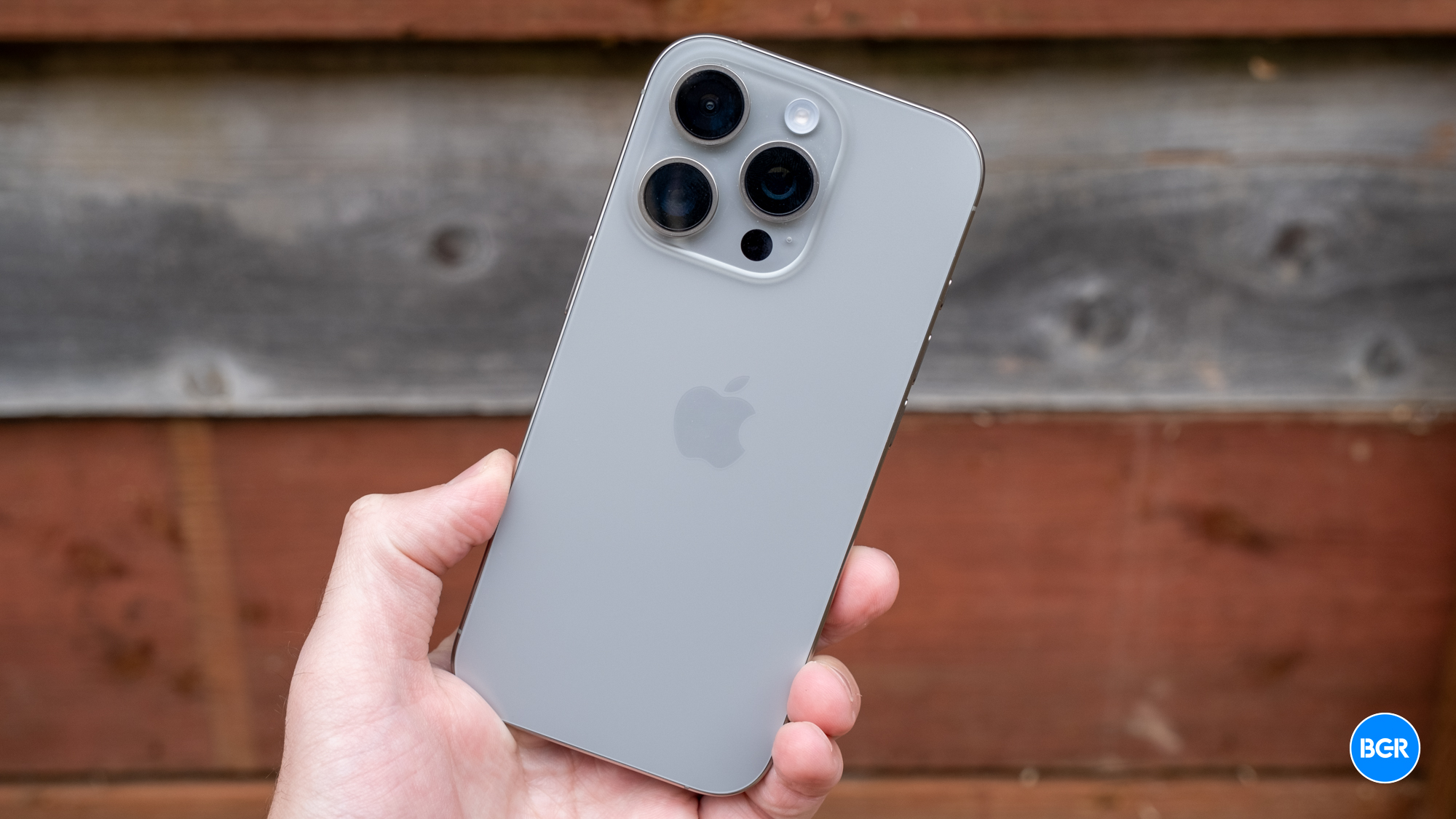
iPhone 18 Pro details and M5 Mac release date both might’ve leaked

In a blog post on Medium, Apple insider Ming-Chi Kuo revealed interesting details about Apple’s future iPhone 18 and M5 Mac releases. According to the analyst, BE Semiconductor will drastically benefit from Apple’s upcoming products as the company has business with Apple’s manufacturers.

Kuo says that the iPhone 18 Pro’s wide camera will be upgraded to variable aperture in 2026, and BESI is the supplier of assembly equipment for aperture blades, a critical component of this upgrade. Last month, Kuo already revealed that Apple planned to add this change to the iPhone.

At the time, the analyst wrote that the “2026 high-end iPhone 18” will feature a wide camera lens with a variable aperture, “significantly enhancing the user photography experience.” The insider, known for his generally accurate predictions about unreleased iPhones, probably refers to the iPhone 18 Pro or iPhone 18 Pro Max. Apple has introduced new camera features with the iPhone Pro Max model before making them available to other models.

Apple wouldn’t be the first smartphone vendor to adopt cameras with variable apertures. Earlier this year, we saw similar features from phones like the Xiaomi 14 Ultra and the Honor Magic 6 Pro. Before that, Samsung phones like the Galaxy S9 and S10 featured cameras with variable apertures.

Tech. Entertainment. Science. Your inbox.

Sign up for the most interesting tech & entertainment news out there.

By signing up, I agree to the Terms of Use and have reviewed the Privacy Notice.

Besides the iPhone 18 Pro improvements, the analyst also leaked information about Apple’s upcoming M5 chips. According to him, the M5 processors will adopt TSMC’s N3P node, which is known as the third generation of the 3nm process. With that, mass production for upcoming chips is expected in this timeline:

  • Base-model M5: 1H25
  • M5 Pro and M5 Max: 2H25
  • M5 Ultra: 1H26

That said, Apple will likely unveil M5 Macs by the second half of 2025, as it still has some M4 Macs to unveil throughout 2025.

In addition, the analyst says Apple will continue to build out it’s Private Cloud Compute infrastructure by producing high-end M5 chips, which will be better suited for AI inferencing. Previously, rumors revealed Apple wanted to ask other companies to create specific chips for its PCC infrastructure starting in 2026.

BGR will let you know once we learn more about future Apple products.

Source

Posted on

iPad 11 leak may reveal release timing for Apple’s new entry-level tablet

Apple’s upcoming iPad 11 can’t come soon enough. The latest leak says that Cupertino’s entry-level tablet will be released with iPadOS 18.3. While we don’t think this device will be announced alongside iPadOS 18.3, the news suggests that an iPad 11 release is coming before iPadOS 18.4 rolls out in April.

The information comes from a prominent X leaker who prefers not to be named. The device will have two options: Wi-Fi and Wi-Fi + Cellular. So far, leaks on the iPad 11 reveal Apple will bump its specifications to bring Apple Intelligence to the company’s entry-level tablet.

That being said, the iPad 11 will feature 8GB of RAM and, most likely, Apple’s A18 chip. More interestingly, today’s leak reveals that this tablet could have Apple’s upcoming custom 5G modem, which is also expected to be available with the new iPhone SE 4.

Even if Apple keeps the same design, display, and ports, this $349 tablet would be an instant hit. People in school would have a powerful tablet with several capabilities without having to spend a ton of money. In addition, when this tablet is released, Apple Intelligence will be a more reliable platform with even more features.

Tech. Entertainment. Science. Your inbox.

Sign up for the most interesting tech & entertainment news out there.

By signing up, I agree to the Terms of Use and have reviewed the Privacy Notice.

Bloomberg’s Mark Gurman says Apple is also working on a revamped keyboard for the entry-level iPad 11 and the iPad Air, which could be released in mid-2025. This tablet will support the USB-C Apple Pencil.

iPad 11 will likely debut at a spring event

With today’s iPad 11 leak, it makes sense for Apple to release this tablet at a spring event. So far, iPadOS 18.3 is expected to launch in late January. If Cupertino follows the trend, we could see a keynote in March highlighting this entry-level tablet, the new iPhone SE 4, Apple’s 13-inch and 15-inch MacBook Air with the M4 chip, and AirTag 2.

Fortunately, it won’t take long until the company unveils this tablet, which is a top seller for education and those looking for a more reliable device than an entry-level Windows notebook.

Source

Posted on

The Data Bill: It’s time to cyber up

In the latest deliberations on the Data Use and Access Bill in the House of Lords, I set out two amendments to offer well overdue updating to the Computer Misuse Act (CMA) of 1990. In preparing for committee stage of the bill I remain incredibly grateful to everyone involved with the CyberUp campaign, their analysis and commentary always so perfectly on point.

I hardly think I need to rehearse the backdrop to the CMA, many people will be well aware of the act and its shortcomings. Curiously, in the intervening thirty-four and a half years, despite seismic changes in our society and technologies – crucially, including the rise of cyber security threats – the act remains unamended.

Having said that though, I’ve tempted myself a little as it is the case that the act was originally drafted to protect telephone exchanges in 1990, when only 0.5% of the population had access to the internet. 

The CMA was the UK’s first computer crime law and came about following an attack on Prestel in the mid-1980s. Anyone under the age of 40 is probably wondering what Prestel was – a forerunner of internet-based online services launched by the Post Office in 1979 – which only serves to make the point.

Significant change

My amendments to the new Data Bill seek to achieve a very clear and materially significant change, to enable cyber security professionals to do what we have asked of them without the legislation tying at least one hand behind their back.

Thirty-four years on, the CMA still governs how we tackle cyber criminals. As it is currently written, the act inadvertently criminalises legitimate cyber security research. This includes a large proportion of vulnerability research and threat intelligence activities which are critical in protecting the UK from increasingly sophisticated cyber attacks. 

Fundamentally, it restricts cyber security researchers from conducting essential work to protect the UK, including critical national infrastructure. While improving data access is a positive move, it is equally crucial to modernise cyber security laws to protect not just the data but also the systems that underpin it.

The wording of my amendments in full is:

Data use: definition of unauthorised access to computer programs or data

In section 17 of the Computer Misuse Act 1990, at the end of subsection (5) insert—

“c) they do not reasonably believe that the person entitled to control access of the kind in question to the program or data would have consented to that access if they had known about the access and the circumstances of it, including the reasons for seeking it, and

(d) they are not empowered by an enactment, by a rule of law, or by order of a court or tribunal to access of the kind in question to the program or data.

Data use: defences to charges under the Computer Misuse Act 1990

(1) The Computer Misuse Act 1990 is amended as follows.

(2) In section 1, after subsection (3) insert—

(4) It is a defence to a charge under subsection (1) to prove that—

(a) the person’s actions were necessary for the detection or prevention of crime, or

(b) the person’s actions were justified as being in the public interest.

(3) In section 3, after subsection (6) insert—

(7) It is a defence to a charge under subsection (1) in relation to an act carried out for the intention in subsection (2)(b) or (c) to prove that—

(a) the person’s actions were necessary for the detection or prevention

of crime, or

(b) the person’s actions were justified as being in the public interest.

As I said in the debate, don’t take my word for it, the National Cyber Security Centre acknowledged the widening gap between the risks facing the UK and its ability to mitigate them in its 2024 annual review, clearly stating that “updating this out-of-date legislation is a crucial step in closing this gap”.

Statutory defence

Introducing a statutory defence would provide legal clarity and protection for ethical cyber security professionals undertaking legitimate vulnerability research and threat intelligence activities. Such a defence would align the UK with best practices internationally, ensuring that we keep pace with nations like the US and EU, which are moving to safeguard ethical cyber security work.

To put some numbers to this, there have been nine million instances of cyber crime against UK businesses and charities since May 2021, according to the Department for Science, Innovation and Technology’s 2024 cyber breaches survey, published April 2024. Half of businesses and 32% of charities suffered a cyber breach or attack last year, with £2.4bn estimated increased revenue potential post-update for the sector.

Analysis based on CyberUp’s recent industry report suggests that 60% of respondents said the CMA is a barrier to their work in threat intelligence and vulnerability research, and 80% believed the UK was at a competitive disadvantage due to the CMA.

Concluding my remarks, I asked whether the minister would be able to provide an update on the work to reform the Computer Misuse Act? I also asked her whether she believed that my amendments as drafted would provide the legal protection that we seek and, if so, why the government would not bring them into force via the means of the Data Bill.

The minister’s answers to both questions were largely the same – we must wait, the amendments are “premature”, there was not consensus among those who responded to last year’s consultation on the matter so the path forward must continue with no timeline or sense of when this most pressing of issues will be resolved.

If the government needs some public support to increase its pace on this project, how about the fact that two-thirds of UK adults are inclined to support a change in the law to allow cyber security professionals to carry out research to prevent cyber attacks?

There is also support for such a statutory change from the excellent report of the then chief scientific advisor, Patrick Vallance, earlier this year which concluded that, “Amending the CMA to include a statutory public interest defence that would provide stronger legal protections for cyber security researchers and professionals”.

Other nations have already led in this area, not least France and the Netherlands. Belgium, Germany and Malta are currently amending their legal frameworks to this end. As I stated in the debate, it’s time to pass these amendments, it’s time to afford our cyber security professionals the safety they need to do the self-same thing for us, all of us. As has been the case for far too long – it’s time to CyberUp.  

Source

Posted on

Latest attempt to override UK’s outdated hacking law stalls

Two amendments to the Data (Access and Use) Bill that would have established a statutory legal defence for security professionals and ethical hackers to protect them from prosecution under the 1990 Computer Misuse Act (CMA) have failed to make it beyond a House of Lords committee hearing after being withdrawn.

The 34-year-old CMA broadly defines the offence of “unauthorised access to a computer” that is frequently relied upon in the UK when prosecuting cyber criminals, but given it became law when Margaret Thatcher was prime minister, it has not been updated to reflect the emergence, and practices, of the legitimate cyber security profession.

Campaigners say this is putting the UK at a competitive disadvantage because security pros fear they may be prosecuted simply for doing their jobs – for example, by accessing a system during the course of an incident investigation – while their employers lose out to companies located in more permissive jurisdictions.

Introduced by Lord Chris Holmes and Lord Tim Clement-Jones, the changes would have introduced two amendments into the Data Bill to amend the CMA such that security professionals could prove their actions were “necessary for the detection or prevention of crime” or “justified as being in the public interest”.

Speaking in support of the amendment on 18 December 2024, Holmes spoke about how the CMA was introduced to defend telephony exchanges in an era when 0.5% of the population was online, and if that was the act’s sole purpose, that alone would indicate it needs updating given the profound advances in technology made in the past three-and-a-half decades.

“The Computer Misuse Act 1990 is not only out of date but inadvertently criminalising the cyber security professionals we charge with the job of keeping us all safe. They oftentimes work, understandably, under the radar, behind not just closed but locked doors, doing such important work. Yet, for want of these amendments, they are doing that work, all too often, with at least one hand tied behind their back,” said Holmes.

The Computer Misuse Act 1990 is not only out of date but inadvertently criminalising the cyber security professionals we charge with the job of keeping us all safe Lord Chris Holmes

“Let us take just two examples: vulnerability research and threat intelligence assessment and analysis. Both could find that cyber security professional falling foul of the provisions of the CMA 1990. Do not take my word for it: look to the 2024 annual report of the National Cyber Security Centre, which rightly and understandably highlights the increasing gap between the threats we face and its ability, and the ability of the cyber security professionals community, to meet those threats.

“These amendments, in essence, perform one simple but critical task: to afford a legal defence for legitimate cyber security activities,” he said. “That is all, but it would have such a profound impact for those whom we have asked to keep us safe and for the safety they can thus deliver to every citizen in our society.

“It’s not time, it’s well over time that these amendments become part of our law. If not now, then when? If not these amendments, what amendment? And if not these amendments, what will the government say to all those people who will continue to be put in harm’s way for want of these protective provisions?” added Holmes.

Government responds

During the hearing in Westminster, other parliamentarians, including the amendment’s co-sponsor Lord Clement-Jones and Lord James Arbuthnot, better known for his campaigning work in the Post Office Horizon scandal, spoke in favour of reform, but to no avail.

Lord Timothy Kirkhope said: “This just demonstrates, yet again, that unless we pull ourselves together, with better smart legislation that moves faster, we will never ever catch up with developments in technology and AI [artificial intelligence]. This has been demonstrated dramatically by these amendments. I express concerns that the government move at a pace that government always moves at, but in this particular field it is not going to work.”

Responding to the meeting, under-secretary of state at the Department for Science, Innovation and Technology (DSIT) Baroness Margaret Jones said the government agreed the UK needed a revised legislative framework to enable the authorities to tackle the harms posed by cyber criminals, and that it was committed to ensuring the CMA remains up to date and is effective in this regard.

However, said Jones, reform is a “complex and ongoing” issue that is being considered as part of a Home Office review of the CMA itself.

“We are considering improved defences by engaging extensively with the cyber security industry, law enforcement agencies, prosecutors and system owners. However, engagement to date has not produced a consensus on the issue, even within the industry, and that is holding us back at this moment – but we are absolutely determined to move forward with this and to reach a consensus on the way forward,” she said.

“The specific amendments … are premature, because we need a stronger consensus on the way forward, notwithstanding all the good reasons … given for why it is important that we have updated legislation. With these concerns and reasons in mind, I hope that the noble Lord [Holmes] will feel able to withdraw his amendment,” said Jones.

Katharina Sommer, group head of government affairs at cyber firm NCC Group, said she was thrilled to see such passionate calls for reform, and that the session had rightly highlighted the outdated nature of the CMA and how it holds back cyber security professionals.

“We need a statutory defence, like that proposed by Lord Holmes’ welcome amendment, to allow this vital work to proceed unimpeded, at a time where the cyber threat is rising unabatedly. Reforming the CMA would unlock huge opportunities, strengthen our defences, and help the UK compete on the world stage,” she said.

“It is heartening to see the minister recognise the need to provide legal protections for legitimate cyber security activities, and hear about her determination to reach consensus on the way forward, particularly as this follows her colleague the security minister’s recent commitment to reviewing the CMA,” said Sommer.

“We do hope sincerely that all those involved in keeping the UK safe in cyberspace are prepared to work together, and find compromise rather than risk deadlock. We look forward to working with the government and all partners to ensure the UK’s cyber laws reflect 21st century threats.”

Disappointment

Andrew Jones, strategy director at The Cyber Scheme, a supporter of the CyberUp Campaign for legal reform, said: “Whilst we are slightly disappointed by the government’s decision not to seize this opportunity to bring the Computer Misuse Act into the 21st century, we are encouraged by their recent comments suggesting a review of the act is being considered. Until then, the CMA will remain an outdated piece of legislation, preventing our cyber security professionals from defending organisations effectively and leaving us lagging behind peer nations, as the US and EU move to safeguard ethical cyber security work as a cornerstone of national resilience.

“With the CEO of the National Cyber Security Centre recently acknowledging that hostile activity in UK cyberspace has increased in ‘frequency, sophistication and intensity’, it is vital that the UK takes measures to upgrade its cyber resilience. 

He added: “The statutory defence we propose – drafted in consultation with industry and legal experts – would protect legitimate cyber security professionals, strengthen UK cyber defences, and reinforce its place as a cyber security leader. We are fully prepared to work with the government to help implement this necessary change in the future, as soon as it is ready to act.”

Source

Posted on

Asus gaming laptops leak with RTX 5090, 5080 and 5070 Ti GPUs, sparking excitement about a CES 2025 reveal

  • Retailers have leaked incoming laptops from Asus with RTX 5000 GPUs
  • Nvidia RTX 5090, 5080 and 5070 Ti models have been spotted
  • This is a hint that rumors of a desktop RTX 5070 Ti are on the money

Asus has some new gaming laptops incoming with Nvidia’s next-gen Blackwell mobile GPUs on board – and Intel Arrow Lake chips, too – with the details having been spilled by some leaks from online retailers.

VideoCardz was on the case here, noticing the leaks that reveal five different Asus laptops with Nvidia RTX 5000 graphics cards, including a really beefy-sounding ROG Strix notebook.

Add seasoning appropriately here as with any leak, and we should note upfront that the Nvidia Blackwell GPU models aren’t listed by their full name, such as RTX 5090. Instead, codenames are used – for example, GN22-X11 in the case of the flagship. We know what graphics cards those codenames correspond to based on a bunch of previous leaks, but still, we must be cautious about making too many assumptions.

In theory, then, the Asus ROG Strix G835 will have that RTX 5090 on board (with 16GB of VRAM) and an Intel Core Ultra 9 275HX (Arrow Lake) processor, backed with 64GB of DDR5 system memory. A power-packed set of components indeed, and the G835 will run with an 18-inch display sporting a 2048 x 1536 resolution, based on its leaked listing.

We can also see the Asus ROG Zephyrus GU605 which will apparently offer options on three Nvidia GPUs: the RTX 5090, 5080 and 5070 Ti. That notebook is set to use an Intel Core Ultra 9 285H CPU, again with 64GB of DDR5 system RAM, and a 16-inch screen.

Two Asus ROG Strix Scar 18 laptops, and a ROG Strix G16 model, have also had their specs spilled online, so three in total, running with RTX 5090, 5080 and 5070 Ti GPUs respectively.

Nvidia geforce 4070

(Image credit: Nvidia)

Analysis: A raft of Blackwell launches at CES 2025?

This appears to back up some previous rumors which have suggested we will see RTX 5000 laptop GPUs at CES 2025, alongside Blackwell desktop graphics cards.

{ window.reliablePageLoad.then(() => { var componentContainer = document.querySelector(“#slice-container-newsletterForm-articleInbodyContent-7h9xcZpPkMdEvfuADNow9k”); if (componentContainer) { var data = {“layout”:”inbodyContent”,”header”:”Get daily insight, inspiration and deals in your inbox”,”tagline”:”Sign up for breaking news, reviews, opinion, top tech deals, and more.”,”formFooterText”:”By submitting your information you agree to the Terms & Conditions and Privacy Policy and are aged 16 or over.”,”successMessage”:{“body”:”Thank you for signing up. You will receive a confirmation email shortly.”},”failureMessage”:”There was a problem. Please refresh the page and try again.”,”method”:”POST”,”inputs”:[{“type”:”hidden”,”name”:”NAME”},{“type”:”email”,”name”:”MAIL”,”placeholder”:”Your Email Address”,”required”:true},{“type”:”hidden”,”name”:”NEWSLETTER_CODE”,”value”:”XTR-D”},{“type”:”hidden”,”name”:”LANG”,”value”:”EN”},{“type”:”hidden”,”name”:”SOURCE”,”value”:”60″},{“type”:”hidden”,”name”:”COUNTRY”},{“type”:”checkbox”,”name”:”CONTACT_OTHER_BRANDS”,”label”:{“text”:”Contact me with news and offers from other Future brands”}},{“type”:”checkbox”,”name”:”CONTACT_PARTNERS”,”label”:{“text”:”Receive email from us on behalf of our trusted partners or sponsors”}},{“type”:”submit”,”value”:”Sign me up”,”required”:true}],”endpoint”:”https://newsletter-subscribe.futureplc.com/v2/submission/submit”,”analytics”:[{“analyticsType”:”widgetViewed”}],”ariaLabels”:{}}; var triggerHydrate = function() { window.sliceComponents.newsletterForm.hydrate(data, componentContainer); } if (window.lazyObserveElement) { window.lazyObserveElement(componentContainer, triggerHydrate); } else { triggerHydrate(); } } }).catch(err => console.error(‘%c FTE ‘,’background: #9306F9; color: #ffffff’,’Hydration Script has failed for newsletterForm-articleInbodyContent-7h9xcZpPkMdEvfuADNow9k Slice’, err)); }).catch(err => console.error(‘%c FTE ‘,’background: #9306F9; color: #ffffff’,’Externals script failed to load’, err)); ]]>

Sign up for breaking news, reviews, opinion, top tech deals, and more.

Based on this spillage, we’re going to see three mobile models on offer, in the form of the RTX 5090, 5080 and 5070 Ti, although there could be lower-tier models as well.

When Nvidia launched its current-gen of mobile GPUs back at CES 2023, we got a full house of the entire range presented to us: the RTX 4050, 4060, 4070, 4080 and 4090 GPUs. Note that they were all vanilla versions, so it’s interesting to see a purported mobile RTX 5070 Ti creeping in this time around.

On the desktop front, the grapevine reckons that of Nvidia’s next-gen offerings, we’ll see RTX 5090 and 5080 models at CES in January, and possibly one or other of the RTX 5070 or RTX 5070 Ti – maybe even both of those.

So, is the mobile RTX 5070 Ti popping up a sign that we’ll get this on the desktop, too? It could be, but whatever the case, we’re seemingly going to see a fair few Blackwell GeForce GPUs being revealed for both desktop PCs and gaming laptops at CES 2025. We might also see Nvidia DLSS 4, too.

You might also like

Source

Posted on

Challenging the cloud giants: Is a new era of competition on the horizon?

The UK’s Competition and Markets Authority (CMA) sent shockwaves through the tech industry in October 2023 when it announced its investigation into potential anti-competitive practices in the UK cloud infrastructure services market.

The CMA is not ploughing a lonely furrow: regulators across the world – from Spain and Denmark to South Africa and (if reports are to be believed) the United States – are examining various aspects of cloud computing and its impact on competition.

This scrutiny is long overdue, and it marks a significant step forward. For too long, regulators have looked the other way as the Western world’s cloud market quietly amalgamated around just two cloud providers.

While these tech giants have undoubtedly played their part in a global digital industrial revolution, their dominance is often accepted as an inevitable and unchangeable reality – even if it may have been achieved by anti-competitive practices. 

This implicit acceptance of the status quo is a false narrative because there are alternatives. Challenger cloud providers stand ready to compete, asking for nothing more than a level playing field.

For inquiries like the CMA’s to succeed, it is crucial that decision-makers do not allow the dominant cloud providers to monopolise the conversation and they need to give equal weight to the voices of those challengers.

At the beginning of next year, we will learn about the CMA’s provisional opinion on the four “theories of harm” under investigation.

These range from concerns about exploitative pricing practices to barriers that restrict customers from switching providers.

During the summer, the CMA proposed numerous remedies to combat these. While we can’t second guess the exact conclusions, one thing is clear: challenger cloud providers hold strong and united views, based on decades of cumulative experience.

These challengers offer a vital dose of reality to what can often become dry, legalistic debates.

 While the industry may be guilty of using jargon like “data egress fees” and “anti-competitive licensing practices”, these terms have real-world consequences. 

Ask a challenger provider to explain what these practices mean for their business, and you’ll hear stories of dominant players charging exorbitant fees to customers who try to leave their platforms or dramatically increasing the cost of widely-used software when it’s run on a competitor’s cloud. These practices have profound implications for competition.

If the CMA can create a framework that enables competition, the benefits will ripple through the market. Challenger cloud providers, with their agility and innovation, will drive down prices, expand consumer choice and spur further technological advances. They will also help to address critical concerns like cloud concentration risk and digital resilience, which become ever more pressing as our dependence on cloud services grows.

The stakes couldn’t be higher. This isn’t just about today’s challengers and consumers; it’s about future-proofing the entire cloud ecosystem. Emerging markets such as AI and quantum computing – both heavily reliant on cloud infrastructure – must not fall victim to a “winner takes all” scenario.

 Such an outcome would stifle innovation and concentrate power in ways that could threaten global digital resilience and even national security.

The CMA, alongside its international counterparts, has a unique and urgent opportunity to reset the dial. This is a moment to usher in a new era of openness, competition, and fairness in the cloud market.

Challenger cloud providers will be watching closely to see how the CMA’s provisional decision translates into meaningful solutions that benefit not only the industry but also consumers, the wider economy, and the future of digital innovation.

While the last twelve months may have fired the starting gun on investigating the cloud market, the next twelve could be when we see real change begin.

Source

Posted on

LockBit ransomware gang teases February 2025 return

Despite being taken down and humiliated by the National Crime Agency (NCA) coordinated Operation Cronos in February 2024, an unknown individual(s) associated with, or claiming to represent, the LockBit ransomware gang has broken cover to announce the impending release of a new locker malware, LockBit 4.0.

In screengrabs taken from the dark web that have been widely circulated on social media in the past day, the supposed cyber criminal invited interested parties to “sign up and start your pentester billionaire journey in 5 minutes with us”, promising them access to supercars and women. At the time of writing, none of the links in the post direct anywhere, while a countdown timer points to a ‘launch’ date of 3 February 2025.

Robert Fitzsimons, lead threat intelligence engineer at Searchlight Cyber, said it was hard to say at this stage what LockBit 4.0 entailed – whether the gang was launching a new leak site, its old one having been seized, or whether it has made changes to its ransomware.

“It is worth noting that LockBit has already been through many iterations, its current branding is LockBit 3.0. It’s therefore not surprising that LockBit is updating once again and – given the brand damage inflicted by the law enforcement action Operation Cronos earlier this year – there there is clearly a motivation for LockBit to shake things up and re-establish its credentials, keeping in mind that the LockBit 3.0 site was hijacked and defaced by law enforcement,” said Fitzsimons.

“There has been a decrease in LockBit’s victim output since Operation Cronos but this post shows that it is still trying to attract affiliates and continue its operations.”

The gang’s sudden announcement comes just days after it emerged that the United States government is seeking the extradition from Israel of an alleged LockBit operative named as Rotislav Panev to face trial for wire fraud and cyber crime.

Panev was arrested in Haifa in Israel in August – according to Israeli news site Ynet, which was first to report the extradition request, news of his arrest has been restricted up to now in order to avoid tipping off other LockBit associates who may be located outside Russia and giving them a chance to escape to the relative safety afforded them there.

Panev is accused of working as a software developer for LockBit and may have created the mechanism by which the gang was able to print ransom notes on printers connected to the compromised systems. Panev’s lawyer told Ynet that he was a computer technician and was never aware of nor involved in any fraud, extortion or money laundering.

Computer Weekly understands an extradition hearing in this case is scheduled for January 2025.

LockBit down but not out?

Since Operation Cronos unfolded in early 2024, the NCA and other agencies that participated in the takedown have been drip feeding more information about the infamous cyber criminal operation.

In May, the NCA unmasked its leader, LockBitSupp, naming him as Russian national Dmitry Khoroshev and targeting him with asset freezes and travel bans, concurrent with an indictment in the US that has seen him charged with a total of 26 counts of fraud, damage to protected computers and extortion. Khoroshev remains at large despite a multimillion-dollar reward, and LockBitSupp has denied that this is their true identity.

Later in the year, the NCA named-and-shamed a high-profile LockBit affiliate, Aleksandr Ryzhenkov, aka Beverley, who was also a key player in the Evil Corp operation and served as a henchman to its leader Maksim Yakubets.

Despite the apparent success of Operation Cronos, recent history has shown that even when law enforcement operations can be effective at disrupting their activities, cyber criminals are remarkably resilient and often able to stand up their operations again with relative ease.

Although it is not currently possible to ascertain what the person behind LockBit’s announcement is actually planning, defenders should be alert to the possibility of attack in the coming weeks and take appropriate anti-ransomware measures wherever possible.

Source

Posted on

Apple’s new AirPods Pro 3 features may have just leaked

Future iterations of Apple’s AirPods Pro may include impressive health monitoring features, according to a new report in Mark Gurman’s PowerOn newsletter. While specific details are scarce, reports indicate that Apple is exploring capabilities that include heart rate monitoring and other physiological metrics. 

The development of these features is still in its early stages, with initial tests indicating that the heart rate monitoring functionality has yielded encouraging and relatively accurate results. And while there’s no telling when such a feature will hit the market, Gurman writes that it might “be ready for the next-generation AirPods Pro.”

Potential AirPods Pro 3 release

Admittedly, there haven’t been any concrete rumors about when we might see Apple release AirPods Pro 3. If history is any indication, however, it might be coming up sooner than you think.

For context, recall that the first AirPods Pro hit stores in October of 2019. AirPods Pro 2 then came around about three years later, in September of 2022. If Apple sticks with a 3-year upgrade cycle, there’s a chance we’ll see new a AirPod Pro model in the fall of next year. And remember, Apple typically aims to keep its upgrade cycle on a consistent schedule.

Tech. Entertainment. Science. Your inbox.

Sign up for the most interesting tech & entertainment news out there.

By signing up, I agree to the Terms of Use and have reviewed the Privacy Notice.

Rumored AirPods Pro 3 features

Notably, an AirPods Pro model with a heart rate monitor is reportedly the feature Apple is most focused on.

Gurman writes:

The main work right now is getting the AirPods to reliably measure a user’s heart rate. Though the Apple Watch already does this, the feature could be a selling point for people who don’t like wearing watches or just want a backup fitness tracker… 

In Apple’s testing, heart-rate data is more accurate on the watch than AirPods, but the earbuds aren’t terribly far off. 

Besides rumors of a heart rate monitor, some other AirPod Pro 3 rumors we’ve seen point to improved audio performance, a new H3 chip, more robust water and dust resistance, more seamless integration with the Vision Pro, and improved battery life. One feature we can likely look forward to is improved Active Noise Cancellation. One interesting but peculiar rumor claims that AirPods Pro 3 might include a feature that would allow users to measure their body temperature and perspiration level.

Apple’s commitment to health

Apple’s commitment to adding new health-oriented features to its AirPods Pro line shouldn’t come as much of a surprise. After all, the current AirPods Pro 2 have a clinical-grade Hearing Aid feature that was brilliantly showcased in the ad below:

Additionally, Apple CEO Tim Cook has been quite vocal about Apple’s commitment to leveraging its product line towards improving individual health. Notably, Cook during an interview a few years back said that Apple’s work in the health space may ultimately be what the company is most known and revered for.

If you zoom out into the future, and you look back, and you ask the question, ‘What was Apple’s greatest contribution to mankind?’ It will be about health.

We are taking what has been with the institution and empowering the individual to manage their health.

Lastly, it’s worth noting that Apple has also devoted a lot of resources to figuring out a way to get the Apple Watch to measure a user’s blood glucose levels. There’s no telling if Apple will ever be able to achieve this, but if it does, it will truly prove to be a godsend for millions of people across the globe.

Source