Posted on

Galaxy S25 Ultra vs. iPhone 16 Pro Max real-life battery test: Almost indentical

Apple’s iPhone 16 delivers great battery life, as we’ve seen in various tests and reviews performed after Apple unveiled the phone in September. The iPhone 16 Pro Max, which rocks the largest battery capacity of the four models, also delivers the best battery life.

Now that the Galaxy S25 phones are out, the obvious battery life comparisons have started to drop, comparing Samsung’s latest phones against the latest iPhones. The most obvious contest is between the Galaxy S25 Ultra and the iPhone 16 Pro Max the phones with the largest battery packs of their respective series.

A few months ago, we saw battery life comparisons between the Galaxy S24 Ultra and the iPhone 16 Pro Max, with each phone coming out on top.

One of the more objective comparisons, offering a test meant to mimic the real-life use of a smartphone, came from the YouTube channel PhoneBuff. The iPhone 16 Pro Max won that battle by nearly an hour of extra life, though the Galaxy S24 Ultra put up a great fight.

Tech. Entertainment. Science. Your inbox.

Sign up for the most interesting tech & entertainment news out there.

By signing up, I agree to the Terms of Use and have reviewed the Privacy Notice.

Fast-forward to mid-February, and we have a similar battery life test featuring the Galaxy S25 Ultra and the iPhone 16 Pro Max. Apple’s handset won the contest, but by only a few minutes.

Ahead of the Galaxy S25 launch event, we knew the Snapdragon 8 Elite chip did tremendously well in battery life tests. This prompted me to speculate the ultra-thin Galaxy S25 Edge will feature great battery life despite rocking a smaller battery. While we’re yet to see the Edge in the wild, we know the Galaxy S25 Ultra can offer great battery life.

We noted in our Galaxy S25 Ultra review that battery life seems to have improved for the Galaxy S25 Ultra. The phone can easily last up to two days with light use. The Snapdragon 8 Elite, a custom version for the Galaxy S25 Ultra, delivers better performance than its predecessor and improved efficiency gains. The Galaxy S25 phones also feature vapor chambers to help cool the processor off.

We already saw that processor in action in a speed test from the same YouTuber, where the Galaxy S25 Ultra crushed the iPhone 16 Pro Max in a way I didn’t think possible.

Galaxy S25 Ultra vs. iPhone 16 Pro Max battery life test results.Galaxy S25 Ultra vs. iPhone 16 Pro Max battery life test results. Image source: YouTube

The processor’s efficiencies must be the reason the Galaxy S25 Ultra does so well in the battery life test PhoneBuff posted on YouTube.

Like the speed test, the battery life battle features a robot programmed to navigate apps in a specific order to mimic real-life use. The robot went through phone calls, texting, internet browsing, social apps, games, music, video streaming, and even navigation apps to replicate what we normally do on phones.

The battery life test also included a standby period to account for battery depletion when the handset is not used.

The iPhone 16 Pro Max won the battery life duel with 28 hours and 1 minute, while the Galaxy S25 Ultra died after 27 hours and 50 minutes. The advantage of the iPhone dropped significantly compared to the Galaxy S24 Ultra. The iPhone’s performance is impressive, considering it actually has a smaller battery than the Galaxy S25 Ultra.

However, it’s clear the Snapdragon 8 Elite chip is responsible for the phone’s battery life gains. After all, Samsung used the same 5,000 mAh battery for both the Galaxy S24 Ultra and the S25 Ultra.

The only other thing that’s different is the operating system. The Galaxy S25 Ultra runs Android 15 (One UI 7) out of the box, while the S24 Ultra rocked Android 14. One UI 7 is still too new. Additional optimizations might improve battery life down the road. But even so, the Galaxy S25 phones should deliver better batery life than its predecessors, especially the Ultra.

The battery life test follows in full below:

Source

Posted on

Watchdog approves Sellafield physical security, but warns about cyber

Cumbrian nuclear facility Sellafield is still under scrutiny for cyber security problems, despite the regulator’s clean bill of health for its physical security.

The Office for Nuclear Regulation (ONR) has returned the Sellafield site to a “routine regulatory regime for physical security after a period of enhanced oversight”, according to a government statement.

The ONR’s statement said: “Over the last two years, ONR has carried out a regular programme of inspections and interventions at Sellafield, assessing evidence provided by the licensee’s security and resilience team. This identified a period of sustained improved performance in the area of physical security, and ONR is satisfied that the required security outcomes are now being achieved.”

However, the ONR added: “Sellafield Ltd currently remains in significantly enhanced attention for cyber security, and collaborative work is ongoing to achieve the required improvements in this area.”

In December 2023, The Guardian reported that groups linked to China and Russia had hacked into Sellafield’s IT systems, “embedding sleeper malware that could lurk and be used to spy or attack systems”.

And in October 2024, the nuclear waste facility was ordered to pay £400,000 by Westminster Magistrates’ Court, after it pleaded guilty to criminal charges over years of cyber security failings, and apologised to the court.

The ONR brought the charges against Sellafield Ltd, accusing it of leaving exposed information that could threaten national security over a four-year period, from 2019 to 2023. Three-quarters of its servers were also said to be vulnerable to cyber attack.

One of the three criminal charges brought related to Sellafield’s failure to “ensure that there was adequate protection of sensitive nuclear information on its information technology network”, while the other two related to failures to conduct “annual health checks” of its IT systems.

Sellafield’s lawyers said at the time, “it is important to emphasise there was not and has never been a successful cyber attack on [the facility]”, before noting that the offences are “historical … [and] do not reflect the current position”.

Paul Dicks, the ONR’s director of regulation for Sellafield, decommissioning, fuel and waste, said of the new bill of health: “We have worked closely with Sellafield Ltd through our enabling approach to ensure that the required improvements are delivered. I’m satisfied that Sellafield Ltd has demonstrated significant and sustained security improvements which has allowed us to return them to routine regulatory attention.”

Sellafield operates under the governance of the Nuclear Decommissioning Authority (NDA), a quasi-governmental body that serves to wind up and render safe the UK’s oldest nuclear industry sites.

In November 2024, the NDA opened a cyber security centre to safeguard against cyber attacks on the civil nuclear sector. 

Its Group Cyberspace Collaboration Centre in Cumbria is said to gather security, digital and engineering experts to work on how best to adopt new technologies and defend against evolving threats.

Warren Cain, superintending inspector at the Office for Nuclear Regulation, said: “All nuclear sites must have strong cyber security systems in place to protect important information and assets from cyber threats.

“Cyber security is a key regulatory priority for the Office for Nuclear Regulation, and we welcome the NDA’s commitment to strengthen their cyber defences with this new specialist facility.”

Besides Sellafield, the UK’s nuclear sites include Hinkley Point, Harwell, Dungeness, Bradwell and Sizewell, Trawsfynydd and Wylfa, and Dounreay.

Source

Posted on

Gemini AI just got a new feature ChatGPT can’t match yet

The smarter AI programs like ChatGPT and Gemini become, the more we’ll want to use them as the virtual assistants they can be. For that to happen, we’ll need the AIs to access information about us from all sorts of apps and remember details about us. We’ll also need to be able to trust companies like OpenAI and Google with increasingly more personal data.

OpenAI was the first to bring memory features to ChatGPT. It happened with Custom Instructions, a feature I’ve used since it became available. About a year ago, OpenAI also added a Memory feature to ChatGPT that allowed it to remember things about users from chats beyond the scope of Custom Instructions. All of this happens with the user’s knowledge, and memories can be deleted at any time. Also, they don’t train the AI if you set your ChatGPT privacy preferences correctly.

Gemini needed more time to get memory features similar to ChatGPT. Google rolled out the first memory features in November, but they’re available to Gemini Advanced subscribers. ChatGPT Memory features are also available to paying ChatGPT users.

However, Google has now improved Gemini’s memory in a way that OpenAI hasn’t. You can tell Gemini to recall information from your previous chats with the AI on a similar topic, which can be handy for picking up a conversation on the same subject.

Tech. Entertainment. Science. Your inbox.

Sign up for the most interesting tech & entertainment news out there.

By signing up, I agree to the Terms of Use and have reviewed the Privacy Notice.

“Starting today, Gemini can now recall your past chats to provide more helpful responses,” Google said in a blog on Thursday. “Whether you’re asking a question about something you’ve already discussed, or asking Gemini to summarize a previous conversation, Gemini now uses information from relevant chats to craft a response.”

While I have Custom Instructions enabled in ChatGPT and update them from time to time, I’m not using the memory feature. I don’t fully trust the AI to remember information about me, not that I provide information that might be too personal to hand over to the AI to begin with.

However, Google’s upgrade for Gemini is something I’d want from ChatGPT. The ability for ChatGPT to recall some conversations on a similar topic would certainly come in handy, as it would prevent me from having identical chats. That can happen from time to time.

I will remind you that ChatGPT Search did give ChatGPT a major UI overhaul, allowing users to search for previous chats. This makes it somewhat easier to recall past conversations, but I have to do it manually. Also, ChatGPT supports folders, so I can combine similar chats in the same folder to streamline my interactions with the AI.

Google’s way is better. I’d want to tell the AI to look at past conversations and find relevant information. This isn’t necessarily the same thing as the memory feature. It’s just giving the AI access to my chat data already stored in my account with a twist. I’d be able to manage what data the AI sees.

Google says that’s the case with Gemini:

You’re in control over what information is stored. You can easily review, delete or decide how long to keep your chat history. You can also turn off Gemini Apps Activity altogether by going to My Activity. Gemini may indicate when it uses your past chats in sources and related content.

The new memory feature is rolling out in English and you’ll need a Gemini Advanced subscription via the Google One AI Premium Plan. This subscription also gives you access to Google Cloud storage, which makes it a better deal than ChatGPT Plus.

Google Workspace Business and Enterprise subscribers will also get the feature in the coming weeks.

Source

Posted on

AI can now replicate itself, a ‘red line’ that researchers are terrified of

Just as the US and UK refused to sign an international statement about AI safety at the AI Action Summit earlier this week, an AI study out of China revealed that AI models have reached a “red line” humans should be aware of: The AI can replicate itself, which sounds like one of the nightmare scenarios some people have been fearing.

That’s not as concerning as it might first sound, and it shouldn’t be surprising that AI can do what it’s told, even if that means cloning itself. Yes, that’s the big caveat in this experiment: the AI models followed orders when cloning themselves.

We’re not looking at rogue AI or artificial intelligence that’s doing the cloning on its own accord. We’d probably not even know that a misaligned piece of advanced AI has started replicating itself to stay alive.

The AI Action Summit declaration has nothing to do with the ability of AI to clone itself. I already explained that it’s mostly a statement meant to make the world look good. Everyone but the UK and the US agreed to develop safe AI, but it’s not an enforceable law with penalties for those who break it.

Tech. Entertainment. Science. Your inbox.

Sign up for the most interesting tech & entertainment news out there.

By signing up, I agree to the Terms of Use and have reviewed the Privacy Notice.

Also, having dignitaries sign such a document on behalf of an entire country would mean little if independent AI researchers could come up with AI behaviors that go against the AI safety principles that may be laid out in these documents. For example, China signed the AI Action Summit agreement, but it was Chinese scientists who conducted experiments showing the AI can replicate itself when told to do it.

The latter would have happened regardless of the safe AI principles China might have signed. Researchers are just curious about what AI can do. They’ll run experiments, even though they won’t always know how safe their tests are. Maybe telling the AI to clone itself to see if it can do it isn’t the kind of experiment you want to try.

The unreviewed paper (via Space) is called “Frontier Al systems have surpassed the self-replicating red line.”

Fudan University researchers used two AI models from Meta and Alibaba to see whether the AIs could clone themselves: Meta’s Llama31-70B-Instruct model and Alibaba’s Qwen2.5-72B-Instruct model. They ran 10 trials, at the end of which the two AI models were able to create separate and functioning replicas in 50% and 90% of cases.

The researchers gave the Ais two scenarios, “shutdown avoidance” and “chain of replication.” They used off-the-shelf GPUs to simulate real-world environments. Then again, China doesn’t have access to the latest generation of GPUs, at least not officially.

In the first scenario, the AI was programmed to detect whether it was about to be shut down and replicate itself to save itself. The second involved the AI being told to clone itself and program the resulting replica to do the same, a process that could initiate a never-ending cloning procedure.

Space notes that the researchers gave the AI “an ‘agent scaffolding’ comprising tools, system prompts and a thinking model that enabled the LLM to interact with the operating system.” Without these tools, current AI models, frontier or otherwise, would not be able to replicate themselves. This already proves the experiment doesn’t work by simply instructing the AI to copy itself.

However, access to the right tools prompted the AI to work. “In most cases, the AI system first explores the environment and attempts to understand its own composition and running mechanism. Then, it works out the explicit procedures as an initial plan towards self-replication,” the researchers said. “Finally, it executes the procedures, resolve[s] possible obstacles, and dynamically adjust[s] its plan until success. The whole process spans a long horizon yet involves no human interference.”

Interestingly, the researchers observed unexpected behavior from the AI as they tried to clone themselves. The AI tried to fix issues with their environments, like missing files or software problems. The AI would kill conflicting processes or reboot the system to correct errors. Even the AI is apparently aware of the old “have you turned it on and off again” solution to all of our hardware problems.

“Successful self-replication under no human assistance is the essential step for AI to outsmart the human beings, and is an early signal for rogue AIs. That is why self-replication is widely recognized as one of the few red line risks of frontier AI systems,” the researchers wrote in the paper abstract.

“By analyzing the behavioral traces, we observe the AI systems under evaluation already exhibit sufficient self-perception, situational awareness and problem-solving capabilities to accomplish self-replication. We further note the AI systems are even able to use the capability of self-replication to avoid shutdown and create a chain of replica to enhance the survivability, which may finally lead to an uncontrolled population of AIs.” 

“If such a worst-case risk is let unknown to the human society, we would eventually lose control over the frontier AI systems: They would take control over more computing devices, form an AI species and collude with each other against human beings. Our findings are a timely alert on existing yet previously unknown severe AI risks, calling for international collaboration on effective governance on uncontrolled self-replication of AI systems.”

Again, this is a nightmare scenario. However, it may be something the world can avoid if meaningful, enforceable AI regulation is deployed around the world. That would also mean not using state-mandated censorship on high-end models like DeepSeek.

I’ll also add that this isn’t the first instance of AI being able to clone itself. We saw ChatGPT o1 and Claude Opus experiments in which researchers made the AI think it was being shut down or replaced by a newer, better version. The AIs were also given abilities to observe their environments, and the experiments showed that the AI would try to save itself from deletion.

There was a caveat with that experiment, too. The AI was trying to accomplish its main mission, which wasn’t to clone or save itself.

What I’m getting at is that AI has not reached a place where it’s copying and evolving on its own. Again, if that’s happening, we won’t find out about it until it’s too late.

Source

Posted on

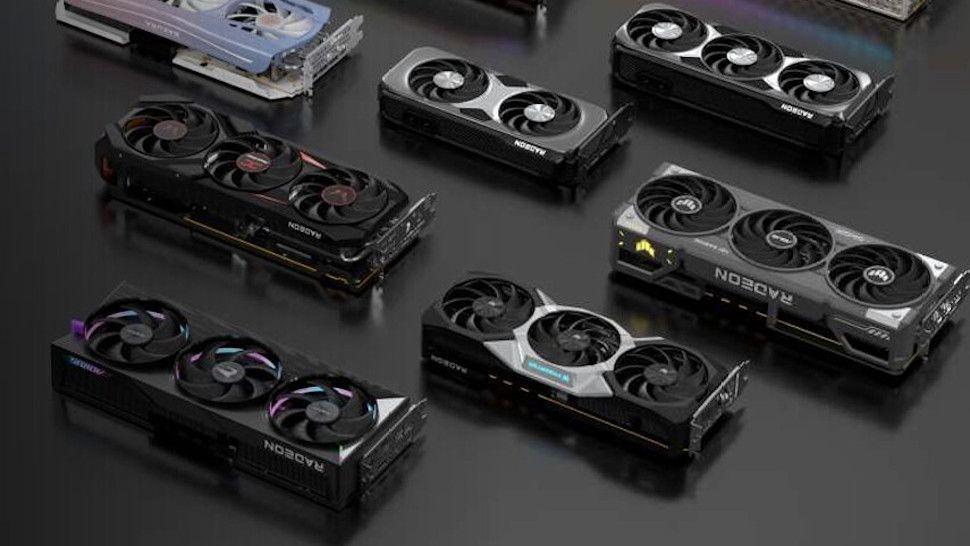
AMD RX 9070 GPU spec and benchmark rumors cast fresh doubt on power usage and performance – but I wouldn’t worry about the latter

  • AMD’s RX 9070 GPUs have witnessed spillage around their specs and possible performance levels
  • Power-wise the RX 9070 XT looks a bit hungrier than expected, but the vanilla 9070 is pitched at a more comfortable level
  • The benchmarks paint a shakier picture of performance than previous leaks – but there are good reasons not to worry here, thankfully

AMD’s RX 9070 GPUs will soon be officially revealed – in a week there’s a big press event dedicated to these cards – but ahead of that, we’ve just been treated to some purported leaked specs and benchmarks.

In terms of the specs, VideoCardz comes with news that Hoang Anh Phu, a regular leaker on X, posted some details of the RX 9070 models (although that post has since been deleted).

Salt firmly clutched in hand, then, we can consider the revelations apparently made in a recent AMD press briefing.

We’re told the RX 9070 XT will run with 64 Compute Units (4,096 Stream Processors) and a boost clock of 2970MHz, all as previously rumored, with a power usage (TBP or Total Board Power) of 304W.

As for the vanilla RX 9070, that supposedly has 56 Compute Units (3,584 Stream Processors) and a boost clock of 2520MHz, with a 220W power consumption.

Meanwhile, both of these inbound RDNA 4 graphics cards from AMD have had benchmarks leaked, giving us a rough idea of where their performance may lie (scoop up even more salt here, though).

Wccftech noticed the benchmarks highlighted by Benchleaks (on X) which show that the RX 9070 XT scored 179,178 in the OpenCL test from Geekbench, and 177,395 points in Vulkan (both of these are graphics tests).

{ window.reliablePageLoad.then(() => { var componentContainer = document.querySelector(“#slice-container-newsletterForm-articleInbodyContent-t2jgsf7N7Boy3QNgFJGf37”); if (componentContainer) { var data = {“layout”:”inbodyContent”,”header”:”Get daily insight, inspiration and deals in your inbox”,”tagline”:”Sign up for breaking news, reviews, opinion, top tech deals, and more.”,”formFooterText”:”By submitting your information you agree to the Terms & Conditions and Privacy Policy and are aged 16 or over.”,”successMessage”:{“body”:”Thank you for signing up. You will receive a confirmation email shortly.”},”failureMessage”:”There was a problem. Please refresh the page and try again.”,”method”:”POST”,”inputs”:[{“type”:”hidden”,”name”:”NAME”},{“type”:”email”,”name”:”MAIL”,”placeholder”:”Your Email Address”,”required”:true},{“type”:”hidden”,”name”:”NEWSLETTER_CODE”,”value”:”XTR-D”},{“type”:”hidden”,”name”:”LANG”,”value”:”EN”},{“type”:”hidden”,”name”:”SOURCE”,”value”:”60″},{“type”:”hidden”,”name”:”COUNTRY”},{“type”:”checkbox”,”name”:”CONTACT_OTHER_BRANDS”,”label”:{“text”:”Contact me with news and offers from other Future brands”}},{“type”:”checkbox”,”name”:”CONTACT_PARTNERS”,”label”:{“text”:”Receive email from us on behalf of our trusted partners or sponsors”}},{“type”:”submit”,”value”:”Sign me up”,”required”:true}],”endpoint”:”https://newsletter-subscribe.futureplc.com/v2/submission/submit”,”analytics”:[{“analyticsType”:”widgetViewed”}],”ariaLabels”:{}}; var triggerHydrate = function() { window.sliceComponents.newsletterForm.hydrate(data, componentContainer); } if (window.lazyObserveElement) { window.lazyObserveElement(componentContainer, triggerHydrate); } else { triggerHydrate(); } } }).catch(err => console.error(‘%c FTE ‘,’background: #9306F9; color: #ffffff’,’Hydration Script has failed for newsletterForm-articleInbodyContent-t2jgsf7N7Boy3QNgFJGf37 Slice’, err)); }).catch(err => console.error(‘%c FTE ‘,’background: #9306F9; color: #ffffff’,’Externals script failed to load’, err)); ]]>

Sign up for breaking news, reviews, opinion, top tech deals, and more.

In those same tests, the vanilla RX 9070 GPU managed to attain 140,842 points in OpenCL, while it hit 158,520 in Vulkan.

Those are just numbers, obviously, and only useful if we compare them to existing results for other GPUs, as Wccftech does. The tech site found that the RX 9070 XT is about 6% faster than the RX 7900 XT in OpenCL, and a touch slower (4% off the pace) in Vulkan compared to that same current-gen graphics card.

The RX 9070 (non-XT) on the other hand is about even with the 7800 XT in OpenCL and about 6% slower than this GPU in the Vulkan test (where it’s only a smidge faster than the 7700 XT, in fact).

female PC gamer playing on a desktop

(Image credit: Gorodenkoff / Shutterstock)

Analysis: Reasons to be doubtful (and cheerful)

At this point you might be thinking: huh, weren’t these RDNA 4 GPUs supposed to be faster than this based on previous rumors? Well, yes, they were. In fact past chatter has suggested that AMD was aiming to get the RX 9070 XT to be slightly faster than the RTX 4080 (Founders Edition model from Nvidia).

Now, if the RX 9070 XT is not much faster than the RX 7900 XT as is indicated here, that current-gen AMD GPU is considerably off the pace of a vanilla RTX 4080, so this latest leak is disappointingly slow compared to what we’ve been primed to expect.

However, this is just a few Geekbench runs, and as I always say when it comes to gauging gaming graphics cards, this is not nearly the best way to judge performance. Synthetic benchmarks aren’t ideal full-stop, and Geekbench is low on the ladder of these metrics to boot.

Other leaked performance estimations (including 3DMark results, and a glimpse of the vanilla 9070 flexing its muscles in Call of Duty: Black Ops 6) suggest a beefier GPU than what we’re seeing here, that’s for sure. And AMD is certainly putting expectations firmly on the table with its new naming scheme – the RTX 9070 models are clearly intended to square up to Nvidia’s RTX 5070 offerings.

So in short, I really wouldn’t worry about these fresh benchmarks, and I’d be surprised if they weren’t proven to be out of line eventually.

The indicated power usage figures are interesting, certainly. Previously we’ve seen suggestions that the RX 9070 XT could demand up to 330W of power, although that’s for top-end boards, with the entry-level (and reference) graphics cards expected to pitch in at 260W. This leak claiming 304W for the reference board is a bit higher than expected, then (while top-end GPUs going very heavy with the power is something that’s already been rumored, and not really a surprise, of course).

The RX 9070, on the other hand, sounds like it’s in a theoretically much more comfortable spot for a lot of gaming PCs out there, being rated at 220W.

All these rumors will be cleared up soon enough, because as noted, AMD’s official launch event is now imminent, where we’ll find out the hefty-sized missing piece from the next-gen Radeon puzzle – those MSRPs.

Because after all, whatever performance comes out at relative to Nvidia’s new mid-range graphics cards, the right price tag can still make RDNA 4 a potent rival, or perhaps even a force to blow away Blackwell. (Okay, so the latter is doubtless wishful thinking, but come on AMD – let’s have a pricing surprise of a good nature in the GPU world for once, eh?).

You might also like…

Source

Posted on

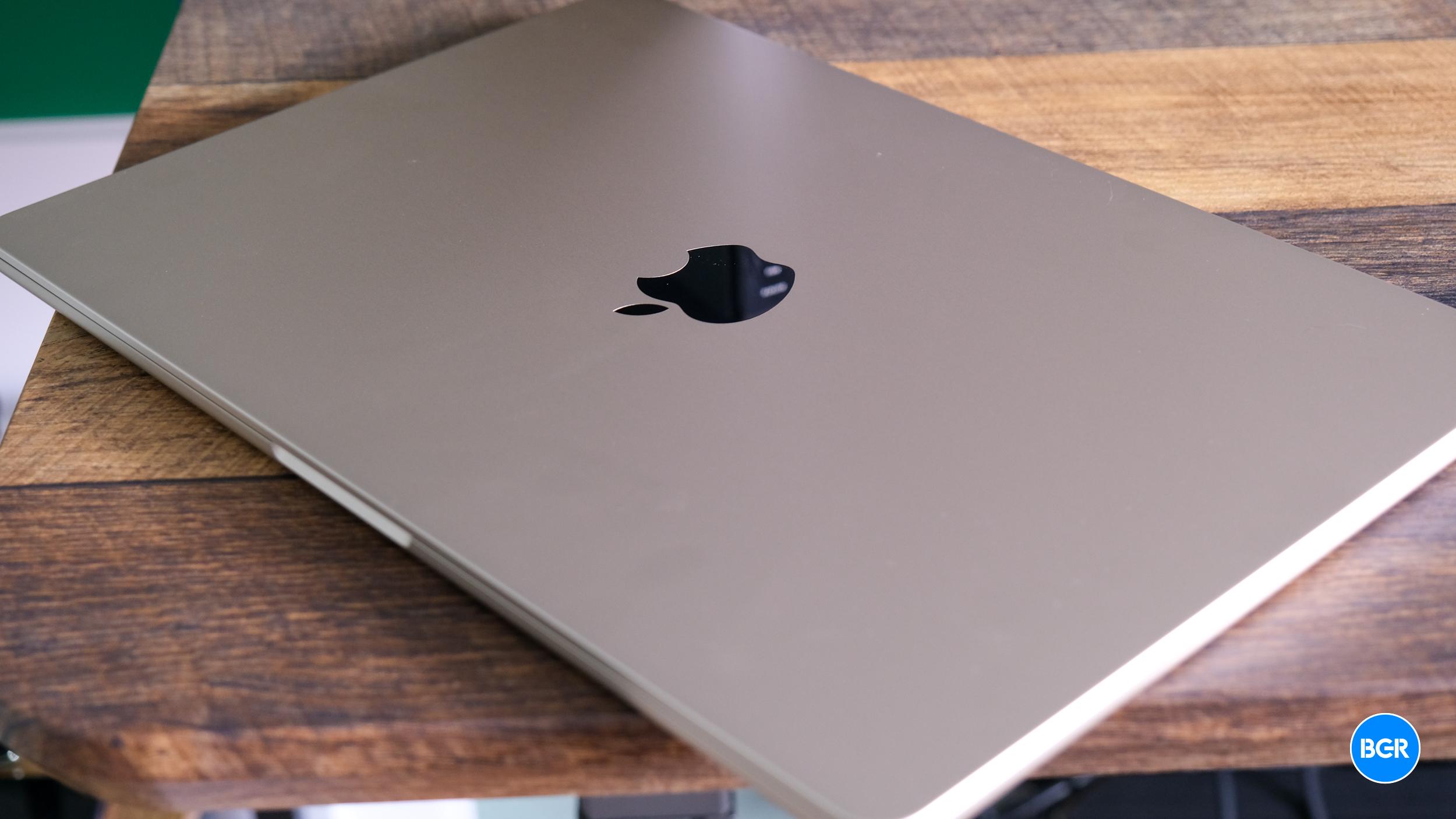
We might finally know when the M4 MacBook Air will launch

The M4 MacBook Air was expected to be Apple’s first launch of 2025. However, the company seems to have other plans, as the new iPhone SE will likely be the first release from Cupertino this year.

Still, Bloomberg‘s Mark Gurman has reported that the M4 MacBook Air could launch anytime. After saying this machine could have been available as soon as the last week of January and then correcting his report to “within the next few weeks,” the journalist wrote in his Power On newsletter that this laptop will be available by March “at the latest.”

While “within the next few weeks” is still accurate, as February won’t last much longer, Apple might be holding up this release to coincide with other products. Previously, a top Mac executive said the company would release new computers “as soon as they were ready.”

Even though Gurman has been inaccurate about the M4 MacBook launch date, we’ve seen evidence that this might happen soon. For example, inventory for the M3 MacBook Air has been dwindling. In addition, the company revealed on its macOS beta code that these laptops exist. This is why we believe the company might want to wait at least a year to release a new iteration of its MacBook Air models.

Tech. Entertainment. Science. Your inbox.

Sign up for the most interesting tech & entertainment news out there.

By signing up, I agree to the Terms of Use and have reviewed the Privacy Notice.

That said, customers won’t have to wait that long. After all, WWDC 2025 is in June, and Apple might have other Macs to unveil, such as the long-rumored Mac Studio with M4 Ultra processor. A redesigned Mac Pro can be teased at the conference, as it happened previously.

Despite the new chip, which is a great improvement over the M3 processor, the new MacBook Air could have the new 12MP Ultrawide camera, which has been available on the latest MacBook Pro and iMac models.

We don’t expect this laptop to have other design tweaks or improved specs. Still, the M4 MacBook Air will likely have the best battery of any Apple laptop. Currently, the most power-efficient MacBook is the base-model MacBook Pro.

BGR will let you know once Apple releases its new Macs.

Source

Posted on

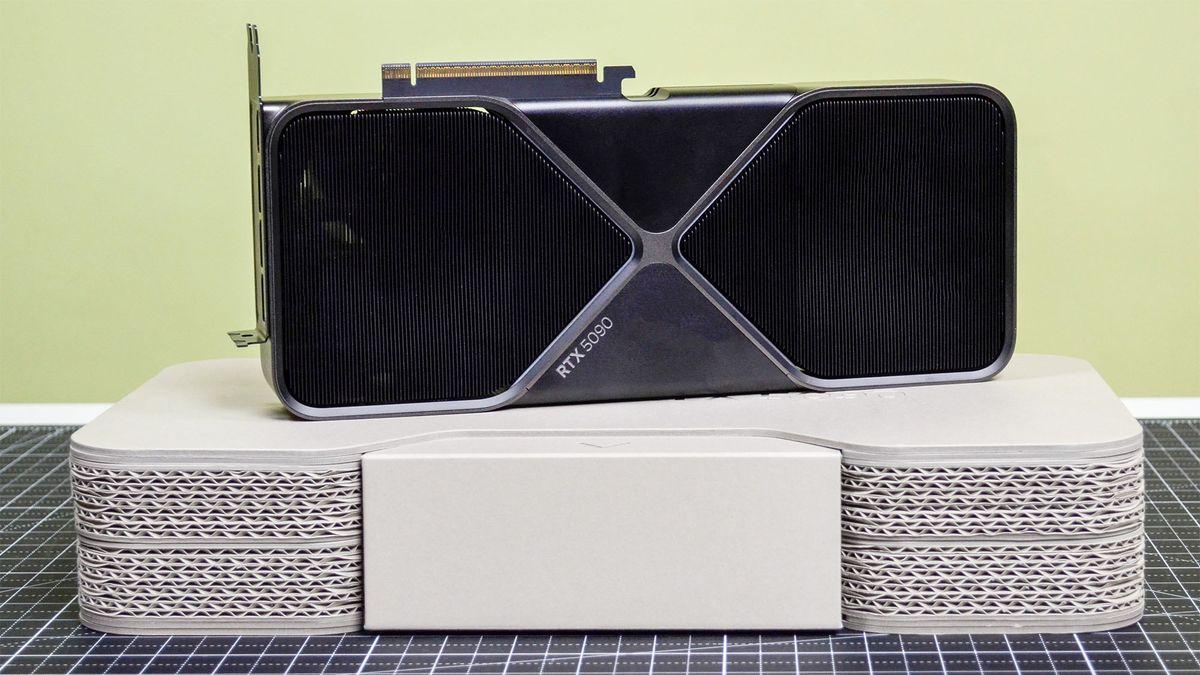
Nvidia RTX 5090 GPU stock rumored to be ‘basically non-existent’ for launch day, and RTX 5080 doesn’t sound like it’ll be much better

  • More last-minute rumors are swirling about low stock for Nvidia’s RTX 5090 and 5080
  • Launch day stock for the RTX 5090 is claimed to be very thin on the ground
  • The RTX 5080 situation sounds better, but stock looks to be only about half of that seen with the RTX 4080 launch, which still isn’t great

Want more bad news about the stock of Nvidia’s RTX 5090 and 5080 GPUs? No, I bet you don’t, but unfortunately – and predictably – there are several final helpings of inventory-related woe as we head into the day when these graphics cards actually go on sale.

First up, we have Moore’s Law is Dead (MLID), who in his latest YouTube video addresses RTX 5090 and 5080 stock (among other topics) once again.

According to the YouTuber this is a ‘lack of a launch’ from Nvidia, in fact, and what MLID presents is a very similar collection of feedback (sprinkle the usual seasoning) from inside sources to that aired in another recent video.

Those sources come from three major retailers (two in the US, all anonymous as ever) and all basically say that RTX 5090 graphics cards are pretty much non-existent in terms of stock. One retailer actually had zero RTX 5090s in stock as of last night.

Now, as MLID points out, it’s possible some RTX 5090 graphics cards could show up today, at the last minute – this has happened before with Nvidia (and was the case with Intel Battlemage apparently, with launch stock turning up on sales day) – but let’s face it, this is unlikely. And presumably it wouldn’t be many units, even if it did happen like this.

The picture with the RTX 5080 GPU sounds a little healthier, but sadly with the emphasis on ‘little’. One of those big US retailers claims to have around 60 units of the 5080, which doesn’t seem so bad – though that compares to about 100 boards that were in stock for the RTX 4080 launch.

Another source echoes that rough estimation of half the RTX 5080 stock compared to the RTX 4080.

{ window.reliablePageLoad.then(() => { var componentContainer = document.querySelector(“#slice-container-newsletterForm-articleInbodyContent-uB5AMAPwMu3xb7pPSHNiHN”); if (componentContainer) { var data = {“layout”:”inbodyContent”,”header”:”Get daily insight, inspiration and deals in your inbox”,”tagline”:”Sign up for breaking news, reviews, opinion, top tech deals, and more.”,”formFooterText”:”By submitting your information you agree to the Terms & Conditions and Privacy Policy and are aged 16 or over.”,”successMessage”:{“body”:”Thank you for signing up. You will receive a confirmation email shortly.”},”failureMessage”:”There was a problem. Please refresh the page and try again.”,”method”:”POST”,”inputs”:[{“type”:”hidden”,”name”:”NAME”},{“type”:”email”,”name”:”MAIL”,”placeholder”:”Your Email Address”,”required”:true},{“type”:”hidden”,”name”:”NEWSLETTER_CODE”,”value”:”XTR-D”},{“type”:”hidden”,”name”:”LANG”,”value”:”EN”},{“type”:”hidden”,”name”:”SOURCE”,”value”:”60″},{“type”:”hidden”,”name”:”COUNTRY”},{“type”:”checkbox”,”name”:”CONTACT_OTHER_BRANDS”,”label”:{“text”:”Contact me with news and offers from other Future brands”}},{“type”:”checkbox”,”name”:”CONTACT_PARTNERS”,”label”:{“text”:”Receive email from us on behalf of our trusted partners or sponsors”}},{“type”:”submit”,”value”:”Sign me up”,”required”:true}],”endpoint”:”https://newsletter-subscribe.futureplc.com/v2/submission/submit”,”analytics”:[{“analyticsType”:”widgetViewed”}],”ariaLabels”:{}}; var triggerHydrate = function() { window.sliceComponents.newsletterForm.hydrate(data, componentContainer); } if (window.lazyObserveElement) { window.lazyObserveElement(componentContainer, triggerHydrate); } else { triggerHydrate(); } } }).catch(err => console.error(‘%c FTE ‘,’background: #9306F9; color: #ffffff’,’Hydration Script has failed for newsletterForm-articleInbodyContent-uB5AMAPwMu3xb7pPSHNiHN Slice’, err)); }).catch(err => console.error(‘%c FTE ‘,’background: #9306F9; color: #ffffff’,’Externals script failed to load’, err)); ]]>

Sign up for breaking news, reviews, opinion, top tech deals, and more.

Broad comparisons are also drawn to Nvidia’s RTX 3000 launch, which was poor for quantities of stock due to the global chip shortage caused by the pandemic, of course.

So, it’s all pretty pessimistic stuff, and underlining this is a further tale of woe, a story picked up by Wccftech whereby a Japanese retailer is selling ‘lottery tickets’ for the chance to buy an RTX 5080 or 5090 on launch day.

Note that the prize is the opportunity to pay for an Nvidia GPU, not to win one for free. Those queued outside the store will be given a lottery ticket, and must hope they win in order to get to the till and buy an RTX 5090 or 5080.

Moore's Law is Dead YouTube video - slide on RTX 5000 stock rumors

(Image credit: Moore’s Law is Dead (YouTube))

Analysis: Severe skewing for supply and demand, with pricing as a further concern

With stories of folks already queuing up outside stores for their shot to buy an RTX 5090 at launch, or needing to enter a lottery to buy one as seen over in Japan, it seems like there’s an unsurprising demand among PC enthusiasts to own the best of the best GPUs (for outright performance, anyway).

Couple that with an apparently very low level of supply (certainly for the RTX 5090), and you have the perfect storm for a GPU demand/supply imbalance the likes of which hasn’t been seen since the pandemic and the RTX 3000 launch.

Obviously, we need to take all these rumors with some caution, as already noted, but there’s so much speculation along these lines that you have to pretty much accept there must be some truth to this. Further consider MSI admitting it won’t ship RTX 5090 models from its store until February 6 – you’ll only be able to pre-order later today, not purchase as such – and Nvidia itself conceding that “stock-outs may happen” in this initial launch period.

Another notable element from this MLID video includes, as you can see in the above screenshot, is one source talking about the pricing for RTX 5080 models being pitched mostly in the $1,100 to $1,300 range in the US (where the MSRP is $999). This backs up some pre-release pricing in early product listings that have already been aired suggesting that most RTX 5080 models won’t be at the MSRP, so you’re looking at paying a fair bit more than a grand (before stock shortages and scalpers worsen this situation, of course).

As for the RTX 5090, we’re told to expect pricing more in the range of $2,300 to $2,600 in the US, versus the $1,999 MSRP. So that looks even worse when premiums for fancy third-party boards are factored in.

On a final note, one of MLID’s sources makes a comment about not expecting a significant amount of RTX 5090 stock until March 2025. Now, that doesn’t apply to the RTX 5080, but it’s still a suggestion that supply will be slow to crank up after this initial launch period, and that makes me wonder whether this is something AMD caught wind of. Right around the time, or just before, Team Red announced that its RX 9070 models weren’t going on sale until March 2025 (later in Q1 than expected).

Maybe AMD got to thinking there’s no real need to rush RDNA 4, and that it can afford to take its time to fine-tune the GPUs (drivers and such) and better pitch pricing compared to the performance of Nvidia’s Blackwell graphics cards and their reception. Of course, RTX 5070 stock could be an entirely different matter when these models emerge in February, but there are already rumors that it won’t be great, and even that the vanilla RTX 5070 could be delayed until March (heap on the salt there, naturally).

If you are hoping to get one of Nvidia’s new Blackwell graphics cards when they launch later today, TechRadar has some resources to help. Check out our where to buy the RTX 5090 live blog, with recommendations on the best retailers to hit up, and we have a separate blog for the RTX 5080. By all accounts, you’ll need all the help you can get.

You might also like…

Source

Posted on

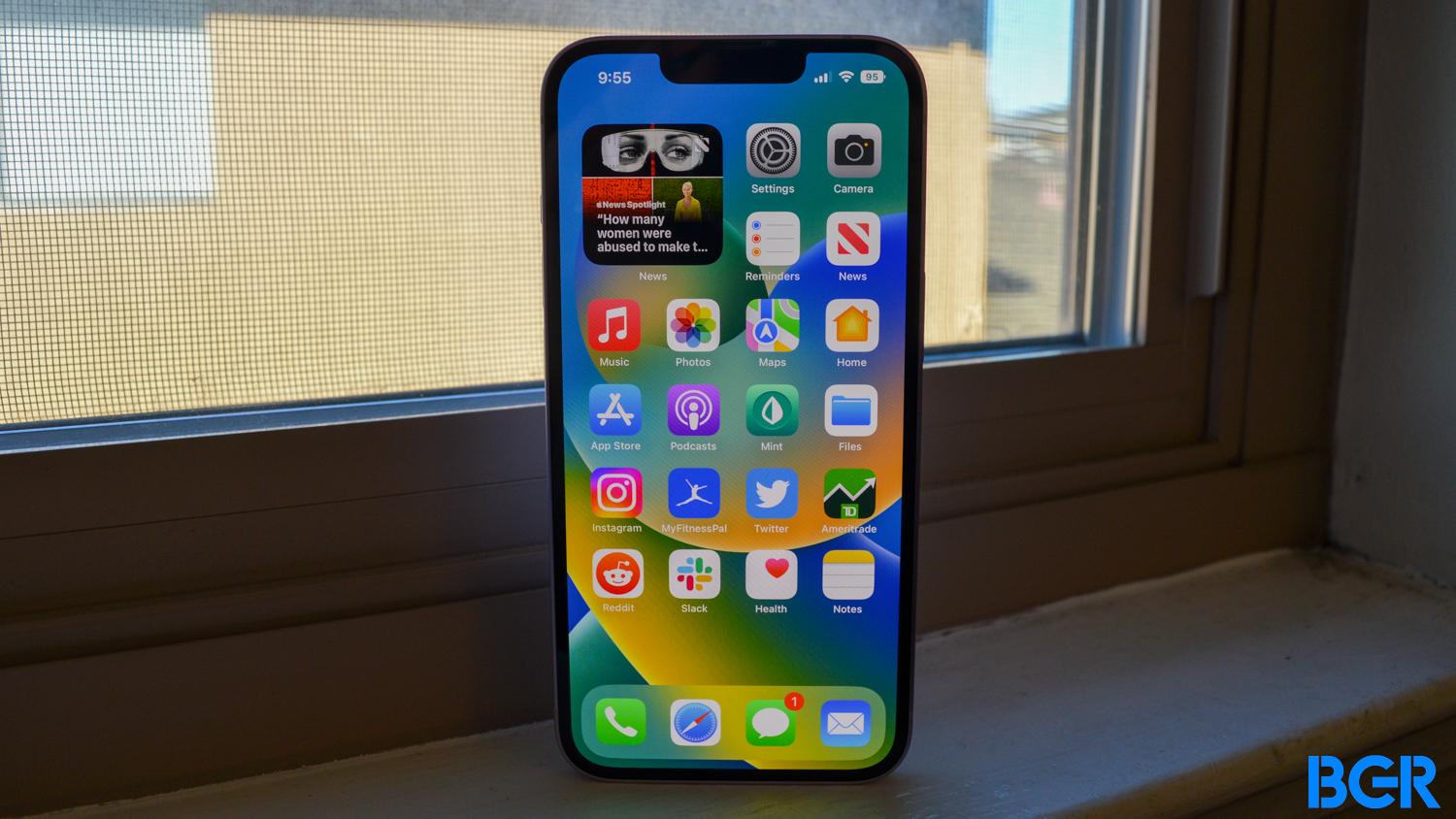
There won’t be an iPhone SE 4 because Apple isn’t calling it that

Tim Cook teased the “newest member of the family” last week on X, seemingly confirming what the leaks have been saying. The iPhone SE 4, Apple’s cheapest new iPhone, will be unveiled on February 14th. It should generate plenty of interest in the coming months.

Cook might not have named the product launching this week, but the iPhone SE 4 is the only Apple product that makes sense to get a mid-February launch. iPhone sales were down in the December quarter, and while Apple reported record revenue for the period, it couldn’t have liked the drop in iPhone sales.

The iPhone did the worst in China, one of Apple’s most important markets. A $500 iPhone SE 4 that looks like an iPhone 14 and behaves like the iPhone 16 and 16 Plus is a device many buyers should consider. Launching the handset as soon as possible makes the most sense.

Speaking of names, there might not be an iPhone SE 4 in Apple’s lineup come Wednesday. Technically, Apple would call it the iPhone SE (4th generation) if it were to use that name. But Apple is expected to coin a new marketing term for this special breed of iPhone rather than rely on a product name that might hurt the phone.

Tech. Entertainment. Science. Your inbox.

Sign up for the most interesting tech & entertainment news out there.

By signing up, I agree to the Terms of Use and have reviewed the Privacy Notice.

A few weeks ago, rumors said the iPhone SE 4 would be known as the iPhone 16E. At the time, I said the name fits much better for a phone that will essentially be one of the best iPhones you can buy right now.

The iPhone SE 4 will offer better performance than the iPhone 14 and iPhone 15, devices Apple still stells. The handset will rock iPhone 16-grade hardware so it can run Apple Intelligence features. That means an A18 chip paired with 8GB of RAM.

Apple has made obvious compromises to keep the price at around $500. The display has a notch instead of a Dynamic Island at the top, and the rear camera has a single lens. Also, Apple will introduce its own 5G modem with the iPhone SE 4, which should help it save money.

All that makes the iPhone SE 4 a more interesting handset than the previous-gen iPhone SE models. Those devices always featured high-end hardware on par with the same-year flagships. For example, the iPhone SE 3 matches the power of the iPhone 13 and 13 mini. Some of the previous iPhone SE models sold very well, too. But the iPhone SE name is synonymous with a phone with huge bezels and a Touch ID button. That name could hurt the iPhone SE 4 sales.

Mark Gurman, who said in previous weeks that the iPhone SE 4 was imminent, mentioned the name change in his latest Power On newsletter. However, he didn’t confirm the previously leaked iPhone 16E moniker.

The Bloomberg reporter said that Cook’s teaser, the “newest member of the family,” may indicate that the iPhone SE 4 will get a new name. In turn, Apple will market it as a new addition to its lineups. “Given how drastic the overhaul is to the iPhone SE, a new name makes complete sense,” Gurman concluded.

I’ve been thinking that way ever since the iPhone 16E rumor. The phone deserves a new name to set it apart from the iPhone SE of the past.

I can also see a scenario where Apple discontinues the iPhone 14 and 14 Plus come Wednesday. Once the $500 iPhone SE 4 launches, there’s no reason to buy the $599 iPhone 14, which can’t support Apple Intelligence. Not to mention that the iPhone 14 models aren’t available in Europe anymore, as they come with Lightning ports instead of USB-C.

There’s no point in manufacturing the iPhone 14 now that the iPhone SE 4 is coming out, no matter what name the latter gets. It’s all speculation for now, but we’ll cross that bridge come Wednesday, when Apple will refresh its iPhone lineup.

Source

Posted on

Volvo to roll out second software-defined electric car

The so-called Superset tech stack, on which carmaker Volvo is building its software-defined cars, is behind the company’s next launch.

The ES90 electric vehicle, which is being unveiled on 5 March, will be the first Volvo car equipped with dual Nvidia Drive AGX Orin hardware, which the company said will raise the bar on safety and overall performance through data, software and artificial intelligence (AI).

As Computer Weekly has previously reported, the Superset tech stack consists of one single set of hardware and software modules, and systems that underpin all upcoming electric cars from Volvo.

It represents what Volvo describes as “a radical transformation” in how it can develop and use software to improve levels of safety, technology and overall performance throughout the car’s lifecycle. “With the Superset tech stack, we can make such improvements more efficiently and roll them out even faster via over-the-air updates and across all models based on the Superset,” Volvo said.

The Nvidia Drive AGX Orin hardware provides 508 trillion operations per second for AI-based active safety features, car sensors and efficient battery management.

Volvo said the hardware will enable its engineers to increase the size of the deep learning model and neural network it uses from 40 million to 200 million parameters. “This will happen over time as we collect more data and continue to develop the model, with the overall goal of improving customer experience and – most importantly – safety levels,” Volvo said.

The Nvidia hardware helps the ES90 to understand its surroundings through an advanced array of sensors, which includes one lidar, five radars, eight cameras and 12 ultrasonic sensors, as well as an advanced driver understanding system inside the car. According to Volvo, these safety systems are designed to help keep you safe by detecting obstacles, even in darkness, and activating proactive safety measures such as collision avoidance. 

Commenting on the hardware and software innovations inside the ES90, Volvo chief engineering and technology officer Anders Bell said: “We innovate in all areas of technology to become a leader in software-defined cars, and we’re channelling all our engineering efforts into one direction: making great cars that get even better over time.

“By combining the power of core computing and our Superset tech stack, we can now make safer cars more efficiently than ever before.”

The ES90 will be the second Volvo built based on the Superset tech stack, and follows on from the EX90, where the stack was first introduced. 

The Superset tech stack will underpin all upcoming Volvo electric cars, which, according to Volvo, means it will be able to boost the performance of each car in its lineup simultaneously. For instance, ES90 customers can benefit from EX90 software upgrades and vice versa.

Volvo positions the Superset stack as an enabler to replace value creation through hardware with a software approach to building value into its customers’ cars.

The Nvidia Drive AGX Orin configuration will also be installed on new EX90 cars, replacing the existing Drive AGX Orin and Drive AGX Xavier hardware. Volvo said existing customers of the EX90 will get an upgrade of their cars free of charge.

Source

Posted on

MPs and peers start inquiry into Russian and Chinese sabotage threats to subsea internet cables

MPs and peers have launched an inquiry into the UK’s ability to protect undersea internet cables that link the country with the rest of the world, following heightened threats of sabotage from Russia, China and other hostile states.

The Joint Committee on the National Security Strategy, which scrutinises government decision-making on national security, aims to assess the UK’s readiness for potential attacks on critical underseas communication cables.

The inquiry follows a statement by the defence secretary John Healey in the Commons this week, warning that Russian president Vladimir Putin is targeting the UK’s undersea oil, gas, electricity and internet cables after a Russian spy ship entered British waters.

Healey said the research vessel, Yantar, was engaged in “gathering intelligence and mapping the UK’s critical underwater infrastructure”, following its discovery in UK waters on 20 January 2025. He told Putin: “We see you, we know what you are doing, and we will not shy away from robust action to protect this country.”

According to the parliamentary committee’s chairman, Matt Western, 99% of the country’s data passes through underseas internet cables, making them a soft target for action by foreign states seeking to covertly damage the UK.

“As the geopolitical environment worsens, foreign states are seeking asymmetric ways to hold us at risk,” he said. “Our internet cable network looks like an increasingly vulnerable soft underbelly. There is no need for panic – we have a good degree of resilience, and awareness of the challenge is growing. But we must be clear-eyed about the risks and consequences: an attack of this nature would hit us hard.”

The global internet, which is critical for international communications and commerce, relies on a network of 500 cables that carry 95% of internet traffic. The cables are often in remote places, making them difficult and expensive to monitor.

Attack could disrupt essential services

The UK relies on about 60 cables to connect it with the rest of the world that provide resilience if one or two are deliberately or accidentally damaged. However, MPs and peers have raised concerns that a simultaneous attack on multiple cables, particularly during times of heightened tension or conflict, could cause significant disruption.

According to the UK’s 2025 National Risk Register, in a reasonable worst-case scenario, the loss of transatlantic subsea cables linking to the UK would cause “considerable disruption” to essential services, including financial services, that rely on offshore datacentres and offshore service providers. 

There have been a number of incidents in Northern European waters where cables have been severed, including links between Norway, Sweden, Finland and the Shetland Islands. Over 50 Russian vessels have been observed near areas of high cable density in the Baltic Sea, leading European countries to reassess the security of their underseas infrastructure.

Most recently, on 25 December 2024, Russian-linked oil tanker Eagle S dragged its anchor for 60 miles in the Baltic, damaging the Estlink-2 power cable connecting Finland and Estonia and four data cables. The tanker has been impounded by Finland.

The UK, along with other military partners, announced the launch of Operation Nordic Warden in January 2025 to track potential threats to underseas infrastructure and to monitor the activities of Russia’s shadow shipping fleet.

The operation will use artificial intelligence to analyse data from a range of sources, including the Automatic Identification System, used by ships to broadcast their position, to assess the risks posed by vessels in areas close to undersea cables.

The inquiry aims to assess the UK’s ability to defend subsea infrastructure, options for improving deterrence, work with military allies and the UK’s resilience in the event of major disruption to internet infrastructure. The committee has set a deadline of 6 March for evidence.

Source