Posted on

‘Times are hard’ for fintech but latest report reveals glimmer of recovery

Fintech investment has been on a downward spiral since 2012, but the second half of this year could see the first shoots of recovery.

Investment in UK fintechs fell by over a quarter last year, but there are signs that a recovery could be on its way, according to KPMG.

In its latest report into EMEA fintech investment trends, KPMG revealed that 2024 saw UK firms receive $9.9bn (£7.8bn). Meanwhile, total investment in 2024 was $20.3bn compared with $27.6bn the previous year.

Total UK fintech investment dropped to $9.9bn in 2024, down 27% from $13.6bn in 2023, according to KPMG’s Pulse of fintech report.

Hannah Dobson, partner and UK head of fintech at KPMG, said UK investment is expected to remain “relatively soft” in the first half of this year, but added that “it will likely begin to pick up as interest rates reduce further, with common consensus that this will be in the third and fourth quarters”.

Fintech industry expert Chris Skinner, CEO at The Finanser, told Computer Weekly that “times are hard in the fintech space”. “Fintechs had an amazing ride in the 2010s, but in the 2020s, it seems not,” he said. “Fintech took a hammering in 2023, with investing down 48% compared with 2022, which was also a bad year, and now we move into 2025 and reflect on 2024, where it went down even more.”

In its report, KPMG said geopolitical uncertainty, high levels of inflation and the higher interest rates all contributed to “more subdued levels of UK fintech investment”.

Dobson at KPMG added: “2024 was another tough year for fintech investment, which inevitably has led to some business failure and some consolidation. It has also sharpened the focus on a path to profit and cost control which positively leads to more sustainable saleable businesses in the longer term.”

In EMEA, and particularly the UK, there are signs of a slow recovery in deals as the reduction in interest rates and more political stability leads to better certainty. The impact of regulation is an ongoing challenge for fintechs across EMEA as they face into new EU and UK regimes in areas such as AI and BNPL.

The largest fintech deal in Europe in 2024 was the $560.6m sale of online bank Knab, to Austrian financial firm Bawag Group. The largest deal in the UK was the $267m venture funding round by money transfer provider Zepz.

It’s not just Europe that saw a fall in investment. Globally, fintech hit a seven-year low last year, with $95bn invested compared with $113.7bn in 2023.

Karim Haji, global and UK head of financial services at KPMG, said there are some “bright spots”.

“Payments continued to be the rockstar of the fintech subsectors, driven by late-stage deals and an increasing focus on consolidation, and regtech gained a lot of traction,” said Haji.

Global investment

Global investment in the payments space hit $31bn in 2024, up from $17.2bn in 2023.

Haji added that while more deals are beginning to come through because of interest rate cuts in different jurisdictions and the lower cost of funding, the impacts of changing world trading conditions on inflation, interest rates and the market change are yet to be known.

KPMG’s figures mirror those published by Innovative Finance last month, which reported a 37% fall in investment in 2024 compared with 2023.

Innovate Finance, the industry body for fintech in the UK, blamed tough market conditions that included “rising interest rates, geopolitical instability, as well as a recalibration in venture capital fundraising”.

Source

Posted on

AI Action Summit calls for a rethink of regulation

Thank you for joining!

Access your Pro+ Content below.

18 February 2025

AI Action Summit calls for a rethink of regulation

  • Share this item with your network:

In this week’s Computer Weekly, we report from the AI Action Summit in Paris on how easing red tape is overtaking safety as a priority. We examine the AI regulations that IT leaders need to understand. And we talk to the UK government’s AI minister about the country’s artificial intelligence opportunities. Read the issue now.

Source

Posted on

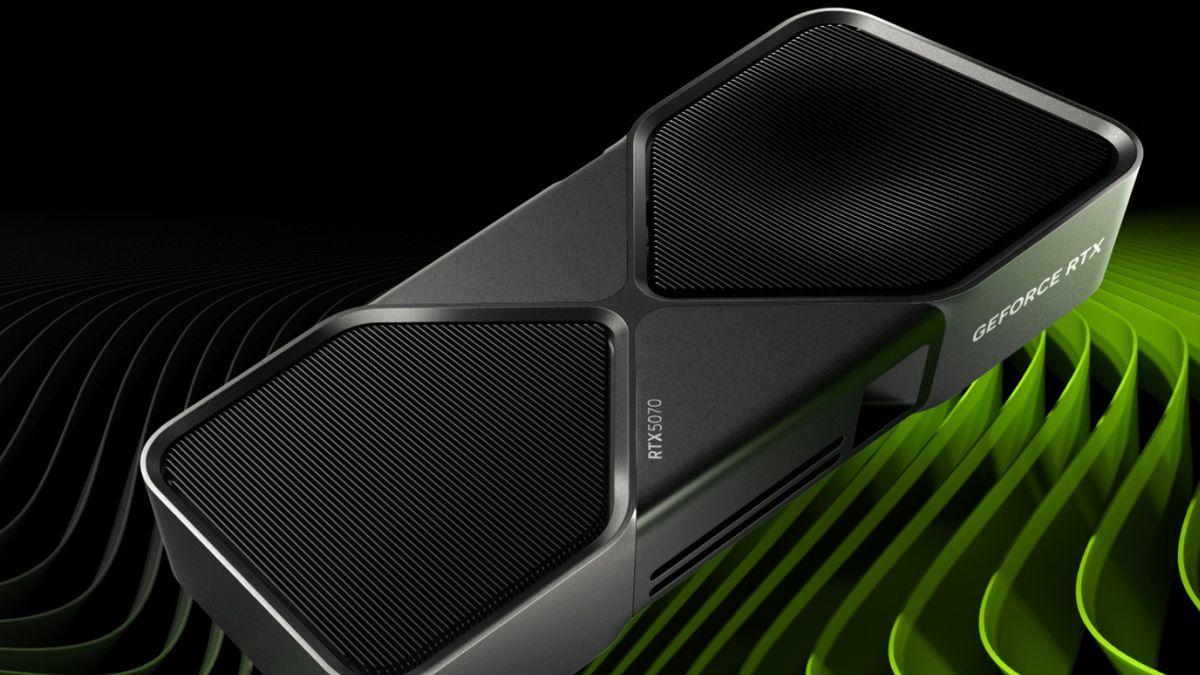
I can’t tell if it’s just a coincidence, but Nvidia’s RTX 5070 is now reportedly set for March alongside AMD’s RDNA 4 series launch

  • Nvidia’s RTX 5070 is reportedly delayed for a launch in March instead of February
  • There are supposedly no embargo details on the RTX 5070, but only for its RTX 5070 Ti variant
  • AMD’s Radeon RX 9000 series is also set to launch in early March

At CES 2025, Nvidia made its launch plans for the RTX 5070 Ti and RTX 5070 clear: both GPUs were slated for a February release – but new rumors hint at the RTX 5070’s launch being pushed back into March, in the same month that AMD plans to launch the Radeon RX 9000 series GPUs.

According to MEGAsizeGPU on X (which is reliable for GPU leaks), Nvidia now supposedly plans to launch the RTX 5070 in early March, leaving the RTX 5070 Ti to launch in February. Just recently, its rival AMD finally announced the Radeon RX 9000 series release date, which surprise, is also in early March – and this could pit both Team Green and Team Red’s midrange GPUs up against each other.

The same reports come from VideoCardz, who state that Nvidia’s embargo details given to board partners didn’t include any information on the RTX 5070, but instead details its Ti variant. Considering how close we are to the rumored February 19 and 20 review and launch dates for the RTX 5070 Ti, it wouldn’t be too far of a stretch to say that this rumor may indeed be true.

We know that there’s been limited availability for the RTX 5090 and RTX 5080 (both Founders Edition and third-party GPUs), so the reason for the supposed delay could hint at further stock woes – however, for some people, this move appears to prove that Nvidia is dead set on eliminating any traction the Radeon RX 9000 series GPUs could gain.

a silver card on a motherboard

(Image credit: Shutterstock)

It feels like Nvidia and AMD are playing mind games…

While AMD’s new GPU lineup was announced at CES 2025, it wasn’t fully unveiled, as we didn’t get to see any details regarding prices or a release date.

Since then, I feel like Team Red has been biding its time until its rival unveiled and launched all of its main GPU offerings, with hopes that the hype dies down.

The RDNA 4 GPUs were recently set for early March, which came shortly after speculation of Nvidia’s RTX xx60-class launch in the same month – and now, this new rumor regarding the RTX 5070 also launching in March instead of February feels like Team Green is doubling down on its stance of kicking its rival out of the race.

{ window.reliablePageLoad.then(() => { var componentContainer = document.querySelector(“#slice-container-newsletterForm-articleInbodyContent-bqBCFuBRF35odWRF9qsfVf”); if (componentContainer) { var data = {“layout”:”inbodyContent”,”header”:”Get daily insight, inspiration and deals in your inbox”,”tagline”:”Sign up for breaking news, reviews, opinion, top tech deals, and more.”,”formFooterText”:”By submitting your information you agree to the Terms & Conditions and Privacy Policy and are aged 16 or over.”,”successMessage”:{“body”:”Thank you for signing up. You will receive a confirmation email shortly.”},”failureMessage”:”There was a problem. Please refresh the page and try again.”,”method”:”POST”,”inputs”:[{“type”:”hidden”,”name”:”NAME”},{“type”:”email”,”name”:”MAIL”,”placeholder”:”Your Email Address”,”required”:true},{“type”:”hidden”,”name”:”NEWSLETTER_CODE”,”value”:”XTR-D”},{“type”:”hidden”,”name”:”LANG”,”value”:”EN”},{“type”:”hidden”,”name”:”SOURCE”,”value”:”60″},{“type”:”hidden”,”name”:”COUNTRY”},{“type”:”checkbox”,”name”:”CONTACT_OTHER_BRANDS”,”label”:{“text”:”Contact me with news and offers from other Future brands”}},{“type”:”checkbox”,”name”:”CONTACT_PARTNERS”,”label”:{“text”:”Receive email from us on behalf of our trusted partners or sponsors”}},{“type”:”submit”,”value”:”Sign me up”,”required”:true}],”endpoint”:”https://newsletter-subscribe.futureplc.com/v2/submission/submit”,”analytics”:[{“analyticsType”:”widgetViewed”}],”ariaLabels”:{}}; var triggerHydrate = function() { window.sliceComponents.newsletterForm.hydrate(data, componentContainer); } if (window.lazyObserveElement) { window.lazyObserveElement(componentContainer, triggerHydrate); } else { triggerHydrate(); } } }).catch(err => console.error(‘%c FTE ‘,’background: #9306F9; color: #ffffff’,’Hydration Script has failed for newsletterForm-articleInbodyContent-bqBCFuBRF35odWRF9qsfVf Slice’, err)); }).catch(err => console.error(‘%c FTE ‘,’background: #9306F9; color: #ffffff’,’Externals script failed to load’, err)); ]]>

Sign up for breaking news, reviews, opinion, top tech deals, and more.

It’s also worth noting that recent reports point towards AMD working on a 32GB RDNA 4 gaming GPU, despite stating its focus is on midrange GPUs. If you ask me, all of these reports (if accurate) feel like mind games being played by both parties with the attempt to one-up one another – which is great because competition is absolutely necessary. I just hope Team Red can deliver…

You may also like…

Source

Posted on

Collaboration vital for making DEI progress

Thank you for joining!

Access your Pro+ Content below.

February 2025

At the Computer Weekly diversity in tech event, in partnership with Harvey Nash, attendees agreed wholeheartedly that only by working together can we create a truly diverse and inclusive industry. Download the full report here.

Table Of Contents

  • When it comes to increasing the representation of people from all walks of life in the technology sector, complacency is the enemy.
  • It is important to actively create opportunities for underrepresented groups to join the tech sector if we are to make the industry a more diverse place.
  • People working in the IT sector need to be proactive in ensuring the tech workforce reflects tech users.
  • To ensure AI works for us as individuals and as a collective, collaboration is the way forward.
  • There is an imbalance between the number of women using AI and the number of women developing AI, which is contributing towards AI bias and tech that isn’t suitable for all of its users.
  • In some cases, development of AI and machine learning has been biased against women and other underrepresented groups.

Source

Posted on

AMD raises the bar for gaming on lightweight laptops – its new Strix Halo chip could run games better than an Nvidia RTX 3060

  • A leaked benchmark places AMD’s upcoming flagship Ryzen AI Max+ 395 chip between the RTX 3060 and 4060 in terms of graphical performance
  • This represents a bit leap forward for AMD’s integrated graphics, powered by the new Radeon 8060S iGPU
  • The chip will be available in laptops and PCs later in 2025

AMD is gunning for the integrated graphics market in earnest now, if these new leaked benchmark results are anything to go by. A result from the 3DMark Time Spy benchmark test has placed Team Red’s upcoming Ryzen AI Max+ 395 APU between Nvidia’s RTX 3060 and 4060 in terms of graphical performance – and I’m over the moon about it.

I’ve long been a proponent of the idea that integrated graphics are the future of gaming, especially as dedicated graphics cards become more and more expensive for increasingly small generational gains. Sure, the RTX 5090 is phenomenally powerful, but what’s the point if it costs an arm and a leg and stock is so limited you’ll struggle to get one anyway?

AMD’s AI Max+ 395 is the upcoming flagship chip of the Strix Halo generation of Ryzen APUs, designed primarily for high-end laptops without discrete GPUs. It packs a new integrated graphics module (iGPU) called the Radeon 8060S, signalling a major step forward for AMD’s iGPU performance even before we get to the numbers; Team Red has updated its nomenclature for this generation, as the 8060S will replace the previous top-spec Radeon 890M. I know adding an extra digit doesn’t automatically translate to a performance bump, but AMD is clearly confident about the new integrated graphics.

So, just how good is this chip?

Well, in the graphics test portion of the Time Spy benchmark (which was shared by X user @9550pro), the AI Max+ 395 scored 10,106 points. It’s worth noting here that 3DMark’s benchmark suite gives ‘index’ results designed to be compared with other test scores rather than real-world figures, but the app estimated that the AI Max+ 395 should be able to achieve a framerate of 95+ fps in Battlefield V at 1440p resolution – seriously impressive for a laptop chip, even if that game is now more than six years old.

Comparing that 10,106 score to some discrete GPUs paints an even more staggering picture. The RTX 3060 offers an average index score of just 8,746 in the same test, while the newer RTX 4060 scores 10,614 – barely ahead of AMD’s APU. It’s a strong showing for Strix Halo, suggesting that the flagship chip should be capable of 1440p gaming even in a lightweight laptop.

Of course, we should take these figures with a pinch of salt; they’re leaked info, after all, and synthetic tests like the 3DMark suite aren’t always perfectly comparable to real-world gaming performance. There are other factors at play here too. For example, the new Strix Halo chips reportedly have a far higher power ceiling than current-gen APUs (up to a hefty 120W), which could cause difficulties with thermal performance in thin-and-light laptops.

Still, I’m impressed, and excited to get my hands on a laptop with one of these APUs inside it. I got a lot of flak on Reddit last year for suggesting that dedicated GPUs for gaming might (eventually!) bow out in favor of iGPUs, but I stand by what I said – and with benchmark results like these, I’m slowly feeling more and more confident about it.

{ window.reliablePageLoad.then(() => { var componentContainer = document.querySelector(“#slice-container-newsletterForm-articleInbodyContent-mF8SGDpPpMEhYPDpMtASyk”); if (componentContainer) { var data = {“layout”:”inbodyContent”,”header”:”Get daily insight, inspiration and deals in your inbox”,”tagline”:”Sign up for breaking news, reviews, opinion, top tech deals, and more.”,”formFooterText”:”By submitting your information you agree to the Terms & Conditions and Privacy Policy and are aged 16 or over.”,”successMessage”:{“body”:”Thank you for signing up. You will receive a confirmation email shortly.”},”failureMessage”:”There was a problem. Please refresh the page and try again.”,”method”:”POST”,”inputs”:[{“type”:”hidden”,”name”:”NAME”},{“type”:”email”,”name”:”MAIL”,”placeholder”:”Your Email Address”,”required”:true},{“type”:”hidden”,”name”:”NEWSLETTER_CODE”,”value”:”XTR-D”},{“type”:”hidden”,”name”:”LANG”,”value”:”EN”},{“type”:”hidden”,”name”:”SOURCE”,”value”:”60″},{“type”:”hidden”,”name”:”COUNTRY”},{“type”:”checkbox”,”name”:”CONTACT_OTHER_BRANDS”,”label”:{“text”:”Contact me with news and offers from other Future brands”}},{“type”:”checkbox”,”name”:”CONTACT_PARTNERS”,”label”:{“text”:”Receive email from us on behalf of our trusted partners or sponsors”}},{“type”:”submit”,”value”:”Sign me up”,”required”:true}],”endpoint”:”https://newsletter-subscribe.futureplc.com/v2/submission/submit”,”analytics”:[{“analyticsType”:”widgetViewed”}],”ariaLabels”:{}}; var triggerHydrate = function() { window.sliceComponents.newsletterForm.hydrate(data, componentContainer); } if (window.lazyObserveElement) { window.lazyObserveElement(componentContainer, triggerHydrate); } else { triggerHydrate(); } } }).catch(err => console.error(‘%c FTE ‘,’background: #9306F9; color: #ffffff’,’Hydration Script has failed for newsletterForm-articleInbodyContent-mF8SGDpPpMEhYPDpMtASyk Slice’, err)); }).catch(err => console.error(‘%c FTE ‘,’background: #9306F9; color: #ffffff’,’Externals script failed to load’, err)); ]]>

Sign up for breaking news, reviews, opinion, top tech deals, and more.

You might also like…

Source

Posted on

Nvidia RTX 5070 and 5060 GPUs rumored to be delayed to March and April respectively, and stock could be every bit as dire as the RTX 5090 and 5080

  • Nvidia RTX 5070 and 5060 GPUs are rumored to be delayed by a month
  • This means that in theory the RTX 5070 may not arrive until March, and the RTX 5060 in April
  • Expect these GPUs to “sell out instantly” according to the source of this rumor

Update: Nvidia has now officially announced that the RTX 5070 Ti GPU is out on February 20, but RTX 5070 is delayed to March 6. The RTX 5070 delay is less than some rumors had suggested.

Nvidia’s RTX 5060 and 5070 graphics cards might suffer issues with stock, as the RTX 5080 and 5090 have already experienced – and they could end up delayed as a result of a lack of production capacity.

TweakTown noticed a post on X from regular leaker, Ming-Chi Kuo, who’s normally big on Apple and phone-related rumors, but also has fingers in other hardware pies.

Kuo acknowledges the current dire situation for supply with the RTX 5090 and RTX 5080 – GPUs that use the GB202 and GB203 Blackwell chips – and indicates that ongoing struggles with supply will push back the mass production of the RTX 5070 and RTX 5060.

Now, as far as those two still unreleased graphics cards go, we know that Nvidia’s RTX 5070 models are due in February, so this is an assertion of a delay for the vanilla 5070 graphics card to March.

We haven’t officially heard anything about the RTX 5060, on the other hand – not even its existence – but the GPU has been rumored for March previously, and Kuo is now claiming that these models will be pushed back to April. Pass the seasoning at this point, as ever with these kinds of rumors.

Angry PC gamer sitting at a gaming desktop PC and losing

(Image credit: Friends Stock / Shutterstock)

Analysis: Doom and gloom part… erm, I’ve lost count

On the face of it, this really isn’t good news for those – like myself – who are keenly awaiting the arrival of more affordable graphics cards from Nvidia’s next-gen range. The RTX 5080 is effectively out of my price bracket – especially given how asking prices have turned out in reality, thanks to super-lean stock levels – and so it’s the RTX 5070 models I’m really interested in.

{ window.reliablePageLoad.then(() => { var componentContainer = document.querySelector(“#slice-container-newsletterForm-articleInbodyContent-79zSoiB9gxdufV35NZVbNg”); if (componentContainer) { var data = {“layout”:”inbodyContent”,”header”:”Get daily insight, inspiration and deals in your inbox”,”tagline”:”Sign up for breaking news, reviews, opinion, top tech deals, and more.”,”formFooterText”:”By submitting your information you agree to the Terms & Conditions and Privacy Policy and are aged 16 or over.”,”successMessage”:{“body”:”Thank you for signing up. You will receive a confirmation email shortly.”},”failureMessage”:”There was a problem. Please refresh the page and try again.”,”method”:”POST”,”inputs”:[{“type”:”hidden”,”name”:”NAME”},{“type”:”email”,”name”:”MAIL”,”placeholder”:”Your Email Address”,”required”:true},{“type”:”hidden”,”name”:”NEWSLETTER_CODE”,”value”:”XTR-D”},{“type”:”hidden”,”name”:”LANG”,”value”:”EN”},{“type”:”hidden”,”name”:”SOURCE”,”value”:”60″},{“type”:”hidden”,”name”:”COUNTRY”},{“type”:”checkbox”,”name”:”CONTACT_OTHER_BRANDS”,”label”:{“text”:”Contact me with news and offers from other Future brands”}},{“type”:”checkbox”,”name”:”CONTACT_PARTNERS”,”label”:{“text”:”Receive email from us on behalf of our trusted partners or sponsors”}},{“type”:”submit”,”value”:”Sign me up”,”required”:true}],”endpoint”:”https://newsletter-subscribe.futureplc.com/v2/submission/submit”,”analytics”:[{“analyticsType”:”widgetViewed”}],”ariaLabels”:{}}; var triggerHydrate = function() { window.sliceComponents.newsletterForm.hydrate(data, componentContainer); } if (window.lazyObserveElement) { window.lazyObserveElement(componentContainer, triggerHydrate); } else { triggerHydrate(); } } }).catch(err => console.error(‘%c FTE ‘,’background: #9306F9; color: #ffffff’,’Hydration Script has failed for newsletterForm-articleInbodyContent-79zSoiB9gxdufV35NZVbNg Slice’, err)); }).catch(err => console.error(‘%c FTE ‘,’background: #9306F9; color: #ffffff’,’Externals script failed to load’, err)); ]]>

Sign up for breaking news, reviews, opinion, top tech deals, and more.

The glimmer of hope, such as it is, comes with the RTX 5070 Ti being rumored to still be on track for February. Review embargoes are purportedly in place, and various spillage suggests a launch on February 20, which is only a week away now. But there’s a distinct lack of any talk of the RTX 5070 vanilla flavor on the rumor mill, which does indeed suggest that it might be on the back burner in some way.

On top of that, we’ve already heard a couple of rumors of a delay to March for the RTX 5070, and we can add this fresh speculation here to the growing pile.

Adding all this up, talk of a delay certainly makes some sense, and if Nvidia is struggling – to the point that “limited supply means these two cards [RTX 5070 and 5060] will sell out instantly even if production stays on schedule” according to Kuo – well, that’s not looking too clever now, is it?

It sounds like a recipe for delays, and more price gouging and stock washouts, particularly considering the RTX 5070, and certainly the RTX 5060, are going to be the targets of a lot more would-be buyers considering they’re at the more affordable end of the Blackwell spectrum. I’m also concerned about what we’re now hearing about the pricing of the RTX 5070 Ti, to boot.

While we must be careful not to get overly gloomy about these inbound launches from Nvidia, it’s getting increasingly difficult to avoid doing so, as all the rumors are slanted towards the negative side of what might be, rather than anything remotely positive.

Although we do have AMD’s RDNA 4 launch to look forward to, of course, in March, and maybe Nvidia could be leaving the door open for Team Red to spark the beginning of what might be quite a GPU comeback here. I guess stranger things have happened, and don’t forget Intel either – Battlemage could have a ship in the mid-range seas, too.

You might also like…

Source

Posted on

MSP cuts costs with Scality pay-as-you-go anti-ransomware storage

London-based managed service provider (MSP) Autodata Products has opted for Scality Artesca object storage through its Scality cloud service provider (SCSP) pay-as-you-go purchasing option, which it uses to supply on-premise backup against ransomware for customers.

Benefits of the SCSP licensing model include being able to offer customers highly scalable backup with short recovery time objectives (RTOs) and at the same cost per terabyte (TB) whether it’s for 25TB or 2.5PB (petabytes).

Autodata Products provides IT solutions focused on backup, storage and security via its Cloudlake offer, predominantly based on Wasabi cloud, Veeam backup and Scality storage. It has around 500 customers on rolling monthly contracts and has offices in the US and the Netherlands.

Within its core offer it has Cloudlake Ransomware Recovery Vault (RRV), and it is here that it decided to offer services using Scality Artesca and SCSP. It was already a customer of Veeam’s pay-as-you-go programme.  

RRV is based around the provision of on-site immutable storage for customers. Here, Autodata deploys Scality Artesca object storage as a backup target and pays only for what is used by its customers.

Artesca is Scality’s object storage product aimed at single application use cases and is heavily targeted at data protection. Scality version 3.0 launched in 2024 and emphasised the anti-ransomware resilience capabilities of its object storage platform. These centre on native S3 immutability, anti-exfiltration capabilities, making data indecipherable to attackers at storage and architecture level, as well as by retaining it in multiple geographic instances.  

According to head of datacentre and cloud services Ant Bucknor, Autodata recommends customers keep a workable amount of critical data on-site so they can restore very quickly should a ransomware attack or other outage occur.

He said: “Our clients were restoring their data from the cloud. But that would often break their RTO policy because of the length of time it would take to get everything back up and running, then they would connect to the cloud location and then it would take them longer to bring the data back.”

So, how much data does Autodata recommend customers store on-site?

“I would suggest probably the last 30 days,” said Bucknor. “That would be my base guide, but obviously every client’s different. We’ve got clients where they have data they need to recover quickly from the last six months and others where if it’s over 48 hours old the data is completely worthless.

“The cloud will provide you with a full copy, and it will be immutable. But it isn’t necessarily going to be quick enough.” 

Key to the benefits for Autodata are that it can supply ransomware recovery solutions that would have been out of reach of SME and mid-market customers previously, and that as it buys more product from Scality prices should decrease.

Bucknor said: “Traditionally, these solutions were in the hundreds of thousands of pounds. Whereas, because of the flexibility we have with Scality, we now have solutions that are suitable for SMB, mid-market, education, local government, etc, whereas these solutions just wouldn’t have been accessible to that market before.

“There’s a benefit from a profitability at scale point of view, as in the more of these we do over time, the bigger the benefit there is to Autodata as a business, with a knock-on effect in the better commercial terms for our customers.”

Pay-as-you-go is relatively new in storage purchasing, but it’s a rising trend. HPE offers pay-as-you-go storage as part of its Greenlake offer that stretches across its IT portfolio. NetApp, meanwhile, offers Keystone storage as-a-service, while Pure Storage has its Evergreen storage programmes.

“Pay-as-you-go is the future,” said Bucknor. “The reason is, people want to have a cloud-like purchasing model where they can buy what they want for as long as they want it, and when they don’t want it any more, they can stop paying for it. They want to know what their costs are. Not have bought something over five years and suddenly they want to buy an extra few terabytes of data and it’s three times the price because they’re locked in. People want a more flexible solution.”

Source

Posted on

Meta’s planned subsea cable will exceed circumference of Earth and support AI innovation

Meta has announced its plan for a subsea cable that will span the globe, connecting emerging economies such as India, South Africa and Brazil to the US.

Facebook, Instagram and WhatsApp’s parent company announced what is known as Project Waterworth in a blog post.

The social media giant’s vice-president of network engineering, Gaya Nagarajan, and Alex-Handrah Aimé, its global head of network investments, said the 50,000 km cable will be the world’s longest, and use “the highest-capacity technology available”. 

Regions of rapid economic growth will be connected directly to the US through the cable, which the Meta executives said “will enable greater economic cooperation, facilitate digital inclusion and open opportunities for technological development in these regions”.

Meta said it has already developed over 20 subsea cables. “With Project Waterworth, we continue to advance engineering design to maintain cable resilience, enabling us to build the longest 24 fibre pair cable project in the world and enhance overall speed of deployment,” wrote the Meta executives.

The multibillion-dollar investment, which will see cables laid at depths of 7,000 meters, will take years to complete, but promises increased access to high-speed connectivity, which it said could, for example, support artificial intelligence (AI) innovation across the world.

“AI is revolutionising every aspect of our lives, from how we interact with each other to how we think about infrastructure – and Meta is at the forefront of building these innovative technologies,” the company said. “As AI continues to transform industries and societies around the world, it’s clear that capacity, resilience and global reach are more important than ever to support leading infrastructure.”

The blog post added: “With Project Waterworth, we can help ensure that the benefits of AI and other emerging technologies are available to everyone, regardless of where they live or work.”

While subsea cables promise to enable global connectivity, there are concerns over how these costly and critical infrastructures can be protected from attacks from hostile states.

MPs and peers recently launched an inquiry into the UK’s ability to protect undersea internet cables that link the country with the rest of the world. This followed heightened threats of sabotage.

The Joint Committee on the National Security Strategy, which scrutinises government decision-making on national security, aims to assess the UK’s readiness for potential attacks on critical undersea communication cables.

The inquiry followed a statement by defence secretary John Healey, warning that Russian president Vladimir Putin is targeting the UK’s undersea oil, gas, electricity and internet cables after a Russian spy ship entered British waters.

According to the parliamentary committee, 99% of the UK’s data passes through undersea internet cables.

“As the geopolitical environment worsens, foreign states are seeking asymmetric ways to hold us at risk,” said committee chairman Matt Western. “Our internet cable network looks like an increasingly vulnerable soft underbelly. There is no need for panic – we have a good degree of resilience, and awareness of the challenge is growing. But we must be clear-eyed about the risks and consequences: an attack of this nature would hit us hard.”

The global internet, which is critical for international communications and commerce, relies on a network of 500 cables that carry 95% of internet traffic. The cables are often in remote places, making them difficult and expensive to monitor.

Source

Posted on

Apple’s M3 Ultra jaw-dropping performance revealed in early benchmark test

Apple’s most powerful chip ever is the M3 Ultra, which is currently exclusive to the 2025 Mac Studio. With up to an 80-core GPU, twice what’s available on the M4 Max, this chipset is a beast for graphics performance. However, how much better is it really than the M4 Max and the previous M2 Ultra?

In a Geekbench 6 result that surfaced on the web and that was spotted by MacRumors, the top-end M3 Ultra with an 80-core GPU had a Metal score of 259,668, up from 222,582 with the M2 Ultra processor with a 76-core GPU. If you do the maths, it gives up to 16% faster graphic performance than the previous iteration.

While the result may vary a little, the 16-inch MacBook Pro with M4 Max and a 40-core GPU has a Metal score of 187,460, which means the graphic performance between the M4 Max Mac Studio and M3 Ultra Mac Studio could be around 38%.

A CPU performance test revealed that the M3 Ultra is up to 10% faster than the M4 chip, so users upgrading to this more expensive Mac should know that the M3 Ultra’s benefits lie in the GPU performance.

Tech. Entertainment. Science. Your inbox.

Sign up for the most interesting tech & entertainment news out there.

By signing up, I agree to the Terms of Use and have reviewed the Privacy Notice.

Apple says this chip has been built using the company’s “innovative UltraFusion packaging architecture, which links two M3 Max dies over 10,000 high-speed connections that offer low latency and high bandwidth.”

Officially, Cupertino states the M3 Ultra provides the most performance of any Mac chip while still delivering “exceptional power efficiency” thanks to its silicon. It features up to a 32-core CPU with 24 performance cores and eight efficiency cores, up to 1.5x the performance of the M2 Ultra and 1.8x of the M1 Ultra. Its GPU makes it perform up to 2x faster than the M2 Ultra and 2.6x faster than the M1 Ultra.

Apple says the M3 Ultra provides the most performance of any Mac chip while still delivering exceptional power efficiency thanks to its silicon. It features up to a 32-core CPU with 24 performance cores and eight efficiency cores, up to 1.5x the performance of the M2 Ultra and 1.8x of the M1 Ultra. It also has the largest GPU in any Apple chip, with up to 80 graphics cores, making it up to 2x faster performance than the M2 Ultra and 2.6x than the M1 Ultra.

The new Mac Studio starts with 96GB of RAM, but thanks to the M3 Ultra chip, this is the first Apple Silicon Mac to feature up to 512GB of RAM. Apple says this spec removes limitations for ”pro workloads that demand large amounts of graphics memory like 3D rendering, visual effects, and AI.”

The M3 Ultra Mac Studio will be available in stores starting March 12.

Source

Posted on

Latest WhatsApp beta introduces yet another useless AI feature

We already knew that Meta was planning to infuse more of its AI features into its apps—including WhatsApp. Well, it looks like Meta is finally starting to infuse more AI features into WhatsApp, and it’s starting with a pretty useless one.

Obviously, opinions on AI in WhatsApp have been very mixed since the company announced its plans. Some of our own have even questioned the move, especially since WhatsApp is meant to be end-to-end encrypted. But that doesn’t seem to have stopped Meta one bit, as Zuckerberg continues to push his idea of useful AI features down the collective throats of anyone using Meta’s apps.

According to reports, the latest beta for WhatsApp has officially brought more AI features into the messaging app. If you were expecting something overly useful, though, you might be disappointed, as it seems the “AI-powered” feature will only let you generate images for your chats—and only for group chats at that.

It’s a bit of a weird limitation, to be sure, and will likely be extended to other chats and even profile pictures before it’s all said and done. And while we might not be the biggest fan of Meta baking AI features into WhatsApp, others like ChatGPT have even started using WhatsApp as a way to interact with AI chatbots—and it might even be the best way to interact with ChatGPT.

Tech. Entertainment. Science. Your inbox.

Sign up for the most interesting tech & entertainment news out there.

By signing up, I agree to the Terms of Use and have reviewed the Privacy Notice.

I, personally, don’t find much use in image generation for profile icons and group chat icons. So, seeing a feature like this make the jump to WhatsApp isn’t exactly a huge deal. As my colleague Chris pointed out in the piece I linked at the start of this article, the influx of AI into an end-to-end encrypted messaging app certainly comes with some worrying possibilities.

Meta has yet to say whether it plans to extend the use of image generation beyond just group icons or if it will stop there for now, with no plans to bring it to other icons like profile pictures or regular group chat icons. However, it is likely that it will eventually be available for all these options at some point down the line, as it doesn’t make much sense to limit it to only group chats.

Considering Meta is already working to give AI bots prime access to WhatsApp users, it’s probably only a matter of time before we see more useless AI features like this making an appearance in the messaging app. Maybe it’s finally time to jump ship to another encrypted messaging app.

Source