Posted on

DeepSeek is rushing to get its next-gen R2 model out sooner than expected

After taking the world by storm with the debut of its R1 reasoning model in January, Chinese AI startup DeepSeek is reportedly looking to maintain the momentum by rushing its new R2 model to market as quickly as possible, Reuters reports.

DeepSeek at first planned to launch R2 in early May, but sources familiar with the company tell Reuters that DeepSeek wants to speed up the schedule. However, the sources didn’t provide a new release date for DeepSeek-R2, which has yet to be announced.

We don’t know much about DeepSeek’s next AI model yet, but the Chinese company wants R2 to have improved coding skills and reason in languages other than English.

When DeepSeek-R1 launched, the entire industry was taken aback by the research paper that claimed the highly sophisticated model was trained at a fraction of the cost of OpenAI’s o1. The pushback was immediate, though, as OpenAI posited that DeepSeek distilled ChatGPT to train its model, and Google called DeepSeek’s claims “exaggerated.”

Tech. Entertainment. Science. Your inbox.

Sign up for the most interesting tech & entertainment news out there.

By signing up, I agree to the Terms of Use and have reviewed the Privacy Notice.

Nevertheless, many companies were quick to adopt the new model, including OpenAI investor Microsoft, which added DeepSeek-R1 to Azure AI Foundry and GitHub. You can also find R1 in the Amazon Web Services (AWS) model catalog.

With the arrival of GPT-4.5 still weeks away and GPT-5 potentially months out, DeepSeek has a chance to shake up the market once again if R2 launches soon.

Source

Posted on

Video: Let’s hope this robot dog vs drone battle isn’t a glimpse of our apocalyptic future

A viral video from China has sparked new discussions about the future of robotic combat, showing a dramatic battle with between a drone and a robot dog where both machines fire fireworks at each other. Considering some of the other videos we’ve seen recently out of China’s robotic race, this further highlights the rapid advancements in autonomous warfare technology.

The video, which you can see in the embed below shows a Unitree robot dog armed with a firework launcher targeting a flying drone that maneuvers in midair while firing back with its own fireworks. Whether both of these machines were operated autonomously or via remote control remains unclear, as you can clearly see a person holding a remote setup at one point in the video.

However, based on the movements the robot dog makes during its battle with the drone, it seems that the dog—at least—might have been powered by AI. And it is the dog’s ability to not only track, but to engage and evade that suggests AI-powered combat systems are not far from reality.

AI has already enabled weapons systems capable of identifying and engaging targets without human intervention. In fact, surface-to-air missile defense systems already operate autonomously, detecting and intercepting threats faster than human operators could. Plus, we’ve already seen an AI attack drone that could recognize people’s faces.

Tech. Entertainment. Science. Your inbox.

Sign up for the most interesting tech & entertainment news out there.

By signing up, I agree to the Terms of Use and have reviewed the Privacy Notice.

This latest demonstration may be staged, but militaries worldwide are increasingly investing in autonomous combat systems, and with machines like the flame-throwing robot dog we saw go on sale within the last couple of years, it’s only a matter of time until someone makes a huge breakthrough.

The U.S. military is already looking for ways to develop its own AI-driven battlefield strategies, while other nations like China are clearly exploring robotic surveillance, drone swarms, and unmanned combat vehicles. All of this together could raise critical strategic concerns—not to mention the ethical concerns that come with putting a gun in a robot’s figurative hands.

Concerns over safeguards and regulations, as well as accountability for unintended (collateral) damage are already stirring among various parts of the engineering community. Others are even questioning if robots like those showcased in this robot dog and drone showdown should be allowed to decide when they engage targets or don’t.

While robots fighting with fireworks may seem silly to watch, real-world applications of AI in combat are only going to grow more complex and widespread. The rise of autonomous drone warfare, robotic sentries, and AI-assisted targeting systems is transforming military strategy and this latest video may just be a silly video of what many already expect to come.

Source

Posted on

Privacy at a crossroads in the age of AI and quantum

The digital landscape is entering a critical turning point, shaped by two game-changing technologies: generative AI (GenAI) and the imminent arrival of quantum computing. These technologies hold vast promise for innovation, but they also magnify the risks to privacy, data security, and trust. Organisations that want to thrive sustainably in this new era must adapt quickly, recognising that the traditional methods used to protect personal data will no longer suffice.

The evolving privacy landscape

Privacy has long been a legal obligation for organisations. Today, it’s much more than that. In fact, privacy has become a competitive differentiator – organisations that handle customer data with integrity can build stronger relationships and earn more loyalty.

Currently, around 75% of the global population is covered by modern privacy laws, which signals that privacy is increasingly seen as a universal right. However, despite these widespread legal frameworks, there are still significant gaps in how laws are executed across different regions and industries. Data breaches continue to escalate, misinformation is increasingly rampant, and consumers are becoming more sceptical about how their personal data is handled. The rise of GenAI has only intensified these challenges as machine-generated content blurs the lines between fact and fiction.

Meanwhile, quantum computing looms on the horizon, introducing an entirely new set of challenges. By 2029, the computational power and availability of quantum systems is expected to make current encryption methods obsolete, putting sensitive data at unprecedented risk. For many organisations, the sheer cost of ensuring that this data remains secure could become unmanageable, potentially forcing them to purge vast quantities of personal data to prevent breaches.

A growing threat to data integrity

As the use of AI accelerates across industries, the quality of the data feeding these systems becomes even more crucial. However, too many organisations continue to focus primarily on protecting the confidentiality of data, while overlooking its integrity. This imbalance has led to a slew of problems, from poor decision-making to failed AI initiatives that fail to deliver meaningful outcomes.

Gartner predicts that by 2028, organisations will invest as much in ensuring data integrity as they do in confidentiality. This is a major shift, and rightly so. For AI models to be effective, they need high-quality, trustworthy data to train on. If this data is flawed or unreliable, the resulting AI systems will be just as flawed and unreliable. Beyond AI, maintaining data integrity is critical for everything from regulatory compliance to safeguarding consumer trust in the organisation’s practices.

In addition, data integrity plays a critical role in mitigating the risks posed by misinformation and AI-generated content. As GenAI continues to evolve, ensuring that data is accurate, traceable, and verifiable will become more important than ever. Without these measures, AI models risk becoming susceptible to manipulation, making them less effective – and ultimately less trustworthy – across industries.

Preparing for the quantum age

The rise of quantum computing is not just a future concern; it’s a present reality that organisations must begin preparing for today. The concept of “harvest now, decrypt later” is already a reality, with malicious actors stockpiling encrypted data in anticipation of quantum breakthroughs that would render traditional encryption methods obsolete. This poses a grave risk to organisations, as sensitive information that is currently safe from hackers could one day be compromised by quantum systems.

Governments around the world are already pushing for the development and adoption of post-quantum cryptography (PQC) encryption methods that are resistant to the computational power of quantum machines. But making the shift to PQC is no small feat. It requires a fundamental overhaul of existing cryptographic systems and infrastructure, a process that will take years to complete. For many organisations, the pressure is mounting to begin this transition as soon as possible to protect their sensitive data and remain ahead of the quantum curve.

A strategic response for organisations

To navigate these challenges, organisations need to act decisively:

  1. Reassess Data Strategies: Move away from storing huge amounts of data to adopting data minimisation practices. Retaining only necessary information reduces risk and aligns with modern privacy regulations.
  2. Invest in Data Integrity: Apply robust measures to ensure data accuracy, provenance, and lineage. This is critical for AI applications and for maintaining consumer trust.
  3. Adopt Post-Quantum Cryptography: Begin developing crypto-agility and a migration to quantum-resistant encryption methods now to safeguard sensitive data before quantum computing becomes mainstream.
  4. Enhance Privacy Practices: Integrate privacy-by-design principles into every product and service, offering consumers granular control over their data.

The broader implications

The intersection of GenAI and quantum computing represents a critical turning point for organisations. Failing to adapt to the evolving privacy and security landscape could lead to lost consumer trust, regulatory penalties, and competitive disadvantage. On the other hand, those who take proactive steps to protect data and embrace emerging technologies will not only minimise risks but also position themselves as leaders in the digital economy.

Bart Willemsen is a VP analyst at Gartner, with a focus on privacy, ethics and digital society.

Source

Posted on

RTX 5050 spotted in HP Victus 15, another hint that Nvidia has a mobile GPU to pep up affordable gaming laptops

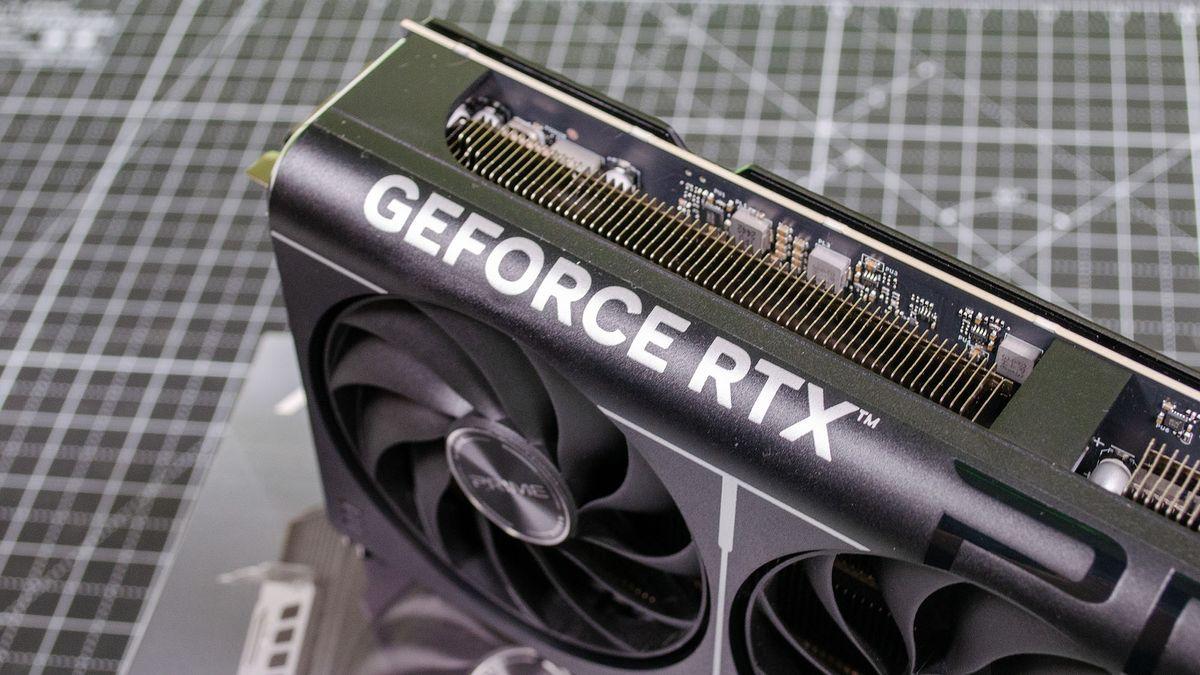
  • Nvidia’s RTX 5050 GPU has been spotted in gaming laptops alongside the RTX 5060
  • Incoming HP Victus 15 notebooks will feature these Blackwell GPUs
  • The RTX 5050 is likely to be a laptop-only graphics card, as with the previous Lovelace generation

Away from the RTX 5090 and RTX 5080, and the continued stock woes around these GPUs, we’ve had another sighting of the RTX 5050 (and 5060) at the other end of the Blackwell line-up.

In this case, though, these are mobile graphics cards for notebooks, not desktop models.

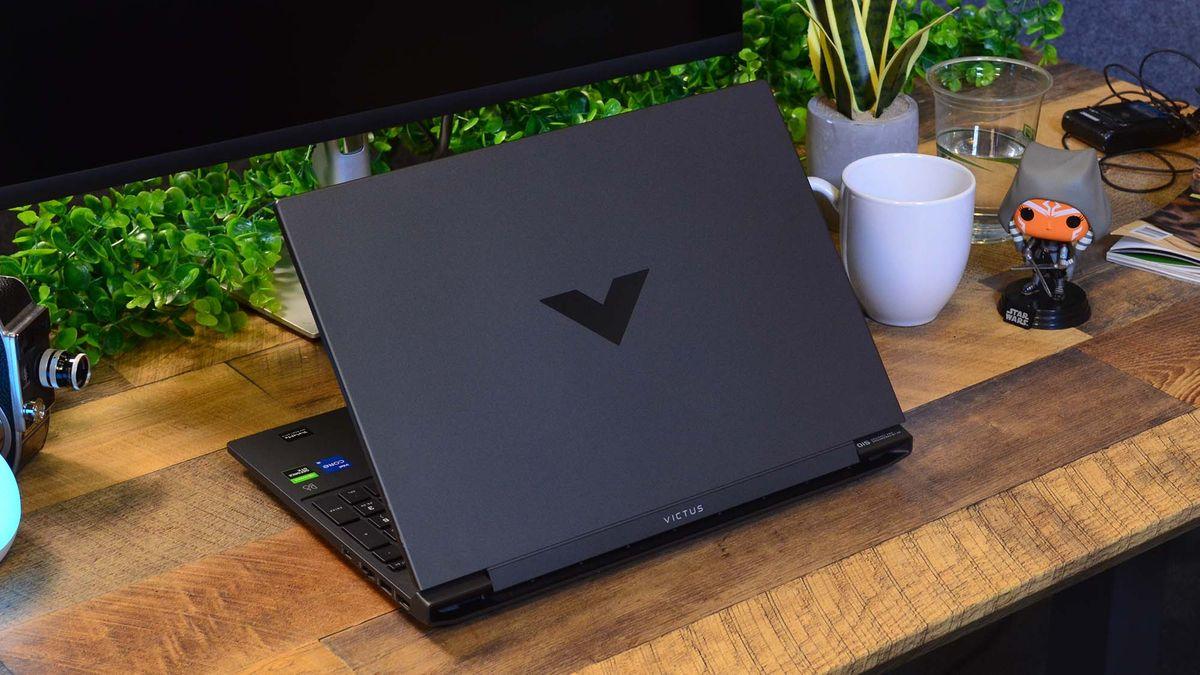
VideoCardz managed to get hold of a specifications sheet for HP‘s Victus 15 (model FA2) gaming laptops which reveals that these devices will feature Nvidia’s GeForce RTX 5060 and RTX 5050.

This appears to confirm the existence of these graphics cards, but as ever, we must be cautious around leaked material which may turn out to be using outdated information (or even be faked).

The new Victus 15 spec also features Intel‘s 13th-generation CPUs, complementing the Blackwell laptop GPUs with enough processing power for good performance. However, this is in contrast to the higher-end RTX 5090 and RTX 5080-powered laptops, which will use some of Intel’s newer Core Ultra processors.

Note that both the RTX 5060 and RTX 5050 GPUs have not been officially confirmed by Nvidia (for desktop PCs, or laptops), and they were missing from the Blackwell announcements made at CES 2025.

It seems likely that they’re coming at some point, of course, but the RTX 5050 will probably be a laptop-only GPU, based on the rumors we’ve heard thus far. (They are all about the mobile part, and there’s nothing really to suggest a desktop graphics card – though that doesn’t rule out the possibility).

{ window.reliablePageLoad.then(() => { var componentContainer = document.querySelector(“#slice-container-newsletterForm-articleInbodyContent-gH45yvdS9CNuBAXA4siPuJ”); if (componentContainer) { var data = {“layout”:”inbodyContent”,”header”:”Get daily insight, inspiration and deals in your inbox”,”tagline”:”Sign up for breaking news, reviews, opinion, top tech deals, and more.”,”formFooterText”:”By submitting your information you agree to the Terms & Conditions and Privacy Policy and are aged 16 or over.”,”successMessage”:{“body”:”Thank you for signing up. You will receive a confirmation email shortly.”},”failureMessage”:”There was a problem. Please refresh the page and try again.”,”method”:”POST”,”inputs”:[{“type”:”hidden”,”name”:”NAME”},{“type”:”email”,”name”:”MAIL”,”placeholder”:”Your Email Address”,”required”:true},{“type”:”hidden”,”name”:”NEWSLETTER_CODE”,”value”:”XTR-D”},{“type”:”hidden”,”name”:”LANG”,”value”:”EN”},{“type”:”hidden”,”name”:”SOURCE”,”value”:”60″},{“type”:”hidden”,”name”:”COUNTRY”},{“type”:”checkbox”,”name”:”CONTACT_OTHER_BRANDS”,”label”:{“text”:”Contact me with news and offers from other Future brands”}},{“type”:”checkbox”,”name”:”CONTACT_PARTNERS”,”label”:{“text”:”Receive email from us on behalf of our trusted partners or sponsors”}},{“type”:”submit”,”value”:”Sign me up”,”required”:true}],”endpoint”:”https://newsletter-subscribe.futureplc.com/v2/submission/submit”,”analytics”:[{“analyticsType”:”widgetViewed”}],”ariaLabels”:{}}; var triggerHydrate = function() { window.sliceComponents.newsletterForm.hydrate(data, componentContainer); } if (window.lazyObserveElement) { window.lazyObserveElement(componentContainer, triggerHydrate); } else { triggerHydrate(); } } }).catch(err => console.error(‘%c FTE ‘,’background: #9306F9; color: #ffffff’,’Hydration Script has failed for newsletterForm-articleInbodyContent-gH45yvdS9CNuBAXA4siPuJ Slice’, err)); }).catch(err => console.error(‘%c FTE ‘,’background: #9306F9; color: #ffffff’,’Externals script failed to load’, err)); ]]>

Sign up for breaking news, reviews, opinion, top tech deals, and more.

An HP Victus 15 on a desk

(Image credit: Future)

The RTX 5050 GPU has a trump card in DLSS 4

Considering the RTX 5050’s (which I reiterate isn’t officially confirmed by Nvidia) position as the lowest tier option for a Blackwell laptop GPU, it’s going to face some stiff competition. Particularly from AMD‘s Strix Halo APUs, which pack some serious grunt with their integrated graphics for gaming laptops (or handhelds).

However, Nvidia does have a secret weapon here – namely DLSS 4, which will certainly come in handy to give the RTX 5050 some more oomph. I’ve already highlighted how much of a game changer the upscaling tech is, improved by leaps and bounds thanks to its new transformer model and Multi Frame Generation (MFG), which enhance image stability and quality, and boost frame rates respectively. (With PC games that support the tech, of course).

That’s not to say that the RTX 5050 won’t perform well enough at a resolution like 1080p, but reports suggest it will only use 8GB of VRAM, which is now looking shaky for AAA games today (and certainly in the future). The old Frame Generation tech introduced with RTX 4000 GPUs had ghosting issues coupled with input latency headaches – these drawbacks have both been improved with MFG.

For those on a budget, the RTX 5060 and RTX 5050-powered HP Victus 15 gaming laptops may end up being a reasonable option.

You may also like…

Source

Posted on

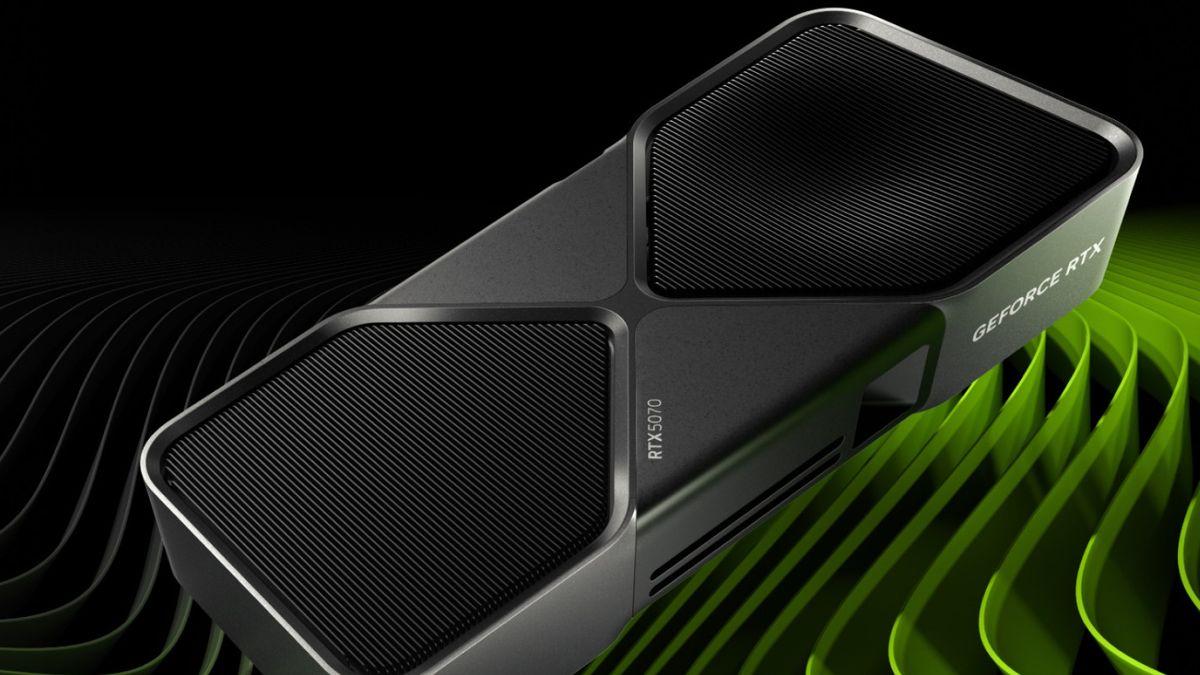
Rumor suggests Nvidia’s had difficulties to iron out with chips for RTX 5070 and 5060 GPUs, seemingly leading to delays and possibly low stock levels

  • Nvidia has supposedly run into performance issues with the chips for its RTX 5070 and 5060
  • This has meant these GPUs have been theoretically delayed by a month
  • As a result, initial stock levels of the RTX 5070 may be thin on the ground

We’re hearing more rumors about Nvidia’s RTX 5070 and 5060 GPUs being delayed and encountering hiccups with production, as well as suffering from possibly low stock levels at launch (once again).

VideoCardz noticed a post on X from analyst Dan Nystedt, who flagged up a report from the Commercial Times, a Taiwanese news outlet, making various claims about Nvidia running into trouble with the mentioned GPUs.

Apparently, the Blackwell chips used in the RTX 5060 and 5070 (known as GB205 in the latter case, and rumor has it, GB206 for the former) were suffering from performance issues which required last-minute addressing. And the need for that additional honing late in the day has “delayed the mass production schedule” (bear in mind that this is an article translated from Chinese).

Commercial Times further points out that the “Tainan earthquake disrupted TSMC’s wafer production” which is what Nvidia’s Blackwell chips are fashioned from, so this has compounded supply issues, we’re told.

The report asserts that the end result of all this is that the mass production of both the incoming RTX 5070 and 5060 (remember, the latter GPU isn’t officially confirmed by Nvidia yet) has been delayed by around four weeks.

The theory presented is that Nvidia previously had targets of mid-February for the RTX 5070 production lines to be running full tilt and mid-March for the RTX 5060, but that schedule has now been pushed back to mid-March and mid-April respectively.

An angry PC Gamer sat at their desk looking unhappy

(Image credit: ShutterStock)

Analysis: A theoretical but depressingly believable scenario

What does all this mean in practice? Well, maybe nothing – it’s just a bunch of rumors after all – but the fact is that it does marry up with other speculation suggesting pretty much the same thing: a delay from February/March to March/April. (That came from one of the more reliable sources out there for hardware-related gossip, too).

{ window.reliablePageLoad.then(() => { var componentContainer = document.querySelector(“#slice-container-newsletterForm-articleInbodyContent-K34i3d9M96faWPUATvi7wk”); if (componentContainer) { var data = {“layout”:”inbodyContent”,”header”:”Get daily insight, inspiration and deals in your inbox”,”tagline”:”Sign up for breaking news, reviews, opinion, top tech deals, and more.”,”formFooterText”:”By submitting your information you agree to the Terms & Conditions and Privacy Policy and are aged 16 or over.”,”successMessage”:{“body”:”Thank you for signing up. You will receive a confirmation email shortly.”},”failureMessage”:”There was a problem. Please refresh the page and try again.”,”method”:”POST”,”inputs”:[{“type”:”hidden”,”name”:”NAME”},{“type”:”email”,”name”:”MAIL”,”placeholder”:”Your Email Address”,”required”:true},{“type”:”hidden”,”name”:”NEWSLETTER_CODE”,”value”:”XTR-D”},{“type”:”hidden”,”name”:”LANG”,”value”:”EN”},{“type”:”hidden”,”name”:”SOURCE”,”value”:”60″},{“type”:”hidden”,”name”:”COUNTRY”},{“type”:”checkbox”,”name”:”CONTACT_OTHER_BRANDS”,”label”:{“text”:”Contact me with news and offers from other Future brands”}},{“type”:”checkbox”,”name”:”CONTACT_PARTNERS”,”label”:{“text”:”Receive email from us on behalf of our trusted partners or sponsors”}},{“type”:”submit”,”value”:”Sign me up”,”required”:true}],”endpoint”:”https://newsletter-subscribe.futureplc.com/v2/submission/submit”,”analytics”:[{“analyticsType”:”widgetViewed”}],”ariaLabels”:{}}; var triggerHydrate = function() { window.sliceComponents.newsletterForm.hydrate(data, componentContainer); } if (window.lazyObserveElement) { window.lazyObserveElement(componentContainer, triggerHydrate); } else { triggerHydrate(); } } }).catch(err => console.error(‘%c FTE ‘,’background: #9306F9; color: #ffffff’,’Hydration Script has failed for newsletterForm-articleInbodyContent-K34i3d9M96faWPUATvi7wk Slice’, err)); }).catch(err => console.error(‘%c FTE ‘,’background: #9306F9; color: #ffffff’,’Externals script failed to load’, err)); ]]>

Sign up for breaking news, reviews, opinion, top tech deals, and more.

On top of that, do know for sure that the RTX 5070 has been delayed – Nvidia originally announced that this GPU, and its Ti partner, would both go on sale in February. And while the RTX 5070 Ti is now out as planned, the RTX 5070 vanilla version has indeed been put back to an on-sale date of March 5. (It’s worth noting that the Ti uses a different Blackwell chip, GB203, as opposed to GB205 in the plain 5070 – and so the mentioned chip performance issues wouldn’t apply to the former, as that chip has already been put out there in the RTX 5080).

Furthermore, as you may have noticed, the RTX 5070 Ti has gone on sale today, but stock has vanished pretty much instantly. If you got a GPU, congrats, you were lucky (and if you’re still hunting, check out our guide on where to buy the 5070 Ti).

If production of the RTX 5070 is indeed running behind schedule as rumored – and Nvidia having pushed the GPU back does make things look shaky here – then we can fully expect a lean level of supply, and the same blink-and-it’s-gone stock scenario with the RTX 5070.

It’s all depressingly believable, too. Let me put it this way: do you think when the RTX 5070 becomes available to buy in early March, there’ll be plenty of stock kicking around? No, me neither, although I could, of course, be very wrong (and nothing would please me more, frankly, as I might want to buy one of these graphics cards).

As for the RTX 5060, we don’t know if this GPU is coming soon, as Nvidia hasn’t said anything officially, but the rumor mill reckons it’s due in the near future. If this speculation is correct, though, we’re now looking at mid-April, so the graphics card is still a couple of months away (in theory).

The more positive news brought forth with this report from the Commercial Times is that Nvidia is apparently ‘making every effort’ to speed up production for Blackwell GPUs and get everything back on track, and analysts believe that the lackluster supply will gradually improve going forward.

So hopefully, this won’t turn into a longer-term tale of skewed supply and demand, with seriously hiked pricing, as we’ve seen in the past.

You might also like…

Source

Posted on

Nvidia’s RTX 5000 GPUs continue to face severe supply issues, with RTX 5070 Ti reportedly being even worse for launch stock than the RTX 5080

  • New reports suggest significant stock shortages for Nvidia’s RTX 5070 Ti
  • There are claims the situation is even worse than the supply issues seen with the RTX 5080
  • One UK retailer has put forward a worst-case scenario that it could take (up to) six weeks for restocking the RTX 5070 Ti

Nvidia’s RTX 5000 series launch has become a memorable one, but for all the wrong reasons, as scalping, price inflation, and stock shortages continue to cause chaos for the RTX 5090 and RTX 5080 GPUs – and the newly launched RTX 5070 Ti may face a similar, or perhaps even worse, fate.

If you’ve been considering the idea of buying an RTX 5070 Ti now that these graphics cards have just been released, you’ve doubtless noticed the scramble for stock, and the GPU selling out across the board.

As noticed by TweakTown, according to sources who spoke to Moore’s Law is Dead, a reputable leaker on YouTube, the RTX 5070 Ti is facing even more troublesome supply issues than the RTX 5080.

Indeed, one source from a major US retailer claimed that there were fewer than 10 units of the RTX 5070 Ti in stock on launch day, hinting at a severe supply shortage. Another source at a big online retailer noted that stock levels were worse than the RTX 5080, and closer to the RTX 5090’s supply at launch. (Check out the video below for the full details).

It looks like a similar picture in the UK, too. A separate report from Wccftech brings word from a major retailer in that country, Overclockers, which has informed customers that it could take up to six weeks (worst-case scenario) for fresh stock of the RTX 5070 Ti to come in.

It’s worth noting that there is no Founders Edition version of the RTX 5070 Ti, but only third-party graphics cards made by Nvidia‘s partners. While the MSRP is officially $749 in the US, it’s a big mission to find one of these new graphics cards at that price at any retailer. Indeed, as already mentioned, it’s a mission to find one at all, because as we’ve already seen with the RTX 5090 and 5080, even though prices are way above MSRP in many cases, these GPUs are still sold out.

If you want more bad news, other recent buzz on the grapevine theorizes that the same shortage of supply could apply to the RTX 5070 and the (still-not-officially-announced) RTX 5060. The former GPU launches on March 5 (having already been slightly delayed by Nvidia), and with AMD‘s new Radeon RX 9000 series debuting in early March, Team Green has that on its plate to worry about, too.

{ window.reliablePageLoad.then(() => { var componentContainer = document.querySelector(“#slice-container-newsletterForm-articleInbodyContent-CgFpExrEZWYSMfeLZ3RjLA”); if (componentContainer) { var data = {“layout”:”inbodyContent”,”header”:”Get daily insight, inspiration and deals in your inbox”,”tagline”:”Sign up for breaking news, reviews, opinion, top tech deals, and more.”,”formFooterText”:”By submitting your information you agree to the Terms & Conditions and Privacy Policy and are aged 16 or over.”,”successMessage”:{“body”:”Thank you for signing up. You will receive a confirmation email shortly.”},”failureMessage”:”There was a problem. Please refresh the page and try again.”,”method”:”POST”,”inputs”:[{“type”:”hidden”,”name”:”NAME”},{“type”:”email”,”name”:”MAIL”,”placeholder”:”Your Email Address”,”required”:true},{“type”:”hidden”,”name”:”NEWSLETTER_CODE”,”value”:”XTR-D”},{“type”:”hidden”,”name”:”LANG”,”value”:”EN”},{“type”:”hidden”,”name”:”SOURCE”,”value”:”60″},{“type”:”hidden”,”name”:”COUNTRY”},{“type”:”checkbox”,”name”:”CONTACT_OTHER_BRANDS”,”label”:{“text”:”Contact me with news and offers from other Future brands”}},{“type”:”checkbox”,”name”:”CONTACT_PARTNERS”,”label”:{“text”:”Receive email from us on behalf of our trusted partners or sponsors”}},{“type”:”submit”,”value”:”Sign me up”,”required”:true}],”endpoint”:”https://newsletter-subscribe.futureplc.com/v2/submission/submit”,”analytics”:[{“analyticsType”:”widgetViewed”}],”ariaLabels”:{}}; var triggerHydrate = function() { window.sliceComponents.newsletterForm.hydrate(data, componentContainer); } if (window.lazyObserveElement) { window.lazyObserveElement(componentContainer, triggerHydrate); } else { triggerHydrate(); } } }).catch(err => console.error(‘%c FTE ‘,’background: #9306F9; color: #ffffff’,’Hydration Script has failed for newsletterForm-articleInbodyContent-CgFpExrEZWYSMfeLZ3RjLA Slice’, err)); }).catch(err => console.error(‘%c FTE ‘,’background: #9306F9; color: #ffffff’,’Externals script failed to load’, err)); ]]>

Sign up for breaking news, reviews, opinion, top tech deals, and more.

Nvidia RTX 5070 Ti Analysis & Supply Leak (Faker than 5080) – YouTube Nvidia RTX 5070 Ti Analysis & Supply Leak (Faker than 5080) - YouTube Watch On

A prime chance for AMD to get the better of Nvidia

With Nvidia’s messy RTX 5000 launch seeming to continually stumble onwards, AMD now has a great opportunity to leap ahead of its fierce GPU rival. Even if Nvidia’s new graphics cards end up being dominant in the battle of the best GPUs – and that remains to be seen, of course – it’s not much use if you can’t find those graphics cards at reasonable prices (or at all, right now).

AMD’s initial RDNA 4 GPUs are now very close – rumors point to a launch on March 6, and what looks like a plan to overshadow the release of the RTX 5070 – and if those RX 9070 graphics cards end up with healthy stock levels, this could pose a real threat to Nvidia. Especially if AMD pitches its price tags to attack Team Green.

I find it difficult to believe that gamers will continue to fork out for inflated and overpriced third-party Blackwell GPUs, as we’re seeing is the situation with the RTX 5070 Ti right now. So, it’s the perfect opportunity for AMD to capitalize on the situation, and take advantage (even if only for a few months, perhaps, while Nvidia’s stock woes continue).

Team Red has rather lost momentum coming off the back of CES 2025, where the RDNA 4 reveal was a fizzling disappointment, and we had all sorts of odd rumors flying around in its wake – with Nvidia grabbing the limelight as a result. Now is the time for AMD to really step up.

You may also like…

Source

Posted on

Microsoft overcomes quantum barrier with new particle

Microsoft has published the culmination of 20 years of research into subatomic particles, known as Majorana fermions, which it aims to use to build a million-qubit quantum computer.

The research has involved developing topological qubits, which Microsoft research anticipated would offer more stable qubits, requiring less error correction. A research paper on the property of these particles notes that Majorana fermions have a mathematical quirk which suggests that if fermions and anti-fermions are indistinguishable, they may be able to coexist without annihilating one another. 

In a YouTube video discussing the research, Microsoft technical fellow Matthias Troyer said: “Majorana’s theory showed that mathematically it’s possible to have a particle that is its own antiparticle. That means you can take two of these particles and you bring them together, and they could annihilate and there’s nothing left. Or you could take two particles and you bring them together and you have two particles.”

This offers a way to correlate the nothing state when the fermion and anti-fermion annihilate each other as a binary “0”, and when they both exist as a binary “1”. 

Microsoft technical fellow Krysta Svore said Microsoft has succeeded in designing a chip called Majorana 1 that is able to measure the presence of the Majorana fermion particles. “Majorana allows us to create a topological qubit,” she said, where the qubit is reliable, small and controllable.

The nature of the Majorana particles means they hide quantum information, making it more robust, but also harder to measure. Microsoft developed a new measurement approach that it claims is so precise that it can detect the difference between one billion and one billion and one electrons in a superconducting wire, which is used to determine the state of the qubit for quantum computation.

According to Svore, the approach Microsoft has taken gets around the noise problem that leads to errors in qubits, which results in error-prone quantum computers.

“Now that we have these topological qubits, we’re able to build an entirely new quantum architecture, the topological core, which can scale to a million topological qubits on a tiny chip,” she said.

Svore said that each atom in this chip is placed purposefully. “It is constructed from the ground up,” she added. “It is entirely a new state of matter. Think of us as building the picture by painting it atom by atom.”

The processors used to power computers traditionally use electrons. “We don’t use electrons for compute,” said Svore. “We use Majoranas.”

Majorana 1 is Microsoft’s new quantum chip that combines both qubits as well as surrounding control electronics. Along with the control logic, the Microsoft approach to quantum computing requires a dilution refrigerator that keeps qubits at temperatures much colder than outer space. Microsoft has also developed a software stack, which is needed to enable applications to take advantage of Microsoft’s quantum computing.

The Majorana 1 device can be held in the palm of a hand, and fits neatly into a quantum computer that can be easily deployed inside Azure datacentres. “The way the system that we are constructing works is you have the quantum accelerator,” said Microsoft vice-president Zulfi Alam. “You have a classical machine that works with it and controls it. And then you have the application that essentially goes between classical and quantum depending on which problem it’s trying to solve.”

Once the computations are completed, the results are re-synthesised on the classical computational machine, where it’s surfaced as an answer to the problem.

The researchers at Microsoft are confident the approach they have taken with Majorana 1 will be able to scale, which is something that has so-far hindered the progress of quantum computing, due to the error-prone nature of scaling logical qubits. Microsoft’s topological qubit architecture uses aluminum nanowires joined together in an “H” shape. Each H has four controllable Majoranas that are combined onto one qubit. The Hs can also be connected across the chip.

“It’s complex in that we had to show a new state of matter to get there, but after that, it’s fairly simple,” said Svore. “It tiles out. You have this much simpler architecture that promises a much faster path to scale.”

Source

Posted on

iOS 18.4 might not have the big Siri upgrade we expected

Apple was reportedly planning to introduce an AI-powered upgrade for Siri in iOS 18.4, but that might no longer be in the cards for the company. Bloomberg’s Mark Gurman reports that due to numerous engineering problems and software bugs involving the AI-enhanced Siri, Apple might have to delay the launch to a future update.

Sources told Bloomberg that Apple “is still racing to finish the software” internally. They say that employees testing Siri haven’t been able to consistently get the new features to work. While iOS 18.4 isn’t expected to be released to the public until April, the first beta software could roll out as early as next week, adding even more pressure.

Therefore, Apple has some choices to make. One option is to delay the Siri upgrade altogether and wait for iOS 18.5, which could arrive as early as May. Another option is to ship the upgrade but deactivate all the features that don’t work yet. That obviously would not be an ideal solution, but at least Apple could say that it shipped the new Siri on time.

New features in the works include the ability to sort through personal data to answer questions and take actions, understand context based on what’s on the screen, and perform significantly more actions within both first-party and third-party apps.

Tech. Entertainment. Science. Your inbox.

Sign up for the most interesting tech & entertainment news out there.

By signing up, I agree to the Terms of Use and have reviewed the Privacy Notice.

“Users have been waiting for other Apple Intelligence features, beyond the new Siri,” Gurman pointed out in his Friday report. “That includes AI sorting of mail messages on the iPad and Mac, a priority notifications interface for highlighting important alerts, and a sketch style in the Image Playground app for creating images.”

Whether or not Apple can get the new Siri up and running by April, it’s clear that the company is struggling to catch up with rivals in the fast-paced AI world.

Source

Posted on

Galaxy S25 Ultra vs. iPhone 16 Pro Max real-life battery test: Almost indentical

Apple’s iPhone 16 delivers great battery life, as we’ve seen in various tests and reviews performed after Apple unveiled the phone in September. The iPhone 16 Pro Max, which rocks the largest battery capacity of the four models, also delivers the best battery life.

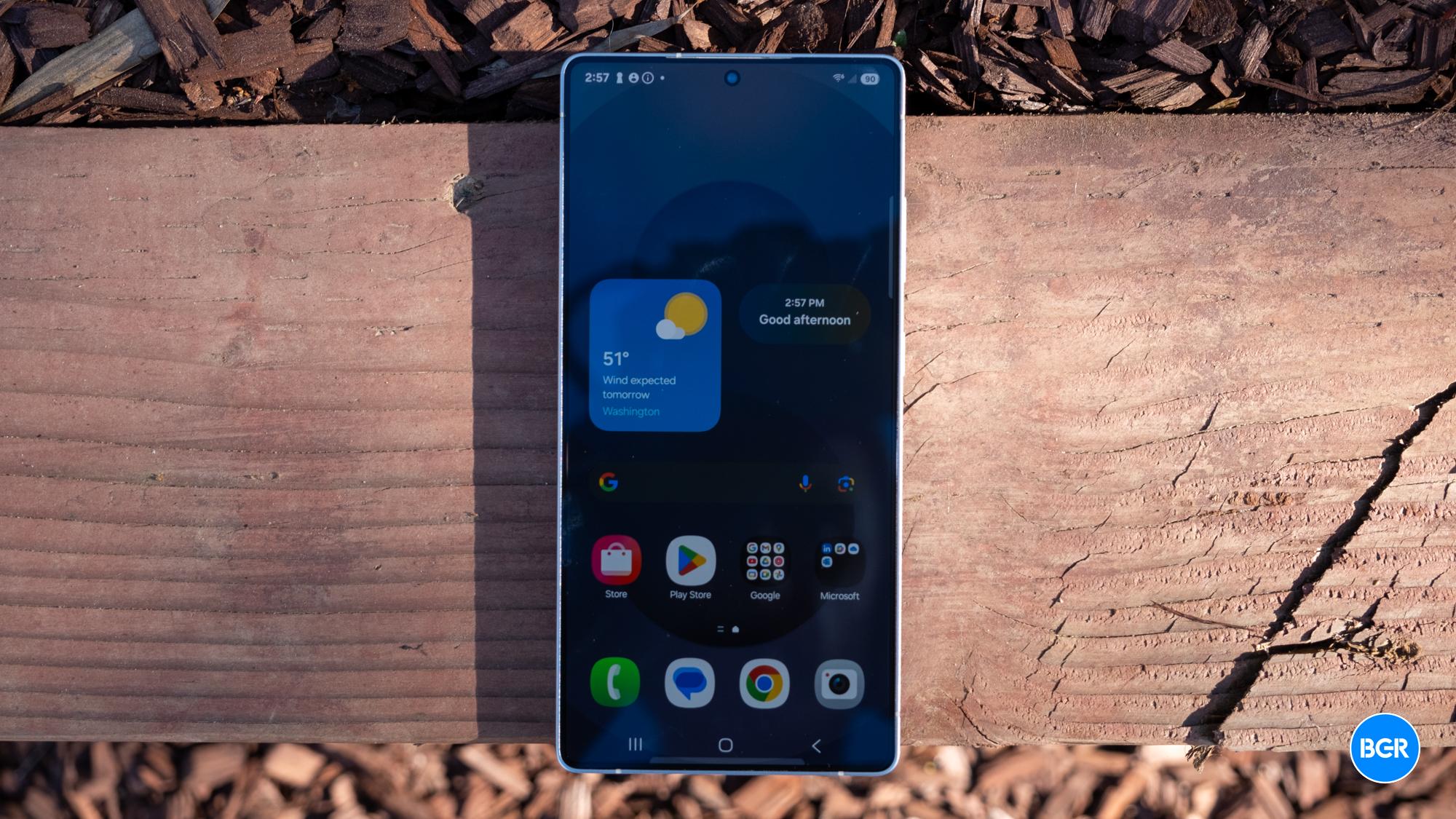
Now that the Galaxy S25 phones are out, the obvious battery life comparisons have started to drop, comparing Samsung’s latest phones against the latest iPhones. The most obvious contest is between the Galaxy S25 Ultra and the iPhone 16 Pro Max the phones with the largest battery packs of their respective series.

A few months ago, we saw battery life comparisons between the Galaxy S24 Ultra and the iPhone 16 Pro Max, with each phone coming out on top.

One of the more objective comparisons, offering a test meant to mimic the real-life use of a smartphone, came from the YouTube channel PhoneBuff. The iPhone 16 Pro Max won that battle by nearly an hour of extra life, though the Galaxy S24 Ultra put up a great fight.

Tech. Entertainment. Science. Your inbox.

Sign up for the most interesting tech & entertainment news out there.

By signing up, I agree to the Terms of Use and have reviewed the Privacy Notice.

Fast-forward to mid-February, and we have a similar battery life test featuring the Galaxy S25 Ultra and the iPhone 16 Pro Max. Apple’s handset won the contest, but by only a few minutes.

Ahead of the Galaxy S25 launch event, we knew the Snapdragon 8 Elite chip did tremendously well in battery life tests. This prompted me to speculate the ultra-thin Galaxy S25 Edge will feature great battery life despite rocking a smaller battery. While we’re yet to see the Edge in the wild, we know the Galaxy S25 Ultra can offer great battery life.

We noted in our Galaxy S25 Ultra review that battery life seems to have improved for the Galaxy S25 Ultra. The phone can easily last up to two days with light use. The Snapdragon 8 Elite, a custom version for the Galaxy S25 Ultra, delivers better performance than its predecessor and improved efficiency gains. The Galaxy S25 phones also feature vapor chambers to help cool the processor off.

We already saw that processor in action in a speed test from the same YouTuber, where the Galaxy S25 Ultra crushed the iPhone 16 Pro Max in a way I didn’t think possible.

Galaxy S25 Ultra vs. iPhone 16 Pro Max battery life test results.Galaxy S25 Ultra vs. iPhone 16 Pro Max battery life test results. Image source: YouTube


The processor’s efficiencies must be the reason the Galaxy S25 Ultra does so well in the battery life test PhoneBuff posted on YouTube.

Like the speed test, the battery life battle features a robot programmed to navigate apps in a specific order to mimic real-life use. The robot went through phone calls, texting, internet browsing, social apps, games, music, video streaming, and even navigation apps to replicate what we normally do on phones.

The battery life test also included a standby period to account for battery depletion when the handset is not used.

The iPhone 16 Pro Max won the battery life duel with 28 hours and 1 minute, while the Galaxy S25 Ultra died after 27 hours and 50 minutes. The advantage of the iPhone dropped significantly compared to the Galaxy S24 Ultra. The iPhone’s performance is impressive, considering it actually has a smaller battery than the Galaxy S25 Ultra.

However, it’s clear the Snapdragon 8 Elite chip is responsible for the phone’s battery life gains. After all, Samsung used the same 5,000 mAh battery for both the Galaxy S24 Ultra and the S25 Ultra.

The only other thing that’s different is the operating system. The Galaxy S25 Ultra runs Android 15 (One UI 7) out of the box, while the S24 Ultra rocked Android 14. One UI 7 is still too new. Additional optimizations might improve battery life down the road. But even so, the Galaxy S25 phones should deliver better batery life than its predecessors, especially the Ultra.

The battery life test follows in full below:

Source

Posted on

Watchdog approves Sellafield physical security, but warns about cyber

Cumbrian nuclear facility Sellafield is still under scrutiny for cyber security problems, despite the regulator’s clean bill of health for its physical security.

The Office for Nuclear Regulation (ONR) has returned the Sellafield site to a “routine regulatory regime for physical security after a period of enhanced oversight”, according to a government statement.

The ONR’s statement said: “Over the last two years, ONR has carried out a regular programme of inspections and interventions at Sellafield, assessing evidence provided by the licensee’s security and resilience team. This identified a period of sustained improved performance in the area of physical security, and ONR is satisfied that the required security outcomes are now being achieved.”

However, the ONR added: “Sellafield Ltd currently remains in significantly enhanced attention for cyber security, and collaborative work is ongoing to achieve the required improvements in this area.”

In December 2023, The Guardian reported that groups linked to China and Russia had hacked into Sellafield’s IT systems, “embedding sleeper malware that could lurk and be used to spy or attack systems”.

And in October 2024, the nuclear waste facility was ordered to pay £400,000 by Westminster Magistrates’ Court, after it pleaded guilty to criminal charges over years of cyber security failings, and apologised to the court.

The ONR brought the charges against Sellafield Ltd, accusing it of leaving exposed information that could threaten national security over a four-year period, from 2019 to 2023. Three-quarters of its servers were also said to be vulnerable to cyber attack.

One of the three criminal charges brought related to Sellafield’s failure to “ensure that there was adequate protection of sensitive nuclear information on its information technology network”, while the other two related to failures to conduct “annual health checks” of its IT systems.

Sellafield’s lawyers said at the time, “it is important to emphasise there was not and has never been a successful cyber attack on [the facility]”, before noting that the offences are “historical … [and] do not reflect the current position”.

Paul Dicks, the ONR’s director of regulation for Sellafield, decommissioning, fuel and waste, said of the new bill of health: “We have worked closely with Sellafield Ltd through our enabling approach to ensure that the required improvements are delivered. I’m satisfied that Sellafield Ltd has demonstrated significant and sustained security improvements which has allowed us to return them to routine regulatory attention.”

Sellafield operates under the governance of the Nuclear Decommissioning Authority (NDA), a quasi-governmental body that serves to wind up and render safe the UK’s oldest nuclear industry sites.

In November 2024, the NDA opened a cyber security centre to safeguard against cyber attacks on the civil nuclear sector. 

Its Group Cyberspace Collaboration Centre in Cumbria is said to gather security, digital and engineering experts to work on how best to adopt new technologies and defend against evolving threats.

Warren Cain, superintending inspector at the Office for Nuclear Regulation, said: “All nuclear sites must have strong cyber security systems in place to protect important information and assets from cyber threats.

“Cyber security is a key regulatory priority for the Office for Nuclear Regulation, and we welcome the NDA’s commitment to strengthen their cyber defences with this new specialist facility.”

Besides Sellafield, the UK’s nuclear sites include Hinkley Point, Harwell, Dungeness, Bradwell and Sizewell, Trawsfynydd and Wylfa, and Dounreay.

Source