Posted on

Top 10 AI and storage stories of 2024

Artificial intelligence (AI) has hit the headlines and the datacentres, but with it comes a range of performance and operating considerations that impact storage as much as any other IT discipline.

In this review, we look at the key demands of AI processing on data storage, the type of storage AI requires, and the suitability of cloud storage for AI workloads.

We drill down into the data needs of AI and storage, such as the demands of high-dimension vector data and checkpointing during AI training, plus the compliance considerations that use of AI brings with it.

We also look at the responses of storage suppliers to the rapid rise of AI use cases in the datacentre, in terms of link-ups with leading players like Nvidia, as well as in their storage offer aimed at AI workloads. 

In this guide, we examine the data storage needs of artificial intelligence, the demands it places on data storage, the suitability of cloud and object storage for AI, and key AI storage products.

We look at the use of vector data in AI and how vector databases work, plus vector embedding, the challenges for storage of vector data and the key suppliers of vector database products.

We talk to Charlie Boyle of Nvidia about data challenges in artificial intelligence, key practical tips for AI projects, and demands on storage of training, inferencing, RAG and checkpointing.

Storage supplier announcements at Nvdia conference centre on infrastructure integration, tackling the GPU I/O bottleneck and AI hallucinations by running Nvidia NeMo and NIM microservices.

We spoke to Pure Storage CEO Charlie Giancarlo about why write speed is key for artificial intelligence workloads, accessible storage for AI data, and his prediction of the death of spinning disk.

We talk to NetApp’s Grant Caley about AI and data storage, the need for scale, performance and hybrid cloud, and to move, copy and clone data for wrangling for inference runs.

AI checkpointing operations targeted by Vast Data as it touts QLC-based storage for AI workloads.

Start looking at artificial intelligence compliance. That’s the advice of Mathieu Gorge of Vigitrust, who says AI governance is still immature, but firms should recognise the limits and still act.

AI consultancy Crater Labs spent vast amounts of time managing server-attached drives to ensure GPUs were saturated. A shift to all-flash Pure Storage slashed that to almost zero.

Originally driven by Intel’s now-defunct Optane storage class memory, Parallelstore offers massive parallel file storage targeted at artificial intelligence training use cases on Google Cloud.

Source

Posted on

iOS 19 will reportedly work on every iPhone that supports iOS 18

Reports in the past few weeks claimed that Apple’s main focus remains Apple Intelligence. The company was working on the now-released iOS 18.2, which brings ChatGPT integration to the iPhone and iPad, and iOS 18.4, which will deliver a smarter Siri.

Those reports said work on iOS 19 had been delayed. Therefore, some iOS 19 Apple Intelligence features might see delays similar to what happened this year.

As for the non-AI features in iOS 19, I said at the time that I expect Apple to ship novelties in next year’s operating system. After all, Apple Intelligence will only work on the iPhone 17, iPhone 16, and the iPhone 15 Pros.

While we’re yet to find out the big non-AI features of iOS 19, there is good news for iPhone owners that use older models. A leak says that all the models that can run iOS 18 will also run iOS 19 next year. The only compatibility change will impact the iPad, as certain models will lose support for iOS 19.

Tech. Entertainment. Science. Your inbox.

Sign up for the most interesting tech & entertainment news out there.

By signing up, I agree to the Terms of Use and have reviewed the Privacy Notice.

French blog iPhoneSoft learned from a purported source inside Apple that development work on iOS 19 had not started for this particular person. That’s a first for the leaker compared to previous years. Instead, they’re supposedly working on iOS 18.x updates and visionOS.

This person reportedly learned the iPhone models that will run iOS 19 next year, telling the blog that all the iPhones compatible with iOS 18 will also support the next OS upgrade. iPhoneSoft listed all the iPhones that will support iOS 19 next year, including the unreleased iPhone 17 and iPhone SE 4 models:

  • iPhone 17, 17 Air, 17 Pro, 17 Pro Max (2025)
  • iPhone 16, 16 Plus, 16 Pro, 16 Pro Max (2024)
  • iPhone 15, 15 Plus, 15 Pro, 15 Pro Max (2023)
  • iPhone 14, 14 Plus, 14 Pro, 14 Pro Max (2022)
  • iPhone 13, 13 Mini, 13 Pro, 13 Pro Max (2021)
  • iPhone 12, 12 Mini, 12 Pro, 12 Pro Max (2020)
  • iPhone 11, 11 Pro, 11 Pro Max (2019)
  • iPhone XS / XS Max (2018)
  • iPhone XR (2018)
  • iPhone SE (4th generation) (2025)
  • iPhone SE (3rd generation) (2022)
  • iPhone SE (2nd generation) (2020)

Regarding iPadOS 19, Apple will stop models for some older iPads that can still run iPadOS 18. You’ll need an iPad with an A12 chip or later to run iPadOS 19 next year. Here’s the list of supported iPads: 

  • iPad mini (5th generation or later)
  • iPad (8th generation or later)
  • iPad Air (3rd generation or later)
  • iPad Pro (2018 or later)

While these early iOS 19 and iPadOS 19 compatibility claims make sense, there’s no way to confirm any of them. Apple will hold its WWDC 2025 event next June. We’ll see plenty of iOS rumors by then, which will shed further light on the features Apple might be working with and the devices that will support them.

Source

Posted on

AMD in 2024: year in review

What sort of 2024 did AMD experience? This year was quiet in some respects for Team Red – with not much activity in the GPU space, save for one notable exception – but there was more happening on the CPU front, although the introduction of new Zen 5 processors proved controversial.

New laptop chips for Copilot+ PCs and a fresh X3D offering were definite highlights, so without any further preamble, let’s dig into what was good, bad, or indifferent for AMD in 2024.

AMD CPU with Ryzen 9000 Series label

(Image credit: AMD)

Vanilla Ryzen 9000 CPUs fizzled upon launch

This year we received new Ryzen processors, although the launch of these Zen 5 chips was pushed back a month from July to August – a delay which some regarded as ominous at the time. Those more pessimistic mutterings turned into something of an online outcry when the Ryzen 9000 range did eventually arrive, with the PC community seemingly quick to label the new processors a flop.

That’s a harsh conclusion to jump to, perhaps, although it’s undeniable that Ryzen 9000 did not meet the expectations of would-be CPU buyers, particularly for gaming performance, where uplifts were widely reported to be closer to 5% than the 10% AMD was touting prerelease (which is where the ‘Zen 5%’ joke comes from). The better news is that Ryzen 9000 swiftly received better performance thanks to fine-tuning work in Windows 11 24H2 – though crucially, Ryzen 7000 chips got close to the same (major) uplift.

Following rather shaky reviews of the mainstream Ryzen 9700X and 9600X offerings, sales appeared to flag out of the gate – partly due to Ryzen 7000 chips still being around with pretty deep discounts applied, making them comparatively more tempting.

So, the flak AMD caught from a gaming angle wasn’t good at all here, but Team Red did have a couple of things in its favor. Its desktop CPU rival, Intel, spent the whole of 2024 dealing with way worse issues than a lukewarm reception around gaming prowess – with Team Blue’s 13th and 14th-gen processors being plagued by nasty instability issues (that were eventually fixed). On top of that, Intel’s new Core Ultra 200S (Arrow Lake) desktop CPUs fared just as badly as Ryzen 9000 – actually, worse – out of the gate in terms of gaming performance.

That gave AMD some breathing room, and then Team Red shot back with a powerful volley to entice PC gamers in terms of a swift launch of its new 3D V-Cache processors.

{ window.reliablePageLoad.then(() => { var componentContainer = document.querySelector(“#slice-container-newsletterForm-articleInbodyContent-qPnV8YUS5mb3WiyePpf48N”); if (componentContainer) { var data = {“layout”:”inbodyContent”,”header”:”Get daily insight, inspiration and deals in your inbox”,”tagline”:”Sign up for breaking news, reviews, opinion, top tech deals, and more.”,”formFooterText”:”By submitting your information you agree to the Terms & Conditions and Privacy Policy and are aged 16 or over.”,”successMessage”:{“body”:”Thank you for signing up. You will receive a confirmation email shortly.”},”failureMessage”:”There was a problem. Please refresh the page and try again.”,”method”:”POST”,”inputs”:[{“type”:”hidden”,”name”:”NAME”},{“type”:”email”,”name”:”MAIL”,”placeholder”:”Your Email Address”,”required”:true},{“type”:”hidden”,”name”:”NEWSLETTER_CODE”,”value”:”XTR-D”},{“type”:”hidden”,”name”:”LANG”,”value”:”EN”},{“type”:”hidden”,”name”:”SOURCE”,”value”:”60″},{“type”:”hidden”,”name”:”COUNTRY”},{“type”:”checkbox”,”name”:”CONTACT_OTHER_BRANDS”,”label”:{“text”:”Contact me with news and offers from other Future brands”}},{“type”:”checkbox”,”name”:”CONTACT_PARTNERS”,”label”:{“text”:”Receive email from us on behalf of our trusted partners or sponsors”}},{“type”:”submit”,”value”:”Sign me up”,”required”:true}],”endpoint”:”https://newsletter-subscribe.futureplc.com/v2/submission/submit”,”analytics”:[{“analyticsType”:”widgetViewed”}],”ariaLabels”:{}}; var triggerHydrate = function() { window.sliceComponents.newsletterForm.hydrate(data, componentContainer); } if (window.lazyObserveElement) { window.lazyObserveElement(componentContainer, triggerHydrate); } else { triggerHydrate(); } } }).catch(err => console.error(‘%c FTE ‘,’background: #9306F9; color: #ffffff’,’Hydration Script has failed for newsletterForm-articleInbodyContent-qPnV8YUS5mb3WiyePpf48N Slice’, err)); }).catch(err => console.error(‘%c FTE ‘,’background: #9306F9; color: #ffffff’,’Externals script failed to load’, err)); ]]>

Sign up for breaking news, reviews, opinion, top tech deals, and more.

An AMD Ryzen 7 9800X3D in a masculine hand

(Image credit: Future / John Loeffler)

Ryzen 9800X3D to the rescue

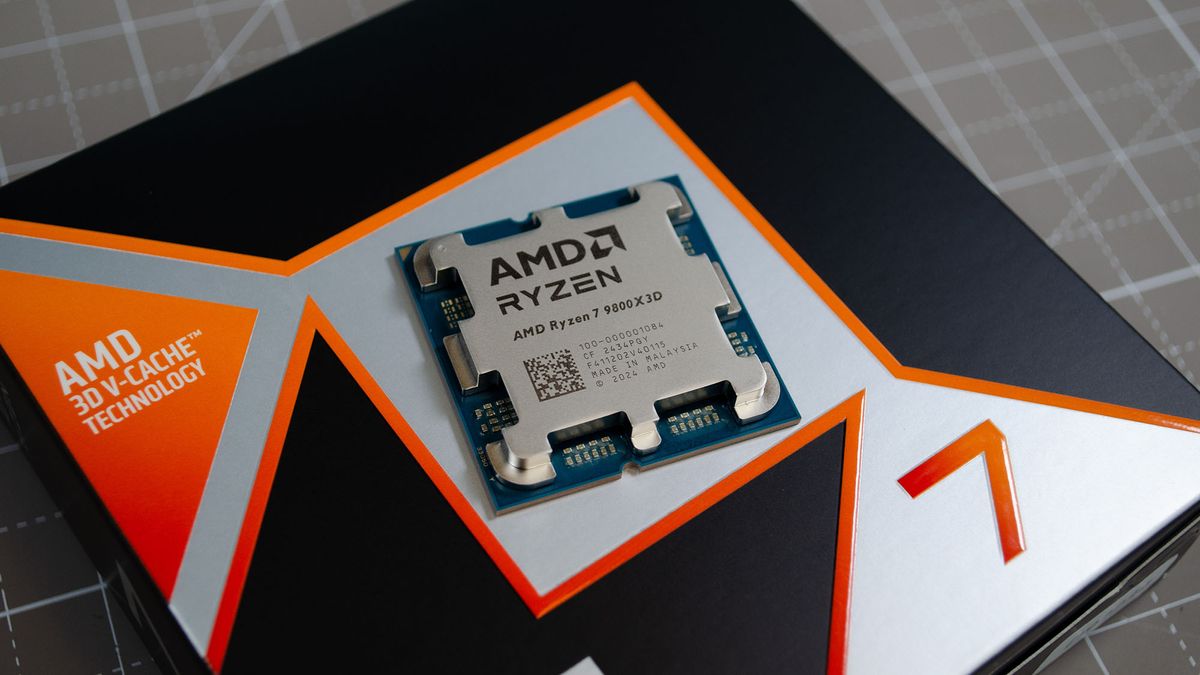
Last year, we saw the introduction of 3D V-Cache for Zen 4 CPUs, and the Ryzen 7800X3D caught fire as the most popular gaming CPU out there. While normally AMD takes some time to push out X3D chips for any given generation, with Zen 5, these gaming-focused processors arrived very swiftly. Indeed, the Ryzen 9800X3D debuted in the first week of November, only a few months after Ryzen 9000 chips.

You could argue that this hasty appearance was pushed through to take away the bad taste from Ryzen 9000, and indeed the Ryzen 9800X3D did exactly that for PC gamers. As we found in our review, this CPU is seriously pepped up (with the ability to be overclocked for the first time, too), and an excellent gaming chip – we called it the best processor release of 2024, in fact.

The sticking point for the 9800X3D was the slightly hiked MSRP, along with the initial stock selling out very quickly, a situation compounded by scalping woes. Still, this clearly was the piece of silicon AMD needed to get out of the door to recover its CPU reputation, and really take the fight to Intel.

Also, i’s worth noting that we were treated to a welcome wallet-friendly last-gen offering from AMD, the Ryzen 7600X3D, as a budget gaming CPU (and a great fit for small form-factor builds) – but as a Micro Center exclusive in the US (again).

An ASRock Steel Series Radeon RX 7900 GRE on a desk

(Image credit: Future / John Loeffler)

GPU disappointment – with a big saving grace

AMD was a hive of activity with graphics cards last year, filling out the RDNA 3 series with various models of GPU, from the lower-end RX 7600, through the mid-range territory with the RX 7700 XT and 7800 XT. Before that in 2022, we only had high-end models with the RDNA 3 family.

To say this year was a bit of a contrast is an understatement. At the very start of 2024, we did get a new RX 7600 XT, the pepped-up take on the most wallet-friendly RDNA 3 GPU, but it was a modest upgrade, not all that compelling in the value stakes, and overall it didn’t stand up well compared to its Nvidia rival (the RTX 4060).

We were hoping for some new entrants at the true budget end of the GPU market in 2024, below the RX 7600, but the rumored RX 7400 and 7300 never showed. (Although bizarrely, we did get some milking of ancient low-end Radeon GPUs).

We were also hoping for RDNA 4 with even more eagerness, of course, but that didn’t happen either. Despite the rumor mill firmly believing these next-gen graphics cards could debut later in 2024, they didn’t – and the grapevine now has a Q1 2025 launch predicted. Overall, the no-show from RDNA 4 – which is rumored to top out at the mid-range, with an RX 8700 XT flagship in theory – was one of the biggest disappointments in the PC sphere for us in 2024.

What we did get, though, was a rocket-powered rabbit – a Golden Rabbit Edition, or GRE, version of the RX 7900, to be precise. Now, this was a GPU that was launched in China in the middle of 2023, but it was only released globally in February 2024. At that point, the RX 7900 GRE stormed our list of the best GPUs and stole the top position, arguably being the best entry-level option for 4K gaming.

So, it wasn’t a complete washout for Team Red after all, particularly when you consider that the RX 7800 XT also topped our best GPU list when it emerged last year. The GRE was the only thing that was GRE-at (sorry) about 2024 for AMD’s GPUs, though.

An AMD Ryzen AI 300 series chip against a stylized background

(Image credit: AMD)

Ryzen AI 300 bursts onto the scene to take on Qualcomm Snapdragon X

As you doubtless noticed, 2024 was the year that Copilot+ PCs launched, and the only chips powering these AI laptops were Qualcomm’s Snapdragon X SoCs to begin with.

AMD and Intel weren’t that far behind with CPUs that had a beefy enough NPU to qualify as the engine of a Copilot+ PC, though, and Team Red’s Ryzen AI 300 (x86) processors (also known as Strix Point) arrived in laptops starting from July 2024. However, the available models were very thin on the ground to begin with, and indeed the amount of choice with Strix Point notebooks remains limited even as this year draws to a close.

Ryzen AI 300 proved to be strong for AI, and also general performance and mobile gaming, too, easily matching Qualcomm’s effort – with the advantage of having none of the compatibility issues that the Arm-based Snapdragon X CPUs have as baggage.

That said, Intel also debuted Lunar Lake mobile (x86) processors for Copilot+ PCs in 2024, and these also proved to be very strong CPUs – and a match for Ryzen AI 300 in many respects. In short, two great x86 alternatives to Qualcomm Snapdragon X-powered Copilot+ PCs emerged in 2024, albeit we need more laptops packing this silicon.

An AMD Radeon RX 7900 GRE from PowerColor on a desk with its retail packaging

(Image credit: Future / John Loeffler)

Concluding thoughts

Other notable happenings for AMD in 2024 included the release of FSR 3.1 – which remains lagging behind Nvidia DLSS, although maybe AI will fix that – and an eye-opening achievement in outgunning Intel in the data center arena in terms of overall revenue.

While the launch of Ryzen 9000 CPUs caused some wobbles, we have to remember that these aren’t bad chips by any means – they just didn’t meet (gaming) expectations, and didn’t seem all that great value compared to previous-gen processors (at heavily cut prices) which are still very much on shelves (for the time being).

Ryzen 9000’s time will doubtless come, and at any rate, AMD recovered suitably with the Ryzen 9800X3D – and wasn’t exactly under pressure from Intel, either, as Team Blue had bigger worries than the criticisms Team Red faced.

GPU launches were thin on the ground from AMD, and rather disappointing – save for that RX 7900 GRE – and RDNA 4 failing to appear this year was a further source of some dismay.

Unfortunately, 2024 also saw AMD implement major layoffs, with the company making no bones about an increasing focus on the world of AI, where plentiful profits are to be made.

Is that increased leaning into AI anything to do with pushing back RDNA 4 graphics cards, perhaps? We don’t know that, and wouldn’t get carried away with any paranoia around AMD deprioritizing consumer GPUs yet – it’s probably more to do with market conditions and selling through current-gen RDNA 3 stock. Furthermore, you could apply that line of worried thinking to Nvidia equally, with next-gen Blackwell gaming GPUs also failing to turn up this year, and perhaps set to launch in the shadow of much bigger potential AI profits.

You might also like

Source

Posted on

Got an Intel Core Ultra 200S CPU? These are the patches you need to help gaming performance – with one more update coming in January 2025

  • Intel has issued a full and detailed report on Arrow Lake’s subpar performance
  • Five separate problems were highlighted, four of which are now fixed
  • You’ll need to update your BIOS and Windows 11 to get those fixes

Intel has finished its deep-dive investigation into problems with its Core Ultra 200S processors, and has presented the full results – with most of the issues now fixed, and one remaining remedy to be taken in January 2025.

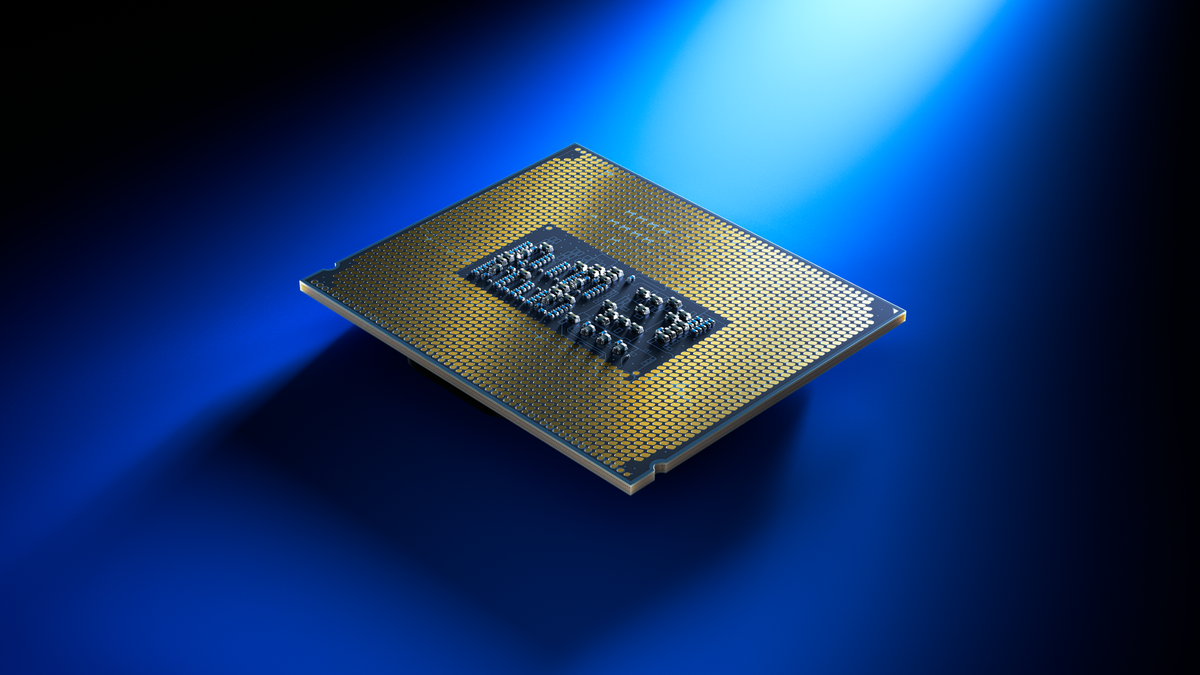
As you may recall, these Arrow Lake desktop CPUs, launched in October, disappointed with their initial performance – particularly for PC games – and Intel subsequently admitted that Core Ultra 200S CPUs weren’t performing as well as expected, but that fixes were in the pipeline.

We were promised cures for a “series of multifactor issues” in fact, and now we have the full lowdown on those gremlins in the silicon works.

In a lengthy blog post, coined a ‘field update’ (part one of two), Intel observed that: “Editorial conclusions on gaming performance were more polarized, with noteworthy statistical variation from one article to the next. These results were inconsistent with our internal testing.”

Team Blue then says “we have determined that there are five distinct topics that could alter performance or functionality,” before going on to list those areas. They are as follows:

  • A missing Performance & Power Management (PPM) package
  • Intel Application Performance Optimizer (APO) could not take effect
  • BSODs when attempting to launch game titles utilizing the Easy Anti-Cheat service
  • Select performance settings misconfigured on reviewer or early enabling BIOSes
  • New BIOS performance optimizations

All of these issues have been ‘root caused’ – meaning Intel has got to the bottom of why they’re happening – and the first four have been resolved by updates that are already out there.

To get the benefit of these solutions, you need to avail yourself of two main updates. Firstly, update Windows 11 to build 26100.2314 (or newer), which is the November cumulative update for the 24H2 version. (We presume that the 23H2 update for the same month will also work – but Team Blue doesn’t mention this, so that isn’t clear). This will deal with issues number one and two as listed above.

{ window.reliablePageLoad.then(() => { var componentContainer = document.querySelector(“#slice-container-newsletterForm-articleInbodyContent-Jft9z9XLXPXMSG8VGZsEig”); if (componentContainer) { var data = {“layout”:”inbodyContent”,”header”:”Get daily insight, inspiration and deals in your inbox”,”tagline”:”Sign up for breaking news, reviews, opinion, top tech deals, and more.”,”formFooterText”:”By submitting your information you agree to the Terms & Conditions and Privacy Policy and are aged 16 or over.”,”successMessage”:{“body”:”Thank you for signing up. You will receive a confirmation email shortly.”},”failureMessage”:”There was a problem. Please refresh the page and try again.”,”method”:”POST”,”inputs”:[{“type”:”hidden”,”name”:”NAME”},{“type”:”email”,”name”:”MAIL”,”placeholder”:”Your Email Address”,”required”:true},{“type”:”hidden”,”name”:”NEWSLETTER_CODE”,”value”:”XTR-D”},{“type”:”hidden”,”name”:”LANG”,”value”:”EN”},{“type”:”hidden”,”name”:”SOURCE”,”value”:”60″},{“type”:”hidden”,”name”:”COUNTRY”},{“type”:”checkbox”,”name”:”CONTACT_OTHER_BRANDS”,”label”:{“text”:”Contact me with news and offers from other Future brands”}},{“type”:”checkbox”,”name”:”CONTACT_PARTNERS”,”label”:{“text”:”Receive email from us on behalf of our trusted partners or sponsors”}},{“type”:”submit”,”value”:”Sign me up”,”required”:true}],”endpoint”:”https://newsletter-subscribe.futureplc.com/v2/submission/submit”,”analytics”:[{“analyticsType”:”widgetViewed”}],”ariaLabels”:{}}; var triggerHydrate = function() { window.sliceComponents.newsletterForm.hydrate(data, componentContainer); } if (window.lazyObserveElement) { window.lazyObserveElement(componentContainer, triggerHydrate); } else { triggerHydrate(); } } }).catch(err => console.error(‘%c FTE ‘,’background: #9306F9; color: #ffffff’,’Hydration Script has failed for newsletterForm-articleInbodyContent-Jft9z9XLXPXMSG8VGZsEig Slice’, err)); }).catch(err => console.error(‘%c FTE ‘,’background: #9306F9; color: #ffffff’,’Externals script failed to load’, err)); ]]>

Sign up for breaking news, reviews, opinion, top tech deals, and more.

Secondly, you need to get the latest BIOS update for your motherboard, which cures problem number four. As for issue three, that’s resolved by an Easy Anti-Cheat driver update (that’ll be piped through with the game that uses this anti-cheat system, which has been problematic with Arrow Lake on Windows 11 24H2).

The final problem, number five, is the one that’ll be fixed in January 2025 with a new BIOS update, which will provide a further performance uptick.

Intel Arrow Lake Performance Update Details

(Image credit: Intel)

Analysis: Initial double-digit boost, then a single-digit follow-up

As Intel notes, you might just want to wait until next month anyway, then do your BIOS update and grab the fixes for issues four and five in one fell swoop.

Whereas the exact gaming (and app) performance increase you get will depend on your exact mix of PC components and system configuration – as ever – it seems to be the case that the first BIOS update (for problem four) is going to give you at least a boost of a few percent, or perhaps a double-digit uplift (up to 14% in theory, a pretty wide range). The second patch (for problem five, coming in January) is likely to provide a “modest performance improvement in the single-digit range,” we’re told.

So, both of these BIOS updates will likely provide a similar uplift of around 5% or so, maybe a bit more, but if you get lucky – or unlucky depending on how you look at it – you’ll get an even bigger boost (because your system was more hamstrung by these issues in the first place).

We should also point out that fix number two is for Intel APO (Application Performance Optimization) tech, so only a small number of games will benefit from that (those that support APO).

Intel has been commendably transparent in this process, and in revealing the detailed results of its investigation – as the company promised it would. So, that’s a definite tick for Team Blue, and hopefully any Arrow Lake gaming sluggishness will be pretty much ironed out by the time we get to the end of January 2025.

Via VideoCardz

You might also like…

Source

Posted on

iPad 11 leak may reveal release timing for Apple’s new entry-level tablet

Apple’s upcoming iPad 11 can’t come soon enough. The latest leak says that Cupertino’s entry-level tablet will be released with iPadOS 18.3. While we don’t think this device will be announced alongside iPadOS 18.3, the news suggests that an iPad 11 release is coming before iPadOS 18.4 rolls out in April.

The information comes from a prominent X leaker who prefers not to be named. The device will have two options: Wi-Fi and Wi-Fi + Cellular. So far, leaks on the iPad 11 reveal Apple will bump its specifications to bring Apple Intelligence to the company’s entry-level tablet.

That being said, the iPad 11 will feature 8GB of RAM and, most likely, Apple’s A18 chip. More interestingly, today’s leak reveals that this tablet could have Apple’s upcoming custom 5G modem, which is also expected to be available with the new iPhone SE 4.

Even if Apple keeps the same design, display, and ports, this $349 tablet would be an instant hit. People in school would have a powerful tablet with several capabilities without having to spend a ton of money. In addition, when this tablet is released, Apple Intelligence will be a more reliable platform with even more features.

Tech. Entertainment. Science. Your inbox.

Sign up for the most interesting tech & entertainment news out there.

By signing up, I agree to the Terms of Use and have reviewed the Privacy Notice.

Bloomberg’s Mark Gurman says Apple is also working on a revamped keyboard for the entry-level iPad 11 and the iPad Air, which could be released in mid-2025. This tablet will support the USB-C Apple Pencil.

iPad 11 will likely debut at a spring event

With today’s iPad 11 leak, it makes sense for Apple to release this tablet at a spring event. So far, iPadOS 18.3 is expected to launch in late January. If Cupertino follows the trend, we could see a keynote in March highlighting this entry-level tablet, the new iPhone SE 4, Apple’s 13-inch and 15-inch MacBook Air with the M4 chip, and AirTag 2.

Fortunately, it won’t take long until the company unveils this tablet, which is a top seller for education and those looking for a more reliable device than an entry-level Windows notebook.

Source

Posted on

Asus gaming laptops leak with RTX 5090, 5080 and 5070 Ti GPUs, sparking excitement about a CES 2025 reveal

  • Retailers have leaked incoming laptops from Asus with RTX 5000 GPUs
  • Nvidia RTX 5090, 5080 and 5070 Ti models have been spotted
  • This is a hint that rumors of a desktop RTX 5070 Ti are on the money

Asus has some new gaming laptops incoming with Nvidia’s next-gen Blackwell mobile GPUs on board – and Intel Arrow Lake chips, too – with the details having been spilled by some leaks from online retailers.

VideoCardz was on the case here, noticing the leaks that reveal five different Asus laptops with Nvidia RTX 5000 graphics cards, including a really beefy-sounding ROG Strix notebook.

Add seasoning appropriately here as with any leak, and we should note upfront that the Nvidia Blackwell GPU models aren’t listed by their full name, such as RTX 5090. Instead, codenames are used – for example, GN22-X11 in the case of the flagship. We know what graphics cards those codenames correspond to based on a bunch of previous leaks, but still, we must be cautious about making too many assumptions.

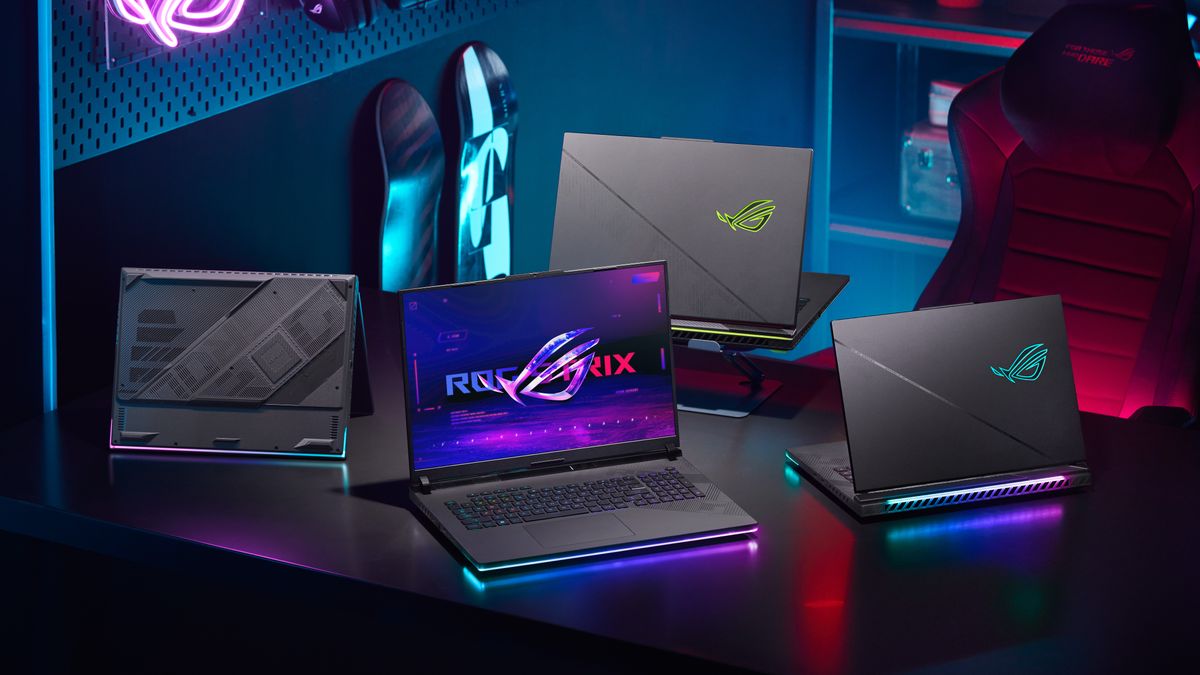
In theory, then, the Asus ROG Strix G835 will have that RTX 5090 on board (with 16GB of VRAM) and an Intel Core Ultra 9 275HX (Arrow Lake) processor, backed with 64GB of DDR5 system memory. A power-packed set of components indeed, and the G835 will run with an 18-inch display sporting a 2048 x 1536 resolution, based on its leaked listing.

We can also see the Asus ROG Zephyrus GU605 which will apparently offer options on three Nvidia GPUs: the RTX 5090, 5080 and 5070 Ti. That notebook is set to use an Intel Core Ultra 9 285H CPU, again with 64GB of DDR5 system RAM, and a 16-inch screen.

Two Asus ROG Strix Scar 18 laptops, and a ROG Strix G16 model, have also had their specs spilled online, so three in total, running with RTX 5090, 5080 and 5070 Ti GPUs respectively.

Nvidia geforce 4070

(Image credit: Nvidia)

Analysis: A raft of Blackwell launches at CES 2025?

This appears to back up some previous rumors which have suggested we will see RTX 5000 laptop GPUs at CES 2025, alongside Blackwell desktop graphics cards.

{ window.reliablePageLoad.then(() => { var componentContainer = document.querySelector(“#slice-container-newsletterForm-articleInbodyContent-7h9xcZpPkMdEvfuADNow9k”); if (componentContainer) { var data = {“layout”:”inbodyContent”,”header”:”Get daily insight, inspiration and deals in your inbox”,”tagline”:”Sign up for breaking news, reviews, opinion, top tech deals, and more.”,”formFooterText”:”By submitting your information you agree to the Terms & Conditions and Privacy Policy and are aged 16 or over.”,”successMessage”:{“body”:”Thank you for signing up. You will receive a confirmation email shortly.”},”failureMessage”:”There was a problem. Please refresh the page and try again.”,”method”:”POST”,”inputs”:[{“type”:”hidden”,”name”:”NAME”},{“type”:”email”,”name”:”MAIL”,”placeholder”:”Your Email Address”,”required”:true},{“type”:”hidden”,”name”:”NEWSLETTER_CODE”,”value”:”XTR-D”},{“type”:”hidden”,”name”:”LANG”,”value”:”EN”},{“type”:”hidden”,”name”:”SOURCE”,”value”:”60″},{“type”:”hidden”,”name”:”COUNTRY”},{“type”:”checkbox”,”name”:”CONTACT_OTHER_BRANDS”,”label”:{“text”:”Contact me with news and offers from other Future brands”}},{“type”:”checkbox”,”name”:”CONTACT_PARTNERS”,”label”:{“text”:”Receive email from us on behalf of our trusted partners or sponsors”}},{“type”:”submit”,”value”:”Sign me up”,”required”:true}],”endpoint”:”https://newsletter-subscribe.futureplc.com/v2/submission/submit”,”analytics”:[{“analyticsType”:”widgetViewed”}],”ariaLabels”:{}}; var triggerHydrate = function() { window.sliceComponents.newsletterForm.hydrate(data, componentContainer); } if (window.lazyObserveElement) { window.lazyObserveElement(componentContainer, triggerHydrate); } else { triggerHydrate(); } } }).catch(err => console.error(‘%c FTE ‘,’background: #9306F9; color: #ffffff’,’Hydration Script has failed for newsletterForm-articleInbodyContent-7h9xcZpPkMdEvfuADNow9k Slice’, err)); }).catch(err => console.error(‘%c FTE ‘,’background: #9306F9; color: #ffffff’,’Externals script failed to load’, err)); ]]>

Sign up for breaking news, reviews, opinion, top tech deals, and more.

Based on this spillage, we’re going to see three mobile models on offer, in the form of the RTX 5090, 5080 and 5070 Ti, although there could be lower-tier models as well.

When Nvidia launched its current-gen of mobile GPUs back at CES 2023, we got a full house of the entire range presented to us: the RTX 4050, 4060, 4070, 4080 and 4090 GPUs. Note that they were all vanilla versions, so it’s interesting to see a purported mobile RTX 5070 Ti creeping in this time around.

On the desktop front, the grapevine reckons that of Nvidia’s next-gen offerings, we’ll see RTX 5090 and 5080 models at CES in January, and possibly one or other of the RTX 5070 or RTX 5070 Ti – maybe even both of those.

So, is the mobile RTX 5070 Ti popping up a sign that we’ll get this on the desktop, too? It could be, but whatever the case, we’re seemingly going to see a fair few Blackwell GeForce GPUs being revealed for both desktop PCs and gaming laptops at CES 2025. We might also see Nvidia DLSS 4, too.

You might also like

Source

Posted on

Nvidia in 2024: year in review

Nvidia experienced a memorable 2024 in some ways, and certainly CEO Jensen Huang won’t forget the year in which his company finally outdid Apple as the most valuable firm in the world.

We also received a clutch of powerful new GeForce GPUs from Team Green, along with a huge move on the software front too, and, inevitably, AI continued to be a massive driving force for Nvidia.

Nvidia’s value exceeded $1 trillion in 2023, but it blew through the roof this year, with its stock heading steeply upwards throughout 2024 – driven, of course, in large part by its AI GPUs.

Indeed, Nvidia became the world’s most valuable company in June 2024, beating out the likes of Apple and Microsoft, exceeding a market cap of $3 trillion. Team Green slipped back a bit as the year went on, but then retook pole position from Apple in November 2024, approaching a $3.5 trillion valuation. Nvidia also barged Intel off the Dow Jones Industrial Average index.

Throughout the year, Jensen was gleefully stoking the AI hype furnace, unsurprisingly. A lot of leather jackets can be bought for the kind of cash Nvidia is now worth, and the swiftness with which this financial rise has occurred has been nothing less than breathtaking.

Is Nvidia going to be the first company to hit the $4 trillion mark? It’s a fair bet if the momentum behind AI keeps on chugging the way it has been – and maybe Nvidia is even set to become a household name eventually (something it most definitely isn’t yet, despite all this success).

An Nvidia GeForce RTX 4080 Super on a desk

(Image credit: Future / John Loeffler)

The year of the Super graphics cards

Nvidia continued to dominate the desktop GPU market in 2024, to no one’s surprise, to the point of a near-monopoly in fact.

{ window.reliablePageLoad.then(() => { var componentContainer = document.querySelector(“#slice-container-newsletterForm-articleInbodyContent-jUamdD2HT8rV4VaGqCApam”); if (componentContainer) { var data = {“layout”:”inbodyContent”,”header”:”Get daily insight, inspiration and deals in your inbox”,”tagline”:”Sign up for breaking news, reviews, opinion, top tech deals, and more.”,”formFooterText”:”By submitting your information you agree to the Terms & Conditions and Privacy Policy and are aged 16 or over.”,”successMessage”:{“body”:”Thank you for signing up. You will receive a confirmation email shortly.”},”failureMessage”:”There was a problem. Please refresh the page and try again.”,”method”:”POST”,”inputs”:[{“type”:”hidden”,”name”:”NAME”},{“type”:”email”,”name”:”MAIL”,”placeholder”:”Your Email Address”,”required”:true},{“type”:”hidden”,”name”:”NEWSLETTER_CODE”,”value”:”XTR-D”},{“type”:”hidden”,”name”:”LANG”,”value”:”EN”},{“type”:”hidden”,”name”:”SOURCE”,”value”:”60″},{“type”:”hidden”,”name”:”COUNTRY”},{“type”:”checkbox”,”name”:”CONTACT_OTHER_BRANDS”,”label”:{“text”:”Contact me with news and offers from other Future brands”}},{“type”:”checkbox”,”name”:”CONTACT_PARTNERS”,”label”:{“text”:”Receive email from us on behalf of our trusted partners or sponsors”}},{“type”:”submit”,”value”:”Sign me up”,”required”:true}],”endpoint”:”https://newsletter-subscribe.futureplc.com/v2/submission/submit”,”analytics”:[{“analyticsType”:”widgetViewed”}],”ariaLabels”:{}}; var triggerHydrate = function() { window.sliceComponents.newsletterForm.hydrate(data, componentContainer); } if (window.lazyObserveElement) { window.lazyObserveElement(componentContainer, triggerHydrate); } else { triggerHydrate(); } } }).catch(err => console.error(‘%c FTE ‘,’background: #9306F9; color: #ffffff’,’Hydration Script has failed for newsletterForm-articleInbodyContent-jUamdD2HT8rV4VaGqCApam Slice’, err)); }).catch(err => console.error(‘%c FTE ‘,’background: #9306F9; color: #ffffff’,’Externals script failed to load’, err)); ]]>

Sign up for breaking news, reviews, opinion, top tech deals, and more.

Helping to maintain its momentum here was a trio of new graphics cards for the Lovelace range which Nvidia revealed as the year kicked off. These fresh additions to the best Nvidia GPUs out there were the GeForce RTX 4070 Super, RTX 4070 Ti Super, and RTX 4080 Super.(And yes, we still can’t get over the fact that Nvidia made a ‘Ti Super’ as a way to jam an extra model into a cluttered mid-to-upper-range space).

These Super GPUs replaced the existing models in all but the case of the RTX 4070, which was kept in production to run alongside the RTX 4070 Super, but at a cheaper price point (obviously).

Overall, the new graphics cards were welcome introductions and powerhouse offerings, but what wasn’t so welcome were the price tags attached to them. In true Nvidia style, these mid-to-higher leaning GPUs were all expensive. Notably, the RTX 4070 Ti Super fell a little short in our review, being rather overshadowed by the RTX 4080 Super, which we declared was the enthusiast GPU we’ve all been waiting for.

Our review of the RTX 4070 Super also represented a big thumbs-up for the GPU, and it proved to be our favorite overall of the new graphics cards (even if its 12GB of VRAM limits the card’s 4K chops – the 4080 Super become the new champ here, of course).

On the issue of priciness, it’s true that some of these new Super variants got price cuts to a limited extent as the year rolled on, but overall, AMD’s mid-range remained the much better value picks compared to Team Green.

Otherwise, we didn’t see much else from Nvidia in the way of GPU releases, save for a fresh spin on the RTX 4070 with slightly slower video RAM. It was effectively the same as the original RTX 4070, though, and a move made by Team Green to ensure supply remained strong, we were told.

An EVGA RTX 3060 on a table in front of its retail packaging

(Image credit: Future/Jackie Thomas)

There was nothing to be seen elsewhere, and once again, tumbleweeds at the lower-end of the market. The old RTX 3060 remained a strong seller as a result – the 12GB flavor, with that VRAM loadout proving a definite carrot for some gamers – despite chatter from the grapevine around the middle of the year that Nvidia might be discontinuing this model.

Indeed, the RTX 3060 is still the most popular GPU out there going by the Steam hardware survey, with the RTX 4060 making good headway too – that graphics card remains our top pick for 1080p gaming (and it’s solid for 1440p as well).

Despite plenty of rumors suggesting a 2024 launch earlier in the year, we didn’t see the RTX 5000 series turn up this year, with the expectation now being that Nvidia will launch new RTX 5090 and 5080 (and possibly RTX 5070) GPUs at the very start of 2025 at CES.

NVIDIA App | Essential Companion for PC Gamers & Creators – YouTube NVIDIA App | Essential Companion for PC Gamers & Creators - YouTube Watch On

There was some super new software, too

Broadly speaking, Nvidia GPU owners have had a somewhat rocky relationship with GeForce Experience. A good chunk of gamers with an Nvidia graphics card preferred to just install the graphics driver, and not bother with the companion software, GeForce Experience, at all – and Team Green took the hint. In 2024, Nvidia canned GeForce Experience and made an all-new official app.

The Nvidia App (oh, the hours upon hours that must’ve been spent in brainstorming marketing meetings coming up with that name) arrived in beta in February 2024. It was billed as an all-in-one replacement for GeForce Experience and the Nvidia Control Panel, plus the RTX Experience. All these separate pieces were instead housed under one convenient umbrella (where driver installs are handled, too).

The Nvidia App emerged as a full release in November, after being worked on extensively during the year. Nvidia even actively solicited feedback from gamers on which legacy features should be preserved, and more besides.

That feedback was listened to in terms of implementing elements such as in-game frame rate and latency info (plus much more) in the revamped overlay for the Nvidia App, and it offered some smart new features such as easy GPU overclocking. The new app was generally well-received, appears to run smoothly and responsively in the main, and fortunately, there are no onerous account or login requirements here either – hopefully that’ll remain the case going forward.

There was one notable niggle that cropped up in mid-December, though, when reports emerged that an option in the Nvidia App could cause considerable slowdown of gaming frame rates. Nvidia is currently investigating that problem (at the time of writing), and there’s a fix (of sorts) for the apparent bug.

Also on the software side of the equation, DLSS continued to dominate the frame rate boosting scene, and remains a powerful weapon in Nvidia’s armory of GPU tricks.

Nvidia CEO Jensen Huang at Nvidia's pre-Computex 2024 keynote showing off Nvidia Rubin

(Image credit: Nvidia)

AI FTW still

Naturally AI remained an area where Nvidia realized some big successes this year, and as we already mentioned, it helped to drive the company’s market value skywards (or moon-wards, perhaps we should say).

Team Green was predictably keen to push forward with new Rubin AI chips, the successor to Blackwell for AI workloads, being announced just a few months after the latter.

It’s possible that Rubin, which was the focus of Computex 2024, could power the GeForce graphics cards that follow the next generation – mirroring the way Blackwell has been deployed for AI GPUs and RTX 5000 desktop boards – so this could have been our first (sort of) sighting of RTX 6000. (If RTX 6000 ever happens, and here at TechRadar, we’ve made arguments as to why there are valid reasons to doubt this – namely the juggernaut profits in the AI world, of which there are a bunch of major concerns around, it has to be said).

GeForce Now 4K streaming on laptop

(Image credit: Nvidia)

GeForce Now continues to evolve – with a catch

Last year was an important one for Nvidia’s streaming service for PC gamers, with the new ‘Ultimate’ subscription coming in (offering up to 240 frames per second, and a less laggy experience – for those with an internet connection up to the task, that is).

Early in 2024, Nvidia introduced a Day Pass for GeForce Now – allowing you to try out the full service for a day, to see how it works for you – and then towards the tail end of the year, a big upgrade was announced for the middle tier ‘Priority’ membership. This was renamed ‘Performance’ and Nvidia boosted its visual quality from 1080p to 1440p resolution (with ultrawide monitor support on top), all with no additional cost.

At least there was no financial cost, but there was a catch in the form of a monthly time limit imposed on these subscribers (and Ultimate tier members too). On the face of it, capping play time was a move to help Nvidia shorten queues and keep the streaming quality running smoothly, but it went down badly with some subscribers, who felt the 100-hour limit was too stingy.

Note that the new time limit doesn’t come into force until 2025 starts, and won’t apply to existing subscribers until 2026. Still, this led to plenty of threats of quitting GeForce Now on online forums – we’ll just have to see if that turns out to be mere noise, or whether a bunch of subscribers are indeed about to exit stage left.

Nvidia CEO Jensen Huang

(Image credit: Nvidia)

Concluding thoughts

In 2024, Nvidia brought some high-quality graphics cards into its Lovelace range, although the more affordable end of the GPU market was totally neglected (again). The company continues to dominate the desktop graphics card arena, and that won’t likely change in the near future – especially not at the higher-end where Nvidia won’t even be challenged going forward, if the rumors are right.

The Nvidia App was a high point for Team Green – and it’s great to see gamer feedback helped to shape the software – with DLSS also helping to build on, and reinforce, its consumer GPU success.

AI was the massive money-spinner, though, and the driving force behind Nvidia exploding to become the world’s most valuable company.

As we touched on above, the worry for PC gamers might be that the blistering success of AI GPUs – if it continues, and it doesn’t seem a good idea to bet against that – could mean Nvidia’s gaming graphics cards are eventually side-lined, or perhaps dispensed with entirely. With AMD also looking to cash in on AI, and Intel’s GPU prospects seeming shakier these days, all this does prompt some concern around the future of desktop graphics cards in the consumer marketplace.

You might also like

Source

Posted on

M4 MacBook Air to launch before iPhone SE 4 and iPad 11

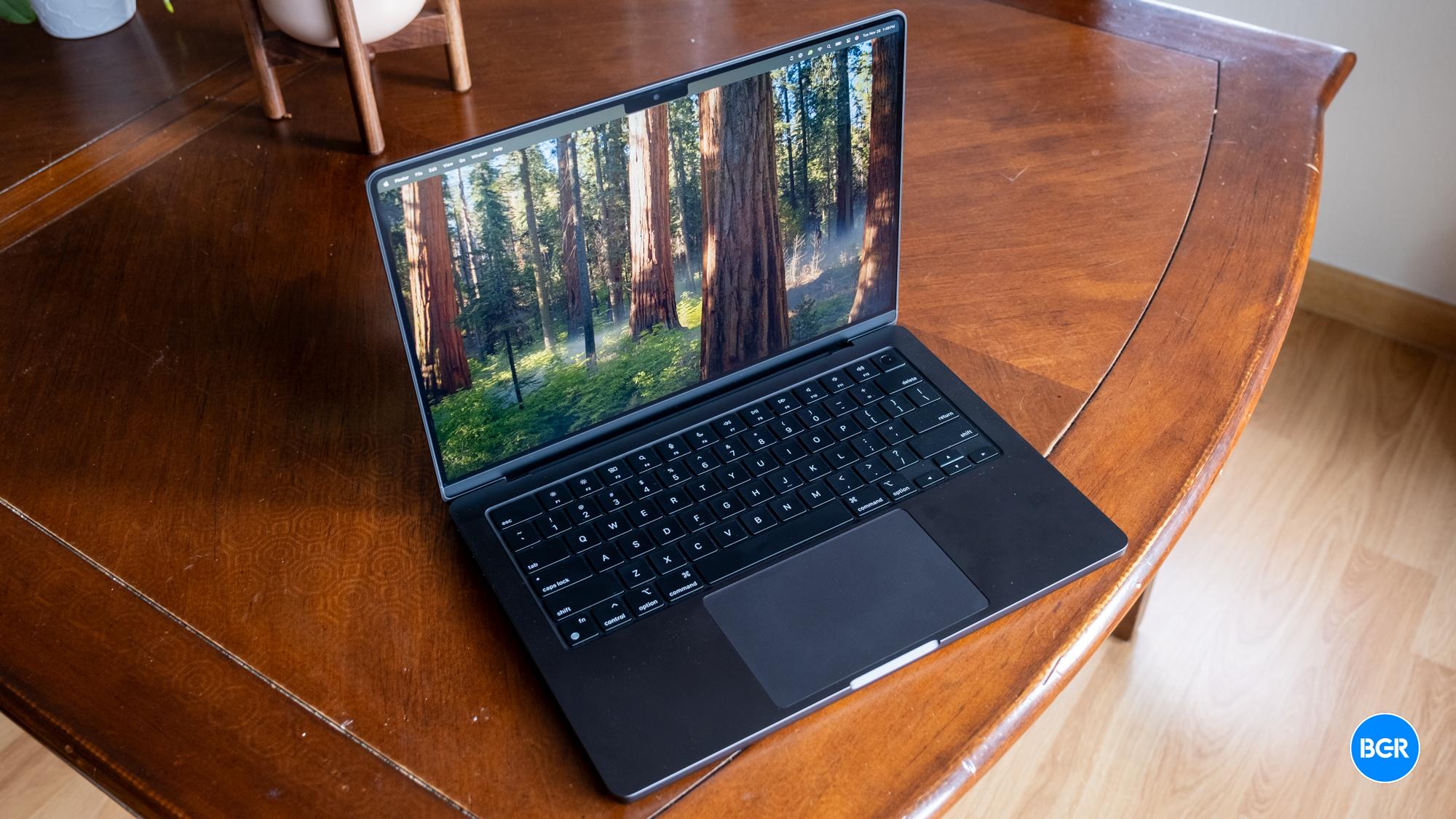
Apple upgraded several Macs to the M4 chip a few weeks ago, including the MacBook Pro, iMac, and Mac mini. The former is easily the most exciting of the three, as Apple gave fans a much-needed upgrade. The M4 MacBook Pro comes with 16GB of RAM instead of 8GB, effectively reducing the laptop’s price for those who would spend extra money for more memory.

It’s all in the name of Apple Intelligence, a suite of genAI features still in its early days. Apple is ensuring that all its devices will have the resources to handle AI and one’s non-AI computing needs.

I said at the time that Apple had no choice but to give the M4 MacBook Air the same 16GB memory upgrade. Apple practically confirmed this during the M4 Mac launch week when it said that existing M2 and M3 MacBook Airs will also come with 16GB of RAM as the new default.

Apple didn’t reveal the M4 MacBook Air release date at the time, but leaks said the 13-inch and 15-inch laptops would drop at some point in the first quarter of 2025. A new update from an insider teases an even faster launch than expected, as Apple might not want to wait until the iPhone SE 4 and iPad 11 are also ready to launch.

Tech. Entertainment. Science. Your inbox.

Sign up for the most interesting tech & entertainment news out there.

By signing up, I agree to the Terms of Use and have reviewed the Privacy Notice.

After the iPhone 16 launch event, we thought we’d get a Mac-centric keynote for the M4 Macs. Apple chose to announce the laptops via press releases, though it also posted extended presentations on YouTube for each of the three Macs that got the M4 treatment.

Before Apple’s announcements in the first quarter of 2025, reports said that the iPhone SE 4 would drop in March. That’s also going to be a rather exciting iPhone for certain buyers.

Considering the mid-ranged iPhone’s rollout expectations and what Apple did with the M4 Macs, it’s easy to assume the company would repeat the play: Pick a week in March and announce a new product each day. We’d get the M4 MacBook Air, the iPhone SE 4, and the iPad 11, in whatever order Apple chooses to do it.

However, Mark Gurman said on X that the M4 MacBook Air launch is coming sooner than expected. He didn’t divulge an actual release date for the M4 MacBook Air models, but he said that the laptops will precede the iPhone SE 4 and iPad 11:

As I wrote in October, new entry level iPads (J481 and J482) are coming in the spring. iPhone SE, new iPad Air are on the same general timeline. The M4 MacBook Air will be earlier.

The Bloomberg reporter also penned a newsletter over the weekend, where he also addressed Apple’s tentative roadmap for the M4 Macs. He said the M4 MacBook Airs will arrive early next year, without mentioning the iPhone SE 4 and iPad 11:

But the real meat of the Mac lineup will get refreshed in the first three quarters of 2025. Things will kick off pretty early next year with M4 versions of the 13-inch and 15-inch MacBook Air (these models are already deep into the manufacturing phase). As the year progresses, there will be a new Mac Studio with a high-end M4 chip. The M4 transition will get completed later in the year with a version of the Mac Pro. This will mark the first time since Apple began using in-house chips that its entire computer portfolio moved to a new M-series generation.

The tweet above gives us a better estimate of when to expect the new MacBook Airs. That said, we have no release dates, so it’s unclear how soon the M4 MacBook Airs will arrive.

Finally, I’ll remind you that Apple has confirmed the M4 MacBook Air in a recent software update. Given Gurman’s claims, Apple’s accidental reveal makes sense if the launch is imminent.

Source

Posted on

RTX 5060 rumor suggests it’ll have 8GB VRAM and I’m starting to wonder if Nvidia has lost the plot with next-gen GPUs

Nvidia’s next-gen desktop graphics cards have been the subject of a flood of leaks lately, but this time we’re hearing about the RTX 5060 models that’ll sit at the bottom of the Blackwell GeForce stack (assuming there’s no RTX 5050, as there wasn’t a desktop 4050 of course).

Wccftech has word from the usual anonymous sources – be cautious around this rumor, naturally, as with anything from the grapevine – providing some specs of the RTX 5060 Ti and RTX 5060.

The most interesting contention is that regarding the on-board video memory, Nvidia’s RTX 5060 Ti is going to run with 16GB of VRAM, the same as the higher-end flavor of the 4060 Ti – but the bad news is the RTX 5060 is also going to stick on 8GB.

Apparently both graphics cards will use the same board (PG152) and the GB206 Blackwell chip (as previously rumored), with a 128-bit memory bus. With GDDR7 video RAM running at 28Gbps, both of these graphics cards are looking at a memory bandwidth of 448GB/s in theory.

We’re told to expect these GPUs to launch in late February to March of 2025, which backs up another recent rumor on the release timeframe.

An Nvidia GeForce RTX 4060 on a table with its retail packaging

(Image credit: Future / John Loeffler)

Analysis: Video RAM confusion

The idea that the RTX 5060 could stay on an 8GB loadout for VRAM has not gone down well with the followers of GPU rumors, as you might imagine. The RTX 4060 having this memory configuration was controversial, so for a new generation of Nvidia graphics cards to stick at this level will be fuel to the flames (quite literally – Team Green better don its finest fire-retardant suit). If this turns out to be true, of course.

Capacity isn’t the only element of the memory equation here, though, and that GDDR7 VRAM is a big upgrade in itself. That rumored memory bandwidth of 448GB/s for the RTX 5060 and its Ti sibling will be a considerable step up from the RTX 4060 flavors. In fact, it’s 55% faster and 65% faster than the RTX 4060 and 4060 Ti respectively, as Wccftech points out.

{ window.reliablePageLoad.then(() => { var componentContainer = document.querySelector(“#slice-container-newsletterForm-articleInbodyContent-wa2wkuoWTG8G2qkcAgFVwK”); if (componentContainer) { var data = {“layout”:”inbodyContent”,”header”:”Get daily insight, inspiration and deals in your inbox”,”tagline”:”Sign up for breaking news, reviews, opinion, top tech deals, and more.”,”formFooterText”:”By submitting your information you agree to the Terms & Conditions and Privacy Policy and are aged 16 or over.”,”successMessage”:{“body”:”Thank you for signing up. You will receive a confirmation email shortly.”},”failureMessage”:”There was a problem. Please refresh the page and try again.”,”method”:”POST”,”inputs”:[{“type”:”hidden”,”name”:”NAME”},{“type”:”email”,”name”:”MAIL”,”placeholder”:”Your Email Address”,”required”:true},{“type”:”hidden”,”name”:”NEWSLETTER_CODE”,”value”:”XTR-D”},{“type”:”hidden”,”name”:”LANG”,”value”:”EN”},{“type”:”hidden”,”name”:”SOURCE”,”value”:”60″},{“type”:”hidden”,”name”:”COUNTRY”},{“type”:”checkbox”,”name”:”CONTACT_OTHER_BRANDS”,”label”:{“text”:”Contact me with news and offers from other Future brands”}},{“type”:”checkbox”,”name”:”CONTACT_PARTNERS”,”label”:{“text”:”Receive email from us on behalf of our trusted partners or sponsors”}},{“type”:”submit”,”value”:”Sign me up”,”required”:true}],”endpoint”:”https://newsletter-subscribe.futureplc.com/v2/submission/submit”,”analytics”:[{“analyticsType”:”widgetViewed”}],”ariaLabels”:{}}; var triggerHydrate = function() { window.sliceComponents.newsletterForm.hydrate(data, componentContainer); } if (window.lazyObserveElement) { window.lazyObserveElement(componentContainer, triggerHydrate); } else { triggerHydrate(); } } }).catch(err => console.error(‘%c FTE ‘,’background: #9306F9; color: #ffffff’,’Hydration Script has failed for newsletterForm-articleInbodyContent-wa2wkuoWTG8G2qkcAgFVwK Slice’, err)); }).catch(err => console.error(‘%c FTE ‘,’background: #9306F9; color: #ffffff’,’Externals script failed to load’, err)); ]]>

Sign up for breaking news, reviews, opinion, top tech deals, and more.

The worry is that 8GB could really hamstring the RTX 5060 for future-proofing, and consign the card more to 1080p duties, as going forward, 1440p might prove to be more of a struggle for a thin allocation of video memory such as this – even now that’s true to an extent.

More positively, the RTX 5060 Ti could have a healthy 16GB of VRAM, although that doesn’t make a whole lot of sense when you consider the RTX 5070 has been rumored to have 12GB. Now, Nvidia has been known to equip a lower-tier GPU with more VRAM than a higher-up model in the past, but that can sometimes be a case of a beefier model launching down the line – and it doesn’t feel likely Nvidia would push out an RTX 5070 12GB and very quickly follow that with an RTX 5060 Ti 16GB. Particularly when the RTX 5080 theoretically runs with 16GB, too.

In short, we’d regard this leaked info with more skepticism than normal – although it could also be read as a sign that the RTX 5070 12GB info is off the mark (here’s hoping on that score).

Meanwhile, Intel has just brought out its affordable new Battlemage GPU, the B580, and that has 12GB of VRAM, a relatively robust helping for the price bracket this graphics card sits in. Can Nvidia fly in the face of its rivals’ video memory strategies? Well, of course it can, but it remains to be seen if Team Green actually will.

You might also like

Source
Posted on

I’ve never taken Intel’s GPU competition seriously, but the Arc B580 has left me no choice

  • Intel’s Battlemage Arc B580 GPU just scored higher than the RTX 4060 in Vulkan testing
  • AMD’s RX 7600 loses to both Nvidia and Intel GPUs in Vulkan tests
  • The new GPU will launch on December 13, for $249 / £249 / around AU$439

It’s easy to place AMD and Nvidia as leaders within the GPU market, with the latter’s RTX 4000 series currently dominating over the RX 7000 series – but Intel is about to shake things up, with the Arc B580 defeating both the RTX 4060 and RX 7600 GPUs in Vulkan benchmark tests.

According to Tom’s Hardware (based on public benchmark tests), the Intel Arc B580 loses out to Nvidia’s RTX 4060 in OpenCL API (which is irrelevant for gaming) but successfully defeats Team Green’s GPU with a 6% lead in Vulkan (one of the APIs used for most games).

The Battlemage GPU is priced at $249 / £249 / around AU$439 which is cheaper than the RTX 4060 at MSRP ($299 / £289 / AU$545), and it’s purported to be the faster GPU (especially equipped with 12GB of VRAM). If there’s anything to take from this, it’s that Intel is suddenly in pole position to reignite the budget GPU market and take the lead – though doing so will depend on AMD and Nvidia’s CES 2025 reveals.

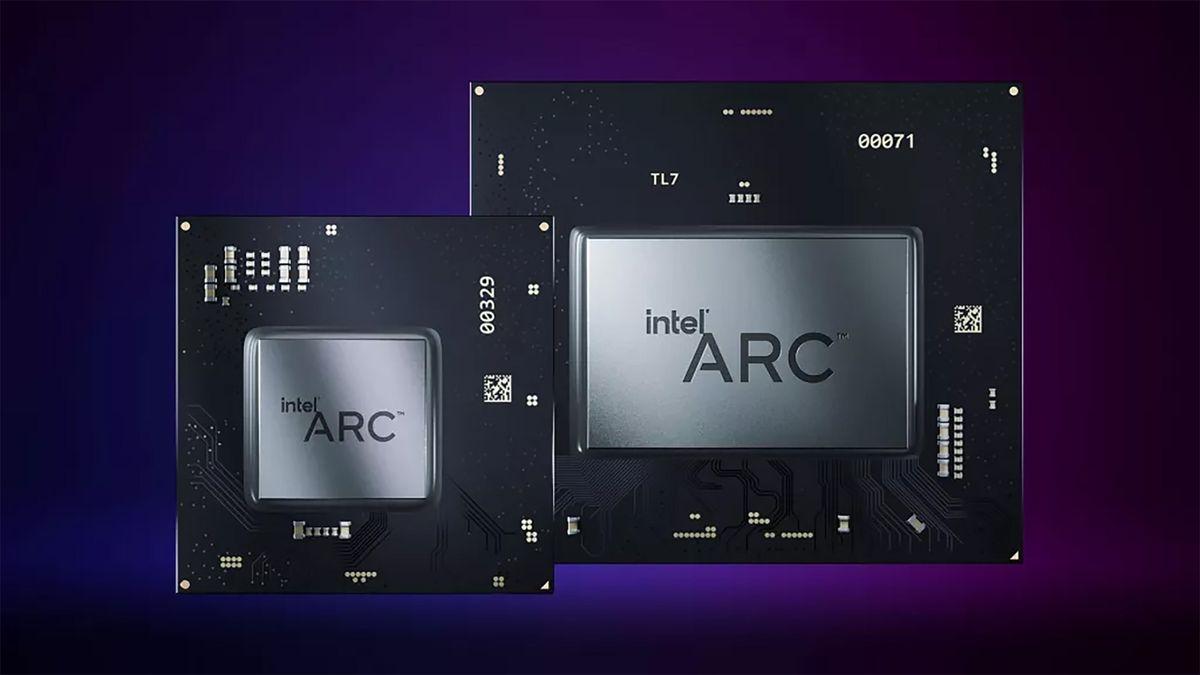
The Intel Arc logo against a blue and purple backdrop

(Image credit: Intel)

Say goodbye to 8GB GPUs with Intel…

Team Red has already made it clear that its focus has shifted from high-end GPUs to mid-range options, with a strong emphasis on AI upscaling going forward with FSR 4 (much like Nvidia’s continuing focus on AI for DLSS 3’s successor). With this in mind, I’m optimistic about what both have to offer at CES in January when it comes to budget options.

The Intel Arc B580 will feature 12GB of VRAM, while the cheaper B570 will utilize 10GB of VRAM – 8GB of VRAM is nowhere near enough to tackle games today, and it’s great to see that Intel abandoning this long-standing staple of affordable GPUs. More and more triple-A titles are demanding more VRAM for consistent performance and after Apple’s move away from 8GB of unified memory (shared RAM between the CPU and GPU) for Macs, I’m expecting Nvidia and AMD to follow suit.

Spotted by VideoCardz, XeSS Frame Generation has been leaked and is now available for Intel GPU owners to use via Nexus Mods – AI upscaling has been the talk of the town for PC gaming for improved frame rates and image quality, and now that Team Blue has joined the party, there is room for competition in the budget GPUs arena.

You might also like…

{ window.reliablePageLoad.then(() => { var componentContainer = document.querySelector(“#slice-container-newsletterForm-articleInbodyContent-k9f3g8H8RCwAPYgRmn35nZ”); if (componentContainer) { var data = {“layout”:”inbodyContent”,”header”:”Get daily insight, inspiration and deals in your inbox”,”tagline”:”Sign up for breaking news, reviews, opinion, top tech deals, and more.”,”formFooterText”:”By submitting your information you agree to the Terms & Conditions and Privacy Policy and are aged 16 or over.”,”successMessage”:{“body”:”Thank you for signing up. You will receive a confirmation email shortly.”},”failureMessage”:”There was a problem. Please refresh the page and try again.”,”method”:”POST”,”inputs”:[{“type”:”hidden”,”name”:”NAME”},{“type”:”email”,”name”:”MAIL”,”placeholder”:”Your Email Address”,”required”:true},{“type”:”hidden”,”name”:”NEWSLETTER_CODE”,”value”:”XTR-D”},{“type”:”hidden”,”name”:”LANG”,”value”:”EN”},{“type”:”hidden”,”name”:”SOURCE”,”value”:”60″},{“type”:”hidden”,”name”:”COUNTRY”},{“type”:”checkbox”,”name”:”CONTACT_OTHER_BRANDS”,”label”:{“text”:”Contact me with news and offers from other Future brands”}},{“type”:”checkbox”,”name”:”CONTACT_PARTNERS”,”label”:{“text”:”Receive email from us on behalf of our trusted partners or sponsors”}},{“type”:”submit”,”value”:”Sign me up”,”required”:true}],”endpoint”:”https://newsletter-subscribe.futureplc.com/v2/submission/submit”,”analytics”:[{“analyticsType”:”widgetViewed”}],”ariaLabels”:{}}; var triggerHydrate = function() { window.sliceComponents.newsletterForm.hydrate(data, componentContainer); } if (window.lazyObserveElement) { window.lazyObserveElement(componentContainer, triggerHydrate); } else { triggerHydrate(); } } }).catch(err => console.error(‘%c FTE ‘,’background: #9306F9; color: #ffffff’,’Hydration Script has failed for newsletterForm-articleInbodyContent-k9f3g8H8RCwAPYgRmn35nZ Slice’, err)); }).catch(err => console.error(‘%c FTE ‘,’background: #9306F9; color: #ffffff’,’Externals script failed to load’, err)); ]]>

Sign up for breaking news, reviews, opinion, top tech deals, and more.

Source