Posted on

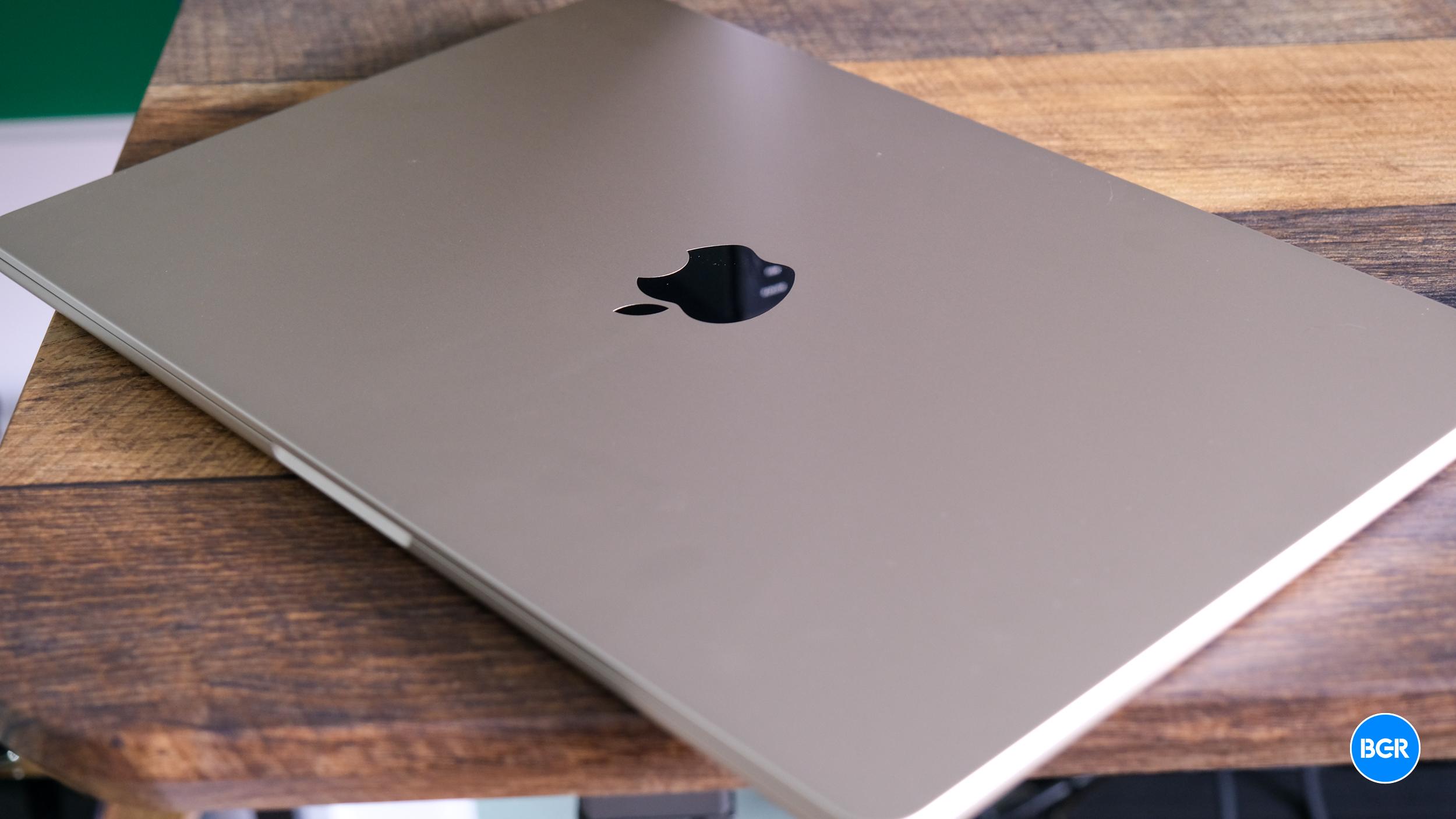
We might finally know when the M4 MacBook Air will launch

The M4 MacBook Air was expected to be Apple’s first launch of 2025. However, the company seems to have other plans, as the new iPhone SE will likely be the first release from Cupertino this year.

Still, Bloomberg‘s Mark Gurman has reported that the M4 MacBook Air could launch anytime. After saying this machine could have been available as soon as the last week of January and then correcting his report to “within the next few weeks,” the journalist wrote in his Power On newsletter that this laptop will be available by March “at the latest.”

While “within the next few weeks” is still accurate, as February won’t last much longer, Apple might be holding up this release to coincide with other products. Previously, a top Mac executive said the company would release new computers “as soon as they were ready.”

Even though Gurman has been inaccurate about the M4 MacBook launch date, we’ve seen evidence that this might happen soon. For example, inventory for the M3 MacBook Air has been dwindling. In addition, the company revealed on its macOS beta code that these laptops exist. This is why we believe the company might want to wait at least a year to release a new iteration of its MacBook Air models.

Tech. Entertainment. Science. Your inbox.

Sign up for the most interesting tech & entertainment news out there.

By signing up, I agree to the Terms of Use and have reviewed the Privacy Notice.

That said, customers won’t have to wait that long. After all, WWDC 2025 is in June, and Apple might have other Macs to unveil, such as the long-rumored Mac Studio with M4 Ultra processor. A redesigned Mac Pro can be teased at the conference, as it happened previously.

Despite the new chip, which is a great improvement over the M3 processor, the new MacBook Air could have the new 12MP Ultrawide camera, which has been available on the latest MacBook Pro and iMac models.

We don’t expect this laptop to have other design tweaks or improved specs. Still, the M4 MacBook Air will likely have the best battery of any Apple laptop. Currently, the most power-efficient MacBook is the base-model MacBook Pro.

BGR will let you know once Apple releases its new Macs.

Source

Posted on

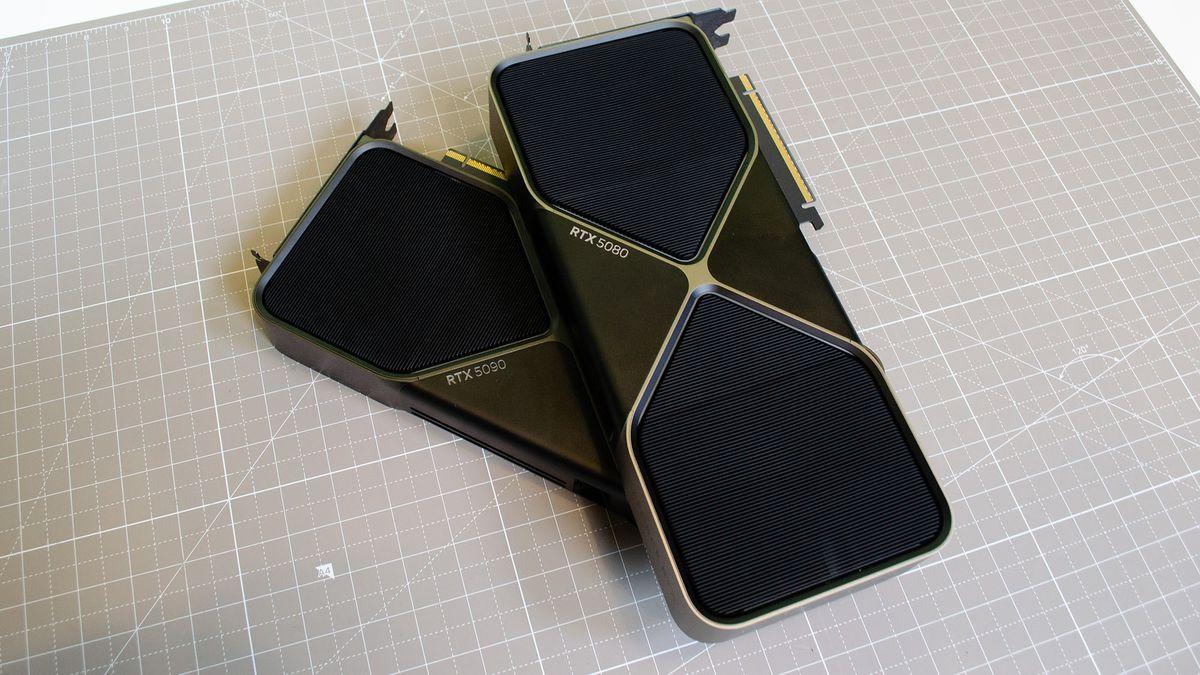
Nvidia RTX 5090 GPU stock rumored to be ‘basically non-existent’ for launch day, and RTX 5080 doesn’t sound like it’ll be much better

  • More last-minute rumors are swirling about low stock for Nvidia’s RTX 5090 and 5080
  • Launch day stock for the RTX 5090 is claimed to be very thin on the ground
  • The RTX 5080 situation sounds better, but stock looks to be only about half of that seen with the RTX 4080 launch, which still isn’t great

Want more bad news about the stock of Nvidia’s RTX 5090 and 5080 GPUs? No, I bet you don’t, but unfortunately – and predictably – there are several final helpings of inventory-related woe as we head into the day when these graphics cards actually go on sale.

First up, we have Moore’s Law is Dead (MLID), who in his latest YouTube video addresses RTX 5090 and 5080 stock (among other topics) once again.

According to the YouTuber this is a ‘lack of a launch’ from Nvidia, in fact, and what MLID presents is a very similar collection of feedback (sprinkle the usual seasoning) from inside sources to that aired in another recent video.

Those sources come from three major retailers (two in the US, all anonymous as ever) and all basically say that RTX 5090 graphics cards are pretty much non-existent in terms of stock. One retailer actually had zero RTX 5090s in stock as of last night.

Now, as MLID points out, it’s possible some RTX 5090 graphics cards could show up today, at the last minute – this has happened before with Nvidia (and was the case with Intel Battlemage apparently, with launch stock turning up on sales day) – but let’s face it, this is unlikely. And presumably it wouldn’t be many units, even if it did happen like this.

The picture with the RTX 5080 GPU sounds a little healthier, but sadly with the emphasis on ‘little’. One of those big US retailers claims to have around 60 units of the 5080, which doesn’t seem so bad – though that compares to about 100 boards that were in stock for the RTX 4080 launch.

Another source echoes that rough estimation of half the RTX 5080 stock compared to the RTX 4080.

{ window.reliablePageLoad.then(() => { var componentContainer = document.querySelector(“#slice-container-newsletterForm-articleInbodyContent-uB5AMAPwMu3xb7pPSHNiHN”); if (componentContainer) { var data = {“layout”:”inbodyContent”,”header”:”Get daily insight, inspiration and deals in your inbox”,”tagline”:”Sign up for breaking news, reviews, opinion, top tech deals, and more.”,”formFooterText”:”By submitting your information you agree to the Terms & Conditions and Privacy Policy and are aged 16 or over.”,”successMessage”:{“body”:”Thank you for signing up. You will receive a confirmation email shortly.”},”failureMessage”:”There was a problem. Please refresh the page and try again.”,”method”:”POST”,”inputs”:[{“type”:”hidden”,”name”:”NAME”},{“type”:”email”,”name”:”MAIL”,”placeholder”:”Your Email Address”,”required”:true},{“type”:”hidden”,”name”:”NEWSLETTER_CODE”,”value”:”XTR-D”},{“type”:”hidden”,”name”:”LANG”,”value”:”EN”},{“type”:”hidden”,”name”:”SOURCE”,”value”:”60″},{“type”:”hidden”,”name”:”COUNTRY”},{“type”:”checkbox”,”name”:”CONTACT_OTHER_BRANDS”,”label”:{“text”:”Contact me with news and offers from other Future brands”}},{“type”:”checkbox”,”name”:”CONTACT_PARTNERS”,”label”:{“text”:”Receive email from us on behalf of our trusted partners or sponsors”}},{“type”:”submit”,”value”:”Sign me up”,”required”:true}],”endpoint”:”https://newsletter-subscribe.futureplc.com/v2/submission/submit”,”analytics”:[{“analyticsType”:”widgetViewed”}],”ariaLabels”:{}}; var triggerHydrate = function() { window.sliceComponents.newsletterForm.hydrate(data, componentContainer); } if (window.lazyObserveElement) { window.lazyObserveElement(componentContainer, triggerHydrate); } else { triggerHydrate(); } } }).catch(err => console.error(‘%c FTE ‘,’background: #9306F9; color: #ffffff’,’Hydration Script has failed for newsletterForm-articleInbodyContent-uB5AMAPwMu3xb7pPSHNiHN Slice’, err)); }).catch(err => console.error(‘%c FTE ‘,’background: #9306F9; color: #ffffff’,’Externals script failed to load’, err)); ]]>

Sign up for breaking news, reviews, opinion, top tech deals, and more.

Broad comparisons are also drawn to Nvidia’s RTX 3000 launch, which was poor for quantities of stock due to the global chip shortage caused by the pandemic, of course.

So, it’s all pretty pessimistic stuff, and underlining this is a further tale of woe, a story picked up by Wccftech whereby a Japanese retailer is selling ‘lottery tickets’ for the chance to buy an RTX 5080 or 5090 on launch day.

Note that the prize is the opportunity to pay for an Nvidia GPU, not to win one for free. Those queued outside the store will be given a lottery ticket, and must hope they win in order to get to the till and buy an RTX 5090 or 5080.

Moore's Law is Dead YouTube video - slide on RTX 5000 stock rumors

(Image credit: Moore’s Law is Dead (YouTube))

Analysis: Severe skewing for supply and demand, with pricing as a further concern

With stories of folks already queuing up outside stores for their shot to buy an RTX 5090 at launch, or needing to enter a lottery to buy one as seen over in Japan, it seems like there’s an unsurprising demand among PC enthusiasts to own the best of the best GPUs (for outright performance, anyway).

Couple that with an apparently very low level of supply (certainly for the RTX 5090), and you have the perfect storm for a GPU demand/supply imbalance the likes of which hasn’t been seen since the pandemic and the RTX 3000 launch.

Obviously, we need to take all these rumors with some caution, as already noted, but there’s so much speculation along these lines that you have to pretty much accept there must be some truth to this. Further consider MSI admitting it won’t ship RTX 5090 models from its store until February 6 – you’ll only be able to pre-order later today, not purchase as such – and Nvidia itself conceding that “stock-outs may happen” in this initial launch period.

Another notable element from this MLID video includes, as you can see in the above screenshot, is one source talking about the pricing for RTX 5080 models being pitched mostly in the $1,100 to $1,300 range in the US (where the MSRP is $999). This backs up some pre-release pricing in early product listings that have already been aired suggesting that most RTX 5080 models won’t be at the MSRP, so you’re looking at paying a fair bit more than a grand (before stock shortages and scalpers worsen this situation, of course).

As for the RTX 5090, we’re told to expect pricing more in the range of $2,300 to $2,600 in the US, versus the $1,999 MSRP. So that looks even worse when premiums for fancy third-party boards are factored in.

On a final note, one of MLID’s sources makes a comment about not expecting a significant amount of RTX 5090 stock until March 2025. Now, that doesn’t apply to the RTX 5080, but it’s still a suggestion that supply will be slow to crank up after this initial launch period, and that makes me wonder whether this is something AMD caught wind of. Right around the time, or just before, Team Red announced that its RX 9070 models weren’t going on sale until March 2025 (later in Q1 than expected).

Maybe AMD got to thinking there’s no real need to rush RDNA 4, and that it can afford to take its time to fine-tune the GPUs (drivers and such) and better pitch pricing compared to the performance of Nvidia’s Blackwell graphics cards and their reception. Of course, RTX 5070 stock could be an entirely different matter when these models emerge in February, but there are already rumors that it won’t be great, and even that the vanilla RTX 5070 could be delayed until March (heap on the salt there, naturally).

If you are hoping to get one of Nvidia’s new Blackwell graphics cards when they launch later today, TechRadar has some resources to help. Check out our where to buy the RTX 5090 live blog, with recommendations on the best retailers to hit up, and we have a separate blog for the RTX 5080. By all accounts, you’ll need all the help you can get.

You might also like…

Source

Posted on

There won’t be an iPhone SE 4 because Apple isn’t calling it that

Tim Cook teased the “newest member of the family” last week on X, seemingly confirming what the leaks have been saying. The iPhone SE 4, Apple’s cheapest new iPhone, will be unveiled on February 14th. It should generate plenty of interest in the coming months.

Cook might not have named the product launching this week, but the iPhone SE 4 is the only Apple product that makes sense to get a mid-February launch. iPhone sales were down in the December quarter, and while Apple reported record revenue for the period, it couldn’t have liked the drop in iPhone sales.

The iPhone did the worst in China, one of Apple’s most important markets. A $500 iPhone SE 4 that looks like an iPhone 14 and behaves like the iPhone 16 and 16 Plus is a device many buyers should consider. Launching the handset as soon as possible makes the most sense.

Speaking of names, there might not be an iPhone SE 4 in Apple’s lineup come Wednesday. Technically, Apple would call it the iPhone SE (4th generation) if it were to use that name. But Apple is expected to coin a new marketing term for this special breed of iPhone rather than rely on a product name that might hurt the phone.

Tech. Entertainment. Science. Your inbox.

Sign up for the most interesting tech & entertainment news out there.

By signing up, I agree to the Terms of Use and have reviewed the Privacy Notice.

A few weeks ago, rumors said the iPhone SE 4 would be known as the iPhone 16E. At the time, I said the name fits much better for a phone that will essentially be one of the best iPhones you can buy right now.

The iPhone SE 4 will offer better performance than the iPhone 14 and iPhone 15, devices Apple still stells. The handset will rock iPhone 16-grade hardware so it can run Apple Intelligence features. That means an A18 chip paired with 8GB of RAM.

Apple has made obvious compromises to keep the price at around $500. The display has a notch instead of a Dynamic Island at the top, and the rear camera has a single lens. Also, Apple will introduce its own 5G modem with the iPhone SE 4, which should help it save money.

All that makes the iPhone SE 4 a more interesting handset than the previous-gen iPhone SE models. Those devices always featured high-end hardware on par with the same-year flagships. For example, the iPhone SE 3 matches the power of the iPhone 13 and 13 mini. Some of the previous iPhone SE models sold very well, too. But the iPhone SE name is synonymous with a phone with huge bezels and a Touch ID button. That name could hurt the iPhone SE 4 sales.

Mark Gurman, who said in previous weeks that the iPhone SE 4 was imminent, mentioned the name change in his latest Power On newsletter. However, he didn’t confirm the previously leaked iPhone 16E moniker.

The Bloomberg reporter said that Cook’s teaser, the “newest member of the family,” may indicate that the iPhone SE 4 will get a new name. In turn, Apple will market it as a new addition to its lineups. “Given how drastic the overhaul is to the iPhone SE, a new name makes complete sense,” Gurman concluded.

I’ve been thinking that way ever since the iPhone 16E rumor. The phone deserves a new name to set it apart from the iPhone SE of the past.

I can also see a scenario where Apple discontinues the iPhone 14 and 14 Plus come Wednesday. Once the $500 iPhone SE 4 launches, there’s no reason to buy the $599 iPhone 14, which can’t support Apple Intelligence. Not to mention that the iPhone 14 models aren’t available in Europe anymore, as they come with Lightning ports instead of USB-C.

There’s no point in manufacturing the iPhone 14 now that the iPhone SE 4 is coming out, no matter what name the latter gets. It’s all speculation for now, but we’ll cross that bridge come Wednesday, when Apple will refresh its iPhone lineup.

Source

Posted on

Apple’s Vision Pro mega software update won’t be enough to help sales

If you forgot about Apple’s long-anticipated Apple Vision Pro release a year ago, you’re not alone. After so much hype for the company’s latest product category in a decade, it has proven so far that a high price point and low app are keeping customers away from Apple’s spatial computer.

In addition, visionOS 2 has been a lackluster update. While it brought a few important missing features, including a new ultra-wide Mac view with visionOS 2.2, these updates have been boring so far… at least until now.

In his Power On newsletter, Bloomberg‘s Mark Gurman says Apple is preparing a major visionOS 2.4 update. It is expected to be available this week in beta, making it the biggest visionOS update so far.

According to the journalist, this will be the upgrade that brings Apple Intelligence to Apple’s spatial computer. Interestingly, Apple could have offered its AI features to Vision Pro from day one, as it has an M2 chip and 16GB of RAM, but it preferred to focus on the iPhone, iPad, and Mac instead.

Tech. Entertainment. Science. Your inbox.

Sign up for the most interesting tech & entertainment news out there.

By signing up, I agree to the Terms of Use and have reviewed the Privacy Notice.

In addition, it seems Apple is preparing a “new spatial content app that collects Vision Pro-optimized media like panoramas” and a new guest user mode that allows setup through an iPhone.

While all these features will make this the biggest software update for visionOS so far, I’m still not convinced it will impact Vision Pro sales or even usage. To me, Apple Intelligence has been an underwhelming experience, and it seems the long-awaited on-screen awareness of Siri will take even longer to land.

That said, the fundamental issues with Vision Pro, including its heaviness, lack of apps, and higher price point, are also still here, and these are all significant deals for most customers.

As always, BGR will keep you informed about Apple’s latest software updates and features.

Source

Posted on

Public cloud: Data sovereignty and data security in the UK

The UK government’s decision to designate datacentres as critical national infrastructure (CNI) in September 2024 signalled its ambition to build a digital economy that is secure and globally competitive.

But behind the headlines about protecting against cyber crime and IT blackouts lies a more complicated reality – a sector grappling with policy uncertainty, reliance on foreign cloud giants and a data sovereignty agenda that looks increasingly compromised.

In a blog post, Forrester principal analyst Tracy Woo wrote: “New sovereignty requirements such as SecNumCloud, Cloud de Confiance from France, and the Cloud Computing Compliance Controls Catalog (C5) from Germany, along with the push to keep data in-country, have created a broader push for private and sovereign clouds.”

But the promise of “protected infrastructure” rings hollow when hyperscalers openly admit they cannot guarantee that UK government data stored in cloud services such as Microsoft 365 and Azure will remain within national borders.

Woo points out that countries in the European Union (EU) and Asia-Pacific (APAC) have been attempting to more heavily leverage non-US-based cloud providers, create sovereign clouds, or leave workloads on-premise.

In the UK, regulatory scrutiny is exposing the fragile state of the UK’s digital independence. Looking at the UK’s approach to data sovereignty, law firm Kennedys Law describes the Data Use and Access (DUA) Bill, which was published in October 2024, as “a more flexible risk-based approach for international data transfers”.

Kennedys notes that the new test requires that the data protection standards in the destination jurisdiction must not be materially lower than those in the UK. According to Kennedys, this standard is less rigid than the EU’s “essential equivalence” requirement but raises questions about how “materially lower” will be interpreted in practice.

Understandably, with the government’s reliance on cloud-based productivity tools, concerns about compliance with UK data protection laws have intensified.

The Competition and Markets Authority (CMA) is now investigating cloud market practices that could lock customers into foreign providers. A provisional report is expected in early 2025, setting the stage for potential regulatory reforms aimed at boosting data sovereignty and curbing monopolistic practices.

Reshaping data sovereignty

This is not before time for Mark Boost, CEO of Civo, a UK-based cloud hosting specialist. “The inability to ensure data remains within UK borders underscores the risks of depending on hyperscalers,” warns Boost. “If we keep outsourcing critical data infrastructure, we risk losing more than just technical control, we lose national independence.”

The CMA’s review could reshape the country’s digital future, potentially mandating greater transparency and requiring UK data storage guarantees from global cloud providers. This is something Boost has been talking about for some time.

“Transparency isn’t just about where data is stored, it’s about how datacentres are powered, maintained and secured,” he says. His argument highlights the essential connection between data sovereignty and operational clarity, urging providers to adopt clearer accountability measures.

The inability to ensure data remains within UK borders underscores the risks of depending on hyperscalers. If we keep outsourcing critical data infrastructure, we risk losing more than just technical control, we lose national independence Mark Boost, Civo

Despite these challenges around transparency, the UK datacentre industry has seen promising signs, particularly in regional investment. The government’s recent announcement of a £250m datacentre project in Salford showcases how local government cooperation and targeted investment can drive growth. But such projects remain exceptions rather than the rule.

Luisa Cardani, head of datacentres at TechUK and author of the report Foundations for the future: How datacentres can supercharge UK economic growth, warns that without a national policy statement (NPS), the datacentre sector risks becoming fragmented. Local planning authorities lack the expertise and resources to approve projects efficiently, creating bottlenecks that could delay critical infrastructure developments for years.

“The industry wants to work with local people and authorities, but clear national planning guidance is missing,” says Cardani. “Without a coherent strategy, we’re stuck in a cycle of fragmented decisions and regulatory inertia.”

The proposed inclusion of datacentres under the nationally significant infrastructure projects (NSIP) regime could streamline the approval process, ensuring faster decision-making. However, this remains, for the moment at least, more of an aspiration. In reality, investment will remain stalled until the UK develops a coherent, national approach that balances public and private interests while streamlining the project approval process.

Data sovereignty and security requirements are fundamental to this, and to a large extent it will be market forces that determine the shape and size of the UK’s datacentre industry. On this front, Alvin Nguyen, senior analyst at Forrester, says businesses must recognise the different risk profiles posed by local and hyperscaler-operated datacentres.

“It should be expected that hyperscalers will have more bandwidth, more scalability and more redundancy than their more localised counterparts, but having datacentres classified as critical to the UK’s infrastructure may help with mitigating some, but not all, security risks,” he says.

Complexity of keeping data within national borders

Nguyen also questions whether data sovereignty debates might be over-simplified in some cases.

“With data security, it comes down to what the organisation’s requirements are to determine whether or not to go to a hyperscaler or a local datacentre,” he says. “With sovereignty, that is a bit different. If there are components to the sovereignty laws to restrict access or use of data outside of the local datacentres, hyperscalers will need to ensure that guardrails are in place.”

Nguyen’s comments underscore the complexity of managing sensitive data across hybrid environments. Rather than focusing solely on whether to choose a local or global provider, businesses should consider managing workloads across hybrid cloud environments more strategically.

“Many organisations will find a mix of cloud and datacentres makes the most sense … the risk profile of each is different and that blend of risk when combining cloud and datacentres can be made to be optimised for them,” he says.

The security risks associated with data sovereignty are multifaceted, extending far beyond simple data storage concerns. For businesses in regulated sectors, particularly financial services, the stakes are immense.

When on-premise is the only option

Jon Cosson, head of IT and chief information security officer at wealth management firm JM Finn, underscores the potential dangers when businesses assume that using a large cloud provider automatically guarantees security.

“It’s absolutely imperative you know where your data is and how to secure it,” he warns. “You would not believe how many businesses still just rely on somebody else.”

The issue is compounded by the jurisdictional complexity of global cloud services. When sensitive data crosses borders, it may fall under multiple regulatory regimes, raising questions about legal access and government overreach. This concern has been amplified by legislation such as the US Cloud Act.

In 2019, the then home secretary, Priti Patel, signed a US Cloud Act Agreement covering the UK and Northern Ireland, in which the US and UK governments agreed to provide timely access to electronic data for authorised law enforcement purposes. The Cloud Act could compel US-based hyperscalers to provide foreign-stored data to US authorities, bypassing local laws.

“I want to know exactly where my data goes, how it’s encrypted and how quickly I can get out if needed,” says Cosson, reflecting a broader industry concern that opaque data paths and limited contractual assurances can expose businesses to significant compliance risks.

“We use the cloud when we have to, but still run key systems on-premise for control,” adds Cosson. This approach is typical of companies handling sensitive financial data. There is a lack of trust with organisations not prepared to take promises of “secure cloud storage” at face value.

While Cosson acknowledges that cloud adoption is inevitable for some services, such as Microsoft 365, he underscores the enduring role of on-premise infrastructure for businesses that require absolute control over sensitive data. This, of course, raises an additional problem of how to manage hybrid data environments securely and efficiently.

According to Cosson, companies like Nutanix play a critical role here, enabling organisations to manage workloads across cloud and on-premise environments while maintaining data control. Nutanix’s infrastructure services are designed to address sovereignty concerns, he says, by ensuring businesses have clear data management policies and remain compliant with local regulations.

We need coordinated efforts between government, industry and local authorities to build a resilient datacentre ecosystem. This means shared responsibility, clearer policy frameworks, and incentives for both hyperscalers and UK-based providers Luisa Cardani, TechUK

“The next five years will be decisive,” says Civo’s Boost. “If transparency becomes a legal requirement, we’ll see businesses demanding more from providers, not just about where data resides, but also how infrastructure is managed and powered.”

TechUK’s Cardani believes public-private partnerships will play a crucial role here. “We need coordinated efforts between government, industry and local authorities to build a resilient datacentre ecosystem,” she says. “This means shared responsibility, clearer policy frameworks, and incentives for both hyperscalers and UK-based providers.”

Boost and Cardani each agree that the balance of power between hyperscalers and local operators may shift, particularly if future policies mandate data localisation or prohibit cross-border data transfers without explicit guarantees. Sovereignty-by-design, where infrastructure is built to meet local compliance from the start, could become the new standard.

Adhering to current standards

Until that point, organisations need to work out how they can meet existing standards. Cardani argues that adherence to standards must be supported by national policies that enable transparent reporting and clear accountability structures.

In practice, this means enforcing mandatory audits, data residency certifications and security benchmarks tailored to UK-specific legal frameworks. Without these measures, businesses risk falling into compliance gaps that could expose them to data breaches, fines and legal disputes.

Frameworks such as ISO 27001 for information security management, General Data Protection Regulation (GDPR) for data privacy and Payment Card Industry Data Security Standard (PCI DSS) for payment security set clear operational expectations. Yet these standards are only part of the equation, as evolving regulations increasingly emphasise data sovereignty and security-by-design.

Ensuring that datacentres comply with such frameworks while offering sovereignty guarantees has become a pressing challenge. Hyperscalers operating across multiple jurisdictions complicate audits and compliance checks due to varying legal obligations and data transfer rules.

The introduction of the CMA’s investigation is urgently needed, if only to provide some clarity around what, for most buyers, has become a confusing subject.

For IT leaders, the critical takeaway is that responsibility cannot be outsourced. Security, compliance and sovereignty must be actively managed through risk assessments, compliance audits and multi-supplier strategies.

And as the UK’s digital infrastructure evolves, only businesses that stay ahead of regulation and demand transparency from their providers will be able to navigate the uncertainties.

On that score, the UK’s datacentre industry stands at a crossroads – but with policy clarity, local investment and industry transparency, it has the potential to become a global digital leader in this space.

It’s about trust and everyone playing by the same, fair rules, but from a UK perspective it is also about protecting that most valuable national asset – data.

At JM Finn’s Cosson puts it: “Data sovereignty is not a buzzword, it’s survival.”

Source

Posted on

Is ChatGPT ‘the best search product on the web’ with new GPT-4o update?

OpenAI CEO Sam Altman recently addressed the future of ChatGPT, confirming that a GPT-5 upgrade is coming later this year. Before that, we’ll get GPT-4.5, an upgraded model expected to arrive in the coming weeks. Before any of those big upgrades arrive, OpenAI gave GPT-4o an unexpected upgrade that should improve the entire ChatGPT experience. The upgrade might also make ChatGPT Search better than before, with OpenAI Sam Altman calling it the “best search product on the web” over the weekend.

Don’t get too excited too fast, however. This is marketing speak at best. Altman dropped the comment in reply to a question from Aravind Srinivas, the CEO of Perplexity AI, which is an AI search engine that competes against ChatGPT.

“We put out an update to ChatGPT (4o). It is pretty good. It is soon going to get much better, team is cooking,” Altman tweeted out of the blue on Saturday.

Users are saying on social media that the latest ChatGPT update made GPT-4o’s upgrade much better. An X user called the AI’s writing “unbelievably good.” ChatGPT is supposedly “way more human-like, better at writing (emails, scripts, marketing etc) & actually follows style guides, esp with examples,” the tweet reads. “First time a model writes without sounding like slop (even better than Claude).”

Tech. Entertainment. Science. Your inbox.

Sign up for the most interesting tech & entertainment news out there.

By signing up, I agree to the Terms of Use and have reviewed the Privacy Notice.

Altman retweeted these observations to prove his point that GPT-4o has gotten better.

Altman was unusually active on X over the weekend, posting, among other things, visuals from a study that debunks the claims that AI like ChatGPT uses a lot of water.

Sam Altman talking on X about the ChatGPT GPT-4o upgrade including ChatGPT Search.Sam Altman talking about the ChatGPT GPT-4o upgrade, including ChatGPT Search. Image source: X
In this back and forth on X, Altman made the ChatGPT Search claim above that the GPT-4o update makes ChatGPT “the best search product on the web” in response to a question from Srinivas. The Perplexity exec asked what the ChatGPT GPT-4o update was all about.

Interstingly, Perplexity launched its own Deep Research AI agent tool for Perplexity AI just as Sam Altman teased the GPT-4o improvements. We’d probably need an AI model to compare the internet search experience between various products to determine the best search product on the web.

Marketing and banter aside, I use ChatGPT Search a lot during my chats with the AI. It’s not that I invoke ChatGPT Search, but I instruct the chatbot to look for stuff on the web for me. The experience is much better than I’d have ever hoped, and I’m not even taking into account any upgrades the latest GPT-4o upgrade might have brought over.

What seemed impossible when ChatGPT became a viral hit in November 2022 — that an AI chatbot might replace Google Search — is getting closer to becoming a reality.

I had already replaced Google Search by the time ChatGPT Search rolled out. OpenAI’s solution is just part of how I browse the web with a caveat. I rely on ChatGPT Search when giving ChatGPT more complex tasks that a simple search query would not solve. The AI then browses the web for me to answer that question.

AI agents like Operator and Deep Research will only improve this aspect, researching the web for more complex information about various topics. But I’m not sure I need ChatGPT Search to handle all my internet searches, even if Altman’s claims are real and OpenAI improved the search experience significantly.

The good news about this unexpected GPT-4o update is that it should improve your ChatGPT experience at all levels, even if you use the Free chatbot version.

Source

Posted on

When will Apple release M5 Macs?

Apple has a few more M4 Macs to release before moving on computers powered by its next-generation M5 chips. This generation will mark an important milestone for Apple, as the company keeps improving its processors to better perform AI tasks.

While there are only a few rumors about when Apple is expected to release M5 Macs, the picture of what the company could unveil in the next few quarters is taking shape.

M5 will be big for Apple Intelligence

2023 Mac Studio On DeskImage source: Christian de Looper for BGR

Apple reportedly started mass-producing the M5 chip in January. While we’re still many months away from an official release, ET News says the “Apple M5 chip packaging is handled by Taiwan’s ASE, the U.S.’s Amkor, and China’s JCET. Initial mass production has been started by ASE, and mass production with Amkor and JCET will follow suit.”

These companies also add resources to make the high-end M5 Pro, M5 Max, and M5 Ultra chips. While power efficiency has been improved by 5-10% and performance improved by 5% compared to the M4 chip, we need to see them in action to know if the AI processors can fully power Apple Intelligence and other complex tasks.

Tech. Entertainment. Science. Your inbox.

Sign up for the most interesting tech & entertainment news out there.

By signing up, I agree to the Terms of Use and have reviewed the Privacy Notice.

According to The Elec, the M5 chip will feature an enhanced ARM architecture and be manufactured using TSMC’s latest 3-nanometer process technology, an improvement over the M3 and M4 chips. The M5 processor will adopt a new System on Integrated Chip (SoIC) technology, which enhances thermal management and reduces electrical leakage.

With that, we could see enhancements in performance and efficiency and a broader focus on Neural Engine tasks for AI and Apple Intelligence. While we know that Apple has moved on to producing its newer processors, the company will still release a number of new M4-powered devices, including some that have yet to be unveiled.

M5 MacBook and Mac release dates

M4 MacBook Pro keyboardImage source: Christian de Looper for BGR


The M5 Macs aren’t expected to be released before the fall of 2025. Currently, Apple has to launch the M4 MacBook Air, expected by March, then the Mac Studio in mid-2025, and a new Mac Pro by the second half of this year.

With that in mind, this is when we could expect new M5 Macs:

  • MacBook Pro: The M5 MacBook Pro is expected to be released in the second half of 2025, not before the fall; should include M5, M5 Pro, and M5 Max options.
  • MacBook Air: If Apple follows the trend, a new MacBook Air will likely be released by the beginning of 2026, around the first quarter.
  • Mac Studio: Rumors suggest that Apple is planning a new Studio Display, so the company might release a new Mac Studio with the M5 chip as well. This computer could ship with an M5 Ultra chip by mid-2026.

Apple’s schedule for releasing Mac mini, iMac, and Mac Pro updates has been irregular lately. That said, if the company plans to release these Macs, the first two could be available anytime from late 2025 to mid-2026, while the latter could be available from mid-2026 to late 2026.

Source

Posted on

TCS to inject AI and quantum computing into aerospace through French delivery centre

Tata Consultancy Services (TCS) is targeting the next technology revolution in the aerospace sector through a delivery centre that will focus on technologies such as artificial intelligence (AI) and quantum computing.

Based in Toulouse, it is TCS’s fourth IT delivery centre in France. It will start with 50 people, but could increase to 500.

The region of France is a hub for the aerospace sector, home to Airbus, the French space agency and hundreds of companies focused on the sector.

According to Anupam Singhal, president of manufacturing at TCS, the investment could stimulate the growth of TCS’s French operation as a whole.

TCS’s workforce in France currently stands at about 1,700 people after 30 years in the country. In comparison, the UK, with a similar size economy, has 23,000 TCS staff.

The new centre will be focused on the use of technologies such as AI and quantum computing to address the challenges faced by the aerospace and defence industries. It will also give customers access to the knowledge of TCS’s 600,000 global staff.

Industry challenges

Singhal cited the delivery delays being experienced by Boeing as an example of where the latest technologies might be used to assist aerospace manufacturers.

Despite orders for planes being at an all-time high, Singhal pointed to major challenges. “Supply chain resilience has been a big issue, and that’s the reason major suppliers have not been able to deliver the backlog of the demand they have,” he said.

Problems can escalate quickly for manufacturers when the supply chain is disrupted. Singhal gave the example of the Suez Canal blockage, which delayed the delivery of parts coming from suppliers across the world.

He said TCS is using AI to gather information in different formats, such as news reports, and work out what global or local events could impact the supply chain. It then warns the manufacturers if they need to make changes.

“The technology can process information and analyse what the possible impact could be. It can then advise the company, for example, to stock up with more items. The whole idea is that resiliency can be built in,” he said.

“Everything comes out of data, so the ability for us to connect public information with enterprise data – to understand where suppliers are and where items are coming from – means AI can tell the enterprise, ‘Deliveries may get stuck, but you have another supplier which is not affected – maybe you need to put an order into that supplier so your production line is not stopped’.”

Singhal added: “We are not saying it will replace humans, because they are in the loop, but today, all leaders and managers take decisions based on data. By using technology, we can provide a lot more data so that enterprises can make more intelligent decisions. In fact, AI technology can offer two or three possible options and let the customer decide what is the right thing for them.”

Tech for sustainability

While companies across the world talk about their targets for becoming carbon neutral, the aerospace industry is hugely dependent on fossil fuel. Singhal said TCS is working on the use of quantum computing in the design of aircraft to enable manufacturers to dramatically reduce fuel consumption.

“This is being done now with newer aircraft, which are 20% more efficient than older versions,” he said. “The lighter the plane, the lower the amount of fuel it will burn. So we built a quantum computing-based solution where the analysis of material can be done.”

Then there is the use of technology to optimise flight routes based on factors including distance, congestion and weather. “The fact is, every minute a plane is in the air, it’s producing huge amounts of carbon dioxide and airlines are burning money. We can use quantum to devise the optimal flight path so it doesn’t have to be in the air longer than necessary.”

Augmenting human skills

Optimising limited human resources is also a major challenge in a sector that is highly regulated and requires high-level skills.

Singhal said in sectors such as aerospace and defence, it is a challenge to find people with the right level of skills. But technology generally, he said, including AI, can enable less skilled people to perform the work of more highly skilled people.

“Using generative AI and natural language support, a worker can ask, ‘I need to assemble this part – tell me how to go about it’, and there could be a video or instructions for this part,” he added.

When it comes to human skills, TCS said the Toulouse centre will help accelerate recruitment in the region, accessing local talent, engaging in academic partnerships and using existing capabilities in France.

Source

Posted on

Anthropic is telling candidates not to use AI in job applications

If you want a job at Anthropic, the company behind the powerful AI assistant Claude, you won’t be able to depend on Claude to get you the job.

As spotted by Simon Willson (via 404 Media), job applications for nearly every open position at Anthropic include an intriguing AI policy question.

Basically, the company doesn’t want applicants to use any AI assistants to help fill out their job applications and even asks them to confirm they haven’t:

“While we encourage people to use AI systems during their role to help them work faster and more effectively, please do not use AI assistants during the application process,” Anthropic’s job applications state. “We want to understand your personal interest in Anthropic without mediation through an AI system, and we also want to evaluate your non-AI-assisted communication skills. Please indicate ‘Yes’ if you have read and agree.”

Tech. Entertainment. Science. Your inbox.

Sign up for the most interesting tech & entertainment news out there.

By signing up, I agree to the Terms of Use and have reviewed the Privacy Notice.

The note comes just before a question about why the applicant wants to work for Anthropic and a text box for a potential cover letter, which the company wants you to write yourself.

On one hand, the irony is thick enough to cut with a knife. On the other, it’s weirdly encouraging to see that even one of the leading AI firms still cares about communication skills. After all, even at an AI company, you are going to be working hand in hand with other humans every day. Until Claude and the other AI chatbots can fully replace us, Anthropic wants to ensure that it’s hiring people who are willing and able to work together.

Source

Posted on

Nvidia RTX 5090 and 5080 GPU launch was frustrating and chaotic, leaving many PC gamers disappointed – exactly as the rumors predicted

  • Nvidia’s RTX 5080 and 5090 launch was just as the rumor mill forecast
  • Stock was light and sold out very quickly indeed
  • There were queues, an inevitable clamor for next-gen GPUs, and even chaotic scenes at one Japanese retailer

Nvidia’s RTX 5080 and 5090 graphics cards sold out in very quick fashion, just as the rumors predicted, on launch day yesterday – and there was a fair bit of chaos and clamor surrounding the release of these first Blackwell GPUs.

At the time of writing, the day after launch, everything remains sold out at the big US and UK retailers I’ve just taken a scout round, at least in terms of standalone graphics cards.

Even the seriously pricey third-party RTX 5080 models at the premium end of the spectrum sold out in the blink of an eye.

Yes, the only option to get a Blackwell GPU currently is to buy a full PC with one of the boards in it, where you’re obviously paying a lot of money for a high-end machine with a big markup.

As for the clamor, there were big lines at some retail stores in the US, with folks queuing for their shot at an RTX 5090 days before launch. As VideoCardz reports, there were somewhat chaotic scenes in Japan where, at a shop called PC Koubou, would-be Nvidia GPU buyers ended up scaling the fence of a kindergarten next door (in an effort to get in and purchase a GPU, presumably).

That was one of the stores in Japan where a lottery system was implemented to try and make buying a Blackwell GPU a fair process, but clearly, it went awry here.

All in all, there are accusations of Nvidia making the RTX 5000 a ‘paper launch’ meaning that there was only a very small amount of inventory available on release day.

{ window.reliablePageLoad.then(() => { var componentContainer = document.querySelector(“#slice-container-newsletterForm-articleInbodyContent-rEujMNwbWU9RPknYUV7xQf”); if (componentContainer) { var data = {“layout”:”inbodyContent”,”header”:”Get daily insight, inspiration and deals in your inbox”,”tagline”:”Sign up for breaking news, reviews, opinion, top tech deals, and more.”,”formFooterText”:”By submitting your information you agree to the Terms & Conditions and Privacy Policy and are aged 16 or over.”,”successMessage”:{“body”:”Thank you for signing up. You will receive a confirmation email shortly.”},”failureMessage”:”There was a problem. Please refresh the page and try again.”,”method”:”POST”,”inputs”:[{“type”:”hidden”,”name”:”NAME”},{“type”:”email”,”name”:”MAIL”,”placeholder”:”Your Email Address”,”required”:true},{“type”:”hidden”,”name”:”NEWSLETTER_CODE”,”value”:”XTR-D”},{“type”:”hidden”,”name”:”LANG”,”value”:”EN”},{“type”:”hidden”,”name”:”SOURCE”,”value”:”60″},{“type”:”hidden”,”name”:”COUNTRY”},{“type”:”checkbox”,”name”:”CONTACT_OTHER_BRANDS”,”label”:{“text”:”Contact me with news and offers from other Future brands”}},{“type”:”checkbox”,”name”:”CONTACT_PARTNERS”,”label”:{“text”:”Receive email from us on behalf of our trusted partners or sponsors”}},{“type”:”submit”,”value”:”Sign me up”,”required”:true}],”endpoint”:”https://newsletter-subscribe.futureplc.com/v2/submission/submit”,”analytics”:[{“analyticsType”:”widgetViewed”}],”ariaLabels”:{}}; var triggerHydrate = function() { window.sliceComponents.newsletterForm.hydrate(data, componentContainer); } if (window.lazyObserveElement) { window.lazyObserveElement(componentContainer, triggerHydrate); } else { triggerHydrate(); } } }).catch(err => console.error(‘%c FTE ‘,’background: #9306F9; color: #ffffff’,’Hydration Script has failed for newsletterForm-articleInbodyContent-rEujMNwbWU9RPknYUV7xQf Slice’, err)); }).catch(err => console.error(‘%c FTE ‘,’background: #9306F9; color: #ffffff’,’Externals script failed to load’, err)); ]]>

Sign up for breaking news, reviews, opinion, top tech deals, and more.

As VideoCardz points out, theorizing on Reddit – which we should be particularly careful around – suggests that there were only 250 units of the RTX 5090 at Micro Centers in the US, and just 2,400 or so of the RTX 5080. Certainly, the flagship GPU was predicted to be vanishingly thin on the ground anyway, going by the rumors, but the RTX 5080 was expected to achieve somewhat better stock levels than this rough tally from Reddit suggests.

A masculine hand holding up an Nvidia GeForce RTX 5080 against a green background

(Image credit: Future)

Analysis: Do not feed the scalpers

As mentioned, the only real shot you have currently of getting a Blackwell GPU is buying a full PC, inevitably a very expensive premium model that’s going to run you a few grand. You could, in theory, then replace the RTX 5000 GPU with your own (that you’re upgrading from), and sell the PC second-hand (as nearly new), but that’s potentially a lot of hassle and headaches, so most people won’t consider that option (I certainly wouldn’t).

The other choice, which again, isn’t really any kind of choice, is to buy an RTX 5090 or 5080 on an auction site from a scalper who has seriously jacked up the price. Don’t do this – do not feed the price gougers, whatever you do, please. It’s interesting to see on the likes of eBay that there are a good many more reasonably priced Blackwell listings which are made just to trap bots, and clearly state that they are only a photo of the GPU in the description. (As well as those trying to sell their in-place pre-orders, of course).

Just the usual chaos around the launch of a thin-on-the-ground new generation of GPUs, then. I’d suggest, for now, that you just try to be patient. (Don’t feed the scalpers, did I say that already? Just imagine the collective sweating going on if those listings don’t shift, and they have to keep dropping and dropping prices).

Keep your eyes peeled on our live blogs where TechRadar is still maintaining a watch on all the major retailers – for RTX 5090 graphics cards, and also RTX 5080 GPUs – and we’ll alert you there if any stock comes back in. But for now, the chances of buying an RTX 5090 or 5080 still seem very remote to say the least.

Of course, the attention will soon turn to the launch of RTX 5070 models next month, and how stock will shake out there. And after that, the eyes of gamers will be fixed on what AMD’s doing with RDNA 4 in March. As we know that some RX 9070 graphics cards are already at retailers, hopefully Team Red should have a much better next-gen launch for stock levels than we witnessed with Nvidia yesterday.

You might also like…

Source